The Displaced Nation

A home for international creatives

Tag Archives: China

12 NOMADS OF CHRISTMAS: Matthew Chozick, American expat in Japan (9/12)

Current home: Tokyo, Japan
Cyberspace coordinates: Matthew Chozick, Tokyo-based American writer and translator (writer site) and @mashu_desu (Twitter handle)
Recent article: “Thanksgiving: food, family, but hold the ‘chong chew’ turkey,” in the Japan Times (29 November 2011)

Where are you spending the holidays this year?
I’ll fly out of Tokyo to be in New England with family and loved ones. On the way back to Japan I’ll stop off in Israel to cheer on a Japanese contemporary dancer friend, as she’s doing a six-hour performance art piece. We will then take a quick trip to Jordan to see the ancient Nabataean capital Petra.

What will you do when you first arrive in New England?
I’ll check my email! I must do the final round of design checks on Tokyo Verb Studio, a contemporary art and literary anthology I’m editing with Keisuke Tsubono and Midori Ohmuro. The anthology, published by Awai Books, will be released early in the new year.

What do you most like doing during the holidays?
For the past several years I’ve spent New Years in Japan, where I like to eat my share of rice cakes (mochi) and sweetened black beans (kuromame). I also usually watch the first sunrise of the year at a Shinto shrine and help a friend or two wash off their ancestral gravestones (known as hakamairi).

Are you sending any cards?
In Japan it is customary to send New Year’s cards (nengajō), timed to arrive on the first of January. For traditionalist non-tech savvy acquaintances I’ll hand-write nengajō in Japanese with a calligraphy marker, but for younger friends I will send cellphone messages with the cutest animation I can find, likely containing kittens and balloons.

What’s the thing you most look forward to eating?
An ocean of hummus in Tel Aviv! I’ve never been to Israel, and though I’m not much of a foodie, I hear it’s a gastronomical paradise.

Can you recommend any good books other expats or “internationals” might enjoy?
I loved the novel I Am a Japanese Writer, by Dany Laferrière. While it’s about a Montreal-based Haitian writer who becomes big in Japan, the plot doesn’t matter as much as its digressions and keen observations. There are few authors with as much wit, humor, and enthusiasm for parsing the ball of contradictions we call the human condition.

This year I also really enjoyed Chuck Klosterman’s novel The Visible Man, as well as all the new issues of the magazine N+1, Simon Montefiore’s Jerusalem: The Biography, a book touching on the Fukushima nuclear disaster by Hideo Furukawa (only in Japanese), and M.A. Aldrich’s The Search for a Vanishing Beijing: A Guide to China’s Capital Through the Ages.

How do you feel when the holidays are over?
Bloated.

On the first day of Christmas, my true love said to me:
NINE CELLPHONES DANCING,
EIGHT WHOOPHIS WHOOPING,
SEVEN SKIERS A-PARTYING,
SIX SPOUSES TRAILING,
FIVE GOOOOOOOFY EXPATS.
FOUR ENGLISH CHEESES,
THREE DECENT WHISKIES,
TWO CANDY BOXES,
& AN IRISHMAN IN A PALM TREE!

STAY TUNED for tomorrow’s featured nomad (10/12) in our 12 Nomads of Christmas series.

If you enjoyed this post, we invite you to register for The Displaced Dispatch, a round up of weekly posts from The Displaced Nation, with seasonal recipes, book giveaways and other extras. Register for The Displaced Dispatch by clicking here!

Related posts:

Best of 2011: Books for, by and about expats

One of our Random Nomads in November, Aaron Ausland, had this to say about those of us who venture across borders:

Travel to a new place for three weeks and you can write a book, travel for three months and you can write an article, travel for three years and you’ll likely have nothing to say.

While that may be true, I’m afraid it hasn’t stopped many of us who’ve spent large chunks of our lives gallivanting around the globe trying out life in different countries, from taking up the pen.

As with any other group, some are born writers (and thrive on new surroundings), while others have become writers (attempting to make sense of their adventures), while still others have had writing thrust upon them (responding to invitations to share their experiences).

At the Displaced Nation, we revere people who publish books, fiction or non, that in some way assist those of us who are (or have been) engaged in overseas travel and residency. We feature — and do giveaways of — their works. And, for established writers with a global following, we’ve created a unique “category” called the Displaced Hall of Fame.

In this spirit — and in the December tradition of looking back at the past year’s highlights — I present the following (admittedly incomplete) list of books for, by, and about expats that were published in 2011, in these five sections (click on the title to go to each section):

  1. NOVELS ABOUT EXPATS
  2. NOVELS ABOUT “HOME”
  3. EXPAT MEMOIRS
  4. SELF-HELP, CROSS-CULTURAL & OTHER NONFICTION WORKS
  5. INSPIRATIONAL ANTHOLOGIES

A few more points to note:

  • Books in each category are arranged from most to least recent.
  • I’ve mixed indie books with those by conventional publishers (it suits our site’s somewhat irreverent tone).
  • To qualify for the list, authors must have been expats for at least six months at some point.

* * *

NOVELS ABOUT EXPATS

Three Questions: Because a quarter-life crisis needs answers (CreateSpace, October 2011)
Author: Meagan Adele Lopez
Genre: Women’s fiction
Synposis: A love story based loosely on the author’s own romance with a lad from Bristol, the action traverses continents through letters and features a quarter-life crisis, a road trip to Vegas, and two crazy BFFs.
Expat credentials: An American, Lopez lived as an expat in the UK for a while (she is now back in Chicago).
How we heard about it: Melissa of Smitten by Britain was a fan of Lopez’s blog (originally titled The Lady Who Lunches). The pair met her London in the summer of 2010, when Lopez was still living in England. Recently, Melissa has been supporting Lopez’s attempt to gain sponsorship for turning the novel into a screenplay.
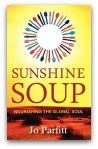
Sunshine Soup: Nourishing the Global Soul (Summertime, October 2011)
Author: Jo Parfitt
Genre: Women’s fiction
Synopsis: Six expat women from the UK, US, Thailand, Ireland, Norway and Holland converge in Dubai in 2008. The action centers on a Brit, who is on her first posting, and an American, who is on her 25th. The Brit learns the ropes and settles in, while the American woman’s world begins to crumble.
Expat credentials: A prolific author, publisher and pioneer in addressing the issues of accompanying spouses and aspiring expat writers worldwide, Parfitt has been an expat for nearly a quarter of a century. Born British, she now lives in the Hague.
How we heard about it: We noticed a couple of interviews with Parfitt — one by expat coach Meg Fitzgerald and another by Expat Women.

The Beautiful One Has Come: Stories (Wyatt-MacKenzie Publishing, July 2011)
Author: Suzanne Kamata
Genre: Cross-cultural romance
Synopsis: Twelve short stories reveal the pains and the pleasures experienced by expat women, most of whom live in Japan.
Expat credentials: Kamata is an American who has lived in Japan for 20 years.
How we heard about it: Kamata and her book were featured on Kristin Bair O’Keeffe’s Writerhead Wednesday in July of this year.

Hidden in Paris (Carpenter Hill Publishing, April 2011)
Author: Corine Gantz
Genre: Women’s fiction
Synopsis: Three strangers — all American women — have reached the point of terminal discomfort with their lives so run away to Paris to begin anew.
Expat credentials: Gantz is a French expat living near Los Angeles. She is getting her own back by writing about American expats in Paris.
How we heard about it: We are long-time fans of Gantz’s blog, Hidden in France — in fact, we promoted one of her posts (about falling into her swimming pool) with the launch of TDN in April. We also interviewed her about her first novel as part of our “gothic tales” theme this past May.

Exiled (Quartet Books, April 2011)
Author: Shireen Jilla
Genre: Psychological thriller
Synopsis: The wife of an ambitious British diplomat, whose first posting brings them to New York, looks forward to escaping from Kent and leading the high-profile life of a successful expat — only to find her world being threatened by dark psychological forces on a par with those depicted in Rosemary’s Baby.
Expat credentials: A Third Culture Kid (she is half English, half Persian, and grew up in Germany, Holland and England), Jilla has also been an expat in Paris, Rome, and New York.
How we heard about it: TDN writer ML Awanohara read a review of Jilla’s novel by Kate Saunders in the Sunday Times. She approached Jilla in May about having an exchange with our readers about the gothic themes in her novel, in line with our site’s own delvings into the gothic aspects of expat life. Our readers loved her!

NOVELS ABOUT “HOME”

Lady Luck (Colorado Mountain Series)
Author: Kristen Ashley
Genre: Romance
Synopsis: Ex-con hero, wrongly imprisoned, gets mixed up with unlucky heroine, who will stop at nothing to help him get revenge.
Expat credentials: Born in Gary, Indiana, Ashley grew up in Brownburg and then moved to Denver, where she lived for 12 years. She now lives with her husband in a small seaside town in Britain’s West Country, where she has produced more than twenty books featuring rock-chick, Rocky Mountain, and other all-American heroines.
How we heard about it: Ashley is the friend of an old schoolfriend of TDN writer Kate Allison, who invited her to do a guest post for us on Britain’s (lack of) Royal Wedding preparations  for our Royal Wedding coverage.

Queen by Right: A Novel (Touchstone, May 2011)
Author: Anne Easter Smith
Genre: Historical romance
Synopsis: This is the fictional story of Cecily of York, mother of two kings and said to be one of the most intelligent and courageous women in English history.
Expat credentials: The daughter of an English army colonel, Easter Smith spent her childhood in England, Germany and Egypt. She came to New York City at age 24, and as she puts it:

Many years, two marriages, two children and five cross-country moves later I’m very definitely a permanent resident of the U.S. — but my love for English history remains.

(She now lives in Plattsburgh, New York.)
How we heard about it: Easter Smith and her book were featured on Kristin Bair O’Keeffe’s Writerhead Wednesday in October.

Dance Lessons (Syracuse University Press, March 2011)
Author: Áine Greaney
Genre: Irish Studies, Women’s Fiction
Synopsis: The action centers on a woman of French-Canadian background who marries an Irish emigrant who is working illegally in a bar in Boston. After his death by drowning, she visits Ireland for the first time and finds out what a shattered man he actually was.
Expat credentials: She may be a resident of Boston’s North Shore, but Greaney continues to identify herself as an Irish writer (County Mayo).
How we heard about it: Greaney and her book were featured on Kristin Bair O’Keeffe’s Writerhead Wednesday in October.
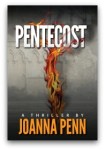
Pentecost: A Thriller (The Creative Penn, January 2011)
Author: Joanna Penn
Genre: Thriller
Synopsis: The Keepers of the stones from Jesus’s tomb — which enabled the Apostles to perform miracles — are being murdered. The stones have been stolen by those who would use them for evil in a world. An Oxford University psychologist spearheads a search for them in a race against time…
Expat credentials: English by birth, Penn grew up as a third-culture-kid and at the time of producing her first novel, was living in Australia.
How we heard about it: We are avid followers of Penn’s blog, The Creative Penn. Several months ago, TDN writer ML Awanohara deconstructed Penn’s post about what “home” means for writers for what it might teach expats and others who struggle with this issue as well. For Penn, home means some sort of spiritual kinship, which she has with two places: Oxford, where she went to university and near where her father now lives, and Jerusalem, which she’s visited at least ten times because she loves it there so much. Not surprisingly, she chose to set much of the action for her debut novel in these two cities.

EXPAT MEMOIRS
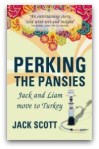
Perking the Pansies: Jack and Liam move to Turkey (Summertime Publishing, December 2011)
Author: Jack Scott
Synopsis: Dissatisfied with suburban life and middle management, Scott and his civil partner, Liam, abandon the sanctuary of liberal London for an uncertain future in Bodrum, Turkey. The book is based on Scott’s irreverent blog of the same name, which after its launch in 2010, quickly became one of the most popular English language blogs in Turkey.
How it came to our attention: Scott was featured as one of our Random Nomads in May of this year and since then, has done us the favor of commenting on and liking several of our posts. **Kate Allison will be reviewing his book for our site on Wednesday.**

Ramblings of a Deluded Soul (CreateSpace, September 2011)
Author: Jake Barton
Synopsis: In his inimitable style, the British-born Barton strings together snippets from new novels and try-outs with reminiscences and, for the first time, insight into his own remarkable experiences as a traveler and expat in Europe (he once owned a small French vineyard and had another job he’s not supposed to talk about). NOTE: Barton’s first novel, Burn, Baby, Burn, burned its way into the Top Ten of the Amazon All Books list.
How it came to our attention: Barton is an online acquaintance of TDN writer Kate Allison. We celebrated him in the early days of our blog for his insights on foreign-language learning in Spain.

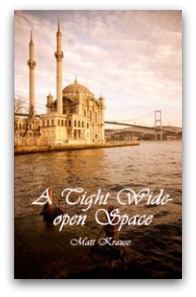
A Tight Wide-open Space: Finding Love in a Muslim Land (Delridge Press, August 2011)
Author: Matt Krause
Synopsis: A Californian who is now a Seattle-ite recounts how he became an Istanbullu, all for the love of a beautiful Turkish woman he met on a airplane. The year is 2003, and he can still hear the echoes of 9/11 as well as being acutely conscious of America’s engagement in two wars in Muslim countries. Eventually, he comes to love his new home more deeply than he might have expected.
How we heard about it: Linda Janssen, who writes the blog Adventures in Expatland, interviewed Krause about his book in October.

Planting Dandelions: Field Notes from a Semi-Domesticated Life (Penguin, April 2011)
Author: Kyran Pittman
Synopsis: A native of Newfoundland (her father was a well-known Newfoundler poet), Pittman writes about co-parenting with her charming Southern U.S. hubbie (they have three rambunctious boys); keeping the fiscal wolf from the door of their home in Little Rock, Arkansas; and honoring her marriage vows despite her refusal to give up her party-girl persona.
How we heard about it: Pittman came to our notice when she was a guest on Kelly Ryan Keegan‘s Bibliochat in late September.

Big in China: My Unlikely Adventures Raising a Family, Playing the Blues, and Becoming a Star in Beijing (Harper, March 2011)
Author: Alan Paul
Synopsis: Paul tells the story of trailing his journalist-wife to China and unwittingly becoming a rock star. His Chinese American blues rock band, called Woodie Alan, even earned the title of Beijing’s best band.
How we heard about it: We were early fans of Alan Paul’s back in the days of his Wall Street Journal online column, “The Expat Life.” Also, Paul and his book were featured on Kristin Bair O’Keeffe’s Writerhead Wednesday this past April.

The Foremost Good Fortune (Knopf, February 2011)
Author: Susan Conley
Synopsis: Conley, her husband, and their two young sons say good-bye to their friends, family, and house in Maine for a two-year stint in a high-rise apartment in Beijing. All goes well until Conley learns she has cancer. She goes home to Boston for treatment and then returns to Beijing, again as a foreigner — to her own body as well.
How we heard about it: Conley and her book were featured on Kristin Bair O’Keeffe’s Writerhead Wednesday in early October.

SELF-HELP, CROSS-CULTURAL AND OTHER NONFICTION WORKS

The Globalisation of Love (Summertime, November 2011)
Author: Wendy Williams
Genre: Relationships, self-help, humor
Synopsis: Williams interviews multicultural, interfaith and biracial partners from all over the world on what it feels like to “marry out” of one’s culture, religion and/or race. She also talks to experts on the topic and coins a term for it: “GloLo.”
Expat credentials: From a British-Ukrainian-Canadian family, Williams has been married to an Austrian for 13 years and lives in Vienna.
How we heard about it: TDN writer ML Awanohara listened to Jo Parfitt’s interview with Williams on her Writers Abroad show (Women’s International Network) and was attracted to the ideas of a book that treats this topic with humor. **TDN writer Anthony Windram will review the book for our site tomorrow (Tuesday).**

Modern Arab Women — The New Generation of the United Arab Emirates (Molden Verlag, November 2011)
Author: Judith Hornok
Genre: Women’s studies
Synopsis: The book consists of 20 chapters, each a stand-alone interview with an Emirati woman from disciplines as varied as business, film, medicine and politics. The women talk to Hornok about their careers, philosophies of life and plans for the future. The book, which is published in German and English, aims to dispel some of the Western myths surrounding Arab women.
Expat credentials: While not quite an expat, Hornok has been moving between the UAE and her home in Vienna, Austria, for eight years.
How we heard about it: TDN writer ML Awanohara read an article on the book in The National (UAE English-language publication) and became intrigued.

Expat Women: Confessions — 50 Answers to Your Real-life Questions about Living Abroad (Expat Women Enterprises Pty Ltd ATF Expat Women Trust, May 2011)
Authors: Andrea Martins and Victoria Hepworth (foreword by Robin Pascoe)
Genre: Women’s self-help, family, relationships
Synopsis: Experienced expats share wisdom and tips on topics that most expat women face, such as the trauma of leaving family back home, the challenges of transitioning quickly, intercultural relationships, parenting bilingual children and work-life balance. They also tackle more difficult issues such as expat infidelity, divorce, alcoholism and reverse culture shock. The book is based on the “confessions” page of Expat Women, the largest global Web site helping women living overseas.
Expat credentials: Andrea Martins is the director and co-founder of Expat Women. An Australian who has spent many years abroad, she began dreaming of connecting expat women worldwide when an expat in Mexico City. Victoria Hepworth is a New Zealander who has lived in Japan, China, Russia, Sweden, India and is currently living in Dubai, UAE. She is a trained psychologist who specializes in expat issues.
How we heard about it: Andrea Martins announced the publication of the book to much fanfare on Twitter and in other social media venues. It has been widely reviewed on expat blogs.

Marriage in Translation: Foreign Wife, Japanese Husband (CultureWave Press, April 2011)
Author: Wendy Nelson Tokunaga
Genre: Relationships, self-help
Synopsis: Tokunaga conducts a series of candid conversations with 14 Western women about the challenges in making cross-cultural marriages work both inside and outside Japan. She quizzes them about the frustrations, as well as the joys, of adapting to a different culture within married life.
Expat credentials: Born in San Francisco, Tokunaga has spent numerous years studying, living, working and playing in Japan. She is the author of two Japan-related novels, published by St. Martins Griffin. Oh, and did we mention her Japanese “surfer-dude” husband?
How we heard about it: Sometimes one tweet is all it takes! (We follow Wendy Tokunaga on Twitter.)

A Modern Fairytale: William, Kate and Three Generations of Royal Love (Hyperion/ABC Video Book, April 2011)
Author: Jane Green
Genre: Romance, royalty
Synopsis: In this video book for ABC News, produced just in time for the Royal Wedding in March, best-selling chick-lit novelist Jane Green follows the stories of three generations of royal love from their meeting up to and after their respective wedding days. She concludes that Kate and William have a much better chance than William’s parents of enjoying a relationship on their own terms.
Expat credentials: Born in London, Green worked as a feature writer for The Daily Express before trying her hand at writing novels. She now lives in Westport, Connecticut, with her second husband and their blended family.
How we heard about it: One of us noticed that Jane Green had been tapped to provide coverage of the Royal Wedding for ABC News. We then invited her to talk about her e-book and engage with our readers in a debate on whether women should still aspire to be “princesses” in the 21st century — a post that received a record number of comments.

INSPIRATIONAL ANTHOLOGIES

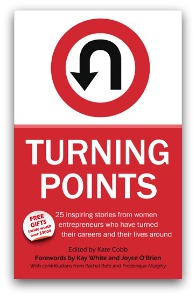
Turning Points: 25 inspiring stories from women entrepreneurs who have turned their careers and their lives around (Summertime Publishing, November 2011)
Editor: Kate Cobb
Synopsis: In this collection of stories from women all over the world, the focus is on the moments, or short passages of time, when a woman was facing something challenging and came out the other side smiling.
Expat credentials: Cobb is a British woman living in France, and about a third of the contributors — including Jo Parfitt and Linda Janssen — are expats who now run their own businesses.
How we heard about it: Linda Janssen promoted the book on her blog, Adventures in Expatland.

Indie Chicks: 25 Women 25 Personal Stories (Still Waters Publishing, October 2011)
Compiler: Cheryl Shireman
Synopsis: 25 indie novelists share personal stories in hopes of inspiring other women to live the life they were meant to live. (All proceeds go to the Susan G. Komen Foundation for breast cancer research.)
Expat credentials: Close to half of these indie authors are expats or have done significant overseas travel. To take a few examples: After living in Portland, Oregon, for most of her life, Shéa MacLeod now makes her home in an Edwardian town house in London just a stone’s throw from the local cemetery. Linda Welch was born in a country cottage in England, but then married a dashing young American airman, left her homeland, raised a family, and now lives in the mountains of Utah. Julia Crane is from the United States but recently moved to Dubai with her huband and family (her personal story concerns the adjustment process).
How we heard about it: Again, sometimes all it takes it a tweet (we picked up one of Linda Welch’s).

* * *

Questions: Have you read any of the above works and if so, what did you think of them? And can you suggest other works to add to the list? My colleagues and I look forward to reading your comments below!

STAY TUNED for tomorrow’s post, a review of The Globalisation of Love, by Wendy Williams, and for Wednesday’s post, a review of Perking the Pansies, by Jack Scott.

If you enjoyed this post, we invite you to subscribe to The Displaced Dispatch, a weekly round up of posts from The Displaced Nation, plus some extras such as seasonal recipes and occasional book giveaways. Sign up for The Displaced Dispatch by clicking here!

Related posts:

Look at little me on my gap year! I’m so superior to other kinds of tourists!

We welcome back Lawrence Hunt to the Displaced Nation, who wrote a popular post for us in September about what it’s like to grow up in England with a mum who is an expat American. Today, in keeping with our theme of global philanthropy, he offers some thoughts on why the UK’s educated youth seems so preoccupied with the authentic, meaningful travel experience.

It’s hard to pinpoint when and how it started, but more and more UK students feel compelled to spend at least part of their gap years between secondary school and university doing their bit to save the world.

The wealthiest students were the first to pioneer this trend. Many of you may be familiar with Prince William’s gap year in Southern Chile with Raleigh International, an organization started by his father, to help build schools and teach English; and Prince Harry’s gap year in Lesotho to further his mother’s work with AIDS orphans.

But have you watched “Gap Yah,” a comedy video that’s been dominating the British corner of YouTube?

“Tarquin, yes, I can’t come shopping on the King’s Road today, because, yes, I’m literally in Burma.” A traveling student is on the phone to a friend back home, droning on about being subject to various experiences of “spiritual, cultural and political” significance, such as meeting a malaria-suffering woman with flies around her eyes, and then having “chundered [vomited] everywhere” due to excessive partying the night before.

The notion of a Hooray Henry returning home with stories of his interactions with noble, primitive cultures has really struck a chord with university students. As one exasperated YouTube user from Manchester University comments under the video: “I know so many people like this! Worst kind of person.”

The offense is made infinitely worse by the fact these kids have been so brazenly insulated from the realities of these places by wads of their parents’ money all the way through.

I love animals. I love kids. I want to save the world.

I’m one to talk. I did a gap year in China before going off to Warwick University in 2008. I chose China as I wanted to learn Chinese and see what it’s like to live under a post-communism communist regime. I took on a job as a teacher in a city called Wuhu in Anhui Province, and spent the next five months struggling to make myself understood above the noise of 60-plus unruly teenagers.

And yes, my friends who saw the “gap yah” video said it reminded them of me! (But I worked to pay for my trip, damn it!)

Did I help the kids? Maybe a little. Did I have fun? For sure. But I also came back with the realization that not much can be accomplished in just a few months by people who don’t speak the language and have little cultural training.

Judith Brodie, the director of Voluntary Service Overseas, one of Britain’s leading charities, concurs. Voluntourism has become big business in the UK, with the average student paying out close to $10,000 for the opportunity to teach street children, rescue sea turtles, dig wells and the like. Brodie cautions that many of these projects have been designed to satisfy the demands of students rather than the needs of locals. As she told the Guardian:

“Young people want to make a difference, but they would be better off traveling and experiencing different cultures, rather than wasting time on projects that have no impact and can leave a big hole in their wallet.”

The desire for authenticity — whatever that means

Going hand in hand with this compulsion for doing good — as long as you can cram it into a half-year stint, preferably funded by your parents — is the desire to prove to others that you won’t settle for anything less than an “authentic” cultural experience.

During my own gap year, I spent some time walking around Beijing with a friend of mine, Josh, who was obsessed with the idea of “authenticity” — the acid test for which was the absence of any sort of commercial element aimed specifically at tourists.

Josh would thoroughly inspect any restaurant we went to before deciding whether it was “touristy” or the “real China.” It almost got to the point where if there was a suspect old Chinese man hunched up in the corner looking as though he needed serious medical attention, Josh would yelp excitedly and sit down, commenting on how he could taste the poverty in the noodle soup.

One particularly vivid memory from the experience was walking through the hutongs, the ancient lanes that revolve around the Forbidden City in a maze of houses and courtyards. They are a popular tourist attraction, and though they house half the city’s population of 18 million, many of them are being demolished to make room for more modern buildings.

Josh, at the behest of his trusty guidebook, was insistent that we take the chance to see them before they were modernized beyond recognition. While we walked, we were followed by an angry rickshaw driver who wanted to take us on a tour. We refused to pay for his services — not because the price he was asking was too high but because to accept his offer would be tantamount to admitting that we’d settle for a staged and commercial version of the “hutong experience.” And that would undermine our whole reason for being there.

Just a little too late, I realized the gross insensitivity of what we were doing. We were walking through people’s back gardens and peering over their fences on the pretext of digging beneath the veneer of their culture. Ultimately, however, what we were getting was exotic, and cheap, entertainment. And if that was the case, we might as well have allowed the locals to set the terms of their own commodification.

Unintended consequences

If I had any sort of epiphany myself from traveling, it was this: the search for the “authentic” experience outside of Western boundaries is itself the reason for these cultures’ destruction.

The way I see it, it happens in three phases:

  1. Travelers arrive at an undeveloped exotic location.
  2. They report on the experience as having been so “authentic” that other people follow them.
  3. Soon enough the locals catch on to this, and offer their services in delivering what people want — mountain treks, temple tours, and so on until eventually, it becomes an overly commercialized “tourist spot” and the landscape becomes dominated by souvenirs, maps, and information points.

And just about then, the original travelers, exasperated with all those damn tourists, leave in search of more fertile ground and the cycle repeats itself.

For years in this way, the counter-cultural traveler has served as the main shock trooper of mass tourism.

While there is nothing wrong with spreading a little Western wealth through tourism to places that need it — although admittedly the process of development does have its drawbacks — the idea that anti-materialist tourists are superior to the other kinds — well, that’s just pretentious, isn’t it?

Readers, any responses to Lawrence Hunt’s thoughts on gap years, voluntourism and the quest for the “authentic” travel experience?

STAY TUNED for Tuesday’s post, providing a humorous slant on the aid work profession.

If you enjoyed this post, we invite you to subscribe to The Displaced Dispatch, a weekly round up of posts from The Displaced Nation, plus seasonal recipes, book giveaways and other extras. Sign up for The Displaced Dispatch by clicking here!

Related posts:

Img: Lawrence Hunt playing the tourist in Beijing’s Forbidden City during his gap year (August 2008).

7 extraordinary women travelers with a passion to save souls

A week ago, I announced that The Displaced Nation will be dedicating the month of November to exploring the displaced lives of those who travel the world to do good works on behalf of those less fortunate.

Blame it on the years I spent as an expat in England, but the whole time I was writing that post, I had the sense of a Victorian couple — the man in a top hat, the woman in a full skirt — looking over my shoulder, whispering in my ear: “We tried to save the world, too, you know.”

To be fair, those phantoms of mine have a point. The Victorians ventured into the wilds of Africa, Asia and the Americas not just as imperialists looking for riches but also as missionaries looking to save souls.

And, just as we 21st-century people think we have the answers for people who live in developing countries — microfinance, entrepreneurship, mosquito nets, gifts of sheep and goats — our forbears thought they had the answers, too: Christianity, coupled with a strong belief in the universality of basic human freedoms.

Today I will attempt to put said ghosts to rest by paying tribute to 7 women missionaries from the 19th and early 20th centuries, from both sides of the Atlantic.

So, why the women and not the men? Three reasons:

  1. Being women, they tended to stand up for the rights of women and children wherever they went.
  2. Many also learned the language and assimilated to the local culture, thereby winning respect.
  3. And many were further willing to acknowledge the blunders committed by missionaries when attempting to penetrate the world’s most remote communities. As missiologist Ruth Tucker, who has read many missionary memoirs by women, observes:

These women writers one after another have allowed themselves to be vulnerable in painting a sometimes messy picture of their own character and of their missionary work. [Their] raw memoirs have much to say to us in the 21st century.

I’m going to take Tucker’s words to mean that even if you’re not religious, disapprove of proselytizing, or are something other than Christian, you might still concede that, on derring-do, fortitude, and decency alone, the following women deserve a place in the Displaced Hall of Fame.

Ann Haseltine Judson (1789 – 1826)

Who was she? A Bradford, Massachusetts native, teacher, and the wife of Andoiram Judson. Two weeks after they married, the couple set out on a mission trip — first to India, then to Burma.
Key achievements: While her husband was imprisoned in Burma under suspicion of being a spy, Judson wrote stories of the struggles she faced on her own in the mission field. She included tragic descriptions of child marriages, female infanticide, and the trials of the Burmese women who had no rights except for those their husbands gave them.
How she died: Of smallpox in Burma, at age 37.
Interesting fact: At least 16 biographies of Judson were published in the 19th century, the most famous of which had a new edition printed almost every year from 1830 to 1856. She and Andoiram were American celebrities.

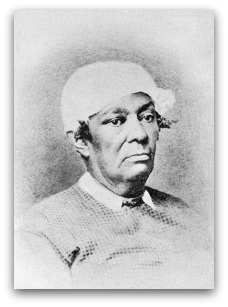
Betsey Stockton (c. 1798 – 1865)

Who was she? A freed slave who left domestic service to travel as America’s first single female missionary to Hawaii, then known as the Sandwich Islands. In fact, she went partly as a missionary and partly as a servant to one of the couples on the mission, the Reverend and Mrs. Stewart.
Key achievement: After being asked by the son of the Hawaiian king to teach him English, Stockton started up a school at Lahaina (in West Maui) for the makeainana — fishermen, farmers and craftsmen who lived off the land — which continued after she left.
Why her mission ended: Stockton’s service in Hawaii was cut short when Mrs. Stewart became ill. The party decided to return to the States in 1826.
Where she died: In Princeton, NJ. She is buried in the Stuarts’ plot in Cooperstown, NY.
Stockton’s diary: Stockton kept a detailed written record of the mission, which conveys her somewhat turbulent, occasionally agonized, inner spiritual life; her interest in the natural world — including the kinds of fish caught from the ship, the color of the waves, and various bird life; and her spirit of adventure. Like others on board she was frightened at her first sight of the Hawaiian men who come out in canoes to greet the ship:

half man and half beast—naked—except a narrow strip of tapa round their loins…

But then she adds: “They are men and have souls.”

Adele Marion Fielde (1839 – 1916)

Who was she? A working-class native of Rodman, NY, who followed her fiancé, a Baptist missionary, to Bangkok, Thailand (then Siam) — only to discover he’d died of typhoid fever 10 days after she’d set sail from New York. She carried on nevertheless, remaining in Siam for a couple of years.  Later she went on a mission to China for training Bible women.
Key achievement: Fielde mastered the Chinese language and was also a powerful writer. She encouraged each of her Chinese Bible women to tell their stories, and then translated these stories and got them published in magazines back home. As one of her biographers puts it:

Their heart-rending sagas proved enormously appealing to American women, who could sympathize with their suffering Chinese sisters.

Where her life ended: In the United States. She retired from missionary work, went home, and became involved in scientific research.
Strange twists and turns: A free thinker since childhood, Fielde broke away from her family’s Baptist roots — only to return after becoming engaged to a Baptist missionary candidate. She faithfully served as a Baptist missionary for two decades — and then turned to science. Notably, the Baptists for a a long time sensed that she wasn’t quite one of them, accusing her of indulging in card-playing and dancing when she lived in Siam. She responded:

“I desire to be good. But I do not wish to be Pious.”

Lottie Moon (1840 – 1912)

Who was she? A highly educated Virginia native (she was born “Charlotte Digges Moon” on her family’s ancestral slave-run tobacco plantation). She became a teacher and then was called, at age 33, to serve for decades in China with the Southern Baptist Convention. Initially she went to join to her sister, Eddie, who was stationed at the North China Mission in the treaty port of Dengzhou.
Remarkable turnaround: When she first arrived at the mission, Moon made a point of wearing Western clothes to distance herself from the “heathens.” But then she mastered the language, became an admirer of Chinese culture and history, and started wearing Chinese clothes and adopted many of their customs.
Commendable behavior: When China was facing plague, famine, revolution, and war, Moon shared her personal finances and food with anyone in need around her.
How she died: Of starvation, in the harbor of Kobe, Japan, while en route back to the United States. (At that point she weighed only 50 pounds!)
Impressive statistic: Southern Baptists have named their annual mission fund after Lottie Moon. It finances half the entire Southern Baptist missions budget every year.
Part of her lore: She used to tell people she was 4′ 3″ tall. While something of an exaggeration, she was definitely petite!
Lottie Moon Cookies: Moon won over the children in her Chinese village by making tea cakes for them — they called her “the cookie lady” instead of “foreign devil.” Baptist families bake Lottie Moon Cookies for Christmas.

Mary Slessor (1848 – 1915)

Who was she? A Victorian mill girl who left the slums of Dundee to live among the tribes of Calabar, Nigeria, to take up the mantle of David Livingstone two years after he died.
Noteworthy friendship: While in Africa, Slessor became acquainted with the writer Mary Kingsley. Although the latter had never been baptized and hadn’t even been brought up a Christian, their common status — both were single females living among native populations with little company — presumably created the basis for lasting friendship.
Key achievement: The tribal people believed that if a woman gave birth to twins, one of the twins was the offspring of the devil who had secretly mated with the mother — and since the innocent child was impossible to distinguish, both should be killed (the mother was often killed as well). Slessor fought hard to end this practice.
Where she died: In Nigeria, at age 67. There was great mourning among the tribes to whom she’d dedicated her life.
A tribute from an unexpected source: During London Fashion Week in 2010, Nigerian-born designers Bunmi Olaye and Francis Udom named Slessor as one of the muses behind their collection, which fused Victorian costume with furs of the African tribe Slesson had lived in. The reason? Slessor had rescued Francis’s great-grandmother, who was born a twin, from human sacrifice.

Amy Carmichael (1867 – 1951)

Who was she? A small-village girl from a devout Presbyterian family in County Down, Northern Ireland (her father founded an evangelical church in Belfast). She was called first to work among the mill girls of Manchester and then overseas, finding her life-long vocation in India.
Key achievement: In those days, Hindu priests kept “temple children” — mostly young girls who were forced into prostitution to earn money for them. Carmichael tried to rescue them by setting up a sanitarium in Tamil Nadu, thirty miles from the southern tip of India.
Bold behavior: She would dress in Indian clothes, dye her skin with dark coffee, and travel long distances on hot, dusty roads to save just one child from suffering.
How she died: In India at the age of 83. She asked that no stone be put over her grave. Instead, the children she had cared for put a bird bath over it with the single inscription Amma, meaning “mother” in Tamil.
Cryptic remark: While serving in India, Carmichael received a letter from a young lady who was considering life as a missionary. She asked, “What is missionary life like?” Carmichael wrote back saying simply,

“Missionary life is simply a chance to die.”

A measure of her fortitude: Carmichael served in India 55 years without furlough and produced a total of 35 published books about her experiences.

Gladys Aylward (1902 – 1970)

Who was she? A working class London girl who left domestic service for to Yuncheng, Shanxi Province, China, in the tumultuous years leading up to World War II. She worked with an older missionary, Jeannie Lawson, to found an inn where traveling merchants could get a hot meal and hear stories from the Bible. Notably, Aylward was initially rejected as a potential missionary to China because of her lack of education. She spent her life savings on her passage.
Key achievements: Appointed by the local mandarin to serve as a “foot inspector,” she toured the countryside to enforce the new law against foot binding and met with much success. She also took in orphans and adopted several herself, and she intervened in a volatile prison riot, advocating for prison reform. When the region was invaded by Japanese forces in 1938, Aylward led around a hundred children to safety over the mountains, despite being wounded herself.
How her life ended: She returned to England in the 1940s, then tried to go back to China but was re-denied entry by the Communist government. She ended up in Taiwan, where she started another orphanage. She lived in Taiwan until her death.
Chinese nickname: She was known in China as Ai-weh-deh, or Virtuous One.
Celebrations of her life: Numerous books, short stories and movies have been created about the life and work of Gladys Aylward, including the film The Inn of the Sixth Happiness.
Not easily flattered: For Aylward, this 1957 movie was a thorn in her side: she resented being played by the tall, Swedish Ingrid Bergman (small in stature, she had dark hair and a cockney accent) and was further horrified to discover she’d been portrayed in “love scenes” with the Chinese Colonel Linnan.

Readers, what do you think of these 7 women? Have they inspired you?

STAY TUNED for tomorrow’s post, a Displaced Q on the “pornography of poverty.”

If you enjoyed this post, we invite you to subscribe to The Displaced Dispatch, a weekly round up of posts from The Displaced Nation, plus some extras such as seasonal recipes and occasional book giveaways. Sign up for The Displaced Dispatch by clicking here!

Related posts:

Image: MorgueFile

RANDOM NOMAD: Tom Frost, Kindergarten Teacher & Expat Blogger

Born in: Hillsboro, Oregon USA
Passport: USA
Countries lived in: India (Belgaum): 1979-80; Japan (Mutsu and Hachinohe): 1983-88; Mexico (Mazatlán):2005-06; Argentina (Buenos Aires): 2006-09; Uruguay (Colonia del Sacramento): 2009-10; Asia (Japan, Thailand, Malaysia, Laos, Hong Kong): 2010-2011; China (Beijing): July 2011 – present.
Cyberspace coordinates: Expat Alley (blog)

What made you leave your homeland in the first place?
My wife, Maya Frost, and I left the US to give our children a taste of the world outside and to supercharge their brains with new languages, new challenges and new experiences. Maya wrote the book The New Global Student: Skip the SAT, Save Thousands on Tuition, and Get a Truly International Education, detailing our experiences getting the kids — we have four daughters — through high school and college without going the traditional route. Two of them are now working in Buenos Aires and Abu Dhabi. The other two are in New York, one of whom has just completed a couple of years working as a multilingual events coordinator on Norwegian Cruise Lines — she was craving some “land time.” Maya and I have settled in Beijing for the time being.

Is anyone else in your immediate family displaced?
My wife and I were both displaced Oregonians living in Japan when we first met. All of my family have traveled quite extensively. Like me, my three siblings were all Rotary exchange students for a year in France, Philippines and South Africa (I lived in India). For a time one of my siblings lived in Japan for several years. I have a niece in Barcelona, a nephew in Japan, a cousin in Africa…

Describe the moment when you felt most displaced.
Getting off a plane in Miami after being in South America for two years. It was overwhelming to understand everything that was going on around me. All the magazine racks were screaming that I was too fat, too old, too poor and too poorly dressed. I wanted so much just to get back on the plane and go “home” to Buenos Aires.

Describe the moment when you felt least displaced.
The longer I stay out of the US the more this is happening. The “normal” feeling for me now is to feel displaced. Not understanding the language, not feeling like one of the crowd, not recognizing anything on a menu — that is when I feel at home.

You may bring one curiosity you’ve collected from your adopted country into the Displaced Nation. What’s in your suitcase?
My wife and I are obsessively light travelers. Even when moving to a new place to live for an extended period of time, we never have more than one carry-on each. I am a firm believer in the old adage that “you don’t own stuff, your stuff owns you.” I have a compass that was left to me by my father and about 30 photographs (unframed) of our family — we buy new frames each time we set up a new home. Beyond those items we take nothing more than a few changes of clothes and our laptops.

You’re invited to prepare one meal based on your travels for other Displaced Nation members. What’s on the menu?
Let’s start with the drinks because they generally taste the same each time they come out of the bottle, unlike my favorite meals which are those have not yet tasted.

A bucket of iced Mexican Pacifico [a Pilsner-style beer] for the appetizer, chilled sake for the cold course, a hearty Uruguayan Tannat for the main, Argentine fernet for dessert — and a couple of Tylenol for a nightcap.

I love to cook and am in charge of all the meals in our house. But I do not use recipes and generally do not make the same thing twice. Each time I go to the grocery store I buy at least one item I do not recognize. Past favorites have included:

My current craving is for shrimp Chinese dumpling, purple cabbage and cucumber in a spicy chili sauce, with cut chives for garnish. How does that sound?

You may add one word or expression from the country you’re living in to The Displaced Nation argot. What will you loan us?
My ability with languages is less than stellar so I’d prefer to loan you a few body language motions.

From Japan: Sucking air through gritted teeth and turning your head to the side — this means you are giving something a great deal of thought but also buys time to figure out what what was just said. Even if you cannot come up with a reply, you get points for showing you are thinking hard about the subject at hand.

From Argentina: The shoulder shrug — a good way of masking your ignorance of an indecipherable comment. Essentially it means: “Sometimes shit just happens, you know?”

From India: The head bobble — it can be construed as an affirmation but is ambivalent enough that you can later change your mind and renege on whatever you agreed to. It is also fun to practice in the mirror for your own amusement when bored.

It’s Zen and the Art of the Road Trip month at The Displaced Nation. Robert M. Pirsig, author of Zen and the Art of Motorcycle Maintenance, famously said: “Sometimes it’s a little better to travel than to arrive.” Do you agree?
I dislike traveling without arriving.

There are certain things I immediately look for in any destination to make me feel at home, but in reality, it is silly I look for them — why bother traveling if I want to feel at home?

I love this paradox.

Pirsig’s book details two types of personalities: 1) those who are interested mostly in gestalts so focus on being in the moment, not rational analysis; and 2) those who seek to know the details, understand the inner workings, and master the mechanics. Which type are you?
I definitely lean more toward the rational mindset. I love getting to know transportation — specifically, bus routes and subways — as well as getting a handle on how traffic patterns have developed over time. As a child of the US suburbs, I used to equate riding public transportation with being a loser, but now I know it is freedom. And it’s not just rational, it can also be “in the moment.” Life happens on public transportation — the grateful glance from an elderly woman you give up your seat to on a subway in Tokyo, the giggles of the small child you play peek-a-boo with on the train in Kuala Lumpur, the strains of the guitarist serenading bus riders on a Friday afternoon in Buenos Aires. Nothing interesting has ever happened to me by myself in a car.

Readers — yay or nay for letting Tom Frost into The Displaced Nation? Tell us your reasons. (Note: It’s fine to vote “nay” as long as you couch your reasoning in terms we all — including Tom — find amusing.)

img: Tom Frost becoming displaced yet again — by an elephant in Pai, Thailand (June 2011).

STAY TUNED for tomorrow’s installment from our displaced fictional heroine, Libby, who is just back from a road trip with Oliver and Jack, during which she has pondered her new life and the Melissa situation. What, not keeping up with Libby’s expat adventures? Read the first three episodes here.

If you enjoyed this post, we invite you to register for The Displaced Dispatch, a round up of weekly posts from The Displaced Nation. Includes seasonal recipes and book giveaways. Register for The Displaced Dispatch by clicking here!

Related posts:

Random Nomads to the rescue! How to have an enchanted August (2/2)

Every year in mid-August, I swear I can still hear the beat of the taiko drums, even though it’s been years since I lived in Japan as an expat.

As I mentioned in my comment on Anthony Windram’s post of last week, the Japanese hold their Obon Festival in the dead of August. Appropriately, it’s the Buddhist version of the Festival of the Dead — when the dead are supposed to come back and visit.

That said, I have always thought of obon festivities as an attempt to arouse the living dead, which is what most people are after enduring the agonies of a Japanese summer. Just hearing the lively drumbeat can be revitalizing, getting one’s blood flowing again.

I am therefore personally curious to see how The Displaced Nation’s Random Nomads who live in Asia are doing. Are they managing to have some enchanting moments despite the heat — which, if anything, appears to be even more brutal in that part of the world than it was in my day? And what advice can they impart to the rest of us? (Besides the fact that compared to them, we shouldn’t really be complaining…)

Three of them got back with answers to these questions:
1) What has been your most enchanting moment of Summer 2011 thus far?
2) What has been your least enchanting moment?
3) Do you have any survival tips for people who can’t escape?

Please note:
a. You can read interviews with each of these three Random Nomads about their “displacement” by clicking on their names. They, and their lives, are fabulously inspiring regardless of season.
b. In Part 1 of this post, five US/Europe-based Random Nomads answered the same three questions. Check it out!

KIM ANDREASSON — Swedish passport; current home: Vietnam (Saigon)
Most enchanting:
Vacationing in my native Sweden with my wife. It was the longest time I have spent in my homeland in over a decade, and I have a new-found appreciation for the proverb: “Away is good, but home is best.”

Least enchanting:
Trying to do work while vacationing in Italy. An hour before an important conference call, the Internet went down at our 4-star hotel, and the hotel manager airily proclaimed, “That’s what usually happens when it rains.”

Survival tips:
We live in Saigon, where it’s basically 90 degrees all the time so there are only two options: stay inside and use AC; or if you go outside, wear light-colored clothes and drink lots of liquid.

EMILY CANNELL — U.S. passport; current home: Japan (Tokyo)
Most enchanting:
In spite of not being terribly interested in the rainforest or the quest to save it, I found myself smack dab in the middle of Borneo, Malaysia, on an Ecotour. Searching for the endangered orang-utans, we happened upon what became one of the highlights of my summer — and life. A pygmy elephant emerged from the trees, and just like the rest of us, he was hot. Slowly, he ambled in to the river where he proceeded to entertain us with his cooling down antics — scratching his ears on the trees, blowing water out of his trunk, and completely submerging himself while only 10 feet away from our boat. What a gift! I got out my checkbook then and there.

Least enchanting:
Getting up at 4:00 a.m. for the fifth time this summer in order to catch a 7:00 a.m. flight to somewhere. Once is okay, but five times?

Survival tips:
Currently I’m writing from the complete darkness of the guest bedroom, fan on high. Keep the curtains closed and the fans on high to circulate the air. When outside, wear a hat to keep the sun off the top of the head. It’ll do wonders.

JO GAN — U.S. passport; current home: China (Yuyao City, Zhejiang Province)
Most enchanting:
Since my summer is usually spent teaching high school and university students on their summer holidays, I usually don’t get many enchanting moments.  However, I did have one thing that was kind of nice.  After a long day at the language school, I walked down to the Yaojiang River that flows through the downtown area, with some fellow expat teachers and a couple of our adult students.  To our great surprise, white plastic chairs and tables had been set up all along the river underneath the willow trees. Cold beer and hot tea was being served, and there was a lone guitarist playing Chinese folk music for all to enjoy. We sat down and chatted, drank our beers, and watched the river float by with a slight breeze. The servers kept the beggars at bay so we were not hounded for money.

The best part of the evening was around midnight when they started shooting fireworks over the river.

It wasn’t a special occasion or even a special event — just the right mix of people and location, at just the right moment.

Least enchanting:
That would have to be when it rained for a month. I don’t know what was going on with the weather, but in the month of June I thought we were going to have to build an ark. It rained for three weeks straight every day without stopping. I didn’t want to do anything, but had to trek in the rain and puddles all the way to school every day. One day was particularly miserable because the electricity went out.  So it was hot and rainy, and we had no lights. I just kept thinking, why me?

Survival tips:
In the small Chinese city where I live, it’s the little things that count. Taking a trip around the city center in a rickshaw may cost you a little, but you get to sit back and survey the different things going on — and if that special person joins you, it can be romantic.

Another option is going out to the local parks every evening from 7:00 to 8:30 p.m. to dance with the older locals. They are almost always playing some salsa or pop music and dancing the cha cha, or there’s some line dancing action. It is actually kind of fun to join them even if your are not in their age set. They always are excited to teach you their moves.

Lastly, we live close to Siming Mountain. You can take a trolley bus to the top and then float down the small river in a little orange raft. The river has added twists, turns and drops that make you scream out for your mama to help you. It makes for an interesting day, and you are bound to get wet and cool off.

STAY TUNED for tomorrow’s post, in which Anthony Windram debuts his new Agony Aunt column!

If you enjoyed this post, we invite you to subscribe to The Displaced Dispatch, a weekly round up of posts from The Displaced Nation, plus some extras such as seasonal recipes and occasional book giveaways. Sign up for The Displaced Dispatch by clicking here!

Related posts:

RETURN TRIP: Seven deadly dishes — global grub to die for

While our writers take off on what they hope will be enchanting August breaks, The Displaced Nation will occasionally be reissuing some posts that, for one reason or another, enchanted our readers. Enjoy these “return trips”!
Some months ago, The Displaced Nation explored the theme of Gothic tales — the idea that many of us return from our world travels with some horrific stories to tell. That’s assuming we return at all, of course. Displaced Nation writer Kate Allison contributed this piece on deadly dishes as part of our “It’s Food!” category. It’s one of our most popular posts to date.

A Briton abroad spends a surprising amount of time defending his native national cuisine. I remember going to a steak house in Connecticut where the waitress, upon taking our order and hearing our accents, said brightly, “From England, huh? I hear you don’t get anything good to eat over there. ” When she brought the filet mignon to the table, she did so with the pitying smile of one delivering alms to the starving.

British super-chefs like Gordon Ramsay and Jamie Oliver may be taking the US by storm, but still this delusion of bad food persists. To which I say: whatever the perceived faults of English cuisine, at least no one has to take out extra life insurance before eating Yorkshire pudding.

Yet there are quite a few delicacies from countries without this dismal food reputation, where a top-up premium might be useful before you take that first bite.

In ascending order of danger or toxicity:

7. Snake wine – Vietnam, Southeast Asian, Southern China.

An assortment of herbs, small snakes, and a large venomous snake are steeped for many months in a glass jar of rice wine, then consumed in small shots for medicinal purposes. Fortunately, the ethanol renders snake venom harmless.

6. Surströmming – Sweden.

Fermented Baltic herring. Stored in cans, where the fermentation continues, causing the cans to bulge. In 2006, Air France and British Airways banned surstromming from their flights because they said the cans were potentially explosive. According to a Japanese study, the smell of this Scandinavian rotten fish is the most putrid food smell in the world.

5. Fried tarantula – Cambodia.

Tarantulas, tossed in MSG, sugar, and salt, are fried with garlic until their legs are stiff and the abdomen contents less liquid. The flesh tastes a little like chicken or white fish, and the body is gooey inside. Certain breeds of tarantula have urticating hairs on their abdomen, which they use for self-defense. If the spiders are not prepared properly – i.e., if the offending hairs are not removed with a blow torch or similar – these hairs can cause pharyngeal irritation in the consumer.

4. Sannakji – Korea.

Small, live, wriggling octopus, seasoned with sesame and sesame oil. The suction cups are still active, so bits of tentacle may stick to your throat as you swallow, especially if you’ve had one too many drinks before dinner. The trick is to chew thoroughly so no piece is big enough to take hold of your tonsils. Some veteran sannakji eaters, however, enjoy the feel of longer pieces of writhing arm and are prepared to take the risk.

3. Stinkhead – Alaska

Heads of salmon, left to ferment in a hole in the ground for a few weeks. Traditionally, the fish was wrapped in long grasses and fermented in cool temperatures, but then someone discovered Baggies and plastic buckets, which increase the speed of the process. Unfortunately, they also increase the number of botulism cases.

2. Casu Marzu – Sardinia

Made by introducing the eggs of the cheese fly to whole Pecorino cheese (hard cheese made from sheep’s milk) and letting the cheese ferment to a stage of terminal decomposition. Locally, the cheese is considered dangerous to eat when the maggots are dead, so you eat them live and squirming. As the larvae can jump six inches in the air, it is advisable to cover your cheese sandwich with your hand while eating to prevent being smacked in the face by grubs. An alternative is to put the cheese in a paper bag to suffocate the maggots, then eat it straight away. The maggots will jump around in the bag for a while, making a sound, I imagine, not unlike that of popcorn in the microwave. Although the European Union outlawed this food for a while, it has since been classified as a “traditional” food and therefore exempt from EU food hygiene regulations.

1. Fugu (Puffer fish) – Japan

Considered to be the second most toxic vertebrate in the world, puffer fish is a delicacy in Japan, but preparation of the food is strictly controlled, with only specially trained chefs in licensed restaurants permitted to deal with the fish. Fugu contains tetrodotoxin, a poison about 1200 times stronger than cyanide, which is most highly concentrated in the fish’s liver — the tastiest part. Sadly, for gourmets who like to live life on the edge, fugu liver in restaurants was banned in Japan in 1984.

Question: What is the most adventurous dish you’ve ever eaten?

If you enjoyed this post, we invite you to subscribe for email delivery of The Displaced Dispatch, a round up of the week’s posts from The Displaced Nation. Sign up for The Displaced Dispatch by clicking here!

Youth writer Gabrielle Wang’s characters solve cross-cultural conundrums with magic and aplomb

The spirit of Pocahontas has been haunting The Displaced Nation this month, lending a helping hand to anyone who feels stymied by the strange customs they’ve encountered in other lands.

This precocious Native American girl appears to have been naturally gifted in openness and tolerance — else how could she have become an intermediary between her father’s tribes and the Jamestown settlers at age 10?

The majority of us, however, are not naturals when it comes to cross-cultural relations. We could use some basic training, preferably while still young.

As suggested in one of this month’s posts, one solution might be to absorb the whole of Harry Potter — all those tales of discrimination against Half-bloods and Muggles.

But not every youth can identify with a universe that is governed by the laws of who’s magic and who isn’t. Take Pocahontas, for instance. If she prayed for magic in her dealings with the white invaders, it was most likely for herself, never mind anyone else.

Perhaps, then, I have her to thank for guiding me towards Melbourne-based author Gabrielle Wang, whose books for children and young people feature characters who in many ways resemble the feisty Anne of Green GablesPollyanna or Calpurnia Tate — but with a further twist: Wang’s heroines are always non-white, Chinese or some mix. They are culturally marginalized.

Wang’s very first book, The Garden of Empress Cassia (to be published for the first time in the U.S. this fall) involves a heroine, Mimi, who feels ashamed of being Chinese until she discovers a a box of magic pastels that enables her to draw, and then enter, the garden of the Empress Cassia — a transformative experience.

Wang’s latest heroine, Poppy, is even more unusual: she’s a half-Chinese, half-Aborigine girl who lived in the 19th century. Poppy’s Aboriginal mother died when she was a baby, and her Chinese father disappeared before she was born. When her brother, Gus, runs away to look for gold, Poppy decides to follow. Disguising herself as a boy, she stows away on a paddle steamer and keeps in touch with Gus through a secret code and Chinese symbols.

Wang’s books are targeted at the youth market, but adults are very fond of them as well. Here’s what one reviewer had to say of her first book in the Poppy series:

I’m sure young girls living in Australia who are interested in their country’s history will love this book, but as an adult living in America, I really enjoyed it too!

I recently had the pleasure of meeting Gabrielle Wang in person — at a congee restaurant in New York City’s Chinatown. Here’s how our conversation went:

Can you tell me a little about your background?
I’m a fourth-generation Chinese Australian on my mother’s side and first generation on my father’s. I live in Melbourne, where I’ve been a professional writer of children’s and young adult books for nine years. I’ve written ten books published by Penguin Books Australia, and a picture book published by Blackdog Books, now an imprint of Walker.

All my novels involve cross-cultural issues as that is my background. Being brought up in Australia and knowing little about my own heritage, I felt was a tremendous disadvantage. I was ashamed of looking different. I couldn’t speak Chinese and knew little of the beliefs and customs of China. Now, when I look back at that period in my life I know that if I’d been steeped in the culture of China, I would have grown up proud of my heritage. It was only when I left school that I realized that belonging to two cultures was an advantage and began learning Mandarin.

My latest books are being released this year three months apart. There are four in the Our Australian Girl series about a half-Chinese half-Aboriginal girl named Poppy.

Right now I’m working on a ghost short story for a Penguin anthology as well as thinking about my next novel, called The Wish Bird.

This month, our blog has dedicated many of its posts to Pocahontas, who was a member of the original displaced peoples in North America. Are the stories of the Native Americans and Australia’s Aborigines very similar?
Definitely, there are many similarities. But my impression of the Native Americans is of a more warring people — at least that’s how they’re often portrayed in the old cowboy-and-Indian films. I’m probably stereotyping here. The Aborigines were also driven off their hunting grounds. Many were slaughtered by the squatters while others starved to death or died from disease. It was a tragic time in Australian history which carried through even to the 1960s. The scars and the injustices still exist today.

The European settlement of Australia occurred at least a century later than that of North America. Were Australia’s settlers still influenced by the ideal of the Noble Savage, “the good wild man,” in their encounters with the natives?
The squatters of the 1800s looked down upon the Aborigines. They had no idea that the Indigenous Australians had a highly advanced and complex culture and belief system. And by the 1850s and 1860s, when my Poppy stories take place, the ideal of the Noble Savage never crossed anyone’s mind. At that time, large numbers of people from all over the world went to Australia to look for gold, not to discover a new land.

Turning to your Poppy books, I noticed that you employed the nature trope that’s associated with the Aborigines. Poppy uses the Southern Cross to guide her travels, follows water birds, eats wild raspberries and honey-flavoured sap-sucking bugs…
The Aborigines’ belief system is closely linked to the land they inhabit and to the animals in their environment. They have animal totems and there are sacred places all around Australia. Unfortunately, most of these sacred sites are not in the hands of the local Indigenous people and have been lost or desecrated. But if you go and visit the known ones, like I have, you can still feel a tremendous power and energy in the landscape.

When I was on a writing/walking trek through Central Australia near Alice Springs, we camped, with the permission of the local Indigenous tribe, on a sacred site. It was an amazing experience.

I am very interested in the Chinese philosophy of yin and yang, the I Ching and Daoism – which are not that dissimilar to the beliefs of the Indigenous Australians and their relationship with nature. The Aborigines are also like the Chinese in that they have an advanced plant medicine system.

Was it difficult to think through how an Aborigine child might have felt back then?
In my story, Poppy was born on a Christian mission, so she knows very little about her own culture. I am not an expert on Aborigine culture, so I was careful not to step over the line. I had several Aboriginal advisors who I consulted with. John Sandy Atkinson is an elder for the Bangerang tribe and Maxine Briggs is the Koorie Liaison officer at the State Library of Victoria. They were invaluable to me while writing the Poppy series. As a Chinese person, I know how wrong some authors can be when writing about a culture they have little knowledge of. It is easy to misconstrue and misunderstand things so I was careful to avoid this.

Since you’re so interested in the topic of portraying other cultures, you may find it interesting that Maxine Briggs lent me Werner Herzog’s film Where the Green Ants Dream just so I could see how NOT to portray another culture. The film as you may know had to do with a dispute between a mining company and the local Indigenous tribes in the Australian desert.

I noticed in reading some excerpts that the white people Poppy meets behave quite decently. Did you make them like that on purpose?
Race is a highly sensitive subject and sometimes it’s difficult to strike a good balance. In Poppy’s time, the 1860s, racial prejudice towards Aborigines was at an all-time high. But I’m always aware of my audience — children 8-11 years old. When you write for young people you have a responsibility. It is important to be positive; otherwise, the same prejudices can begin all over again.

Up until now, you’ve created Chinese heroines for your book. What inspired you to create a character who was only half-Chinese?
I wanted to write about the period when my maternal great-grandfather came to Victoria to join the Gold Rush. I also wanted to highlight the plight of the Indigenous population during that time when white settlement expanded at such an alarming rate. Before 1834, around 100,000 Aboriginal people lived in the State of Victoria. By 1860, with the influx of white settlers and the discovery of gold, this number had fallen to less than 2000. That figure is shocking.

I think I’d also been influenced by the recent consciousness in Australia about the injustices done to the Aborigines. Beginning in 1869, the Australian government rounded up the Aborigines into missions (as already mentioned, Poppy is from one such mission) and began removing some of the children — the ones who were of mixed race — from their families to work as indentured servants for white families. I’m talking about the so-called stolen generations. If you’ve seen the film Rabbit-Proof Fence, you’ll know what I’m talking about.

It’s a big issue right now in Australia — and is finally being recognized as a national tragedy. The former Prime Minister, Kevin Rudd, presented a formal apology in 2008 for this misguided policy. It was a long time coming.

To sum up: I could have just written about a Chinese child, but I wanted to stretch myself and imagine a child who was half Chinese, half Aborigine. It is important for young people to walk in the shoes of someone who is different — who might be of a different culture, race and skin color. Only by doing this can we empathize with others.

Were you able to find any examples of half-Chinese, half-Aboriginal children on which you could base the story?
In my research there were no written records in Victoria of mixed race children at that time. But there’s no doubt they would have existed as the Chinese gold diggers were all men. They left their wives and family back in China.

So an Aboriginal character was a first for you. Was it also the first time a non-Aboriginal person had written a story for kids?
No. The highly respected and wonderful Australian children’s author Patricia Wrightson may have been the first. But I’m certainly the first non-white Australian author to write about an Aboriginal character.

Is it important that you’re a “non-white”?
I think I was able to imagine the Aboriginal child’s situation quite easily because I know what it feels like to be an outsider, and to suffer racial prejudice. I was the only Asian child in my school in Melbourne and I only saw white faces in the street. I always felt embarrassed when my parents came to school as my mother would sometimes appear in traditional dress, and my father didn’t speak English well, which I found embarrassing. Of course, it’s changed now as more Chinese have migrated to Australia, but back then, Chinese Australians were real outsiders.

You have been an expat for several years, living in Taiwan and then Mainland China. Can you tell us what that felt like?
Strangely enough, before my first visit to China in 1977, I always said that I was going back to China even though I had never been there before. Perhaps this is true of many children of migrants. When I actually went to Taiwan and China to live, I was at a disadvantage because I couldn’t speak Chinese very well and therefore was never fully accepted. Language is so important.

There were a couple of incidents in particular that made me realize how difficult it would be living in China — apart from the difficulty of learning the language, that is.

Once in Taiwan, I was invited to a friend’s house. It was her birthday. I brought a gift of a necklace, but was so surprised when she didn’t open the gift, nor did she acknowledge its receipt with a thank-you. I thought, how rude! I had no idea that in China, it’s rude to open gifts in front of the giver.

The other incident occurred in Mainland China, when I was invited to a banquet by a friend of my mother’s. She sat next to me and kept filling my plate. In Australia, it’s impolite not to finish the food on your plate, so I kept eating what was given to me, only to have it filled again. Finally, when I couldn’t fit in another morsel of food, I put my chopsticks down and sat back. My hostess breathed an audible sigh of relief. In China, of course, people like to show their hospitality by giving their guests more food than they can possibly eat.

Your personal story is inspirational as you never fancied yourself a writer.
When I was younger, I didn’t think I could write at all. I failed Year 12 English and had to repeat the whole year because I wanted to study Graphic Design at University. When I became interested in children’s books, it was to illustrate them not to write the words. But in the year 2000 I took a writing course and discovered I had hidden potential. We all do, I think. And it’s never too late to find out what it is. I explore that theme a lot in my books, especially The Hidden Monastery.

As part of Pocahontas month, we’ve been coming up with proverbs for those who wish to spend their time abroad getting to know other cultures. Can you give us one proverb based on your own experiences?

“If you want to know what it means to be a migrant or a person who is displaced by outside forces, then live in — don’t just visit — another country where you cannot speak the language.”

To that I would add:

“If you can, make it a country where people have skin of a different color to yours. Then, and only then, can you understand what it means to be an outsider.”

Gabrielle Wang’s book The Garden of Empress Cassia will be published in USA by Kane Miller this September. You can also visit her Web site at www.gabriellewang.com.

Images: Gabrielle Wang at Congee Bowery, NYC (by Susumu Awanohara); front cover of Wang’s first Poppy book; and front cover of the about-to-be-released American edition of her very first work, The Garden of the Empress Cassia.

STAY TUNED for tomorrow’s installment of our displaced fictional heroine, Libby, who learns more about her bête noire, the realtor Melissa. Were her initial misgivings about Melissa justified?

If you enjoyed this post, we invite you to subscribe for email delivery of The Displaced Nation. That way, you won’t miss a single issue. SPECIAL OFFER: New subscribers receive a FREE copy of “A Royally Displaced Tea.”

Related posts:
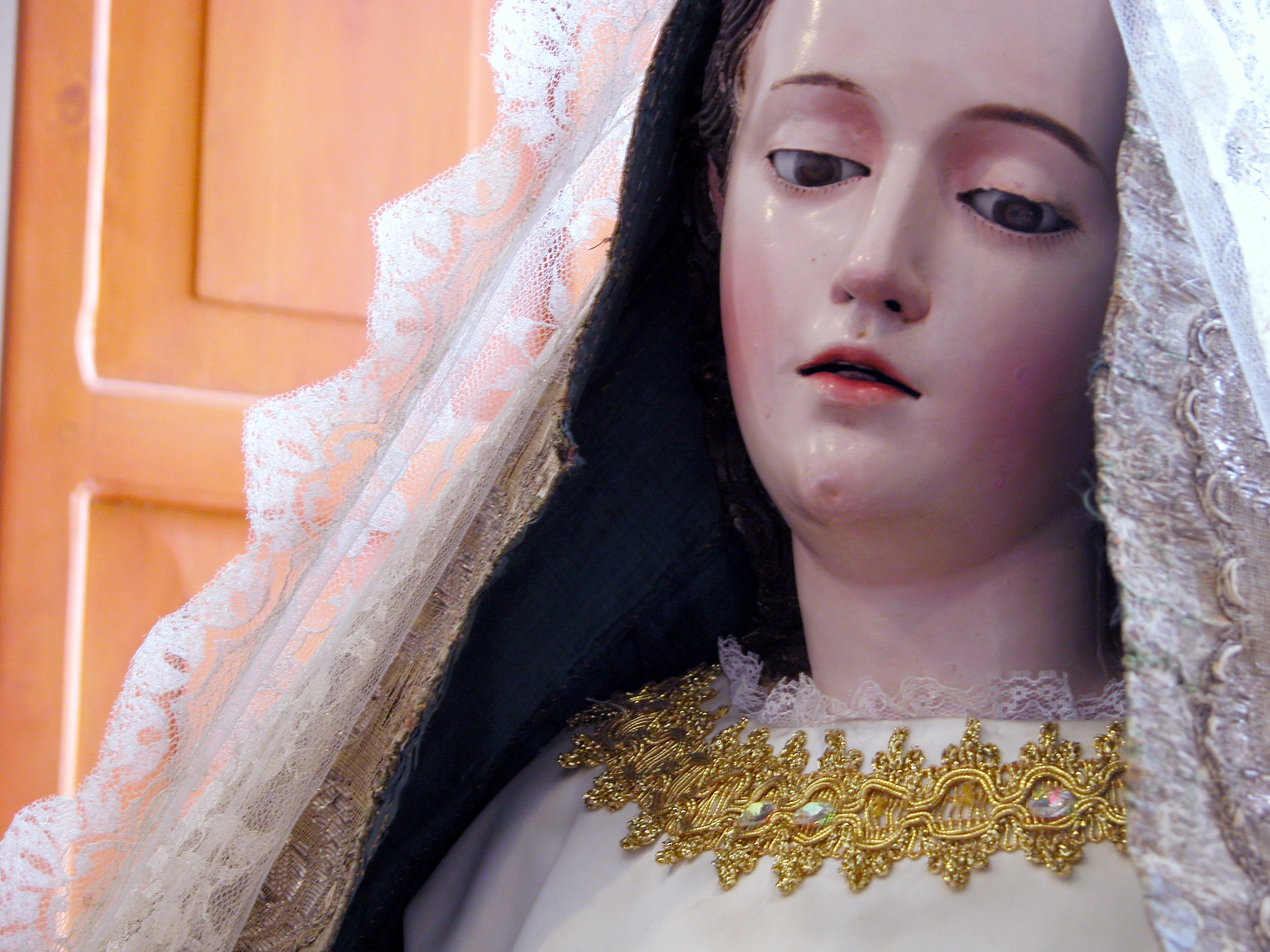
RANDOM NOMAD: Jo Gan, Director of Foreign Teachers, Author & Blogger

Born in: Columbia, Missouri USA
Passport: USA
Country lived in: China (Yuyao City, Zhejiang Province): 2009-11
Cyberspace coordinates: Life Behind the Wall | Thoughts and Experiences of a Black American Woman in China (blog)

What made you leave your homeland in the first place?
I left America due to the economy. I worked in the mortgage field and when the housing market crashed, I needed to find something else to do…or be on unemployment. So I chose to take a job teaching English in China. Two years ago, I got married to a Chinese man whom I met in Yuyao. No, he wasn’t one of my students, as most people assume. I met him in a bar. He came over and asked if he could buy me a beer. We exchanged telephone numbers, and he started calling me every day, three times a day… Six months later, we were married. Yes, it was fast by most people’s standards but I’m not one to waste time — nor is he. It’s been an interesting couple of years.

Is anyone else in your immediate family displaced?
No one else in my family — except a great uncle who lived in Germany most of his life — has ever lived abroad for a long period. Some have been in the military and traveled around, but they always lived on base.

Describe the moment when you felt most displaced.
When I arrived at the airport in Shanghai — it was my very first time coming to China. My luggage had been lost, and I couldn’t communicate with anyone to tell them or report it. I felt frustrated and angry. Then once I got all the paperwork finished, I needed to take a bus to the next city. I couldn’t find the bus station, and no one could understand what I was saying. At that point, I wanted to just get back on the plane and go home.

Describe the moment when you felt least displaced.
When I went home to visit for the first time. Everything looked familiar but felt unfamiliar. I had spent a lot of time missing home, but when I finally got there, it didn’t feel right. In Yuyao, as I walk through the streets or sit in a restaurant and people recognize me, it makes me feel part of the community.

You may bring one curiosity you’ve collected from your adopted country into the Displaced Nation. What’s in your suitcase?
Wow! I guess I’d like to take a Chinese person — if you’d let me in with a companion rather than a suitcase. Yeah…the way they think and perceive things is so different from us Americans. Their ideas of “face,” status, and beauty are so alien to me that I am sometimes at a loss for words to explain it. I can’t get used to the fact that face — losing face, giving face and having face — is of the utmost importance to them. Also, their standard of beauty is so different: very white and very thin. The only way for you to get an accurate view of Chinese culture would be for me to bring a Chinese person along to explain it all to you.

You’re invited to prepare one meal based on your travels for other Displaced Nation members. What’s on the menu?
Since I live in Southeast China, the menu would have to consist of:

  • Steamed seafood. (I apologize in advance for its high salt content.)
  • Chicken feet that have been boiled and then fried.
  • Four kinds of eggs: tea eggs, thousand-year-old eggs, fried eggs with tomato, and boiled salted eggs that have been fertilized (there’s a chicken embryo inside).
  • And of course green vegetables… (By the way, the Chinese call all green leafy veggies “green vegetables.”)

For dessert we would have yangmei  (yumberry fruit), the local favorite.

And for drinks, a choice of:

You may add one word or expression from the country you’re living in to The Displaced Nation argot. What will you loan us?
I will choose Ni chifan le ma? (Have you eaten yet?). Everywhere you go in China, people greet you with Ni chifan le ma? Food is just so important to this culture. Weddings, birthdays, funerals — all of these events involve banquets lasting several hours. Everything tends to be associated with food, and there are many food idioms.

It’s Pocahontas month at The Displaced Nation, and we’re focusing on cross-cultural communications (or the lack). What would you say is the top challenge of an interracial, intercultural marriage — and can you recommend any coping techniques?
First I will say that the most challenging part of being in an intercultural marriage is the people around you. Usually, other people are more concerned about your marriage situation than you are, especially if you live in China. They tend to spend a lot of time telling you what is wrong, or can go wrong, with your marriage. They question the reasons you got married. For example, Chinese people will ask my husband if he married me to get a green card. He tells them: “We live in China, not America. How would a green card help me here?”

As for our personal relationship, we have learned to accept each other’s differences. If something one of us does bothers the other person, we compromise. For example, Chinese men have the tendency to put pork bones, chicken bones, sunflower seed shells, and fish bones directly on the dinner table when they are eating; I find this disgusting. So now we put a bowl beside my husband’s plate for him to discard these things. If you really want to make a relationship to work, any relationship, it takes respect, consideration, and a willingness to compromise.

QUESTION: Readers — yay or nay for letting Jo Gan into The Displaced Nation? Tell us your reasons. (Note: It’s fine to vote “nay” as long as you couch your reasoning in terms we all — including Jo — find amusing.)

img: Jo Gan hamming it up in the classroom by trying on her student’s sunglasses, taken by the student on her iPhone.

STAY TUNED for tomorrow’s installment from our displaced fictional heroine, Libby, when the Patrick family is held to ransom by an army of packing crates from their new home.

If you enjoyed this post, we invite you to subscribe for email delivery of The Displaced Nation. That way, you won’t miss a single issue. SPECIAL OFFER: New subscribers receive a FREE copy of “A Royally Displaced Tea.”

Related posts:
And the Alices go to … these 7 writers who get the curious, unreal side of international travel

 © Iamezan | Dreamstime.com Used under license

© Iamezan | Dreamstime.com
Used under license

Since founding The Displaced Nation on April Fool’s Day (no fooling?), Kate Allison, Anthony Windram and I have been coming across travel writers who understand just how befuddling the life of the global nomad can be.

We are inclined to think that they have channeled Lewis Carroll’s Alice.

Offering themselves up as examples, such writers talk about what’s it like for a crossborder traveler to be plagued with feelings akin to adolescent self-doubt: what am I doing here, and will I ever get over this feeling of displacedness?
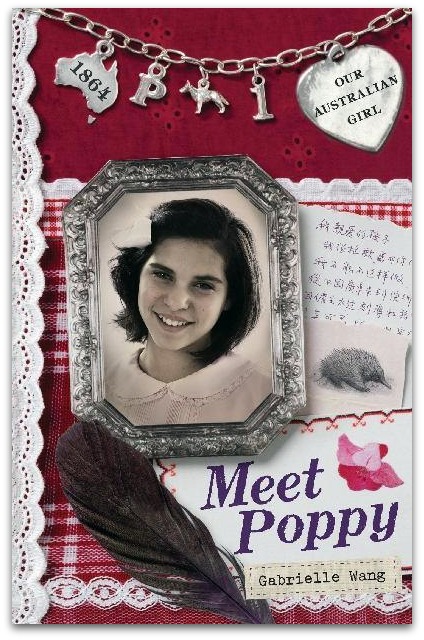
And they’ve shown us how to emerge from such escapades as more fulfilled human beings, full of stories to tell, perhaps to our grandkids, one day…

In recognition of these models of displacedness, my colleagues and I have created a new accolade for the travel writing profession: the Alice’s Adventures in Wonderland Award, otherwise known as an “Alice.”

And The Displaced Nation‘s very first Alices go to…drumroll!…(listed in reverse chronological order)

1. ANABEL KANTARIA for Do we all need behavior lessons?, in the Daily Telegraph:

“Just remember, you’re not playing in your own backyard now,” my boss told me when I took my first job in the UAE. “You’re in someone else’s yard now, and you play by their rules.” It was probably the best piece of advice I was ever given about the UAE, and one that’s kept me out of trouble on numerous occasions.

Alice link: “I don’t think they play at all fairly,” Alice began, in rather a complaining tone, “… I should have croqueted the Queen’s hedgehog just now, only it ran away when it saw mine coming!”

2. SUZY GUESE for The Unexpected Benefits to Solo Travel, in Suzy Guese: Traveling with a redheaded temperament:

While I know people who travel with others can have their share of weird conversations, solo travel for some reason brings this about almost with every day. … From a musician at the Giant’s Causeway [Northern Ireland’s only UNESCO World Heritage Site] who started talking to me by insulting my shoes, to a B&B owner who told me her “journey of life”, leaving in all of the gory details, I have had some strange encounters.

Alice link: “Your hair wants cutting,” said the Hatter. He had been looking at Alice for some time with great curiosity, and this was his first speech.

3. ANDREA MARTINS for Expat women living the high life or secretly struggling?, in the Daily Telegraph:

In mid-2005, April Davidson’s world was turned upside down following her husband’s job transfer to Mexico City. … She could not understand what was happening to her and she started taking medication for anxiety and unexplained stomach problems. Little did April realise that her feelings represented a completely normal piece of the relocation jigsaw, and that taking medication to cope with the transition process was again, not uncommon.

Alice link: “You ought to be ashamed of yourself,” said Alice, “a great girl like you,” (she might well say this), “to go on crying in this way! Stop this moment, I tell you!” But she went on all the same, shedding gallons of tears, until there was a large pool all round her, about four inches deep and reaching half down the hall.

4. SEBASTIAN DOGGART for Elegy to English shepherd’s pie, in the Daily Telegraph:

One of the things I miss the most about living outside England is shepherd’s pie. … The greatest desecration is found in Quebec, where they call it “Chinese pâté” (pâté chinois). To suggest this sacred dish has anything Chinese about it is preposterous.

Alice link: “When I’m a Duchess,” she said to herself…”I won’t have any pepper in my kitchen at all. Soup does very well without…”

5. SALLY THELEN for 4 Tips on Embracing Your Inner Weirdo, in Unbrave Girl:

This morning, when I went running [in Wuxi, China], I happened upon a group of teenagers dressed up as anime characters. A crowd had formed around them to gape at their hot pink wigs, Nutcracker-like jackets and French maid dresses.

I stopped for a minute to stare slack-jawed with the rest of the crowd.

I was baffled.

I was confused.

And, frankly, I was a bit miffed. After all, didn’t these kids know that I was the main attraction at this park?

Alice link: This piece of rudeness was more than Alice could bear: she got up in great disgust, and walked off, the Dormouse fell asleep instantly, and neither of the others took the least notice of her going, though she looked back one or twice, half hoping that they would call after her…

6. SEZIN KOEHLER for My foreign body: geocharacteristics of a population, in Expat+HAREM:

When I first arrived in Prague I was a size 7, had an acceptable C-cup and chocolate-colored skin. Three years later I’ve become a size 12 and an overbearing DD-cup with skin the color of weak tea.

Aging plays only a small part….

Alice link: “Curiouser and curiouser!” cried Alice (she was so much surprised, that for the moment she quite forgot how to speak good English); now I’m opening out like the largest telescope that ever was! Good-bye, feet!”

7. JENNIFER EREMEEVA for Conversation is a One-way Street, in Dividing my time: finding the funnier side of life in Russia:

“Let me tell you about New York,” he [a Russian friend of my husband’s] said, “I was really impressed: the streets are completely strait, from one end of Manhattan to the other — ”

“– Well, except for the Village down to Wall Street,” I interjected absent-mindedly.

“Jennifer went to University in New York,” said my husband apologetically to the group.

Sergei squinted at me suspiciously, and then, changing tack, began to expand on the virtues of vacationing at Valaam on Lake Ladoga.

Alice link: “I’ve been to a day-school, too,” said Alice; “you needn’t be so proud as all that.” … “…[Y]ours wasn’t a really good school,” said the Mock Turtle in a tone of great relief. “Now at ours they had at the end of the bill, ‘French, music, and washing — extra.”

QUESTION: Do you have a favorite from the above, and do you have any other writers/posts to nominate for our next round of Alices? We’d love to hear your suggestions.

STAY TUNED for tomorrow’s interview with Random Nomad Balaka Basu. She appeals for citizenship in The Displaced Nation — and agrees to answer one Alice question!

If you enjoyed this post, we invite you to subscribe for email delivery of The Displaced Nation. That way, you won’t miss a single issue. SPECIAL OFFER: New subscribers receive a FREE copy of “A Royally Displaced Tea.”

Related post: