The Displaced Nation

A home for international creatives

Love Living Overseas: An interview with Michelle Garrett aka The American Resident

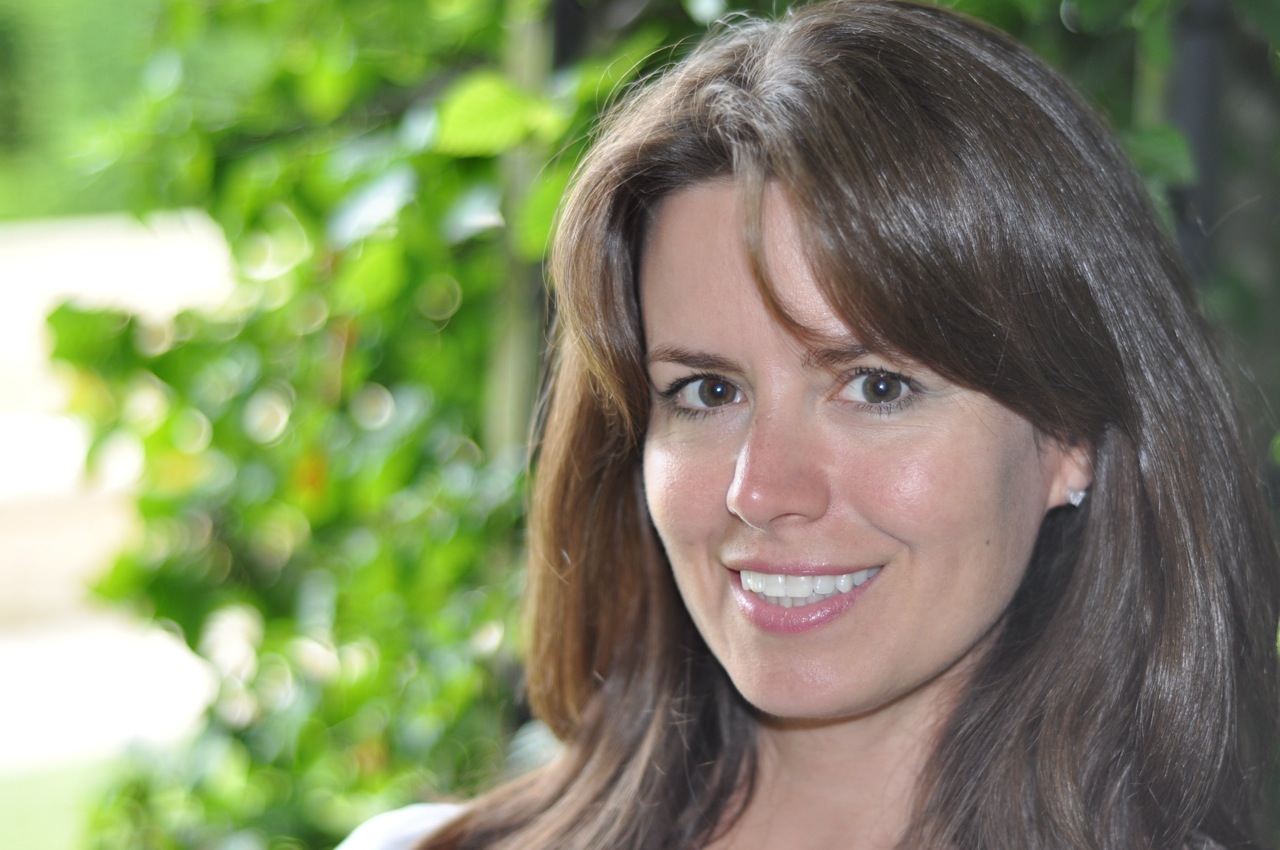
Displaced Nation Blog - Michelle Alnwick 2In April’s Alice Awards we featured expat blogger Michelle Garrett (an American who has made a home for herself in Britain). She won an “Alice” for her most recent column in Expat Focus, in which she asked readers whether their experience living abroad has inspired them to write a book.

Michelle’s column certainly struck a chord with us here at The Displaced Nation as well as leaving us intrigued and wanting to know more. Regular readers know that we always like to focus on expat writing and highlight it, whether it be Jack the Hack’s tips or our lists of the best books for, by and about expats.

Michelle revealed in that post that she is working on not one but two expat-related books: the first, a helpful guide for unhappy expats called Love Living Overseas; the second, a novel. Today Michelle has kindly agreed to answer my questions about why so many expats find themselves blogging or attempting to write books, as well as her own writing plans.

We enjoyed reading your article at Expat Focus about whether expats necessarily have to write expat books. Why do you think so many people who live abroad feel like writing a book about the experience?
Humans are storytellers. It’s how we share experiences and how we learn. Blogs and self-publishing have opened up a new way of storytelling and when we experience something life changing, as many expats do, we want to tell the story and many of us do so through these mediums. Our stories may be in the form of autobiography or a fictionalized account of our experiences.

Some books are less about the story and more about tips or self-help. These books are often written by expats who have had a hard time with culture shock and once they move through those difficult months or years they feel compelled to help others.

Do expats have something unique to say?
As with any type of book writing, people need to really research the market before they can know if they have something unique to contribute. I do come across expat books, whether stories or books of tips where the author doesn’t seem to have done their research, and the story or information is nothing new or exceptional. However, the nature of the expat niche means there are a variety of ways to spin a story and many different angles to pitch tips, so there should be a wide variety of expat literature for our shelves!

In my research for Love Living Overseas, a book for unhappy expats, I have tried to read the best examples of books in the expat niche, and then see how I can best contribute to that collection.

What are the best examples in the genre, in your opinion?
This list is by no means complete, but among my favorites are:

Expat Women: Confessions, by Andrea Martins and Victoria Hepworth: a valuable book in that these are real questions people have asked (some quite gritty) and many of them I’ve not seen covered in other places.

Living Your Best Life Abroad, by Jeanne A Heinzer: a wonderful book for those of us who need a bit of step-by-step guidance for learning how to do just that: live our best lives abroad.

The Expert Expat, by Melissa Brayer Hess and Patricia Linderman: a fantastic resource covering almost every aspect of the relocation process, including pets, children, and safety—they even include tips for keeping in touch when you move on again.

Tell us more about the two books you are working on.
Love Living Overseas, a book for unhappy expats to be published this autumn, is intended for accompanying partners as well as those expats who have moved to the home countries of their foreign partners. I was once an unhappy expat and wanted to share what I’ve learned through my experiences and research. It’s a book I wish I’d had in the early days—a shortcut to expat happiness!

The book will contribute to the existing expat literature by taking advantage of the Internet in a new way, really using the strengths and opportunities of the Internet to my and my readers’ advantage.

The other book I’m working on is a novel about an American expat who is tired of feeling worthless. She married a British man to escape her dull life, but it hasn’t worked out and she is left adrift in Britain. She is sure there’s more to life than what she’s experiencing, and is equally sure she doesn’t deserve it. On impulse she accepts an invitation from a friend who is driving across the country and needs a companion for the journey. When she reaches their destination, she takes advantage of her anonymity to start a new life with a new identity, only to realize she is actually discovering her true self. I’m playing with the idea we expats often discuss about moving to a new place and taking advantage of the fresh start.

Would you ever consider writing a memoir or “life map,” as Judy Dunn calls it?
Definitely, but perhaps only for my entertainment, not for public consumption! I LOVE the term “life map” by the way—what a great description.

Do you prefer writing fiction or non-fiction?
I love creating books that help others.

When I first brought my new blended British family (7 of us!) to Minnesota, where I grew up, I realized that they would enjoy the experience more if they knew a bit more about Minnesota so I created a booklet of interesting facts. (Did you know that Minnesota and Great Britain are approximately the same square miles?)

And I am really enjoying writing Love Living Overseas because I truly feel it will be a helpful book.

But I also love inventing stories and playing with allegory and symbolism.

What are the biggest challenges of each genre?
I think the biggest challenge for non-fiction is providing information in a captivating way. Tips and facts can be dull—even helpful tips and facts.

As far as fiction goes, I find it challenging to create a believable story that moves people, but it’s a challenge I love.

We notice you are featuring quite a few writers on your own blog, The American Resident, of late. What lessons have you picked up from them? Take, for instance, your interview with the Aussie novelist Allison Rushby, who’s written a travel memoir: Keep Calm and Carry Vegemite. What was the most interesting thing she had to say?
Allison was lovely to work with and very interesting to correspond with regarding writing and expat life. One of my favorite comments of hers on writing Keep Calm and Carry Vegemite was:

… it’s very rare to write a memoir that is 100% true to what happened. It’s not that you lie to the reader, but sometimes events need to be shifted around in time and so on for the story to work—to be cohesive and to make sense in a story-like format. I was worried about doing this at first, but, in retrospect, I can see how the book just wouldn’t have made sense if I hadn’t done it.

* * *

Thanks, Michelle! Readers, that’s some sound advice from Michelle about not assuming your expat experience is unique and researching the market first. Do you have any follow-up comments or questions for her? (Want to learn more about Michelle? Follow her blog, The American Resident, or on Twitter.)

If you enjoyed this post, we invite you to register for The Displaced Dispatch, a round up of weekly posts from The Displaced Nation, with seasonal recipes, book giveaways and other extras. Register for The Displaced Dispatch by clicking here!

STAY TUNED for tomorrow’s post, another installment in the life of our fictional expat heroine, Libby. (What, not keeping up with Libby? Read the first three episodes of her expat adventures.)

Related posts:

img: Michelle Garrett

GLOBAL FOOD GOSSIP: Water, water, everywhere, Nor any drop to drink.

JoannaJoanna Masters-Maggs, our resident Food Gossip, is back with her monthly column for like-minded food gossips.

This month, Joanna addresses the issues facing a wine-loving girl who finds herself living in a dry country for two years.

* * *

“I don’t think I can do this,” I whined to my husband casting my eyes around the restaurant in something close to desperation.  “I think it must be time for repatriation, don’t you?”

My husband had taken me to a smart restaurant in Al-Khobar, Saudi Arabia, on our first night in The Kingdom.  It was such an attractive place: lovely china and glasses, a chic wooden floor, attentive waiters and delightful food. Yet it was all, so, so wrongIt wasn’t just that I was clad in a form-engulfing abaya, the sleeves of which kept getting in the way of everything.  It wasn’t that we had been ushered to the less well-appointed “Family Section” without views over the The Gulf.  Annoying as those facts were, they weren’t the only irritant.

“Look.” I held up my large balloon shaped wine glass for inspection. Full of San Pellegrino, it shimmered under the tasteful lighting. “What’s the point of all this wonderful food if you just wash it away with water?”

“It’s nice water. Italian,” encouraged David, whose heart must have already been sinking in the knowledge that he had two more years to live with a discontented missus.

“It’s. Not. Wine.” I enunciated my words carefully. “And I have beef.”

More to the point, I had a beef. Let me make this clear for anyone who has not had the Saudi experience: there is no alcohol to be had anywhere.  It is forbidden, interdit, prohibido, indeed, haram.  Occasionally a hapless supermarket manager might mistakenly stock chocolate liqueurs, but who wants those, with or without a good Chateaubriand?

Home-brewing, the expats’ hobby

I’m all for fitting into the lifestyles of the places where I wash up, but I like a bit of give and take. Several years without wine or bacon didn’t seem like give and take for a girl who is half English and half Irish. On that first night, I would have considered raiding a Church’s communion wine but, of course, there are no churches in Saudi either.

So started a two-year quest to find an acceptable alcoholic drink which would inject a little of the warmth wine offers to a dinner party, and a little of the naughty fun that oils the wheels of a party the rest of the world over.

Our starting point was the homemade wine with which most expats become acquainted.  I won’t bore you with the recipe; suffice to say it involves a water cooler bottle, gallons of red or white grape juice, lemon, lots of sugar, yeast and a handful of teabags – for the tannin, of  course.  This lot is heated up then transferred to the water bottle and bunged up with the special cork and an impressive-looking glass “curly wurly” tube.  After four or five weeks, when the smell of yeast has subsided, the wine can be bottled.

The resulting wines can vary surprisingly, but in one thing they are identical: each is truly appalling.  It doesn’t matter the method used, the care taken or the expensive ingredients experimented with — fresh blueberries in Saudi, anyone? — it is just dreadful.  We knew someone who actually made a batch from grapes he had trodden himself. Well, perhaps that never did sound promising.

Vimto — with a Tixylix chaser

During the weeks of waiting for our wine to ferment, I realized why even cough mixture was banned in The Kingdom.  A few dry company dinners complete with presentations and speeches convinced me that teetotalism is not advisable, at least not before retirement. If you must spend dinner with a bunch of people not entirely of your choosing, a slug of Tixylix would be welcome.

I began to view anything sold in bulk with grave suspicion.  Why, for example, would anyone wish to buy large quantities of Vimto, a cordial traditionally found in fish and chip shops in Northern England?  Could it be possible that it was the secret to a sloe gin sort of drink?  The adverts on massive billboards throughout the city suggested a sophistication more readily associated with champagne than a fruit squash. That observation led to an ill-advised attempt at a Vimto-based wine. Sadly, and perhaps predictably, the result was the cough mixture a million sleepless Saudi parents would have been grateful for. Never mind; undeterred, we continued our experiments with a dedication and wanton disregard for our health that the Curies would have admired.

Putting the fizz in compound life

Early in our stay in Saudi, I heard rumours of “The Champagne Lady” of another compound.  She had, so it was said, perfected a sort of sparkling wine which, if not exactly champagne, was a far more pleasant drink than Saudi Ordinaire.  My search for her was rewarded in time and she proved generous with her recipe.  The key requirements were a strong lemonade bottle with a wired cork, unsweetened white grape juice and just two grains of yeast. Even one grain over requirements could result in a nasty glass-shattering explosion.  One must resolve to keep the fledgling beverage in the fridge and not agitate it for two weeks — harder than it sounds in a household with four kids. After guarding the fridge door like an over-zealous Rottweiler for the required time, I could pull down the wire to cork the bottle then leave it in its comatose state for a further two weeks.  The  “pop” on opening was deeply gratifying; the flavor, surprisingly, “not so bad”. Rather like Appeltiser, it did not cause one’s face to reflexively contort while downing it.  Champagne it was not, but drinkable it was.

Add the Perrier and face the grapes of wrath

Two years of experimentation taught us two things.  Firstly, the only way to make a drink that approximated a bone fide drink one might find on sale elsewhere was not to serve our wine straight but to make a “Pimms” cocktail from it.  We would pour it over a glassful of ice and top up with lemonade.  After adding plenty of mint, cucumber and any other vegetation to hand, we could, at a stretch, imagine ourselves at Wimbledon.  Unlike the wine alone, it was vaguely similar to what we wished it was.  That alone justified the considerable number of Pimms parties we hosted in our time.

The second thing we learned, as a direct consequence of the first thing we learned, is that a wine snob is a wine snob whatever his situation.  Making our “cocktail” on occasion caused as much offence as if we had used a Grand Cru as the base, especially if mixed it with someone else’s wine.  The snorts of outrage could have been no stronger.  Indeed cutting someone else’s wine with anything from Perrier to club soda to ice, was to run the risk of causing deep and enduring offense.  There are certain people (and you know who you are) who should remember wine is meant to be fun.  You need every laugh you can get in certain circumstances, and a dodgy Saudi Red ought to be the perfect vehicle for hilarity.

Postscript

Oh, and in case you were wondering — why the popularity of Vimto? It turns out that it is the Saudi drink of choice during the Iftar breakfast enjoyed at sundown each day of Ramadan.  It addresses low blood sugar levels after a day of fasting and stands up well to the full flavoured food on offer – and it doesn’t make you screw up your face when you drink it.

Joanna was displaced from her native England 16 years ago, and has since attempted to re-place herself and blend into the USA, Holland, Brazil, Malaysia, Venezuela, Saudi Arabia, and now France. She describes herself as a “food gossip”, saying: “I’ve always enjoyed cooking and trying out new recipes. Overseas, I am curious as to what people buy and from where. What is in the baskets of my fellow shoppers? What do they eat when they go home at night?”

Fellow Food Gossips, share your own stories with us!

Image: Joanna in her abaya, celebrating an English goal during the World Cup

STAY TUNED for tomorrow’s post!

If you enjoyed this post, we invite you to register for The Displaced Dispatch, a round up of weekly posts from The Displaced Nation, with seasonal recipes, book giveaways and other extras. Register for The Displaced Dispatch by clicking here!

Related posts:

NEW VS OLDE WORLDS: British husband and Brazilian wife swap cultural allegiances

Libby Collage New&OldThanks to Kate Allison, regular readers of the Displaced Nation are treated every other week to a new episode in the life of fictional expat Libby Patrick, a 30-something British woman who has relocated with her spouse to a town outside Boston. Her diary, Libby’s Life, is replete with rich observations about life in New England vs. England. In the weeks when Libby isn’t published, we are featuring posts by writers who are sensitive to the often subtle, yet powerful, differences between new and “olde” worlds. Today we hear from one of our regular contributors, Andy Martin. Those who caught Andy’s Random Nomad interview at the start of the year will remember that he’s a British social worker and football geek who followed his Brazilian spouse back to her native São Paulo.

—ML Awanohara

AndyMartininUK_pmA few weeks ago I made my first trip home to the UK since moving to São Paulo, Brazil’s largest city, in February 2012.

Prior to leaving I started to ponder how I’d feel once I touched down in London.

After such an extended period of time, I guess it’s only natural to feel this somewhat apprehensive. Yet another reason for my intrigue was the number of times over the past year a Brazilian had asked:

Você tem saudades de Londres?

There is no direct translation for “saudades“—which probably says a lot about how us English speakers struggle to express our feelings. Broadly it translates as something like:

having a deep sense of nostalgia or longing for something or someone*

To such beautifully expressed enquiries of my sentiments about home, my typical response has been some muttered utterance like “Na verdade, não,” which basically means: “No, not really.”

What did I say above about us English speakers being expressive?

Or perhaps that’s just me.

Delighted to be in the new world…

Yet, on the whole those two words do sum up my thoughts about home. Sure, I miss friends and family—but the place? As I said, “Na verdade, não.”

I’ve lived in London, walked its streets and drank in its pubs for most of my life, so why would I be so desperate to go back?

Perhaps it is because I know that we’re likely go back to settle there eventually.

Alternatively, perhaps it’s not that I don’t miss London, more that I am happy with my lot here in São Paulo.

Which I am.

…while my wife is attached to the old one!

Ironically, it is actually my wife who is the one who most wants to return “home” to London after she finishes her degree at the end of this year**. This surprises most people, who assume that my Brazilian wife is the one who wants us to stay in Brazil, when it’s actually the opposite.

Why?

Part of it, I guess, can be put down to the opportunity each of us has to explore the unknown.

When I traveled around South America in 2007, I had never before left Europe. Likewise, until she went to Buenos Aires in 2008 (where we met), she had never left Brazil.

Both of us had only really ever known one way of life.

Now, with my wife having spent three years in London and us now having spent almost 18 months in São Paulo, we both seem to have come to appreciate and adore the things about each other’s countries that the other takes for granted or even dislikes.

The predictability, and quaintness, of London

For my wife São Paulo is a stressful city, with its inadequate infrastructure having a tendency to make life more complicated than it needs to be.

On top of this it’s a place that for her, because of the fear of crime, constantly leaves her feeling on edge.

Conversely, London is a place where she says she feels safe and where life is made easier by things working as they should—even if it that isn’t always the case.

For example, it still amazes her that a train can be scheduled to arrive at, say, 10:27 a.m. and then on the whole it actually arrives and departs at 10:27 a.m.

Additionally, coming from a land that was “discovered” as recently as 1500 by the Portuguese, she finds Europe’s long history fascinating—the fact that there are buildings in London older than the country of Brazil itself being a prime example.

I’ll be honest, in some ways I probably felt the same when I first arrived in Brazil. My initial posts on my own blog, The Book is on the table, whilst written with my tongue firmly in cheek, could possibly also be seen as me just being another gringo moaning about stuff—the subtext being that “everything back home is much better.”

As time went on, I realized that I didn’t want to be or become one of those moaning expats. Of course, it is natural to compare things when you move or go abroad. Likewise, there’s nothing wrong being critical if it’s fair and balanced.

But to make a habit of it isn’t good for one’s mental health. It ends up making you bitter and unhappy with your new environment. It’s also the quickest way to feeling homesick.

Even worse, such comparisons can easily drift into self-righteous rants asserting one’s cultural superiority—a throwback to the attitudes of our colonialist ancestors that did no one any good back then and will do no one any good now.

The unpredictability, and beauty, of Brazil

Around the time I realized that moaning and comparing are pointless enterprises, I started to feel a genuine affection for Brazil, something that has been reflected in my blog posts over the past 6-9 months.

Firstly, it would be hard not adore a country and continent that shares my passion for futebol.

Additionally, I found it easy to get used to a relaxed, slower pace of life in this part of world, which is not hard to complain about when it’s touching 30°C (86°F) for most of the year.

We have a swimming pool in our apartment block, something that is unthinkable in the UK, and there’s 4,500 miles of stunning coastline to pick from to go to on holiday.

Then, there’s the fact that if I want to go out for a beer or meal I know the bar or restaurant won’t be shut by midnight, as they so often are in London. If I want to stay out sipping a beer until 4:00 a.m., I can.

I’m also enjoying, although also a little frustrated by, the challenge of learning Portuguese, and as someone who studied Sociology and Social Anthropology and then later worked with migrants as a social worker, living in Brazil provides the perfect opportunity to explore South America, its indigenous history and the legacy of immigration after its colonization.

Additionally, the continent’s history of revolution and resistance against oppression also matches my own rebellious tendencies and political values—something I didn’t always have an outlet for in the UK.

Finally, it might sound a little condescending but I’ve now come to embrace some of the things I once moaned about. Living in London is great, and I appreciate my wife’s perception of the quality of life, but all the things I mentioned above provide an alternative quality of life. In other words, there’s more to life than just functioning public services.

Brazil may be frustrating sometimes, but it certainly makes life just a little bit more interesting—though my wife is yet to be convinced by that argument.

Maybe at some point I’ll change my mind and the novelty of life in Brazil will wear off—there is certainly enough evidence to suggest that might be the case. However, for the time being, whenever a Brazilian affectionately ask about my longing for home, I’ll continue to mutter: “Na verdade, não.”

*It’s extremely convenient in these situations having a translator as your wife.
**As a compromise I’ve so far managed to negotiate us staying until at least the end of the World Cup next year, using these two strong arguments: 1) I love football; and 2) Living in São Paulo meant we missed the Olympics in London.

* * *

Speaking of the Olympics, the handing over of the torch to Brazil at the end of the London Olympics certainly showed you the contrast between old and new worlds! Readers, can you relate to this couple’s frequent twists and turns in their cultural allegiances?

STAY TUNED for next week’s series of posts!

If you enjoyed this post, we invite you to register for The Displaced Dispatch, a round up of weekly posts from The Displaced Nation, with seasonal recipes, book giveaways and other extras. Register for The Displaced Dispatch by clicking here!

Related posts:

Img: Photo of Andy Martin taken during his recent trip to the UK, at a wedding.

Portrait of woman from MorgueFile; Lighthouse (R) from MorgueFile; Lighthouse (L) from MorgueFile

JACK THE HACK: Advice to all you expat writers: Publish and be damned!

JACK THE HACK _writingtipsJack Scott is back with his monthly column for all of you wannabe authors who are hacking away at travelogues-cum-memoirs (or cum-novels?). For those who don’t know, he was a Random Nomad for the Displaced Nation way back when we started this site. After an expat experience that was literally something to write home about, he and his partner, Liam, have traded in the dream for a less pressured existence back home in the UK.

—ML Awanohara

After months of burning the midnight oil, neglecting the sprogs and denying your long-suffering partner their conjugal rights, your memoir masterpiece is finally done and dusted. Whether you’re pleased with the result of your hard graft or just relieved, pop a cork. It’s quite an achievement.

So what’s next? Well, obviously you want to launch your labour of love onto an unprepared world—but how?

Essentially, you have four choices:

1) The big boys—the Holy Grail

Who wouldn’t bite the hand off a corporate suit offering a fat advance cheque, certainly not me. It sounds tantalising. Let the big boys do all the work—edit, design, promote and distribute—while you sit back and watch the royalties land on the mat. And you get to feel like a ‘proper’ author. Easy.

Except, it isn’t.  I know of no traditional publishing house that accepts unsolicited manuscripts, so don’t waste your time and money.

Mainstream publishers have cosy relationships with literary agents who filter out the dross so they don’t have to.

So, your first task is to bag yourself an agent who’s willing to take a punt on you (and a cut from you).

That’s not easy either. Agents receive thousands of manuscripts every year and few make it past the receptionist’s in-tray.

Keep the Faith. There are things you can do to avoid getting your memoir filed in the bulging bin:

  • Carefully read what an agent is looking for. Select only those who fancy a trip down memory lane. If you send your book to anyone else, you’re toast.
  • Follow the submission guidelines to the letter. If they want it double spaced in Times Roman 12, a full book proposal and a copy of your grandma’s marriage certificate then do exactly what it says on the tin.
  • Develop the patience of a saint, do not expect a quick response (if any) and don’t hassle.

2) Half-way houses—stepping into the breach

As we all know, the traditional bricks and mortar bookshop is under seize from the growth of on-line retailers (particularly Amazon), print-on-demand services and electronic books and they are transforming the market. A number of smaller publishers have sprung up to take advantage of this brave new world. For an upfront fee (often with set menu and a la carte offers), these smaller outfits will work with you to prepare your book to a professional standard (both print and e-versions) and get it onto the virtual shelves.

In return for a higher royalty rate, you will be expected to do most of your own promotion.

The advantage of print-on-demand publishing is that you can keep a stock of books in your bedroom for direct sales (to local bookshops, through your Web site and by emotionally blackmailing your nearest and dearest). The disadvantage is that most major book chains won’t give them shelf room.

3) Vanity publishing—the blind leading the desperate

We’ve all seen the “Authors Wanted” ads popping up on Google placed by companies who trade on a writer’s desire to see their name in print. For the right price, they’ll print almost anything. I’m not saying they are necessarily unscrupulous or misleading, but the quality of the written word isn’t their bag. Unfortunately, the line between the vanity publisher and the half-way housemate is becoming increasingly blurred. For me, the main distinction is selection and control. Be careful.

4) Self-publishing—the DIY approach

If your story is fit for publication (that is to say edited, proofed and formatted with a snazzy cover), why not self-publish as an e-book? It’s easier than you might think. Open an Amazon Kindle account, upload your file and let them do the conversion and listing.

And there’s always Smashwords, which will convert and distribute your e-book to all the main online retailers (including Amazon). Formatting an e-book for Smashwords is a bit fiddly but they do publish a handy style guide to lead you by the hand.

The advantage of self-publishing is that you get to keep full control over your work, including the price, and you’re paid direct without a publisher’s cut.

If you really want to see your precious words in print (and there’s nothing like the smell of a brand new book), get a printer to set the presses running. Many offer their services online and deliver to your door so you don’t even have to leave home.

Amazon also provides a print-on-demand service called CreateSpace. This way, people can order a print copy direct from them and, if you get the look and feel right, no one need ever know you did it yourself.

Postscript: Bedtime reading

Especially for expats with UK connections: The Writers and Artists Association has a comprehensive list of UK and overseas agents and their requirements. You’ll have to register first but it’s free. Their site also contains a well of advice about all aspects of the publishing business.

Which leads me to …

WRITING TIP FOR EXPATS NO 3:

Publish and be damned!

With all of the options out there, what are you waiting for?

* * *

Readers, any comments, further questions for Jack the Hack? He’ll be back next month with some more writing tips…

Jack Scott’s debut book, Perking the Pansies—Jack and Liam move to Turkey, is a bitter-sweet tragi-comedy that recalls the first year of a British gay couple in a Muslim country. For more information on this and Jack’s other titles, go to his author site.

STAY TUNED for tomorrow’s post, another in our NEW vs OLDE WORLDS series.

If you enjoyed this post, we invite you to register for The Displaced Dispatch, a round up of weekly posts from The Displaced Nation, with seasonal recipes, book giveaways and other extras. Register for The Displaced Dispatch by clicking here!

Related posts:

Images: from top, clockwise: Hand with pen / MorgueFile.com; Boats in King’s Lynn, Norfolk / MorgueFile.com; Jack Scott, used with his permission; Turkish boats / MorgueFile.com

And the May 2013 Alices go to … these 4 international creatives

 © Iamezan | Dreamstime.com Used under license

© Iamezan | Dreamstime.com
Used under license

As subscribers to our weekly newsletter will hopefully have noticed by now, each week our Displaced Dispatch presents an “Alice Award” to a writer who we think has a special handle on the curious and unreal aspects of the displaced life of global residency and travel. Not only that, but this person has used their befuddlement as a spur to creativity. He or she qualifies as an “international creative.”

Today’s post honors May’s four Alice recipients, beginning with the most recent and this time including citations.

So, without further ado: The May 2013 Alices go to (drumroll…):

1) ADAM GROFFMAN, travel blogger and expat

Source: “How a children’s book inspired my wanderlust” in Travels of Adam
Posted on: 13 April 2013
Snippet:

You see, what I loved about this book as a kid is the focus on architecture and food in this utopian society. Each family is responsible for bringing a country’s culture to the island nation.

Citation: Many of us at the Displaced Nation attribute our abilities to tolerate and even embrace life abroad (the strange foods and drinks, the loneliness, the largely incomprehensible rules) from having taken to heart Alice’s Adventures in Wonderland and its sequel, Through the Looking Glass, as kids. A good dose of literary nonsense has taken us a long way, and even to this day, we appreciate having recourse to Lewis Carroll’s great works to make sense of our rather curious lifestyles in countries other than those in which we were born.

Adam, we understand that you quit your job in Boston to travel the world and that you trace your own wanderlust to the 1947 American children’s book The Twenty-One Balloons, by William Pène du Bois, a story that in some ways is even more fanciful than Alice’s.

For those who don’t know it: The book begins when a schoolteacher, Professor William Waterman Sherman, becomes bored with his life and sets off on a journey in a hot air balloon called The Globe. He hopes the wind will blow him and his balloon all around the world. But instead he has a crash landing on the mysterious island of Krakatoa (Indonesia), where he discovers a utopian society started up by a group of wealthy families. Each family owns a restaurant of different types of foreign foods and all members of the island eat together at a different house, full of fantastic inventions, every night. Krakatoa being a volcanic island, the families are aware of the danger that the volcano could erupt at any moment (in fact its volcanoes erupted in 1883). Their escape plan consists of a platform made of balloons…

Adam, we love the idea of emulating a fictional character who favors balloon travel—the kind that begins without regard to speed and without a destination in mind. It’s also romantic to think that you expect to find, at best, utopianism, at worst, good food, in the course of your world wanderings. Perhaps it accounts for why you’ve landed your own “balloon” in Berlin, Germany’s creative capital and a city renowned for its architecture (only, how is the food there?).

2) TRACY SLATER, expat writer, author and blogger

Source: “What Does Home Mean When You Live Abroad?” in The Good Shufu
Posted on: 8 May 2013
Snippet:

I know how easy it is, when we live overseas, to lose our gimlet eye about home: to romanticize it, to see it as a kind of lost Eden, a place where we wouldn’t suffer the same disappointments or lonelinesses or defeats that we suffer in our expat lives.

Citation: Tracy, we would add to that something we learned from Alice, which is that part of the reason for cherishing the memory of home so much is that you can’t easily share what you love about it with the people you encounter in your new place. Alice experiences this when trying to talk about her beloved cat, Dinah, with the Wonderland creatures:

“I wish I hadn’t mentioned Dinah!” she said to herself in a melancholy tone. “Nobody seems to like her, down here, and I’m sure she’s the best cat in the world! Oh, my dear Dinah! I wonder if I shall ever see you any more!” And here poor Alice began to cry again, for she felt very lonely and low-spirited.

We also find inspiring your quote from the Egyptian writer and thinker André Aciman, that all exiles impulsively look for their homeland abroad. Even poor Alice suffered from that affliction—recall her trying to make herself at home at the Mad Hatter’s tea party, only to discover it is a less than civil gathering to what she is used to. First she is told there is no room for her at the table; then when she sits anyway, that her hair needs cutting. She is offered wine even though there isn’t any, and told to take more tea even though she hasn’t had any.

In fact, some of us can relate quite directly to this need to feel at home via a good cup of tea. TDN writer Kate Allison, for instance, has lived in the United States for many years but to this day fails to understand why Americans give her a cup of lukewarm water and a tea bag when she orders tea. And ML Awanohara, who lived in England before becoming an expat in Japan, often longed for English tea while sitting through the Japanese tea ceremony.

Tracy, we very much look forward to your forthcoming book, The Good Shufu: A Wife in Search of a Life Between East and West (Putnam, 2015), to help us make sense of such classic expat predicaments.

3) DANIELLA ZALCMAN, photojournalist

Source: “London + New York: A double exposure project”—an interview with Daniella by Austin Yoder on Matador Network
Posted on: 22 April, 2013
Snippet:

When [Daniella] moved from New York to London, she decided to create a series of double exposures to marry the spirit of both cities based on a combination of negative space, color, and contrast. Daniella’s double exposures create beautiful imaginary landscapes, and are captured entirely with her iPhone 4s.

“When I got to London, I knew that I wanted to capture not just the sensation of leaving NYC, but also of exploring a new city and making that environment feel like home.”

Citation: Daniella, we are enchanted by your idea of creating a composite of your beloved home city (New York) with your adopted city (London) to come up with an imaginary landscape. Indeed, we think it must be akin to the process Lewis Carroll used when creating Alice’s Wonderland—blending the bucolic English countryside surrounding Alice (she is sitting on the river bank considering making a daisy chain when the White Rabbit first appears) with the curious world that exists at the bottom of the rabbit hole, the familiar with the unfamiliar. When Alice awakens and reports her dream to her sister, the sister “half-believes” herself to be in Wonderland—if only she can suspend her disbelief for long enough to the sheep-bells tinkling in the distance as rattling teacups, the voice of the shepherd boy as the Queen’s shrill cries, and the lowing of the cattle in the distance as the Mock Turtle’s heavy sobs…

4) “SARAH SOMEWHERE”, world traveler and blogger

Source:On Freedom” in Sarah Somewhere blog
Posted on: 29 April 2013
Snippet:

I am not, by nature, a free spirit. I’m a worrier, a control freak and a chronic people pleaser. Letting go and trusting in the universe’s plan for me is not my default setting, nor is being content with what I have rather than continually striving for more. I still need some practice.

Citation: Sarah, your struggle with living life in the moment in Mexico puts us in mind of Alice, who, is constantly worrying about the impression she is leaving on the Wonderland residents, and finds it a challenge to enjoy the moment in a place as curious as Wonderland. We wish you luck in finding that sweet spot between total personal freedom and societal obligations. And, taking our cue from Alice’s sister, we envision a day when you’ll be telling stories about your adventures in Southeast Asia, China, Mexico and India to a group of children and inspiring them to follow their unique destinies:

she pictured to herself how this same little sister of hers would, in the after-time, be herself a grown woman; and how she would keep, through all her riper years, the simple and loving heart of her childhood: and how she would gather about her other little children, and make their eyes bright and eager with many a strange tale, perhaps even with the dream of Wonderland of long ago: and how she would feel with all their simple sorrows, and find a pleasure in all their simple joys, remembering her own child-life, and the happy summer days.

* * *

So, readers, do you have a favorite from the above, and do you have any posts you’d like to see among June’s Alice Awards? We’d love to hear your suggestions! And don’t miss out on these weekly sources of inspiration. Get on our subscription list now!

STAY TUNED for tomorrow’s post, another Jack the Hack column…

Writers and other international creatives: If you want to know in advance whether you’re one of our Alice Award winners, sign up to receive The Displaced Dispatch, a round up of weekly posts from The Displaced Nation, with news of book giveaways, future posts, and of course, our weekly Alice Award!. Register for The Displaced Dispatch by clicking here!

Related posts:

LIBBY’S LIFE #78 – Trust no agent

There is nothing better than spending a sultry, summer afternoon in the cool darkness of the Maxwell Plum. We’re the only customers here, Jack is at nursery, and the twins are napping in their double pushchair beside our table. If I shut my eyes like this, thereby ignoring both the twins and my thirty-something reflection in the window, I can almost believe I am twenty-two again. Of course, I didn’t know any Americans when I was twenty-two, so the three other accents at the table aren’t authentic, but—

Wait — you thought I was with Oliver? Heaven preserve us. I’ve come here to get away from Oliver and his irritating, logical arguments. The three ladies I’m with now — Willow, Anna, Maggie — will give me nothing but sympathy. They are absolutely, completely the best friends I’ve had since my days in University halls, and for that, I’m grateful. Very grateful. Sooo grateful. And I get more grateful with each top-up of Chardonnay.

You see, sometimes, only girl-time will do. Girls will listen, nod, listen some more, fill your glass with more wine, and offer anecdotes of similar experiences to the one you’re bending their ears about.

They will never, repeat never, say, “For God’s sake, Libs, quit moaning. I’m not paying more than $140k for that heap of dry rot, and the owners are not accepting less than $200k, ergo we are not buying it. End of story. If you want a solution, go and look at those nice new houses in Banbury and stop being such a damned hopeless, stupid romantic. There’s nothing romantic about leaking roofs and rotten floorboards.”

“And even though he knows I’ve got my heart set on this house, that’s what he said. That’s what Oliver said,” I say, leaning back in my chair and stifling a small hiccup, my eyes still closed to keep up the illusion of being twenty-two. “I know you guys would never say that and call me a stupid romantic.”

Girls are more supportive than that.

Or at least, they should be, but as I open my eyes, I see my three friends looking at me with one expression.

Concern? Or is it amusement?

“What?” I say. “What’s wrong?”

Maggie’s lips twitch.

“You’re not used to liquid lunches these days, are you, my dear?”

“She drove here, right?” Willow asks Maggie. “Because I can totally drive her and the twins home and pick up Jack and she can get her car later.”

“It’s a nice afternoon! I walked!” I’m not happy at this unsupportive conversation about me that’s taking place as if I weren’t here. “And it’s not my turn to carpool today, so someone else is bringing Jack home.”

“Thank God for that,” Willow says. “Because you’re barely fit to push that stroller home, let alone drive anything with an engine. And there I was,” she says, turning to Anna, “thinking all Brits could hold their drink.”

Anna gets up from the table and heads towards the restaurant’s kitchen.

“Perhaps it’s time we put the wine away and switched to coffee. What do you say, Libs?”

* * *

“Tell us again. You want to buy The Forge, the old house at the bottom of Main Street?” Maggie draws patterns with a spoon in her coffee foam. “The one with acres and acres of land? I know it. The owner, the one who died recently, she was a friend of mine.”

“That dotty old lady? Really?” Willow sniggers. “I heard the rumours about her, how she’d dance naked in the back garden and talk to the trees and flowers and stuff. A real tree hugger.”

“And that,” Maggie says, a stern expression on her face, “is why you should never pay attention to rumours. I used to work for that ‘dotty old lady’ as you call her. She was my employer, before I bought her craft shop and all those teapots. I expect Anna remembers her.”

Anna shakes her head.

“You must do,” Maggie persists. “You remember when I opened Maggie May’s, when you were in high school here, when you and Sara were attached at the hip.”

Sara again. Maggie’s mystery daughter who swans off to the Seychelles to get married but won’t come to see her mother in her hometown.

Anna’s still shaking her head. “I’m sorry,” she says. “So much of that time is a blank. I think I’ve blocked it out.”

Maggie places one hand over Anna’s, on the table. “And I don’t blame you one bit,” she says in a gentle tone, which makes me wonder what happened to Anna at high school. “It’s a shame, though. Cathy was a great character.”

“Cathy!” I exclaim, feeling slightly more alert now. I have no idea what Anna puts in her coffee, but it’s good stuff. “The cat-shaped teapots in your kitchen!”

“The same.” Maggie beams at me. “Well, she was in her sixties when I bought the shop from her, and she must have been well into her nineties when she died last year. The poor soul had been suffering from dementia for about ten years. Didn’t recognise her own son four years ago, but knew what people were doing, all right, when they tried to put her into a nursing home. The last six or seven years, she’s been in that house with a team of nurses and carers coming in every day. And when they didn’t keep a close enough eye on her, that’s when she’d strip off and run around the back garden and talk to the trees. She got frostbite once, doing it in the winter. Senility is a very cruel fate for the old.”

She fixes Willow with another stern stare, and Willow looks down, abashed.

“Why won’t her son sell it to you?” Maggie asks me.

I shrug with rather more vigour than I’d intended, and knock over my glass of water which is nearly empty but still contains enough liquid to flood my side of the table and drip onto my lap.

“I don’t know,” I say, as Anna and Willow rush at me with paper napkins. This must be what it’s like to be Jack at every mealtime. “Donna didn’t say. She just said he didn’t accept our offer, and didn’t come back with a counter offer.”

“I wonder why that was.” Maggie rests her chin on her hand and gazes out of the window at a group of high school kids gathering on the village green that splits Main Street lengthways. “It’s not as if he needs the money. Or maybe that’s why. Perhaps he’s hanging in there until he gets a high offer because he can afford to do so.”

“He doesn’t need the money?” Willow voices the surprise of the rest of us. “Who’s got so much money that they flatly turn down $140k?”

“People who win a small fortune on the Powerball lottery and retire to Montana, that’s who. Believe me, that $140,000 is a drop in his ocean of winnings. That’s how Cathy was able to afford her team of 24/7 nursing staff for so long.”

“Wow.” I pat with another napkin at my shorts. They look as if I’ve had an embarrassing accident, and I hope they dry before I have to walk back home. “What does he do in Montana?”

“Chuck’s a hermit. A hermit with 400 acres. He came to see me last time he was here, four years ago — that was after he found out his mother didn’t know she’d even had a son, let alone recognise him. He was very concerned about her and, since he’s such a hermit, was worried he wouldn’t know until it was too late if anything happened to Cathy.”

“Hadn’t he heard of cell phones?” Willow asks.

“There was barely a signal where he lived, he said, and he liked it that way. No interruptions, no telesales. So he gave me his neighbour’s number and told me to call there if there was anything he needed to know urgently. Otherwise, he was quite happy to rely on regular mail for normal communication.”

Anna, Willow, and I all gape at Maggie. None of us can imagine living without a cell phone in reach of our fingertips. And I can’t remember the last time I wrote an envelope that didn’t contain either a greetings card or a cheque.

Through the wine-fuelled haze, the coffee penetrates my brain, and something occurs to me.

“Do you think he has a phone now?”

“I have no idea,” Maggie says. “But he didn’t when Cathy died a year ago.”

“So, I’m wondering,” I say (actually, I’m wondering if I’m still tipsy and have missed a vital point in the argument I’m about to make); “how did Melissa contact him with our offer?”

Silence from the girls. Either I’ve put forward a really good argument, or I’ve said something very silly.

“On the neighbour’s phone?” Anna sounds uncertain.

“Email?” Willow suggests.

“I’m not sure Chuck has ever come in contact with a computer.”

I look from Maggie to Anna to Willow.

“Is this the Chardonnay doing my thinking for me, or is it entirely possible that Cathy’s son doesn’t know he has a potential buyer?”

*  *  *

Evening hangovers are the absolute worst, but I’m feeling less fragile now, and in any case I think today’s was worth it. Maggie walked home from the Maxwell Plum with me and the twins, and on the way she promised to phone Cathy’s son in Montana, or rather, his neighbour, to see if he’d  reconsider our offer on the house.

Meanwhile, I am racking my brains (as best I can, under today’s circumstances) to wonder why Melissa might be telling blatant lies so as not to sell us a house that she’s listed. It means she won’t get the commission, surely?

Oliver comes in from work, two hours late. He’s been at someone’s leaving bash in the Irish pub in Banbury, near the new houses and condos that Donna’s shown us. They’re nice enough, I suppose, but they’re so crammed, with such small lots, that we might as well be living back in Acacia Drive in Milton Keynes.

“Guess who I just saw in the pub?” Oliver says. “Our landlady. She’s got herself a new bloke.”

I wince. Oliver is a bit loud when he’s just been to the pub and has spent two hours shouting to make himself heard.

“Am I supposed to be surprised at that information?” I ask.

“Quite a well-known bloke in these parts, apparently,” Oliver says, ignoring my comment. “Local builder. Rich as Rockefeller, by all accounts. Built those little condos we looked at in Banbury.”

That’s all it takes to make me dislike Melissa’s new boyfriend.

“Yes, he does quite a bit of that kind of thing,” Oliver continues. “Buys falling down houses with lots of land, knocks them down, then puts up a load of smaller new houses. No wonder he’s rolling in it.”

And no wonder, I think, as the bright flash of understanding nearly blinds me and banishes any remains of hangover, that Melissa is dragging her heels about selling us a falling down house built on twelve acres.

.

Next post: LIBBY’S LIFE #79 – Gladiator games

Previous post: LIBBY’S LIFE #77 – First refusal

Read Libby’s Life from the first episode

Want to read more? Head on over to Kate Allison’s own site, where you can find out more about Libby and the characters of Woodhaven, and where you can buy Taking Flight, the first year of Libby’s Life — now available as an ebook.

 STAY TUNED for next week’s posts!

If you enjoyed this post, we invite you to subscribe for email delivery of The Displaced Dispatch, a round up of the week’s posts from The Displaced Nation. Sign up for The Displaced Dispatch by clicking here!

Image: Travel – Map of the World by Salvatore Vuono / FreeDigitalPhotos.net
CAPITAL IDEA: Copenhagen: a quick guide

Welcome to another “Capital Ideas”—our somewhat idiosyncratic, ever so slightly tongue-in-cheek guide to various world cities, perfect for the ever discerning readership of this blog. We know our readers are always visitors, never tourists (an important distinction).

Do feel free to contribute your own ideas or suggestions in the comments section, we’d love to hear your thoughts, too.

Capital: Copenhagen.

Why? Because we got to get ourselves prepared for 2014that’s why!

What’s happening in Copenhagen 2014? Only the greatest thing ever! I’m talking Eurovision.

Oh dear, that was two weeks ago. Are you still withering on about that? Excuse me, if I’m still on a Eurovision high. And who wouldn’t be after the winsome, elfin like charms of Emmelie de Forest winning it for the Danes with her delightful song, “Only Teardrops.” I’ve been listening to it for two weeks straight. Having won this year’s Eurovision, Denmark will be hosting next year’s tournament giving us the perfect opportunity to go over and visit the Danish capital.

To be honest, I’m not that big a fan of Euro pop. What a sour puss! Still, there’s plenty of things for you to enjoy while I’m off getting my Euro groove on.

Such as? Grab a bike and cycle around the city.

Well, that sounds like a nice and easy way to tour around. It is! Copenhagen really is a bike friendly city. Some companies that you can rent from can be found here. In fact, you can cycle all the way to the statue of Hans Christen Andersen’s Little Mermaid, which sits on a rock in the harbor—it’s quite the tourist attraction, if a little underwhelming, but you don’t like to say as the locals are so pleasant and you don’t want to hurt their feelings as they really are proud of it.

You really are a true diplomat, aren’t you? If you find yourself really charmed by the Hans Christian Andersen theme then you can also visit the Hans Christian Andersen fairy-tale house. It’s operated by Ripley’s Believe it or Not!—so perhaps is best enjoyed if you’re bringing the kids. Although to be honest, just wandering around the New Harbor district is like stepping into one of the famed Danish writer’s stories.

And what about more adult-orientated options? Then you might want to consider visiting Freetown, Christiania—definitely best not to bring the kids if you’re going there.

What is it? A self-proclaimed autonomous neighborhood of about 850 residents—well, that’s how it’s described on Wikipedia, though you might know it best as a commune.

Hardly sounds like a tourist spot. It is a fascinating place to visit in order to see the community that has grown up in the area. Just don’tto be glib for a changebuy any of the brownies.

So I really should go there to soak up the atmosphere but not inhale it? Exactly.

Anything else other than fairy tales and hippies for me to see? I’ve two recommendations for you and they both involve Carlsberg.

The beer people? Yes.

Great. What are they? Well the first is to visit the Carlsberg brewery. They have a Visitor’s Centre located at their original brewery that will detail the history of this famous beer . . .

. . . But will I get a sample of their product? I wouldn’t countenance recommending the Visitor’s Centre if they didn’t hand out samples.

So it’s probably the best Visitor’s Centre in the world? Yes, very droll. The cost of your entry fee is good for one sample and, considering the high cost of food and drink in that part of the world, it really is the cheapest drink you’ll find in Copenhagen, unless someone offers you a bottle of something in Christiania.

And what’s the other Carlsberg suggestion? It’s the “Ny Carlsberg Glyptotek”.

Probably best that I don’t try and pronounce that after a couple of pints of Carlsberg. True.

What is it? It’s an art museum. Carl Jacobsen, the son of the founder of the Carlsberg brewery, amassed a vast collection of art that he gifted to the state. It has one of the largest Rodin collections in the world. It really is a wonderful place to lose yourself in.

Other recommendations? If you love a bit of royalty, then the Amalienborg Museum allows a glimpse into the regal side of Copenhagen. The Amalienborg itself (a square on which four identical palaces are located) is an amazingly relaxed place to visit and cycle around considering it is an official residence for the Danish royal family. I’d also recommend the Museum of Copenhagen for a fascinating overview of the history of the city.

What should I read? Well, Denmark’s golden age is marked by the writings of Hans Christian Andersen and Søren Kierkegaard. Do you want fairy tales or existential philosophy? The choice really is yours. More recently, Peter Hoeg is a Danish author who has had considerable international success with his novel Smilla’s Sense of Snow. Karen Blixen (who wrote under the name Isak Dinesen) is unarguably the most acclaimed Danish novelist of the C20th. Her best-known work, Out of Africa, is perhaps not the most evocative novel for someone planning a trip to Copenhagen on account of its Kenyan setting, but irrespective of that it is still very much worth your time.

What should I watch? Early Danish cinema is dominated by the figure of Carl Theodor Dreyer. Most of his great works—such as The Passion of Joan of Arc—were French productions after he moved there in order to find greater opportunities than offered by the early Danish film industry. Out of his Danish films, however, Leaves From Satan’s Book is a classic of the silent era. More recently, Danish cinema among an English-speaking audience has been synonymous with filmmakers such as Lars von Trier and Thomas Vinterberg who came out of the Dogme 95 Collective. Out of all their work it’s Vinterberg’s film Festen that I would most recommend you watch. Of late, Danish TV dramas have also been receiving critical attention. Police procedural The Killing spawned a poor American remake, and the political drama Borgen has developed a loyal following on BBC Four in the UK and Link TV in the US.

STAY TUNED for tomorrow’s post, another installment in the life of our fictional expat heroine, Libby. (What, not keeping up with Libby? Read the first three episodes of her expat adventures.)

If you enjoyed this post, we invite you to register for The Displaced Dispatch, a round up of weekly posts from The Displaced Nation, with seasonal recipes, book giveaways and other extras. Register for The Displaced Dispatch by clicking here!

Related posts:

NEW VS OLDE WORLDS: Does Australia up the ante on British cultural stereotyping?

Libby Collage New&OldThanks to Kate Allison, regular readers of the Displaced Nation are treated every other week to a new episode in the life of fictional expat Libby Patrick, a 30-something British woman who has relocated with her spouse to a town outside Boston. Her diary, Libby’s Life, is replete with rich observations about life in New England vs. England. In keeping with the Libby tradition, we have started a series of occasional posts by writers who are sensitive to the often subtle, yet powerful, differences between new and old worlds. This month’s contribution is from Russell V J Ward, who made his first appearance at the Displaced Nation as a Random Nomad interviewee. Ward’s popular blog, In Search of a Life Less Ordinary, chronicles his overseas moves first to Canada and then to his wife’s native Australia. The couple now lives in Sydney with their infant son.

—ML Awanohara

RUSSELL_WARDWhen I left my native Britain to live in Canada and then Australia in search of a life less ordinary, I anticipated thriving on the energy I would find in a system that is more open to people who work hard, regardless of class or race.

The Old World with its long history and class traditions held me back and frustrated me. The New World, by contrast, would provide a sense of unfettered opportunity.

This hope has largely been borne out. But I’ve also faced some adjustment challenges, which I’ll talk about in today’s post.

An eye (as well as mouth) opener

The first time I visited a dentist in Sydney was also the first time I learned about Australian attitudes toward certain immigrant groups.

As a rule, I don’t mind going to the dentist’s. I find that most dentists are of the chatty sort, making me feel comfortable and not particularly averse to the fact they’ll shortly be rummaging around in my mouth looking for any signs of badly behaving teeth.

On this occasion, I was laid out horizontally waiting for the dentist to examine my pearly whites. As he leaned over to begin his work, he asked if I was house hunting yet and, if so, how it was going.

“Pretty good,” I replied. “We’re looking at a few options but we’re thinking the North Shore might be a good place to call home.”

“You should look at houses in the west of Sydney,” he said. “Lots of big, grand houses out near Penrith way. Built for wogs. Depends if you like your woggy houses. Lots of concrete and ornate metal railings. Not my thing, but some people love those wog houses.”

I was floored. Did I hear him right? Had he just said what I thought he said? Should I have said anything back? Reprimanded him for saying something so racist and unprofessional in front of me? 

In the end, I smiled awkwardly and said nothing, unsure of the territory I was in and concerned that I might be in danger of overreacting. With the conversation grinding to a halt, he continued with my check-up.

This encounter took place not long after I arrived in Australia, almost seven years ago. I soon found out that a “wog” is in fact a person of Greek or Italian descent, not quite the meaning it has in the UK.

That said, it wasn’t used in a particularly positive light so I remained troubled by what I’d heard.

The Canucks get it more right

It wasn’t the only such occurrence over the years but, more often than not, I put these incidents down to the Aussie sense of humour or credited it to the way things were done and said here.

Besides references to “wogs” and “lebos” (those of Lebanese descent), jokes about “Abos” (Aborigines) are fairly commonplace. Less common, but also prevalent, are negative comments about folk from other cities and countries (us Brits top of the list of course, closely followed by the Yanks and the Kiwis).

So, in those early weeks and months of living in Australia, I realised I should probably “put up” and “shut up” if I wanted to fit in—but I still felt uneasy. Hadn’t I left the cultural stereotyping of the UK behind for the new world?

I’d also stopped at Canada in between, a country that I think gets it rightor more right than the UK, and certainly Australia, does.

Those who’ve followed my blog may know that I previously posted on how Canada and Australia are separated by more than just water. (The post in fact appeared on Maria Foley’s blog, I was an Expat Wifepart of an Expat Dispatches series.) My view was that Australia preaches tolerance, whereas Canada believes in accepting a person, wherever they’re from or whoever and whatever they are.

How much will (should) I tolerate?

Not so long ago, I read an article by a fellow expat in Australia, Lauren Fritsky, in the UK Telegraph, “Seeing in black and white in Australia.” Originally from the East Coast of the U.S., Lauren expressed her unease and embarrassment at hearing what she perceived as racial “icebreakers” in public. She noted her struggles with the apparent lack of political correctness in Australia and the ease with which some of these terms are used by the local population.

Reading this piece was a reality check: I realised how accustomed I’d become to these casual, throwaway, offhand remarks when they do occur. In fact, I often brush them off as unintentional slurs or said without bad feeling behind them. I mean, what’s so bad about giving a Kiwi or a Yank a bit of stick about where they’re from? And the Poms have been ridiculed for years, much as the Lebos and Westies have.

The problem is that, although these words are as much a part of the light-hearted Aussie vernacular as the barbie or the ute, they sometimes come very close to crossing the lineand often, as is the case with the use of choco or Abo, they do.

It’s important to understand the psyche here, the fact that the culture is based on the premise that “anything goes” and “anyone is fair game”. From the camaraderie at the bar to the casual BBQ setting, the light-hearted work environment to the jovial yet die-hard sports rivalries, all combine to create a “no worries, mate” attitude, inspired by a society that goes with the flow without giving a damn what you might think of them.

Yet to this day I still get tiny flashbacks to my former university days spent in the heart of the multicultural British Midlands, where racist taunts and cultural insensitivity tended to be the norm rather than the exception.

The question remains as to whether the basic attitude of tolerance in Australia is good enough to carry the nation forward in today’s many-cultured world.

There’s quite simply no place in such a beautiful land for ugly attitudes and ignorant opinions, and I can only hope that the odd experience or encounter I’ve had along the way isn’t held by the many but by the inconsequential few.

* * *

Thank you, Russell, for such a thoughtful treatment of this controversial topic. Readers, can you relate to Russell Ward’s experience? Has the cultural stereotyping you’ve encountered in your adopted country made you think twice about settling there? Or have you been tempted to turn a blind eye, putting it down to cultural differences?

A Basingstoke lad born and bred, Russell Ward now has dual citizenship with the UK and Australia. As reported on his blog, he recently left his cubicle job to join an Australian-based team of social media professionals, which permits him to work from home most of the time. That said, he and his family are currently training their way across Canada to TBEX Toronto, courtesy of the Canadian Tourist Commission! A version of the above post originally appeared on Ward’s own blog. We thank him for tweaking it on our behalf.

STAY TUNED for tomorrow’s “Capital Ideas” post, by Anthony Windram. (Hint: His choice of city pays tribute to the winner of the Eurovision Song Contest 2013, which ended on Saturday.)

If you enjoyed this post, we invite you to register for The Displaced Dispatch, a round up of weekly posts from The Displaced Nation, with seasonal recipes, book giveaways and other extras. Register for The Displaced Dispatch by clicking here!

Related posts:

Portrait of woman from MorgueFile; Lighthouse (R) from MorgueFile; Lighthouse (L) from MorgueFile

Entrepreneur Daniel Abrahams: From London to Israel, start-up nation of the world

Daniel Abrahams CollageToday we welcome Suzi Dixon to the Displaced Nation. Though it is her first time guest posting for us, Suzi is well known among expats and other internationals for her articles and blogs in The Telegraph and Huffington Post. Here she tells the story of British entrepreneur Daniel Abrahams, who decided to move his Internet start-up from London to Tel Aviv. Suzi has also kindly agreed to allow us to pose a few questions of our own to Daniel, from our “displaced” perspective.

Kate Allison & ML Awanohara

Brits looking to move abroad face a decisiondo they look for work or start their own business? But what if you’ve already got a business back home in Blighty? Times are tough globally and, particularly for those with a business still in the start-up stage, a move throws up all sort of added pressure.

I spoke to Daniel Abrahams, co-founder of MyCurrencyTransfer.com, who recently relocated this thriving internet start-up from the Google @ Campus in London to TechLoft in Tel Aviv.

Their business is expanding rapidly. MyCurrencyTransfer.com and its sister site, MyTravelMoney.co.uk, have already helped more than 1.2 million visitors find a fairer and cheaper deal on both travel money and international payments.

However, the opportunity to move their headquarters to Israel, known as the “start-up nation,” for three months was hard to resist.

“We want to be immersed in one of the most dynamic and successful startup hubs in the world,” Daniel said. “During our stay in Tel Aviv, we will meet face-to face with other high impact startups, entrepreneurs, and investors. In the first week of being here, we’ve spontaneously met literally dozens of high impact, high potential companies that are only too happy to knowledge share.”

When it came to making the decision, Daniel turned to a good old-fashioned list of pros and cons. The pros won out and, now, he wants to inspire other Brits with a business big or small to take the plunge.

“You’ve got to focus on the pros,” he said. “Think of the Serendipity Factorif the opportunity arises to move overseas, perhaps that’s happened for a reason? It’s an opportunity to build your company culture and widen your network. And, with advances in technology, there’s no reason why you can’t have your PR firm, accountant and admin in London while you relocate. That’s where cloud computing excels!”

Moving also keeps you on your toes. “Getting too comfortable in one environment can be your own worst enemy,” Daniel said. “I want to see the world and new business environments. There’s also a good chance that you may be able to find and nurture local talent you might not otherwise come across.”

*  *  *

Thanks, Suzi! And now, our curiosity aroused, we have some questions of our own for Daniel.

Daniel, thank you so much for joining us! As we’re not all finance types here, can you please explain in a nutshell what your business is all about?
Launched in September 2010, MyCurrencyTransfer.com and MyTravelMoney.co.uk are award-winning comparison Web sites for foreign exchange. Every day, we help thousands of expats, overseas property buyers, students, businesses and holidaymakers find a fairer deal on travel money and international payments.

How does your startup compare to businesses offering similar services?
We help our visitors access the sharpest currency rates on the market via our proprietary comparison platform. The rates quoted are wholesale exchange rates provided by FCA-regulated currency companies. We’re trying to make awesome currency deals accessible to the everyday consumers and not just reserved for big institutions transacting in the billions.

How did you get the idea for the business?
My co-founder, Stevan Litobac, and I launched the business after being ripped off on foreign exchange. I was travelling in Australia, and Stevan was holidaying around Europe. We couldn’t believe the somewhat ludicrous exchange rate markups banks and airport bureaus were adding to the “real” rate of exchange. After doing some research, we found this was a $400 billion dollar per year market that was in desperate need of innovation.

Our USP is the custom-built technology that our tech teams have built. We are neither a bank nor a broker, and can therefore be truly independent and impartial when finding our visitors the best-value currency deals.

At the moment, our business has eight staff members, pretty much split down the middle between tech and marketing talent.

You say that the opportunity to move your headquarters to Israel, known as the start-up nation, for three months was “hard to resist.” Can you say a little more about that: did you seek out the opportunity, or did it come your way?
Absolutely. Israel has the largest proportion of startups per capita in the world. It is a thriving country that is home of some of the most exciting technological innovation the world has seen. In Tel Aviv, there are thousands of startups and many accelerators. Every day there is another type of meetup happening, from marketing to development. The buzz was a great draw for us.

We did seek out the opportunity. We saw some other startups do similar temporary HQ relocations and this inspired us. Israel is also a great fit in terms of location, being only five hours from London and not too far at all from our partners.

In making your decision, you made a list of pros and cons. What were the main items on each list, and how close was the contest?
Here’s the very shorthand version of the list:

Pros:

  • Amazing tech community
  • Great startup ecosystem
  • Only 5 hours from London, and much closer than the Silicon Valley (another strong contender)
  • Great for team bonding
  • Good place to freshen up the working environment to stimulate creativity (serendipity factor, experience of living in another country, minor time difference, stunning weather, beach).
  • Other startups have succeeded in doing similar relocations.

Cons:

  • Leaving parts of the team back home.
  • Uncertainty about how our partners would react to the move.
  • Delay in taking new office space.
  • Slowdown in growing the team back in London.

With such a big move, we obviously took a long time to consider whether to do it. I think the biggest “pro” that swung our decision was the sheer excitement at immersing ourselves in such a dynamic “startup nation.” We’re so glad we did it. In our first month of being in Israel, we celebrated a record month revenue wise. This was definitely validation we’d made the right choice!

Now that you’re settled in Tel Aviv, what would you say are the main differences between working at Google @ Campus in London to TechLoft in Tel Aviv? Are there any similarities?
TechLoft is a much smaller co-working space than Campus. However, they share the same principles. There is lots of collaboration between the companies during and after work hours. I’d say there are definitely more on-site events at Google Campus whereas in Tel Aviv you normally need to travel to the relevant meetups. Also, the more intimate size at Techloft means you really get to know everyone on the floor, whereas at Campus you are constantly meeting new people.

What do you love the most about living and working in Israel?
First of all, I love being able to wake up, put a pair of shorts on and run on the beach or ride my bike on the promenade before work. It’s such an incredible feeling living in a city that has such an outdoor culture! The food is sensational and the people are nothing but warm, charming and friendly.

The tech community here is so switched on, and the entrepreneurs are a lot more mature than those back in the UK. As most have already been through their military service plus graduated from uni, would-be entrepreneurs can often be starting their careers in their late twenties. Every day, we’re meeting fascinating potential service providers or being introduced to relevant people who can help us build our business. I love the “culture of introductions” out here, with entrepreneurs and investors willing to open up their Rolodex.

Do you ever feel “displaced” in Tel Avivwishing you were in London instead?
Great question! There are definitely cross-cultural differences between London and Tel Aviv. In Israel, we have a saying about people talking dugriwhich means no holds barred, to the point, straight. The culture is FAR more direct, and people are pretty aggressive when airing their thoughts. This shouldn’t be mistaken for being rude. Israelis call a spade a spade!

In both a business and social settings in London, it seems people are far more formal and polite compared to Israel. Meetings are actually held on time (something we miss), and there is a lot more structure to the meetings themselves.

Still, I have never really felt displaced. My co-founder Stevan and I, together with the wider team, have quickly adapted to the pace of life in Tel Aviv, and the community has welcomed us with open arms.

Can you give us a concrete example of how your business has been enriched by taking it abroad, and would you say that working abroad has made you more creative?
By taking MyCurrencyTransfer and MyTravelMoney away from the safe harbours of home, we’ve become travellers ourselves, and as such have started experiencing a lot of what we previously only half absent-mindedly tweeted, retweeted, liked, blogged or quoted on our social channels. Travel challenges and settling-in challenges have taken us out of our comfort zones, whereas before we were taking the tube to work and back mindlessly. We’ve also started using our own personal travel pictures and journals as inspiration for our community discussions, so we’re way more authentic as a brand now, I believe.

Another way that it has made us creative is in search of local experts. Israel has some of the smartest tech and marketing people in the world, and we feel a sense of urgency in meeting them before our time here runs out! We have identified two or three key individuals whom we’ll be hiring in Israel to assist with our digital marketing activity across both MyTravelMoney and MyCurrencyTransfer. They are experienced hires and will have a direct impact on the growth of our business. Having two thriving offices in both London and Tel Aviv is a medium to long-term goal of ours.

It was always important for us to establish a legacy, and not just simply be here for three months, go back to London and not leave anything behind in Tel Aviv. The talent here is too rich to waste.

You say that “getting too comfortable in one environment can be your own worst enemy.” Are you definitely going back to Britain? Where else would you like to go?
Staying in an all too comfortable place might not be your worst enemy, but it certainly limits your experience and potential for serendipity. As they say: to be lucky, you need to go outside. And outside can mean going to a new meet-up or going to an altogether new country. We will be back in Britain, we see it as our base, as a lot of our target market are based there, so having a stable office there for the business makes sense for us. Where next? Who knows! We like Israel for its people, warm weather, nearby beaches and its rich history. San Francisco might not be so dissimilar to that perhaps?

With the knowledge of hindsight, would you do anything differently? What were your biggest challenges?
I don’t think we would have done much differently to be honest. We organised all of the logistics before leaving the UK, which also happens to have been our biggest challenge: office and apartment rental, things like that. Once we arrived here, however, it really wasn’t too far apart from what we were used to back at home. There are slight differentiating nuances between Britain and Israel. For example, there aren’t such huge supermarkets here, and there’s no chip and pin, just sign the receipt (if they even ask for that!)—all the little things that are fun to learn about a new place!

What piece of advice would can give someone who’s thinking of moving to Israel and starting up (or relocating) a business abroad?
If you have the desire to do it, I’m sure you will find a way. If you’re not sure or a bit “iffy” about it, then chances are you won’t regret doing it at the end of the day, so skip all the thinking and start planning. The only disclaimer I’d put here is that we were quite mobile before we even moved; we’re essentially three guys with three laptops, and you could put us anywhere with a WiFi connection. If we had an expensive office lease, then we may have weighed up the pros and cons of the costs of keeping the lease/cancelling it early, but that’s about it. We’re a much bigger company now in terms of staffso we’ll give some tips next time around when planning a bigger company relocation!

* * *

Thank you, Daniel! Readers, what about you? Do you have any more questions for Daniel Abrahams? And how do you think you’d feel about being a “trailing entrepreneur”?

STAY TUNED for some more great posts next week!

If you enjoyed this post, we invite you to register for The Displaced Dispatch, a round up of weekly posts from The Displaced Nation, with seasonal recipes, book giveaways and other extras. Register for The Displaced Dispatch by clicking here!

Related posts:

Images (clockwise from top left): View of London and the Thames (morguefiles); ice cream bicycle, Google London campus, courtesy Clive Darra on Flickr; presentation on Israel’s start up culture, courtesy Frank Boyd on Flickr; view of Tel Aviv from Old Jaffa (morguefiles); Stevan Litobac (L) and Daniel Abrahams (R).

Helena Halme on the displacement that can occur when moving between neighboring countries, plus a chance to win her new novel!

HelenaHalmeonBoatIt seems like only yesterday that we were reviewing Helena Halme‘s first novel, The Englishman, and today we have the pleasure of a guest post by Halme describing the themes of another new novel, Coffee and Vodka. Plus she is kindly giving away 3 copies! (Details below.) A Finnish expat in London, Halme was featured in our Random Nomad interview series, and we called on her again for an international fashion special (she is a self-confessed fashion maven). Today, though, we celebrate Halme as an international creative who bravely explores themes of displacement and cross-culturalism through fiction. So, brew yourself a cup of coffee and/or pour a glass of vodka, and let’s hear what Helena Halme has to say!

—ML Awanohara

My novel Coffee and Vodka has been dubbed “Nordic Noir meets family saga”—but its central theme is really the displacement a young girl feels when her family moves countries, from Finland to neighboring Sweden.

Eeva is eleven and lives in a small town in Finland when her father decides that they will emigrate to Sweden in search of a better life. There the displacement the family experiences causes a rift so severe Eeva is still reeling from it thirty years later, when she is forced to re-live the dramatic events of her childhood.

Outsiders tend to think of Scandinavian countries as being similar in many respects. How could the impact of emigrating to a Nordic neighbor be so severe?

But for anyone who’s ever visited Finland and Sweden, the difference between the two is obvious: Finnish is a notoriously difficult tongue, and the country’s culture has been heavily influenced by the hundred years it spent under the rule of its Eastern neighbor, Russia.

Sweden: A sovereign—and superior—neighbor

Finland fought in the Second World War, and lost a large section of its territory to the Soviet Union as part of the price of remaining independent. Already poor, Finland’s less industrialized economy suffered greatly from the war effort.

Sweden on the other hand has no history of having been subjugated to another country’s rule. It remained neutral during the war, profiting from its mineral reserves and undisturbed industry.

Sweden has traditionally been the richest of Scandinavian countries. At one time it ruled over all its neighbors, and as late as the end of 17th century, Finland too was part of Sweden—before Sweden handed it over to Russia. Many of the wealthy, land-owning Finns spoke Swedish as their native tongue.

Even today, Sweden is very much considered in Finland as its Big Brother (for better or worse). For decades after WWII, many Finns emigrated to Sweden in search of a better life. But Finns were shunned in Sweden because of their different language and customs: they were seen as poor people who drank too much, didn’t learn the language and were often violent.

Notably, had I been writing about Sweden and its other Scandinavian neighbors, Norway and Denmark, the cultural differences would have been more subtle, of the kind that expats often find between the United States and the United Kingdom. This is because Swedes, Norwegians and Danes can (more or less) understand each other’s languages. (Anyone who wants to get an appreciation for the kinds of cultural differences that exist between, for instance, Sweden and Denmark, should try watching the Danish/Swedish TV series, The Bridge.)
CoffeeandVodka_cover

Portrayal of little-known cultural differences in a novel

How to convey these historical, cultural and economic differences in a novel? First, I decided to set the story at the time, during the 1970s, when immigration from Finland to Sweden was at its peak. Also at that time, foreign travel and even foreign telephone calls were rare because so expensive. Once you’d emigrated, it was hard to go back or even have much contact with your native land again.

I thought that a story about displacement would be less poignant when you can spend hours on Skype speaking with your nearest and dearest, or can browse the Internet in your own language.

In addition, I decided that the family at the center of my story would make the move from a small town in Finland, Tampere, to the capital of Sweden, Stockholm, as a way of further highlighting the differences between the two countries, and hence the challenges facing the Finnish immigrant family.

Getting into my characters’ heads

After I’d decided on the time and the setting, I told the story the way I always approach writing; I tried to get inside the heads of the characters. I began by seeing the world through the eyes of the 11-year-old Eeva.

How would she react to being uprooted? Did it matter to her how far geographically she was going to go?

Of course not. Just moving to a different town in Finland would have shaken Eeva. But to be moved to a country where she understood nothing people said to her, and to a large capital city with a different way of life? That would be life-changing.

In the first chapter we see Eeva living in Finland, safe in her world. When her father and mother excitedly inform her and her sister, Anja, that they are moving to Sweden, Pappa says:

In Stockholm everything is bigger and better.

This simple sentence indicates that the move will have positive effect on the family’s economics circumstances.

Later, when the family first see their new flat in Stockholm, we see how impressed they all are by the size and quality of the apartment, even though they eventually realize it’s far away from the city centre, in an immigrant area.

In Stockholm the sisters get their own bedrooms—in contrast to an earlier scene where, during the last night the family spend in Finland, the girls have to share the sofa in their grandmother’s small flat.

To suggest the first chinks in the shiny new world the family have entered, I describe the first shopping trip Mamma takes with Eeva and Anja. It’s also the first time the girls hear the then-common abuse directed at Finns: Javla Finnar (Fucking Finns)—after Eeva nearly collides with a Swedish woman’s shopping trolley.

During the same shopping trip, a sales assistant is rude to Mamma when she overhears the family speaking Finnish. This episode visibly shakes Mamma, and she seems quiet and withdrawn afterwards.

Contrasting reactions

When I considered how Mamma and the girls would react to this kind of rejection, I decided that they would try to learn Swedish and blend in as quickly as possible.

I show this desire for Eeva and Anja to sound convincingly Swedish when the girls go shopping with Mamma, and on leaving the flat remind her not to speak at all (not even in Swedish) in the tunnelbana (metro) so that the people around them won’t know that they are from Finland. At this stage the girls had already mastered the language well enough to pass as being Swedish-born.

But I thought Pappa would not react as well as the female members of his family to the situation. As his family begin to enjoy Sweden, learning how to appreciate their new surroundings as well as master the language, he grows resentful. Even though he originally had hopes of his family fitting in, he becomes jealous of the women’s success at adopting and adapting to Swedish ways, and regrets the move.

And so the stage is set for a tragedy. But that’s another part of the story—one you can read in Coffee and Vodka!

As luck would have it, I have THREE COPIES to give away. All you have to do is to post a thoughtful comment on this post. I will choose three of the best comments and send to each of you, in whatever format you choose.

* * *

Kiitos—or should I say tack?—Helena! What’s more, I understand we haven’t caught up with all of your books yet—you have a new one out, The Red King of Helsinki, described as Nordic noir meets Cold War espionage. Sounds tantalizing: will you please come back again???

Readers, to whet your taste even more for Coffee and Vodka, here are some excerpts from Amazon.com reader reviews:

It’s a beautifully written story about a family in turmoil, caused partly by the displacement, but also partly due to the cracks in family dynamics which were already evident before the move to Stockholm. I really liked the voice of Eeva as a 11-year-old full of hope and fear, and then 30 years later as a grown woman who’s unable to commit to a loving relationship.

Set between Finland and Sweden, between the 1970s and the present milllenium, Coffee and Vodka reveals what it was like for a young girl to be uprooted from her home and transplanted to another country. One where she doesn’t speak the language and is despised for her nationality. I’m not ashamed to say this novel made me cry, but it also made me smile. … [E]ven if these things are as foreign to you as they are to me, along with the settings in this novel, Eeva’s story will still strike a chord.

Don’t forget to comment on Helena Halme’s post to be eligible to win a free copy! Extra points, as always, if you’re a Displaced Dispatch subscriber!

The winners will be announced in our Displaced Dispatch on June 1, 2013.

STAY TUNED for tomorrow’s post, on creative international entrepreneurship.

If you enjoyed this post, we invite you to register for The Displaced Dispatch, a round up of weekly posts from The Displaced Nation, with seasonal recipes, book giveaways and other extras. Register for The Displaced Dispatch by clicking here!

Related posts:

img: Helena Halme, taken on a ferry between Finland and Sweden, Finlandsbåt, which features in Coffee and Vodka.

