This week, the Displaced Nation is drifting away from March’s initial theme of beauty/fashion tips picked up from world travels. Hardly surprising, given that all of this week’s writers are males! Today’s guest poster, James Murray, a displaced Brit in Boston, is a prime example. The only new fashion he’d like to start would be replacing the word “travel” with “explore.” Sounds pedantic, right? Well, see what you think!
— ML Awanohara
I was never really one for traveling. When all the kids went on their gap years before college, I called them on it: I knew it was a waste of money; a way to delay the inevitable intrusion of the Real World into their lives — in short, I didn’t see the point.
Receiving emails from abroad about how wonderful these experiences were and how life-affirming and eye-opening and incredible the world was, I simply smiled to myself.
How naïve they were, I thought.
Whereas I would be a year ahead; a year closer to a job; a year closer to money, and a year closer to actual freedom.
I did not see work as some black hole into which you pour all of your efforts with no hope of ever getting anything back. On the contrary, I thought it would be pretty good to have a job and a flat and friends and the cash to support a lifestyle I could be comfortable with.
Travel for travel’s sake
I still think that. In fact, I’m not entirely sure I was ever wrong on this point. Sorry to disappoint. And particular apologies to Jeff Jung, whose book on career-break travel was favorably reviewed on this site at the end of last month.
Don’t get me wrong. Yes, I’ve traveled and, yes, I love being “elsewhere,” doing things differently, as much as the next displaced nation resident. In fact I’m a bit of a neophile when it comes to food and culture…
But being enamored of the new doesn’t mean you have to travel.
Travel provides a set of obvious novelties: new tastes; new currencies; new transport; climate; a different view from the window.
But just being somewhere different doesn’t make you an explorer; in order to get that badge, you need to set foot outside your comfort zone, step away from the hotel, the package tour, the guidebook — and look with your own eyes.
Cross that one off the list!
That Facebook app that challenges you to prove you’re a world traveler by listing all the countries you’ve visited irrespective of how long you were there or where exactly you were: what does it really show? It makes a three-day hotel stay in Shanghai look as though you’ve conquered the entirety of mainland China, and it reduces that beautiful holiday in Wales — you know, the one that reminded you what it was like when shops closed on a Sunday — to a complete non-event.
The way we think of travel is all wrong: the political boundaries on the map say that I now live in the USA, but that doesn’t really say anything about where I actually live or the aspects of American culture that I’ve actually experienced.
My life would be completely different if, say, I lived in the desert or the mountains — it would even be different if I lived in New York instead of Boston.
I don’t anticipate ever being able to say that I’ve seen it all.
Explore, for heaven’s sake!
Exploring as opposed to traveling is a question of quality against quantity. I did a lot of exploring in London and Edinburgh that opened my eyes just as much as wandering around Thailand and Romania.
A few curiously exploratory examples:
Getting a haircut at a weird little barber’s in Shepherd’s Bush. It was an all-male barber’s, where men could “come along and say what they like in whatever language they like,” as the proprietor put it. I remember being very quiet amid a torrent of very macho conversation. Not a totally unpleasant experience, but I never went back.
With my flatmate, laying Russian roulette with the pastries at Vanna Patisserie, a Chinese bakery in Shepherd’s Bush. They were either sugary and delicious or curiously tough with a peculiar secret ingredient. There was no way of telling from the outside.
Spotting a Portobello (Edinburgh) art exhibition displayed outside people’s homes that featured, amongst other things, a fat-and-seed bird feeder in the shape of the artist’s head, hung from a tree, where it was gradually and gruesomely pecked to pieces.
These bizarre titbits are the wages of the explorer but not necessarily the traveler, who might see only those accepted “landmarks” to which his eyes are directed.
Avenues for exploration are everywhere. In fact, when I first moved to London, I was so inspired by the tube stops that I wanted to develop a guide to each one.
My idea was that I would use some algorithm to pick a different tube stop each weekend, go there and simply wander around in a roughly spiral shape from that stop, looking carefully at architectural details, stopping in parks and perhaps interviewing the proprietors of particularly interesting local businesses.
I would document these things not so much as a guide for others to visit exactly the same places, but in hopes of inspiring them to look at their own neighborhoods with new eyes.
Exploring the New World
I try to do the same kind of thing in Boston, although I confess I find it a bit harder — there’s the sheer fact that London is 1) massive and 2) very, very old that makes it rather easier to find the gems at the ends of the nooks and crannies.
But I’m not discouraged — I’ve still barely explored the North End with its windy little streets and ample opportunities for getting lost (I don’t have one of those phones that tells me where I’m going).
And just the other day we were introduced to a bar not five minutes down the road, which will make a superb local, with its walls plastered in kitschy tut. I’m sure I’ve passed it before, but, like all the best things, it’s a bit hard to spot.
In amongst these streets are histories, idiosyncrasies and mythologies — of that I have little doubt. Finding them is just a matter of retiring my traveler’s shoes and donning an explorer’s hat.
* * *
So, world travelers — sorry, I meant to say “explorers” — what do you think? Is James right in saying that all of this obsession with the quantity of travel (how many countries, etc.) is misguided? And what do you think of his assertion that Edinburgh can be as fascinating as Bangkok, if you take an explorer’s approach? Please leave your thoughts in the comments…
James Murray is a self-described “itinerant Brit.” After a stint in New Zealand, and some travel in Southeast Asia, he and his American girlfriend — now wife — are practicing “staying put” in Boston, where James is pursing a career as a wordsmith for marketing and fiction, and as a non-professional theatre director. He is also a Utopian idealist and SingStar enthusiast. You can find more about his views by reading his blog, Quaint James, and/or following him on Twitter: @quaintjames.
STAY TUNED for tomorrow’s post by Andy Martin, about a unusual source of beauty in his new home town of São Paulo.
If you enjoyed this post, we invite you to register for The Displaced Dispatch, a round up of weekly posts from The Displaced Nation, with seasonal recipes, book giveaways and other extras. Register for The Displaced Dispatch by clicking here!
Welcome to another “Capital Ideas” – our somewhat idiosyncratic, ever so slightly tongue-in-cheek guide to various world cities, perfect for the ever discerning readership of this blog. We know our readers are always visitors, never tourists (an important distinction).
Do feel free to contribute your own ideas or suggestions in the comments section, we’d love to hear your thoughts, too.
Capital: Singapore.
Wait a moment, isn’t that an island? Well, it’s actually made up of 63 islands, but Singapore is, in fact, a city state.
Like the Vatican? There’s fewer Cardinals, but yes, the Vatican is an example of another city state.
All I know about Singapore is that chewing gum is illegal. As a confessed chewing gum addict, I think I’ll have to pass on this one. Some forms of therapeutic gum is allowed.
So I can get hold of gum? If a doctor or dentist sells it to you for health purposes, then yes.
What else is banned? Candy? No, in fact, when I was last there I noticed that Singapore immigration put out bowls of hard candy as you went through passport control.
That’s definitely preferable than dealing with Homeland Security.Isn’t it?
This still isn’t quite explaining why I should visit. Well, being a well developed, self-contained city state, it’s easy to get a sense of Singapore quickly and it’s easy to get around.
So I should go because it’s convenient? No . . . Well. . . Yes, I suppose it is. Everything is easy and doable. You won’t have aggressive taxi drivers trying to trick you over fares as you leave the airport. It’s a very well-run state. That’s interesting to see, and it means some of the more stressful elements of travelling, aren’t such a problem here.
Wouldn’t that be primarily due to Singapore’s soft authoratinism? Hey, I thought you only knew about the gum?
I’m smarter than I look. Considering your looks, that’s not too difficult, but to answer your earlier question, yes, Singapore’s laws can be draconian at times, and it’s these laws that make it, on the surface, a well-run state that you’ll feel very safe in for the duration of your visit.
What else do I need to know? Well, being a financial and business center for the region means that there’s a large number of European, American, and Australian expat communities in Singapore. 40% of Singapore’s residents are foreigners. Accordingly, no matter where you’re from, you’ll find something or someone to remind you of home. What’s also useful to remember is that English is one of Singapore’s four official languages. Don’t assume that that means that everyone speak it, but a large number of Singaporeans do, which does make it a more convenient destination in terms of being understood than most other Asian destinations.
Will I be able to understand Singlish? You’ll have better luck understanding a drunk tramp screaming at you on Sauchiehall street. The Singapore government strongly discourages Singlish, but personally we find it charming and a rich part of Singapore’s identity.
Okay, so if I do decide to go, what should I do there? If you’re with young children then you need to make a visit to the Singapore zoo? They do an amazing night safari.
Really? The zoo? I was expecting an answer a little more imaginative than that. It is a nice zoo, though. You can also visit the botanical gardens that houses one of the world’s largest orchid collections.
Orchids? Don’t mock. You can see an orchid dedicated to Princess Di AND one dedicated to Margaret Thatcher.
Umm. . .sounds thrilling. The must-do is checking-out Orchard Road.
What’s that? It’s the main road through Singapore. It’s the social epicenter where people come to…and forgive me for using this phrase…shop til they drop.
Are they that into shopping in Singapore? Yes. Orchard road isn’t shop after shop, it’s high-end mall after high-end mall. It needs to be seen to be believed. For a not quite so high-end retail experience, but just as fascinating, visit the Mustafa Centre in Little India. You’ll be able to find anything in this department
I thought this site had cultural pretensions. All I’m hearing about is shopping, zoos, and flowers dedicated to Maggie bloody Thatcher. One of our favorite museums can be found in Singapore.
What would that be? The National Museum of Singapore. They really do an excellent job of presenting the island’s history. It will you a marvellous grounding in the Singapore. Once you’ve finished there you can head over to Raffles for a Singapore Sling.
Wasn’t Raffles a gentleman thief? You’re thinking of a different chap. This Raffles, is Sir Thomas Stamford Raffles a member of the East India Company who founded the city of Singapore. The Raffles Hotel is named after him. It’s an ornate colonial hotel that is worth a visit. It was also here that the cocktail the Singapore Sling was invented.
What’s in it? Gin, Cherry Heering, Bénédictine, and fresh pineapple juice. It’s a very attractive pink color. Drink it in the Long Bar. Bowls of peanuts are also provided in the bar, you’re expected – nay encouraged – to throw the peanut shells on the bar floor. It’s the only place in Singapore you’re allowed to litter. The Long Bar was a favoured hang-out of Ernest Emmingway and Somerset Maugham.
What other food should I try? Kaya toast is my favorite. Kaya is a fruit curd made from coconut and sugar, spread it on hot buttered toast and at with a runny, soft-boiled egg – it’s heaven. Also, if anything is made with pandan – be it bread or cakes – then gobble it down. Pandanus leaves make the most mundane item delicious. You should also go to Clarke Quay to try Chilli Crab, and Little India for some Fish Head Curry.
Fish Head Curry? Sounds gross. It’s an experience, and one I didn’t find unpleasant, though I don’t think I’d want to make a habit of it. The eyes are the best bit.
Should I eat durian? I would say, yes. It’s an experience, you should try it.
What’s it like? Initially, it tastes rather pleasant. There’s a creamy custard taste. It’s the second taste that may make you retch. I’d describe that second taste as being a mix of raw onions, halitosis, and burnt dog hair. In my experience, you may want to try it first as an ice cream flavor before you build up to the real deal.
What should I read? For fiction, A Many-Splendoured Thing by Han Suyin, King Rat by James Cavell, and Far Eastern Tales by Somerset Maugham. For history, try A history of Singapore, 1819-1988 by C.M. Turnbull.
Thanks, I’m off to try and find some durian ice cream. I’ve had garlic ice cream, can it be any worse? Careful what you wish for.
STAY TUNED for a new Displaced Nation post tomorrow.
If you enjoyed this post, we invite you to register for The Displaced Dispatch, a round up of weekly posts from The Displaced Nation, with seasonal recipes, book giveaways and other extras. Register for The Displaced Dispatch by clicking here!
I didn’t think seriously about fashion and beauty until I, an American East Coaster, became a resident of two small islands: Britain and then Japan.
Both London and Tokyo are fashion capitals, and living in each of these cities, I found that every so often I really enjoy thinking about striking clothing combinations, make-up, and self-pampering.
Would I have discovered this love of what America’s Puritan founders would call frivolity had I stayed in this country? It’s conceivable, especially if I’d moved to New York City, where I now live as a repatriate. (NOTE: While I do not have Puritan ancestry, I was raised to be a bluestocking, not a girl in rhinestone-studded pantyhose.)
But in the event, I discovered fashion and beauty through my travels — and from learning about how women in other countries clothe and groom themselves.
So what, you may ask, were my key take-aways from this relatively speaking decadent period of my life? No specific beauty products or fashions, but these five guiding principles:
1) To get an English rose (or any other perfect) complexion, you have to be born with it. Nevertheless, skin care is worth it.
As a Caucasian woman, one of my beauty ideals was that of the English rose: a woman with flawless porcelain skin and rosy cheeks that look as though they’ve been produced by good bracing walks in the countryside wearing sensible shoes and tweed skirts.
When I first moved to England and encountered some actual English Roses, I wondered: is it because of the climate, the cosmetics from Boots the Chemist, the diet? (How do I get me one of those?)
My research soon revealed that diet has nothing to do with it. Not in a country where people grow up eating chips and crisps.
And as nice as the No7 products are, they can’t work miracles.
So maybe a glowing appearance is the result of England’s unique climatic conditions: a paucity of direct sunlight and the moisturizing drizzle that almost always seems to be in the air?
I hardly think that can be the case, as there are plenty of Britons with problem skin…
Trying not to turn pea green with envy (hardly a flattering shade!), I could come to only one conclusion: you have to be born with it.
But, not to despair! Once I reached Japan, where women are obsessed with their skin — some even use whitening lotions to obtain a creamier complexion — I learned that of all the things you can do for beauty, skin care is the most worthwhile.
Ladies, if you protect your skin, you might find yourself turning into an English Rose when you get a bit older — the Last Rose of Summer, so to speak. While some may swear by Crème de la Mer, I go with the regime I picked up in Japan: sunscreen, a hat and a parasol.
I’d also recommend befriending your dermatologist, who knows a lot more about skin care and sun protection than the woman behind the cosmetics counter…
2) Don’t be afraid of experimenting with your hair: it can add some spice and life to your image.
In the UK one of my English rose-complexioned friends favored a chic bob — but with a streak of blue, green or red in it.
As an American fresh off the boat, I was rather scandalized. Why was she ruining a perfectly good hairstyle?
Over time, however, I came to realize that when you live in a country where skies are often the color of lead, adding a bright color to a strand of hair can brighten up your day.
By the time I left England, I could no longer understand why any woman, once she reached maturity, wouldn’t dye or highlight her hair. She doesn’t know the fun she’s missing out on! And, even though I have yet to streak my hair in an outrageous color, it’s definitely on my bucket list.
In Japan, too, I got some kicks from playing with my hair — this time, by adorning it with the kinds of hair ornaments that have been popular since the times when women wore kimono and kanzashi: combs, hair sticks and pins, hair bands, and fancy barrettes.
I did not have particularly long hair when I first reached Japan, but as long hair is the signature of Japanese ladies — and they were my new role models — I soon had locks long enough to make the most of such accessories. My favorite was the snood — I had one that was attached to a barrette covered with a bow. What a great way to keep long hair out of one’s face.
3) Gemstones and pearls are a girl’s best friend.
Sorry, Marilyn dear, but after living in the UK and Japan, my BFFs are gemstones and pearls. Is this because I went to England in the era of Princess Diana, with her (now Kate Middleton’s) 18-carat sapphire ring?
My relationship with colored gemstones only deepened after I moved to Japan and went on several sojourns into Southeast Asia, land of rubies and sapphires, among others.
My engagement ring is a ruby (purchased by my hubby in Tokyo!).
In Japan itself, I fell for pearls and now have quite the collection of necklaces, earrings, rings, and bracelets, mostly from Wally Yonamine’s in the Roppongi area of Tokyo. The owner, Jane, wife of Wally (a professional baseball player who played with the Yomiuri Giants) is a displaced Japanese Hawaiian.
4) Youth is the time to have fun with fashion.
In the UK, I was taken in by the spectacle of punk and post-punk kids and their strange fashions, while in Japan I found it mesmerizing to watch the Lolita fashions of the Harajuku kids, on a Sunday afternoon.
Eventually, instead of thinking they were weird, I regretted never having had my own equivalent of wearing Doc Martens with a Laura Ashley dresses … sporting long, back-combed hair, pale skin, dark eyeshadow, eyeliner, and lipstick, black nail varnish, along with a spiked bracelet and dog-collar … dressing up like a Victorian boy …
It just wasn’t the done thing, in my stiff, conservative American circles, to wear outlandish garb. And now it’s too late, of course. Youth is the time when you can get away with it. After that, you have to wait for Halloween. (Unless, of course, you want to come across as “mutton dressed as lamb,” as the English say…)
5) Last but not least, my top beauty tip, reinforced by both of these countries: A bath is much preferable to a shower.
At the beginning of living in England, I missed the American shower so much. I was convinced I would never be clean again. But then one day I woke up and realized I’d been brainwashed into believing I needed to have a shower every day. In fact, daily showers dry out the skin. As one dermatologist puts it:
Most people wash far too much. Using piping-hot water combined with harsh soaps can strip the skin of its oils, resulting in dryness, cracking and even infection.
That was around the same time I opened my mind to the possibility that baths — which tend to be favored over showers in the UK (at least in my day) — might actually be preferable. Nothing like a long hot bath with a glass of wine and a book, my English friends would say. Or, as one British beauty site puts it:
A nice bubble bath is the closest you can come to having a spa-like relaxing experience in your own home, without much effort or without spending a lot of money.
Too true! Plus the English shops sell such wonderful bubble bath creams. My favorite was the Perlier Honey Miel (actually from Italy).
Still, I didn’t mind giving all of that up once I reached Tokyo — not the bathing but the bubbles. In the land of the communal bath, you scrub the skin first and then have a long soak in clean hot water, in a tub (ofuro) that is deep rather than long.
Indeed, Japan was where I learned the benefits of exfoliation: I ended up sloughing off dry skin from parts of my body I didn’t know existed. And then the immersion in clean hot water: bliss! Like returning to the womb…
For a Japanese who works long hours, bathing is a sacred time, a ritual. While I haven’t quite converted that far, I have a Pavlovian reaction every time I hear bath water running. Time to go into Total Relax Mode!
I even have a Japanese bath here in my apartment in NYC, and the thought of sitting in it is what keeps me going … That said, I must confess that I sometimes put bubbles in. What can I say? I’m displaced.
* * *
So, readers, what do you make of my five beauty principles? Have you picked up any of your own in the countries where you live? I’m all ears — only please excuse me for a minute while I make sure the bath water isn’t running over. (I don’t want my downstairs neighbors knocking on my door at 3:00 a.m.!)
If you enjoyed this post, we invite you to register for The Displaced Dispatch, a round up of weekly posts from The Displaced Nation, with seasonal recipes, book giveaways and other extras. Register for The Displaced Dispatch by clicking here!
It’s March, a month when residents of the Displaced Nation turn to fashion ideas, beauty tips and other frivolities we’ve gathered from our travels. To kick off the discussion, we’re delighted to have Georgia Campello as today’s guest. She is married to our newest contributor, Andy Martin — and apparently more qualified to comment on such topics than he. A Brazilian (the couple currently live in São Paulo), Georgia has also lived in Britain. How do the beauty and fashion standards compare?
— ML Awanohara
According to my humble observations of my home country (Brazil) and the country where I once lived as an expat (Britain), and trying not to generalize too far, I think it’s fair to say that Brazilian and British women possess somewhat different ideals of fashion and beauty.
Of course they do, I can hear you say. What can women who live in a country known for sunshine and beaches have in common with the female occupants of a rainy, overcast island? It doesn’t snow in Brazil (and in most places it doesn’t get cold at all), so you are not going to see many women in woolly hats, gloves and scarves. Similarly, women in the UK rarely appear in shorts, a t-shirt and flip flops — except on the rare days when the sun suddenly shines.
Yet it’s also true that Britain and Brazil produce many of the world’s most famous beauties: Kate Moss, Naomi Campbell, Lily Cole; Gisele Bündchen, Alessandra Ambrosio and Adriana Lima.
And even on the level of the ordinary commoner in each of these countries — by that I mean, those of us who aren’t tall, size-zero goddesses — in my experience, we have similar everyday beauty routines: shower every day, shampoo/conditioner, moisturizer, some make-up, some sort of hair styling and off we go… (Is that not the case for most women?)
Have you had a Brazilian?
But hey, it is not that simple.
It seems that Brazilians have put a little more thought into it; at least regarding new procedures and technologies. What do you get before wearing a bikini? That’s right, a Brazilian. It’s even in the Oxford Dictionary!
Have you had a Britain? It doesn’t quite have the same ring to it, does it?
It’s funny how adding this adjective attaches credibility to such a wide range of treatments. Maybe because Brazilian women are associated with beautiful, half-naked, sun-kissed, beach babes with gorgeous bodies dancing samba.
Well, sorry, guys; that is not the case for most of us.
The fakest of them all?
But I digress.
On the whole, most Brazilian women are indeed more concerned about the way they look and spend much more time/effort/money than most British women do on changing their looks rather than enhancing their natural assets. While women in Britain may flirt with the idea of changing their looks to something other than what they were born with, in my native country they go a little further. Brazil is in the Top Three for plastic surgeries, whereas the UK is 17th.
And you don’t even have to go under the knife. It’s easy to find grown women in Brazil wearing braces to correct their teeth. Likewise, it’s hard to find a woman in Brazil who hasn’t changed her hair color and/or texture with some sort of chemical treatment. As a result, you can see a lot of blonde girls with straight hair all over the place, even when their complexion does little to favor this combination.
A UK equivalent might be the “Oompa Loompas” you see walking around with silly amounts of fake tan on their faces and bodies, or the women with so much make-up they look like they’re wearing masks.
At least we Brazilians have no need for a fake tan, thanks to our relentlessly hot and sunny climate. Indeed, it’s almost impossible to avoid the sun in this part of the world.
Call in the fashion police
For me the biggest difference in style relates to the price/availability of clothes. In the UK you have a choice depending on your budget: designer or High Street. People who don’t have much money can still be stylish as the High Street provides inexpensive knockoffs of the latest looks.
In Brazil, by contrast, clothes tend to be VERY expensive. The so-called popular stores are not cheap, and the quality of the garments they sell is rather poor.
Also, because we’re in the Southern hemisphere, European Fashion Weeks are showing autumn/winter collections while we are boiling at 30+ºC. By the time the latest seasonal styles arrive here, they feel outdated.
There are exceptions, of course, but I do regard British women as more stylish than us Brazilians.
Having said all that, I would caution against making too much of the differences between British and Brazilian women. In the end, most of us women, regardless of nationality, tend to enjoy looking and feeling good. And, as we all know, every woman has her own unique beauty or appeal — which at some level has little to do with her country of origin.
* * *
Thanks, Georgia! Readers, any questions for her? Are you, too, sensitive to beauty and fashion differences between your country of origin and where you are living now (or have lived)? Please share in the comments!
STAY TUNED for tomorrow’s post, also on fashion and beauty.
If you enjoyed this post, we invite you to register for The Displaced Dispatch, a round up of weekly posts from The Displaced Nation, with seasonal recipes, book giveaways and other extras. Register for The Displaced Dispatch by clicking here!
Place of birth:Basingstoke*, Hampshire, United Kingdom Passports: UK & Australia Overseas history: Canada (Vancouver and Ottawa): 2003-06; Australia (Sydney, New South Wales): 2006 – present. Occupation: Civil servant in New South Wales (state) government; blogger; wannabe fiction writer and entrepreneur — currently setting up a corporate writing business. Cyberspace coordinates:In Search of a Life Less Ordinary (2012 finalist in the Best Australian Blogs competition); In Search of a Life Less Ordinary (Facebook page); @RussellVJWard (Twitter handle).
*Basingstoke (aka Amazingstoke) is a small commuter town in the south of England that is occasionally voted one of the less preferred towns in Britain — though not by me!
So tell me, how did a bloke from Basingstoke end up in the lovely harbour city of Sydney?
As much as I like Basingstoke, displacement came easy! I always had a burning desire to experience life in a country different to my own. I wanted to explore new environments, opportunities and activities. I was initially drawn to Canada as my grandfather was Canadian, and I had a long-held desire to explore this great country. I left England in 2003 in pursuit of less stress, more emphasis on the greater outdoors, and for a healthier and fuller way of living life. In Canada I lived by mountains and the snow. I blame my Australian wife for the subsequent move to Australia — she wanted to come back home for a while, and knew I was a soft touch for living by the ocean. These days, when spending every available minute doing something, anything, by the beach, I blame her and curse her and blame her some more…
Is anyone else in your immediate family “displaced”?
My grandfather is my opposite number. He met my grandmother while serving with the Canadian Army in Europe during World War II and married her while based in the UK. He returned to Canada several times but ultimately lived out the rest of his life in England.
And wasn’t your wife also displaced at some point? Otherwise, the pair of you would never have met…
Yes, my wife was working in England for a year, while also spending time with her English family (her mother is English and moved to Australia when she was 12). We met in my home town at the gym of all places — she always used to go to the same classes as me.
It sounds as though you’re living the dream in Sydney, but I can imagine you’ve had your displaced moments. Which one stands out?
It occurred just after we arrived in Sydney with our two dogs. I was walking them at a small park opposite our rental house. The younger pup was playing under a tree with his ball when I noticed something dangling out of the tree immediately above him. As I got closer, I realized said dangly thing was a humungous python wrapped around a branch, with its head swinging perilously close to my dog’s own. Thankfully, he’s an obedient little guy (my dog, not the snake) so he came to me as soon as I called. I remember standing there muttering over and over to myself: “What have I done? Where have I taken us? Did I just see a python hanging from a tree?” It became even more surreal when an elderly couple strolled past the tree while out for their morning walk. “Watch out for the python!” I called out. “Oh, don’t worry about him,” the white haired gent replied. “He’s just a harmless diamond python.” I knew then that I was truly displaced … and a lonnnnnnng way from Kansas, Dorothy.
When have you felt the least displaced?
The moment last November when our son, Elliot, was born. Australia was now his place of birth and it suddenly had a new, much more personal, meaning for me. This wild and rugged, unashamedly and devastatingly beautiful country will always be his home, wherever we are as a family in the future. He is an Australian first and foremost — and I’m incredibly proud of having provided that for him.
I’ve seen some of Elliott’s baby pix on Facebook and I must say, he’s adorable! No wonder you’re a proud papa! Besides your wife and new baby, you may bring one precious item or curiosity you’ve collected from the country (or each of the countries) you’ve lived in to The Displaced Nation. What’s in your suitcase? From Canada: A bowl of poutine — a bowl full of french fries coated with brown gravy and topped off with curd cheese (which is a strange thing to be carrying in your suitcase and no doubt illegal to carry on your travels, but there you go). I’ve always had a penchant for the odd hot chip or fry. When I landed in Canada and somebody introduced me to this delightful French-Canadian dish, I knew I’d found my manna from heaven. Poutine. The very word itself makes me salivate. From Australia: Probably a pair of budgie smugglers, which, though I’ve never worn — I can never quite get my head around the concept of wearing — would remind me of Oz as the majority of Australian men over the age of 40 wear them. FYI, the budgie smuggler — otherwise known as the “tighty-whitey” or “banana hammock” — is Australian slang for men’s tight-fitting Speedo-style swimwear. It’s something I shall never be seen wearing unless on a desert island by myself.
Don’t even think about it once you’re inside The Displaced Nation. We like to keep a sense of decorum. Next question: Can you donate any words or expressions from your travels to our displaced argot? From Canada: It has to be “eh?”. “Canada, eh?” is something of a legendary sentence! “How’s it going, eh?” Used often and everywhere, it’s cute, quaint and so very Canadian. I also adore the way Canadians say “out”. Next time you’re near a Canadian, ask him or her to say it and you’ll see why. From Australia: I’m going to avoid the “g’day” and “no worries” stereotypes and go with “ah yeah” — which I’m told I say all the time and which my friends tell me sounds very Australian. I think I probably used to say it in Amazingstoke, but years later, with the Aussie twang, it sounds less Jude Law and more Steve Irwin.
Let’s move on (or back) to food. You are invited to prepare a meal for the Displaced Nation, based on your travels. What’s on the menu? No poutine, please, we’re displaced! Appetizer: From Canada — okay, no poutine but possibly a serving of waffles with Canadian maple syrup. I know, it’s not all that healthy and it’ll fill you up as a starter, but it was either that or the BeaverTails (fried dough pastry that resemble a beaver’s tail). Main: I’ll revert to my current Australian habitat and chuck a couple of steaks with a few prawns on the barbie. (I know it’s an overused cliche — but one I’ve found to be true of life in the land down under.) Dessert: I’ll whip up a key lime pie — a taste acquired from my short period of time working in the US. The pie was served on my arrival and, after seven hours of cattle-class airplane food, was quite easily the most delicious thing I’d tasted all day. Drinks: I could share a few schooners of Australian lager, but instead I’ll opt for a jug of iced tea for the non-alcohol drinkers out there — I used to consume it by the gallon when living in Vancouver.
A theme we’ve been exploring this month, in honor of Valentine’s Day, is cross-cultural love. Thanks to your Aussie wife, you qualify! Tell me, what’s your idea of a romantic evening for two — and has it changed since the time when you were an unattached male who hadn’t yet left Britain?
It’s quite similar to when I lived in Britain: i.e., dinner for two, flowers, chocolates, a card and so on. In other words, fairly traditional. The difference now is the setting. In Sydney we’ll sit by the water at a local restaurant, maybe at the edge of the sand on one of the Northern Beaches. The sound of the ocean can be quite soothing … but is it an aphrodisiac, I hear you ask? Next time, I’ll order the oysters and let you know!
😀 Our other theme of the month is film, in honor of the Oscars. Can you recommend any films that speak to the situation of expats and their displacement?
A film I watched recently that I’d thoroughly recommend and which completely spoke to the expat situation was The Best Exotic Marigold Hotel. It’s a British comedy-drama about a group of retirees who travel to India to take up residence in what they believe is a newly restored hotel. The most interesting part for me was the way in which the different characters deal with their displacement, especially to such a polar-opposite country to their own. Some cope well, others not so. And the parallels with everyday expat living are apparent throughout.
That’s actually one of the films we nominated for this year’s Displaced Oscars — results to be announced in our Dispatch on Saturday! We’ll be sure to register your vote before then.
So, readers — yay or nay for letting Russell Ward into The Displaced Nation? Among other contradictions, he’s an Aussie citizen but can’t seem to cope with nonpoisonous snakes and refuses to don a budgie smuggler. And he claims to be loyal to Basing/Amazingstoke, but wants to serve us Canadian (sweet) iced tea. (Note: It’s fine to vote “nay” as long as you couch your reasoning in terms we all — including Russell — find amusing!)
STAY TUNED for tomorrow’s post, a review of Jeff Jung’s new book on mid-life career changes involving travel and the expat life.
If you enjoyed this post, we invite you to register for The Displaced Dispatch, a round up of weekly posts from The Displaced Nation, with seasonal recipes, book giveaways and other extras. Register for The Displaced Dispatch by clicking here!
Images (top to bottom): Banner from Russell VJ Ward’s blog; with his wife on Sydney Harbour (2010); photo he uses for his blog — taken in Launceston, Tasmania, in 2011; wearing Canadian mittens on Avalon Beach, Sydney, just before the Vancouver 2010 Winter Olympics — his way of showing his Canadian friends that he was supporting their athletes: “You should have seen the looks I got from the locals; it was a 35 degree Celsius day and I looked like a madman!”
For the sake of my own ongoing domestic harmony, I should clarify that this blog question is a) hypothetical; b) not my invention; and c) briefly answered by the statement “No, because bigamy’s illegal.” It’s a bit like asking me if I’d ever adopt the kids who live up the street. No, I’m very happy with the ones I’ve already got, thank you.
It’s not that I have anything against American men, you understand. Lots of my friends are married to them. But here’s the thing — these friends are all American themselves.
A “Special Relationship”
For the purpose of researching whether other British women might consider marrying American men, I googled — you’ve got it — “British women married to American men.” Hoping the search would come up with Hollywood examples other than Emily Blunt and John Krasinski or Catherine Zeta-Jones and Michael Douglas (the only celebrity Anglo-American couples I could immediately think of where the woman makes up the Anglo half, and even then, CZJ is Welsh) I was perturbed when this first result appeared — a 2006 headline from The Guardian:
This helped neither my research nor my confidence, so I moved quickly on.
Further down the page, things improved as Toby Young at The Telegraph informed me that Friends star David Schwimmer has decided to marry his English girlfriend rather than “a mercenary American husband-hunter.” (This news, by the way, is three years old. On a Google search, that’s the last time an American celeb married a British girl.) The writer of the article, an Englishman himself, was of the opinion that no man in his right mind would choose an American girl over an English woman, based on his own unsatisfactory experience:
American women tend to judge men according to what desirable attributes they possess rather than what they’re really like underneath.
Then again, he admitted judging these women according to the severity of their bikini waxes, so it’s possible they viewed him in a similar light.
The rest of Page 1 of the search was taken up by immigration and visa questions from young Anglo-American couples, and I didn’t even bother to check Page 2.
Given the up-to-date-ness of Page 1, I suspected it would contain only references to WWII GI brides.
Men are from England, Women are from America
This post’s title question, I was beginning to understand, should not be “Would I ever marry an American man?” but “Could I ever marry an American man?”
Anglo-American marriages seem to be more common when the Anglo is male and the American is female. Think Gwyneth Paltrow and Chris Martin, Kate Hudson and Matt Bellamy, Paul McCartney and Linda Eastman, Guy Ritchie and Madonna. (Until they got divorced, anyway.)
This type of alliance has a rich history. In the late 1800s, quite a few impoverished members of the British aristocracy married rich American heiresses so they could use their fortunes to stop the ancestral mansions from crumbling away. Sir Winston Churchill himself was the offspring of Lord Randolph Churchill (son of 7th Duke of Marlborough) and Jeanette Jerome, an American socialite.
You might wonder what advantage this arrangement offered the socialites: if Lady Randolph’s reputation was anything to go by, perhaps it was the chance to chalk up an impressive number of extra-curricular royal conquests.
British guys: Not just for celebs!
And it doesn’t end there with rock stars, actresses and bankrupt dukes. Today, any American woman with a fetish for Estuary English and glottal stops can find a suitable husband. DateBritishGuys.com promises to
“provide the romantic and love hungry American Female public with British Men.”
although as a 2009 survey voted Englishmen as the second-worst lovers in the world (“too lazy”), these love hungry American females might be better off registering with DateSpanishOrItalianGuys.com and insisting that their Latin lovers learn to speak like Colin Firth.
In conclusion…
My answer to the post’s question, “Would this Brit ever marry an American man?” is still “No”.
It would be pointless because, to all intents and purposes, I already am. My English husband knows more about American football than most American guys do, drives a Chevy pickup, and plows the drive in winter. But he’s still got that accent that American women love.
You could say I’ve got the best of both worlds. 🙂
.
STAY TUNED for tomorrow’s post!
If you enjoyed this post, we invite you to register for The Displaced Dispatch, a round up of weekly posts from The Displaced Nation, with seasonal recipes, book giveaways and other extras. Register for The Displaced Dispatch by clicking here!
Don’t miss our 4 polls below! Results to be announced in March 2nd Displaced Dispatch! Enjoy!
When I first repatriated to the United States, I relished the chance to watch the Oscars again. For some reason — I’m not sure why, particularly as I was never a big movie buff — I regretted missing out on the pinnacle of Hollywood glamour during my years of living overseas, first in England and then in Japan.
It did not take long, however, before the novelty wore off. I grew bored with the dresses — they all seemed so same-y. And a tux is a tux is a tux.
I also grew bored with the selection of films. Typically, Oscar-nominated films take place within a single country’s borders — and when people cross these borders, it is in the service of maintaining them (IT’S WAR!!!). Apart from when Sofia Coppola was singled out for her Lost in Translation screenplay, the plots do not exactly speak to me and my prior situation of displacement.
Case-in-point: 2013 Oscar nominees
A great example of what I’m talking about are the two historical — or, more accurately, historically informed — movies that are up for this year’s Oscars:
Steven Spielberg’s Lincoln — the quintessential American biographical period piece that the Academy loves (it is predicted to win five Oscars, including best director for Spielberg).
Les Misérables, the film of the musical theatre adaptation — which in turn is based on an historical novel by Victor Hugo (1862), depicting life in the aftermath of the French Revolution. (Les Mis is likely to win for its score, sound mixing, makeup and hair styling, and best supporting actress for Anne Hathaway.)
Actually, make that three historical films, as Quentin Tarantino’s Django Unchained (up for best picture, cinematography and best original screenplay) can come under that rubric as well. The first half is a mock Western and the second, a mock-revenge melodrama about slavery. At least, though, it has one foreign character: German bounty hunter King Schultz (Christoph Waltz). Posing as a dentist, he gallivants around Texas, speaking perfect English. And you’ll never guess what? He’s a villain. He does have manners — but does that mitigate or enhance his villainy? One can never tell with Mr Tarantino…
Likewise, Argo (likely to win best picture along with some other prizes) and Zero Dark Thirty (likely to win for best original screenplay) depict epic events in the — albeit much more recent — American past. And although each of these films portrays Americans abroad, it shows them acting in the service of president and country — with the aim of protecting other Americans. Nothing too displaced about that.
The comedy-drama Silver Linings Playbook (likely to win Best Actress for Jennifer Lawrence) is about two people who bond over shared neuroses — could anything be more American? Not to mention their common love of pro-football (no, Andy, not the soccer kind!).
Perhaps the best of this year’s films for anyone with a proclivity for venturing across borders is Life of Pi (likely to win for best original score and visual effects). The story is about an Indian family that is emigrating to Winnipeg, Canada. Yet, as even those of us who haven’t seen the film know by now, Pi Patel (Suraj Sharma) gets stranded on a lifeboat in the Pacific with a Bengal tiger. (That’s after the steamliner carrying his family’s zoo is pulled underwater during a freak storm.)
Over the course of months, the two unlikely castaways must depend on each other to survive — a scenario that provides an occasion for reflecting on cross-spiritualism, not cross-culturalism. (Pi, who was born a Hindu, loves Jesus and practices Islam.)
It also provides an occasion for displaced Taiwanese filmmaker Ang Lee to try his hand at 3D storytelling.
Why are we trying so hard to fit in when we were born to stand out?
WELCOME TO THE 2013 DISPLACED OSCARS. If we don’t fit into the Hollywood version, we may as well host our own event. We invite you to vote on your favorite films in the four categories we have created below. Preliminary results were announced in the Displaced Dispatch that came out on Saturday, February 23rd. Final results will appear in the Dispatch that comes out on Saturday, March 2nd. Be sure to sign up if you haven’t already!
1) Best Film Exploring Themes of Interest to Expats & International Travelers
This category honors the films that put cross-cultural themes right at the center. And the nominees are:
1) Shanghai Calling (2012, dir. by Daniel Hsia) SUMMARY: Manhattanite Sam (Daniel Henney), an arrogant young lawyer, is transferred to his firm’s Shanghai office. He bungles his first assignment and finds his career in jeopardy. With the help of his beautiful relocation specialist, among others, he just might be able to save his job and learn to appreciate the wonders that Shanghai has to offer. WHAT CRITICS ARE SAYING: How often do we get to see Shanghai on the big screen? That said, the plot is somewhat shallow and fails to make the most of Sam’s background as a Chinese American.
2) The Best Exotic Marigold Hotel (2012, dir. by John Madden) SUMMARY: A group of British retirees — played by British acting greats like Judi Dench, Maggie Smith and Bill Nighy — have outsourced their retirement, attracted by the less expensive and seemingly exotic India. They are enticed by advertisements about the newly restored Marigold Hotel and given false dreams of a life with leisure. WHAT CRITICS ARE SAYING: At the 2012 Mumbai Film Festival, the film was honored for showcasing Indian filming locations — a view not necessarily shared by viewers outside the subcontinent. Some of us feel that India was slighted by being treated as the shimmering background to a story about retirement-age self-renewal.
3) The Imposter (2012, dir. by Bart Layton) SUMMARY: Thirteen-year-old Nicholas Barclay disappeared from his home in San Antonio, Texas, in 1994. Three and a half years later, he is allegedly found alive, thousands of miles away in a village in southern Spain with a story of kidnapping and torture. His family is overjoyed to bring him home. But all is not quite as it seems. The boy bears many of the same distinguishing marks he always had, but why does he now have a strange accent? Why does he look so different? This British documentary concerns the 1997 case of French serial imposter Frédéric Bourdin. WHAT CRITICS ARE SAYING: By common consensus, The Imposter is one of the year’s most provocative pictures. Certainly, Displaced Nation writer Anthony Windram found it that way. In one of our most popular posts of last year, he mused that Bourdin’s story is not entirely unfamiliar to expats, all of whom have chameleon-like qualities.
CAST YOUR VOTE HERE!
2) Best Foreign Displaced Film
This category honors films about displacement that take place in non-English speaking countries and therefore require English speakers to read subtitles while learning about other cultures. And the nominees are:
1) Tabu (2012, dir. by Portugal’s Miquel Gomes) SUMMARY: The action in this experimental fiction ranges from contemporary Lisbon to an African colony in the distant past, in what was Portuguese Mozambique. First we are introduced to a cantankerous elderly Portuguese lady with a gambling addition. Then we flashback to her youth as a beautiful young woman living a kind of White Mischief existence at the foot of Mount Tabu, where she falls in love with a handsome adventurer…(Notably, the film’s title references the 1931 German silent film of that name, which took place in the South Seas.) WHAT CRITICS ARE SAYING: The film shows what happens to expats who live too long — there are no remnants of “paradise” left. But some — e.g., A.O. Scott of the New York Times — have faulted the director for glossing over the issues of colonialism in the film in favor of simple aestheticism.
2) Clandestine Childhood (2011, dir. by Benjamín Ávila) SUMMARY: A cinematic memoir drawn from Ávila’s own experiences, the film paints an unsettling portrait of families affected by military dictatorships. The year is 1979, five years after Perón’s death, and the family of 12-year-old Juan, who have been living in exile in Cuba, returns secretly to Argentina. Juan’s parents are members of an underground organization and for sake of their cover, he must assume the name of “Ernesto” and pretend to be a newcomer from northern Argentina. WHAT CRITICS ARE SAYING: Juan’s parents aren’t fleeing the law because of their past misdeeds but are trying violently to overthrow a current dictatorship. The film therefore raises the question: do urban guerrillas make good parents? After all, they are asking their son, a Third Culture Kid, to act the part of a native in the homeland he never knew, for the sake of their political ideals. But while this question is intriguing, the story is driven almost entirely by clichés. As one critic remarked:
[T]he writing needs to be sharper to avoid feeling like a generic coming-of-ager.
3) Let My People Go (2011, dir. by Mikael Buch) SUMMARY: French immigrant Reuben (Nicolas Maury) is living in fairytale Finland — where he got his MA in “Comparative Sauna Cultures” — with his gorgeous Nordic boyfriend Teemu (Jarkko Niemi). He works as the mailman in a neighborhood whose colorful houses look like Scandinavian Skittles. Then, after a misunderstanding involving a parcel full of Euros, Teemu casts his lover out of Eden, sending him back to where he came from: Paris. WHAT CRITICS ARE SAYING: Ruben’s return to Paris — where he finds his family weathering various crises as well as emotional instability — demonstrates why he left in the first place. (Aren’t most expats escaping something?) However, the scenes with his wacky, feuding family members soon become tedious. As one critic puts it:
The movie’s labored attempt at creating comedy mostly means lots of scenes with Ruben cringing as relatives shout.
CAST YOUR VOTE HERE!
3) Most Displaced Director
This category honors the director who has shown the most chutzpah in raiding the literature of other cultures to make a commercially successful movie (note: they do not cast the natives!). This year’s nominees are:
1) Joe Wright for doing a British version of Anna Karenina (2012), casting his muse (Keira Knightly) in the titular role WHAT CRITICS ARE SAYING: Some enjoyed Wright’s bold new interpretation of this classic Russian novel, while others felt that he did Tolstoy a terrible injustice — for instance, New Yorker critic Richard Brody had this to say:
Wright, with flat and flavorless images of an utterly impersonal banality, takes Tolstoy’s plot and translates it into a cinematic language that’s the equivalent of, say, Danielle Steel, simultaneously simplistic and overdone.
2) Tom Hooper for casting a bunch of Aussies, Brits and Americans in Les Misérables WHAT CRITICS ARE SAYING: Since Hooper previously won the Best Director Oscar for the terribly English drama The King’s Speech (historical drama, yay!), many found it odd that he would choose to take on this sprawling French story, and beloved musical, to create what he calls “an oil tanker of a picture.” But for what it’s worth, Hooper had no qualms about directing a film having to do with French history instead of his own. He is persuaded that Victor Hugo’s story speaks to issues of concern today:
Hugo’s story of populist uprising in 1832 Paris resounds in an era of the Arab Spring, the Occupy protests and general frustration over economic inequality.
3) Korean director Hur Jin-ho for making an Asian version of Dangerous Liaisons (2012) — which was originally an 18th-century novel by Pierre Choderlos de Laclosset — and setting it in 1930s Shanghai WHAT CRITICS ARE SAYING: Many have complimented Hur Jin-ho’s decorous adaptation, saying it was clever of him to swap the insular, decadent world of de Laclos’ book, which takes place pre-French Revolution, with the similarly gilded cage of Chinese aristocrats just prior to the Japanese invasion. But the film isn’t particularly sophisticated on a political or historical level. As one critic writes: “It’s all just window-dressing: pretty, but substance-free.”
CAST YOUR VOTE HERE!
4) Most Displaced Actor/Actress
This category honors the actor who has performed this year’s greatest feat of playing a role that requires them to take on a whole new nationality. We’re talking Versatility Plus! And the nominees are:
1) Daniel Day-Lewis, the Anglo-Irish actor who portrayed Abe Lincoln in Lincoln WHAT CRITICS ARE SAYING: Apparently, there was no American actor good enough to play one of the most exceptional presidents the nation has ever known as critics have had nothing but praise for Day Lewis’s performance. Here is a sampling:
His Lincoln is tall and tousled and bent over with the weight of melancholy responsibility in the fourth year of the Civil War.
[Day-Lewis] manages to inject so much quiet humour into what could have been a very reverential portrait.
[The actor] inhabits the ageing figure of the 16th President of the United States with exquisite poise, intellect and grace.
2) Anne Hathaway for playing saintly prostitute Fantine in Les Misérables WHAT CRITICS ARE SAYING: Many find it impressive that Hathaway, cast as the tragic Fantine, sings the show-stopping “I Dreamed a Dream” in one take. (Tom Hooper’s contribution to the genre was having the actors sing rather than lip synch.) And some say that her willingness to have her locks shorn off on screen shows her commitment to her craft. That said, her performance is not to everyone’s taste. “Rarely have the movies seen such an embarrassingly naked plea for applause,” writes Australian film critic Jake Wilson — the implication being the Victor Hugo’s Fantine would have had more dignity.
3) Swedish actress Alicia Vikander for taking on two non-Swedish roles: Caroline Matilda of Great Britain (she served as Queen of Denmark and Norway in the 18th century) in A Royal Affair (2012); and Kitty in Anna Karenina (2012) WHAT CRITICS ARE SAYING: Vikander’s “moxie” is apparently what landed her both of these parts. According to A Royal Affair director Nikolaj Arcel, every actress in Denmark wanted the role of Mathilde, but only Vikander had the requisite “regal quality.” She even went to Copenhagen two months before shooting began to learn to speak Danish fluently. Likewise, Anna Karenina director Joe Wright saw in her the qualities to play Kitty, a flirtatious young woman who believes the dashing Count Vronsky is her Prince Charming, only to find love with a kind-hearted farmer named Levin. It is not uncommon for movie-goers to remark that she outshines Kiera Knightly’s Anna.
CAST YOUR VOTE HERE!
* * *
Are we missing out on any films/categories? Please leave your suggestions in the comments below.
If you enjoyed this post, we invite you to register for The Displaced Dispatch, a round up of weekly posts from The Displaced Nation, with seasonal recipes, book giveaways and other extras. Register for The Displaced Dispatch by clicking here!
Welcome to another “Capital Ideas” – our somewhat idiosyncratic, ever so slightly tongue-in-cheek guide to various world cities, perfect for the ever discerning readership of this blog. We know our readers are always visitors, never tourists (an important distinction). As it’s Valentine’s Day we thought it only right to take a look at the world capital of romance – Paris (not very original — ed.).
Do feel free to contribute your own ideas or suggestions in the comments section, we’d love to hear your thoughts, too.
Don’t be too quick to judge. I hear it’s lovely. I’m sure it is. I liked the movie, if that helps.
Not really. So I guess you’re this is all about the other Paris — the city of love? That’s the one.
Ahh, so this is an easy Valentine’s Day tie-in post? I’m disappointed. Could you have not gone with something a little more left-field for a romantic destination? Such as?
I dunno. Cardiff? Sacramento? Sometimes it’s best to stick with the tried and tested.
Why should I go? I think the British expat writer Lawrence Durrell put it well when he wrote the following about Paris:
The national characteristics … the restless metaphysical curiosity, the tenderness of good living and the passionate individualism. This is the invisible constant in a place with which the ordinary tourist can get in touch just by sitting quite quietly over a glass of wine in a Paris bistro.
But I heard Paris can send a man mad. You’re probably thinking about the likes of Toulouse-Lautrec and the perils of consuming too much absinthe.
No, I mean modern-day tourists. Ah, then you’re probably thinking about Paris Syndrome; it is, in the words of Wikipedia, a transient psychological disorder encountered by some individuals (primarily Japanese tourists) when they visit Paris. It is characterized by a number of psychiatric symptoms such as acute delusional states, hallucinations, feelings of persecution (perceptions of being a victim of prejudice, aggression, or hostility from others), derealization, depersonalization, anxiety, and also psychosomatic manifestations such as dizziness, tachycardia, sweating, and others.
Sounds weird. It is. One of the contributing factors is that many Japanese visitors have an idealized image of Paris as the city of romance and sophistication and trying to reconcile that image with the rude and noisy metropolis they instead encounter is simply overwhelming.
Um, so you’ve written a guide extolling me to go to Paris as it’s Valentine’s Day and Paris is the city of romance and at the very same time you’re also telling me if I go with that expectation I could break down with a psychological disorder? Amazing. You know this would never happen in Sacramento. True, they are no reported cases of Paris Syndrome affecting visitors to Sacramento.
Well, if I go — and I manage not to break down with a psychological disorder — what should I do? The obvious tourist checklist is taking a walk along the Seine, having a wander around Montmartre, making a visit to Notre Dame, climbing the Eiffel Tower, and catching an unsatisfactory glance of the Mona Lisa at the Louvre.
But I thought this site (and this nascent series) prided itself on shying away from the obvious? We do, we do. If you’re looking to uncover the “hidden” Paris you can take that suggestion literally and go to the Catacombs.
I see what you did there.Merci beaucoup! Catacombes de Paris were built following the removal and evacuation of the Saints Innocents Cemetery (Cimetière des Innocents) in the late 18th century as the medieval cemetery was no longer sanitary and was considered the cause of numerous infections in the area. On a related note, you may want to read Pure (2011), by the somewhat displaced English novelist Andrew Miller — about the breaking up of the cemetery.
Thanks for that, but can we move onto a different topic? I don’t think visiting catacombs is a particularly romantic move on my part. Do you have any romantic suggestions? I know a couple who spent the weekend trying to find the best macaroons in the city. If you’ve got a sweet tooth, you may want to give that a try. Laudree is famous for theirs — in fact, they claim to have invented them, so you may want to start there. Another macaroon purveyor definitely worth trying is Pierre Herme. Indeed you’ll do well to resist eating all their pastries and sweets.
You’re going to try and convince me to go on a guided walk, aren’t you? You seem obsessed with them. I do think walking around a city rather than hopping from metro to taxi is a better way of getting to grips with a city, and if you can do that with a knowledgeable guide, so much the better. I’ve heard good things about Paris Walks, so you may want to give them a try. Alternatively, we are living in the age of smart phones. If you don’t want to be with a tourist crowd (and I totally understand why that may be the case), then why not download a walking tour direct to your phone? Invisible Paris offers three walking tours for you to download that are absolutely free. The walks highlight aspects of the city that other guides ignore.
What’s a must-do? Embrace the cliche and go for an evening stroll along the Seine.
And where’s good to eat? Any recommendations? It’s Paris. You won’t struggle for decent places to eat. You know the drill when it comes to avoiding tourist traps.
What should I read? If you want to brush up on Paris, then you may want to give Graham Robb‘s Parisians: An Adventure History of Paris (2010) a try. Also worth a look for the befuddled foreigner trying to make sense of the city is The Sweet Life in Paris, by displaced American food writer David Lebovitz — it tells the story of his move to Paris. For a solid historical overview of France’s capital city, try The Seven Ages of Paris (2002), by British historian and TCK Alistair Horne. And for a work of fiction sometimes the obvious is the most appropriate — and that’s The Hunchback of Notre-Dame (Notre-Dame de Paris, “Our Lady of Paris”), by Victor Hugo.
What should I watch? You can go all New Wave cool and watch The 400 Blows (1959, dir. François Truffaut), Breathless (1960, dir. by Jean-Luc Godard), or Bande à part (1964, also dir. by Jean-Luc Godard). The antithesis of these is the Old Hollywood glamor of An American in Paris (1951, dir. Vincente Minnelli). Of course, what I’d really advise you to watch is one of my all-time-favourite movies — Les Enfants du Paradis (1945, dir. Marcel Carné). In fact, as it’s Valentine’s Day today, watch it tonight!
But I have reservations at the Sizzler tonight! The Sizzler?
Hey, it’s Valentine’s. I thought, why not splurge? Hmmm, maybe Paris isn’t right for you after all.
STAY TUNED for a new Displaced Nation post on Monday.
If you enjoyed this post, we invite you to register for The Displaced Dispatch, a round up of weekly posts from The Displaced Nation, with seasonal recipes, book giveaways and other extras. Register for The Displaced Dispatch by clicking here!
Place of birth:Croydon*, South London, United Kingdom Passport: Australia (My UK passport expired a few years ago.) Overseas history: Australia (just outside Perth, Western Australia): 1998 – present. “I live five minutes from the beach!” Occupation: Writer of steamy historical and paranormal romance for Penguin and Ellora’s Cave. Cyberspace coordinates:Christina Ashcroft: Welcome to my dark world of archangelic eroticism (author site) and @ChristinaAsh_ (Twitter handle).
*I always get very excited whenever I see Croydon mentioned in a book (which isn’t very often!)
Before moving to Australia, you lived in England all of your life. What made you take the leap to Down Under?
My husband and I were high school sweethearts — he, too, comes from South London (Upper Norwood). We had talked about moving to Australia off and on for several years. We used to watch the programs on the TV of expats, and it all seemed very exotic and exciting. The decider came when my brother made the move to Perth, WA, in 1994. We visited him in ’96 when he got married (to the girl he’d gone to Uni with in the UK). Despite being chased by the biggest cockroach in the history of cockroaches, we fell in love with the country. We arrived home in early January to ice and snow, and within a couple of weeks we filed our application! We moved out here with our three kids.
So your brother is also “displaced”?
Yes, he, his wife and two daughters live about an hour from us.
In your 15 years in Oz, when have you felt the most displaced — apart from the time when you were literally displaced by that cockroach?
Only when there’s a big family get together in the UK and we know we can’t make it. We used to have great family parties and I really miss them. Apart from that I’ve honestly never felt displaced, except for the first month or so when I did get a bit homesick… 🙂
When have you felt the least displaced?
When I’m spending time in front of my laptop, lost in the mystical worlds of my characters. I’ve made a lot of writer friends online but I’ll never forget the first time I met up with my two critique partners (CPs) in the “real world.” It was just magic. I had found my tribe, and even though I’d had to travel to the other side of the world before we found each other, it was completely worth it. Funnily enough one of my CPs is also an expat from the UK who moved to New Zealand, but now lives in Australia. The other one is an Australian who was living in the UK when we first met online but she has now moved back to Oz.
It sounds as though you credit the move to Australia with your decision to become an author.
I’ve often wondered whether my career would have followed the same route if we’d stayed in the UK. While I’ve always loved writing it wasn’t until we moved to Australia that I decided to to write with the aim of publication. The support, encouragement and friendship I’ve found in the Romance Writers of Australia has been phenomenal. I also don’t think I would have met up with my CPs, and they are the ones who originally suggested I should try writing erotic romance.
Wow, congratulations! And don’t you write historical romances as well?
My historical romances are set during the first century when Rome invaded Britain. There are sexy warrior heroes, magical Druid heroines and powerful goddesses.
You may bring one curiosity you’ve collected while living in Australia into The Displaced Nation. What’s in your suitcase besides your books?
Well, I’ve not brought a suitcase, I’ve brought a traveling basket with my three adorable kitties! 🙂 I’d always had cats in England, but we were here for 12 years before I finally adopted two sisters. One of them had four kittens but unfortunately only one survived. We spoil him terribly!
You are invited to prepare a meal for the Displaced Nation, based on your travels. What’s on the menu?
It would have to be a barbeque, of course! Not only can you cook practically anything on the BBQ but it always tastes a lot better than having to cook it in the kitchen. Plus it means I don’t have to actually do any cooking, since my husband and son take over with tongs and fork — always a bonus!
Since lamb is very popular here, we could have lamb and capsicum kebabs with salad and fresh crusty bread, washed down with a local wine and cold beer. Seeing as I’m from the UK, I should only ever drink warm beer, but I have to confess I’ve joined the Dark Side on that one!
For dessert — what could be yummier than a mango cheesecake?
Can you donate an Aussie word or expression to the Displaced Nation’s argot?
One of the best expressions in Australia is “No worries.” While my children take great delight in telling me I still sound “so British,” I do love saying “no worries.” It’s just so laid back and zen and also rolls off the tongue very easily!
Returning one last time to this month’s Valentine’s Day theme, what’s your idea of a romantic evening for two? Has it changed since the time when you were still living in Britain?
Room service in a fabulous hotel with a gorgeous view of the ocean. We’d eat our meal on the balcony as we watched the sun set and later we’d crack open a bottle of bubbly in the private spa. Although we’ve only managed this romantic getaway a couple of times in recent years, we never did anything like it in Britain.
Readers — yay or nay for letting Christina Ashcroft into The Displaced Nation? She drinks cold beer yet her children accuse her of being “so British.” And, though we might enjoy her erotic tales of fallen archangels and the women who capture their hearts around Valentine’s Day, would we benefit from a steady diet of this out-of-this-displaced-world fare? (Note: It’s fine to vote “nay” as long as you couch your reasoning in terms we all — including Christina — find amusing!)
STAY TUNED for tomorrow’s post, another in our “Capital Ideas” series — focusing on one of the world’s most romantic cities (but of course!).
If you enjoyed this post, we invite you to register for The Displaced Dispatch, a round up of weekly posts from The Displaced Nation, with seasonal recipes, book giveaways and other extras. Register for The Displaced Dispatch by clicking here!
img: Christina Ashcroft looking a little bit displaced(?) at the Romance Writers of Australia conference held in August 2012. Christina says: “My critique group call ourselves the Tiara Girls, so we take along our tiaras and wear them at the Friday night conference cocktail party. It’s just a bit of fun!”
Is it cooler being married to someone from another country? In my experience, it’s often everyone else who seems to think so, although maybe that’s because I happen to be married to someone from a country whose people are perennially voted the coolest nationality on the planet.
Typically, as soon as I mention that I’m married to a Brazilian the almost universal reaction is:
“Cool! I’ve always wanted to go to Brazil!”
Such reactions inevitably tend to be informed by the idealized images most people have about Brazil and Brazilians:
And…errr…films about favelas, drugs and gang violence.
Naturally though, people tend to assume that I probably haven’t married a gun-wielding, drug-pusher from the favelas, and so it’s the cool, beach-loving Brazilians they tend to envisage whenever I mention my marital status.
So, in everyone else’s eyes at least, my story of marrying the Brazilian girl I met in Argentina is way cooler than that about the girl they met in their local boozer in London.
And to be fair, it is a pretty cool story.
Cool as in mind-expanding
Yes, the samba, the beaches and the football (especially the football!) make life exciting, but what’s even cooler is that marriage to a Brazilian woman has been a life-changer — in a good way. For instance:
1) My horizons have been broadened immeasurably. I’ve learned to view things through the eyes of someone who’s experienced them within another country and culture. Thus, things you may have previously found exotic, unusual or irrational become familiar, normal and logical.
2) I now see “cultural differences” in a positive light. True, cultural differences have the potential to make a relationship fractious. But in our case, these cultural differences help to fill in certain gaps that we’d always looked for in the people we’d dated.
As a self-conscious Brit (British stereotype No 1: tick), I find it appealing to have a naturally sociable and confident wife (Brazilian stereotype No 1: tick), who is able to take control of social situations in which I’d otherwise feel uncomfortable. Her effortless sociability is the perfect counterbalance to my stuttering inability to engage in anything other than mindless small talk with most strangers.
By the same token, she appears to have found it a pleasant surprise to encounter a man who was a little less “forward” than what she had been used to in Brazil.
That, and the fact that I was the only man she’d ever met who could cook, I imagine.
3) I also think that cultural differences are often overdone. Despite the perceived and real differences between our countries and cultures, there are occasions when I realize that in many ways, my wife and I aren’t all that different. As a football geek, I’ve found my wife’s interest in watching football one of life’s great blessings (Brazilian stereotype No. 2: tick; British stereotype No. 2: tick). I’ve lost count of the number of times I’ve come home to find her watching a game on the telly.
Cool as in constant adventure
Another cool thing about marrying someone from another country is that life becomes more adventurous — at times rather literally. For example:
1) I’ve had the opportunity to learn and explore a culture and country with what effectively amounts to having a free tour guide. And, let’s face it, where would you rather go when you have to go and visit the in-laws: Brazil or another boring town in England?
2) I’ve now embarked on the adventure of learning another language. This is something I’d always wanted to do but was too lazy. Also, language schooling is pretty appalling in the UK — I can barely remember any of the French of German that I learnt all those years ago.
Whilst it’s still a work in progress, my Portuguese is now at least functional — and improving everyday.
3) I’ve been able to do something I always wanted to do, live abroad. Indeed, my language learning has been significantly aided by our recent relocation from London to São Paulo. Would I have done this without my wife? Maybe not, because of circumstances and/or apprehension of moving countries on my own. For me, the option to live in Brazil was instantly made more manageable by my wife being from the country we moved to — my own personal relocation advisor if you will. As explained it my Random Nomad interview, it makes me feel a lot less displaced.
But, not always as cool as it sounds
However, despite how cool all this sounds it’s not to say that marrying someone from another country doesn’t come without its own particular challenges. Here are two that really stand out for me:
1) The early days weren’t easy. Once we’d both returned home, following what was effectively a holiday romance, there was the little issue of us both living in different continents — a mere 6,000 miles apart.
And then, once we’d decided to give the whole (very) long-distance relationship a go, there was the feeling, similar to the one expressed by fellow Brit James Murray in his column last month, that the few weeks here and there we occasionally managed to spend together consisted mainly of getting re-acclimatized, rather than enjoying each other’s company.
And, of course, there were the usual issues that complicate long-distance relationships: loneliness, uncertainty, jealousy, lack of communication, etc. Fortunately, we had the Internet — a relationship like ours would have been unimaginable 15 years ago.
2) UK immigration laws — need I say more? When my wife made the crunch decision to move to the UK, there was the added complication of the navigating a Kafka-esque immigration system that does its best to keep out anyone deemed to be from a “developing country.” Four years, various visa refusals, threats of deportation and thousands of pounds later, my wife was finally able to settle her status permanently in the UK.
Rather ironically, as soon as she received permanent status, we scarpered from the economic crisis in Europe to the relative calm in Brazil — where they’ve been far happier to accept me as a resident.
But hey! That’s pretty cool, too.
* * *
Readers, having witnessed Andy’s valentine to his Brazilian wife, what do you think? Are you in a cross-cultural relationship and if so, do you perceive similar benefits? Or are you more jaded than he is — suspecting that the challenges can outweigh the benefits once the “cool factor” wears off? Please leave your thoughts in the comments!
STAY TUNED for tomorrow’s post, when a Random Nomad with a finely-tuned sense of romance joins us!
If you enjoyed this post, we invite you to register for The Displaced Dispatch, a round up of weekly posts from The Displaced Nation, with seasonal recipes, book giveaways and other extras. Register for The Displaced Dispatch by clicking here!
CLICK HERE TO REGISTER for THE DISPLACED DISPATCH. It’s delivered to your inbox and features:
* new works by expats or other international creatives;
* debate-worthy topics in the expat realm;
* surprising discoveries expats have made; &
* a couple of the latest Displaced Nation posts. SIGN UP NOW. (On temporary hiatus; next issue to appear in Spring 2018)
FOR, BY & ABOUT DISPLACED CREATIVES
We have interviewed many displaced creatives: memoirists, novelists, entrepreneurs & artists of various kinds. Check out the collection for possible soulmates!
About The Displaced Nation
The founders of The Displaced Nation share a passion for what we call the "displaced life" of global residency and travel—particularly when it leads to creative pursuits, be it writing, art, food, business or even humo(u)r.
 This week, the Displaced Nation is drifting away from March’s initial theme of beauty/fashion tips picked up from world travels. Hardly surprising, given that all of this week’s writers are males! Today’s guest poster, James Murray, a displaced Brit in Boston, is a prime example. The only new fashion he’d like to start would be replacing the word “travel” with “explore.” Sounds pedantic, right? Well, see what you think!



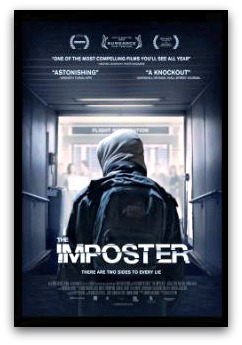

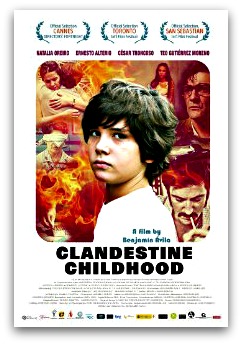
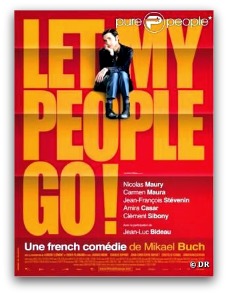
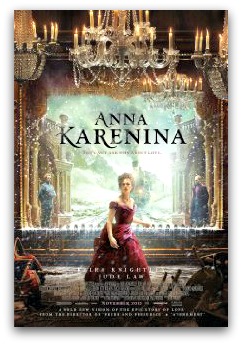










 The Displaced Nation