The Displaced Nation

A home for international creatives

Category Archives: Features

An American writer in Brazil is transformed from “exbrat” to politically awakened expat

Sao Paulo June Protests CollageWell, the best-laid plans of mice and menand international creatives—often go astray. Today, instead of Andy Martin interviewing Megan Farrell about her excellent book, American Exbrat in São Paulo: Advice, Stories, Tips and Tricks for Surviving South America’s Largest City, Megan herself will post about the transformational effect that the protests in her adopted country are having on her world outlook. (Not to worry, barring further major events, Andy’s interview with Megan should appear next month.)

—ML Awanohara

For nearly a week solid, I was locked to social media sites, doling out information about the protests in Brazil, via blogs, Facebook and Twitter. Along with other expat friends here in Brazil, I was been trying to make up for the fact that global news outlets were doing little to spread the word about the public demonstrations going on in São Paulo and other large cities.

Like a large percentage of my foreign friends, I have a closer connection to the country than your average expat. I have a Brazilian husband, and though she was born in New York City, a daughter who is a Brazilian national.

Ignorance was bliss

I’ll admit, before June 13, the night when police “lost control,” using rubber bullets against protesters and even journalists covering the events, I had little real knowledge about the injustices occurring in my new home country. I chose not to let such things enter my world.

Being displaced often makes it easy to be removed from your own surroundings.

Being displaced also makes it easy to be in a bit of denial.

But that Thursday night in mid-June, as my husband and I sat in a bar near our apartment and watched as the streets filled with protesters, my perspective on my adopted country changed.

The bar’s manager wasn’t allowing patrons to leave out of fear we would be exposed to the enthusiastic, but angry, crowd—some of whom were attempting to start fires to distract the police from blocking their access to Avenida Paulista, the central thoroughfare of São Paulo.

The protest eventually moved on, and we were able to leave, but my interest in what had initiated this movement lingered.

Not just about 20 centavos

By now, many of you hopefully understand that millions hit the streets of Brazil over more than a bus fare increase. Yes, that act was the catalyst. A 20 centavos increase meant an additional monthly expense of eight reais (R$8 is about US $4). It may not sound like a lot to you and I, but as minimum monthly wage in Brazil is R$675 per month (about US $300), every centavo is accounted for in the household of the working poor (i.e. the emerging middle class).

But the fare increase also speaks to deeper issues concerning the government’s priorities. Many Brazilians are finding it hard to stand by and watch as the government attempts to squeeze them for more, all the while spending millions of dollars on preparing stadiums for the 2014 World Cup—millions more than other countries who have hosted the event. Meanwhile, public services within Brazil remain abominable.

A few examples:

  • Across the country, emergency rooms of public hospitals are filled to the brim with patients hoping to get care, yet doctors have no means to help the majority.
  • Public school teachers often don’t show up to conduct class.
  • Police are untrained and uneducated, often looking to supplement their meager incomes with bribes.
  • Public transportation is decrepit in many cities.

“Its hour come round at last…” W.B. Yeats

As I wrote in my recent book, American Exbrat in São Paulo, one of the more frustrating aspects of living in Brazil can be the Brazilians’ passive attitude on the inefficiencies and transgressions that occurred in their country. Be it that the post office ran out of stamps (again) or the police never showed up when called, a local’s response to this would be some version of, “That’s Brazil.”

So when hundreds of thousands took to the street in protest, with a list of complaints in hand, no one was more surprised than the Brazilians.

The media took it lightly at first, burying the story about a bus far increase in the back of the papers. Then, the focus was on the violence of the demonstrations. But the reality is that when you gather such a large group (everyone was invited by social media), there are bound to be a few who are there to express extreme anger or simply to commit acts of violence.

But as one who sits within the scene, I’ve found the protests mostly peaceful and the intentions positive. The people of Brazil want change and want the world to understand that their country isn’t satisfied with the samba and beach party persona. There are real issues within the nation’s borders that need addressing.

Whither the rest of the world?

As mentioned at the outset of this post, sharing information about the realities of Brazil’s protest movement has become an important objective for me. Friends, both foreign and Brazilian, and I have been passing along videos, news articles and photos that depict the main events as well as the sentiments of the people.

Many of us who have blogs about being in Brazilmine is Born Again Brazilianhave written posts on these topics. For instance, I have just posted on Dilma Vana Rousseff, president of Brazil, who has stood in support of the Brazilian protesters.

Yet many friends and family members in the U.S. were still sharing updates on Facebook about their morning meals, their cats, sports teams, and other notices. These felt like irrelevant nonsense. How could this be? How could they just not care?

But then I recalled that I have friends in Turkey, who are going through the current protests. I have friends with family members who are in Greece and must have lived through the two years of protest in that country. I know little about what is happening in Ethiopia, where the first large-scale protest since 2005 has just broken out. And before June 13th, I was blissfully sharing little more than food photos and trip pics.

It is easy to be self-absorbed, content to contemplate the details of one’s own little world. It is even easier as an expat, when so much of your surroundings are of an unfamiliar nature. You take comfort in that which is close to home.

But now I have a different attitude and think about my power to disseminate information. It’s satisfying to share the details of what goes on in the politics of this country and have people you know respond positively.

But it is as important, especially for those of us who have an audience through blogs and other outlets, to keep tabs on what is happening elsewhere in the world and use our skills to move toward justice and peace.

This episode in Brazilian history has changed me forever.

Or so I hope…

* * *

Readers, any questions or comments for Megan about what she is experiencing? Have you had any similar moments of political (re)awakening—or do you not “do” politics as an expat?

STAY TUNED for tomorrow’s post, a new episode in our Capital Ideas series, by Anthony Windram.

If you enjoyed this post, we invite you to register for The Displaced Dispatch, a round up of weekly posts from The Displaced Nation, with seasonal recipes, book giveaways and other extras. Register for The Displaced Dispatch by clicking here!

Related posts:

images: Surrounding Megan Farrell (aka Maggie Foxhole) and her book cover photo are several photos taken by TDN writer Andy Martin. Go to his photo blog to see more.

Getting carried away with author Lisa Egle on a magic carpet, or is it a chicken bus? (Win a copy of her travel memoirs!)

Lisa E Collage for TNBack in the days when my nieces were small—and I’d just repatriated to the United States after quite a few years abroad—I got to know them again through long bouts of playing make-believe at my mother’s (their grandmother’s) house.

We particularly enjoyed Magic Carpet. We had our own home-made version. Adorning ourselves in Grandma’s silk scarves, we would plonk down on her quilted bedspread for a flight of fancy, à la Arabian Nights (not for us the Disney version!):

Whoever sitteth on this carpet and willeth in thought to be taken up and set down upon other site will, in the twinkling of an eye, be borne thither, be that place nearhand or distant many a day’s journey and difficult to reach.

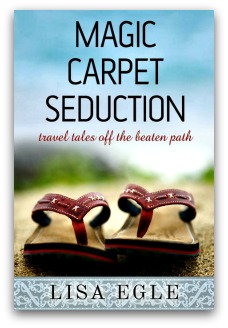
I trust this anecdote will explain why I’m so excited about hosting new author Lisa Egle today. It’s Magic Carpet time again, and this time I get to be the kid, listening to Egle tell of the off-the-beaten-track adventures that are captured in her travel memoirs, Magic Carpet Seduction.

Hey, we even have prizes! Two of our readers will be the lucky recipients of a copy of Egle’s book (see giveaway details below). The giveaway is now over! 😦

Hmmm… The only thing is, I suspect that before we board the Magic Carpet, Egle will ask us to ride on a chicken bus. (Leave the silk scarves at home, girls!)

* * *
MagicCarpetSeduction_cover_pmHi, Lisa! I won’t need too much persuasion to be seduced by your writing. I’m already a follower of your travel blog, ChickyBus. And I know you’re an American like me, living in New Jersey. Why made you decide to travel in the first place?
After taking short solo trips in the U.S. back in the 1990s, I went on a two-week group tour of Egypt and thought it was the most exciting thing I’d ever done. I then went on another tour, of Ecuador, which turned out to be a life-changing experience (for many reasons, including the fact that I moved there a few months later). While living in Ecuador, I began to travel independently and realized how much I enjoyed it. From that point on, I entered the ranks of “travel addicts.”

How many countries have you been to at this point?
In total, I’ve been to 36 countries, on five continents. I was an expat twice: in Ecuador for a year and half and in Spain for a year. Recently, I spent two months in Indonesia.

And home is now New Jersey?
Yes. I’m a full-time ESL professor at a two-year college in Bloomfield.

I don’t get it. Is a “chicken bus” magical?

Where does the epithet “Chicky Bus” come from?
“Chicky Bus” is the name of one of the stories in my book. It’s about a quirky 12-hour “chicken bus” ride I took in Central America that led me to have epiphanies about living in the moment. When I started my blog, I thought “ChickyBus” would be a cool domain name—one that related to travel and one that people would remember. I also liked it as a blog concept. I’m the “driver” taking readers—”passengers”—on “rides” with me, allowing them to experience the same random moments and unexpected journeys that I do.

There’s also a deeper meaning, however. “Chicky bus” is a metaphor for my unique style of travel—being in the moment while venturing off the beaten path and taking risks (nothing too crazy, of course). It refers to that place of magic and self-discovery that I find wherever I go.

Why did you decide to publish some of your travel stories as a book?
Years ago, while blogging about general topics on a site called http://www.gaia.com, I began sharing travel tales. The feedback was incredibly positive; people were inspired and entertained by what I wrote and said they felt like they were right there with me. After a while, I decided to go all the way with it, to write more stories and to compile them into a book—four major “rides” to different regions of the world (and a total of 9 countries: China, Nicaragua, El Salvador, Guatemala, Mexico, Turkey, Jordan, Syria and Lebanon).

Are any of your chapters based on blog posts?
Interestingly, none of the stories are based on blog posts. I wrote most of the book before I started ChickyBus. There are, however, a few stories (simplified versions) on the blog that came from the book.

Mostly magical connections

We like to talk about “displaced moments” on the Displaced Nation. We can see you’ve experienced your fair share: from close encounters with Carpet Casanovas in Turkey, to meeting with a hermit in the Lebanese mountains, to experiencing political intrigue in a Chinese classroom, to receiving a marriage proposal on that infamous chicken bus in Nicaragua. But we still have to ask you: which is the MOST displaced moment that you’ve included in this book?
The moments you mention were truly unique ones and—believe it or not—I didn’t feel as displaced as one might think. Because I was in the moment and going with the flow, I felt quite comfortable and that I was where I needed to be.

There were a few instances, however, in which I did have that “displaced” feeling—the most extreme of which occurred in China.

It was 1999 and I was teaching English at a university in Changsha in Hunan Province, which was definitely considered off the beaten path back then. For most of my time there, I was in a deep state of culture shock. I struggled with many things, from freedom of speech issues to getting to know my students. There were many “displaced moments”—and even days. Fortunately, after a while, things leveled out and went more smoothly.

So from what you’ve just said, I guess there is a lot of competition for your LEAST displaced moment, when you felt you actually belonged with all of these characters you discovered off the beaten track?
One of my least displaced moments (and possibly favorite) was when a friend and I ended up spending the night with a Mexican family we barely knew. They’d invited us over for lunch. We were planning to take a bus to another city that night because we had to fly home from there the next day. It got later and later and because we were so comfortable, we didn’t want to leave. We ended up staying (and sleeping in two very tiny beds, slightly larger than coffins) and having a wonderful time being part of the family.

P.S. A little Boone’s Farm wine went a long way in helping make us even more comfortable…

Don’t exit until the rug has made a complete stop!

Okay, time to get off that chicken bus and onto that magic carpet. On your post announcing the book’s publication, you say:

So imagine that my book is the equivalent of an invitation to a Bedouin lounge of sorts. If you decide to join me, we’ll get comfy on the cushions and share some tea (or coffee or whichever beverage you like). When you’re ready, I’ll start telling you my favorite travel tales—and together, we’ll take a magic carpet ride.

Why did you choose this metaphor, and indeed use “magic carpet” in your title?
When I was a kid, my friends and brother and I used to sit on the front porch and listen to my mother telling us stories. Years later, I found myself doing the same thing with friends and later, on a blog. Then, I spent time with the Bedouins in Wadi Rum, Jordan. We told our own stories while sharing tea and sitting on the sand under a tent or on a cushion inside a house. In retrospect, I believe that the “invitation” into the Bedouin lounge has something do with each of these experiences.

Re: the title, when people see the words “magic carpet,” the freedom to travel anywhere, magically, usually comes to mind. Also, “Magic Carpet Seduction” is the name of one of the stories in the book. It’s about two men, seemingly different, trying to sell me a carpet and what happens I see through their each one’s sales pitch/ploy.

Also in your blog post announcing the book’s publication, you confess to being exhausted. (I confess to having had similar feelings after long games of Magic Carpet with my nieces!) What was the most challenging part of the writing process?
Mostly, it was finishing the book, editing it and formatting it while maintaining my blog and my full-time teaching job, and being on social media. At times, it was difficult to prioritize and I often felt burnt out.

Overall, however, I would say that editing took a lot out of me. There were a few times when I thought I was finished with a certain stage of the process; then, I’d realize that I wasn’t. Having said this, that is where I learned the most and what helped me become a better writer. So, in the end, it was a positive experience.

Capturing the magic of self-publishing

Why did you self-publish the book?
I took this route mostly because I wanted creative control; I believe the book is unique and slightly nichey. Also, I didn’t want to have to spend a lot of time pursuing an agent and traditional publisher. Mostly, I wanted to get the book done my own way and on my own schedule.

Can you offer any tips for others who are contemplating going down this path?
My best tips for anyone who’d like to self-publish are:

• Hire a professional editor and a proofreader—two (even three) people. Also, get a critique done before you pass the manuscript on to an editor. It’s important because each editor has his/her own specialty and will probably catch something another didn’t.

• Have a cover professionally designed. I know there are ways to do this cheaply or yourself, but it’s worth spending money to do this right since the cover is first thing that people see when searching for a book.

• Have your blog (and social media accounts) set up/established before you publish the book. I’ve seen many people do it the other way around. They finish and publish their book, then set up a blog and join Twitter. Many aren’t sure what to do—they just tweet about their book and don’t interact with others. This tends to hurt them more than help them.

• Don’t give up. I can’t begin to tell you how many times I wanted to quit just because of the sheer amount of work (blog, social media, the book itself, etc.) You can burn out very easily and, if you’re not careful, your health can suffer. Keep going, though, and you’ll cross that finish line!

What audience did you have in mind when writing the book?
I’ve always envisioned the audience as:

  • armchair travelers and those who take tours and fantasize about breaking away
  • other independent travelers/expats
  • non-travelers with an interest in countries often in the news
  • anyone curious about the cultural perspective/insights of a female American traveler.

Is it reaching those readers?
I don’t know the customer demographics yet, but I know that a few men have written reviews on Amazon—and that makes me happy. As is the case with ChickyBus, the book is for people of all ages and both genders. It’s definitely not just for women.

I see you’ve opened your own publishing company and are working on some more ambitious travel-cum-writing projects. Can you tell us some more about that?
I set up a small publishing company for a number of reasons, including accounting and taxes. More than that, I thought it made sense because I will be publishing more books and hopefully, a collection of travel tales written by others. This is a longer-term goal, but definitely something I’m considering for the future.

Are you already working on your next book?
I’m currently working on a trilogy about Native American-style healing journeys in the U.S. (in the Northeast and the Southwest). After that, I’ll hopefully wrap up the rough draft of a book about life-changing experiences I had in Ecuador. That, like the trilogy, would fall under a “spiritual travel” genre.

10 Questions for Lisa

Finally, I’d like to ask a series of questions that I’ve asked some of our other featured authors, about your reading and writing habits:
1. Last truly great book you read: Grey Wolves and White Doves, by John Balian
2. Favorite literary genre: Political thrillers; travel literature.
3. Reading habits on a plane: (what kinds of things do you tend to read and by what means?) Now, because I own a Kindle, this is much easier. I usually have several books to choose from: one I’m sure I’ll love and lose myself in and—a few that I’m curious about. One thing I love to do on a plane (and during my trip) is keep a journal. During my return flight, I re-read the journal and re-experience the trip. I almost always do that and love it!
4. The one book you’d require President Obama to read, and why: Hmmm. That’s a tough question. Maybe my book? I’d want him to see that there are Americans who embrace the rest of the world, despite the media’s distortions of it. Also, I think my book would show him how travel, the way I approach it—focusing mostly on meeting the locals—can help people to connect in a very real way and to overcome cultural misconceptions, ultimately helping make world peace more attainable. Another reason I’d want him to read it is because I think it would provide good escapism since it’s quite humorous. He’s got a tough job and might enjoy it for the entertainment value alone.
5. Favorite books as a child: The Outsiders, a coming-of-age novel by S.E. Hinton; and Go Ask Alice, by Beatrice Sparks.
6. The writer, you’d most like to meet, who is no longer living: Aldous Huxley
7. The writer, you’d most like to meet, who is still alive today: Daniel Keyes
8. Your reading habits: I have a pretty short attention span, so there are many books that I start to read that I don’t finish. However, if a book really gets my attention, then I can’t stop. It becomes something I look forward to and put aside other things to do. Unfortunately, since I started my blog a few years ago, I’ve been reading less than previously. I spend more time reading other blogs and articles than reading actual books. When I seem to read the most is when I’m traveling and find myself without Internet. I end up loving it, too.
9. The book you’d most like to see made as a film: A cyber suspense I’ve written about two women who “meet” on the Internet and what happens when the bond they’ve formed takes a dysfunctional and frightening turn. It’s now in rough draft form (about 15,000 words), but I’m hoping to publish it on Amazon (just for Kindle) in a few months.
10. The book you plan to read next: Actually, there’s a book I’m itching to finish reading—and that’s Shantaram. I always start it and then get interrupted. It’s a very long book (over 900 pages). I think Gregory David Roberts is an awesome writer. His storytelling ability—the way he writes dialogue, how he describes characters, settings and situations, and the way he uses metaphor—makes his experiences incredibly real to me.

* * *

Thanks so much, Lisa! That was absolutely magical, a carpet ride to write home (to my nieces) about! And that chicken bus? It wasn’t half bad! 🙂

What about you, readers? Has she seduced you?

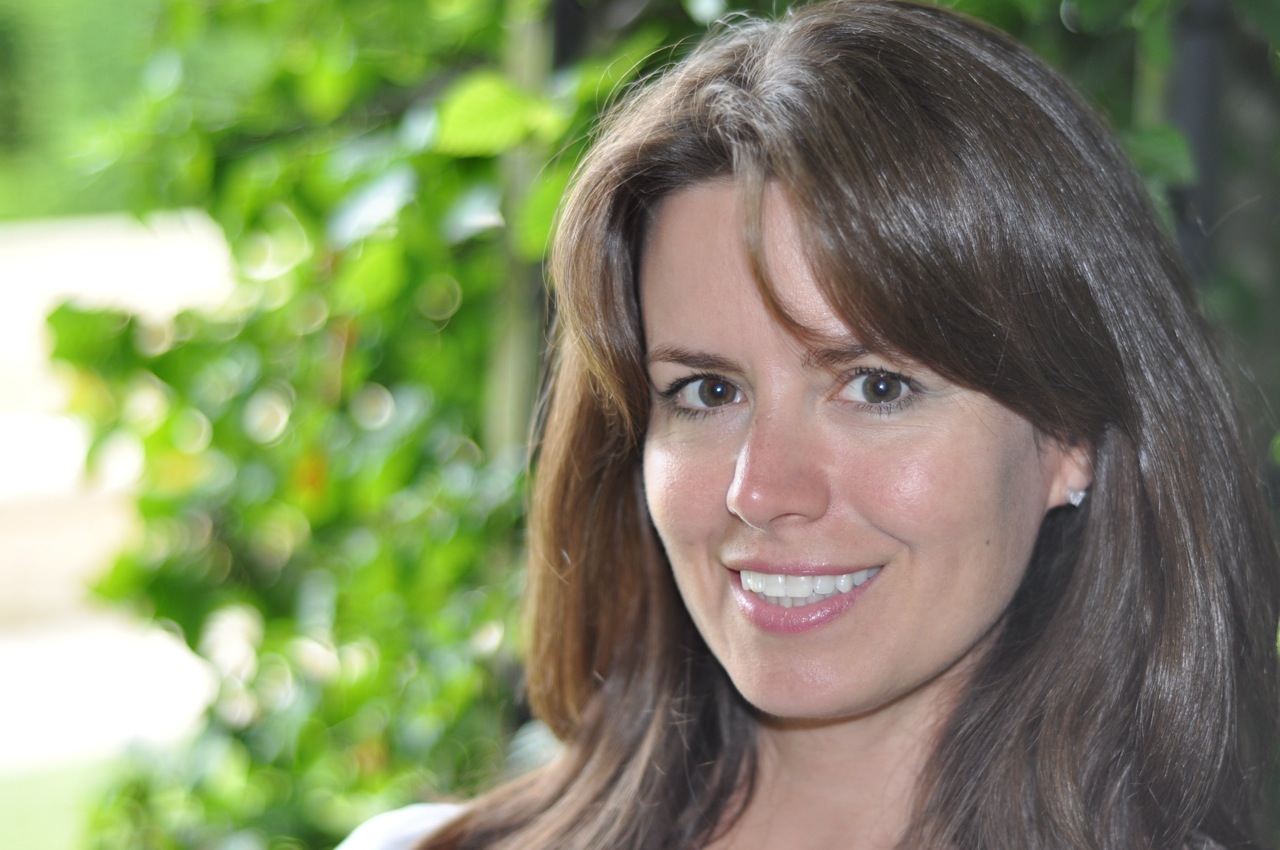
Lisa Egle writes a blog, Chicky Bus, the concept of which is “finding yourself off the beaten path.” Over the past three years, it has been recognized on two “Top 100” lists of independent travel blogs. Egle is also Assistant Professor of ESL at Passaic County Community College in Paterson, New Jersey, where she teaches students from all over the world, especially Latin America and the Middle East. She holds a BA in Social Sciences from New York University and an MA in TESOL (Teaching English to Speakers of Other Languages) from Fairleigh Dickinson University. Lisa recently published a humorous piece in OH SANDY! An Anthology of Humor for a Serious Purpose (sales of which help victims of Hurricane Sandy), and an article on one of her quirkier adventures in Indonesia in LifeLift, the Oprah.com blog. She received an honorable mention in the 77th Annual Writer’s Digest Contest, in the Inspirational category.

STAY TUNED for tomorrow’s post, by guest blogger Elizabeth Liang, who will be updating us on her one-woman play about the TCK life, Alien Citizen.

If you enjoyed this post, we invite you to register for The Displaced Dispatch, a round up of weekly posts from The Displaced Nation, with seasonal recipes, book giveaways and other extras. Register for The Displaced Dispatch by clicking here!

Related posts:

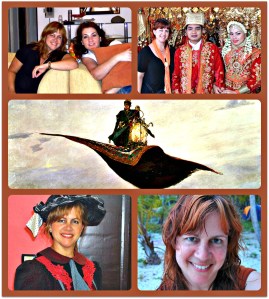
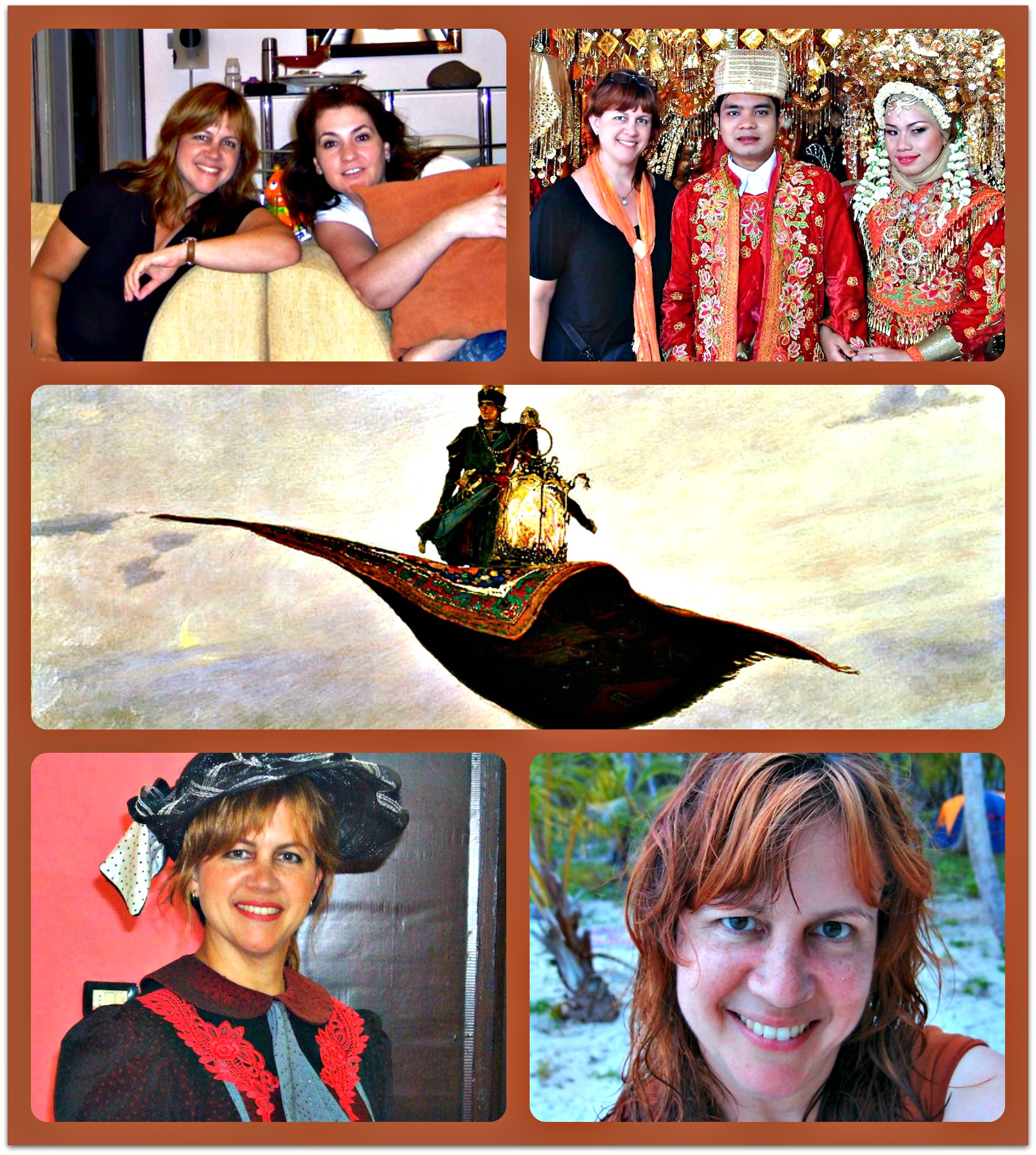
Images (clockwise, starting top left): Lisa at the home of her Cirassian-Jordanian friend, Souzan, with whom she was staying before the latter’s move to New Jersey(!) [this photo is in the book]; Lisa at a wedding in a Minangkabau village in Sumatra (hey, you can’t attend without posing with the bride and groom); Lisa camping in San Blas, Panama, during rainy season and a full moon (a displaced moment, to be sure, as the local Kuna indigenous believe that a full moon equals a curse); and Lisa after being recruited to be on a famous TV show in Damascus, which aired during Ramadan afforded an opportunity to meet one of the most famous actors in Syria—Qusai Khouli (she is wearing a late 1800s outfit, in case you were wondering). The painting in the center is “The Flying Carpet,” by Viktor Vasnetsov (1880), courtesy Wikipedia.

Love Living Overseas: An interview with Michelle Garrett aka The American Resident

Displaced Nation Blog - Michelle Alnwick 2In April’s Alice Awards we featured expat blogger Michelle Garrett (an American who has made a home for herself in Britain). She won an “Alice” for her most recent column in Expat Focus, in which she asked readers whether their experience living abroad has inspired them to write a book.

Michelle’s column certainly struck a chord with us here at The Displaced Nation as well as leaving us intrigued and wanting to know more. Regular readers know that we always like to focus on expat writing and highlight it, whether it be Jack the Hack’s tips or our lists of the best books for, by and about expats.

Michelle revealed in that post that she is working on not one but two expat-related books: the first, a helpful guide for unhappy expats called Love Living Overseas; the second, a novel. Today Michelle has kindly agreed to answer my questions about why so many expats find themselves blogging or attempting to write books, as well as her own writing plans.

We enjoyed reading your article at Expat Focus about whether expats necessarily have to write expat books. Why do you think so many people who live abroad feel like writing a book about the experience?
Humans are storytellers. It’s how we share experiences and how we learn. Blogs and self-publishing have opened up a new way of storytelling and when we experience something life changing, as many expats do, we want to tell the story and many of us do so through these mediums. Our stories may be in the form of autobiography or a fictionalized account of our experiences.

Some books are less about the story and more about tips or self-help. These books are often written by expats who have had a hard time with culture shock and once they move through those difficult months or years they feel compelled to help others.

Do expats have something unique to say?
As with any type of book writing, people need to really research the market before they can know if they have something unique to contribute. I do come across expat books, whether stories or books of tips where the author doesn’t seem to have done their research, and the story or information is nothing new or exceptional. However, the nature of the expat niche means there are a variety of ways to spin a story and many different angles to pitch tips, so there should be a wide variety of expat literature for our shelves!

In my research for Love Living Overseas, a book for unhappy expats, I have tried to read the best examples of books in the expat niche, and then see how I can best contribute to that collection.

What are the best examples in the genre, in your opinion?
This list is by no means complete, but among my favorites are:

Expat Women: Confessions, by Andrea Martins and Victoria Hepworth: a valuable book in that these are real questions people have asked (some quite gritty) and many of them I’ve not seen covered in other places.

Living Your Best Life Abroad, by Jeanne A Heinzer: a wonderful book for those of us who need a bit of step-by-step guidance for learning how to do just that: live our best lives abroad.

The Expert Expat, by Melissa Brayer Hess and Patricia Linderman: a fantastic resource covering almost every aspect of the relocation process, including pets, children, and safety—they even include tips for keeping in touch when you move on again.

Tell us more about the two books you are working on.
Love Living Overseas, a book for unhappy expats to be published this autumn, is intended for accompanying partners as well as those expats who have moved to the home countries of their foreign partners. I was once an unhappy expat and wanted to share what I’ve learned through my experiences and research. It’s a book I wish I’d had in the early days—a shortcut to expat happiness!

The book will contribute to the existing expat literature by taking advantage of the Internet in a new way, really using the strengths and opportunities of the Internet to my and my readers’ advantage.

The other book I’m working on is a novel about an American expat who is tired of feeling worthless. She married a British man to escape her dull life, but it hasn’t worked out and she is left adrift in Britain. She is sure there’s more to life than what she’s experiencing, and is equally sure she doesn’t deserve it. On impulse she accepts an invitation from a friend who is driving across the country and needs a companion for the journey. When she reaches their destination, she takes advantage of her anonymity to start a new life with a new identity, only to realize she is actually discovering her true self. I’m playing with the idea we expats often discuss about moving to a new place and taking advantage of the fresh start.

Would you ever consider writing a memoir or “life map,” as Judy Dunn calls it?
Definitely, but perhaps only for my entertainment, not for public consumption! I LOVE the term “life map” by the way—what a great description.

Do you prefer writing fiction or non-fiction?
I love creating books that help others.

When I first brought my new blended British family (7 of us!) to Minnesota, where I grew up, I realized that they would enjoy the experience more if they knew a bit more about Minnesota so I created a booklet of interesting facts. (Did you know that Minnesota and Great Britain are approximately the same square miles?)

And I am really enjoying writing Love Living Overseas because I truly feel it will be a helpful book.

But I also love inventing stories and playing with allegory and symbolism.

What are the biggest challenges of each genre?
I think the biggest challenge for non-fiction is providing information in a captivating way. Tips and facts can be dull—even helpful tips and facts.

As far as fiction goes, I find it challenging to create a believable story that moves people, but it’s a challenge I love.

We notice you are featuring quite a few writers on your own blog, The American Resident, of late. What lessons have you picked up from them? Take, for instance, your interview with the Aussie novelist Allison Rushby, who’s written a travel memoir: Keep Calm and Carry Vegemite. What was the most interesting thing she had to say?
Allison was lovely to work with and very interesting to correspond with regarding writing and expat life. One of my favorite comments of hers on writing Keep Calm and Carry Vegemite was:

… it’s very rare to write a memoir that is 100% true to what happened. It’s not that you lie to the reader, but sometimes events need to be shifted around in time and so on for the story to work—to be cohesive and to make sense in a story-like format. I was worried about doing this at first, but, in retrospect, I can see how the book just wouldn’t have made sense if I hadn’t done it.

* * *

Thanks, Michelle! Readers, that’s some sound advice from Michelle about not assuming your expat experience is unique and researching the market first. Do you have any follow-up comments or questions for her? (Want to learn more about Michelle? Follow her blog, The American Resident, or on Twitter.)

If you enjoyed this post, we invite you to register for The Displaced Dispatch, a round up of weekly posts from The Displaced Nation, with seasonal recipes, book giveaways and other extras. Register for The Displaced Dispatch by clicking here!

STAY TUNED for tomorrow’s post, another installment in the life of our fictional expat heroine, Libby. (What, not keeping up with Libby? Read the first three episodes of her expat adventures.)

Related posts:

img: Michelle Garrett

Entrepreneur Daniel Abrahams: From London to Israel, start-up nation of the world

Daniel Abrahams CollageToday we welcome Suzi Dixon to the Displaced Nation. Though it is her first time guest posting for us, Suzi is well known among expats and other internationals for her articles and blogs in The Telegraph and Huffington Post. Here she tells the story of British entrepreneur Daniel Abrahams, who decided to move his Internet start-up from London to Tel Aviv. Suzi has also kindly agreed to allow us to pose a few questions of our own to Daniel, from our “displaced” perspective.

Kate Allison & ML Awanohara

Brits looking to move abroad face a decisiondo they look for work or start their own business? But what if you’ve already got a business back home in Blighty? Times are tough globally and, particularly for those with a business still in the start-up stage, a move throws up all sort of added pressure.

I spoke to Daniel Abrahams, co-founder of MyCurrencyTransfer.com, who recently relocated this thriving internet start-up from the Google @ Campus in London to TechLoft in Tel Aviv.

Their business is expanding rapidly. MyCurrencyTransfer.com and its sister site, MyTravelMoney.co.uk, have already helped more than 1.2 million visitors find a fairer and cheaper deal on both travel money and international payments.

However, the opportunity to move their headquarters to Israel, known as the “start-up nation,” for three months was hard to resist.

“We want to be immersed in one of the most dynamic and successful startup hubs in the world,” Daniel said. “During our stay in Tel Aviv, we will meet face-to face with other high impact startups, entrepreneurs, and investors. In the first week of being here, we’ve spontaneously met literally dozens of high impact, high potential companies that are only too happy to knowledge share.”

When it came to making the decision, Daniel turned to a good old-fashioned list of pros and cons. The pros won out and, now, he wants to inspire other Brits with a business big or small to take the plunge.

“You’ve got to focus on the pros,” he said. “Think of the Serendipity Factorif the opportunity arises to move overseas, perhaps that’s happened for a reason? It’s an opportunity to build your company culture and widen your network. And, with advances in technology, there’s no reason why you can’t have your PR firm, accountant and admin in London while you relocate. That’s where cloud computing excels!”

Moving also keeps you on your toes. “Getting too comfortable in one environment can be your own worst enemy,” Daniel said. “I want to see the world and new business environments. There’s also a good chance that you may be able to find and nurture local talent you might not otherwise come across.”

*  *  *

Thanks, Suzi! And now, our curiosity aroused, we have some questions of our own for Daniel.

Daniel, thank you so much for joining us! As we’re not all finance types here, can you please explain in a nutshell what your business is all about?
Launched in September 2010, MyCurrencyTransfer.com and MyTravelMoney.co.uk are award-winning comparison Web sites for foreign exchange. Every day, we help thousands of expats, overseas property buyers, students, businesses and holidaymakers find a fairer deal on travel money and international payments.

How does your startup compare to businesses offering similar services?
We help our visitors access the sharpest currency rates on the market via our proprietary comparison platform. The rates quoted are wholesale exchange rates provided by FCA-regulated currency companies. We’re trying to make awesome currency deals accessible to the everyday consumers and not just reserved for big institutions transacting in the billions.

How did you get the idea for the business?
My co-founder, Stevan Litobac, and I launched the business after being ripped off on foreign exchange. I was travelling in Australia, and Stevan was holidaying around Europe. We couldn’t believe the somewhat ludicrous exchange rate markups banks and airport bureaus were adding to the “real” rate of exchange. After doing some research, we found this was a $400 billion dollar per year market that was in desperate need of innovation.

Our USP is the custom-built technology that our tech teams have built. We are neither a bank nor a broker, and can therefore be truly independent and impartial when finding our visitors the best-value currency deals.

At the moment, our business has eight staff members, pretty much split down the middle between tech and marketing talent.

You say that the opportunity to move your headquarters to Israel, known as the start-up nation, for three months was “hard to resist.” Can you say a little more about that: did you seek out the opportunity, or did it come your way?
Absolutely. Israel has the largest proportion of startups per capita in the world. It is a thriving country that is home of some of the most exciting technological innovation the world has seen. In Tel Aviv, there are thousands of startups and many accelerators. Every day there is another type of meetup happening, from marketing to development. The buzz was a great draw for us.

We did seek out the opportunity. We saw some other startups do similar temporary HQ relocations and this inspired us. Israel is also a great fit in terms of location, being only five hours from London and not too far at all from our partners.

In making your decision, you made a list of pros and cons. What were the main items on each list, and how close was the contest?
Here’s the very shorthand version of the list:

Pros:

  • Amazing tech community
  • Great startup ecosystem
  • Only 5 hours from London, and much closer than the Silicon Valley (another strong contender)
  • Great for team bonding
  • Good place to freshen up the working environment to stimulate creativity (serendipity factor, experience of living in another country, minor time difference, stunning weather, beach).
  • Other startups have succeeded in doing similar relocations.

Cons:

  • Leaving parts of the team back home.
  • Uncertainty about how our partners would react to the move.
  • Delay in taking new office space.
  • Slowdown in growing the team back in London.

With such a big move, we obviously took a long time to consider whether to do it. I think the biggest “pro” that swung our decision was the sheer excitement at immersing ourselves in such a dynamic “startup nation.” We’re so glad we did it. In our first month of being in Israel, we celebrated a record month revenue wise. This was definitely validation we’d made the right choice!

Now that you’re settled in Tel Aviv, what would you say are the main differences between working at Google @ Campus in London to TechLoft in Tel Aviv? Are there any similarities?
TechLoft is a much smaller co-working space than Campus. However, they share the same principles. There is lots of collaboration between the companies during and after work hours. I’d say there are definitely more on-site events at Google Campus whereas in Tel Aviv you normally need to travel to the relevant meetups. Also, the more intimate size at Techloft means you really get to know everyone on the floor, whereas at Campus you are constantly meeting new people.

What do you love the most about living and working in Israel?
First of all, I love being able to wake up, put a pair of shorts on and run on the beach or ride my bike on the promenade before work. It’s such an incredible feeling living in a city that has such an outdoor culture! The food is sensational and the people are nothing but warm, charming and friendly.

The tech community here is so switched on, and the entrepreneurs are a lot more mature than those back in the UK. As most have already been through their military service plus graduated from uni, would-be entrepreneurs can often be starting their careers in their late twenties. Every day, we’re meeting fascinating potential service providers or being introduced to relevant people who can help us build our business. I love the “culture of introductions” out here, with entrepreneurs and investors willing to open up their Rolodex.

Do you ever feel “displaced” in Tel Avivwishing you were in London instead?
Great question! There are definitely cross-cultural differences between London and Tel Aviv. In Israel, we have a saying about people talking dugriwhich means no holds barred, to the point, straight. The culture is FAR more direct, and people are pretty aggressive when airing their thoughts. This shouldn’t be mistaken for being rude. Israelis call a spade a spade!

In both a business and social settings in London, it seems people are far more formal and polite compared to Israel. Meetings are actually held on time (something we miss), and there is a lot more structure to the meetings themselves.

Still, I have never really felt displaced. My co-founder Stevan and I, together with the wider team, have quickly adapted to the pace of life in Tel Aviv, and the community has welcomed us with open arms.

Can you give us a concrete example of how your business has been enriched by taking it abroad, and would you say that working abroad has made you more creative?
By taking MyCurrencyTransfer and MyTravelMoney away from the safe harbours of home, we’ve become travellers ourselves, and as such have started experiencing a lot of what we previously only half absent-mindedly tweeted, retweeted, liked, blogged or quoted on our social channels. Travel challenges and settling-in challenges have taken us out of our comfort zones, whereas before we were taking the tube to work and back mindlessly. We’ve also started using our own personal travel pictures and journals as inspiration for our community discussions, so we’re way more authentic as a brand now, I believe.

Another way that it has made us creative is in search of local experts. Israel has some of the smartest tech and marketing people in the world, and we feel a sense of urgency in meeting them before our time here runs out! We have identified two or three key individuals whom we’ll be hiring in Israel to assist with our digital marketing activity across both MyTravelMoney and MyCurrencyTransfer. They are experienced hires and will have a direct impact on the growth of our business. Having two thriving offices in both London and Tel Aviv is a medium to long-term goal of ours.

It was always important for us to establish a legacy, and not just simply be here for three months, go back to London and not leave anything behind in Tel Aviv. The talent here is too rich to waste.

You say that “getting too comfortable in one environment can be your own worst enemy.” Are you definitely going back to Britain? Where else would you like to go?
Staying in an all too comfortable place might not be your worst enemy, but it certainly limits your experience and potential for serendipity. As they say: to be lucky, you need to go outside. And outside can mean going to a new meet-up or going to an altogether new country. We will be back in Britain, we see it as our base, as a lot of our target market are based there, so having a stable office there for the business makes sense for us. Where next? Who knows! We like Israel for its people, warm weather, nearby beaches and its rich history. San Francisco might not be so dissimilar to that perhaps?

With the knowledge of hindsight, would you do anything differently? What were your biggest challenges?
I don’t think we would have done much differently to be honest. We organised all of the logistics before leaving the UK, which also happens to have been our biggest challenge: office and apartment rental, things like that. Once we arrived here, however, it really wasn’t too far apart from what we were used to back at home. There are slight differentiating nuances between Britain and Israel. For example, there aren’t such huge supermarkets here, and there’s no chip and pin, just sign the receipt (if they even ask for that!)—all the little things that are fun to learn about a new place!

What piece of advice would can give someone who’s thinking of moving to Israel and starting up (or relocating) a business abroad?
If you have the desire to do it, I’m sure you will find a way. If you’re not sure or a bit “iffy” about it, then chances are you won’t regret doing it at the end of the day, so skip all the thinking and start planning. The only disclaimer I’d put here is that we were quite mobile before we even moved; we’re essentially three guys with three laptops, and you could put us anywhere with a WiFi connection. If we had an expensive office lease, then we may have weighed up the pros and cons of the costs of keeping the lease/cancelling it early, but that’s about it. We’re a much bigger company now in terms of staffso we’ll give some tips next time around when planning a bigger company relocation!

* * *

Thank you, Daniel! Readers, what about you? Do you have any more questions for Daniel Abrahams? And how do you think you’d feel about being a “trailing entrepreneur”?

STAY TUNED for some more great posts next week!

If you enjoyed this post, we invite you to register for The Displaced Dispatch, a round up of weekly posts from The Displaced Nation, with seasonal recipes, book giveaways and other extras. Register for The Displaced Dispatch by clicking here!

Related posts:

Images (clockwise from top left): View of London and the Thames (morguefiles); ice cream bicycle, Google London campus, courtesy Clive Darra on Flickr; presentation on Israel’s start up culture, courtesy Frank Boyd on Flickr; view of Tel Aviv from Old Jaffa (morguefiles); Stevan Litobac (L) and Daniel Abrahams (R).

Helena Halme on the displacement that can occur when moving between neighboring countries, plus a chance to win her new novel!

HelenaHalmeonBoatIt seems like only yesterday that we were reviewing Helena Halme‘s first novel, The Englishman, and today we have the pleasure of a guest post by Halme describing the themes of another new novel, Coffee and Vodka. Plus she is kindly giving away 3 copies! (Details below.) A Finnish expat in London, Halme was featured in our Random Nomad interview series, and we called on her again for an international fashion special (she is a self-confessed fashion maven). Today, though, we celebrate Halme as an international creative who bravely explores themes of displacement and cross-culturalism through fiction. So, brew yourself a cup of coffee and/or pour a glass of vodka, and let’s hear what Helena Halme has to say!

—ML Awanohara

My novel Coffee and Vodka has been dubbed “Nordic Noir meets family saga”—but its central theme is really the displacement a young girl feels when her family moves countries, from Finland to neighboring Sweden.

Eeva is eleven and lives in a small town in Finland when her father decides that they will emigrate to Sweden in search of a better life. There the displacement the family experiences causes a rift so severe Eeva is still reeling from it thirty years later, when she is forced to re-live the dramatic events of her childhood.

Outsiders tend to think of Scandinavian countries as being similar in many respects. How could the impact of emigrating to a Nordic neighbor be so severe?

But for anyone who’s ever visited Finland and Sweden, the difference between the two is obvious: Finnish is a notoriously difficult tongue, and the country’s culture has been heavily influenced by the hundred years it spent under the rule of its Eastern neighbor, Russia.

Sweden: A sovereign—and superior—neighbor

Finland fought in the Second World War, and lost a large section of its territory to the Soviet Union as part of the price of remaining independent. Already poor, Finland’s less industrialized economy suffered greatly from the war effort.

Sweden on the other hand has no history of having been subjugated to another country’s rule. It remained neutral during the war, profiting from its mineral reserves and undisturbed industry.

Sweden has traditionally been the richest of Scandinavian countries. At one time it ruled over all its neighbors, and as late as the end of 17th century, Finland too was part of Sweden—before Sweden handed it over to Russia. Many of the wealthy, land-owning Finns spoke Swedish as their native tongue.

Even today, Sweden is very much considered in Finland as its Big Brother (for better or worse). For decades after WWII, many Finns emigrated to Sweden in search of a better life. But Finns were shunned in Sweden because of their different language and customs: they were seen as poor people who drank too much, didn’t learn the language and were often violent.

Notably, had I been writing about Sweden and its other Scandinavian neighbors, Norway and Denmark, the cultural differences would have been more subtle, of the kind that expats often find between the United States and the United Kingdom. This is because Swedes, Norwegians and Danes can (more or less) understand each other’s languages. (Anyone who wants to get an appreciation for the kinds of cultural differences that exist between, for instance, Sweden and Denmark, should try watching the Danish/Swedish TV series, The Bridge.)
CoffeeandVodka_cover

Portrayal of little-known cultural differences in a novel

How to convey these historical, cultural and economic differences in a novel? First, I decided to set the story at the time, during the 1970s, when immigration from Finland to Sweden was at its peak. Also at that time, foreign travel and even foreign telephone calls were rare because so expensive. Once you’d emigrated, it was hard to go back or even have much contact with your native land again.

I thought that a story about displacement would be less poignant when you can spend hours on Skype speaking with your nearest and dearest, or can browse the Internet in your own language.

In addition, I decided that the family at the center of my story would make the move from a small town in Finland, Tampere, to the capital of Sweden, Stockholm, as a way of further highlighting the differences between the two countries, and hence the challenges facing the Finnish immigrant family.

Getting into my characters’ heads

After I’d decided on the time and the setting, I told the story the way I always approach writing; I tried to get inside the heads of the characters. I began by seeing the world through the eyes of the 11-year-old Eeva.

How would she react to being uprooted? Did it matter to her how far geographically she was going to go?

Of course not. Just moving to a different town in Finland would have shaken Eeva. But to be moved to a country where she understood nothing people said to her, and to a large capital city with a different way of life? That would be life-changing.

In the first chapter we see Eeva living in Finland, safe in her world. When her father and mother excitedly inform her and her sister, Anja, that they are moving to Sweden, Pappa says:

In Stockholm everything is bigger and better.

This simple sentence indicates that the move will have positive effect on the family’s economics circumstances.

Later, when the family first see their new flat in Stockholm, we see how impressed they all are by the size and quality of the apartment, even though they eventually realize it’s far away from the city centre, in an immigrant area.

In Stockholm the sisters get their own bedrooms—in contrast to an earlier scene where, during the last night the family spend in Finland, the girls have to share the sofa in their grandmother’s small flat.

To suggest the first chinks in the shiny new world the family have entered, I describe the first shopping trip Mamma takes with Eeva and Anja. It’s also the first time the girls hear the then-common abuse directed at Finns: Javla Finnar (Fucking Finns)—after Eeva nearly collides with a Swedish woman’s shopping trolley.

During the same shopping trip, a sales assistant is rude to Mamma when she overhears the family speaking Finnish. This episode visibly shakes Mamma, and she seems quiet and withdrawn afterwards.

Contrasting reactions

When I considered how Mamma and the girls would react to this kind of rejection, I decided that they would try to learn Swedish and blend in as quickly as possible.

I show this desire for Eeva and Anja to sound convincingly Swedish when the girls go shopping with Mamma, and on leaving the flat remind her not to speak at all (not even in Swedish) in the tunnelbana (metro) so that the people around them won’t know that they are from Finland. At this stage the girls had already mastered the language well enough to pass as being Swedish-born.

But I thought Pappa would not react as well as the female members of his family to the situation. As his family begin to enjoy Sweden, learning how to appreciate their new surroundings as well as master the language, he grows resentful. Even though he originally had hopes of his family fitting in, he becomes jealous of the women’s success at adopting and adapting to Swedish ways, and regrets the move.

And so the stage is set for a tragedy. But that’s another part of the story—one you can read in Coffee and Vodka!

As luck would have it, I have THREE COPIES to give away. All you have to do is to post a thoughtful comment on this post. I will choose three of the best comments and send to each of you, in whatever format you choose.

* * *

Kiitos—or should I say tack?—Helena! What’s more, I understand we haven’t caught up with all of your books yet—you have a new one out, The Red King of Helsinki, described as Nordic noir meets Cold War espionage. Sounds tantalizing: will you please come back again???

Readers, to whet your taste even more for Coffee and Vodka, here are some excerpts from Amazon.com reader reviews:

It’s a beautifully written story about a family in turmoil, caused partly by the displacement, but also partly due to the cracks in family dynamics which were already evident before the move to Stockholm. I really liked the voice of Eeva as a 11-year-old full of hope and fear, and then 30 years later as a grown woman who’s unable to commit to a loving relationship.

Set between Finland and Sweden, between the 1970s and the present milllenium, Coffee and Vodka reveals what it was like for a young girl to be uprooted from her home and transplanted to another country. One where she doesn’t speak the language and is despised for her nationality. I’m not ashamed to say this novel made me cry, but it also made me smile. … [E]ven if these things are as foreign to you as they are to me, along with the settings in this novel, Eeva’s story will still strike a chord.

Don’t forget to comment on Helena Halme’s post to be eligible to win a free copy! Extra points, as always, if you’re a Displaced Dispatch subscriber!

The winners will be announced in our Displaced Dispatch on June 1, 2013.

STAY TUNED for tomorrow’s post, on creative international entrepreneurship.

If you enjoyed this post, we invite you to register for The Displaced Dispatch, a round up of weekly posts from The Displaced Nation, with seasonal recipes, book giveaways and other extras. Register for The Displaced Dispatch by clicking here!

Related posts:

img: Helena Halme, taken on a ferry between Finland and Sweden, Finlandsbåt, which features in Coffee and Vodka.

Talking to Kate Allison, writer of serialized expat fiction (we’re giving away her first book!)


Taking_Flight_dropshadowToday I find myself in the enviable position of having to introduce my co-blogger and good friend, Kate Allison. As one of the founding members of the Displaced Nation, she needs no introduction to our regular readers, many of whom are as awestruck as I am at her ability to churn out well-c

rafted, entertaining episodes of Libby’s Life week after week, month after month.

For the uninitiated: Kate’s stories center on Libby Patrick, a thirty-something stay-at-home mum who has trailed her spouse, Oliver, from their native UK to Woodhaven, Massachusetts—a small New England town that, in Libby’s own words, “makes Stepford look like inner city gangland.” The Patricks live there with their three small children: preschooler Jack and infant twins, Beth and George. (At one point they also had a dog, Fergus—don’t ask.)

Libby keeps a diary of her expat adventures, and during the past two years, Kate has churned out a whopping 76 entries, an average of three per month.

In consequence, a number of us (even those who aren’t trailing spouses with families) have become certified Libby addicts—always looking forward to the next installment!

If we need a “fix” between episodes, we can go to Kate’s companion site dedicated to Libby and all things Woodhaven, where not only do we receive more information about Libby and the characters she encounters in Woodhaven, but we can also read additional posts from the other characters’ points of view!

And now there is another exciting development: Kate has just self-published the first year of Libby’s expat life in a single volume, Libby’s Life: Taking Flight. I highly recommend this aggregated version to anyone who is new to the Libby phenomenon…

And you’ll never guess what? We are giving away two copies!!! (Details below.)

But before we get to that, let’s visit with Kate and find out more about her. Having visited with her non-virtually, I can report that she really does live in a small New England town similar to Woodhaven.

What inspired her to create the lovely and loveable Libby, and what possessed her (I don’t think it’s too strong an expression) to commit herself to the potential folly of writing a novel online? Her temerity cannot be underestimated, I think you’ll agree…

* * *

Why did you decide to write a book about a trailing spouse, and how long have you been at this?
I first started “Libby’s Life” on my own blog (now extinct) just before Displaced Nation launched, a little over two years ago. I published three episodes there, and then transferred Libby to The Displaced Nation.

Libby didn’t start out as a book; she started out as a fiction blog because I found it difficult to blog about my personal life which, frankly, isn’t very interesting to anyone else. It’s easier for me to mesh snippets of facts into the fictitious world of Woodhaven. I was uncomfortable writing about my own family members—just because I like writing doesn’t give me the right to invade their privacy—but every now and then, certain incidents in Libby have happened in real life.

For example, when my son was a toddler, he was obsessed with toy cars, just as Jack is now. And the episode about Winter Storm Alfred, when Libby loses power for several days because of a freak snowstorm at Halloween, is based on a real situation. We were without power for four days ourselves after that same storm.

Fortunately, unlike Libby, we don’t have a man-eating landlady who lets herself into our house to sniff my husband’s sweatshirts.

Have you found out anything new about yourself, your own feelings of displacement, in the process?
Libby is at the beginning of her displacement journey. I’m quite a few years ahead of her, and have had to trawl through old memories to imagine how she would feel in certain situations. So the fact that I have to do that suggests I’m not terribly displaced anymore and I’ve come further than I thought.

Turning to Libby, what is her most displaced moment?
Probably when they first moved into their temporary apartment, next to a Limey-hating NRA supporter who liked shooting air soft pellets at the rhododendrons in the back garden. Poor Libs! She was quite traumatized. And also last year, when she went back to England for the first time and everything felt foreign—a reversed displacement.

What is her least displaced moment?
I think it was fairly recently, when she met Willow Reeves. Willow is from Brooklyn, very no-nonsense. She’s the first American friend Libby has made outside the expat Coffee Morning Posse, that hasn’t been via an introduction. It’s a sign that Libs is starting to fit in.

According to a recent article in the business section of the New York Times, serialized fiction, where episodes are delivered to readers in scheduled installments much like episodes in a television series, has been the subject of an unusual amount of experimentation in publishing in recent months. You seem to be ahead of the game in that respect. What have you learned from your two-year-long experiment?
I’m amazed at the number of people who do seem to follow the episodes, and yes, it is like a TV soap opera. I think Aisha at Expatlog commented a while ago that it filled the EastEnders void for her. But I didn’t intend it to be like that when I first started, envisaging instead a few blog posts dealing with certain aspects of moving abroad. I certainly hadn’t envisaged me still doing it two years later.

The main thing it’s taught me is that when I have to write a story because I’m on the Displaced Nation schedule to do so, I can do it. Novelist Peter De Vries famously said:

I write when I’m inspired, and I see to it that I’m inspired at nine o’clock every morning.

It doesn’t matter what type of writer you are—his philosophy is a good one.

What has been the most challenging part of the book-writing process?
Thinking up new topics for story lines. Every now and then I’ll put out a plea for ideas. A friend of mine jokingly said she’d like to see headlice as a Libby topic, and lo! There were headlice.

I now keep track of all the characters and story lines on a timeline program. I can see the last time a character came in, in which story line, in which episode, and I can plan ahead.

Theoretically, anyway. My actual way of planning is to sit in front of the blank screen and panic about a post that’s due in two days’ time. But I’m getting better. I even know what is going to happen in September.

What made you decided to publish the first year of Libby’s Life as a book?
I ended Libby’s Life: Taking Flight ends with Libby’s first Christmas in the United States because that was a natural break in the story. Libs had just started to spread her expat wings at that point, hence Taking Flight.

What do you intend to follow it up with?
The next one will be called Cargo Hold. Well, she’s pregnant with the twins, you see.

What audience do you intend for the Libby books?
It probably falls in the unflattering genre of “hen lit” — chick lit for the more mature woman. It seems most popular with women from thirty onwards, but then again, a friend of mine, a man who is now in his 70s, is an avid fan, so who am I to say?

What aspect of it is proving the most popular—any surprises?
Regarding the audience’s nationality, I expected it to be most popular with English women who had moved around a bit, but it turns out that one of Libby’s greatest cheerleaders is an American lady who is a keen armchair traveler. That’s pretty encouraging. (And thank you—you know who you are!)

Are you working on any other writing projects? (When’s the next book coming out?!)
At the moment I’m rereading/rewriting the 2012 episodes so I can turn them into either one or two short ebooks later this year. Additionally, I’ve gone back—yet again—to the WIP that triggered a lot of Libby characters. Woodhaven, Maggie, Melissa, Patsy, and all the Giannis were around in my imagination and in draft form long before Libby came along. The WIP is the story of Maggie’s daughter, Sara, a Woodhaven native now living in Somerset, England (my own native neck of the woods). Much of it is set in the 1980s, so you get to meet Maggie, Melissa et al when they were younger. Not sure when it will be finished…but making it public through this answer is a good spur.

10 Questions for Kate

Finally, I’d like to ask a series of questions that I’ve asked some of our other featured authors, about your reading and writing habits:
Last truly great book you read: There are two I’ve read several times in the last few years and each time thought “Damn, I wish I’d written that”: The Time Traveler’s Wife by Audrey Niffenegger, and Behind the Scenes at the Museum by Kate Atkinson.
Favorite literary genre: Sigh. Call me predictable. Women’s fiction and travel. Anything by Joanne Harris is a great combination of the two.
Reading habits on a plane: Either some piece of fluffery from the airport bookshop or a book I’ve already read from my Kindle. My Kindle is stuffed with classics, free ebooks, and review copies for TDN. But I have to have a paperback for the times you’re required to Turn Off All Electronic Devices. If I don’t have a paperback, I’ll write in a notebook, and chances are it will be notes on a conversation taking place near me. I’m a compulsive eavesdropper. Be warned.
The one book you’d require President Obama to read, and why: ML, I really hate getting into politics! Pass!
Favorite books as a child: Anne of Green Gables; E Nesbit books, especially The Railway Children; Enid Blyton‘s Malory Towers; Sadlers Wells series by Lorna Hill; anything by Noel Streatfield; the William stories by Richmal Crompton.
Favorite heroine(s): Maggie Tulliver (George Eliot’s The Mill on the Floss) and Emma Woodhouse (Jane Austen’s Emma).
The writer, alive or dead, you’d most like to meet: Roald Dahl. I really would like to know for myself if he was as sick-minded as his books are.
Your reading habits: In bed.
The book you’d most like to see made as a film: I’m looking forward to Robert Redford’s version of Bill Bryson’s A Walk In The Woods. And I’d love to see one of my favorite books in question #1—Behind the Scenes at the Museum. But it would have to be set in the English city of York, as it is in the book, not Americanized and set in Philadelphia or wherever, as so often happens.
The book you plan to read next: My “to read” list gets ever longer. At the top is The Hare With Amber Eyes by Edmund de Waal. At the bottom, just added, is Hilary Mantel‘s Wolf Hall. And a whole lot of others in between.

* * *

Thanks so much, Kate! Long live Libs!!!

Readers, now it’s your chance to ENTER OUR DRAW TO WIN A FREE COPY of Kate Allison’s first Libby book. Kate is giving away TWO FREE COPIES and will favor comments that offer storyline ideas for future Libby posts, which will also get included in Libby at some point!!!

Extra points, as always, if you’re a Displaced Dispatch subscriber!

The winners will be announced in our Displaced Dispatch on June 1, 2013.

STAY TUNED for the next episode in the life of our fictional expat heroine, Libby! (What, not keeping up with Libby? How could you resist after reading this interview?!?!? Sign up NOW for our Displaced Dispatch and you’ll receive the first three chapters!!!)

If you enjoyed this post, we invite you to register for The Displaced Dispatch, a round up of weekly posts from The Displaced Nation, with seasonal recipes, book giveaways and other extras. Register for The Displaced Dispatch by clicking here!

Related posts:

Talking to expat entrepreneur Alison McGowan about cracking the hard nut of Brazil’s tourism market

Hidden Pousatas Brazil CollageAlison McGowan is rather famous among us expats in Brazil: a foreigner who has settled here and “made it” as an entrepreneur. Her business is called Hidden Pousadas Brazil. Pousada literally means “place to land” or “place to stay”; but as McGowan explains on her About Us page, unlike in Portugal where a pousada is usually a luxury inn in a restored historical building, in Brazil the concept encompasses a much wider range of price and accommodation.

Alison has visited and vetted many of Brazil’s pousadas on behalf of Western tourists who might be overwhelmed by a country of Brazil’s size and complexity. She offers a set of well-honed marketing services to pousadas that come up to her standard, consisting of an English-language Web page on her site optimized for Google, from which they can receive direct bookings. (She will also add social media and PR for a further fee.) And she provides an English-speaking interface for those pousada owners who lack the requisite linguistic skills to attract foreign guests.

Perhaps you’ve heard of Alison’s pousada business, too? Word has traveled far and wide among the English-speaking world thanks to some choice publicity. Seth Kugal chose to include it in his write-up on Brazil for the New York Times‘s Frugal Traveler series, urging those looking to make Brazil more affordable to try

a rare English-language pousada site nicely curated by an expatriate Englishwoman, Alison McGowan.

And the intrepid Michael Palin, while he finally added Brazil to his itinerary with a four-part BBC series last year, gave a shout-out to McGowan for her “gorgeous pousada” recommendations.

Yet her accomplishment can’t have been easy. According to recent data, 40 percent of Brazilian start-up businesses do not survive for more than two years after opening due to the “excess of laws, regulations, taxes, paperwork…”

I caught up with McGowan recently on behalf of the Displaced Nation and peppered her with questions about her business success story. Any wannabe displaced entrepreneurs out there, listen up!

Olá, Alison! Tudo bem? Thanks for agreeing to be interviewed for the Displaced Nation. How long have you been working in Brazil?
I established Hidden Pousadas Brazil in 2008 but have a long history of working with and in Brazil dating back to 1979 when I was sent out to set up the first office for Oxford University Press. In 1984 I decided to return to UK but continued working with Brazil over the next 18 years before returning to the country definitively in 2002, bringing my old business in educational marketing—called Florence Associates—with me. This lasted me very well until 2008, when the increased use of broadband Internet and students booking direct with schools effectively put paid to the business model. Hidden Pousadas Brazil was a very lucky idea which came to me at just the right time. It never occurred to me to go “home” when the other business ended.

Let’s go back even further in time. What first attracted you to the country both of us now call home?
I lived in Paris for a year in the early 70s and that was where I first discovered Brazilian music, and Brazilian musicians. I fell in love with both!

What do you love most about living here?
I love the people, the attitude, the optimisim, the energy and the light.

As an Englishwoman, do you ever feel “displaced”?
I rarely feel “displaced” but had one such moment yesterday when I realized I had spent over a thousand reais paying company bills which were actually optional. My Britishness and desire to be up to date with payments had blinded me to the possibility that anyone would or could legally send an official demand for something which I actually didn’t have to pay.

Have you reached a point where you now feel more comfortable in Brazil than in Britain?
I feel totally comfortable in both countries and move easily between them, partly because I am pretty well bilingual and understand both cultures very well. People here often refer to me as a gringa carioca—basically a foreigner who is at the same time someone from Rio de Janeiro. Brazilian musician friends just introduce me to others as a fellow musician. Nationality isn’t usually mentioned.

You said that Hidden Pousadas Brazil was a “lucky idea.” Where did it come from?
I was super stressed from running a huge cello festival in Rio and asked a friend for a recommendation of somewhere to stay where I could just chill out in peace for a while. He immediately told me to go to the Pousada Santa Clara on Boipeba. I had no idea at the time where Boipeba was or indeed what a pousada was, but I went and discovered paradise—a traffic free island with endless deserted sandy beaches fringed by palm trees and a lovely, friendly pousada guesthouse to stay at. I thought if this paradise existed there must be other paradises in Brazil, and I reckoned I knew quite a lot of people who would like to be in paradise if they only knew it existed! Hidden Pousadas Brazil was born.

Was opening up your own business something you always wanted to do?
Had I not lost my rather well-paid job in the UK, I might not have started down the entrepreneurial path. That was the original stimulus. But now that I’m on my second business, I can’t imagine working for someone else again!

What’s been the biggest challenge of running your own business in Brazil?
The most challenging part is undoubtedly Brazilian bureaucracy and tax system. It is both expensive and time consuming to get it right.

The most fulfilling?
Meeting so many satisfied travelers who have been choosing pousadas and trips just using the recommendations on www.hiddenpousadasbrazil.com.

If you could do anything else, what would it be?
I can’t imagine doing anything else right now. Once Hidden Pousadas Brazil is in a mature phase and is no longer challenging, a logical step would be to move into consultancy, public speaking and training for pousada owners, but whatever I do would still have to allow me extensive travel in offbeat Brazil!

What’s on your bucket list?
Right at the moment a few pousadas on deserted beaches in Piauí, Ceará, Maranhão, and Rio Grande do Norte are beckoning; also some places near the capital city of Brasília such as Pirenópolis and São Jorge in the neighboring state of Goias, as well as in the historical cities of Minas Gerais.

It sounds as though you still have a lot to explore. Have you left Britain behind, or will you go back to live some day?
I will be here in Brazil for as long as good is good, but I still go back to the UK twice a year, and could easily run the business the other way round, living in the UK and coming over to Brazil a few times a year.

Do you have any advice for anyone else wanting to be an entrepreneur in Brazil?
I wouldn’t do it unless you speak Portuguese fluently, understand the culture, have tons of patience, considerable money and support behind you, AND see a gap in the market for that brilliant idea you are passionate about! If you’ve got all that then go for it! The rewards are enormous.

We understand you are creative in another way: as a travel writer. Do you have any books planned?
I have plans for two forthcoming books: one just entitled The Hidden Pousadas of Brazil and the other on foreign immigration and entrerpreneurship in the Amazon in early-20th century Brazil (title still to be decided).

É boa pra caramba! We look forward to featuring one day on the Displaced Nation.

* * *

Readers, I found talking to Alison McGowan quite a trip! Do you have any questions for her before she ventures off in hot pursuit of the next Brazilian paradise? You can also follow Hidden Pousadas Brazil on Twitter, like them on Facebook, and subscribe to their YouTube station, where the latest video shows Alison giving advice for anyone planning a trip to Brazil for the World Cup in 2014 (coming soon!) or the Rio Olympics in 2016. As an avid football fan myself, I have only one comment to make on Alison’s creative enterprise: Vai Brasil! O Brasil é o número um! For the purposes of today’s celebration of Alison, this football rallying cry may be translated as “Go to Brazil! It’s the number-one country!”

STAY TUNED for tomorrow’s post, about a theatrical enterprise…

If you enjoyed this post, we invite you to register for The Displaced Dispatch, a round up of weekly posts from The Displaced Nation, with seasonal recipes, book giveaways and other extras. Register for The Displaced Dispatch by clicking here!

Related posts:

Images: (Clockwise from Alison McGowan’s headshot) Pousada Araras Eco Lodge, in the northern Pantanal (home of the Hyacinth Macaw); Pousada Uacari (in the Mamirauá reserve, home of the uacari monkey); Pousada de Selva Mato Limpo (in the hills of the Serra da Mantiqueira); and Hidden Posadas Brazil logo.

For author Lana Penrose, expat “curveballs” come in threes

curveballToday we welcome back best-selling Australian author Lana Penrose, who last visited us in December to commiserate with those who were spending the holidays separated from their dearest and no longer nearest. Today’s occasion? The publication of Lana’s third memoir on her life abroad in Europe. Wait, did I just write “third”? Yes, this indefatigable Aussie managed to get a trilogy out of her expat experience, and is here today to explain.

—ML Awanohara

I’ve been asked to explain what motivated me to write my latest mini-memoir Addicted to Love, and it’s a very good question—one that I pose to myself often, particularly while in the throes of insomnia.

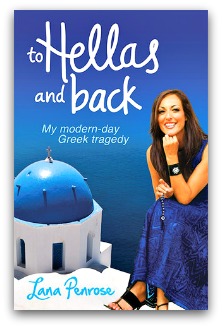
ToHelasandBack_dropshadowFor the uninitiated, I’m the author of To Hellas and Back, which chronicles my true-life tale of following the love of my life to the ends of the Earth (Greece) only to wind up losing my mind.

I then Nutbushed over to the UK to work for a world-renowned pop star and in the process wrote Kickstart My Heart, which details my attempt to negotiate my newly single life à la Bridget Jones—only with an axe through her head. As the book’s subtitle says: “A carnival of dating disasters”.

KickstartmyHeart_dropshadowNow these two books are rife with comedy, tragedy and my own human failings, so why scoop out what’s left of my heart and smear it across my shirtsleeve?

Like I said … a very good question.

More to the story…

The truth is that my story absolutely did not end with me leaving London to re-sample Greece after again being lured by love’s enchantment. In fact what happened next is something that I’ve kept close to my chest because it was downright shocking. I spent considerable time deliberating over whether I should share it at all.

AddictedtoLove_cover_dropshadowBut as many of you displaced writers know, the problem with being an author (one of the many!) is that you can’t seem to stop writing. And life has been more than accommodating in throwing me the odd curveball, the sort of material I feel compelled to purge away with my pen.

And so Addicted to Love was born: a mini-memoir that proves once and for all that truth really is stranger than fiction.

It’s set on the beautiful Greek island of Kythera, where I faced an impossible situation that I can’t go into here without issuing a spoiler alert … but rest assured that it’s gripping and you’ll digest it quite quickly, because it’s been described as “a page turner.”

Finally, an answer (of sorts)

But back to the original question: What motivated me to write this book? Well, thankfully (and unfortunately), experience has shown that there are many people who go through similar triumphs and tragedies to mine, particularly while traversing the globe. I like to connect with such people, and book writing is my way of holding out a hand and saying: “What—you, too?”and “You’re not alone.”

To Hellas and Back, Kickstart My Heart and Addicted to Love form a trilogy of the victories and pitfalls I experienced as an everyday person hurdling life abroad.

Each book can be read as a stand-alone, but I (predictably) suggest that you start at the very beginning to understand the depths of where I wound up.

* * *

Hey, Lana—you wound up here, at the Displaced Nation! That’s not the depths, surely? Readers, any questions for Lana or words of support? If you’re not familiar with Lana’s works, you can find the entire trilogy on Amazon or Smashwords. And don’t forget to follow her advice and begin at the beginning: by going to hellas and back!

Sydney-based (and no longer displaced) author Lana Penrose has had various incarnations, including music journalist, record company promotions gal, music television producer and personal assistant to an iconic pop sensation whose name shall never be revealed unless she’s subjected to Chinese water torture. She also once worked with the now-infamous Simon Cowell, which she today finds really odd. You can read more about her and her works on her author blog and/or follow her on Twitter: @LanaPenrose

STAY TUNED for tomorrow’s post, when we’ll be revisiting one of the earliest themes on this blog, Alice in Wonderland, but from the perspective of an international creative.

If you enjoyed this post, we invite you to register for The Displaced Dispatch, a round up of weekly posts from The Displaced Nation, with seasonal recipes, book giveaways and other extras. Register for The Displaced Dispatch by clicking here!

Related posts:

Image: MorgueFile

Dipika Kohli on world community art, defining a future, and why “wait and see” won’t cut it

tumblr_m7b7kmftdt1qaqyfmToday TDN welcomes Dipika Kohli, author of The Elopement, which we reviewed in September last year. Raised in America by Indian parents, Dipika now lives with her Japanese husband, Akira, in Durham, North Carolina, where the couple run a design company

Together, they are the driving force behind Stitch, a community art project for which they are currently raising funds on Kickstarter in order to take the project around the globe. 

Dipika, who has channeled her own feelings of displacedness into writing and art, joins us today to tell us more about this exciting project, the first in a series.

We begin with an intro to what Stitch is all about…

Stitch 101

Stitch is about supporting local artists and the art scene; it’s about a community defining the fabric of itself and its future. It’s community art, and an exercise in word-driven intention-setting at the same time.

Dipika and Akira say:

Now, we’re bombarded by images we never chose for ourselves—we let brands and labels do the work to define and express who we are. It doesn’t have to be that way. What if we could choose what we see? In simple, uplifting, people-nominated and people-chosen words and images? Would we, as a community, behave differently? Would we know who we are?

5d4954b68a302fd6081cb8f67e904ad2_large-1

The 276 words representing Durham, NC, in a word-cloud indicating frequency/popularity

For two months, Dipika and Akira talked to hundreds of people in their town of Durham, North Carolina, asking them one question:

What would you like to see Durham become, in one word?

After collecting many words, the residents of Durham voted for those that described their vision of the future Durham — the Durham they would like to be part of.

The resultant 276 words were passed onto two dozen local artists, who created work inspired by these words. Collectively, these pieces create a vision for the town, while money raised from the selling of these pieces will take Stitch to other communities in the world,

“connecting disparate communities with a common thread of art and collective visions.”

And now — over to Dipika:

Insane…or brilliant?

You have to either be insane or brilliant. To do it, I mean. To get up and do the crazy thing that no one believes will ever work. Everyone who says they care about you and your future likes to say, “Just wait, and see.” See if you can save enough. See if you still feel like doing something wild and crazy. Wait. See.

I’m done with that approach.

You see, I’ve been “waiting and seeing” for about a year now. I’ve been wanting to get back on the road, but why? How? What would that accomplish? A little Descartes reincarnation was sitting on my shoulder, niggling.

March, I said, was when I’d pull the trigger. Whether it made “sense” or not to jump ship and move out of my apartment for some unknown adventure ahead.

Taking Flight

March 16. My birthday. The day I launched the book that took me 13 years to get the nerve up to actually publish. So romantic, I thought, to finally upload Flight of Pisces and then move out of my apartment, and “away.” Wherever that might be.

Flight of Pisces was about the time I left Durham, NC, to trek about in India. Footloose and in search of “identity,” I wanted to see the place where my parents originally come from. New Delhi, and Old Delhi. I went solo, and I did it big, culminating in something that all these years later, I shake my head about, thinking, “Did I have some kind of death wish?”

Maybe I did.

Maybe it was survivor’s guilt. Or more, or less. Who knows.

What I do know, and what I can say, is that it had to be the way it was. I had to go and try something that seemed like it was the most absurd and off-the-track kind of thing in the world, in the universe, even, because without having gone and done it, I wouldn’t have ever gotten it. “The glimpse.” A feeling that the world was shifting beneath my feet. And, indeed, it was.

Now, the same feeling is resurfacing.

On the road again

I’m getting lost in the world, again, and on purpose one more time. It’s okay with me that I have a four year-old who’ll be my classmate on this new tour as we go on an educational field trip together to someplace new. I can’t disclose all the details (yet), but I’m trusting it’s going to be okay.

We’ll have just one text with us, in our imaginations. A book that’s got a bunch of blank pages inside, and one image. It’s the cover, and it looks like this:

It’s the drawing I made back in 1994, when I met my husband, Akira Morita. He’s from Japan, and I’m Indian-American, and we eloped to Ireland in 2000. You could say we like to mix it up. Or just trust that we’ll find something wherever we go. One thing’s for sure, we’re always getting to know a bunch of people well, and anyone who’s into the displaced feeling of being elsewhere knows what I mean.

I held a roundtable last year called EXPAT at a place in town called Mad Hatter’s. It’s a little cafe, and about a dozen of us got together to talk about our experiences in places like Ghana, Madagascar, and all parts of Europe, too. Conversations like that made me feel like I was on the road again.

From T-shirt designs to Stitch concept

Now, Akira and I are 18 years older than we were when we met, and we’ve evolved a lot from those days when we thought printing a T-shirt design on a shirt was cool. Our style has gone conceptual, and now we’re doing our biggest art project together yet. It’s called STITCH, and it’s on Kickstarter now through April 28.

Part of the reason we’re doing this is to shape the community for the place where we both have spent the biggest chunks of our life: Durham, North Carolina. But there’s more, too. Lots of things I want to talk about with you in upcoming posts from this new series. I hope you’ll enjoy the journey with me.

Find out more about STITCH here at the Kickstarter website!

* * *

STAY TUNED for tomorrow’s post from our fictional expat heroine, Libby. (What, not keeping up with Libby? Read the first three episodes of her expat adventures.)

If you enjoyed this post, we invite you to register for The Displaced Dispatch, a round up of weekly posts from The Displaced Nation, with seasonal recipes, book giveaways and other extras. Register for The Displaced Dispatch by clicking here!

Related posts:

Born to run the Shikoku Pilgrimage—and write a book about it (which we’re giving away!)

AMY ChavezWe dedicate today’s interview with distance runner Amy Chavez to those affected by the Boston marathon bombings. Our hopes and prayers and encouragement are with you.

When it comes to long-distance running, I couldn’t put it better than the American cowboy Will Rogers once did:

We can’t all be heroes because someone has to sit on the curb and clap as they go by.

I simply haven’t got the necessary strength, both physical and mental, for that kind of endurance test.

Is it any wonder, then, that I’m feeling intimidated by the prospect of talking to Japan-based expat Amy Chavez about her 900-mile run around Shikoku Island? We’re talking ultramarathon here.

The redoubtable Amy hails from Ohio but has lived in Japan for many years, where she is a well-known writer and columnist for the leading English-language newspaper, the Japan Times.

In 1998, she spent five weeks during March and April running the traditional pilgrimage on Shikoku Island. In essence she ran a marathon per day (sometimes more). And although the weather and conditions were pleasant enough—it was cherry blossom season—it was cold at night, and there were many mountains, though the roads were the worst part “because pavement is hard on the feet, knees, etc.”

Last month Amy published a book with Volcano Press about her record-breaking adventure (almost needless to say, she was the first person to accomplish this feat), Running the Shikoku Pilgrimage: 900 Miles to Englightenment—a copy of which we are giving away!!! (Details below.)

But first I want to find out more about what motivated her on her epic—and energetic—journey, including any challenges she faced in writing her book.

* * *

Pilgrimage-Cover_pmSo, Amy, I understand you decided to run the 900-mile-long Shikoku Pilgrimage after being laid off by the university where you were teaching in Japan. What made you think that running vast distances might be the answer?
Physical challenges have a certain appeal. I was interested in the physical journey, as I think most foreigners are when they walk the pilgrimage the first time.

But you didn’t walk it; you ran it!
For some reason I have never discovered the joy of walking. I dreaded the thought of walking 900 miles, the distance from San Diego to Oregon. But running is somehow different. When people go running, it’s not unusual to run 10 km or more, three or four times a week. People hardly ever do that walking. Instead, they walk around the block and come back. Runners don’t do that. We’re in for the long haul.

Did making this journey allow you to see Japan in a new way?
I was able to see Japan much more objectively. I went from being in my own little world where everything was centered around me—thus when my world crashed, so did I—to being an observer of Japanese culture in the framework of the pilgrimage. So there was a fundamental shift from being a part of the university, where the students and the university relied on me, my teaching skills, and my commitment, to being part of the pilgrimage that didn’t really care whether I did those things or not. The pilgrimage doesn’t care whether you show up or not, whether you complete it or not, whether you understand how it works. In other words, it’s not about you at all. So suddenly you’re on the other end, trying to understand what it is that the pilgrimage is trying to give you, on its own terms, and what you can learn and take away from it.

What was your most displaced moment on the journey?
I’d never felt displaced in Japan until I lost my job. It was a very big thing for me because I had put so much time, effort and love into that job. Suddenly, without warning, I was let go, all because I was a foreigner. I just couldn’t get my head around that. So the journey started as a result of this unnatural feeling of being displaced. The people who had treated me like family had suddenly tossed me out on the street. I was searching for ways to deal with my feelings toward Japan and Japanese people.

“The person who starts the race is not the same person who finishes the race.” [Marathon sign]

How did your feelings toward Japan evolve once the journey got underway?
I was able to see the pilgrimage as this microcosm of Japanese culture. If you’re ever wondered why the Japanese do things or act a certain way, you can find out through this historical context of Buddhism, and the Shikoku Pilgrimage which has been walked for over a thousand years. The purpose of the pilgrimage—to reach enlightenment—has never wavered over the centuries.

You became less and less displaced?
Doing the pilgrimage is often referred to as entering a mandala. You have to leave your safe, secure world and cross over into an unknown world where you are no longer in control. Once you accept this, and surrender yourself to the pilgrimage, you will no longer feel displaced.

Wise words! How long did it take before you surrendered?
It happens for different people at various parts of their pilgrimage but for me, this happened about one third of the way through, or two weeks into, the pilgrimage. Suddenly everything fell into place. I had finally learned to go with the flow and let things happen to me rather than trying to control things that happened to me. We are so used to taking control of our lives: we plan our trips down to the finest detail, we budget monthly, weekly and even daily, we get the right job. But life doesn’t care how much you’ve planned. Life continues to throw us curve balls—your car dies, you come down with an illness, you lose your job. Despite our steadfast planning, that’s not how life works.

It’s is not how the pilgrimage works either. Despite your intentions to do something a certain way, the pilgrimage will constantly present you with challenges—things you’d never planned on. Once you surrender to the ways of the pilgrimage, you no longer feel displaced. You no longer struggle with the elements, the terrain or nature. Instead, you become one with them.

Not surprisingly, this is one of Buddhism’s life metaphors as well.

Another ultramarathon—writing the book

I believe you chronicled your Shikoku adventure in the Japan Times?
Actually, I wrote six columns for the Japan Times. I also kept a diary, but that was separate from the columns.

Once you’d decided to write a book about the experience, what was the greatest challenge?
Time. It takes an enormous amount of time to write a good book. It’s all consuming, a full-time job. On top of that, I still had my weekly deadlines for the newspaper and other publications I write for.

Your book is coming out 15 years after you made the pilgrimage. Why the delay?
It’s not unusual to have so many years between a story and a published book. There’s the year (or longer) it takes to write, there’s the year-long (or longer) search for a publisher, the six months negotiation with the publisher(s), and then the two-year process from book contract to published book. So already five years has passed, and that’s with no bumps along the way.

Then there’s also timing. No one was really interested in my story at the time I did it. But things have changed drastically since then. NHK has had a popular TV series about the pilgrimage, previous books about the pilgrimage have run their course and gone out of print (thus creating a demand for something new), and ultra-running has become one of the fastest growing sports in the world.

Did you derive any new insights from revisiting the adventure?
That’s another reason I think you see so many books that are published a decade or so after they happened is because people often need distance before they can really understand their own journey. How can you talk about how an experience has changed you, or changed your life, if you haven’t had time to prove that it really has? Time gives one perspective. And with time comes wisdom. I was just reading a book the other day and couldn’t help but think it would have been so much better if the writer had waited a decade or so tell his story. He, nor his writing, had matured yet; his book had no arc, it offered no wisdom.

So while I wish my book could have been published a long time ago, I know it’s a much better book because I waited.

What audiences do you intend for the book?
There are three: those interested in Japan, those interested in Buddhism, and those interested in running. The book was officially released in March, and the reviews are just beginning to come out, so it’s too early to tell if those are the audiences the book will attract.

How about people who don’t know Japan—would they enjoy it, or would you be running circles around them?
You would have to have some innate interest in other cultures to get the most enjoyment out of the book—which I think most Displaced Nation readers have. But even if you are only interested in people’s amazing feats and accomplishments, you should enjoy the story, too. It is an adventure travel story about a girl who ran 900 miles that happens to take place in Japan.

Running the Shikoku Pilgrimage sounds like a hard act to follow. Are you working on any other ambitious travel projects that will one day be books?
I have an original hand-written diary of my great-great grandfather’s journey through Japan’s Inland Sea to the Philippines on a ship in 1900. In 2004 I decided to trace his journey in a sailboat. Unfortunately, the trip was cut short when we had to be rescued at sea, and we lost the boat. Determined to finish the trip, however, we bought another sailboat and set out again in 2012. This time we finished the trip despite dodging four typhoons, two tropical storms and running into a reef. I haven’t decided whether the title of the book should be Little Titanic or Storm Girl.

What do you think?

Love it! (Hmmm … the limb doesn’t fall far from the tree.)

10 Questions for Amy

Finally, I’d like to ask a series of questions that I’ve asked some of our other featured authors, about your reading and writing habits:
Last truly great book you read: Jules Verne’s Twenty Thousand Leagues Under the Sea. It’s always the last great book I read.
Favorite literary genre: Adventure travel, memoirs.
Reading habits on a plane: E-books only. Whatever is stacked up still waiting to be read. I also read tons of magazines.
The one book you’d require President Obama to read, and why: Any book on the current farming industry and feedlots. Save the cows!
Favorite books as a child: Anything about horses.
Favorite heroine: I admire Nora Ephron.
The writer, alive or dead, you’d most like to meet: I’d like to go fishing with Ernest Hemingway.
Your reading habits: Mostly non-fiction. More and more creative non-fiction. A little bit of fiction.
The book you’d most like to see made as a film: I’ve learned that books and film are completely different genres, so don’t dare compare them.
The book you plan to read next: Right now I’m reading The Annotated Reminiscences of Lafcadio Hearn. Next I’m going to read Strength Training Past 50. (Hey, you asked!) Oh, I might read Waging Heavy Peace, by Neil Young, before the strength training one, but I haven’t decided yet. Oh, I just remembered, my Dad wants me to read A Conflict of Visions: Ideological Origins of Political Struggles, by Thomas Sowell, so I better read that one next.

* * *

Readers, now it’s your chance to ENTER OUR DRAW TO WIN A FREE COPY of Amy Chavez’s book. Please leave a comment telling us about a physical challenge you’ve set for yourself, preferably in an international setting, and what it taught you. Extra points if you’re a Displaced Dispatch subscriber!!!

The winner will be announced in our Displaced Dispatch on May 2, 2013.

Readers lucky enough to live in the LA area: Amy will be signing books and meeting readers at the LA Times Festival of Books April 20 held on the USC campus, Los Angeles. Look for her in the Kinokuniya booth from 12:00 to 1:30 p.m. Copies of her book also available for purchase. April 21, she will be speaking at the Koyasan Buddhist Temple in Little Tokyo from 1:00 p.m. Public welcome.

STAY TUNED for tomorrow’s post and for a post on Friday about our fictional expat heroine, Libby. (What, not keeping up with Libby? Read the first three episodes of her expat adventures.)

If you enjoyed this post, we invite you to register for The Displaced Dispatch, a round up of weekly posts from The Displaced Nation, with seasonal recipes, book giveaways and other extras. Register for The Displaced Dispatch by clicking here!

Related posts:

Images: Amy Chavez; Meditating Cat (a character in the book); and Daruma Doll (drawing by Deborah Davidson)—all supplied by Amy Chavez, with permission granted by Davidson. The other two images—of the running feet and the cherry blossoms—are from morguefiles.