The Displaced Nation

A home for international creatives

Top 10 diverting holiday posts for expats and world travelers

Top 10 diverting holiday posts 2015

‘Twas the night before the night before Christmas, when all through the house, creatures were stirring…because they had jet lag!

This is how I imagine many of you expats and world travelers may be feeling at this point in the holiday season. If that description fits—or even if you’re simply remembering with a mix of relief and nostalgia (as I am) how you once were in that category—the following “holiday” posts may give you a much-needed injection of Christmas spirit. At the very least, they may divert you long enough so that you can sleep again.

I’ve chosen some of them with the thought of bringing you back to Christmases past, when your world was more predictable; others because I think they help to provide perspective on your present life of travel and adventure; and still others to stimulate thoughts about what kinds of Christmases we globetrotters can look forward to in future.

Posts (pun intended) of Christmas Past

1) Dreaming of a white Christmas? Check this out, Lonely Planet, by Roisin Agnew (14 December 2015)
Are White Christmases becoming a thing of the past because of global warming? Some of us may be losing sleep over this question ever since the climate summit was held in Paris. Visions are now dancing in our heads of melting ice flooding the world’s major cities. Also keeping some of us awake is the strongest El Niño in 50 years, which has brought mild, humid weather to North America. Today, Christmas Eve, it’s 70°F in New York City! Meanwhile, the UK and Ireland have been experiencing the ravages of Storm Desmond. Don’t despair yet, though. According to Roisin Agnew, there are still a few places with a reasonable probability of snow this year. (Agnew is a journalist at Lonely Planet Online and founding editor of Guts Magazine, for new Irish writers.) Try this quiz before reading: Which is the one state in the United States with a near 100% chance of a White Christmas?

2) Rick Steves’ European Christmas (Rick Steves Christmas pledge special, published on YouTube May 14, 2014, but an evergreen, so to speak!)
In this hour-long TV special, European travel authority Rick Steves invites his American audience to accompany him back to the old country, to the original Christmas customs that various immigrant groups brought to the United States.

3) The Sweet and Sticky Story of Candy Canes, by Rebecca Rupp, National Geographic Online (22 December 2015)
How did candy canes come into being? We actually don’t know very much about them—but can make an educated guess that they’re a displaced European treat. Read this, and visions of sugar plum-flavored candy canes may dance in your head when you at last drift off…

Posts of Christmases Present

4) Americans Try Norwegian Christmas Food (A production of the Embassy of the United States in Oslo, 21 December 2015)
Witness the somewhat goofy reactions of staff at the U.S. Embassy in Oslo as they try traditional Norwegian Christmas dishes such as lutefisk, smalahove, cabaret and more. Comments Siobhán O’Grady of Foreign Policy magazine: this short video “looks more like it belongs on Buzzfeed than on the diplomatic mission’s YouTube channel.” Hey, but at least it fits with the YouTube tradition of posting videos about people sampling other cultures’ foods for the first time.

5) Rupert the Expat Reindeer (UKinUAE, 14 December 2015)
Another embassy video! This one is part of the British Embassy in Dubai’s effort to ensure that British expats in the UAE behave themselves in the run-up to Christmas. Inspired by the Johnny Marks classic “Rudolph the Red-Nosed Reindeer,” the lyrics follow the story of a group of expatriate reindeer who get a crash course in getting to know the local laws, customs and climate the hard way. They learn about alcohol licenses, drinking in public, wearing appropriate clothing and the use of offensive language. No red noses, guys, okay?

6) “On a Christmas visit, expat thoughts turn to ‘going home,'” by Nicolas Gattig (Japan Times, 23 December 2015)
If you’re one of the expats who has gone all the way home for Christmas, will you also use it as an opportunity to consider whether you will go home for good: as in, repatriate? Nicolas Gattig has returned to San Francisco with with that in mind, only to find himself wondering whether he, and the city, has changed too much for a 2016 reunion…

Posts of Christmas Future

7) Life as a modern expat: Happy (virtual) holidays, by Melanie Haynes in the Local Denmark (14 December 2015)
Some expat families still choose to juggle complicated travel schedules—and will go to any length to set up a family Christmas tree, even if they find themselves rendezvousing in a place like Roatán (see Julia Simens’s recent post). But relocation expert Melanie Haynes has decided it’s time her child got used to celebrating virtual Christmases with his extended family. She and her husband are Brits but have become permanent expats in Copenhagen. Both sets of grandparents are expats, too—one in France and the other in the United States. She now arranges to have her son open his Christmas gifts from his grandparents on Skype “so they can share his delight firsthand.” The way she sees it, her family is simply building a new tradition:

As a child, my husband and I held Christmases that followed a very familiar and lovely pattern with all our family coming together for the day. Now, Christmas for us and our son is very different but just as special.

Is the Haynes’s virtual Christmas the wave of the future?
8) Happy Holidays! (BostonDynamics, 22 December 2015)
Now it’s time to look even further into the future, when technology leads us to the point where robots have inherited the Earth. How will robots, and the last remnants of homo sapiens, celebrate? According to a tech firm in Boston, Santa and his reindeer will still be delivering presents—but don’t be surprised if Santa is female!

9) Star Wars Should Give Power to the Dark Side, by Scott Meslow (The Week, 23 December 2015)
While we’re on such cosmic themes, it’s time to contemplate whether the universe portrayed in the new Star Wars, easily the biggest of this Christmas’s blockbusters, has enough moral nuance. As we who’ve traveled the world know perhaps better than anyone else, every country on Planet Earth has shades of gray, so why should other planets and galaxies be any different? Hollywood scriptwriters, however, remain blissfully unaware, having chosen to sustain a world where good guys have blue lightsabers and bad guys have red ones.

As Meslow puts it:

Compare Star Wars to Game of Thrones, which forces the viewer to interrogate their perspectives on heroes and villains until the lines between them barely exist. There’s no reason Star Wars can’t do the same.

Post of Christmas Past, Present & Future

10) A Christmas WISH LIST, by Cinda MacKinnon (22 December 2015)
Cinda MacKinnon and her novel, A Place in the World, have been featured several times on the Displaced Nation. As the book’s title suggests, anyone who grows up among several cultures, as Cinda did, or who has chosen an adult life of repeat expat experiences (as I have), may have trouble finding their place in the world, especially at Christmas. However, the final wish on Cinda’s list, for peace on earth, is one that belongs to all people, however displaced—and to Christmases past, present, and future. I for one am extremely grateful for that reminder, Cinda!

* * *

So, readers, if you are still reading at this stage and haven’t drifted back to sleep, does that mean you have other posts in mind that should be on the list? Do tell in the comments! And to all of you who celebrate Christmas: on behalf of the Displaced Nation team of writers, I’d like to wish and yours the happiest of times on December 25th. Oh, and don’t forget to extend the celebration into Boxing Day, a lovely tradition I picked up while living in the UK!

STAY TUNED for next week’s fab posts.

If you enjoyed this post, we invite you to register for The Displaced Dispatch, a round up of weekly posts from The Displaced Nation, and much, much more. Register for The Displaced Dispatch by clicking here!

Related posts:

For this precocious global adventurer, videographer and committed expat, a picture says…

KONICA MINOLTA DIGITAL CAMERAGreetings, Displaced Nationers who are also photography buffs! “A Picture Says…” columnist James King promises to be back in the new year, so this may be my last column for a while. We’ll see! (James like to keep us guessing…)

In any event, I’m super excited about today’s guest, Andrew Marston. Andrew first flashed across my screen when an exploit of his got featured on Rocket News 24, the English-language blog that reports interesting, strange, and random news items from Asia.

According to the report, Andrew had made a video, “Mt. Fuji: Sea to Summit,” about climbing to the top of Mt. Fuji with a few of his expat mates.

Now, reaching the summit of Japan’s sacred mountain in and of itself wouldn’t merit special news coverage. Fuji-san is, after all, the most ascended peak in the world, and people of all ages, including some centenarians, go to the top every year. Their numbers also include expats, some of whom view it as a rite of passage into Japanese culture. It’s said that a foreigner shouldn’t leave the country without having attempted to climb Mt Fuji once—with the emphasis on “once.” If you remember nothing else from this introduction, remember this:

A wise man will climb Mt Fuji once; a fool will climb Mt Fuji twice.

But I digress. What exactly had Andrew and his friends done to attract the attention of reporters? They had upped the ante, starting at Japan’s lowest point, at the sands of Taganoura Beach in Shizuoka Prefecture—50 kilometers (31 miles) away from and 3,776 meters (12,388 feet) below their destination—to reach its highest point, a journey of some 27 hours. And then they stayed at the top long enough to watch the sun rise, a storied tradition in the Land of the Rising Sun.

As I did a little more research on Andrew, I discovered he describes himself as a “creative freelancer,” who has been making a living doing photo shoots, films, graphic and Web design for clients. As his sea-to-summit Fuji trek attests, he has a passion for producing travel videos about Japan. He also enjoys watching samurai dramas and running.

Andrew Marston doing a "palm jump" in Indonesia (supplied).

Andrew Marston doing a “palm jump” in Indonesia (supplied).

But let’s talk to him about his photography, shall we, before he dashes off on another of his madcap adventures?

* * *

Hi, Andrew, and welcome to the Displaced Nation. I’d like to start by asking: where were you born, and when did you spread your wings to start traveling?
Hi, ML, and thank you for inviting me to take part in this column. I was born in Portland, Maine, USA. My family took a lot of road trips up and down the east coast when I was growing up. It wasn’t until I went to university that the travel bug bit me hard. When I was 19 I went to Japan for the summer on my own. I think this cemented my love of travel and discovery.

Wow, you traveled to Japan on your own at age 19? That’s pretty gutsy! I didn’t get there until I was an adult, and that was challenging enough. What did you do once you arrived?
I volunteered as a maintenance man at an ESL camp in far western Tokyo prefecture.

And Japan, I understand, was just the beginning. Which countries have you visited thus far?
Japan, South Korea, Indonesia, Malaysia, Philippines, Cambodia, India, Singapore, Ecuador, Mexico, Canada, USA… so only 12.

Ha! “Only 12,” he says, modestly. Which of these countries have you lived in and for how long?
I lived in Singapore for 2 years, and Japan for three years total. The rest of my life I’ve lived in the US.

Where are you living right now?
Nagoya, which is in the center of Japan. My wife, who is also American, and I arrived here last summer. We both love living in Japan. We travel a lot domestically. We’ve got no plans to move away. For work I make Japan travel videos, and she is a science teacher at an international school.

百聞は一見に如かず(hyakubun wa ikken ni shikazu): Hearing about something one hundred times is not as good as seeing it once

Now, I know you’re into moving images, but this column focuses on photography, which is also a passion of yours. Can you share with us three photos that capture some of your favorite memories of the so-called “displaced” life of global residency and travel and tell us about the memory each photo captures, and why it remains special to you?
We took an end-to-end cycle tour of Japan one month after the 2011 earthquake there. (You can see the whole documentary of the trip, Japan by Bicycle, and download the accompanying e-book.) This first photo was taken about mid-way through the tour, right after waking up and putting away our tents after camping for a night in a bamboo forest.

Photo credit: Andrew Marston (supplied).

Photo credit: Andrew Marston (supplied).

My first paid photography job was literally the day after graduating university. We went to Ecuador to photograph a hat production facility in the Andes Mountains.

Photo credit: Andrew Marston (supplied).

Photo credit: Andrew Marston (supplied).

In Japan society really goes out of their way to appreciate each season. This shot of people sitting quietly observing the fall foliage was taken in a Zen temple famous for its stone garden, located in Dazaifu, Fukuoka.

Photo credit: Andrew Marston (supplied).

Photo credit: Andrew Marston (supplied).


Ever since living in Japan myself, I’ve adored the look and feel of bamboo, and the photo you took of that bamboo forest shows just how enchanting it can feel. The photo of the hat maker in Ecuador is simply amazing: a window into another world. And I really like that you’ve done the photo of the Zen garden in Fukuoka in black and white, which is much more Zen, so to speak, than color would be. It tells me that, even though the people in the temple are gazing at the colorful autumn leaves, they are in a quiet, contemplative mood.

住めば都 (Sumeba miyako): Wherever you live, you come to love it

Having seen these first three photos, I am guessing Japan will make the list, but which are the top three locations you’ve most enjoyed taking photos in—and can you offer us an example of each?
Yes, Japan is obviously one of the places. Specifically, the Japanese Alps. Here is a photo I took of the snowy rustic village of Shirakawa:

Photo credit: Andrew Marston (supplied).

Photo credit: Andrew Marston (supplied).

Another favorite Japan location is Ōhara, a rural town nestled in the mountains of northern Kyoto, which is famous for the Sanzen-in Temple, especially in autumn, though it’s beautiful any time of year:

Photo credit: Andrew Marston (supplied).

Photo credit: Andrew Marston (supplied).

Besides Japan, I will pick my home state. Here’s one of the lighthouses of Maine, USA:

Photo credit: Andrew Marston (supplied).

Photo credit: Andrew Marston (supplied).

Wow, that first one would make a dramatic Christmas card! I never got to that particular temple in Kyoto when I lived in Japan, but your photo has taken me there. And I like that you still see beauty in your homeland as well as in your adopted country.

見ぬが花 (Minu ga hana): Reality can’t compete with the imagination

Your photos are very artistic. What drew you into pursuing photography as an art form?
Communicating through images transcends language and can quickly evoke a deep connection with a person or place. Photography and video are both passions of mine, but lately I’ve been concentrating on the dynamism that video provides by allowing the images I was used to capturing and creating with photography, to move. I find moving images fascinating.

I wonder: do you ever feel reserved taking photos of people, particularly when they are conscious of your doing so? How do you handle it??
Yes, this can be uncomfortable. Usually if they notice me pointing the camera at them, I just ask if it’s okay. If they say no, then I don’t.

Switching over to the technical side of things: what kind of camera, lenses, and post-processing software do you use?
My main camera body is a Nikon D750, but I’m hoping soon to switch to a mirrorless system because they travel better. I also have Canon and Sony point and shoots as well as a few GoPros. For editing I use the Adobe Creative Cloud…so Photoshop and Lightroom when I’m working on photos.

はやかれおそかれ (hayakare osokare): Sooner or later…

Finally, can you offer a few words of advice for wannabe photographers who are traveling the world or living abroad?
I would encourage every “wannabe photographer” to think of themselves as a “photographer who isn’t fully funded yet.” Often, enthusiasts are already taking shots that are pro-quality, they just aren’t being paid for it. If this is you and you’re hoping to turn your hobby into a career, I suggest contacting and networking with as many semi-pro and professionals in the photography and travel industry as possible. It won’t happen overnight, but if you consistently produce amazing work and diligently grow your connections, you’ll eventually hit pay dirt somehow.

Thank you, Andrew! As I was once an expat in Japan, I get very nostalgic for that part of the world—especially this time of year, when I can clearly remember how festive it feels, with everyone preparing for their end-of-year celebrations. So for me, your photos of Japan are exquisitely well timed. Thank you for that vicarious travel experience! Plus your lighthouse photo made me think I should visit Maine again, now that I’m back in the States. Last time I was there, I was a kid, and couldn’t appreciate the beauty…

* * *

Readers, what do you make of Andrew’s adventuresome life and his photography advice? Did they arouse any particular feelings or emotions, as they did for me? Please leave any feedback or questions for him in the comments!

If you want to get to know Andrew Marston and his latest creative works better, I suggest you check out his YouTube channel, Happy in Japan. You can also follow him on Twitter.

NOTE: If you are a travel-photographer and would like to be interviewed for this series, please send your information to ml@thedisplacednation.com.

STAY TUNED for next week’s fab posts!

If you enjoyed this post, we invite you to register for The Displaced Dispatch, a round up of weekly posts from The Displaced Nation and SO much more! Register for The Displaced Dispatch by clicking here!

Related posts:

WONDERLANDED: Will I have a hard or a soft landing?—two excerpts from “Olivia and Sophia,” by expat novelist Rosie Milne

Will I have a hard or a soft landing? Photo credits: Like Alice in Wonderland you can go into the rabbit hole, by expat painter Frank Schwarz via Wikimedia Commons (CC BY-SA 3.0). Inset: Book cover (supplied).

Yesterday we were Wonderlanded with Rosie Milne, a veteran member of the publishing world, a blogger on Asian books, and a novelist in her own right. This post, which I’ve titled “Will I have a hard or a soft landing?”, consists of two excerpts from Rosie’s about-to-be-published historical novel, Olivia and Sophia, which concerns the lives of the first and second wives of the founder of the British trading post of Singapore, Sir Thomas Stamford Raffles. 

Set in London, Java, Sumatra and Singapore, against the backdrop of the Napoleonic Wars—the story takes the form of two fictionalized diaries, one by each of Raffles’s wives. They are:

  • Olivia Devinish, a raffish beauty with a scandalous past. Born in India and raised in Ireland, Olivia accompanied Raffles, who was her second husband, to West Java, where he was serving as governor. She got ill from the island’s harsh conditions and died at age 43. Raffles erected a memorial to her that stands to this day, in what is now the Bogor Botanical Gardens.
  • Sophia Hull, no beauty, but curious and intelligent and eager to embrace the opportunity of an exciting life abroad. Born in London, of Irish descent, she met and married Raffles when he was on leave in England after becoming a widower. The couple then sailed for Bencoolen (Sumatra), where Raffles had been appointed governor general—making Sophia the first white woman to venture into the Sumatran interior. This was the period when Raffles founded the British trading post of Singapore. The couple returned to England in August 1824 because of Raffles’s ill health. He died two years later, one day before his 45th birthday. Sophia then dedicated herself to writing his biography.

According to the book description, Rosie Milne “takes us away from the cold, damp confines of Georgian London to the muggy, hostile tropics and to the titillations and tribulations of a life far away from home.”

And, importantly, for us Displaced Nationers, she also provides a sense of what it was like to be a trailing spouse in an earlier era. Do these two Victorian ladies feel as though they were falling down a rabbit hole, uncertain of where they’d land and whether the landing would be hard or soft? Let’s find out…

* * *

Excerpt from Olivia’s diary

Olivia writes this diary entry on board the Ganges, the ship on which she is sailing from London to India. I think it expresses her sense of having fallen down a rabbit hole in a self-explanatory way.

Sometime, someplace on the ocean

I remain confident the year is 1805, and I am aboard the Ganges, but I write as my heading sometime, someplace on the ocean ’cause sailing across the nothing, nothing, nothing, and yet more nothing of the sea has addled me about both calendar and map. The map I have quite lost track of. At dinner I say my daily toast to happy sight of the next land, and I think: where is that next land? Which is to say: where are we? With no landmarks to watch for by day, and, by night, not being able to read the stars, I am as ignorant now of place as must be the fishes swimming in the waters beneath me. The calendar too, is becoming hazy to me. The tyranny of breakfast at eight, dinner at two, tea at six, and supper at nine keeps me abreast of the hours, but when I think of day and date ’tis as if one of our chilly sea fogs has reached its fingers into my mind, so I no more know whether ’tis Monday, Saturday, Wednesday, or Sunday, than I c’d say our position on the globe.

Olivia Raffles as Alice

Photo credits (top to bottom): Frigate in fog via Pixabay; detail of Here be Dragons map; Down the Rabbit Hole, by thepeachpeddler via Flickr (CC BY 2.0); Olivia Raffles portrait.


Excerpt from Sophia’s diary

Sophia writes this diary entry on board the Mariner, the ship on which she is sailing home from India. It, too, expresses her sense of having fallen down a rabbit hole…

August 1824, the Mariner, off the Cornish Coast

And, behold, I am with thee, and will keep thee in all places whither thou goest, and will bring thee again into this land … I have had my first sight of Home for nigh on seven years. Tho’ in the Eastward Old England sometimes seemed to me unreal, like a dream of Home, and not a literal place on the globe, Cornwall is now crouched in the angry sea to our starboard, and is just as real as sharp granite rocks will allow. I hardly know how to say how I’ve changed since last I saw England. I sometimes feel so disunited from that Lady Raffles who sailed eastward on the Lady Raffles I can scarce think we are the same person – I cannot recall her, it sometimes seems, and must judge she was mistaken to think she ever could return Home. More, I scarcely know how to say who I am now, what I am, what manner of person? As for Tom, now turned of forty, lit now only by shadows of his youthful fires, he says he feels just as wearily jumbled as me, just as uncertain how to begin to make sense of all that has happened these past seven years, if indeed any sense can be made of our lives at all, and he says it is a puzzle to know whether his two sojourns in the Eastwood enabled him to put on, at various times, a new self, as a man may put on a new coat, or if, while in foreign climes, he became more than ever the man who first left, and now returns, to Old England.

Photo credits: Land's End, Cornwall[https://pixabay.com/en/ocean-rock-waves-wind-stormy-826155/] via Pixabay; Sophia Raffles portrait; Down the rabbit hole by Colin Smith[] via the Geograph Britain and Ireland Project (CC BY-SA 2.0) [http://creativecommons.org/licenses/by-sa/2.0/].

Photo credits: Land’s End, Cornwall via Pixabay; Sophia Raffles portrait; Down the rabbit hole, by Colin Smith via the Geograph Britain and Ireland Project (CC BY-SA 2.0).

* * *

Thank you so much, Rosie! I like the way you’ve juxtaposed these two excerpts, one showing the first wife setting out on a Far Eastern adventure, the other showing the second wife confronting the prospect of going home again. In fact, Sophia writes something that is extraordinarily akin in spirit to Alice’s statement:

I could tell you my adventures—beginning from this morning; but it’s no use going back to yesterday, because I was a different person then.

Readers, what do you think? Do these trailing spouses have it harder than their modern-day counterparts, or can you draw a reasonably straight line to today? And have these two excerpts from Rosie’s new novel made you want to read more? Olivia & Sophia, published by Monsoon Press, will be available as a paperback in Asia and Australia on November 1. You can also visit Rosie’s Asian Books Blog and/or stay social by following her on Twitter. And of course you can also express appreciation for Rosie in the comments below. ~ML

STAY TUNED for next week’s fab posts.

If you enjoyed this post, we invite you to register for The Displaced Dispatch, a round up of weekly posts from The Displaced Nation, and much, much more. Register for The Displaced Dispatch by clicking here!

Related posts:


For this peripatetic Sardinian writer who has settled down (for now) in Rome, a picture says…

KONICA MINOLTA DIGITAL CAMERAGreetings, Displaced Nationers who are also photography buffs! “A Picture Says…” columnist James King is still away, so I am filling in again.

My guest this month is Angela Corrias, a well-traveled freelance writer who was born in the Italian island of Sardinia.

There’s a lot about Angela’s story that captivates me. For a start, there’s this photo of her on her Chasing the Unexpected blog’s About Me page, where she’s wearing a head scarf and looks Middle Eastern.

I had seen her “I heart my city” article on the National Geographic Traveler‘s site, which was all about Rome (where she now lives), so I assumed she was Italian… But was my assumption incorrect?

I also knew from her NatGeo article that she has traveled extensively and been an expat several times.

Hmm…that still doesn’t explain why she’s wearing a head scarf.

As I read more about Angela, I became even more intrigued. “[W]hat I like the most when I travel,” she writes on her About page, “is to dig deep into other countries’ culture, traditions, social customs and explore them in all their idiosyncrasies. I’ve always tried to avoid filling my posts with the basic information available by performing a simple Google search, and strived to publish more personal impressions instead.”

Something new I learned from her blog was that she is also a “wannabe photographer.”

It was at that point I knew that we had to feature Angela in “A Picture Says…,” and luckily she was “angel” enough to oblige!

Angela Corrias in Jiasalmer, India, one of the many stops in her travels (photo supplied)

In front of India’s Golden City, Jaisalmer, stands Angela Corrias, the woman who finds gold in all her travels. (Photo supplied)

* * *

Hi, Angela, and welcome to the Displaced Nation. I’d like to start by asking: where were you born, and when did you spread your wings to start traveling?
Hi, ML, and thank you for inviting me to take part in this column. And just to clear up your confusion, no, I’m not Middle Eastern. I was born in Sardinia, Italy’s second biggest island off the coast of Rome, and while my first international trip was to nearby France to visit relatives when I was just three years old, I’ve always considered my travel initiation to have been the first time I crossed the equator at the age of 13 to go to Brazil. It was my first long-haul flight and very first immersion in a culture different from mine. Maybe that’s why I’ve always had a soft spot for Brazil.

Now, I know from reading that Nat Geo article that, since reaching adulthood, you’ve traveled far and wide and also been an expat. What are some of the countries you’ve been to, and which have you actually lived in?
I’ve traveled extensively around Europe, living for two years each in Dublin and London. I’ve visited countries like Spain, France, Germany, Poland, Finland, Romania, Turkey and even Monte Carlo (once). In the Middle East, I’ve been to Lebanon, the UAE and Iran (many times). I’ve also spent a great deal of time in Asia. I lived for one year in China (Shanghai) and was able to travel around visiting countries like India, Sri Lanka, Thailand, Singapore and Cambodia. And I mustn’t forget Brazil. I’ve traveled there many times with a quick jaunt to Argentina once—the only two countries I’ve visited in South America so far.

Ah, so THAT explains the head scarf! All those trips to Iran… Where are you living right now and why?
After almost ten years of the expat and nomadic lifestyle, I decided two years ago to come back to Italy and live in Rome. While I’m not ruling out completely another expat/nomadic experience, I’m liking it here so far. The city is extremely lively and constantly inspires me for writing and taking pictures. And it has an international airport, which makes it easy for me to book flights to any destination.

“To one that watches, everything is revealed.” —Italian proverb

Moving right along to the part we’ve all been waiting for: a chance to appreciate a few of your photos. Can you share with us three photos that capture some of your favorite memories of what has clearly been for you a “displaced” life of global travel? And for each photo, can you briefly tell us the memory that the photo captures, and why it remains special to you?
I’ll start with a photo that I took last year at the beautiful Imam Square at the center of Isfahan, Iran, a city that boasts an amazing history, impressive architecture and one the world’s most beautiful bazaars. Recently Iran has become for me one of the countries where I feel most at home—not just because locals actually mistake me for an Iranian and refuse to believe that I don’t speak Persian, but because I feel I can just unwind and enjoy what the country has to offer, from its stunning art to its beautiful and diverse nature to the warmth of its people.

The vast Iman Square in Iran, an important historical site. Photo credit: Angela Corrias (supplied).

The vast Iman Square, an important historical site in Iran. Photo credit: Angela Corrias (supplied).

Another place where I feel at home is my actual home, Sardinia. I left it some 17 years ago and go back far less than I would like to. I took this photo in the lovely coastal town of Bosa this past August, when I treated myself with a full 12-day stay after years of never visiting for more than a week. Sardinia is actually the kind of place where many people, including foreigners, can easily feel comfortable, and eventually settle down. A quiet, laid-back and relaxed lifestyle, its own cuisine, and a hospitable atmosphere—these are just a few of the features that can make anyone feel at home.

Fishing plays an important role in the economy of Basa, Sardinia. Photo credit: Angela Corrias (supplied).

Fishing plays an important role in the economy of Basa, Sardinia. Photo credit: Angela Corrias (supplied).

I took this third photo at a tea market in Shanghai, when living in China. For me it represents a truly traditional Chinese moment. Before moving to China, I had lived in Dublin for two years and in London for another two years, but neither of these cities made me feel I wanted to stay, and from the beginning I knew I would leave once I’d had the experience I was looking for. This changed in China. Despite the initial culture shock, once I started Chinese-language classes and began to speak with the locals, who are always very happy to see foreigners making the effort to learn their extremely difficult language, I instantly felt comfortable and as though I could settle for some time.

Sampling Chinese tea culture in Shanghai. Photo credit: Angela Corrias (supplied).

Sampling Chinese tea culture in Shanghai. Photo credit: Angela Corrias (supplied).

Wow, you’ve taken us from a vast square in Iran to an intimate setting of a tea house in Shanghai, which gives me a clear idea of the breadth of your travels. And that photo of the insides of a fishing boat in your native Sardinia—it seems so intimate. I can tell how much you know and love your homeland, or should I say “homeisland”?

“It all ends with biscuits and wine.” —Italian proverb

Having seen these first three photos, I expect it’s a bit of a tough choice, but which are the top three locations you’ve most enjoyed taking photos in—and can you offer us an example of each?
Everywhere I go, one of the first places I visit are the local markets. I took this photo at a market in the town of Roulos in Cambodia, near Siem Reap, where most vendors lay out their products and merchandise on the ground. Witnessing this feast of fruits, veggies and different local fish being sold by locals to locals was a great way to soak up the local atmosphere and sense of community.

The market in Roulos, Cambodia. Photo credit: Angela Corrias (supplied).

Roadside market in Roulos, Cambodia (not far from Ankor Wat). Photo credit: Angela Corrias (supplied).

Iran is also a place where I very much enjoy taking photos. First of all, the people are always willing to be photographed and they often take it as a chance to strike up a conversation, which is the best possible outcome of a day out as a traveler. Secondly, it’s not very hard to take nice photos thanks to the beauty of its historical landmarks, architecture, parks and bazaars. Finally, Iranian style has a certain opulence, which translates into lavish meals, sophisticated art and loud gatherings. I took this photo at my friend’s house in the city of Lahidjan, in Gilan Province, Iran (on the Caspian Sea). Her mother had prepared some traditional dishes so that I could sample the local cuisine.

An Iranian feast. Photo credit: Angela Corrias (supplied).

A sumptuous feast of traditional foods in Lahijan, Iran. Photo credit: Angela Corrias (supplied).

Maybe because I live here now, but Rome is also one of my favorite places to capture with my camera. It offers many diverse subjects and situations, ranging from ancient Roman baths and villas to the traditional life of the Garbatella area, the industrial archaeology of the Ostiense neighborhood or the urban pop art that is gradually turning Rome’s suburbs into open-air museums. The photo I chose is from an area called Quadraro, once mainly considered a working-class district and now revamped thanks to a street art project that has taken over most walls around the neighborhood.

Street art livens up Quadraro, a neighborhood in Rome’s southeast periphery. Photo credit: Angela Corrias (supplied).

Street art livens up Quadraro, a neighborhood in Rome’s southeast periphery. Photo credit: Angela Corrias (supplied).

Wow, that last one makes me think of an Italian Alice in Wonderland! And the two food photos were amazing, each in their own way.

“When in Rome…” —early Christian proverb (now universal)

I wonder: do you ever feel reserved taking photos of people, particularly when they are conscious of your doing so? How do you handle it?
Yes, I do feel I need to be cautious when taking photos of people as I’m essentially capturing a moment of their life. I must admit, I love taking photos of the locals as they add to the value of the image and give a great sense of place, but obviously if I’m close and have the chance to converse, I always try to get familiar and make them feel more at ease. I also try not to point my lens directly in anyone’s face.

In Cambodia, for example, I had the opportunity to visit two floating villages, Kompong Khleang near Siem Reap and Phsar Krom on the way to Phnom Penh, and while I understand that tours are organized to make visitors experience life on the water and show them how Cambodians live, I sometimes felt as if we were invading their private space. I could imagine the locals wondering why tourists were so interested in their daily life—a life that seemed to me a never-ending struggle for survival.

Here is a photo from that trip, which perhaps helps to demonstrate my point:

Kompong Khleang, considered the most authentic of the three floating villages around Siem Reap, Cambodia. Photo credit: Angela Corrias (supplied).

Kompong Khleang, a floating village near Siem Reap, Cambodia, and home to around 1,800 families. Photo credit: Angela Corrias (supplied).

“Take pleasure in your dreams…” —Giotto di Bondone

When did you become interested in photography?
Ever since I decided to work as a freelance writer, I’ve taken photos to accompany my articles. Gradually, however, especially after I took a course on reportage photography in Rome, photography has became more of a passion and a source of inspiration, so much so that I’m starting to think about focusing on photography alone and having an exhibition one day. I enjoy devoting a whole day to taking pictures. And of course, the more I take photos the better I do with my writing. It gives me ideas for blog posts.

What is it about this art form that drew you in?
Sometimes with a camera you can capture moments, looks, colors that maybe you don’t notice and you realize only afterwards, when looking at the photos. I also like the way images can be interpreted differently depending on the viewer’s perspective. We need words, too, to avoid misunderstandings, but when it comes to art forms, an image can convey emotions and a kind of poetry that speaks to other people.

And now switching over to the technical side of things: what kind of camera, lenses, and post-processing software do you use?
After seven years of Nikon D50, I upgraded my photo gear with a Nikon D7100 last year, and I love it. I have four lenses: the normal 18-55 that I bought with my first camera and that I’m about to replace with one with bigger aperture; a Nikon 70-200; a Sigma 10-20; and a Nikon 50mm. While I started as a self-learner, I eventually felt the need to take a course, during which I improved a lot, especially when it comes to choosing the appropriate lens for particular subjects and situations. For post-processing software I use Adobe Photoshop—an early version, though, which I might need to upgrade.

“Either learn, or leave.” —Roman proverb

Finally, can you offer a few words of advice for wannabe photographers who are traveling the world or living abroad?
My advice would be to take time to interact with locals as much as possible. Understanding the host culture is crucial in order to take the pictures that will capture the essence of a place. Another piece of advice that I always try to follow myself, even though I know it’s not as straightforward as it may sound, is to get out of your comfort zone, even if this means feeling confused at first. You will adapt eventually; human beings always do. Finally, never be so arrogant to travel with the idea of imposing your own lifestyle and values on others, because it’s hardly ever the case that one culture is superior. It’s always better to travel with the idea of learning rather than teaching.

Thank you, Angela! I appreciate your sharing a selection of photos that show us how deeply you connect with the local scenery and people on your travels into various parts of the world. You seem to take the opposite approach to that of the Roman statesman Julius Caesar, he of veni, vidi, vici (I came, I saw, I conquered) fame. At the same time, you clearly feel a strong connection with your native Sardinia and your new home of Rome. Your travels appear to have made you appreciate Italy’s own brand of beauty. Thank you again for doing this interview. Essere uno stinco di santo.

* * *

Readers, what do you make of Angela’s peripatetic life and her photography advice? Please leave any questions or feedback for her in the comments!

If you want to get to know Angela Corrias and her creative works better, I suggest you visit her author site, where if you sign up for her e-newsletter, you’ll receive a free photo ebook on the Venice Carnival. Going to Rome any time soon? Visit Angela’s other site, Rome Actually, about her Roman adventures. You can also follow her on Facebook, Twitter, and Instagram.

NOTE: If you are a travel-photographer and would like to be interviewed for this series, please send your information to ml@thedisplacednation.com.

STAY TUNED for more fab posts!

If you enjoyed this post, we invite you to register for The Displaced Dispatch, a round up of weekly posts from The Displaced Nation and SO much more! Register for The Displaced Dispatch by clicking here!

Related posts:

WONDERLANDED: The Girl in the Mirror–from “Beautiful Affliction,” by expat writer Lene Fogelberg

Lene thru the looking glass

Photo credits (clockwise from top left): Lene Fogelberg author photo (supplied); “Alice through the Looking Glass”, Guildford, by Colin Smith via Wikimedia Commons (CC BY-SA 2.0); icu 2, by Jo Naylo via Flickr (CC BY 2.0).

A couple of days ago we were Wonderlanded with the award-winning Swedish poet Lene Fogelberg, who is now an expat and a writer. This post, which I’ve titled “The Girl in the Mirror,” is an excerpt from Chapter 44 of Lene’s newly published memoir, Beautiful Affliction. It describes the moment when Lene was staring into a mirror in a hospital room having removed all her clothes in preparation for emergency open-heart surgery. (As those who read her interview will know, she was diagnosed with a congenital heart defect shortly after her arrival with her family on the East Coast of the United States, and given only a week to live unless she had medical intervention.)

Unlike Alice, however, Lene has little desire to step through the looking-glass without knowing whether she will end up queen of her own heart…

* * *

IT IS A SMALL ROOM. A toilet. A sink. A soap and disinfectant dispenser on the wall. A single lamp over the mirror. A pale face. Is this me? These eyes, small blood vessels, black pupils dilated. I have nowhere to run. The door is locked and there is no window where I could crawl out, and even if there had been one, I would force myself to stay.

Everything. She said everything.

My shoes. Into the bag. Sweatpants. On top of my shoes. Sweater next. Fold. Into the bag. I’m getting dizzy bending over and getting up, but I have to do this. Slowly. T-shirt. Bra. Underpants. Socks.

Who will open this bag, take out these clothes, unfold them? The floor is cold under my feet.
No jewelry. No rings, no necklace. Nothing to keep my hair from my face. Just skin.

The girl in the mirror is shaking and fighting back tears and her eyes tell me: Do not look away do not dare look away you have to see this. Her chest swelling and shrinking, narrow shoulders, purple nipples, bluish skin stretched over her ribs.

It was all just pretend, she says, the roles you played, the costumes you wore. This is the real you.

Here is my body. Which I have fought and pleaded with and commanded and cared for and decorated and dressed and undressed and loved and hated. Here it is. Pale and thin. And yet it has been heavy, so heavy to carry. In a way it would be a relief to finally step out of it, fold it, and put it in a coffin.

But in these eyes I can see Ingrid and Stina dancing, and in these hands I can feel Anders’s touch, and on this forehead I can feel him stroking me gently, and in this scalp I can feel the pull of my mother braiding my hair, and on these shoulders I can feel the weight of my dad’s arm telling me he loves me without using words. They are all there; my body remembers them, all the memories written on my skin and in every movement.

My body remembers them

Photo credits (clockwise from top left): Getting ready to go out, by Lars Ploughmann via Flickr (CC BY-SA 2.0); release via pixabay; children’s dance via pixabay; Hans via pixabay.

There. My skin is soft under my fingers, will be soft under the scalpel. But my ribs are hard, resisting the line I’m drawing, the curve, showing the way to my heart.

Is this how it will end?

Can she be the queen of hearts

Photo credits; Heart via Pixabay; Red Queen of Hearts, by Suzanne Schroeter via Flickr (CC BY-SA 2.0).

I have done everything they told me. Followed the instructions. But this is the point where that’s not enough. It has to be my own decision. It has to be me reaching for the robe. Me putting it on. Me reaching for the bag. Me looking into the mirror one last time.

The girl in the mirror is staring at me, pleading, please don’t make me.

Is this really happening? Or am I down in the corner, my head in my hands, refusing to make this decision? Crying that it is not fair, it is not fair.

Please, please, don’t make me.

There, there.

Please, don’t.

There is no other way. You know it.

And the girl in the mirror is silent. And she looks away.

The doorknob is cold in my hand.

Click.

Push.

I open the door.

Cold doorknob

Open the door, by Hernán Piñera via Flickr (CC BY-SA 2.0).

Excerpt from Beautiful Affliction: A Memoir, by Lene Fogelberg

* * *

Thank you so much, Lene! I find it extraordinary that you can write so poetically about your adventure of stepping through such a macabre looking-glass and confronting the “real you”. Your powers of self-observation make me think of Alice’s declaration:

I could tell you my adventures—beginning from this morning; but it’s no use going back to yesterday, because I was a different person then.

Except Alice was a timid young woman, whereas you write from your heart about your heart. As you put it in a recent tweet:

There is no shortcut when you write from your heart. You drill through every layer protecting your innermost secrets.


Readers, what do you think? Has this excerpt from Lene’s book moved you, and made you want to read more? Beautiful Affliction, published by She Writes Press, is now available from Amazon or Good Reads. You can also visit Lene’s author site, whee she keeps a blog, and/or stay social by following her on Twitter, Facebook, and Instagram. And of course you can also express appreciation for Lene in the comments below. ~ML

STAY TUNED for next week’s fab posts.

If you enjoyed this post, we invite you to register for The Displaced Dispatch, a round up of weekly posts from The Displaced Nation, and much, much more. Register for The Displaced Dispatch by clicking here!

Related posts:


Wonderlanded with Lene Fogelberg, award-winning poet, writer, and double open-heart surgery survivor

There’s something from Alice in Lene Fogelberg’s story. Photo credits (clockwise, from top left): NecoZAlenky (original Czech film poster for Something from Alice) via Wikimedia Commons; Lene Fogelberg author photo (supplied); operating room via Pixabay.

Welcome back to the Displaced Nation’s Wonderlanded series, being held in gratitude for Lewis Carroll’s Alice’s Adventures in Wonderland, which turns 150 this year and, despite this advanced age, continues to stimulate and reassure many of us who have chosen to lead international, displaced, “through the looking glass” lives.

This month we travel
d
o
w
n
the hole with Lene Fogelberg, a Swede who has lived in quite a few places but right now can be found in Jakarta, Indonesia.

With her long red hair and blue eyes, she looks a little like a Swedish Alice. What’s more, her biography of her early years is not dissimilar to that of Alice Liddell, the muse behind the Lewis Carroll story. Growing up in a small town by the sea, Lene was full of curiosity about the wider world and also in love with words. Describing her youth in a recent guest blog post, Lene says that for her,

written words danced lightly as feathers on the page. I loved to read and made weekly visits to our small town library, the bicycle ride home always wobbly with the heavy pile of books on the rack.

But while similarities are rife to Carroll’s Alice, the “wonderlanded” story Lene lived as an adult in fact comes closer to Czech director Jan Švankmajer’s surrealistic interpretation in his 1988 film, Něco z Alenky.

Něco z Alenky means “something from Alice,” and Lene ended up taking something from Alice’s story when, after moving to the United States with her husband and children, she found herself being wheeled through a rabbit warren of hospital rooms into an operating theatre. As in Švankmajer’s film, she was in a bizarre dream rather than a classic fairy tale.

Strangely, from the time she was young Lene had suspected there was something wrong with her heart. She even harbored a not-so-secret fear of dying young, trying to make the most of each moment. But Swedish doctors repeatedly dismissed her concerns, treating her like a hypochondriac.

And then, it happened: her worst nightmare came true. Shortly after arriving in America she went to have a physical so she could get an American driver’s license—and the American woman doctor informed her she had a congenital heart condition and only a week to live.

Lene survived two emergency open-heart surgeries to tell her story: quite literally! Her memoir (and first book), Beautiful Affliction, is out this week from She Writes Press. Until now, Lene had written in Swedish, mostly poetry, for which she has won some awards. But even though she chose to write her memoir in English, she retains her poetic style, as we will see later in the week when we publish a short book excerpt.

But before that happens, let’s have Lene will take us down into her rather harrowing rabbit hole. True, she’s had some reprieve since since recovering from her surgeries and moving to Jakarta—but only some, as Jakarta is the kind of place where you have to take your life into your own hands to cross the street. But I’m getting ahead of the story—over to Lene!

* * *

Lene Fogelberg: Thank you, ML, and greetings, Displaced Nation readers. Just to give you a little more of my background: I grew up in the south of Sweden, in a small town by the ocean. As ML says, I often stood looking out over the ocean following the waves in my imagination, wondering about all the exciting places in this world. In my youth I spent a couple of summers in France studying French and falling in love with this beautiful country.

As newlyweds my husband and I moved to Germany as students for a year, where I learned the language and took care of our newborn baby (just three months old when we arrived). After Germany, we moved back to Sweden and stayed there until my husband’s employer offered him a position in the United States. We moved to a small town outside of Philadelphia, called Radnor. That became the scene of my life-threatening health crisis. How it erupted and played out is the topic of my book, which, as ML mentioned, came out this week.

We spent a year and a half in the United States in total and then moved back to Sweden for a couple of years. Nearly four years ago we relocated to Jakarta, but in December we will be moving again: to Kuala Lumpur, Malaysia.

“Stop this moment, I tell you!” But [Alice] went on all the same, shedding gallons of tears…

After moving to the US there was a huge pool of tears because of the drama that unfolded in the weeks following the transition. My husband and I had to have physicals prior to getting our American driver’s licenses, and as soon as the doctor put the stethoscope to my chest she reacted to the sound of my heart. It turned out I had a fatal congenital heart disease and that I’d lived longer with this disease than anyone the US doctors had ever met.

Beautiful Affliction story

As Lene attests in her newly published memoir, her “rabbit-hole” experience was full of heart, tears and physical drama. Photo credits (clockwise from top left): Front and back cover art for Lene’s book (supplied); Alice’s Adventures in Wonderland illustration by Milo Winter (1916), via Wikimedia Commons; The White Rabbit’s House, by Kurt Bauschardt via Flickr (CC BY-SA 2.0).

[S]he felt a little nervous about this; “for it might end, you know,’ said Alice to herself, ‘in my going out altogether, like a candle. I wonder what I should be like then?”

The events that unfolded are covered in my book Beautiful Affliction, which is a crazy story, full of heart and physical drama, not unlike Alice’s own confrontations with her changing body.

“Where should I go?” –Alice. “That depends on where you want to end up.” –The Cheshire Cat

Although my physical crisis was great, Jakarta has been one of the biggest challenges in a “wonderland” sense. The city is chaotic, with heavy traffic that is always jammed, making it difficult to navigate. I was shell-shocked for the first six months.

“Oh, I beg your pardon!” [Alice] exclaimed in a tone of great dismay…

Here in Jakarta where the population is mostly Muslim I try not to show too much skin. I wear clothes with sleeves and never skirts shorter than the knees.

skirt and shoes Alice in Wonderland

Photo credit: Alice shoes, by Shimelle Laine via Flickr (CC BY 2.0).

“Well, then,” the Cat went on, “you see, a dog growls when it’s angry and wags its tail when it’s pleased. Now I growl when I’m pleased, and wag my tail when I’m angry.”

Greeting people here in Indonesia can be a minefield. The safest bet is to put my hands together and say, “Namaste.”

“There’s certainly too much pepper in that soup!” Alice said to herself, as well as she could for sneezing.

I love nasi goreng and all the Indonesian dishes—but without the chili, which is too spicy for me.

Nasi Goreng Hold the Chili

Photo credits: Nasi goreng (fried rice), by Tracy Hunter; (inset) Nothing is real, nibble and drink me…, by Wonderlane. Both images via Flickr (CC BY 2.0).

Recipe for a Mad Hatter’s Tea Party

I would invite my family and friends from Sweden and serve all the delicious fruit that can be found here in Indonesia. I know how you can long for sunshine during the long, dark Swedish winters and I would love to give them all a vacation full of sunshine and fruit smoothies.

Tropical Tea Party

Photo credits: A Swedish Mad Hatter [my description], by Rodrigo Parás via Flickr (CC BY 2.0); Fruit stall in Bali, by Midori via Wikimedia Commons (CC BY 3.0).

“Well!” thought Alice to herself. “After such a fall as this, I shall think nothing of tumbling downstairs!”

I am getting more and more courageous. I guess living abroad gives me a sense of “I can do this” and when faced with challenges I can now say to myself: “You have been through worse.”

Advice for those who have only just stepped through the looking glass

Stay busy so you don’t lose yourself to too much introspection. Especially if you are a traveling spouse coming with your expat partner. Make friends who can go with you to explore your new country. And whenever you go on excursions, try to learn the language so you can speak with locals and really get to know the country more than from a tourist’s point of view. The feeling of discovering gems of knowledge that are not in the tourist guides, like a local saying, is very rewarding and makes you feel connected to your new “home”.

Alice had begun to think that very few things indeed were really impossible…

My next writing project is a novel that takes place here in Jakarta. It is a hilarious and heart-breaking story where I combine the ancient myths of Java with modern society and where East meets West. The first draft is basically finished and I hope to follow up my debut book with this story. It is kind of crazy and sometimes I wonder why I am writing it, but I am in love with the characters so I keep going. It is very much a fruit of my “down the rabbit hole” feelings. I would say that most of my writing comes from a place deep inside where I feel like I have discovered something unsettling with the world we live in and, because I need to pinpoint it, I write about it, in an effort to grasp it.

* * *

Thank you, Lene! Being wonderlanded with you was a moving experience. I sense you are a very special person to have survived so much and still be full of curiosity about the world. Readers, please leave your responses to Lene’s story in the comments. And be sure to tune in later in the week when we feature a sample of her writing! ~ML

STAY TUNED for the next fab post: an example of how Lene writes about her wonderlanded experience.

If you enjoyed this post, we invite you to register for The Displaced Dispatch, a round up of weekly posts from The Displaced Nation, and much, much more. Register for The Displaced Dispatch by clicking here!

Related posts:

For this expat writer who has photographed everything from the Gulf of Alaska to her own back garden, a picture says…

KONICA MINOLTA DIGITAL CAMERAGreetings, Displaced Nationers who are also photography buffs! “A Picture Says…” columnist James King is still away, so I am filling in again. But the good news is, he approves of the columns I’ve produced thus far! I know I’ve enjoyed spending time with the previous two guests, fearless and feisty photography pro Steve Davey and fine-art photographer Dave Long.

And today I’m excited to introduce Madeleine Lenagh, an American who, having lived in Holland for more than four decades, has made it her base for an impressive range of creative pursuits.

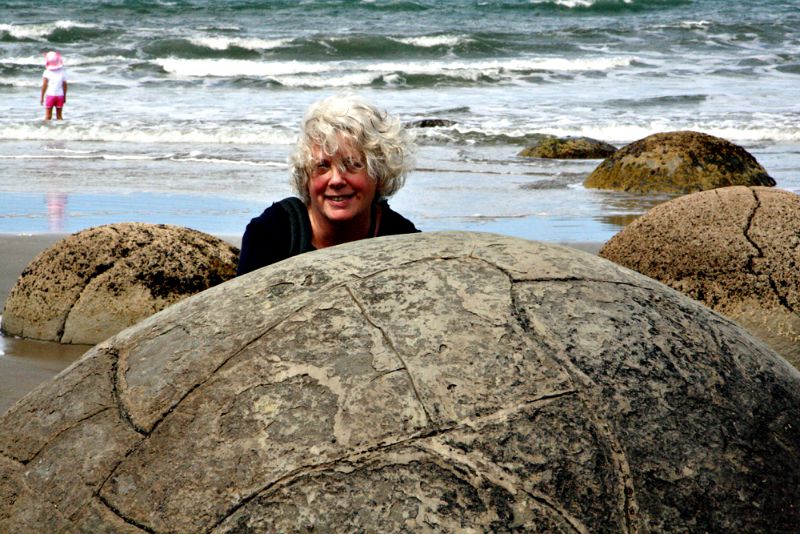
Madeleine Lenagh moeraki

A photo of Madeleine Lenagh taken in New Zealand, among the magnificent Moeraki Boulders.

I first heard about Madeleine from Springtime Books, which published her memoir, Passage of the Stork, Delivering the Soul: One Woman’s Journey to Self-Realization and Acceptance, several months ago.

As those who perused our summer reading recommendations may know, Madeleine’s book was one of my picks. I was intrigued that she chose to tell her life story using poetic vignettes and commentary by archetypes from Nordic mythology and fairy tales.

From the title of the book alone, it’s possible to discern that that Madeleine is in touch with nature at an almost spiritual level. She looks to the stork to deliver her soul (in ancient Egypt, a drawing of the stork served as the hieroglyphic for “soul”). And if you read the book’s prologue, you’ll see that her view of nature includes mermaids—as evidenced by the prologue’s very first sentence:

Three mermaids play in the huge rolling waves, splashing and diving in the curling spray.

It comes as little surprise, then, to discover that besides being an author and blogger, mother and grandmother, and life coach and counselor, Madeleine is a shamanic practitioner. She has been influenced by Dutch shamanic teacher Daan van Kampenhout, whose method fosters connections with helping spirits and ancestors.

What I didn’t realize, though, is how much Madeleine loves to travel and take photographs. She even has her own photography site.

Now let’s see what other worlds Madeleine can conjure up for us with her photos!

* * *

Hi, Madeleine, and welcome to the Displaced Nation. I’ll start the same way as James, by asking: where were you born, and when did you spread your wings (an apt metaphor in your case, given your fondness for storks) to start traveling?
Hi, ML, thank you for inviting me to take part in this column. In answer to your first question: I grew up in Westport, Connecticut. When I was two years old, my stepfather was sent to Europe as a Naval attaché to the NATO. For three years, we lived in Paris, Bad-Homburg, and London. We returned to Westport when I was five. Although I have few memories of those early years, I believe my love of traveling was born then.

So you didn’t end up being raised as a Third Culture Kid?
No, I didn’t leave the United States again until I was 21, when I coaxed my family into giving me a trip to Europe for my 21st birthday. I traveled all around Western Europe and down into former Yugoslavia. At the end of the summer, I was in The Netherlands and my money was running out. I didn’t want to go home yet and found an au-pair job for six months.

Which countries have you visited thus far, and of those, which have you actually lived in?
My travels have taken me all through Europe, as well as to India (Rajasthan), Indonesia (Java and Bali), Costa Rica, and New Zealand (South Island). I believe that Canada and Alaska deserve a separate mention as they are beautiful and remote parts of the world. But, apart from those few years when I was a small child, I have only lived in the United States and The Netherlands.

It’s interesting to me that you chose to make The Netherlands your home for your adult life. What made you settle there in particular?
When I became an au pair in The Netherlands 45 years ago, I sold my return trip ticket to buy winter clothing. Somehow I never got around to leaving. It often amazes me that I, a lover of wild places in nature, could feel so comfortable in this relatively “tame” country. There were key moments in my life when I asked myself, so where am I going now? But there was always more reason to stay than to go. Passage of the Stork, Delivering the Soul describes, among other things, my struggle to put down roots and find a sense of permanency.

“She will always love the sea…” —from the Prologue to Passage of the Stork

Moving right along to the part we’ve all been waiting for: a chance to appreciate a few of your photos. Can you share with us three photos that capture some of your favorite memories of the so-called “displaced” life of global travel? And for each photo, can you briefly tell us the memory that the photo captures, and why it remains special to you?
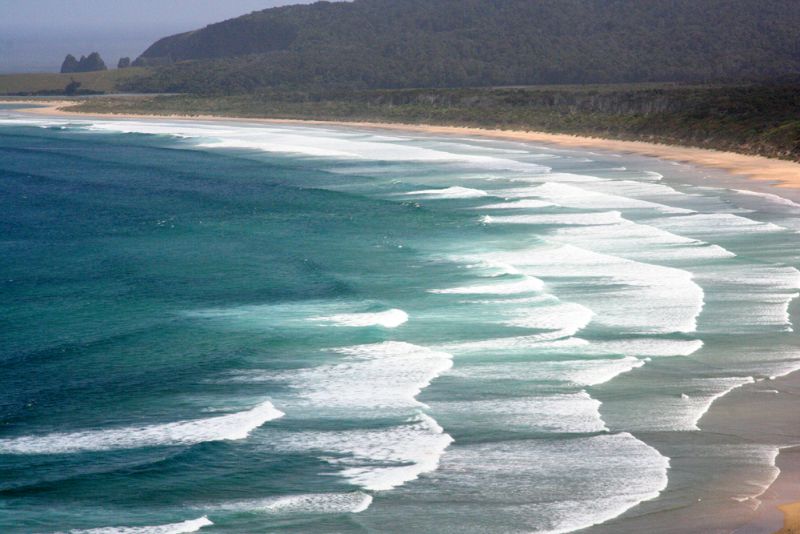
Occasionally I arrive somewhere and think, I could live here. One of those places was South Island, New Zealand. I love the wild remote land, the warm friendliness of the people, and the ever-changing scenery. The photo I have chosen here is the perfect arch of a totally deserted beach in the Catlins, way down on the southern end of the island.

catlins_800x

Untainted by the modern world, the Catlins are the kind of place where a mermaid might appear. Photo credit: Madeleine Lenagh

Wow, that’s the kind of place where it would be easy to imagine mermaids! I have only been to New Zealand’s Northern Island, but even there, I felt that it attracts people who want to get away from it all…
Along the same lines, another place I would be seriously tempted to live, if it weren’t so cold and dark in the winter, is Alaska. I love the pioneer spirit of the people who live there. My brother runs nature tours out of Paxson, which is located in one of the prettiest spots in the state. To the north of the Denali Highway, one sees the dramatic Alaska Range, with its snow-capped peaks and glaciers. An outstretched tundra lies to the south. However, the photo I have chosen, of a fishing boat near the shore, was taken down on Prince William Sound, during a day cruise in 2010. I like the muted colors, with only the bright splash of red on the boat to off-set the fog.

alaska77

While cruising through the calm, protected—and mysterious—waters of Prince William Sound. Photo credit: Madeleine Lenagh

Ooh, I really like this photo. So moody and atmospheric… Though I’ve never been to Alaska, I picture it as having this kind of mystique. Where are you taking us next?
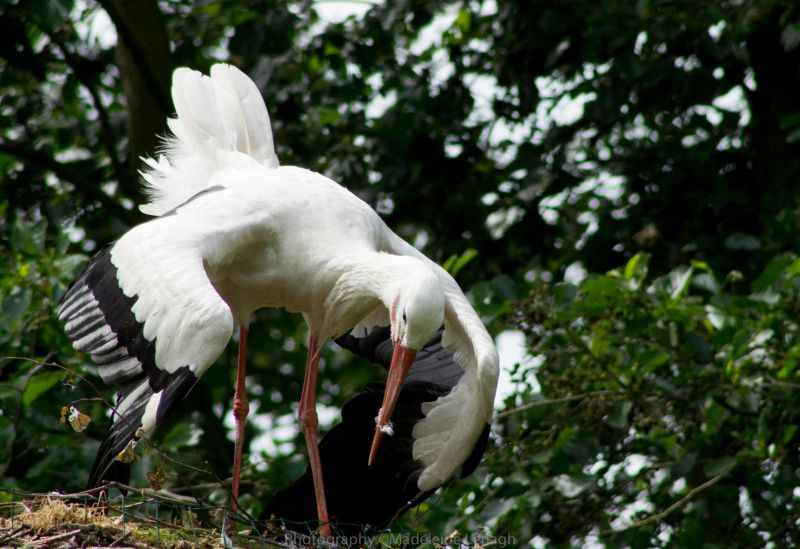
This summer I traveled back to the New England of my youth. I realized how much at home I feel there, in spite of having left 45 years ago. Those of you who have read my book know that I have a special relationship with storks. One of the things they reflect about me is their migratory nature, feeling at home in more than one place. I love this photo of a white stork, taken near my home in The Netherlands, doing its special bill-clacking dance as it returns to the nest.

stork-s_800x

Time for a spot of beak-clapping, says this Dutch stork. Photo credit: Madeleine Lenagh

Hm, until now I have always associated storks with the arrival of babies. But after hearing what you have to say, I may start thinking of them as the avian counterpart of the serial expat!

“I lie on my stomach, hearing gossamer wings rush by.” —from the Prologue to Passage of the Stork

Having seen your first three photos, I expect it’s a bit of a tough choice, but which are the top three locations you’ve most enjoyed taking photos in—and can you offer us an example of each?
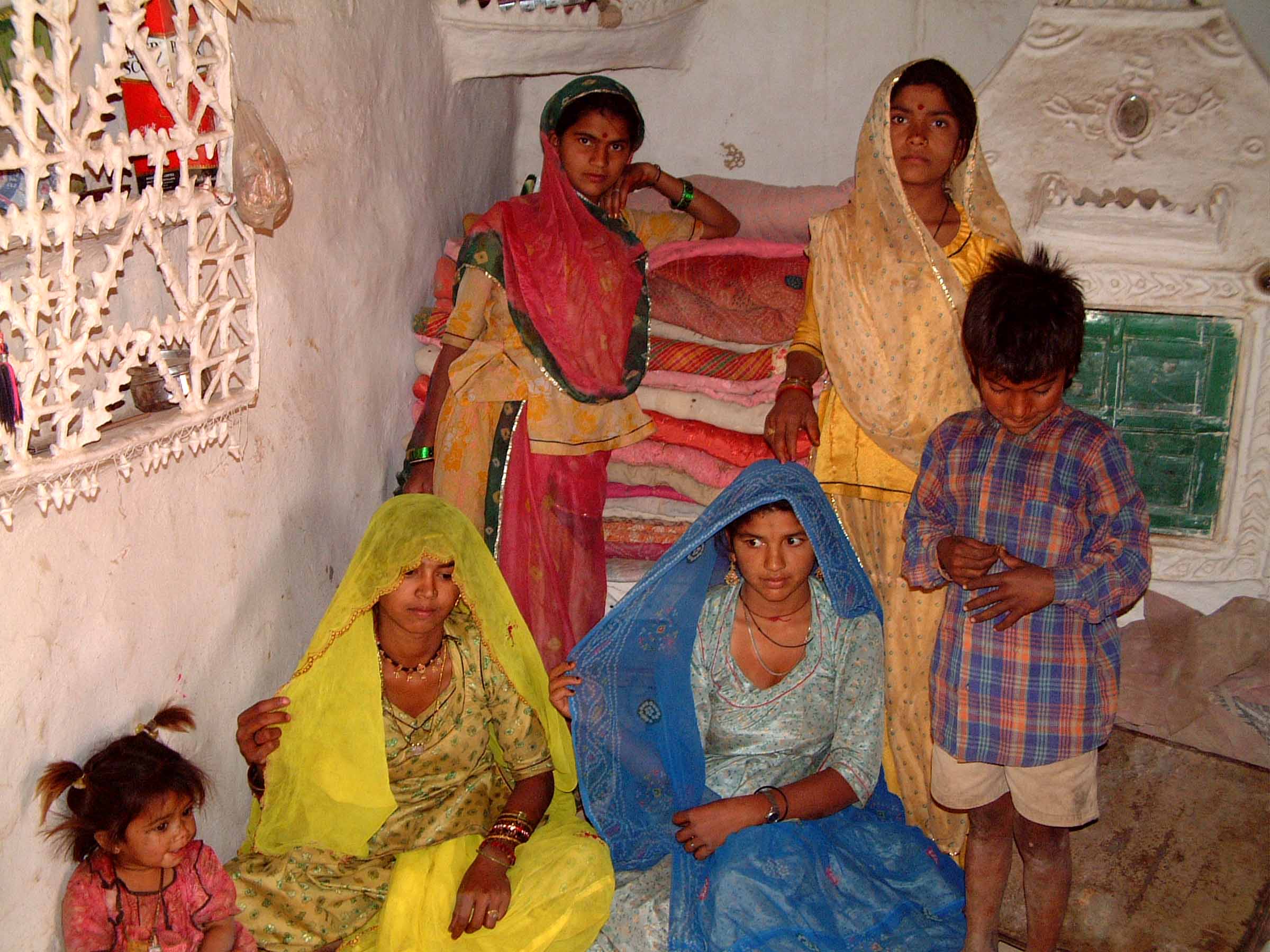
I’m actually going to pick three new places for you. The first one is India. It is a riot of color and ornate decorations, a photographer’s paradise. The photo I have chosen illustrates this perfectly: a group of children posing for me in the “best room” of their desert compound near Jaisalmer.

212_desert

Colorful life in India’s Thar desert. Photo credit: Madeleine Lenagh

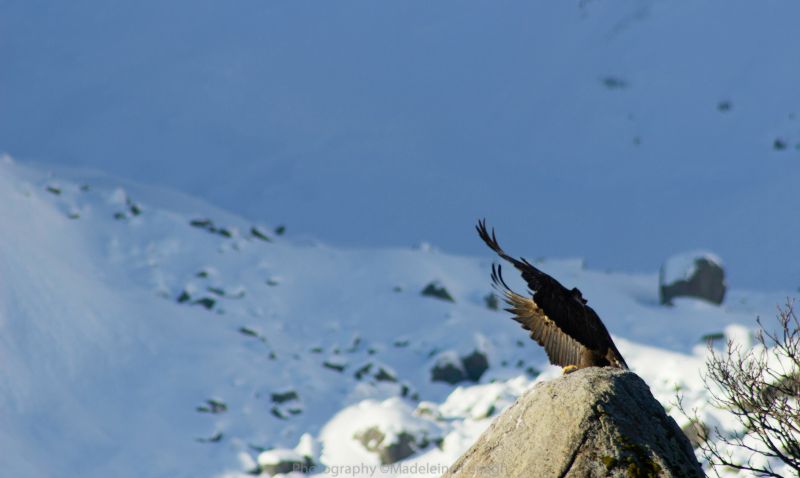
I also have a special relationship with Norway (disclosed in my book) and I love photographing birds. Up in the Lofoten archipelago, I had the unique opportunity to photograph white-tailed sea-eagles. I’m very proud of this shot, catching the bird just as it had landed on a rock.

eagle_800x

A white-tailed sea-eagle touches down on this untouched land within the Arctic Circle. Photo credit: Madeleine Lenagh

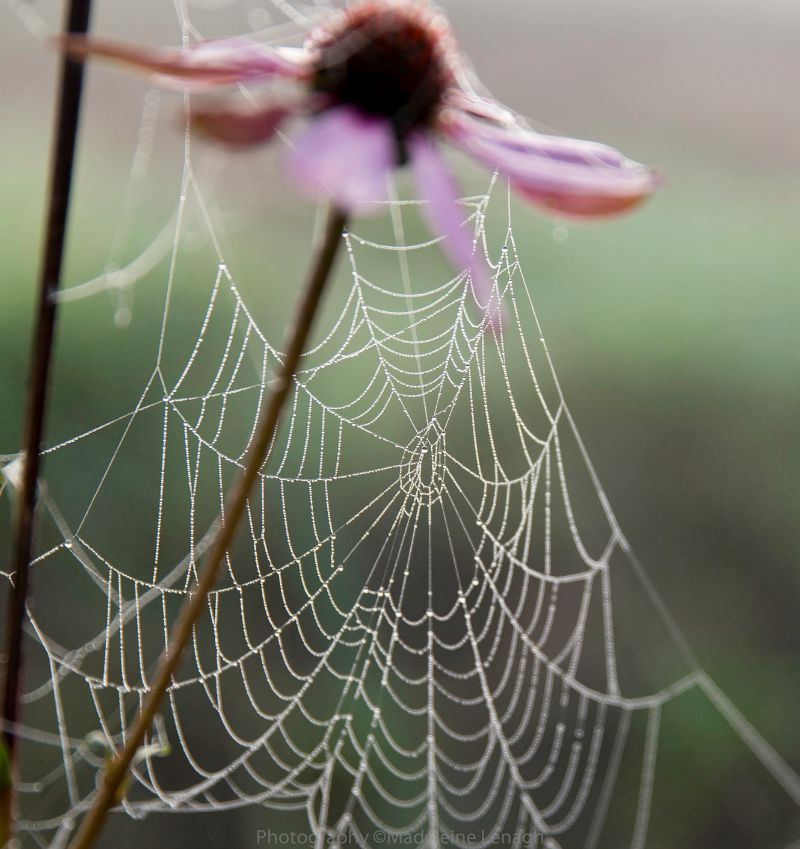
Finally, though I’ve taken you far afield, my last pick for favorite photography locations is my own garden! I love the simple beauty of the nature I find there. A perfect illustration is this photo of a spider web covered with droplets of fog.

spiderweb-s_800x

Is it a spider web or the finest lace? Photo credit: Madeleine Lenagh

I love that you’ve taken us back to your own garden! It makes me think of a fellow New Englander of yours, Emily Dickinson, who took companionship as well as inspiration from her garden in Amherst.

“You can cage a bird, but you can’t make him sing.” (French-Jewish saying)

Going back to your photo of the children in India, I wonder: do you ever feel reserved taking photos of people, particularly when they are conscious of your doing so? How do you handle it?
I am very reserved about taking photos of people, especially in other cultures, and will only do so if they have given me permission. Usually, asking people if you can take their photograph is a wonderful way of making contact with them and often leads to spectacular portraits. The photograph of the children in India is a good example. I love how the two sitting girls (unmarried and therefore veiled) unveiled their faces for the photo.

When did you become interested in photography and what is it about this art form that drew you in?
I believe I have photography encoded in my DNA. My grandfather was taking brilliant photographs in the 1920s. My mother never went anywhere without her 1953 Leica. My Norwegian father (caution: book spoiler!) was a cinematographer. I started taking photographs (and working in a darkroom) when I was about 18 years old. I believe that I was originally drawn in by the fact that it required no real motor skills and I was dreadful at drawing! I’ve always had the urge to express my feelings in some creative fashion, whether it be writing, photography, painting, or dance. Currently, my greatest motivation to photograph is to share the beauty of the natural world with others; to draw them into the same sense of awe and majesty that I feel when I’m in touch with nature.

“Listen to all, plucking a feather from every passing goose, but, follow no one absolutely.” (Chinese saying)

And now switching over to the technical side of things: what kind of camera, lenses, and post-processing software do you use?
Most of these photos were taken with earlier cameras but, at the moment, I use a Canon EOS 6D, a full-frame camera. My favorite lens is a 70-200mm f 2.8 lens. I have been using a 2x extender to get up to 400mm, but recently decided that it slows down the focus too much so I will be looking for a good telephoto lens soon. I find that, as my experience grows, I grow more and more fussy about my equipment! I photograph in RAW format and process the images in Adobe Lightroom.

Finally, can you offer a few words of advice for wannabe photographers who are traveling the world or living abroad?
I suppose the most important advice is just to go out and photograph the things you love. Good photography takes practice and more practice. Study the manual of your camera and don’t be afraid to experiment with settings. Study paintings and sculpture by the artists you admire, to develop a sense for light and composition. As I develop as a photographer I find myself growing more and more critical of my work. It’s not just about showing the things I’ve seen or taking good photos. It’s about taking great photos that show a unique moment.

And I think the most important advice to any aspiring photographer was voiced by Pablo Picasso:

“Learn the rules like a pro, so you can break them like an artist.”

Thank you, Madeleine! I appreciate your sharing a selection of photos that illustrate your deep connection with nature. I’m impressed that you can find so much beauty and wonder on your own doorstep as well as on your travels to the world’s most unpopulated and unspoiled places.

* * *

Readers, what do you make of Madeleine’s travel-photo experiences and her photography advice? Please leave any questions or feedback for her in the comments!

If you want to get to know Madeleine and her creative works better, I suggest you visit her author site and her photography site. You can also follow her on Facebook (she posts her latest photos) and Twitter. But to really get to know Madeleine, I recommend getting her book, Passage of the Stork, Delivering the Soul. You’ll never look at storks, or mermaids, in the same way again!

NOTE: If you are a travel-photographer and would like to be interviewed for this series, please send your information to ml@thedisplacednation.com.

STAY TUNED for next week’s fab posts!

If you enjoyed this post, we invite you to register for The Displaced Dispatch, a round up of weekly posts from The Displaced Nation and SO much more! Register for The Displaced Dispatch by clicking here!

Related posts:

EXPAT ART AS THERAPY: Works that capture unexpectedly beautiful moments of life in other countries

ExpatArtasTherapy_principle_no_two

As the summer wears on—and I’m wondering what I am doing working long hours in a big city while everyone else seems to have escaped to beaches or mountains or on other adventures—I’m returning to my series based on the ideas of pop philosopher Alain de Botton. As those familiar with his work will recall, de Botton maintains that art can provide relief from as well as solutions to one’s angst.

But does the art we expats produce play a role in improving people’s lives? That’s what this series of posts explores.

No doubt, the works of international creatives has some appeal to what global soul Pico Iyer has called the great floating tribe of people “living in countries not their own.” (Expats currently number around 230 million, or about 3 percent of the world’s population.)

But are the works expats produce too specific to their own situations, or do these works, too, speak to broader life problems?

De Botton outlines six specific ways art can respond to human needs. My last post examined his first principle, that art can compensate for the fact that we have bad memories. I offered some examples of how international creatives have preserved precious moments of their lives in other countries in their works, not only for themselves but for posterity.

Today let’s look at de Botton’s

PRINCIPLE #2: Art can give us hope. Simple images of happiness touch us. We tend to be moved by small expressions of beauty—not because we are sentimental but precisely because so much of life is not pretty.

The example de Botton cites is Claude Monet’s Water Lilies, (or Nymphéas), a series of around 250 oil paintings that depict the French impressionist’s garden at Giverny. Monet painted the series during the last years of his life, while suffering from cataracts.

Claude_Monet_Nympheas_1915_Musee_Marmottan_Paris

Nymphéas, 1915, Musée Marmottan Monet, Paris. via Wikimedia Commons (public domain).

De Botton is of course stirring it up by insisting that beautiful art serves an important purpose. Artists of today seem to be in a race to outdo each other in the outrageous stakes. I’m thinking of Damien Hirst, who built his reputation on artworks displaying dead animals, or their parts, in formaldehyde tanks. Providing a respite from the ugliness of life is the last thing on his mind. Likewise for Jen Lewis, who uses her own menstrual blood to create abstract designs. Provocative, yes, but not my idea of beauty.

Returning to de Botton’s second principle: which expat artists have excelled at producing the kind of beauty that provides relief from life’s less pleasant aspects? (Who are our displaced Monets?)

By way of an answer I’ve arranged a small “exhibition” of works by four visual artists, three painters and one photographer, all of whom have been affiliated in some way with the Displaced Nation. As de Botton has done at several museum exhibitions, I’ve added post-it notes describing the therapeutic effects I’ve experienced upon viewing these artists’ works.

#1: “Lost on a Mountaintop,” by Candace Rose Rardon

Lost_on_a_Mountaintop_by_candace-rardon_800x

POST-IT: Those of us who have traversed international boundaries carry in our hearts the fear that we may someday lose our way—literally, of course, but even figuratively, with no family or old friends around to serve as mentors or sounding boards. Candace Rose Rardon shows us the flip side: how glorious to be lost on the top of a mountain range with the world stripped down to pines, sun, wind and hills, ready for you to paint your own scenes on it. Even a stay-at-home curmudgeon could be struck down with wanderlust, at such a prospect. Candace is a writer, sketch artist and illustrator without a location. She tells stories about the world through her words and watercolors.
OUR CONNECTION: Candace was the recipient of one of our Alice Awards.
SEE ALSO: Candace’s blog, The Great Affair; and her first book of travel sketches: Beneath the Lantern’s Glow: Sketches and stories from Southeast Asia and Japan.

#2: Les Mimosas de Mesubenomori,” by Julie Harmsworth

les-mimosas-de-mesubenomori-2013-800x-acrylique-et-pastel-c3a0-lhuile-sur-papier
POST-IT: My first (and only) visit to Nagasaki, made while I was living in Japan, had a lasting impact. To this day I carry around images of the damage wreaked on that city from my visit to the Atomic Bomb Museum. But for Julie, who moved to Nagasaki from the United States to teach English, the city was the place of her rebirth as an artist. She often walked to this local park, and this painting is her tribute to its flowering mimosa trees. For a moment her painting makes me forget the pain this city endured, along with the horror for war it engenders. Though one can never lose sight of the darkness, it’s possible to be touched by these simple, beautiful trees.
OUR CONNECTION: We are mutual blogging admirers. Julie, btw, has now moved to France, where she continues her work as a fine artist (hence the French title of her painting).
SEE ALSO: Julie’s portfolio site.

#3: “Russian Market—Phnom Penh,” by A. Spaice

Russian-Market-PhnomPenh_framed
POST-IT: I’ve never been to Phnom Penh but imagine it might be a variation on other Southeast Asian cities (Bangkok, Kuala Lumpur, Jakarta, Saigon) I’ve visited. From reading descriptions of the Russian Market, which lies in the southern part of Cambodia’s capital city, I can certainly picture it: a narrow warren of stalls, crowded, busy and sweltering, full of the kinds of goods you see in all of the markets in that part of the world (though apparently at better prices), everything from handicrafts to fake Swiss watches to pirated software to designer clothes considered unfit to be shipped abroad because of small flaws. The global economy at its finest! But what does writer and sometime photographer A. Spaice offer us? A glimpse of a splendidly isolated flower and flower-to-be. Such a beautiful reminder that the “I shop therefore I am” credo of Asia isn’t all there is to life!
OUR CONNECTION: A. Spaice was our first international creative to be “wonderlanded” (read her interview and an excerpt from her short book, Bangkok).
SEE ALSO: A. Spaice’s Design Kompany site and weekly e-zine.

#4: “End of the Drought,” by Antrese Wood

Endofthedrought_Antrese_Wood
POST-IT: The Pampas grasslands of Argentina are one of the most fertile areas in the world. When a drought occurs and its crops are destroyed, not only farmers—but also does the rest of the world—suffers, as world food prices are nudged higher. Antrese’s painting of the grasslands landscape “after the drought” reminds us that even when nature gives the earth and its inhabitants a terrible beating, the rain returns eventually and the beauty of the landscape is restored. If a glimpse of such beauty helps us forget the pain even for a moment, then perhaps it is possible to regroup and carry on. (Note to self: Come back to this painting once the dog days of August have arrived.) An American married to an Argentinian, Antrese has been living in Argentina since 2011.
OUR CONNECTION: Antrese was one of the interviewees in our long-running Random Nomad series. At that time she was about to embark on an ambitious project, “A Portrait of Argentina.”
SEE ALSO: Her portfolio site and her podcast series for artists, SavvyPainter.

Note: All four artists’ works are reproduced here with their permission.

* * *

So, readers, what do you think of the above “exhibition” of works that capture unexpected moments of appreciation for life’s beauty? I know that writing about these works helped to lift me out of my late-July funk, but did you, too, find it therapeutic? And are there other expat works you would recommend for this reason? Do tell in the comments.

STAY TUNED for the next fab post.

If you enjoyed this post, we invite you to register for The Displaced Dispatch, a round up of weekly posts from The Displaced Nation, with Alice nominations, book giveaways, and other extras. Register for The Displaced Dispatch by clicking here!

Related posts:

WONDERLANDED: “Bewildered, Bewitched & Bothered,” by expat writer Sally Rose

bewildered bewitched and bothered

Photo credits: (Row 1) Cheshire Cat, by thethreesisters via Flickr (CC BY 2.0); (Row 2) Alice in Wonderland Cosplay, by Michael Miller via Flickr (CC BY 2.0). Other photos supplied.

A couple of days ago we were Wonderlanded in Santiago, Chile, with American expat writer Sally Rose. She nearly had us twirling in teacups as she took us on a tour of the curiouser and curiouser aspects of her adopted home.

Today we have a chance to sample Sally’s writing and its distinctly wonderlanded quality with this excerpt from her recently published memoir, A Million Sticky Kisses, which recounts her early days as a volunteer English teacher at a not-so-well-off school in Santiago. How does Sally write about being a stranger in a strange land? NOTE: For the purposes of this post, I’ve titled this passage “Bewildered, Bewitched & Bothered” as that seemed an apt way to describe the scenes Sally depicts.

AMillionStickyKisses_cover_pm

* * *

Bewildered, Bewitched & Bothered (Part 2, Chapter 7 of A Million Sticky Kisses, by Sally Rose):

I got up early the next morning because the supervisor had granted me permission to attend the meeting which started at 8:00am. I was at the Metro station by 7:30, where the free newspaper hawkers were setting out stacks of papers. As I walked by, I started to take one from a stack. The male hawker slapped his hand on top of the paper to hold it down. I looked at him as he let out a rapid stream of Spanish, but I had absolutely no idea what he was saying. I tugged again at the paper. “¡No!” He would not let me have it.

“No entiendo. ¿Por qué?” I don’t understand.

From the corner of his eye, he glanced at me. ¡Gringa! I saw him almost relent for a second before tightening his stance as he started explaining again. I listened hard, but without success. He was one of those Chileans that I could not understand at all.

Finally, the woman, who was guarding the other free paper, came over to me and, like she might explain to a 5-year-old who was just learning how to tell time, she pointed to my watch and made a quarter circle with her finger. I understood her, but couldn’t believe it.

“¿Ocho menos cuarto?” 7:45? I had to wait until 7:45 before I could take one of their free papers? She nodded her head.

I realized that it wouldn’t do any good to try and finagle it. This was one of those mysterious Chilean customs that made no sense to a gringa, especially a gringa living in New York, where the papers sat in huge stacks and you could take as many as you liked.

As I walked away, bewildered, I noticed that there were several people already forming a line, willing to wait 15 minutes so that one of the hawkers could hand them a newspaper. They watched our exchange closely to make sure that I didn’t get a newspaper before they did.

I couldn’t wait 15 minutes, not if I wanted to be on time for the meeting. Not that I expected it to actually start at 8:00, but She-Who-Can-Never-Be-Late didn’t want to risk it. I descended the Metro steps without getting my newspaper after all.

"Out of time" street art, which has now been painted over (supplied).

Sally may be in Chile but she doesn’t want to be late! Photo credits: “Out of time” street art, which has now been painted over (supplied); Suivez le lapin blanc, by thierry ehrmann via Flickr (CC BY 2.0)

Incredibly, the meeting started at 8:05. The supervisor was a no-nonsense Chilean who spoke excellent English. I mostly just listened, but Marisol [Sally’s colleague, a Chilean English teacher] told me later, “I think she was nervous around you.”

Then, she added, “Jacqueline [another gringa English teacher] would really like it if you went to her classes today. The supervisor has given her another bad mark. She has received bad marks all year. Without telling her that they will not have her back next year, they have interviewed three other people to replace her. Yesterday, BAY-ACHAY-ESSAY [nickname for Victor Hugo Salinas, head of the English volunteer program] knocked at her door and told her that someone else would be teaching her classes that day. Then, a job applicant took over her classes while poor Jacqueline had to stand and watch.”

Her teaching skills needed improvement, but I almost could not comprehend the cruelty of this. I trudged off to find Jacqueline. Her classes, and now her career at this school, were a lost cause.

After school, I was invited to go with the chorus to the annual Christmas concert at a nearby cathedral. Students from each of The Network’s schools participated. My kids were partnered with girls from the adjacent high school.

We left in a large van from the school, zigging and zagging down narrow backstreets to arrive at the church just in time. We hurried the kids in to find our pews. In the 90-degree heat, my clothes clung to me, but inside the church, it was blissfully cool and smelled of candle wax and furniture polish.

I sat with one of the mother chaperones and kept an eye on the kids. In our chorus were eighteen girls and one boy. They were the only ones wearing their “every day” uniforms, the same gray sweat suits that they wore to school. Choir members from the other schools had on school uniforms, as well, but they were cleaner, dressier, and more expensive.

White shirts, navy pants for boys and white shirts with navy jumpers for girls. I had never seen my kids in any uniform except the sweat suit and I wondered if my school might be the poorest in The Network.

Behind me, I heard commotion and turned to find little girls pushing off and sliding from one end of the well-buffed pew to the other. I gave them a look that included an arched eyebrow and they settled down again, giggling.

The concert began with “It Came upon a Midnight Clear,” in Spanish. My kids were next. I didn’t recognize their song, but it was beautiful with their voices echoing strong in the vaulted cathedral. They accompanied the song by clapping their hands in flamenco-style rhythm while the youngest girl pinged on a triangle.

Sally doesn't mind her kids being in sweat suits when they perform well (photo supplied).

Sally doesn’t mind her kids being in sweat suits when they sing beautifully (photo supplied).

Out of the twenty or more songs, I only recognized five. The rest were traditional Chilean Christmas songs.

Afterward, going home later than usual, the train was crowded. A man entered after me and moved past me. Then, he called attention to himself by bumping into me as he moved in front of me again. “Permiso,” he said as he circled around. I thought he would be getting off at the next station since he stood by the door, but instead of facing the door, he turned around to face me.

All this moving around put me on guard. I was holding my purse, my school bag, and my sweater when I felt something funny going on with my purse. I looked down and saw a sweater hanging over the top of it. His sweater. Then, I felt something fiddling with the zipper. His hand?

Quickly, I moved away to the middle of the car, out of his range. Keeping my eyes on his, I felt around inside my purse to make sure everything was still there. I glared at him with mal de ojo, the evil eye, until he jumped off at the next stop.

Metro and evil eye

You have to have an evil eye on the Santiago Metro if you don’t want to be pickpocketed. Photo credit: Metro Universidad de Chile, by Guillermo Perez via Flickr (CC BY 2.0).

* * *

Thanks, Sally! I love it, especially the section where you descend into the Metro muttering the equivalent of: “I’m late, I’m late, for an important date.” And your mal de ojo (evil eye) powers must be on a par with the Queens of Hearts’s “Off with your head!” Also, I’m glad your version of Wonderland includes children’s music.

Readers, what do you think? Has this excerpt from Sally’s book made you want to read more? If so, you can order A Million Sticky Kisses from Amazon or Good Reads. You can also visit Sally’s author site, where she keeps a blog and/or stay social with Sally by following her on Twitter, Facebook, Pinterest, and Instagram. And of course you can also express appreciation for Sally in the comments below. ~ML

STAY TUNED for next week’s fab posts.

If you enjoyed this post, we invite you to register for The Displaced Dispatch, a round up of weekly posts from The Displaced Nation, and much, much more. Register for The Displaced Dispatch by clicking here!

Related posts:


Wonderlanded in Santiago with Sally Rose, expat writer, teacher and (above all) learner

Photo credits: Santiago (top) and New York City via Pixabay; Sally in Chile & Sally's Alice in Wonderland  painting by Russian artist. (supplied).

Being Wonderlanded with Sally Rose means going from the City That Never Sleeps to the City of Madhouse Parties. Photo credits: Santiago (top) and New York City via Pixabay; Sally in Chile & Sally’s Alice in Wonderland painting by Russian artist. (supplied).

Welcome back to the Displaced Nation’s Wonderlanded series, being held in gratitude for Lewis Carroll’s Alice’s Adventures in Wonderland, which turns 150 this year and, despite this advanced age, continues to stimulate and reassure many of us who have chosen to lead international, displaced, “through the looking glass” lives.

This month we travel
d
o
w
n
the hole with Sally Rose to Santiago, Chile.

At first glance, Sally may not seem to have a strong connection to Alice in Wonderland, having been born and bred in the piney woods of East Texas. But I assure you her life has taken the kinds of twists and turns that would give Alice some serious competition.

First, Sally faced the struggle of getting out of a conservative small town in Texas, which simply didn’t have enough Mad Hatters in it to satisfy her curiosity. As she says in the introduction to her recently published memoir:

At night, I’d lie awake and listen to the whistle of the midnight train as it passed through like clockwork. I always pondered where it might be going. In my imagination, it was always somewhere “exotic” and exciting. Where to tonight? Chicago? New York? Out West?

Once she was old enough to leave home, Sally tried living in the Cajun Country of Louisiana, the plains of Oklahoma, and the “enchanted” land of New Mexico—only to make her way, eventually, to the East Coast and New York City, where she dreamed of writing the Great American Novel.

But even the Big Apple wasn’t enough to sate her restless, adventuresome spirit. Soon it was time to expand her horizons again and go abroad. Having been to Chile on a holiday, she signed up for a volunteer program teaching English in Santiago.

At last she had stepped though the looking glass! From the moment she arrived to live in Santiago, she found herself struggling with both language and culture, along with a whole host of unfamiliar characters—from avaricious school owners to boisterous school kids. She was a “stranger in a strange land.” Would she get out alive and unharmed, with her wallet safe (no joke!). Perhaps if she hadn’t been the recipient of a million sticky kisses, as her memoir is titled, she would have exited her Alice in Wonderland story by now, screaming “Off with their heads!”

But instead she embraced the adventure and has now become a permanent resident of Santiago, a displaced creative. In addition to A Million Sticky Kisses, which chronicles her earliest encounters with her Chilean students, Sally has also produced a children’s book, Penny Possible, about a Golden Retriever named Penny who trained for two years to become a therapy dog for an Iraq war veteran (proceeds are donated to Warrior Canine Connection). It has been a No.1 bestseller on Amazon.

Oh, but wait! A rabbit just darted by. Let’s follow Sally and hear about her Adventures as a Gringa Teacher in the Wonderland of Santiago de Chile…

* * *

Sally Rose: Thanks, ML, and thanks, Displaced Nation readers, for accompanying me on this trip to my special version of Wonderland. As ML mentioned, I was born and raised in East Texas, in a tiny little town. That means the northeast corner between Dallas and Texarkana. I’m not sure why I chose to incarnate in small-town Texas because I always had the feeling that I was a big-city girl, and I’ve since discovered that to be true.

My path to becoming a displaced national went like this: Texas-Louisiana-Texas-Louisiana-Oklahoma-Louisiana-Texas-New Mexico-Texas-New Mexico-New York-Chile.

I’d always wanted to try living in New York, and I’d always thought I’d live overseas. Everything before that was only practice.

“Who in the world am I? Ah, that’s the great puzzle!”

I must have felt disoriented from the moment I was born. Though there were differences in each of the original four states (Texas, Louisiana, Oklahoma, New Mexico), my life before New York was fairly homogenous, but nowhere felt like “home.” Now, I realize that most of my moves have been based on trying to find my tribe. Asking myself, “Where do I fit in?”

Though many people become disoriented by being “down the rabbit hole,” I thrive on feeling that little edge of uncertainty, on feeling puzzled.

Living in New York meant getting used to high rent-tiny apartments, walking and public transit vs. car culture, different (read: NY) attitudes, too many choices, and 7,999,999 other people, yet not being connected to any of them.

Once I got into the rhythm and pace of the city, I found it exhilarating. I called New York my temperamental mistress, but I eventually felt less disoriented there than anywhere else I’d ever lived.

In 2008, I came to Chile on a vacation. Call it karma, fate, or the planets aligning—but the moment I set foot in that strange land, I knew the time had come to follow my heart and make my dream of teaching abroad a reality.

I moved to Chile on March 1, 2011, ready to conquer the world and make a difference in someone’s life.

“Curiouser and curiouser…”

Three years before I made the move, I did several stints of volunteer teaching in low-income schools where the students were considered to be “at risk.” Vulnerables. My book, A Million Sticky Kisses, covers that initial period.

I learned so much about myself that, most of that time, I wondered who was teaching whom.

In Santiago, Sally is teacher but above all learner (photo supplied).

In Santiago, Sally is teacher but above all learner (photo supplied).

“But she went on all the same, shedding gallons of tears, until there was a large pool all round her, about four inches deep…”

Once I decided to relocate to Chile, I had many moments of doubt, starting as the plane sat on the runway at JFK. Buckled in and staring out the airplane window, I had a moment of utter, can’t breathe, panic. What in the world was I doing? Leaving everything behind and moving overseas where I knew almost no one and barely spoke the language, what was I thinking?

Most “pool of tears” moments were followed by elation, the “I did it!” moments. Making the move, finding an apartment, getting my residency visa, opening a bank account, finally understanding enough Spanish to have a phone conversation, all counted as triumphs.

“If everybody minded their own business,” the Duchess said in a hoarse growl, “the world would go round a deal faster than it does.”

I haven’t changed my personal clothing style, which tends to be tailored and conservative. I actually enjoy wearing what I think of as the “Chilean granny uniform.” Wool skirt, wool sweater, wool scarf in neutral tones. And let’s not forget the sensible flats.

My short, red hair has earned me some long looks and possibly some judgment.

For young Chilean women, the hair style is long. Period. There are few exceptions. Once a woman is over 50, it’s acceptable to have shorter hair, but not spiky, red hair, like mine. This leads to suspicions that one is a lesbian, whether it’s true or not.

Sally doesn't care what Chileans think of her granny clothes & short red hair. Or does she? (Photos supplied)

Sally doesn’t care what Chileans think of her granny clothes & short red hair. Or does she? (Photos supplied)

“You’ll get used to it in time,” said the Caterpillar; and it put the hookah into its mouth and began smoking again.

It took me a long time to realize that you cannot be direct with Chileans. If you approach things openly and directly, they will often be embarrassed or offended.

This happened to me the first year that I was here. A teaching colleague had invited me to an asado, a BBQ, for Chile’s national independence day, Fiestas Patrias, September 18.

She invited me, but there were no details. What time did the party start? Would it be at her house or at her sister’s? Could she give me directions?

I sent her an email, asking these questions, but it went unanswered. I tried phoning her. She didn’t pick up. I texted her, Facebook messaged her, and phoned again, multiple times. She never responded to me and I ended up with no plans for the biggest Chilean holiday of the year.

Gringa alone on Fiestas Patrias. Photo credit: Bailando en la fonda, by Osmar Valdebenito via Flickr (CC BY-SA 2.0).

Gringa alone on Fiestas Patrias. Photo credit: Bailando en la fonda, by Osmar Valdebenito via Flickr (CC BY-SA 2.0); inset: Sally Rose (supplied).

The following week at school, she was polite, but not friendly like she’d been before. When I finally found her alone one day, I asked her what had happened. “I waited to hear from you about the BBQ. Why didn’t you respond to my messages?”

Lo que pasa es…” What had happened is that her baby had been sick and the car broke down. Then, her sister had decided not to have the party, and so on and so forth.

“I understand difficult family situations,” I told her. “What I don’t understand is why you didn’t let me know.”

She couldn’t explain this, didn’t seem to understand why it mattered nor why I felt disappointed.

Our relationship never recovered from this incident, and I was never invited again. She became distant; she avoided me. I lost a friend, but learned a lesson. To maintain Chilean friendships, I had to be less direct, or even silent, about many things, which is not my usual style.

“Well, I’ll eat it,” said Alice…

A Chilean food I love? That’s a strong word. I’ve tried octopus—too rubbery. Cochayuyo (dried seaweed)—rubbery and sticky. No love lost there. I’d have to say that my favorite Chilean dish is Pastel de Jaiba. This is a crab casserole baked in an individual clay bowl. ¡Rico!

Pastel de Jaiba, Sally's favorite Chilean dish (photo supplied).

Pastel de Jaiba, Sally’s favorite Chilean dish (photo supplied).

“Take some more tea,” the March Hare said to Alice, very earnestly.

Since my current home is approximately 55m, and my dining room table seats four people, this would be an intimate party. I would host a traditional Chilean once, with a twist or two.

Once is tea time in Chile. Not everyone observes this tradition, but many still do. Once has its roots in friends getting together for a nip in the late afternoon. In some stories, it was soldiers who began the tradition. In other stories, it was older ladies. Either way, they wanted to keep it a secret, so they called it once. The word in Spanish means eleven, after the eleven letters in aguardiente, fire water.

These days, alcohol is not usually served at once. Traditional once includes tea, bread with butter and jam, sometimes ham and cheese, and on special occasions, a cake. Chileans love sweets, and many cakes here are layered with manjar, a tooth-aching, caramelized milk filling, similar to dulce de leche.

I would use my best tablecloth and my English teapot. Manjar‘s too sweet for me, so I would serve a gooey, dark chocolate confection instead, and since I’m a gringa, I would serve a dry, bubbly espumante, in addition to the tea.

Wearing hats might be involved. Gloves, optional.

Is Sally Alice or the Mad Hatter here? (Photo supplied)

Is Sally Alice or the Mad Hatter here? (Photo supplied)

“I almost wish I hadn’t gone down that rabbit-hole—and yet—and yet—it’s rather curious, you know, this sort of life!”

My identity shift began in New York and has continued here in Chile. There is something empowering about moving into the unknown. When you start to have small victories, like navigating the subway or ordering in Spanish at a restaurant, you feel a heady success.

On the flip side, your mettle is tested on an almost-daily basis. Once you have proved to yourself that you can survive, evolve, adapt, and thrive, you get a glimpse of who you really are.

Sally in Disneyland teacup, in the days before she was wonderlanded (photo supplied).

Sally in Disneyland teacup, foreshadowing her experience of being wonderlanded (photo supplied).

Advice for those who have only just stepped through the looking glass

It’s okay to not know where you belong. Change course if necessary. Accept that you may never fit in. If something doesn’t work, be flexible. Try something else. Reinvent yourself. The good news is that you’ve already done it once, and you can do it again.

“Alice had begun to think that very few things indeed were really impossible.”

Ironically, I often work best when I am confused, challenged, or depressed. Since none of these is the case at the moment, I’m distracted by life, in general, but I have two specific projects in mind.

The first is an illustrated children’s book. It will be based in Chile, using iconic settings, and the theme will revolve around two of Santiago’s one million street dogs. I call them Bruno and Roger.

I am also in the process of reviewing and editing a former project titled Well, Why Was I Born: The Romance that Never Was. Publication goal: 2017.

sally rose books

Sally’s great works: two in the bag and two to come.

* * *

Thank you, Sally! That was a jolly good trip, both entertaining and thoughtful. Readers, I wonder if you feel like me, that there was something very special about the experience of being “wonderlanded” with Sally in Santiago? Please let us know in the comments. ~ML

STAY TUNED for the next fab post: an example of how Sally writes about place.

If you enjoyed this post, we invite you to register for The Displaced Dispatch, a round up of weekly posts from The Displaced Nation, and much, much more. Register for The Displaced Dispatch by clicking here!

Related posts: