The Displaced Nation

A home for international creatives

THE DISPLACED Q: Where did you meet your honey abroad?

It can be hard to make new friends abroad — let alone find a significant other. Thus it’s always inspiring to hear from nomads who’ve found that special someone hiding under a shamrock drinking green beer, or in other such fanciful locales. One such lucky fellow is Tony James Slater, the newest addition to the TDN team. Here is his story — can’t wait to hear yours!

There’s always a great story behind a travel romance, I find, often running the full gamut of emotions, from anguish to bliss. From experiencing a breathless holiday whirlwind romance to finding a soul mate in a distant land, nothing beats a tale of love — true and requited, tragically unrequited or trapped agonizingly somewhere in between.

And today I would very much like to hear yours!

Because our February theme is LOVE — and because it’s rapidly approaching That Day, when you should have bought something a bit special for your other half — I would like to invite EVERYONE to share their tale of passion and/or romance abroad!

Now, I can’t ask you folks to do something I wouldn’t do myself — so here’s an interesting tale of my own…

Once upon a time, in a faraway land…

I first met my wife in America. I know, right? Fascinating! But wait, I’m English — and the young lady in question, Krista, is from Australia, as evidenced by her nickname: Roo.

Roo had been working for Camp America, which supports summer work adventures in the United States. She was teaching kids how to ride horses at a summer school in Maine. And, as fate would have it, that was where she met…my sister!

My sis, whose name is Gillian, was doing Camp America at the same time, and was the only other staff member who wasn’t scared of horses!

Roo and Gill got to know each other quite well — so much so that the pair of them went traveling around the US after the job finished, which is where they met…Richie! An awesome, Kung-Fu kicking dude, muscle-bound and handsome, Roo fell for him immediately and the two became an item.

Which could have turned out rather differently for me, except this unexpected romance kept the couple in America for much longer than expected. You see, at the time some of this was happening, I was in Ecuador volunteering at an animal shelter. On my way home to the UK, I called in to the States to visit my sister, when I also met Roo and Richie. We traveled together for a couple of weeks and had a lot of fun.

Then Richie left, Roo left, and I followed my sister back to the UK, where, as explained in a previous post, I grew bored and dissatisfied with my hollow, consumer-led lifestyle.

(In other words, I was broke.)

Twists and turns worthy of Shakespearean comedy

So Gill remained close friends with Roo, inviting her over to England the following summer. She arrived just in time to be part of my farewell party — I’d finally scraped together enough cash to go to Thailand, where I planned to volunteer at an animal clinic and learn to dive. I would be gone for three months — exactly the same length of time that Roo would be in England.

Which was a pity, as she’s recently broken up with Richie and I rather liked her.

Gill and Roo explored every corner of my native country together, and Roo went back to Australia having elicited a promise from my sister that she would travel to Oz as soon as she could afford it.

I, meanwhile, had missed my flight home. It was accidentally on purpose — my subconscious clearly didn’t want me to leave Thailand just then. My regular conscious didn’t want me to leave either, being rather more aware of my income — or at least, the lack.

Volunteering for a living is notoriously unprofitable, and I couldn’t earn money from diving until I could afford to get qualified. A bit of a Catch 22!

But then — we came into some money. Both my sister and I profited from the sale of a house we’d helped renovate since getting back from America. I used the money to become a Divemaster (and for just a little bit of partying!), while Gillian, rather more sensibly, used hers to buy a ticket to Australia. She stopped off in Thailand on her way through, found me drunk in a bar and gave me such a talking to that I promised to come to Australia just to get her off my back. She was determined to save me from myself, which was probably for the best (I had very little intention of saving myself!).

I dallied for another three months while Gill met up with Roo in Oz and started to explore. They bought a beat-up old van between them and called it Rusty because, well, it was. Seriously — you could see daylight through bits of it.

To the ends of the earth — well, the Great Southern Land

That’s when I showed up. Penniless again, I arrived in Perth airport without the price of a cup of coffee to my name. I’d been living in Thailand for a year by this point, and all I owned was a bulging bag full of dive gear. It was winter in Australia and I didn’t even own a pair of shoes, or anything at all with sleeves.

Not in the least bit phased by me looking like a homeless person, Roo found me work with a local temp agency and within a few weeks I had enough money to travel.

The three of us piled into that crumbling van and set off for horizons unknown…and somewhere along the line, Roo and I fell in love.

Which thrilled my sister of course, as we were all sharing a tent. (But don’t worry — we got our own tent before long!)

Poor Gill left us, in disgust, in Sydney. She’d always hated being around couples in love — romance just wasn’t her thing. I still feel a little guilty for this…well, almost. But not quite!

Epi(c)logue

Since then, Roo and I have visited more than a dozen countries together. We married last July — in England because only Roo’s immediate family is in Oz. (She’s of Dutch descent, so all her rellies from Holland came over — including some she’s never met before! Her Aussie family — all four of them — flew over to the UK for the ceremony. ) And we now live in Perth — for a while in Roo’s family home but we now have a flat of our own. People always ask where we met — out of politeness more than interest, I feel — but it usually surprises them when we both say “America!”.

And as for Gill…well, she lingered in Sydney long after Roo and I left. Then she grew bored and flew to New Zealand, to a job in the ski fields, where she met a short blonde ski technician from Hampshire, UK, called Chris. They hit it off rather well as it happens — Gill had always liked short men — and four years later, the pair of them were married, a month before us and less than fifty miles away.

Roo got to be my sister’s Maid of Honor!

And because I’d been out of the country for so long that I’d lost touch with all my male friends, Gill — poor, suffering Gill — had to be my Best Man!

* * *

Your turn!

So. Let me hear it! Tales of love in far-flung and exotic locations: the triumphs, the failures and the ones that got away! We want to hear them all — post them in the comments section please, so everyone can read ’em and weep! (They don’t have to be as long and waffley as mine — I’ve been told I can be verbose.)

Oh, and keep it clean — some of these expat love stories lasted long enough to have children, and even grandchildren.

Love,
Tony xo

TONY JAMES SLATER is a self-confessed adventureholic. For the last six years he’s been traveling nonstop around the world, working at a variety of jobs including yacht deliverer in the Mediterranean, professional diver in Thailand and snow boarder in New Zealand. Last year, Slater published his first book, That Bear Ate My Pants!, an account of his misadventures while volunteering at the animal refuge in Ecuador. (The book was featured in The Displaced Nation’s list of 2011 expat books.) He is currently working on a second book set in Thailand, while exploring his new home in Perth, Australia.

STAY TUNED for Tuesday’s post, on 7 of the world’s most seductive foods — for seducing that valentine of yours.

If you enjoyed this post, we invite you to register for The Displaced Dispatch, a round up of weekly posts from The Displaced Nation, with seasonal recipes, book giveaways and other extras. Register for The Displaced Dispatch by clicking here!

Related posts:

Image: Tony Slater and Krista (Roo) participating in the traditional European ceremony of handfasting where the couple’s hands are tied together (in their case, with a garland of flowers), at their medieval-themed wedding last summer.

My quasi-religious pilgrimage to Oxford University — will I be judged sufficiently pious?

In past columns, Charlotte Day has illuminated aspects of her life as a Third Culture Kid who was born in Sydney, Australia, grew up mostly in New York and is now studying at an English boarding school in Kent. Today she describes her quest to earn a place at Oxford, which she has long revered as her spiritual home.

At 8:45 in the morning, my taxi turns down Holywell Street, and slows to a stop at the front entrance of New College, Oxford. Approaching the Santiago de Compostela of my adolescent dreams, my state of mind can best be described through shameless lyricism.

At this hour, the streets are populated only by the purposeful. Each dark-suited individual has some thought of unfathomable gravity revolving behind his or her furrowed brow. The morning light casts a celestial glow over the Bodleian Library, the Sheldonian Theatre, the Bridge of Sighs. Uniformly, these benevolent sandstone structures breathe in the sun.

God be in my head

Despite these poetic musings, I am incredibly nervous. I left my boarding school bed at a chill 5:00 a.m., knowing I did not know Crime and Punishment well enough, I did not know the Brothers Karamazov at all, and my ideas about the Seamus Heaney translation of Beowulf were utterly laughable.

Once they found me out, would I break down crying? And what about the unseen poem I would be told to discuss on the spot? If it were impermeable, I would certainly not be able to bluff my way through it. After all, what spotty 17-year-old can deceive them? Those eagles of intellect, with their acute, focused gazes; indisputable, measured statements; considered pauses; lofty, balanced arguments…

Oh! It was all too judicious and reasonable for an impulsive wreck like me.

You see, my feelings about Oxford are akin to an otherwordly obsession. So passionate have I grown about this ancient seat of learning that my preparations for this journey, especially in recent months, had taken on a quasi-religious purposefulness.

I spent the end of last year trying to live up to a set of self-imposed monastic ideals. I was to be irreproachably right at all times, my logic to be consistently clear, my views to display great penetration and uncanny powers of observation.

I even dressed in a way that reflected these intellectual ideals: threadbare corduroys in varying neutral tones, and moth-eaten jumpers would create a suitable aesthetic. I was unsparing of myself, subsisting largely on Lenten fare (watery porridge, steamed broccoli, etc.), and never going to bed before one o’clock if I could be reading instead.

Now I simply had to get into Oxford to complete this quest for ascetic perfection.

Getting in to Oxford… Now I am remembering all those melancholy 13-year-old evenings listening to Professor Stuart Lee’s Beowulf lectures on iTunesU, craving with all my ill-adjusted, lonely heart, that one day I would be sitting in that lecture theatre.

Lo, the full, final sacrifice

I am inching closer. Sitting in New College’s Lecture Room Six, with my baggage stacked around me, I will not return to the outside world for four days, and each minute of each of those days is shrouded in mystery.

A steady click comes from the two connect-four sets in the room: the science and law applicants letting off steam.

I gaze around the room. The English applicant is curled into herself, scanning a volume of Ezra Pound with a look of fatalistic despair on her pinched face.

The classicists sit in a convivial circle, trading sections of newspaper.

I take out my Beowulf and start reviewing my notes — columns of fluorescent green post-its, each bearing a comment more absurd than the last. Will I look too intimidating if I do this? I do not seek to intimidate — if only I could tell everyone in that room how intimidated I feel!

I glance at the Russian poem I have been given to analyze, by Yevtushenko: age, youth, gorging an omelette…middle age…the paranoia of the young? Our tendency to fill our lives with empty nothings, like omelette gorging? But these are rather pedestrian observations — is not some sort of inspiration called for? I avail myself of some instant oatmeal — to weigh down those jumpy nerves with a bit of stodge.

It is not hard to spot the two Etonians. One, so endearingly badly dressed, his argyle jumper tucked into a pair of murky-water-green corduroys. Both, so painstakingly polite, so frightfully embarrassed about their origins, so terribly unwilling to share where they live, or let slip that a relative of theirs had once been at the college himself.

I do not deny that there is a lack of diversity in that room, nor do I seek to explain it. The other candidates I encounter in Lecture Room Six are, every one, interested, charming, honest, terribly nervous teenagers — not representative of a centuries-old tradition of inequality.

Beati quorum via (I will lift up my eyes)

I am summoned out of Lecture Room Six to confront the English interview, which takes place by an electric fire, in an office lined with volumes of Elizabethan and Jacobean drama. Perched uneasily on a fur-swathed sofa, I answer questions on Doctor Faustus and the aesthetics of mathematics. Each response meets with a dreamy sort of assent, notes are jotted, and the conversation becomes increasingly oblique.

And then it is time for my Russian interview. I climb to the top of a rickety wooden stairwell, after a walk through the quad, turned hostile in the penetrating wet. (By now it is our second day.)

One tutor merges with the sofa, which in its turn has disappeared beneath stacks of application forms, submitted essays, and Modern Languages Aptitude Tests. The other sits before the fire, her high forehead reflecting its glow.

The discussion that ensues prompts the eyebrow-raising and chilling nods I have foreseen, and then questions about War and Peace — leaving the deficiencies of my 13-year-old’s reading of that tome quite exposed.

Afterwards, I stand, bedraggled in the dark quad, with a terrible sense of emptiness. I have two more days to fill; ahead of me, long hours in Lecture Room Six drinking bitter Tetley tea from a plastic cup. The expansive passion I have carried inside for years has tightened, wound itself into a taut cord of longing.

And I saw a new Heaven

When the fellows swish in to formal dinner, I almost feel ill. I do not know where to rest my eyes, each square inch of wood paneling makes me twitch with anxiety.

We rise with the hollow thud of wood on wood, grace is muttered in Latin, a mallet bangs, and we sit again, our murmured conversation echoing from the high arches of the ceiling.

I have always envisioned an affinity between Oxford and the stars, and even carry an image of my 14th-century counterpart adjusting his astrolabe while attempting to unveil the secrets of the heavens.

I cannot help praying, then, that a benevolent cosmos might know of the yearnings — my own and those of the other applicants — sympathize with our plight, and sweep our destinies into her swirling compass.

STAY TUNED for Monday’s post, when we invite in a guru to help us sort out some of the misconceptions our site has been propagating over the past few weeks on spiritual quests.

If you enjoyed this post, we invite you to subscribe to The Displaced Dispatch, a weekly round up of posts from The Displaced Nation, plus some extras such as seasonal recipes and occasional book giveaways. Sign up for The Displaced Dispatch by clicking here!

Related posts:

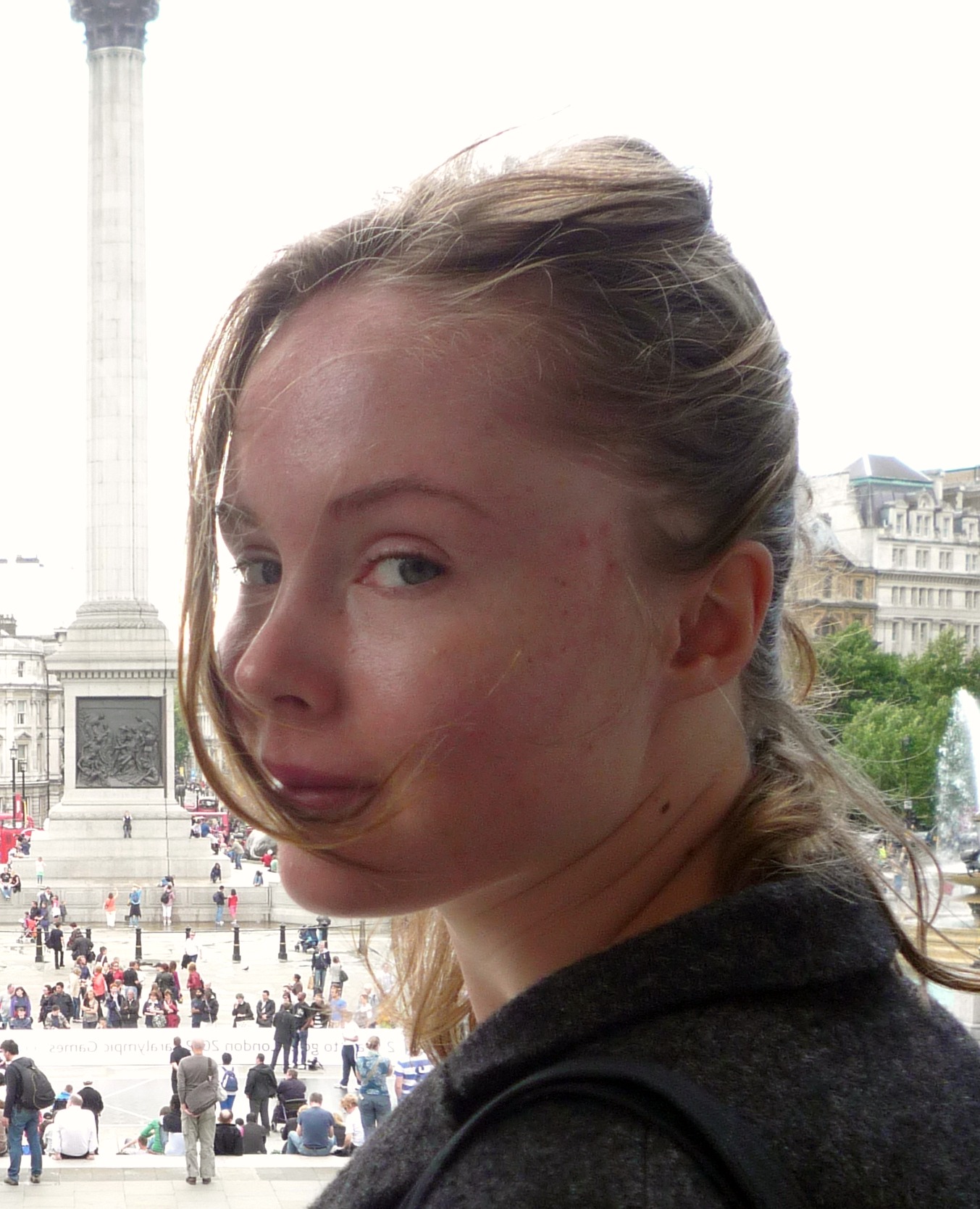
img: Charlotte Day surveying Trafalgar Square in London

Travel yarn: The Holy Land, transformative art — and Michael Jackson?!

We welcome Joanna Liss to the Displaced Nation as a guest blogger. A veteran of volunteering overseas, she recently went to Israel with the voluntourism group GoEcoon a quest that can best be described as quasi-spiritual.

I must confess I do not consider myself a particularly spiritual person. I have been on what would qualify as a spiritual retreat only once — about 40 years ago, when spending a weekend at a Zen center in the mountains of New Mexico. I was a student at the University of New Mexico at the time, with a religious studies minor (though a non-religious person, I was fascinated by religion’s folkloric aspects).

We were assigned to our dorm accommodations, given sparse meals of miso soup and bread, spent many hours sitting still and meditating — interspersed with breaks of walking and meditating — and were instructed not to talk, at all, all weekend.

My major memory of that experience was a dorm companion gesturing, rather frantically, and graphically, in a charade that I finally interpreted as a request for a tampax. I had a hard time stifling giggles for the rest of the weekend.

An unholy visit to the Holy Land

I have traveled to many places but never, until recently, to Israel. I never, honestly, had much of a desire to go — perhaps ironically, because my heritage is Jewish. It is difficult for me to sit through a Bat or Bar Mitzvah service, and my religion-related endeavors consist mostly of cooking potato latkes and matzoh brei.

I also admit that my politics do not necessarily align with those of the Israeli government. I wasn’t interested in religious travel, and there were too many other places that called to me more.

What finally prompted my visit to the Holy Land was an online listing for a volunteer project in a gallery of Arab art in Umm el-Fahem, an Arab city in Israel. I was ignorant enough to not have realized, beforehand, that there were Arab cities in Israel, or that a full 20 percent of Israeli citizens are Arab. I had thought of the Israel-Arab conflict as between Israelis and Palestinians, complicated enough, without knowing that it was made even more complex by the situation of Arab Israelis. (I asked around and was somewhat comforted, perhaps wrongly, to learn that most of my friends, even those who are Israeli Jews, were not aware of the Arab Israeli situation.)

And so, I set off for what would be a rather unorthodox Israeli experience, as a Jewish woman living, for six weeks, in an art gallery in an Israeli city where I was the only Jewish person.

Yes, I not only worked in the gallery but actually lived in an apartment on the rooftop third floor, surrounded by the whimsical sculptures on the rooftop patio outside my apartment. This living space afforded a spectacular view of the city, and several times daily the steep hills of the city echoed with the sounds of the muezzin calling out their amplified prayers.

If I were to call an experience spiritual, I suppose this would be one, especially when the amplified voices of the muezzin blended and harmonized, intentionally or coincidentally, I couldn’t say. It would probably have been a less moving experience for me, though, if I had been able to understand the words.

Travel as a source of personal renewal

I’ve heard, often enough, a person say she or he wasn’t religious, but spiritual. But what exactly is spirituality, especially of the secular kind? According to my prime informational source, Wikipedia, secular spirituality can be experienced as a source of inspiration or orientation in life, without necessarily accepting belief in a divine being. It can encompass compassion, patience, tolerance, contentment, responsibility, forgiveness, and concern for others.

In that sense, all my travels can be considered spiritual experiences, at least in secular terms. So maybe I am more spiritual than I thought?

Still, for me renewal comes not from retreat but from immersion in a new experience — be it a hot spring in the snow, watching the Eiffel Tower’s midnight light show from my garret apartment, or enjoying a leisurely breakfast at home of my favorite cereal with plump fresh blueberries and the sun shining in through the window.

Travel renews me, certainly — when I’m viewing an architectural or natural wonder, a work of art and, most of all, when I’m interacting with interesting people I might not otherwise have encountered.

The mystery of the falling headscarf

Back to Israel: I had many experiences in Umm el-Fahem that might fit the spiritual bill. Let me relate a couple. An artist on exhibit while I was there was Fatima Abu Rumi, whose meticulously detailed paintings deal with issues of self-identity. She paints herself repeatedly, totally veiled, with hijab (head scarf) hiding her hair but not her face, with the same scarf around her neck in quite a modern style, without any scarf at all.

Almost every school day, groups of young local children visited the gallery with their teachers and some mothers, the women all wearing the hijab. After some discussion Halima, the gallery educator, would bring out a basket of scarves, and all the children, boys and girls, helped by the adults, would don scarves, on their heads, over their faces, over their shoulders, as they chose.

Morning after morning, I descended from my apartment and watched, mesmerized. Some children were shy, some posed for my camera. I was as fascinated by the positive reactions of the adults as by the children. I only wish I could have understood what Halima had told them.

In a small niche hung a headscarf, black and white, identical to the one Fatima had repeatedly painted herself wearing. One morning, before my eyes, the hanging scarf suddenly fell off its hook on the wall. There had been no draft of air. I debated whether to pick it up or leave it. Later that month, when we delivered one of Fatima’s paintings to a prominent Jewish art collector, I noticed that the scarf had been tucked into the back of the frame, and told him the story.

Transformative art

Another significant moment came at the Haifa Museum of Art. We had gone to watch another Umm el-Fahem artist, Farid abu Shakra, do a performance piece. Farid is the younger brother of Said abu Shakra, the founding director of the Umm el-Fahem Art Gallery. An artist and an art teacher, Farid also curates some of the gallery’s exhibits.

At the end of the piece, Farid took two pieces of cloth that were hanging on the museum wall, a tallit (Jewish prayer shawl) and a keffiyah (the black and white cloth worn as a head covering by some Arab men). He tied them together. The message was clear. No words were necessary — and no religious belief — to feel the power of the moment, as well as to demonstrate the power of art to transform people, a major goal of the gallery.

(Amusingly, when I later showed my photo of the connected cloths to Farid, he commented, “very powerful image” — as if he were complimenting me, when the image was his.)

Farid also shared with me a series of maxims he had written in English. Here is my favorite:

He said to me, are you happy with your life? And I said to him, first explain the meaning of happiness, and then I tell you my reply.

Further mysterious sightings

On my next to last day in Umm el-Fahem, I visited the nearby ruins of Tel Megiddo, aka Armaggedon. It was just after a certain American minister had re-predicted the coming of the end of the world, realizing he had miscalculated the first time around. The site, and the world, were still intact when I visited. The ruins were interesting, and peaceful, aside from the surly saleswoman in the gift shop. We walked through the ancient stables and down into a huge stone lined cistern. I do feel a heightened intensity of place where historical events have occurred, and Tel Megiddo has had its share of events and battles over the millennia. The now quiet ruins actually might not be a bad place to spend the world’s final days.

Israel, of course, is replete with places of intense spirituality, to folks of many different beliefs, and it impossible not to feel the significance, historically and religiously, particularly in places like Jerusalem and Nazareth. Although I was not there for spiritual reasons, there are, wherever you turn, places of extreme importance to many. One encounters ultra-religious Jews in their dark clothes, side curls on the men and boys, head scarves on the women, Christians walking the literal stations of the Cross shouldering large wooden crosses, Muslim houses painted with what looks like graffiti but is actually a mark that the owner has made the pilgrimage to Mecca.

I went to the Western Wall on the day before Yom Kippur, the Day of Atonement, along with thousands of others. It was crowded, of course, but, surprisingly, not very difficult to make one’s way, after security, to the wall itself. I did make the mistake, at first, of heading toward the men’s side, and was kindly directed to the other side. There were women of all ages and kinds, some with strollers, some with canes, most praying, some just being tourists like me.

I walked up to the wall and touched my hand to it briefly; it seemed like the right thing to do. I did not write a prayer on paper and stick it in a crevice the way most people were doing, although it was tempting. I do like rituals at times, and mysterious things.

Here is the biggest mystery of my Israeli sojourn. On the women’s side of the wall was a woman (man?) who was a dead ringer for Michael Jackson. No kidding. I have the photo to prove it. S/he was standing next to more normal looking women, complete with quasi-military jacket, brass buttons and epaulets. There are many mysteries in the world that may never be solved. But please, is there someone who can explain this to me? I am hoping, and praying, that someone will.

Readers, can you relate to Joanna’s description of her secular spiritual travels — or do we need to come up with another term for it?

Joanna Liss has been traveling from the time she was a child in the Bronx, first to exotic destinations such as Brooklyn and Manhattan, later on family car trips up and down the East Coast, to places including Maine, Delaware, Montreal, and Miami, through all of which she professed that she could never live anyplace but New York. That all changed when she moved to Paris after high school. She has been traveling ever since. Her trip to Israel with GoEco marked her eighth adventure volunteering overseas; the other seven were with Volunteers for Peace. You can follow Liss’s adventures at her blog: Joanna’s Journey. Next stop: Havana.

STAY TUNED for Tuesday’s post, an interview with Dave Prager, author of Delirious Delhi, on our list of 2011 books for, by and about expats.

If you enjoyed this post, we invite you to register for The Displaced Dispatch, a round up of weekly posts from The Displaced Nation, with seasonal recipes, book giveaways and other extras. Register for The Displaced Dispatch by clicking here!

Related posts:

Images (top to bottom): The view from the rooftop of Liss’s apartment in Umm el-Fahem, Israel; the artist Fatima Abu Rumi (note the Hello Kitty tee shirt) with one of her paintings; the keffiyah and tallit tied together at the Haifa Museum; and the Michael Jackson lookalike Liss spotted at the Western Wall in Jerusalem (women’s side).

Yak-skin footware & the youthful quest for spiritual wisdom

We welcome back Lawrence Hunt to the Displaced Nation, who wrote a popular post for us in November about why the UK’s educated youth seems so preoccupied with voluntourism. Today he broadens this theme to include the quest for spiritual enlightenment.

At a comedy night I went to last year, the comedian’s most popular jokes were aimed at a student who’d made the mistake of sitting in the front row in sandals:

“He spent so long trying to find himself that he lost his shoes!”

As the number of people taking time off to travel has rocketed over the years, so, too, have the numbers of those in my age category (late teens, early twenties) who come back claiming to have achieved their ultimate epiphanies of self-actualization, forcing the fact of their higher spiritual consciousness onto the rest of us in the form of yak-skin footwear.

Meanwhile, companies like STA Travel make millions every year capitalizing on the appeal of the youthful spiritual quest — have a look at the description of one of their most popular holidays, the India Spiritual Trek:

Come face-to-face with a spirituality far removed from the shallow complexity (my emphasis) of the Western world, as you interact with some particularly special people in some truly unique places.

A recurrent theme in pop culture

One of Wes Anderson’s most financially successful films so far, The Darjeeling Limited, is about three rich brothers who board a train from Darjeeling to rediscover their lost kinship with each other.

So begins a strict itinerary of traditional rituals and indulgence in the simplicity of the local lifestyle, as Owen Wilson’s character throws out the odd patronizing comment: “These people are beautiful!”

My mother’s response on finishing watching Darjeeling with me was to promptly drop her jaw and say, in a low voice: “We have to go to India and see those mountain temples, Lawrence.” (My mother has talked for a while now of taking her own gap year, much to my concern — the men in Darjeeling have a mother who joins an Indian monastery and refuses to come home.) Fortunately, she is also able to laugh at Mitchell and Webb’s “gap year backpacking idiots” sketch.

And let’s not forget teen dance queen Alanis Morissette‘s hit single ‘Thank You,” which she released after taking time out from non-stop touring to travel in Cuba and India. At one point, she sings: “Thank you, India.” Did she actually imagine a billion voices chiming out as one from the subcontinent: “Any time, Alanis — we’re here to help”?

A recurrent theme in history

The idea of self-improvement through travel has existed for hundreds of years in such romantic idealizations as the Wild West, Darkest Africa and the Orient. It arises out of a conviction that as our civilization develops, we lose touch with our true selves, what life is all about. And if civilization is to blame, then it is elsewhere, in uncivilized cultures, esoteric religions or even ancient history where we find “reality.”

Jean-Jacques Rousseau believed that in the large European states, man had become alienated from the authentic self and preoccupied with meaningless duties, such as the duplicitous regard for manners that hid an underlying ruthlessness in bourgeois society. Primitive man — the so-called the “noble savage” — had been happier and more self-sufficient.

These trends coalesced in the hippie movement of the 1950s and 60s, which directed criticism towards almost every aspect of modern society: its dull consumerism, the system of capitalism itself, our susceptibility to totalitarian “brainwashing” and the war technology which had lain waste to the entire world during World War II and subsequent wars. What was demanded was not reform, but in fact a wholesale replacement of Western culture and ways of thinking.

Probably the most crippling flaw of the sixties counterculture was the total inability of its adherents to agree on a dominant theory of what should actually be replacing Western culture and politics. In fact, one of the defining values of this movement was that one should be free to choose one’s own alternative lifestyle. Everyone was encouraged to practice their own form of escapism.

Some rebels escaped through the fantasy literature of J.R.R. Tolkien, yearning for an enchanted world that existed in a time before the “rule of men” had begun. Others experimented with drugs, hoping to reach new planes of existence mentally. Some even tried to live the life that Rousseau had idealized, living primitively off the land in communes.

And still more looked for escape through non-Western cultures, where magical practices still proliferated, repressive Western structures were not in control, and religion was more spiritual, in touch with the flow of the universe. The Book of the Dead and the I Ching became new Bibles, and a huge amount of longing was directed vaguely in the direction of the undeveloped, non-Western world.

Eastern religions and their mystique

This last form of escapism received a fillip in the early 1980s with the publication of Duane Elgin’s book on voluntary simplicity — which spawned a movement that continues to this day.

On the recent BBC programme How to Live a Simple Life, Peter Owen-Jones pointed to Elgin’s chart comparing the “Voluntary Simplicity World View” with the “Industrial World View.” The latter sees material acquisition as a primary life objective and determinant of social position, while the former seeks a balance between material and spiritual needs, concentrating on conservation and frugality as mediated through self-sufficient communities and a process of “inner growth.”

Interestingly, in Elgin’s survey of “inner growth” processes, only 20 percent of those questioned cited traditional Western religions, while 55 percent claimed to use techniques like Zen or Transcendental Meditation.

What is it these religions offer that Western faiths don’t? According to Elgin, traditional churches are hierarchical institutions of mass society, something he resolutely opposes. By contrast, Eastern religions like Buddhism, Hinduism and Taoism are religions of liberation, in that they aim to alter our consciousness through self-reflection.

Let’s get real

These opposing views of East and West are widely taken for granted in our culture, but how far do they reflect the reality?

In my own, admittedly rather limited travel experience — I was a gap-year student in China for six months — the perception of the East as a place where spirituality is generally prized above materialism is pure fairytale, the world of Beat literature and Kung Fu movies.

I remember my first day off the train in Beijing. It was April 2008, and Wángfǔjǐng, the shopping district in the city centre, was buzzing with the anticipation of hosting the largest Olympic Games in world history. The atmosphere of national pride was tangible, present in every colorful corner of the street. Buildings were plastered with billboards from companies proudly claiming to be sponsors of the games. Most of them featured the smiling face of Chinese national treasure Jackie Chan — Jackie Chan water, Jackie Chan ice cream, Jackie Chan baby wipes. I found myself wandering through a dazzling labyrinth of colorful street vendors and market stalls, heckled constantly by cries of “You want to buy souvenir? You want to buy hat? Come see!”

Some vendors refused to take my bewildered, negatory smiles for an answer and grabbed me by the hand, trying to hold me in place. “Buy everything” I read on a sign above my head in yellow lettering in English and Chinese. Presumably a poor translation of “We sell everything,” but I didn’t take long to be convinced. That said, I’m not sure they were selling any yak-skin footwear!

A banquet to write home about

Something which I noticed when staying with some Chinese friends was the pride they show in wasting food, something that’s anathema to my Western upbringing. My host, when taking me out to a restaurant, ordered an extravagant number of dishes — including shark fin soup, which they paid a huge amount for but no one touched for the entire meal. Out of politeness, I had a small bowlful — it was unbearably bitter, and the family laughed cheerfully as I struggled with it.

The dish had been ordered merely because it was expensive and they had wanted to impress me. It struck me that by contrast, my parents would never have allowed us to order anything they didn’t fully intend to finish. If anything, the attitude at home towards consumption is marked by its lack of brazen excess.

At the risk of becoming the thing I’ve set out to ridicule, let me offer some closing words:

True happiness flows from the possession of wisdom and virtue and not from the possession of external goods.

Who said that? Why, Aristotle, a philosopher whose ideas gave birth to the so-called shallow complexity of the Western world.

Readers, what do you think of Lawrence Hunt’s thesis? Are Eastern cultures more spiritual than ours, or are we too easily swept up in the allure of the exotic?

STAY TUNED for Monday’s post, a travel yarn on spiritual escapes by a guest blogger.

If you enjoyed this post, we invite you to register for The Displaced Dispatch, a round up of weekly posts from The Displaced Nation, with seasonal recipes, book giveaways and other extras. Register for The Displaced Dispatch by clicking here!

Related posts:

The Displaced Q: Can travel and the expat life lead to a healthier diet?

Part of the formula for feeling better about oneself — TDN’s theme this month — is eating a healthier diet. Today Tony James Slater, the newest addition to our team, poses a Displaced Q on the eating habits of travelers and expats.

I’m not sure what qualifies me to pose a question about food, since my idea of healthy eating is using low-fat mayonnaise on a full English breakfast — but hey, I’d love to hear your side of the story…

I think I have what you might consider to be a rather controversial point of view, which is that traveling and leading an expat lifestyle can lead to a healthier diet — but for the most part do not.

WAIT! Before you hit the comments with that vitriolic reply — hear me out. I may be wrong (my past wrongness is legendary), but I believe I have a point. Tell you what — I’ll lay out my opinion (which I’ve put a lot of thought into), and then you can tell me if I’m talking out of my asparagus.

Chopping veggies: too much like hard work?

Plenty of people see travel as a way to reinvent themselves. I should know, I did exactly that, as explained in my last post about volunteering in Ecuador.

But reinventing your lifestyle is one thing — your diet is something else. I think statistically speaking (and I’m no expert) 99.9% of us have struggled with our diet at some point or other.

It’s not a change like deciding to make more “me time,” or adding the beach into your daily itinerary. We struggle because changing our diet requires that dreaded thing: commitment.

And the enemy of commitment is convenience.

Ah, convenience…the single biggest factor driving the fast-food phenomenon worldwide. Is it easier to swing past KFC on your way home from work than it is to get home and start chopping vegetables?

You bet it is.

What’s more, this instant gratification factor appeals not just to the terminally lazy — like me — but to an awful lot of people in a world where free time is increasingly under pressure.

The food you know…

So you’re in a new country. You tour the neighborhood. What’s the first thing you’ll recognize — whether in Cairo, Bangkok, Buenos Aires or Paris? Chances are it’ll be a fast-food joint. It’s just so easy. Nothing new to challenge you — either your palette or your linguistic skills. Just point and grunt, to be rewarded with something you could have bought within five minute’s drive of the last place you lived.

Don’t get me wrong. As I travel I make an effort to eat everything — including, on occasion, things I shouldn’t. (Apparently, the wings stay on the locust, even if they have got most of the soy sauce on them — who knew?)

Still, there is the part of me that, after a few days dining from street vendors, really craves a burger. Or a pizza. Something Western, that tastes of home.

As British writer George Miller once remarked:

The trouble with eating Italian food is that five or six days later you’re hungry again.

Asia — the exception?

There are certain countries with a deserved reputation as a mecca for healthy eating — yes, I’m talking about Japan here. In fact, most Asian countries are considered to have a healthy yet appealing diet, with an emphasis on seafood and simplicity.

For the better part of a year in Thailand I lived like a king. Fresh fruit for breakfast every morning, compared with jam on toast, bacon and sausage back home — score one for healthier eating!

Simple meals of chicken and rice, or noodles from street vendors were my staples. They were as cheap as they were delicious!

And yet… It was all fried. The rice was fried. The chicken was fried. The noodles… Is it possible to overdose on MSG?

I had no control over how my food was cooked and no kitchen to prepare it myself. Back home I fry things occasionally, but I’m a path-of-least-resistance kinda guy. My food isn’t always healthy (burgers, schnitzels, chips) — but I’d stick it in the oven or grill it. So the score…is tricky to say on this one.

And then there’s the booze…

Thailand is famous — at least amongst the 18-35 age group — less for its culinary marvels than for its parties. Score one (a large ONE) + a whisky chaser for the unhealthy diet.

Do you drink more when you travel? Cocktail by the pool? Glass of wine or two in the evening, because why not — you feel so free? Yeah, you do. Don’t worry — so does everyone else. But that’s another nail in the coffin of a healthier diet…

(And yes, I know all about anti-oxidants. That’s how I justify red wine too.)

* * *

In my experience, to eat anything decent, you have to work for it. The easier food is to find, and the more recognizable, the less healthy it tends to be.

If you’re prepared to experiment with different recipes and ingredients, different cooking apparatus and utensils, to learn a few words in the local language and risk using them in the market — then you can manage it.

But if you’re prepared to do all that for the sake of eating healthy, chances are you do it at home too, in which case you’ll eat healthily wherever you are. And probably outlive me by at least a decade.

So, as I said at the beginning: can travel encourage one to adopt a healthier diet? Well, I think it can…but doesn’t.

Am I full of carp? Am I talking sushi? What do you think?

TONY JAMES SLATER is a self-confessed adventureholic. For the last six years he’s been traveling nonstop around the world, working at a variety of jobs including yacht deliverer in the Mediterranean, professional diver in Thailand and snow boarder in New Zealand. He even deprived the world of sandalwood one tree at a time in Australia (though he still maintains it was an accident). Last year, Slater published his first book, That Bear Ate My Pants!, an account of his misadventures while volunteering at the animal refuge in Ecuador. (The book was featured in The Displaced Nation’s list of 2011 expat books.) He is currently working on a second book set in Thailand, while exploring his new home in Perth, Australia.

STAY TUNED for Wednesday’s post, an opinion piece by Lawrence Hunt on what drives today’s young people to seek spiritual enlightenment abroad.

If you enjoyed this post, we invite you to register for The Displaced Dispatch, a round up of weekly posts from The Displaced Nation, with seasonal recipes, book giveaways and other extras. Register for The Displaced Dispatch by clicking here!

Related posts:

Image: Tony Slater with his girlfriend (now wife), Krista, in an open shack-style cafe in Kuta Beach, Bali, Indonesia. Krista is eating nasi goreng, a Balinese veggie curry (over fried rice), whereas Tony has ordered a burger (but will it be too Asianized for his tastes?).

I traveled in search of adventure — and ended up embracing a simpler life

Today we welcome Tony James Slater to The Displaced Nation as the newest addition to our team. He makes his debut with a post about his trip to Ecuador for the purposes of volunteering at an animal sanctuary in the Andean Mountains — an experience that led to some deep (as well as humorous) reflections.

My first real trip abroad was to Ecuador. (I made a trip to France once, but since I’m from England, that doesn’t really count.)

I went there in search of adventure. I sure wasn’t going to “find myself.” If I had any deeper motive, it was to reinvent myself — ideally as Indiana Jones.

(NB. If you’re going to Ecuador — take cheese. The stuff they have there has the same taste and consistency as soggy toilet-roll.)

I’d planned to volunteer in an animal refuge; it was my way of doing something more meaningful with my life, of giving a little bit back to nature.

And I was absolutely terrified.

There were reasons for this:

  1. I’d never really traveled. (As mentioned, France doesn’t really count.)
  2. I spoke no Spanish.
  3. I had no experience with animals, other than owning a pet rabbit when I was nine.
  4. I was, it has to be said, a pretty weedy human being.

But nobody in Ecuador knew me. I could cast off the bits I didn’t like — and that would start with the fear.

It helped that the setting was gorgeous. The refuge, called Santa Martha Animal Rescue Center, was surrounded by cloud-forest, halfway up a mountain in the Avenue of Volcanoes.

Talk with the animals…

I felt an immediate connection with the animals, who were in the sanctuary because they’d been victims of animal trafficking. I even connected with the monkeys, who escaped so often I spent more time chasing them than feeding them.

But you can’t have an adventure inside your comfort zone. That’s like nipping next-door for a cup of tea and calling it a night out.

First I had to strip everything back. My computer couldn’t make the trip as it was the size of a small building. My phone survived for less than a day before committing suicide from the top bunk-bed, but it was only good as an alarm clock anyway.

(I didn’t even need an alarm clock; I had a rooster for that. Which was great, except it went off an hour early every morning.)

Before I knew it I’d slipped into a much simpler pattern. Get up. Feed the animals. Clean the animals. Tend the wounds I’d received whilst feeding and cleaning the animals. Then chop, dig, carry, nail…

The boss would show me a task that needed doing, give me the tools and then leave me to it. Build a cage. Fix a cage. Build a parrot perch…

Generally the tasks were simple, manual, and I got better each day at handling them. (Except one Saturday morning when he tried to teach me welding; I made the mistake of looking at the torch at the exact moment it flared up, like a miniature sun. In fact I did this every time it flared up. As a result, not a lot of welding got done, and I was blind for the rest of the weekend!)

At the end of a long day I could feel how hard I’d worked; tired in body and nothing in mind to concern me beyond wondering what crazy job they’d get me doing tomorrow. I could just kick back in the hammock and day-dream…

As Albert Camus once philosophized:

But what is happiness except the simple harmony between a man and the life he leads?

Swingin’ in a hammock

Ever notice how when people think of “paradise,” there’s almost always hammocks? No corner offices or Mercedes Benzes. Even shoe shops rarely make an appearance.

It’s that idea of “getting away from it all” that holds the allure, I think; relaxing on a beach wouldn’t be the same if you were doing your tax return while you were at it.

Hence the hammocks. Symbolic of the chance to do — and think of — absolutely nothing; at least for as long as your sojourn lasts.

Perhaps I was in fact searching for a simpler life? Perhaps we all are?

In any event, I loved it.

I was getting stronger, more confident, with every week that passed.

(I was also getting bitten, clawed and mauled by everything that could bite, claw and maul, from monkeys to crocodiles — but that’s another story.)

I was learning to focus, to take my time looking for a solution to a problem and to work at it until it was right. I owned less and less each day as my clothes got shredded through work, but it didn’t matter. I wasn’t out to impress anyone, at least not with my fashion sense.

Best of all I had an identity. It didn’t need explaining — I was “that guy from the animal place.” It was a good job to be defined by. It felt positive and honest.

Reality bites as well

Returning to the “real” world back in the UK was like a wet fish in the face — all of a sudden people had places to be and a time-limit for getting there; everyone seemed so busy, so stressed out about it and so worried that something, somewhere was going wrong.

I don’t think a single one of them was about to be eaten alive, but a lot of them acted like it.

I hadn’t even realized what I’d been a part of until I saw it from the outside — and frankly it scared me more than removing the remnants of a jaguar’s breakfast.

I had two choices at that point. I’d gone “back to basics” and knew how rewarding that kind of lifestyle could be. Or I could rejoin my native society, get a real job, get a career even — go corporate.

It wasn’t too hard a choice to make.

Another Albert — Einstein — famously had

Three Rules of Work: Out of clutter find simplicity; From discord find harmony; In the middle of difficulty lies opportunity.

In Ecuador I’d found simplicity and harmony, wrapped up in the most difficulty I’d ever faced, and it had indeed led to opportunity.

I sold my body to medical science (and that’s not even a joke!), bought a one-way ticket to Thailand and spent the next nine months working in an animal clinic that really was in paradise. I didn’t wear shoes for the better part of a year.

I had found myself after all. I’d made my decision not to rejoin the rat race and I’ve been traveling ever since.

Which is probably why I’m broke.

But I couldn’t be happier!

TONY JAMES SLATER is a self-confessed adventureholic. For the last six years he’s been traveling nonstop around the world, working at a variety of jobs including yacht deliverer in the Mediterranean, professional diver in Thailand and snow boarder in New Zealand. He even deprived the world of sandalwood one tree at a time in Australia (though he still maintains it was an accident). Last year, Slater published his first book, That Bear Ate My Pants!, an account of his misadventures while volunteering at the animal refuge in Ecuador. (The book was featured in The Displaced Nation’s list of 2011 expat books.) He is currently working on a second book set in Thailand, while exploring his new home in Perth, Australia.

STAY TUNED for tomorrow’s episode from Libby’s Life. Did the absence of her mother-in-law at Christmas compensate for the absence of Libby’s own mother — and, come to that, the Mother Country? (What, not keeping up with Libby? Read the first three episodes of her expat adventures.)

If you enjoyed this post, we invite you to register for The Displaced Dispatch, a round up of weekly posts from The Displaced Nation, with seasonal recipes, book giveaways and other extras. Register for The Displaced Dispatch by clicking here!

Related posts:

Image: “Hammocks are not just for humans” — Slater took this photo of Machita, the dog he befriended at Santa Martha, the Ecuadorian animal sanctuary.

I may be a Third Culture Kid, but bring me the (gluten-free) figgy pudding!

We welcome back our Third Culture Kid columnist, Charlotte Day, for her final post of 2011. Melding together an interest in food with philosophical musings, she has crafted an ornament of love to what she calls her “triply displaced” Christmas.

Within the context of celebrating a displaced Christmas, my family offers an interesting case study.

In Australia, where I spent my first six years, my maternal grandparents always valiantly brought out a hot ham oozing brown sugar glaze, at a time of year when most Australians took to the beaches, celebrating over seafood and chilled beer.

In our vapor-filled family stronghold, we gathered about the fireplace, though no winter’s cold threatened outside, listening to carols from King’s College Cambridge.

Fired up by dreams of a white Christmas

My mother and I were forbidden from leaving the United States in December 2002, while our green card applications were being processed. So we settled on Jackson Hole, Wyoming, as a place sure to bring us the then unfamiliar Christmas apparition: snow.

Snow it did, forcing my stepfather on to the ski slopes for the first time — a foray into the unknown he hopes never to repeat.

In our hotel room kitchen, we managed to melt the plastic mould around the Christmas pudding, setting off the hotel fire alarms. Yet even this misadventure did not chasten our efforts to bring English tradition with us, wherever we found ourselves celebrating.

This year’s family cook-fest

Now ensconced at an English boarding school, I have come “home” for Christmas to New York City, where my mother and stepfather live.

What fresh culinary (mis)adventures await? The ham lies in its canvas bag, in anticipation of that most keenly felt indignity: pineapple and toothpicks. My mother has produced two gluten-dairy free Christmas puddings, determined that I should not feel shortchanged in a season that can be unkind to those with restricted diets.

Her mince pies, however, were a failure, after the dairy free butter and shortening could not be pummeled into a shapely dough.

My stepfather’s choice of fowl has diverged from tradition: he settled on a pair of Cornish hens and a duck after months of deliberation, spurning turkey early on but then toying with chicken and goose. My mother and I forbade him from using the barbecue, barring all vestiges of Australia from our emphatically English pageantry.

The “true” meaning of Christmas — the wrong question?

When considering my family’s triple displacement — an English Christmas, celebrated by Australians in America — I sometimes wonder: is there some kernel of truth we are missing out on, by not being true to the home traditions of the cultures we live in? And are we missing out on the true meaning of Christmas anyway, amid the holiday’s surface distractions?

Taking the second question first, my answer is no. For me, the sensuality of Christmas is one of the best things about it. Before we can seek truth and integrity, we must first acknowledge that the vast majority of us revel in the commerciality, the gluttony, the clichés and platitudes, no matter how much we may condemn them.

John Betjeman does an excellent job of stripping back the excess in his poem “Christmas.” It is not the holiday’s religious significance alone, but the disparity between this significance (regardless of whether or not this resonates with us) and our concerns with triviality, that should give pause.


And is it true,
This most tremendous tale of all,
Seen in a stained-glass window’s hue,
A Baby in an ox’s stall?
The Maker of the stars and sea
Become a Child on earth for me?

And is it true? For if it is,
No loving fingers tying strings
Around those tissued fripperies,
The sweet and silly Christmas things,
Bath salts and inexpensive scent
And hideous tie so kindly meant,

No love that in a family dwells,
No carolling in frosty air,
Nor all the steeple-shaking bells
Can with this single Truth compare —
That God was man in Palestine
And lives today in Bread and Wine.

But whereas Betjeman emphasizes the inadequacy of mankind’s efforts to celebrate the wonder of Christmas, I think we should not be so hard on ourselves. Is it not enough that there is a time of year when we all seem to bear a little more good will towards each other than usual, when we couple shameless self-indulgence with generosity?

Trivial, exuberant, voluptuous — why ever not?

The Christmas truce of 1914, when unofficial ceasefires took place along the Western Front, involved no burdensome reflections on the holiday’s true meaning. Rather, simple gestures like sharing tobacco transformed these few days into a symbol of fraternity, exemplifying the best of humanity.

As it happens, exchanging things, often trivial things, is a very potent expression of human feeling. The medium is, without a doubt, inadequate, but it is one with which we are comfortable — and is therefore as profoundly human as any Truth, spiritual, cultural, universal or otherwise.

Returning, then, to my family’s Christmas mishmash: my family associates English stodge with the best of human sentiment, and indulge in it to the full. We do not attempt to deny our weaknesses and are shamelessly gluttonous and commercial. We may not be faithful to the holiday traditions of the cultures that host us, but we have at least remained true to our innermost desires, and to what seems natural to us.

For what would a celebration of the best of human sentiment be, untempered by these most exuberant and voluptuous of our follies? In asserting this, I do not mean to glorify the self-indulgent: we would do well to become less so. I simply feel that our self-indulgence is as deeply human — and reflects as pertinent a truth — as any more outwardly meaningful way of celebrating this oft-contentious season.

Readers, any responses to Charlotte Day’s thoughts on her triply displaced Christmas and the holiday’s true meaning?

STAY TUNED for tomorrow’s post, the first of our 12 Nomads of Christmas.

If you enjoyed this post, we invite you to subscribe to The Displaced Dispatch, a weekly round up of posts from The Displaced Nation, plus some extras such as seasonal recipes and occasional book giveaways. Sign up for The Displaced Dispatch by clicking here!

Related posts by or about Charlotte Day:

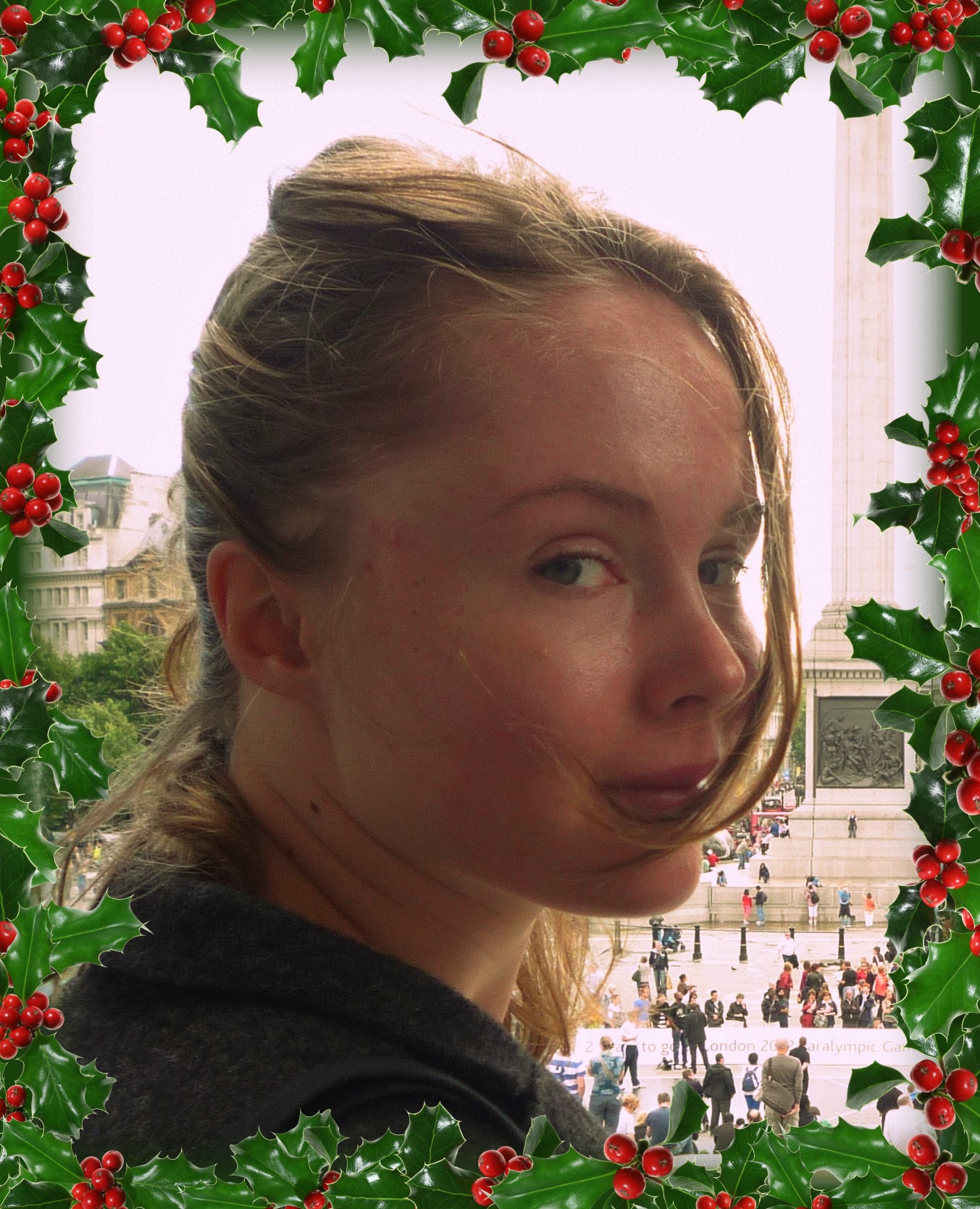
img: Charlotte Day surveying Trafalgar Square in London, this time with a jolly holly border (no ivy, though — that’s for next year!).

I’ll (not) be home for Christmas: A holiday travel yarn

Today we welcome Kat Selvocki to The Displaced Nation as a guest blogger. A retired roller derby skater and yogini who has lived in New York City for the past six years, Selvocki is en route to Sydney, Australia, to start a new chapter in her life as a yoga teacher. In this travel yarn, she contemplates being in Europe for the holidays, without any family.

When I left Brooklyn on September 27, I had every intention of arriving in Australia by December 23. That way, even though I was away from my parents and brother for the first time ever on Christmas, I would at least be able to spend the holiday with my cousins on the other side of the globe.

One of the first rules of travel is that things never go exactly as planned. It’s no surprise, then, that I’ve been in Europe for two months with no sign of purchasing a plane ticket to Australia.

By the time I finished the first leg of my travels — two weeks in Iceland volunteering on farms — I had a feeling I’d be in Europe longer than initially expected. My one hesitation was that, after spending thirty some years celebrating Christmas with my family, the idea of spending it alone scared the hell out of me.

I spent a solo New Year’s Eve in my Queens apartment in 2007; I’d decided I didn’t feel like venturing out and about into the craziness of New York that night. Though I don’t especially enjoy that particular holiday, there was something upsetting about wishing myself a happy new year. I didn’t want to repeat that mistake.

Central Europe works its charm

I arrived in Prague the day before Thanksgiving and was greeted by friends who immediately invited me to spend Christmas with them in Austria.

Prague is one of my favorite cities in the world, and the holiday season is one of the best times to be there, its Christkindlmarkts being among the best in Europe. Mugs of glühwein (mulled wine), tubes of bread coated with cinnamon, palačinky (Czech crêpes) dripping with lemon and sugar, the glimmer of fairy lights, handicrafts for sale, Christmas trees, live concerts — what’s not to like?

Though I didn’t have the space in my bags this time around to purchase any gifts at the markets, I was happy to return for some of my favorite Czech treats. As I perused the stands one chilly Saturday, I happily munched on lázeňské oplatky, large round spa wafers served with chocolate filling sandwiched in between.

The flavor brought back memories of Christmas Eve dinners of my youth, spent with my paternal grandparents. Though my grandmother and grandfather were both born in the United States, they continued some traditions passed down from their Polish parents. On December 24, my grandmother would serve a meatless meal at their house: fish that my grandfather had caught that fall, homemade pierogi (the Polish equivalent of ravioli, stuffed with potato and cheese), and vegetables from their friend’s farm.

We began the meal with those wafers, breaking pieces from each other’s opłatek as a symbol of forgiveness and the spirit of Christmas, as well as a reminder of the importance of family.

The ghost of holidays past

Prague was also where I spent my first Thanksgiving away from home, in 2002. I was on a study abroad program with American University, and all of us had gathered to celebrate at one of our favorite pubs, where our program director had reserved several long tables for us, piled with food — mostly Czech versions of traditional Thanksgiving dishes like stuffing, mashed potatoes, and green bean casserole. The American ideas were there, but the execution and seasonings were distinctly Czech.

(At least this was an improvement over a Thanksgiving dinner that a friend of mine had during her Parisian semester abroad, where bowls of peanut butter were served alongside the turkey and roasted vegetables.)

At my table, my tall anarchist friend with a mohawk carved the turkey. After we’d feasted, several classmates took over the restaurant’s upright bass and piano as the rest of us cheered and clapped.

Most of us had met only three months earlier, but there was a tight bond between us that day.

I called home later in the evening. My cousin’s husband answered the phone, and at first he couldn’t believe it was me, all the way from Europe. He yelled to the rest of my family to get on the phone. Though I probably used up my phone card, it was worth it.

My mother came to visit me in Prague not long afterwards. She, too, couldn’t resist the siren song of all the beautiful handmade items at the holiday markets. She settled on a blown glass ornament covered with simple stars made out of straw. It still hangs on my parents’ tree today, an annual reminder of when she and I traveled together.

Holidays are all about the 3 Fs: Family, Friends & (especially!) Food

My family and I have always enjoyed the culinary traditions associated with each of the holidays, be it Thanksgiving, Christmas or Easter. While Christmas was always tops for me as a kid, over the years my allegiance has shifted, and I now look forward the most to sharing the Thanksgiving meal with my nearest and dearest. (This may have been triggered by extended Christmas vacations in college, which so often seemed to end in ridiculous battles with my parents.)

Last month, I was lucky enough to celebrate Thanksgiving twice — each time with a mix of American travelers/expats and international friends.

At the first of these dinners, which took place in Prague, my Belgian friend asked the Americans in the room about the significance of Thanksgiving. While I think he might have meant historically, I replied with the answer that is truest to me: Thanksgiving is about eating lots of food and spending time with people you love.

On that occasion, friends new and old shared their talents in the kitchen. One friend made a traditional Austrian stuffing, while another roasted three Cornish hens and taught us how to make mulled wine. We mashed potatoes together — both white spuds and sweet — and roasted a colorful array of vegetables. I offered my baking talents with a pear-plum pie, inspired by a drink I’d had the night before.

The small kitchen of our rented apartment quickly filled with the mingling scents of cinnamon and cloves, parsley and chives.

I couldn’t have asked for anything better.

The lingering fairy tale of New York

Some of my holiday nostalgia also relates to my recent past — to the six years I’ve just spent living and working as a volunteer manager in New York City. There may be no place more magical than Central Europe, but there’s also something I’ll always miss about being in Manhattan during the holidays.

During each of the six years that I lived in New York, I would have periods of doubt over whether I wanted to stay. But then December would come along and I’d fall in love with the city all over again.

Some of my fondest memories are of walking around late at night gazing at the major Christmas displays in the shop windows. I preferred viewing the windows at that time, with fewer tourists around and the street lamps casting an atmospheric glow.

My favorites were always Bergdorf Goodman’s windows; I could stand and stare at those for hours and never quite take in all of the perfectly arranged details.

And, while my friends are currently lamenting the unseasonably warm weather in New York, I’m cherishing the memories of December nights when I would get off the subway in Brooklyn or Queens and walk home through a fresh layer of snow, surrounded by silent streets.

Volunteerism, burning bright

Still, the náměstís of Prague and plätze of Graz have proved to be a pretty good distraction, as has the volunteer work that I did in Iceland, when I first arrived in Europe.

After visiting Iceland in November of last year, I wanted to go back again and, after a bit of research, learned that there were a few Icelandic farms looking for volunteer labor.

Assisting with the end-of-season harvest — a time of year when farms need all the hands they can get: it seemed like the perfect way to experience one of the most beautiful countries I’ve ever seen, along with learning new skills.

At the organic farm I went to near Egilsstaðir in northeastern Iceland, called Vallanes, there were 11 of us volunteering (4 Americans, 3 Germans, 1 Italian, 1 Tasmanian, 1 Singaporean, and 1 Belgian), plus two paid workers (1 German and 1 Icelander, in case you’re curious).

The friendships we all formed in the turnip fields and the kitchen were an unexpected bonus.

Though it was sad to leave when the season ended, the spirit of Vallanes remains with me as I contemplate the next chapter of my life, the adventure of setting up as a yoga instructor in Sydney.

The saying that your friends are the family you choose becomes more true for me every year. This year, the holidays might not be the same as they were when I was young, and while I miss my family and it’s hard to be away, I’m enjoying the opportunity to soak up — and create — new traditions of my own while sharing the ones with which I was raised. Traveling alone has opened my heart to a variety of new people and experiences.

All of it feels right somehow, at this current crossroads — which led me to leave the familiarity of my old job, New York, and the United States to pursue a new career halfway around the world.

This New Year’s Eve will see me in Vienna. I will not be alone but with a mix of expats and native Austrians, drinking red wine and watching fireworks — concluding a year of transitions and ringing in what I hope will be an exciting new life overseas in 2012.

NOTE: You can read more about Kat Selvocki’s travel adventures on her blog, Pierced Hearts and True Love, and sample some of her gluten-free baking recipes at Kat of All Trades. You can also hire her to give you personalized yoga lessons over Skype; details on KatSelvocki.com

STAY TUNED for Monday’s post, a list of 2011 books for, by, and about expats.

If you enjoyed this post, we invite you to subscribe to The Displaced Dispatch, a weekly round up of posts from The Displaced Nation, with seasonal recipes and occasional book giveaways. Sign up for The Displaced Dispatch by clicking here!

Related posts:

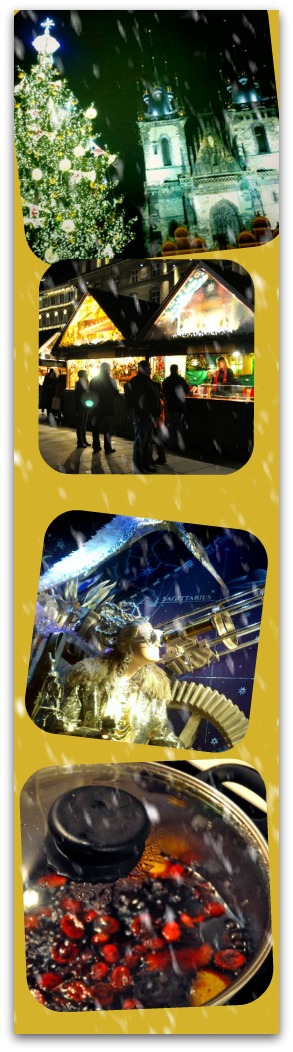
Images (top to bottom): Staromestske namesti (Old Town Square in Prague) decked out for the holidays; waffle stall at the Christkindlmarkt in Graz; Bergdorf Goodman’s window, 2010; mulled wine in preparation for an Austrian Thanksgiving dinner. All photos by the multi-talented (yes, she does photography, too!) Kat Selvocki.

My grandfather tried saving the world long before it became trendy — with mixed results

Our Third Culture Kid columnist, Charlotte Day, upon reading this month’s posts about those who displace themselves on behalf of those less fortunate, felt moved to contact her grandfather in Sydney, Australia, for a chat about his own experiences with international aid work, which began in the 1950s.

These days, it is a rare teenager who has not shown some evidence of civic engagement by a certain age: spending their summers beneath foreign suns in search of that fabled sensation, that fulfillment born of “helping others.”

Of course, no altruistic act is truly pure, but I would argue that it is better than nothing.

Nothing, however, is the word that best qualifies my own civic engagement. I have reached the age of 17 tacitly scorning the moral and spiritual quests of British gap-year students, as well as American Ivy-League hopefuls, from my comfortable desk chair.

I read Dostoevsky’s portraits of tormented youths, striving in vain and misguidedly to effect a change in society…and decide that changing the world is futile.

Yet a chastening thought sometimes breaks through this complacency: there are many who do valuable work. There are many who displace themselves — not only from their comfortable desk chairs, but from comfortable world-views and notions — to serve others, outside the framework of self.

My grandfather’s first foray into global philanthropy

One such person is my maternal grandfather, Robert Ayre-Smith. He entered the field of international aid before the idea of a “third world” even existed. As he informed me in our recent email exchange:

In the middle of the last century, there were the tropics, the Empire, the Americas, the colonies, etc. But they were not rated economically as is now the case.

Paradoxically, he chose animals over humans when he initially diverged from the family profession, medicine, and entered London’s Royal Veterinary College. His first appointment as a livestock specialist came in 1952, shortly after his marriage to my grandmother, Carol. The newlyweds set off for Kenya’s Rift Valley, where Robert set up a research station by Lake Naivasha, working with cattle, sheep and pigs. As motivation, he cites scientific interests in “tropical animal production” — a topic he’d investigated while doing graduate work at Louisiana State University.

As is often true of those who move from the halls of academe to real-life applications, Robert soon found that what he calls his “enthusiasm for science itself, and then for the benefits bestowed by scientific advances,” matured into “some feeling of disillusionment.” His focus shifted away from books to people — and looking at what small-scale farmers in Kenya’s villages were realistically capable of accomplishing.

But while he found fulfillment in these human interactions, he remained bothered by the tension between his “lofty agricultural scientist’s perspective” and the perspective taken by the farmers whose cares he was attempting to alleviate.

Some thirty years later, an “Aha!” moment

Fast forward to 1989, by which time my grandfather was working in Indonesia. During a roadside breakdown, Robert experienced an epiphany. Watching a nearby farmstead owner and his family tending their crops and livestock, he “started to question the appropriateness of much [then] current agricultural research for increasing crop and livestock productivity.”

His own knowledge, “derived from vastly different circumstances,” seemed markedly out of place. Until then, he’d been seeing agricultural development in the Third World through the lens of First World research, where commercial farms are relatively large-scale operations, and where farmers are literate and can therefore study results and adopt them to increase their productivity.

Yet most Third World farmers are fighting an altogether different battle. Their farms are small in scale, with “only two acres for the house, food crops and animals and virtually no machinery except hoe and sickle.”

From that time on, my grandfather thought it would be unreasonable — and betrayed a lack of empathy on the part of the professed do-gooder — to expect farmers in Indonesia and other developing countries to make changes according to developed-world research. He became a founding member of the Asian Farming Systems Association in 1991, which aimed to “undertake research of relevance to the farmer that it was hoped to benefit.”

As he concludes in his message to me:

So you see, Charlotte, it took time to mature my thoughts and approaches — a lot of time.

The world as one’s oyster — whatever that means

This being the Displaced Nation, I felt obliged to ask to what extent my grandfather ever felt himself displaced in the course of his work. “NEVER!” came his emphatic reply. He traces the desire to live and work abroad to his mother, “a great traveler in body and soul.”

Born and raised in India “at the height of the Raj,” my great-grandmother was educated in England and Switzerland before traveling widely in the United States and then working in France as a Voluntary Aid Detachment nurse during World War I.

Even after marrying, she continued to travel the Continent.

As Robert puts it: “I believe I may have learned from her that the world was my oyster — whatever that means. Certainly I have never had fear of the world.”

The only environment in which he recalls being ill at ease was Bogotá, Colombia, in 1980, where he was conscious of an underlying malaise about a possible recurrence of La Violencia, the nation’s horrifying period of civil conflict that had taken place from 1948 to 1958. He remembers being “hoicked out of a bus” between the Amazonian Basin and Bogotá by “some roadside gang — or was it the police?” It did not help matters that he found himself “doing an impossible job that no one really wanted [him] to do.”

Even in the presence of immense danger, my grandfather appears to have taken things in his stride. Here’s how he described being in Baghdad in late 1956, when the city revolted as a result of the British and French invasion of Egypt during the Suez Crisis:

I remember no fear although there was one moment when I was in the street of gold and silver smiths when a big and noisy mob rushed down a street parallel to it and all the merchants pulled down their corrugated metal shutters. Machine gun fire ensued.

A plethora of lessons learned

When I asked what he considered the most effective form of international aid, my grandfather’s immediate answer was “the health and welfare of under-privileged people, maybe I should say village people.” Yet this, he added, is not a form of aid, it’s an aim of aid. He went on: “Moreover, it sounds very pompous — as there are plenty of under-privileged people in all parts of the world, not just in villages.”

On the matter of food aid, Robert had this to say:

I could make a good case against food aid, and against some of the inappropriate advice that I gave in the past to small and large landholders. But what I can say with some confidence is that people in the front line of providing development aid must have empathy with those towards whom the aid is directed.

Empathy formed the heart of his approach — coupled with a saying of his father’s, borrowed from Hamlet (Act I, Scene iii):

To thine own self be true, and it must follow, as the night the day, thou canst not thence be false to any man.

Robert and Carol now live in Sydney, Australia — the last in a long series of displacements. Though he contentedly remembers his work in developing countries, and those with whom he worked, Robert prefers to focus on the present. Yet from time to time, he allows those close to him glimpses of the past — cuttings from the swathes of his memory.

His experiences have persuaded me that it does not pay to be defeatist about “changing the world” — and that the world, even amid current extremes of xenophobic paranoia, is nothing to be afraid of.

Readers, questions for Charlotte — or responses to her grandfather’s insights?

STAY TUNED for tomorrow’s post by the Displaced Nation’s agony aunt, Mary-Sue Wallace.

If you enjoyed this post, we invite you to subscribe to The Displaced Dispatch, a weekly round up of posts from The Displaced Nation, plus some extras such as seasonal recipes and occasional book giveaways. Sign up for The Displaced Dispatch by clicking here!

Related posts:

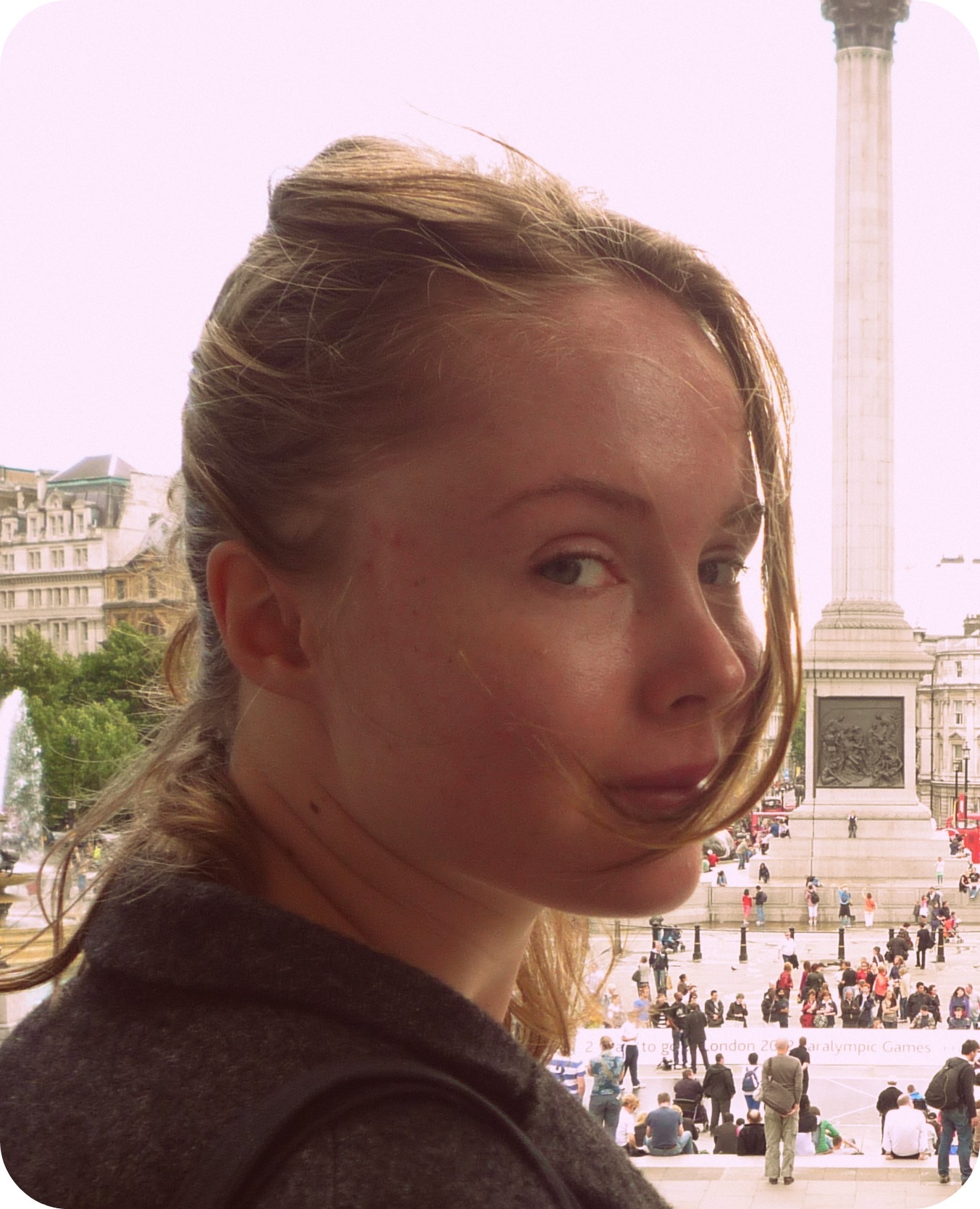
img: Charlotte Day surveying Trafalgar Square in London

Journeys through nomadic Africa — a travel yarn in two parts (Part 2)

Today we are joined again by Kathleen Colson, who delivers the second part of her travel yarn on a trip she made to Kenya from September 8 to October 14. In Part 1, Colson shared some overall impressions of the country, which she has visited innumerable times — most recently in the role of founder and CEO of a micro-enterprise development organization known as the BOMA Project. Today she focuses on the portions of the journey having to do with that project.

I founded The BOMA Project in 2005. “Boma” is a Swahili word for a livestock enclosure, but it also means “to fortify.” Our main program is the Rural Entrepreneur Access Project (REAP), which offers a seed-capital grant and business-skills training to small business groups of three people. The training is delivered by BOMA Village Mentors, who in turn are trained and supported by BOMA field staff.

So far, 2,688 adults, some of the poorest people on earth, are running 720 businesses, impacting the lives of over 14,000 children in northern Kenya.

As the project’s founder, I’ve had the great fortune to spend time with the pastoral nomads of this isolated region of Africa during several extended visits each year. In the first few years, there were four of us who traveled around the district meeting with village elders and groups of women. Since then, the organization has grown, and my trips have been busy hosting donors, photographers and consultants.

For this trip we would be back to the core team: Kura Omar, BOMA’s Operations Director; Semeji, our bodyguard; Omar, field support; and me, Mama Rungu. People always ask about my name, one that I have had for many years. It’s a long story, but a rungu is a warrior club. I got this name because someone thought I was tough.

I looked forward to the long drives across the rough terrain of northern Kenya — talking with Kura non-stop, sometimes shouting above the corrugated roads. While we drive, Semeji sings and Omar spots for cheetahs and hoopoes, all the while listening for the sound of a bad tire. At night, stories are told under a brilliant night sky, and we listen to Semeji’s soulful warrior songs along with the hyena’s call.

Shiny is good

The BOMA Project now has 40 businesses in and around the village of Kargi and we are soon to launch 20 more.

Kargi, home to numerous clans of the Rendille people, has grown into a substantial village because it’s a road-accessible location where missionary and aid organizations can easily distribute food relief. (Periodic droughts are part of the life cycle of these arid lands.)

BOMA has worked hard to establish ourselves in this village — keeping in mind that we also had to keep our staff safe in an area that sees frequent ethnic conflicts over livestock. Now there is tremendous enthusiasm for our work, including from the village leadership. The chief has told Kura:

…these BOMA people, they look shiny.

Clean, healthy, shiny. Shiny is good.

The case of Ndebe Arbele

In the Rendille village of Falam, near Kargi, Kura insisted that I meet Ndebe Arbele, a member of one of the BOMA businesses. BOMA had given her business group, May Yeel, a seed capital grant of $150 and they used it to buy food, beads, washing powder and other small essentials in Marsabit, a town on Africa’s main artery, the Cape to Cairo Road — which they now sell to residents and travelers in their village.

Ndebe and her partners have attended BOMA business-skills training programs, and soon they will start a training program on savings. After just two short months they were able to distribute profits, and according to their record book, they now have savings and cash on hand of 5,300 shillings, or about $56.

As Kura translated, Ndebe told me about her son who was bitten by a rabid dog. The medical treatment was 4,000 shillings for four injections. She told me, “If it was not for this business, I would not have been able to pay for the medical treatment for my son. Many children here die from rabies, but not my son.”

I am very aware when I visit with our BOMA businesses, that I am sometimes told what I want to hear. On this occasion, I decided to push back.

“But didn’t you also receive money from HSNP [Hunger Safety Net Programme]? I am looking at your group’s record book and I don’t see how the 4,000 shillings came from the BOMA business,” I said to her.

Ndebe looked down. “Yes, you are right. I also took my HSNP money to pay for the shots.”

She looked up at me with tears in her eyes, then said:

Please don’t take this business away from me. All my life I have been a beggar. I used to be idle, waiting for food relief to feed my children. Now I am a trader. Now I work every day. From others we get relief, but it always ends. This business stays with us, and now I am someone. Please, please don’t take this away from me.

I suddenly realized that it is here that we stake our claim. We can provide grants and training so that women like Ndebe can earn an income that will help her care for her seven children. But the human spirit craves dignity and respect more than it seeks wealth, and that is what we had given Ndebe. It was enough.

“I could never take this business from you, Ndebe. It is yours forever. Thank you for telling me why this business is important to you. I will always come and visit you when I am here, and I want you always to tell me what you feel in your heart.”

Kalath (thank you), Mama Rungu.”

A gloomier picture

In another Northern Kenyan village, Lengima, BOMA has facilitated the building of a school through the Dorothea Haus Ross Foundation. Currently, “school” is taught under a tree, with a blackboard and a volunteer teacher. For most of the students, there are no desks, no chairs, no paper, no pencils — not a single thing that would enrich the learning experience.

The whole village is involved in the building of the school. The men do the hard labor and each woman has been asked to collect a pile of stones — equivalent to a wheelbarrow-size load — for which they receive 50 shillings (55 cents).

The poverty in Lengima is extreme. Traditionally, the area relies on livestock as a source of income and food, but in times of drought, the men move the livestock elsewhere.

When we visited this time, a period of extreme drought, many of the children had the telltale signs of kwashiorkor (protein malnutrition), with reddish hints in their hair and extended bellies. The women were all painfully thin.

I met with Nalebicho Koitip, an older woman and a member of a BOMA business in the village, called Nkabe. She told me:

This drought has taken our livestock and our husbands. We keep our children alive with the small profits we make in this business. But it is hard because those without a business are turning to us for short-term food credit.

Locals must lead

In each village, we have BOMA Village Mentors. Using standard of living indicators — household assets and nutritional information — the Mentors select the “poorest of the poor” residents who are also enterprising and willing to work.

One of the highlights of my trip was attending BOMA’s Mentor University — our annual training session for the 26 BOMA Village Mentors — in South Horr.

This year, the goal of local leadership was a reality. I was now an observer. I said hello but was not expected to do anything else.

Sarah Ellis, one of our new researchers, has developed a micro-savings program for REAP participants, and at the meeting she introduced the new program to our Mentors. They will be the ones responsible for implementing the program region-wide. By regularly setting aside committed funds in a safe location, we believe we can provide insurance against the regular shocks that are typical for people who live in extreme poverty. It can also become a source of savings-led credit for BOMA grant recipients to grow their businesses.

Fresh ideas, goals

I always go to Kenya with lots of ideas and come back with even more. In the months prior to this trip to Kenya, I had spent time reading about the success of healthcare in Africa. While economic interventions, in general, have not been successful — incomes across the continent are down or stagnant — healthcare delivery has done reasonably well. The book Getting Better: Why Global Development Is Succeeding — And How We Can Improve the World Even More, by the economist Charles Kenny, is a fascinating read.

I wondered if we could apply some of the lessons learned by community healthcare workers in Africa to our team of BOMA Village Mentors.

In our last impact assessment, we had a 4 percent failure rate of the first 100 businesses. So I asked the BOMA team, “What if our businesses were patients? Would we tolerate a 4 percent failure rate?”

Once we started focusing on our failures, we became more imaginative, more creative. Every organization, for profit or not, likes to focus on its successes. If you are a nonprofit, you especially want to tout your successes, as this enables you to secure donations.

When we focused on our failures, however, we suddenly realized what we had to do — strengthen the training and support of our BOMA Mentors, the people at the heart of our program. We needed to give them the resources to fortify the success of BOMA businesses. We set a zero percent failure-rate goal for the following year.

Asked to say a few words at the end of the Mentor University meeting, I shared the concept of zero percent failure. It was a goal — a lofty goal — but I could sense the confidence in the room.

Our Mentors come from communities that have been overwhelmed by aid organizations that keep them on life support. Our program represents an opportunity to bring out the strength and resilience that resides in all of us.

Readers, any questions or comments for Kathleen Colson on her travel yarn or the BOMA Project?

For more details on Kathleen Colson’s recent East African journeys, go to the BOMA Project blog. Those familiar with the Matador Network may be curious to note that the BOMA Project was recently listed as one of the top 50 organizations “making a world of difference.”

STAY TUNED for Monday’s post on the “celebrity’s burden,” by Displaced Nation founding contributor Anthony Windram.

If you enjoyed this post, we invite you to subscribe to The Displaced Dispatch, a weekly round up of posts from The Displaced Nation, plus seasonal recipes, book giveaways and other extras. Sign up for The Displaced Dispatch by clicking here!

Related posts:

Images (top to bottom): A child in Lengima helping to collect stones for the building of the village school; a BOMA business in the village of Ngurunit; Kura Omar, BOMA’s man in Northern Kenya; a “taxi” full of  BOMA Village Mentors, at the end of the three-day Mentor University training program.