The Displaced Nation

A home for international creatives

Tag Archives: Writers we love

5 lessons Wonderland taught me about the expat life, by Lewis Carroll’s Alice

The Displaced Nation’s theme for June is the ultimate expat – Alice, of Wonderland and Through the Looking-Glass renown.

Throughout the month, we will explore some of the issues Alice faced, such as loss of identity, overwhelming communication barriers, and isolation – and as usual, we want to hear about your experiences in your own Wonderlands.

To kick off the theme, we asked Alice if she had any advice for today’s Displaced Person:

Indeed I do. It might be many years since I fell down the rabbit hole, but human nature hasn’t changed. This is a little of what I learned:

1. Keep the golden key in your pocket at all times, and make a note of the emergency exits.

In another moment down went Alice after [the White Rabbit], never once considering how in the world she was to get out again.

My first mistake was to plunge down the rabbit-hole without planning ahead. The adventurous life is all very well, but it’s good to have a  bolt-hole, as well as a rabbit-hole, when you need to escape to the old and familiar.

My second mistake was to leave the key on the glass table before drinking from the bottle marked ‘Drink Me.’ In your vernacular, that’s like buying a return ticket home for this evening, then discovering your passport expired six months ago. Be prepared for the unexpected, the peculiar, and the almost impossible.

2. No matter how hard you try contrariwise, at some point you will offend someone.

Evidently Humpty Dumpty was very angry… “It is a—MOST—PROVOKING—thing,” he said at last, “when a person doesn’t know a cravat from a belt!”

Oh dear! If only I had a shilling for every time I inadvertently offended one of the creatures in Wonderland and through the Looking Glass!  Not knowing Humpty Dumpty’s neck-wear from midriff-wear; my compulsive mentioning of cats and dogs in the Mouse’s presence without considering that he and I might have a different perspective of these animals…the list went on and on.

In the end, I think the Red Queen’s advice was the best:

“Always speak the truth—think before you speak—and write it down afterwards.”

But still, I couldn’t help thinking:

“I wish the creatures wouldn’t be so easily offended!”

3. “The rule is, jam to-morrow and jam yesterday—but never jam to-day.” Different country, different rules.

The Queen of Hearts was the worst example of this:

“No, no!” said the Queen. “Sentence first—verdict afterwards.”

I suggest if you are ever in this situation yourself, you employ more tact than I did. “Stuff and nonsense!” I said. “The idea of having the sentence first!”

Perhaps today a quick telephone call to your country’s embassy might be better.

Better still, acquaint yourself with the country’s rules before you go jumping on aeroplanes or down rabbit holes.

4. Go to a party or a Caucus-Race – don’t drown in your own tears.

“I am so VERY tired of being all alone here!”

The Caucus-Race proved to me that I could make friends with the most unlikely companions.

After a few minutes it seemed natural to Alice to find herself talking familiarly with them, as if she had known them all her life.

If you feel alone in your new environment, seek out company, even if it’s not the kind of company you’re used to. You might find your life is richer for it.

5. And finally –  Keep a note of your name in your memorandum-book.

“Who are YOU?” said the Caterpillar.

Alice replied, rather shyly, “I—I hardly know, sir, just at present—at least I know who I WAS when I got up this morning, but I think I must have been changed several times since then.”

I spent a great deal of time in both countries wondering who I was now. Was I my little friend Ada, or Mabel, perhaps?

Tweedledum even suggested I wasn’t really there at all.

“You’re only one of the things in his dream. You know very well you’re not real.”

“I AM real!” said Alice and began to cry.

Take a tip from me and write your name in a memorandum-book. Then keep a journal.

That way you will always remember who you were on any particular day.

And one day, people might read about you as they do about me.

*

Thank you, Alice!

And now, stay tuned for our Alice Awards, going to expat bloggers and travel writers who get the curious, unreal side of the global nomad’s life…

.

If you enjoyed this post, we invite you to subscribe for email delivery of The Displaced Nation. That way, you won’t miss a single issue. SPECIAL OFFER: New subscribers receive a FREE copy of “A Royally Displaced Tea.”

What the Finnish Spring can teach us about expats and politics

SPECIAL TREAT FOR TDN READERS: Anu Partanen, though she’s currently on the road, has promised to “come in” and respond to your comments and questions over the next few days. So, ask away!

Anu Partanen has done the impossible. She has made me care about the Finnish Spring, and I’ve never once been to Finland.

No, we’re not talking travel here, though I’d love to go to her country someday and see the ice melt and the vivid violet sinivuokko push their way through the leaves.

Rather, I refer to Finnish politics. Partanen wrote an op-ed that caught my eye in the May 13 edition of the New York Times. It was about Finland’s parliamentary elections, which took place with the arrival of the sinivuokko, on April 17 — the outcome of which, she claims, is the Finnish equivalent of the Arab Spring.

No, the Finns did not have any armed uprisings, just a quiet, proper democratic election. But the results were just as revolutionary:

Overnight, Finland seemed transformed from possibly the most sensible, even boring, country in Europe — known for excellent schools, zero corruption, gender equality, and a pro-European Union approach to politics — into the nationalistic, populist, Euro-skeptic home of the True Finn Party.

The only thing is, I haven’t quite decided yet what to make of the True Finns. According to Partanen, as an American, I “might consider them the equivalent of Tea Partiers (if they didn’t support the welfare state, that is).”

Most significantly, the True Finns will do anything they can to block Finland from contributing its share to bailing out bankrupt European countries — Portugal being the latest example, following on the heels of Greece and Ireland.

Notably, Partanen, too, admits to some ambivalence about the European experiment, for the first time in her life:

Myself, I’ve benefited a great deal from the European Union — I’ve studied abroad, traveled easily, enjoyed a strong euro. … Yet I was shaken when I learned that we Finns were supposed to lend money to Greece. It didn’t seem fair that my taxes would go to a country that had been living beyond its means.

Political voyeurism

But another big reason why I’m so captivated by Partanen’s take on Finnish politics is that she’s an expat based in the United States. Currently living in Brooklyn, she continues to work as a journalist for several Finnish publications. In addition, she is writing a memoir about being Scandinavian in America.

Partanen told me in an email exchange that the book is still in the early stages. I’ll be curious to see what it has to say about the challenge of participating in home-country politics from a distance.

That was something I used to think about a lot during my own expat years. If you care about the politics of your home country — as Partanen clearly does, as I did — then why aren’t you living there? Unlike me, Partanen keeps a foot in Finnish politics by continuing to write articles for the national media.

Still, it must be strange for someone as highly politicized as she is to be in the United States while an important debate is taking place about what kind of country Finland is, and wants to be.

In her Times op-ed, Partanen mentions that although she has offered her couch in Brooklyn to friends from home who would like to become political refugees, as yet no one has taken her up:

…my friends in Helsinki seem to be deciding that this is no time for retreat. Instead they’ll stay to help determine the future of their country.

Hmmm… Is that a reason why, despite my love of living overseas, I eventually bit the bullet and came back to the United States?

Politics not as usual

By the same token, Partanen shows us that living abroad can help you see your own country’s politics, and those of other nations, in a new light. Domestic politics can be very village like, and in my experience, it’s not until you step away from the village tribe that you begin to discern your own beliefs.

As already mentioned, Partanen has discovered since leaving Finland that she has developed some sympathy for the idea of setting limits on how much of its wealth Finland should share with other Europeans.

In her Times article, Partanen suggests that her position may have something in common with that held by the Americans who’ve expressed a reluctance to contribute to universal health care. Noting that America is twice the size of the European Union, she says:

It’s not quite parallel, but if Finns were asked to contribute to the health care of the Greeks, the Irish, and the Portuguese, they might feel a little like the Americans.

My experience is rather different from Partanen’s: I was an American living abroad, first in England and then in Japan, which meant listening to everyone excoriate the United States. But like her, I found that getting physically outside of my country was a stimulus to thinking outside the box and deciding on my own core truths — never mind what the mainstream parties and their media outlets (the village elders) kept telling me to think.

Also like Partanen, I moved further to the right (I hope she won’t mind me using that term) — but not on universal health care. I benefited from socialized medicine in both the UK and Japan so can be counted as a fan of Obamacare, though I do wish it included a public option.

What I came to appreciate much more fully was the tough role the United States has been assigned in world affairs. I can’t tell you how many times I felt like saying to the European and Asian critics who accosted me: “You try policing the globe, and see how much you enjoy it!”

(There were of course far more European critics than Asian ones. The Japanese, though they don’t relish the thought of our Marines continuing to be based on Okinawa, see it as their best hedge against, among other things, the wacky North Korean leadership.)

Now, that’s a true political awakening — call it an Expat Spring.

* * *

Question: How about you? Are you an expat, and if so, what’s your relationship with your home country’s politics — do you remain involved, and have you adjusted any of your basic political beliefs since going abroad?

If you enjoyed this post, we invite you to subscribe for email delivery of The Displaced Nation. That way, you won’t miss a single issue. SPECIAL OFFER: New subscribers receive a FREE copy of “A Royally Displaced Tea.”

Related posts:

CLASSIC EXPAT WRITING: Nabokov — Pnin

Few characters in literature deal with discombobulation to quite the extent as Vladimir Nabokov’s Timofey Pnin. Pnin, a Russian-born professor at the “somewhat provincial institution” of Waindell College, is a somewhat absent-minded and culturally confused man. Nabokov begins the novel with Pnin catching the wrong train, thus missing an important lecture he was due to give.

Despite such a farcical beginning, Pnin is not a campus farce. Yes, it is deeply comic, but it is also a novel that plays on Nabokov’s own experiences as a Russian émigré marooned in American academia. There is a phrase I like a lot — I like it so much I named my own blog after it. It is the term “culturally discombobulated.” I think this is something that Pnin struggled under the weight of. For all his intelligence, Pnin struggles with English — “If his Russian was music, his English was murder,” writes Nabokov — and who constantly seems out of step with the society he is living in.

The extract I want to highlight this week comes from early in the novel. Pnin has boarded a train for his lecture, but oblivious to him he has boarded the wrong train — a fact he won’t discover for a number of hours. As Pnin sits in the  train, the novel’s narrator allows us a closer look at Pnin’s history and some of his shortcomings.

Pnin, despite his many shortcomings, had about him a disarming old-fashioned charm, which Dr. Hagen, his staunch protector, insisted before morose trustees was a delicate imported article worth paying in domestic cash. Whereas the degree in sociology and political economy that Pnin had obtained with some point at the University of Prague around 1925 had become by mid-century a doctorate in desuetude, he was not altogether miscast as a teacher of Russian. He was beloved not for any essential ability but for those unforgettable digressions of his, when he would remove his glasses to beam at the past while massaging the lenses of the present. Nostalgic excursions in broken English. Autobiographical tidbits. How Pnin came to the Soedinyonnie Shtati (the United States). “Examination on ship before landing. Very well! ‘Nothing to declare?’ ‘Nothing.’ Very well! Then political questions. He asks: ‘Are you anarchist?’ I answer” — time out on the part of the narrator for a spell of cozy mute mirth — “‘First what do you understand under “anarchism”? Anarchism practical, metaphysical, theoretical, mystical, abstractical, individual, social? When I was young,’ I say, ‘all this had for me signification.’ So we had a very interesting discussion, in consequence of which I passed two whole weeks on Ellis Island” — abdomen beginning to heave; heaving; narrator convulsed …

… And he still did not know that he was on the wrong train.

A special danger in Pnin’s case was the English language. Except for such not very helpful odds and ends as “the rest is silence,” “nevermore,” “weekend,” “who’s who,” and a few ordinary words like “eat,” “street,” “fountain pen,” “gangster,” “Charleston,” “marginal utility,” he had no English at all at the time he left France for the States. Stubbornly he sat down to the task of learning the language of Fenimore Cooper, Edgar Poe, Edison, and thirty-one Presidents. In 1941, at the end of one year of study, he was proficient enough to use glibly terms like “wishful thinking” and “okey-dokey.” By 1942 he was able to interrupt his narration with the phrase, “To make a long story short.” By the time Truman entered his second term, Pnin could handle practically any topic, but otherwise progress seemed to have stopped despite his efforts, and by 1950 his English was still full of flaws.

If you enjoyed this post, we invite you to subscribe for email delivery of The Displaced Nation. That way, you won’t miss a single issue. SPECIAL OFFER: New subscribers receive a FREE copy of “A Royally Displaced Tea.”

Related posts:

Even in Paris, expats can’t escape former lives: A celebration of displaced novelist Corine Gantz

SPECIAL ANNOUNCEMENT: Ever wanted to escape to Paris in the springtime? Today you can do so, as it were, in the company of the très très charmante Corine Gantz. Originally from the City of Light but now living near the City of Angels, Mme Gantz has just released her debut novel about a group of American women who try to start afresh in Paris. She has kindly agreed to respond to our questions and comments. 

The Displaced Nation has been examining the “gothic” side of expat life over the past couple of weeks. Thus it may seem odd that today we have chosen to celebrate a book that takes place in La Ville-Lumière (“The City of Light” or “The Illuminated City”) by an author who lives near the City of Angels.

Hidden in Paris coverBut looks can be deceiving — and the cover of Corine Gantz’s debut novel, Hidden in Paris, is quite a cunning ruse. It shows a Parisian balcony with French doors reflecting the Eiffel Tower, and a flower box bursting with hot-pink geraniums. What could possible be amiss within such a picture-perfect setting, you may wonder? Plenty, it turns out.

But before we get into that, let’s begin our fête in honor of Mme Gantz and her book. To put ourselves in the proper mood, we have prepared a special cocktail, a French 75. We’ve also gone all out with our canapés. There’s a savory gougère, brie en croûte, duck rillettes, chilled asparagus with mustard sauce, a Puy lentil salad — and, in honor of Mme Gantz, her family favorite, taramasalata on toast (see her father’s recipe below).

Okay, seats, please! Our honored guest has agreed to kick off the festivities by answering a few questions from The Displaced Nation team. After that, the floor is yours, dear reader.
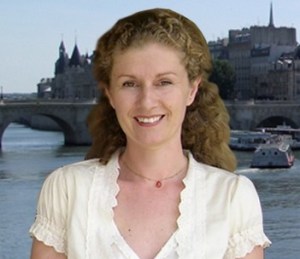
Corine GantzYour new novel, Hidden in Paris, may not tell a gothic tale per se, but we think it relates to our theme because it centers on three women who are running away from their lives. Is that a fair assessment?
People who say they love to be scared amuse me. They have a fascination with horror flicks, they read vampire books, they ride roller coasters. Yet they might be the same people who walk great circles around a pile of bills or make every effort to avoid a difficult phone call. What can be scarier than real life?

I think there is a limit to what we can handle, and at some point the tendency is to want to run way, literally or figuratively. In Hidden in Paris three strangers — all American women — have reached the point of terminal discomfort, when tackling real issues feels more terrifying than running away abroad.

Lola is running away from her husband, Althea from an eating disorder, and Annie, although she pretends to be the most high functioning member of the group, is hiding the biggest secret of all. (Just to add some spice, there is also a male character, Lucas, who is hiding his love for Annie.)

People often fantasize that “elsewhere” — particularly Paris because of the attached notion of romance — will solve their problems, or at least make the problems go away for a while. Well, we long-term expats know better. Moving to another country brings great logistical changes to one’s life, which can distract you into thinking you’ve left your pathos behind, when, in fact, you’ve brought it along in your suitcase. Wherever you go, you bring your own personal gothic tale with you.

In the case of these three female characters, the disruptions to their routines, along with new encounters, bring them to the tipping point toward change.

The thing is, as in real life, my characters fight the change they need kicking and screaming, which makes for fun story telling.

Food is another obsession of ours at The Displaced Nation. We detect from reading an excerpt from Hidden in Paris that it also plays a big role in your book.
You detect correctly. For me, writing a novel is a barely disguised way for me to talk about food — the novel being a vehicle for food just as grilled toast is a vehicle for foie gras.

I grew up in France on my mother’s terrific cooking. But she is the type of cook who wants no help in the kitchen, so at age 23 I arrived in the United States never having cooked an egg. I was terribly homesick and depressed and needed to “taste home” again — so had no choice but to teach myself how to cook. The saving grace was that I had a copy of a recipe book filled with my mother’s recipes, so I proceeded to recreate the food, and jolly myself out of my depression. Cooking gave my life a purpose: it became my creative outlet.

I think the preparation of food can be extremely healing, meaningful and joyful. Food is, after all, the soul and spirit of a home. I enjoy cooking as much as I enjoy eating, and when I’m not doing one or the other I’m telling stories where food turns out to be one of the principal characters.

You are a Française who has been “displaced” to the Los Angeles area for a couple of decades, where you live with your American husband and two sons. Does your novel echo that experience?
Had I landed on an alien planet I doubt I would have been any more confused and out of place.  I understood none of the codes, none of the cultural references, of Los Angeles. I could not understand people or express myself — and I resented them for that.

Writing sprouted from this: the frustrated need for self-expression and communication. Like my protagonist, Annie, I had to figure out how to function, and I would be lying to say I functioned well. Also like Annie, I resisted my country of adoption for years. I did not have both feet in it. A part of me felt in limbo: I was standing by for my eventual return to my home country.

Twenty years later I don’t even feel French anymore, but no one here lets me forget I’m not American either. Americans seem fascinated with my Frenchness, as though it defines me. For example, it’s often about how I say things rather than what I say. Yesterday I was saying to a friend: “On the envelope my husband gave me for mother’s day there was a…” She interrupted and said: “Could you repeat that?” I repeated and she fell into peals of laughter: “I just love how you said the word ‘envelope’!”

In Hidden in Paris, I wanted to transpose my experience and reverse it. I wanted to bring American women to France and see how well they coped with that set of codes and cultural idiosyncrasies. That’s only fair, don’t you think? I’m a little miffed to report that they are a more adaptable than I was.

You have a popular blog, Hidden in France, where you’ve been entertaining Francophiles and others with stories of the writing life, décor, food, family, travel and all things French. In fact, The Displaced Nation has featured one of your posts — about the time you fell into your swimming pool when the first day of spring brought heavy rains to the LA area. Tell us, has your blog had an influence on your writing? Also, why have you chosen the trope “hidden in”?
The blog has everything to do with my writing. Before the blog, I was a closet writer, ashamed that my English was too imperfect. The blog gave me a sense of just how forgiving and supportive readers were. I have readers now, and I have fans! Had I based my self-worth as a writer on agent rejections, I would have changed my hobby to fly-fishing. Readers are what make someone a writer.

The word “hidden” is significant only in the sense that I was hiding for years behind an alias as a blogger, and I just recently came out as writer for the world to see (speaking of fear…).

When it came time to settle on a title for the book, it felt natural to give it the same title as the blog — but I decided against it because there was already a memoir by that name. So Hidden in France became Hidden in Paris.

Finally, The Displaced Nation supports a fictional character, Libby, who is about to move from London to Boston with her husband. Do you have any advice for her?
Well, how about if I let my own fictional character, Annie — who moved from Boston to Paris to follow her own husband twelve years ago — speak to Libby directly:

Don’t do it, Libby! Kidding! Well I would suggest you have more babies, some siblings for your son, Jack, and fast. They will keep you busy and busy is the name of the game: no time to think! And if you decide against having more babies, then take on a hobby (such as cooking and eating) to keep your sanity without demanding that your husband become your everything for companionship, friendship and intellectual stimulation.

Don’t be like me in other words. Don’t forget that the man has a job and he is tired at the end of the day and nobody needs a needy wife. (Sorry for the harsh words, Libby, but this is the truth.)

You could also take a run-down house and remodel it. I did. You will have no skin left on your fingers but lifting bags of concrete makes for pretty shapely biceps. The remodeling might bring you to financial ruin but if that becomes the case, you will always have eating, which you can become very good at.

Without further ado, let’s pour the champagne for a toast to Corine Gantz. Tchin-tchin! And now, patient reader, it’s your turn. Questions, please, for this très gentille debut novelist… If you want to check out her book a little more, go to her author’s site, and to buy it, go to her Amazon page.

Taramasalata on toast — Corine Gantz’s family recipe
You will need:

  • one packet of smoked cod roe (seriously, can you even find this in the US?)
  • 8 tablespoons safflower oil
  • 2 tablespoons lemon juice.

Mix fish roe and lemon juice, then slowly beat with a fork and add the oil as you would do to make mayonnaise.Spread thinly on toasts and serve with very good champagne, et voilà! Très festif.

Images: Hidden in Paris cover, artwork by Robin Pickens; author’s photo.

If you enjoyed this post, we invite you to subscribe for email delivery of The Displaced Nation. That way, you won’t miss a single issue. SPECIAL OFFER: New subscribers receive a FREE copy of “A Royally Displaced Tea.”

Related posts:

What did Agatha Christie know? Expats make great criminals

I’m going to kill myself for saying this — I’m an Agatha Christie fan — but I think the Queen of Crime got it wrong.

Either that or she purposely misled us into thinking that the most cunning criminal minds were hiding behind lace curtains in oldy-worldy English villages.

I don’t know about you, but for a while, I found it convincing. Don’t most scions of wealthy families want to murder the patriarch? And what better place to do it than in the library of his stately home…

But then I became what the tagline of this blog refers to as a “global voyager.” As I navigated worlds far beyond the one in which I was born, I wasn’t so clueless any more. I began to notice that the perpetrators of the some of the worst crimes are people who no longer live in their villages, who are displaced in some way.

And the more I thought about it, the more sense it made.

No Gardens of Eden out there

Psychological studies have shown that we are less likely to cheat when we’re aware of someone else observing our behavior — even if it’s a poster with eyes on it.

Thus, having a village busybody like Miss Marple should help to deter crime, never mind solving it.

Now many international travelers — especially those with plum expat packages — feel they live in a self-anointed paradise. And perhaps they have to convince themselves of this, or else they wouldn’t travel.

But the sad fact is, no one is immune. To rephrase an old saying, some of us are born bad, others achieve badness, and still others have badness thrust upon us.

If anything, badness is more likely to be a feature of the international life. Those of us who become adept at navigating the globe sometimes lose our moral compass along the way.

As for the Miss Marples, chances are, they’ve gone home. Many of an expat’s associates are transients.

So many bad apples

As you’re probably aware by now, not every expat you meet is a good egg. Some are in fact bad apples (not sure why an egg is good and an apple bad — call it a mystery of English slang).

The actress Anne Hathaway had to learn this lesson the hard way. She fell for Raffaello Follieri, who headed the Follieri Group, a real estate development company based in New York City.

With his mop of brown hair and cherubic features, Follieri came across as the embodiment of old world charm and manners. He cut what the Italians call a bella figura.

He was also, it turned out, a crook. He wined and dined Hathaway with the money he’d conned it out of people by posing as the Vatican’s real-estate man. He’s now in prison.

Murder most foul

Just as we don’t like to think of rats being part of the animal kingdom, we don’t like to think of conmen, pirates, gangsters, and terrorists being part of the group we have loosely defined as “global voyagers” — such a noble concept, and one to which The Displaced Nation has dedicated itself.

But trust me, they are a part of it — as are murderers.

Take, for instance, Nancy Kissel. One day she was living in an exclusive high-rise apartment complex in Hong Kong, the city that scores a perfect 10 as an expat destination, with a banker husband worth many millions.

The next day she was known as the Milkshake Murderess — accused (and then convicted, conviction now upheld) of bludgeoning her husband to death after drugging him with a sedative-laced strawberry milkshake and then wrapping his body in an Oriental carpet destined for basement storage.

It’s a story more than worthy of Agatha Christie.

Or ask the parents of Meredith Kercher, a young British woman who went to Italy as part of the Erasmus student exchange programme, to study and immerse herself in the language and culture.

She chose the ancient city of Perugia in Umbria. Surely nothing could go wrong in such a serene setting?

Wrong again. Unless you’ve been living on another planet, you’ve heard that Meredith was brutally murdered, allegedly by two men and her American roommate, Amanda Knox, in what prosecutors called a violent sex game. Only one of the alleged perpetrators was a native-born Italian.

Public fascination with the case has continued unabated — and not just because of the media circus surrounding Knox, who maintains her innocence and is appealing her conviction.

As the Christian Science Monitor put it in an article last September:

…the highly contested circumstances of the crime make it a genuine murder mystery.

(Where is Hercule Poirot when you need him — surely his marrows would thrive in the Umbrian soils?)

And now for a bit of a twist!

I’d like to retract my statement on the Queen of Crime. Je me suis trompé! I’ve done her an injustice.

True, Agatha Christie did produce lots of drawing-room mysteries, but she also also told us everything we need to know about expat criminality in her classic work Murder on the Orient Express.

When the shifty-looking Samuel Edward Rachett is found stabbed to death, the redoubtable Hercule Poirot assembles the 12 suspects in the restaurant car. It’s an odd assortment — call it an expat enclave in microcosm — consisting of an American translator, a British valet, a French conductor, a British governess, a retired British army officer, an elderly Russian noblewoman, a German maid, a Hungarian diplomat and his wife, a Swedish missionary, an elderly American woman who has just been to see her daughter in Baghdad, and an Italian-American businessman from Chicago.

So, whodunit? Can you remember? The answer is: all 12! Each of these characters had thrust the knife into Ratchett, making it impossible for Poirot to determine who delivered the fatal blow.

But as it turned out, it didn’t matter. Ratchett deserved his fate for his own dastardly deeds. He was, of course, the most displaced of all the passengers on that exotic train: a fugitive from justice, whose real name was Cassetti.

I’m sure I don’t have to tell you which transnational group of gangsters he was affiliated with. No surprises there!

Question: Do you agree that citizens of The Displaced Nation have criminal potential, and have you ever come face to face with any criminal elements in your travels? I’d love to hear your stories, however unsavory…

img: “There’s been a murder!” by Richard Bogle.

If you enjoyed this post, we invite you to subscribe for email delivery of The Displaced Nation. That way, you won’t miss a single issue. SPECIAL OFFER: New subscribers receive a FREE copy of “A Royally Displaced Tea.”

Related posts:
Expat life as psychological thriller? An unholy appreciation of novelist Shireen Jilla

SPECIAL TDN ANNOUNCEMENT: Dear readers, we have some thrills and chills in store for you: a chance to engage with expat writer Shireen Lilla. She has kindly agreed to respond to our comments and questions on her new novel, Exiled.

Please accept this candle. You’ll need it to light your way to the faux coffin where we’re serving Victorianesque nibbles and “finger” foods in honor of the novelist Shireen Jilla.

Be sure to try our house speciality: fried tartantula. Such an exquisite dish! Or how about some maggoty cheese, imported straight from Sardinia for the occasion? It makes an excellent pairing with our special punch. (Go on, have a sip! It’s only bubbling because we added dry ice to the bowl.)

Our honored guest looks lovely, doesn’t she, in her long black cape with the red-satin collar? But don’t be fooled. Looks are extremely deceiving in her case. Jilla harbors no illusions about the dark side of expat life — and she isn’t afraid to grasp you by the hand and seduce you into entering that netherworld for an adventure.

Many an expat veteran has advised that being stationed overseas isn’t necessarily the life of Riley. But how many of them have ever warned us of the dangers lurking on the other side: everything from psychological breakdown to murder most foul?

Slyvia Plath, the American poet who’d been living in a bucolic a part of the English countryside, put her head in the oven upon returning to London. Nancy Kissel, who was living in an exclusive Parkview high-rise apartment complex in Hong Kong, allegedly killed her husband with a blunt instrument and rolled up his body in an Oriental rug.

But why dwell on real-life cases when Jilla’s imagination can provide us with all the macabre details we need?

Deliciously “exiled”

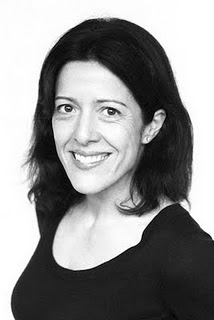
Shireen Jilla
Let us raise our goblets to Jilla’s debut novel, Exiled, a dark, dysfunctional psychodrama set in New York City.

The novel tells the story of Anna, who is so in love with her husband, Jessie, an ambitious British diplomat, that she can’t wait to start a new chapter of their life together in New York. Jessie is the ticket (quite literally!) for Anna to leave her old life in rural Kent far behind.

At first, New York lives up to its promise. The couple find a brownstone on the Upper West Side and fall into the rhythm of New York life. But then disaster strikes, again and again.

As Anna herself puts it in her Foreword to the story:

I couldn’t imagine that my romantic dream would turn into a dark battle for everything I loved.

In our current gothic mood, we laud the idea of this book (unfortunately, we’ve only read excerpts as it’s not yet available in the U.S.) for:

1) Defying stereotypes: Many outsiders who write about New York are tempted to extol the city’s glitz and glamor a la Sex and the City. Not Jilla. As one critic put it, she gives us a New York that is “a teeming pit of hissing vipers, only just covered with a finely buffed veneer of sophistication.”

Exiled2) Pushing the envelope: Jilla, a Third Culture Kid (she is half English, half Persian, and grew up in Germany, Holland and England) who has also been an expat — in Paris, Rome, and New York — hasn’t simply replicated her experience but has dug deeper to reveal psychological truths about the people she has observed. Anna’s step-mother-in-law is a powerful socialite and philanthropist of precisely the sort seen on The Real Housewives of New York City. In Jilla’s rendering, though, she is further revealed as calculating, manipulative — and evil. As one reader-reviewer on Amazon says:

Imagine the stark terror of Rosemary’s Baby firmly grounded in reality. Shireen Jilla has created the sharp thrill of horror in a world of utterly true and compelling characters.

3) Presenting a heroine who could almost be Libby’s alter-ego: Now who is Libby, you might ask? She is the Displaced Nation’s fictional about-to-be expat wife. Her diary entries appear every Friday on this blog. After hearing about Anna, we can’t help but wonder: will Libby’s life take a sinister turn once she reaches Boston? No, Boston isn’t New York — but how long before Libby encounters a Boston Brahmin…or two?!

Time to break the spell?

Before we blow out our candles, it’s your turn, dear reader:

Has Shireen Jilla also illuminated something for you by exploring the gothic side of our displaced lives? Does she speak to your own experience — to the times when you’ve been face to face with people who seemed evil, or with nefarious doings?

And do you have any questions for Jilla about what motivated her to write such a gloriously dark book?

img: New York Skyline, by plastAnka.

If you enjoyed this post, we invite you to subscribe for email delivery of The Displaced Nation. That way, you won’t miss a single issue. SPECIAL OFFER: New subscribers receive a FREE copy of “A Royally Displaced Tea.”

Related posts:
CLASSIC EXPAT WRITING: Letter From London — Sōseki

So with my last entry, on James Joyce’s Paris, I was left bemoaning the term Expat Writer. Partly, I’m annoyed with myself for choosing such a term as “Classic Expat Writing” for this series of blog posts. Ultimately, who wants to read a series of posts called “Classic Expat Writing”? It assumes too much and adopts a slightly superior attitude. And, most importantly, it’s dry and not all catchy. Instead, think of this as writing by the displaced.

The reason that I opted to do this series of posts was so I could share some writing that has moved me, and present it to an audience that is likely to in some way be attuned and empathetic to its contents, either through their own personal experience or particular interests. If people then go off and look at the authors in more detail, so much the better. It’s for these reasons why I am particularly excited with this week’s example.

I have to confess that I was not familiar with the name Sōseki until I visited Japan. My knowledge of Japanese literature is embarrassingly slight and doesn’t really extend beyond Mishima and Murakami. But a few years back, when visiting Tokyo, I sought out the Kinokuniya bookstore near Shinjuku because it had a large selection of English-language books. Having a few days before visiting the Temple of the Golden Pavilion in Kyoto, I was keen to buy Mishima’s novel The Temple of the Golden Pavilion. But when left in a bookstore I can’t help but browse and one book, in particular, caught my eye: The Tower of London: Tales of Victorian London by Sōseki. At this point, I had never before heard about Sōseki Natsume (1867 – 1916), and had no idea about his place in the canon of Japanese literature. If I had been in Japan a few years earlier, it may have passed me unnoticed that the two 1,000 yen notes I would use to buy this book, in fact, featured Sōseki’s portrait.

Instead from a position of ignorance I picked up the book and was intrigued by it. It’s a collection of essays and writings that Sōseki wrote about his time in London.* In the summer of 1900, as a young, unknown professor, he traveled to London on a somewhat meagre scholarship that was provided to him by the Japanese government.  Sōseki was to spend the next two years in the city, unhappy and isolated.

Now being a miserable monoglot, I am entirely dependent upon skilled translators when it comes to foreign (well “foreign” from my perspective) literature. Obviously, I’m not in a position to comment on how accurately Damian Flanagan’s translation conveys the flavor of  Sōseki’s prose, but I did find it to be an incredible read with crisp and clean prose.

The title essay is a phenomenal piece of literature, but it is Sōseki’s Letter from London that I’m highlighting today. Sōseki conveys in a way that I’ve not seen from others that awkward, slippery sense of dislocation of being in an alien country. Even politeness takes on a faintly threatening edge.

One of the things I’ve noticed in the Expat blogging community, we seem to like it when we find writing that we can relate to, that reiterates thoughts and fears that we have had. Of course, there is a place for  that. With Expat blogging it can help develop relationships, it helps builds an audience, and there is very much a place for it. But it can also act like comfort food.

Sōseki, by contrast, has observations and thoughts about the city that I don’t think anybody other than himself could have had. And, for me, that’s what is so interesting and so worthwhile about this book.

This collection, which is published by Tuttle publishing, really should be read by more people. Go buy it and then read it, pronto.

Once outside, everyone I meet is depressingly tall. Worse, they all have unfriendly faces. If they imposed a tax on height in this country they might come up with a more economically small animal. But these are the words of one who cannot accept defeat gracefully, and, looked at impartially, one would have to say that it was they, not I, who look splendid. In any case, I feel small. An unusually small person approaches. Eureka! I think. But when we brush past one another I see he is about two inches taller than me. A strangely complexioned Tom Thumb approaches, but now I realize this is my own image reflected in a mirror. There is nothing for it but to laugh bitterly, and, naturally, when I do so, the image laughs, bitterly, too …

… Generally, people are of a pleasant disposition. Nobody would ever grab me and start insulting and abusing me. They do not take any notice of me. Being magnanimous and composed in all things is in these parts one qualification of being a gentleman. Overtly fussing over trifles like some pickpocket or staring at a person’s face with curiosity is considered vulgar … Pointing at people is the height of rudeness. Such are the customs, but of course London is also the workshop of the world, so they do not laughingly regard foreigners as curiosities. Most people are extremely busy. The ir heads seem to be so teeming with thoughts of money that they have no time to jeer at us Japanese as yellow people. (‘Yellow people’ is well chosen. We are indeed yellow. When I was in Japan I knew I was not particularly white but I regarded myself as being close to a regular human colour, but in this country I have finally realized that I am three leagues away from a human colour – a yellow person who saunters amongst the crowds going to watch plays and shows).

But sometimes there are people who surreptitiously comment on my country of origin. The other day I was standing in looking around a shop somewhere when two women approached me from behind, remarking, “least-poor Chinese”. “Least-poor” is an extraordinary adjective. In one park I heard a couple arguing whether I was a Chinaman or a Japanese. Two or three days ago I was invited out somewhere and set off in my silk hat and frock-coat only for two men who seemed like workmen to pass by saying, “A handsome Jap.” I do not know whether I should be flattered or offended.

*I’m not entirely sure what it says about me that in browsing a large selection of Japanese literature in an effort to get a better understanding of Japan, I picked up a book that is centered around impressions of London and the English.

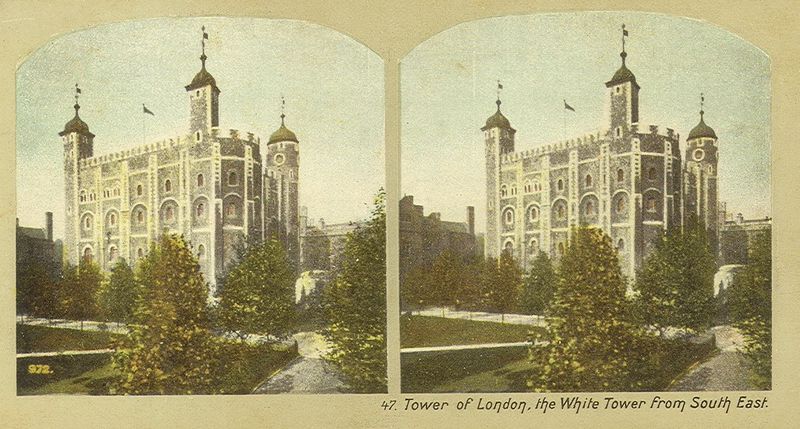
Img: White Tower, Tower of London, from the South East, c. 1890-1910, courtesy Wikimedia Commons

If you enjoyed this post, we invite you to subscribe for email delivery of The Displaced Nation. That way, you won’t miss a single issue.

Related posts:

A toast to two displaced writers with passionate views of royal passion

Special notice: The writers we are celebrating in today’s post — best-selling novelist Jane Green and expat blogger Karen Van Drie — have kindly agreed to “come in” and respond to your comments and questions on the topic of the hour: yesterday’s royal wedding. Don’t be shy!

A cheery hello to you all. We have a special treat in store for Displaced Nation readers: a royal wedding-themed party in honor of two expat writers — one an acclaimed author, the other an acclaimed blogger — who take very different views of yesterday’s “wedding of the century.”

Jane Green is the author of a dozen novels dealing with real women, real life, and all the things life throws at them. She is also an expat. Born in London — she spent her early career as a writer of women’s features for the Daily Express — she now lives in Connecticut with her husband, six children, and assorted pets.

Karen Van Drie is an American who decided to travel the world after her youngest daughter left for college. Based in Istanbul and Prague, she travels extensively and records her observations in her award-winning blog, Empty Nest Expat. The blog was called out last year in the Wall Street Journal as a “fun read for anyone looking for reassurance that change can be a wonderful thing.”

No in-betweens, even (especially?) among expats

Vogue magazine editor Alexandra Shulman observed that Britain’s “wedding of the century” divided the British nation into lovers and loathers — so was a “perfect Marmite moment.”

Well, she could have been talking about the Displaced Nation just as well as the British nation. Over the past few weeks, we English-speaking expats and repats have divided into two opposing camps.

If anything, we tend to be even more passionate about our views because of the distance factor.

GREEN: “A modern fairytale”

As explained in an April 13 blog post on her newly released e-book for ABC News* on three generations of royal love stories, Jane Green knew little about Kate and William before starting her research but came away impressed:

I loved discovering just how unusual William and Kate are: grounded, humble, and thoroughly modern, eschewing much of the pomp and circumstance that surrounded the wedding of Charles and Diana.

Her book, which blends text, video, still images and interactive features, celebrates Kate for achieving the seemingly impossible feat of bringing an age-old fairytale up to date.

VAN DRIE: “If princesses didn’t exist…”

In the overheated countdown to the Big Day, Karen Van Drie resurrected a post she had written in February about the evolution of her personal views on royals, especially princesses.

Van Drie was prompted to write on this topic during a week-long visit to Sweden, where she noticed that the Swedish Royal Palace gift shop was packed out with tourists snapping up merchandise related to last year’s wedding between Princess Victoria and her personal trainer, Daniel Westling.

Somewhat to her surprise, Van Drie could not get into the spirit. This apathy marked a change from her twenties when she’d fallen head over heels for the fairy tale of Prince Charles and Lady Diana and studied every detail of their royal wedding. When she got married herself, she asked the florist to reproduce Diana’s bouquet exactly.

What’s more, after reading an article about the Swedish Republican Association, Van Drie decided they were thought leaders on the subject of monarchy elimination. She wondered aloud on her blog:

If princesses didn’t exist, what would young women dream of being? Could it likely be a healthier idea for humanity and relationships? A more realistic idea? Can you imagine people of the future laughing at us for even allowing the idea of undemocratic monarchies to exist? For needing the “idea” of princesses?

Where do you stand?

Dear readers, it’s your turn now. While we put out the bunting, pour glasses of Pimms, make pots of tea, and prepare plates of crustless cucumber sandwiches, scones, and Tiffin, for our feast in honor of Green and Van Drie, we’re hoping you will tell us: what do you see when you look at the relationship between William and Kate close up? Do you share Green’s picture of a modern fairytale, or are you more inclined to Van Drie’s notion of a gothic horror story?

* A Modern Fairytale is ABC’s first e-book and Green’s first-ever work of nonfiction. It is available through top etailers — Apple’s iBookstore, Kindle, Nook, etc. — and through the new ABC Video Bookstore app.

If you enjoyed this post, we invite you to subscribe for email delivery of The Displaced Nation. That way, you won’t miss a single issue.

Related posts:

Ho’ omaika’i ‘Ana to TCK writer Tony Roberts

Aloha, reader. We would love for you to join our celebration of writer Anthony H. [“Tony”] Roberts, who produced our favorite article of the week, “No Time for Goodbyes,” a gripping account of his family’s sudden departure from Iran in 1978, when he was just 17.

Tony wrote his piece for Denizen, the online magazine for Third Culture Kids — kids who grew up in a culture or cultures other than their own.

Tony now lives on the Big Island of Hawai’i, so our fete in his honor, which has just begun, consists of a min-luau with traditional foods, mai-tais, and a hula performance.

You will also have a chance to engage with Tony directly as he’s agreed to respond to your comments and questions. (Mahalo, Tony!)

In fact, the hula dance is about to begin. Watch the series of three dances telling us why Tony’s life is so special:

#1: TRAGEDY

From Tony, we can learn about what it is like to be displaced by circumstance rather than by choice. Tony spent five years of his childhood exploring deserts in Saudi Arabia and three years as a teenager running wild in the streets and hillsides of the ancient city of Tehran. Then suddenly the Islamic revolution occurred, and before he had a chance to click his heels even once, he, along with his mother and sister, were transported back to their small farm town in Kansas, where he’d been born but no longer thought of as home:

The greatest sadness of leaving Iran in 1978 was its speed. Our departures were so fast that there was no time for goodbyes. All of my closest high school friends scattered to the winds. Tens of thousands of Americans lived in Tehran when I was there, and by the end of 1979 there were only 52 left — the American hostages.

#2: TRIUMPH

Tony has done something many expats only dream of: he’s written up his experience in a work of historical fiction. His book, published in February of this year, is called Sons of the Great Satan. It tells the story of an American teenager forging a friendship with an Iranian teenager in the last golden hours before the Shah of Iran falls and the country is engulfed by a whirlwind of chaos. Go to YouTube trailer.

#3: MULTICULTURALISM

Tony and his family embody our ideal of global citizens. His wife is a Kiwi, his son a Cherokiwi, and they live in Hawai’i, a melting pot of cultures from around the world, with influences from China, the Philippines, Japan, Korea, Portugal and Puerto Rico, to name a few. And let’s not forget Ziggy, the family pet. He’s a Boxador, a cross between the Boxer and the Labrador Retriever. (Ziggy, assuming Fergus makes it to The Displaced Nation, we’re sure he would enjoy palling around with you.)

And now, it’s time to adorn Tony with leis and drink a toast to his honor. Okole maluna! Cheers, Tony!

If you enjoyed this post, we invite you to subscribe for email delivery of The Displaced Nation. That way, you won’t miss a single issue.

What the concept of home means for expats

My mother was the kind of woman who knew she wanted to be a journalist from the age of 12. She never stopped moving. Maybe that’s why I remember so clearly the one ambitious sewing project that she managed to finish. It was a sampler that lay over one of the chairs in our family home embroidered with the words “Home is where the heart is.”

I’ve often pictured my mother’s needlework as I wandered the globe, first as an expat in England, then as an expat in Japan. Where was my heart, and therefore my home: with my mother, my husband, my husband’s family, or in some of the places I’d visited and connected with? Hadn’t I left a piece of my heart in each of those places?

Then when I finally returned to my native land, having spent as many years abroad as I’d consciously lived in the United States, I was no longer sure if this country could be my home any more, as it appeared to have changed so much.

Misery loves company, especially when it includes Joanna Penn

Oh, why does life have to be so complicated? Why can’t it be summed up on a sampler?

Still, I have taken much solace in knowing I’m not alone in grappling with such questions. Just last week, I was pleasantly surprised to discover that my expat-to-repat group now includes the extraordinary Joanna Penn, author, speaker, and business consultant.

I am a faithful subscriber to Joanna’s blog, The Creative Penn, which not for nothing has achieved the distinction of being one of the top ten blogs for writers. Recently, Joanna gave us the thrill of live-blogging the writing and self-publishing process for her very first novel, a fast-paced thriller called Pentacost.

Somehow, though, it hadn’t clicked with me that Joanna was an expat.

But then I read her 8 April 2011 post and watched the accompanying YouTube video, “What the Concept of Home Means for Writers.”

Joanna was prompted to talk about “home” because she’s repatriating to England after having spent the past 11 years in New Zealand and Australia. Not only that but it turns out that Joanna was a so-called third-culture kid. Her family moved all over the place when she was young, including to Africa for a while.

For Joanna, home is a spiritual bond

Joanna thinks outside the box when it comes to publishing, so I suppose I shouldn’t be too surprised that she thinks outside the box when it comes to being an expat. She seems to regard her displaced state as par for the course, as nothing particularly special. This is because she sees herself as a writer first and an expat second:

… for me the concept of home is not necessarily where I’m physically based at any one point but somewhere where I spiritually feel I belong…

We could say Joanna is out of the James Joyce mould, as described by Anthony Windram in his latest TDN article, “James Joyce’s Paris.”

This is not to say Joanna isn’t fond of the countries where she’s lived. She says she still has a soft spot for Malawi, where she went to school as a kid, and has enjoyed her more recent time Down Under.

That said, I sense she will be glad to see the back of Oz in some ways — judging by her response to one of the commenters on her “concept of home” post, that she is “looking forward to being without mosquitoes, huge spiders, sweltering heat and humidity.”

Joanna’s mention of the spiders gives her something in common with Robert Pickles, who has stirred up some controversy for his Daily Telegraph series on why he’s decided to ditch his dream of Australia and move back to Blighty — the “vast array of insects … with fizzing wings and frenzied little eyes” being at the top of his list of dislikes.

A tale of two cities that are now “home”

But that is where the similarity between Penn and Pickles ends. Unlike Robert Pickles, Joanna Penn never really thought of Australia as “home.” Right now she feels a spiritual kinship with two cities: Oxford, where she went to university and near where her father now lives, and Jerusalem, which she’s visited at least ten times because she loves it there so much.

What’s more, Joanna connects these two cities in her mind and has done so ever since reading the Thomas Hardy novel Jude the Obscure as a kid.

The novel’s tragic hero, Jude, is a working-class boy who tries to educate himself. He idealizes Oxford (known in the book as Christminster) as a “city of light,” where “the tree of knowledge grows.” Coming over a ridge and gazing at the city of his dreams for the first time, he refers to it as a “new Jerusalem.”

Joanna approves of Jude’s hypocatastasis. (“And did those feet in ancient time…” is now playing in my head.) Steeped in religious studies, she sees both Oxford and Jerusalem as holy cities, worthy of pilgrimages and therefore an intense romantic attachment.

Some parting spiritual reflections

In the week of Passover and Easter, I sometimes envy those people with strong spiritual ties, a pull that I’ve never especially felt.

In fact, the only time I’ve ever wanted to kiss the ground upon first discovering a place was when I landed in Taipei and my husband took me to a restaurant called Din Tai Fung. The dumplings were so delectable that I decided then and there that if ever I were told I had only a few days left to live, I’d demand to be transported to that restaurant for my final few hours.

Could a Taiwanese dumpling house really be my spiritual home? No doubt that explains why I’m writing about Jamie Oliver’s food revolution on this blog whereas Joanna Penn is working on her second in a series of religious thrillers set in Oxford and Jerusalem.

Still, fans of Ang Lee’s Eat Drink Man Woman should understand how I feel… My mother would understand it: she was an excellent cook, when she had time for it…

But I digress.

Question: What do you think of Joanna’s notion of a spiritual home? Is “home” for you a place that has captured your heart, your imagination and your spirit? Or is it a place where you live with your nearest and dearest?

If you enjoyed this post, we invite you to subscribe for email delivery of The Displaced Nation. That way, you won’t miss a single issue.