The Displaced Nation

A home for international creatives

Tag Archives: Writers we love

Youth writer Gabrielle Wang’s characters solve cross-cultural conundrums with magic and aplomb

The spirit of Pocahontas has been haunting The Displaced Nation this month, lending a helping hand to anyone who feels stymied by the strange customs they’ve encountered in other lands.

This precocious Native American girl appears to have been naturally gifted in openness and tolerance — else how could she have become an intermediary between her father’s tribes and the Jamestown settlers at age 10?

The majority of us, however, are not naturals when it comes to cross-cultural relations. We could use some basic training, preferably while still young.

As suggested in one of this month’s posts, one solution might be to absorb the whole of Harry Potter — all those tales of discrimination against Half-bloods and Muggles.

But not every youth can identify with a universe that is governed by the laws of who’s magic and who isn’t. Take Pocahontas, for instance. If she prayed for magic in her dealings with the white invaders, it was most likely for herself, never mind anyone else.

Perhaps, then, I have her to thank for guiding me towards Melbourne-based author Gabrielle Wang, whose books for children and young people feature characters who in many ways resemble the feisty Anne of Green GablesPollyanna or Calpurnia Tate — but with a further twist: Wang’s heroines are always non-white, Chinese or some mix. They are culturally marginalized.

Wang’s very first book, The Garden of Empress Cassia (to be published for the first time in the U.S. this fall) involves a heroine, Mimi, who feels ashamed of being Chinese until she discovers a a box of magic pastels that enables her to draw, and then enter, the garden of the Empress Cassia — a transformative experience.
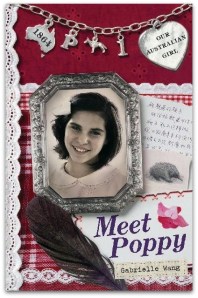
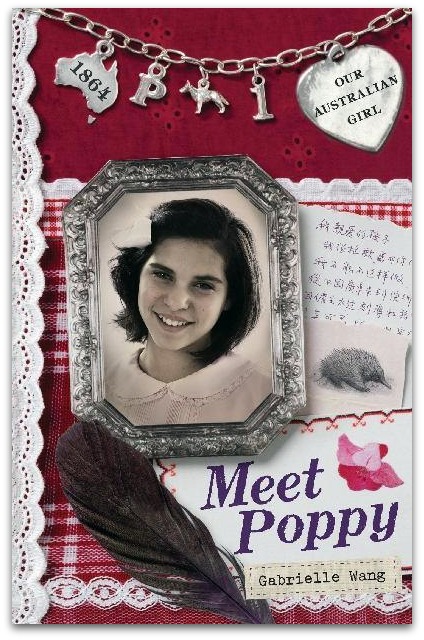
Wang’s latest heroine, Poppy, is even more unusual: she’s a half-Chinese, half-Aborigine girl who lived in the 19th century. Poppy’s Aboriginal mother died when she was a baby, and her Chinese father disappeared before she was born. When her brother, Gus, runs away to look for gold, Poppy decides to follow. Disguising herself as a boy, she stows away on a paddle steamer and keeps in touch with Gus through a secret code and Chinese symbols.

Wang’s books are targeted at the youth market, but adults are very fond of them as well. Here’s what one reviewer had to say of her first book in the Poppy series:

I’m sure young girls living in Australia who are interested in their country’s history will love this book, but as an adult living in America, I really enjoyed it too!

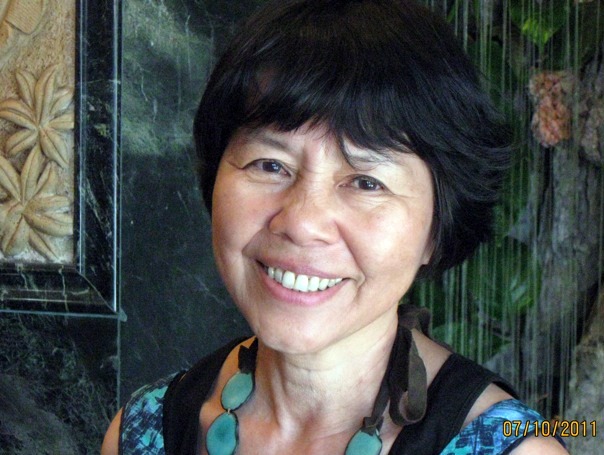
I recently had the pleasure of meeting Gabrielle Wang in person — at a congee restaurant in New York City’s Chinatown. Here’s how our conversation went:

Can you tell me a little about your background?
I’m a fourth-generation Chinese Australian on my mother’s side and first generation on my father’s. I live in Melbourne, where I’ve been a professional writer of children’s and young adult books for nine years. I’ve written ten books published by Penguin Books Australia, and a picture book published by Blackdog Books, now an imprint of Walker.

All my novels involve cross-cultural issues as that is my background. Being brought up in Australia and knowing little about my own heritage, I felt was a tremendous disadvantage. I was ashamed of looking different. I couldn’t speak Chinese and knew little of the beliefs and customs of China. Now, when I look back at that period in my life I know that if I’d been steeped in the culture of China, I would have grown up proud of my heritage. It was only when I left school that I realized that belonging to two cultures was an advantage and began learning Mandarin.

My latest books are being released this year three months apart. There are four in the Our Australian Girl series about a half-Chinese half-Aboriginal girl named Poppy.

Right now I’m working on a ghost short story for a Penguin anthology as well as thinking about my next novel, called The Wish Bird.

This month, our blog has dedicated many of its posts to Pocahontas, who was a member of the original displaced peoples in North America. Are the stories of the Native Americans and Australia’s Aborigines very similar?
Definitely, there are many similarities. But my impression of the Native Americans is of a more warring people — at least that’s how they’re often portrayed in the old cowboy-and-Indian films. I’m probably stereotyping here. The Aborigines were also driven off their hunting grounds. Many were slaughtered by the squatters while others starved to death or died from disease. It was a tragic time in Australian history which carried through even to the 1960s. The scars and the injustices still exist today.

The European settlement of Australia occurred at least a century later than that of North America. Were Australia’s settlers still influenced by the ideal of the Noble Savage, “the good wild man,” in their encounters with the natives?
The squatters of the 1800s looked down upon the Aborigines. They had no idea that the Indigenous Australians had a highly advanced and complex culture and belief system. And by the 1850s and 1860s, when my Poppy stories take place, the ideal of the Noble Savage never crossed anyone’s mind. At that time, large numbers of people from all over the world went to Australia to look for gold, not to discover a new land.

Turning to your Poppy books, I noticed that you employed the nature trope that’s associated with the Aborigines. Poppy uses the Southern Cross to guide her travels, follows water birds, eats wild raspberries and honey-flavoured sap-sucking bugs…
The Aborigines’ belief system is closely linked to the land they inhabit and to the animals in their environment. They have animal totems and there are sacred places all around Australia. Unfortunately, most of these sacred sites are not in the hands of the local Indigenous people and have been lost or desecrated. But if you go and visit the known ones, like I have, you can still feel a tremendous power and energy in the landscape.

When I was on a writing/walking trek through Central Australia near Alice Springs, we camped, with the permission of the local Indigenous tribe, on a sacred site. It was an amazing experience.

I am very interested in the Chinese philosophy of yin and yang, the I Ching and Daoism – which are not that dissimilar to the beliefs of the Indigenous Australians and their relationship with nature. The Aborigines are also like the Chinese in that they have an advanced plant medicine system.

Was it difficult to think through how an Aborigine child might have felt back then?
In my story, Poppy was born on a Christian mission, so she knows very little about her own culture. I am not an expert on Aborigine culture, so I was careful not to step over the line. I had several Aboriginal advisors who I consulted with. John Sandy Atkinson is an elder for the Bangerang tribe and Maxine Briggs is the Koorie Liaison officer at the State Library of Victoria. They were invaluable to me while writing the Poppy series. As a Chinese person, I know how wrong some authors can be when writing about a culture they have little knowledge of. It is easy to misconstrue and misunderstand things so I was careful to avoid this.

Since you’re so interested in the topic of portraying other cultures, you may find it interesting that Maxine Briggs lent me Werner Herzog’s film Where the Green Ants Dream just so I could see how NOT to portray another culture. The film as you may know had to do with a dispute between a mining company and the local Indigenous tribes in the Australian desert.

I noticed in reading some excerpts that the white people Poppy meets behave quite decently. Did you make them like that on purpose?
Race is a highly sensitive subject and sometimes it’s difficult to strike a good balance. In Poppy’s time, the 1860s, racial prejudice towards Aborigines was at an all-time high. But I’m always aware of my audience — children 8-11 years old. When you write for young people you have a responsibility. It is important to be positive; otherwise, the same prejudices can begin all over again.

Up until now, you’ve created Chinese heroines for your book. What inspired you to create a character who was only half-Chinese?
I wanted to write about the period when my maternal great-grandfather came to Victoria to join the Gold Rush. I also wanted to highlight the plight of the Indigenous population during that time when white settlement expanded at such an alarming rate. Before 1834, around 100,000 Aboriginal people lived in the State of Victoria. By 1860, with the influx of white settlers and the discovery of gold, this number had fallen to less than 2000. That figure is shocking.

I think I’d also been influenced by the recent consciousness in Australia about the injustices done to the Aborigines. Beginning in 1869, the Australian government rounded up the Aborigines into missions (as already mentioned, Poppy is from one such mission) and began removing some of the children — the ones who were of mixed race — from their families to work as indentured servants for white families. I’m talking about the so-called stolen generations. If you’ve seen the film Rabbit-Proof Fence, you’ll know what I’m talking about.

It’s a big issue right now in Australia — and is finally being recognized as a national tragedy. The former Prime Minister, Kevin Rudd, presented a formal apology in 2008 for this misguided policy. It was a long time coming.

To sum up: I could have just written about a Chinese child, but I wanted to stretch myself and imagine a child who was half Chinese, half Aborigine. It is important for young people to walk in the shoes of someone who is different — who might be of a different culture, race and skin color. Only by doing this can we empathize with others.

Were you able to find any examples of half-Chinese, half-Aboriginal children on which you could base the story?
In my research there were no written records in Victoria of mixed race children at that time. But there’s no doubt they would have existed as the Chinese gold diggers were all men. They left their wives and family back in China.

So an Aboriginal character was a first for you. Was it also the first time a non-Aboriginal person had written a story for kids?
No. The highly respected and wonderful Australian children’s author Patricia Wrightson may have been the first. But I’m certainly the first non-white Australian author to write about an Aboriginal character.

Is it important that you’re a “non-white”?
I think I was able to imagine the Aboriginal child’s situation quite easily because I know what it feels like to be an outsider, and to suffer racial prejudice. I was the only Asian child in my school in Melbourne and I only saw white faces in the street. I always felt embarrassed when my parents came to school as my mother would sometimes appear in traditional dress, and my father didn’t speak English well, which I found embarrassing. Of course, it’s changed now as more Chinese have migrated to Australia, but back then, Chinese Australians were real outsiders.

You have been an expat for several years, living in Taiwan and then Mainland China. Can you tell us what that felt like?
Strangely enough, before my first visit to China in 1977, I always said that I was going back to China even though I had never been there before. Perhaps this is true of many children of migrants. When I actually went to Taiwan and China to live, I was at a disadvantage because I couldn’t speak Chinese very well and therefore was never fully accepted. Language is so important.

There were a couple of incidents in particular that made me realize how difficult it would be living in China — apart from the difficulty of learning the language, that is.

Once in Taiwan, I was invited to a friend’s house. It was her birthday. I brought a gift of a necklace, but was so surprised when she didn’t open the gift, nor did she acknowledge its receipt with a thank-you. I thought, how rude! I had no idea that in China, it’s rude to open gifts in front of the giver.

The other incident occurred in Mainland China, when I was invited to a banquet by a friend of my mother’s. She sat next to me and kept filling my plate. In Australia, it’s impolite not to finish the food on your plate, so I kept eating what was given to me, only to have it filled again. Finally, when I couldn’t fit in another morsel of food, I put my chopsticks down and sat back. My hostess breathed an audible sigh of relief. In China, of course, people like to show their hospitality by giving their guests more food than they can possibly eat.

Your personal story is inspirational as you never fancied yourself a writer.
When I was younger, I didn’t think I could write at all. I failed Year 12 English and had to repeat the whole year because I wanted to study Graphic Design at University. When I became interested in children’s books, it was to illustrate them not to write the words. But in the year 2000 I took a writing course and discovered I had hidden potential. We all do, I think. And it’s never too late to find out what it is. I explore that theme a lot in my books, especially The Hidden Monastery.

As part of Pocahontas month, we’ve been coming up with proverbs for those who wish to spend their time abroad getting to know other cultures. Can you give us one proverb based on your own experiences?

“If you want to know what it means to be a migrant or a person who is displaced by outside forces, then live in — don’t just visit — another country where you cannot speak the language.”

To that I would add:

“If you can, make it a country where people have skin of a different color to yours. Then, and only then, can you understand what it means to be an outsider.”

Gabrielle Wang’s book The Garden of Empress Cassia will be published in USA by Kane Miller this September. You can also visit her Web site at www.gabriellewang.com.

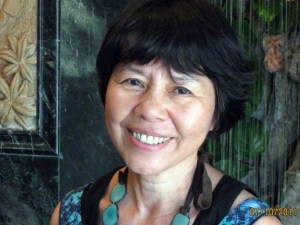
Images: Gabrielle Wang at Congee Bowery, NYC (by Susumu Awanohara); front cover of Wang’s first Poppy book; and front cover of the about-to-be-released American edition of her very first work, The Garden of the Empress Cassia.

STAY TUNED for tomorrow’s installment of our displaced fictional heroine, Libby, who learns more about her bête noire, the realtor Melissa. Were her initial misgivings about Melissa justified?

If you enjoyed this post, we invite you to subscribe for email delivery of The Displaced Nation. That way, you won’t miss a single issue. SPECIAL OFFER: New subscribers receive a FREE copy of “A Royally Displaced Tea.”

Related posts:
4 lessons Harry Potter can teach us about tolerance – cross-cultural and otherwise

Yesterday, our Random Nomad, Jo Gan said:

“If something one of us does bothers the other person, we compromise… If you really want to make a relationship to work, any relationship, it takes respect, consideration, and a willingness to compromise.”

Wise words, Jo, and sentiments which another Jo – Jo Rowling, better known as JK Rowling – would agree with.

Love them?

Since 1997 and the publication of Harry Potter and the Philosopher’s Stone, we have been engulfed in the world of Hogwarts, wizards, witches, and muggles. With today’s movie release of  Harry Potter and the Deathly Hallows (Part 2), however, this week marks the end of the Harry Potter era.

Perhaps I was just at the right stage of family life to love Harry Potter. My children were toddlers when Philosopher’s Stone was published; this month, as Harry, Ron, and Hermione reach school-leaving age, so do they.  Together, over the last fourteen years, we have read the books, seen the movies, and queued at midnight in bookstores.

Or hate them?

It’s apparent, though, that not everyone shares this affection. While I understand we all have different tastes and Harry Potter cannot possibly be everyone’s cup of butterbeer, in too many cases this aversion has gone far past simple dislike into the realms of…well, ‘hatred’ isn’t too strong a word for it.

Pretty ironic, really, when one of the main Harry Potter themes is Tolerance.

Could it be that the very people who claim to detest Harry Potter are, perhaps, those who most need to read the books?

1. Tolerance of things we fear

Harry’s aunt and uncle, the Dursleys, fear all things magic. They won’t even permit Harry to use the M word – “Magic” – in their presence, and they confiscate his Hogwarts textbooks over summer vacations.

These actions are not unlike those of some fundamentalist churches, who periodically burn Harry Potter books. One Baptist pastor claims:

“The Potter series is worse than pornography. The books are even more dangerous than the Satanic Bible. At least with the Satanic Bible, young people know that the book was written by Satan. The Devil just changed his name to J.K. Rowling this time.”

Satan needn’t have bothered. It won’t help him get a share of the royalties.

2. Tolerance of infirmities

Professor Lupin, a teacher at Hogwarts, is humiliated and discriminated against because, through no fault of his own, he has a chronic disease – lycanthropy. In other words, once a month, he will turn into a wolf, bay at the moon, and run around biting people. The disease is now fully controlled by potions, but Professor Snape still regards it as his duty to inform Hogwarts pupils of Professor Lupin’s  condition.

Sadly, many AIDS sufferers can probably empathize with Professor Lupin’s plight.

However, we learn that in his teenage years, when no potion was available for his disease, Professor Lupin had three friends who developed their own ability to change into animal form, so they could keep Lupin company during full moon.

A true friend, like a life partner, will be tolerant of you in both sickness and in health.

3. Tolerance of other races

Voldemort followers in the Potter series want to rid the world of muggle magicians – wizards and witches who are not born into aristocratic magical families, but born in the real world and who display magical talent. Hermione is one of these, as was Harry Potter’s mother – both brilliant witches, but their talents apparently not good enough for Voldemort’s approval.

The parallels between Voldemort and Hitler, between the uprising of Voldemort followers and the Nazi party, between the desires for a master race and for pure-blood magicians, are only too evident.

4. Tolerance of things we envy

Lastly, a lesson not in the text of the books, but from reactions to the books.

There is wide criticism from both writers and ‘readers’ (I use quotes because generally these people haven’t read the books at all, but are prepared to offer criticism nevertheless) that the books have a clunky writing style, use too many adverbs – in short, name a writing sin, and JKR has committed it, it seems, and therefore does not deserve all the acclaim she has received.

No matter that this woman had an idea, worked on it determinedly for many years under far from ideal conditions, and finally achieved her goal of turning this idea into seven books. How dare someone rise from single motherhood on welfare to happily married, multimillionaire author?

In other words: How dare JK Rowling not be me?

As Jo Gan also said yesterday:

We have learned to accept each other’s differences.

If only everyone could say the same.

STAY TUNED for the first part in our series of interviews with cross-cultural couples.

If you enjoyed this post, we invite you to subscribe for email delivery of The Displaced Nation. That way, you won’t miss a single issue. SPECIAL OFFER: New subscribers receive a FREE copy of “A Royally Displaced Tea.”
Related Posts:

RANDOM NOMAD: Jo Gan, Director of Foreign Teachers, Author and Blogger

Cross-cultural marriage? 4 good reasons not to rush into it…

The Displaced Reads: 7 Books with a twist of Alice

THE DISPLACED READS: 7 books with a twist of Alice

As it’s that time of year when (depending on your hemisphere) poolside or fireside books are a must, and since we’re not quite ready to let go of the Alice theme, we at TDN have come up with our own version of a summer (or winter) reading list.

In our usual perverse manner, we haven’t chosen books on the current New York Times bestsellers list, but, quite simply, books with the name “Alice” in the title.

We haven’t read them yet, either, so this list is as much a journey of discovery for us as it is for you.

Let us know what you think!

1. Alice in Verse: The Lost Rhymes of Wonderland by J. T. Holden and Andrew Johnson

Average Amazon rating: 5 stars

Have you ever wondered…
Who really stole the Queen’s tarts? Whatever did become of the Walrus & the Carpenter after their nefarious jot down the briny beach with the little Oysters? Is there truly any sense to be found in nonsense at all? (Amazon product description)

“The rumored ‘lost rhymes’ of Lewis Carroll are the inspiration behind Alice in Verse: The Lost Rhymes of Wonderland, a compilation of masterful poetry. While adding new and interesting elements, Holden has managed to keep the timeless appeal of the original works, allowing true fans to insatiably dig in. From the absurdity of the verse to the well-composed rhyme to the shrewd black-and-white illustrations, this book is certainly a literature lover’s delight.” The Children’s Book Review)

2. The Logic of Alice: Clear Thinking in Wonderland by Bernard M Patten

Average Amazon rating: 4 stars

“Alice in Wonderland may well be the most interpreted book in history, but there are always new depths to be plumbed. Bernard Patten dazzles us with his analysis of key episodes in the book. Like Lewis Carroll, Patten obviously loves logic and uses wit and humor to draw serious lessons about the principles of clear and logical thinking.” —Clare Imholtz, Secretary, Lewis Carroll Society of North America

“As Patten makes clear, Alice’s Adventures in Wonderland, far from being just an entertaining children’s book, is more complex and deeply reflective of Dodgson’s character than it may seem. By making an effort to understand its deeper layers, both children and adults may profit from this masterful tale by learning to think better and, along the way, having fun.” (Amazon product description)

3. Alice in Wonderland and Philosophy: Curiouser and Curiouser by William Irwin

Average Amazon rating: 4 stars

From the back cover:

  • Should the Cheshire Cat’s grin make us reconsider the nature of reality?
  • Can Humpty Dumpty make words mean whatever he says they mean?
  • Can drugs take us down the rabbit-hole?
  • Is Alice a feminist icon?

This book probes the deeper underlying meaning in the Alice books and reveals a world rich with philosophical life lessons. Tapping into some of the greatest philosophical minds that ever lived—Aristotle, Hume, Hobbes, and Nietzsche—Alice in Wonderland and Philosophy explores life’s ultimate questions through the eyes of perhaps the most endearing heroine in all of literature.

4. Alice I Have Been: A Novel  by Melanie Benjamin

Average Amazon rating: 4 stars

“Benjamin draws on one of the most enduring relationships in children’s literature in her excellent debut, spinning out the heartbreaking story of Alice from Alice’s Adventures in Wonderland…Focusing on three eras in Alice’s life, Benjamin offers a finely wrought portrait of Alice that seamlessly blends fact with fiction. This is book club gold.” (Publisher’s Weekly)

5. Alice Bliss: A Novel by Laura Harrington

Average Amazon rating: 5 stars

“When Alice Bliss learns that her father, Matt, is being deployed to Iraq, she’s heartbroken. Alice idolizes her father, loves working beside him in their garden, accompanying him on the occasional roofing job, playing baseball. When he ships out, Alice is faced with finding a way to fill the emptiness he has left behind.” (Amazon product description)

6. What Alice Forgot by Liane Moriarty

Average Amazon rating: 4.5 stars

“What would happen if you were visited by your younger self, and got a chance for a do-over?
Alice Love is twenty-nine years old, madly in love with her husband, and pregnant with their first child. So imagine her surprise when, after a fall, she comes to on the floor of a gym (a gym! she HATES the gym!) and discovers that she’s actually thirty-nine, has three children, and is in the midst of an acrimonious divorce.
A knock on the head has misplaced ten years of her life, and Alice isn’t sure she likes who she’s become. It turns out, though, that forgetting might be the most memorable thing that has ever happened to Alice.” (Amazon product description)

7. About Alice by Calvin Trillin

Average Amazon rating: 4 stars

Trillin, a staff writer at The New Yorker since 1963, regularly wrote about his family members, particularly his wife Alice, who lost her battle with lung cancer on September 11, 2001. This book, an homage to Alice, was published five years after her death.

“This succinct account of Alice’s upbringing, their meeting, their romance, their family, and her career beyond that of Trillin’s helpmeet, offers glimpses into a multifaceted character.” (Booklist)

“In his writing, she was sometimes his subject and always his muse. The dedication of the first book he published after her death read, ‘I wrote this for Alice. Actually, I wrote everything for Alice.’
In that spirit, Calvin Trillin has, with About Alice, created a gift to the wife he adored and to his readers.” (Amazon product review)

.

STAY TUNED for Monday’s account of the two displaced royals, William and Kate.

If you enjoyed this post, we invite you to subscribe for email delivery of The Displaced Nation. That way, you won’t miss a single issue. SPECIAL OFFER: New subscribers receive a FREE copy of “A Royally Displaced Tea.”

In search of 007th heaven: A travel yarn in three parts (Part 3)

We welcome back Sebastian Doggart for the final installment of his story about the pilgrimage he made to Goldeneye, the Jamaican coastal retreat where Ian Fleming wrote all the James Bond novels. In Part 1, Sebastian reports on his clever ploy to gain admission to the birthplace of James Bond. In Part 2, he registers disappointment at the conversion of Goldeneye into GoldenEye, a soulless bolt-hole for the rich and famous. In this final part, he tracks down the original locations where some famous scenes in two early Bond films were shot.

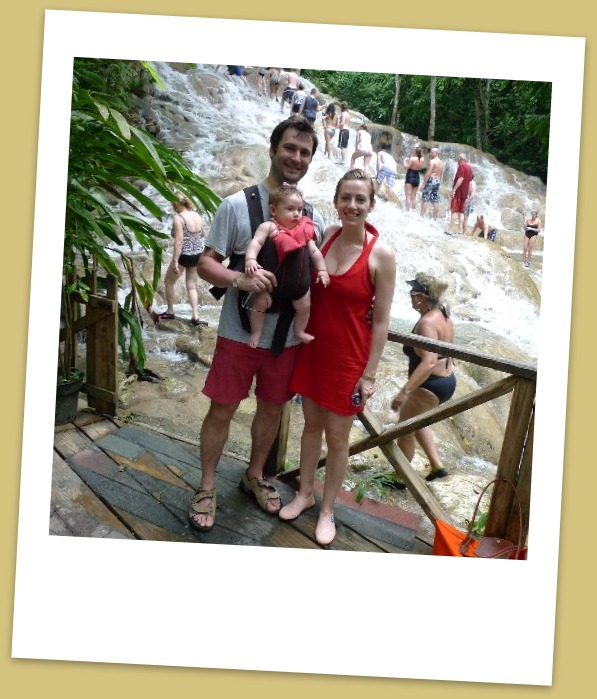
Back on the cactus-studded road, fortified with a cup of 007’s favorite Blue Mountain coffee, I — along with my two Bond girls: my lovely girlfriend, Emily, and our cheeky six-month-old daughter, Alma — renewed the quest to find some legitimate traces of Britain’s greatest spy.

The movie that pays greatest tribute to Fleming’s love for Jamaica is Dr. No (1962). Filmed just outside the island’s capital city, Kingston, on the south coast, Dr. No features the first Bond car chase, as glimpsed in the film’s original trailer. (Notably, I did not encourage our red-eyed Jamaican driver to hit the accelerator and, for Alma’s sake, was relieved to see a large blue traffic safety sign saying: “SPEED KILLS. Don’t be in a hurry to eternity”.)

Also as glimpsed in this trailer, Dr. No also introduced the world to the first Bond Girl: Ursula Andress as Honey Ryder — emerging from the waves, cuddling a conch shell.

No matter that her voice was dubbed in the final film, Ms. Andress in a bikini was a vision that launched a million erotic fantasies, including my own. The beach where this iconic scene was filmed is as hard to reach today as it was for Bond in the movie. Located four miles west of Ocho Ríos, behind the Roaring River generating station, on a privately owned, rentable estate, it is approached by an unmarked track that ends at a security gate. The Laughing Waters stream — in which Bond and Honey concealed themselves — still pours into the sea.

But Bond and Honey’s actual hiding place is now a very unromantic drainage ditch.

In both the movie and the book, Honey’s beach lies on the island of Crab Key, which is Dr. No’s well-appointed hide-out. Bond and Honey make their way from the beach, through a lush forest, where they find a stunning waterfall in which to wash off.

I would do the same thing…

The cascade used for the movie is now one of Jamaica’s top tourist attractions, Dunn’s River Falls. As we reached this reputedly picturesque spot, the first thing we noticed were grotesque conga lines of cruise-ship passengers — mainly American, but with a large smattering of Chinese — clambering over the rocks. How I wished I’d had a Walther PPK pistol to silence the tour-guides as they orchestrated raucous football chants.

(Afterwards, Alma exacted her own ruthless revenge on the commercialized desecration of the waterfall. As we were waiting for our driver to pull up, a septuagenarian American couple, all sunhats and positive energy, approached us. Alma served up her gummiest, sweetest grin to the lady, whose tired face melted. “Awww,” she cooed, “you are the cuutest ba–“, at which moment she stumbled sharply and fell face first on to the asphalt. A blackish red liquid oozed from her mouth. Emily shielded Alma’s gaze from the horror. The husband yelled for help. A call went out to out to an ambulance, which — do they have one permanently stationed at the Falls to handle tourists tumbling down the rocks? — arrived within minutes. The lady was carried into the back of the ambulance, as her husband asked a fellow cruise passenger to tell the captain not to leave until she had been patched up and discharged.)

Dr. Julius No’s lair was where he entertained Bond and Honey for dinner…and concealed the laser that could disable American missiles. It also contained the nuclear reactor where he would meet his death, sinking into the boiling liquid from which he was unable to escape because of his metal hands.

The building used for the reactor’s exterior is a bauxite plant that sits beside the main road on the crescent harbor of Discovery Bay. It’s owned and operated by the American company Kaiser. Beneath its russet-stained dome is where the “red gold” that is Jamaica’s second-leading money earner after tourism is transformed into aluminium for export to U.S. refineries.

The other movie where Jamaica plays a major role is Live and Let Die (1974), the first film to star Roger Moore as James Bond.

Jamaica stands in as the Louisiana bayou for the classic scene in the crocodile farm owned by the evil Mr. Big. In the film, Mr. Big’s real name is Kananga, which was taken from real-life crocodile wrangler Ross Kananga, who was the double for Moore in the scene where Bond escapes by running over a phalanx of crocodiles.

In this clip you can see all five takes of Kananga performing this perilous stunt for Moore. The location was an actual crocodile farm called Swamp Safari, near the town of Falmouth. (It was being refurbished when we visited and is due to re-open next year.)

In Live and Let Die, Jamaica is also the fictional Caribbean island of San Monique. In the original novel, Bond comes here to track down what his MI6 boss, M, believes to be a stash of gold that was originally amassed by the notorious pirate Henry Morgan, himself an early foreign resident of Jamaica. That gold was being used by the criminal network SMERSH to fund nefarious activities in America.

In the movie, Kananga’s base was conceived of as a cathedral-like cave beneath a cemetery. It was here where the infamous drug lord kept his submarine. And it was here, in a shark-infested lagoon, that Moore kills Kananga by stuffing a bullet of compressed air down his throat, causing him to explode.

The Kananga scenes were shot in the real-life Green Grotto and Runaway Caves near Discovery Bay. They comprise a network of limestone caves and a limpid lake, 120 feet below sea level. Originally a Taíno place of worship, the caves had a recent incarnation as a nightclub — but after revelers damaged the stalactites, it was closed down. Today, tour guides are scrupulously protective of the green algae on the walls.

As my Bond girls and I wound up our 007 tour and headed back to New York, I was re-energized to write my own Bond novel. It will begin with our hero discovering that his mother, whom he has not seen since he was very young, is alive but has been kidnapped by a mysterious criminal gang.

With Bond’s fascination for women clearly linked to an Oedipal complex and an impossible love for his mother, this will set up the highest stakes of any 007 story ever. In an extraordinary final twist, his mother will be revealed as none other than…M herself!

M for Mummy! Genius!

What do you think? Will this effectively reboot the Bond franchise?

img: The intrepid Sebastian Doggart with his equally intrepid “Bond girls,” girlfriend Emily and their daughter Alma, snapped in front of Dunn’s River Falls, Jamaica, with conga lines of cruise-ship passengers in the background.

STAY TUNED for tomorrow’s installment from our displaced fictional heroine, Libby, who, having just said good-bye to her London home, is about to embark on her long-anticipated relocation adventure.

If you enjoyed this post, we invite you to subscribe for email delivery of The Displaced Nation. That way, you won’t miss a single issue. SPECIAL OFFER: New subscribers receive a FREE copy of “A Royally Displaced Tea.”

Related posts:
See also:

CLASSIC DISPLACED WRITING: Ian Fleming

As The Displaced Nation has been serializing Sebastian Doggart’s article (part 1 and part 2) about visiting Ian Feming’s Goldeneye estate in Jamaica, it seemed like a good time to take a brief look at Fleming’s writing with a Classic Displaced Writing Post.

Sebastian’s posts have been concerned with Fleming and his love of Jamaica, and while Jamaica and the Caribbean is used numerous times as a backdrop in the Bond novels, through the course of the novels Bond visits dozens of  different countries that Fleming has to conjure up for the reader.

What is clear on reading Fleming is just how important food and drink is to Fleming in order to allow him to describes new and exotic (at least for the vast majority of readers in austerity Britain of that time) locations. I don’t think it’s unfair of me to say that Fleming fetishes food and drink. At times, reading a Bond novel is like reading food porn. While the Bond films now do an expert and cynical job of name dropping as many brands as they can in 2 hours, the Bond novels don’t shy away with the name dropping of food or of alcoholic brand names. The Bond of the novels isn’t solely a Martini drinker. He’s aways one to try anything local that’s on offer. In Jamaica he’ll drink a glass of Red Stripe, in the US he’ll have a Millers Highlife beer. Throughout the novels Fleming uses food and drink to convey an alien culture, demonstrate social status, show Bond’s mood and his sophistication and ease with the world.

For ten minutes Bond stood and gazed out across the sparkling water barrier between Europe and Asia, then he turned back into the room, now bright with sunshine, and telephoned for his breakfast. His English was not understood, but his French at last got through. He turned on a cold bath and shaved patiently with cold water and hoped that the exotic breakfast he had ordered would not be a fiasco.

He was not disappointed. The yoghourt, in a blue china bowl, was a deep yellow and with the consistency of thick cream. The green figs, ready peeled, were bursting with ripeness, and the Turkish coffee was jet black and with the burned taste that showed it had been freshly ground. Bond ate the delicious meal on a table drawn up beside the open-window.

From Russia with Love (1957)

Video of some more examples –

STAY TUNED for Monday’s post, when guest blogger Sezin Koehler riffs off Alice in Wonderland to capture the curious, unreal aspects of her life in Prague.

If you enjoyed this post, we invite you to subscribe for email delivery of The Displaced Nation. That way, you won’t miss a single issue. SPECIAL OFFER: New subscribers receive a FREE copy of “A Royally Displaced Tea.”

Related posts:

In search of 007th heaven: A travel yarn in three parts (Part 2)

GoldenEye collageWe welcome back Sebastian Doggart for the second in his three-part travel yarn about his attempt to infiltrate the Caribbean retreat called GoldenEye, where Ian Fleming composed all the Bond books. In Part 1, Sebastian reports on his arrival on Jamaica’s northern coast and admission at the gates of the compound that marks the birthplace of James Bond — newly remade into a resort for the super-rich. Stay tuned for Part 3, where Sebastian continues his Bond-worthy quest for traces of Fleming elsewhere in Jamaica.

Alighting from the car, I was greeted by Jenny Wood, GoldenEye’s English general manager, whose plummily cheerful efficiency had echoes of Miss Moneypenny. She welcomed us warmly and introduced us to a Jamaican employee called Henry, who would take us to our friends, the Usmanovs.

As Henry led us down a stone path, I asked him about visiting Fleming’s house. He said that, the week before, Bono had been staying there, but that it was now vacant.

Thrillingly, Henry promised he would get a key and take us to see inside.

He took us through a wooded area, where the trees had all been planted by a celebrity guest. Handwritten signs showed a tamarind planted by Princess Margaret, a royal palm by the Clintons, a lime by Harrison Ford, an ackee by River Phoenix, a cinnamon by Willie Nelson, and a guava by Johnny Depp.

Surely, this was the most eco-friendly example of name-dropping in the world.

Shaken, not stirred

We came to the luxuriously simple main restaurant, which also housed a bar in the very gazebo where Fleming would do some of his writing. Henry informed us that, when British Prime Minister Anthony Eden visited in 1956, he used this as a command post.

It was a perfect spot for a quick drink. I eschewed the obvious choice of a dry martini, shaken not stirred and ordered instead Bond’s own creation, a Vesper. Named after his Casino Royale lover Vesper Lynd, it’s made of three measures of Gordon’s gin, one of grain vodka, half a measure of Kina Lillet, all shaken until iced cold, and served with a slice of lemon peel in a champagne goblet.

Energized, we walked on to a wooden bridge, over an emerald waterway that drifted into the sea, through a maze of discreet wooden buildings, each bordering a lagoon, to our friends’ own villa.

They welcomed us with a rum punch, made from Blackwell’s own self-named brand. We sat on the back deck, listening to the resort’s own reggae-oriented radio station, and savoring the sweet scent of marijuana wafting from the neighboring cabana. I slipped into my bathing suit and leapt into the cool water.

On the other shore of the lagoon nestled the spa, described in the resort guidebook as a place where guests have “a license to chill,” and where Bond himself “would willingly put down his guns, girls and gadgets to lose himself — and find himself.”

I went back inside my friends’ cabana for a shower. The bedroom smelled of fresh cedar and was immaculately decorated. The bathroom, adorned with new Villeroy & Boch taps and a craw-feet tub, was outside — shielded by a bamboo fence and festooned with bougainvillea.

I hope you can swim, Goodnight.

Soon after, Henry returned to honor his promise to take us to Bond’s actual birthplace, and we said goodbye to our friends.

Henry led us to the private beach where Fleming used to don flippers and a diving mask (but no snorkel) to look at parrotfish and snapper, and to spear lobsters and octopi for his dinner. A glass-bottomed boat is now available for guests to peer for barracuda.

On the shore, hotel lounge-chairs broke the natural rhythms. A rock pool that Fleming built for his son, Casper, teemed with black crabs — the same beasts that Dr. No used to torture Honey Rider. I wondered whether Fleming and his “Jamaican wife,” Blanche Lindo, might have indulged in some related zoologically erotic games.

Overlooking the beach was a charming sunken garden which Fleming had hallowed out for dining al fresco. Shaded by a proscenium arch of almond trees, he and his illustrious chums would sit here feasting on ackee, curried goat, and grilled salt-fish.

Henry took out a key to show us inside the complex known as “The Fleming House.” The renovations have expanded Fleming’s own modest footprint to embrace four houses, all built around a new, sunken swimming pool. The main building is an enlarged version of Fleming’s original bungalow, and there are three neighboring villas, which contain guest rooms and a private cinema.

Time to face gravity!

To stay in the Fleming House is beyond most mortals’ spending power: it rents for between $7,000 and $21,000 a night, depending on the season.

To put that in context, Henry, whom Chris Blackwell was paying $60 a week, would have to work seven years — and incur no other expenditures — in order to take his family to the Fleming House for just one night.

My first impression on entering the main building was similar to that of Noël Coward,
who, in a teasing ode he wrote to Fleming, complained about the hard furniture and the airless rooms.

Totemic African statues stared threateningly down into the cavernous living room. Paintings of a conch shell and a sea-view looked as though they had been bought from the local market. The floor was made of cold, pale stone.

The master bedroom was where Fleming did most of his writing, but this too was disappointing. Below a framed black-and-white photograph of Fleming stood a bullet-wood corner desk, but Henry admitted that it was a replica.

There was no sign either of the Imperial typewriter that Fleming used to write most of the Bond novels, or of the gold-plated Royal Quiet DeLuxe portable that he later purchased from the Royal Typewriter Company in New York. (The Royal, I learned later, had been sold to Bond actor Pierce Brosnan for a reported $75,000.)

As Henry led me back to my car, past a lime tree planted by Yoko Ono, the whole place suddenly felt fake and exploitative. It seemed more a celebration of celebritocracy than a tribute to the creative spirit — more akin to Scaramanga’s island than to Fleming’s original Goldeneye.

And as the iron gates clanged behind us, I suspected that, if Fleming had a chance to see how his erstwhile 007th heaven has been transformed, he would feel that Chris Blackwell has leapt on an ugly Bondwagon — and, like Auric Goldfinger, may be suffering from a deadly Midas complex.

img: (top to bottom) Fleming’s private beach; Fleming’s sunken garden; GoldenEye villa outdoor bath; GoldenEye villa bedroom — all by Sebastian Doggart.

STAY TUNED for Part 3, in which Sebastian continues his search for 007 on the beach where Ursula Andress appeared, in evil Doctor Kananga’s limestone caves, and in Dr. No’s lair on Coral Key. And before that we have tomorrow’s post — an interview with Random Nomad Vicki Jeffels, who answers an Alice question.

If you enjoyed this post, we invite you to subscribe for email delivery of The Displaced Nation. That way, you won’t miss a single issue. SPECIAL OFFER: New subscribers receive a FREE copy of “A Royally Displaced Tea.”

Related post:

In search of 007th heaven: A travel yarn in three parts (Part 1)

We welcome Sebastian Doggart to The Displaced Nation as a guest blogger. Sebastian won one of our Alice Awards for a Telegraph Expat blog post entitled “Elegy to English shepherd’s pie.” Today, however, Sebastian will be giving Displaced Nation readers a break from our Alice theme, with the first in a three-part travel yarn about his chase after Goldeneye — the Caribbean retreat where Ian Fleming wrote all of his Bond books. Stay tuned for Parts 2 & 3 in the coming weeks.

On the northern coast of Jamaica, fringed by icing-sugar beaches and rocky coves, lies the holy place where Ian Fleming wrote all the James Bond novels. Now populated by the rich and famous in search of paradise, it is one of the most desired and exclusive oases on earth. Its name is GoldenEye.

Over the last two years, this secluded tract of land has been mysteriously shut to the world. The official story has been that the site has been undergoing a $75 million renovation. As with arch-villain Francisco Scaramanga’s private island, its inaccessibility has made it even more appealing as a travel destination. So when I heard that the legendary site was re-opening to a handful of invited guests, I was ready to risk life and limb to gain access.

I called the number listed on GoldenEye’s new Web site, and a lilting Jamaican voice gave me an email address for a London-based PR company. Its boss, whose broken English suggested she might in fact be the murderous Rosa Klebb, declined my request to write an article on the resort — unless I could come up with $21,000 a night.

I had neither the resources of Blofeld to satisfy her demand, nor a willingness to accept her rejection. With the ingenious forces of Q behind me, I devised a cunning plan to infiltrate the compound. Two friends were getting married and had been granted a honeymoon suite in GoldenEye. I would take my chances and show up on their doorstep for a celebratory cup of tea.

The name’s Bond. James Bond.

The approach to GoldenEye is a coastal road that passes the brand new Ian Fleming International Airport. Opened in January 2011 to cater for the super high-end tourist, it is specifically designed to welcome small jets. Rolling Stone Keith Richards, who has a house in nearby Ocho Ríos is a grateful new user.

I passed a sign marking the border of the town where GoldenEye geographically sits, Oracabessa. Once a banana port, it has fallen on hard times as Jamaica’s economy has struggled. Oracabessa’s name, a derivation from the Spanish oro cabeza, or golden head, is one of the various inspirations that Fleming has cited for his home’s own name.

No sign marked the entrance to GoldenEye. After driving past twice, I stopped and ask a local shopkeeper where the entrance was. She gave me a grave look of disapproval, as if I were complicit in a rich white man’s folly, but still had the grace to direct me to an unmarked iron gate, flanked by high walls. I pulled up and saw, hidden discreetly amongst the trees, a guard-post. I felt as nervous as if I were trying to break in to Dr. No’s lair on Coral Key.

As further ammunition to melt the guard’s heart, I was accompanied by two lovely ladies: my partner, Emily, who is even lovelier than Mary Goodnight; and my six-month-old daughter, who shares a birthday, November 11, with Bond himself.

“Good afternoon,” I said, breezily. “We’re here for tea with the Usmanovs.”

“Are they expecting you?” he asked, his wariness visibly dissolving as he glanced at my Bond girls.

“They are indeed. They’re the happy newly-weds.”

“One moment, please.”

The guard retreated into his bunker. With this level of security, I felt our chances were slim. Our friends would probably be out of their room, frolicking in the pool.

But we were in luck. The guard returned. “Drive through. Follow the path, keeping to your left. You will be escorted to the cabana of the Usmanovs.”

As the heavy gates swung open, and I scrunched over the gravel to within GoldenEye’s walls, my heart was pounding. The dream of seeing the birthplace of one my greatest heroes was about to come true…

Mr. Bond, it’s good to see you again…

The story of GoldenEye — originally spelled Goldeneye, without the upper case “e” — is an epic one. The estate’s first known owner was Henry Morgan, the 17th century Welsh pirate. He made use of its location, on a headland with a panoramic view, to look out for Spanish fleets heading for Havana. When he saw a new ship, he would send a signal to his own boat hidden behind an island, and its captain would then sail forward to claim their bounty.

Morgan used his piratic skills to help the British acquire Jamaica as a colony in 1658. He reveled in the pleasures of nearby Port Royal, “the richest and wickedest city in Christendom,” and would leave his name on every bottle of Captain Morgan rum.

Little is known of Goldeneye until the early 20th century, when it became a donkey racecourse. This is what Ian Fleming, then a commander in British naval intelligence, first saw in 1943, vowing to return after the war had ended. In 1946, he purchased the property from a powerful Jamaican land-owner, Blanche Lindo, with whom he began a life-long love affair. On the site of the racecourse café that once served banana dumplings and coconut oil, he built a white-walled bungalow.

Explaining its name in a later interview with Playboy, Fleming said:

I had happened to be reading Reflections in a Golden Eye by Carson McCullers, and I’d been involved in an operation called Goldeneye during the war: the defence of Gibraltar, supposing that the Spaniards had decided to attack it; and I was deeply involved in the planning of countermeasures which would have been taken in that event.

Goldeneye became Fleming’s winter retreat, where he would spend at least two months a year. He hosted an increasingly illustrious group of friends, including Graham Greene, Evelyn Waugh, Cecil Beaton, Laurence Olivier, and Truman Capote. His friend Noël Coward, who built his own house, Firefly, a few miles away, described his first visit thus:

We arrived before dusk. It is quite perfect, a large sitting room sparsely furnished, comfortable beds and showers, an agreeable staff, a small private coral beach with lily white sand and warm clear water. The beach is unbelievable. We swam after a delicious dinner, and lay on the sand unchilled under a full moon.

Honey Ryder: “Looking for shells?” Bond: “No, I’m just looking.”

Like Bond, Fleming was a womanizer, and Goldeneye was a fine place to woo a lady. In 1948, he brought Lady Ann Rothermere, whose response was effusive: “The air is so clear of dirt or dust, there is an illusion of a vast universe, and the sea horizon is very round.”

Fleming gave Ann a gift, the latest edition of Field Guide to Birds of the West Indies, by an American ornithologist named James Bond. He nicked the name for the hero of his first novel, Casino Royale, which he began writing in 1952, soon after he had discovered that Ann was pregnant and married her.

When writing, Fleming closed Goldeneye’s glassless, wooden shutters called jalousies, to avoid the distraction of the Caribbean horizon. He went on to create all 13 of his Bond novels in those surroundings. He would write later:

Would these books have been born if I had not been living in the gorgeous vacuum of a Jamaican holiday? I doubt it… I suppose it is the peace and silence and cut-offness from the madding world that urges people to create here…. A wonderful escape from the cold and grime of winters in England, into blazing sunshine, natural beauty and the most healthy life I could wish to live.

The Flemings’ marriage deteriorated into bickering, and Ann stopped coming to Jamaica. Our hero’s attentions turned to his “Jamaican wife,” Blanche. She was herself married — to Joseph Blackwell, an heir to the Crosse & Blackwell food family; but that only added spice to the affair. Blanche Blackwell gave Fleming a romantic gift of a coracle named Octopussy with which to explore the surrounding coves. The boat’s name became the title of the fourteenth and final Bond tale, published posthumously as part of a short story collection in 1966.

A lover of the sea, Blanche was the inspiration for Dr. No’s Honeychile Rider, whom Bond first sees emerging from the sea — naked in the book, bikini-clad in the movie. She was also the basis for Pussy Galore in Goldfinger.

You only live twice, Mr. Bond…

Blanche had a son, Chris Blackwell, who would go on to become a location manager on the movie Dr. No. He would then found the indie record label Island Records, which launched artists like Bob Marley and U2. Chris describes his first visit:

I went with my mother to a party that Ian Fleming was giving for friends. Noël Coward was there. It was a casual affair — with lunch served under the almond trees and overlooking the beach — and what I remember most is a lot of laughter.

In 1964, two years after both the release of the movie Dr. No and Jamaica’s independence from Britain, Fleming came to Goldeneye to write his last and most nostalgic Bond novel, The Man with the Golden Gun:

My own life has been turned upside down at, or perhaps even by, [this] small house … that I built 18 years ago… I sat down at the red bullet-wood desk where I am now typing this and, for better or worse, wrote the first of 12 best selling thrillers that have sold around twenty million copies and been translated into 23 languages.

Fleming died soon after, undramatically, of a heart attack, and was buried in Wiltshire, where he would later be joined by his son Casper (who tragically died of a drug overdose, aged 22) and his wife Ann.

The Fleming family held on to Goldeneye, which gradually fell into disrepair, until 1977, when they put it on the market. Bob Marley was interested, but eventually decided it was “too posh”. Encouraged by his mother, Chris Blackwell himself stepped in and purchased the property. He bought further land, increasing the estate from 16 to 100 acres and building what he called “a model for residential tourism” — a network of luxury villas that hosted celebrities including Naomi Campbell, Quincy Jones, Rachel Weisz, and Martha Stewart.

Two years ago, Blackwell shut it all down to embark on a $75 million renovation, with the goal of creating “a community of free spirits dedicated to living an inventive, balanced life where the imagination and the environment could co-exist in perfect harmony.”

We were now some of the first people to assess whether he had achieved this dream with the latest incarnation, GoldenEye.

STAY TUNED for Part 2, in which Sebastian continues his search for 007 — and for Monday’s post, where we’ll return to Wonderland for further scrutiny of its sense of humor (or the lack).

If you enjoyed this post, we invite you to subscribe for email delivery of The Displaced Nation. That way, you won’t miss a single issue. SPECIAL OFFER: New subscribers receive a FREE copy of “A Royally Displaced Tea.”

Travel author Janet Brown channels Alice in Wonderland’s “tone deaf” adventures

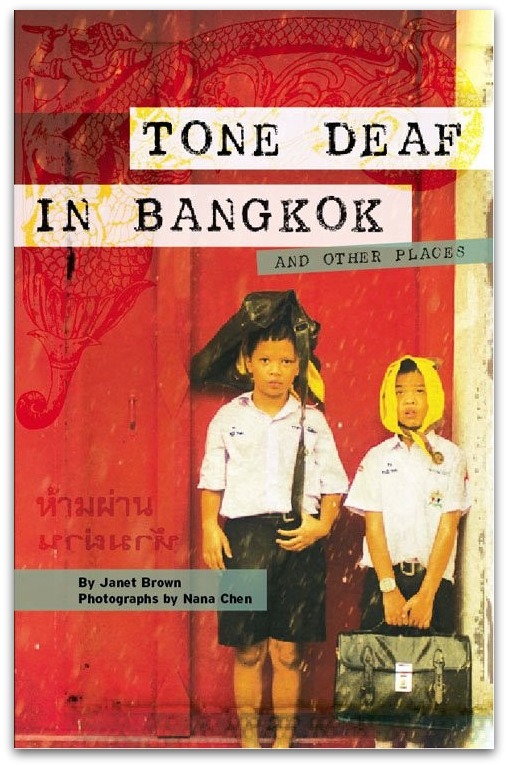
SPECIAL TREAT FOR TDN READERS: JANET BROWN, author of the travel gem Tone Deaf in Bangkok, has kindly agreed to “come in” and respond to your comments and questions. 

As you may have noticed, The Displaced Nation has gone Alice-in-Wonderland mad since around the first of June. To take just a few examples:

And now, to top that all off, the extraordinary travel writer Janet Brown is paying us a visit. Brown could almost be a stand-in for the Lewis Carroll heroine herself, having published a book on travel to and life in Thailand called Tone Deaf in Bangkok, to much acclaim.

“Tone deaf” — it puts one in mind of poor Alice’s plea to the Mouse, “I didn’t mean it…But you’re so easily offended, you know!”

But if Brown sees herself as tone deaf, her readers regard her as anything but. Here is a sampling of her reader reviews on Amazon:

It has been ages since I have loved a piece of travel literature…, and so when I read TONE DEAF IN BANGKOK, I was thrilled. This is a good travel book, and it is a good book, period.

I am not a traveler, nor do I typically read travel books. Shame on me, I know, but here’s the thing: … The author brought Bangkok to life in a way that made me want to go there, yes, but it was her own story that captivated me and kept me turning the pages. Now I’d read anything Janet Brown writes!

Janet Brown’s TONE DEAF IN BANGKOK is a travelogue, to be sure. Yet it is more, so much more. It’s also an investigation into how dislocated we can become by ourselves, by our priorities and by all that we demand of the cultures in which we live. … That she has a gift for spotting the universal in the exotic makes this collection all the more profound.

Janet Brown has graciously agreed to answer some of my Alice-related questions. After that, dear reader, I urge you to chime in!

Before we go down the rabbit-hole, can you tell me a little bit more about your background?
My parents turned me into a gypsy before I was two, by taking me on their journey by jeep from New York City to Alaska when the 49th state was still a territory and the Alcan Highway was still an unpaved trail into the frozen north. I have wandered ever since, most recently in Southeast Asia with Bangkok as my home, writing down the stories I encounter as I explore. My books include:

Maybe because I’m so steeped in Alice-of-Wonderland lore this month, I think of you as Alice Personified. To what extent can you relate to Alice’s sense of disorientation? Going back not just to the first time you went to Thailand but also when your family dragged you to Alaska…
I was 18 months old when my family moved to Alaska from Manhattan. I coped with any displacement issues by making my mother read my favorite book over and over again — a truly saccharine Little Golden Book called The New Baby. The main character had the same name as I so that was the big attraction — all about me!  My mother swears she can still recite it verbatim after having two martinis.

Alice came to mind constantly in my first months in Bangkok — and frequently thereafter. I knew I’d gone through the looking glass — or had entered the postcard — and asked myself often if that experience had been as painful for Alice as it often was for me.

Can you describe your worst “Pool of Tears” moment in Bangkok, where you wished you hadn’t decided on living there?
I’ve tried to make light of that time when I wrote about it in Tone Deaf in Bangkok, but it nearly demolished me. When the manager of my apartment turned me into Ryan’s Daughter by listening in on my phone calls and then entertaining the neighborhood with highly embroidered versions of my life — and when people fell silent when I walked down the street and began gabbling excitedly after I’d passed — I felt as though my life had been stolen from me and I shut down to the point of hypothermia. If my students hadn’t helped me find a new neighborhood, I would have gone home a gibbering mess.

Thailand is renowned for its distinctive cuisine. Was there anything that carried an “Eat me” label that you felt hesitant about at first, but then discovered you loved?
I’ve written about durian in Tone Deaf, how I thought its smell in the market was sewer gas and then how I was forced to taste it, with happy results. Fried grasshoppers were another thing I didn’t warm to at first sight and then liked as much as I do popcorn — they have much the same crunch and texture.

By the same token, were there any foods that you thought might be good but then didn’t acquire a taste for? (For Alice, of course, that was the Duchess’s over-peppered soup.)
One night I stopped to buy green papaya salad from a food cart to take home for supper. There was something in a little plastic bag that looked like a sort of relish, so I bought that, too.When I opened it at home a smell of rot filled the air, but remembering the delightful surprise that durian had proved to be, I took a generous spoonful. It was pla ra — fermented fish, a Northeastern Thailand culinary staple that is meant to be added and mixed judiciously with the salad, not eaten like peanut butter. There wasn’t enough toothpaste in the world to rid my mouth of that thoroughly foul taste.

As already mentioned, Alice finds it’s easy to offend the creatures in Wonderland without even trying. Why did you choose the expression “tone deaf” for the title of your book on Bangkok? 
“Tone deaf” can be taken quite literally. Thai is a tonal language with five different tones giving meaning to every word. Use the wrong tone and at best you’re incomprehensible, at worst shocking. The most common mistake for foreigners is to tell someone their baby is beautiful, while actually announcing that the infant is bad luck. Another pitfall is confusing the word “near” with the word for “far” — they are the same sound, differentiated by a crucial tone.

But travelers to Thailand can also be “tone deaf” when it comes to figuring out the Thais’ communication style. As a Thai-American friend has observed, the important things are what remain unsaid. “You looked so beautiful yesterday” probably means today you resemble dogfood and ought to go home and rectify that at once. Subtlety is the hallmark of Thai communication, and is often expressed through a quirk of an eyebrow or a famous Thai smile, which has at least one hundred different meanings — including disdain or outright menace.

Describe the biggest faux pas you’ve made since settling in Bangkok.
Oh, how to choose — it’s impossible not to make faux pas every second because Thai etiquette is demanding and complex. The one that makes me cringe most is in my first week when I set off on my first solo bus ride. I was clutching a twenty-baht note, which like all bank notes in Thailand bears the countenance of the King. He is revered to the point of near godhood in his kingdom and his picture is always elevated to the highest spot in a room — nothing is above the King. But I was fresh off the boat and when I dropped my money and it was caught in a little breeze, I put out my foot (the lowest and most ignominious part of the body) and stepped on the picture of the King’s face to secure my bus fare. I was too clueless to pick up on the ripples of horror that this caused others at the bus stop, but now I writhe when I remember this.

“Off with her head!” as the chief royal in Alice’s story is wont to proclaim. Actually, never mind your head. Your mention of your foot makes me think of how physically awkward Alice feels around the creatures in Wonderland. As a farang in Bangkok, do you often feel self conscious?
I’m short and dark in a family of pale-skinned people, so I was used to being an anomaly from early childhood. In Bangkok, if I dressed like a Thai woman and wore sunglasses and walked slowly, I felt as though I blended in. But one day I walked down a quiet street on my way to a class, and someone looked up and said, “Look at the foreigner.” “How did she know?” I asked my class of teenage girls. “Your hair,” they said. “No, lots of Thai women have dyed their hair brown,” I replied — to which they responded: “Your nose.” It was my big American nose that gave me away every time — and since I hate pain and surgery, I just had to accept that.

Have you tweaked your personal style at all so as to fit in better? 
Yes — I adopted the conservative “Don’t show your bare shoulders” school of dressing that prevailed in Bangkok when I first arrived and slowed my pace to that of the women around me. I learned to keep my facial expression as bland as I possibly could to achieve the quiet Thai “public face,” and I ironed everything, including my Levis. Now women are much more casual in the way they dress but I’m still stuck in the cultural mores of the 90s. To foreign women who live here now, my introductory years in Bangkok seem like fiction — things have changed so drastically in the past 16 years.

Time for a quote from the Cheshire Cat: “…we’re all mad here. I’m mad. You’re mad.” Can you relate?
Riding on the back of a motorcycle taxi down a crowded city sidewalk, buying a glass of Shiraz to take with my popcorn into a movie theater, being drenched to the bone during Thai New Year’s — this is actually the most difficult question you’ve asked so far because at this point it all seems normal.

If you were to hold your own Mad Hatter’s Tea Party in Bangkok, whom would you invite, and why?
Anais Nin, because she would love the unbridled hedonism of this place, Evelyn Waugh because he would satirize the expat scene so well, Ho Chi Minh because he could help put together the revolution that is needed here, Emily Hahn because she has always been my role model since I first read her when I was twelve, and Elvis because in Bangkok he is still the king.

Alice becomes aware that Wonderland is turning her into a different person, unrecognizable to the one she used to be. Has your identity has shifted in fundamental ways since living in Bangkok?
This is a very complex question — I’ve written one book about it and am working on a second one, Almost Home. I’m always drawn back to the US because my children are there. Seeing them for two weeks a year doesn’t work for me. Once I get back to the US this time around, I’ll return here but plan to spend the bulk of my time near family in the Pacific Northwest. I won’t know how much I’ve been changed by this recent incarnation in Bangkok until then. Ask me again in several months.

Can you offer any advice for newcomers to Bangkok, who aren’t sure who they are any more?
Tone Deaf in Bangkok and my next book, Almost Home, are where I directly address the challenges of feeling like an Alice in Thailand. In addition, the recently published Lost and Found Bangkok, for which I wrote the text, may be helpful for newcomers. It’s a book in which five different photographers — two American men, two Thai men (both from Bangkok), and one Taiwanese-American woman — show the city they live in. New arrivals can look at the photos and see some great places to get lost — and find out who they are — in this Wonderland-like city.

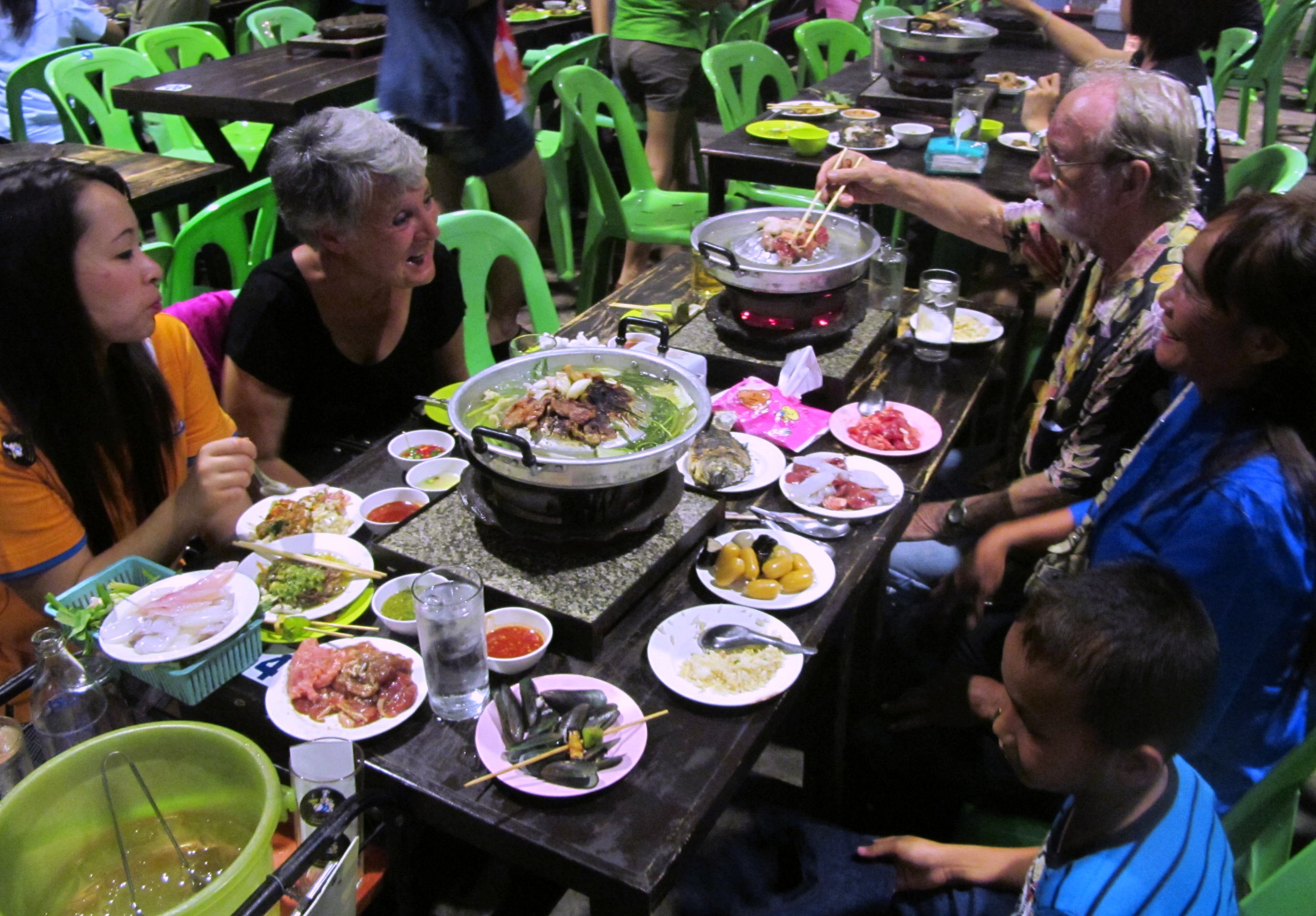
img: Janet Brown with friends at an all-you-can-eat DIY barbecue at a huge restaurant under a bridge in Bangkok, by Will Yaryan.

STAY TUNED for Monday’s post on the problems one can anticipate in trying out one’s humor on Wonderland’s inhabitants…

If you enjoyed this post, we invite you to subscribe for email delivery of The Displaced Nation. That way, you won’t miss a single issue. SPECIAL OFFER: New subscribers receive a FREE copy of “A Royally Displaced Tea.”

Related posts:
CLASSIC DISPLACED WRITING: Lewis Carroll

Continuing with the Alice theme that has infected the site, here’s the latest edition of Classic Displaced Writing. Also, we’re experimenting and instead of the normal, written article, I’ve done this version as a video. Be sure to tell us what you think of the new format.


QUESTION: Have you ever thought to yourself, during your various experiments with international travel and living, “I must have been mad”?

Note: The film clips are from Alice in Wonderland, a 1903 silent film by Cecil M. Hepworth, starring May Clark in the title role of Alice.

STAY TUNED for Monday’s guest post by Carole Hallett Mobbs on “Alice in Japan.”

If you enjoyed this post, we invite you to subscribe for email delivery of The Displaced Nation. That way, you won’t miss a single issue. SPECIAL OFFER: New subscribers receive a FREE copy of “A Royally Displaced Tea.”

Related posts:

And the Alices go to … these 7 writers who get the curious, unreal side of international travel

 © Iamezan | Dreamstime.com Used under license

© Iamezan | Dreamstime.com
Used under license

Since founding The Displaced Nation on April Fool’s Day (no fooling?), Kate Allison, Anthony Windram and I have been coming across travel writers who understand just how befuddling the life of the global nomad can be.

We are inclined to think that they have channeled Lewis Carroll’s Alice.

Offering themselves up as examples, such writers talk about what’s it like for a crossborder traveler to be plagued with feelings akin to adolescent self-doubt: what am I doing here, and will I ever get over this feeling of displacedness?

And they’ve shown us how to emerge from such escapades as more fulfilled human beings, full of stories to tell, perhaps to our grandkids, one day…

In recognition of these models of displacedness, my colleagues and I have created a new accolade for the travel writing profession: the Alice’s Adventures in Wonderland Award, otherwise known as an “Alice.”

And The Displaced Nation‘s very first Alices go to…drumroll!…(listed in reverse chronological order)

1. ANABEL KANTARIA for Do we all need behavior lessons?, in the Daily Telegraph:

“Just remember, you’re not playing in your own backyard now,” my boss told me when I took my first job in the UAE. “You’re in someone else’s yard now, and you play by their rules.” It was probably the best piece of advice I was ever given about the UAE, and one that’s kept me out of trouble on numerous occasions.

Alice link: “I don’t think they play at all fairly,” Alice began, in rather a complaining tone, “… I should have croqueted the Queen’s hedgehog just now, only it ran away when it saw mine coming!”

2. SUZY GUESE for The Unexpected Benefits to Solo Travel, in Suzy Guese: Traveling with a redheaded temperament:

While I know people who travel with others can have their share of weird conversations, solo travel for some reason brings this about almost with every day. … From a musician at the Giant’s Causeway [Northern Ireland’s only UNESCO World Heritage Site] who started talking to me by insulting my shoes, to a B&B owner who told me her “journey of life”, leaving in all of the gory details, I have had some strange encounters.

Alice link: “Your hair wants cutting,” said the Hatter. He had been looking at Alice for some time with great curiosity, and this was his first speech.

3. ANDREA MARTINS for Expat women living the high life or secretly struggling?, in the Daily Telegraph:

In mid-2005, April Davidson’s world was turned upside down following her husband’s job transfer to Mexico City. … She could not understand what was happening to her and she started taking medication for anxiety and unexplained stomach problems. Little did April realise that her feelings represented a completely normal piece of the relocation jigsaw, and that taking medication to cope with the transition process was again, not uncommon.

Alice link: “You ought to be ashamed of yourself,” said Alice, “a great girl like you,” (she might well say this), “to go on crying in this way! Stop this moment, I tell you!” But she went on all the same, shedding gallons of tears, until there was a large pool all round her, about four inches deep and reaching half down the hall.

4. SEBASTIAN DOGGART for Elegy to English shepherd’s pie, in the Daily Telegraph:

One of the things I miss the most about living outside England is shepherd’s pie. … The greatest desecration is found in Quebec, where they call it “Chinese pâté” (pâté chinois). To suggest this sacred dish has anything Chinese about it is preposterous.

Alice link: “When I’m a Duchess,” she said to herself…”I won’t have any pepper in my kitchen at all. Soup does very well without…”

5. SALLY THELEN for 4 Tips on Embracing Your Inner Weirdo, in Unbrave Girl:

This morning, when I went running [in Wuxi, China], I happened upon a group of teenagers dressed up as anime characters. A crowd had formed around them to gape at their hot pink wigs, Nutcracker-like jackets and French maid dresses.

I stopped for a minute to stare slack-jawed with the rest of the crowd.

I was baffled.

I was confused.

And, frankly, I was a bit miffed. After all, didn’t these kids know that I was the main attraction at this park?

Alice link: This piece of rudeness was more than Alice could bear: she got up in great disgust, and walked off, the Dormouse fell asleep instantly, and neither of the others took the least notice of her going, though she looked back one or twice, half hoping that they would call after her…

6. SEZIN KOEHLER for My foreign body: geocharacteristics of a population, in Expat+HAREM:

When I first arrived in Prague I was a size 7, had an acceptable C-cup and chocolate-colored skin. Three years later I’ve become a size 12 and an overbearing DD-cup with skin the color of weak tea.

Aging plays only a small part….

Alice link: “Curiouser and curiouser!” cried Alice (she was so much surprised, that for the moment she quite forgot how to speak good English); now I’m opening out like the largest telescope that ever was! Good-bye, feet!”

7. JENNIFER EREMEEVA for Conversation is a One-way Street, in Dividing my time: finding the funnier side of life in Russia:

“Let me tell you about New York,” he [a Russian friend of my husband’s] said, “I was really impressed: the streets are completely strait, from one end of Manhattan to the other — ”

“– Well, except for the Village down to Wall Street,” I interjected absent-mindedly.

“Jennifer went to University in New York,” said my husband apologetically to the group.

Sergei squinted at me suspiciously, and then, changing tack, began to expand on the virtues of vacationing at Valaam on Lake Ladoga.

Alice link: “I’ve been to a day-school, too,” said Alice; “you needn’t be so proud as all that.” … “…[Y]ours wasn’t a really good school,” said the Mock Turtle in a tone of great relief. “Now at ours they had at the end of the bill, ‘French, music, and washing — extra.”

QUESTION: Do you have a favorite from the above, and do you have any other writers/posts to nominate for our next round of Alices? We’d love to hear your suggestions.

STAY TUNED for tomorrow’s interview with Random Nomad Balaka Basu. She appeals for citizenship in The Displaced Nation — and agrees to answer one Alice question!

If you enjoyed this post, we invite you to subscribe for email delivery of The Displaced Nation. That way, you won’t miss a single issue. SPECIAL OFFER: New subscribers receive a FREE copy of “A Royally Displaced Tea.”

Related post: