The Displaced Nation

A home for international creatives

Tag Archives: USA

LIBBY’S LIFE #79 – Gladiator games

June.

Summertime. Crickets, cicadas. Long evenings, hot days.

Or, back on Planet Earth in 2013: June. Thunderstorms. Hailstones, lightning. Flood warnings, incessant rain. Central heating returning for another encore, and cabin fever causing small children to ricochet off walls and demand opportunities to test the effectiveness of recently purchased wellington boots.

Rain or no rain, after several days cooped up inside, we are going for a walk this afternoon.

It’s a slow process, though, I’m discovering. It’s taken nearly five minutes to get Jack, plus the twins in their double pushchair, from the front door to the other side of our street, because the very puddles I need to avoid with the pushchair are those in which Jack wants to jump with his new, camo-patterned rainboots.

As the children and I bicker and squelch past the entrance to Maggie’s long gravel drive, I spot Maggie trotting from her house towards us, holding a black and red golfing umbrella above her head and squinting into the driving rain.

“You do know,” she shouts, “that if someone who is not English sees you out in this downpour, they will call child protection services? Or at the very least, they’ll call the men in white coats?”

We laugh. The Woodhaveners’ attitude to rain is a private joke between me and Maggie. Woodhaveners will happily cope with two feet of snow and an ice storm, but send them a bit of rain and they flap around, panicking about damp basements and aquaplaning cars.

I explain about the cabin fever and Jack’s new wellies. “What’s your excuse for going out in it?” I ask.

“Checking the mail for Montana-postmarked letters,” she says, and I groan softly.

Maggie’s been waiting for a letter from Montana for about a week now. A letter from Chuck, the current owner of the house I want to buy. Chuck is strangely inaccessible by modern communication. After our liquid lunch in the Maxwell Plum, Maggie phoned the emergency number he gave her a few years ago — his neighbours’ number — and left a message.

The message was that Maggie thought he should know that someone (me) was interested in buying his mother’s house, and Maggie had reason to believe he might not know this (because we think Melissa, his real estate agent, hadn’t told him we’d put in an offer) so would he please call Maggie back ASAP.

After two days with no response, she phoned again. Chuck’s neighbours sounded slightly annoyed and told her they’d most certainly passed on the message to Chuck, who had said he would write a letter to Maggie. Yes, they told her, a real letter. On paper, in an envelope, with a stamp, with her address on it. Surely she had heard of such an invention in Massachusetts?

“More to the point, hasn’t he heard of Facebook in Montana?” I asked. “Who writes letters on real paper these days, for goodness’ sake?”

“People who live in the middle of nowhere and communicate mainly with horses, apparently,” Maggie said.

Now, as Maggie opens her mailbox and I see that it contains only this week’s issue of the Woodhaven Observer, I’m starting to think that he’d decided to bypass the postal system and deliver it himself. On horseback.

I voice this theory to Maggie, who looks at me sympathetically.

“At least you’ve got somewhere to live in July now,” she says. “You won’t be homeless.”

This is true. Oliver, via his company’s HR contacts, has managed to get a three-bedroomed apartment near the mall, in the same complex we stayed when we first arrived in America, two years ago. So, no, we won’t be homeless —  but the apartment faces the freeway, it’s noisy with the heavy traffic, and I’m not counting on many undisturbed nights from the twins. It’s most irritating, because they’d both just started sleeping through the night.

We looked at some new houses in Banbury, two towns away. The houses that Melissa’s new boyfriend built. This detail would have been enough to put me off buying one, if the cost hadn’t already done so. The base prices of the houses seemed reasonable enough, but once you started adding in the cost of options, the real prices zoomed vertically, because the “options” weren’t terribly optional. The houses don’t come with decks, for example; not a big problem, you might think, until you realise that the French windows (or French doors, as they call them here) leading out into the back garden have a five foot drop to the ground when you open them.

Both Oliver and I want, more than ever, to stay in Woodhaven, in the magical old house that used to belong to Maggie’s friend, Cathy.  Oliver even calls it “our house” whenever we drive past it.

If only we could speak with Chuck, the actual seller, instead of having to go through real estate agents who have their own unscrupulous agendas. Because Maggie, Oliver, and I are absolutely convinced that Melissa has her own agenda in all this. It’s no coincidence that a house with a lot of acreage and a need for fixing up isn’t selling if she’s a) representing the seller and b) dating a local builder/property tycoon.

But without Chuck’s side of the story, we have no proof.

As we all stand in the rain, a black Escalade tears up the street and drives through the water-filled pothole next to us in the road, sweeping a wave of muddy rainwater onto the sidewalk and all over our little group. Beth and George are safe behind their clear plastic rainshield, but Jack, who was nearest the road, is drenched. He bursts into tears, and sobs that his new rainboots are broken because they’re filled with water.

“No, they’re not broken. They just don’t work when the puddles come from above,” I say, mopping his face as best I can with a tissue that is similarly damp. “We’d better get you home and dried off. Honestly, some drivers, no common courtesy or even common sense…”

“That’s our Melissa, all right,” Maggie murmurs.

I look up. The black Escalade is now parked on the driveway of my house and, sure enough, Melissa Harvey Connor is getting out of it.

“What’s she doing here?” Maggie asks.

“Beats me. Can we disappear up your driveway and hide until she goes away?”

Too late. She’s already seen us and is gesturing furiously.

“I suppose I’d better see what she wants. You wouldn’t like to come with me for moral support, would you?”

“Much as I love a nice bit of gladiatorial entertainment with my afternoon tea,” Maggie says, “I’m expecting a parcel delivery, so I’d better not. Good luck,” she adds, as she starts to wade up her driveway towards her house.

Who is the gladiator and who is the lion?  She doesn’t say.

I look across the street at Melissa, who has seemingly forgotten I changed the locks on her house eighteen months ago and is trying to open the front door with a key that doesn’t work.

When I eventually reach the door, I get my own key out of my purse and Melissa steps aside.

“I’m here to inspect the house for damage,” she says, and my heart sinks. Three children, two adults, and a dog have lived in this house in the last two years. “You know, for things that have to be put right before you move out, that you have to pay for.”

She holds up her useless key.

“New lock system, for example.” She smiles, baring sharp canine teeth. Or perhaps feline.  I’m the gladiator, it turns out; the one facing a big cat. “Cost to you: $300. And that’s before we even get inside the house, Libby.”

.

Next post: LIBBY’S LIFE #80 – A place of our own

Previous post: LIBBY’S LIFE #78 – Trust no agent

Read Libby’s Life from the first episode

Want to read more? Head on over to Kate Allison’s own site, where you can find out more about Libby and the characters of Woodhaven, and where you can buy Taking Flight, the first year of Libby’s Life — now available as an ebook.

 STAY TUNED for next week’s posts!

If you enjoyed this post, we invite you to subscribe for email delivery of The Displaced Dispatch, a round up of the week’s posts from The Displaced Nation. Sign up for The Displaced Dispatch by clicking here!

Image: Travel – Map of the World by Salvatore Vuono / FreeDigitalPhotos.net
Love Living Overseas: An interview with Michelle Garrett aka The American Resident

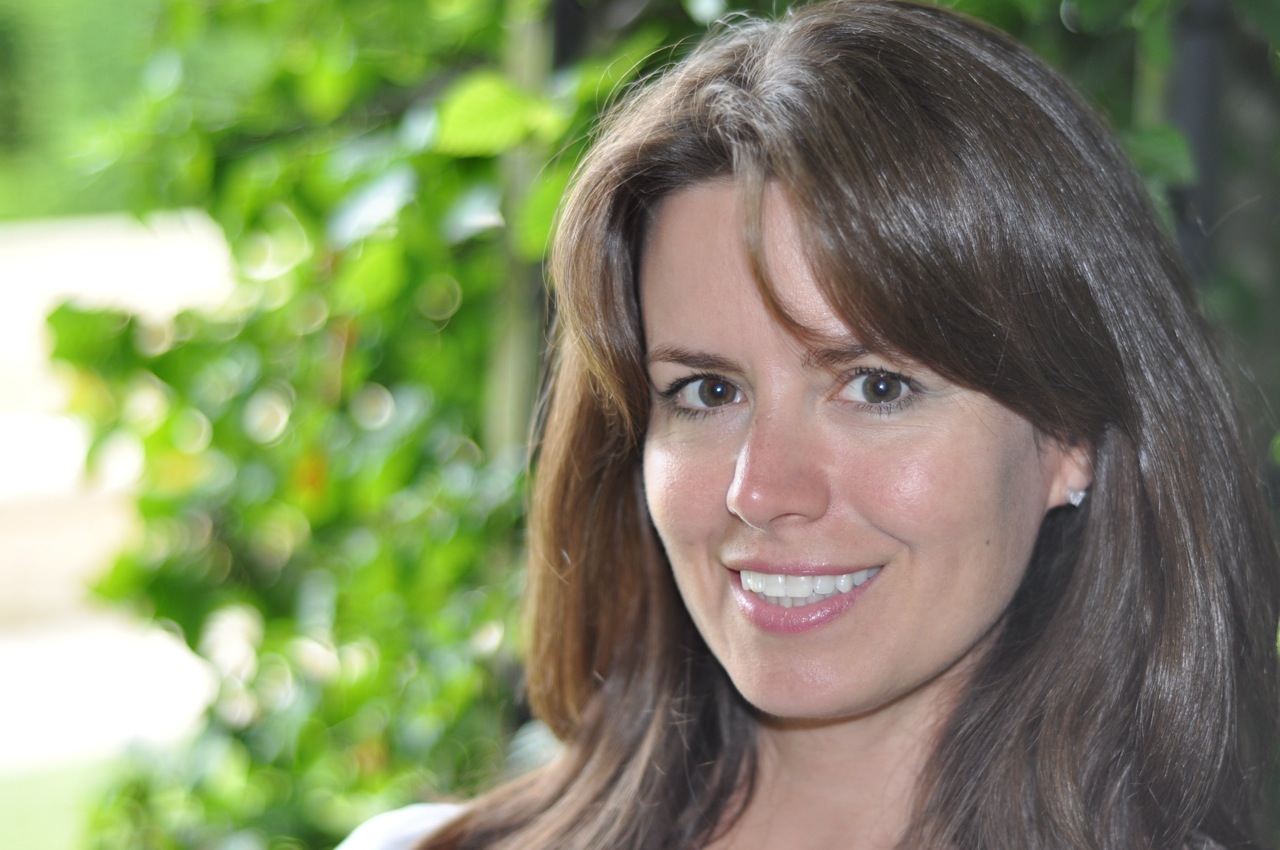
Displaced Nation Blog - Michelle Alnwick 2In April’s Alice Awards we featured expat blogger Michelle Garrett (an American who has made a home for herself in Britain). She won an “Alice” for her most recent column in Expat Focus, in which she asked readers whether their experience living abroad has inspired them to write a book.

Michelle’s column certainly struck a chord with us here at The Displaced Nation as well as leaving us intrigued and wanting to know more. Regular readers know that we always like to focus on expat writing and highlight it, whether it be Jack the Hack’s tips or our lists of the best books for, by and about expats.

Michelle revealed in that post that she is working on not one but two expat-related books: the first, a helpful guide for unhappy expats called Love Living Overseas; the second, a novel. Today Michelle has kindly agreed to answer my questions about why so many expats find themselves blogging or attempting to write books, as well as her own writing plans.

We enjoyed reading your article at Expat Focus about whether expats necessarily have to write expat books. Why do you think so many people who live abroad feel like writing a book about the experience?
Humans are storytellers. It’s how we share experiences and how we learn. Blogs and self-publishing have opened up a new way of storytelling and when we experience something life changing, as many expats do, we want to tell the story and many of us do so through these mediums. Our stories may be in the form of autobiography or a fictionalized account of our experiences.

Some books are less about the story and more about tips or self-help. These books are often written by expats who have had a hard time with culture shock and once they move through those difficult months or years they feel compelled to help others.

Do expats have something unique to say?
As with any type of book writing, people need to really research the market before they can know if they have something unique to contribute. I do come across expat books, whether stories or books of tips where the author doesn’t seem to have done their research, and the story or information is nothing new or exceptional. However, the nature of the expat niche means there are a variety of ways to spin a story and many different angles to pitch tips, so there should be a wide variety of expat literature for our shelves!

In my research for Love Living Overseas, a book for unhappy expats, I have tried to read the best examples of books in the expat niche, and then see how I can best contribute to that collection.

What are the best examples in the genre, in your opinion?
This list is by no means complete, but among my favorites are:

Expat Women: Confessions, by Andrea Martins and Victoria Hepworth: a valuable book in that these are real questions people have asked (some quite gritty) and many of them I’ve not seen covered in other places.

Living Your Best Life Abroad, by Jeanne A Heinzer: a wonderful book for those of us who need a bit of step-by-step guidance for learning how to do just that: live our best lives abroad.

The Expert Expat, by Melissa Brayer Hess and Patricia Linderman: a fantastic resource covering almost every aspect of the relocation process, including pets, children, and safety—they even include tips for keeping in touch when you move on again.

Tell us more about the two books you are working on.
Love Living Overseas, a book for unhappy expats to be published this autumn, is intended for accompanying partners as well as those expats who have moved to the home countries of their foreign partners. I was once an unhappy expat and wanted to share what I’ve learned through my experiences and research. It’s a book I wish I’d had in the early days—a shortcut to expat happiness!

The book will contribute to the existing expat literature by taking advantage of the Internet in a new way, really using the strengths and opportunities of the Internet to my and my readers’ advantage.

The other book I’m working on is a novel about an American expat who is tired of feeling worthless. She married a British man to escape her dull life, but it hasn’t worked out and she is left adrift in Britain. She is sure there’s more to life than what she’s experiencing, and is equally sure she doesn’t deserve it. On impulse she accepts an invitation from a friend who is driving across the country and needs a companion for the journey. When she reaches their destination, she takes advantage of her anonymity to start a new life with a new identity, only to realize she is actually discovering her true self. I’m playing with the idea we expats often discuss about moving to a new place and taking advantage of the fresh start.

Would you ever consider writing a memoir or “life map,” as Judy Dunn calls it?
Definitely, but perhaps only for my entertainment, not for public consumption! I LOVE the term “life map” by the way—what a great description.

Do you prefer writing fiction or non-fiction?
I love creating books that help others.

When I first brought my new blended British family (7 of us!) to Minnesota, where I grew up, I realized that they would enjoy the experience more if they knew a bit more about Minnesota so I created a booklet of interesting facts. (Did you know that Minnesota and Great Britain are approximately the same square miles?)

And I am really enjoying writing Love Living Overseas because I truly feel it will be a helpful book.

But I also love inventing stories and playing with allegory and symbolism.

What are the biggest challenges of each genre?
I think the biggest challenge for non-fiction is providing information in a captivating way. Tips and facts can be dull—even helpful tips and facts.

As far as fiction goes, I find it challenging to create a believable story that moves people, but it’s a challenge I love.

We notice you are featuring quite a few writers on your own blog, The American Resident, of late. What lessons have you picked up from them? Take, for instance, your interview with the Aussie novelist Allison Rushby, who’s written a travel memoir: Keep Calm and Carry Vegemite. What was the most interesting thing she had to say?
Allison was lovely to work with and very interesting to correspond with regarding writing and expat life. One of my favorite comments of hers on writing Keep Calm and Carry Vegemite was:

… it’s very rare to write a memoir that is 100% true to what happened. It’s not that you lie to the reader, but sometimes events need to be shifted around in time and so on for the story to work—to be cohesive and to make sense in a story-like format. I was worried about doing this at first, but, in retrospect, I can see how the book just wouldn’t have made sense if I hadn’t done it.

* * *

Thanks, Michelle! Readers, that’s some sound advice from Michelle about not assuming your expat experience is unique and researching the market first. Do you have any follow-up comments or questions for her? (Want to learn more about Michelle? Follow her blog, The American Resident, or on Twitter.)

If you enjoyed this post, we invite you to register for The Displaced Dispatch, a round up of weekly posts from The Displaced Nation, with seasonal recipes, book giveaways and other extras. Register for The Displaced Dispatch by clicking here!

STAY TUNED for tomorrow’s post, another installment in the life of our fictional expat heroine, Libby. (What, not keeping up with Libby? Read the first three episodes of her expat adventures.)

Related posts:

img: Michelle Garrett

And the May 2013 Alices go to … these 4 international creatives

 © Iamezan | Dreamstime.com Used under license

© Iamezan | Dreamstime.com
Used under license

As subscribers to our weekly newsletter will hopefully have noticed by now, each week our Displaced Dispatch presents an “Alice Award” to a writer who we think has a special handle on the curious and unreal aspects of the displaced life of global residency and travel. Not only that, but this person has used their befuddlement as a spur to creativity. He or she qualifies as an “international creative.”

Today’s post honors May’s four Alice recipients, beginning with the most recent and this time including citations.

So, without further ado: The May 2013 Alices go to (drumroll…):

1) ADAM GROFFMAN, travel blogger and expat

Source: “How a children’s book inspired my wanderlust” in Travels of Adam
Posted on: 13 April 2013
Snippet:

You see, what I loved about this book as a kid is the focus on architecture and food in this utopian society. Each family is responsible for bringing a country’s culture to the island nation.

Citation: Many of us at the Displaced Nation attribute our abilities to tolerate and even embrace life abroad (the strange foods and drinks, the loneliness, the largely incomprehensible rules) from having taken to heart Alice’s Adventures in Wonderland and its sequel, Through the Looking Glass, as kids. A good dose of literary nonsense has taken us a long way, and even to this day, we appreciate having recourse to Lewis Carroll’s great works to make sense of our rather curious lifestyles in countries other than those in which we were born.

Adam, we understand that you quit your job in Boston to travel the world and that you trace your own wanderlust to the 1947 American children’s book The Twenty-One Balloons, by William Pène du Bois, a story that in some ways is even more fanciful than Alice’s.

For those who don’t know it: The book begins when a schoolteacher, Professor William Waterman Sherman, becomes bored with his life and sets off on a journey in a hot air balloon called The Globe. He hopes the wind will blow him and his balloon all around the world. But instead he has a crash landing on the mysterious island of Krakatoa (Indonesia), where he discovers a utopian society started up by a group of wealthy families. Each family owns a restaurant of different types of foreign foods and all members of the island eat together at a different house, full of fantastic inventions, every night. Krakatoa being a volcanic island, the families are aware of the danger that the volcano could erupt at any moment (in fact its volcanoes erupted in 1883). Their escape plan consists of a platform made of balloons…

Adam, we love the idea of emulating a fictional character who favors balloon travel—the kind that begins without regard to speed and without a destination in mind. It’s also romantic to think that you expect to find, at best, utopianism, at worst, good food, in the course of your world wanderings. Perhaps it accounts for why you’ve landed your own “balloon” in Berlin, Germany’s creative capital and a city renowned for its architecture (only, how is the food there?).

2) TRACY SLATER, expat writer, author and blogger

Source: “What Does Home Mean When You Live Abroad?” in The Good Shufu
Posted on: 8 May 2013
Snippet:

I know how easy it is, when we live overseas, to lose our gimlet eye about home: to romanticize it, to see it as a kind of lost Eden, a place where we wouldn’t suffer the same disappointments or lonelinesses or defeats that we suffer in our expat lives.

Citation: Tracy, we would add to that something we learned from Alice, which is that part of the reason for cherishing the memory of home so much is that you can’t easily share what you love about it with the people you encounter in your new place. Alice experiences this when trying to talk about her beloved cat, Dinah, with the Wonderland creatures:

“I wish I hadn’t mentioned Dinah!” she said to herself in a melancholy tone. “Nobody seems to like her, down here, and I’m sure she’s the best cat in the world! Oh, my dear Dinah! I wonder if I shall ever see you any more!” And here poor Alice began to cry again, for she felt very lonely and low-spirited.

We also find inspiring your quote from the Egyptian writer and thinker André Aciman, that all exiles impulsively look for their homeland abroad. Even poor Alice suffered from that affliction—recall her trying to make herself at home at the Mad Hatter’s tea party, only to discover it is a less than civil gathering to what she is used to. First she is told there is no room for her at the table; then when she sits anyway, that her hair needs cutting. She is offered wine even though there isn’t any, and told to take more tea even though she hasn’t had any.

In fact, some of us can relate quite directly to this need to feel at home via a good cup of tea. TDN writer Kate Allison, for instance, has lived in the United States for many years but to this day fails to understand why Americans give her a cup of lukewarm water and a tea bag when she orders tea. And ML Awanohara, who lived in England before becoming an expat in Japan, often longed for English tea while sitting through the Japanese tea ceremony.

Tracy, we very much look forward to your forthcoming book, The Good Shufu: A Wife in Search of a Life Between East and West (Putnam, 2015), to help us make sense of such classic expat predicaments.

3) DANIELLA ZALCMAN, photojournalist

Source: “London + New York: A double exposure project”—an interview with Daniella by Austin Yoder on Matador Network
Posted on: 22 April, 2013
Snippet:

When [Daniella] moved from New York to London, she decided to create a series of double exposures to marry the spirit of both cities based on a combination of negative space, color, and contrast. Daniella’s double exposures create beautiful imaginary landscapes, and are captured entirely with her iPhone 4s.

“When I got to London, I knew that I wanted to capture not just the sensation of leaving NYC, but also of exploring a new city and making that environment feel like home.”

Citation: Daniella, we are enchanted by your idea of creating a composite of your beloved home city (New York) with your adopted city (London) to come up with an imaginary landscape. Indeed, we think it must be akin to the process Lewis Carroll used when creating Alice’s Wonderland—blending the bucolic English countryside surrounding Alice (she is sitting on the river bank considering making a daisy chain when the White Rabbit first appears) with the curious world that exists at the bottom of the rabbit hole, the familiar with the unfamiliar. When Alice awakens and reports her dream to her sister, the sister “half-believes” herself to be in Wonderland—if only she can suspend her disbelief for long enough to the sheep-bells tinkling in the distance as rattling teacups, the voice of the shepherd boy as the Queen’s shrill cries, and the lowing of the cattle in the distance as the Mock Turtle’s heavy sobs…

4) “SARAH SOMEWHERE”, world traveler and blogger

Source:On Freedom” in Sarah Somewhere blog
Posted on: 29 April 2013
Snippet:

I am not, by nature, a free spirit. I’m a worrier, a control freak and a chronic people pleaser. Letting go and trusting in the universe’s plan for me is not my default setting, nor is being content with what I have rather than continually striving for more. I still need some practice.

Citation: Sarah, your struggle with living life in the moment in Mexico puts us in mind of Alice, who, is constantly worrying about the impression she is leaving on the Wonderland residents, and finds it a challenge to enjoy the moment in a place as curious as Wonderland. We wish you luck in finding that sweet spot between total personal freedom and societal obligations. And, taking our cue from Alice’s sister, we envision a day when you’ll be telling stories about your adventures in Southeast Asia, China, Mexico and India to a group of children and inspiring them to follow their unique destinies:

she pictured to herself how this same little sister of hers would, in the after-time, be herself a grown woman; and how she would keep, through all her riper years, the simple and loving heart of her childhood: and how she would gather about her other little children, and make their eyes bright and eager with many a strange tale, perhaps even with the dream of Wonderland of long ago: and how she would feel with all their simple sorrows, and find a pleasure in all their simple joys, remembering her own child-life, and the happy summer days.

* * *

So, readers, do you have a favorite from the above, and do you have any posts you’d like to see among June’s Alice Awards? We’d love to hear your suggestions! And don’t miss out on these weekly sources of inspiration. Get on our subscription list now!

STAY TUNED for tomorrow’s post, another Jack the Hack column…

Writers and other international creatives: If you want to know in advance whether you’re one of our Alice Award winners, sign up to receive The Displaced Dispatch, a round up of weekly posts from The Displaced Nation, with news of book giveaways, future posts, and of course, our weekly Alice Award!. Register for The Displaced Dispatch by clicking here!

Related posts:

LIBBY’S LIFE #78 – Trust no agent

There is nothing better than spending a sultry, summer afternoon in the cool darkness of the Maxwell Plum. We’re the only customers here, Jack is at nursery, and the twins are napping in their double pushchair beside our table. If I shut my eyes like this, thereby ignoring both the twins and my thirty-something reflection in the window, I can almost believe I am twenty-two again. Of course, I didn’t know any Americans when I was twenty-two, so the three other accents at the table aren’t authentic, but—

Wait — you thought I was with Oliver? Heaven preserve us. I’ve come here to get away from Oliver and his irritating, logical arguments. The three ladies I’m with now — Willow, Anna, Maggie — will give me nothing but sympathy. They are absolutely, completely the best friends I’ve had since my days in University halls, and for that, I’m grateful. Very grateful. Sooo grateful. And I get more grateful with each top-up of Chardonnay.

You see, sometimes, only girl-time will do. Girls will listen, nod, listen some more, fill your glass with more wine, and offer anecdotes of similar experiences to the one you’re bending their ears about.

They will never, repeat never, say, “For God’s sake, Libs, quit moaning. I’m not paying more than $140k for that heap of dry rot, and the owners are not accepting less than $200k, ergo we are not buying it. End of story. If you want a solution, go and look at those nice new houses in Banbury and stop being such a damned hopeless, stupid romantic. There’s nothing romantic about leaking roofs and rotten floorboards.”

“And even though he knows I’ve got my heart set on this house, that’s what he said. That’s what Oliver said,” I say, leaning back in my chair and stifling a small hiccup, my eyes still closed to keep up the illusion of being twenty-two. “I know you guys would never say that and call me a stupid romantic.”

Girls are more supportive than that.

Or at least, they should be, but as I open my eyes, I see my three friends looking at me with one expression.

Concern? Or is it amusement?

“What?” I say. “What’s wrong?”

Maggie’s lips twitch.

“You’re not used to liquid lunches these days, are you, my dear?”

“She drove here, right?” Willow asks Maggie. “Because I can totally drive her and the twins home and pick up Jack and she can get her car later.”

“It’s a nice afternoon! I walked!” I’m not happy at this unsupportive conversation about me that’s taking place as if I weren’t here. “And it’s not my turn to carpool today, so someone else is bringing Jack home.”

“Thank God for that,” Willow says. “Because you’re barely fit to push that stroller home, let alone drive anything with an engine. And there I was,” she says, turning to Anna, “thinking all Brits could hold their drink.”

Anna gets up from the table and heads towards the restaurant’s kitchen.

“Perhaps it’s time we put the wine away and switched to coffee. What do you say, Libs?”

* * *

“Tell us again. You want to buy The Forge, the old house at the bottom of Main Street?” Maggie draws patterns with a spoon in her coffee foam. “The one with acres and acres of land? I know it. The owner, the one who died recently, she was a friend of mine.”

“That dotty old lady? Really?” Willow sniggers. “I heard the rumours about her, how she’d dance naked in the back garden and talk to the trees and flowers and stuff. A real tree hugger.”

“And that,” Maggie says, a stern expression on her face, “is why you should never pay attention to rumours. I used to work for that ‘dotty old lady’ as you call her. She was my employer, before I bought her craft shop and all those teapots. I expect Anna remembers her.”

Anna shakes her head.

“You must do,” Maggie persists. “You remember when I opened Maggie May’s, when you were in high school here, when you and Sara were attached at the hip.”

Sara again. Maggie’s mystery daughter who swans off to the Seychelles to get married but won’t come to see her mother in her hometown.

Anna’s still shaking her head. “I’m sorry,” she says. “So much of that time is a blank. I think I’ve blocked it out.”

Maggie places one hand over Anna’s, on the table. “And I don’t blame you one bit,” she says in a gentle tone, which makes me wonder what happened to Anna at high school. “It’s a shame, though. Cathy was a great character.”

“Cathy!” I exclaim, feeling slightly more alert now. I have no idea what Anna puts in her coffee, but it’s good stuff. “The cat-shaped teapots in your kitchen!”

“The same.” Maggie beams at me. “Well, she was in her sixties when I bought the shop from her, and she must have been well into her nineties when she died last year. The poor soul had been suffering from dementia for about ten years. Didn’t recognise her own son four years ago, but knew what people were doing, all right, when they tried to put her into a nursing home. The last six or seven years, she’s been in that house with a team of nurses and carers coming in every day. And when they didn’t keep a close enough eye on her, that’s when she’d strip off and run around the back garden and talk to the trees. She got frostbite once, doing it in the winter. Senility is a very cruel fate for the old.”

She fixes Willow with another stern stare, and Willow looks down, abashed.

“Why won’t her son sell it to you?” Maggie asks me.

I shrug with rather more vigour than I’d intended, and knock over my glass of water which is nearly empty but still contains enough liquid to flood my side of the table and drip onto my lap.

“I don’t know,” I say, as Anna and Willow rush at me with paper napkins. This must be what it’s like to be Jack at every mealtime. “Donna didn’t say. She just said he didn’t accept our offer, and didn’t come back with a counter offer.”

“I wonder why that was.” Maggie rests her chin on her hand and gazes out of the window at a group of high school kids gathering on the village green that splits Main Street lengthways. “It’s not as if he needs the money. Or maybe that’s why. Perhaps he’s hanging in there until he gets a high offer because he can afford to do so.”

“He doesn’t need the money?” Willow voices the surprise of the rest of us. “Who’s got so much money that they flatly turn down $140k?”

“People who win a small fortune on the Powerball lottery and retire to Montana, that’s who. Believe me, that $140,000 is a drop in his ocean of winnings. That’s how Cathy was able to afford her team of 24/7 nursing staff for so long.”

“Wow.” I pat with another napkin at my shorts. They look as if I’ve had an embarrassing accident, and I hope they dry before I have to walk back home. “What does he do in Montana?”

“Chuck’s a hermit. A hermit with 400 acres. He came to see me last time he was here, four years ago — that was after he found out his mother didn’t know she’d even had a son, let alone recognise him. He was very concerned about her and, since he’s such a hermit, was worried he wouldn’t know until it was too late if anything happened to Cathy.”

“Hadn’t he heard of cell phones?” Willow asks.

“There was barely a signal where he lived, he said, and he liked it that way. No interruptions, no telesales. So he gave me his neighbour’s number and told me to call there if there was anything he needed to know urgently. Otherwise, he was quite happy to rely on regular mail for normal communication.”

Anna, Willow, and I all gape at Maggie. None of us can imagine living without a cell phone in reach of our fingertips. And I can’t remember the last time I wrote an envelope that didn’t contain either a greetings card or a cheque.

Through the wine-fuelled haze, the coffee penetrates my brain, and something occurs to me.

“Do you think he has a phone now?”

“I have no idea,” Maggie says. “But he didn’t when Cathy died a year ago.”

“So, I’m wondering,” I say (actually, I’m wondering if I’m still tipsy and have missed a vital point in the argument I’m about to make); “how did Melissa contact him with our offer?”

Silence from the girls. Either I’ve put forward a really good argument, or I’ve said something very silly.

“On the neighbour’s phone?” Anna sounds uncertain.

“Email?” Willow suggests.

“I’m not sure Chuck has ever come in contact with a computer.”

I look from Maggie to Anna to Willow.

“Is this the Chardonnay doing my thinking for me, or is it entirely possible that Cathy’s son doesn’t know he has a potential buyer?”

*  *  *

Evening hangovers are the absolute worst, but I’m feeling less fragile now, and in any case I think today’s was worth it. Maggie walked home from the Maxwell Plum with me and the twins, and on the way she promised to phone Cathy’s son in Montana, or rather, his neighbour, to see if he’d  reconsider our offer on the house.

Meanwhile, I am racking my brains (as best I can, under today’s circumstances) to wonder why Melissa might be telling blatant lies so as not to sell us a house that she’s listed. It means she won’t get the commission, surely?

Oliver comes in from work, two hours late. He’s been at someone’s leaving bash in the Irish pub in Banbury, near the new houses and condos that Donna’s shown us. They’re nice enough, I suppose, but they’re so crammed, with such small lots, that we might as well be living back in Acacia Drive in Milton Keynes.

“Guess who I just saw in the pub?” Oliver says. “Our landlady. She’s got herself a new bloke.”

I wince. Oliver is a bit loud when he’s just been to the pub and has spent two hours shouting to make himself heard.

“Am I supposed to be surprised at that information?” I ask.

“Quite a well-known bloke in these parts, apparently,” Oliver says, ignoring my comment. “Local builder. Rich as Rockefeller, by all accounts. Built those little condos we looked at in Banbury.”

That’s all it takes to make me dislike Melissa’s new boyfriend.

“Yes, he does quite a bit of that kind of thing,” Oliver continues. “Buys falling down houses with lots of land, knocks them down, then puts up a load of smaller new houses. No wonder he’s rolling in it.”

And no wonder, I think, as the bright flash of understanding nearly blinds me and banishes any remains of hangover, that Melissa is dragging her heels about selling us a falling down house built on twelve acres.

.

Next post: LIBBY’S LIFE #79 – Gladiator games

Previous post: LIBBY’S LIFE #77 – First refusal

Read Libby’s Life from the first episode

Want to read more? Head on over to Kate Allison’s own site, where you can find out more about Libby and the characters of Woodhaven, and where you can buy Taking Flight, the first year of Libby’s Life — now available as an ebook.

 STAY TUNED for next week’s posts!

If you enjoyed this post, we invite you to subscribe for email delivery of The Displaced Dispatch, a round up of the week’s posts from The Displaced Nation. Sign up for The Displaced Dispatch by clicking here!

Image: Travel – Map of the World by Salvatore Vuono / FreeDigitalPhotos.net

LIBBY’S LIFE #77 – First refusal

“You have got to be kidding me. What were you thinking, Libs?”

Oliver prods with his toe at an oak panel in the empty, echoing living room. The panel cracks; a large piece of wood falls backwards into the abyss behind, and a suspicious scurrying tells us we have disturbed someone’s living quarters.

“Christ in a bucket,” Oliver mutters, as I try to keep an optimistic smile on my face to balance out his own expression, which is grumpier by the second.

It’s his first visit to see the house I found for us and, so far, things are not going well. Although the house boasts new electric wiring and plumbing, as our realtor Donna proudly pointed out last week, it does not boast a new furnace, a new roof, solid floorboards, or any air conditioning.

Or even wooden wall panels that stay intact when you kick them.

But you know what? I don’t care. I want this house. It’s old, it has character, it is full of quirky little corners and unexpected alcoves. I want it. Don’t ask me why.

I just know I want it.

“But it’s so cheap!” I say to Oliver, who is now looking critically at the door frame between living room and dining room. The builder of that part of the house apparently was not familiar with set squares or right angles two centuries ago, because the door shape is an interesting variation on a trapezoid.

“It would need to be,” he says. “Even if it’s free, it’s too much.”

Donna watches us, her eyes swivelling left, right, and back again. She doesn’t like the way this conversation is going, I think. She can see her commission flying out of the dusty windows.

I have an ally.

“An antique house is an investment,” she squeaks in her Minnie Mouse voice. “People like the knowledge that no one is going to build an identical house on the next lot. They like the original features. They like not living in a cookie cutter. They like owning a piece of history.”

“And they like repaying a very, very large home improvement loan and spending all their Saturdays in Home Depot,” Oliver says. “Because if you didn’t like those two things, you’d need to be bloody barking mad before you bought a crumbling money pit like this.”

He turns to me.

“Nope, I’m sorry, Libs. No can do. We’ll keep on looking until we find something more our style and less work. I’m sure Donna can show us some new construction in another town, can’t you?”

I stare at Donna, silently pleading with her to say “Absolutely not. The state has issued a moratorium on the building of new houses. If you don’t buy this house, you’ll be homeless in two months.”

But she doesn’t, of course. Instead, she takes an exaggerated breath, closes her eyes, and breathes out again. As if she thought of saying something but then thought better of it.

“Of course I can,” she says, “if you really want me to. But — could I just say something?”

Oliver looks up at the ceiling, as if asking a deity to give him strength. A dead spider is dangling from the light fitting just above his head, and he steps to one side.

“Be my guest,” he says.

“Woodhaven is a desirable town. We have an excellent school system, yet disproportionately low taxes. If you go to one of the neighbouring towns, you could end up spending on school fees and property taxes what you save on buying a house. Woodhaven is a little oasis of value-for-money town taxes. You might find what you’re looking for in Banbury, two towns away, but believe me, the twenty thousand you save on a house purchase there will be spent in eighteen months in extra taxes and school fees. I wouldn’t put my own children in Banbury schools,” she adds. “Their standardised test results last year were appalling.”

“Huh.” Oliver is scornful. “Jack’s a bright child. He’ll do fine wherever he goes to school.”

“And believe me, I admire that attitude,” Donna says, leaning towards him and patting his arm.

Actually, I don’t believe her. Nor, I can tell, does Oliver. He doesn’t like being patted by realtors with high-pitched voices, either.

“The problem is,” she continues, “most homebuyers don’t have that attitude, and you’ll find that out when you come to sell. You could be stuck with a new house that’s exactly like every other house for sale, in a school district that’s less than stellar. Whereas this house–” she makes a sweeping gesture around the living room, her arm cutting through a swathe of dust motes “– with a little love and attention from you beforehand, it would be snapped up in an instant. Like that,” she adds, snapping her fingers in case we hadn’t understood.

Her cell phone chirps. She pulls it out of her pocket, looks at the screen, and frowns.

“Excuse me.”

She trots out into the hallway where we can hear her murmuring a few seconds later.

I turn to Oliver and open my eyes very wide.

“Please?” I say. “Pretty please? With sugar on the top?”

“No.” He folds his arms, tapping one foot.

“We won’t have anywhere to live if we don’t buy it.” I stick my lower lip out. “And then we’ll have to live in the apartments near the mall again, next to that crazy man who likes using the azaleas for target practice. Remember him?”

Oliver stops tapping his foot and winces. He remembers our old neighbour, all right. The one with the pickup truck with the NRA sticker on the bumper. Oliver was convinced the man was harmless until we ran into him at a Fourth of July celebration, when he rambled on about how he hated all effing Limey effers, and we had to pretend for the next three weeks that we were Australian. Oliver avoided him as much as possible after that. One day he was late home from work, and it turned out he’d been sitting in the car for over an hour, waiting for the crazy man to finish playing poker on the front porch with his equally crazy friends, before he dared to venture into our own apartment.

Considering how he’d told me off for being silly and paranoid, you’d think he would have been less of a wuss.

Donna returns from the hallway, cell phone in hand.

“Another couple is on the way to see this house, so we should leave very soon,” she says. “The office tells me it’s the second time they’ve viewed it. That tells me they’re keen. If I were in your shoes, I’d be making an offer this afternoon. But if you’re sure you want to look at some new houses in Banbury…”

She shrugs. It’s your funeral.

I look up at Oliver, pouting a little again, and make puppy-whimper noises. “I really don’t want to live next door to that man with the BB gun again.”

“Oh, for God’s sake.” Oliver snatches the sheet of property details from me. “Offer them a hundred and forty, and not a cent more.”

Donna beams, and I try not to do a happy dance.

“You’ve got a really good chance of getting it at that price after so long on the market,” Donna says. “I don’t want to raise your hopes or anything, but if I were the seller, I’d jump at that offer. Let’s head back to my office and complete the paperwork.”

She walks back into the kitchen to collect her briefcase.

I hug Oliver, and after a split second while he tries to pretend he’s not in the least excited about buying a two-hundred-year-old American house, he hugs me back.

* * *

Four hours later, our mood is very different.

“I don’t understand it,” Donna says. She’s come round to our house to give us the bad news in person. “If it had been me, I’d have accepted that offer. I know the seller doesn’t live round here, but surely they must realise that in this economic climate you sometimes have to take what you’re offered, especially with the house needing so much renovation. I am just so sorry.”

I can’t speak. I am, as they say back home, absolutely gutted.

“They didn’t make a counter offer?” Oliver asks.

Donna shakes her head.

“Is it the other couple who saw it today? Did they make a higher offer?”

“Not that I know of.”

“Who was their realtor?” I ask. “Could you find out?”

“It was the seller’s realtor. Melissa Harvey Connor. If they want to buy it, she will probably pass them onto another realtor so there isn’t a conflict of interest.”

I manage to turn a splutter of disbelief into a cough. Conflicts of interest have never bothered Melissa in the past.

“Do you want to make a higher offer?” Donna asks.

I look at Oliver and we both shake our heads. If we pay anything more, I’ll never hear the last of it from him.

“I’m sure I can find you something nice in another town. It might mean moving away, and Oliver having a longer commute, but don’t worry. We’ll find something.”  Donna gathers up her briefcase and jacket, and leaves.

Oliver and I sit on the sofa in silence.

“The idea of making that house a project was starting to grow on me,” he says. “I’m kind of surprised at how disappointed I am now.”

We sit some more, considering our options.

“So,” Oliver says at last. “We’ve got Melissa Harvey Connor representing the seller and a potential buyer, and she just happens to be our landlady. Is it just me,” he asks, “or can you also smell a rat?”

I’m so glad I’m not the only one with paranoia.

“Oh yes,” I say. “A big rat.”

A great, big, fat rat called Melissa.”

The thing is — how on earth do we prove it?

.

Next post: LIBBY’S LIFE #78 – Trust no agent

Previous post: LIBBY’S LIFE #76 – This old house

Read Libby’s Life from the first episode

Want to read more? Head on over to Kate Allison’s own site, where you can find out more about Libby and the characters of Woodhaven, and where you can buy Taking Flight, the first year of Libby’s Life — now available as an ebook.

 STAY TUNED for next week’s posts!

If you enjoyed this post, we invite you to subscribe for email delivery of The Displaced Dispatch, a round up of the week’s posts from The Displaced Nation. Sign up for The Displaced Dispatch by clicking here!

Image: Travel – Map of the World by Salvatore Vuono / FreeDigitalPhotos.net

Talking to Kate Allison, writer of serialized expat fiction (we’re giving away her first book!)


Taking_Flight_dropshadowToday I find myself in the enviable position of having to introduce my co-blogger and good friend, Kate Allison. As one of the founding members of the Displaced Nation, she needs no introduction to our regular readers, many of whom are as awestruck as I am at her ability to churn out well-c

rafted, entertaining episodes of Libby’s Life week after week, month after month.

For the uninitiated: Kate’s stories center on Libby Patrick, a thirty-something stay-at-home mum who has trailed her spouse, Oliver, from their native UK to Woodhaven, Massachusetts—a small New England town that, in Libby’s own words, “makes Stepford look like inner city gangland.” The Patricks live there with their three small children: preschooler Jack and infant twins, Beth and George. (At one point they also had a dog, Fergus—don’t ask.)

Libby keeps a diary of her expat adventures, and during the past two years, Kate has churned out a whopping 76 entries, an average of three per month.

In consequence, a number of us (even those who aren’t trailing spouses with families) have become certified Libby addicts—always looking forward to the next installment!

If we need a “fix” between episodes, we can go to Kate’s companion site dedicated to Libby and all things Woodhaven, where not only do we receive more information about Libby and the characters she encounters in Woodhaven, but we can also read additional posts from the other characters’ points of view!

And now there is another exciting development: Kate has just self-published the first year of Libby’s expat life in a single volume, Libby’s Life: Taking Flight. I highly recommend this aggregated version to anyone who is new to the Libby phenomenon…

And you’ll never guess what? We are giving away two copies!!! (Details below.)

But before we get to that, let’s visit with Kate and find out more about her. Having visited with her non-virtually, I can report that she really does live in a small New England town similar to Woodhaven.

What inspired her to create the lovely and loveable Libby, and what possessed her (I don’t think it’s too strong an expression) to commit herself to the potential folly of writing a novel online? Her temerity cannot be underestimated, I think you’ll agree…

* * *

Why did you decide to write a book about a trailing spouse, and how long have you been at this?
I first started “Libby’s Life” on my own blog (now extinct) just before Displaced Nation launched, a little over two years ago. I published three episodes there, and then transferred Libby to The Displaced Nation.

Libby didn’t start out as a book; she started out as a fiction blog because I found it difficult to blog about my personal life which, frankly, isn’t very interesting to anyone else. It’s easier for me to mesh snippets of facts into the fictitious world of Woodhaven. I was uncomfortable writing about my own family members—just because I like writing doesn’t give me the right to invade their privacy—but every now and then, certain incidents in Libby have happened in real life.

For example, when my son was a toddler, he was obsessed with toy cars, just as Jack is now. And the episode about Winter Storm Alfred, when Libby loses power for several days because of a freak snowstorm at Halloween, is based on a real situation. We were without power for four days ourselves after that same storm.

Fortunately, unlike Libby, we don’t have a man-eating landlady who lets herself into our house to sniff my husband’s sweatshirts.

Have you found out anything new about yourself, your own feelings of displacement, in the process?
Libby is at the beginning of her displacement journey. I’m quite a few years ahead of her, and have had to trawl through old memories to imagine how she would feel in certain situations. So the fact that I have to do that suggests I’m not terribly displaced anymore and I’ve come further than I thought.

Turning to Libby, what is her most displaced moment?
Probably when they first moved into their temporary apartment, next to a Limey-hating NRA supporter who liked shooting air soft pellets at the rhododendrons in the back garden. Poor Libs! She was quite traumatized. And also last year, when she went back to England for the first time and everything felt foreign—a reversed displacement.

What is her least displaced moment?
I think it was fairly recently, when she met Willow Reeves. Willow is from Brooklyn, very no-nonsense. She’s the first American friend Libby has made outside the expat Coffee Morning Posse, that hasn’t been via an introduction. It’s a sign that Libs is starting to fit in.

According to a recent article in the business section of the New York Times, serialized fiction, where episodes are delivered to readers in scheduled installments much like episodes in a television series, has been the subject of an unusual amount of experimentation in publishing in recent months. You seem to be ahead of the game in that respect. What have you learned from your two-year-long experiment?
I’m amazed at the number of people who do seem to follow the episodes, and yes, it is like a TV soap opera. I think Aisha at Expatlog commented a while ago that it filled the EastEnders void for her. But I didn’t intend it to be like that when I first started, envisaging instead a few blog posts dealing with certain aspects of moving abroad. I certainly hadn’t envisaged me still doing it two years later.

The main thing it’s taught me is that when I have to write a story because I’m on the Displaced Nation schedule to do so, I can do it. Novelist Peter De Vries famously said:

I write when I’m inspired, and I see to it that I’m inspired at nine o’clock every morning.

It doesn’t matter what type of writer you are—his philosophy is a good one.

What has been the most challenging part of the book-writing process?
Thinking up new topics for story lines. Every now and then I’ll put out a plea for ideas. A friend of mine jokingly said she’d like to see headlice as a Libby topic, and lo! There were headlice.

I now keep track of all the characters and story lines on a timeline program. I can see the last time a character came in, in which story line, in which episode, and I can plan ahead.

Theoretically, anyway. My actual way of planning is to sit in front of the blank screen and panic about a post that’s due in two days’ time. But I’m getting better. I even know what is going to happen in September.

What made you decided to publish the first year of Libby’s Life as a book?
I ended Libby’s Life: Taking Flight ends with Libby’s first Christmas in the United States because that was a natural break in the story. Libs had just started to spread her expat wings at that point, hence Taking Flight.

What do you intend to follow it up with?
The next one will be called Cargo Hold. Well, she’s pregnant with the twins, you see.

What audience do you intend for the Libby books?
It probably falls in the unflattering genre of “hen lit” — chick lit for the more mature woman. It seems most popular with women from thirty onwards, but then again, a friend of mine, a man who is now in his 70s, is an avid fan, so who am I to say?

What aspect of it is proving the most popular—any surprises?
Regarding the audience’s nationality, I expected it to be most popular with English women who had moved around a bit, but it turns out that one of Libby’s greatest cheerleaders is an American lady who is a keen armchair traveler. That’s pretty encouraging. (And thank you—you know who you are!)

Are you working on any other writing projects? (When’s the next book coming out?!)
At the moment I’m rereading/rewriting the 2012 episodes so I can turn them into either one or two short ebooks later this year. Additionally, I’ve gone back—yet again—to the WIP that triggered a lot of Libby characters. Woodhaven, Maggie, Melissa, Patsy, and all the Giannis were around in my imagination and in draft form long before Libby came along. The WIP is the story of Maggie’s daughter, Sara, a Woodhaven native now living in Somerset, England (my own native neck of the woods). Much of it is set in the 1980s, so you get to meet Maggie, Melissa et al when they were younger. Not sure when it will be finished…but making it public through this answer is a good spur.

10 Questions for Kate

Finally, I’d like to ask a series of questions that I’ve asked some of our other featured authors, about your reading and writing habits:
Last truly great book you read: There are two I’ve read several times in the last few years and each time thought “Damn, I wish I’d written that”: The Time Traveler’s Wife by Audrey Niffenegger, and Behind the Scenes at the Museum by Kate Atkinson.
Favorite literary genre: Sigh. Call me predictable. Women’s fiction and travel. Anything by Joanne Harris is a great combination of the two.
Reading habits on a plane: Either some piece of fluffery from the airport bookshop or a book I’ve already read from my Kindle. My Kindle is stuffed with classics, free ebooks, and review copies for TDN. But I have to have a paperback for the times you’re required to Turn Off All Electronic Devices. If I don’t have a paperback, I’ll write in a notebook, and chances are it will be notes on a conversation taking place near me. I’m a compulsive eavesdropper. Be warned.
The one book you’d require President Obama to read, and why: ML, I really hate getting into politics! Pass!
Favorite books as a child: Anne of Green Gables; E Nesbit books, especially The Railway Children; Enid Blyton‘s Malory Towers; Sadlers Wells series by Lorna Hill; anything by Noel Streatfield; the William stories by Richmal Crompton.
Favorite heroine(s): Maggie Tulliver (George Eliot’s The Mill on the Floss) and Emma Woodhouse (Jane Austen’s Emma).
The writer, alive or dead, you’d most like to meet: Roald Dahl. I really would like to know for myself if he was as sick-minded as his books are.
Your reading habits: In bed.
The book you’d most like to see made as a film: I’m looking forward to Robert Redford’s version of Bill Bryson’s A Walk In The Woods. And I’d love to see one of my favorite books in question #1—Behind the Scenes at the Museum. But it would have to be set in the English city of York, as it is in the book, not Americanized and set in Philadelphia or wherever, as so often happens.
The book you plan to read next: My “to read” list gets ever longer. At the top is The Hare With Amber Eyes by Edmund de Waal. At the bottom, just added, is Hilary Mantel‘s Wolf Hall. And a whole lot of others in between.

* * *

Thanks so much, Kate! Long live Libs!!!

Readers, now it’s your chance to ENTER OUR DRAW TO WIN A FREE COPY of Kate Allison’s first Libby book. Kate is giving away TWO FREE COPIES and will favor comments that offer storyline ideas for future Libby posts, which will also get included in Libby at some point!!!

Extra points, as always, if you’re a Displaced Dispatch subscriber!

The winners will be announced in our Displaced Dispatch on June 1, 2013.

STAY TUNED for the next episode in the life of our fictional expat heroine, Libby! (What, not keeping up with Libby? How could you resist after reading this interview?!?!? Sign up NOW for our Displaced Dispatch and you’ll receive the first three chapters!!!)

If you enjoyed this post, we invite you to register for The Displaced Dispatch, a round up of weekly posts from The Displaced Nation, with seasonal recipes, book giveaways and other extras. Register for The Displaced Dispatch by clicking here!

Related posts:

And the April 2013 Alices go to … these 5 international creatives

 © Iamezan | Dreamstime.com Used under license

© Iamezan | Dreamstime.com
Used under license

As subscribers to our weekly newsletter, The Displaced Dispatch, may have noticed, we are now presenting our “Alice Awards” in that esteemed publication. Each week, we give an “Alice” to someone who has a special handle on the the curious and unreal aspects of the displaced life of global residency and travel. Not only that, but they have used their befuddlement as a spur to creativity of all kinds.

Today’s post honors our first five Alice recipients, beginning with the most recent and this time including citations.

So, without further ado: The April 2013 Alices went to …

1) MICHELLE GARRETT, expat blogger

Source:Has Your Expat Life Inspired You To Write A Book?” in Expat Focus (e-zine for anyone moving or living abroad)
Posted on: 19 April 2013
Snippet:

By definition is an “expat novel” about an expat? Or does it need to be more than that—does an expat novel need to be about an expat experiencing expat life? You know, the culture shock, the language differences, the homesickness …

I have always written and always wanted to be a Writer so for me the motivation to write a novel was more about “you want to write? Start by writing what you know’” rather than, “I’m an expat with adventures—I think I’ll write about them!”

Citation: Should we expats write books about the wonderlands we’ve experienced on our travels, or should we write because we enjoy writing (and just so happen to live abroad)? Michelle, you’re sounding a little Mad Hatterish by posing this riddle with no answer, and we feel duty bound to point out that Alice herself felt that her adventures could be worth writing about:

When I used to read fairy-tales, I fancied that kind of thing never happened, and now here I am in the middle of one! There ought to be a book written about me, that there ought!

But listen, if our enjoyment of your blog, The American Resident, is any indication, we’re going to love the novel you’re writing about an expat woman but that isn’t an expat novel. We also look forward to your book of tips for expats with long and sad tales, like the Mouse’s.

2) JUDY LEE DUNN, award-winning blogger on blogging and former humanitarian aid worker

Source:Judy Lee Dunn on words, maps, and inspiration“—an interview with Judy conducted by author Lisa Ahn (notably, Lisa’s own favorite words are “once upon a time”!).
Posted on: 17 April 2013
Snippet:

For as long as I can remember, I have been enchanted by the power of words to transport readers to a world they don’t yet know.

And when I was a child, maps were a metaphor for a world I had not yet seen …

Whenever my two passions intersected, I was truly inspired. As manager of Writing Resources for World Vision, words and maps perfectly converged to send me to West Africa as part of a documentary team to tell the stories of projects helping third world families become self-sufficient. …

Now, I’ve finally reached the point where I am putting together the pieces of my life, word by word, shining a light on one of the recurring themes of my life. Finding just the right words to express a life map of sorts: to understand where I started and where I am going.

Citation: Judy, we feel certain you would approve of our fondness for Lewis Carroll, believing as you do in the power of words to transport us to other worlds (and also having worked as a first-grade teacher!). We’re with you on the map thing, too, as evidenced by our “Here be dragons” banner. And we love the idea of someone who has worked abroad, as you have (in West Africa), writing a “life map.” May we borrow this term?

3) ANN PATCHETT, best-selling American author

Source:What now? Advice on Writing and Life from Ann Patchett“—a post by Maria Popova on her Brain Pickings blog, containing extracts from Patchett’s 2006 commencement address at Sarah Lawrence, which has been published as a book, What Now?
Snippet:

Coming back is the thing that enables you to see how all the dots in your life are connected, how one decision leads you to another, how one twist of fate, good or bad, brings you to a door that later takes you to another door, which aided by several detours—long hallways and unforeseen stairwells—eventually puts you in the place you are now. … But when you look ahead there isn’t a bread crumb in sight—there are just a few shrubs, a bunch of trees, a handful of skittish woodland creatures.

Citation: Ann, we know you intended your words for the ears of graduates from your alma mater, but they could easily apply to us displaced types, who spend a good deal of our time feeling lost and clueless. You go on to say: “Sometimes not having any idea where we’re going works out better than we could possibly have imagined.” What a marvelous assertion! Far more reassuring than the series of unhelpful responses Alice elicits from the Cheshire Cat after asking him: “Would you tell me, please, which way I ought to go from here?” (What’s more, you’ve followed your own advice, booking a trip to the Amazon as soon as you decided to set your sixth novel there.)

4) LAINIE LIBERTI, world traveler and blogger

Source:Reentry Observations—Washington DC,” an entry on her blog, Raising Milo on the Road of Life—a single mom and son’s nomadic adventures as they travel around the world together.
Posted on: 29 March 2013
Snippet:

I imagined this country’s politicians, their assistants, their staff, all rushing away from the Capital, eager to go somewhere else. I imagined this was the group of stressed people who were running the United States of America. … I clearly have a different feeling about the United States now. I feel as if I’m on foreign soil. I don’t perceive the energy as welcoming.

Citation: Lainie, your description of Washington VIPs dashing about reminds us of Alice’s encounters with the White Rabbit. And we join you in wondering: don’t they realize that someday their actions will seems as trivial as some might perceive the ancient cultures of Peru? (Certainly puts it in perspective!)

5) LAURA J. STEPHENS, psychotherapist and author

Source: “Overcoming Isolation,” an entry on her author blog (she is the author of An Inconvenient Posting: an expat wife’s memoir of lost identity).
Posted on: 9 March 2013
Snippet:

For me, there was nothing in my experience quite so isolating as arriving in an unfamiliar country and trying to orientate myself, whilst experiencing the losses of “home” and all the while thinking I should be grateful for my new existence.

Citation: Laura, it’s great to know that someone out there understands the tendency for us expat Alices to declare “I am so very tired of being all alone here!” and then to suffer “pool of tears” moments… Not only that, but you provide practical tips to keep from drowning. What more can we ask?

* * *

So, readers, do you have a favorite from the above, and do you have any posts you’d like to see among May’s Alice Awards? We’d love to hear your suggestions! And don’t miss out on these weekly sources of inspiration. Get on our subscription list now!

STAY TUNED for tomorrow’s post—more writing advice from Jack (the Hack) Scott!

Writers and other international creatives: If you want to know in advance whether you’re one of our Alice Award winners, sign up to receive The Displaced Dispatch, a round up of weekly posts from The Displaced Nation, with news of book giveaways, future posts, and of course, our weekly Alice Award!. Register for The Displaced Dispatch by clicking here!

Related posts:

LIBBY’S LIFE #76 – This old house

“Did you do something special with the twins on their birthday?” Willow squirts ketchup on the burger that Oliver’s handed her, then pops open a can of Bud. “On the day itself, I mean?”

Oliver catches my eye, grins, and turns away to flip more burgers while discussing cricket, or the American lack thereof, with his English friends. They, in turn, are trying to explain to Willow’s bewildered partner, Dan — Bronx native and lifelong Yankees fan — a sport where one game can take up an entire working week and which has rest breaks for tea and cucumber sandwiches.

I stick my tongue out at Oliver’s back.

“We went out for ice cream in the evening,” I say, “after I dragged them round the streets of Woodhaven with a realtor. After trailing through eight houses, though, they were ready for bed rather than for ice cream.”

Willow, I reflect, is the type of woman you can say this to. She won’t be shocked that you didn’t do something special for your little snowflakes on their first birthday, or that you are celebrating it nearly two weeks late in the form of a backyard barbecue for grownup friends. She understands that while twelve-month-old babies won’t care if you have a children’s party for them on April 23rd or an adult one on May 4th, the whole family is going to be in the soup if no one has anywhere to sleep on the night of July 15th.

The prospect of homelessness has been playing on my mind more than my children’s numerical milestones have, I admit.

“And did you have any luck finding a house?” Willow asks.

I shake my head.

“Either the work they needed would put them over budget, or they were too expensive to start with.”

Willow doesn’t say, as many people might, “I’m sure something will turn up” or “Everything will be OK”, and for this I’m grateful. There’s a fine line between spouting comforting platitudes and sounding as if you don’t give a damn.

“What are you going to do?” she says instead.

I make my way across the deck to the food table where Beth and George are strapped into their high chairs, tantalisingly out of reach of their birthday cake.

“Donna, the realtor, is taking me round some more places tomorrow. If I don’t like any of them, I suppose we will have to move back into an apartment near the mall, where we lived when we first arrived. The alternative is to look for a house outside Woodhaven.”

“Is that what you want?”

I cut two more pieces of cake and plonk them on paper plates in front of the twins, who look at each other and wave their arms around in choreographed excitement. Beth and George are already covered from forehead to chest in red velvet cake and cream cheese frosting. They look like twin Hannibal Lecters, but appear to be enjoying their belated birthday party.

Eventually, I answer Willow.

“You can’t imagine,” I say, “how much I don’t want that.

* * *

I’m surprised how upset I am at the prospect of moving to another town. I’m sure another town in Massachusetts would be just as nice, but there’s something special about this one. When I first met Maggie eighteen months ago, she summed it up by saying “Woodhaven is the kind of place that gets to you. It’s like Hotel California — you can check out any time you like but you can never leave. I’ve been trying to leave ever since 1976, but haven’t managed it yet.” After less than two years in the place, I already know what she means.

It’s scary to think that, if not for Oliver’s promotion at Christmas and subsequent extension of his contract in Massachusetts, we’d be packing our belongings into cardboard boxes ready to go back to Milton Keynes next month. Though, as Oliver’s mother is still living in our house there, perhaps it’s just as well we’re staying. I really must check up on what she’s doing to the place, but until we’re sorted out with somewhere to live, that’s a distant second place on my list of priorities.

Still. Chin up. Perhaps today is the day that Donna, our geographically-challenged realtor, will find us a house that’s a) big enough, b) cheap enough, and c) empty.

* * *

“What do you think?” Donna asks, when I’ve looked in all the bedrooms and opened all the closets.

This is the thirteenth house she’s shown me round in as many days, and she’s learning. No longer does she froth with enthusiasm over hardwood floors and granite countertops. I need three, if not four, bedrooms; two bathrooms that don’t contain 1970s-coloured suites or swimming pool-sized bathtubs that require an entire water tank to fill them; a bedroom for me and Oliver that’s on the same level as the other bedrooms; and, most of all, a laundry room that isn’t in a dark, cobwebby basement. If none of those conditions apply, the house needs to be cheap enough for us to make the necessary improvements.

“It’s better than the last one,” I say, “but still not there. The blue bathroom suite is an improvement on the chocolate brown one, I’ll give you that, and the kitchen is old enough for me to call it ‘retro’, but I am not prepared to do my laundry in a dungeon that has a mouse carcass next to the washing machine.”

“That’s not a problem,” Donna says. She’s got a squeaky little voice; she doesn’t so much speak as chirrup. “We can ask the sellers to remove the dead mice from the basement.”

“If you can make it a condition of sale that they come and remove every mouse that enters the house after we’ve bought it, I might consider it.”

She frowns.

“No, I don’t think we could ask them to do that. It wouldn’t be their property any more, so it would be your responsibility after you move in, you see.”

I sigh inwardly. Donna’s one of those people who always take you literally. It’s exhausting.

“How many houses left to see today?” I ask.

She shuffles her sheaf of papers around and passes me a sheet of closely typed, small fonted property details.

“Just the one. It’s a long shot, though. I doubt it’s what you’re looking for.”

I squint at the flyer for this last house, our last chance to find something today, and for the first time since we started on this house hunting lark, I feel a spark of optimism.

* * *

When you come to live in America, you realise that, your whole life, you’ve been taking something for granted in England.

History.

There is so much of it back home. (OK, so maybe my home town of Milton Keynes isn’t the best example.) But every day, we stop in pubs and shops that were around when Columbus was getting seasick, take shortcuts through churchyards over graves that are centuries old, drive past ruined castles that were built to stop marauding invaders.

Do we appreciate it? Not really. Not until it isn’t there.

Here in Massachusetts there seems to be an all-or-nothing attitude to history. Old houses and monuments are reverently preserved, while anything younger than fifty years is, sooner or later, demolished to make way for something bigger, brighter, and brand new.

And while I like big, bright, and brand new, sometimes I miss low, beamed ceilings, and signs in pubs saying “Duck or Grouse.”

* * *

“What do you think of this house?” Donna asks for the last time.

Not for the last time today, but for the last time ever. I can feel it. She won’t have to ask me again, or show me round any more houses.

I’m in love. I’m in love like I was the first time I saw Woodhaven, with its shuttered, clapboard houses and village green, its white church spires and maple trees.

This house is Woodhaven encapsulated. It’s nearly as old as the town itself which, according to the signpost at the city limits, was incorporated in 1766.

It needs a lot of attention and TLC, of course, but I like to have a project.

“How come no one has snapped this up before?” I ask Donna. “It’s been on the market for nearly a year.”

She shuffles her feet a bit before answering. “An old lady owned it before she died. It had been in her family for years. Not everyone wants to take on a fixer-upper like this.”

In that case, other people are big wusses with a very different idea than I have of what constitutes a “fixer-upper”. According to the house details, it’s had new plumbing and electrics within the last year — presumably to hasten its sale by the old lady’s beneficiaries — and the outside also has a fresh coat of paint. The bathrooms — OK, they’re 1970s avocado and orange, and the kitchen needs to be gutted and sympathetically replaced — but this house is so cheap, we will have more than enough headroom in our budget. And, most important of all, there is plumbing for a washing machine in the little mud room next to the kitchen, with not a mouse cadaver in sight.

“I need to talk it over with Oliver, and he’ll want to see it, of course. But we need a place pretty soon, and this is a good price.”

Donna nods.

“It’s been for sale so long that we can probably get them down even more on price.”  She glances at the paper of house details. “Actually, I know the realtor it’s listed with. She’s a friend of mine, which might make things easier. I think you said you know her, too.”

I study my own copy, and when I see the name of the seller’s realtor, I shut my eyes.

Can you say “Conflict of interest”?

And now can you say “Melissa Harvey Connor”?

.

Next post: LIBBY’S LIFE #77 – First refusal

Previous post: LIBBY’S LIFE #75  – Glass houses

Read Libby’s Life from the first episode

Want to read more? Head on over to Kate Allison’s own site, where you can find out more about Libby and the characters of Woodhaven, and where you can buy Taking Flight, the first year of Libby’s Life — now available as an ebook.

 STAY TUNED for next week’s posts!

If you enjoyed this post, we invite you to subscribe for email delivery of The Displaced Dispatch, a round up of the week’s posts from The Displaced Nation. Sign up for The Displaced Dispatch by clicking here!

Image: Travel – Map of the World by Salvatore Vuono / FreeDigitalPhotos.net

Who is it that can tell me who I am? Third Culture Kid drama!

AlienCitizen_posterAt the height of my own repeat expat experience—when I had a foot in Asia (Japan), Europe (UK) and North America (United States)—I often thought of this line from Shakespeare’s King Lear:

Who is it that can tell me who I am?

—King Lear (Act I, Scene 4)

Prone to being somewhat melodramatic and hyperbolic (yes, I know I don’t have three feet!), I decided I’d peaked out too early. After all, Lear was an old man when he cast himself out and then had to grapple with what it feels like not to have a home or identity, whereas I was still a young woman.

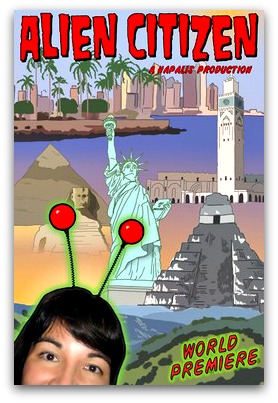
It’s a good thing I was never a Third Culture Kid, or TCK—that’s all I can say, or else we’d be in for some MAJOR drama on this site. Instead we can leave that to someone much more suited: the actress Elizabeth Liang, who is the subject of today’s post. A self-described Guatemalan-American business brat of Chinese-Spanish-Irish-French-German-English descent, Liang was brought up by peripatetic parents in Central America, North Africa, the Middle East, and Connecticut.

Having faced the existential question of “Who are you when you’re from everywhere and nowhere?” practically from the moment of birth, Liang has channeled her thoughts into the creation of a one-woman show, Alien Citizen, which will have its world premiere in Los Angeles with performances this coming Friday and Saturday, May 3-4  (closing June 1). It’s being presented by Liang’s own company, HapaLis Productions, in association with the Multiracial Americans of Southern California.

Any TCKs reading this post (and/or their parents) should be happy to hear that Lliang’s play is not a tragedy. According to the press release, which she shared by email last night, Alien Citizen has both funny and poignant moments:

It weaves humorous stories about growing up as an Alien Citizen abroad with American commercial jingles providing [Elizabeth’s] soundtrack through first love, language confusion, culture shock, Clark Gable, and sandstorms.

Hmmm… Clark Gable?

Though Liang is busy preparing for Friday’s opening, she was kind enough to answer a couple of my questions. Naturally, I wanted to hear more about why she’d written the play and the audience she had in mind for it. Here’s what she told me:

I wrote Alien Citizen for my fellow global nomads and TCKs, because we rarely see our stories portrayed on stage or screen. I also wrote it because I kept being asked if I was from the Midwestern USA and I wanted to set the record straight: my story is unusual, and, I hope, interesting. The play is about identity, which everyone grapples with, but I especially hope that everyone who has lived a cross-cultural life—anyone who has felt like a bridge or an island or both—will relate to it.

Aha, I knew it! It’s for the likes of me as well! And probably you, too, reader, if you’re a Displaced Nation regular. We could use a little drama in our lives…

A few choice lines from the drama

I also asked Liang to share some lines from the play. She obliged with the following list:

  • “We’re Guatemalan when I’m little.”
  • “Nobody on TV looks like me…except maybe Spock on the Star Trek reruns.”
  • “Fairfield County, Connecticut. With four whole seasons, including winter! And the people are even colder than the winters.”
  • “Morocco is like the moon to us at first.”
  • “I love Egypt so much in that moment, it knocks the wind out of me. And I’m just this useless teenager from… Well, I’m not from here.”
  • “And I make friends! Because in the theatre, everybody’s weird.”
  • “I’m not from a place, I’m from people.”

I must say, I like that one about everyone in the theatre being weird. Maybe I should have tried my hand at acting after repatriating? (Except at this point I’d choose to be a Korean soap opera star—yes, I know I’m displaced!)

Show our TCK performer some love!

Readers, it’s time we showed Elizabeth some love for what she’s up to this month. If you live in the LA area, get your ticket half price through May 25th and after that at regular price.

If not, you can:

Questions for Elizabeth, calls for encores? (Should we invite her to submit a post on how the play was received?) Please leave them below. And on Friday evening LA time, let’s all shout out, from wherever we are in the world, “Break a leg, Elizabeth!”

STAY TUNED for tomorrow’s post, another installment in the life of our fictional expat heroine, Libby. (What, not keeping up with Libby? Read the first three episodes of her expat adventures.)

If you enjoyed this post, we invite you to register for The Displaced Dispatch, a round up of weekly posts from The Displaced Nation, with seasonal recipes, book giveaways and other extras. Register for The Displaced Dispatch by clicking here!

Related posts:

img: Promotional poster for world premiere of Alien Citizen

6 Alice-in-Wonderland themes for creatives abroad to explore in their works

 © Iamezan | Dreamstime.com Used under license

© Iamezan | Dreamstime.com
Used under license

Call us zany, but when we first started this site two years ago, someone (no, not me!) had the bright idea of picking a literary or historical figure and using that person as a source of inspiration for a month-long series of posts.

June 2011, for instance, was Alice in Wonderland month; July, Pocahontas month; September, Robert Persig month; and October, Julia Child month.

You’ll never guess which one of these themes proved most popular: why, Alice of course! What international traveler or expat hasn’t experienced the sensation of stepping through the looking glass or falling down the rabbit hole? Like Alice, those of us who venture beyond borders must furiously navigate the new environments we uncover. Also like Alice, we are prone to feeling lonely and a bit sorry for ourselves on occasion.

Most expats can also relate to Alice’s gradual loss of self-identity. As she confesses to the Caterpillar:

“I can’t explain myself, I’m afraid, Sir, because I’m not myself, you see.”

In today’s post, I propose to revisit Lewis Carroll’s masterpiece for themes that are worth exploring from a creative angle. Here are six that I find myself thinking about a lot, when trying to parse my own expat experience (an American, I lived first in England and then in Japan). WARNING: Tongue-in-cheek, but only somewhat!

1) The old adage about trusting your gut doesn’t always work when it comes to your actual gut.

ALICE PASSAGE: In Alice’s Wonderland, a jar labeled “Orange Marmalade” is not actually a jar full of orange marmalade.
APPLIES TO: Expats in Japan, who are always biting into pastries in the hopes of tasting chocolate and tasting azuki bean paste instead. Indeed, should you ever be in need of an Alice-like culinary experience, Japan has got to be your place. There’s the wasabi Kit Kats, of course. And how about the time when Carole Hallett Mobbs’s friend in Tokyo bought a sandwich with a lumpy filling? As Carole reported in her guest post for us:

A gentle squeeze sent a whole cooked potato shooting across the room.

ANOTHER ALICE FOOD PASSAGE: Fearing the contents of the “Drink Me” bottle may be poison, Alice is pleasantly surprised:

it had, in fact, a sort of mixed flavour of cherry-tart, custard, pine-apple, roast turkey, toffee, and hot buttered toast.

APPLIES TO: International travelers who venture to remote spots and are pleasantly surprised by the local cuisine. Actually, you don’t even have to be somewhere remote. Tokyo was where I developed a fondness for hirezake (hot sake with fugu fin) — talk about poisonous cocktails! And travel author Janet Brown told us she dreaded trying fried grasshoppers while living in Bangkok,  only to find she liked them as much as popcorn! But even dedicated locavores, such as Jessica Festa, can have an Alice moment from time to time. I’ll never forget the story about her first experience eating cuy (guinea pig) in Ecuador. As she tells it, she saw it on the grill and thought it resembled her childhood pet, Joey. Repressing her better instinct not to eat anything she grew up playing with, she took a bite and said: “Holy crap, this is delicious!”

2) Communications with others and in general are far from satisfactory.

ALICE PASSAGE: When Alice is “opening out like the largest telescope that ever was, saying good-bye to her feet, she cries “Curiouser and curiouser!”—and then feels surprised that “for the moment she quite forgot how to speak good English.”
APPLIES TO: Native English speakers living in a non-English speaking country. Their English inevitably morphs into the version the locals speak; spelling, too, deteriorates, and doesn’t come back.

ANOTHER ALICE MISCOMMUNICATION: Alice repeatedly offends the creatures in Wonderland without even trying.
APPLIES TO: Anyone who finds themselves “tone deaf” in Bangkok, as the aforementioned Janet Brown once did. (NOTE: Applies equally to those struggling to learn other Asian tonal languages such as Mandarin Chinese.) As she explained in her interview with us:

The most common mistake for foreigners is to tell someone their baby is beautiful, while actually announcing that the infant is bad luck.

3) Committing to another country can sometimes mean altering your body size (or wishing you could).

ALICE PASSAGE: When Alice first lands in Wonderland, she finds herself too large for the doorway out of the dark hall into the beautiful garden.
APPLIES TO: Anyone over 5’5″ living in Japan, Korea or Southeast Asia, who has to keep their head down when entering traditional dwellings for fear of getting a concussion.

ANOTHER BODY-CHANGING ALICE MOMENT: At the instruction of the Caterpillar, Alice tries eating portions of mushroom he’s been sitting on, which make her grow and shrink.
APPLIES TO: Repeat expats, or rex-pats, who find themselves going back and forth between the obesity epidemic in United States and almost anywhere else in the world, where people simply eat less and walk more. While living in Tokyo I soon reached my lowest body weight ever without even trying: all those meals of clear soup, rice, veggies and fish. Now that I’m back in America, I weigh ten pounds more, while in England I was somewhere in between…

4) People in other countries have their own relationships with Father Time.

ALICE PASSAGE: Alice experiences the full gamut: from the White Rabbit dashing about with his stopwatch for fear of being late for an important date, to the slackers at the Mad Hatter’s tea party, who waste time “asking riddles that have no answers.”
APPLIES TO: Repeat expats, or rex-pats, who’ve had the chance to live in Southern Europe, South America, or other places notorious for their laid-back approach to time, as well as in Germany, Switzerland or Japan where people pride themselves on their punctuality. Compared to Japan, I found England a Southern European country. When I was living in Tokyo and visiting the UK during summers, I was always late to appointments because I’d forgotten that trains don’t run on time (or at all). And most of the time, I had their sympathies. Whereas in Japan, I swear a White Rabbit must be in charge of public transport. You can set your watch by the trains! No excuses for lateness…

5) The laws and practices of another land can take some getting used to.

ALICE PASSAGE:

“No, no!” said the Queen. “Sentence first—verdict afterwards.”
“Stuff and nonsense!” said Alice loudly. “The idea of having the sentence first!”

APPLIES TO: Anyone who displaces themselves to a country with a radically different life philosophy. For instance, as an American I found that one of the biggest challenges of getting used to England and then Japan, the two small-island nations where I lived, was that I could never quite accept the natives’ stoicism. As I wrote in the first of my “Lessons from Two Small Islands” posts:

Where the citizens of each of these countries saw grace, strength, endurance, and perseverance, I saw passivity, masochism, fatalism and pain. “Why is everyone bowing so readily to their fates?” I would ask myself repeatedly.

And, though I never committed an act of “queue rage” while standing in line at the post office in the English town where I lived, I came pretty close—especially when watching others who’d come in after I did get served before me.

On those occasions, I felt like crying out: why don’t we try a serpentine line instead?

And what about all those expats living in countries with byzantine immigration laws? Apparently, Alice’s own home, the UK, is among the worst. As we learned from interviewing New Zealander Vicki Jeffels, it essentially tells any wannabe immigrants: “Off with your heads!” Even if you’re from the Commonwealth! Still, at least they no longer discriminate… (Jeffels sorted out her visa problems in the end but has since repatriated.)

6) “Pool of tears” moments eventually build resilience.

ALICE PASSAGES: Alice goes from “shedding gallons of tears, until there was a large pool all round her, about four inches deep” to holding her own in Wonderland (see #5).
APPLIES TO: Well, really all of us. In the previous incarnation of the Displaced Nation, I had a Random Nomads column in which I would interview expats or veterans of international travel and ask them to describe their “most displaced” and “least displaced” moments. Many had difficulty with the former request, I guess because they felt uncomfortable going down the Rabbit Hole and examining their hearts more closely. The American Brian MacDuckston, though, was the rare exception. His “pool of tears” moment was his very first day of work as an English teacher in Japan. He somehow managed to get on the wrong train (every foreigner in Japan’s nightmare) and ended up in a “depot storage yard with an attendant yelling at me in a language I didn’t understand.” He was late for his first class and wanted to quit. Since then, however, he has emerged as one of the leading experts on Japanese ramen. Last we heard, he’d been offered a few gigs on Japanese TV shows as a “ramen reporter” and successfully pitched his first magazine article about a best-of-ramen list. Way to go, Brian, in treating that screaming railway worker as a Jack of Spades!

* * *

So, are you ready to inject a bit of Alice into your Great Work on the voluntarily displaced life? And can you think of any more inspirational passages from Lewis Carroll? (No doubt there are more, and I will think of some of them as soon as I post this.)

Meantime, the Displaced Nation will continue its tradition of awarding “Alices” to writers who capture the curious, unreal side of the displaced life—only we will now be awarding one per week, via our Displaced Dispatch. What, not a subscriber yet? CLICK HERE NOW—or off with your head! Recommendations of posts (your own, other bloggers’) for Alices are also warmly appreciated. Please send to ML@thedisplacednation.com.

STAY TUNED for tomorrow’s post, another in our Old World/New World series.

If you enjoyed this post, we invite you to register for The Displaced Dispatch, a round up of weekly posts from The Displaced Nation, with seasonal recipes, book giveaways and other extras. Register for The Displaced Dispatch by clicking here!

Related posts:
