The Displaced Nation

A home for international creatives

Tag Archives: Thailand

RANDOM NOMAD: Mark Wiens, Traveling Entrepreneur and Street Food Addict

Place of birth: Phoenix, Arizona, USA
Passport: USA
Overseas history: France (Albertville): 1990–91); Democratic Republic of Congo (Tandala): 1991–94; Kenya (Nairobi): 1995–2004; Thailand (Bangkok): 2009 – present.
Occupation: Freelance writer, blogger, video blogger, and food lover.
Cyberspace coordinates: Migrationology — Cultural Travel and Street Food Around the World (blog); Eating Thai Food (blog); @migrationology (Twitter handle); Migrationology (Facebook); and Migrationology (YouTube channel).

What made you leave your homeland in the first place?
I grew up traveling and living overseas with my parents, who are Christian missionaries. So after returning to the United States to attend university, I was ready to get back to traveling again.

Is anyone else in your immediate family “displaced”?
My parents are now residing in Tanzania. My father is now in leadership so he ventures into remote parts of Africa frequently and gets to see some pretty cool things!

As a Third Culture Kid, you’ve grown up living in several different countries. Tell me about the moment when you felt the most displaced.
What makes me feel out of place? Showing up at the airport, train station or bus station of a new city and not knowing how to get to the city center. That happened a lot when I first began solo traveling. I didn’t do enough initial research before arriving in a country.

One time I flew into Clark Airport in the Philippines thinking it was in Manila, but in reality it’s located about three hours from the city, and there’s no easy way to get to Manila center. I should have known this before arriving and getting lost!

I now still don’t do a lot of planning, but I always do a bit of research to figure out the best way to get from the airport (or station) to the city center!

Wow, you sound pretty comfortable in the big wide world out there, if you don’t even bother doing research before a trip. When have you felt the most comfortable?
Whenever I’m eating delicious food cooked by a local — that’s when I feel the least displaced. In Sri Lanka, for instance, I got into the habit of stopping to eat food along the side of the road. I would always be greeted by genuinely friendly and hospitable people. So in addition to delicious food, I would be connecting with others. That’s how I feel at home in a foreign place.

You may bring one curiosity you’ve collected from your travels into The Displaced Nation. What’s in your suitcase?
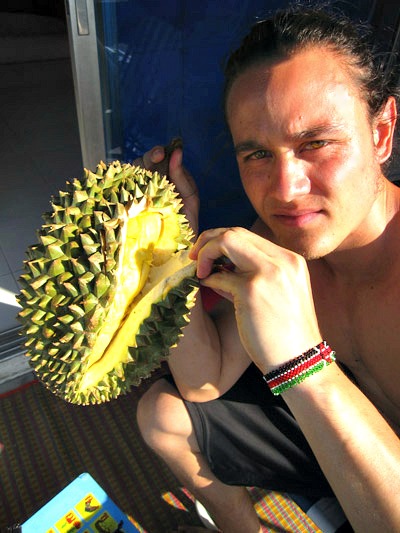
Durian from Southeast Asia — the most amazing fruit in the world! It makes me very happy!

And now you are invited to prepare one meal based on your travels for other members of The Displaced Nation. What’s on the menu?

Appetizer: Poke, the Hawaiian sashimi: cubed pieces of raw fish marinated in onions, soy sauce, and sea salt.
Main: Sichuan fish hot pot, known as Shuizhuyu. It’s the signature dish in Sichuan cooking.
Dessert: Either Thai-style sticky rice with durian, or just plain durian fruit.
Drink: Stoney, a strong ginger soda from East Africa that burns going down.

I wonder if you could also add a word or expression from one or more of the countries you’ve lived in to The Displaced Nation argot.
From Kenya: Sema boss, a slang term for greeting the person who is in charge. It’s a good way to connect.
From Thailand: Mai pen rai, how Thais say “don’t worry about it” or “no problem.” It’s a polite phrase.
From Mexico: Pansa llena, corazón contento: “Stomach full, heart is happy.” When I lived in the US, I had many friends from Mexico who would use that expression with me as they knew I loved to eat. I also have visited northern Mexico a number of times.

This month we’ve been exploring the idea of organizing one’s travels around the wish to try particular foods. I understand that many of your travels are motivated by food interests?
Yes, nowadays just about all my travels are motivated by food. I do travel to see other countries and meet new people, but my main passion is food and that’s what I enjoy searching for. I would be very happy to fly to a destination and not do any of the normal tourist attractions, but just eat. A few months ago I took just a short 24-hour trip to Malaysia with a strict mission to eat. It was an amazing food binge!

Are you more motivated by the idea of trying new foods or by finding the very best of particular foods?
I’d say I’m equally motivated to try new foods and to find the very best foods that I’ve already eaten previously. I’m always excited to try something I’ve never seen or heard of before, but at the same time if I hear about the best bowl of Thai boat noodles, or the most amazing seafood restaurant, I’m quite tempted too!

If you were to design a world tour based on food, what would be your top five stops/foods to try?
I couldn’t narrow it down to five, so here are six:
1) Thailand — try the gaeng som (sour spicy soup), som tam (green papaya salad), and boo pad pongali (crab yellow curry).
2) Malaysia — try the nasi campur (mixed curry and rice), nasi lemak (rice and toppings), and roti canai (roti bread with curry).
3) China — try the Sichuan hot pot and all kinds of exotic delicacies.
4) India — try the thali (rice with a variety of curries), dhosa (pancake with curries) and home-cooked curries.
5) Mexico — try the tacos, burritos, mole (chocolate curry), carne asada (grilled meat), and ceviche (seafood salad).
6) Ethiopia — try the mahaberawi, a platter that includes injera (white spongy bread) topped with a variety of spicy curries.

Readers — yay or nay for letting Mark Wiens into The Displaced Nation? He’s an adventuresome eater, that’s for sure, but can you stand the smell of what’s in his suitcase? (Note: It’s fine to vote “nay” as long as you couch your reasoning in terms we all — including Mark — find amusing!)

STAY TUNED for tomorrow’s episode in the life of our fictional expat heroine, Libby. (What, not keeping up with Libby? Read the first three episodes of her expat adventures.)

If you enjoyed this post, we invite you to register for The Displaced Dispatch, a round up of weekly posts from The Displaced Nation, with seasonal recipes, book giveaways and other extras. Register for The Displaced Dispatch by clicking here!

Related posts:

img: Mark Wiens in the act of trying, for the first time, to cut open a durian fruit, on his balcony in Bangkok.

THE DISPLACED Q: On your world travels, have you ever downright refused to try a new food?

Well, I’ve developed a reputation for having a cast-iron stomach as I’ve traveled around. I’ve never been shy to try new things, even though my own taste in food is pretty poor.

I ate a peculiar insect dipped in soy sauce in Thailand — mostly because I’d just finished telling my friends about this cast-iron stomach of mine, and they felt inclined to put me to the test.

On this occasion I passed — despite the stall holder who’d sold me the thing waiting until I’d taken a good healthy bite before pointing out that I wasn’t supposed to eat the wings and carapace. So why did he leave them on? Sadist. They tasted — and felt — like eating fingernails. Dipped in soy sauce, of course.

But I survived, and since then have graciously accepted all manner of disgusting foods — most notably, vegetables of all kinds, including (horror of horrors!) Brussels sprouts and broccoli. Blech!

I personally feel that there needs to be a very good reason before I refuse to at least try something. What would be cause for turning a food down? I’ll go with Woody Allen’s principle:

I will not eat oysters. I want my food dead — not sick, not wounded — dead.

Known for my stomach of iron…

In many cultures, especially those found in Africa and Asia, refusing food (or drink) is considered to be an insult to the host. Well, I’m never one to insult my host — at least, not intentionally. What comes out of my mouth does enough damage by accident without me refusing to shove something into it.

Generally, I don’t refuse food.

I didn’t even refuse mansaf. At least, not the first time.

I was in Jordan with my wife, doing the touristy thing, seeing the sights. It seemed appropriate to try the local cuisine, especially as I’m all about embracing new experiences whilst traveling. Jordan was the first country I visited in the Middle East, and it promised to be something entirely different from what I was used to.

So we found a nice local restaurant, all tricked out with low benches and huge long tables for communal eating. The proprietor was waiting on us himself because it was a small, family-run establishment. I liked that — made me feel comfortable and safe.

He asked what we wanted to eat, and I told him I’d like to try something traditional, something that the local people ate. The menu was in English, but mostly featured Western food like burgers and pizza. I figured since I was in an authentic setting, I should try some authentic grub. The owner was more than happy to suggest something, and ordered me mansaf.

When it arrived, I caught a slight snigger from my wife, who had just been served her pancakes. In truth, it looked utterly revolting. But I had every confidence my iron stomach would prevail, and I’d soon be one cultural notch up on her and ready to boast about it!

…until it broke down!

The lamb (or possibly goat), still on the bone, was stringy and gelatinous. It had the consistency of those bits you cut off and throw away, the ones you can’t even bring yourself to feed to the dog because the very thought of them being eaten turns your stomach. It was a like a large knuckle joint, all sinew and cartilage and tendons… I had a feeling I’d been given a leg — Which, if you’ve seen a sheep lately, doesn’t do much to whet the appetite. But I ate as much of it as I could ferret off the bone, and then started in on the sauce.

The sauce was made of rancid yogurt. I’m serious – it said “rancid yogurt sauce” on the English menu, although I’m sure it translates into something less off-putting in Arabic. I didn’t want to think about how it was made, or about how impossible it would be to concoct something along these lines whilst adhering to any sort of health-and-safety principles. I just ate the stuff — or, as much of it as I could get down.

That night, my wife mocked me through the door to our en-suite bathroom as I locked myself in for the long-haul. I’d barely made it back to our hotel in time for the first heave.

Whatever it was I’d put into my body, it didn’t appreciate it and was doing it’s best to get rid of it; I spent the rest of the night kneeling on the bathroom tiles — you can get the picture.

Was the mansaf cooked right? Who knows? Was it poisonous? Well, my body seemed to think so. Will I try it again…?

Hm.

A few nights later, mansaf became the only food I have ever officially refused, on the grounds that there is no fun at all in projectile vomiting for several hours straight.

***

So! I’ve shown you mine, now show me yours! Do you have any qualms about refusing the foods offered to you on your travels? Have you ever done so? Or were you too much of a good sport so didn’t refuse — and regretted it later? (And what happened? Apart from, you know, the obvious…) Let me know in the comments!

STAY TUNED for Wednesday’s post, an interview with a Random Nomad who doesn’t eat to travel but travels to eat!

If you enjoyed this post, we invite you to register for The Displaced Dispatch, a round up of weekly posts from The Displaced Nation, with seasonal recipes, book giveaways and other extras. Register for The Displaced Dispatch by clicking here!

Related posts:


BOOK REVIEW: “Expat Life Slice By Slice” by Apple Gidley

TITLE: Expat Life Slice by Slice
AUTHOR: Apple Gidley
AUTHOR’S CYBER COORDINATES:
Website: www.expatapple.com
Blog: my.telegraph.co.uk/applegidley
Twitter: @ExpatApple
PUBLICATION DATE: March 2012 (Summertime Publishers)
FORMAT: Ebook (Kindle) and Paperback, available from Amazon
GENRE: Memoir
SOURCE: Review copy from author

Author Bio:

Apple Gidley became an expat at the tender age of one month old, in Kano, Nigeria. Since her early initiation into global wandering, she has relocated 26 times through 12 countries, acquiring a husband and two children en route.

Apple is known to thousands as ExpatApple, through her popular blog at the Daily Telegraph.

Summary:

“From marauding monkeys to strange men in her bedroom, from Africa to Australasia to America, with stops in Melanesia, the Caribbean and Europe along the way, Apple Gidley vividly sketches her itinerant global life. The challenges of expatriation, whether finding a home, a job, or a school are faced mostly with equanimity. Touched with humour and pathos, places come alive with stories of people met and cultures learned, with a few foreign faux pas added to the mix.”

(Source: Amazon.com book description)

Review:

If anyone is qualified to issue advice on expat life, Apple Gidley is that person. Born to an English father and Australian mother, she takes the label “Serial Expat” to new heights.  She was a TCK before the term was invented (instead classed unflatteringly as an “expat brat”) and continued the global wandering throughout her adult life, with 26 relocations through 12 countries to date.

Her memoir provides fascinating reading, about places and lifestyles that most of us will never experience, and at times is almost anachronistic:  reading her reminiscences about servants, voluntary work, and charity committees, there’s a time warp sensation of stepping into a Somerset Maugham short story.

Although the book is a record of Apple’s patchwork life, most expats will relate to the emotional experiences she describes, no matter where in the world they are or  how many countries they’ve lived in. For example, we worry that leaving our family and friends behind will increase the emotional distance as well as the physical. After a while, we realise that this is mostly not the case, and that those who allow physical distance to become an obstacle weren’t so emotionally close in the first place. In Chapter 8, “Eighth Slice: Staying Connected”, she says:

As we age we draw closer still. We believe in family but do not see each other for years at a time, and yet we are all aware of where each of us is in the world, still scattered and testaments to a global upbringing.

In “Ninth Slice: Death at a Distance”, Apple deals with the elephant-in-the-room topic: the illness or death of a family member while we are thousands of miles away. During such times, it’s easy to beat ourselves up for choosing a nomadic lifestyle;  if our associated guilt trips were eligible for air miles, we could afford to fly back and forth to be with our loved ones as often as we wanted. In describing her own experiences of bereavement, Apple’s practical, matter-of-fact approach, plus her insights gleaned from other cultures’ attitudes to old age and death, reminds us that the old cliché of “life goes on” holds true, even after “death at a distance”.

Whether you’re a veteran expat, a re-pat, or are just about to embark upon your first move to another country, “Expat Life Slice By Slice” should be on your reading list.

Words of wisdom:

On TCKs:

For those children brought up as TCKs…a nonjudgmental and accepting attitude to different customs, colours and cultures is the norm. As this demographic grows, let’s hope for an even greater understanding of cultural differences for all our children.

On voluntary work:

Volunteering is work, sometimes harder than a paid position because it is the cause keeping you there and not the salary.

On making new connections:

Picking up people around the world to share your life with is one of the greatest pleasures in life, and sometimes you know straight away they will continue to stay in it.

On “Home”

Home is with me wherever I go…It is not a single building or a single country, but many of them.

.

STAY TUNED for Wednesday’s post.

Image:  Book cover – “Expat Life Slice By Slice”

If you enjoyed this post, we invite you to register for The Displaced Dispatch, a round up of weekly posts from The Displaced Nation, with seasonal recipes, book giveaways and other extras. Register for The Displaced Dispatch by clicking here!

Related posts:


THE DISPLACED Q: Does living abroad make you more or less patriotic?

Now then, this IS an interesting question. Very topical, especially for me, as the Queen’s Diamond Jubilee is still being televised ad infinitum here in Australia. It’s almost like the networks can’t get enough of it. At one point this week it was on three channels simultaneously!

I’m not normally very patriotic — my opinions on the state of England and the UK are…well, let’s just say, that’s why I moved to Australia!

And yet — as I watch the parades, listen to the crowds shrieking, and imagine the atmosphere outside Buckingham Palace, part of me thinks: maybe I should be there? It is my home after all…and whatever else I end up being, I will always be British as well. I can’t imagine giving it up completely — it’s my history, man! And there are still things I do love about the old country. It’s an awfully pretty place, for one thing! It’s not England’s fault it’s being run into the ground by a bunch of idiots.

Mark Twain said:

Patriotism is supporting your country all the time, and your government when it deserves it.

Transferred loyalties

Oddly enough, I sometimes transfer my loyalties to wherever I call home, at least temporarily. It helps me to feel more involved with the local culture when I’m in a place, and I’m the kind of guy who’s more than happy celebrate whatever makes their country great as well.

In Thailand, for the King’s birthday, I kidnapped a gigantic yellow flag and fastened it to the back of my scooter. I saw nothing wrong with committing a minor offense to display my support for their monarch. And neither did the local police — they stopped me to applaud my efforts!

In Australia it goes without saying that I celebrate their national holiday, Australia Day. I do it for two reasons: first, I genuinely love Australia and all it stands for — it’s why I moved here as soon as I could! I really believe in their attitude to government, their national traits and their value system. Australia IS great, and it works. I think that’s quite rare in the world, and deserves recognition.

Oh and the second reason? Well, you celebrate Australia Day by going out in the sunshine, down to the river, and getting drunk. It’s not like it’s much of a hardship to get involved. 😉

But Britain is “great” — isn’t it?

Back to the Queen’s Diamond Jubilee. I hear stirring speeches from celebrities and Royal Family members, and feel…I dunno. Uplifted? Triumphant? It’s hard not to feel a tickle of pride when the eyes of the whole world are on the monarch of my tiny island.

But is it rose-tinted glasses that make me tear just a little, as the cameras zoom in on the Queen smiling at a joke from the commentator? Am I just caught up in the fever of the moment? The rest of England is going crazy for this. It’s hard not to feel just a little infected by it. But what exactly is it that I’m feeling? Mere nostalgia? Fond memories and a touch of homesickness?

As already mentioned, there’s plenty of reason not to feel pride in the country of my birth. There’s also plenty going wrong in England at the moment. The wages are terrible, unemployment is rampant, the economy is in the dumps. In my humble opinion, the UK is falling apart.

But the Jubilee itself was quite stirring, inspiring even, a reminder of all that was Great about Britain, and perhaps could be again.

Then again, I can’t help but remember that the Ancient Romans had the same idea: when the masses are starving in the streets, give them GAMES! A spectacle to take their mind off the hunger, to remind them of what a glorious empire they belong to — give them a taste of grandeur whilst they’re dying in the gutters.

Okay, so that’s a pretty cynical view to take. Hey, I’m here to play the Devil’s Advocate too, right?

So here’s my question to you kind folks: does being displaced — or out of your “home” country for any reason — make you feel MORE or LESS patriotic? And why is that?

Tell me what you think in the comments, or feel free to hit me up on Twitter at @TonyJamesSlater.

STAY TUNED for our next post, which will be on Monday.

If you enjoyed this post, we invite you to register for The Displaced Dispatch, a round up of weekly posts from The Displaced Nation, with seasonal recipes, book giveaways and other extras. Register for The Displaced Dispatch by clicking here!

Related posts:

Image: MorgueFile

THE DISPLACED Q: On your travels, what’s the most memorable chance encounter that brought you closer to The Sweet Life?

Since the beginning of May, I’ve been posing weekly questions as a way of getting at how we travelers experience La Dolce Vita, or The Sweet Life.

Seeking truths by your own lights — that’s what’s known as the Socratic method!

But while my questions thus far have focused on the sensory delights that travel offers — heart-stopping sights, delightful sounds, intoxicating scents, delicate flavors — today’s question is a little different. I want to know about the people you’ve encountered by chance on your travels, who’ve opened your heart and mind to the possibility of living The Sweet Life.

I’ve been very lucky in my life. I’ve met quite a few individuals who have inspired me in one way or another. Perhaps it’s because I’m a big believer in fate; I’ve always thought that everything will play out according to plan, if I just let it.

Not that I sit around and do nothing. Rather, I try to do as much as I possibly can, in the hope that I’ll end up doing enough of the Right Things to shape my life to come. Some of those things will reveal their hidden meaning only years later, in hindsight…

“Life is what happens to us while we are making other plans.”

— American cartoonist Allen Saunders, 1957 (later featured in a John Lennon song)

A couple of early mentors

I owe this philosophy in part to something that happened to me when I was still living in the UK, thinking I was going to become an actor. In order to help my sister, Gillian, integrate into university life, I took her to a kung-fu class. The teacher (or sifu) became more than just a friend to her, he became a spiritual mentor.

What Gill learned passed through to me, and eventually we both attended a personal development seminar that changed our whole worldview. I became more open and generous, rejecting the lessons I’d learned at acting school about clawing my way to the top over the bodies of those less fortunate. My epiphany led me to see that acting was an every-man-for-himself type industry — not exactly good for my soul.

So I gave it up. I went traveling instead. When volunteering in Ecuador, I met Toby, who also helped shape the course of my life. Toby was my boss at the Ecuadorian animal shelter; and, as I recount in my book, That Bear Ate My Pants!, he was confident and capable, at ease in his own skin — just the way I wanted to be.

Toby told me all about his adventures as a professional diver in Thailand, and I began to crave that life as though it was the answer to all my heart’s desires.

He also tricked me into getting my head shaved, the bugger.

A Sheila who suddenly showed up in my life

After three months in Ecuador, I suffered some pretty severe reverse culture shock when I got back to England. I got quite depressed, and wanted nothing more than to leave again. Well, it’s England — can you blame me? (No offense to those who are enjoying the Queen’s Diamond Jubilee celebrations while reading this…)

Around that same time, Gillian was traveling in the USA with a bunch of friends she’d met while working for Camp America. I decided to fly out and meet up with them, in the hope that a few more adventures would dispel my unhappiness.

By the time I got there, she only had two companions left, a young Kiwi-Aussie couple called Richie and Krista. We hung out together for a couple of weeks and had fun, and one by one they, and then the two of us, left for home.

Back in England again, I busied myself trying to recapture the combination of excitement and contentment I’d found in Ecuador, but to no avail. In the end I left for Thailand, following Toby’s advice, hoping that another stint of volunteering would sort my head out.

By pure chance, Gill had invited Krista to come and explore England with her; I flew out the same day she flew in, and we met briefly at the bus station. I said my good-byes and was gone. Though my original plan was to stay away for three months, I got kind of caught up in things and didn’t come back for over two years.

The two girls meanwhile, roamed around the UK until their money ran out, and Krista flew back to Australia. Gill promised to return the visit as soon as she could afford to.

In Thailand, I neither knew nor cared about such things! I was having a great time, diving for a living and partying every opportunity I got.

Toby would be proud, I thought.

Until one day I woke up broke. I’d lost a lot of money to fraud and then had what was left stolen from my bungalow. I realized I would never survive on my meager diving wages. My friends supported me for a while, but I knew I couldn’t ask this of them for long.

It was time to face facts; I was going to have to go home.

Hang on, there’s that Sheila again!

By this time, Gill was in Australia, exploring the country with Krista in a knackered van covered in multi-colored handprints. In a series of tearful emails to my sis, I poured my heart out — telling her how much I hated the idea of abandoning all my hopes and dreams and going home.

She wrote back with an offer from Krista: I could come over to Perth and stay with her family! Krista had even lined up an interview for me with a local job agency — I could hardly believe it! I still didn’t want to leave Thailand, but at least this way I could carry on traveling. (Krista and Gill also pointed out that there were plenty of spare seats in their van…)

I flew to Australia without the price of a cup of coffee. I didn’t even own enough clothing to fill a bag. The girls met me in the airport with their crumbling van (nicknamed Rusty!), and I immediately learned a few things about Krista:

  1. She was prettier than I remembered.
  2. She was now single.
  3. She was a whole lot of fun to be around!

Six years later, after many adventures together, Krista and I were married in the grounds of Taunton Castle, in Somerset in England. Her whole family flew out to join in the medieval-themed celebration, and not long after they flew back, we followed them, back to Perth, where we now live.

Of course, it was a LOT more complicated than that.

But as chance encounters go — and in terms of the ones that influence your life the most — well, that one, for me, takes the biscuit!

What about you? I want to know what chance encounters have affected you the most during your travels — leading to new experiences you wouldn’t have otherwise had. And did they ultimately take you closer to The Sweet Life, as in my case?

Spill the beans in the comments below. (You know you want to!)

STAY TUNED for Monday’s post, a tribute to Queen Elizabeth for lasting 60 years on the throne, despite a period of displacedness.

If you enjoyed this post, we invite you to register for The Displaced Dispatch, a round up of weekly posts from The Displaced Nation, with seasonal recipes, book giveaways and other extras. Register for The Displaced Dispatch by clicking here!

Related posts:

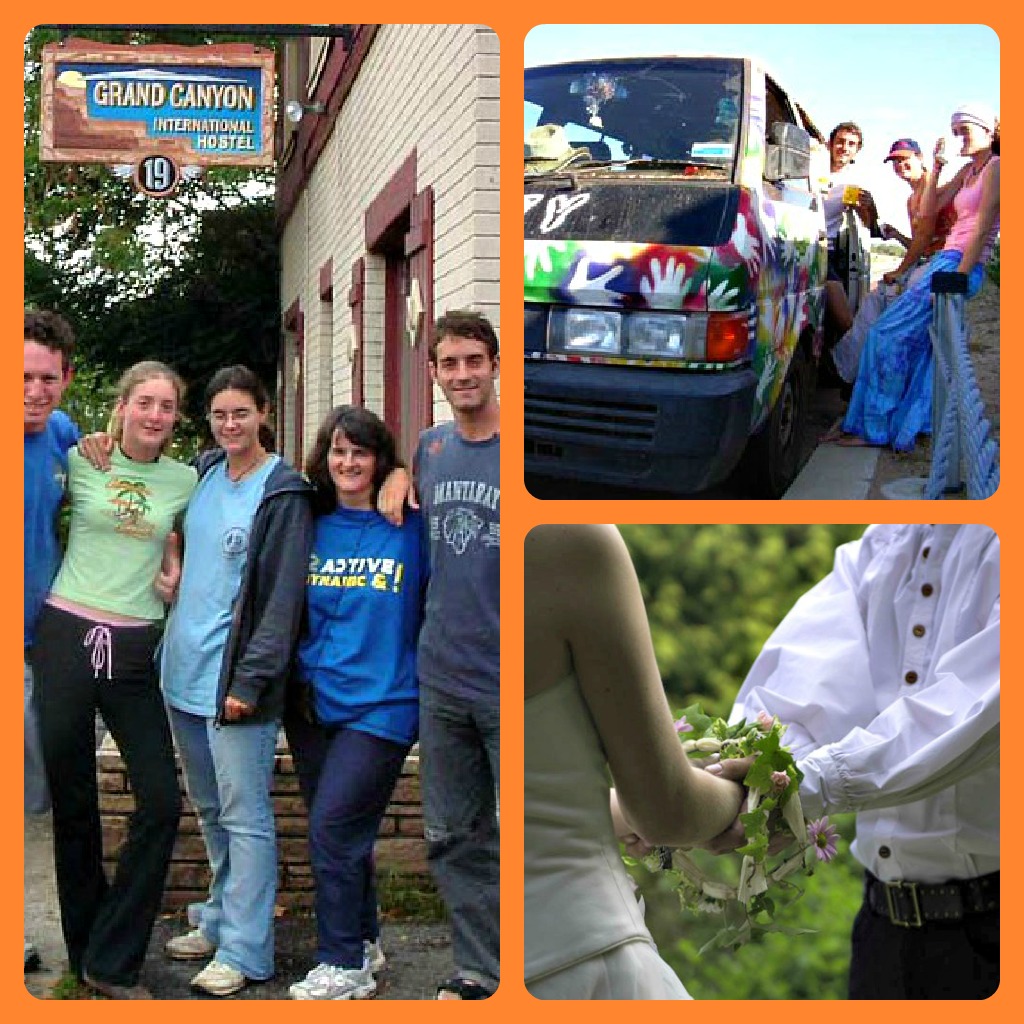
Images from Tony James Slater’s personal collection: Touring the Grand Canyon with Krista (she is in the green tee shirt), her boyfriend and his sister, Gill; his reunion with Krista and Gill in Perth, Australia, some years later (Tony is driving Rusty); all of this leading to Tony and Krista’s medieval-themed wedding in the UK (this is their “hand fasting”).

Living La Dolce Vita with Food Writer and World Explorer Robyn Eckhardt

Veteran travel and food journalist Robyn Eckhardt is here. A few months ago, she shared some insights on Southeast Asian cooking with Displaced Dispatch subscribers, but for this post I’ve asked her to supply a recipe for La Dolce Vita, or the Sweet Life — drawing the ingredients from her extensive world travels and their sensory delights — along with an easy version anyone can try!

Robyn Eckhardt’s Personal Recipe for La Dolce Vita

Mix together the following:

3 heart-stopping sights

1) The Bund, Shanghai, in 1990 before the city underwent its construction boom. It was of those moments when you realize that a place you know by heart from books (I studied Chinese history in college and grad school) is actually real.
2) Istanbul’s Blue Mosque from a taxi at 1:00 a.m. on a crisp, clear February night. It was my first time in Turkey; I’d just arrived from Shanghai, where I was living at the time. The combination of jetlag and being somewhere so foreign and utterly different to the place that I called home was like a slap in the face, in a good way.
3) When I was 17 I saw the Statue of Liberty up close on a Circle Line tour. Even though I was your typical cynical, jaded teenager, my jaw kind of dropped. I imagined the thousands and thousands of immigrants to the US arriving by ship and having that same view. It’s still a pretty amazing sight, I think.

11 intoxicating scents

1) In most any neighborhood in Chengdu (capital of China’s Sichuan province) at around 5:00-6:00 p.m., the scent of dried chilies hitting hot rapeseed oil.
2) Just-off-the-boat anchovies grilling in Sinop, on the Turkish Black Sea.
3) Chicken barbecuing anywhere in Thailand.
4) Chòu dòufu, or “stinky beancurd,” in Taipei — funky yet beguiling.
5) Jasmine flowers in bloom on a hot summer ‘s (which is actually in September or October) evening in the San Francisco Bay Area.
6) On winter evenings in Santa Fe, burning piñon tree branches in a hundred fireplaces.
7) The seafood section in the market in Butuan, Mindanao in the Philippines, which smells like nothing but seawater — it smelled so good we didn’t mind eating kinilaw (the Philippine “ceviche”) prepared by a fish vendor, right smack in the middle of the market.
8) In any Turkish town or city very early in the morning, the first whiff of rising dough and baking bread from any bakery.
9) The enveloping, almost chokingly overwhelming scent of spices freshly ground in huge quantities at an old, Indian-run spice shop in George Town, Penang.
10) The dining room at a tiny osteria in Calosso, Piemonte, which my husband and I frequented four years in a row. It didn’t matter what was on the menu that day, as soon as I walked in the I knew that I was going to eat wonderful foods, drink good wines and leave very, very happy.
11) Last but not least, the smell of China. You smell it as soon as you get off an airplane. What is it? I’m not really sure. It’s certainly not magnificent but it is intoxicating to me because it never fails to transport me in a single second to my 21-year-old self, abroad and on her own for the first time, arriving in Chengu. Lots of emotions there.

4 dreamy sounds

1) The call to prayer one late afternoon as I sat on a hill overlooking the ruins of the theater at Aspendos, on Turkey’s Mediterranean coast. One muezzin started, then another from the opposite direction began, then another and another, from mosques in nearby villages. Their voices alternately intertwined and competed — one of those incredible moments that leaves you almost gasping for breath.
2) The sound of calling/singing/chanting vendors at wet markets. Especially when they get into a groove, sing-songing the same phrase over and over again. Like at Pudu Market in Kuala Lumpur: satu ringgit satu ringgit satu ringgit satu ringgit satu ringgit satu ringgit! When I hear a great call from a market vendor I just stop and listen while the market frenzy continues around me.
3) The sound of the rain forest waking up on Langkawi Island from the vantage point of the top of a hill, above the forest canopy. I arrived to perfect stillness; as the sky began to lighten there was movement in the trees — creakings and squawks and chirps and rumbles and knocks and grinding noises. Just before I left, ten or so hornbills simultaneously rose from their perches, making a tremendous, wonderful racket with their wide wingspans. It sounded like a jet flying low overhead — whoo whoo whoo whoo. I could feel that noise in my gut. Incredible.
4) A trio of genggong (Jew’s harp) players on the front porch of a cottage on the edge of a rice field in northern Bali. Bali is magical to begin with. This was an unexpected treat.

A particularly delicate flavoring

Normally, I’m attracted to bold flavors, but as this is La Dolce Vita, I’ll probably throw in the sap from the cut flower of an aren palm, which I tasted when I went out at dawn with a palm sugar maker in northern Sumatra to get the sap he was collecting in bamboo tubes from dozens of trees. It was sweet and flowery but in a very, very restrained way — what’s incredible is that after just three hours of boiling it becomes one of the most intensely flavored sugars in the world.

An extraordinary physical sensation

For this recipe I’ll include the most amazing physical sensation I can remember: riding an elephant bareback and solo, which I did last year in northern Thailand near the border with Burma. Grabbing its leathery ear to pull myself up, palming the spiky, hair-sprinkled knobs of its massive forehead to keep my balance, feeling its shoulders move under me when it walked — something I will never, ever forget.

A memorable encounter with strangers

My husband and I ended up eating lunch with an elderly Turkish couple in their traditional timber farmhouse on the Black Sea. The experience sticks with me, for many reasons. Rather than retell the story here, let me point you to the relevant post on our blog, EatingAsia.

A place that stimulates all five senses

For me, this can be anywhere unfamiliar, or where I haven’t visited for a long time. Right now, especially, it’s eastern Turkey, which I’ve been getting to know in bits and pieces over the last two years.

The food is new (to me) and surprising — interesting twists on familiar Turkish dishes and curve balls out of nowhere, like dolma made with cherry tree leaves(!) or dough spirals seasoned with copious amounts of ground poppy seeds that taste like cacao.

I love the way the Turkish language sounds; I speak enough to get by but am nowhere near even half-fluency. I desperately want to be better at it, so when I’m traveling there my ears and brain are hyper alert to conversations around me; I’m constantly trying to understand what I hear, writing down unfamiliar words, trying (and often failing) to communicate well with strangers. That’s fun in a certain way, though ultimately exhausting — but it’s a level of engagement with everything that is going on around me that I don’t always have.

Outside Turkish cities the sky is big and the population sparse. To me — a resident of Southeast Asia — that is incredible and wonderful. When my husband and I go, we rent a car and do long, long road trips. I’m always eager for what’s around the next bend in the road or over the next pass because in two or three hours the terrain can change tremendously.

I can never get over the scent of air in that part of the world: nothing but air, clean fresh air! We make it a point to go once or twice a year when it’s cold; this past February temperatures in Eastern Anatolia averaged about 10 degrees Fahrenheit and there was lots of snow. It was that kind of cold where the hairs in your nose freeze as soon as you walk outdoors and ice cracks under foot and snow crunches with an especially hard “c”. I loved it.

And I’ve had so many great people experiences there — strangers opening their homes and kitchens to me. Even though I’m always a wee bit tentative in that way that you get when you are among strangers somewhere unfamiliar, eastern Turkey is probably the place where I travel with my heart the most open. When I arrive there I take a deep breath and just relax and let whatever is going to happen, happen. I can’t and don’t always let my guard down like that when I travel, so it’s lovely to be somewhere where I can.

Art by 2 artists who understand La Dolce Vita

1) Well, I am biased, but this recipe definitely calls for my husband Dave Hagerman‘s portraits and people-focused street photography because they often capture, I think, that moment when a subject decides to just let it go. Those sorts of photographs only come when a photographer is willing to extend his or herself, take a risk and show utmost respect to his or her subject.
2) I also love the work — paintings especially — of California realist John Register. The empty-room paintings, the diners-at-night paintings. I can’t say much about his heart or his soul when he was painting them, but to me they show that mundane things can evoke emotion. That is beautiful.

An inspiring travel quote

“The first condition of understanding a foreign country is to smell it.”
– Rudyard Kipling

As one who travels most of the time on her stomach, I can especially identify with this sentiment.

* * *

After adding a pinch of salt to all of the above, Robyn is living the sweet life. And if you’re not as well traveled as she is, not to worry. Robyn offers this simple recipe to try at home.

Robyn’s recipe for living La Dolce Vita at home

You don’t have to physically get on a plane or train or bus to travel. Do something unfamiliar in the place you know best, your home:
1) Go to a neighborhood you don’t usually frequent, go to a museum if you are an outdoors person or to a park if you’re an indoors type.
2) If you are not an early riser, go out before dawn and watch your town or city or neighborhood wake up, or if you’re an early-to-bed sort of person, take a nap in the evening and then go out late and see what where you live looks and sounds and feels like when you’re usually asleep.
3) Ride a bus or some other form of public transport if you’re always in your car.
4) Try a new restaurant or bakery or cafe, or shop at a farmer’s market if you usually buy your food at the big box or grocery store.

Penang-based freelance food and travel journalist Robyn Eckhardt is a contributing writer at Travel+Leisure Southeast Asia, a contributor at ZesterDaily and to publications like The New York Times Travel Section, Saveur and SBS Feast. With her photographer husband David Hagerman, she publishes the food-travel blog EatingAsia. As this interview hits interwebs, the two are hiking village-to-village in far northeastern Turkey, learning about beekeeping and cow-herding and tasting lots of honey and cheese.
Final note from ML Awanohara: Extra points will be awarded to anyone who recalls Robyn’s husband, David, being featured in the series I ran at the end of last year: “The 12 Nomads of Christmas.” He’s just as extraordinary as Robyn says!

STAY TUNED for Wednesday’s post, an interview with Laura Graham, author of Down a Tuscan Alley, a semi-autobiographical novel about her mid-life move to Tuscany. (Ah, la dolce vita!)

If you enjoyed this post, we invite you to register for The Displaced Dispatch, a round up of weekly posts from The Displaced Nation, with seasonal recipes, book giveaways and other extras. Register for The Displaced Dispatch by clicking here!

Related posts:

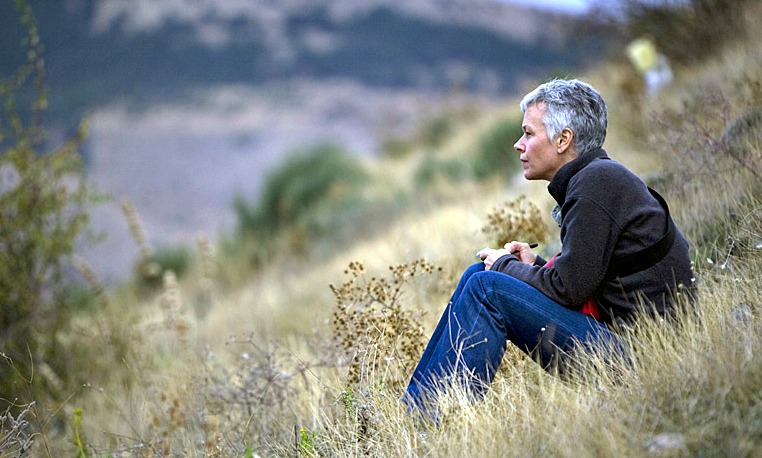
Img: Robyn Eckhardt writing in Tokat, Turkey (by David Hagerman).

THE DISPLACED Q: What’s the most delicate flavor you’ve sampled on your travels?

In a month where many of our posts have explored La Dolce Vita, I’ve been posing a series of questions to nomadic types on the sensory delights the wider world has to offer.

Week after week, we’ve seen that if there’s such a thing as a formula for The Sweet Life — La Dolce Vita — it lies in learning how to take pleasure in simple things.

And, bless my little cotton socks, I happen to be a very simple sort.

Confession: I’m a bit taste-bud challenged!

As this is our week for taste, I was tempted to make a rather tasteless joke — but then thought better of it. Instead I will quote from displaced Chinese writer Lin Yutang, author of The Importance of Living (aptly titled, given our theme):

What is patriotism but the love of the food one ate as a child?

As much as I love travel, I’m one of those who finds it challenging to sample new tastes. It does not help matters that people seem to detect this about me right away and like to take the mickey by tricking me into trying new things.

The worst instance of that was in an Egyptian bazaar. One of the vendors encouraged me to taste the bright blue powder that was piled up enticingly in bowls identical to the cumin and crushed garlic you see on every spice stall in virtually every Middle Eastern bazaar. He pantomimed that I should wet the tip of my finger and dip it in for a sample…then chortled like mad as my face screwed up and my tongue shot out in disgust. It tasted like soap! Indeed, it was soap — laundry detergent, to be precise, which they sell by weight.  (Well, you’ve got to get your kicks from something! Actually, I think if I had to work all day long in a spice stall, I’d be playing tricks on tourists, too.)

Nothing like a Big Mac fix…

And now let us turn to the words of another wise man, the ancient Greek philosopher Socrates:

The best seasoning for food is hunger.

For me this is borne out every time I hit the supermarket whilst hungry. Everything on the shelves sounds so delicious…far more so than when I discover it weeks later mouldering in the back of my cupboard, wondering why on earth I bought it.

It’s taught me never to go shopping on an empty stomach — a luxury that, for millions of people around the world, isn’t an option…

But back to Socrates. Hunger can certainly make anything taste better. After one particularly long (two-month) hike in Australia, where I lived almost exclusively on instant noodles, two-minute pasta packets, bread and water (and okay, a fair bit of chocolate!), I craved nothing so much as the rich, additive-laden satisfaction of a Big Mac. Even my wife agreed! The moment we reached Albany, Western Australia, the town the end of the trail, we didn’t even stop to rest our feet — just hiked straight through into McDonalds, and ordered about a thousand calories of heart-attack in a paper bag for each of us.

You know something? That burger tasted better than anything has ever tasted in any restaurant anywhere, ever. I mean it! I only wish I could have eaten more, but after a thousand kilometers on fairly limited rations, neither of us could finish more than half the meal. (For which I’m sure our arteries are still thanking us!)

…or a simple Thai stir-fry

In Thailand I was always at my hungriest after a full day’s diving. Diving seems like such a relaxing sport, but leading two dives a day gave me the most voracious appetite I’d ever known. I’d blast through the jungle on my little blue scooter with just one thought in mind: get to the market NOW!

Though I’d acquired a taste for quite spicy food, I always made a beeline for the same stall: a friendly old bloke with a wok and burner fastened to the sidecar of his motorbike. He served up thinly-sliced chicken on fried rice, with a small bowl of flavored water that I thought must be soup or tea, but was never quite sure which.

Whatever.

His stir-fries were plain, fresh, and SO delicious — I almost always went back for another serving! After I’d been going there for a couple of weeks, I didn’t even have to ask; the stall holder had a second portion ready for me as soon as I’d finished the first! I dread to think what happened to his takings when I left.

But the most delicate flavor of them all…

But there was something even more simple that attracted my taste buds while I was living in Thailand — so simple that it didn’t even involve cooking! I refer to the fruit salad I used to have for breakfast (on the rare mornings when I wasn’t diving) at the Thai resort where I lived. The resort owner, who was also the chef, was one of those people who whip up anything, and it was all fantastic. Pad Thai with crushed peanuts, various other noodle dishes, and deep-fried dumpling what-nots even the Thais can’t describe — so call them “no-names”!

But this woman’s fruit salad outdid them all — even though I had no idea what most of the fruits were! You can honestly taste the difference when you’re eating something that’s been picked less than fifty meters away. That fruit was so juicy, moist and colorful, it’s ruined me for fruit from anywhere else!

It just doesn’t taste the same when it comes from a supermarket down the road. Or maybe it did, before it was flash-frozen for transport and crossed an ocean or two.

It’s nothing to do with my carbon-footprint conscience, or a decision to support local industries. It Just Tastes Better.

Does that make me a snob?

It certainly makes me borderline malnourished.

Because I don’t get my 5 A Day. Not regularly. I just wait until my next trip to Thailand, where I try and eat my year’s supply of fresh fruit in two weeks.

As for what that does to my system…well, it’s not exactly delicate!

So tell me: what is the most delicate (or delicious) flavor(s) you’ve encountered on your travels? You can tell me in the comments, or jump on Twitter and drop a line to me @TonyJamesSlater +/or @DisplacedNation. And if you happen to have a mouthwatering photo to accompany your story, be sure to send it to me at tony@thedisplacednation.com. I’m working on the promised “la dolce vita” slideshow! 🙂

Bon appétit!

STAY TUNED for Monday’s post, an entertaining poll asking you to vote on which celebrities are most in need of a mid-life gap year! (Something fun for the holiday weekend…)

If you enjoyed this post, we invite you to register for The Displaced Dispatch, a round up of weekly posts from The Displaced Nation, with seasonal recipes, book giveaways and other extras. Register for The Displaced Dispatch by clicking here!

Related posts:

I

BOOK REVIEW: “The Chalk Circle,” by Tara L. Masih, Ed.

TITLE: The Chalk Circle
AUTHOR: Tara L. Masih (Editor)
LITERARY AWARDS: 2012 Skipping Stones Honor Award
AUTHOR’S CYBER COORDINATES:
Website: www.taramasih.com
PUBLICATION DATE: May 2012 (Wyatt-MacKenzie Publishing)
FORMAT: Ebook (Kindle) and Paperback
GENRE: Anthology/Autobiography
SOURCE: Review copy from author

Author Bio:

Tara L. Masih, a native of Long Island, N.Y., is the editor of The Rose Metal Press Field Guide to Writing Flash Fiction (a ForeWord Book of the Year) and The Chalk Circle: Intercultural Prizewinning Essays, and the author of Where the Dog Star Never Glows: Stories (a National Best Books Award finalist). She has published fiction, poetry, and essays in numerous anthologies and literary magazines (including ConfrontationHayden’s Ferry ReviewNatural Bridge,The PedestalNight Train, and The Caribbean Writer); and several limited edition illustrated chapbooks featuring her flash fiction have been published by The Feral Press. Awards for her work include first place in The Ledge Magazine‘s fiction contest and Pushcart Prize, Best New American Voices, and Best of the Web nominations.

(Source: Author’s website)

Summary:

Award-winning editor Tara L. Masih put out a call in 2007 for intercultural essays dealing with the subjects of  “culture, race, and a sense of place.” The prizewinners are gathered for the first time in a ground-breaking anthology that explores many facets of culture not previously found under one cover. The powerful, honest, thoughtful voices — Native American, African American, Asian, European, Jewish, White — speak daringly on topics not often discussed in the open, on subjects such as racism, anti-Semitism, war, self-identity, gender, societal expectations.

(Source: Amazon.com book description)

Review:

I’ll be honest: anthologies are not what I head for when I enter a bookshop. My gripe is that the tales are too short, and that just as you are getting into the swing of a story, it ends.

This collection of real-life snapshots, on the other hand, is different. Like most other writers, I have an addiction to people-watching and surreptitious eavesdropping, so an anthology of confessions on multicultural issues, by prize-winning writers, is right up my alley.

Because of the book’s broad topic of “culture, race, and a sense of place,” the essay subjects range widely, as each writer offers his or her own perspective on the topic. Not all of the pieces are about living abroad in another country. One such essay, which also struck me as the most poignant, was “A Dash of Pepper in the Snow,” by Samuel Autman. An African-American who grew up in an all-black neighbourhood of St. Louis, Missouri, Autman became the first black reporter for the Salt Lake Tribune in Utah during the early 1990s. His recollections of that time show, clearly, that one does not need to cross oceans to feel like a fish out of water in the worst possible way.

The essay that will probably strike the loudest chord with TDN readers is “Fragments: Finding Center,” by Sarah J. Stoner. An American-born writer who, until the age of 18, had never lived in the country of her passport but had grown up in Uganda, Morocco, Belgium, and Thailand, Stoner writes of her first days at college. This pivotal life experience also coincided with her first days of living in America, a country she can technically call “home” but which feels like anything but:

A pronounced British accent or status as an exchange student would work wonders for me in this moment. But my bland and unremarkable exterior offers no such grace. I appear deceptively American.

Because everyone’s experiences are unique, different essays will appeal to different readers. A solitary person myself, I was fascinated by “Connections,” by Betty Jo Goddard, in which the 78-year-old writer describes her isolated existence in Alaska, and her feelings about using modern technology to stay connected to the world.

Everyone, though, will be touched by “Tightrope Across the Abyss,” by Shanti Elke Bannwart, a woman born in Germany at the start of World War II. In this piece, Bannwart tells the story of her neighbor, Bettina Goering. Goering is the great-niece of Herman Göring, right-hand man of Adolf Hitler, who swallowed cyanide two hours before he was due to be hanged at Nuremberg. Her  struggles to reconcile herself with her Nazi ancestry have already been documented in the film Bloodlineswhere she “seeks redemption by facing Holocaust survivor and artist Ruth Rich in Sidney, Australia.” Bannwart, with her own 70-year burden of having a Nazi father decorated by Hitler, meets her neighbor Goering, and in doing so finds the nugget of peace and self-forgiveness that has evaded her for so long.

Words of wisdom:

On the convenience of the label “TCK”:

Yes. I’m a Third Culture Kid.

I was relieved to finally have a shortened version of, “Well, I am American but I never lived in America until college. I went to high school in Thailand and before that I lived in Belgium and then Morocco before that. Yes, I was born in the U.S., but we left for Uganda when I was seventeen days old.”

(From “Fragments: Finding Center,” by Sarah J. Stoner)

On getting to know a place:

Places are best soaked in through the tongue, sent stomach-ward, digested and incorporated into the body. To know a place is to visit local markets, order things with unpronounceable names, and eat street food no matter the time of day.

(From “Assailing Otherness” by Katrina Grigg-Saito)

On using technology to stay in touch:

Such connections [phone and email]…are available even to “hermits” living on a ridge-top at the end of nowhere. Are they needed? No. But they enrich my life. My life is full of potential connections.

(From “Connections,” by Betty Jo Goddard)

Verdict:

Although this anthology of autobiographical experiences is a slight departure from the usual books we review at Displaced Nation, it’s a valuable and high quality addition to our stable of “displaced reading.” The sheer variety of experiences depicted in the book means that all readers, wherever they hale from and wherever they are at present, will find something that resonates.

“The Chalk Circle” can be purchased here. 

STAY TUNED for Thursday’s trip to Woodhaven, where Libby is feeling more and more like an exhibit on  the Jerry Springer Show.

Image:  Book cover – “The Chalk Circle”

If you enjoyed this post, we invite you to register for The Displaced Dispatch, a round up of weekly posts from The Displaced Nation, with seasonal recipes, book giveaways and other extras. Register for The Displaced Dispatch by clicking here!

Related posts:


THE DISPLACED Q: What’s the most intoxicating scent you’ve encountered on your travels?

It’s Friday here at the Displaced Nation — La Dolce Vita time!

For the past couple of weeks, I’ve been doing a series of posts in aid of living the sweet life — even if you’re feeling displaced! The key, of course, lies in cultivating an approach to travel involving the five senses.

We began with the eyes and the ears, and we’re now moving on to the nose. Have you ever had the experience of catching a whiff of something and instantly being transported back to a specific moment in time — to a memory so sharp and clear you can picture it exactly? And then it’s gone, almost as quickly, as the smell wafts away and your other senses take over again, feeding the real world back into the loop…

Smell is the oldest sense, it touches the most emotional part of the brain.

– Roja Dove, the world’s sole Professeur de Parfums

Smell, like taste, is tied very closely to memory. Actually smell and taste are almost the same sense, but we won’t get into that right now — largely because we’d be talking about how in order to smell something, you have to get tiny particles of it up your nose. And that particular conversation rarely ends well…

Because smells create such strong associations with individual memories, your ideas and my ideas of an intoxicating smell are probably rather different.

Ah, the smell of…Thai petrol?!

For example, everyone loves the smell of freshly mown grass; but how many of you like the smell of petrol (gasoline, for those of you across the pond)?

I love it. I associate it with long, busy days in Thailand, running errands for the animal clinic where I was volunteering, driving around looking for stray dogs in need of vaccinating — on my tiny little Yamaha motor scooter.

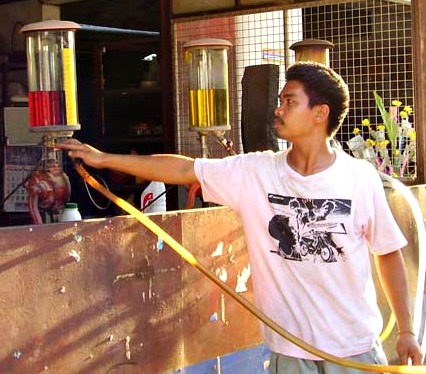
I could always smell the petrol when filling up the scooter tank — because most of the gas stations had only one barrel of the stuff, with a hand-pump and a rubber hose just long enough to reach your tank.

So that smell always brings back happy memories…even though it’s not widely considered a delicate fragrance!

The most noxious of odors — bread?!

Here’s another odd one. I’ll say it slow, in case anyone is likely to faint from pure, unadulterated, lust: Freshly. Baked. Bread.

Mmmmmm! Right?

Wrong. For me, anyway! To afford my trip to Thailand (and Fiji), I had a job working shifts in a bread factory in Australia, where that gorgeous smell permeated the whole building 24 hours a day. Perhaps because I was the only guy, and therefore resilient (or expendable?), I got to be in charge of the enormous, stainless-steel walk-in ovens. I put the bread trolleys in and, twenty minutes later, took them out again. It’s a process that has to be done quickly, or else the oven loses too much heat — but the trolleys themselves get rather warm in the process, and of the four of them, two had broken wheels.

You know how hard it is to steer a supermarket shopping trolley with a jammed wheel, right? Now imagine trying to do it fast — very fast — with a trolley approaching 200 degrees Celsius…and for 12 hours straight. Even my burns had burns.

I survived a whole two weeks in that job, and then as soon as my paycheck hit the bank, I fled straight to Bali to spend it!

To this day I can’t smell baking bread without thinking that pain — the kind that accompanies searing, scorching flesh — is about to follow…

Another smell to avoid: live jaguar!

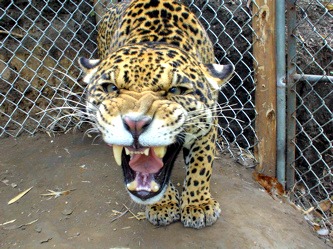
Now I’ll tell you something you don’t ever want to smell: anywhere a jaguar is living! When a jaguar is confined in, say, a remote mountain-top rescue centre in Ecuador (such as the one I worked in and on which my book is based), you have to clean the enclosure out pretty regularly. Now what goes into a jaguar — especially when you’re doing this on behalf of a nonprofit that’s operating on a shoe-string budget — isn’t particularly wholesome.

To begin with, the jaguar’s body odor isn’t noted for its appeal, unless perhaps you’re another jaguar. And of course they scent-mark everything.

But what comes out of them? Bearing in mind they are pure carnivores, living exclusively (in captivity) on carrion. It’s not…I mean, it’s just…. Look. Just don’t ever go there. Trust me on this!

And now for some winners!

Okay, back to the good. Toward the top of my list of intoxicating smells is that of the traditional Australian Sausage Sizzle. Usually held as a fund-raiser for some charity or other, they never fail to rake in the dough because the smell — of frying meat and frying onions — is utterly delicious, utterly irresistible, and carries for miles.

Now that I’m living as an expat in Perth, I get to experience this smell on a regular basis, as there’s a Sausage Sizzle held directly opposite the entrance to my gym every Saturday morning.

The moment I finish my hard-core workout, I come outside and walk full-tilt into that heavenly smell…at just the point when my body is starting to crave sustenance.

It’s almost as though those cooks are waging a personal crusade against my willpower. And my waistline.

And you know what? They win every bloomin’ time.

But my absolute favorite? I’ve got to tell you mine, right? Then you can tell me yours… It’s food again (of course!): the aroma of fresh donuts!

This dense, cakey scent takes me right back to one small stand in Morecambe Bay, in the north of England, where I went on holiday as a child. Yes, to one of my very earliest trips with my parents. I loved that I could get three donuts for £1! And, if I ate them quickly enough, I could pretend as thought I’d never had them, and convince my parents to give me another pound to buy three more! Ah, happy days indeed.

So there you have it. Now it’s your turn to describe the most delicious smells you’ve encountered on your travels — meadows, Himalayan incense, sunlight on rainbows…? Tell us in the comments! And if you happen to have a photo to illustrate this intoxicating scent, send it to me at tony@thedisplacednation.com. Yes, I may make that “la dolce vita” slideshow I’ve been promising before too long…

STAY TUNED for Monday’s post, when expat Anthony Windram recalls some chance encounters with “locals” that have enhanced his sense of the bittersweetness of life in his adopted home.

If you enjoyed this post, we invite you to register for The Displaced Dispatch, a round up of weekly posts from The Displaced Nation, with seasonal recipes, book giveaways and other extras. Register for The Displaced Dispatch by clicking here!

Related posts:

Images: photos of the gas pump and the jaguar are from Tony James Slater’s personal collection.

In honor of Obscura Day, a tribute to 5 obscure treasures near places I’ve called home

It’s been a month of celebration for The Displaced Nation, beginning with the announcement of our very first birthday on April 1 (no fooling!).

We may be nearing the end of the month, but the festive spirit continues unabated. In fact, in today’s post I’m hosting my own little celebration of Obscura Day, which takes place tomorrow, April 28.

As you may know — or maybe not, since by definition, it’s a little obscure! — Obscura Day is where people all over the world get to show off the unusual and little-known places of interest near wherever they call home. Locals volunteer to give guided tours of such spots — and it’s all organized by the folks who’ve set up Atlas Obscura, a user-generated and editor-curated compendium of the world’s wonders, curiosities and esoterica.

To do my part in enhancing the Obscura Day cause, I’ve rounded up the 5 most interesting and unusual places near the various towns and cities I’ve called home in the past five years.
1. Sail Rock (Hin Bai), off Koh Phangan, Thailand

I happened upon this rock, which for me is one of the foremost world treasures, when living in Thailand in 2007. I was staying in Thong Sala, on the island of Koh Phangan, to train as a professional diver.

This small rock protruding from the Gulf of Thailand doesn’t look like much from the surface, but it’s a world-class diving site — and a comparatively undiscovered one, as it lies off a tiny island famed more for its party scene than its underwater exploration.

There is a vertical tunnel through part of the rock which is absolutely teeming with aquatic life.

I had to earn my way in there by learning enough control over my diving gear and techniques to keep the descent smooth and calm. My boss was very concerned that this place would be preserved for future generations of divers, and he knew how clumsy I was out of the water!

But at long last the day came when I was allowed to enter. I drifted gently downwards, spinning slowly in place to take it all in. I was in a tube filled with corals and sponges, surrounded by weird and colorful creatures like nothing on land. Tendrils waved, lethal looking spikes and spines protruded, fur-like coverings rippled. All in brilliant shades of blue, green, yellow…it was the closest I can imagine to being on some alien planet in a galaxy far, far away!

And yet this amazing world had been right underneath my boat the whole time!

2. Lookout Trees near Pemberton, in the South West region of Western Australia

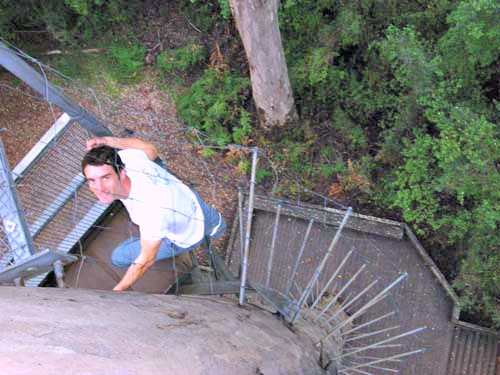
It was not long after I started living in Perth (where I still am!) that I discovered the Lookout Trees near Pemberton — unimaginably tall trees that had been used as look-out posts for vigilant fire-spotters for almost fifty years. Now they can be climbed, just for the hell of it, by anyone who is a) curious, and b) has the balls of a concrete elephant!

It’s a long — LONG — way to climb on steel rungs driven into the side of the trees, 58 meters (or 190 feet!) to the viewing platform, perched rather precariously above the forest canopy. You can see for hundreds of miles from this towering vantage point, which is all the well; you certainly need something to take your mind off the twin thoughts that a) you’re ridiculously exposed, insanely high and supported only by a single tree, and b) you’re going to have to climb back down…

If you do make it up, you’ll be amazed. At your own bravery as much as the view. If you don’t…well, you’re not alone. More than three quarters of the people who try it never make the top.

3. Cheddar Gorge, Somerset, England

My list wouldn’t be complete without an obscure-ish (nothing is truly obscure any more on the overdeveloped British Isles) sight that’s near my original hometown of Highbridge, in Somerset. I speak of the Cheddar Gorge, a 137m-deep split in the Earth’s crust revealing a fantastic labyrinth of caves extending nearly half a kilometre under the ground.

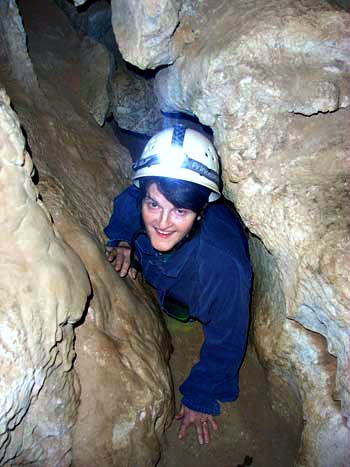
It wasn’t until I was visiting last year that I made the effort to tour the gorge. There’s a company that runs a caving experience for any level of tourist — so I took my Mum! Bless her, she did have fun slithering across ledges, abseiling down underground cliff faces, and best of all — squeezing through tight tunnels carved by water flowing through the caves.

My favorite part was making her laugh by describing the look of just one end of her protruding from the tunnel. She found it so funny that she couldn’t stop laughing to pull herself any further, and was stuck half-in, half-out for quite some time!

Thankfully, there were experienced guides helping us along and tough overalls and wellies — every part of us was encrusted with mud by the time we saw the sun again.

It was quite a relief to emerge from the darkness, especially after the ritual of turning off our helmet lights in the deepest recess of the cave — experiencing an absence of light so profound I could touch my own eyeball without seeing my finger. Spooky…and awesome!

4. Knife-making in Barrytown, New Zealand

An unassuming little bay on the rugged northwestern coast of New Zealand’s South Island, you could be forgiven for thinking there is nothing in Barrytown at all. You’d mostly be right — I passed through there on a road trip in 2010, trying to get a better sense of the island I was living on (yes, I was living in Christchurch at the time).

I checked into a completely empty backpackers hostel (a novelty itself in tourist-mad New Zealand) and noticed a lone advertising flyer on the wall…which is how I came to meet Robyn and Steve, a couple of modern-day artisans, in their home-based knife-making workshop.

Steve is a self-taught blacksmith. Under his tutelage, I heated and hammered metal, ground and sharpened a blade, carved and polished a handle… and within the day I had created a perfect steel knife like something right out of Lord of the Rings!

It was a fantastic feeling to know I’d hand-crafted something so beautiful and unique — well, okay, I had a bit of help from the expert! As a skill, it was highly addictive.

I quizzed him late into the night about just how difficult it would be to make a sword the same way — and got the feeling I wasn’t the first person to ask him that!

If you ever get chance, do this. Obscure? Check! And absolutely fascinating.

5. Sedlec Ossuary, near Prague, Czech Republic

Okay, I wasn’t really living in Prague — I was just passing through in 2006 — but for obscure treasures, this one takes the biscuit!

Not too far from the city — in a suburban part of Southern Bohemia — lies a small Roman Catholic chapel beneath a small cemetery, known as the Sedlec Ossuary or Bone Chapel, as it’s decorated entirely in human bones. There are bones everywhere one looks, from streamers and chandeliers made from complete skeletons, artfully rearranged, to giant pyramids of skulls on display in the four corners. Altar statues and wall decorations are also fashioned completely from bones — it’s estimated that over 40,000 bodies have contributed to the décor!

Perhaps more macabre is that this isn’t some ancient monument to the grotesque, a product of some long-forgotten civilization like the Mayans; no, this is modern work. Although many of the remains date back to the Black Death in the 14th century, the artful sculpting and artistic arrangement of the bones happened just over a century ago!

It really has to be seen to be believed. Especially as photos aren’t allowed — unless you’re very persuasive, and happen to be in there on your own (which is exceedingly creepy)…and happen to have 100 Czech koruna ($4) to bribe the curator!

***

So. What’s unusual about where you live? Are there any undiscovered gems nearby — cool places, crazy things to do, strange legends? Tell, tell! We want to know! Let us know all about them in the comments. Cheers to obscurity!

STAY TUNED for Monday’s post, another expat book review by Kate Allison.

If you enjoyed this post, we invite you to register for The Displaced Dispatch, a round up of weekly posts from The Displaced Nation, with seasonal recipes, book giveaways and other extras. Register for The Displaced Dispatch by clicking here!

Related posts:

Images: Tony Slater’s own photos