The Displaced Nation

A home for international creatives

Tag Archives: Strange sightings

EXPAT MOMENTS: American Dentata

Following last month’s post on expat moments, we start a new series focusing on little moments of expat experience — moments that at the time seemed pifflingly insignificant.

The dentist I went to as a child was located in a Victorian terrace which had been converted into a practice. What must have once been a gloomy living room where the family of the house had sat in sullen silence had now become a gloomy waiting room where the patients of the current occupant sat on musty couches until called for their appointment. When it was finally your turn, you would make your way up a staircase just off from the waiting room; a staircase that always seemed too steep, too narrow, too dark.

There at the top of the stairs were three rooms; two always had their doors shut, but the third would always be open. This was the examination room; no threadbare carpet or peeling plaster here. The smell of must from downstairs replaced with the sweet smell of eugenol. Clean and white with foreboding looking machinery, the centrepiece being that chair, it all felt futuristic and at odds with the rest of the house, and to my imagination it was as if I had stepped through the wardrobe or into the TARDIS. I was in the unknown.

Not so now; there is no peeling plaster, musty smells or dark Gormenghast shadows to navigate at my current dentist’s. I am in a box within a box; that is, like nearly every business in this part of California, the practice is to be found in a strip mall and the examination room is in a perfectly square room that reminds me of the prefab annexes I was sometimes taught in at Secondary school. My mouth is in the painful process of being “Americanized”. A molar is ground down in order to be crowned and slowly a childhood’s worth of NHS fillings, the colour of slate, will be extracted and the teeth will be capped gleaming white.

Bereft of a crumbling Victorian house my nightmarish fears of the dentist may have gone, but they have simply been replaced with a fear of humiliation and mockery. Opening my mouth in a dental surgery here I feel self-conscious. When my dentist starts scraping around in there I feel a whole nation’s health system being judged rather than my own admittedly poor choices.

British teeth and their perceived awfulness have become an established American comic meme popularized by The Simpsons and personified by Mike Myer’s Austin Powers. It’s an entrenched stereotype and always good for a cheap laugh.

When I open my still predominantly British mouth (it’s only partly been Americanized, the vowels and consonants it forms are still resolutely British) it inspires my American dentist to grandiose plans of what she should do with it – rip out those British pegs and start from scratch and craf me an all-American smile.

My understanding is that a teeth whitening course will be a compulsory part of the American citizenship test.

This post was first featured on Culturally Discombobulated

STAY TUNED for Monday’s post, a poll on Wimbledon by Kate Allison.

If you enjoyed this post, we invite you to register for The Displaced Dispatch, a round up of weekly posts from The Displaced Nation, with seasonal recipes, book giveaways and other extras. Register for The Displaced Dispatch by clicking here!

Related posts:

img courtesy morguefile

Which country produces the people who travel the farthest, the longest — and with the most credit cards?

The Displaced Nation was contacted about doing a post on a recent survey by Travelex on “How the World Vacations” — the results of which are summed up in a cool infographic (see bottom of this post).

Since Travelex helps travelers with their foreign currency needs, they were particularly interested in finding out not only where people are traveling internationally but also how they are financing their vacations.

I thought I’d go over some of their findings and see if it helps me to understand this Big Wide World of Travel.

Really? Did I? Or did I do something altogether more irresponsible, and just pull it apart for my own amusement? Well, you all know me by now. You decide…

What’s up with international travel?

More people are doing it now than ever before. Even in the most parochial parts of England, folk are pulling the ferrets out of their trousers, staring at glossy magazine adverts and dreaming of something more glamorous than a weekend caravanning in Skegness.

Rumor has it that almost ten percent of Americans now own a passport; even more significantly, some of them have actually used them!

Yes, travel beyond one’s borders is growing — but so is the human race. So it’s only to be expected, right? (The numbers of people going abroad did decline, however, in 2008 due to the global recession, but in 2009 the upwards trend resumed.)

And now for some stereotype-busting!?

I’m not sure how much the survey tells us that we didn’t already know, to be honest — but I’m willing to be persuaded otherwise, if one of you is a better statistician than I am.

Where do the Brits go on holiday? Hmm. Tough one.

If you guessed Spain, you can give yourself a pat on the back. It is Spain. For two weeks. The survey doesn’t tell us this, but most of them spend the entire fortnight lying lobster-red on the beach before heading for the nearest bar. Had the survey asked what they ate, the finding would have been 85 percent fish and chips, of which most would have been washed down with beer — the local variety of course, because it’s so staggeringly cheap.

The destination that comes in second for the Brits? Right again! France. The main surprise is how few are going to the United States nowadays: just nine percent (versus over fifty percent to Spain and France).

The Americans? They head to Mexico and Canada. Goodness, that’s a revelation! And if they venture any further, it’s usually to Europe, especially the UK and Italy, or to the Caribbean. That said, there are a few brave American souls visiting China these days.

The survey doesn’t report this, but most Americans when they go abroad eat burgers and fries, even when sitting in an Italian restaurant. They drink beer, too — but the good stuff, because it’s still cheap, and imported, which makes everything taste better!

Noticed any Chinese tourists lately?

Thanks to its booming economy, China gets pride of place in this survey. (The Japanese used to be the most well-traveled of all Asians, but I’m afraid they’ve been displaced!)

Interestingly, the 1.3 billion Chinese are represented by a sample of 20,000; anyway, for most of them the average length of holiday is six days. Perhaps it’s not surprising, then, that they end up going to Hong Kong — which I’m not sure counts as foreign these days. (Didn’t my country transfer sovereignty to China in 1997, or have I misremembered something?)

Chinese mostly use credit cards to pay their way, despite almost a third of those being refused. Which is a shame, though I can’t say it surprises me. Would you take a Chinese credit card? Be honest.

And a surprising number, about a third, travel by boat. Still trying to puzzle that one out, given how short their vacations are. Fear of flying, perhaps? I’ve heard some nightmare stories about China Airlines.

How about Brazilians?

Another booming emerging economy is Brazil, which is the fourth country to be featured in a big way in the survey. Guess where most Brazilians go? You got it, their wealthy neighbor to the North, the United States!

But what I’d really like to know is whether the five percent of Brazilians who had their bank cards stolen were the same ones that said they traveled by rail — in which case, it serves ’em right. Everyone knows that if you take a train in Brazil, you get robbed — it’s, like, common knowledge.

International holiday central

Australia, my adopted and much beloved homeland, makes a brief appearance in the statistics for “how long they stay.” We’re at the top of the charts. Did you know that Aussies having the longest holidays IN THE WORLD, by almost a week?

The survey doesn’t tell you how often we go abroad and where we go, however.  Because if you knew that every man, woman, child and most of the sheep here take a foreign holiday every single year — and that the vast majority spend it in Bali — you’d have perished of jealousy by now (or else looking into emigrating!).

As it is, I’m worried that if the Chinese see that Aussie vacations are almost three times longer than theirs, it will trigger a revolt, for which Australia will somehow be blamed! 🙂

Herzlichen Glückwunsch!

In their write-up of the survey findings, Travelex said:

We were surprised to find that the most consistent destination for international travel seems to be Germany. That’s right! Germany. We guess lederhosen and lagers hold a certain amount of appeal no matter what native language you speak.

It’s a fair point — who’da thunk it? Even the Chinese went to Germany. Well, 1.9 percent of them did. (Which, out of the 20,000 vacationers surveyed, means at least 382 out of a country of 1.3 billion.) Germany must be thrilled at this news of its new-found popularity across cultures.

I suppose another surprising finding is that while Chinese are busy having their credit cards turned down, Brits tend to err on the side of caution, doing their money exchanges before they leave, while many Americans are still getting away with using dollars — despite the recent talk of abandoning the U.S. dollar as the single major reserve currency.

* * *

It’s often said that statistics can be made to say whatever you want them to say. And then of course, there’s the old truism that 97.6 percent of statistics are made up on the spot…

Not that I’m saying Travelex did any of this, of course. Far be it from me to cast aspersions on their information-gathering tactics. I’m just wondering if something like this can tell us much. Still, it’s a pretty infographic — the designer of which has certainly earned a vacation overseas, in my opinion!

Please talk to me in the comments. Are you into travel surveys? Have I missed something earthshaking in this one? Am I being too flippant? I’d love to know your thoughts!

Additionally, you can hit us up on Twitter: @DisplacedNation and/or @TonyJamesSlater

And now for that fabuloso infographic:

STAY TUNED for Tuesday’s post reviewing some books by expats in Dubai.

If you enjoyed this post, we invite you to register for The Displaced Dispatch, a round up of weekly posts from The Displaced Nation, with seasonal recipes, book giveaways and other extras. Register for The Displaced Dispatch by clicking here!

Related posts:

Infographic courtesy of Adria Saracino, Distilled Creative.

THE DISPLACED POLL: Which of these 4 exotic sports should be part of the Olympics?

One thing everyone in Britain knows at the moment — if not everyone in the world — is that the Games of the XXX Olympiad (July 27 – August 12, 2012) are coming to London!

Although this grandest of international sporting events is still a ways off, we’re already starting to get into the mood at The Displaced Nation.

So I’ve decided to review some of the sports I’ve observed in my travels around the world that I’d like to see making an appearance at the Summer Olympic Games. And I’ll need your help with deciding on the most suitable candidate, which I’ll of course put forward to the International Olympic Committee — which will of course guarantee its inclusion if not this year then in four years’ time. Well, maybe. 🙂

Because I’m a recent addition to the population of the Southern Hemisphere, I’ve picked some of the more interesting and praiseworthy activities from my part of the world, which, I believe, have been under-represented at a set of games that had their origins in ancient Greece.

I know there’s loads of candidates in the UK, in Europe and the US — we’ve all heard about cheese-rolling and bog snorkeling and beard-growing…haven’t we? Ah well, maybe we’ll get to those crazy sports next week.

I’ll open with an oddly appropriate quote from the American sports journalist Robert Strauss, on how success is achieved:

It’s a little like wrestling a gorilla. You don’t quit when you’re tired; you quit when the gorilla is tired.

With that in mind, let’s get down to the voting for the Next Olympic Sport. Here are your four candidates:

1) From Australia: SHEEP SHEARING

It’s a job; it’s a sport; it’s a hobby…the Aussies even hold a world championship of their own! Apparently seasoned shearers (or “guns”) can have the complete fleece off a medium-sized sheep is as little as two minutes. The current champion is Aussie Brendan Boyle, who in 2007 singlehandedly deprived 841 sheep of their coats in 24 hours! Hell, I think he deserves a medal just for wanting to. Or perhaps something more akin to a straight-jacket…

2) From South Africa: OSTRICH RACING

Yes, it’s true. It’s a sport and everything! They have jockeys and racetracks and…well, everything else you would expect, though it certainly isn’t sponsored by Goodyear. There are ostrich farms that occasionally let tourists have a go — but it’s not for the faint-hearted. Not only are ostriches damn hard to get on, harder to stay on and capable of doing over 40 mph — they’re also quite dangerous. Near Oudtshoorn, where the sport is most famously practiced, there are two or three people killed every year by ostriches — and up to a hundred world-wide! Brilliant. Kicked to death by an ostrich is going on my list of all-time weirdest ways to die!

Amazingly enough, this sport is on the increase. If you happen to live in New Jersey, you might get chance to see some — there’s a camel and ostrich race coming to the Meadowlands Racetrack in four days’ time!

3) From India: ROLLER SKATING LIMBO

I know, not exactly Southern Hemisphere — but this sport is so amazing it has to be given a chance! Check it out:

Like most sports, this probably goes on in other places too. Other, equally crazy places… But for the feat of flexibility this activity requires, you really can’t beat the Birthplace of Yoga when it comes to training. In India, when roller-skating under bars and beams ceases to be enough of a challenge, they try skating under cars! And when that’s no enough — under LOTS of cars!

In October of last year, an 11-year-old boy Rohan Ajit Kokane took advantage of the 35cm ground clearance and skated, blindfolded, underneath 20 cars in a row — a new Guinness World Record! If asked how he’d felt during the challenge, I’m sure he’d have replied “a little low…”

4) From New Zealand: ZORBING

Well, it’s hard to see how rolling down a hill in a giant inflatable ball could become competitive enough for a spot in the Olympics —  unless the challenge was to see how many times you could do it without being violently sick all over yourself, whilst still inside…! (Oh yeah, that would take some cleaning up!)

As an athletic activity though, you can’t beat zorbing. Trust the New Zealanders to come up with such an immensely fun sport! I can foresee zorbing obstacle courses coming into vogue in the not-distant future — after all, you can literally walk on water in one of these things. Or, wait — is that the next Olympic sport? White-water zorbing! Now surely there’s something medal-worthy in that? As for an athlete who would like to compete? Me. I’ll do it! Please…?

So what do you think, Displaced Nation-ers?

Which of these four is worthy of being the next Olympic sport?

Cast your votes in our poll — and if you have any other suggestions, I’d love to hear ‘em! Comment below, or hit us up on Twitter: @DisplacedNation and/or @TonyJamesSlater

Img: Tony James Slater celebrates his zorbing success (2009).

STAY TUNED for Wednesday’s Random Nomad interview with a champion linguist.

If you enjoyed this post, we invite you to register for The Displaced Dispatch, a round up of weekly posts from The Displaced Nation, with seasonal recipes, book giveaways and other extras. Register for The Displaced Dispatch by clicking here!

Related posts:
EXPAT MOMENTS: Two Englishmen in New York

Following last month’s post on expat moments, we start a new series focusing on little moments of expat experience — moments that at the time seemed pifflingly insignificant. This week involves a celebrity encounter. No prizes for guessing the name of the celeb.

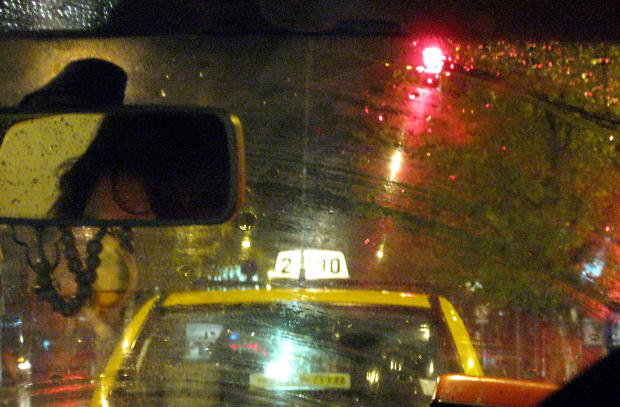
At Columbus Circle, for a fleeting moment, an opportunity presents itself.

A sidewalk collision between two pasty-faced men is avoided as both intuitively, if ungracefully, swerve to avoid bumping into each other. They are both headed towards the same crosswalk where they wait, shoulder-to-shoulder, for the traffic to stop. An observant onlooker might guess — correctly, as it turns out — from their uncoordinated, somewhat flailing gaits that both men are, in fact, English. The onlooker might also note, despite the difference in ages between these two men, that they are dressed similarly; both wear brown brogues, blue jeans, white shirts and blue velvet jackets. However, having established that this onlooker is particularly observant he or she notices more than that; they can see that though they are dressed similarly, the clothes of one of the men — the older man — are expensive and designer label whereas the younger man’s are from a department store.

As these two men wait at the crosswalk the younger man glances at the older and, though he has never before met him, recognizes him immediately. If you were to ask the younger man, he would confirm that he holds very strong views of the older man he is stood next to. If you were to press further, the younger man would admit that he has long judged the moral character of the older man stood next to him. If you were to have asked the younger man only an hour before how he would define “unctuousness,” he would merely would have replied with the name of the older man.

The younger man considers that he could lean in towards the older man and tell him that he thinks he should go “f**k himself.” But the younger man, though he would not admit it, is enthralled enough by the older man’s celebrity that he is striken momentarily dumb.

Instead, the younger man — who in his more vainglorious moments views himself as a modern-day Frank Capra everyman — thinks homicidal thoughts. As they keep on waiting at the crosswalks for the pedestrian light, and car after speeding car passes them, the younger man thinks about how the most … “accidental” … of nudges would send the older man under a New York cab.

And those few seconds, as they wait for the pedestrian light, last for the younger man the thinking and execution of a thousand “accidental” deaths, until finally there is the glow of the pedestrian crossing light and they safely cross the road before separating to go their own ways and the younger man can go back to pretending that he’s at heart a decent chap.

This post was first featured on Culturally Discombobulated

STAY TUNED for tomorrow’s post.

If you enjoyed this post, we invite you to register for The Displaced Dispatch, a round up of weekly posts from The Displaced Nation, with seasonal recipes, book giveaways and other extras. Register for The Displaced Dispatch by clicking here!

Related posts:

Image: MorgueFile

Staring at the sun — and 3 little “nothing” moments in my displaced life

Yesterday in San Francisco, at the corner of Folsom and 8th, I saw a middle-aged man holding up a sheet of dark glass and staring at the sun through it. “It’s beautiful,” he said to me as I passed him on the sidewalk, “so beautiful.”

I smiled in reply to him, secretly wary that he just another cracked, panhandling prophet in a city full of them.

“Do you want to look at the sun through it?” he asked, indicating his sheet of glass. I looked at him confused. “It’s welder’s glass,” he said by way of explanation.

Yes, he must be mad, I thought, and just before I was about to smile a “no, thank you,” and carry on walking, albeit at a hurried pace, he held the glass up at me, and through it, like some wonderful magic trick, the sun appeared as dark disc apart from a brilliant cresent of light at the bottom. That there was a partial solar eclipse had completely passed me by. I hadn’t been able to see the effect with the naked eye, the sun looked larger, a little hazier, but nothing out of the ordinary and it would have passed me by, but here on this particularly street corner was this happy, smiling man performing what at first seemed like a magic trick, and making sure that a small moment of joy wouldn’t pass me. So I took hold of this stranger’s sheet of glass and looked straight at the sun through it, and he was right — it was so beautiful.

This week, The Displaced Nation asked if I could write about three chance encounters experienced in my adopted homeland that I found moving or bittersweet. Moments like I experienced yesterday on Folsom and 8th.

This ties in with an idea that has long interested me, and inspires my personal blog, Culturally Discombobulated — it’s what I think of as little moments of nothing*. Moments that on the surface may seem mundane, or insignificant, but that move you or are the catalyst for deeper thoughts. My own little dipped madeleines.

As this is something I do at times on my personal blog, I am going to reproduce here three little moments of nothing that I have already been posted over there.

—————————————————————————————————————————————————-

1) A rock and a hard place

A garage forecourt in Kingman, Arizona is not the sort of place you expect to visit on a sightseeing tour. But a sightseeing tour is precisely what I am on, and a garage forecourt in Kingman, Arizona, is precisely where I find myself. In fact, this is the second time today I’ve found myself on this same depressing patch of asphalt.

To be fair, I should clarify that I have been on a bus tour of the Grand Canyon and now, late in the day, we are making our way back to Nevada. We’re certainly not stopping in Kingman for reasons of historical interest. We are not here to learn that it was in Kingman that Clark Gable and Carole Lombard were married. Gable driving the two of them all the way here from Hollywood in his cream-colored roadster during a break in the filming of Gone with the Wind. In the town they purchased a marriage license from a dumb struck clerk named Viola Olsen before being married by the nearest Methodist Minister they could find. We are not here to learn about the town’s connection with Route 66. We are not here to learn that it was in Kingman that Timothy McVeigh renounced his US citizenship, turned his home into a bunker and began making homemade bombs.

No, this is a purely pragmatic stop; a convenient place on the I40 to stretch the legs, grab a bite to eat, and empty the bladder. In the morning on our way out to the Canyon we stopped here. I bought a ham sandwich at a Chevron garage as I couldn’t stomach the thought of my other option — McDonald’s — that early. The women working in the garage were pleasant, hefty, corn-fed girls. All three had the same hairstyle, an architectural triumph of ringlets and hairspray piled high atop their heads, it looked like it belonged in a 1987 High School Prom. Once back outside on the forecourt a number of men tried to pan-handle me. There was, I thought, something off about the place. By its very nature, you expect a stop like this to be full of folks on the move, but instead there was an unsettling stillness. A number of the people gave off the impression that they’ve been standing around in this same forecourt all their adulthood. It could be that some of the sketchier elements in the town have a rough idea of what the sightseeing bus’s itinerary is — and they come especially and try and get some change out of the tourists.

And now after a long day, we’re back. A bus load of predominantly foreign tourists, here to pay a brief visit like some cut-price UN delegation: Japanese, Thai, Italian, Canadian, French, Australian and British make up our contingent. Some of us are loud and overbearing, and some of us think that everything needs to be documented by our cameras, and some of us have spent all day complaining, and some of us have spent all day gushing in delight, and some of us — if the snoring has been anything to go by — have spent all day asleep, and we are all thoroughly sick of the sight of each other.

Thanks to the evening breeze, the forecourt smells even more strongly of gasoline, pitch and fried grease than it did earlier. Off we all trot, against my better judgment, to the McDonald’s. Every night it’s a different cast, but it’s always the same show that the locals get to enjoy when the sightseeing tour stops here: a tired group of hungry tourists that mewl and bark and garble in their strange tongues and accents. We soon take over and overwhelm the McDonald’s; we create long lines for the toilets, even longer lines for the food along with a white noise of strongly accented English and misunderstood orders.

It’s all too much for one Arizonian. I think it’s one of the men that pan-handled me early in the day. He has a similar looking beard, the same sun-blistered complexion, and the same jittery demeanor.  He is angry with the Frenchman queuing behind him for what he perceives as an invasion of his personal space, and he is getting irate with how long it is taking the Turkish family in front of him to order, but their English is poor and they and the cashier are struggling to make themselves understood. When he finally gets to place his order and is waiting for his chicken McNuggets, he scans carefully all of the other people waiting in line, and scowls at these interlopers with their ridiculous anoraks and backpacks. He takes his McNuggets and barges his way out through the line, needlessly aggressive. As he passes, he elbows me. “F***in’ furriners,” he mutters.

——————————————————————————————————————————————

2) “In my father’s house.”

The shoes of the man sat opposite me on the “E” train are made from black leather, long since scuffed to grey. They are on the whole unexceptional, but for a large fleur-de-lis that has been embossed below the lacing. Their one time appropriateness for special occasions has been worn away.

On the subway and on the underground I often find myself staring intently at the shoes of my fellow passengers. It is not from a fetish, it is just that I keep my eyes on the floor, avoiding eye contact with those around me, or I keep my eyes on the page of a book I am reading. A few minutes before, when we pulled into a station, I stopped reading, put my book on my lap, and cast my eyes to the floor. Occasionally a glance is stolen, such as the one I make at the man wearing the fleur-de-lis shoes. He is a thin, middle-aged black man wearing a blue suit that like his shoes is faded by wear.  He sings “In my father’s house.” Well, he sort of sings “In my father’s house.” It is not the whole hymn that he regales the train with, it is just that one phrase — half-sung, half-shouted every thirty seconds or so. Looking up I see that most of the other passengers have their eyes to the ground, particularly when he sing/shouts “In my father’s house,” though every time he does that he looks around. I don’t feel he looks around for a reaction, but for recognition. Perhaps feeling that things have descended again into commuter quietness, he again sing/shouts “In my father’s house.” I put my eyes to the floor and look at the fleur-de-lis pattern.

Queens Plaza is his stop. As he leaves the train, he notices the book in my lap — God: A Biography, by Jack Miles. He seems happy with my reading material and looking at me, he sings/shouts “In my father’s house” as if I’m the only of his “E” train flock that understands the importance and virtue of his ministry. Then he leaves the train before I have time to explain that reading a book called God does not make me virtuous as he might think it does, and that the book is a critical look at the Old Testament. It considers God a literary character and so casts him in the light of literary theory. Not that I would have said that if I had the time.

————————————————————————————————————————————————–

3) Angels and iced tea

In this almost empty coffee shop three elderly women, lifelong friends perhaps, crowd round a table and converse over iced tea. They talk at length about their new pastor, about his energy and his youthfulness. They talk at length about angels, about their unwavering belief in them and their experiences of them. The loudest of the women, her hair an unconvincing shade of red, starts to talk about her youngest granddaughter — about how she’s as sharp as a tack, but hasn’t she started asking the trickiest of questions. The red-haired woman confides to her two companions that she has spoken with their youthful and energetic pastor about how to respond to these questions.

For instance, she tells the other two, only the other day the granddaughter had said, “Grandma, why do we have to go to Church?”

She was, she freely admits, flummoxed by how to answer, but then she remembered the pastor’s words. “Aw, sweetie, that’s a matter of faith.”

Yesterday, she continues, when she was driving her granddaughter home from school the girl had asked, “Grandma, why do we call trees trees?”

She once again patiently said to her granddaughter, “Aw, sweetie, that’s a matter of faith.”

In the almost empty coffee shop the three women gently laugh at the ridiculous things that children say, take a sip of iced tea, and start talking about angels again.

*The film director Max Ophüls once wrote about art: “Details, details, details! The most insignificant, the most unobtrusive among them are often the most evocative, characteristic and even decisive. Exact details, an artful little nothing, make art.” Most of my life I seem to spend in search of moments of little nothings that I end up attaching great importance to. It probably makes me a nightmare to deal with it as a friend or companion.

STAY TUNED for tomorrow’s post, an account of la dolce vita from a fresh perspective!

If you enjoyed this post, we invite you to register for The Displaced Dispatch, a round up of weekly posts from The Displaced Nation, with seasonal recipes, book giveaways and other extras. Register for The Displaced Dispatch by clicking here!

Related posts:

RANDOM NOMAD: Isabelle Bryer, French Expat in the City of Angels

Place of birth: Bourgoin, France — a small town between Lyon and Grenoble.
Passport: France and now USA*
Overseas history: USA (New York City): 1990; USA (Los Angeles): 1991 – present.
Occupation: Artist and art instructor
Cyberspace coordinates: Isabelle Bryer Paintings (artist site and blog); Isabelle Bryer Paintings (Facebook page); and @IsaBryerArt (Twitter handle).
*I decided to become a US citizen after I had my first baby. Since she was an American, I thought it would be prudent to be a citizen, too — I’m not sure what I was afraid of! To this day, I can remember swearing allegiance to the American flag in a giant room full of 6,000 immigrants with the song “God Bless the USA” blasting through loudspeakers. It felt surreal but I found it hard not to get emotional with people crying all around me. Some of them had waited many, many years for this moment and were escaping countries where they had few rights and even less opportunities. It made me feel spoiled, coming from France and seeing this process simply as an administrative hurdle.

What made you leave your homeland in the first place?
I left because I couldn’t wait to start living my own life. In France I always felt “the daughter of” or “the sister of” (I have three older brothers). I felt that everything I was doing was dictated by what was expected of me by everyone else. When I arrived in New York, I felt as though I could reinvent myself. Of course my new identity was that of “the French girl” — but at least it felt exotic! I loved that everything was odd, new and exciting.

It took me three months to be able to speak English efficiently, and still I was constantly making mistakes! To this day, I make some mistakes, which never cease to make my husband and two kids laugh! Mainly, I put accents on the wrong part of some words — in French everything is pronounced “flat” with no emphasis on any particular syllable.

During that year in New York, I worked as a fashion consultant. I went back and forth between New York and Europe about five times within the year. I would visit European cities — Paris, Barcelona, Milan, Florence — and act as a “fashion spy,” taking photos and sketches of trendy designs that might inspire American designers. Then I would go back to NYC and compile everything in books that were sold to clothing manufacturers. The job was very badly paid, but it was way more exciting than my old life!

I met my husband when he was in New York on business. A few months later, I moved with him to Los Angeles.

So your husband is an American. Is anyone else in your immediate family “displaced”?
I was the first and only one of my family to leave my town. They all still live there, which is good because I can easily see everyone when I go for a visit.

Can you describe the moment when you felt the most displaced?
When I was living in New York, I was going home late from work by subway. There was a homeless guy in the car trying to eat his hand and screaming. It really terrified me, but I didn’t want to exit before my stop because I was afraid of I’d get lost in the wrong neighborhood. That was the moment when I realized “I’m definitely not in Bourgoin anymore!”

That said, I also remember walking alone down one of the avenues on the west side of New York on a sunny Sunday morning. I felt like a French country girl who’d been dropped in the middle of West Side Story. Everywhere I looked seemed like a movie set. I felt entirely displaced while also having the sense of floating on air. I just loved it.

Is there any particular moment that stands out as your “least displaced”?
When I’m alone and painting in my art studio, I have the feeling of being in the exact right place. I am not sure that I would have found in France what I was supposed to do in life. Sometimes you have to leave your familiar surroundings to start over and become who you were meant to be.

Can you describe the kind of art you do?
I guess the closest description might be “naive surrealism.” My work is very much inspired by folktales.

You may bring one curiosity you’ve collected from your adopted country into The Displaced Nation. What’s in your suitcase?
I’d like to carry in a couple of memories of curious times.

From New York: A night at the wild nightclub Copacabana. In the early 1990s it was the place to be: beautiful people, drag queens and transsexuals, with everyone dancing to disco music. You could see Madonna’s dancers practicing “voguing” in the back room. One night I also found myself starstruck — I was going down the stairs behind Iggy Pop.

From L.A.: A typical afternoon at my favorite place, Cafe Mimosa in Topanga Canyon, which I think must have been the birthplace of the peace and love culture. Mimosa is owned by Claire, also a French native. The most amazing crowds assemble there, making you feel as though you’re a character in a hippie revival play. It’s not uncommon to see barefoot people, a man with a huge cockatoo on his shoulder, another one carrying a baby goat. You might run into someone who wants to read your aura for free. The ads on the cafe’s bulletin board offer the services of horse or dog whisperers, dream interpreters, or people ready to loan you their herd of goat to mow your lawn in an environmentally friendly way. It is one of the best places in the world to sip your vanilla chai and people watch. I would love for you all to experience it.

You are invited to prepare one meal based on your travels for other members of The Displaced Nation. What’s on your menu?

Appetizer: Lemon rolls (spicy tuna on the inside, fresh tuna on the outside, topped with thin lemon slices and pine nuts in a delicious sauce) and Asian rolls from my favorite sushi place in LA, Kushiyu.
Main course: Baked sweet potatoes with marshmallows on top. Watching my mother-in-law serve this dish for the first time was an absolute culture shock. I couldn’t wait to call my family in France to tell them that these crazy Americans put rows of chamallows on top of sweet potatoes to bake in the oven and serve with turkey. To this day, I refuse to eat these baked sweet potatoes with meat but love to have them for dessert.
Dessert: A Galette des Rois that I would make myself. It’s a French cake made of puffed pastry stuffed with frangipane (a mix of sugar, almond powder and eggs). You hide little figurines of a queen and a king inside the galette before you serve it, and whoever finds one in their slice gets to wear a crown for the day. I have successfully introduced this tradition to my family and friends in the United States.

And now you may add a word or expression from the country where you live in to The Displaced Nation argot. What will you loan us?
One of the first expressions I learned when living in New York was “That’s how the cookie crumbles” — basically the American equivalent of “C’est la vie!

This month we are looking at the concept of “la dolce vita” — by that we mean living with an open heart and soul, indulging in life with all your senses. Can you tell me about a recent instance when you felt you were living la dolce vita?
I remember floating on my back in my swimming pool on a perfect warm April morning, watching hummingbirds fluttering by (and also a few helicopters since it’s Los Angeles, after all!). Living in California is still exotic to me. I feel like I’m on a permanent vacation, which I love.

If you were to take the adult equivalent of a “gap year” now or in the near future, where would you go and what would you do?
If I could take a year off, I would take my family to visit a few far-away places like India, China and Japan. I would pack drawing pads and a digital camera and keep a record of all the beautiful things we encountered on our travels. I would use it for inspiration when back in my studio.

Readers — yay or nay for letting Isabelle Bryer into The Displaced Nation? Tell us your reasons. (Note: It’s fine to vote “nay” as long as you couch your reasoning in terms we all — including Isa — find amusing!)

STAY TUNED for tomorrow’s episode of “Libby’s Life”, with another bulletin from Kate — who seems to be regretting her rash promise to “stay with Libby for a while.” (What, not keeping up with Libby? Read the first three episodes of her expat adventures.)

If you enjoyed this post, we invite you to register for The Displaced Dispatch, a round up of weekly posts from The Displaced Nation, with seasonal recipes, book giveaways and other extras. Register for The Displaced Dispatch by clicking here!

Related posts:

img: Isabelle Bryer and four of her paintings.

In honor of Obscura Day, a tribute to 5 obscure treasures near places I’ve called home

It’s been a month of celebration for The Displaced Nation, beginning with the announcement of our very first birthday on April 1 (no fooling!).

We may be nearing the end of the month, but the festive spirit continues unabated. In fact, in today’s post I’m hosting my own little celebration of Obscura Day, which takes place tomorrow, April 28.

As you may know — or maybe not, since by definition, it’s a little obscure! — Obscura Day is where people all over the world get to show off the unusual and little-known places of interest near wherever they call home. Locals volunteer to give guided tours of such spots — and it’s all organized by the folks who’ve set up Atlas Obscura, a user-generated and editor-curated compendium of the world’s wonders, curiosities and esoterica.

To do my part in enhancing the Obscura Day cause, I’ve rounded up the 5 most interesting and unusual places near the various towns and cities I’ve called home in the past five years.

1. Sail Rock (Hin Bai), off Koh Phangan, Thailand

I happened upon this rock, which for me is one of the foremost world treasures, when living in Thailand in 2007. I was staying in Thong Sala, on the island of Koh Phangan, to train as a professional diver.

This small rock protruding from the Gulf of Thailand doesn’t look like much from the surface, but it’s a world-class diving site — and a comparatively undiscovered one, as it lies off a tiny island famed more for its party scene than its underwater exploration.

There is a vertical tunnel through part of the rock which is absolutely teeming with aquatic life.

I had to earn my way in there by learning enough control over my diving gear and techniques to keep the descent smooth and calm. My boss was very concerned that this place would be preserved for future generations of divers, and he knew how clumsy I was out of the water!

But at long last the day came when I was allowed to enter. I drifted gently downwards, spinning slowly in place to take it all in. I was in a tube filled with corals and sponges, surrounded by weird and colorful creatures like nothing on land. Tendrils waved, lethal looking spikes and spines protruded, fur-like coverings rippled. All in brilliant shades of blue, green, yellow…it was the closest I can imagine to being on some alien planet in a galaxy far, far away!

And yet this amazing world had been right underneath my boat the whole time!

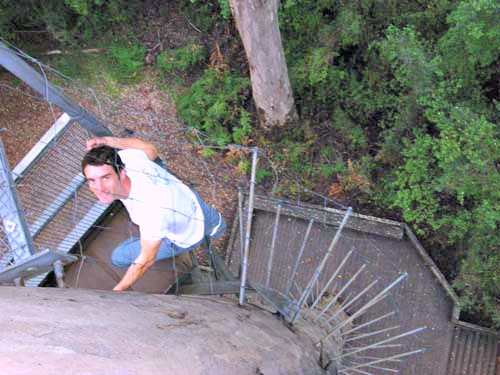
2. Lookout Trees near Pemberton, in the South West region of Western Australia

It was not long after I started living in Perth (where I still am!) that I discovered the Lookout Trees near Pemberton — unimaginably tall trees that had been used as look-out posts for vigilant fire-spotters for almost fifty years. Now they can be climbed, just for the hell of it, by anyone who is a) curious, and b) has the balls of a concrete elephant!

It’s a long — LONG — way to climb on steel rungs driven into the side of the trees, 58 meters (or 190 feet!) to the viewing platform, perched rather precariously above the forest canopy. You can see for hundreds of miles from this towering vantage point, which is all the well; you certainly need something to take your mind off the twin thoughts that a) you’re ridiculously exposed, insanely high and supported only by a single tree, and b) you’re going to have to climb back down…

If you do make it up, you’ll be amazed. At your own bravery as much as the view. If you don’t…well, you’re not alone. More than three quarters of the people who try it never make the top.

3. Cheddar Gorge, Somerset, England

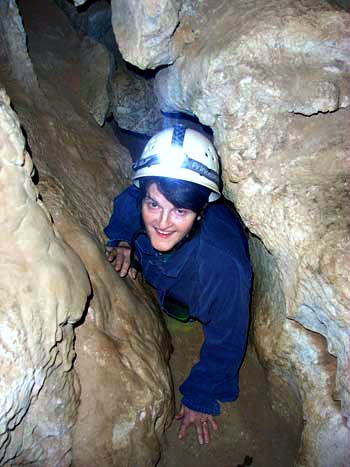
My list wouldn’t be complete without an obscure-ish (nothing is truly obscure any more on the overdeveloped British Isles) sight that’s near my original hometown of Highbridge, in Somerset. I speak of the Cheddar Gorge, a 137m-deep split in the Earth’s crust revealing a fantastic labyrinth of caves extending nearly half a kilometre under the ground.

It wasn’t until I was visiting last year that I made the effort to tour the gorge. There’s a company that runs a caving experience for any level of tourist — so I took my Mum! Bless her, she did have fun slithering across ledges, abseiling down underground cliff faces, and best of all — squeezing through tight tunnels carved by water flowing through the caves.

My favorite part was making her laugh by describing the look of just one end of her protruding from the tunnel. She found it so funny that she couldn’t stop laughing to pull herself any further, and was stuck half-in, half-out for quite some time!

Thankfully, there were experienced guides helping us along and tough overalls and wellies — every part of us was encrusted with mud by the time we saw the sun again.

It was quite a relief to emerge from the darkness, especially after the ritual of turning off our helmet lights in the deepest recess of the cave — experiencing an absence of light so profound I could touch my own eyeball without seeing my finger. Spooky…and awesome!

4. Knife-making in Barrytown, New Zealand

An unassuming little bay on the rugged northwestern coast of New Zealand’s South Island, you could be forgiven for thinking there is nothing in Barrytown at all. You’d mostly be right — I passed through there on a road trip in 2010, trying to get a better sense of the island I was living on (yes, I was living in Christchurch at the time).

I checked into a completely empty backpackers hostel (a novelty itself in tourist-mad New Zealand) and noticed a lone advertising flyer on the wall…which is how I came to meet Robyn and Steve, a couple of modern-day artisans, in their home-based knife-making workshop.

Steve is a self-taught blacksmith. Under his tutelage, I heated and hammered metal, ground and sharpened a blade, carved and polished a handle… and within the day I had created a perfect steel knife like something right out of Lord of the Rings!

It was a fantastic feeling to know I’d hand-crafted something so beautiful and unique — well, okay, I had a bit of help from the expert! As a skill, it was highly addictive.

I quizzed him late into the night about just how difficult it would be to make a sword the same way — and got the feeling I wasn’t the first person to ask him that!

If you ever get chance, do this. Obscure? Check! And absolutely fascinating.

5. Sedlec Ossuary, near Prague, Czech Republic

Okay, I wasn’t really living in Prague — I was just passing through in 2006 — but for obscure treasures, this one takes the biscuit!

Not too far from the city — in a suburban part of Southern Bohemia — lies a small Roman Catholic chapel beneath a small cemetery, known as the Sedlec Ossuary or Bone Chapel, as it’s decorated entirely in human bones. There are bones everywhere one looks, from streamers and chandeliers made from complete skeletons, artfully rearranged, to giant pyramids of skulls on display in the four corners. Altar statues and wall decorations are also fashioned completely from bones — it’s estimated that over 40,000 bodies have contributed to the décor!

Perhaps more macabre is that this isn’t some ancient monument to the grotesque, a product of some long-forgotten civilization like the Mayans; no, this is modern work. Although many of the remains date back to the Black Death in the 14th century, the artful sculpting and artistic arrangement of the bones happened just over a century ago!

It really has to be seen to be believed. Especially as photos aren’t allowed — unless you’re very persuasive, and happen to be in there on your own (which is exceedingly creepy)…and happen to have 100 Czech koruna ($4) to bribe the curator!

***

So. What’s unusual about where you live? Are there any undiscovered gems nearby — cool places, crazy things to do, strange legends? Tell, tell! We want to know! Let us know all about them in the comments. Cheers to obscurity!

STAY TUNED for Monday’s post, another expat book review by Kate Allison.

If you enjoyed this post, we invite you to register for The Displaced Dispatch, a round up of weekly posts from The Displaced Nation, with seasonal recipes, book giveaways and other extras. Register for The Displaced Dispatch by clicking here!

Related posts:

Images: Tony Slater’s own photos

Party big! 5 of the world’s biggest bashes, to end all bashes

“Celebrate we will, because life is short but sweet for certain.”
Dave Matthews Band, lyrics from “Two Step”

Because it’s our birthday here at the Displaced Nation, I’ve been having a think about my favorite parties from around the world. I’ve been to quite a few!

There are some I’ll never forget, some I wish I could forget — and some I’m still hoping to experience…

So today I present my top five picks of parties that I wish could be held every year in my own back yard, as it were, for my immediate attending pleasure.

For my first choice, there is simply no contest:

1) The Full Moon Party (Koh Phangan, Thailand)

This Full Moon Party is the bash to end them all. Upwards of 20,000 crowd the Haad Rin beach, on the southern tip of Koh Phangan, an island in the Gulf of Thailand. The party is so epic it has spawned imitators all around the world (especially in Thailand). There are people twirling fire sticks and jumping through fire hoops. Bars line the beach, and vast amounts of alcohol in plastic buckets fuels frantic dancing right through ‘till dawn — and beyond.

By the morning the survivors, usually the most party-savvy (or those who’ve paced their drinking), head off around the coast to start the after-party!

Everyone else falls into two categories:

  1. Those who made it home before they passed out, in which case they’ll have nothing worse than a hangover and the occasional burn mark as souvenirs.
  2. Those who collapsed on the sand mid-party. These unfortunates most likely will have been robbed of everything — including clothes. They face the unenviable task of getting home with no money, no car/bike keys, a raging headaches and a crippling sunburn. That, and the scorn of local taxi drivers, who tend to frown on naked passengers. (You only make this mistake once!)

And if this Full Moon bash is slightly too hard-core and crowded for your tastes, the enterprising organizers have come up with lesser parties for every week of the year: Black Moon, Half Moon, Blue Moon…along with the occasional Jungle Party scattered between.

Go there. Do it. Your liver will never be the same again!

TONY’S TIP: Don’t do drugs. Plain-clothed cops roam the beach, and have been known to try and sell drugs to unsuspecting tourists — and then arrest them if they agree to buy!

From one that’s free to all to one that’s recently become very hard to get to:

2) Burning Man (Black Rock Desert, Nevada)

Burning Man, a week-long event that pays tribute to radical self-expression, began as a bonfire ritual on the summer solstice. It is now so popular that it’s running a lottery system to see who gets to go. If you get the chance, it has to be one of the best New-Age festivals around: a mix of art, performance, story-telling, meeting, camping and surviving, all under the relentless desert sun (or the freezing desert night!).

Oh, did I mention? It’s in the desert.

Self-sufficiency is the key. Leave no trace. Meet up with like-minded, free spirited people from all over the world, and burn a gigantic man-shaped bonfire with them. Then cover yourself with body paint and go do something arty.

Sounds like heaven, eh?

Alas, my friends at Technomadia (a pair of technology-enable nomads) couldn’t get tickets this time, despite being an organizational hub for a whole “sect” of attendees over the last few years. As far as I know, the policy of offering tickets via lottery has been universally hated, and is under review.

The festival starts the last week in August, and the namesake (giant burning man) event takes place on the Saturday night before Labor Day.

And now to one that’s still just about doable:

3) Glastonbury! (Glastonbury, Somerset, UK)

Depending on your point of view, the Glastonbury Festival can be seen as one of the most famous music festivals in the world, with five days of top acts for every taste … or a deafening week camping in a muddy field in England!

I had to include it, because (to my shame) I’ve still never been — despite the fact it’s held less than 15 miles from the house where I grew up! Yup — I lived close enough to smell the unwashed hairy hippies! (I’ve been to the Full Moon Party on Koh Phangan but not to the Glastonbury Festival — now is that displaced, or what?)

But tickets are very expensive, and you’ve got to be quick. I happened to be home visiting someone in hospital on the day the tix went on sale in 2011. There was a whole ward full of people sitting there on laptops, hitting the refresh button constantly, trying to buy them — only three (out of 14) managed it!

Those lucky few contended with the notoriously poor English weather, which turned last year’s festival into a filthy quagmire — but I expect they were far too stoned to care!

TONY’S TIP: Get in FREE as a volunteer litter picker. It’s getting tougher though — you have to join a festival staff agency and convince them you actually plan to pick up litter, instead of doing what most of the staff end up doing: watching bands and getting high!

Moving right along…is it cheating to have another one from Thailand? Well if it is, I don’t care, as this one is unmissable:

4) Songkran (Thailand)

The Thai New Year festival, known as Songkran, is the most fun you’ll ever have with your clothes on. (Anyone who’s traveling in Southeast Asia, hurry up: it’s held this week, April 13-15.) Just don’t expect your clothes to survive the ordeal! This country-wide water fight comes to a head in the cramped city streets, where tourists and locals stand toe to toe — and try to drown each other! Traffic snarls every road, and from the back of every truck buckets of water are being flung.

The year I attended (I was living in Bangkok), I drove up to a policeman and threw a water balloon right in his face — the only time I’ve done that in my life! You gotta watch out for those cops, though — they’re usually packing…super-soakers! The long squirt of the law should never be underestimated; not least because these guys have more practice at firing!

Drinking is a big part of the fun in the touristy areas of Bangkok, as is the throwing of flour, food coloring, dyes and pastes of many kinds — hence the clothes warning. But even if you ruin your clothes, believe me, it’s worth it!

And then, there is the granddaddy of them all…

5) The celebration to mark the end of the Mayan Long Count calendar (Belize)

This has to be most exclusive event on the planet. Attend this year’s Maya Winter Solstice in Chaa Creek, Belize, and you’ll own ultimate bragging rights — it’s as simple as that.

Brangelina wedding? Pah, there’ll be another one. Maybe two.

Meteorites will strike, popes will die, entire nations will rise in triumphant revolution, and then fall — again and again and again.

But the end of the Mesoamerican/Maya/Mayan Long Count calendar will only ever happen once, because a) the first one has taken 5,200 years, and b) there’s no ancient Mayans left to do another count. So even if you live to be a million, you still won’t get to see this party again!

Not to mention, the world is going to end.

Joke! In fact, no one knows what the end of the long count signified to the Mayans — other than it being time to buy a new calendar. There is NO apocalyptic event prophesied in their culture, and never was. But it does make you think — just why did they pick the winter solstice, 21st December 2012, for the end of their five-millennia-long cycle?

Don’t you want to know? I do!

So that’s where I’ll be. Although I may have to sell my house to afford the ticket. And…I don’t own a house.

D’oh.

So what have I missed out, eh? This is a great big world full or parties and festivals — what are your favorites? And why are they so great?

Let me know in the comments!

STAY TUNED for tomorrow’s Random Nomad interview with author Wendy Williams (she recently contributed a popular guest post to The Displaced Nation).

Related posts:

img: MorgueFile

Interesting celebrations around the world, as selected by Canada’s famed Dr Magister

Continuing this month’s theme of celebrations, today’s post sees Dr Simon Magister, a social anthropologist and skateboarding enthusiast from British Columbia, select his most interesting and strangest celebrations from around the world. We haven’t verified Dr Magister’s research, but we’re pretty confident that he can be trusted.

1. Cargo Cult Ceremony

Every March 13th on the island of Manus in Papua New Guinea, the members of the Tadel tribe celebrate Inspection Day. Being a “cargo” cult, this ceremony involves the chief of the tribe donning the ceremonial overalls of an aeronautical engineer and then conducting a two-hour safety check on the life-size straw replica of a plane that the tribe crafted. When the safety check has been completed, the tribe celebrates with roast hog served on in-flight meal trays whittled from wood.

2. The Festival of the Badger

A leading figure in the Celtic revival of the late-Victorian era, Amelia Mudd, established the Festival of the Badger in her home village of Eppingsop, Wiltshire. Now in its 125th year, and popular with adherents of Druidism, the festival, celebrated on the Spring Equinox, sees a giant wicker badger burnt on the village square. The success of the festival can be seen in the Wiltshire Tourist Board rebranding of the county as “the county of badgers.”

3. Nicaragua celebrates Australia Day

Following Crocodile Dundee‘s a.k.a. Paul Hogan‘s brave service fighting for the Sandinistas during the Nicaraguan Revolution, the Nicaraguan government have declared Australia Day an official public holiday.

4. Ted Bernard Month

The residents of Parlor, Arizona probably weren’t expecting too many changes when they voted in mechanic Ted Bernard as the town’s mayor in 2008. Mayor Bernard, however, had other ideas, one of his first acts being to pass a town ordinance that the month of May was now to be known as “Bernardbury in Parlor.” During Bernardbury, downtown Parlor is host to numerous arts festivals. At Cafe Duvet people can enjoy the jazz festival (featuring Ted Bernard playing his saxophone), at Stern’s Movie House there’s the film festival (featuring exclusive footage Ted Bernard filmed on his flip) and at Claremont Green people can enjoy Shakespeare in the Park (featuring performances from the RSC, Steppenwolf Theatre Company, and Habima, the national theatre of Israel).

Whether Bernardbury continues when the mayor’s term ends in 2013 is, as yet, undetermined.

5. The war that wasn’t

Each October 3rd the island of Vosha in Micronesia commemorates the end of the conflict known as the Battle of Joshua’s Chicken, which most historians now agree didn’t actually take place. The reason for the confusion lies in the published memoirs of Captain William Joshua of the Royal Navy, published in 1817. Joshua recounts how in the 1790s when traveling in the Pacific and in need of fresh produce as well as wood to make some minor repairs to his ship, he docked off the island of Vosha where he was cordially greeted by the island’s king. Joshua’s tale is that sick of all the breadfruit they’d been eating, the crew’s cook stole a chicken that belonged to the king,  and treated the crew to, according to Joshua’s memoirs, a “delicious, richly broth’d casserole.”

Unbeknown to the cook, the chicken was, in fact, the Voshaian’s living deity. Enraged at the death of their god, the people of Vosha engaged in a three-day struggle with the British. At the end of the three days Joshua surmised that the casualties on the Vosha’s side stood at six hundred, with their main settlement burnt down. Joshua then ends that chapter with the cook’s recipe for chicken casserole.

Most modern historians, however, feel that Joshua’s account has no basis in fact and that at no point did the people of Vosha ever worship a chicken. Professor Hopkins of Cornell has posited that Joshua’s memoir — where Joshua also alleges that he had been the lover of both George III and Catherine the Great — was the work of a man writing out delusions brought upon by the late-stage syphilis he must have been suffering from.

What strange celebrations have you seen? Dr Magister is curious to know for his research. From Rodeos to cheese-rolling…what did you think of them?

STAY TUNED, next Monday sees Mary-Sue Wallace dishing out advice like a homeless shelter dishes out soup.

Related posts:

Image: MorgueFile

Thoughts on beauty — and chinos

As regular readers of this blog are doubtless aware, The Displaced Nation always likes to have a monthly theme around which its daily posts pirouette. This month’s theme sees us turning towards the world of fashion.

That leaves me in the somewhat awkward position of having to foist a fashion article onto you all. I confess, and again regular readers won’t be surprised to learn this, that this is not a topic that I am well versed in, I am a skinny guy that has never worn skinny jeans. My own fashion tips begin and end with the advice that you cannot go wrong with a chinos and shirt combo. The shade of beige in the chinos varies and so does the color of the shirt, which can range from powder blue to salmon pink — but that’s still not very exciting, is it?  So unless you want to dress like an ITN foreign correspondent, I’m not really the person to whom you should be paying attention when it comes to fashionista matters.

Perhaps sensing my uneasiness with this topic, it was suggested by others here at The Displaced Nation that I might want to write about whether there is a universal idea of beauty.

This seemed like a better idea than my posting about fashion. I could, I quickly realized, start the article with the old cliché about how “beauty is in the eye of the beholder.” Once that was out of the way, I could suggest that beauty is subjective, doing so by trotting out all those usual cultural differences — very appropriate in the context of The Displaced Nation — that confuse a modern Westerner: the Kayan Lahwi tribe in Burma whose female members wear brass coils around their neck to give the appearance of an elongated neck; the ancient Chinese practice of feet binding; the Essex facelift.

Once that was done I planned to counter the idea of different cultural ideas about beauty by positing that beauty standards are in fact objective — that perhaps Plato was right and beauty exists in his perfect forms. This new point of view would necessitate trotting out the evolutionary psychologists who have conducted studies on infants as young as two months, showing that they gaze at faces judged more attractive longer than the faces of those judged ugly. This, the psychologists contend, could suggest that beauty is indeed innate, that they are objective standards. As babies tend to cry when they see me, it would also prove conclusively that I am one ugly fecker. I would then have ended the article by referencing Keats’ “Ode on a Grecian Urn,” (“beauty is truth, truth beauty”) in an effort to look more learned than I am.

However, that line of argument didn’t seem so convincing. As I tried writing that post, I kept catching sight of myself in the unfortunately huge mirrors that make up the sliding closet doors in my room. They are huge and as this is rented accommodation I can’t do much to change them. So as I typed away, I would keep seeing my reflection and think hmmm, its probably bad karma for you to be pontificating on beauty, Windram. So with that in mind, I think it’s probably fairer to nudge you in the direction of the BBC Radio 4 series In Our Time — specifically, the episode that discusses the history of beauty as a philosophical topic — while I go off and iron my chinos.

STAY TUNED for an interview with Random Nomad Annabel Kantaria.

Related posts: