The Displaced Nation

A home for international creatives

Tag Archives: Spiritual enlightenment

A clueless immigrant’s 5 expat highlights for the year

I am not doing well with the passing of the years: they are over at an alarming rate. That we are already coming to the end of 2012 fills me with anxiety and dread. So perhaps I am not the best person to be in charge of one of those prerequisite “best-of-the-year” lists that fill up space this time of year. Nonetheless I have revisited my 2012 posts on The Displaced Nation to come up with my personal expat highlights for the year. Do join me on my existential journey.

1. “Travel for excitement, not enlightenment”

We started 2012 with a look at travel and moving abroad as a search for spiritual enlightenment. While I may possibly in the minority among this blog’s readers in finding the Elizabeth Gilbert idea of travel patronising, irritating, and misplaced, I do think travel is important. It (when done properly) broadens the mind; it can also be the most exciting thing you can do in your life. But — let’s be clear — in of itself buying a Virgin Airways ticket does not nourish your soul. That can be done much closer to home.

Now most of us can’t be as amazing as Pico Iyer — that’s just the burden we have to carry through our lives. We can’t just move to rural Japan and fetishize solitude. We will still spend our evenings in the grocery store, our weekends in the mall, they will still be those 2.4 children and those bloody traffic jams — as David Byrne sang, “same as it ever was.”

What I am going to do try and do in 2012 (and yes even though it’s mid-January I still feel it is early enough to mention resolutions in a post) is to take advantage of technology to find some solitude. I’m not going to posture by lighting an incense stick as if the path to personal enlightenment lies in sniffing in something called Egyptian Musk. What I am going to do is take advantage of the quiet moments that my everyday life provides by sitting and concentrating at a task and deriving satisfaction from that. It may be by learning programming, a foreign language, or taking advantage of the sheer, vast number of books that are now available for free on Google books. In this well-known brand of coffee shop while Tony Bennett plays to me and the tattooed man and the policeman and the baristas return to talking about the smaller one’s mother-in-law, I have on my iPad access to a library of books greater than the Bodleian — reason enough not to throw the iPad across the room when I’m annoyed by Iyer.

2. What to wear for an Independence Day party

Being British I always find Independence Day just a little bit awkward. Choosing appropriate clothing is always something of a dilemma.

Finding the Target employee that looked the most patriotic — the telltale signs are a sensible haircut, good posture, and a strong jaw line — I asked where I might find the most patriotic T-shirts in store. Leading me to a selection of T-shirts featuring the stars and stripes, it was difficult for me to contain my disappointment with this somewhat anemic selection.

“Hmmm, do you have anything more patriotic?” I asked.

The patriotic youth seemed a little confused, a look that made him seem increasingly un-American.

“I was,” I said, “looking for something with a little more pizzazz. Something more OTT. I was kinda hoping you’d have one where Jesus is cradling the Liberty Bell while a bald eagle looks down approvingly?”

3. London Olympics

In 2012, I was swept up by the Olympics far more than I anticipated. What I did not enjoy, however, was the poor coverage I had to put up with by NBC which revealed their own awkward world view.

The Games have made me homesick. My usual cynicism is no match for the enthusiasm of my London friends, all of whom seem to be attending events (if Facebook is anything to go by) while I sit watching it in one of the dullest towns in California. The opening ceremony elicited in me a mixture of pride and embarrassment — and as such, perfectly encapsulated for me what it is to be British. The ceremony also irritated Rush Limbaugh — so clearly job well done on Danny Boyle‘s part there.

4. Are you an imposter or a chameleon?

The release of a new documentary film about the French con man, Frédéric Bourdin, led to my favorite discussion of the year: what sort of expat are you, an imposter or a chameleon?

I know that I find myself occupying roles I had previously not thought I would before. Sometimes I am the imposter. I play a role that isn’t me. In my case, it may be exaggerating national characteristics and language that I feel people expect of me, but that I would never use back home. At other times, I find myself trying to be the chameleon. Trying to scrub away my otherness so that no attention is drawn to me because I sound different, or behave differently.

5. Donkeys and elephants: The US Presidential election

Here in the US, 2012 was marked by the presidential election. As a resident alien, a domestic election is an interesting thing as you have one foot in and one foot out.

It’s a strange feeling waking up on the morning of an election in the country that you live, and not voting. Equally, it’s a strange feeling posting your ballot in an election 6,000 miles away as I did in the last British election in 2010.

What are some of your expat highlights of the year? If you have a blog, feel free to leave links to a favorite blog post you may have written.

STAY TUNED for next week’s posts.

If you enjoyed this post, we invite you to register for The Displaced Dispatch, a round up of weekly posts from The Displaced Nation, with seasonal recipes, book giveaways and other extras. Register for The Displaced Dispatch by clicking here!

Related posts:

In honor of Valentine’s Day, top 10 travel and expat posts on finding love abroad

My mother used to disapprove of Valentine’s Day. Although she would indulge our need to cut out elaborate paper valentines and bake heart cookies, she always made sure my sisters and I knew what she thought — that it was a fabricated consumer holiday for boosting sales during the winter doldrums.

Despite her remonstrations, I always used to look forward to February 14 — even (especially!) when living outside the United States.

For a start, they have much better chocolate abroad. Plus you get to try new foods that other cultures find seductive — see Kate Allison’s scrumptious post of a couple of days ago.

And your idea of what constitutes romantic adventure changes, too, as you expand your visual repertoire to include the world’s most stunning settings. Indeed, why not pop the question as the sun sets over the City Palace and Lake Pichola in India’s Land of the Kings? (For this and nine other exotic locations for marriage proposals, see Annie Fitzsimmons’ recent article for Forbes.)

In that connection, I was distressed to learn that couples who are thinking of heading to Venice, that magical city of watery landscapes, for a Valentine’s escape may need tips from Guardian Travel on how to avoid feeling ripped off. From the sound of things, it may be safer, and perhaps a good deal more enjoyable, to stay at home and watch The Tourist

But let’s leave the film discussion for later in the month, when we’ll be doing a series of posts in honor of the Oscars. Right now we’re honoring Valentine’s Day, and I’m urging you all to get into the Valentine’s spirit. To aid you in that aim,  I’ve compiled a list of 10 online articles that address the specific needs of those who are looking for romance abroad. As usual, and as befits our blog’s slightly irreverent tone, they’re from a mix of indie and conventional publications.

Click on any or all categories that apply:

Stories of love on the road

In addition to the story told by TDN’s own Tony James Slater of his own love affair — which sparked off no end of wonderful romantic tales in the comments — I enjoyed these two posts:

1) Modern Love — A Place to Lay My Heart (8 January 2012)
Author: Elisabeth Eaves (@ElisabethEaves)
Publication: New York Times, Sunday Style section (@nytimes)
Synopsis: Two single journalists in their 30s meet up in Mexico to write about tequila. At first, romance seems off the table. Both are commitment phobes: they see travel as their first love and like nothing better than plunging into a foreign culture. But then…something happens, and for the first time, instead of opting for a distance relationship, they take the leap. (Tequila will be served at the wedding.)

2) 10 Reasons Why You Should Marry a Foreigner (Like I Did) (Archived: 10 November 2010)
Author: Corey Heller (@MultiLingLiving)
Publication: Multilingual Living blog
Synopsis: Chances are, if you spend a lot of time abroad, you may end up marrying, God forbid, a foreigner! Hey, it’s not the worst thing that can happen. Some of us have done it multiple times and lived to tell the story. Still others, such as this week’s Random Nomad, Toni Hargis, fell for a foreigner in their home countries and followed him/her abroad. Heller, who met her husband in Ireland (he trailed her back to the US), lists her own ten reasons for committing such a foolhardy act — everything from his “glorious accent” to her enjoyment of a challenge to the fact that he is her true love (now fancy that!). Actually, the one that sticks with me is #3: being a German (no, he’s not Irish), he craves good chocolate just as much as she does! (But perhaps that says more about me than it does about them?)

The practicalities of dating abroad

If you do decide to make someone you meet in another culture the object of your affections, there may still be some practical concerns. These four posts should help you finesse these sometimes awkward moments:

3) Dating expectations worldwide: Who pays? (4 February 2011)
Author: C. Noah Pelletier (@flyingknuckle)
Publication: Matador Network (@matadornetwork)
Synopsis: From Pelletier’s unofficial survey of dating etiquette across nine cultures, we learn that German men excel at subtle flirting whereas Turks are much more direct; French don’t really “date”; Mexican men wear clean suits; and Japanese are into group dating. But on the all-important question of “who pays,” all nations are in agreement: THE MAN!!!

4) Don’t pull out the chair — but do hold open the door! (Archived: 26 October 2011)
Author: Tanja from Germany
Publication: InterNations blog (@InterNationsorg)
Synopsis: Notably, one of Tanja’s top concerns is:

Who pays for the meal? Does one split the bill, or does he expect to pay — or even worse, must I pay?!

Too bad Noah Pelletier’s post for the Matador Network wasn’t yet available for Tanja’s perusal (see #3 above), or she needn’t have fretted — especially as it’s Mexico, where men have been known to TAKE OFFENSE if a woman offers to pay. Also, she might not have been surprised when she received more flowers on first dates in Mexico than in her entire life in Germany. Still, Tanja’s story (which ends very happily) is a tribute to the power of persistence and the efficacy of muddling one’s way through. Just one thing I’m still not clear on: do Mexican men expect you to open the door for them, rather like Japanese men expecting you to let them exit the elevator first? (See her post title.)

5) Ten Foreign Words for a Romantic Valentine’s Day (9 February 2012)
Author: Justine Ickes (@justineickes)
Publication: Culture Every Day blog
Synopsis: So as not to be totally culturally clueless, it’s important to master a few other romantic terms/concepts. In Japan, for instance, if you hear someone say bakushan as they look you in the face, then they’re probably not a romantic prospect. The expression is used when you think someone looks cuter from behind! (If, on the other hand, you hear the word kawaii, things may be looking up!)

6) Sex when traveling: location, location, location (29 January 2012)
Author: Laurence Norah (@lozula)
Publication: Finding the universe blog
Synopsis: Norah illustrates (literally — yet tastefully, I hasten to add) various options that travelers have for “getting jiggy on the road”: dorm rooms, tents, showers, beaches, backs of camper vans, and (best of all!) private rooms.

Lonely hearts in foreign lands

When all the world is going gaga for romantic love, it can be lonely if you’re not doing so well in that department, particularly if you’re already feeling isolated because of being so far away from your homeland. The following four posts should help with that predicament:

7) 8 Empowering Ways a Traveling Single Female Should Celebrate Valentines Day (Archived: 13 February 2011)
Author: Lainie Liberti (@ilainie)
Publication: Raising Miro blog
Synopsis: From LA, Laine has been traveling with her son, Miro, since 2009 in search of a simpler life. When still in the States, spending Valentine’s Day on her own was no big deal:

it was easy to ignore the day all together or grab a group of my amazing single girl friends and have an AbFab marathon complete with bottomless cosmos.

But what about now that she’s on the road? Though the post is a year old, her suggestions — some aimed at those who enjoy solitude (movies, nature, dinner-in for one), and others, at those who would prefer being with people (volunteering, meet-ups) — won’t go out of style any time soon, and are good for any day of the year.

8) Help! Nobody Wants to Date Me! (Archived: 15 December 2011)
Author: Chris Laub (@Travel_rtw)
Publication: Backpacker Savings blog
Synopsis: Chris claims he’s “undateable” because of his need to spend almost half of the year traveling. He’s not proud of that fact:

The truth is I want to be in relationship, but my deeper desire to travel and have fun makes it seemingly impossible.

Still, the travel addict’s life does have its compensations. He’s moving to Brazil for the 2014 World Cup, leaving him free to hook up with a Brazilian woman. As he sees it:

…running around chasing women in exotic countries and enjoying no-strings-attached travel romances isn’t a bad alternative

— though methinks he doth protest too much!

9) Offbeat Traveler: Unromantic places around the world (6 February 2012)
Author: Jason La
Publication: Los Angeles Times travel section (@latimestravel)
Synopsis: Kissing a well-kissed stone in Ireland, encountering the venomous Komodo dragon in Indonesia, peering into the Gates of Hell in northern Turkmenistan — after such experiences, being wounded by Cupid’s arrow may seem like light relief. (In addition to his seven unromantic suggestions, La thoughtfully provides a link to the LA Times‘s post on 10 romantic cities, in case you get lucky at some point! Chris — see #8 above — may be in with a chance: Rio is on the list. Venice, however, doesn’t make it — not even as a “dishonorable mention.”)

10) Valentine’s Day — the perfect holiday for one (4 February 2012)
Author: Amy Chavez (@JapanLite)
Publication: The Japan Times (@japantimes)
Synopsis: On Valentine’s Day in Japan, the custom is for men to get showered in chocolates by women — women have to hold out for “White Day” when men allegedly return to the favor. But as Chavez points out in her Japan Times column, Japanese women tend to buy just as much chocolate for themselves as they do for the guys, while also indulging themselves with a Hello Kitty trinket or two. I believe that Chavez intends the title of her column — “the perfect holiday for one” — to sound ironic as she finds the Japanese interpretation of Valentine’s Day a little twisted. Perhaps I lived in Japan too long, but I don’t agree. Or maybe it is twisted, but I can hardly blame the Japanese for that. (The other day I noticed that an Asian publication was carrying a story about how the Bronx Zoo encourages people to pay money to give their sweetheart’s name to one of its Madagascar hissing cockroaches, in time for Valentine’s day. After being bombarded with information like this, is it any wonder that Asian women would prefer to buy their own Valentine’s gifts?) What’s more, all women (and not just those who are single) stand to learn a lot from our Japanese sisters: 1) if you can’t rely on the men, then eat chocolate; and 2) never mind diamonds, Hello Kitty charms are a girl’s best friend!

Bonus feature: “Valentine’s Day and the displaced life”

Living abroad can have other benefits besides finding your perfect mate. It can also help you adopt a more expansive vision of life’s rich tapestry and where “love” fits in. To take but one example, the Sufi notion of love entails falling in love with ideal attributes rather than particular people — which, as Turkish writer Mustafa Akyol points out in his article “The Shariah of Love”, leads to a great deal less heartache than Western “romantic love.” (Hmmm…the idea that love shouldn’t hurt — how novel!)

Another potential benefit of the displaced life is the joy in discovering what it feels like to love an actual place, as was the case for British journalist Jane Alexander when she visited Jerusalem. Despite not being religious, she fell smack dab in love with the city and all it stands for:

Love. Total overwhelming Love. Unconditional love that sweeps away all prejudice, all difference, all wanting, all needing, all sense of I, of ego.

Sounds pretty cool, doesn’t it? And no need to worry if it’s unrequited…

What’s more, travel can also open your mind to rebooting Valentine’s Day itself. This year Causes.com is on a mission to rename it as Generosity Day, and I noticed just now that one of the causes we featured on this blog during Global Philanthropy Month, Free the Children, is asking for donations to empower Kenyan women in bee-keeping businesses. “Bee my Valentine!” sounds a great deal less corny when you know it’s for the sake of others on the globe whose lives are less fortunate…

Come to think of it, could my mother have been right about Valentine’s Day being overly commercial? Best to make that up to her on Mother’s Day — except she doesn’t believe in that either! 😦

* * *

Question: Can you suggest any other posts that should have made the list?

STAY TUNED for Monday’s post, when Tony James Slater, who is rapidly becoming our in-house expert on searching for love in foreign lands, takes up the timely topic of transcending language barriers with potential partners.

If you enjoyed this post, we invite you to register for The Displaced Dispatch, a round up of weekly posts from The Displaced Nation, with seasonal recipes, book giveaways and other extras. Register for The Displaced Dispatch by clicking here!

Related posts:

Lyn Fuchs, American expat in Mexico: A raider of the lost art of philosophizing

As January comes to its close, our theme of Spiritual Enlightenment Through Travel would not be complete without a reference to Lyn Fuchs, author of Sacred Ground and Holy Water, and publisher of Sacred Ground Travel Magazine.

Lyn, of course, was our 5th Nomad of Christmas, where he stated his Most Displaced Christmas Moment was:

On December 24th 2008, [when] I was displaced from the palace of an elegant and voluptuous Saudi princess, after I attempted to demonstrate a “traditional Christmas goose.” I still fantasize about returning and showing her how to do a “traditional Christmas stuffing.”

From this, we can gather that the Political Correctness Movement is something that doesn’t bother Lyn a whole lot. Probably that’s the reason I fell in love with his first book, Sacred Ground & Holy Water, and will be buying his second, Fresh Wind and Strange Fire, when it is published.

If your only knowledge of Lyn is via his Christmas Nomad answers, it would be easy to assume that this un-PC, flippant personality is who he is. You may be wondering why someone with the nickname of Lyndiana Jones is the subject of a post about spiritual enlightenment.

To answer this, let me refer you to the Chique Show on Blog Talk Radio, where author Barbara Conelli interviewed Lyn this month.

In forty-five minutes, Lyn talks about his books, his writing, his philosophy on life – and how they came to be that way.

As the saying goes, never judge a book by its cover.

Or a deep thinker by his Christmas Nomad answers.

Here are some highlights from the interview:

On Mexico:

Lyn has lived in Mexico for a total of six years, and is currently Professor at the University of Papaloapan.

Mexico is probably the best place on earth to learn how to practice nirvana. India invented the theory of nirvana but Mexicans…invented the practice of it.

Mexicans are some of the happiest people in the world…You learn a lot here about how to live in the moment…Sometimes you really start living when you lose your fear of dying.

I would say that one of the things about Mexico I love the most is that philosophically they’ve taught me to be happy.

On writing:

Writing really started for me about ten years ago… I was in a remote valley [in Canada] for several months and basically I had nothing to do but exercise, cook, pray, listen to the wolves howl, and watch the snow fall…

I went from being a person that talked all the time to a person that actually had something to say.

So I grabbed a pen and I started reflecting on my life, and my life stories turned into magazine articles. Sometimes your destiny discovers you.

On travel and spirituality:

Travel brings you in contact with global spirituality, and whatever your religious label, if you travel, you begin to discover the spirituality of the universe…if that doesn’t sound too cheesy.

Deeper than just the [physical] movement from this place to that place is really what’s happening to our spirit when we travel.

On academia:

Books alone do not make a human experience.

Intelligence is what God did for you; the real question is “What did you do in return?”

On people’s fixation with politically correct vocabulary when the facts of the big picture are more important:

Sometimes North American hypersensitivity isn’t very sensitive. My books are for people who want to see a part of the world that is beyond their comfort zone.

On his own blunt writing style:

I think I have a responsibility to report the world as I experience it. I may not be right, but at least I’m telling you what I think I saw.

My writing blends spirituality and sexuality which often offends pretty much everybody, but writing honest books helps me sleep at night.

Click here to listen to the full interview on the Chique Show

If you enjoyed this post, we invite you to register for The Displaced Dispatch, a round up of weekly posts from The Displaced Nation, with seasonal recipes, book giveaways and other extras. Register for The Displaced Dispatch by clicking here!

Related posts:

Channeling business guru Peter Senge for lessons on spiritual travel

The Displaced Nation has dedicated most of its January posts to the kind of heart-opening, life-changing pilgrimages that enlighten and renew the spirit.

We’ve gathered tips from expat and travel experts on where to go and steps to take.

We’ve spoken with a former expat in India and a woman who dreams of making acupuncture available to one and all in the Midwest.

We’ve talked about our own (admittedly rather limited) experiences with uncovering spiritual wisdom:

And we recruited some guest bloggers for their insights:

Yet as eye opening as all of this discussion has been, my sense is, we haven’t quite reached the sublime and heavenly heights that this blessed topic deserves.

Maybe we shouldn’t be too hard on ourselves. After all, the quest for higher truths entails pondering the imponderable.

Still, I think we’ve forgotten something rather basic: namely, the need for a mentor, guru, safe, wise person, sensei, or elder — someone who has reached an advanced state of spiritual enlightenment so can tell us when we’re veering off course while offering an overarching framework for why, in heaven’s name, we’re doing this.

Today I’m “recruiting” leading business expert Peter Senge to play this role for The Displaced Nation — a service for which he will be awarded a place in our Displaced Hall of Fame.

Though he’s never lived overseas for an extended period, Senge leads a displaced life within the United States by somehow managing to be, at one and the same time, an MIT management guru and an avid disciple of Zen Buddhism (as well as other Eastern religions such as Taoism).

Through his writings, teachings, and lectures on the human face of business and sustainabilty, Senge essentially promotes the idea that Eastern religion has a great deal to offer the West.

Channeling Senge on behalf of The Displaced Nation, I have devised the following Zen mondō — or question-and-answer exchange with the master — for our illumination. NOTE: Senge promises to keep the kōan (riddles) — eg, what is the sound of one hand clap — to a minimum. (Was that applause I heard?)

ZEN MONDO WITH PETER SENGE ON SPIRITUAL TRAVEL

Master, isn’t an expat or international traveler already on a kind of spiritual quest?
Meh. In my experience, a spiritual quest isn’t meant to be a retreat from one’s native country. It’s also not a vacation. The attainment of enlightenment entails hard work — you have to chop wood and carry some water. Seriously,  you have to study, and make sure that your study is in line with your meditation practice, or whatever method you use to connect body and mind. And then you need to have a reason for it all: how you are trying to be of use to the world. My own “working-zen” is institutions: how business works, how schools work, how government works, how collectively we do our work, and how the world can move away from the model of relentless growth towards something more sustainable. What’s yours?

Master, is the quest for spiritual enlightenment something I can do on my own?
Strange question to pose to a teacher! But I’ll refrain from giving you a boot to the head as I can relate to your struggle. In fact, it didn’t dawn on me how much I needed a teacher until after I finished my book The Fifth Discipline: The Art and Practice of the Learning Organization, which became a bestseller and earned me the title of “management guru.” My ego was out of control, and I asked my friends to refer me to a therapist. But then I met this man in China around 1996 and started to realize that meditating isn’t enough. He taught me that I have to be more disciplined in my study and practice, and in linking them to service. “Study, practice, serve” has become my mantra.

Master, will I need to travel to China and India?
Look around you. With the gorilla gone, will there be any hope for man? The Western model is basically bankrupt. We’ve failed to give attention to the human side of economic development. We’ve also lost touch with indigenous knowledge and wisdom. By contrast, the intellectual sophistication of the philosophical traditions of China and India are extraordinary. The next stage of human development — focusing on sustainability — will be about bringing back the interior to be in balance to the exterior. I think that has to come from China or India and maybe to some degree from the indigenous peoples.

Of course it may not be necessary to travel all the way to these countries, especially if you’re lucky enough, as I was, to grow up in California. Many of my friends were Japanese and I was always interested in Asian cultures. I made my first visit to Tassajara Zen Mountain Center just before I went at Stanford. I knew immediately that meditation was very important and did continue to meditate afterwards.

That said, since turning 40, I’ve been thinking about spending the second half of my life in China and India. I may actually go and do that with my wife once our kids are in college.

Master, once I pursue this recommended course, do you think I’ll find the answers of what I want to do in life?
Ah, the inescapable question! I advise you to think about what’s really needed in the world, then work back to what your own role might be. It requires a continuous process of reflection. My own decision-making process has never been oriented externally, even when I was young. I almost always knew what I wanted to do and almost never knew how. It was always this process of deciding the next thing I want to do — and then doors would open!

Master, do you believe in Zen leaps?
Back in the 1980s, I was meditating 2-3 times a week. One day, all of a sudden, clear as a bell, three things popped into my head:

  1. The idea that learning organization is a big fact.
  2. The work I was doing with several others was original and would make a contribution.
  3. I had to write a book now so that as the fact cycle developed, that would be one of the first books to become a point of reference.

It happened in an instant. I was very clear and I decided to write a book. It’s how the process works: continuous reflection informed by what’s important to you and informed by your sense of where the world is at and what’s needed. If you leap under those conditions, the net will appear.

Master, do you have any final words of advice for us?
Don’t be afraid of suffering even though it’s not easy. Sadness is sadness, fear is fear, and anxiety is anxiety. Don’t kid yourself. But recognize that it is very important developmentally and will really assist you in having a rich life with rich relationships. You’ll be able to open your heart to others, and offer your compassion. Oh — and one more:

Once you’ve gotten the meaning, you can forget the words.

Readers, so much mondo mumbo jumbo, or are you at last glimpsing the road to nirvana?

[Sources for Senge’s non-humorous remarks: Prasad Kaipa’s interview with Peter Senge for DailyGood; Jessie Scanlon’s interview with Senge for Businessweek about his latest work: The Necessary Revolution.]

STAY TUNED for one more post in this vein exploring the ideas of Lyn Fuchs, who has written a book about spirituality and travel.

If you enjoyed this post, we invite you to register for The Displaced Dispatch, a round up of weekly posts from The Displaced Nation, with seasonal recipes, book giveaways and other extras. Register for The Displaced Dispatch by clicking here!

Related posts:


My quasi-religious pilgrimage to Oxford University — will I be judged sufficiently pious?

In past columns, Charlotte Day has illuminated aspects of her life as a Third Culture Kid who was born in Sydney, Australia, grew up mostly in New York and is now studying at an English boarding school in Kent. Today she describes her quest to earn a place at Oxford, which she has long revered as her spiritual home.

At 8:45 in the morning, my taxi turns down Holywell Street, and slows to a stop at the front entrance of New College, Oxford. Approaching the Santiago de Compostela of my adolescent dreams, my state of mind can best be described through shameless lyricism.

At this hour, the streets are populated only by the purposeful. Each dark-suited individual has some thought of unfathomable gravity revolving behind his or her furrowed brow. The morning light casts a celestial glow over the Bodleian Library, the Sheldonian Theatre, the Bridge of Sighs. Uniformly, these benevolent sandstone structures breathe in the sun.

God be in my head

Despite these poetic musings, I am incredibly nervous. I left my boarding school bed at a chill 5:00 a.m., knowing I did not know Crime and Punishment well enough, I did not know the Brothers Karamazov at all, and my ideas about the Seamus Heaney translation of Beowulf were utterly laughable.

Once they found me out, would I break down crying? And what about the unseen poem I would be told to discuss on the spot? If it were impermeable, I would certainly not be able to bluff my way through it. After all, what spotty 17-year-old can deceive them? Those eagles of intellect, with their acute, focused gazes; indisputable, measured statements; considered pauses; lofty, balanced arguments…

Oh! It was all too judicious and reasonable for an impulsive wreck like me.

You see, my feelings about Oxford are akin to an otherwordly obsession. So passionate have I grown about this ancient seat of learning that my preparations for this journey, especially in recent months, had taken on a quasi-religious purposefulness.

I spent the end of last year trying to live up to a set of self-imposed monastic ideals. I was to be irreproachably right at all times, my logic to be consistently clear, my views to display great penetration and uncanny powers of observation.

I even dressed in a way that reflected these intellectual ideals: threadbare corduroys in varying neutral tones, and moth-eaten jumpers would create a suitable aesthetic. I was unsparing of myself, subsisting largely on Lenten fare (watery porridge, steamed broccoli, etc.), and never going to bed before one o’clock if I could be reading instead.

Now I simply had to get into Oxford to complete this quest for ascetic perfection.

Getting in to Oxford… Now I am remembering all those melancholy 13-year-old evenings listening to Professor Stuart Lee’s Beowulf lectures on iTunesU, craving with all my ill-adjusted, lonely heart, that one day I would be sitting in that lecture theatre.

Lo, the full, final sacrifice

I am inching closer. Sitting in New College’s Lecture Room Six, with my baggage stacked around me, I will not return to the outside world for four days, and each minute of each of those days is shrouded in mystery.

A steady click comes from the two connect-four sets in the room: the science and law applicants letting off steam.

I gaze around the room. The English applicant is curled into herself, scanning a volume of Ezra Pound with a look of fatalistic despair on her pinched face.

The classicists sit in a convivial circle, trading sections of newspaper.

I take out my Beowulf and start reviewing my notes — columns of fluorescent green post-its, each bearing a comment more absurd than the last. Will I look too intimidating if I do this? I do not seek to intimidate — if only I could tell everyone in that room how intimidated I feel!

I glance at the Russian poem I have been given to analyze, by Yevtushenko: age, youth, gorging an omelette…middle age…the paranoia of the young? Our tendency to fill our lives with empty nothings, like omelette gorging? But these are rather pedestrian observations — is not some sort of inspiration called for? I avail myself of some instant oatmeal — to weigh down those jumpy nerves with a bit of stodge.

It is not hard to spot the two Etonians. One, so endearingly badly dressed, his argyle jumper tucked into a pair of murky-water-green corduroys. Both, so painstakingly polite, so frightfully embarrassed about their origins, so terribly unwilling to share where they live, or let slip that a relative of theirs had once been at the college himself.

I do not deny that there is a lack of diversity in that room, nor do I seek to explain it. The other candidates I encounter in Lecture Room Six are, every one, interested, charming, honest, terribly nervous teenagers — not representative of a centuries-old tradition of inequality.

Beati quorum via (I will lift up my eyes)

I am summoned out of Lecture Room Six to confront the English interview, which takes place by an electric fire, in an office lined with volumes of Elizabethan and Jacobean drama. Perched uneasily on a fur-swathed sofa, I answer questions on Doctor Faustus and the aesthetics of mathematics. Each response meets with a dreamy sort of assent, notes are jotted, and the conversation becomes increasingly oblique.

And then it is time for my Russian interview. I climb to the top of a rickety wooden stairwell, after a walk through the quad, turned hostile in the penetrating wet. (By now it is our second day.)

One tutor merges with the sofa, which in its turn has disappeared beneath stacks of application forms, submitted essays, and Modern Languages Aptitude Tests. The other sits before the fire, her high forehead reflecting its glow.

The discussion that ensues prompts the eyebrow-raising and chilling nods I have foreseen, and then questions about War and Peace — leaving the deficiencies of my 13-year-old’s reading of that tome quite exposed.

Afterwards, I stand, bedraggled in the dark quad, with a terrible sense of emptiness. I have two more days to fill; ahead of me, long hours in Lecture Room Six drinking bitter Tetley tea from a plastic cup. The expansive passion I have carried inside for years has tightened, wound itself into a taut cord of longing.

And I saw a new Heaven

When the fellows swish in to formal dinner, I almost feel ill. I do not know where to rest my eyes, each square inch of wood paneling makes me twitch with anxiety.

We rise with the hollow thud of wood on wood, grace is muttered in Latin, a mallet bangs, and we sit again, our murmured conversation echoing from the high arches of the ceiling.

I have always envisioned an affinity between Oxford and the stars, and even carry an image of my 14th-century counterpart adjusting his astrolabe while attempting to unveil the secrets of the heavens.

I cannot help praying, then, that a benevolent cosmos might know of the yearnings — my own and those of the other applicants — sympathize with our plight, and sweep our destinies into her swirling compass.

STAY TUNED for Monday’s post, when we invite in a guru to help us sort out some of the misconceptions our site has been propagating over the past few weeks on spiritual quests.

If you enjoyed this post, we invite you to subscribe to The Displaced Dispatch, a weekly round up of posts from The Displaced Nation, plus some extras such as seasonal recipes and occasional book giveaways. Sign up for The Displaced Dispatch by clicking here!

Related posts:

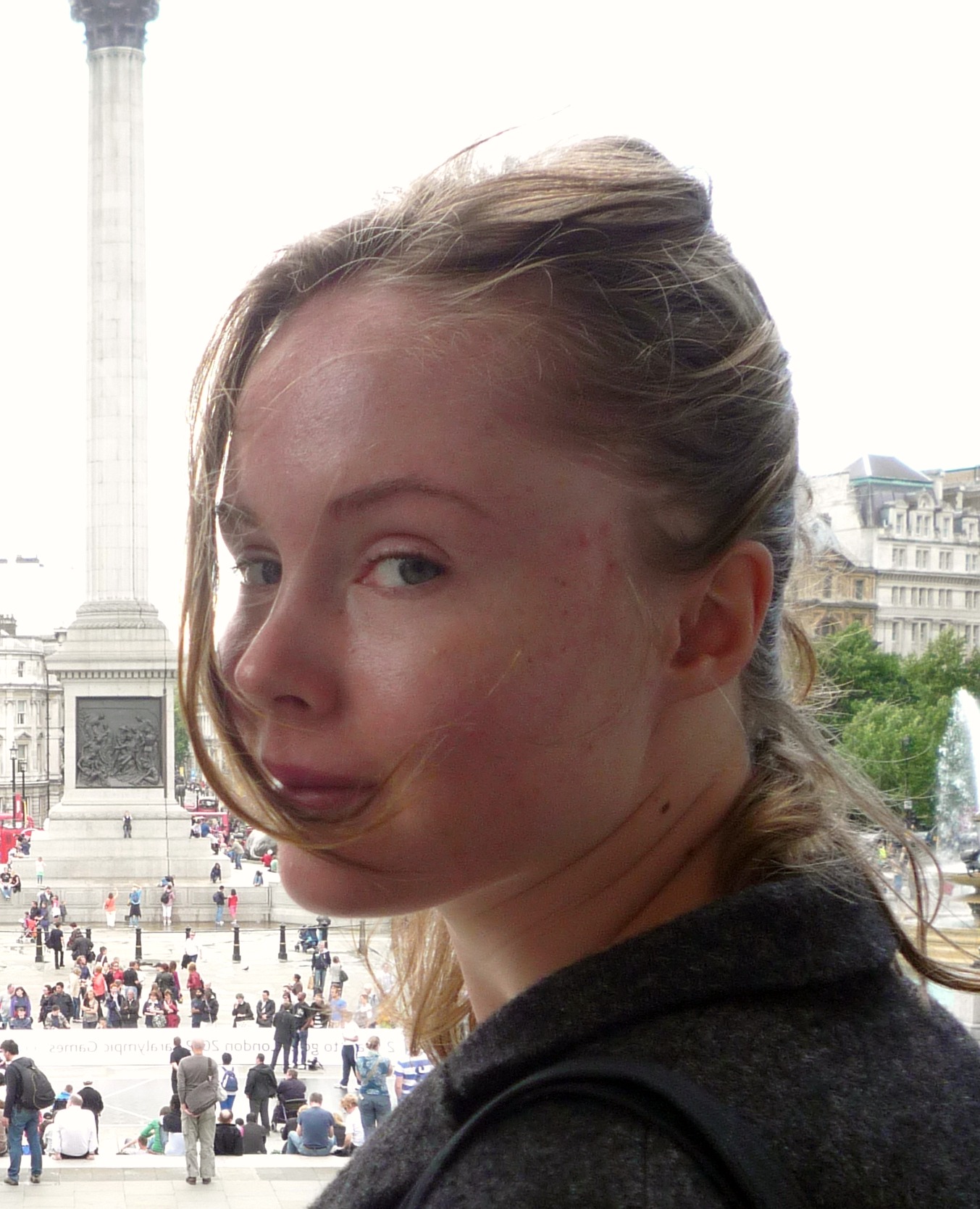
img: Charlotte Day surveying Trafalgar Square in London

Jennifer Dubowsky, Acupuncturist — Bringing Eastern healing to the American Midwest

Born in:   Bean Blossom, Indiana.

Now: Practicing acupuncture since 2001; currently has office in Chicago, Illinois, USA.

 Cyberspace coordinates: Jennifer Dubowsky (business site); Acupuncture Blog Chicago (blog); @tcm007 (Twitter handle); Jennifer Dubowsky Acupuncturist – Facebook page.

Most recent post: Well Being Increases With Our Ability To Make Choices 

Tell us how you went from “the smallest of small towns” in Indiana to practicing acupuncture in Chicago. 

Since I was young, I’ve always had a huge interest in travel and other cultures and spent a year living and going to high school in Paris when I was 16-17 years old.  In college, I developed an interest in the body and got my Bachelor of Science degree in kinesiology (I actually thought cadaver dissection was quite interesting.) My interest in health and other cultures lead me to the perfect marriage in Chinese Medicine and I got my masters degree in Oriental Medicine, studying in New Mexico and Colorado.

How did you become interested in the practice of acupuncture?

​I have been interested in healthcare my entire adult life. Chinese Medicine was a perfect mix of the exotic and effective healthcare.

What do you think acupuncture is particularly good at doing?
Acupuncture is very good at treating many ailments.  Some examples of common health problems I address in my Chicago office are pain relief, fertility and other gynecological issues, anxiety, allergies, and headaches. One of the major benefits of acupuncture is that it not only helps many problems, but does so without the negative side effects of drugs.

You completed an internship at the Sino-Japanese Friendship Hospital in Beijing. Do you have any special memories of that time?

The time in Beijing was special for me because it completely solidified my love and faith in Chinese Medicine. I also got to explore the city which is so exotic and difficult to manage because I didn’t speak Chinese or read Chinese characters. While I was in Beijing, my hair was blonde and I traveling with a friend who had super curly dark hair. We were a very noticeable pair walking through the streets. People stared and a few stopped us to take photos or touch my friend’s hair. That was a little weird.

As well as your website, you have a blog. Is this another tool you use for your business, or is it more a personal endeavor? 

I started my blog in 2008. It has gone from being a marketing tool for my practice to a true passion. I love being able to connect with people all over the world through the magic of the internet. I have “chatted” with people in India, Israel, Ireland, and Australia and thousands of people from many other places have visited my site.

According to a recent post on your blog, the AAAOM (American Association of Acupuncture and Oriental Medicine) is “working hard to get acupuncture included in the Affordable Care Act as an Essential Health Benefit.” Why do you think it’s important to make acupuncture available and affordable to the general public?

Acupuncture, just like all healthcare, should be affordable to the public. Ultimately each person manages his or her health and deserves options so that they can be informed consumers.  Coverage by all insurance plans would certainly go a long way to making acupuncture available. If readers are interested, they can sign a petition that asks to have acupuncture included in president Obama’s HealthCare Act.

Given your passion for blogging, do you have any other writing projects in the pipeline – a book, for example?
I am currently working on an e-book, my first venture into longer writing, because I believe that a book will connect me to more people. Chinese Medicine can be very complicated for the lay person and I plan to create a book that explains the treatments and philosophy in ways that people can understand and appreciate.

Our theme for January is Enlightenment Through Travel. Did you travel to any other countries apart from China when you were learning about acupuncture,  or is there somewhere you would like to visit in the future to further your knowledge in this field of medicine?

I had the opportunity to spend a couple of months traveling in Southeast Asia after my internship at the hospital in Beijing. I loved exploring other countries and was able to visit other parts of China and the Philippines, Thailand and Indonesia. Something I love about Chinese Medicine is that there is always more to learn. Therefore, I know it would be to my benefit to travel back to Asia because meeting with other practitioners is often like finding someone in another country who speaks your language. Knowing Chinese Medicine is like being in a special club so there is always that connection, despite the often wide cultural gap.

Do you have any gurus whom you look up to?

No gurus, but I have had one teacher, Dr. Tan, who has hugely influenced my practice since I graduated from school. I’ve learned so much from him about how to use my needles to their best advantage.

Would you ever consider living anywhere else? If so — where and why?

Yes — some cities I’d love to live in at least for a while would include Rome and London. Who knows – if an opportunity comes up, maybe I’ll be hopping on a plane to somewhere else 😉

 STAY TUNED for tomorrow’s episode of Libby’s Life, where Libby is finding that high school popularity contests don’t end with high school.

If you enjoyed this post, we invite you to register for The Displaced Dispatch, a round up of weekly posts from The Displaced Nation, with seasonal recipes, book giveaways and other extras. Register for The Displaced Dispatch by clicking here!

Related posts:

Image: photograph of Jennifer, supplied by herself.

Talking with author Dave Prager about his — deliriously unspiritual — expat experience in India

Reading like the work of a hipster Bill Bryson, Delirious Delhi is an account of Dave Prager and his wife Jenny’s move from New York to Delhi — the largest city in India by area and second largest by population — as they become what they term “New Delhi Yankees.” On arrival in their new home they, like so many expats, started a blog: Our Delhi Struggle. Detailing ther occasional bewilderment and occasional delight as two thirtysomethings acclimatizing to life in Delhi, their online musings quickly became popular.

Dave set about expanding Our Delhi Struggle into a book, and Delirious Delhi was the result. Those eagle-eyed among our readers may recall the book being featured under “expat memoirs” in one of the lists ML Awanohara compiled of 2011 books for, by, and about expats.

Earlier this month I spoke with author Dave Prager to discuss his book and his thoughts on Delhi — including the extent to which the expat life he and his wife led in India fits the Displaced Nation’s January theme of spiritual reawakenings.

How did you end up in Delhi and then later on Singapore?
I volunteered. My company needed a copywriter in Delhi. A week later I found myself in the city for the first time. We left Delhi for Singapore because we weren’t ready to return home to the US just yet, but we knew that if we didn’t force ourselves to leave India, then we’d never experience living anywhere else in Asia. So we quit our jobs in the middle of the recession, left Delhi, and flew to Singapore where we were both lucky enough to find work.

What made you decide to write a book telling the story of your transition to living in Delhi?
We had so many growing pains when we first moved to Delhi that we started our blog to share our lessons with everyone who would come after us. It became very popular — not just with expats, as we expected, but with Indians. As we were getting ready to leave, someone suggested we write a book. So I did. Ninety percent of the book is fresh content, never before seen until now. It’s very different from the blog. The blog posts are 500-word essays, where this is a single, 100,000-word narrative.

Delirious Delhi is your second book. Any plans for another one?
I’ve had some ideas I’ve been noodling away at. I have an idea about an American who finds himself living in rural India and doesn’t have a clue what’s going on. Which is how I felt every time we went out to the villages.

No plans to write about your time in Singapore?
There’s no plans for anything about Singapore. Don’t get me wrong, I enjoyed my time there, but it didn’t get my creative juices flowing in the way Delhi did. It didn’t inspire me like India inspired me.

What audience did you have in mind for the book?
When I was writing, I knew exactly who my intended audience was and I pictured them in my head as I wrote. It was two people that I know. The first was an American friend who was back in the US and was curious about India and my experiences; the other was an Indian co-worker who was always fascinated with how I — as an American — found life in his country.

I noticed you did a brief book tour in Delhi. Did you experience any negativity to your views?
Generally the response has been really good. There’s a minority who takes exception to a Westerner writing critically about India. But the book is not a criticism of India, it’s a recollection of the experiences — the good ones and the bad ones. Every country has good and bad, including the US. It’s disingenuous to focus on one and not the other — in both extremes.

This month’s theme for the Displaced Nation is the quest for spiritual enlightenment. At the beginning of the book, you say you would never describe India as “spiritual” as many do. What do you think of writers like Elizabeth Gilbert who present India as the ideal place for spiritual tourism?
It’s not that I wouldn’t describe India as spiritual — it’s that I never found it to be spiritual. Maybe because that wasn’t what I was looking for. In many ways, India is a blank slate, and travelers paint it with the colors they want to see. If you go looking for poverty, you’ll find it. If you go looking for wealth and globalization, you’ll find it. If you want spirituality, you’ll find it. India is the perfect place to find whatever it is you seek. The question is, what else do you have to ignore in order to see only one aspect of the country?

One of the most powerful parts of the book for me was the part where you detailed your wife Jenny’s work for a school that lifts girls out of poverty, and how shocked you were by the poverty. Did you find that after your time in Delhi you more politicized than when you first arrived?
Good question. I certainly arrived in India with a very liberal Western outlook of the world. My approach to the world was one of moral relativism — that everyone can to a certain extent be justified in their views. But the longer I stayed in South Asia, the more I began to believe that they are moral absolutes and that there can be certain aspects of a culture that are simply morally wrong — the treatment of rural girls in India being a case in point. So that really is how I changed politically over those 18 months. I moved from moral relativism to moral absolutism, in certain circumstances.

In the book Delhi reads like the main character in a novel  — with an ever-changing personality that is hard to truly get to know. Is that how you saw it?
One of main points with Delhi is how little you can understand it. It really is what you make it to be. New York, by comparison, is easier to understand. With New York you can find a narrative. Every New Yorker thinks that they are the star of the city, and the city aligns itself around them. Delhi has no overarching narrative; you’re more rooted to your neighborhood rather than the city as a whole and so everyone in Delhi is having different experiences and coming to different conclusions. I don’t think there’s a shared Delhi experience like there is a shared New York experience.

Now that you are back in the US, how do you see Delhi?
I have a sense of wasted opportunity. I think about all the things that we didn’t do when we were there, all those Saturdays when we went to the mall rather than explored different parts of the city. That I didn’t attend a cricket match or that I didn’t travel to a village outside of Delhi that’s famous for its Indian wrestling. And now thinking back on it all, I sometimes have an overwhelming sense of missing Delhi.

And how have you found it as a “repat” in the US? Any reverse culture shock?
What’s struck me is that the US just seems so empty. It’s not that India is always intensely crowded; rather, it’s that India you’re never completely alone. There’s always someone to be seen walking or selling something or cooking chai. Outside of a few select cities in the US, it’s not like that here. We now live in Denver and some mornings I find myself wandering around the middle of the city and I have moments when I stop and notice that I’m alone. I look around me and I just wonder where everyone is. All these tall buildings and nobody around.

Delirious Delhi can be purchased here.

STAY TUNED for Wednesday’s post, an interview with Chicago acupuncturist Jennifer Dubowsky, who believes the West can benefit from importing Eastern concepts of natural healing as an alternative to more invasive medical treatments.

If you enjoyed this post, we invite you to register for The Displaced Dispatch, a round up of weekly posts from The Displaced Nation, with seasonal recipes, book giveaways and other extras. Register for The Displaced Dispatch by clicking here!

Related posts:

Images: Used with kind permission of Dave Prager

Travel yarn: The Holy Land, transformative art — and Michael Jackson?!

We welcome Joanna Liss to the Displaced Nation as a guest blogger. A veteran of volunteering overseas, she recently went to Israel with the voluntourism group GoEcoon a quest that can best be described as quasi-spiritual.

I must confess I do not consider myself a particularly spiritual person. I have been on what would qualify as a spiritual retreat only once — about 40 years ago, when spending a weekend at a Zen center in the mountains of New Mexico. I was a student at the University of New Mexico at the time, with a religious studies minor (though a non-religious person, I was fascinated by religion’s folkloric aspects).

We were assigned to our dorm accommodations, given sparse meals of miso soup and bread, spent many hours sitting still and meditating — interspersed with breaks of walking and meditating — and were instructed not to talk, at all, all weekend.

My major memory of that experience was a dorm companion gesturing, rather frantically, and graphically, in a charade that I finally interpreted as a request for a tampax. I had a hard time stifling giggles for the rest of the weekend.

An unholy visit to the Holy Land

I have traveled to many places but never, until recently, to Israel. I never, honestly, had much of a desire to go — perhaps ironically, because my heritage is Jewish. It is difficult for me to sit through a Bat or Bar Mitzvah service, and my religion-related endeavors consist mostly of cooking potato latkes and matzoh brei.

I also admit that my politics do not necessarily align with those of the Israeli government. I wasn’t interested in religious travel, and there were too many other places that called to me more.

What finally prompted my visit to the Holy Land was an online listing for a volunteer project in a gallery of Arab art in Umm el-Fahem, an Arab city in Israel. I was ignorant enough to not have realized, beforehand, that there were Arab cities in Israel, or that a full 20 percent of Israeli citizens are Arab. I had thought of the Israel-Arab conflict as between Israelis and Palestinians, complicated enough, without knowing that it was made even more complex by the situation of Arab Israelis. (I asked around and was somewhat comforted, perhaps wrongly, to learn that most of my friends, even those who are Israeli Jews, were not aware of the Arab Israeli situation.)

And so, I set off for what would be a rather unorthodox Israeli experience, as a Jewish woman living, for six weeks, in an art gallery in an Israeli city where I was the only Jewish person.

Yes, I not only worked in the gallery but actually lived in an apartment on the rooftop third floor, surrounded by the whimsical sculptures on the rooftop patio outside my apartment. This living space afforded a spectacular view of the city, and several times daily the steep hills of the city echoed with the sounds of the muezzin calling out their amplified prayers.

If I were to call an experience spiritual, I suppose this would be one, especially when the amplified voices of the muezzin blended and harmonized, intentionally or coincidentally, I couldn’t say. It would probably have been a less moving experience for me, though, if I had been able to understand the words.

Travel as a source of personal renewal

I’ve heard, often enough, a person say she or he wasn’t religious, but spiritual. But what exactly is spirituality, especially of the secular kind? According to my prime informational source, Wikipedia, secular spirituality can be experienced as a source of inspiration or orientation in life, without necessarily accepting belief in a divine being. It can encompass compassion, patience, tolerance, contentment, responsibility, forgiveness, and concern for others.

In that sense, all my travels can be considered spiritual experiences, at least in secular terms. So maybe I am more spiritual than I thought?

Still, for me renewal comes not from retreat but from immersion in a new experience — be it a hot spring in the snow, watching the Eiffel Tower’s midnight light show from my garret apartment, or enjoying a leisurely breakfast at home of my favorite cereal with plump fresh blueberries and the sun shining in through the window.

Travel renews me, certainly — when I’m viewing an architectural or natural wonder, a work of art and, most of all, when I’m interacting with interesting people I might not otherwise have encountered.

The mystery of the falling headscarf

Back to Israel: I had many experiences in Umm el-Fahem that might fit the spiritual bill. Let me relate a couple. An artist on exhibit while I was there was Fatima Abu Rumi, whose meticulously detailed paintings deal with issues of self-identity. She paints herself repeatedly, totally veiled, with hijab (head scarf) hiding her hair but not her face, with the same scarf around her neck in quite a modern style, without any scarf at all.

Almost every school day, groups of young local children visited the gallery with their teachers and some mothers, the women all wearing the hijab. After some discussion Halima, the gallery educator, would bring out a basket of scarves, and all the children, boys and girls, helped by the adults, would don scarves, on their heads, over their faces, over their shoulders, as they chose.

Morning after morning, I descended from my apartment and watched, mesmerized. Some children were shy, some posed for my camera. I was as fascinated by the positive reactions of the adults as by the children. I only wish I could have understood what Halima had told them.

In a small niche hung a headscarf, black and white, identical to the one Fatima had repeatedly painted herself wearing. One morning, before my eyes, the hanging scarf suddenly fell off its hook on the wall. There had been no draft of air. I debated whether to pick it up or leave it. Later that month, when we delivered one of Fatima’s paintings to a prominent Jewish art collector, I noticed that the scarf had been tucked into the back of the frame, and told him the story.

Transformative art

Another significant moment came at the Haifa Museum of Art. We had gone to watch another Umm el-Fahem artist, Farid abu Shakra, do a performance piece. Farid is the younger brother of Said abu Shakra, the founding director of the Umm el-Fahem Art Gallery. An artist and an art teacher, Farid also curates some of the gallery’s exhibits.

At the end of the piece, Farid took two pieces of cloth that were hanging on the museum wall, a tallit (Jewish prayer shawl) and a keffiyah (the black and white cloth worn as a head covering by some Arab men). He tied them together. The message was clear. No words were necessary — and no religious belief — to feel the power of the moment, as well as to demonstrate the power of art to transform people, a major goal of the gallery.

(Amusingly, when I later showed my photo of the connected cloths to Farid, he commented, “very powerful image” — as if he were complimenting me, when the image was his.)

Farid also shared with me a series of maxims he had written in English. Here is my favorite:

He said to me, are you happy with your life? And I said to him, first explain the meaning of happiness, and then I tell you my reply.

Further mysterious sightings

On my next to last day in Umm el-Fahem, I visited the nearby ruins of Tel Megiddo, aka Armaggedon. It was just after a certain American minister had re-predicted the coming of the end of the world, realizing he had miscalculated the first time around. The site, and the world, were still intact when I visited. The ruins were interesting, and peaceful, aside from the surly saleswoman in the gift shop. We walked through the ancient stables and down into a huge stone lined cistern. I do feel a heightened intensity of place where historical events have occurred, and Tel Megiddo has had its share of events and battles over the millennia. The now quiet ruins actually might not be a bad place to spend the world’s final days.

Israel, of course, is replete with places of intense spirituality, to folks of many different beliefs, and it impossible not to feel the significance, historically and religiously, particularly in places like Jerusalem and Nazareth. Although I was not there for spiritual reasons, there are, wherever you turn, places of extreme importance to many. One encounters ultra-religious Jews in their dark clothes, side curls on the men and boys, head scarves on the women, Christians walking the literal stations of the Cross shouldering large wooden crosses, Muslim houses painted with what looks like graffiti but is actually a mark that the owner has made the pilgrimage to Mecca.

I went to the Western Wall on the day before Yom Kippur, the Day of Atonement, along with thousands of others. It was crowded, of course, but, surprisingly, not very difficult to make one’s way, after security, to the wall itself. I did make the mistake, at first, of heading toward the men’s side, and was kindly directed to the other side. There were women of all ages and kinds, some with strollers, some with canes, most praying, some just being tourists like me.

I walked up to the wall and touched my hand to it briefly; it seemed like the right thing to do. I did not write a prayer on paper and stick it in a crevice the way most people were doing, although it was tempting. I do like rituals at times, and mysterious things.

Here is the biggest mystery of my Israeli sojourn. On the women’s side of the wall was a woman (man?) who was a dead ringer for Michael Jackson. No kidding. I have the photo to prove it. S/he was standing next to more normal looking women, complete with quasi-military jacket, brass buttons and epaulets. There are many mysteries in the world that may never be solved. But please, is there someone who can explain this to me? I am hoping, and praying, that someone will.

Readers, can you relate to Joanna’s description of her secular spiritual travels — or do we need to come up with another term for it?

Joanna Liss has been traveling from the time she was a child in the Bronx, first to exotic destinations such as Brooklyn and Manhattan, later on family car trips up and down the East Coast, to places including Maine, Delaware, Montreal, and Miami, through all of which she professed that she could never live anyplace but New York. That all changed when she moved to Paris after high school. She has been traveling ever since. Her trip to Israel with GoEco marked her eighth adventure volunteering overseas; the other seven were with Volunteers for Peace. You can follow Liss’s adventures at her blog: Joanna’s Journey. Next stop: Havana.

STAY TUNED for Tuesday’s post, an interview with Dave Prager, author of Delirious Delhi, on our list of 2011 books for, by and about expats.

If you enjoyed this post, we invite you to register for The Displaced Dispatch, a round up of weekly posts from The Displaced Nation, with seasonal recipes, book giveaways and other extras. Register for The Displaced Dispatch by clicking here!

Related posts:

Images (top to bottom): The view from the rooftop of Liss’s apartment in Umm el-Fahem, Israel; the artist Fatima Abu Rumi (note the Hello Kitty tee shirt) with one of her paintings; the keffiyah and tallit tied together at the Haifa Museum; and the Michael Jackson lookalike Liss spotted at the Western Wall in Jerusalem (women’s side).
Yak-skin footware & the youthful quest for spiritual wisdom

We welcome back Lawrence Hunt to the Displaced Nation, who wrote a popular post for us in November about why the UK’s educated youth seems so preoccupied with voluntourism. Today he broadens this theme to include the quest for spiritual enlightenment.

At a comedy night I went to last year, the comedian’s most popular jokes were aimed at a student who’d made the mistake of sitting in the front row in sandals:

“He spent so long trying to find himself that he lost his shoes!”

As the number of people taking time off to travel has rocketed over the years, so, too, have the numbers of those in my age category (late teens, early twenties) who come back claiming to have achieved their ultimate epiphanies of self-actualization, forcing the fact of their higher spiritual consciousness onto the rest of us in the form of yak-skin footwear.

Meanwhile, companies like STA Travel make millions every year capitalizing on the appeal of the youthful spiritual quest — have a look at the description of one of their most popular holidays, the India Spiritual Trek:

Come face-to-face with a spirituality far removed from the shallow complexity (my emphasis) of the Western world, as you interact with some particularly special people in some truly unique places.

A recurrent theme in pop culture

One of Wes Anderson’s most financially successful films so far, The Darjeeling Limited, is about three rich brothers who board a train from Darjeeling to rediscover their lost kinship with each other.

So begins a strict itinerary of traditional rituals and indulgence in the simplicity of the local lifestyle, as Owen Wilson’s character throws out the odd patronizing comment: “These people are beautiful!”

My mother’s response on finishing watching Darjeeling with me was to promptly drop her jaw and say, in a low voice: “We have to go to India and see those mountain temples, Lawrence.” (My mother has talked for a while now of taking her own gap year, much to my concern — the men in Darjeeling have a mother who joins an Indian monastery and refuses to come home.) Fortunately, she is also able to laugh at Mitchell and Webb’s “gap year backpacking idiots” sketch.

And let’s not forget teen dance queen Alanis Morissette‘s hit single ‘Thank You,” which she released after taking time out from non-stop touring to travel in Cuba and India. At one point, she sings: “Thank you, India.” Did she actually imagine a billion voices chiming out as one from the subcontinent: “Any time, Alanis — we’re here to help”?

A recurrent theme in history

The idea of self-improvement through travel has existed for hundreds of years in such romantic idealizations as the Wild West, Darkest Africa and the Orient. It arises out of a conviction that as our civilization develops, we lose touch with our true selves, what life is all about. And if civilization is to blame, then it is elsewhere, in uncivilized cultures, esoteric religions or even ancient history where we find “reality.”

Jean-Jacques Rousseau believed that in the large European states, man had become alienated from the authentic self and preoccupied with meaningless duties, such as the duplicitous regard for manners that hid an underlying ruthlessness in bourgeois society. Primitive man — the so-called the “noble savage” — had been happier and more self-sufficient.

These trends coalesced in the hippie movement of the 1950s and 60s, which directed criticism towards almost every aspect of modern society: its dull consumerism, the system of capitalism itself, our susceptibility to totalitarian “brainwashing” and the war technology which had lain waste to the entire world during World War II and subsequent wars. What was demanded was not reform, but in fact a wholesale replacement of Western culture and ways of thinking.

Probably the most crippling flaw of the sixties counterculture was the total inability of its adherents to agree on a dominant theory of what should actually be replacing Western culture and politics. In fact, one of the defining values of this movement was that one should be free to choose one’s own alternative lifestyle. Everyone was encouraged to practice their own form of escapism.

Some rebels escaped through the fantasy literature of J.R.R. Tolkien, yearning for an enchanted world that existed in a time before the “rule of men” had begun. Others experimented with drugs, hoping to reach new planes of existence mentally. Some even tried to live the life that Rousseau had idealized, living primitively off the land in communes.

And still more looked for escape through non-Western cultures, where magical practices still proliferated, repressive Western structures were not in control, and religion was more spiritual, in touch with the flow of the universe. The Book of the Dead and the I Ching became new Bibles, and a huge amount of longing was directed vaguely in the direction of the undeveloped, non-Western world.

Eastern religions and their mystique

This last form of escapism received a fillip in the early 1980s with the publication of Duane Elgin’s book on voluntary simplicity — which spawned a movement that continues to this day.

On the recent BBC programme How to Live a Simple Life, Peter Owen-Jones pointed to Elgin’s chart comparing the “Voluntary Simplicity World View” with the “Industrial World View.” The latter sees material acquisition as a primary life objective and determinant of social position, while the former seeks a balance between material and spiritual needs, concentrating on conservation and frugality as mediated through self-sufficient communities and a process of “inner growth.”

Interestingly, in Elgin’s survey of “inner growth” processes, only 20 percent of those questioned cited traditional Western religions, while 55 percent claimed to use techniques like Zen or Transcendental Meditation.

What is it these religions offer that Western faiths don’t? According to Elgin, traditional churches are hierarchical institutions of mass society, something he resolutely opposes. By contrast, Eastern religions like Buddhism, Hinduism and Taoism are religions of liberation, in that they aim to alter our consciousness through self-reflection.

Let’s get real

These opposing views of East and West are widely taken for granted in our culture, but how far do they reflect the reality?

In my own, admittedly rather limited travel experience — I was a gap-year student in China for six months — the perception of the East as a place where spirituality is generally prized above materialism is pure fairytale, the world of Beat literature and Kung Fu movies.

I remember my first day off the train in Beijing. It was April 2008, and Wángfǔjǐng, the shopping district in the city centre, was buzzing with the anticipation of hosting the largest Olympic Games in world history. The atmosphere of national pride was tangible, present in every colorful corner of the street. Buildings were plastered with billboards from companies proudly claiming to be sponsors of the games. Most of them featured the smiling face of Chinese national treasure Jackie Chan — Jackie Chan water, Jackie Chan ice cream, Jackie Chan baby wipes. I found myself wandering through a dazzling labyrinth of colorful street vendors and market stalls, heckled constantly by cries of “You want to buy souvenir? You want to buy hat? Come see!”

Some vendors refused to take my bewildered, negatory smiles for an answer and grabbed me by the hand, trying to hold me in place. “Buy everything” I read on a sign above my head in yellow lettering in English and Chinese. Presumably a poor translation of “We sell everything,” but I didn’t take long to be convinced. That said, I’m not sure they were selling any yak-skin footwear!

A banquet to write home about

Something which I noticed when staying with some Chinese friends was the pride they show in wasting food, something that’s anathema to my Western upbringing. My host, when taking me out to a restaurant, ordered an extravagant number of dishes — including shark fin soup, which they paid a huge amount for but no one touched for the entire meal. Out of politeness, I had a small bowlful — it was unbearably bitter, and the family laughed cheerfully as I struggled with it.

The dish had been ordered merely because it was expensive and they had wanted to impress me. It struck me that by contrast, my parents would never have allowed us to order anything they didn’t fully intend to finish. If anything, the attitude at home towards consumption is marked by its lack of brazen excess.

At the risk of becoming the thing I’ve set out to ridicule, let me offer some closing words:

True happiness flows from the possession of wisdom and virtue and not from the possession of external goods.

Who said that? Why, Aristotle, a philosopher whose ideas gave birth to the so-called shallow complexity of the Western world.

Readers, what do you think of Lawrence Hunt’s thesis? Are Eastern cultures more spiritual than ours, or are we too easily swept up in the allure of the exotic?

STAY TUNED for Monday’s post, a travel yarn on spiritual escapes by a guest blogger.

If you enjoyed this post, we invite you to register for The Displaced Dispatch, a round up of weekly posts from The Displaced Nation, with seasonal recipes, book giveaways and other extras. Register for The Displaced Dispatch by clicking here!

Related posts:

The Displaced Q: Can travel and the expat life lead to a healthier diet?

Part of the formula for feeling better about oneself — TDN’s theme this month — is eating a healthier diet. Today Tony James Slater, the newest addition to our team, poses a Displaced Q on the eating habits of travelers and expats.

I’m not sure what qualifies me to pose a question about food, since my idea of healthy eating is using low-fat mayonnaise on a full English breakfast — but hey, I’d love to hear your side of the story…

I think I have what you might consider to be a rather controversial point of view, which is that traveling and leading an expat lifestyle can lead to a healthier diet — but for the most part do not.

WAIT! Before you hit the comments with that vitriolic reply — hear me out. I may be wrong (my past wrongness is legendary), but I believe I have a point. Tell you what — I’ll lay out my opinion (which I’ve put a lot of thought into), and then you can tell me if I’m talking out of my asparagus.

Chopping veggies: too much like hard work?

Plenty of people see travel as a way to reinvent themselves. I should know, I did exactly that, as explained in my last post about volunteering in Ecuador.

But reinventing your lifestyle is one thing — your diet is something else. I think statistically speaking (and I’m no expert) 99.9% of us have struggled with our diet at some point or other.

It’s not a change like deciding to make more “me time,” or adding the beach into your daily itinerary. We struggle because changing our diet requires that dreaded thing: commitment.

And the enemy of commitment is convenience.

Ah, convenience…the single biggest factor driving the fast-food phenomenon worldwide. Is it easier to swing past KFC on your way home from work than it is to get home and start chopping vegetables?

You bet it is.

What’s more, this instant gratification factor appeals not just to the terminally lazy — like me — but to an awful lot of people in a world where free time is increasingly under pressure.

The food you know…

So you’re in a new country. You tour the neighborhood. What’s the first thing you’ll recognize — whether in Cairo, Bangkok, Buenos Aires or Paris? Chances are it’ll be a fast-food joint. It’s just so easy. Nothing new to challenge you — either your palette or your linguistic skills. Just point and grunt, to be rewarded with something you could have bought within five minute’s drive of the last place you lived.

Don’t get me wrong. As I travel I make an effort to eat everything — including, on occasion, things I shouldn’t. (Apparently, the wings stay on the locust, even if they have got most of the soy sauce on them — who knew?)

Still, there is the part of me that, after a few days dining from street vendors, really craves a burger. Or a pizza. Something Western, that tastes of home.

As British writer George Miller once remarked:

The trouble with eating Italian food is that five or six days later you’re hungry again.

Asia — the exception?

There are certain countries with a deserved reputation as a mecca for healthy eating — yes, I’m talking about Japan here. In fact, most Asian countries are considered to have a healthy yet appealing diet, with an emphasis on seafood and simplicity.

For the better part of a year in Thailand I lived like a king. Fresh fruit for breakfast every morning, compared with jam on toast, bacon and sausage back home — score one for healthier eating!

Simple meals of chicken and rice, or noodles from street vendors were my staples. They were as cheap as they were delicious!

And yet… It was all fried. The rice was fried. The chicken was fried. The noodles… Is it possible to overdose on MSG?

I had no control over how my food was cooked and no kitchen to prepare it myself. Back home I fry things occasionally, but I’m a path-of-least-resistance kinda guy. My food isn’t always healthy (burgers, schnitzels, chips) — but I’d stick it in the oven or grill it. So the score…is tricky to say on this one.

And then there’s the booze…

Thailand is famous — at least amongst the 18-35 age group — less for its culinary marvels than for its parties. Score one (a large ONE) + a whisky chaser for the unhealthy diet.

Do you drink more when you travel? Cocktail by the pool? Glass of wine or two in the evening, because why not — you feel so free? Yeah, you do. Don’t worry — so does everyone else. But that’s another nail in the coffin of a healthier diet…

(And yes, I know all about anti-oxidants. That’s how I justify red wine too.)

* * *

In my experience, to eat anything decent, you have to work for it. The easier food is to find, and the more recognizable, the less healthy it tends to be.

If you’re prepared to experiment with different recipes and ingredients, different cooking apparatus and utensils, to learn a few words in the local language and risk using them in the market — then you can manage it.

But if you’re prepared to do all that for the sake of eating healthy, chances are you do it at home too, in which case you’ll eat healthily wherever you are. And probably outlive me by at least a decade.

So, as I said at the beginning: can travel encourage one to adopt a healthier diet? Well, I think it can…but doesn’t.

Am I full of carp? Am I talking sushi? What do you think?

TONY JAMES SLATER is a self-confessed adventureholic. For the last six years he’s been traveling nonstop around the world, working at a variety of jobs including yacht deliverer in the Mediterranean, professional diver in Thailand and snow boarder in New Zealand. He even deprived the world of sandalwood one tree at a time in Australia (though he still maintains it was an accident). Last year, Slater published his first book, That Bear Ate My Pants!, an account of his misadventures while volunteering at the animal refuge in Ecuador. (The book was featured in The Displaced Nation’s list of 2011 expat books.) He is currently working on a second book set in Thailand, while exploring his new home in Perth, Australia.

STAY TUNED for Wednesday’s post, an opinion piece by Lawrence Hunt on what drives today’s young people to seek spiritual enlightenment abroad.

If you enjoyed this post, we invite you to register for The Displaced Dispatch, a round up of weekly posts from The Displaced Nation, with seasonal recipes, book giveaways and other extras. Register for The Displaced Dispatch by clicking here!

Related posts:

Image: Tony Slater with his girlfriend (now wife), Krista, in an open shack-style cafe in Kuta Beach, Bali, Indonesia. Krista is eating nasi goreng, a Balinese veggie curry (over fried rice), whereas Tony has ordered a burger (but will it be too Asianized for his tastes?).

