The Displaced Nation

A home for international creatives

Tag Archives: Gothic tales

DISPLACED Q: How many of these 5 expat Alice characters do you recognize?

After two weeks of total immersion in all things Alice, we’re finding that even normal people look like Wonderland characters.

Here are a few we’ve noticed:

1. The Red Queen

The Red Queen, as her title suggests, queens it over the less experienced and the newly-arrived in Wonderland (or Looking-glass country, if you would like to be pedantic.)

We all knew her in school. She’s the bossy one who made a beeline for The New Girl recently arrived from out-of-town, made a big deal about showing her around, and kindly explained the school rules in a manner guaranteed to confuse and subtly terrify the newcomer – which, of course, was the intention.

Now fully grown rather than three inches high, she reigns supreme over the expat coffee morning posse and sends out Tupperware party invitations which no one dares refuse for fear of excommunication from the International School’s PTA.

Her self-proclaimed superiority is based on her many years in Wonderland, and her familiarity with the country. She knows the place forwards, backwards, sideways, and diagonally.

2. The White Rabbit.

The Red Queen’s (or Duchess’s) sidekick. Always busy, always rushing somewhere, always checking her watch or BlackBerry, always worrying that she will be late for something – although no one cares whether she is there or not, and most would prefer that she isn’t.

She organizes coffee mornings, school bake sales, and garden fetes, and is never happier than when she is chairing a committee. She loves giving orders, which are generally followed but with much resentful muttering from the minions.

Her favorite expression, apart from “Oh my fur and whiskers!” is “If you want something doing properly, do it yourself”, followed by a heavy sigh at the bumbling incompetents with whom she is forced to associate by dint of a common nationality.

3. The Cheshire Cat.

The Cheshire Cat holds himself slightly aloof from the madness that is the expat enclave, accepts Wonderland’s eccentricities with smiling resignation, but has a tendency to disappear when the going gets tough.

Although he is friendly and happy to chat, don’t expect more than a superficial friendship from this one.

4. The Hatter.

Here is someone who should have left Wonderland years ago. Time no longer has any true meaning to The Hatter, who calculates it in days rather than hours, and in months until visa expiration rather than weeks since the beginning of  tea time. He makes jokes that aren’t funny, then gets offended when no one laughs.

The Hatter is a  great fan of the traditional expat gin and tonic, however, and it is always six o’clock in his house.

5. Alice.

The homesick newcomer, desperately trying to make sense of a new country and managing to offend people every time she opens her mouth.

She soon discovers that the beautiful, magic place she tried so many times to enter is full of faults, just like home, and the people in it of whom she was once  in awe are “nothing but a pack of cards.”

At this point she often leaves the country, as she has found the grass on the other croquet lawn isn’t any greener after all. Ironically, if she stays just a little longer, she will find that she has gone through the most difficult time of adjustment, and life in Wonderland can – probably – only get easier.

So – Do you know one of these Alice characters, or – dare you admit it – are you one yourself?

Img: — Many thanks to Emily Cannell at Hey From Japan for the photograph of waxwork Alice at the Tokyo  Tower!

STAY TUNED for tomorrow’s interview with Random Nomad Helena Halme. She appeals for citizenship in The Displaced Nation — and answers an Alice question!

If you enjoyed this post, we invite you to subscribe for email delivery of The Displaced Nation. That way, you won’t miss a single issue. SPECIAL OFFER: New subscribers receive a FREE copy of “A Royally Displaced Tea.”

Related posts:

In the jaws of political or natural disaster: When reality bites for expats

Lately I’ve been thinking about plot lines for movies based on adventure travel. The one I like the most involves a round-the world traveler spotting a shark while scuba diving in the Indian Ocean…

In the hands of the right director, I could see it becoming a remake of Jaws.

Speaking of which, did you notice that first prize for the Matador Network’s “When Travel Goes Wrong” photo contest went to a young woman whose travel bag — containing passport, wallet and cell phone — fell down a Swiss sewage drain and got fished out by a kind, thin stranger. Now that has real Jaws potential!

Unfortunately, however, travel is not today’s focus. Rather, my goal is to highlight some of the mishaps that occur when a global voyager becomes a global resident.

“Boring!” I can hear you say. And having been an expat myself twice over, I have to admit, at some level, you are right.

They’re a privileged set, those expats.

Privileged with insider knowledge. You’re not going to catch them on the street with the open sewers.

Privileged with accommodation. Not for them a stay in Fawlty Towers, or the equivalent.

Still, reality has a way of impinging even on the most glittering expat lives, and in my experience, global residents tend to be even more traumatized than their short-stay counterparts when something goes badly amiss.

(Is that because they’re spoiled? I’ll let you decide…)

Gothic horror redux

In case you haven’t been tuning into The Displaced Nation of late, our posts have been exploring cases where individual expats have had their lives turned upside down, or worse (see “related posts” below).

My colleagues and I have put forth incontrovertible evidence that the expat life, like any other, can have its gothic moments.

Lest any skeptics remain, may I draw your attention to the Friday May 13 incident in Spain’s Canary Islands. A homeless Bulgarian man stabbed and hacked off the head of a 62-year-old British resident of Tenerife, after which he paraded into the street, holding his “treasure” up by the hair for all to see.

According to one eyewitness, who, too, is a long-term British resident of the Canaries:

When I saw the man holding the head, the first thing that popped into my mind was the scene from “Clash Of The Titans,” where the hero holds up the Gorgon’s head — but his was real.

Disruption en masse

Now let’s turn to the instances where the expat life gets disrupted en masse by natural disaster or political upheaval.

Emily Cannell, an American who’s been living in Tokyo with her family since last year, paid a visit to The Displaced Nation as a random nomad last Thursday. She told us about what it was like to be in that city when the Great East Japan Earthquake struck on March 11. In just a few moments, she went from a woman whose biggest worry was driving to car pool on time, to wondering if her kids were alive or dead.

And let’s not forget Tony Roberts, who was an honored guest on our site several weeks ago. His story, now written up in the form of a novel, is about what it was like being a teenager in Iran in 1979, just before the revolution took place. The trauma came when his family was given just 24 hours to evacuate back to their home in Kansas, and he had no time to say good-bye to his friends. For some time afterwards, this Third Culture Kid suffered from General Anxiety Disorder, “with feelings of unresolved anger,” as the psychologists put it. He tweeted recently: “Revolution will do that.”

Snatched from the jaws of [domestic terrorism]

I myself had an experience of this ilk towards the end of my stay in Japan, when the religious cult Aum Shinrikyo attacked the Tokyo subway with sarin gas — killing a couple of people in the station just down the street from my house. In all, 13 people died, and thousands more suffered from after-effects. It was and remains the most serious incident of this kind in Japanese history.

As I struggled to come to grips with the idea of nice, safe Japan being populated by terrorists, quite a few thoughts raced through my head; for instance:

1) This place is weirder than I’d realized.
I’d never before heard of the kind of cult where the adherents are well-off, educated young people and their leader, a bearded mystic with a destructive political agenda. (Needless to say, I hadn’t heard of al-Qaeda. But even if I had, Japan is the Far, not the Middle, East.)

2) Do the authorities know what they are doing?
From what I’d observed of the Japanese police, they seemed pretty wimpy, precisely because the country doesn’t have a high incidence of violent crime. Did they really have the chops to capture Shoko Asahara and put an end to his madness? (The attack on the subway took place on March 20, and they didn’t find him until May 16. He was hiding inside the wall of a cult building in the group’s compound near Mt Fuji, dressed in purple robes and in good health.)

3) Who’s looking out for us foreigners?
I suspected that we foreign residents would be the last to know if further incidents were likely to take place. (For weeks following the subway attack, rumors of imminent attacks were rife, and I didn’t know whom to believe.)

Though I eventually got on the Tokyo subway again, the incident took its toll on how I felt about living in that city. Little did I know that I would one day be working in New York City and reliving many of the same emotions — ignorance, disenfranchisement, and vulnerability — in the wake of 9/11.

I discovered, however, in comparing these two incidents that when reality bites in one’s native land, it’s not nearly as unsettling as when it happens abroad.

After 9/11, I wanted to stay in NYC and carry on — it was a way of fighting back. Whereas after the subway attack in Tokyo, I started to fantasize about leaving Japan.

* * *

Are there any world travelers out there who’ve stuck with me throughout this catalogue of woes? I wouldn’t be surprised if you’ve come to the conclusion that your nomadic life, even with its many dangers, is preferable to that of most world residents.

Or perhaps you’re feeling a touch of envy? In that case, you may wish to check out Bootsnall’s virtual tour of the top 10 shark-infested beaches in the world.

Question: Have you had any experiences of large-scale disasters during your stay abroad, and if so, how did it affect your perceptions of your adopted country — did it make you feel any less “at home” there?

If you enjoyed this post, we invite you to subscribe for email delivery of The Displaced Nation. That way, you won’t miss a single issue. SPECIAL OFFER: New subscribers receive a FREE copy of “A Royally Displaced Tea.”

Related posts:

3 hardboiled observations on the displaced TV series “The Killing”

Hillstreet Blues Law and Order Crime Scene Investigation (CSI)Bones… I could keep going, but point made: American TV is the undisputed godfather of the crime series genre.

These shows may be fiction, but they are underpinned by a grim reality: the United States has the highest rates of homicide and other violent crimes in the industrialized world.

But, not so fast. There’s a rookie on the scene that is taking on the veteran. I refer to the Danish crime series, The Killing, which is currently airing on AMC.

Now, what do the Danes know about crime — apart from suicide (regicide, too, if we go as far back as Hamlet)? Well, I’m here to tell you that this “smorgasbord thriller” has fast achieved cult status in the UK and now the US. As Alessandra Stanley wrote in her New York Times review:

It’s unnerving how well the Nordic sensibility fits a genre that for a long time seemed indisputably and inimitably violent and American, particularly given that Sweden, Norway and Denmark have homicide rates that suggest that they have more mystery writers per capita than murders.

Having become a a diehard (haha!) fan of the Danish noir series after a couple of episodes, I’ve been thinking about it of late in the context of The Displaced Nation. What happens when a TV series becomes expatified? Can we who have chosen to displace ourselves to other countries glean anything from its acculturation process?

Here are three hardboiled observations:

1) America is not Britain.

I was an expat in the UK for many years so am fated to have this thought nearly everyday: America is not Britain. Still, it’s gratifying to have it confirmed by third-party sources. Gratifying and, I must say, somewhat surprising given how quickly the UK appears to have become Americanized since I left. (I mean, pub grub now includes peanut-butter-and-jelly sandwiches! That would NEVER have happened in my day!)

Here’s the thing: the UK imported the original Danish series, entitled Forbydelsen, and simply added subtitles. Which completely makes sense to me — yes, I remain that anglicized.

But for an American audience, of course, subtitles won’t do. Thus AMC hired Veena Sud to come up with an adaptation. Sud moved the action to Seattle, which, she says, is the “closest American city, viscerally, to Copenhagen.”

2) Sud is right: Seattle is as creepy as Copenhagen.

Who knew that Seattle could be so creepy? Certainly not me. Though I’ve never had the honor of visiting that Pacific Northwest city, being an East Coaster I have always held a romantic view of it. At one point I even thought of Seattle as a place I might like to live in some day —  especially as the people are reputed to behave with greater decency towards each other than us competitive, dog-eat-dog New Yorkers.

But The Killing has quashed this “domestic expat” fantasy of mine, at least for now.

It underlines a truth we’ve been exploring recently on The Displaced Nation: horrific crimes can happen anywhere, even in settings where people are bending over backwards to be pleasant to one another.

3) But the series also addresses themes that transcend national borders, at least in Western countries.

Setting is important — one of the reasons for the series’ popularity in Britain is that so many people coveted the female detective’s classic Feroese sweater, and I think some fans of the AMC production enjoy watching a crime drama that takes place in Seattle, not New York or L.A.

But if setting is a crucial hook, it’s by no means the only reason The Killing has captivated viewers beyond Denmark and made such a killing for the Danish Broadcasting Corporation.

The show also addresses themes of widespread concern to Western countries: most notably, the fact that even in our supposedly civilized societies (we don’t have female genital mutilation! we don’t have honor killings!), many young women continue to be victims of violence.

The killing to which the title refers is that of a teenage girl, and each each one-hour episode depicts 24 hours in the police investigation, during which we are able to observe the impact of the tragedy has had on the girl’s family, her community, and the people involved in the investigation.

Another theme running through the series is xenophobia: the distrust American and European societies have for Muslim immigrants. America has yet to process the legacy of 9/11, while the Danes are still reeling from the incident involving cartoonist Kurt Westergaard. (To this day, he receives death threats for his cheeky portrayal of the Prophet Muhammad.)

For better or for worse, this Danish crime thriller holds up a mirror to Western culture and shows how easy it is for us to pin the murder of the girl on the Muslim teacher. It eerily reflects the times we live in — perhaps its most chilling facet.

Question: Do you have an experience with a TV show or series that made you look at your own and/or other cultures in a fresh light?

If you enjoyed this post, we invite you to subscribe for email delivery of The Displaced Nation. That way, you won’t miss a single issue. SPECIAL OFFER: New subscribers receive a FREE copy of “A Royally Displaced Tea.”

Related posts:

DISPLACED Q’s: In your global travels, which close encounter of the animal kind was the least welcome?

In yesterday’s article My first flirtation with the lawlessness of global travel: 4 painful lessons, our guest blogger Lara Sterling recalls the toe-curling time in Guatemala when she was attacked by a couple of dogs and had to spend a week in hospital queues, waiting for rabies shots to her stomach. It doesn’t bear thinking about. Most of us cringe at the prospect of a trip to the dentist.

Rabies isn’t something you consider where I come from; if you’re bitten by a dog in the UK, in today’s litigious society you’ll probably phone your lawyer rather than your local hospital.

Neither is rabies foremost in your mind if you have bats roosting in your attic – you’re more likely wondering how to evict them without breaching wildlife protection laws, since bats are a protected species in many parts of the world. But around 1% of bats carry rabies, as a friend in the US discovered when she woke up to find a bat flying around her bedroom and had to undergo a course of rabies shots, just to be on the safe side.

This was my first inkling that Connecticut wildlife might consist of more than, say, a few sparrows on the bird table.

Disney cartoons – the best place for rodents

While I haven’t had bats for roommates, I’m now used to seeing certain animals in my American back yard that I’d previously only seen in Bambi or Chip n Dale. Visitors from the UK exclaim over the proliferation of gray squirrels, but I’ve adopted the jaded attitude of a Connecticut native: squirrels are just rats with good PR. If you’ve ever had one fall down the chimney into your basement, where it runs amok and tries to eat the wall insulation, you’ll know what I mean.

Other wildlife guests in our back yard party have included deer, Canada geese, snapper turtles, wild turkeys, raccoons, and, while we were waiting for the school bus one morning, a fisher cat – a member of the weasel family that has been known to attack humans. This one, however, simply gave us a very superior look and shuffled off into the woods, never to appear again. I wish I could say the same for the local mice, who seem to think they have winter squatting rights in the attic.

The skunk in Bambi might be very cute, but until you’ve smelled this animal’s musk, you can’t imagine how foul it is; the odor carries up to a mile, apparently. I’ve never seen a live skunk, although I’ve driven past plenty of roadkill. The operative word there is ‘past’ — you don’t want to drive over a recently killed skunk.

A squirmy moment came one summer when we found a three-foot-long snake in the garage. Fortunately, it was a Black Racer, and therefore not venomous – although it easily could have been. About two miles away is a preservation area affectionately known as Rattlesnake Run. Local police logs in the newspaper often carry reports of callouts to houses because of a rattlesnake sunning itself on someone’s porch.

“Old MacDonald had a…”  Mum, what’s that thing called again?

The flip side of living in what is essentially a forest is that we don’t see many ‘normal’ animals. During our trip to the UK, relatives were amazed when our young children weren’t sure what the white woolly animals in fields were. They’d heard of sheep and seen pictures and Fisher Price plastic sheep…but never sheep in the flesh, as it were. Yet on the same visit, while Auntie was cooing over a stripy squirrel-like thing in a cage and wondering what it was, the kids scoffed. “Chipmunks? They’re all over the place at home. Mum can’t stand them, they dig holes everywhere.”

But definitely the most interesting encounter was when our five-year-old came in the house after playing outside, and told me that there was a dog in the yard. Wondering if our neighbor’s dog had decided to make a break for freedom, I looked out of the window. It was a dog all right, but not one you want your five-year-old to play with. While coyotes rarely attack humans, I’d seen too many episodes of Road Runner to take a chance with the statistics.

Waiting for the Big One

And finally – a few months ago, in the street where we go trick-or-treating at Halloween, police cars swarmed. A black bear had been sighted. Now, every time I’m in the kitchen and looking out at the maples and pine trees behind our house, I look a little farther into the woods, wondering what else is out there.

It can only be a matter of time.

So, tell us: Which wildlife encounter of your own would you rather not have experienced?

If you enjoyed this post, we invite you to subscribe for email delivery of The Displaced Nation. That way, you won’t miss a single issue. SPECIAL OFFER: New subscribers receive a FREE copy of “A Royally Displaced Tea.”

Related post:

My first flirtation with the lawlessness of global travel: 4 painful lessons

Today we welcome Lara Sterling to The Displaced Nation as a guest blogger. She wrote this post as part of our series on Gothic Tales, anchored by ML Awanohara’s “What did Agatha Christie know? Expats make great criminals.”  A native Californian, Sterling is an inveterate traveler. Her many adventures include a round-the-world trip and a stint as an expat in Spain (2001-2005).

Have you ever traveled to a foreign country, thinking you could get away with murder?

Maybe that’s what Amanda Knox was thinking…

Regardless of whether you believe Knox is guilty or not, I’m talking about getting away with murder on a trip I made to Guatemala.

Well, not actual murder — just a little bypassing of the laws.

War-torn tourism

This was Guatemala in 1993. The country was in the last days of a decades-long civil war. The nation’s social fabric had been torn apart. That meant there weren’t many laws anyhow. Or at least laws that anyone was abiding.
I remember one time drinking at a bar in Antigua, a city in the Guatemalan highlands. Plainclothes cops showed up to get bribes from the travelers who didn’t have passports.

I was twenty-three. I was a female traveling alone in a dangerous country. It was appealing to team up with the handsome German man I’d met in Antigua.

His name was Fritz. He wanted me to travel with him to the pyramids in Tikal, in the north.

I was nervous about travel to Tikal. I had heard many terrible stories about travel outside of the cities. Buses were high-jacked by bandits. Women were raped. But Fritz was gorgeous! I couldn’t resist.

Lesson #1: Don’t trust handsome Germans

Fritz and I traveled to Tikal without problems. I agreed to travel more, to Livingston, on the coast.

Livingston is an enclave in Guatemala. A slave ship wrecked there in a past century. The inhabitants speak a local patois, the Garifuna language.

Fritz and I disembarked the boat. There were men with machetes everywhere. They were returning home from work in the fields. My overactive tourist imagination went crazy. I thought we were going to be robbed at every corner.

Muggings and rapes were known to take place on the trails outside of town. Fritz wanted to hike, but I was nervous. We spent our afternoons at the beach and drinking coffees in the local cafes.

At some point, we were approached by one of the natives, a guy named Billy. He had a business proposition.

“Ya want to buy yaself some fun?” Billy asked.

“What’s that?” asked Fritz in English.

The man bent in close. “Crack.”

Crack cocaine? I asked myself. Surely, Fritz will say no.

He didn’t.

Lesson #2: Give a wide berth to a man with a machete

Before I knew it, Fritz and I were following Billy into a cluster of trees off of a back street. Billy’s eyes were bloodshot. He was armed with his machete. I was terrified.

Fritz handed over some quetzales. Billy handed over a small, plastic baggie.

Fritz and I retired to the room we were renting. I watched as Fritz got out some tin foil and a lighter. He began to smoke. The odor was metallic, and the smoke was blue. Fritz’s eyes glazed over.

I told him I was going for a walk.

I walked down to where the women washed their clothes in a community well. I can leave, I thought. I can get another room.

I couldn’t. I had a serious crush on Fritz.

Luckily, by the time I returned, the effects of the drugs had worn off of Fritz. He wanted to go out again.

It was still light. We walked to the edge of town. Fritz pointed to a small swathe of beige that looked like it was miles away.

“There’s a beach over there,” he said.

Between us and the beach was jungle.

Maybe in kilometers, it seemed shorter.

Lesson #3: Dogs are not the same the world over

Fritz and I began our hike. Because of the infamy of the trails, I was a nervous wreck. But I was also tired of buying into my fears. I had traveled all the way here. I might as well have some fun.

The sounds of birds chirping in the trees and of leaves rustling in the breeze calmed me.

Suddenly, two mutts appeared. They were small, and their coats were white and black. They were growling, barking.

I hoped they would go away, like the dogs I knew from home. They didn’t. The dogs moved closer, encroaching.

The mutts leapt at our bodies. One of the canines sank his incisors into my behind. I screamed.

Fritz was bitten too, in the leg.

A couple of Guatemalan children emerged from the jungle. They beat the dogs off with sticks. The dogs retreated behind the palms.

My bottom was bleeding. I needed stitches. Luckily, someone had called the local doctor. He was waiting for us on the street at the edge of the jungle.

The doctor led us to his office. I climbed onto his examining table. He numbed my butt, then sewed my loose flesh back up again.

“You must return to Guatemala City for rabies shots,” the doctor said.

I felt woozy, weak. “We’ll have to leave tonight,” I told Fritz.

“I can’t,” Fritz said. “I have to get to El Salvador.”

El Salvador?

“But what if you get rabies?” I asked.

“Then I will come and bite you,” Fritz responded.

He flashed me the same mischievous smile I had fallen for.

Lesson #4: Make sure you have a cubicle waiting for you back home

Fritz and I parted ways, never to meet again. Alone, I suffered through a week of visits to the Guatemalan hospital.

Each day, I took the bus to the hospital, then waited in the hours-long lines. Finally, I’d get my shot in the stomach.

The employees of the hospital were on strike. I was lucky I was treated at all.

It wasn’t until weeks afterward that I mustered up the gumption to leave the country.

Guatemala had changed me. I had learned a lot. A lot of lessons.

But I was also the same person: young, hungry, ambitious, confused.

I thanked my lucky stars there was a job waiting for me at home. In some cubicle!

I couldn’t wait.

Question: Have you ever encountered world travelers who think that the laws of the lands they visit don’t apply to them — and, time to ‘fess up, have you ever been in their ranks? We’d love to hear your stories.

Lara Sterling has contributed to many magazines, was a columnist for Spanish Playboy, and published one of Spain’s first non-fiction books on fetish sexuality. She currently teaches writing at www.yourplotthickens.com.

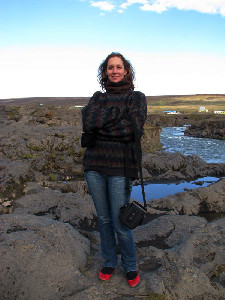
img: Lara Sterling on a lava bed in Iceland, on one of her many trips.

If you enjoyed this post, we invite you to subscribe for email delivery of The Displaced Nation. That way, you won’t miss a single issue. SPECIAL OFFER: New subscribers receive a FREE copy of “A Royally Displaced Tea.”

Related posts:

Even in Paris, expats can’t escape former lives: A celebration of displaced novelist Corine Gantz

SPECIAL ANNOUNCEMENT: Ever wanted to escape to Paris in the springtime? Today you can do so, as it were, in the company of the très très charmante Corine Gantz. Originally from the City of Light but now living near the City of Angels, Mme Gantz has just released her debut novel about a group of American women who try to start afresh in Paris. She has kindly agreed to respond to our questions and comments. 

The Displaced Nation has been examining the “gothic” side of expat life over the past couple of weeks. Thus it may seem odd that today we have chosen to celebrate a book that takes place in La Ville-Lumière (“The City of Light” or “The Illuminated City”) by an author who lives near the City of Angels.

Hidden in Paris coverBut looks can be deceiving — and the cover of Corine Gantz’s debut novel, Hidden in Paris, is quite a cunning ruse. It shows a Parisian balcony with French doors reflecting the Eiffel Tower, and a flower box bursting with hot-pink geraniums. What could possible be amiss within such a picture-perfect setting, you may wonder? Plenty, it turns out.

But before we get into that, let’s begin our fête in honor of Mme Gantz and her book. To put ourselves in the proper mood, we have prepared a special cocktail, a French 75. We’ve also gone all out with our canapés. There’s a savory gougère, brie en croûte, duck rillettes, chilled asparagus with mustard sauce, a Puy lentil salad — and, in honor of Mme Gantz, her family favorite, taramasalata on toast (see her father’s recipe below).

Okay, seats, please! Our honored guest has agreed to kick off the festivities by answering a few questions from The Displaced Nation team. After that, the floor is yours, dear reader.
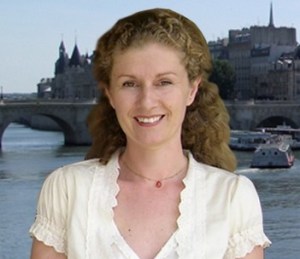
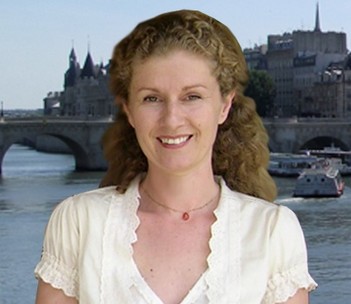
Corine GantzYour new novel, Hidden in Paris, may not tell a gothic tale per se, but we think it relates to our theme because it centers on three women who are running away from their lives. Is that a fair assessment?
People who say they love to be scared amuse me. They have a fascination with horror flicks, they read vampire books, they ride roller coasters. Yet they might be the same people who walk great circles around a pile of bills or make every effort to avoid a difficult phone call. What can be scarier than real life?

I think there is a limit to what we can handle, and at some point the tendency is to want to run way, literally or figuratively. In Hidden in Paris three strangers — all American women — have reached the point of terminal discomfort, when tackling real issues feels more terrifying than running away abroad.

Lola is running away from her husband, Althea from an eating disorder, and Annie, although she pretends to be the most high functioning member of the group, is hiding the biggest secret of all. (Just to add some spice, there is also a male character, Lucas, who is hiding his love for Annie.)

People often fantasize that “elsewhere” — particularly Paris because of the attached notion of romance — will solve their problems, or at least make the problems go away for a while. Well, we long-term expats know better. Moving to another country brings great logistical changes to one’s life, which can distract you into thinking you’ve left your pathos behind, when, in fact, you’ve brought it along in your suitcase. Wherever you go, you bring your own personal gothic tale with you.

In the case of these three female characters, the disruptions to their routines, along with new encounters, bring them to the tipping point toward change.

The thing is, as in real life, my characters fight the change they need kicking and screaming, which makes for fun story telling.

Food is another obsession of ours at The Displaced Nation. We detect from reading an excerpt from Hidden in Paris that it also plays a big role in your book.
You detect correctly. For me, writing a novel is a barely disguised way for me to talk about food — the novel being a vehicle for food just as grilled toast is a vehicle for foie gras.

I grew up in France on my mother’s terrific cooking. But she is the type of cook who wants no help in the kitchen, so at age 23 I arrived in the United States never having cooked an egg. I was terribly homesick and depressed and needed to “taste home” again — so had no choice but to teach myself how to cook. The saving grace was that I had a copy of a recipe book filled with my mother’s recipes, so I proceeded to recreate the food, and jolly myself out of my depression. Cooking gave my life a purpose: it became my creative outlet.

I think the preparation of food can be extremely healing, meaningful and joyful. Food is, after all, the soul and spirit of a home. I enjoy cooking as much as I enjoy eating, and when I’m not doing one or the other I’m telling stories where food turns out to be one of the principal characters.

You are a Française who has been “displaced” to the Los Angeles area for a couple of decades, where you live with your American husband and two sons. Does your novel echo that experience?
Had I landed on an alien planet I doubt I would have been any more confused and out of place.  I understood none of the codes, none of the cultural references, of Los Angeles. I could not understand people or express myself — and I resented them for that.

Writing sprouted from this: the frustrated need for self-expression and communication. Like my protagonist, Annie, I had to figure out how to function, and I would be lying to say I functioned well. Also like Annie, I resisted my country of adoption for years. I did not have both feet in it. A part of me felt in limbo: I was standing by for my eventual return to my home country.

Twenty years later I don’t even feel French anymore, but no one here lets me forget I’m not American either. Americans seem fascinated with my Frenchness, as though it defines me. For example, it’s often about how I say things rather than what I say. Yesterday I was saying to a friend: “On the envelope my husband gave me for mother’s day there was a…” She interrupted and said: “Could you repeat that?” I repeated and she fell into peals of laughter: “I just love how you said the word ‘envelope’!”

In Hidden in Paris, I wanted to transpose my experience and reverse it. I wanted to bring American women to France and see how well they coped with that set of codes and cultural idiosyncrasies. That’s only fair, don’t you think? I’m a little miffed to report that they are a more adaptable than I was.

You have a popular blog, Hidden in France, where you’ve been entertaining Francophiles and others with stories of the writing life, décor, food, family, travel and all things French. In fact, The Displaced Nation has featured one of your posts — about the time you fell into your swimming pool when the first day of spring brought heavy rains to the LA area. Tell us, has your blog had an influence on your writing? Also, why have you chosen the trope “hidden in”?
The blog has everything to do with my writing. Before the blog, I was a closet writer, ashamed that my English was too imperfect. The blog gave me a sense of just how forgiving and supportive readers were. I have readers now, and I have fans! Had I based my self-worth as a writer on agent rejections, I would have changed my hobby to fly-fishing. Readers are what make someone a writer.

The word “hidden” is significant only in the sense that I was hiding for years behind an alias as a blogger, and I just recently came out as writer for the world to see (speaking of fear…).

When it came time to settle on a title for the book, it felt natural to give it the same title as the blog — but I decided against it because there was already a memoir by that name. So Hidden in France became Hidden in Paris.

Finally, The Displaced Nation supports a fictional character, Libby, who is about to move from London to Boston with her husband. Do you have any advice for her?
Well, how about if I let my own fictional character, Annie — who moved from Boston to Paris to follow her own husband twelve years ago — speak to Libby directly:

Don’t do it, Libby! Kidding! Well I would suggest you have more babies, some siblings for your son, Jack, and fast. They will keep you busy and busy is the name of the game: no time to think! And if you decide against having more babies, then take on a hobby (such as cooking and eating) to keep your sanity without demanding that your husband become your everything for companionship, friendship and intellectual stimulation.

Don’t be like me in other words. Don’t forget that the man has a job and he is tired at the end of the day and nobody needs a needy wife. (Sorry for the harsh words, Libby, but this is the truth.)

You could also take a run-down house and remodel it. I did. You will have no skin left on your fingers but lifting bags of concrete makes for pretty shapely biceps. The remodeling might bring you to financial ruin but if that becomes the case, you will always have eating, which you can become very good at.

Without further ado, let’s pour the champagne for a toast to Corine Gantz. Tchin-tchin! And now, patient reader, it’s your turn. Questions, please, for this très gentille debut novelist… If you want to check out her book a little more, go to her author’s site, and to buy it, go to her Amazon page.

Taramasalata on toast — Corine Gantz’s family recipe
You will need:

  • one packet of smoked cod roe (seriously, can you even find this in the US?)
  • 8 tablespoons safflower oil
  • 2 tablespoons lemon juice.

Mix fish roe and lemon juice, then slowly beat with a fork and add the oil as you would do to make mayonnaise.Spread thinly on toasts and serve with very good champagne, et voilà! Très festif.

Images: Hidden in Paris cover, artwork by Robin Pickens; author’s photo.

If you enjoyed this post, we invite you to subscribe for email delivery of The Displaced Nation. That way, you won’t miss a single issue. SPECIAL OFFER: New subscribers receive a FREE copy of “A Royally Displaced Tea.”

Related posts:

Mia Wasikowska — a Third Culture Kid who is no Cinderella

Neatly coinciding with The Displaced Nation’s recent themes of the Royal Wedding and Gothic Tales, Maureen Dowd in her New York Times article “Who Married Up: The Women or the Men?” compares Cinderella with Kate Middleton and Charlotte Bronte’s Jane Eyre.

While the comparison with Kate Middleton is oft-cited, Bronte’s tale is less obvious: the story of a society misfit Plain Jane who suffers a series of gothic melodramas before finally claiming her maimed prince – but on her own terms. It’s possible that at some point during her ten-year waiting game in which Prince William apparently called all the shots, Kate Middleton may have sympathized with Jane Eyre’s wistful statement in the latest adaptation of Bronte’s novel:

“I wish a woman could have action in her life, like a man.”

A shooting star who needs no wishes

Mia Wasikowska, who stars in the title role of Cary Fukunaga’s “Jane Eyre,” needs no such wishful thinking. The 21-year-old Australian had her first US TV role at 17, was named the following year as one of  Variety magazine’s Top Ten Actors To Watch, and won the 2010 Hollywood Film Festival Award for Best Breakthrough Actress. Until “Jane Eyre” came along, she was best known for her portrayal of Tim Burton’s Alice in Wonderland.

While it is hard to imagine two female characters more different than Jane Eyre and Alice,  they do share some similarities:  Jane’s feeling of exile, of being shunned by society, is echoed in Burton’s Alice. In an interview with Australian Harper’s Bazaar, Wasikowska spoke of her interpretation of the role:

“Alice has a certain discomfort within herself, within society and among her peers. I feel similarly, or have definitely felt similarly, about all of those things, so I could really understand her not quite fitting in.”

Although Ms. Wasikowska  does not elaborate about her own feelings of displacement — and certainly most young women feel insecure at some time or other —  one can’t help wondering if she is referring to travel experiences in her childhood and teens.

A TCK in Tinseltown

The daughter of an Australian father and Polish-born mother, Wasikowska is a TCK (Third Culture Kid.) She was born and raised in Canberra, Australia, and when she was eight years old the family moved to Szczecin, Poland, for a year, during which time they also traveled in France, Germany and  Russia.  At 17, she was cast in the role of Sophie in HBO’s “In Treatment,” which necessitated a move to Los Angeles.

One could argue that anyone, of any nationality, who is flung into the Hollywood carnival at such a tender age could qualify for the label of TCK.

Ignore the naysayers

The US Department of State defines Third Culture Kids as:

“those who have spent some of their growing up years in a foreign country and experience a sense of not belonging to their passport country when they return to it…they are often considered an oddity [and] what third culture kids want most is to be accepted as the individuals they are.”

A most depressing definition, highlighting the bad and ignoring all the good. It says nothing of the inevitable expansion of horizons that enable a TCK to empathize with other ways of life, to walk in another’s shoes – and if you’re an actor, the ability to walk in another’s shoes is crucial.

It would be nice to think that, despite governmental gloom, TCK experiences played a part in Wasikowska’s professional development and rocketing career.

Home is where reality is

Canberra is still Wasikowska’s home, however, and she lives there with her family between film projects. When asked by PopEater if she was treated like a celebrity at home, she answered:

“I still take the rubbish out and empty the dishwasher. It’s good going back for that reason.”

Well, that’s OK. After all, Kate Middleton said she intended to cook dinner for Prince William when they married.

And I expect even Cinderella swept a few floors in her new castle.

Img: Tomdog/Wikimedia Commons

If you enjoyed this post, we invite you to subscribe for email delivery of The Displaced Nation. That way, you won’t miss a single issue.

What did Agatha Christie know? Expats make great criminals

I’m going to kill myself for saying this — I’m an Agatha Christie fan — but I think the Queen of Crime got it wrong.

Either that or she purposely misled us into thinking that the most cunning criminal minds were hiding behind lace curtains in oldy-worldy English villages.

I don’t know about you, but for a while, I found it convincing. Don’t most scions of wealthy families want to murder the patriarch? And what better place to do it than in the library of his stately home…

But then I became what the tagline of this blog refers to as a “global voyager.” As I navigated worlds far beyond the one in which I was born, I wasn’t so clueless any more. I began to notice that the perpetrators of the some of the worst crimes are people who no longer live in their villages, who are displaced in some way.

And the more I thought about it, the more sense it made.

No Gardens of Eden out there

Psychological studies have shown that we are less likely to cheat when we’re aware of someone else observing our behavior — even if it’s a poster with eyes on it.

Thus, having a village busybody like Miss Marple should help to deter crime, never mind solving it.

Now many international travelers — especially those with plum expat packages — feel they live in a self-anointed paradise. And perhaps they have to convince themselves of this, or else they wouldn’t travel.

But the sad fact is, no one is immune. To rephrase an old saying, some of us are born bad, others achieve badness, and still others have badness thrust upon us.

If anything, badness is more likely to be a feature of the international life. Those of us who become adept at navigating the globe sometimes lose our moral compass along the way.

As for the Miss Marples, chances are, they’ve gone home. Many of an expat’s associates are transients.

So many bad apples

As you’re probably aware by now, not every expat you meet is a good egg. Some are in fact bad apples (not sure why an egg is good and an apple bad — call it a mystery of English slang).

The actress Anne Hathaway had to learn this lesson the hard way. She fell for Raffaello Follieri, who headed the Follieri Group, a real estate development company based in New York City.

With his mop of brown hair and cherubic features, Follieri came across as the embodiment of old world charm and manners. He cut what the Italians call a bella figura.

He was also, it turned out, a crook. He wined and dined Hathaway with the money he’d conned it out of people by posing as the Vatican’s real-estate man. He’s now in prison.

Murder most foul

Just as we don’t like to think of rats being part of the animal kingdom, we don’t like to think of conmen, pirates, gangsters, and terrorists being part of the group we have loosely defined as “global voyagers” — such a noble concept, and one to which The Displaced Nation has dedicated itself.

But trust me, they are a part of it — as are murderers.

Take, for instance, Nancy Kissel. One day she was living in an exclusive high-rise apartment complex in Hong Kong, the city that scores a perfect 10 as an expat destination, with a banker husband worth many millions.

The next day she was known as the Milkshake Murderess — accused (and then convicted, conviction now upheld) of bludgeoning her husband to death after drugging him with a sedative-laced strawberry milkshake and then wrapping his body in an Oriental carpet destined for basement storage.

It’s a story more than worthy of Agatha Christie.

Or ask the parents of Meredith Kercher, a young British woman who went to Italy as part of the Erasmus student exchange programme, to study and immerse herself in the language and culture.

She chose the ancient city of Perugia in Umbria. Surely nothing could go wrong in such a serene setting?

Wrong again. Unless you’ve been living on another planet, you’ve heard that Meredith was brutally murdered, allegedly by two men and her American roommate, Amanda Knox, in what prosecutors called a violent sex game. Only one of the alleged perpetrators was a native-born Italian.

Public fascination with the case has continued unabated — and not just because of the media circus surrounding Knox, who maintains her innocence and is appealing her conviction.

As the Christian Science Monitor put it in an article last September:

…the highly contested circumstances of the crime make it a genuine murder mystery.

(Where is Hercule Poirot when you need him — surely his marrows would thrive in the Umbrian soils?)

And now for a bit of a twist!

I’d like to retract my statement on the Queen of Crime. Je me suis trompé! I’ve done her an injustice.

True, Agatha Christie did produce lots of drawing-room mysteries, but she also also told us everything we need to know about expat criminality in her classic work Murder on the Orient Express.

When the shifty-looking Samuel Edward Rachett is found stabbed to death, the redoubtable Hercule Poirot assembles the 12 suspects in the restaurant car. It’s an odd assortment — call it an expat enclave in microcosm — consisting of an American translator, a British valet, a French conductor, a British governess, a retired British army officer, an elderly Russian noblewoman, a German maid, a Hungarian diplomat and his wife, a Swedish missionary, an elderly American woman who has just been to see her daughter in Baghdad, and an Italian-American businessman from Chicago.

So, whodunit? Can you remember? The answer is: all 12! Each of these characters had thrust the knife into Ratchett, making it impossible for Poirot to determine who delivered the fatal blow.

But as it turned out, it didn’t matter. Ratchett deserved his fate for his own dastardly deeds. He was, of course, the most displaced of all the passengers on that exotic train: a fugitive from justice, whose real name was Cassetti.

I’m sure I don’t have to tell you which transnational group of gangsters he was affiliated with. No surprises there!

Question: Do you agree that citizens of The Displaced Nation have criminal potential, and have you ever come face to face with any criminal elements in your travels? I’d love to hear your stories, however unsavory…

img: “There’s been a murder!” by Richard Bogle.

If you enjoyed this post, we invite you to subscribe for email delivery of The Displaced Nation. That way, you won’t miss a single issue. SPECIAL OFFER: New subscribers receive a FREE copy of “A Royally Displaced Tea.”

Related posts:
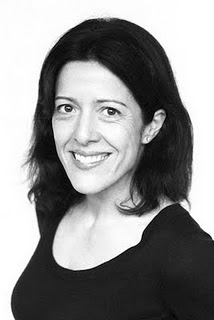
Expat life as psychological thriller? An unholy appreciation of novelist Shireen Jilla

SPECIAL TDN ANNOUNCEMENT: Dear readers, we have some thrills and chills in store for you: a chance to engage with expat writer Shireen Lilla. She has kindly agreed to respond to our comments and questions on her new novel, Exiled.

Please accept this candle. You’ll need it to light your way to the faux coffin where we’re serving Victorianesque nibbles and “finger” foods in honor of the novelist Shireen Jilla.

Be sure to try our house speciality: fried tartantula. Such an exquisite dish! Or how about some maggoty cheese, imported straight from Sardinia for the occasion? It makes an excellent pairing with our special punch. (Go on, have a sip! It’s only bubbling because we added dry ice to the bowl.)

Our honored guest looks lovely, doesn’t she, in her long black cape with the red-satin collar? But don’t be fooled. Looks are extremely deceiving in her case. Jilla harbors no illusions about the dark side of expat life — and she isn’t afraid to grasp you by the hand and seduce you into entering that netherworld for an adventure.

Many an expat veteran has advised that being stationed overseas isn’t necessarily the life of Riley. But how many of them have ever warned us of the dangers lurking on the other side: everything from psychological breakdown to murder most foul?

Slyvia Plath, the American poet who’d been living in a bucolic a part of the English countryside, put her head in the oven upon returning to London. Nancy Kissel, who was living in an exclusive Parkview high-rise apartment complex in Hong Kong, allegedly killed her husband with a blunt instrument and rolled up his body in an Oriental rug.

But why dwell on real-life cases when Jilla’s imagination can provide us with all the macabre details we need?

Deliciously “exiled”

Shireen Jilla
Let us raise our goblets to Jilla’s debut novel, Exiled, a dark, dysfunctional psychodrama set in New York City.

The novel tells the story of Anna, who is so in love with her husband, Jessie, an ambitious British diplomat, that she can’t wait to start a new chapter of their life together in New York. Jessie is the ticket (quite literally!) for Anna to leave her old life in rural Kent far behind.

At first, New York lives up to its promise. The couple find a brownstone on the Upper West Side and fall into the rhythm of New York life. But then disaster strikes, again and again.

As Anna herself puts it in her Foreword to the story:

I couldn’t imagine that my romantic dream would turn into a dark battle for everything I loved.

In our current gothic mood, we laud the idea of this book (unfortunately, we’ve only read excerpts as it’s not yet available in the U.S.) for:

1) Defying stereotypes: Many outsiders who write about New York are tempted to extol the city’s glitz and glamor a la Sex and the City. Not Jilla. As one critic put it, she gives us a New York that is “a teeming pit of hissing vipers, only just covered with a finely buffed veneer of sophistication.”

Exiled2) Pushing the envelope: Jilla, a Third Culture Kid (she is half English, half Persian, and grew up in Germany, Holland and England) who has also been an expat — in Paris, Rome, and New York — hasn’t simply replicated her experience but has dug deeper to reveal psychological truths about the people she has observed. Anna’s step-mother-in-law is a powerful socialite and philanthropist of precisely the sort seen on The Real Housewives of New York City. In Jilla’s rendering, though, she is further revealed as calculating, manipulative — and evil. As one reader-reviewer on Amazon says:

Imagine the stark terror of Rosemary’s Baby firmly grounded in reality. Shireen Jilla has created the sharp thrill of horror in a world of utterly true and compelling characters.

3) Presenting a heroine who could almost be Libby’s alter-ego: Now who is Libby, you might ask? She is the Displaced Nation’s fictional about-to-be expat wife. Her diary entries appear every Friday on this blog. After hearing about Anna, we can’t help but wonder: will Libby’s life take a sinister turn once she reaches Boston? No, Boston isn’t New York — but how long before Libby encounters a Boston Brahmin…or two?!

Time to break the spell?

Before we blow out our candles, it’s your turn, dear reader:

Has Shireen Jilla also illuminated something for you by exploring the gothic side of our displaced lives? Does she speak to your own experience — to the times when you’ve been face to face with people who seemed evil, or with nefarious doings?

And do you have any questions for Jilla about what motivated her to write such a gloriously dark book?

img: New York Skyline, by plastAnka.

If you enjoyed this post, we invite you to subscribe for email delivery of The Displaced Nation. That way, you won’t miss a single issue. SPECIAL OFFER: New subscribers receive a FREE copy of “A Royally Displaced Tea.”

Related posts: