The Displaced Nation

A home for international creatives

Tag Archives: fantasy writers

DIARY OF AN EXPAT WRITER: There’s no place like home, especially when your compatriots are reading your books!

DiaryExpatWriterShannon Young, an expat writer based in Hong Kong, decided last year to quit her day job to become a full-time writer. Since October she has been writing a diary for us about this new phase of her life. We last heard from Shannon when was heading home to Arizona for the holidays. And now let’s find out what happened during her stay in her home country.

—ML Awanohara

Dear Displaced Diary,

A belated Happy New Year! This is my fifth update on my new life as an expat writer in Hong Kong. As you know, I spent the holidays in Phoenix, Arizona, for a bunch of family events—a birth, a wedding, the adoption of a baby tortoise(!).

During my last week, I also managed to fit in some writerly activities—two school visits, a seminar, a book club meeting—where I spent a lot of time talking to others about what I’ve learned on this writing journey so far.

But before I tell you about that…

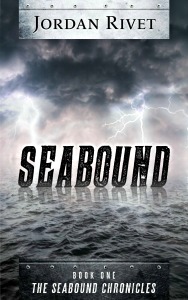
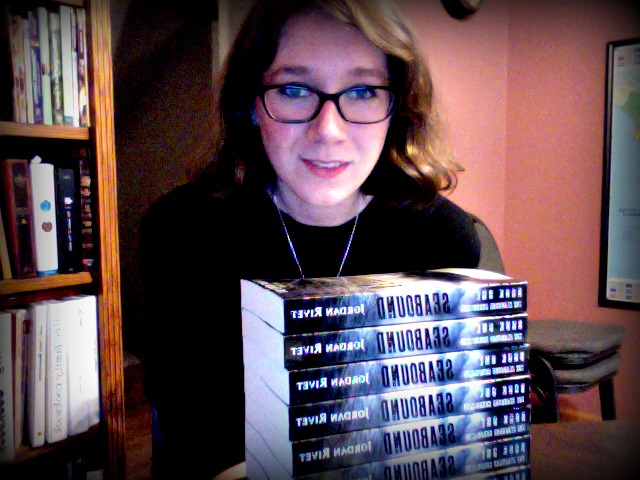
Seabound_coverartArizona is where I first got to hold the Seabound paperback in my hands! It has been available online since mid-November, but shipping to Hong Kong takes forever. (I’m sure you expats can appreciate the joys of international shipping. 4–6 weeks—from Amazon?!)

Anyway, the copies I ordered didn’t arrive until after I left for the United States. So the night I arrived in Arizona, I picked up the thumbed copy of Seabound that one of my family members had been reading and flipped through the pages for the first time.

I’ve gotta say: the book looks awesome! Even though I mostly read e-books these days, I can still appreciate a hefty paperback. (400 pages!)

And now back to my Arizona chronicle, beginning with my visit to a high school where I used to teach…

On the recommendation of a mutual acquaintance, I met up with two high school student writers to drink coffee and talk about our work. We covered general subjects including the likelihood of making a living as an author as well as specifics such as how to choose the right POV for a story and whether majoring in creative writing is a good idea.

I enjoyed our conversation, and I guess the students liked what I had to say because they invited me to their high school writing club meeting the following day!

As it happens, I had taught at their high school my first year after graduation from college. I got to catch up with my old teaching friends before the writing club meeting began. It was nice to come full circle like that.

As for the students, they asked lots of sharp questions. They especially wanted to know about plot—both how it’s structured and how to come up with something interesting. We also talked about how important it is to write the kind of books you want to read.

Continuing with a book club discussion of…my book!

Perhaps the highlight of my writerly activities in Arizona was being invited to attend a book club meeting where the group was discussing one of my books! That’s right, the entire group had read Seabound. We spent several hours talking about the story and about my writing life. They made me feel like a real celebrity—and I even got to sign a bunch of books! (I wrote a bit more about this experience on my Jordan Rivet blog.)
SeaboundArizona_Book_Club

…a self-publishing seminar at my old local library

Next up was a seminar on self-publishing at the local library I always used to walk to when growing up. It was a bit surreal returning there to learn about something I strongly associate with my adult life in Hong Kong.

It’s funny how we respond to old familiar places after we’ve gone out into the world, isn’t it?

The teacher, Barbara Hinske, is a successful self-publisher who has sold over 50,000 books in her Rosemont series. Some of the information she covered is stuff I have read before in my research, but it was exciting to meet a self-pub success story in the flesh. She also had some cool ideas to share about how she does her marketing. I’ll be applying some of her advice to my own promo strategies.

After the session I showed her the Seabound paperback because we were talking about formatting, and I’d used a template she was considering. In addition to the layout, she was quite impressed with my cover and blurb, which I found encouraging!

…and one last school visit!

Before leaving Arizona, I made one more school visit. My sister is a teacher, and she invited me to speak to her two 5th-grade classes about being a writer. Boy, were her students excited! They asked great questions, but my favorite was when one little girl asked if I know Lemony Snickett.

The kids had so much energy. They participated enthusiastically when I asked them for their ideas about what Hong Kong is like (one wanted to know if we have Panda Express in Hong Kong). They stayed totally focused when I explained how a book is made. They even asked my advice on dealing with writers block (short answer: you just stay in your chair and write through it).

The one point that I tried to make over and over again was that a book is never perfect on the first draft or even the second or third or fourth. I told them that even if a book isn’t very good the first time through, I just keep rewriting. I tried to encourage them not to get frustrated if they don’t think their essays and stories are good the first time. Real writers rewrite lots of times too!

Which brings me back to Hong Kong…

I’m now back in Hong Kong, deep into the revision process for the second draft of the prequel to Seabound. Meanwhile, I’ve been getting feedback on the third draft of the sequel and should be ready to dive into the final revision by next month if all goes well.

Shannon Young and Seabounds

You may remember that I decided to give myself until Chinese New Year to decide whether or not to keep writing full time. Well, that starts on February 19th…and February is just around the corner.

Come back next month, folks, when all will be revealed!!

Thank you for following my writing journey.

Shannon
www.shannonyoungwriter.com

* * *

Readers who are also writers, have you ever presented on your works in your home country, and if so, how did you find the experience?

STAY TUNED for next week’s fab posts!

If you enjoyed this post, we invite you to register for The Displaced Dispatch, a round up of weekly posts from The Displaced Nation, with snippets of worldly wisdom, exclusive book giveaways and our nominees for the monthly Alice Awards. Register for The Displaced Dispatch by clicking here!

Related posts:

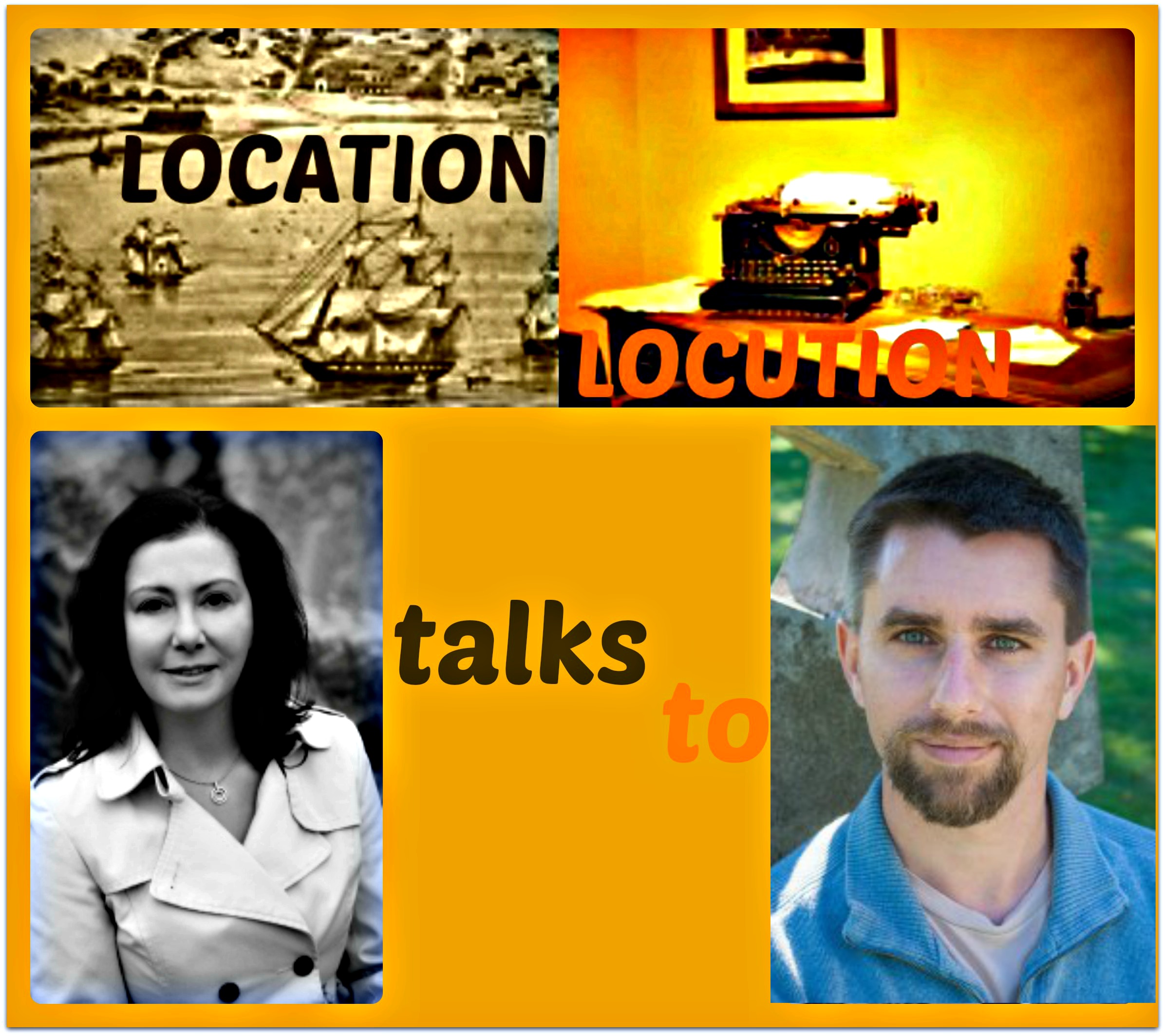
LOCATION, LOCUTION: Anthony St. Clair, author of urban fantasies whose plots are globally sourced

JJ Marsh Anthony St Clair

Columnist JJ Marsh (left) talks to “rucksack” urban fantasy writer Anthony St Clair about how he translates his travels into works of fiction.

In this month’s Location, Locution, JJ Marsh talks to Anthony St. Clair, author of the Rucksack Universe books, a series of urban fantasy travel novels set in Hong Kong, India and Ireland. When he’s not concocting the kind of fiction that thrills, delights and bewilders in the spirit of Neil Gaiman, Terry Pratchett, Douglas Adams and Tom Robbins, St. Clair is making a living as a copywriter, blogger and editor. He loves writing about business and anything related to craft beer, homebrew, travel (he’s a self-described globe-trotter), food, and the Pacific Northwest.

Which comes first, story or location?
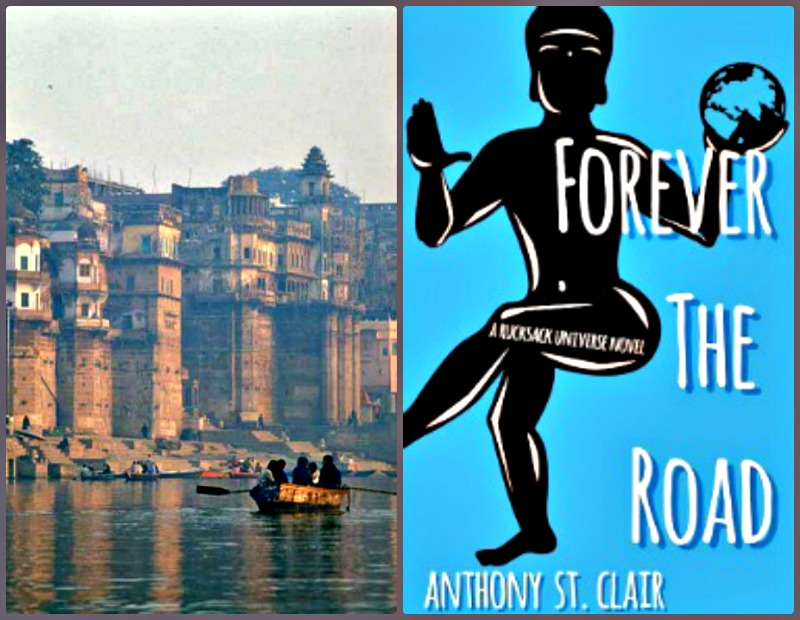
Location. My original idea for Forever the Road, the most recently published book in my Rucksack Universe series, came to me in 2003, when I spent two months traveling through India. As the story took shape, I created a fictional city and river, both called Agamuskara, which is Hindi for “smiling fire.” Both the river and the city are pivotal to the action of the story and what happens with the book’s various characters. But I don’t think I could have come up with either the story or the location without having also traveled through India, especially the city of Varanasi, the holy city on the banks of the Ganges, which Agamuskara is based on.

Photo credit: "Ganges River, Varanasi, Uttar Pradesh, India," by Babasteve via Flickr (CC BY 2.0).

Photo credit: “Ganges River, Varanasi, Uttar Pradesh, India,” by Babasteve via Flickr (CC BY 2.0); Forever the Road cover art.

What’s your technique for evoking the atmosphere of a place?
Have you ever noticed that when you go somewhere new, it’s like you notice everything and experience it more intensely? It’s like our guard comes down. We see, hear, smell, taste, and touch with an intensity and openness that we don’t usually bring to our day-to-day encounters with the world outside ourselves. I try to relate the atmosphere of a place by evoking all the senses. Is the place hot or cold? Crowded or sparse? What does it smell like? What does the food taste like? What are the colors? Sense helps us get to know a place, and evoking the senses works just as well in a book as it does in actual travel.

Which particular features create a sense of location? Landscape, culture, food?
All of the above. Landscape, culture, and food affect each other. What the land is like affects the food that can be available. Place shapes culture, because place drives so much of our experiences. Likewise, food has an influence on how culture connects and evolves. After all, how many of our most pivotal experiences have to do with a meal, or a particular moment in a new place, or by experiencing and trying to understand an aspect of a different culture?

Can you give a brief example of your work which illustrates place?
This excerpt is from Chapter 2 of Forever the Road, which was released September 8th in e-book, all formats, and trade paperback (more information here).

The rattling truck moved so fast that the world passed in a blur, but Jay marveled at all he saw. Countless people wore brilliant colors and smiled from weathered, driven faces. They defied the washed-out landscape and the humid mat of the air. Every village had been here before time was time, it seemed. Each village also brought a glimpse of temples and shrines, elephant-headed gods, bulls, monkeys, multi-limbed deities rendered in brick, stone, concrete, and reverence.

Approaching Agamuskara, Jay now understood that India was four things: heat, humans, history, and gods. They shaped India not so much into a country or a culture but a world. India was all of the world, all of time in every passing moment, and every emotion, every depravity and transcendence, every hope realized and every futility suffered, of all the human race.

And, gods, was India heat. Humid, blazing, sopping heat. India felt as if wet blankets had been baked for an hour in a pot of water, then, steaming and boiling, wrapped around the country. Even Jay’s sweat glands felt sluggish. The humidity jellied the will. It softened the wood of the few meager trees. Even the concrete blocks of houses and shacks seemed to sag, drip, and simmer in the midday, clear-sky blaze of sunlight.

The truck turned onto a highway, renown throughout northeastern India for being maintained. The road reminded Jay of the interstate highways of his left-long-ago home, except that as far as the traffic was concerned, the four lanes were simultaneously one lane, three lanes, twenty lanes, and no lanes. Still, the truck’s consistent speed and motion brought a soothing breeze to Jay’s skin, and the smooth road took him from a blazing sear to a nearly gentle simmer.

For once, Jay’s tenderized rump stayed in one merciful, bounceless spot. After a few kilometers, he relaxed like a roast chicken resting after coming out of the oven.

How well do you need to know the place before using it as a setting?
I want to visit a place before I write about it, and so far all my stories draw on places I’ve visited. Whether or not I’ve traveled there, I also use substantial research to try to understand a place as best I can, but there is no substitute for having been there. Nothing compares with eating the food, walking the quiet streets at dawn, observing the tiny everyday details that make a place its own.

Which writers do you admire for the way they use location?
I’ve spent many a time immersed in the works of Bill Bryson and Pico Iyer, and I try to bring their mix of place and experience into my own style. However, when it comes to using location in story, I admire Terry Pratchett the most. His long-running Discworld, a comic fantasy book series, is not only full of funny, richly told fantasy stories, but he clearly works hard to weave the setting into the story. Whether a book is set in a city or the mountains, it is always clear that a sense of place is key to the characters and events unfolding in the book. I try to evoke a similar connection in my own work. There’s an old saying that character is destiny, but I would add that place shapes character.

Thank you, Anthony! That was fascinating. Readers, if this interview has piqued your curiosity about Anthony and his writings, I encourage you to visit his author site. You can also follow him on Twitter.

* * *

Next up on Location, LocutionSusan Jane Gilman, Geneva resident and author of the New York Times bestseller The Ice Cream Queen of Orchard Street. Until then, I wish you happy holidays. See you next year!

JJ Marsh grew up in Wales, Africa and the Middle East, where her curiosity for culture took root and triggered an urge to write. After living in Hong Kong, Nigeria, Dubai, Portugal and France, JJ finally settled in Switzerland, where she is currently halfway through her European crime series, set in compelling locations all over the continent and featuring detective inspector Beatrice Stubbs.

STAY TUNED for our next fab post!

If you enjoyed this post, we invite you to register for The Displaced Dispatch, a round up of weekly posts from The Displaced Nation, with seasonal recipes, book giveaways and other extras. Register for The Displaced Dispatch by clicking here!

Related posts:

HERE BE DRAGONS: And much else besides! A fantasy-laden Halloween paves way for NaNoWriMo

http://www.flickr.com/photos/taymtaym/15520387690/

Left: Lucca comics & games 2014, by taymtaym via Flickr (CC BY 2.0); the “dragons” of Lucca, by Andrew Couch (October 2014).

For the past few months expat Andrew Couch has been helping us make the connection between a life of international travel and fantasy writing. This month he reports on how he spent Halloween. After you read it, I have only one question: train trip or mind trip or both?

—ML Awanohara

While my compatriots were out trick or treating, I was having my own kind of Halloween adventure over here in Europe, one that took me beyond my wildest imaginingssaying a lot for a fantasy writer!

Naturally, it had people in all manner of costumes wandering about. But it also presented opportunities to hear from a grown man about why he loves writing stories from the point of view of talking mice, and to explore a medieval walled city.

By now fellow geeks should be able to guess that I was attending a comic and games convention: the one that took place in Lucca, Italy, over Halloween weekend. Lucca, a city in Tuscany, is an hour from Florence and half an hour from Pisa.

Now, Lucca may not be able to boast of having a Uffizi Gallery or a leaning tower, but it does have church towers, clock towers, winding streets and odd-shaped plazas, all within a set of Renaissance-era city walls. So many fantasy stories feature towns inside of walls, and there are not many cities that still have them. I had a blast walking around on top of them. Here’s the view it yielded:

Photo credit: Andrew Couch (October 2014).

Aerial view of Lucca. Photo credit: Andrew Couch (October 2014).

You know, being an expat in Europe does have its advantages besides being able to spend Halloween in Tuscany. When in the United States, I never lived in a place big enough to have a decent Con, but in Europe, size doesn’t matter so much, and good train connections make it less of a hassle to attend (no parking woes, and maybe no need for overnight accommodations). This was my first time in Lucca, but for a few years in row now, I’ve been attending the Essen games in Germany, where I live. My first year I took a four-hour train to and from the convention on the same day. At Lucca I noticed someone buying a train ticket home to Turin, which isn’t so close either.

The costumes were a treat

It’s been seven years since I’ve seen any trick-or-treaters as Halloween isn’t widely indulged in Germany (as in other European countries, November 1, All Saint’s Day, is the holiday). But this year it didn’t matter as I had plenty of cosplayers to distract me. Cosplay, short for costume play, is a kind of performance art where we geeks dress up as our favorite characters or ideas.

Similar to Halloween, there are those who create their own original costumes around themes and those who don meticulous real-life facsimiles of 2-D drawings in a comic, game or movie.

I had fun watching both groups.

Since so much of what I like to read and write is steam punk (my fantasy world employs steam power), I enjoyed running into a troop of steam punk people:

SteampunkParade

Steampunk parade. Photo credit: Andrew Couch (October 2014).

Articulated metal hands and fancy goggles blending with romantic ideas of Victorian clothing—it’s definitely fantasy but not as over-the-top as anime and game characters. The mix of reality and fantasy is different, too. For many of the steam punk designs, you could imagine the mechanisms actually working, whereas the fellow on the other side of the street encased in red leather from head to foot? He can barely walk, let alone swing one of his many swords.

A real-life fantasy simulation

Perhaps even more helpful from my writer’s perspective was the chance to observe all of these characters circulating in the convention crowds. Writers, particularly fantasy writers, are free to create all manner of craziness—physics be damned. But seeing some of these ideas in the flesh wandering around was a reality check. The character who carries his signature 7-foot sword around on his back everywhere he goes really sticks out—even in a crowd full of people sporting wings and carrying all kinds of swords and staffs.

Wings, too, are interesting. Out of necessity they create a wider concept of personal space in a society, and potentially the need for wider doors…

So even my crowd watching was a source of reflection. Whether I want to write an over-the-top action story or a more realistic fantasy, I have an idea of what it looks like for various characters to wander around in a city. Because I’ve seen it.

Of Mice and Comics

I chose to attend this year’s Lucca Comics and Games primarily because of an American, the comic book creator David Petersen. He is the author and artist of Mouse Guard, an awesome set of comics (and a role-playing game) about talking mice in a medieval world. I waited in line for an hour to get my book signed (totally worth it!). I also sat in a old Italian church and watched him draw and listen to him talk about his creative process.

Asked about what inspires his drawings, Petersen told a story of being a young boy going with his family to a church in the States with rich wood carvings and decorative elements. He talked about how craftsmanship affected him. He liked the idea that functional items could still be beautiful and wanted his mice characters to have that.

He went on to say that he developed his storyteller muscles as a teen, when engaging in a lot of role-playing games. And he talked about the physical format of the comic book, allowing for dramatic shots and pacing. He said that the British film maker David Lean had inspired him to conceive of the comic book in these terms.

So Petersen takes part of his inspiration from movies. Who knew? And one day my written-word fantasy stories may take inspiration from comic books like his. Why not?

There was something rather stunning about Petersen talking about all this in the setting of a church, with stained glass behind him and a carved wooden ceiling above. My thoughts wandered briefly to the cathedral in Freiburg:

FreibergMinster

Inside the Freiburg Minster II, by orestART via Flickr (CC BY-SA 2.0)

The original Freiburg Minster was built in the Middle Ages, before people believed the world wasn’t round. That is still mind boggling to me as an American.

* * *

In the end I found the Lucca event so stimulating I only went two of the four days. After being in such enormous crowds, I was happy to be quiet and retreat into the introverted part of my self.

And yet those two days got me thinking more about my own stories, a good thing. I definitely felt ready to write when I got back on the train. I started NaNoWriMo (see my profile) last week along with many others and am already 10K words into the new story (with my second novella nearing completion as well). This is partly due to having a plot pre-planned and partly due to the rich stew of images generated by my time in Lucca, more nourishing for geeks like me than your average Halloween witch’s broth.

Andrew Couch has been a fantasy book nut since childhood; he really has not grown up much since then. After struggling to write his own games for years, he is now creating fantastical worlds in a series of novellas that echo the TV shows, anime and role-playing games of his youth. Beyond fantasy he is an avid blogger and a world traveler who resides in Germany. To learn more about Andrew, check out his blog, Grounded Traveler, and follow him on Twitter: @groundedtravelr.

STAY TUNED for our next fab post!

If you enjoyed this post, we invite you to register for The Displaced Dispatch, a round up of weekly posts from The Displaced Nation, with seasonal recipes, book giveaways and other extras. Register for The Displaced Dispatch by clicking here!

Related posts:

DIARY OF AN EXPAT WRITER: Testing one, two, three…Can anybody hear me?

DiaryExpatWriterToday we welcome a brand new columnist, the up-and-coming author Shannon Young. This past summer, Shannon announced she’d cut 18 inches off her hair, quit her day job to become a full-time writer, and given herself a pen name for her new series of adventure novels. And, yes, she is an expat, a kind of love refugee, living in Hong Kong. She has generously agreed to chronicle her writing adventure for us.

—ML Awanohara

Dear Displaced Diary,

In this column, I’ll be recording my experiences as a full-time expatriate writer. Officially, this is only a test.

Let’s start with a bit of background: I have been an expat, an American in Hong Kong, for four years and one month. For the past four years, I taught English in a local primary school while harboring a desire to work in book publishing.

Originally, I wanted to be an editor, to find talented writers and help them get their work into the world. I didn’t think I had stories of my own. Then, I moved to Hong Kong. In my new expatriate life, I found stories: personal dramas, bewildering worlds, opportunities for stimulating observations, and even ideas for fiction.

So, I started writing…

I discovered I love the process: mulling over half-formed ideas, stealing character descriptions from people I saw on the street, scribbling outlines on everything, and sitting down in coffee shops for hours at a time to actually do the work.

Four years later, I’ve completed a number of projects composed of bytes and bits of code, of pages and ink, of words and stories. Each project has taught me to look closer at the world around me. Each project has challenged me to be more diligent and to look for opportunities to write something that will matter.

One of those projects, a Kindle single called Pay Off, discusses how my teaching job in Hong Kong enabled me to pay off my large student loans from a US university. I’ve been debt free since December 2013 so have been able look seriously at other occupations.

I want to keep writing…

My teaching contract ended in July 2014. By that time I had accrued some savings, some complete or nearly complete books, and a husband with permanent residency. Instead of continuing to teach, I realized that now was the time to try to make it as a writer.

This is only a test. If I am not bringing in enough money from my writing (or worse, not enjoying the work) around Chinese New Year, I will start looking for a new job.

For now, I’m jumping in with both feet, seeing if this dream is feasible.

Like becoming an expat all over again…

Quitting a day job to write full-time is a lot like moving to a new country. You might know a bit about what to expect and what to pack. You do your homework; you find stories of people who’ve done it successfully, who love their new lives. You also find stories of people who’ve failed, who didn’t gel with the new place for any number of reasons. Most expats fall somewhere in between, learning to live with the difficulties while also enjoying many good moments.

Some people say it isn’t possible to make a living as a writer. They cite the successes and insist such people are outliers: exceptionally good or exceptionally lucky. As with moving to a new country, I suspect the truth lies somewhere in between. All I can do is take the leap and see if I can make it work.

But, just as I wouldn’t move to a new country without a suitcase, I am not starting this writing journey with a blank Word document and “Once upon a time…”

I have a strategy!

Here’s what I’m “packing” for my full-time writing life:

1) A portfolio of published works—comprising not just the student debt Kindle single but also the anthology How Does One Dress to Buy Dragonfruit: True Stories of Expat Women in Asia, which I edited for a small Hong Kong publisher. It came out earlier this year.* Neither of these works is a huge moneymaker, but sales can add up slowly. More importantly, these two publications have given me valuable publishing experience.

2) A book deal. My memoir of my first year in Hong Kong, Year of Fire Dragons, is being published by Blacksmith Books, an independent Hong Kong publisher, at the end of October. Hong Kong is a small market and even healthy sales won’t pay my rent, but at least I have a book to launch and a tangible opportunity to build my career.

3) A genre series in the works. This is the essential part of my strategy, the heavy winter coat, if you will, that I’m packing as you never quite know, once you become an expat, where you might end up. (I’m in Hong Kong now, but as I never could have predicted that, shouldn’t I be prepared for the day when I move to, say, Finland?) Since late 2012 I have had the wild pleasure of working on a series of post-apocalyptic adventure novels set at sea called The Seabound Chronicles (under the pen name Jordan Rivet). I’ve planned for a four-book series and written drafts of three of the titles. Book One, Seabound, is currently with the copy editor and should be ready to launch in November. I plan to self-publish this series as e-books and POD paperbacks and, frankly, hope to make some money.

4) Last but not least, reasonable expectations. While I am hopeful that the combination of my publishing experience so far, my existing works, and a highly commercial series will enable me to continue doing what I love, I am also realistic. I don’t expect to get rich. The goal here is to build up an audience—and a long tail of sales—that will eventually enable me to pay my rent and buy the occasional plane ticket home to see my family. But my primary expectation is that I will work hard, produce the best books I can, and try to learn as I go.

“If you want a pearl, you must dive for it.”—Chinese proverb

I realize I’m taking a risk by forgoing a steady income and living on savings in order to give myself more time to write. But taking risks is second nature to expats. We leave behind everything we know, and there are never any guarantees about how things will turn out.

My own jump into expat life occurred when I followed the man I loved to his home country. At the time, I didn’t even know if we would get along when we finally lived in the same country. At first, it looked like everything would fall to pieces because a month after I arrived in Hong Kong my boyfriend’s company sent him to London. I had a year on my own in Asia, fearing that my risk had been in vain.

That story has a happy ending: that boyfriend is now my husband—and I love Hong Kong. It was a risk that paid off, but it could have gone very wrong. Now, I hope the risk I’m taking will turn out at least half as well.

And can I tell you a secret, diary? Since I stopped working and started focusing on writing full time, I’ve been deliriously happy. I love having hours to myself each day to sit down and work on my own creative projects. I love reading about the publishing industry and studying other people’s books and careers. I’m trying hard not to become an obnoxious friend who only talks about their own work because it’s all I think about these days.

Yes, I know this honeymoon period won’t last forever, but at least allow me to say: it’s been wonderful so far!

And yes, I sometimes struggle with prioritizing, but that’s because there are so many things I want to do! But I’m gradually getting used to my new routines and performing triage on my to-do lists. I’m developing the daily habits of a writer. I want to use this period well.

Each month, I’ll share a bit more with you about where this journey is taking me. I hope you’ll come along for the ride.

Thanks for reading!

Yours,

Shannon Young
www.shannonyoungwriter.com

*From now until the end of the year, Shannon will be sharing excerpts from Dragon Fruit. Stay tuned!

* * *

Readers, it’s your turn. What is a risk you’ve taken in order to follow a dream? Was it becoming an expat or something even more daring, like becoming a full-time writer? What are some difficulties you faced along the way? Let me know in the comments!

STAY TUNED for next week’s fab posts!

If you enjoyed this post, we invite you to register for The Displaced Dispatch, a round up of weekly posts from The Displaced Nation, with snippets of worldly wisdom, exclusive book giveaways and our nominees for the monthly Alice Awards. Register for The Displaced Dispatch by clicking here!

Related posts:
HERE BE DRAGONS: A pox on your expat life! How suffering an illness abroad can inspire fantasy writing

Here Be Dragons Pox

(Clockwise from top) Detail of the medieval map Carta marina; one-day old chicken pox blister, by Evanherk at Dutch Wikipedia (CC BY-SA 3.0); neem leaves, by Miansari66 (CC BY-SA 3.0); Freiberg, by kaffeeeinstein (CC BY-SA 2.0).

HERE BE DRAGONS is back, a column produced by fantasy writer Andrew Couch, an American expat in Germany. We at the Displaced Nation have long been aware of the strong connection between fantasy (think Alice in Wonderland) and a life of international travel and residency. And now Andrew has got us pondering the idea of turning our (mis)adventures into fantasy stories!

—ML Awanohara

A few weeks ago I came down with an adult case of the chicken pox. Seriously, I am in my mid-thirties and never had chicken pox as a kid.

The experience got me thinking about the oddities of dealing with a disease as an expat living abroadand then about how this could become a source of material for a writer like myself, who enjoys leading characters around fantasy realms.

Getting sick in Germany is not the same as getting sick in the United States. To begin with, we don’t have a car, so my wife took me on the tram to see the doctor. He subsequently told me that I shouldn’t really have left the house; my local health service would call me.

In the U.S., we would be driving everywhere and the local health service (do we have one?) couldn’t care less about a case of the chickenpox.

In the end I didn’t get a call from the local health service, nor did my Twitter friends’ predictions I would end up being quarantined come true. And yet I can’t stop thinking about the exposure to disease that comes from riding the trams. Did I get sick because someone else had to ride the trams? Public transport is a glorious thing, but it definitely carries health risks.

Another thing that was strange: the German doctor told me to pretty much suck it up and try not to scratch. Germany, in my experience, is not the super-medicated world we commonly find in the United States.

In the end, despite the fear-inducing comments from friends about how horrible the chicken pox can be as an adult, I had only one day of itchiness amidst a week of hideous red bumps.

Okay, you might be saying, that was really awful, but what does it have to do with fantasy writing? Well, as I mentioned in my first post of the series, the expat experience is a wonderful metaphor for encountering a fantasy world. Why not use the episodes and observations from your life overseas to conjure up fantastical tales?

Here are three ways I can envision using my illness in future stories:

1) Add a plot twist about the threat of sickness and disease and search for a cure. Perhaps I’ll given one of my characters a fever and have a foreign medicine woman tell him to rub certain leaves all over his body. How does he respond? Ohand if you think this is just the realm of fantasy, I did have a friend recommend some Indian neem leaves as a powerful agent for curing skin conditions. I even would have tried them had we been able to figure out how to import them into Germany.

This device could cut another way as well. Perhaps my characters are living in the depths of a jungle, with medicine oozing from every berry, leaf and root. They would likely feel creeped out if required to pay a visit to a city doctor, whose remedy consists of handing out bottles of nondescript white tablets.

2) Use sickness to explore my characters at their worst. In my case, for instance, all I want to do when ill is snuggle under a blanket, drink massive amounts of orange juice, eat grilled cheese sandwiches and watch movies until it goes away. I also want someone to bring me these things. I really would be in trouble if I was not supposed to leave home and didn’t have a wonderful wife (or even friends) to bring me food.

Would my fantasy characters become similarly dependent? How would they cope if deprived of their favorite comfort foods and activities?

3) Explore the fear that comes from a disfiguring illness. You may have had chicken pox when you were small and can no longer remember how you felt. But I tell you this, as an adult with an active imagination, chicken pox are frightening. Bubbly boils cover the body and itch like crazy. Without a ton of stretching (oh, and the fever helped this, too), my imagination could easily have convinced me I had the plague. I refrained from looking in the mirror much, but my wife tells me that I looked as awful as I felt.

And now let’s transfer this physical aspect of disease to fantasy culture. What if my characters didn’t know the long-term impact of the pox? What kind of panic would this induce? Or maybe they know the pox to be non-fatal, but how do they deal with having something that makes them look hideous? Another possibility is that an alien character gets the pox but doesn’t understand when the natives don’t react: is this because they expect that person to die, or because they know the disease will run its course? Terror prevails until that question is answered…

* * *

A few weeks later, I am recovered mostly. I am left with stories to tell.

I also have a mind full of diseases to inflict on future characters in fantasy stories. As the Germans say:

Auf jeden Regen folgt auch Sonnenschein

“After every rain, there will be sunshine.” Similar to “every cloud has a silver lining” but not quite the same as it speaks more to the inevitability of change. “This, too, will pass” would be a closer translation.

For expats, the risk of getting seriously ill while abroad is greater than it is for occasional travelers. Try to recall your first time being sick and dealing with the local culture. Was it more frightening than at home? What about trying to communicate with doctors in another language while suffering from fever? What if your favorite remedy or comfort food just didn’t exist? All of these are situations you can include in your fantasy stories.

Andrew Couch has been a fantasy book nut since childhood; he really has not grown up much since then. After struggling to write his own games for years, he is now creating fantastical worlds in a series of novellas that echo the TV shows, anime and role-playing games of his youth. Beyond fantasy he is an avid blogger and a world traveler who resides in Germany. To learn more about Andrew, check out his blog, Grounded Traveler, and follow him on Twitter: @groundedtravelr.

STAY TUNED for our next fab post!

If you enjoyed this post, we invite you to register for The Displaced Dispatch, a round up of weekly posts from The Displaced Nation, with seasonal recipes, book giveaways and other extras. Register for The Displaced Dispatch by clicking here!

Related posts:

HERE BE DRAGONS: All those cities you’ve visited on your travels? They’re the lego bricks for cityscapes in fantasy writing

Citiscapes Collage

(Clockwise from top) Detail of the medieval map Carta marina; the Speicherstadt (warehouse district) in Hamburg, Germany (photo credit: Andrew Couch); tram in Naples (photo credit: Andrew Couch); legos (photo credit: Morguefiles).

HERE BE DRAGONS is back, a column produced by fantasy writer Andrew Couch, an American expat in Germany. We at the Displaced Nation have long been aware of the strong connection between fantasy (think Alice in Wonderland) and a life of international travel and residency. And now Andrew has got us pondering the idea of turning our adventures into fantasy stories!

—ML Awanohara

Last month on HERE BE DRAGONS, we talked about landscapes: the soaring mountains, unusual geographical formations, torrential storms, and other distinctive natural phenomena that can be used to build a whole new world for a fantasy story.

This month we move to cityscapes: the landscape’s urban counterpart, which has been largely shaped by the hands of man (or beast, depending on your story).

One thing I am learning while writing fantasy novellaswhich has only been reinforced by the posts for this columnis how much I’ve been influenced by my expat life and international travels when attempting to construct my own worlds.

When the bricks stick together, great things can be accomplished…

After living in Europe for several years, I now have a catalog of cityscapes to draw on, from grungy parts of London to quiet Parisian parks to industrialized Hamburg. What’s more, each area of every city has its own distinct sights, sounds and smells. And I’ve come to think of these various parts as my lego bricks for assembling the fantasy cityscape that features in my novellas.

I have heard that the second book is often harder for writers than the first. I am definitely finding this to be the case, but mostly due to character and plot, not setting. The setting of my next few novellas is the city of Resholm, which is perched on the line of cliffs called the Dropline. In creating Resholm I was heavily influenced by my impressions of Hamburg, a city in northern Germany that has a long history of being a free port. Resholm, too, is a port:

QueenOfCloudPirates_cover

A skyline of towers along the ridge watched over the cargo and warehouse districts which dripped down the side of the steep slope, nearly to the edge of the cliffs themselves. Soaring arches piled on soaring arches cut the area in various places to hold up the docking piers. A handful of ships were moored across the area.

Hamburg also has the Speicherstadt, an area where goods could come and go without having to pay customs. I got to thinking, what would a city feel like if it had been created solely for the purpose of moving goods and not for the people in it? Resholm grew from this contemplation. In the stories, the police force exists primarily to safeguard the movement of goods in and out of the port, not to protect residents from harm:

“I don’t know,” Arnhelm said. An hour had passed since the officers of the Teeth had shuffled Jason and him into separate rooms. “Why don’t you ask her? Why are you even hounding my uncle and me? One of her goons nearly killed us and blew up a building in the docks.”

“Listen here, sonny,” the man said. “First off, neither the town nor its populace is in our jurisdiction. Resholm survives on its free port and our duty is to keep it safe. Safe for goods, safe for money and safe for free trade. In my experience, people take care of themselves. If they are smart.”

He leaned forward, picked up a piece of paper from the table between them and began to read. “Endangering goods in the warehouses. Bypassing a checkpoint. Reckless endangerment of transport. And that is before we even talk about the destroyed building in the docklands.”

Could I have created Resholm by studying photos of cityscapes found on the Internet? Probably, but I don’t think the result would have been as rich. Walking around a city is the best way to pick up its sounds, smells and sensations. Building a fantasy city from such memories, you become aware of the details that need to be included. For instance, I decided to include Hamburg’s tall, red-brick warehouses in the Speicherstadt, complete with their cranes and rails to move goods, in Resholm as well. The architecture so happens to date back to the late 1800s, which is the time period I am aiming to replicate in my story.

Sometimes it doesn’t matter what you are building…as long as you’re enjoying the fantasy!

Of course, Hamburg is on water and isn’t dripping down the side of a cliff with airships docked at each level, but hey, it’s fantasy, which means I have the freedom to do what I want:

Only one bulb remained lit and he and Lucia left the tram car. They walked up a set of steps to the road which ran along the level five terrace. The smell of engine exhaust, unwashed humanity and a hint of damp stone assaulted Lors’ nose. The constant wind he had gotten used to didn’t seem to penetrate the row of buildings enough to clear the miasma. Despite the lack of wind, the street was cold. The docklands were in perpetual shadow on the northern slope. He could see the sky between the airships docked at the level above, but its light was so weak that lamps on poles shed he needed the scattered poles with their glowing globes to see anything in the eternal twilight.

A pair of tracks ran down the center of the road. Men stood on carts which ran back and forth controlling them with long handles. Sidings led off to both sides at each building. There was plenty of space to walk on either side, but they had to dodge carts and step carefully to make much headway. This was a place built for shipping goods. People served the crates they carried, not the other way around.

By no means does a fantasy city have to be built from a single real world city. The town square of Resholm is based on my memories of Poznań, Poland. The funiculars that service the docklands are from a day I spent wandering in Naples, Italy, and became fascinated with its tramway network. There are also some pieces of the city that owe to my meanderings in New York. But again, these are my lego bricks that I used to construct a stage for my characters to act upon and interact with each other.

Although my books fall more into the adventure—the characters must traverse a wide terrain—there is an entire genre of urban fantasy set solely in cities. If this kind of thing intrigues you, check out the following works:

* * *

Wannabe fantasy writers who are also travel buffs, how about you? Have you collected some cityscapes on your wanderings you think will affect your writing one day, or perhaps already has? Let me know in the comments. Also, if you’ve been fantasizing about particular topics, let me know, and I’ll attempt to stretch my imagination to discuss in a future post.

Andrew Couch has been a fantasy book nut since childhood; he really has not grown up much since then. After struggling to write his own games for years, he is now creating fantastical worlds in a series of novellas that echo the TV shows, anime and role-playing games of his youth. Beyond fantasy he is an avid blogger and a world traveler who resides in Germany. To learn more about Andrew, check out his blog, Grounded Traveler, and follow him on Twitter: @groundedtravelr.

STAY TUNED for next week’s fab posts!

If you enjoyed this post, we invite you to register for The Displaced Dispatch, a round up of weekly posts from The Displaced Nation, with seasonal recipes, book giveaways and other extras. Register for The Displaced Dispatch by clicking here!

Related posts:
HERE BE DRAGONS: Dreaming up a landscape from your world travels for a work of fantasy

HBD Landscape CollageWelcome to the second post in our new series, HERE BE DRAGONS, in which fantasy writer Andrew Couch, an American expat in Germany, brings our attention to the connection between fantasy writing and a life of international travel and residency. In the series opener, he pointed out how expat life in all of its glorious strangeness can be a feed for the fantasy writer’s imagination. And today? He talks about how one’s travels can inspire other-worldly landscapes.

—ML Awanohara

Many people think that fantasy is a genre set apart, but fantasy stories, like those in any other genre, center on compelling characters and the struggles they face. As epic fantasy author Patrick Rothfuss once said:

If you want to write a fantasy story with Norse gods, sentient robots, and telepathic dinosaurs, you can do just that. Want to throw in a vampire and a lesbian unicorn while you’re at it? Go ahead. Nothing’s off limits. But the endless possibility of the genre is a trap. It’s easy to get distracted by the glittering props available to you and forget what you’re supposed to be doing: telling a good story.

Yet clearly there are some elements that set fantasy writing apart, and today I want to talk about one of them: landscapes. By “landscapes” I of course refer to the great swaths of nature not created by man. Often in fantasy writing, they are more than just a backdrop—they represent the force of primal nature that must be appeased or overcome. A landscape can also inform how a society is built and what drives it. (I will devote some time to urban-scapes and architecture in future posts.)

Obviously, setting plays a major part in other genres—see the works featured by JJ Marsh in her Location, Locution column—but I would argue that in fantasy writing, a great deal of time should be devoted to conjuring up a physical landscape for your make-believe world. Tolkien understood this very well. The Lord of the Rings would not have the same impact without those soaring mountain ranges.

“What are men to rocks and mountains?” —Jane Austen

Speaking of Lord of the Rings: After joining my wife in New Zealand during her round-the-world trip some years ago, I suddenly understood why Peter Jackson filmed his Lord of the Rings series in his native land. (Older TV series such as Xena: Warrior Princess and Disney’s Hercules were likewise filmed in New Zealand.) The landscape is so varied, so grand and… well…conducive to fantasy! I don’t know which portions of the Rings movies were filmed where, but I certainly had some ideas on our day through Fiordland National Park, which occupies the South Island’s southwest corner. This is the park surrounding Milford Sound, considered to be one of the world’s top travel destinations.

Due to my fear of flying, I never imagined I would make it as far as New Zealand (literally, half a world away)—but I’m so glad I did. After stopping in Queenstown, we took an overnight bus trip out to Milford Sound. Our bus was glass topped—our first hint of the wonders to come. Between Queenstown and the park entrance are lakes and rolling hills—pretty enough; but once you hit the edge of the park, the scenery becomes much more fantastic. We entered a dense beech forest that evoked visions of natural spirits. Then, after traversing the three valleys toward Milford, we caught sight of the mountains.

How to describe those mountains, which the early Queenstown settlers nicknamed The Remarkables? The human mind tries to makes sense of new experiences based on information it has already collected. For instance, we compare a new food to something we’ve already eaten or a a new piece of technology to X on steroids. But the mountains in Fiordland did not really compare to anything I’d seen before. Those I’d seen before were big, but somehow these were even bigger, and more awe-inspiring.

Sitting at the top of the Homer Tunnel gazing down into the valley, I could readily imagine ten thousand orcs (mythical humanoid creatures, the idea for which was developed by Tolkien) rushing up to besiege our bus of a dozen tourists.

We were surrounded on three sides by enormous sheer rock faces with what looked like trickles of water flowing down them, about a handspan wide. But then our guide informed us that these streams were a meter wide, which meant the mountains were not as close as I’d thought: they were a couple of miles away. So much bigger than I’d imagined! Um…my vision of ten thousand orcs began to seem rather pitiful.

Steam-powered dreams

Queenstown is in Otago, a region that opened up after gold was struck in the 1860s. This led to an influx of foreign miners, many of whom were goldrush veterans.

So while the landscape before me conjured up the feeling of Middle-earth, the setting for most of Tolkien’s fantasy writings, in reality most of the region’s early settlers were part of the Steam Age.

QueenOfCloudPirates_coverI didn’t consciously think about it during our tour, but now that I’m writing a series of fantasy novellas, Crossing the Dropline, I can see that my impressions of the mountains, along with my thoughts about the steam era, have fed into my imaginative process. For instance, Cloud Rock is a precious resource in the story. It powers flight and comes from only one region, called Beyond the Dropline, a harsh landscape that is both protected and contested by different groups. So the challenge becomes: can the power of Cloud Rock be harnessed outside of the Dropline?

South of the Dropline, raw ore [Cloud Rock] no longer had as much power. The real breakthrough of rotor technology was how to use it outside of the ranges. Natives had been floating with ore for centuries before the league explorers brought a sample back and engineers developed a way of refining and attuning it to the energy of Air in the rest of the world. That was only thirty years ago and hailed as the advent of powered flight. From that point on the Iron League had controlled the skies and had grown in influence. They had shifted from sea vessels to airships and proceeded to grow their trade empire around the Circle Sea and over the mountains into the west. Lors had heard on the news that the other nations were growing uncomfortable, but the news man had reassured them that the League diplomacy corps had everything under control.

At the mercy of nature

Nature is sometimes a primal force that characters in a fantasy story must overcome. My wife and I had perfect weather on our trip through Fiordland, but it was not hard to imagine a torrential storm ricocheting off the mountains and threatening to wash us over a steep cliff. In my novella series, the characters have to contend with not only human antagonists but with mountains that float in the sky:

He could see the front of the dark clouds out beyond the floating mountain peaks. An ever churning mass of dark clouds stacked into a formidable wall moving slowly away from them. Then another flash lit the sky and Lors saw what Arnhelm had been watching.

On top of the massive wall of clouds strode the figure of a bearded man. He loomed the size of one of the tall steel buildings in downtown Ironholme and was wrapped in a robe made of the clouds. He shone with a pale white light. Every step he took on the clouds caused sparks to ripple out and illuminate the sky.

“Storm giant,” Jason said from next to Lors. “Pretty, isn’t it?”

The first book only hints at it, but soon the spirits of the howling North will try to tempt the characters. They will become more present as the series develops.

* * *

I made the trip to Fjordland years before I started writing novellas, but the memory of those mountains continues to haunt—and inspire—me.

How about you? Do you have a landscape in mind you think will affect your writing one day, or perhaps already has? Let me know in the comments. Also, if you’ve been fantasizing about particular topics, let me know, and I’ll attempt to stretch my imagination to discuss in a future post.

Andrew Couch has been a fantasy book nut since childhood; he really has not grown up much since then. After struggling to write his own games for years, he is now creating fantastical worlds in a series of novellas that echo the TV shows, anime and role-playing games of his youth. Beyond fantasy he is an avid blogger and a world traveler who resides in Germany. To learn more about Andrew, check out his blog, Grounded Traveler, and follow him on Twitter: @groundedtravelr.

STAY TUNED for the next fab post!

If you enjoyed this post, we invite you to register for The Displaced Dispatch, a round up of weekly posts from The Displaced Nation, with seasonal recipes, book giveaways and other extras. Register for The Displaced Dispatch by clicking here!

Related posts: