The Displaced Nation

A home for international creatives

Tag Archives: Beauty

Why you can’t help being jealous of new author and Parisian style guru Jennifer Scott

Before getting started, I have to say something, something rather catty — which is that Jennifer Scott makes me jealous.

I’m jealous in part because she has self-published a book, Lessons from Madame Chic: The Top 20 Things I Learned While Living in Paris, that is doing very well for itself. Nearing the top of Amazon’s Paris Top 10 list, it has just been reviewed by The New York Times (Thursday Styles) and featured in The Daily Mail.

But a much bigger part of the reason for my jealousy of Scott is that she’s such a quick study.

Let me explain. As an American woman who lived in England and Japan for many years, I could identify with many of the lessons Scott picked up from immersing herself in the everyday life of a fine French family: that there are other — more stylish and more sensible — ways to cook and eat, keep house, entertain, wear clothes and put on make-up than those we’ve been taught in our native land.

But just how long was Scott in Paris? Six months! C’est incroyable!

It took her just six months to pick up so many life lessons? At first I wondered: can it be because the French are such good teachers? Scott after all benefited from exposure not only to her host family, whom she calls Famille Chic, but to her boyfriend’s host family, Famille Bohemienne.

But then I decided that, no, the French aren’t so much great teachers as Scott is an avid learner. You see, there is something else she gets right, exquisitely right, with this book — she captures the moment when an expat goes from feeling uncomfortably displaced to deciding she can take something of value away from the experience. Scott may be ignorant, but she isn’t arrogant — an observation that does not by any means apply across the board to newbie expats. (Dare I say, the combination of ignorance and arrogance is an American speciality, especially when we venture abroad!)

There is an incident at the heart of the book that conveys this evolution in Scott’s thinking — I speak of the moment when Madame Chic (the redoubtable matriarch of Famille Chic) turns to her American charge and says: “That sweater does not look good on you.” Stunned by her host mother’s frankness, all Scott can think of to say, in English, is:

Really? But it’s a silk and cashmere blend.

But it’s not the quality Mme Chic has in mind but the color:

It does not suit you at all. It washes you out. You look…sallow.

For Scott, this is the beginning of an epiphany. She feels wounded but then has to concede that Mme Chic could be right — she’s never liked the sweater (it was a gift) but more importantly, why is she bothering to wear colors that don’t suit her?

For the past four years — initially through her blog, The Daily Connoisseur, and now through her new book — the precocious Scott has been making the case for rejecting the typical American life of mindless consumerism. As she learned at the well-manicured feet of Mme Chic, it’s important to make sure the clothes you wear, the food you put into your body, and the items you bring into your home are things you love and that actually suit you. What’s more, living a well-edited life frees up our time for other — artistic, cultural, intellectual, philanthropic — pursuits.

Such sage advice — and from one so young! But enough of my giving vent to the green-eyed monster. It’s time I introduced you to its object — or shall I say, bête noire? — the très très charmante Jennifer Scott. She graciously agreed to answer some of my fashion- and style-related questions, along with a few that relate to the concerns of the Displaced Nation’s “citizens.” The following are some highlights from our exchange. Enjoy — and see if you don’t end up with a case of Scott envy as bad as mine!

The decision to write a book on refined and elegant living

Thank you so much, Jennifer, for agreeing to this chat and also for generously offering to provide two signed copies of your book as a giveaway to Displaced Dispatch subscribers. Let’s start by having you talk a little about your background — where you were born, what you studied and why you went to Paris.
I grew up in the Inland Empire of Southern California, studied theatre and French at the University of Southern California and currently reside in Santa Monica. My junior year of college I studied abroad in Paris, which was a life changing experience and prompted me to write my memoir/lifestyle book, Lessons from Madame Chic.

What made you decide on the format of a how-to book — which as you say is also something of a memoir on your semester abroad?
Since 2008 I’ve been keeping a blog called The Daily Connoisseur, where I explore all facets of how to live well. I did a series on my blog, “The Top 20 Things I Learned While Living in Paris,” where I examined the lessons I learned in Europe and shared how I translated those lessons to my California lifestyle. The series was so popular, I realized there was a strong interest in the application of these lessons — not just in the lessons themselves — so I decided to record my observations in a book.

What audience did you have in mind for the book?
The audience I had in mind was anyone who wanted to live a more refined and elegant lifestyle. I know this sounds broad and general but it’s true. Sure, different parts of the book appeal to different people and age groups, but overall the message is that life should be lived beautifully and passionately and I think that is a universal message.

What portion of the book — the fashion and beauty tips, the lifestyle advice, the memoir — have readers responded to the most?
Most readers say the last third of the book, the section on how to live well, inspires them the most. But I get a lot of great feedback on the beauty, fashion and diet portions of the book, too.

Capsule wardrobes, clothing collections, colors & other tips

I really liked your advice about the capsule wardrobe of 10 core items, based on how Madame Chic and her family dressed. But many of us who’ve been expats in other countries eventually find ourselves drawn to native fashions — sometimes to the point where we start building collections. Last week, for instance, long-time expat Anastasia Ashman told of her collection of silk kebayas (long, fitted jackets) from Malaysia. Are fashion collections a no-no?
I think the idea of a fashion collection is very cool. I don’t personally have one but if you have traveled, or if you live abroad and find yourself drawn to a cultural fashion piece, I say, why not? My only advice would be to make sure your collection is not verging on becoming clutter. Still keep a discerning eye.

Another famous displaced American woman, of course, was Jackie O. What about her habit of buying ten sweaters in different colors — thus saving time and/or disappointment when the style is discontinued, or in the case of international travelers, for fear that you’ll never get to that part of the world again?
This mentality can be tricky and I say that from firsthand experience! A few years ago I realized I was buying everything in threes. If I liked something, I would buy it in three colors for fear I would never find something like it again. I found that the multiple purchases just became clutter in my wardrobe and oftentimes I would change my mind down the line and decide I didn’t actually like the pieces that much after all! I would suggest practicing restraint here as well.

I enjoyed the passage of the book where you recalled Mme Chic criticizing you for wearing the wrong color. When I had my “colors done” in Japan, I was told in no uncertain terms never to wear fuchsia! At the same time, though, I can relate to another remark made by Anastasia last week. She said that because color choice reflects the place where ones live, people like her, who’ve gone back and forth between very different cultures, find themselves varying their palettes rather widely.
I do agree that color choice can be influenced by geography, but I believe one should always go with their passion rather than trying to conform too much. If you love color, by all means you should wear it, even if everyone around you is in a sea of black. Style is about being happy and comfortable with what you are wearing, if you are trying too hard to fit into your surroundings, it doesn’t come off as natural.

Skincare and diet

Moving on to skincare, in your book you mention how careful you are to apply SPF to your face, neck and décolletage — but is that a habit picked up in the U.S. or in France? I was under the impression that French women liked their suntans!
Applying sunscreen is a habit I picked up in the United States but I do believe French women protect themselves on a daily basis with sunscreen as well — they perhaps aren’t so zealous about it as we are. Although everyone is different. I remember when I spent six weeks in Cannes, I loved to observe this French woman (a local) who went to the beach everyday to sunbathe. She was a deep bronze color and her skin was quite leathery so she clearly wasn’t concerned about wearing SPF!

I also identified with the part of your book where you say that French people stay thinner than Americans do by not snacking in between meals. Likewise, I learned to snack less when living in both England and Japan — I lost weight in both countries! That said, I also got into the habit of taking afternoon tea breaks, sometimes with a biscuit (cookie). In your view, is teatime permissible? (Please say yes as it’s a founding principle of The Displaced Nation!)
I adore tea time! I actually spend a good part of every year in England, as my husband is English, and we have tea and some sort of cake or biscuit every day during this charming ritual. Tea time is enjoyable and if you relish it and take it in moderation (only one slice of cake and not two) there is nothing wrong with it. Maintaining a healthy attitude towards eating and not beating yourself up over small pleasures is key. The French equivalent of tea time would be the goûter, which is taken at 4:00 p.m. and can consist of anything from a cup of tea and a slice of cake, to a hot chocolate and a biscuit. Delightful.

The impact of repatriation

Like me, despite your love of foreign countries, you’ve chosen to live in the United States. Have you changed your mind about any of the fashion principles you learned in France since coming back here, or do they still hold fast?
I still utilize the fashion tips I picked up in France through the years — especially the French concept that comfortable doesn’t have to equal frumpiness.

For me, one of the biggest changes I’ve made since coming back to the U.S. concerns shoes. Though I never lived in France, I had somehow imbibed the French preference for ballet shoes or low-heeled pumps, instead of athletic shoes. I don’t think I owned a single pair of sneakers when I first arrived back here! In the past couple of years, though, foot pain and aging have made me concede that athletic shoes are much healthier for the foot, especially when one travels and does a lot of walking…
By necessity, I have to wear an orthotic most days. I still wear chic day shoes like ballet flats and driving loafers, but buy them in bigger sizes so my orthotic fits. Voilà! Comfort and practicality meet style. I love being comfortable but for me it’s about being creative and going about it with style. There are so many comfortable yet stylish alternatives to traditionally comfortable things like sneakers, sweat suits and yoga pants.

So are there any fashion or beauty ideas that American women get right?
American women have great style and get a lot of things right! I think where we go wrong is in editing our wardrobe. We have too many things in our closets and sometimes that clouds our fashion identity a bit.

Cross-cultural marriage and the California life

Moving on to another topic of interest to many “citizens” of The Displaced Nation: cross-cultural marriage. You’ve chosen to marry an “eccentric” Englishman, as you call him in the book. What do you think is the biggest challenge about marrying someone of another culture?
The biggest challenge, for me, is food! My husband and I have very different tastes in food. He loves traditional English food like roasts, fish and chips, shepherd’s pies and other hearty dishes. I tend to like lighter fare. I also adore Mexican cuisine as it plays a big part in California culture and he is not so into it. So when we cook dinner at home, it is always a compromise.

One more question from an expat perspective: have you completely readjusted to living in the United States, or do you still pine for Europe?
I have definitely adjusted back to American culture. I love my Californian lifestyle — which is why I’ve chosen Santa Monica as my main place to live. It’s been over a decade since I’ve lived in France but I still travel to Europe every year. I enjoy taking the best lessons I learn from these travels and incorporating them into my life back home. This is really what my book is about. And doing so has helped me to lead a very rich existence, indeed.

Next is a mystery…?!

Finally, what’s next on the writing front — are you currently working on another book?
My next book is a mystery called Divina Wright and the Case of the Missing Rubies. It is a stylish, vintage take on a modern mystery.

Thank you so much, Jennifer Scott, for engaging in this tête-à-tête! Readers, do you have your own questions for youthful connoisseur? Hurry up, before she gets invited to host her own style series on Cable TV. (Reeooow. Hisssss… I can feel another crise de jalousie coming on!)

STAY TUNED for Wednesday’s interview with another displaced style maven (but providing an Italian perspective!), Barbara Conelli.

If you enjoyed this post, we invite you to register for The Displaced Dispatch, a round up of weekly posts from The Displaced Nation, with seasonal recipes, book giveaways and other extras. Register for The Displaced Dispatch by clicking here!

Related posts:

5 ways to rejuvenate when you’re on the road — a blokey bloke’s perspective

I’m not big on spas. In fact I’ve never been to one. Perhaps because I’m a bloke (and quite a blokey-bloke at that), I just can’t see the appeal of drenching myself in yoghurt or putting cucumber on my eyes. Well, not unless I’m going to a fancy dress party as a Greek salad. 🙂

But that doesn’t mean I’m not on the eternal quest for self-renewal and youthfulness. We all are! Well, anyone over the age of 21, anyway! It’s just that some of us would prefer to avoid the lotions and potions, if alternatives are available.

Here are 5 fail-safe techniques I’ve discovered for feeling younger:

1) Try martial arts — or if all else fails, work out at the gym.

I love yoga — so much so that I practiced it once at two thousand meters at 5:00 a.m., on a tiled floor in a house with no heating. Suffice to say, there were parts of me that remained stuck to that floor long after I was ready to give up! But I believe in yoga’s rejuvenating power, both mental and physical — just not enough to carry on doing it!

Instead I’ve found something more to my tastes: martial arts — specifically Wing Chun kung-fu.

Millions of people around the world practice some form of martial art — can they all be wrong?

Kung-fu offers me the chance to push myself physically. It also challenges me with its spiritual and philosophical components, which are based in passivity and meditation. Manipulation of the invisible life-force or energy flow — known as (also chi) in traditional Chinese culture — is a big part of it, with much of it done through breathing as with yoga.

My advice:

  1. Try it.
  2. Then try it some more…

I can’t think of anything better to be hooked on! You’ll feel happy and amazing and the years will start to pour off.

(If you can’t stomach the idea of punches to the stomach, then try going to the gym — treadmills and all that. It’s odd, but on the days I work out, instead of feeling tired I have the energy of a man ten years younger. It’s all those endorphins!)

2) Travel slowly.

A change is as good as a rest, or so they say. Who “they” are in this instance I’m not sure, but they certainly had a clever turn of phrase!

It’s a lie of course — try having a week’s holiday in Fiji and see how rested you feel after two international flights, separated by five days of jet lag…

A rest is the only thing as good as a rest, which is why I love to take my time as I travel. Luckily for me, I can. These days I make a bit of money from writing, and I’m always keen to try new work experiences as I go. I’ve been a diving guide, a medical guinea pig, a toilet cleaner, a yacht delivery man, a gardener…

Living in a place for a while and taking a job is a great way to meet people and make friends, to get to know an area and its population — it’s also an endless source of ridiculous stories that I can spend the rest of my life turning into books.

If it’s not possible to simply vanish into Asia with a CV and a backpack, I fully understand — but then take longer holidays, with no fixed agenda (even if it means taking fewer holidays). Two weeks away gives you the time to properly relax, and your body will thank you for it.

And just imagine what a month in Fiji would be like! Sunny, is the answer. 🙂

3) Take long walks.

I walk a lot. Even in my bedroom I pace, but that’s not exactly rejuvenation!

I find it revitalizing to be outdoors. I now live in Perth, Australia, where I try to spend an hour or so each day roaming the streets, usually in the evenings (it’s a little on the hot side for casual strolling in the middle of the day).

And yes, I do sometimes get stopped by the police! Fortunately for me, Western Australia doesn’t have a version of Florida’s Stand Your Ground law. When I walk, I feel totally free. The rest of the world goes away, or at least becomes quieter, and I can finally think clearly with all that noise gone.

Some of my best writing has popped into my head spontaneously as I walk — almost as though it were there all along, just waiting for my mind to be still enough to tune in.

And if you’re looking for the ultimate rejuvenation, do a big walk! My wife, my sister and I are still reaping the benefits from hiking the Bibbulmun Track here in Western Australia. It’s 600 miles and took us two months.

After the first week you run out of things to say. After the second week, you run out of the desire to say anything anyway. By the time you’re done, I guarantee there will be peace in your heart and a youthful smile on your face. Because you’ll either be a strong, confident individual as a result of conquering such an epic challenge — or you’ll be dead.

I can’t recommend it enough!

4) Tap into the healing powers of universal energy.

In the course of my many wanderings I’ve acquired a fairly eclectic collection of beliefs — among them, Reiki, a spiritual practice developed in Japan. A sort of laying on of hands to unleash one’s inner energy and help boost the body’s healing system.

I did my Reiki practitioner’s course a few years ago. Though some of it was esoteric, it wasn’t too big a leap for me to imagine an invisible energy field inhabiting the body that we can gain access to, or the notion of supplementing someone else(the patient)’s energy with your own (as the practitioner). It somehow made sense to me, but the proof was in the healing: it really worked!

Feeling skeptical? I can relate — I have friends who chant to the angels and friends who believe in the power of color as a healing medium, neither of which do anything for me.

Still, I recommend giving Reiki healing at least one go in the interest of rejuvenating your body. It’s the furthest I’ve ventured into the bewildering variety of New Age therapies, and the closest I’ve ever gotten to feeling The Force — fantastic! And no, you don’t have to get naked! 🙂

5) Cuddle a furry creature or two.

Anyone who knows me, knows my passion for all kinds of animals. I have volunteered in animal refuges while traveling around and have met some amazing people. I’ve also been shot at, bitten, clawed, mauled, temporarily blinded — and head-butted in the balls by a wild pig. Hey, I never said it was easy!

But as the English writer George Elliot put it in one of her stories: 

Animals are such agreeable friends — they ask no questions, they pass no criticisms.

Having a dog or cat (or three!) to come home to after a long day at work is one of the best ways to soothe one’s fears about the world, and stay sane. But — before you indulge — be sure you can look after a pet, particularly if you travel a lot.

Oh, and if you rescue an animal from a shelter instead, you get double karma points!

STAY TUNED for Monday’s “Ask Mary-Sue” column.

If you enjoyed this post, we invite you to register for The Displaced Dispatch, a round up of weekly posts from The Displaced Nation, with seasonal recipes, book giveaways and other extras. Register for The Displaced Dispatch by clicking here!

Related posts:

Images (clockwise from top left): Our family dog, Meg; on a loooong walk with my wife in Western Australia (no going back!); the fun Fiji scenery; Kung-fu Tony!

RANDOM NOMAD: Annabel Kantaria, British Expat in Dubai

Place of birth: London, UK
Passport: UK
Overseas travel history: United Arab Emirates (Dubai): 1998 – present.
Occupation: Former journalist and one of four official expat bloggers for The Weekly Telegraph
Cyberspace coordinates: Telegraph Expat blog (Annabel Kantaria) and @BellaKay (Twitter handle)

What made you leave your homeland in the first place?
Despite being 100 percent British, I never felt at home in England. As young as six years old I used to wake up feeling “displaced.” I was unable to identify that feeling until I moved to Dubai and realized that the feeling had gone. To be honest, I think “home” could be anywhere that has a positive attitude, hot sun, blue sky and a glittering sea.

Was anyone else in your family “displaced”?
My father grew up in India as the child of expat parents and so my own childhood in England was full of stories of hill retreats, jungles, hot sun, ayas and curries. My mother was born to expat parents in Romania. My aunt emigrated from the UK to Canada.

My husband, whom I met at university in the UK, is also displaced — I don’t think it’s a coincidence we ended up together. Of Indian origin, he grew up largely in Kenya and did his secondary schooling and university in the UK. We were married in Nairobi and then lived in the UK for one year. My husband went to Dubai on business, brought me back a book about Dubai and said “Let’s move there!” I didn’t need any convincing. We sold our house and cars, and shipped all our possessions over and have, so far, never looked back. 🙂

So you’ve felt the most displaced in your homeland?
Yes. Growing up in England, I felt like an alien. Throughout my teenage years I plotted my escape. I knew I would leave as soon as I could. It was just a matter of when, where and with whom. Even now, when I go back, I feel like a foreigner.

Is there any particular moment in Dubai that stands out as your “least displaced”?
Probably the first weekend after my husband and I moved to Dubai — when we sitting on the public beach watching the sun go down and the sand turn from white to pink and listening to the azaan (call to prayer) echo across the beach. I had that first flutter of “This is home! We’re not on holiday!” excitement, which still continues, even after 14 years.

You may bring one curiosity you’ve collected from your adopted country into The Displaced Nation. What’s in your suitcase?
A plastic mosque alarm clock that wakes you with the azaan [see photo inset].

You are invited to prepare one meal based on your travels for other members of The Displaced Nation. What’s on your menu?

Emirati food revolves largely around meat and I am a vegetarian, so I would have to broaden it to include other Middle Eastern cuisines. Rather than three courses, I’d offer you a selection of mezze (small dishes):

We’d wash it down with a rich red wine from Lebanon’s Château Musar, Ksara or Kefraya.

For dessert I would offer you a delicious Umm Ali — an Egyptian version of hot, bread pudding, served with a little vanilla sauce. And, of course, a cardamom-laced Arabic coffee to finish.

And now you may add a word or expression from the country where you live in to The Displaced Nation argot. What will you loan us?
Inshallah (If it’s God’s will) — it’s the word you hear the most when you want to get something done and you’re begging for a commitment that it will be. It’s also a word that UAE expats use, in their transient lives, to acknowledge that they aren’t entirely sure of what may happen next. “We’ll be staying here for two years, Inshallah.”

This month we are looking into beauty and fashion. What are the best Emirati beauty secrets you’ve discovered?
From observing highly groomed Arab ladies, I’ve learned the value of the perfectly shaped eyebrow – something to which I’d barely paid any attention in England. I’ve also discovered the joys of a good scrub in the hammam. It’s not Emirati per se, but does have a long history here. And although you don’t often see a UAE national lady without her shayla (rectangular headscarf), the beauty salons are full of Emirati ladies having their hair blow-dried — I’ve learned to get my hair professionally “blown” before any major social event. It gives you an instant polish that makes all the difference.

What about fashion — any beloved outfits, jewelry, or other accessories you’ve collected in the UAE?
Emirati ladies put a lot of thought into accessories such as sunglasses, handbags and shoes, given that the rest of them is covered by the abaya (robe-like dress or cloak) when out in public. I’ve picked up their habit of using a great handbag to pull a look together. I also have a beautiful, jewelled black thobe (ankle-length garment traditionally worn by Arab men) that doubles up as a great evening dress.

Editor’s note: Annabel Kantaria was awarded one of The Displaced Nation’s “Alices” for a post she composed about the need for “behavior lessons” before working in the UAE.

Readers — yay or nay for letting Annabel Kantaria into The Displaced Nation? Tell us your reasons. (Note: It’s fine to vote “nay” as long as you couch your reasoning in terms we all — including Annabel — find amusing.)

STAY TUNED for tomorrow’s installment from our displaced fictional heroine, Libby, who is once again on her own while her feckless husband clocks up more hotel points and air miles — perhaps he intends to be present at the birth of their twins via Skype? (What, not keeping up with Libby? Read the first three episodes of her expat adventures.)

If you enjoyed this post, we invite you to register for The Displaced Dispatch, a round up of weekly posts from The Displaced Nation, with seasonal recipes, book giveaways and other extras. Register for The Displaced Dispatch by clicking here!

Related posts:

img: Annabel Kantaria at a polo match in Dubai; inset: her plastic mosque alarm clock, which she proposes to bring into The Displaced Nation.

Thoughts on beauty — and chinos

As regular readers of this blog are doubtless aware, The Displaced Nation always likes to have a monthly theme around which its daily posts pirouette. This month’s theme sees us turning towards the world of fashion.

That leaves me in the somewhat awkward position of having to foist a fashion article onto you all. I confess, and again regular readers won’t be surprised to learn this, that this is not a topic that I am well versed in, I am a skinny guy that has never worn skinny jeans. My own fashion tips begin and end with the advice that you cannot go wrong with a chinos and shirt combo. The shade of beige in the chinos varies and so does the color of the shirt, which can range from powder blue to salmon pink — but that’s still not very exciting, is it?  So unless you want to dress like an ITN foreign correspondent, I’m not really the person to whom you should be paying attention when it comes to fashionista matters.

Perhaps sensing my uneasiness with this topic, it was suggested by others here at The Displaced Nation that I might want to write about whether there is a universal idea of beauty.

This seemed like a better idea than my posting about fashion. I could, I quickly realized, start the article with the old cliché about how “beauty is in the eye of the beholder.” Once that was out of the way, I could suggest that beauty is subjective, doing so by trotting out all those usual cultural differences — very appropriate in the context of The Displaced Nation — that confuse a modern Westerner: the Kayan Lahwi tribe in Burma whose female members wear brass coils around their neck to give the appearance of an elongated neck; the ancient Chinese practice of feet binding; the Essex facelift.

Once that was done I planned to counter the idea of different cultural ideas about beauty by positing that beauty standards are in fact objective — that perhaps Plato was right and beauty exists in his perfect forms. This new point of view would necessitate trotting out the evolutionary psychologists who have conducted studies on infants as young as two months, showing that they gaze at faces judged more attractive longer than the faces of those judged ugly. This, the psychologists contend, could suggest that beauty is indeed innate, that they are objective standards. As babies tend to cry when they see me, it would also prove conclusively that I am one ugly fecker. I would then have ended the article by referencing Keats’ “Ode on a Grecian Urn,” (“beauty is truth, truth beauty”) in an effort to look more learned than I am.

However, that line of argument didn’t seem so convincing. As I tried writing that post, I kept catching sight of myself in the unfortunately huge mirrors that make up the sliding closet doors in my room. They are huge and as this is rented accommodation I can’t do much to change them. So as I typed away, I would keep seeing my reflection and think hmmm, its probably bad karma for you to be pontificating on beauty, Windram. So with that in mind, I think it’s probably fairer to nudge you in the direction of the BBC Radio 4 series In Our Time — specifically, the episode that discusses the history of beauty as a philosophical topic — while I go off and iron my chinos.

STAY TUNED for an interview with Random Nomad Annabel Kantaria.

Related posts:

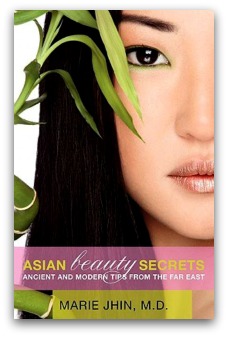
BOOK REVIEW: “Asian Beauty Secrets,” by Marie Jhin

TITLE: Asian Beauty Secrets: Ancient and Modern Tips from the Far East
AUTHOR: Marie Jhin, M.D.
PUBLICATION DATE: July 2011
FORMAT: Paperback and Kindle e-book, available from Amazon
GENRE: Health, fitness & dieting, beauty
SOURCE: Paperback purchased from the Korea Society, New York City

Summary:

Drawing on her experience as a Cornell University-trained dermatologist, combined with a knowledge of Asian beauty remedies, both ancient and modern, Dr. Marie Jhin delivers an East-West guide to vibrant skin and beauty. Born in Seoul, South Korea, Jhin emigrated to Hawaii with her family when she was six (they settled eventually in New York City). She now lives in San Francisco, where she runs her own practice, Premier Dermatology. She has been rated as one of America’s top doctors for the past three years.

Review:

The first time I visited Seoul, my husband, who is Japanese, insisted that I try a spa treatment, as Koreans do this sort of thing better than other Asians, he said. Before I knew it, I was lying naked on a table with an older Korean lady scrubbing every inch of my body. Eventually, she took my hand and put it on my stomach. At first I thought I was touching a piece of terry cloth but no, it was my skin — it had come off in shreds!

I lay there thinking, “Can this be healthy?”

Having pondered these issues quite a lot — also during my years of living in Japan, where I could hardly fail to note how obsessed Japanese women are with skincare — I was intrigued to come across a new book on Asian beauty methods, by San Francisco-based dermatologist Marie Jhin.

Born in Seoul, Jhin is now settled in California. She is not an expat, which makes the title of this post a little misleading; but is she “displaced”? Yesterday she told me in an email exchange that while she doesn’t think of Korea as “home” any more, her birth country remains something of a lodestar. She specializes in Asian skincare, lived in Seoul for two years after college to teach ESL, and has been going to Korea on business of late.

But what really convinced me of Jhin’s “displacedness” is that like me, she was uncertain of the benefits of Korean skin scrubbing but unlike me, let it get under her skin, so to speak:

I grew up doing certain things beauty-wise that I wanted know the truth of. For example, … my mother used to take me to get my skin scrubbed at a Korean sauna. Back then I didn’t understand what the point was, but now, as a dermatologist, I realize that it was basically whole body microdermabrasion that they have been doing for centuries that is great for the skin.

(Good to know!)

Jhin called her book “Asian Beauty Secrets” because it covers the beauty habits of not only Korean but also Chinese and Japanese women. Her key finding is that while women in all three countries have been caught up in the quest to look more Western, they have plenty to be proud of in their native beauty traditions.

The influence of Western beauty ideals

The last time I visited Tokyo, I couldn’t always tell who was a foreigner and who wasn’t since so many Japanese youth had dyed their hair a reddish blonde (I no longer stood out in the crowd!).

Thus I was glad to see Jhin tackle the issue of Western beauty ideals. In addition to dying and streaking their hair, many Asians are getting plastic surgery in the quest to look more Western.

Jhin notes the popularity — especially in Korea, cosmetic surgery capital of Asia (and the world?) — of procedures such as blepharoplasty (double eyelid surgery), rhinoplasty (nose jobs) and surgery to correct what Japanese call daikon-ashi (radish-shaped calves).

And when Asian women do Botox, she says, it’s not to reduce wrinkles but to soften square jaw lines and/or to atrophy cheek muscles and thereby shrink a too-round face.

Jhin draws a line, however, between these procedures and the value traditionally placed by women in all three cultures — Chinese, Japanese and Korean — on having white skin. She cites Chinese Canadian consumer research professor Eric Li in stating that the preoccupation with whiteness predates colonialism and Western notions of beauty. In fact, the Japanese see their own version of whiteness as superior to the Western one!

What Asian women bring to the vanity table

We Westerners are notorious for mistaking one Asian culture for another. Jhin helps us negotiate this sometimes-fraught territory by listing some of their distinguishing elements when it comes to notions of beauty:

1) KOREA

  • Who’s the fairest of them all? In the Far East, it’s Korean women, by common consensus.
  • Korean women like to exfoliate the skin to keep it glowing and healthy.
  • Koreans have long revered the ginseng plant, a vital ingredient in health and beauty potions.

2) JAPAN

  • Going back at least to the Heian period, Japanese have celebrated long tresses — the record of that era being 23 feet! Their favorite conditioning treatment is camellia oil, thought to promote glossy hair growth without making it greasy.
  • Japan spa culture, which dates back thousands of years, favors the use of natural ingredients for cleansing the skin: eg, volcanic mud, wakame seaweed and even nightingale droppings(!).
  • Though Japanese are known for rushing around, they in fact have a tradition of enjoying “empty moments.” Such meditative practices contribute to well-being and bring out a woman’s natural beauty.

3) CHINA

  • In ancient China, pearls were a girl’s best friend: ground pearl powder was taken internally and applied topically. (Hmmm…did they get that habit from Cleopatra, or vice versa?)
  • Chinese have a saying that “a woman’s second face is in her hands” — to this day, Chinese women are meticulous about moisturizing their hands and feet.
  • Traditional Chinese Medicine (TCM) emphasizes certain foods for balancing yin and yang within the body. This inner harmony is thought to contribute to outer radiance.

There is also, of course, much overlap among the three cultures.. All subscribe to the belief that by eating healthy foods, releasing stress (e.g., by getting an accu-massage), and pursuing nature-based healing (TCM) on a regular basis, a woman can enhance her best assets.

The “skinny” on beauty tips and secrets

One of the reasons to pick up a book with the word “secrets” in the title is to find out what one is missing out on. On this score, Jhin’s book is a bit of a mixed beauty bag. Some of her suggestions struck me as being far fetched — and I have a reasonably high tolerance for Asian cultural quirks.

Bird’s nest soup or soup containing hasma (frog fallopian tubes), anyone? Both are ancient Chinese foods thought to nurture glowing skin (Jhin provides recipes). Um, thanks, but no thanks. I’d almost rather eat fugu (which likewise has stimulating properties).

Even more offputting is the Chinese custom of spreading sheep’s placenta on one’s face. (It’s a mercy they’ve moved on from ingesting human placenta, that’s all I can say…)

As for V-steaming one’s chai-york (Korean for vaginal tract) with medicinal herbs such as mugwort (common wormwood) — it will take more than a reassurance by a Beverly Hills doctor to convince me that such a practice doesn’t lead to other problems such as UTIs.

On the other hand, I might actually consider soothing my skin with a high-quality ginseng cream. That sounds nice. Or perhaps I’ll try facial acupuncture. It’s noninvasive and, according to Jhin, can have the effect of a mini-facelift.

Note: More secrets can be found on Jhin’s book site.

Verdict:

For me, the most interesting portion of Asian Beauty Secrets is when Jhin addresses her area of specialization: the conditions peculiar to Asian skin, such as eczema (they are more prone to it than we are) or sun damage that manifests itself not in wrinkles but in brown spots. I also found fascinating the chapter on the latest skin renewal techniques being pioneered by Korean doctors. Acupuncture meets nanotechnology with the “INTRAcel laser” treatment! (The laser reaches “deeper into the dermis for more lasting collagen production and overall skin rejuvenation,” Jhin explains.)

That said, I’d hesitate about recommending Jhin’s book to anyone who isn’t yet oriented (no pun intended!) to beauty practices in this part of the world. Instead you might try experimenting with some of the brands Jhin recommends — e.g., Sulwhasoo cosmetics (now being carried at Bergdorf Goodman here in New York) — by way of familiarizing yourself with Asian skincare methods. As it happens, I got some Sulwhasoo samples when I bought the book — and would be more than happy to report back on the effects, if anyone’s curious! 🙂

STAY TUNED for tomorrow’s installment from our displaced fictional heroine, Libby. (What, not keeping up with Libby? Read the first three episodes of her expat adventures.).

If you enjoyed this post, we invite you to register for The Displaced Dispatch, a round up of weekly posts from The Displaced Nation, with seasonal recipes, book giveaways and other extras. Register for The Displaced Dispatch by clicking here!

Related posts: