The Displaced Nation

A home for international creatives

7 foods to seduce your Valentine (or not) — wherever your home and heart may be

As a sequel to Seven deadly dishes — global grub to die for, today’s post turns its attention to foodstuffs that might promote…well, not death, but perhaps a smaller version: the one the French call La Petite Mort.

Food and romance go hand in hand — you only have to think of the restaurant scene in the film Tom Jones — so, in case you’re already planning a special meal with ulterior motives for next Tuesday, I’ve been looking for ingredients to go on your shopping list.

I have to say, after doing the internet research, I have serious doubts about the genuine aphrodisiac properties of most of these suggestions.

But see what you think.

1. Coco de Mer – Seychelles

The picture above is of a nut from the Coco de Mer tree, a palm found in the Seychelles, and for which the ancient botanical term is Lodoicea callipyge. (Callipyge comes from the Greek for “beautiful buttocks.”)

Used in Eastern medicine and as a flavor enhancer in Cantonese cuisine, the fruit is also the basis of a liqueur called Coco D’Amour which is sold in the Seychelles.

After their honeymoon in May, Prince William and Kate Middleton were presented with a Coco de Mer fruit by the Seychelles Minister for Foreign Affairs. (I would love to have been a fly on the wall at that presentation.)

Budget alternative: Since the Coco’s attraction lies in its suggestive shape, try peaches, nectarines, or butternut squash. Frankly, if you’re determined to see innuendo in the vegetable section of the supermarket, anything will do.

2. Oysters – Louisiana, Galway, Prince Edward Island…

Everyone knows that oysters are supposed to be aphrodisiacs. It’s all to do with the high content of zinc, phosphorous, and iodine.

Put like that, they don’t sound romantic at all.

Budget alternative: Fish fingers, table salt, Pepsi, and a couple of cherry Cold-EEZE zinc tablets for dessert.

3. Lobsters – Maine

Presumably considered aphrodisiacs for the same reason as oysters — zinc, phosphorous, iodine — but honestly, lobsters? It is impossible to eat them without looking like the explosion at the end of Jaws. Plus you’re at the table, swathed in a plastic bib while wielding a pair of large nutcrackers — not the best picture to get a new boyfriend in the mood.

Budget alternative: Poor Man’s Lobster. It’s cod, dripping in butter, so you’ll probably still need the bib — but at least you can ditch the nutcrackers.

4. Strawberries – California

They’re red, they’re heart-shaped, they’re the perfect edible valentine.

And, more to the point, you have to buy whipped cream to go with them.

Budget alternative: Just buy the whipped cream.

5. Truffles – Alba

With white truffles costing $2000 a pound, it’s not these overpriced mushrooms per se that’s the aphrodisiac. If your date is buying you these in a restaurant, the turn-on is the size of his wallet.

Budget alternative: Chocolate truffles. Who wants to eat fungus anyway?

6. Champagne – France

Supposedly an aphrodisiac because its bouquet replicates the smell of female pheromones. However, with the expensive stuff, the Truffle Theory of Attraction (see #5) can be applied.

Budget alternative: Since, according to WebMD, there isn’t any solid proof that human pheromones exist at all, save your money. Buy anything with a Sale sticker on it at the liquor store. Anything above 10% proof will work just fine, as long as you adjust the quantity accordingly, otherwise you might defeat the purpose by falling asleep. This is where #7 comes in.

7. Chocolate – the local grocery store

In its more pure forms – I’m talking 70% cacao or more — half a bar of chocolate is more potent than a gallon of espresso. It will keep you awake for hours. For good measure, one brand actually puts espresso beans in its 72% chocolate as well!

Now there’s a company that understands the delicate connection between chocolate, alcohol, and love.

Budget alternative: There is no budget alternative. Chocolate is known as a substitute for love, but as every woman knows, love is merely a substitute for chocolate.

STAY TUNED for Wednesday’s Random Nomad interview.

If you enjoyed this post, we invite you to register for The Displaced Dispatch, a round up of weekly posts from The Displaced Nation, with seasonal recipes, book giveaways and other extras. Register for The Displaced Dispatch by clicking here!

Related posts:


THE DISPLACED Q: Where did you meet your honey abroad?

It can be hard to make new friends abroad — let alone find a significant other. Thus it’s always inspiring to hear from nomads who’ve found that special someone hiding under a shamrock drinking green beer, or in other such fanciful locales. One such lucky fellow is Tony James Slater, the newest addition to the TDN team. Here is his story — can’t wait to hear yours!

There’s always a great story behind a travel romance, I find, often running the full gamut of emotions, from anguish to bliss. From experiencing a breathless holiday whirlwind romance to finding a soul mate in a distant land, nothing beats a tale of love — true and requited, tragically unrequited or trapped agonizingly somewhere in between.

And today I would very much like to hear yours!

Because our February theme is LOVE — and because it’s rapidly approaching That Day, when you should have bought something a bit special for your other half — I would like to invite EVERYONE to share their tale of passion and/or romance abroad!

Now, I can’t ask you folks to do something I wouldn’t do myself — so here’s an interesting tale of my own…

Once upon a time, in a faraway land…

I first met my wife in America. I know, right? Fascinating! But wait, I’m English — and the young lady in question, Krista, is from Australia, as evidenced by her nickname: Roo.

Roo had been working for Camp America, which supports summer work adventures in the United States. She was teaching kids how to ride horses at a summer school in Maine. And, as fate would have it, that was where she met…my sister!

My sis, whose name is Gillian, was doing Camp America at the same time, and was the only other staff member who wasn’t scared of horses!

Roo and Gill got to know each other quite well — so much so that the pair of them went traveling around the US after the job finished, which is where they met…Richie! An awesome, Kung-Fu kicking dude, muscle-bound and handsome, Roo fell for him immediately and the two became an item.

Which could have turned out rather differently for me, except this unexpected romance kept the couple in America for much longer than expected. You see, at the time some of this was happening, I was in Ecuador volunteering at an animal shelter. On my way home to the UK, I called in to the States to visit my sister, when I also met Roo and Richie. We traveled together for a couple of weeks and had a lot of fun.

Then Richie left, Roo left, and I followed my sister back to the UK, where, as explained in a previous post, I grew bored and dissatisfied with my hollow, consumer-led lifestyle.

(In other words, I was broke.)

Twists and turns worthy of Shakespearean comedy

So Gill remained close friends with Roo, inviting her over to England the following summer. She arrived just in time to be part of my farewell party — I’d finally scraped together enough cash to go to Thailand, where I planned to volunteer at an animal clinic and learn to dive. I would be gone for three months — exactly the same length of time that Roo would be in England.

Which was a pity, as she’s recently broken up with Richie and I rather liked her.

Gill and Roo explored every corner of my native country together, and Roo went back to Australia having elicited a promise from my sister that she would travel to Oz as soon as she could afford it.

I, meanwhile, had missed my flight home. It was accidentally on purpose — my subconscious clearly didn’t want me to leave Thailand just then. My regular conscious didn’t want me to leave either, being rather more aware of my income — or at least, the lack.

Volunteering for a living is notoriously unprofitable, and I couldn’t earn money from diving until I could afford to get qualified. A bit of a Catch 22!

But then — we came into some money. Both my sister and I profited from the sale of a house we’d helped renovate since getting back from America. I used the money to become a Divemaster (and for just a little bit of partying!), while Gillian, rather more sensibly, used hers to buy a ticket to Australia. She stopped off in Thailand on her way through, found me drunk in a bar and gave me such a talking to that I promised to come to Australia just to get her off my back. She was determined to save me from myself, which was probably for the best (I had very little intention of saving myself!).

I dallied for another three months while Gill met up with Roo in Oz and started to explore. They bought a beat-up old van between them and called it Rusty because, well, it was. Seriously — you could see daylight through bits of it.

To the ends of the earth — well, the Great Southern Land

That’s when I showed up. Penniless again, I arrived in Perth airport without the price of a cup of coffee to my name. I’d been living in Thailand for a year by this point, and all I owned was a bulging bag full of dive gear. It was winter in Australia and I didn’t even own a pair of shoes, or anything at all with sleeves.

Not in the least bit phased by me looking like a homeless person, Roo found me work with a local temp agency and within a few weeks I had enough money to travel.

The three of us piled into that crumbling van and set off for horizons unknown…and somewhere along the line, Roo and I fell in love.

Which thrilled my sister of course, as we were all sharing a tent. (But don’t worry — we got our own tent before long!)

Poor Gill left us, in disgust, in Sydney. She’d always hated being around couples in love — romance just wasn’t her thing. I still feel a little guilty for this…well, almost. But not quite!

Epi(c)logue

Since then, Roo and I have visited more than a dozen countries together. We married last July — in England because only Roo’s immediate family is in Oz. (She’s of Dutch descent, so all her rellies from Holland came over — including some she’s never met before! Her Aussie family — all four of them — flew over to the UK for the ceremony. ) And we now live in Perth — for a while in Roo’s family home but we now have a flat of our own. People always ask where we met — out of politeness more than interest, I feel — but it usually surprises them when we both say “America!”.

And as for Gill…well, she lingered in Sydney long after Roo and I left. Then she grew bored and flew to New Zealand, to a job in the ski fields, where she met a short blonde ski technician from Hampshire, UK, called Chris. They hit it off rather well as it happens — Gill had always liked short men — and four years later, the pair of them were married, a month before us and less than fifty miles away.

Roo got to be my sister’s Maid of Honor!

And because I’d been out of the country for so long that I’d lost touch with all my male friends, Gill — poor, suffering Gill — had to be my Best Man!

* * *

Your turn!

So. Let me hear it! Tales of love in far-flung and exotic locations: the triumphs, the failures and the ones that got away! We want to hear them all — post them in the comments section please, so everyone can read ’em and weep! (They don’t have to be as long and waffley as mine — I’ve been told I can be verbose.)

Oh, and keep it clean — some of these expat love stories lasted long enough to have children, and even grandchildren.

Love,
Tony xo

TONY JAMES SLATER is a self-confessed adventureholic. For the last six years he’s been traveling nonstop around the world, working at a variety of jobs including yacht deliverer in the Mediterranean, professional diver in Thailand and snow boarder in New Zealand. Last year, Slater published his first book, That Bear Ate My Pants!, an account of his misadventures while volunteering at the animal refuge in Ecuador. (The book was featured in The Displaced Nation’s list of 2011 expat books.) He is currently working on a second book set in Thailand, while exploring his new home in Perth, Australia.

STAY TUNED for Tuesday’s post, on 7 of the world’s most seductive foods — for seducing that valentine of yours.

If you enjoyed this post, we invite you to register for The Displaced Dispatch, a round up of weekly posts from The Displaced Nation, with seasonal recipes, book giveaways and other extras. Register for The Displaced Dispatch by clicking here!

Related posts:

Image: Tony Slater and Krista (Roo) participating in the traditional European ceremony of handfasting where the couple’s hands are tied together (in their case, with a garland of flowers), at their medieval-themed wedding last summer.

Dear Mary-Sue: Finessing Valentine’s Day abroad

Mary-Sue Wallace, The Displaced Nation’s agony aunt, is back. Her thoughtful advice eases and soothes any cross-cultural quandary or travel-related confusion you may have. Submit your questions and comments here, or else by emailing her at thedisplacednation@gmail.com.

Aloha to all my readers — or as I affectionately think of you, my Mary-Suers! This month finds me in sunny Hawaii — the island of Kauai, to be precise. As president of the Thorn Birds Appreciation Society, I’ve had to come out for the society’s annual trip to see where the series was shot. Yes, yes, I know it was set in the lovely land Down Under, but all those scenes of Richard Chamberlain smoldering away under the Queensland sun were in fact shot here in Kauai.

To think I get to walk along pathways and beaches that Richard once walked along — it’s enough to make a gal go weak at the knees.

So, seeing as I’m at the most romantic place IN THE ENTIRE WORLD!!! — the spot where Rachel Ward snagged herself that dishy Mr C — and with Valentine’s Day fast approaching, little ol’ Mary-Sue is going to tackle your romantic quandaries.

Strap yourself in, things are about to get all Mary-Sue Wallace!

___________________________________________

Dear Mary-Sue,

I have a hot Brazilian girlfriend and am thinking of serenading her on Valentine’s Day. Any suggestions for a song?

Rick in Rio

Dear Rick in Rio,

I’m a trained therapist from no less an august institution as Tulsa Community College. I’m here to provide relationship advice. Maybe you could try that question on Delilah with better luck — or maybe not, I hear she can be one vicious b****.

Mary-Sue

———————————-
Dear Mary-Sue:

My American girlfriend gave me a Valentine’s card with a Cupid on it. I thought it was a comic book character but she said no. So who is Cupid, and what does he have to do with Valentine’s Day? Also, the Cupids in my comics have wings, but this one doesn’t have wings — why is that?

Kim in Seoul

Dear Kim in Seoul,

Who stole my heart?
You did, you did.
Bow to the target,
Blame Cupid, Cupid.

So sang Martin Fry in “Poison Arrow,” a song that btw Rick in Rio is not allowed to sing to his hot Brazilian girlfriend.

You see, Cupid is a naked baby that can fly. He has a bow and arrow that he shoots people with — in the case of this song, Martin Fry (I believe he’s the younger brother of Mr Stephen Fry). Cupid’s arrows don’t pierce the sternum and damage inner organs like, for example’s sake, Robin Hood’s arrow. No, when Cupid’s arrow pierces your heart, it doesn’t cause myocardial infarction but instead you fall in love with the first person you see — in Martin’s case with unfortunate consequences.

As to why the picture of Cupid in the card your girlfriend gave you doesn’t have wings, well that’s simple. That isn’t a picture of Cupid at all, but of a nondescript naked baby. She sounds like the sort who’d buy one of those Flower Baby Calenders — I’d get rid of her if I were you.

Mary-Sue

———————————-
Dear Mary-Sue:

How do I wish someone a Happy Valentine’s Day in French? I’m not sure if they celebrate it over here, but I’m hoping the Frenchwomen will find it charmant, coming from an American.

Peter in Paris

Dear Peter in Paris,

A quick look at my desktop calender reveals that it’s 2012, not 1945 — which means there’s nothing an American man can do to charm the young ladies of Paris. They just don’t appreciate your wholesome all-American charm. Shame, as I’m pretty certain you have a lovely smile. I can sense it from the letter you wrote that you have a lovely mid-Western smile.

Mary-Sue

———————————-
Dear Mary-Sue:

I’m a newcomer to the United States and someone just wished me a Happy Anti Valentines Day. What’s that supposed to mean?

Lars in Los Angeles

Dear Lars,

It’s a sign from the good Lord for you to (pardon my language) get the heck out of Los Angeles and move to Tulsa.

Mary-Sue

___________________________________________

Anyhoo, that’s all from me readers. I’m so keen to hear about your cultural issues and all your juicy problems. Do drop me a line with any problems you have, or if you want to share your fave meatloaf recipe with me (yum! yum!). As they say in Italy, “ciao!”

Mary-Sue is a retired travel agent who lives in Tulsa with her husband Jake. If you have any questions that you would like Mary-Sue to answer, you can contact her at thedisplacednation@gmail.com, or by adding to the comments below.

STAY TUNED for Monday’s post, a displaced Q about the best places to hook up with a honey abroad, by new Displaced Nation team member Tony James Slater (he’ll be writing from recent experience!).

If you enjoyed this post, we invite you to register for The Displaced Dispatch, a round up of weekly posts from The Displaced Nation, with seasonal recipes, book giveaways and other extras. Register for The Displaced Dispatch by clicking here!

Related posts:


LIBBY’S LIFE #37 – Plots (and waistlines) thickening

Having uncovered corruption in the most unlikely of places, Libby is seeking advice from those around her.

As always when in need of advice, encouragement, and a bit of vindictive support, I went to see Maggie.

I tried to get advice and support from Oliver, but he’s a bloke. Nursery school dirty politics don’t interest him. He was concerned that someone else’s brat was picking on our son, however, so he took Jack aside for some man-to-man words of wisdom. The gist was that if Dominic caused any more grief, Jack was to beat him to a pulp, and Dominic wouldn’t do it again. Then I informed Oliver that Dominic was the son of Caroline, and Oliver turned a little pale and told Jack that Daddy was only joking, because violence is never the answer.

Caroline is the wife of Oliver’s boss, you see.

So, slightly disgusted with my turncoat husband, off I went to visit Maggie. No double standards from her.

When Jack and I arrived at her house, a strange car was parked outside, and I hesitated for a moment. Maggie doesn’t normally have guests, and I didn’t want to interrupt, but while I stood on her porch deliberating whether or not to knock, the front door opened.

“Hi, Mag—” I started to say, before realising it wasn’t Maggie who had opened the door, but the exotic woman I’d met in the Maxwell Plum at the Christmas party.

“How wonderful to see you again!” Anna Gianni exclaimed. “Come in and sit down –  we just made coffee.”

So Jack and I sat on Maggie’s squashy blue velvet sofa and watched two squirrels playing tag around the trunk of the maple tree outside the window, while Anna and Maggie crashed around in the kitchen. Call me possessive and silly, but I felt my role of Maggie’s adopted daughter had just been usurped. Crashing around in the kitchen with Maggie was my job.

Anna carried a tray into the living room and set it on the wicker trunk Maggie used as a coffee table.

“I’ve been meaning to call you ever since New Year’s,” she said, handing me a white china cup with violets hand-painted on it. “But the restaurant’s been really busy, and Frankie’s mother hasn’t been well. I always try to follow through with my promises, but sometimes life gets in the way. Know what I mean?”

I thought about my own January, the news from the ultrasound, and the problems I was having with Patsy Traynor.

“I know what you mean.”

Maggie emerged from the kitchen with a plate of brownies, and Jack looked up hopefully. She sat down in her rocking chair and beckoned him over.

“No school today, Jack?” she asked, handing him a brownie.

Jack crammed half the brownie into his face and shook his head, chewing. Then he crammed the other half in. Brownie juice ran out of the sides of his mouth.

“Gross, Jack.” I patted my pockets for clean tissues but found only a Snickers wrapper. Anna got up from her armchair and headed for the kitchen. “We’ve got a  little B-U-L-L-Y-I-N-G problem at the moment, I’m afraid,” I said. “By another child, I mean.”

“This is at Patsy’s school?” Anna called from the kitchen.

I nodded.

“And what is dear Patsy doing about this little problem?” asked Maggie.

Anna returned with a pile of paper napkins, and used one to scrub the chocolate from Jack’s face.

“That depends on who the child is, doesn’t it?” she said. “The fact that Jack is at home suggests to me that Patsy has done nothing. The troublemaker is still at school, and therefore the mother of the troublemaker is someone Patsy feels she must suck up to.”

I stared at her. “How do you know all that?” I asked at last.

“Patsy might have got rid of the teenage zits, my dear, but she never changed her spots.” Maggie held her arms out to Jack, and he climbed on her lap. “Anna knows her of old.”

“She used to be best friends with your landlady,” Anna said. “Patsy is still the same suck-up as when she was sixteen. Anyone rich, influential, slightly different, and she was all over them, hoping for a piece of reflected power or glory. At one time you might have qualified because you’ve got a British accent, but the town is overrun with Brits now. You need to either win the lottery or do something out of the ordinary.”

I said that since I was “ordinary” personified and we’d never bought a lottery ticket, that probably meant I should start looking around for a new nursery school for Jack.

“Unless I can make it known that she takes bribes. Would Wikileaks be interested? Could I write an anonymous letter to the Woodhaven Observer?”

“You can write it by all means,” Maggie said, “but they won’t print it. The chief editor is Patsy’s uncle. And he co-owns the nursery school.”

I was shocked. “Does this kind of thing go on a lot round here?”

“All the time,” Anna said. “Woodhaven is simply a microcosm of every government in the world, with bribes and abuse of power running riot. You think this is bad? You should have been here twenty-five years ago.”

“What happened then?” I asked.

Anna hesitated. “I think that’s Maggie’s story to tell.”

Maggie looked down into her lap, and I knew this was another piece of Woodhaven’s history that I wouldn’t hear just yet.

“The only way to get by in this town,” said Anna, “is to beat them at their own game.”

I thought. “I’m not sure how I would do that.”

“You have to make your presence at Patsy’s school more desirable than this other woman’s. What’s her name?”

“Caroline. And she’s Oliver’s boss’s wife,” I added.

Anna and Maggie both sucked in their breath. “Tricky,” they agreed.

“Patsy’s a germ-phobe.” Maggie nodded at Anna. “Always was. I don’t know if we can do anything with that.” I wondered what she had in mind. A vial of anthrax? Smallpox? Typhoid? “Remember the boy with impetigo a few years ago? Banned him from the school for weeks, and when the mother finally brought him back, Patsy had given his place to someone else.”

I wondered how Patsy reconciled her germophobia with her dust-laden office, then decided that you didn’t have to be rational to be phobic about anything.

“I heard about that. And the replacement mother was expecting twins. Patsy’s husband is an identical twin,” Anna told me. “When they were first dating, he had to study for some midterm exams, so he sent his brother to take Patsy out for dinner. She never noticed the difference, she says. I often wonder about that date. Bet her husband does, too.”

“I feel that’s taking sibling devotion too far, don’t you?” Maggie murmured.

“At least ours won’t have that problem,” I said. “Not with one of each.”

Anna stared. “You’re having twins?”

“Didn’t Maggie tell you?”

“It’s not my news to broadcast, Libby.”

“Because,” Anna said with enthusiasm, “you could use this to your advantage. Patsy loves having twins at her nursery school. She gets her uncle in from the newspaper, and they do a big feature on how many sets of twins there are in one year. Local nauseating news kind of thing. And then they call in Local Fox News, and they do a piece on it, and Patsy gets a shitload of publicity and gets booked up for the next three years and can charge what she likes.” She paused to reach over for another brownie. “But you see, the thing is, there are more schools in Woodhaven now. The twins are diluted, and Patsy can’t charge what she likes any more.”

“So she just takes bribes instead,” Maggie chimed in. “But it doesn’t really help Libby. The other child, this Dominic, he has to go. Tell me, Libs, does he have impetigo? Recurring conjunctivitis? Feet covered in verrucae? She hates those in summer, when all the children run around in the wading pool.”

I shook my head sadly. “None of those, as far as I know. He’s quite lovely to look at, actually, a Little Lord Fauntleroy. He even has the blond curls. I guess she can’t bear to get his hair cut yet.”

I remembered when I finally had to take Jack for his first haircut, and all his little baby curls fell to the floor. He looked like a shorn sheep, and I cried all the way home. So I couldn’t blame Caroline for wanting to keep those curls for a while longer.

“Shame.” Anna checked her watch, then jumped out of her chair. “Jesus H Christ, I told Frankie I’d be home a half hour ago.” She bent down and pecked Maggie on the cheek.

“I’ll give you a call, Libby. Really. I promise. Don’t let Patsy Traynor get you down, OK?”

I started to say No, I wouldn’t, but she had already gone.

“You don’t often hear people curse like she does in this town, do you?” I said.

Maggie laughed. “You’d never guess her father was a Pastor in Woodhaven at one time.”

“No! What’s the story there?”

But Maggie just smiled and said nothing.

Another piece of Woodhaven history I would have to figure out myself.

.

To be continued next week

.

Next: LIBBY’S LIFE #38 – The battle of the tigers

Previous: LIBBY’S LIFE #36 – Filthy cash, dirty deeds

Click here to read Libby’s Life from the first episode

STAY TUNED for Mary-Sue Wallace’s advice on matters of the heart.

If you enjoyed this post, we invite you to subscribe for email delivery of The Displaced Dispatch, a round up of the week’s posts from The Displaced Nation. Sign up for The Displaced Dispatch by clicking here!

Image: Travel – Map of the World by Salvatore Vuono / FreeDigit

Love, love, love — love (& film) is all an expat needs… Welcome to February!

Two expats — he from England and she from Germany — first lock eyes in the lobby of a posh hotel in the Big Apple.

Returning to his room from the gym, he stops in his tracks, bowled over by her exotic Northern European beauty, while she is drawn to his toned and muscular physique. (Did we mention that he is of mixed — Nigerian and Brazilian — ancestry, and wearing bicycle shorts?)

She is, as it happens, already carrying another man’s child. But luck is on his side: she has split up with that man, some months back, after catching him in the arms of a jewelry heiress.

The goddess is available!

He wastes no time in sweeping her off her feet and, after less than a year, invites her to a custom-built igloo in British Columbia on the top of an glacier in uncharted terrain — kitted out with a bed, rose petals, and candles — to ask for her hand.

The couple are of course Seal and Heidi Klum — who until recently were the exemplar of a cross-cultural, cross-racial expat marriage.

Happy Valentine’s Day

But we’re here today to celebrate — not caution against — such unions. It’s February 1, and Valentine’s Day is just around the corner.

The Displaced Nation is dedicating the month to international nomads who are out there looking for their own Heidi/Seal. Some of you may already have found a candidate, in which case you are busy decking out your version of Seal’s igloo with hearts and champagne, in preparation.

But whether you’ve found someone or not, the Displaced Nation is where you’ll want to hang out this month. We’ll have posts on Valentine’s Day customs, seductive foods, hook-up stories, and testimony from those who, unlike our celebrity example, have lived happily ever after — all with an international flavor.

And we’ll be celebrating love’s robust and free-wheeling spirit, as unleashed in the following lines:

Love, love, love, love, love, love, love, love, love.
There’s nothing you can do that can’t be done.
Nothing you can sing that can’t be sung.
Nothing you can say but you can learn how to play the game
It’s easy.

Notably, John Lennon composed these lyrics after the Beatles were to come up with a song for Our World, the first live global television link (it was watched by 400 million in 26 countries). He was told it had to contain a simple message to be understood by all nationalities.

John and Yoko — there’s another international, interracial couple. They were living in New York. Would they still be together if John were alive? One likes to think so…

Hey, listen — should love not prove as easy as the song suggests, our blog can assist with that, too. One of our most frequently visited posts is one I wrote during Pocahontas month last summer: “Cross-cultural marriage? 4 good reasons not to rush into it…” (I’m not exactly proud of that, given that I’m the veteran of two cross-cultural marriages — a case of “don’t do what I do but what I say”?)

Pocahontas-John Smith are of course an archetype of cross-cultural, cross-racial marriage à la Lennon-Ono, Seal-Klum.

Just sayin’!

Movie-ing right along…

I promise I’ll come back for you. I promise I’ll never leave you.
–Hungarian geographer, Count László de Almásy (Ralph Fiennes) to his married lover, Katharine Clifton (Kristin Scott Thomas), in The English Patient

Sometimes fiction can be more wondrous than truth. Certainly that is the hope of those magicians of cinematography, who seek to manipulate us by reaching through the big screen to move our hearts and change how we see the world, remind us we have a soul…

If you’re a cinema lover, you’re in luck — because we are also dedicating this month to the movies.

In honor of film award season — the BAFTAs as well as the Oscars — The Displaced Nation will spend part of February paying homage to films that in some way feature expats and/or international travel.

Ah, the movies… As you get older, how much preferable it seems to experience danger and romance via the big screen. Why? Because you’re so much more aware of the risks.

Now, if only there weren’t so much bromance about. All of this male bonding is enough to make you long for Hollywood’s Glory Days, when stars were paired for their sizzling on-screen chemistry. Is is any wonder so many of us have turned to the small screen — namely, Downton Abbey — for that sort of thing of late?

Downton has the expat theme going for it, too, with an American heiress — played by Elizabeth McGovern, herself an American expat in England with an English husband — at the heart of the action (her money has kept the British estate from going under). And Shirley MacLaine will be arriving in Season 3 to play her mother!

Okay, I’ve gone off on a tangent. Back to what celluloid has to offer. When asked by Charlie Rose in November to explain the allure of film, Alexander Payne, director of the Oscar-nominated film The Descendants, said:

Like so many people, I’ve been madly in love with film as long as I can remember. If you love film, you love life. It’s the most verisimil [sic] mirror we have… If we look to art in general to be a mirror of our lives, to give us context, give us something to reflect off of — we’ve been waiting millennia for film… it really is us. And it also captures time, it defeats death in a way… You can capture moments of in life, core samples of someone’s life…

I don’t know about you, but I think we displaced types deserve a piece of that action!

Questions: Do you have any Valentine’s Day abroad stories to share with us? Are you rooting for any particular films at this year’s Oscars? And is anyone else besides us left feeling oddly bereft at the news of Heidi and Seal’s break-up?

STAY TUNED for tomorrow’s episode in the life of our fictional displaced heroine, Libby Oliver. Having uncovered corruption in Patsy’s Munchkinland, Libs wonders what to do. Should she inform WikiLeaks of the situation, or write a strongly worded letter to the Woodhaven Observer? Or is it just simpler to say ‘if you can’t beat them, join them’? (What, not keeping up with Libby? Read the first three episodes of her expat adventures.)

If you enjoyed this post, we invite you to register for The Displaced Dispatch, a round up of weekly posts from The Displaced Nation, with seasonal recipes, book giveaways and other extras. Register for The Displaced Dispatch by clicking here!

Related posts:

Lyn Fuchs, American expat in Mexico: A raider of the lost art of philosophizing

As January comes to its close, our theme of Spiritual Enlightenment Through Travel would not be complete without a reference to Lyn Fuchs, author of Sacred Ground and Holy Water, and publisher of Sacred Ground Travel Magazine.

Lyn, of course, was our 5th Nomad of Christmas, where he stated his Most Displaced Christmas Moment was:

On December 24th 2008, [when] I was displaced from the palace of an elegant and voluptuous Saudi princess, after I attempted to demonstrate a “traditional Christmas goose.” I still fantasize about returning and showing her how to do a “traditional Christmas stuffing.”

From this, we can gather that the Political Correctness Movement is something that doesn’t bother Lyn a whole lot. Probably that’s the reason I fell in love with his first book, Sacred Ground & Holy Water, and will be buying his second, Fresh Wind and Strange Fire, when it is published.

If your only knowledge of Lyn is via his Christmas Nomad answers, it would be easy to assume that this un-PC, flippant personality is who he is. You may be wondering why someone with the nickname of Lyndiana Jones is the subject of a post about spiritual enlightenment.

To answer this, let me refer you to the Chique Show on Blog Talk Radio, where author Barbara Conelli interviewed Lyn this month.

In forty-five minutes, Lyn talks about his books, his writing, his philosophy on life – and how they came to be that way.

As the saying goes, never judge a book by its cover.

Or a deep thinker by his Christmas Nomad answers.

Here are some highlights from the interview:

On Mexico:

Lyn has lived in Mexico for a total of six years, and is currently Professor at the University of Papaloapan.

Mexico is probably the best place on earth to learn how to practice nirvana. India invented the theory of nirvana but Mexicans…invented the practice of it.

Mexicans are some of the happiest people in the world…You learn a lot here about how to live in the moment…Sometimes you really start living when you lose your fear of dying.

I would say that one of the things about Mexico I love the most is that philosophically they’ve taught me to be happy.

On writing:

Writing really started for me about ten years ago… I was in a remote valley [in Canada] for several months and basically I had nothing to do but exercise, cook, pray, listen to the wolves howl, and watch the snow fall…

I went from being a person that talked all the time to a person that actually had something to say.

So I grabbed a pen and I started reflecting on my life, and my life stories turned into magazine articles. Sometimes your destiny discovers you.

On travel and spirituality:

Travel brings you in contact with global spirituality, and whatever your religious label, if you travel, you begin to discover the spirituality of the universe…if that doesn’t sound too cheesy.

Deeper than just the [physical] movement from this place to that place is really what’s happening to our spirit when we travel.

On academia:

Books alone do not make a human experience.

Intelligence is what God did for you; the real question is “What did you do in return?”

On people’s fixation with politically correct vocabulary when the facts of the big picture are more important:

Sometimes North American hypersensitivity isn’t very sensitive. My books are for people who want to see a part of the world that is beyond their comfort zone.

On his own blunt writing style:

I think I have a responsibility to report the world as I experience it. I may not be right, but at least I’m telling you what I think I saw.

My writing blends spirituality and sexuality which often offends pretty much everybody, but writing honest books helps me sleep at night.

Click here to listen to the full interview on the Chique Show

If you enjoyed this post, we invite you to register for The Displaced Dispatch, a round up of weekly posts from The Displaced Nation, with seasonal recipes, book giveaways and other extras. Register for The Displaced Dispatch by clicking here!

Related posts:

Channeling business guru Peter Senge for lessons on spiritual travel

The Displaced Nation has dedicated most of its January posts to the kind of heart-opening, life-changing pilgrimages that enlighten and renew the spirit.

We’ve gathered tips from expat and travel experts on where to go and steps to take.

We’ve spoken with a former expat in India and a woman who dreams of making acupuncture available to one and all in the Midwest.

We’ve talked about our own (admittedly rather limited) experiences with uncovering spiritual wisdom:

And we recruited some guest bloggers for their insights:

Yet as eye opening as all of this discussion has been, my sense is, we haven’t quite reached the sublime and heavenly heights that this blessed topic deserves.

Maybe we shouldn’t be too hard on ourselves. After all, the quest for higher truths entails pondering the imponderable.

Still, I think we’ve forgotten something rather basic: namely, the need for a mentor, guru, safe, wise person, sensei, or elder — someone who has reached an advanced state of spiritual enlightenment so can tell us when we’re veering off course while offering an overarching framework for why, in heaven’s name, we’re doing this.

Today I’m “recruiting” leading business expert Peter Senge to play this role for The Displaced Nation — a service for which he will be awarded a place in our Displaced Hall of Fame.

Though he’s never lived overseas for an extended period, Senge leads a displaced life within the United States by somehow managing to be, at one and the same time, an MIT management guru and an avid disciple of Zen Buddhism (as well as other Eastern religions such as Taoism).

Through his writings, teachings, and lectures on the human face of business and sustainabilty, Senge essentially promotes the idea that Eastern religion has a great deal to offer the West.

Channeling Senge on behalf of The Displaced Nation, I have devised the following Zen mondō — or question-and-answer exchange with the master — for our illumination. NOTE: Senge promises to keep the kōan (riddles) — eg, what is the sound of one hand clap — to a minimum. (Was that applause I heard?)

ZEN MONDO WITH PETER SENGE ON SPIRITUAL TRAVEL

Master, isn’t an expat or international traveler already on a kind of spiritual quest?
Meh. In my experience, a spiritual quest isn’t meant to be a retreat from one’s native country. It’s also not a vacation. The attainment of enlightenment entails hard work — you have to chop wood and carry some water. Seriously,  you have to study, and make sure that your study is in line with your meditation practice, or whatever method you use to connect body and mind. And then you need to have a reason for it all: how you are trying to be of use to the world. My own “working-zen” is institutions: how business works, how schools work, how government works, how collectively we do our work, and how the world can move away from the model of relentless growth towards something more sustainable. What’s yours?

Master, is the quest for spiritual enlightenment something I can do on my own?
Strange question to pose to a teacher! But I’ll refrain from giving you a boot to the head as I can relate to your struggle. In fact, it didn’t dawn on me how much I needed a teacher until after I finished my book The Fifth Discipline: The Art and Practice of the Learning Organization, which became a bestseller and earned me the title of “management guru.” My ego was out of control, and I asked my friends to refer me to a therapist. But then I met this man in China around 1996 and started to realize that meditating isn’t enough. He taught me that I have to be more disciplined in my study and practice, and in linking them to service. “Study, practice, serve” has become my mantra.

Master, will I need to travel to China and India?
Look around you. With the gorilla gone, will there be any hope for man? The Western model is basically bankrupt. We’ve failed to give attention to the human side of economic development. We’ve also lost touch with indigenous knowledge and wisdom. By contrast, the intellectual sophistication of the philosophical traditions of China and India are extraordinary. The next stage of human development — focusing on sustainability — will be about bringing back the interior to be in balance to the exterior. I think that has to come from China or India and maybe to some degree from the indigenous peoples.

Of course it may not be necessary to travel all the way to these countries, especially if you’re lucky enough, as I was, to grow up in California. Many of my friends were Japanese and I was always interested in Asian cultures. I made my first visit to Tassajara Zen Mountain Center just before I went at Stanford. I knew immediately that meditation was very important and did continue to meditate afterwards.

That said, since turning 40, I’ve been thinking about spending the second half of my life in China and India. I may actually go and do that with my wife once our kids are in college.

Master, once I pursue this recommended course, do you think I’ll find the answers of what I want to do in life?
Ah, the inescapable question! I advise you to think about what’s really needed in the world, then work back to what your own role might be. It requires a continuous process of reflection. My own decision-making process has never been oriented externally, even when I was young. I almost always knew what I wanted to do and almost never knew how. It was always this process of deciding the next thing I want to do — and then doors would open!

Master, do you believe in Zen leaps?
Back in the 1980s, I was meditating 2-3 times a week. One day, all of a sudden, clear as a bell, three things popped into my head:

  1. The idea that learning organization is a big fact.
  2. The work I was doing with several others was original and would make a contribution.
  3. I had to write a book now so that as the fact cycle developed, that would be one of the first books to become a point of reference.

It happened in an instant. I was very clear and I decided to write a book. It’s how the process works: continuous reflection informed by what’s important to you and informed by your sense of where the world is at and what’s needed. If you leap under those conditions, the net will appear.

Master, do you have any final words of advice for us?
Don’t be afraid of suffering even though it’s not easy. Sadness is sadness, fear is fear, and anxiety is anxiety. Don’t kid yourself. But recognize that it is very important developmentally and will really assist you in having a rich life with rich relationships. You’ll be able to open your heart to others, and offer your compassion. Oh — and one more:

Once you’ve gotten the meaning, you can forget the words.

Readers, so much mondo mumbo jumbo, or are you at last glimpsing the road to nirvana?

[Sources for Senge’s non-humorous remarks: Prasad Kaipa’s interview with Peter Senge for DailyGood; Jessie Scanlon’s interview with Senge for Businessweek about his latest work: The Necessary Revolution.]

STAY TUNED for one more post in this vein exploring the ideas of Lyn Fuchs, who has written a book about spirituality and travel.

If you enjoyed this post, we invite you to register for The Displaced Dispatch, a round up of weekly posts from The Displaced Nation, with seasonal recipes, book giveaways and other extras. Register for The Displaced Dispatch by clicking here!

Related posts:


My quasi-religious pilgrimage to Oxford University — will I be judged sufficiently pious?

In past columns, Charlotte Day has illuminated aspects of her life as a Third Culture Kid who was born in Sydney, Australia, grew up mostly in New York and is now studying at an English boarding school in Kent. Today she describes her quest to earn a place at Oxford, which she has long revered as her spiritual home.

At 8:45 in the morning, my taxi turns down Holywell Street, and slows to a stop at the front entrance of New College, Oxford. Approaching the Santiago de Compostela of my adolescent dreams, my state of mind can best be described through shameless lyricism.

At this hour, the streets are populated only by the purposeful. Each dark-suited individual has some thought of unfathomable gravity revolving behind his or her furrowed brow. The morning light casts a celestial glow over the Bodleian Library, the Sheldonian Theatre, the Bridge of Sighs. Uniformly, these benevolent sandstone structures breathe in the sun.

God be in my head

Despite these poetic musings, I am incredibly nervous. I left my boarding school bed at a chill 5:00 a.m., knowing I did not know Crime and Punishment well enough, I did not know the Brothers Karamazov at all, and my ideas about the Seamus Heaney translation of Beowulf were utterly laughable.

Once they found me out, would I break down crying? And what about the unseen poem I would be told to discuss on the spot? If it were impermeable, I would certainly not be able to bluff my way through it. After all, what spotty 17-year-old can deceive them? Those eagles of intellect, with their acute, focused gazes; indisputable, measured statements; considered pauses; lofty, balanced arguments…

Oh! It was all too judicious and reasonable for an impulsive wreck like me.

You see, my feelings about Oxford are akin to an otherwordly obsession. So passionate have I grown about this ancient seat of learning that my preparations for this journey, especially in recent months, had taken on a quasi-religious purposefulness.

I spent the end of last year trying to live up to a set of self-imposed monastic ideals. I was to be irreproachably right at all times, my logic to be consistently clear, my views to display great penetration and uncanny powers of observation.

I even dressed in a way that reflected these intellectual ideals: threadbare corduroys in varying neutral tones, and moth-eaten jumpers would create a suitable aesthetic. I was unsparing of myself, subsisting largely on Lenten fare (watery porridge, steamed broccoli, etc.), and never going to bed before one o’clock if I could be reading instead.

Now I simply had to get into Oxford to complete this quest for ascetic perfection.

Getting in to Oxford… Now I am remembering all those melancholy 13-year-old evenings listening to Professor Stuart Lee’s Beowulf lectures on iTunesU, craving with all my ill-adjusted, lonely heart, that one day I would be sitting in that lecture theatre.

Lo, the full, final sacrifice

I am inching closer. Sitting in New College’s Lecture Room Six, with my baggage stacked around me, I will not return to the outside world for four days, and each minute of each of those days is shrouded in mystery.

A steady click comes from the two connect-four sets in the room: the science and law applicants letting off steam.

I gaze around the room. The English applicant is curled into herself, scanning a volume of Ezra Pound with a look of fatalistic despair on her pinched face.

The classicists sit in a convivial circle, trading sections of newspaper.

I take out my Beowulf and start reviewing my notes — columns of fluorescent green post-its, each bearing a comment more absurd than the last. Will I look too intimidating if I do this? I do not seek to intimidate — if only I could tell everyone in that room how intimidated I feel!

I glance at the Russian poem I have been given to analyze, by Yevtushenko: age, youth, gorging an omelette…middle age…the paranoia of the young? Our tendency to fill our lives with empty nothings, like omelette gorging? But these are rather pedestrian observations — is not some sort of inspiration called for? I avail myself of some instant oatmeal — to weigh down those jumpy nerves with a bit of stodge.

It is not hard to spot the two Etonians. One, so endearingly badly dressed, his argyle jumper tucked into a pair of murky-water-green corduroys. Both, so painstakingly polite, so frightfully embarrassed about their origins, so terribly unwilling to share where they live, or let slip that a relative of theirs had once been at the college himself.

I do not deny that there is a lack of diversity in that room, nor do I seek to explain it. The other candidates I encounter in Lecture Room Six are, every one, interested, charming, honest, terribly nervous teenagers — not representative of a centuries-old tradition of inequality.

Beati quorum via (I will lift up my eyes)

I am summoned out of Lecture Room Six to confront the English interview, which takes place by an electric fire, in an office lined with volumes of Elizabethan and Jacobean drama. Perched uneasily on a fur-swathed sofa, I answer questions on Doctor Faustus and the aesthetics of mathematics. Each response meets with a dreamy sort of assent, notes are jotted, and the conversation becomes increasingly oblique.

And then it is time for my Russian interview. I climb to the top of a rickety wooden stairwell, after a walk through the quad, turned hostile in the penetrating wet. (By now it is our second day.)

One tutor merges with the sofa, which in its turn has disappeared beneath stacks of application forms, submitted essays, and Modern Languages Aptitude Tests. The other sits before the fire, her high forehead reflecting its glow.

The discussion that ensues prompts the eyebrow-raising and chilling nods I have foreseen, and then questions about War and Peace — leaving the deficiencies of my 13-year-old’s reading of that tome quite exposed.

Afterwards, I stand, bedraggled in the dark quad, with a terrible sense of emptiness. I have two more days to fill; ahead of me, long hours in Lecture Room Six drinking bitter Tetley tea from a plastic cup. The expansive passion I have carried inside for years has tightened, wound itself into a taut cord of longing.

And I saw a new Heaven

When the fellows swish in to formal dinner, I almost feel ill. I do not know where to rest my eyes, each square inch of wood paneling makes me twitch with anxiety.

We rise with the hollow thud of wood on wood, grace is muttered in Latin, a mallet bangs, and we sit again, our murmured conversation echoing from the high arches of the ceiling.

I have always envisioned an affinity between Oxford and the stars, and even carry an image of my 14th-century counterpart adjusting his astrolabe while attempting to unveil the secrets of the heavens.

I cannot help praying, then, that a benevolent cosmos might know of the yearnings — my own and those of the other applicants — sympathize with our plight, and sweep our destinies into her swirling compass.

STAY TUNED for Monday’s post, when we invite in a guru to help us sort out some of the misconceptions our site has been propagating over the past few weeks on spiritual quests.

If you enjoyed this post, we invite you to subscribe to The Displaced Dispatch, a weekly round up of posts from The Displaced Nation, plus some extras such as seasonal recipes and occasional book giveaways. Sign up for The Displaced Dispatch by clicking here!

Related posts:

img: Charlotte Day surveying Trafalgar Square in London

LIBBY’S LIFE #36 – Filthy cash, dirty deeds

Having discovered that another child is making her son Jack’s life a misery at nursery school, Libby has decided to consult Patsy, the nursery school owner. She realises, though, that this Consultation will actually be more a Confrontation.

“Have a seat,” Patsy says, waving at the hard wooden chair on the other side of her desk.

I’ve been in Patsy’s office only once before, when I enrolled Jack at the nursery school. It’s a small room with a big smeary window and dinosaur print curtains drawn back, offering no shade against the afternoon sun that dazzles the occupant of the chair opposite Patsy.

On the wall to the right, nestling among framed finger-paintings by star students, hang assorted certificates from universities and the Commonwealth of Massachusetts – proof, presumably, that Patsy and her staff are competent to impart knowledge to our offspring. A cork board on the other wall is littered with coloured posters advertising local events and fundraisers. Many posters are several months out of date, the paper sun-faded and curling at the corners.

It’s a pretty depressing chamber, with its stegosaurus curtains and floating dust motes. Sitting here, opposite Patsy in her Chair of Power behind the coffee-ringed desk, reminds me of squirming in the office of my old GCSE English teacher, trying to explain why I hadn’t done my homework. Though my English teacher had better dress sense. She would never have come to school in Patsy’s red sweatshirt, home-decorated in acrylic paints with a spotchy picture of what looks like a psychedelic T-rex, but isn’t. “Happy 2012 – Chinese Year Of The Dragon!” trumpet the clarifying words under the T-rex.

Patsy forfeits dress sense for seasonal attire in a big way, I’ve noticed over the last couple of months.

“Is Jack sick?” she asks. “I noticed he wasn’t here today.”

I drag my eyes away from the Chinese T-rex, wondering uncomfortably if Patsy thinks I’ve been sizing up her boobs.

“He’s not sick, no. He didn’t want to come,” I say, and pause for a second. “I think he’s being bullied. By Dominic,” I add, and wait for her reaction. This is going to be a difficult conversation.

You see, Patsy doesn’t — or won’t — believe that three- and four-year olds are capable of bullying each other. This much I learned last week from overhearing her dialogue with Dominic’s mother. The child had been chucked out of a rival nursery school, allegedly for harassing his little classmates. Patsy had been sympathetic toward Caroline, the tiger-mum mother, and I’d heard her opining that bullying didn’t exist among toddlers – it was all the fault of overprotective parents’ imaginations.

I know I am not overprotective, that there is nothing wrong with my imagination, and Dominic’s ex-pre-school probably had a point. When my three-year-old refuses to get in the car to go to a place he’d previously enjoyed attending – coincidentally, before Dominic’s arrival – I know something is wrong.

Patsy, as I had anticipated, is in denial that something unpleasant should happen in her Lilliputian Utopia, and shakes her head at me patronisingly. I just bet she’s been to see that film with Meryl Streep as Margaret Thatcher.

“Oh no,” she says. “No. No, no, no. We don’t have bullying in our school. Some children are more confident than others, of course, and the, er, more sensitive souls such as Jack sometimes feel a little intimidated by the confident ones. We try to work with children like Jack, to raise their self-esteem—”

“It’s got nothing at all to do with Jack’s self-esteem!” I splutter. “He’s got plenty of self-esteem! He’s just not very keen on spending time in a place where undisciplined little sods ram toy strollers at his legs for the hell of it and the people supposedly in charge stand around and waffle on about self-esteem.”

Patsy winces. Whether it’s at my accusations or at the word “Hell” (a very bad word in Woodhaven, I’ve discovered) I don’t know. It won’t be the word “Sods” because she won’t know what that means. It’s what Oliver calls “High-frequency swearing” along with other choice British words that make their way past the censors on TV. Kind of funny really – they’ll bleep out most of Gordon Ramsay’s vocabulary, but the word “Wanker” is allowed to remain because it’s foreign and unknown.

She draws in a breath and folds her hands carefully on the desk, making a steeple out of her index fingers. Definitely Maggie Thatcher.

“As I said. At this age, we do not have a bullying problem. Bullying in pre-school years is entirely in the eyes of the beholder. But rest assured, I will monitor any bad behavioural choices by Jack’s classmates.”

My mother used to monitor my own bad behavioural choices with a couple of slaps on the leg, but I doubt this is what Patsy intends. Sometimes I long for the dark ages of the 1980s.

“And how do you intend to deal with any ‘bad behavioural choices’?” I ask. “Punish the child by not calling them ‘Honey’ at the end of a sentence?”

Pointless to use irony or sarcasm on Patsy. She’s spent too many years with small children, and interprets everything literally.

“Yes. We will speak kindly but firmly with the child – whichever child it turns out to be who Jack is distressed by.”

” ‘By whom’,” I mutter. You can’t pretend to be Maggie Thatcher if you don’t know the difference between Who and Whom.

I put my hand on the seat of the chair and carefully lever myself into a more assertive standing position.

“If I can persuade Jack to come next time, then of course I will. But frankly, Patsy, I’m not reassured by your plan of action. If this child is causing Jack distress, I’m sure he will be causing distress to someone else as well, and I don’t understand why you’re willing to put up with it.”

I hold my hand out to shake Patsy’s, and as I turn slightly, I catch sight of the cork board and its faded posters. One of them is for a fundraiser dear to Patsy’s heart – the Nursery Improvements Fund, currently raising cash for a new jungle gym in the playground. Patsy sends home requests for donations every week. They always go in the recycling bin at home – in my view, what Patsy charges every month should be enough to pay for a new jungle gym, heated swimming pool, and an indoor ski slope – but I know some other mothers donate regularly, holding bake sales and coffee mornings and what have you. Mothers with cash to throw around. Mothers driving Porsche Cayennes. Mothers wearing big diamonds in their earlobes…

“It’s the money, isn’t it?” I say softly, releasing her hand. “You’ve taken this child on for more motives than just out of the goodness of your heart. Getting near the total you need for the new swing set, are you?”

Patsy’s face goes a little pink.

“No, you’re quite wrong if you think I’d—”

“Am I? Am I? I bet if Jack was displaying ‘bad behaviour choices’ you’d be chewing my ear off about it before I could say ‘Supernanny.’ How big a donation would I have to make to your Nursery Improvements Fund before you’d overlook the fact that Jack was making another child’s life a misery?”

Patsy’s silent.

I nod.

“Thought so. Goodbye, Patsy.”

I walk out of the room.

The dust was making my eyes water anyway.

.

To be continued next week

.

Next: LIBBY’S LIFE #37: Plots (and waistlines) thickening

Previous: LIBBY’S LIFE #35: A big piranha in a small pond

Click here to read Libby’s Life from the first episode

STAY TUNED for Friday’s post from Charlotte Day — where is the ultimate spiritual destination for a TCK?

If you enjoyed this post, we invite you to subscribe for email delivery of The Displaced Dispatch, a round up of the week’s posts from The Displaced Nation. Sign up for The Displaced Dispatch by clicking here!

Image: Travel – Map of the World by Salvatore Vuono / FreeDigit
Jennifer Dubowsky, Acupuncturist — Bringing Eastern healing to the American Midwest

Born in:   Bean Blossom, Indiana.

Now: Practicing acupuncture since 2001; currently has office in Chicago, Illinois, USA.

 Cyberspace coordinates: Jennifer Dubowsky (business site); Acupuncture Blog Chicago (blog); @tcm007 (Twitter handle); Jennifer Dubowsky Acupuncturist – Facebook page.

Most recent post: Well Being Increases With Our Ability To Make Choices 

Tell us how you went from “the smallest of small towns” in Indiana to practicing acupuncture in Chicago. 

Since I was young, I’ve always had a huge interest in travel and other cultures and spent a year living and going to high school in Paris when I was 16-17 years old.  In college, I developed an interest in the body and got my Bachelor of Science degree in kinesiology (I actually thought cadaver dissection was quite interesting.) My interest in health and other cultures lead me to the perfect marriage in Chinese Medicine and I got my masters degree in Oriental Medicine, studying in New Mexico and Colorado.

How did you become interested in the practice of acupuncture?

​I have been interested in healthcare my entire adult life. Chinese Medicine was a perfect mix of the exotic and effective healthcare.

What do you think acupuncture is particularly good at doing?
Acupuncture is very good at treating many ailments.  Some examples of common health problems I address in my Chicago office are pain relief, fertility and other gynecological issues, anxiety, allergies, and headaches. One of the major benefits of acupuncture is that it not only helps many problems, but does so without the negative side effects of drugs.

You completed an internship at the Sino-Japanese Friendship Hospital in Beijing. Do you have any special memories of that time?

The time in Beijing was special for me because it completely solidified my love and faith in Chinese Medicine. I also got to explore the city which is so exotic and difficult to manage because I didn’t speak Chinese or read Chinese characters. While I was in Beijing, my hair was blonde and I traveling with a friend who had super curly dark hair. We were a very noticeable pair walking through the streets. People stared and a few stopped us to take photos or touch my friend’s hair. That was a little weird.

As well as your website, you have a blog. Is this another tool you use for your business, or is it more a personal endeavor? 

I started my blog in 2008. It has gone from being a marketing tool for my practice to a true passion. I love being able to connect with people all over the world through the magic of the internet. I have “chatted” with people in India, Israel, Ireland, and Australia and thousands of people from many other places have visited my site.

According to a recent post on your blog, the AAAOM (American Association of Acupuncture and Oriental Medicine) is “working hard to get acupuncture included in the Affordable Care Act as an Essential Health Benefit.” Why do you think it’s important to make acupuncture available and affordable to the general public?

Acupuncture, just like all healthcare, should be affordable to the public. Ultimately each person manages his or her health and deserves options so that they can be informed consumers.  Coverage by all insurance plans would certainly go a long way to making acupuncture available. If readers are interested, they can sign a petition that asks to have acupuncture included in president Obama’s HealthCare Act.

Given your passion for blogging, do you have any other writing projects in the pipeline – a book, for example?
I am currently working on an e-book, my first venture into longer writing, because I believe that a book will connect me to more people. Chinese Medicine can be very complicated for the lay person and I plan to create a book that explains the treatments and philosophy in ways that people can understand and appreciate.

Our theme for January is Enlightenment Through Travel. Did you travel to any other countries apart from China when you were learning about acupuncture,  or is there somewhere you would like to visit in the future to further your knowledge in this field of medicine?

I had the opportunity to spend a couple of months traveling in Southeast Asia after my internship at the hospital in Beijing. I loved exploring other countries and was able to visit other parts of China and the Philippines, Thailand and Indonesia. Something I love about Chinese Medicine is that there is always more to learn. Therefore, I know it would be to my benefit to travel back to Asia because meeting with other practitioners is often like finding someone in another country who speaks your language. Knowing Chinese Medicine is like being in a special club so there is always that connection, despite the often wide cultural gap.

Do you have any gurus whom you look up to?

No gurus, but I have had one teacher, Dr. Tan, who has hugely influenced my practice since I graduated from school. I’ve learned so much from him about how to use my needles to their best advantage.

Would you ever consider living anywhere else? If so — where and why?

Yes — some cities I’d love to live in at least for a while would include Rome and London. Who knows – if an opportunity comes up, maybe I’ll be hopping on a plane to somewhere else 😉

 STAY TUNED for tomorrow’s episode of Libby’s Life, where Libby is finding that high school popularity contests don’t end with high school.

If you enjoyed this post, we invite you to register for The Displaced Dispatch, a round up of weekly posts from The Displaced Nation, with seasonal recipes, book giveaways and other extras. Register for The Displaced Dispatch by clicking here!

Related posts:

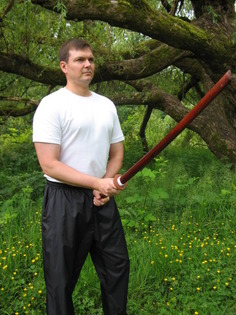
Image: photograph of Jennifer, supplied by herself.