The Displaced Nation

A home for international creatives

Thoughts on beauty — and chinos

As regular readers of this blog are doubtless aware, The Displaced Nation always likes to have a monthly theme around which its daily posts pirouette. This month’s theme sees us turning towards the world of fashion.

That leaves me in the somewhat awkward position of having to foist a fashion article onto you all. I confess, and again regular readers won’t be surprised to learn this, that this is not a topic that I am well versed in, I am a skinny guy that has never worn skinny jeans. My own fashion tips begin and end with the advice that you cannot go wrong with a chinos and shirt combo. The shade of beige in the chinos varies and so does the color of the shirt, which can range from powder blue to salmon pink — but that’s still not very exciting, is it?  So unless you want to dress like an ITN foreign correspondent, I’m not really the person to whom you should be paying attention when it comes to fashionista matters.

Perhaps sensing my uneasiness with this topic, it was suggested by others here at The Displaced Nation that I might want to write about whether there is a universal idea of beauty.

This seemed like a better idea than my posting about fashion. I could, I quickly realized, start the article with the old cliché about how “beauty is in the eye of the beholder.” Once that was out of the way, I could suggest that beauty is subjective, doing so by trotting out all those usual cultural differences — very appropriate in the context of The Displaced Nation — that confuse a modern Westerner: the Kayan Lahwi tribe in Burma whose female members wear brass coils around their neck to give the appearance of an elongated neck; the ancient Chinese practice of feet binding; the Essex facelift.

Once that was done I planned to counter the idea of different cultural ideas about beauty by positing that beauty standards are in fact objective — that perhaps Plato was right and beauty exists in his perfect forms. This new point of view would necessitate trotting out the evolutionary psychologists who have conducted studies on infants as young as two months, showing that they gaze at faces judged more attractive longer than the faces of those judged ugly. This, the psychologists contend, could suggest that beauty is indeed innate, that they are objective standards. As babies tend to cry when they see me, it would also prove conclusively that I am one ugly fecker. I would then have ended the article by referencing Keats’ “Ode on a Grecian Urn,” (“beauty is truth, truth beauty”) in an effort to look more learned than I am.

However, that line of argument didn’t seem so convincing. As I tried writing that post, I kept catching sight of myself in the unfortunately huge mirrors that make up the sliding closet doors in my room. They are huge and as this is rented accommodation I can’t do much to change them. So as I typed away, I would keep seeing my reflection and think hmmm, its probably bad karma for you to be pontificating on beauty, Windram. So with that in mind, I think it’s probably fairer to nudge you in the direction of the BBC Radio 4 series In Our Time — specifically, the episode that discusses the history of beauty as a philosophical topic — while I go off and iron my chinos.

STAY TUNED for an interview with Random Nomad Annabel Kantaria.

Related posts:

CLEOPATRA FOR A DAY: Fashion & beauty diary of former expat Anastasia Ashman

Continuing our feature, “Cleopatra for a Day,” we turn to Anastasia Ashman, an American whose love of the exotic led her to Southeast Asia (Malaysia) and Istanbul, Turkey to live (she also found a Turkish husband en route!). Having just moved back home to California, Ashman opens her little black book and spills the fashion and beauty secrets she has collected over three decades of pursuing a nomadic life.

BEAUTY STAPLES

Like Cleopatra, I’m into medicinal unguents and aromatic oils. My staples are lavender and tea tree oil for the tropical face rot you can get in hot, humid places — and for all other kinds of skin complaints, stress, headaches, jet lag, you name it — and Argan oil for skin dryness. I take them everywhere. I also spray lavender and sandalwood on my sheets.

When living in Southeast Asia I liked nutmeg oil to ward off mosquitoes. (I know that’s not beauty per se but bug-bitten is not an attractive look, and it’s just so heavenly smelling too, I suppose you can slather it on your legs and arms for no reason at all.)

I didn’t even have to go to Africa to become dependent on shea butter for lips and hands, and I like a big block of cocoa butter from the Egyptian Bazaar in Istanbul for après sun and gym smoothing — less greasy than shea butter, which I usually use at night.

I’m not really into branded products. When you move around it’s hard to keep stocking your favorite products and I find companies are always discontinuing the things I like so I’ve become mostly brand agnostic.

I just moved from Istanbul to San Francisco, and I got rid of almost everything I owned so I’m seeing what basics I can live with. Because to me, basics that do a wonderful, multifaceted job are the definition of luxury. You’ve got to figure out what those basics are for you.

Oh, and when I am in Paris, I buy perfume. Loved this tiny place in Le Marais that created scents from the plants on the island of Sardinia. And wouldn’t you know it, the second time I went they’d gone out of business. Crushing.

My favorite perfume maker in Paris at the moment — very intriguing perspective, lots of peppery notes and almost nicotiney pungencies — is L’Artisan Parfumeur. I’ve got my eye on their Fou d’Absinthe.

In another life, past or present, I know I was involved with perfume…

BEAUTY TREATMENTS

Believe Cleopatra would drink them dissolved in vinegar? In Malaysia I used to get capsules of crushed pearls from a Chinese herbalist down the street from my house — apparently they’re good for a creamy-textured skin.

I’ll take a facial in any country. I like Balinese aromatic oil massages when I can get them, too, and will take a bath filled with flowers if I’ve got a view of the jungle. Haven’t yet had my chance to do a buttermilk bath. I also do mud baths and hot springs where ever they’re offered, in volcanic areas of the world.

Another indispensable: the Turkish hamam. It’s really great for detoxification, relaxation and exfoliation. When living in Istanbul, I’d go at least once a season, and more often in the summer. It’s great to do with a clutch of friends. You draw out the poaching experience by socializing in the steamy room on heated marble benches, and take turns having your kese (scrub down) with a rough goat-hair mitt. You hire a woman who specializes in these scrubs, and then she massages you with a soapy air-filled cotton bag, and rinses you off like a mother cat washes her kitten.

Soap gets in the eyes, yes.

I own all the implements now, including hand-crocheted washcloths made with silverized cotton, knitted mitts, oil and laurel oil soaps, copper hamam bowls (for rinsing), linen pestemal (wraps or towels), and round pumice stones. (For haman supplies, try Dervis.com.)

DENTAL CARE

I’ve had dental work done in Malaysia and Turkey and was very satisfied with the level of care and the quality and modernity of the equipment and techniques. I got used to state-of-the-science under-the-gum-line laser cleanings in Malaysia (where my Taiwanese dentist was also an acupuncturist) and worry now that I am back to regular old ineffective cleanings. I’ve had horrific experiences in New York, by the way, so don’t see the USA as a place with better oral care standards.

In general, I like overkill when it comes to my teeth. I’ll see oral surgeons rather than dentists, and have my cleanings from dentists rather than oral hygienists.

ENHANCEMENTS

Turkey apparently has a lot of plastic surgery, as well as Lasik eye surgery. One thing to consider about cosmetic procedures is the local aesthetic and if it’s right for you. I didn’t appreciate the robot-like style of eyebrow shaping in Istanbul (with a squared-off center edge) — so I’d be extra wary of anything permanent!

HAIR

I’ve dyed my hair many colors — from black cherry in Asia to red to blonde in Turkey — and had it styled into ringlets and piled up like a princess and blown straight like an Afghan hound. That last one doesn’t work with my fine hair, and doing this style before an event on the Bosphorus would make it spring into a cotton candy-like formation before I’d had my first hors d’oeuvre.

I’ve had my hair cut by people who don’t know at all how to handle curly hair. That’s pretty daring.

I looked like a fluff ball for most of my time in Asia, because I tried to solve the heat and humidity problem with short hair and got tired of loading it up with products meant for thick straight Asian hair.

Now that I’ve relocated to San Francisco (which, even though it’s close to my hometown of Berkeley where I haven’t lived in 30 years, I still consider “a foreign country”), I’m having my hair cut by a gardener, who trims it dry, like a hedge. Having my hair cut by an untrained person with whatever scissors he can find is also pretty daring!

FASHION

On the fashion front, I have an addiction to pashmina-like shawls from Koza Han, the silk market in Bursa, the old capital of the Ottoman empire and a Silk Road stop. I can keep wearing them for years.

I also have a small collection of custom-made silk kebayas from Malaysia, the long, fitted jacket over a long sarong skirt on brightly hand-drawn and printed batik, which I pull out when I have to go to a State dinner and the dress code is formal/national dress. (It’s only happened once, at Malacañan Palace, in Manila!)

I have one very tightly fitting kebaya jacket that is laser-cut velvet in a midnight blue which I do not wear enough. Thanks for reminding me. I may have to take out the too-stiff shoulder pads.

LINGERIE

I like state-of-the-art stuff that does more than one thing at once and find most places sell very backward underthings that are more about how they look than how they fit, feel, or perform. Nonsense padded bras, bumpy lace, and stuff that is low on performance and high on things I don’t care about.

I got an exercise racerback bra at a Turkish shop and had to throw it away it was so scratchy and poorly performing. No wicking of sweat, no staying put, no motion control. But it had silver glittery thread — and (unnecessary) padding!

JEWELRY

I like most of the jewelry I’ve acquired abroad and am grateful to receive it as gifts, too. All of my pieces have some kind of story — and some attitude, too.

From Turkey: Evil-eye nazar boncuğu pieces in glass and porcelain; silk-stuffed caftan pendants from the Istanbul designer Shibu; Ottoman-style enameled pieces; and an opalized Hand of Fatima on an impossibly fine gold chain. This last piece is what all the stylish women in Istanbul are wearing at the moment.

From China: White pearls from Beijing, pink from Shanghai and purple from Shenyang.

From Malaysia: I got an tiny tin ingot in the shape of a turtle in Malacca, which I was told once served as currency in the Chinese community. I had it mounted in a gold setting and wear it from a thick satin choker.

From Holland: A recent acquisition from Amsterdam are gold and silver leather Lapland bracelets with hand-twinned pewter and silver thread and reindeer horn closures. They’re exquisite and rugged at the same time.

WEARING RIGHT NOW

Today’s a rainy day of errands so I’m wearing a fluffy, black cowl-necked sweater with exaggerated sleeves, brown heathered slacks, and black ankle boots. They’re all from New York, which is where I’ve done the most shopping in recent years.

My earrings are diamond and platinum pendants from Chicago in the 1940s, a gift from my grandmother.

I’ve also got on my platinum wedding and engagement rings. They’re from Mimi So in New York.

DAILY FASHION FIXES

I liked FashionTV in Turkey, which was owned by Demet Sabanci Cetindogan, the businesswoman who sponsored my Expat Harem book tour across America in 2006.

The segment of Turkish society interested in fashion is very fashion forward. I enjoyed being able to watch the runway shows and catch interviews with the designers.

If I could draw and sew I’d make all my own clothes but I am weak in these areas. In another life, when I get a thicker skin for the fashion world’s unpleasantries, I’ll devote myself to learning these things and have a career in fashion design.

STREET STYLE

In Istanbul, Nişantaşi is somewhere you’d see some real fashion victims limping along in their heels on the cobblestones and Istiklal Caddesi, the pedestrian boulevard in Beyoğlu, would be a place to see a million different looks from grungy college kids to young men on the prowl, with their too-long, pointy-toed shoes.

TOP BEAUTY/STYLE LESSONS FROM TRAVELS

In fact, I’m still assimilating everything — and everywhere — I’ve experienced in terms of fashion and beauty, but here are a few thoughts:

1) Layering: I learned from Turkish women to layer your jewelry and wear a ton of things at the same time. Coco Chanel would have a heart attack! But the idea is not to wear earrings, necklace, bracelet and rings all at once, but lots of necklaces or lots of bracelets or lots of rings at the same time.

2) Jewelry as beach accessory: During the summer Turkish wear lots of ropy beaded things on their wrists during a day at the beach — nothing too valuable (it’s the beach!) but attractive nonetheless. Jewelry stands feeding this seasonal obsession crop up at all the fashionable beach spots. Dangly charms and evil eyes and little golden figures on leather and paper ropes.

3) A little bling never hurts: I’ve also been influenced by the flashiness of Turkish culture, and actually own a BCBG track suit with sequined logos on it. This is the kind of thing my Turkish family and I would all wear on a plane or road trip. Comfortable and sporty, but not entirely unaware of being in public (and not at the gym). Coming from dressed-down Northern California, it was difficult to get used to being surrounded by glitzy branded tennis shoes and people wearing watches as jewelry, but I hope I’ve been able to take some of the better innovations away with me. I know I’m more likely to wear a glittery eye shadow now that I’ve lived in the Near East.

4) The need for sun protection: It was a shock to go from bronzed Los Angeles to can’t-get-any-paler Asia and then to the bronzed Mediterranean. In Asia I arrived with sun damage and then had lots of people helping me to fix it — I even used a parasol there. Then in Turkey everyone thought I was inexplicably pale and I let my sun protection regimen slip a bit. I’m back on the daily sunblock.

5) What colors to wear: I also used to get whiplash from trips back and forth between California and Southeast Asia in terms of color in clothing. In Malaysia the colors were vivid jewel tones — for the Malays and the Tamils especially. The louder the print, the better. Around the same time I was living in that part of the world, I witnessed a scuffle between shoppers at C.P. Shades in my hometown Berkeley, fighting over velvet granny skirts in moss, and mildew and wet cement colors. That kind of disconnect wreaks havoc on your wardrobe, and your sense of what looks good. Right now I’m trying to incorporate bright colors into my neutral urges. I’m still working it out.

Anastasia Ashman is founder of GlobalNiche.net, a work-life initiative for cultural creatives and mobile progressives that she calls “creative self enterprise for the global soul.” (Global Niche recently held a Webinar “Dressing the Inner You,” featuring psychologist and author Jennifer Baumgartner talking about the cultural displacement that shows up in one’s dressing style.) A Californian with 14 years of expatriatism under her belt, Ashman was the director of the online neoculture discussion community expat+HAREM and coeditor of the critically- and popularly-acclaimed expat lit collection that inspired this community, Tales from the Expat Harem: Foreign Women in Modern Turkey. Catch her tweeting on Pacific Standard Time at @AnastasiaAshman.

STAY TUNED for tomorrow’s post, a contrarian perspective by Anthony Windram on this month’s fashion and beauty conversation.

If you enjoyed this post, we invite you to register for The Displaced Dispatch, a round up of weekly posts from The Displaced Nation, with seasonal recipes, book giveaways and other extras. Register for The Displaced Dispatch by clicking here!

Related posts:

Images: (clockwise beginning with top left): Anastasia Ashman holding her own with the ever-glamorous Princess Michael of Kent, in Turkey; with her sister Monika, rocking the traditional Turkish Telkari silver jewelry, Anatolian shawl and requisite deep Bodrum tan; displaying her hamam collection — including traditional silver hamam bowl and hand-loomed linen pestemal towels; and sporting ringleted hair (along with some fashion flair!) at the Istanbul launch of Tales from the Expat Harem.

Fashion Speak: The Idiot’s Guide to Fashionese

Although “Couture” and “Haute Couture” get bandied around to mean any new clothing items that don’t come from Walmart, technically these terms have a very exact definition:

To earn the right to call itself a couture house and to use the term haute couture in its advertising and any other way, members of the Chambre syndicale de la haute couture must follow these rules:

▪ Design made-to-order for private clients, with one or more fittings.
▪ Have a workshop (atelier) in Paris that employs at least fifteen people full-time.
▪ Must have 20 full time technical people in at least one atelier or workshop.
▪ Each season (i.e., twice a year), present a collection to the Paris press, comprising at least thirty-five runs/exits with outfits for both daytime wear and evening wear.

(Wikipedia)

In an industry that sets such a definition for what is essentially “Manufacturer of overpriced frocks for people with more money than sense” it is not surprising that this is only the tip of the iceberg — especially recently.
Fashion jargon, it seems, is out of control.

Couture or calculus?

In a statement last year, Ed Watson, a spokesman for UK department store Debenhams said:

“It’s now easier to understand complex calculus than some of the words commonly used by commentators within the fashion industry to describe garments.”

While I personally disagree with him, on the grounds that I would find the Dead Sea Scrolls easier to understand than complex calculus, he has a point.

Debenhams, apparently, had to introduce a lexicon of fashion terms so its personal stylists could translate modern Fashionese into plain English for their customers.

Sadly, I couldn’t find a copy of it online to assist TDN readers, so I’m having a go at recreating it myself.

Fashionese and How To Speak It

Parts of Speech:

When translating Fashionese, one needs to be aware that it has an extra part of speech — the Absensicoun.

That’s a contraction of three words: Absolutely, Nonsensical, and Noun.

Contracting words is how much of Fashionese is derived.

For example, the Skort (Skirt+Shorts) and Jeggings (Jeans + Leggings). While we all might be familiar with these two, some more obscure Absensicouns are:

• Jorts = Denim hot-pants (Jeans+Shorts)

• Mube = a long, tight dress (Maxi + Tube)

• Spants = Harem pants (Skirt+pants)

• Swacket = something that is not quite Sweater, not quite Jacket

• Coatigan = a cardigan that resembles a coat (presumably for people who don’t want to admit they’re wearing cardigans)

• Glittens = Gloves that roll up into mittens

• Shress = a dress that’s like a T-shirt. (They couldn’t call it a Tress because that’s already a word. “Dirt” wouldn’t work, either. See how complicated this is?)

And my favorite:

• Whorts, which are winter shorts worn with woolly tights.

Words purloined (“Worpurls”) by Fashionese

Just as the English language shamelessly pinches foreign words and gives them different meanings from the original, so do words purloined by Fashionese (“Worpurls”) take on a new dimension.
Directional —
English (adj): having a particular direction of motion, progression, or orientation.
Fashionese (adj): something that looks completely weird now but is so trendsetting that in a few months’ time everyone will be wearing it. It will look weird again in another few months, when people look through last year’s photos and say, “My God, can you believe we actually used to wear that?”

Faux pas —
French (n): Literally “wrong step”.
English usage (n): A social blunder or indiscretion.
Fashionese (n): Dressing in a way to cause minor embarrassment to oneself. Examples include shrimp cocktail toes (wearing open-toed sandals that are too small so the toes extend past the end of the shoe, like a shrimp cocktail dish), inadvertently leaving your flies undone, and all of the 1970s. (See Directional, Past Tense.)

Thrifting —
English: No direct translation, since Thrift is a noun, not a verb.
Fashionese: Hunting for vintage clothes (must be over a certain age to be considered vintage and not just last season’s cast-offs) which have taken on an aura of mystique due to the fact they were produced at the same time as, say, the Ford Edsel.

Arm party –
This should have been an Absensicoun, but it’s difficult to contract satisfactorily. (“Arty”? “Arparty”? “Parmarty”?)
English: Umm…Beats me. A variation on “Twister”?
Fashionese: An armful of bracelets, where less is less.

Covert couture
English (n): Not sure. Anything to do with James Bond’s suit?
Fashionese (n): Clothes that cost a fortune but don’t look as if they did. (See Joel, Billy; Still Rock & Roll To Me: “You can’t dress trashy till you spend a lot of money.”)

Play them at their own game.

Back to Mr Ed Watson, the Debenhams spokesman, who had this to add:

Ideally we would like to drop all these amalgamations, but our hands are tied due to the terms being used on search engines.

Indeed. So the only solution is “If you can’t beat them — join them.”
Which words would you like to see adopted by Fashionese?

If you enjoyed this post, we invite you to subscribe for email delivery of The Displaced Dispatch, a round up of the week’s posts from The Displaced Nation. Sign up for The Displaced Dispatch by clicking here!

Related posts:

5 tips on how to look good when you backpack

Cleopatra for a day: Helena Halme

Dear Mary-Sue: Fashion tips for the hapless traveler

Displaced Q: What fashion souvenirs find their way into your rucksack?

Img: By mandiberg [CC-BY-SA-2.0 (www.creativecommons.org/licenses/by-sa/2.0)], via Wikimedia Commons

LIBBY’S LIFE #42 – Something in the water

With just weeks to go before the arrival of the twins, Libby is making the most of her life with only one child by finding him a new nursery school and thereby becoming a Lady Who Lunches. But it’s not all Fun, Fun, Fun, she is finding.

“Libby, do stop worrying. Jack will be just fine.” Charlie shrugged off her jacket and draped it over the back of her chair. “I know you had a bad experience with that other nursery, but Helen Flynn’s place is wonderful. He’ll love it there.”

“But suppose he doesn’t? What if it’s a case of out of the frying pan and into the fire for him?” I said, pulling out a chair from under the restaurant table, and sitting down heavily. The chair wobbled. It had a wooden seat, and wasn’t nearly as comfortable as the padded benches in the booths along the walls, but I could no longer squeeze into those, so Anna Gianni had tactfully seated us at one of the Maxwell Plum’s large centre tables.

Anita opened up the black padded menu. “Think about it logically,” she said. “The owner told Caroline to find Dominic another school because his idea of free play was beating up smaller children with whiffle sticks. She’s not going to stand idly by if someone’s giving your son a hard time, is she?”

I opened my own menu. “You’re probably right. It’s difficult not to worry, though.”

“I hate to tell you this, hon, but it only gets worse. Wait until he’s at elementary school.”

I don’t know why some people think you’ll feel better if they tell you things will be even worse later.

“Well, fortunately, I don’t have to think about that,” I said. “By the time Jack’s ready for elementary school we’ll be safely back in Milton Keynes. He’ll be starting Year One at the local Infants and learning how to spell properly instead of missing the U out of all the words.”

Anita and Charlie exchanged knowing glances.

“You say that now,” Charlie said. “But most people stay much longer than two years. Woodhaven draws you in.”

“I’m not most people, and I’m not being drawn in anywhere,” I snapped, banging the menu down on the table. “I agreed to two years, not a bloody life sentence.”

Here’s the thing. Oliver and I have been here barely nine months, and already the people in HR are talking about extending the contract. The initial two years? Fine. I can cope with that. Three? OK — I think. But where does it stop? At what point do I put my foot down, or, worse, at what point does I discover that it’s harder to go back than it is to stay?

“It’s terribly slow service today,” Charlie said, looking around the restaurant. “At this rate we won’t have time for dessert.”

“They’re short-staffed,” Anita said, studying her menu again. “There’s only the owner’s wife. That other loopy woman who works here is nowhere to be seen. I bet she’s out somewhere with a small animal in a pushchair. Last time I saw her, it was a rabbit. Honestly, she’s so many sandwiches short of a picnic—”

“Carla’s a whole loaf short.” Anna Gianni materialised at our table behind Anita, notebook and pen in hand. “But I’ll take her, both minus the Wonderbread and plus small animals in strollers, any day, rather than be the only server on a busy lunchtime. Now — what can I get you, ladies?”

Anita’s face turned a delicate shade of magenta. Charlie bit her lip, either in embarrassment or in an effort not to laugh, and I threw Anna an apologetic smile. She winked at me as we gave her our orders, then glided away to another table, where a couple of businessmen in suits were having a loud, showy-offy conversation about the price of Apple stock.

“You and your big mouth,” Charlie muttered at Anita.

Anita shrugged. Her face was still a bit pink. “It’s true, though,” she whispered. “She’s as nutty as a fruitcake.”

“Must be something in the water.” Charlie picked up her own glass of water and examined it. “Take Caroline.”

Caroline still wouldn’t say whether her new baby was a boy or a girl, and although she had now given it a name, it was the unisex “Taylor”, so we were none the wiser. Her husband, the boss, was equally silent on the subject.

Anna came back with our drinks and appetisers, and Charlie asked her sympathetically if she would be holding the fort on her own for long.

“Only until Saturday.”

“And then Carla will be back?” I asked.

Anna’s tone softened. “Sadly, Libby, no.”

I saw Anita raise her eyebrows as Anna said my name.

“She’s having a bad spell right now,” Anna continued. “Maybe she’ll be OK enough to come back in a few weeks. We’ve ordered her one of those life-like baby dolls to look like the photo of…well, you know. So that will help her, we hope. And me, come to that. I’m tired of looking after a menagerie.”

She bent down to pick up a napkin from the floor — mine, since I no longer had enough lap to keep a napkin secure — then patted me on the shoulder.

“You and I should get together again,” she said. “As soon as—”

“Miss?” One of the loud businessmen waved at her from across the room. “Miss? How much longer before you bring our order? We have a very important conference call at 1pm.”

Anna smiled in their direction. “I’ll be right with you,” she said loudly. Still smiling, she muttered “Never mind gun control in this country — what we really need is to keep jerks like that separated from their BlackBerries.”

“I’ll call you on Sunday after we get the agency staff settled in,” she said to me. “I promise I’ll call.”

She hurried away.

As soon as she was out of earshot, Anita turned to me. “How do you know her so well?”

I explained about Maggie, and how she seemed to know everyone in Woodhaven.

“Maggie?” Charlie asked. “You don’t mean Maggie Sharpe, do you?”

I was surprised. “You know her?”

“I know of her. Everyone knows of her. Or at least, everyone knows about her daughter…what’s her name?”

“Sara.”

“That’s it. Sara. Anyway — according to town legend, she’s the reason Carla Gianni lost her mind. About twenty years ago.”

“What?”

“Small town talk, but it’s what I’ve heard from quite a few people.”

“And…” I fumbled around for words, did a few calculations based on what Maggie had told me about her daughter. “How did someone barely out of her teens make Carla lose her mind?”

Charlie shrugged. “Like I said, there must be something in the water here.” She picked up our water pitcher and refilled all our glasses. I waited. “But the story I’ve heard is — she killed Carla’s son.”

.

Next post: LIBBY’S LIFE #43 – Alone again – naturally

Previous post: LIBBY’S LIFE #41 – Pick & Mix at the Baby Shop

Click here to read Libby’s Life from the first episode

STAY TUNED for Friday’s introduction to Haute Couture for the Dolce-and-Gabbana-challenged.

If you enjoyed this post, we invite you to subscribe for email delivery of The Displaced Dispatch, a round up of the week’s posts from The Displaced Nation. Sign up for The Displaced Dispatch by clicking here!

Image: Travel – Map of the World by Salvatore Vuono / FreeDigit

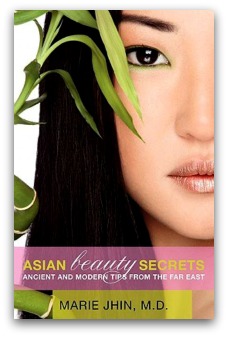
BOOK REVIEW: “Asian Beauty Secrets,” by Marie Jhin

TITLE: Asian Beauty Secrets: Ancient and Modern Tips from the Far East
AUTHOR: Marie Jhin, M.D.
PUBLICATION DATE: July 2011
FORMAT: Paperback and Kindle e-book, available from Amazon
GENRE: Health, fitness & dieting, beauty
SOURCE: Paperback purchased from the Korea Society, New York City

Summary:

Drawing on her experience as a Cornell University-trained dermatologist, combined with a knowledge of Asian beauty remedies, both ancient and modern, Dr. Marie Jhin delivers an East-West guide to vibrant skin and beauty. Born in Seoul, South Korea, Jhin emigrated to Hawaii with her family when she was six (they settled eventually in New York City). She now lives in San Francisco, where she runs her own practice, Premier Dermatology. She has been rated as one of America’s top doctors for the past three years.

Review:

The first time I visited Seoul, my husband, who is Japanese, insisted that I try a spa treatment, as Koreans do this sort of thing better than other Asians, he said. Before I knew it, I was lying naked on a table with an older Korean lady scrubbing every inch of my body. Eventually, she took my hand and put it on my stomach. At first I thought I was touching a piece of terry cloth but no, it was my skin — it had come off in shreds!

I lay there thinking, “Can this be healthy?”

Having pondered these issues quite a lot — also during my years of living in Japan, where I could hardly fail to note how obsessed Japanese women are with skincare — I was intrigued to come across a new book on Asian beauty methods, by San Francisco-based dermatologist Marie Jhin.

Born in Seoul, Jhin is now settled in California. She is not an expat, which makes the title of this post a little misleading; but is she “displaced”? Yesterday she told me in an email exchange that while she doesn’t think of Korea as “home” any more, her birth country remains something of a lodestar. She specializes in Asian skincare, lived in Seoul for two years after college to teach ESL, and has been going to Korea on business of late.

But what really convinced me of Jhin’s “displacedness” is that like me, she was uncertain of the benefits of Korean skin scrubbing but unlike me, let it get under her skin, so to speak:

I grew up doing certain things beauty-wise that I wanted know the truth of. For example, … my mother used to take me to get my skin scrubbed at a Korean sauna. Back then I didn’t understand what the point was, but now, as a dermatologist, I realize that it was basically whole body microdermabrasion that they have been doing for centuries that is great for the skin.

(Good to know!)

Jhin called her book “Asian Beauty Secrets” because it covers the beauty habits of not only Korean but also Chinese and Japanese women. Her key finding is that while women in all three countries have been caught up in the quest to look more Western, they have plenty to be proud of in their native beauty traditions.

The influence of Western beauty ideals

The last time I visited Tokyo, I couldn’t always tell who was a foreigner and who wasn’t since so many Japanese youth had dyed their hair a reddish blonde (I no longer stood out in the crowd!).

Thus I was glad to see Jhin tackle the issue of Western beauty ideals. In addition to dying and streaking their hair, many Asians are getting plastic surgery in the quest to look more Western.

Jhin notes the popularity — especially in Korea, cosmetic surgery capital of Asia (and the world?) — of procedures such as blepharoplasty (double eyelid surgery), rhinoplasty (nose jobs) and surgery to correct what Japanese call daikon-ashi (radish-shaped calves).

And when Asian women do Botox, she says, it’s not to reduce wrinkles but to soften square jaw lines and/or to atrophy cheek muscles and thereby shrink a too-round face.

Jhin draws a line, however, between these procedures and the value traditionally placed by women in all three cultures — Chinese, Japanese and Korean — on having white skin. She cites Chinese Canadian consumer research professor Eric Li in stating that the preoccupation with whiteness predates colonialism and Western notions of beauty. In fact, the Japanese see their own version of whiteness as superior to the Western one!

What Asian women bring to the vanity table

We Westerners are notorious for mistaking one Asian culture for another. Jhin helps us negotiate this sometimes-fraught territory by listing some of their distinguishing elements when it comes to notions of beauty:

1) KOREA

  • Who’s the fairest of them all? In the Far East, it’s Korean women, by common consensus.
  • Korean women like to exfoliate the skin to keep it glowing and healthy.
  • Koreans have long revered the ginseng plant, a vital ingredient in health and beauty potions.

2) JAPAN

  • Going back at least to the Heian period, Japanese have celebrated long tresses — the record of that era being 23 feet! Their favorite conditioning treatment is camellia oil, thought to promote glossy hair growth without making it greasy.
  • Japan spa culture, which dates back thousands of years, favors the use of natural ingredients for cleansing the skin: eg, volcanic mud, wakame seaweed and even nightingale droppings(!).
  • Though Japanese are known for rushing around, they in fact have a tradition of enjoying “empty moments.” Such meditative practices contribute to well-being and bring out a woman’s natural beauty.

3) CHINA

  • In ancient China, pearls were a girl’s best friend: ground pearl powder was taken internally and applied topically. (Hmmm…did they get that habit from Cleopatra, or vice versa?)
  • Chinese have a saying that “a woman’s second face is in her hands” — to this day, Chinese women are meticulous about moisturizing their hands and feet.
  • Traditional Chinese Medicine (TCM) emphasizes certain foods for balancing yin and yang within the body. This inner harmony is thought to contribute to outer radiance.

There is also, of course, much overlap among the three cultures.. All subscribe to the belief that by eating healthy foods, releasing stress (e.g., by getting an accu-massage), and pursuing nature-based healing (TCM) on a regular basis, a woman can enhance her best assets.

The “skinny” on beauty tips and secrets

One of the reasons to pick up a book with the word “secrets” in the title is to find out what one is missing out on. On this score, Jhin’s book is a bit of a mixed beauty bag. Some of her suggestions struck me as being far fetched — and I have a reasonably high tolerance for Asian cultural quirks.

Bird’s nest soup or soup containing hasma (frog fallopian tubes), anyone? Both are ancient Chinese foods thought to nurture glowing skin (Jhin provides recipes). Um, thanks, but no thanks. I’d almost rather eat fugu (which likewise has stimulating properties).

Even more offputting is the Chinese custom of spreading sheep’s placenta on one’s face. (It’s a mercy they’ve moved on from ingesting human placenta, that’s all I can say…)

As for V-steaming one’s chai-york (Korean for vaginal tract) with medicinal herbs such as mugwort (common wormwood) — it will take more than a reassurance by a Beverly Hills doctor to convince me that such a practice doesn’t lead to other problems such as UTIs.

On the other hand, I might actually consider soothing my skin with a high-quality ginseng cream. That sounds nice. Or perhaps I’ll try facial acupuncture. It’s noninvasive and, according to Jhin, can have the effect of a mini-facelift.

Note: More secrets can be found on Jhin’s book site.

Verdict:

For me, the most interesting portion of Asian Beauty Secrets is when Jhin addresses her area of specialization: the conditions peculiar to Asian skin, such as eczema (they are more prone to it than we are) or sun damage that manifests itself not in wrinkles but in brown spots. I also found fascinating the chapter on the latest skin renewal techniques being pioneered by Korean doctors. Acupuncture meets nanotechnology with the “INTRAcel laser” treatment! (The laser reaches “deeper into the dermis for more lasting collagen production and overall skin rejuvenation,” Jhin explains.)

That said, I’d hesitate about recommending Jhin’s book to anyone who isn’t yet oriented (no pun intended!) to beauty practices in this part of the world. Instead you might try experimenting with some of the brands Jhin recommends — e.g., Sulwhasoo cosmetics (now being carried at Bergdorf Goodman here in New York) — by way of familiarizing yourself with Asian skincare methods. As it happens, I got some Sulwhasoo samples when I bought the book — and would be more than happy to report back on the effects, if anyone’s curious! 🙂

STAY TUNED for tomorrow’s installment from our displaced fictional heroine, Libby. (What, not keeping up with Libby? Read the first three episodes of her expat adventures.).

If you enjoyed this post, we invite you to register for The Displaced Dispatch, a round up of weekly posts from The Displaced Nation, with seasonal recipes, book giveaways and other extras. Register for The Displaced Dispatch by clicking here!

Related posts:

5 tips on how to look good when you backpack

I don’t know about you, but I look terrible when I travel.

Not intentionally of course; jet lag notwithstanding, it’s impossible to look crisp and put together after an extended journey by public transport, no matter where in the world you are.

My problem has more to do with my style of travel — or lack thereof… There are two real options when you’re a backpacker: clothes that look good, or clothes that are comfy. Now, bearing in mind you’ll be spending quite a lot of time in them — alternating between the same two pairs of trousers every day until they drop off you and disintegrate — it’s not much of a choice.

Is that because I’m a guy? Maybe — see the note about my wife at the end of this post.

But I don’t care whether you’re male or female, there’s something about being a backpacker that makes keeping up one’s appearance a constant challenge. However fastidious you are about your personal appearance (and most backpackers I know are!), however much you shower before an 18-hour bus journey, you’re still going to look (and smell!) pretty bad afterwards.

So, bearing in mind the following advice from Mr Will Kommen:

If you look like your passport photo, you’re too ill to travel.

…here are five of my tips on how to look good as you bounce around the globe:

1) Haunt charity shops.

Many countries have these in some form or other, and the richer the country the more expensive and interesting gear you can pick up for next to nothing. They’re perfect for replacing an item of clothing that is giving up the will to live in your backpack; or something you’ve become so sick of wearing you daydream constantly about burning it. This shops are incredibly cheap, so you can go crazy — and then just give the stuff back when it’s time to move on.

I don’t travel with any technical clothing, so when my wife and I decided to do a two-month, 1,000 km hike, we had to equip ourselves from scratch — on next-to-no budget. Guess how we did it? Yup, “op shops” they call them in Australia — we visited every one. In a couple of weeks we had all the gear we needed for the hike — plus all the money had gone to charity! And when we were done, we gave most of it back as donations (except the t-shirts, which were too stained to be of use to anyone).

2) Adopt local dress.

Fisherman’s trousers in Thailand, those crazy-colored woolly trousers in South America — pseudo local fashions are cheap to buy, fun to wear and, if they don’t become a souvenir, easy to dispose of before onward travel. I say “pseudo local” because real locals wear the uniform of the world: jeans and a fake Nike T-shirt. Or a Manchester United strip (shirt and shorts).

3) Take any opportunity to wash.

It’s amazing how good it feels to be clean. Most people take it for granted, but then most people have never spent three consecutive nights on the same train, going backwards and forwards to avoid paying for a hotel room. Anyway, the point is there are opportunities everywhere: most major train stations have showers open to the public cheaply, almost all airports do too — and some places you wouldn’t expect, like shopping centres. Shopping centres are free to enter, with regularly cleaned public loos. A lot of them also have “mother-and-baby” rooms, with a table or fold-down shelf, a sink — in short, an open invitation for a full body wash and a change of clothes. Just be wary in Japan — a lot of the public toilets there are “smart.” They unlock and open if you’re in there for too long, which can be pretty embarrassing if you’re soaping yourself down when the door opens opposite Starbucks…

4) Take any opportunity to “dress up.”

Looking posh is a moral boost, and should be possible for most of us bedraggled travelers just by shaving and wearing all-clean clothes! I also travel with a shirt — just one — which transforms a pair of jeans into an outfit smart enough for a nice restaurant or swanky bar (well, as long as they don’t look at my feet, on which I have either flip-flops or hiking boots…).

5) Wear jeans!

The rest of the world will be. Seriously — for every sweat-wicking-fast-drying-wind-proof-mesh-venting-ThermaCELL-layering-system you own, there’s another person behind you who has none of it. And you know what? They look a lot better than you! This is why so much “technical” clothing ends up in charity shops (see above) just waiting for you to pick it up — people with lots of cash buy it, don’t use it for anything more strenuous than shopping, then realize that it looks pretty crummy when compared to clothes that were, you know, designed to look good whilst shopping. So they ditch it. You should too — or at the very least, stop paying outrageous prices for the stuff. Unless you’re headed to Everest Base Camp — in which case, buy it all from those people who’ve just realized that no matter how expensive it was, it doesn’t look right in Sainsbury’s.

* * *

Obviously, this is a bit of a male perspective on things. My wife swears by traveling with a small (for an elephant) bag of “essential” make-up. It’s the main reason she’s recently swapped her rucksack for a suitcase…but she assures me it helps her feel good about herself when otherwise she’d look as bad as I do. So I indulge her.

What do you do to look good while you travel?

Tell us in the comments section!

STAY TUNED for tomorrow’s post, a review of a new book on Asian beauty.

If you enjoyed this post, we invite you to register for The Displaced Dispatch, a round up of weekly posts from The Displaced Nation, with seasonal recipes, book giveaways and other extras. Register for The Displaced Dispatch by clicking here!

Related posts:

Images: (clockwise beginning top left): Charity shop in West Street (© Copyright Basher Eyre and licensed for reuse under this Creative Commons Licence)  baby changing room sign and South American wool pants for sale, by Tony James Slater; backpackers (Morgue photos).

CLEOPATRA FOR A DAY: Fashion & beauty diary of expat Helena Halme

Today we introduce a new feature: “Cleopatra for a Day.” Displaced citizens open their little black books and spill the fashion and beauty secrets they’ve collected on their travels. First up is Helena Halme. One of TDN’s Random Nomads, Halme is a Finnish expat in London and a self-professed fashion maven.

BEAUTY

When my husband (“The Englishman”) and I did a house-swap in Los Angeles in the nineties, I discovered Origins, then a skin care range that wasn’t universally available here in the UK. Anything close to nature was an upcoming trend, and the Origins shops in LA looked quite revolutionary — all wooden flooring and straw shopping baskets. I still use a lot of Origins products and couldn’t live without their foot cream, Reinventing the Heel.

Some time ago, an English friend recommended that I try Elizabeth Arden’s Eight Hour cream — I couldn’t live without it now. If I’d ever end up on a desert island, this would be the one luxury item I’d crave for.

HAIR

When I’d only lived in the UK for a matter of months, I cut my hair very, very short. The Englishman was away at sea and when he came back he was quite shocked to see my blonde locks all gone. But, gentleman that he is, he told me the new style suited me. (I’m not so sure it did!) Much more recently, I’ve discovered the the Brazilian blow dry, a luxurious treatment that makes my thick Nordic locks gleam. I feel like a film star!

FASHION

A few years ago on an annual girls’ trip with my school friends, this time to Rome, I bought a long down coat which has been my winter staple ever since. It was weird shopping for warm winter wear in the humid late summer heat in Rome, but it was great to have the style advice of good friends. I understand that the Displaced Nation has been been debating whether down coats can be fashionable. I’d be curious to hear your verdict on my Roman find!

LINGERIE

I seem to always run out of underwear when on holiday, so I have bought some in Rome, New York, Stockholm, Seville… Now what I bought — that would be telling!

JEWELRY

When on holiday in Puglia, Italy, a few years ago, I bought a set of plastic beads. I love them so much I still wear them. They’re a wonderful color that goes with everything.

WEARING RIGHT NOW

Crickey! It’s a miserably cold and rainy Sunday here in London so I’m in my favorite beige-colored Uniqlo jeans, an All Saints double layer t-shirt (bought at their London store in Spitalfields) and my blonde cashmere poncho from Plum. Underwear is Marks and Spencer (it is the one and only store for underwear for me) and there are warm & cozy Ugg boots on my feet.

DAILY FASHION FIX

There are two magazines I cannot live without: Vogue and Grazia. Vogue is for trying to keep up to date with high fashion, Grazia for street style and gossip. I’m also an avid follower and reader of blogs. My favorites are:

STYLE ICON

I don’t really have style icons — I believe that style is a very individual thing; but one person who I really admire is Helena Bonham-Carter. She used to come into the bookshop I worked at in North London and always looked wonderful, in her extremely unique way. However, I could not pull off her style.

STREET FASHION

Two great places to people watch are Selfridges on Oxford Street and Liberty’s on Regent Street. There are lovely cafes in both stores where you can sip your latte and feel as though you’re on the front row of a Mulberry or McQueen show.

TOP BEAUTY/STYLE LESSONS FROM TRAVELS

1) When on holiday to Greece, I learned to try saving my fair skin from burning through the application of sunscreen and after-sun moisturizer.
2) From watching French and Italian women on my trips to Paris or Rome, I learned about how to use a splash of color when wearing neutrals.
3) From my trips to New York I learned about simple lines, neat tailoring, and the chicness of one color (black) or two (eg, beige turtleneck with black trouser suit) — as perfected by designers like Michael Kors, Donna Karan and Ralph Lauren.

Helena Halme blogs at Helena’s London Life and tweets at @HelenaHalme. She will soon be releasing a digital book based on a popular series of her posts, “How I came to be in England,” entitled The Englishman.

STAY TUNED for tomorrow’s post, a male perspective on how to travel and look good.

If you enjoyed this post, we invite you to register for The Displaced Dispatch, a round up of weekly posts from The Displaced Nation, with seasonal recipes, book giveaways and other extras. Register for The Displaced Dispatch by clicking here!

Related posts:

Images: (clockwise beginning with main photo) Helena Halme modeling her Italian down coat in Harrod’s food hall; posing with The Englishman in Italy, just after picking up the beloved beaded necklace; showing off her hair after a Brazilian blow dry in London; staying warm and stylish in London in her blonde cashmere poncho, just a few days ago.

Dear Mary-Sue: Fashion tips for the hapless traveler

Mary-Sue Wallace, The Displaced Nation’s agony aunt, is back. Her thoughtful advice eases and soothes any cross-cultural quandary or travel-related confusion you may have. Tulsa’s answer to Donatella Versace this month she shares her sartorial expertise. Submit your questions and comments here, or else by emailing her at thedisplacednation@gmail.com.

Happy March to all you Mary-Suers!! Spring is almost here and in the paradise on earth otherwise known Tulsa the sky is blue, the birds are singing and ABC have debuted GCB. Yes, life is sweet – I’ve even made it a little sweeter by making myself a nice pitcher of iced tea while I sit down on the patio and read through the Tulsa Herald to see if there are any interesting yard or estate sales in town this weekend. Anyhoo on with this month’s theme which is fashion – something little ol’ Mary-Sue knows a thing or two about.

___________________________________________

Dear Mary-Sue,

I’m a serial expat and just now moved to Canada from Mexico. Everyone tells met that sooner or later, I’ll have to invest in one of those ugly puffy coats that make everyone look like the Michelin Man, so as to survive the winters. Can you think of any alternative, or some way to jazz up the look?

Tatiana from Toronto

Dear Tatiana from Toronto,

The first thing you’ll discover is that the wind chill factor is a PAIN!!! Even though some days it’s going to seem clear and crisp, it is going to be FREEZING. When it’s like this, you’re going to have to weigh up which is more important to you – snugness or elegance, drabness or hypothermia.

I’ll let you in on a Mary-Sue Wallace tip, when I go on my annual Reykjavik the first thing that I pack is my alpaca hat. I got it from my cousin, Mary-Ann Banville, who lives in California and owns an alpaca farm out there. Well, she makes great hats and sweaters from the alpaca wool – she also grows great avocados as well. Anyhoo, I make sure I’ve got my alpaca hat with me – in fact, I make sure I have it whenever I go north of the 49th parallel. Hubby Jake says it makes me look like a smurf, but he’s no Brian Williams in the looks department and I’m sure you’d look darling in one.

The other thing that you need to do is earn the art of layering. Indulge in some nice autumnal colors, invest in an attractive overcoat and some lovely scarves.

———————————-

Dear Mary-Sue,

I’ve just now moved to Los Angeles from the UK, and I notice that everyone here has straight white teeth. Mine are the usual tea-stained crooked ones that English people have, so I’m feeling very self-conscious. Would you recommend that I get adult braces?

Lily from Lancaster

Dear Lily,

You’re in LA, first things first, get your cheeks, nose and boobies done first, then you can move onto the teeth.

———————————-

Dear Mary-Sue,

I’ve been in Taiwan teaching English for about a year, and I can’t get over how spoiled the dogs here are. Each of them has several little outfits. I know I should be tolerant of other cultures, but I can’t help but think it’s a ridiculous and wasteful custom. Wouldn’t you agree?

Sally from Seattle

Oh Sally,

I know you’re from Seattle and jaded by caffeine and hipsterdom, but get over yourself girl! Would it help if you viewed it all ironically?

My dachshund, Eudora Welty, has a cute little burberry coat. Yes, you’re probably rolling your eyes Sally, try to enjoy life a little more. This is why me and my girlfriends, Sondra and Tilly, are going to Krakow this summer. I’ll be sure to post a picture of Eudora in her Joan of Arc costume up on here.

___________________________________________

Anyhoo, that’s all from me readers. I’m so keen to hear about your cultural issues and all your juicy problems. Do drop me a line with any problems you have, or if you want to talk smack about Delilah Rene.

Mary-Sue is a retired travel agent who lives in Tulsa with her husband Jake. If you have any questions that you would like Mary-Sue to answer, you can contact her at thedisplacednation@gmail.com, or by adding to the comments below.

STAY TUNED for Monday’s post.

If you enjoyed this post, we invite you to register for The Displaced Dispatch, a round up of weekly posts from The Displaced Nation, with seasonal recipes, book giveaways and other extras. Register for The Displaced Dispatch by clicking here!

Related posts:


LIBBY’S LIFE #41 – Pick & Mix at the Baby Shop

Despite Oliver’s best intentions to put Libby in a state of nirvana with hourly facials and pedicures, Libby has decided that the way to mental peace is via a lengthy shopping session in a baby equipment store.

“This is the closest I’ll ever get to shopping for a grandchild, and I’m going to make the most of it.” Maggie manoeuvred our shopping trolley into an aisle stacked with Pampers. “You use the disposable type, I suppose? Everyone seems to now, despite all the fuss they make about saving the environment.”

“I’ll save the environment when the twins are out of nappies, and not a minute before.” I waddled to the section where the smallest sizes were. “How many boxes, do you reckon?”

“Not too many.” Maggie hefted a jumbo-sized box into the trolley. “Babies grow fast. One minute they’re spitting up milk, and the next they’re off to college. And in some cases, that’s the last you see of them.”

I picked up a multi-pack of baby wipes from the shelf, and said nothing. This, I knew, was a reference to Maggie’s daughter, Sara, who left America in her late teens and never came back apart from one unannounced visit a few years ago, for a school reunion. Maggie hasn’t said as much, but she must have been pretty hurt that when her daughter finally elected to return to her hometown, it was to see her old friends rather than her mother.

“I’m never going to be a grandmother now,” Maggie said again. “Not that I can blame Sara for that, of course. I was hardly a good example of motherhood. Barely in my twenties when she was born, and Derek and I divorced before she finished kindergarten…although I’m sure that’s not the only issue. The Max affair has a lot to answer for.”

I raised my eyebrows, willing her to say more, but she turned away and seemed very interested in a rack of burp cloths.

Max Gianni, I assumed she meant: the mysterious dead brother of Frankie, and brother-in-law of Anna Gianni. As far as I could piece together, Max once had something going with Maggie’s daughter, and it hadn’t ended prettily. In my eight months in Woodhaven, I’d heard a lot of half-finished conversations on this subject, all with tantalising missing endings, and I’d have liked to ask Maggie more, except that it was obviously something she didn’t like to talk about much.

I wondered what my own life would be like when I was Maggie’s age, when my children were grown up.

Would I be bitter at the years I’d lavished on their upbringing, only to have them live across oceans, as far away from me as they could? Or would I consider it a job well done, that my children were independent and free of me? A job rather too well done, in fact?

And I wondered what they would say about me in years to come — how would Jack look back on his childhood, the twins on theirs?

Would they view me with affectionate pride, or with contempt and disdain? Would I visit them in my twilight years, knowing they’d be glad to see me return home, when all I wanted was to hold on to them forever?

I thought of Sandra, of how thankful I’d been to see her return to England. I thought of my own mother, whom I’d not seen for eight months, but didn’t really miss.

I thought of how I would feel if my own children viewed me the same way.

And, as Maggie hinted just now, are the sins of the parents gifted upon the children, so that, no matter how hard you try, your offspring make the same mistakes as you did? Or, in recognising your failures, are they forced to break away, severing an invisible umbilical cord by putting thousands of miles between child and parent — and even then, does anything really change?

In other words — would Oliver and I become our parents?

Damn these pregnancy hormones.

“Libby?” Maggie was looking at me with concern. “Are you feeling all right? Do you need to sit down?”

I collected my thoughts and smiled quickly at her. “I’m fine. Just thinking about—”

My sentence was cut short by a pigtailed girl around Jack’s age, who, unlike Jack, was not securely strapped into the child seat of a shopping trolley, and appeared to be unaccompanied by any adult, responsible or otherwise. The child thundered past us, unbalancing me enough to make me throw out my hand to steady myself, and she headed straight for the automatic exit doors. Normally those doors need something at least three times heavier than a truculent three-year-old to make them open; today, however, Murphy’s Law dictated that they be in a particularly sensitive mood. The little girl rushed straight through them towards the busy parking lot, and I watched in slow-motion horror as a huge black SUV came weaving through the parking lot, along the lane that led past the baby shop. I could see its driver clearly: a woman chatting animatedly, obliviously, on a cell phone.

I turned to Maggie, to squeak at her that somebody must do something, but Maggie was no longer there.

Considering Maggie must be in her mid-sixties, she can move fast. Faster than I can at the moment, anyway. She was already at the store’s exit.

She dashed through the automatic doors and, just as the child was about to step into the path of the black SUV, grabbed the back of the child’s pink jacket and pulled her back. Then Maggie took her by the hand and led her back into the store.

“Where’s your mommy?” I heard her ask. The girl shrugged. “Well, what’s your name?”

The girl said something. Maggie nodded, and together they walked to the back of the store, towards the sign that said “Customer Service”.

Soon, a disembodied voice on the loudspeaker informed us that there was a lost child in custody and that the parents should think about collecting her before she was sold or returned to the warehouse, or words to that effect.

Ten minutes later, Maggie returned to me and Jack, alone.

“That’s your good deed done for the day,” I said, patting her on the shoulder.

Maggie shook her head, and carried on shaking it, as if bewildered.

“What’s the matter?” I asked. “Did the parents not come for the little girl?”

“It wasn’t a little girl.”

“But—” You know, I don’t want to stereotype, but when a child is wearing a pink jacket and ribboned pigtails, you kind of assume certain things.

“The mother had a baby, too. Couldn’t have been more than two weeks old, and it’s tough trying to keep hold of one child, never mind look after a baby as well, so I can’t blame her for the girl — or boy — running away like that. Anyway, the baby was all dressed in green and yellow, and I asked the mother if it was a boy or a girl, and do you know what she said?”

“Surprise me.”

“She said, ‘We haven’t decided yet.’ I kid you not. ‘We’re letting our child make its own mind up about its gender.” Maggie shook her head again. “Do you want to know the worst part of it?”

“Go on.”

“This woman was English. I always think of people from the old country being very down to earth and no nonsense, and in five minutes, this woman shattered my illusions.”

A nasty suspicion formed in my mind.

“This woman,” I said. “Was she wearing diamond earrings, by any chance? Big diamonds?”

“Huge.”

“And did the child tell you her or his name?”

“He did, but of course, I got it wrong. I thought he said his name was Dominique. Shame. It’s a pretty name, for a girl.”

Poor Dominic, I thought.

Still, it’s an ill wind.

I suddenly feel much more confident about my own parenting abilities.

.

Next post: LIBBY’S LIFE #42 – Something in the water

Previous post: LIBBY’S LIFE #40 – R&R: ABBA-style

Click here to read Libby’s Life from the first episode

STAY TUNED for Friday’s post.

If you enjoyed this post, we invite you to subscribe for email delivery of The Displaced Dispatch, a round up of the week’s posts from The Displaced Nation. Sign up for The Displaced Dispatch by clicking here!

Image: Travel – Map of the World by Salvatore Vuono / FreeDigit

RANDOM NOMAD: Lei Lei Clavey, Australian Expat in New York

Place of birth: Melbourne, Australia
Passport: Australia + USA
Overseas travel history: France (Paris): 2005; USA (Santa Barbara, California): 2008-09; USA (New York, New York): May 2011 – present.
Current occupation: Casting director for StyleLikeU, an online fashion magazine based in New York City.
Cyberspace coordinates: Style Like U | Freedom of expression through personal style (work) and @LeiLeiClavey (Twitter handle)

What made you leave your homeland in the first place?
I’ve had the travel bug for as long as I can remember. A lot of it came from my parents, who took me around the world shortly after I was born. The excitement of being in a different country, immersed in a new culture and environment — it’s something I now crave.

Of course, travel is one thing; living in a place for an extended period is another. To make a home amongst strangers takes you out of your comfort zone and tests your courage in new ways. I enjoy the challenge. I always learn new things about myself as I open my eyes to different people, perspectives, and ways of life.

Was anyone else in your family “displaced”?
My father is what you might call permanently displaced. Born in Chicago, he attended Colorado State University and then left the US to live in Taiwan and study Chinese language and herbal medicine. Taiwan was where he met my mother, who was likewise displaced (she is Chinese Australian). My parents lived in Taipei for five years and then moved to Mainland China for two more years before settling permanently in Melbourne, Australia, where my mother was born and grew up — my father now practices there as a Chinese herbal doctor. (Incidentally, The Displaced Nation interviewed my mother, whose name is Gabrielle Wang, last summer about a book she had written on a half-Chinese, half-Aborigine girl who lived in 19th-century Australia.)

A couple of my cousins share my passion for travel and have recently embarked on an adventure in the UK, where many Australians choose to live (the two-year work visa for Australians under 25 is a relatively straightforward process).

Another of my cousins recently shaved her head and embarked on a solo, life-changing adventure in India. I have yet to hear her tales firsthand. All I know is that she has more guts than I ever will to have done that by herself.

Describe the moment when you felt most displaced since making your home in New York City.
I don’t believe anything could surpass how I felt on my first night in New York City. Before leaving Australia I had arranged to stay with a friend of a friend for a month. He told me: “When you arrive, come to 10th, between A and B, and up to the third floor.” A and B: what country uses letters as street names? Surely they must be abbreviations for something!

It was close to midnight by the time I arrived at East 10th Street between Avenue A and Avenue B (thank you, taxi driver, for clearing that up!).

But then I had another challenge. I was exhausted and ready to collapse after my 22-hour plane flight from Melbourne to LA and another five hours to New York City. After dragging my 32kg (70lbs) suitcase up three flights of stairs — yes, it was a walk-up! — bed was the only thing I had in mind. I knocked and waited. No answer. I knocked again. Still no answer. I sat on my suitcase and was feeling very sorry for myself, wondering why I had ever decided to move to NYC, when three young men walked up the stairs. They were surprised and a little bemused to see me sitting outside the door to their apartment. After exchanging glances, they informed me that I was on the 4th floor, not the 3rd. (In the US there is no such thing as a “ground floor” like we have in Australia. The ground floor is the first floor.) So I struggled my way back down one flight of stairs and walked into an artist’s hazy East Village apartment.

People, music and smoke filled the room. It was community open-mic night, held weekly in this man’s apartment in exchange for rent (a great deal, I now realize!). The owner was asleep on the couch, despite the noise of someone playing the Asian zither.

My eyes scanned the audience, and then I saw Will, the friend of my friend. I could finally relax.

I had entered an alternative universe, an environment utterly foreign to me. But I knew at that moment, my New York adventure had begun and my life would be changed forever.

How about the moment when you have felt least displaced?
When I first came to New York City as a tourist, in 2008, it was as if I had lived here before, perhaps in a past life. I loved the city’s multicultural feeling. So many different faces, cultures and languages — I immediately felt at home. Since coming to live in the city ten months ago, I will occasionally bump into the few people I know in the street. That this can happen even in a city of over eight million gives me a buzz.

You may bring one curiosity you’ve collected from each of your adopted countries into The Displaced Nation. What’s in your suitcase?
From Paris: The 2-hour lunch break. Unlike Parisians, New Yorkers work too hard and I believe with no better results than if they were to have a decent break, get refreshed and go back to work. Australia, unfortunately, is following in America’s footsteps. Surely, citizens of The Displaced Nation could enjoy a reasonable work-life balance?
From New York City: The concept of convenience. For most New Yorkers, it is only a short walk to the grocery store, bank or coffee shop. In fact, I have all three on my block — I love it! On the other hand, New Yorkers like to push those convenience boundaries and have EVERYTHING delivered. Convenience has never been so lazy! The Displaced Nation should find a way to have convenience without the laziness.
From Santa Barbara: The practice of recycling. Santa Barbara does a great job of keeping the University of California-Santa Barbara campus, city streets and beaches clean. They understand the need for it and how trash impacts the environment. I cannot stand how dirty the streets are in New York City. I would therefore urge The Displaced Nation to institute Californian-style recycling policies (if you haven’t already!).

You are invited to prepare one meal based on your travels for other members of The Displaced Nation. What’s on your menu?

My menu is inspired by New York City brunches*. I always crave a nice weekend brunch when I fly back to Australia on holiday!
Appetizer: Shrimp and grits, based on a recipe from Peels** with two (allegedly) secret ingredients: a little Budweiser and a lot of tasso, a Cajun-spiced ham.
Main: Fried chicken sandwich, with chilli lime aioli & pickled egg on sweet-potato focaccia with hand-cut fries — based on a recipe from Diner in Williamsburg, Brooklyn.
Dessert: Chocolate sundae consisting of vanilla and malt ice cream, hot fudge, whipped cream, brownie bites, nuts, and pretzels — based on a Peels** recipe.
Drinks: Traditional Bloody Mary, a solid brunch favorite!
*This is an imaginary meal so ignore the high calorie count and just enjoy it!
**Peels is an American diner with a Southern-inspired menu in NYC’s East Village. I used to host there.

And now you may add a word or expression from the country where you live in to The Displaced Nation argot. What will you loan us?
From New York: Debbie Downer, slang for someone who frequently adds bad news and negative feelings to a gathering, thereby bringing down the mood of everyone around them. I hear it being said all the time in the streets of New York. (It was also the name of a fictional character from Saturday Night Live.)
From Paris: La ziqmu/la ziq (music) — an example of verlan, which, similar to Pig Latin, transposes syllables of individual words (la musique) to create slang words (la ziqmu, often shortened to la ziq). Verlan combinations are endless and have become a part of everyday French, especially for younger people.

This month we are looking into beauty and fashion. What’s the best beauty treatment you’ve discovered while abroad?
New Yorkers are crazy about spa treatments, facials, massages, manicures and pedicures. It seems to be everyone’s de-stressing fix, and I have to agree there’s something very relaxing about someone picking dead skin off your feet. Last September, on the weekend when Hurricane Irene was threatening to hit NYC, can you believe that the places that were most packed out were the nail salons? (Besides liquor stores and bars, that is.) There are also speciality barber shops for men in New York. Australian men, take heed! Men in this city have no shame in caring about their looks as much as women do: they see it as a masculine thing.

What about fashion — can you tell us about any beloved outfits, jewelry, or other accessories you’ve collected in your adopted country or countries?
Living in New York and working at an online fashion magazine, I’ve been exposed to the the cutting edge of weird and wonderful styles. Really anything goes, unlike in Australia! No matter how far-out the boundary you feel you are pushing, someone else will always out-do you. I love that! The city has inspired me to accessorize more: to jazz up an otherwise regular outfit with hats, statement jewelry and/or shoes. Also, New York is a walking city, so clothing also has to be practical — a hat to keep your head warm in winter or the sun off your face in summer, and shoes you can actually walk in (more than cab-to-curb, that is!).

Readers — yay or nay for letting Lei Lei Clavey into The Displaced Nation? Tell us your reasons. (Note: It’s fine to vote “nay” as long as you couch your reasoning in terms we all — including Lei Lei — find amusing.)

STAY TUNED for tomorrow’s installment from our displaced fictional heroine, Libby. (What, not keeping up with Libby? Read the first three episodes of her expat adventures.)

If you enjoyed this post, we invite you to register for The Displaced Dispatch, a round up of weekly posts from The Displaced Nation, with seasonal recipes, book giveaways and other extras. Register for The Displaced Dispatch by clicking here!

Related posts:

img: Lei Lei Clavey outside a favorite coffee shop of hers in the East Village, New York City.