The Displaced Nation

A home for international creatives

Category Archives: Pot Luck

Channeling business guru Peter Senge for lessons on spiritual travel

The Displaced Nation has dedicated most of its January posts to the kind of heart-opening, life-changing pilgrimages that enlighten and renew the spirit.

We’ve gathered tips from expat and travel experts on where to go and steps to take.

We’ve spoken with a former expat in India and a woman who dreams of making acupuncture available to one and all in the Midwest.

We’ve talked about our own (admittedly rather limited) experiences with uncovering spiritual wisdom:

And we recruited some guest bloggers for their insights:

Yet as eye opening as all of this discussion has been, my sense is, we haven’t quite reached the sublime and heavenly heights that this blessed topic deserves.

Maybe we shouldn’t be too hard on ourselves. After all, the quest for higher truths entails pondering the imponderable.

Still, I think we’ve forgotten something rather basic: namely, the need for a mentor, guru, safe, wise person, sensei, or elder — someone who has reached an advanced state of spiritual enlightenment so can tell us when we’re veering off course while offering an overarching framework for why, in heaven’s name, we’re doing this.

Today I’m “recruiting” leading business expert Peter Senge to play this role for The Displaced Nation — a service for which he will be awarded a place in our Displaced Hall of Fame.

Though he’s never lived overseas for an extended period, Senge leads a displaced life within the United States by somehow managing to be, at one and the same time, an MIT management guru and an avid disciple of Zen Buddhism (as well as other Eastern religions such as Taoism).

Through his writings, teachings, and lectures on the human face of business and sustainabilty, Senge essentially promotes the idea that Eastern religion has a great deal to offer the West.

Channeling Senge on behalf of The Displaced Nation, I have devised the following Zen mondō — or question-and-answer exchange with the master — for our illumination. NOTE: Senge promises to keep the kōan (riddles) — eg, what is the sound of one hand clap — to a minimum. (Was that applause I heard?)

ZEN MONDO WITH PETER SENGE ON SPIRITUAL TRAVEL

Master, isn’t an expat or international traveler already on a kind of spiritual quest?
Meh. In my experience, a spiritual quest isn’t meant to be a retreat from one’s native country. It’s also not a vacation. The attainment of enlightenment entails hard work — you have to chop wood and carry some water. Seriously,  you have to study, and make sure that your study is in line with your meditation practice, or whatever method you use to connect body and mind. And then you need to have a reason for it all: how you are trying to be of use to the world. My own “working-zen” is institutions: how business works, how schools work, how government works, how collectively we do our work, and how the world can move away from the model of relentless growth towards something more sustainable. What’s yours?

Master, is the quest for spiritual enlightenment something I can do on my own?
Strange question to pose to a teacher! But I’ll refrain from giving you a boot to the head as I can relate to your struggle. In fact, it didn’t dawn on me how much I needed a teacher until after I finished my book The Fifth Discipline: The Art and Practice of the Learning Organization, which became a bestseller and earned me the title of “management guru.” My ego was out of control, and I asked my friends to refer me to a therapist. But then I met this man in China around 1996 and started to realize that meditating isn’t enough. He taught me that I have to be more disciplined in my study and practice, and in linking them to service. “Study, practice, serve” has become my mantra.

Master, will I need to travel to China and India?
Look around you. With the gorilla gone, will there be any hope for man? The Western model is basically bankrupt. We’ve failed to give attention to the human side of economic development. We’ve also lost touch with indigenous knowledge and wisdom. By contrast, the intellectual sophistication of the philosophical traditions of China and India are extraordinary. The next stage of human development — focusing on sustainability — will be about bringing back the interior to be in balance to the exterior. I think that has to come from China or India and maybe to some degree from the indigenous peoples.

Of course it may not be necessary to travel all the way to these countries, especially if you’re lucky enough, as I was, to grow up in California. Many of my friends were Japanese and I was always interested in Asian cultures. I made my first visit to Tassajara Zen Mountain Center just before I went at Stanford. I knew immediately that meditation was very important and did continue to meditate afterwards.

That said, since turning 40, I’ve been thinking about spending the second half of my life in China and India. I may actually go and do that with my wife once our kids are in college.

Master, once I pursue this recommended course, do you think I’ll find the answers of what I want to do in life?
Ah, the inescapable question! I advise you to think about what’s really needed in the world, then work back to what your own role might be. It requires a continuous process of reflection. My own decision-making process has never been oriented externally, even when I was young. I almost always knew what I wanted to do and almost never knew how. It was always this process of deciding the next thing I want to do — and then doors would open!

Master, do you believe in Zen leaps?
Back in the 1980s, I was meditating 2-3 times a week. One day, all of a sudden, clear as a bell, three things popped into my head:

  1. The idea that learning organization is a big fact.
  2. The work I was doing with several others was original and would make a contribution.
  3. I had to write a book now so that as the fact cycle developed, that would be one of the first books to become a point of reference.

It happened in an instant. I was very clear and I decided to write a book. It’s how the process works: continuous reflection informed by what’s important to you and informed by your sense of where the world is at and what’s needed. If you leap under those conditions, the net will appear.

Master, do you have any final words of advice for us?
Don’t be afraid of suffering even though it’s not easy. Sadness is sadness, fear is fear, and anxiety is anxiety. Don’t kid yourself. But recognize that it is very important developmentally and will really assist you in having a rich life with rich relationships. You’ll be able to open your heart to others, and offer your compassion. Oh — and one more:

Once you’ve gotten the meaning, you can forget the words.

Readers, so much mondo mumbo jumbo, or are you at last glimpsing the road to nirvana?

[Sources for Senge’s non-humorous remarks: Prasad Kaipa’s interview with Peter Senge for DailyGood; Jessie Scanlon’s interview with Senge for Businessweek about his latest work: The Necessary Revolution.]

STAY TUNED for one more post in this vein exploring the ideas of Lyn Fuchs, who has written a book about spirituality and travel.

If you enjoyed this post, we invite you to register for The Displaced Dispatch, a round up of weekly posts from The Displaced Nation, with seasonal recipes, book giveaways and other extras. Register for The Displaced Dispatch by clicking here!

Related posts:


My quasi-religious pilgrimage to Oxford University — will I be judged sufficiently pious?

In past columns, Charlotte Day has illuminated aspects of her life as a Third Culture Kid who was born in Sydney, Australia, grew up mostly in New York and is now studying at an English boarding school in Kent. Today she describes her quest to earn a place at Oxford, which she has long revered as her spiritual home.

At 8:45 in the morning, my taxi turns down Holywell Street, and slows to a stop at the front entrance of New College, Oxford. Approaching the Santiago de Compostela of my adolescent dreams, my state of mind can best be described through shameless lyricism.

At this hour, the streets are populated only by the purposeful. Each dark-suited individual has some thought of unfathomable gravity revolving behind his or her furrowed brow. The morning light casts a celestial glow over the Bodleian Library, the Sheldonian Theatre, the Bridge of Sighs. Uniformly, these benevolent sandstone structures breathe in the sun.

God be in my head

Despite these poetic musings, I am incredibly nervous. I left my boarding school bed at a chill 5:00 a.m., knowing I did not know Crime and Punishment well enough, I did not know the Brothers Karamazov at all, and my ideas about the Seamus Heaney translation of Beowulf were utterly laughable.

Once they found me out, would I break down crying? And what about the unseen poem I would be told to discuss on the spot? If it were impermeable, I would certainly not be able to bluff my way through it. After all, what spotty 17-year-old can deceive them? Those eagles of intellect, with their acute, focused gazes; indisputable, measured statements; considered pauses; lofty, balanced arguments…

Oh! It was all too judicious and reasonable for an impulsive wreck like me.

You see, my feelings about Oxford are akin to an otherwordly obsession. So passionate have I grown about this ancient seat of learning that my preparations for this journey, especially in recent months, had taken on a quasi-religious purposefulness.

I spent the end of last year trying to live up to a set of self-imposed monastic ideals. I was to be irreproachably right at all times, my logic to be consistently clear, my views to display great penetration and uncanny powers of observation.

I even dressed in a way that reflected these intellectual ideals: threadbare corduroys in varying neutral tones, and moth-eaten jumpers would create a suitable aesthetic. I was unsparing of myself, subsisting largely on Lenten fare (watery porridge, steamed broccoli, etc.), and never going to bed before one o’clock if I could be reading instead.

Now I simply had to get into Oxford to complete this quest for ascetic perfection.

Getting in to Oxford… Now I am remembering all those melancholy 13-year-old evenings listening to Professor Stuart Lee’s Beowulf lectures on iTunesU, craving with all my ill-adjusted, lonely heart, that one day I would be sitting in that lecture theatre.

Lo, the full, final sacrifice

I am inching closer. Sitting in New College’s Lecture Room Six, with my baggage stacked around me, I will not return to the outside world for four days, and each minute of each of those days is shrouded in mystery.

A steady click comes from the two connect-four sets in the room: the science and law applicants letting off steam.

I gaze around the room. The English applicant is curled into herself, scanning a volume of Ezra Pound with a look of fatalistic despair on her pinched face.

The classicists sit in a convivial circle, trading sections of newspaper.

I take out my Beowulf and start reviewing my notes — columns of fluorescent green post-its, each bearing a comment more absurd than the last. Will I look too intimidating if I do this? I do not seek to intimidate — if only I could tell everyone in that room how intimidated I feel!

I glance at the Russian poem I have been given to analyze, by Yevtushenko: age, youth, gorging an omelette…middle age…the paranoia of the young? Our tendency to fill our lives with empty nothings, like omelette gorging? But these are rather pedestrian observations — is not some sort of inspiration called for? I avail myself of some instant oatmeal — to weigh down those jumpy nerves with a bit of stodge.

It is not hard to spot the two Etonians. One, so endearingly badly dressed, his argyle jumper tucked into a pair of murky-water-green corduroys. Both, so painstakingly polite, so frightfully embarrassed about their origins, so terribly unwilling to share where they live, or let slip that a relative of theirs had once been at the college himself.

I do not deny that there is a lack of diversity in that room, nor do I seek to explain it. The other candidates I encounter in Lecture Room Six are, every one, interested, charming, honest, terribly nervous teenagers — not representative of a centuries-old tradition of inequality.

Beati quorum via (I will lift up my eyes)

I am summoned out of Lecture Room Six to confront the English interview, which takes place by an electric fire, in an office lined with volumes of Elizabethan and Jacobean drama. Perched uneasily on a fur-swathed sofa, I answer questions on Doctor Faustus and the aesthetics of mathematics. Each response meets with a dreamy sort of assent, notes are jotted, and the conversation becomes increasingly oblique.

And then it is time for my Russian interview. I climb to the top of a rickety wooden stairwell, after a walk through the quad, turned hostile in the penetrating wet. (By now it is our second day.)

One tutor merges with the sofa, which in its turn has disappeared beneath stacks of application forms, submitted essays, and Modern Languages Aptitude Tests. The other sits before the fire, her high forehead reflecting its glow.

The discussion that ensues prompts the eyebrow-raising and chilling nods I have foreseen, and then questions about War and Peace — leaving the deficiencies of my 13-year-old’s reading of that tome quite exposed.

Afterwards, I stand, bedraggled in the dark quad, with a terrible sense of emptiness. I have two more days to fill; ahead of me, long hours in Lecture Room Six drinking bitter Tetley tea from a plastic cup. The expansive passion I have carried inside for years has tightened, wound itself into a taut cord of longing.

And I saw a new Heaven

When the fellows swish in to formal dinner, I almost feel ill. I do not know where to rest my eyes, each square inch of wood paneling makes me twitch with anxiety.

We rise with the hollow thud of wood on wood, grace is muttered in Latin, a mallet bangs, and we sit again, our murmured conversation echoing from the high arches of the ceiling.

I have always envisioned an affinity between Oxford and the stars, and even carry an image of my 14th-century counterpart adjusting his astrolabe while attempting to unveil the secrets of the heavens.

I cannot help praying, then, that a benevolent cosmos might know of the yearnings — my own and those of the other applicants — sympathize with our plight, and sweep our destinies into her swirling compass.

STAY TUNED for Monday’s post, when we invite in a guru to help us sort out some of the misconceptions our site has been propagating over the past few weeks on spiritual quests.

If you enjoyed this post, we invite you to subscribe to The Displaced Dispatch, a weekly round up of posts from The Displaced Nation, plus some extras such as seasonal recipes and occasional book giveaways. Sign up for The Displaced Dispatch by clicking here!

Related posts:

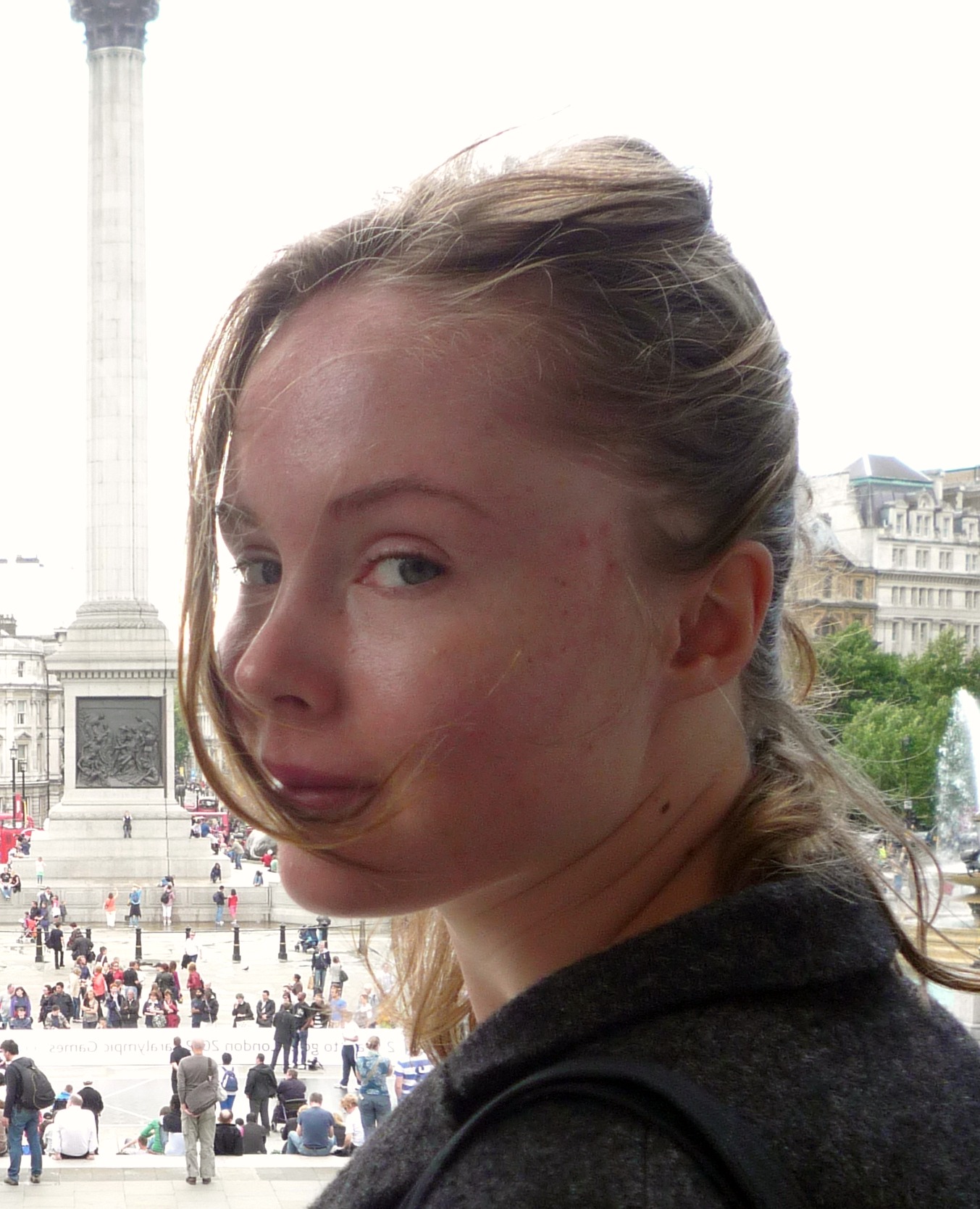
img: Charlotte Day surveying Trafalgar Square in London
12 NOMADS OF CHRISTMAS: Kate Reuterswärd, American expat in Sweden (12/12)

Current home: Lund, Sweden
Past overseas locations: Italy (Perugia) and Austria (Vienna) — both for six months
Cyberspace coordinates: transatlantic sketches (personal blog), Expat Blog (guest blog for Swedish Institute, a division of the Swedish government) and @kwise321 (Twitter handle)
Recent posts: “You’re Celebrating on the Wrong Day! — and other things you didn’t know about Christmas in Sweden” (Expat Blog: December 27, 2011); “Work makes me happy” (transatlantic sketches: December 29, 2011); “What a year!” (Expat Blog: December 31, 2011)

Where are you spending the holidays this year?
Actually, it’s my first Christmas outside the United States! I’ll be in Lund with my husband and his parents, his sister and her family, and some family friends. I’m looking forward to it.

What do you most like doing during the holidays?
In the US, I always looked forward to baking Christmas cookies and getting gifts for my family and friends. Sometimes my gifts are homemade, sometimes bought at a store, but I love brainstorming the perfect thing for someone. Here, though, the season is full of Christmassy activities: attending glögg parties, decorating the house with lights and going to Christmas markets. It’s the active part of the holiday season that I like the most in Sweden.

Will you be on or offline?
Totally online and hopefully Skyping with my family and friends on a regular basis.

Are you sending any cards?
My husband and I just got married and it was a sort of spur-of-the-moment decision, so we’re sending a combination Christmas/“Oh hey, we’re married!” card. We’ll be writing thank you’s to the people who were there and a little update to people who weren’t.

What’s the thing you most look forward to eating?
Panettone. My family eats this traditional Italian holiday bread for Christmas breakfast with fruit salad, coffee, and mimosas every year. They sell it in Sweden, too, so I’ll be introducing the tradition here.

Have you read any good books this year other expats or “internationals” might enjoy?
I have really enjoyed these two essay collections (though I have to admit that I haven’t finished either of them yet):
1) The Art of Travel, by Alain de Botton (Pantheon, 2002): A thoughtful contemplation on different aspects of travel. As de Botton says, “Few things are as exciting as the idea of travelling somewhere else, but the reality of travel seldom matches our daydreams.”
2) A Supposedly Fun Thing I’ll Never Do Again: Essays and Arguments, by David Foster Wallace (Little, Brown, 1997): His essay on taking a week long cruise in the Caribbean was so true and so funny that I laughed out loud at several points.

If you could travel anywhere for the holidays, where would it be?
No travel dreams for Christmas unless it were to assemble my family and my husband’s all in the same place at the same time. But for New Year’s Eve, I’d love to return to the countryside in County Cork, Ireland, where I went two years ago with a group of eight friends, one of whom has a cabin there. We would all hole up that cabin again to eat, drink lots of champagne, and welcome in the New Year.

What famous person do you think it would be fun to spend New Year’s Eve with?
Despite having attended some exciting New Year’s Eve parties in the U.S. and Europe, I’m not sure I would want to spend New Year’s Eve with a famous person I didn’t feel close to. That said, Dorothy Parker would be hilarious to sit next to at an event like New Year’s Eve — as long as she didn’t turn against me. I would just want to be a fly on the wall.

What’s been your most displaced holiday experience?
Two days come to mind — both having to do with the Fourth of July, not Christmas. The first was in 2010. I had flown back to the States for my friend’s wedding, and then on July 4th I had to fly back to Vienna to go back to work. I spent the entire day in the no man’s land of the Charlotte, JFK, Dusseldorf, and Vienna airports. (I am an extreme budget flyer.) Actually, I’m not sure whether this counts — I didn’t really experience a displaced holiday; I just missed it altogether.

The other time was July 4, 2009. I was spending the summer in Sweden with my then boyfriend (now husband) — my first extended stay in which I started to really get to know his friends and family. We tried to throw a 4th of July party, but something was off. We grilled, we had flags, we had Jell-o shots for a little novelty Americana, but there wasn’t any patriotism and there weren’t any fireworks. For me it felt like a regular barbecue party trying too hard to be something else rather than an actual holiday.

How about the least displaced experience — when you’ve felt the true joy of the season?
Again, it wasn’t Christmas but Thanksgiving, in 2010. I cooked a traditional Thanksgiving feast with all of my mom’s recipes for almost 30 Swedes. We borrowed a friend’s parents’ apartment to fit everyone in, and it was the coziest, most wonderful celebration. My husband downloaded the Macy’s Day Parade for me as a surprise and streamed it while we were cooking and eating. Best of all, one of my Swedish friends asked me halfway through the meal, “Aren’t we supposed to say what we’re thankful for?” I hadn’t wanted to force them to do that, but everyone got really excited about it, and the whole group took turns saying what they were thankful for in what turned out to be really beautiful toasts to the people in their lives. It was amazing.

How do you feel when the holidays are over?
Rested but a little bit sad. So much energy goes into enjoying the holiday season, anticipating Christmas and New Year’s, gift-giving, baking, merry making — and then suddenly it’s all over! And you’ve got all of January and February to slog through until spring is on its way again.

On the first day of Christmas, my true love said to me:
TWELVE STRANGE TRADITIONS,
ELEVEN CAMERAS CLICKING,
TEN SPROUTS A-BRUSSELING,
NINE CELLPHONES DANCING,
EIGHT WHOOPHIS WHOOPING,
SEVEN SKIERS A-PARTYING,
SIX SPOUSES TRAILING,
FIVE GOOOOOOOFY EXPATS.
FOUR ENGLISH CHEESES,
THREE DECENT WHISKIES,
TWO CANDY BOXES,
& AN IRISHMAN IN A PALM TREE!

STAY TUNED for Monday’s post, setting a new theme for the month’s posts on the connection between the displaced life and spiritual awakenings.

If you enjoyed this post, we invite you to register for The Displaced Dispatch, a round up of weekly posts from The Displaced Nation, with seasonal recipes, book giveaways and other extras. Register for The Displaced Dispatch by clicking here!

Related posts:

12 NOMADS OF CHRISTMAS: Janet Newenham, Irish internationalist (10/12)

Current home: Dublin, Ireland
Past overseas locations: Korea, Australia, South Africa
Cyberspace coordinates: Journalist on the run | Follow my adventures around the world (blog) and @janetnewenham (Twitter handle)
Most recent post: “Dear Diary — Laughter and Crocodiles” (January 3, 2012)

Where are you spending the holidays this year?
Spending Christmas at home in Cork for the first time in 3 years. (I am currently doing a Masters in Humanitarian Action at University College Dublin.) My dad has a vegetable farm so there will be Brussels sprouts galore!!

Had you gone abroad for the holidays, what would you have done first?
Look for a party!

What do you most like doing during the holidays?
I love the friend and family reunions. As everyone lives all over the world nowadays, chances are few for crossing paths with friends and even some family members.

Will you be on or offline?
Offline for the holidays — maybe curled up by the fire watching movies and drinking wine.

Are you sending any cards?
I LOVE snailmail, especially making personalized cards with photographs. Plus after Christmas I will have to hand write thank-you notes to my grandparents, aunts and uncles, as is the family tradition.

What’s the thing you most look forward to eating?
A full tin of chocolates!!

Can you recommend any good films or books other “internationals” might enjoy?
I liked The Whistleblower (2010, directed by Larysa Kondracki and starring Rachel Weisz) — about a peacekeeper in post-war Bosnia who outs a UN scandal. It portrays the kind of work I would like to get into after I finish my MSc.

While living in South Korea, I read Nothing to Envy: Ordinary Lives in North Korea, by the journalist Barbard Demick (Spiegel & Grau, 2009). By following the lives of six people who escaped from North Korea, Demick provides some fascinating insights into a country we know little about. I found it deeply moving.

If you could travel anywhere for Christmas +/or New Year’s Eve, where would it be?
Somewhere hot and sunny…so maybe back to Australia or South Africa for Xmas on the beach.

What famous person do you think it would be fun to spend New Year’s Eve with?
Charlie Todd, the guy who set up Improv Everywhere. Who knows what sort of New Year’s Even mischief he and I might improvise?

What’s been your most displaced holiday experience?
Christmas in Ethiopia, where they don’t actually celebrate Christmas. And, because they use a different calendar, it’s never Christmas there when it’s Christmas everywhere else. The Ethiopians were preparing to celebrate the millennium when it was September 2007 everywhere else!

How about the least displaced experience — when you’ve felt the true joy of the season?
Last year I was really settled into my life in Korea with a great group of expat friends, so even though we were abroad it felt like home.

How do you feel when the holidays are over?
Tired, hungover and broke!

On the first day of Christmas, my true love said to me:
TEN SPROUTS A-BRUSSELING,
NINE CELLPHONES DANCING,
EIGHT WHOOPHIS WHOOPING,
SEVEN SKIERS A-PARTYING,
SIX SPOUSES TRAILING,
FIVE GOOOOOOOFY EXPATS.
FOUR ENGLISH CHEESES,
THREE DECENT WHISKIES,
TWO CANDY BOXES,
& AN IRISHMAN IN A PALM TREE!

STAY TUNED for tomorrow’s featured nomad (11/12) in our 12 Nomads of Christmas series.

If you enjoyed this post, we invite you to register for The Displaced Dispatch, a round up of weekly posts from The Displaced Nation, with seasonal recipes, book giveaways and other extras. Register for The Displaced Dispatch by clicking here!

Related posts:

12 NOMADS OF CHRISTMAS: Iain Mallory, English adventurer (7/12)

Current home: Salford, UK
Cyberspace coordinates: Mallory on Travel | Making Everyday an Adventure! (blog) and @MalloryonTravel (Twitter handle)
Recent posts: “The ABCs of Travel — Reflections on a Wanderlusting Life”; “Adventure in Lucerne, Switzerland — Travel Journal”; Cologne: The Bridge of Love Locks (December 2011)

Where are you spending the holidays this year?
I have two trips planned before Christmas: Lucerne for a week and then Cologne for just a few days. That does not leave a lot of time to help with getting the dinner ready for the main day, so I guess Christmas will be spent in the doghouse.

What will you do when you first arrive?
In Lucerne, I’ll be exploring. Cologne is more of a social visit so the Christmas markets will get a battering — along with copious amounts of glühwein and bratwurst.

What do you most like doing during the holidays?
If in Europe, meeting friends for laughs and drinks on a cold evening at a small town Christmas market. But if anything goes, then careering down a piste on two planks of carbon fibre with a group of friends followed closely by plenty of après-ski.

Will you be on or offline?
This year as I’ll be home, I’ll be spending time online, though a little quieter on Christmas day.

Are you sending any cards?
My closest circle of friends will receive a card, handed to them personally at sometime over the festive period when we meet. As for those that I have gotten to know online, hmmm…anybody know a good online card site? I would need some news to produce a newsletter.

What’s the thing you most look forward to eating?
During my travels, I’ll be staying at a veggie house so most definitely looking forward to the turkey although I’ll have to go out for it myself, a day or so before the big day.

Can you recommend any good books other expats or “internationals” might enjoy?
I’ve always loved The Worst Journey in the World by Apsley Cherry-Garrard, about Scott’s final Antarctic expedition (Cherry-Garrard was the youngest member of Scott’s team and one of three men to survive the notorious Winter Journey). Any of the mountaineering books by Joe Simpson is worth reading. These days I don’t have that much time to read but when I do, I prefer mountain or exploration literature. I’m looking forward to finding some time to read The Mammoth Book of Adventures on the Edge, by Jon E. Lewis — a collection of 28 eyewitness accounts of climbing adventures on the world’s greatest mountains.

If you could travel anywhere for the holidays, where would it be?
Mount Everest or maybe Mount Erebus (in Antarctica) for skiing. And I really have to bring in the New Year in Sydney one day.

What famous person or persons do you think it would be fun to spend New Year’s Eve with?
Billy Connolly or Peter Kay would be the funniest people to party with over New Year; David Attenborough and Ranulph Fiennes would provide the most fascinating stories.

What’s been your most displaced holiday experience?
I like to think that it is possible to adapt to most cultures and environments and therefore fit in well, but if I had to pick anywhere, it is hard not to feel a little alien in India. Every day seems to throw up a new surprise that often can be quite shocking.

How about the least displaced experience — when you’ve felt the true joy of the season?
Any time when I’m surrounded by friends, it doesn’t matter where I am. The feeling is one of belonging and being completely at home.

How do you feel when the holidays are over?
Excited; the New Year always offers new opportunities and the potential to be an amazing year.

On the first day of Christmas, my true love said to me:
SEVEN SKIERS A-PARTYING,
SIX SPOUSES TRAILING,
FIVE GOOOOOOOFY EXPATS.
FOUR ENGLISH CHEESES,
THREE DECENT WHISKIES,
TWO CANDY BOXES,
& AN IRISHMAN IN A PALM TREE!

STAY TUNED for Monday’s featured nomad (8/12) in our 12 Nomads of Christmas series.

If you enjoyed this post, we invite you to register for The Displaced Dispatch, a round up of weekly posts from The Displaced Nation, with seasonal recipes, book giveaways and other extras. Register for The Displaced Dispatch by clicking here!

Related posts:

12 NOMADS OF CHRISTMAS: Santi Dharmaputra, Indonesian expat in Australia (6/12)

Current home: Sydney, Australia
Past overseas locations: Germany, USA, The Netherlands, Syria
Cyberspace coordinates: Trilingual: Indonesian, French, English | world trotters raising two multilingual kids (blog)
Most recent post: “”A Woman’s Work” (my article in The Jakarta Globe)” (December 23, 2011)

Where are you spending the holidays this year?
At my parents’ house in Indonesia.

What will you do when you first arrive?
Hugging and kissing my parents.

What do you most like doing during the holidays?
Spending time with family and old friends.

Will you be on or offline?
Online.

Are you sending any cards?
I usually write greetings on my FB wall or my blog.

What’s the thing you most look forward to eating?
Any kind of Indonesian food. Pineapple tarts (a festive Indonesian cookie) and kastengel (Indonesian cheese sticks) are among my favorite guilty-pleasures.

Can you recommend any good books other expats or “internationals” might enjoy?
Trailing wives — regardless of whether they are sojourners or seasoned expats — might appreciate:
1. A Broad Abroad: The Expat Wife’s Guide to Successful Living Abroad, by Robin Pascoe (The Expatriate Press, 2009)
2. A History of the Wife, by Marilyn Yalom (Harper, 2001)
These are two among many books that have made me feel more empowered. By reading widely, I’ve come to understand that (trailing) wives everywhere and in every era have struggled to find happiness, just as I have. 🙂

What’s been your most displaced holiday experience?
I spent part of my childhood in The Netherlands. I loved it when Sinterklaas visited our school and gave us presents. When my family moved to Syria, I was disappointed: no Sinterklaas! By the time I returned to Indonesia at age 11, I didn’t believe in Santa. To this day, though, I believe that Sinterklaas is the only real Santa (LOL).

How about the least displaced experience — when you’ve felt the true joy of the season?
Tricky. I’m an adult TCK married to another adult TCK, and we’ve continued moving around the globe in our adulthood. I can feel both displaced and part of a place at the same time. But if I had to pick one occasion, it would be when I witnessed my trilingual children celebrating the holidays with their paternal relations in Alsace, France. Their granny and great-granny spoiled them, and it was lovely to see my kids so happy. I felt very at home in my husband’s French family. At the same time, though, I felt displaced — I was missing my own family in Indonesia.

How do you feel when the holidays are over?
Also tricky, as it depends on where we happen to be. Last year we spent the holidays on our own, just the four of us. My husband was too busy working and had only two days off. I was left to entertain the kids during their six-week school break (in Australia, Xmas break is the equivalent of the long summer break in the Northern Hemisphere). At that time, we’d been living in Sydney for less than a year, so we spent most of the time exploring the beach.

When we were living in Munich, we spent two Christmases with my husband’s family in Alsace, and it was sad each time we left. As adult TCKs ourselves, my husband and I are used to living with our nuclear families, so it was a novelty to spend those two Xmases with the extended family, including my husband’s siblings and their kids. Our kids were even happier with their grannies and cousins around, and the same was also true of us (at least during holiday seasons ;)).

When living in Chicago, we tended to use the time between Xmas and New Year for road trips. Sometimes we were traveling in snowstorms — so were happy and relieved to arrive back home safely.

While we were in Holland, I worked as a lawyer and used to enjoy the Xmas dinner held by the office along with the generous Xmas bonus. But when I had to return to the office after the New Year, I did so rather reluctantly — LOL.

The last time I spent New Years in Jakarta was in 2001. My brothers, husband and I (we didn’t have kids yet) stayed at a hotel to celebrate New Year’s Eve. It was kind of sad to leave Jakarta to return to the winter season in Europe (we were in Holland then).

This year, we traded in Australian summer for the Indonesian rainy season. Temperature wise, though, there’s almost no difference. I guess our kids will be sad to leave their Indonesian grandparents and cousins when we go back to Sydney.

On the first day of Christmas, my true love said to me:
SIX SPOUSES TRAILING,
FIVE GOOOOOOOFY EXPATS.
FOUR ENGLISH CHEESES,
THREE DECENT WHISKIES,
TWO CANDY BOXES,
& AN IRISHMAN IN A PALM TREE!

STAY TUNED for tomorrow’s featured nomad (7/12) in our 12 Nomads of Christmas series.

If you enjoyed this post, we invite you to register for The Displaced Dispatch, a round up of weekly posts from The Displaced Nation, with seasonal recipes, book giveaways and other extras. Register for The Displaced Dispatch by clicking here!

Related posts:

12 NOMADS OF CHRISTMAS: Michelle Garrett, American expat in England (4/12)

Current home: Essex, UK
Cyberspace coordinates: The American Resident (blog) and @michelloui (Twitter handle)
Most recent post: A Crazy British Christmas Tradition (December 23, 2011)

Where are you spending the holidays this year?
At home in the UK.

What do you most like doing during the holidays?
Enjoying family time without trying to juggle work commitments.

Will you be on or offline?
Offline as much as possible!

Are you sending any cards?
I generally don’t send cards anymore. Often an email note, or a text, or a phone call depending on the person.

What’s the thing you most look forward to eating?
Cheese. I know, weird, right? I love the British cheeseboard and one of my favorite “meals” or courses is the cheese, crackers, and fruit such as pears or grapes, along with some lovely wine. I think I also love this course so much because people are generally relaxed after the main meal, everyone is chatting, laughing, and usually in good spirits.

If you could travel anywhere for the holidays, where would it be?
Somewhere warm. I’m not a fan of the cold. Although I do really love the look of snowy landscapes — I find them some of the most beautiful scenery anywhere.

What famous person do you think it would be fun to spend New Year’s Eve with?
Someone who would be so distracting I would forget about all else and just enjoy the evening…perhaps Russell Brand!

What’s been your most displaced holiday experience?
Strangely, it was when I went home (Minnesota, USA) for Christmas for the first time in 10 years. I felt out of place. I couldn’t remember if the Christmas traditions in my head were American or British. I wondered what everyone in Britain was doing.

How about the least displaced experience — when you’ve felt the true joy of the season?
My husband and I have started a tradition of hosting a Christmas Eve party for our closest friends. It’s a very causal affair, people drop by on their way to/from places and some stay for the whole three hours. The Christmas tree is up, presents are under the tree, the fire is roaring, everyone is drinking mulled wine, the kids are high on the sugar from their treats table in the den and start to sneak food from the buffet meant for adults, and everyone is relaxed and happy. This is the moment, surrounded by family and friends in my home, when I feel most at home, and when I feel the true joy of the season.

How do you feel when the holidays are over?
Exhausted! And a bit relieved.

On the first day of Christmas, my true love said to me:
FOUR ENGLISH CHEESES,
THREE DECENT WHISKIES,
TWO CANDY BOXES,
& AN IRISHMAN IN A PALM TREE!

STAY TUNED for tomorrow’s featured nomad (5/12) in our 12 Nomads of Christmas series.

If you enjoyed this post, we invite you to register for The Displaced Dispatch, a round up of weekly posts from The Displaced Nation, with seasonal recipes, book giveaways and other extras. Register for The Displaced Dispatch by clicking here!

Related posts:

12 NOMADS OF CHRISTMAS: Brian Peter, Scottish expat in Brazil (3/12)

Current home: Rio das Ostras, RJ, Brazil
Past overseas location: Houston, Texas, USA
Cyberspace coordinates: A Kilt and a Camera | Travel tales, reviews, photos, interviews and crazy goings on. Because you never know what’s going to happen (blog) and @KiltandaCamera (Twitter handle)
Most recent post: Brazil — “Getting to know Aldeia Velha,” by Peg Peter [Brian’s American photographer wife] (December 19, 2011)

Where are you spending the holidays this year?
In Houston.

What will you do when you first arrive?
Peg will arrive three weeks before I do, so the first thing I want to do is hug my wife. After that I’ll put my feet up and relax after the long flight from Rio for a few hours. That night we will spend the evening with good friends we haven’t seen in way too long.

What do you most like doing during the holidays?
Relax. We are living in Brazil while I’m working as a manufacturing and production manager in the oil and gas field. The growth in the industry has been enormous. I’ve been working long hours, and long weeks, for too many months. I’m going to turn off my phone, keep my laptop shut and switch my mind off.

So you’ll be offline?
Pegs is the Internet junkie of the team so I trust she’ll let me know if anything important happens out in cyberworld.

Are you sending any cards?
Peg will send a few Christmas cards for us. As for a Christmas letter, we do too many things and go to too many places each year to write something brief. Our family and friends who want to know more about what we’re doing can take a look at our Web site.

What’s the thing you most look forward to eating?
A bloody decent whiskey, and a tin of haggis. If I can find a good smoked mackerel, I’ll eat that too. I really wish I could get my hands on an Orkney black pudding.

Can you recommend any good books other expats or “internationals” might enjoy?
Because of work I haven’t had time to read a single book all year, unless you count industrial engineering books as a good read. But Peg always has her nose in a book. Right now she says she’s really enjoying Barbara Kingsolver’s The Poisonwood Bible. The sense of stepping into another world is something any traveler or expat can relate to.

If you could travel anywhere for New Year’s Eve, where would it be?
I’d love to do an Old Year’s Night in Comrie, a small village in the Scottish highlands. As I remember, its Hogmanay ritual starts in the evening with the kids in a fancy-dress parade riding on the back of a lorrie — a kind of float. That goes on until nearly midnight, when the whole community gathers at the bridge on the side of town near Oban and throws three flambeaux (flaming torches) over it into the River Earn. Then there’s a procession through the village with a pipe band leading the way — the villagers in the middle, the float bringing up the rear. When they reach the bridge at the other end of town, they throw the remaining flambeaux into the river. The whole thing is a ritual to protect the village from evil spirits for the year. Back in the center of town the party, including a céilidh, will go on for hours.

My sister has lived there for the past twenty years. Someday I’ll take Peg back there to show her how my family of Scots does an old fashioned Old Year’s Night properly.

What’s been your most displaced celebration of the holidays?
My first Christmas in Houston. I spent the day in shorts, roasting by the pool. It just doesn’t feel like Christmas without freezing your b*******s off.

How about the least displaced — when you’ve felt the true joy of the season?
Even though we live in Brazil, we always go back to Houston to spend the holidays with Peg’s kids. I’ve enjoyed the last few holidays with them, among new family, but I still don’t feel at home as much as I did back in Scotland– especially since I’m so far away from my own adult sons.

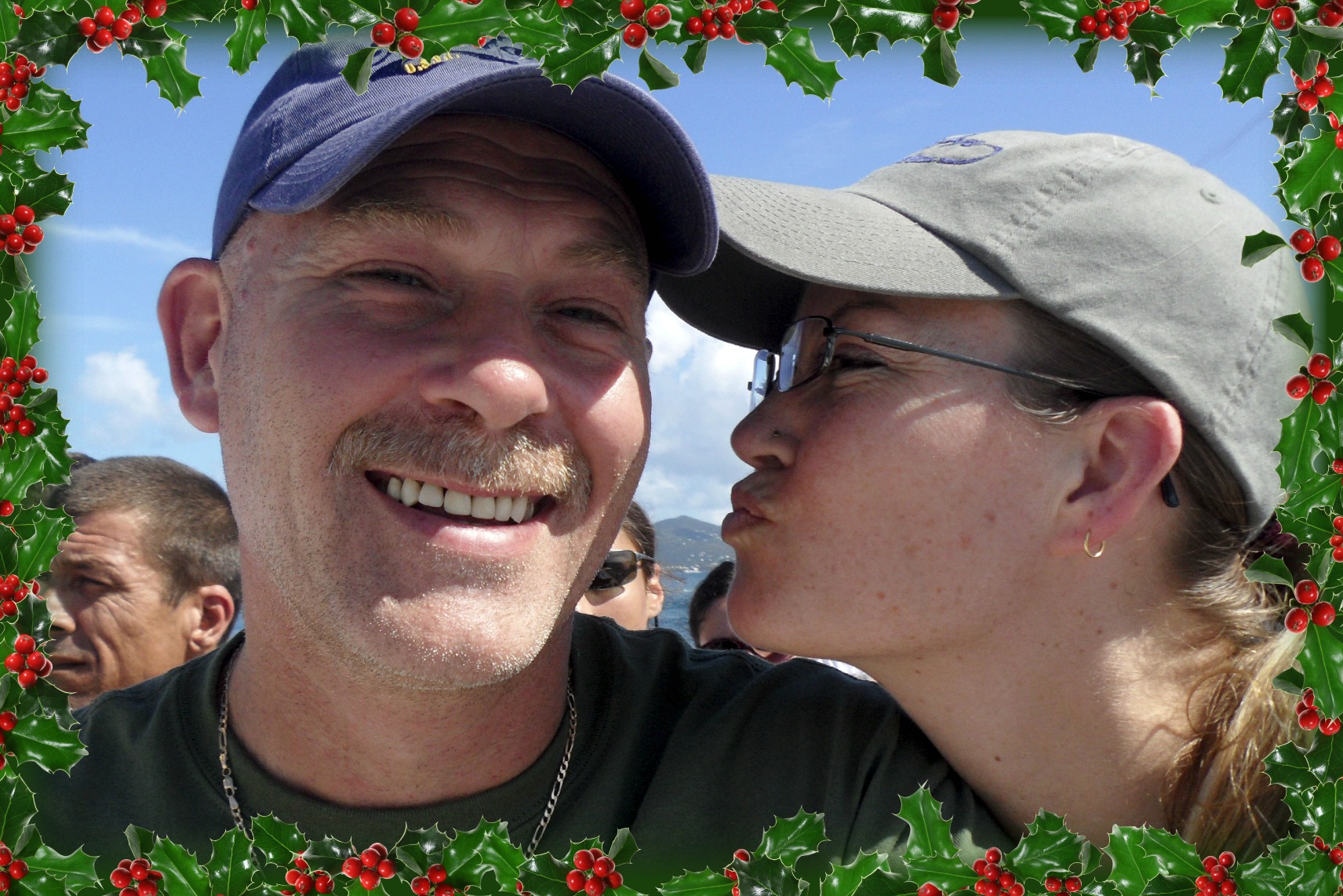
However, last year was a bit more exciting because Peg and I had a big secret plan between us. On Boxing Day we hopped on a plane and flew to the Caribbean. One long haul, three airports, three islands and one ferry later we arrived on St. John in the US Virgin Islands, where we eloped on the beach on December 28th. The photo above was taken of us on the ferry ride over to the courthouse in Charlotte Amalie to pick up our marriage license the day before. This year, of course, we’ll have our first anniversary!

How do you feel when the holidays are over?
It’s a bit anti-climactic. I start the new year with a long flight back to Brazil, which is a country we love living in, but it means back to work for a while. When my job is done there, we’ll have more time to travel when we please. In the meantime, we’ll enjoy as much of Brazil as we can. We both love to travel and look forward to the day when we can just keep going.

On the first day of Christmas, my true love said to me:
THREE DECENT WHISKIES,
TWO CANDY BOXES,
& AN IRISHMAN IN A PALM TREE!

STAY TUNED for tomorrow’s featured nomad (4/12) in our 12 Nomads of Christmas series.

If you enjoyed this post, we invite you to register for The Displaced Dispatch, a round up of weekly posts from The Displaced Nation, with seasonal recipes, book giveaways and other extras. Register for The Displaced Dispatch by clicking here!

Related posts:

12 NOMADS OF CHRISTMAS: Robin Graham, Irish Expat in Spain (1/12)

Current home: Tarifa, Spain
Past overseas locations: UK, Netherlands, Israel, and a previous stay in Spain
Cyberspace coordinates: a lot of wind… (blog) and @robinjgraham (Twitter handle)
Most recent post: “Gran Bretaña” (December 21, 2011)

Where are you spending the holidays this year?
In Hampshire, England. My mother lives there now with her husband, as does my brother and his family.

What will you do when you first arrive?
Once all the greetings are out of the way I may well go for a walk. I’ll be in the town where I spent my adolescent years and there will be memories and perhaps one or two stories for my fiancée, who will be visiting for the first time.

What do you most like doing during the holidays?
TV off, lights off. Candles on, perhaps a fire. To sit in the near dark and talk; to feel connected to all the people who are doing that around the world and to those who have done it down through the centuries. I am not religious but something about gathering with loved ones in the depths of winter seems to run deep.

Will you be on or offline?
I will tell myself to be offline and will fail. Lessline? Halfline? Online Lite?

Are you sending any cards?
Don’t do cards as a result of a selfish and entirely misspent youth. Not going to start now.

What’s the thing you most look forward to eating?
Tricky. I don’t have much of a sweet tooth. If there’s goose I’ll be happy. Roast potatoes never hurt either.

Can you recommend any good books other expats or “internationals” might enjoy?
Ghosts of Spain (2008) is an account of a journalist’s (Giles Tremlett‘s) trips around the country in search of its hidden history, particularly with regard to the civil war and Franco era, and how the country has changed since that era ended with his death in the mid-seventies. It fills a gap that I would have thought was there for many expats in many countries; a chance to get under the skin of your adopted country in your own language.

Foreign Flavours is the second anthology from the online writers group Writers Abroad. The theme is food (and drink) as experienced by the expat, and the collection is nothing if not varied — from short stories to journalistic pieces to recipes; it’s a real kitchen companion. All of the proceeds from the book go to the Book Bus, a registered charity that aims to provide books to and increase literacy rates among children in the developing world.

If you could travel anywhere for Christmas, where would it be?
I was brought up on the premise that an ideal Christmas would involve snow and reindeer, so the notion of an isolated but cosy log cabin in the woods of Lapland has a distinct appeal. Family around me — great. Just my fiancée — better.

What famous person do you think it would be fun to spend some time time with over the holidays?
Richard Dawkins. We could pontificate on the merits of an atheist world view whilst getting tipsy on eggnog, pigging out on Advent chocolates and singing Christmas carols. I hear he does a mean rendition of “Silent Night,” and I’m sure he’d be good company.

What’s been your most displaced Christmas experience?
I spent one Christmas entirely alone in Holland. Broke. Cue violins — it was an episode in that misspent youth I mentioned. My least Christmassy Christmas.

How about the least displaced experience — when you’ve felt the true joy of the season?
When I was a child most Christmas cards, cookie tins and cake wrappers would, for some reason, feature images of snow-laden Bavarian countryside. Castles and cutesy villages with snowy candlelit windows in the darkness. So to find myself in Bavaria a few years ago with my fiancee’s folks, watching families sled down a nearby hill in the evening, attending midnight mass in a 14th century church with an exquisitely painted ceiling, sitting in the house with candles and glühwein and stollen; that would have to be the one that ticked all the boxes for me.

This Christmas coming will be special, too — a family gathering such as there hasn’t been for long time.

How do you feel when the holidays are over?
Honestly? Relieved, ready to get on with it!

On the first day of Christmas, my true love said to me:
AN IRISHMAN IN A PALM TREE!

STAY TUNED for tomorrow’s featured nomad (2/12) in our 12 Nomads of Christmas series.

If you enjoyed this post, we invite you to register for The Displaced Dispatch, a round up of weekly posts from The Displaced Nation, with seasonal recipes, book giveaways and other extras. Register for The Displaced Dispatch by clicking here!

Related posts:

DISPLACED Q: Where and how would you spend your ideal Christmas?


For the last 14 years, we have spent Christmas in Connecticut. It sounds ideal – it’s the name of a classic Christmas film, for goodness’ sake – yet recently, more and more, I’ve wished to spend the festive season elsewhere.

By ‘elsewhere’ I don’t necessarily mean Olde England. Although I may be overtaken by the occasional yearning to spend a foggy afternoon in a pub while Slade and Wizzard bellow Christmas songs in the background, the feeling usually passes after two aspirin and ten minutes in a darkened room.

No; now that youngest child is healthily skeptical and I don’t have to invent elaborate fibs about how Santa Claus is going to track us down at another location, more and more I would prefer to spend Christmas somewhere — well, warmer. Much warmer. Maybe in another hemisphere, even.

But (someone is bound to say) you’re in New England! You have White Christmases!

It’s cold, certainly. But white? Not really. Of the fourteen Christmases here, only one has been properly white. While we have snow, and lots of it, the timing is always spectacularly bad. In any case, any aesthetic pleasure in snow is dimmed by the worry of whether the power lines will collapse before or after the beef comes out of the electric oven, and if it will be necessary to raid the kids’ Christmas toys for batteries for flashlights.

Speaking of my kids, they’re a traditional lot. They like Mum’s roast beef and Yorkshire puddings (the British roast turkey was shelved long ago when it became apparent that you can have turkey for Christmas or Thanksgiving, but not both) and my last suggestion of being anywhere but Smalltown, Connecticut on December 25th was met with howls of distress.

Christmas in Aruba? Barbados? Cancun? You’d think I’d suggested Christmas In The Workhouse.

I showed the kids a photo of Santa-hatted people frolicking in the waves at Bondi Beach.

“Doesn’t this look great?” I pleaded.

One of them sniffed. “Christmas is meant to be cold,” he said.

Cold outside with the central heating turned up to 75 degrees, that is.

“How about Disney World?” suggested another. “It’s supposed to be really nice at Disney at Christmas.”

OK, I can see a couple of advantages: above-frigid temperatures, and fake snow that won’t cut your electricity off. The disadvantages: too many to enumerate, but enduring a Disney Character Christmas Dinner would come top of the list and make me wish that either we or Mickey and friends were, indeed, spending Christmas In The Workhouse.

So, in the absence of family enthusiasm for an alternative location, I guess visions of sugar-plums will stay in Connecticut, while my own visions of barbecued shrimp under waving palm trees will just have to stay hold for a little longer.

I’ll keep working on it. Maybe next year.

QUESTION: Where would you spend your ideal Christmas?

STAY TUNED…for Tuesday’s Classic Displaced Writing, when Anthony discusses — who else, at this time of year? — Charles Dickens.

If you enjoyed this post, we invite you to subscribe for email delivery of The Displaced Dispatch, a round up of the week’s posts from The Displaced Nation. Sign up for The Displaced Dispatch by clicking here!

Related posts: