The Displaced Nation

A home for international creatives

Category Archives: Cool Columns

TCK TALENT: Wendy Laura Belcher, best-selling author, memoirist, and distinguished scholar of her adopted cultures

wendy-l-belcher-tck-collageWelcome to the third installment of “TCK Talent,” Elizabeth (Lisa) Liang’s monthly column about adult Third Culture Kids who work in creative fields. As some readers may recall, Lisa—a Guatemalan-American of Chinese-Spanish-Irish-French-German-English descent—has written and performed a one-woman show about being a Third Culture Kid, or TCK. It debuted in LA in the spring, and I had the pleasure of seeing it during its too-short run in New York City last month. It was stupendous!

—ML Awanohara

Greetings, readers, and thanks, ML, for that vote of confidence in my work. But it cannot compare to the output of today’s guest, a woman of extraordinary talents. Wendy Laura Belcher is a professor of African literature at Princeton University as well as a published memoirist, produced playwright, popular workshop leader, and author of the best-selling Writing Your Journal Article in Twelve Weeks: A Guide to Academic Publishing Success.

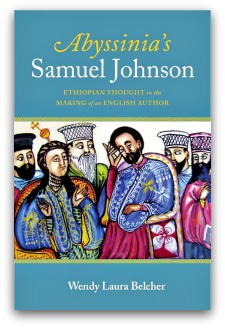
Wendy grew up in Ethiopia, Ghana, and the USA, and has been a writer since childhood. Her most recent book, Abyssinia’s Samuel Johnson: Ethiopian Thought on the Making of an English Author, is a finalist for the African Studies Association’s 2013 Ogot Award (to be announced in Baltimore at the end of next month).

* * *

Welcome to The Displaced Nation, Wendy, and thank you for joining us. I’ve known you for years and yet don’t know as much as I should about your TCK childhood, so am happy to take this opportunity to learn more. You are the daughter of an American dad and a Canadian mom. What’s the story behind why your family moved to Ethiopia and Ghana?
My father is a physician and my mother always loved to travel, so she convinced him to move to Ethiopia. Her idea was that he would teach and do clinical work at a public health college in Gondar, and she would be the college librarian. My first memories are of Ethiopia. I moved back to the US when I was 14. But my specific geographical trajectory is as follows: Philadelphia (birth), Boston, Seattle, Gondar (Ethiopia), Seattle, Accra (Ghana), Seattle, and South Hadley (Massachusetts). After that I lived in Tamale (Ghana). Then back to Washington DC, Accra, Los Angeles, Princeton, Addis Ababa (Ethiopia), and now Princeton again.

That’s an impressively peripatetic life! When and where were you happiest while growing up?
As a child, I loved Ethiopia the best, perhaps because it was the first place my family went and perhaps because, as a child who loved reading, it seemed like a magical place. There was a castle in my backyard as well as oxen threshing grain like in the Bible. On the throne was a descendant of King David. From a child’s perspective, it was like living in a book.

How did you find your first “repatriation” to the United States, at age 14?
I never got used to Seattle, it was very parochial in the 1970s when we moved there, and the weather was too gloomy for someone who had spent a significant part of her childhood in the tropics.

At home, but without a role, in Africa

Has your relationship to Africa evolved as an adult?
As an adult, I settled in the US and not Africa, returning to Africa only a few times until 1997, after which I started going every third year or so. Since 2009, I’ve gone every year to Ethiopia. I thought I might settle in Africa, but as an adult my relationship with Africa was more vexed.

That is, what could my role in Africa be as a white American woman?

I wasn’t particularly interested in “helping,” as it seemed to me that Africans were perfectly adept at solving their own problems and only didn’t do so because of all the “help” they received from the West.

But also, I was in a bind. In the US I often didn’t feel a strong sense of calling in my work, but I felt more satisfied emotionally. In Africa, I felt a strong sense of calling in my work, but I was often lonely.

The problem for me as an adult in Africa as a single woman without children was the lack of female friendships. In the 1980s and 1990s I found it difficult to find in Africa other career women like myself with whom I would have something in common.

One of the reasons I’ve found it easier to return to Ethiopia and have done so regularly in the recent past is that I’ve found some good Ethiopian female friends.

Where do you think of as “home” these days?
My mother always thought that my father never really had a sense of home as a particular place, because he had an identical twin brother. It was the presence of one other human being from the beginning that meant home was someone to him, not somewhere. He didn’t really know what loneliness was, she thought.

I may be somewhat similar albeit for different reasons. I don’t think of anywhere as home.

I lived in Los Angeles for 20 years and loved many things about it, but I mostly think of it as a place where my network of affection is. It isn’t the place so much but the people who make it a kind of home.

At the same time, I still have good friends in Seattle, and my family of origin is still there, so it is also a kind of home.

Are you like many TCKs in finding yourself drawn to people of similar backgrounds?
Almost all my friends are people who live straddling some boundary: either geographically, being from elsewhere or spending significant time outside the US, or racially (growing up as minorities). I am almost never in a room with people who mostly look like me.

Writing calls from an early age

I often wonder if TCKs who pursue writing careers do so because the story is entirely in their hands as opposed to the experienced upheaval of their itinerant childhoods. Did your TCK upbringing influence a) your desire to be a writer and b) what you wrote about?
Growing up in Africa, I was surrounded by literary culture. In Ethiopia, a country with a 3,000-year-old written civilization, people read illuminated manuscripts on sheepskin bound with wood. In Ghana, hand-written epigrams adorned most vehicles, and my father’s Ghanaian colleagues traded bon mots in Latin. At school, I would pick a promising library shelf and work my way through it from left to right. I wrote my first novel when I was nine, titled Shipwrecked at Silver Lagoon. I had set myself the task of writing the best title for a book ever and, after I came up with this, decided it was too good to go unwritten. It was about two English girls in the 17th century who, after their ship is wrecked off the American coast, go on to discover what happened to the disappeared colony of Roanoke: it had moved into an underground, underwater kingdom. The book ground to a halt on page 40, perhaps because, as I tried to articulate issues that were all too real to me (the loss of home and the entry into the hybrid colonial world), my imagination foundered on the demands of the adventure form.

After that, I wrote for my middle school and high school newspapers, where I was the editor.

I was shy, partly due to all the moving and not being sure how to fit in, so I spent most of my time reading. Reading allowed me to immerse myself in a world where I could watch and not be watched (or judged). It also allowed me to develop skills in “reading” people and situations, which is essential to surviving so much moving.
HoneyfromtheLion_coverTell us what drew you to write your memoir, Honey from the Lion: An African Journey, when you were in your twenties.
I had enough credits to graduate from Mount Holyoke in three years so I spent my junior year back in Ghana. While working for a nonprofit organization that was spreading literacy and translating the Bible into local languages, I spent a weekend in a village with an Irish Bible translator. A series of events transpired, the impact of which was so powerful I decided I wanted to write about it. It was a gift: the story was so fascinating that I didn’t worry about writing it. Even if I wrote it poorly, I thought people would find it compelling.

Do you ever go back to the memoir now, and if so, does it resonate very differently due to the passage of time?
I can’t bring myself to read the book now. It seems like a different self wrote itsomeone who was more religious for one.

Congratulations on Abyssinia’s Samuel Johnson being selected as a finalist for a prestigious academic award. Please tell us what inspired you to write the book.
Belcher_AbyssiniaSamJohnson_coverIn 2002, I was talking with an Ethiopian friend about reading Samuel Johnson’s Rasselas, an eighteenth-century fiction he wrote about an Ethiopian prince. This Ethiopian friend surprised me by saying that he had read the book and quite liked it. When I asked him why, he said the book was “very Ethiopian.” I started to correct him, but then I began to wonder if he could be right, if a book written by a European could be Africanin particular, if it could be animated by African discourse. It’s my hope that my book will be convince others about the importance of African thought to the European canon.

From offering TCK courses at Princeton to helping junior faculty

At Princeton you teach courses that I wish had been offered when I was in college, like “Growing Up Global: Novels and Memoirs of Transnational Childhoods” and “Model Memoirs: The Life Stories of International Fashion Models.” You also teach workshops around the world to aid faculty in publishing academic articles. Please tell us the countries in which you’ve taught the workshops.
The workshops have taken place in Norway, Sudan, Malawi, Ethiopia, Indonesia, Canada and all over the USA.

What led you to teach academics about how to write for publication?

belcher_writingyourjournalarticle_coverI did two master’s degrees in the early nineties and I struggled in writing my classroom papers. What did these professors want and why did some papers succeed and others didn’t? I decided not to go on for a doctorate and when people asked me why, I said I just didn’t feel like I got the hang of being a graduate student and in particular about how to write in graduate school.

To my surprise, I found that most other graduate students felt the same way and were as confused and uncertain as I had been. Then UCLA Extension asked me to teach a writing class. I had always sworn I would never teach, but I think you grow when you do things you are terrified of, so I agreed and found that three of my first six students were academics looking for help with their writing.

UCLA Extension agreed to let me restructure the next class around writing for academic journals. The restructured class was a massive success and changed my life.

Within a few years I was teaching “Writing and Publishing the Academic Article” twice a year at UCLA to graduate students, where the class was in great demand, as well as at other universities and institutes around the world. I wrote the workbook Writing Your Journal Article in Twelve Weeks: A Guide to Academic Publishing Success for people who could not take the workshop.

Turning back to your writing, can you tell us what you are working on at present?
I have several writing and translation projects; here are the top three:
1) The Life and Struggles of Our Mother Walatta Petros: A Translation of the Earliest African Biography of an African Woman. Thirty years after the death of a revered African religious leader who led a successful nonviolent movement against European incursions, her Ethiopian disciples (many of whom were women) wrote this vivid book, full of dialogue and drama. The original text, which was written in 1672 by Africans for Africans in an African language, is unknown in the United States (Walatta Petros does not have a Wikipedia entry, for instance). Thanks to the Fulbright US Scholar Award that I held during my third year at Princeton, I was able to spend ten months in Ethiopia devoting myself to archival research. I worked on the translation with Michael Kleiner, a leading scholar and translator of Ge’ez. We believe it will electrify the fields of early modern and gender studies.
2) The Black Queen of Sheba: A Global History of an Ethiopian Idea. Those familiar with the sixth century BCE biblical tale of the Queen of Sheba’s visit to King Solomon may be surprised to hear that there is also an Ethiopian version, variations on which have in fact circulated for centuries, far beyond the Ethiopian highlands. According to the medieval text Kəbrä Nägäśt, the biblical Queen of Sheba was an Ethiopian woman—the wisest, the wealthiest, and the most powerful woman in the world. Tricked by Solomon into sleeping with him, she gives birth to their biracial son, who later takes the Ark of the Covenant to Ethiopia forever. My book traces how the Ethiopian tale came about and the impact it had on not just literature but the world. The emergence of the religion of Rastafari is one of its most far-reaching effects…
3) A Wardrobe of Selves: The Literature of Transnational Childhoods. Based on my life experiences, observing those of my TCK friends, and reading lots of memoirs, I am thinking of writing a book about memoirs by those who have spent their childhood crossing boundaries (in terms of culture, nation, state, language, gender, school, etc.). It would attend to how the narrators like Barack Obama, John McCain, Edward Said, Eva Hoffman, Gloria Anzaldua, Diana Abu-Jaber, Alice Kaplan, Gene Luen Yang, and Mohsin Hamid construct meaningful identities through narrative. These writers—usually considered separately, as part of American ethnic literatures like Arab American, African American, Asian American, or Latino—often negotiate the intricacies of identity in similar ways and should be considered together. That is, this would be a broad comparative project on diasporic memoir in the context of American ethnic literature.

* * *

Thanks, Wendy! You are so prolific, it’s an inspiration to all of us creatives! If we could accomplish just a fraction of what you’ve already done, what a life we’d be leading! Readers, any questions or comments for the amazing Wendy? Please leave them below. And…see you next month!

STAY TUNED for tomorrow’s post, when we hear from an international traveler who has started up her own business in New York City, catering to expats.

If you enjoyed this post, we invite you to register for The Displaced Dispatch, a round up of weekly posts from The Displaced Nation, with seasonal recipes, book giveaways and other extras. Register for The Displaced Dispatch by clicking here!

Related posts:

Images: Wendy Belcher; Wendy with her brother in front of a castle in Gondar, Ethiopia; detail from the cover of Wendy’s latest book, Abyssinia’s Samuel Johnson.

LOCATION, LOCUTION: Paulo Coelho, on the monuments that immortalise cities

2010-26In this month’s “Location, Locution”, expat crime writer JJ Marsh talks with Paulo Coelho, the Brazilian best-selling author of The Alchemist, The Devil and Miss Prym, and The Witch of Portobello, among many others.

*  *  *

When I asked Paulo Coelho to take part in the “Location, Locution” concept, he was happy to oblige.

But he wanted to do it his way. So in a change to our usual format, here’s Paulo Coelho on place.

The moving monument

I have visited many monuments in this world that try to immortalize the cities that erect them in prominent places. Imposing men whose names have already been forgotten but who still pose mounted on their beautiful horses. Women who hold crowns or swords to the sky, symbols of victories that no longer even appear in school books. Solitary, nameless children engraved in stone, their innocence for ever lost during the hours and days they were obliged to pose for some sculptor that history has also forgotten.

And when all is said and done, with very rare exceptions (Rio de Janeiro is one of them with its statue of Christ the Redeemer), it is not the statues that mark the city, but the least expected things. When Eiffel built a steel tower for an exposition, he could not have dreamed that this would end up being the symbol of Paris, despite the Louvre, the Arc de Triomphe, and the impressive gardens. An apple represents New York. A not much visited bridge is the symbol of San Francisco. A bridge over the Tagus is also on the postcards of Lisbon. Barcelona, a city full of unresolved things, has an unfinished cathedral (The Holy Family) as its most emblematic monument. In Moscow, a square surrounded by buildings and a name that no longer represents the present (Red Square, in memory of communism) is the main reference. And so on and so forth.

Perhaps thinking about this, a city decided to create a monument that would never remain the same, one that could disappear every night and re-appear the next morning and would change at each and every moment of the day, depending on the strength of the wind and the rays of the sun. Legend has it that a child had the idea just as he was … taking a pee. When he finished his business, he told his father that the place where they lived would be protected from invaders if it had a sculpture capable of vanishing before they drew near. His father went to talk to the town councilors, who, even though they had adopted Protestantism as the official religion and considered everything that escaped logic as superstition, decided to follow the advice.

Another story tells us that, because a river pouring into a lake produced a very strong current, a hydroelectric dam was built there, but when the workers returned home and closed the valves, the pressure was very strong and the turbines eventually burst. Until an engineer had the idea of putting a fountain on the spot where the excess water could escape.

With the passing of time, engineering solved the problem and the fountain became unnecessary. But perhaps reminded of the legend of the little boy, the inhabitants decided to keep it. The city already had many fountains, and this one would be in the middle of a lake, so what could be done to make it visible?

And that is how the moving monument came to be. Powerful pumps were installed, and today a very strong jet of water spouts 500 liters per second vertically at 200 km per hour. They say, and I have confirmed it, that it can even be seen from a plane flying at 10,000 meters. It has no special name, just “Water Fountain” (Jet d’Eau), the symbol of the city of Geneva (where there is no lack of statues of men on horses, heroic women and solitary children).

Once I asked Denise, a Swiss scientist, what she thought of the Water Fountain.

“Our body is almost completely made of water through which electric discharges pass to convey information. One such piece of information is called Love, and this can interfere in the entire organism. Love changes all the time. I think that the symbol of Geneva is the most beautiful monument to Love yet conceived by any artist.”

I don’t know how the little boy in the legend would feel about it, but I think that Denise is absolutely right.

© Translated by James Mulholland

www.paulocoelhoblog.com

Read JJ Marsh’s 2011 interview with Paulo Coelho for Words with JAM magazine

Next on Location, Locution: Janet Skeslien Charles, author of Moonlight in Odessa

* * *

JJ Marsh grew up in Wales, Africa and the Middle East, where her curiosity for culture took root and triggered an urge to write. After living in Hong Kong, Nigeria, Dubai, Portugal and France, JJ finally settled in Switzerland, where she is currently halfway through her European crime series, set in compelling locations all over the continent and featuring detective inspector Beatrice Stubbs.

STAY TUNED for next week’s posts!

If you enjoyed this post, we invite you to register for The Displaced Dispatch, a round up of weekly posts from The Displaced Nation, with seasonal recipes, book giveaways and other extras. Register for The Displaced Dispatch by clicking here!

Related posts:

Image: Paulo Coelho, 2010 – PauloCoelho.com, used with permission.

GLOBAL FOOD GOSSIP: Keeping food real in Brazil

JoannaJoanna Masters-Maggs, our resident repeat-expat Food Gossip and Creative Chef, is back with her column for like-minded food lovers, which includes pretty much every expat we’ve ever encountered. This month: Authenticity, Brazilian-style.

* * *

“What’s the most depressing thing I’ve seen this morning?” I demanded of my husband as we arrived at our hotel on that first day in Brazil.

Was it something in my tone of voice that made my husband stick out his jaw? Having your wife positive about a new location is always a good thing. Any hint of wifely discontent can put the terrors into most expat husbands, even the most rufty-tufty oil field types.

“The favelas on either side of the motorway for the entire journey from the airport?” His voice had a slight tone of —  could it be? — belligerence. He’d decided to meet head on what he feared was my Western European squeamishness over visible poverty. I’d agreed to come, after all; it wasn’t his doing that the favelas existed.

“Oh.” I felt a pin pricking my outrage. “Actually no. It was the model of the Statue of Liberty outside the shopping mall we passed, the one with the Hard Rock Café.”

Not the voice of a woman with a strong social conscience, then.

“Aren’t we in Brazil?” I asked lamely.

Living in the shadow of the USA

In my defense, I was afraid that this most exciting and culturally rich of countries appeared in thrall to the ego of a foreign superpower. Here, where Christ the Redeemer looks down calmly over Rio and Guanabara Bay, it distressed me that he was unable to turn his cheek from the abominable reproduction Liberty. Such are the drawbacks of being made of stone.

My frustration really hadn’t abated much by the time we left several years later, but it was tempered. Here was a country that had its own great music, landscape, history and food. Brazil’s son Santos Dumont’s first flight had been overshadowed by the earlier but aided take off of the Wright Brothers’ heavier than air plan.

But surely the same could not happen to Brazilian fast food – and at their own hands?

Coxinha  — wins the Pepsi Challenge against the Chicken McNugget, any day

When I was in Brazil, workers could fill a canteen with beans, rice, a little meat and some pasta for 5 reais. A meal from McD costs four times that and cannot keep a belly as full for as long. Yet not only was there a Hard Rock Café, Dominos and McDonald’s, but the bloody Statue of Liberty to boot, holding her torch triumphantly aloft as if lighting the invasion of foreign fast food. (I know, I need to get over that tacky statue.)

Brazilian fast food choices, which can be grabbed on the run in a similar way to a hamburger, are extensive. Kibe consists of meat and bulgur wheat shaped into rugby balls and deep-fried. Empadhinas are little pastry pies often filled with palm hearts but options are endless. There are bollinhas de arroz (rice balls) and, a slightly more costly option these days, bollinhas de bacallao (salt cod).

Then there is the coxinha. Oooh, heaven. It is a pear-shaped, breadcrumb-coated, deep-fried confection of pulverized chicken, creamy catupiry cheese, and onion. I don’t want to be rude, but for heaven’s sake, Brazil — how could you choose a chicken nugget over that?

Please. It’s time for a Coxinhas R Brazil brand to sweep all before it.

Turn the milk sour with your grouse? Or simply dance the samba?

Brazilians probably have a greater openness and sense of fun than I do. They seem to tolerate kitschy statues and dodgy food for what it is, just a bit of fun not to be taken as a serious threat to national pride. There is a great deal of pride in being Brazilian and, I’m told, there are as many Americans trying to emigrate to Brazil as vice versa – it is a new land of opportunity.

Brazilians seem less sulky or passive aggressive than many in dealing with what they don’t like. One amusing example came in the immediate aftermath of 9/11 when America required passengers arriving on planes to America from Brazil to be subject to the same security searches, and delays, as planes coming from countries deemed a threat. Brazil has no history of terrorism and people were offended. However a cheerful approach was chosen. Officials simply decided to apply the same principle to American planes landing in Sao Paolo, Brazilian style. To ease the pain of the wait, passengers were treated to smiling samba bands and charming dancers. Nothing was ever going to change, but the point was made and relations not permanently soured.

A meal fit for a (Burger) King

Perhaps this non-confrontational approach is best. The invasion of American fast food is all-conquering everywhere. Its advance hasn’t been slowed by a thousand angry French farmers and restauranteurs, or by the Italian Slow Food movement. But its growth in Brazil alongside a rapidly emerging obesity crisis comes alongside economic improvements. According to a recent BBC Programme on the rise of obesity around the world and particularly in developing and BRIC countries, the answer is to be found less in the innate appeal of the food, but in the message that is sent out when you’re seen eating it. McDonald’s is an “aspirational food”.

(You might notice that I started a new paragraph rather suddenly. It was to give you a moment to recover from the shock of seeing the words “McDonalds” and “aspiration”, not only in the same sentence, but right next to each other. The idea of being proud to be seen eating fast food is a difficult one that takes time to absorb. I too enjoy the odd foray into the depths of culinary depravity, but I hide the bags – I admit hypocrisy right here. May I continue now?)

You might think you would aspire to a Wolf oven or even a Meile vacuum cleaner, but McDonald’s? No — bear with me. A Brazilian McDonald’s meal costs four times that of a plate of rice and beans. Its cost would buy you any number of coxinhas. It is impressive conspicuous consumption. You pay to eat a meal which won’t actually fill you and you will have to pay to eat again soon after, but the point is: you can.

It’s a fairly modest aspiration for the new middle class. Thousands of Brazilians have been lifted out of poverty over the last 10 years. But potential hunger is still a recent memory and the fear of slipping back must be strong for many. An outrageously priced Big Mac is still less expensive than a ritzy restaurant in Leblon and it’s certainly easier to avoid potentially embarrassing etiquette gaffes for those not yet accustomed to what is known in America as “fine dining”. This is what fast food companies can trade on, and before you know it, new habits are formed.

If you’re going to gain Brazilian pounds, make them worthwhile

Why get fat on this so-so food, though, when you can get gloriously fat on real cooking? You can easily pile on the pounds with Brazilian feijoida, Let the weight gain be a result of leisurely, indulgent meals and not sandwiches grabbed in plastic furnished, fluorescent lighted “restaurants” that are tiled like public lavatories.

I’d say the same to America. Ditch the McD and get fat on Southern and Soul Food, some of the most luscious food in the world. Wow, those Southerners know how to take a healthy low-calorie green vegetable and give it the cholesterol punch of cheesecake. My two personal favourites: collard greens cooked in fatty port cuts and sweet potatoes mashed with butter and topped with a crumble made of brown sugar pecans and a handful of marshmallows. Sounds appalling, but it is the closest thing to ambrosia since Zeus was a viable god to worship.

Both Brazilian and American Soul food has the opulence and indulgence to deaden and dazzle the senses at the same time. It has what a dried up hamburger and flabby white bun bread cannot hope to rival even with liberal dollops of ketchup.

Oh please. Get fat on real fat and be patriotic about that: your nation’s fat.

Make it worth your while.

Make it worth your money.

Aspire.

* * *

Joanna was displaced from her native England 16 years ago, and has since attempted to re-place herself and blend into the USA, Holland, Brazil, Malaysia, Venezuela, Saudi Arabia, and now France. She describes herself as a “food gossip”, saying: “I’ve always enjoyed cooking and trying out new recipes. Overseas, I am curious as to what people buy and from where. What is in the baskets of my fellow shoppers? What do they eat when they go home at night?”

Fellow Food Gossips, share your own stories with us!

STAY TUNED for tomorrow’s post!

If you enjoyed this post, we invite you to register for The Displaced Dispatch, a round up of weekly posts from The Displaced Nation, with seasonal recipes, book giveaways and other extras. Register for The Displaced Dispatch by clicking here!

Related posts:

LOCATION, LOCUTION: Liza Perrat on writing a location to life

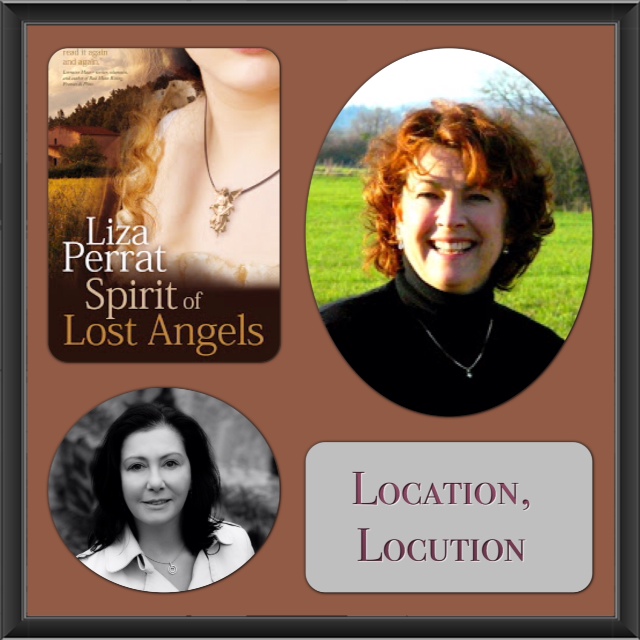
Liza Perrat visualIn this month’s “Location, Locution”, expat crime writer JJ Marsh interviews  Liza Perrat, author of Spirit of Lost Angels.

Liza grew up in Wollongong, Australia, where she worked as a general nurse and midwife for fifteen years. When she met her French husband on a Bangkok bus, she moved to France, where she has been living with her husband and three children for twenty years. She works part-time as a French-English medical translator.

Spirit of Lost Angels tells the story of Victoire Charpentier and her courage in facing injustice and abuse in revolutionary France. Wolfsangel (due out in November 2013) follows Victoire’s descendant, Celeste, who finds that under Nazi occupation, the personal is political.

*  *  *

Which comes first, story or location?
So far, for me, it has been location. I’m enthused, enthralled or nostalgic about a place, and want to use it as a backdrop around a story. In the case of my current novels, the location has become as much a character as the real-life ones.

How do you go about evoking the atmosphere of a place?
My novels are set in the French rural area in which I live, which makes it much easier to evoke atmosphere. I take loads of photos of the countryside, the people and the buildings, during each different season. The local historical association has lots of sketches and documents on what it looked like through the ages. As I walk the dog, I jot down descriptions of sunrises, sunsets, stormy light, fruit on the trees, snow on the hills, flowers in spring and the icy river in winter.

Which particular features create a sense of location? Landscape, culture, food?
Landscape, culture and food, certainly. But most of all, for me, it is the people who create a sense of location. Often, the people are the place. Also language, especially expressions, plays a part. Architecture too, gives a feel for a place. Smells also, create a sense of location.

How well do you need to know the place before using it as a setting?
Intimately well. I’d have trouble creating a believable atmosphere if I’d not been to a place, or at least read widely on it.

Could you give a brief example from your work which you feel brings the location to life?
Many reviewers of Spirit of Lost Angels commented positively on the atmosphere created of La Salpêtrière asylum in Paris, during the late 1700s:

… I found the scenes of cruelty in the Salpêtrière Asylum painful to read – not because of the way in which they were written, but simply to have been shown such unpalatable truths …

… the section of the novel concerning Victoire’s stay in La Salpêtrière vividly illustrates what a horrible experience it must have been…

… part of the reason I waved to savour this book so much was because of the scenery and the settings…

The book vividly depicts the violent and inhumane methods doctors used to “treat” mental illness at Salpêtrière. To me, this was perhaps the most fascinating portion of the story- descriptions of the appalling conditions under which the women were kept, the rivalries that developed among cell mates, the rules one had to learn in order to survive this prison. The narrative was stark and believable and, believe it or not, educational. Since I’ve finished the book, I’ve been looking up the history of the Salpêtrière Hospital, intrigued at how low mental health care and the care of women had deteriorated at that time. Introducing an urge to learn more, dear readers, is the mark of excellent historical fiction.

Which writers do you admire for the way they use location?
Ones that come to mind:

  • Stef Penney’s The Tenderness of Wolves. Even more amazing as, apparently, she’s never been to the wilderness snowscapes of Canada.
  • Joanne Harris’s Chocolat evokes the small French village.
  • Nikki Gemmell’s Cleave and Kate Grenville’s The Idea of Perfection, describe so well the desolate landscape of central Australia.
  • Jennifer Worth’s Call the Midwife brings to life 1950s East End London.
  • Emma Donoghue’s Room brilliantly portrays an entire existence in a single, small room.

Thank you, Liza!

Next month, my guest on Location, Locution will be Paulo Coelho, author of The Alchemist, The Devil and Miss Prym and Eleven Minutes

* * *

JJ Marsh grew up in Wales, Africa and the Middle East, where her curiosity for culture took root and triggered an urge to write. After living in Hong Kong, Nigeria, Dubai, Portugal and France, JJ finally settled in Switzerland, where she is currently halfway through her European crime series, set in compelling locations all over the continent and featuring detective inspector Beatrice Stubbs.

STAY TUNED for next week’s posts!

If you enjoyed this post, we invite you to register for The Displaced Dispatch, a round up of weekly posts from The Displaced Nation, with seasonal recipes, book giveaways and other extras. Register for The Displaced Dispatch by clicking here!

Related posts:

TCK TALENT: Diahann Reyes is in her element as writer, actor & storytelling coach

DiahannReyes_headshot_pmWelcome to the second installment of “TCK Talent,” Elizabeth (Lisa) Liang’s monthly column about adult Third Culture Kids who work in creative fields. As some readers may recall, Lisa—a Guatemalan-American of Chinese-Spanish-Irish-French-German-English descent—has written and performed a one-woman show about being a Third Culture Kid, or TCK. (It debuted in LA in the spring and is coming next week to NYC!)

—ML Awanohara

My guest today is Diahann Reyes, a professional writer/actor who is launching a new blog, writing a memoir, and beginning an additional career as a writer’s editor/coach. Diahann grew up in six countries, worked as a journalist for CNN before becoming an actor, and currently lives in Los Angeles, California.

Growing up here and there and everywhere

Greetings, Diahann, and welcome to the Displaced Nation. I understand you’re the TCK child of Filipino parents. Can you fill us in a little more: why did your family move around and which countries did you live in as a kid?
My dad was a marketing expat. I learned how to speak English with a Kiwi accent in New Zealand, discovered my love for books in Argentina, rode my first camel in Pakistan, went through puberty in the US, attended junior prom in the Philippines, and graduated from high school in Indonesia.

Of all those cultures, did you identify with one in particular?
Like you, I’m a “mash up” of the different cultures I’ve lived in. Living in America for most of my life now, I feel most at home here, which is its own kind of cultural mishmash. In my twenties, I realized that I had to pick one of my “home” cultures as my main one or I’d continue to feel ungrounded. I also identify with particular subcultures that aren’t necessarily considered mainstream, such as the artist culture.

Where and when were you happiest while growing up?
My family’s two years in Argentina were some of my happiest, probably because my mom, dad, sister, and I were all so excited to be living in a new country together. Moving to a different culture was still an adventure of which I had yet to grow weary. Also, at age 8, I was still very much myself and hadn’t been impacted yet by the pressures of puberty and the need to fit in.

What lies beneath the surface…

Speaking of puberty and the female body brings me to the launching of your new blog, Stories from the Belly: A Blog About the Female Body and Its Appetites. What inspired you to begin it and what can followers look forward to from the blog?
For women especially, there are so many truths, emotions, and desires that we tend to suppress: they get buried deep down in our bodies. My blog is my way of excavating this buried inner emotional landscape. I want to talk about the female body in ways not normally touched upon in mainstream media. My blog will include personal stories as well as commentary on relevant current events.

You’ve been working on a memoir. Is it specific to a time and place in your life?
Yes. My memoir is about my latest “move,” only this time rather than going to live in a new country, I’ve spent the last decade “moving into” and learning how to fully inhabit my own body. Location-wise, I take the reader across the globe to some of the places I’ve lived growing up, but the main action takes place in my body.

What themes are you exploring?
The story I tell is absolutely personal, but it does touch on a lot of bigger ideas involving the female body and its objectification and how this can impact a woman’s relationship to herself and others. Desirability, cultural assumptions, sexuality, power, pleasure, and wholeness are some of the through-lines in the book.

Owning who she is

On your website you describe how you fell in love with reading and acting. Did you always know you would pursue both of these interests as careers, or did you struggle with the decision?
I knew I wanted to be a writer from the time I could read, but it took me a long time to own that this is who I am, in part because the grownup me couldn’t imagine that my younger self could just “know” this. Still, writing has been the primary way I’ve made a living—as a TV news writer, an editor, a ghostwriter, and now a blogger, so I guess I didn’t need to know I was a writer to be one.

The decision to act was tougher. I didn’t start to pursue acting until my 30th birthday, and by then I had established a pretty good career in journalism and online media, so I was giving up a lot to change focus. But acting was like this siren calling to me, saying “act, act, act.”

You and I grew up reading many of the same (mostly American and British) authors: Ingalls Wilder, L’Engle, Cleary, Blyton… I remember the day I realized I would never get cast as Jo in any theatrical production of Alcott’s Little Women because I was a girl of color. Did you ever have a moment like this, and if so, which beloved character(s) and book(s) or play(s) did you realize you wouldn’t get to explore as an actress?
I always thought I could be anyone because while growing up I’ve had to be a chameleon. “Adapt and assimilate and fit in” was one of my mantras as a global nomad. But when I got to LA and started auditioning, I realized that I would never be able to play certain characters because I was the wrong ethnicity or type. I was primarily limited to not even Asian parts but Latina roles because I look more Hispanic than Southeast Asian. This meant that I was likely never going to play Maggie from Cat on a Hot Tin Roof or Caroline Ingalls in any future Little House on the Prairie remake, and parts that were for people of my actual ethnicity were out, too. Fortunately, the industry has changed, and more minorities are getting cast outside of ethnicity and stereotype.

What sorts of roles are you attracted to now?
I love parts that call for emotional depth and angst.

I wonder if one of the reasons we’re writers is that we have more autonomy to tell stories than we do as actresses?
I love that I can write what I want—I don’t need anyone to “cast” me first. And I can create characters that aren’t limited by ethnicity or type. I am thinking of creating a solo show that would probably require me to write and play different characters.

I understand you also write poetry. What drew you to that?
I kept diaries growing up and would process my feelings through poetry. With both nonfiction and poetry, I can just be myself. After so many years of working hard at adapting and assimilating to fit in, getting to just be me on the page is a relief.

Helping others to own their stories

You’re about to begin a new endeavor as a writer’s editor/coach. What inspired you to follow this new path?
I know what it is like to have something to say and to struggle with fully expressing my truth—especially when the fears come up—and I want to help other writers overcome these obstacles so they can get their stories out there. I want to work with people who are just as engaged in their process as they are in having a finished product.

What are you looking for in a student/client?
I work with nonfiction writers, bloggers, storytellers, and essayists, and other people with writing and online content projects. Healers and people with unusual business ideas like to work with me, too.

Do you have any other projects coming up?
I hope to publish my memoir next year. The film Out of Her Element, in which I play a therapist with a pill addiction, will premiere soon.

* * *

I must congratulate Diahann on her exciting new ventures, which I believe will resonate with people working in creative fields—and with female travelers and TCKs, especially! Readers, please leave questions or comments for Diahann below.

STAY TUNED for tomorrow’s post, when Andy Martin will talk to Mark Hillary about his new book, Reality Check: Life in Brazil through the Eyes of a Foreigner.

If you enjoyed this post, we invite you to register for The Displaced Dispatch, a round up of weekly posts from The Displaced Nation, with seasonal recipes, book giveaways and other extras. Register for The Displaced Dispatch by clicking here!

Related posts:

img: Diahann Reyes

GLOBAL FOOD GOSSIP: How (not) to feed a convalescent expat

JoannaJoanna Masters-Maggs, our resident Food Gossip, is back with her column for like-minded food gossips.

This month: The state of worldwide hospital food.

* * *

“The last thing you need on top of everything else when you are in hospital is red wee.”

So ended my husband’s texted tirade after a few days in an Abu Dhabi hospital following an emergency appendectomy which turned out to be less than straightforward.  The indignities, pain, and discomfort could be handled with fortitude, but the food had caused the British stiff upper lip some serious challenges.  Beetroot was served at every meal and in every conceivable form — none of which was remotely welcome to this convalescent.

Almost unbelievably, the day after my husband was admitted to a Middle Eastern hospital, my 9-year-old son was diagnosed with the same condition and admitted to Taunton Hospital, in Somerset, England, for the same operation.  Patrick took it all in his stride, only threatening mutiny when a disposable bottle, apparently made of the same recycled cardboard as egg cartons, was proffered in response to his request to go to the loo.  With furious determination he heaved himself upright  and made his way to the bathrooms, wheeling his drip ahead of him and making my heart swell with maternal pride.

Several hours later, when wrinkled potato wedges and bright orange fish fingers confronted him, Patrick’s attitude was rather different.  My husband’s texted complaint lacked the colour a human voice could give the words.  My son’s anguished “Why, why, why?” however, provided a glimpse of  The Husband’s state of mind when he composed his text.  The pitch of “Why can’t I just have a tuna sandwich?”  swung from already-stressed contralto to end-of-tether soprano.

KISS: Keep It Simple, Sandwich

This question is one I ask myself every time I face airline food.  Why not a sandwich? A simple sandwich is perfect food for those on the go; ask any hill-walker. It is easily transported and eaten and requires little in the way of tableware.  It certainly beats sub-standard wannabe home-cooking, or, more depressingly, wannabe gourmet cooking.  KLM used to do a nice sandwich on granary, a little oatcake and a good cup of tea or coffee on their London to Schiphol shuttle.  I have never enjoyed airborne eating as much.  Flights since, even champagne-soaked upgrades, have never hit the spot as well.

Hospitals, like airlines, are susceptible to the curse of being the girl who tries too hard at parties and embarrasses everyone, for different reasons of course.  Airlines because they feel they are part of the same package as the business trip or holiday and have to provide something special.  Hospitals, being in the health business. feel under pressure to produce something healthy and balanced.  Easy healthy and balanced is a lump of protein, a lump of carbohydrate and some boiled veg.  Each element can be whatever is readily to hand in the locale.  Obviously, beetroot is easy to come by in Abu Dhabi – who’d have thought?

A few years ago I found myself admitted with an unpleasant stomach bug to a hospital in Kuala Lumpur.  During my recovery, meal after meal was placed in front of me,  each consisting of overdone, indigestible chicken in glutinous sauce with rice and boiled vegetables. (Never talk to me again about English food.) Not appetizing at any time, but certainly not in the recovery period.  At the end of day two I was begging for cream crackers and jelly.  Even if I was unable to eat them, they were easier to tolerate the look of in the post-prandial two hours that the staff took to remove the debris.

The Victorians –now, they knew how to run a sickroom

When I’m sick I crave the ideal Victorian sickroom.  I want chicken soup, broth, and little crustless sandwiches cut into triangles.  I want food that makes me feel pampered and I want it in miniature form.  What I don’t want is big hunks of meat that I have to take a hacksaw to.  I don’t want to bother with a knife and fork.  I’d like little sips of water, or tea and maybe the odd ginger biscuit.  Some soft-boiled eggs and soldiers (fingers of toast) would be nice too.  In short, give me the whole Victorian sickroom vibe complete with flowery china and a little vase of flowers.  Do that and I’ll put on a white nighty, brush my hair and smarten up my convalescent act accordingly.

What explains this wanton disregard for dainty and light in preference for The Undigestibles? I suggest it is because hospitals the world over want us out, and want us out fast. In cash-strapped UK NHS land, beds are at a premium and waiting lists must be kept down.  Make things too comfortable and delicious and who knows how long malingering patients will stay?  I also imagine American insurance companies would like to minimize the number of nights their customers spend in hospitals which are often more costly than excellent hotels.

If you can’t keep it simple, keep it real

So, what’s my point talking about all this in our “displaced” world?  I suppose it is simple, really.  I want any experience that takes place outside of my own country to be distinctive and of that place.  If a hospital cannot, or will not, convert its menu into something I might find in Little Women, I want to lose my appetite for something distinctive.  If I have some indescribably unpleasant stomach complaint and find myself again in hospital in KL, I want to be unable to eat Malaysian food, truly Malaysian food.  If I’m not eating, give me beef rendang to reject and not boiled chicken breasts.  If I am in Rio, I want to lose my appetite for black beans and chiffonade of couve (actually, that will never happen) and if I ever end up in a  Abu Dhabi hospital, I want to reject grated raw beetroot.

You see, be it Victorian pampered convalescent on a chaise longue, or expat overseas, I yearn to feel special when I am sick.  Is that really too much to ask?

* * *

Joanna was displaced from her native England 16 years ago, and has since attempted to re-place herself and blend into the USA, Holland, Brazil, Malaysia, Venezuela, Saudi Arabia, and now France. She describes herself as a “food gossip”, saying: “I’ve always enjoyed cooking and trying out new recipes. Overseas, I am curious as to what people buy and from where. What is in the baskets of my fellow shoppers? What do they eat when they go home at night?”

Fellow Food Gossips, share your own stories with us!

Image:

STAY TUNED for tomorrow’s post!

If you enjoyed this post, we invite you to register for The Displaced Dispatch, a round up of weekly posts from The Displaced Nation, with seasonal recipes, book giveaways and other extras. Register for The Displaced Dispatch by clicking here!

Related posts:

For travel addict & photography lover Milda Ratkelyte, a picture says …

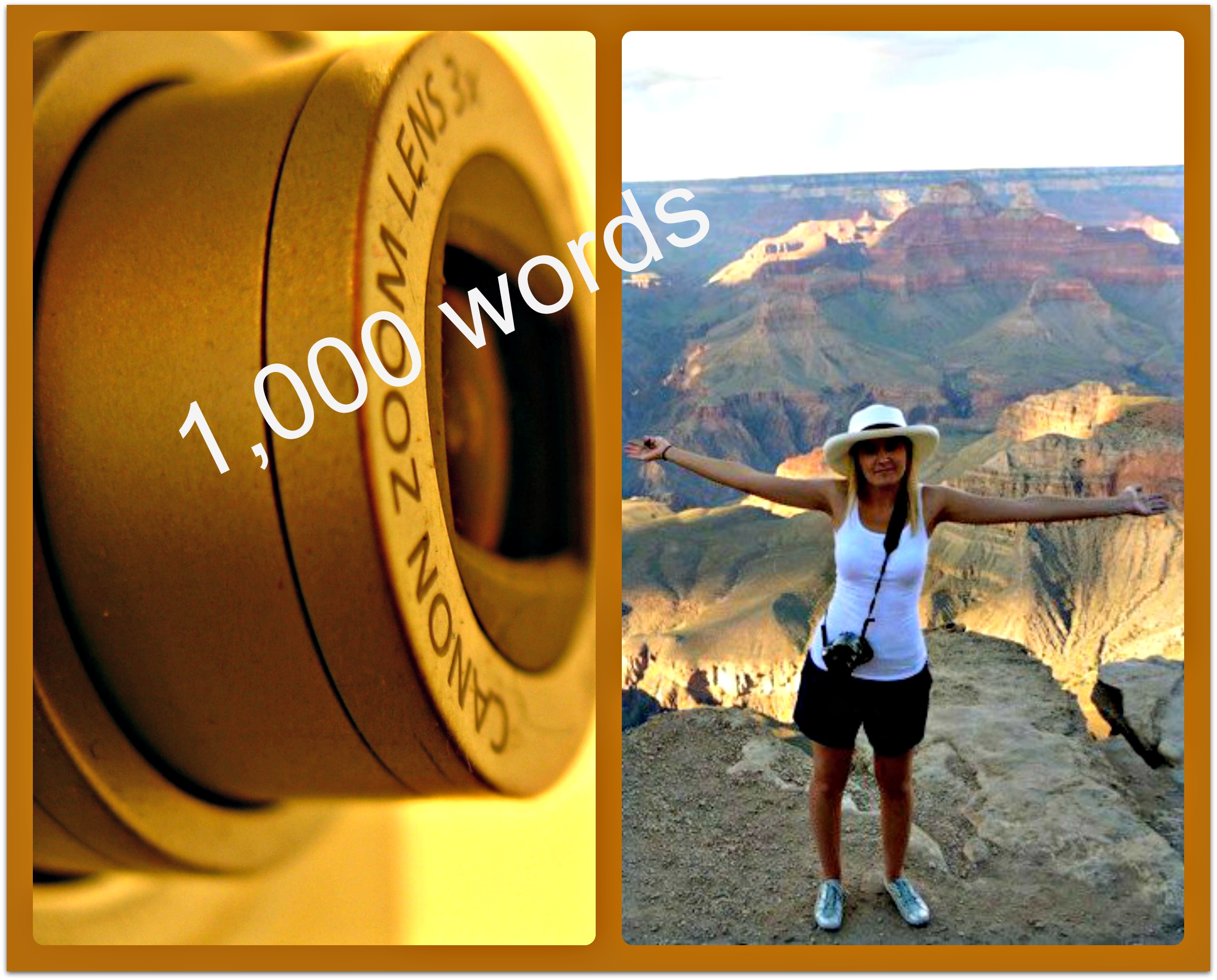
Milda M CollageWelcome to the second installment of “A picture says,” a series that sheds light on the people who move through our planet with a camera in hand, registering the look, character, and ambiance of people and places that capture their fancy.

Our guest today is Milda Ratkelyte, a camera-happy Lithuanian whose wanderings have taken her to the UK, America and now Asia.

Here are Milda’s vital travel statistics:
Place of birth: Lithuania
Passport: Lithuanian
Overseas history: From least to most recent: United Kingdom (London): 2005-2008; China (Wuhan, Shanghai, Beijing): 2008-2009; United States (California, Colorado, New York): 2009-2010; United Kingdom (London): 2010-2011; Singapore: 2011-present.
Occupations: Travel Community Manager at AsiaRooms.com and owner of Milda Ratkelyte Photography
Social media coordinates:
Twitter: @MildaRatkelyte
Facebook: Milda Ratkelyte Travel
Instagram: @milda_ratkelyte
Google+: Milda Ratkelyte

And now let’s meet Milda and find out: which came first, the photography obsession or the peripatetic life?

Kenyan curiosity

Hi, Milda. Let’s talk a bit about your travels. You are originally from Lithuania but have spent a considerable amount of time in other countries and now live in Singapore. Tell me about how that came about, and what inspired your moves.
I had the most amazing childhood in Lithuania. I was very lucky, because my dad was a true travel fanatic. Back then it was not easy for us Lithuanians to go traveling to remote destinations outside of Europe, but my dad found a way to get us to Kenya for a summer. From that time on, I was addicted to travel, and have been wandering the world ever since. “Explore, discover and get to know different cultures and people around the world”that’s become my mantra.

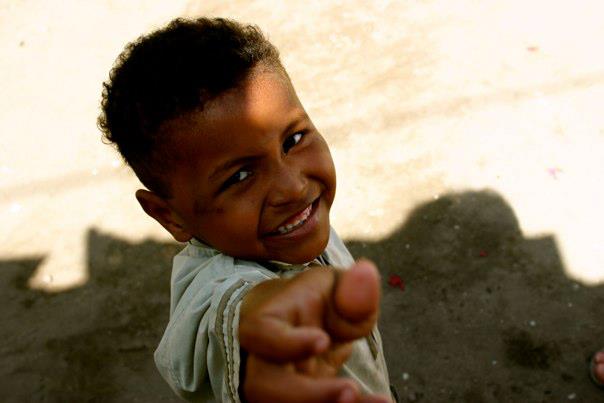
Boy reaching for candyKenya sounds amazing. Can you share with us one of the photos from that trip?
I like this shot of a boy reaching for what he hoped would be candy. It’s from the early days of my camera experience, but I love it because it’s just so natural. There was no set up, no preparation. I was wandering the streets of the Watamu village, looking for the school where I was volunteering, when a group of kids ran towards me asking for candies. I didn’t have any on me, but I had a pack of pencils that I was carrying to the school, so I gave them out and decided to take a photo of the group. As I was setting up the shot, this boy ran from the end of the street. Noticing something was being given away, he squeezed through other kids and jumped right in front of the camera.

Asia calls!

How did you end up in my native land, the UK?
When I graduated from high school, I knew that I want to do something travel related. I enrolled in an International Tourism Management course at the University of Bedfordshire in the UK. For my work placement, I was sent to work in China for the Shangri-La Hotels and Resorts, which gave me the chance to explore some other Asian destinations such as Hong Kong and Singapore. I fell in love with Hong Kong and told myself that once I graduated, I would definitely be coming back. However, when that moment occurred, reality kicked in: I could not get a visa for Hong Kong. I’d decided to stay in London when an opportunity to work for a major events company in Singapore suddenly landed on my doorstep. I had my bags packed in a few days and was on the 14-hour flight to Singapore.

How do you like Singapore?
I’ve been in Singapore for two-and-a-half years already and absolutely love it. Mostly, because it’s the most convenient spot in Asia travel wise. In just two hours I can be in Bali, Hong Kong, or Thailand. And Malaysia is just an hour’s bus drive away.

Luck strikes again

On your blog you say you were “one lucky girl” in finding your current position as a Community Manager for AsiaRooms, a site for booking hotels throughout Asia. Tell us how that opportunity came about and how it fits into your life ideals and love of travel.
When I moved to Singapore, I was working for an events company in the oil and gas industry. While I loved the thrill of closing huge deals, I had no life. The hours were long, with weekends in the office and sales calls at all times of the night. After about half a year, I missed having time to travel, take photos, explore and discover! I started looking around for something in the travel industry, and that was when I got introduced to my current boss, who mentioned that AsiaRooms.com were looking to hire a Community Manager. It was a dream come true. Today I can definitely say I love my job! I have been working on the launch of AsiaRooms.com Community site together with an amazing team, and we’ve already achieved some incredible results. I have also gotten a chance to study and have completed MatadorU’s Travel Writing and Photography courses. But most importantly, I’m getting to work with some amazing and talented photographers, filmmakers, writers and musicians in Asia and across the world while traveling a lot! This year I will finally tick off all the places on my bucket list for Asia.

Passionate about photographybut not equipment

On your blog you say that you love photography “and being able to freeze a particular moment in time, so when things in life change you have the one thing, one memory that never will.” What are the shots that capture some of your favorite memories? And what made them so special?
It is hard to say which ones are my favorites since there are just so many of them, and every trip I make is special. But if I had to choose, I’d pick the photos from the trip to Kenya such as the one above. That was the first time I got exposed to a truly different environment. It was also the first time I experimented with my DLSR, which was a present from my dad. My dad passed away unexpectedly last year, and I feel sad that I’ll never get to travel with him again. But having those photos reminds me of him and of the reason I started traveling.

What kind of camera and lenses do you use?
I have a Canon 300D with two Canon lenses: 18-55mm and 70-300mm. When I was doing a short weekend photography course, my tutor joked: “This girl is truly passionate about photography and not equipment.” My camera was so old it did not have half of the functions they were using during the course!

But although the camera has huge sentimental value, I think I will need to invest in a new one soon, since I have started MatadorU’s Travel Filmmaking course and will need a camera that can capture video.

A “no holds barred” approach to people as subjects

Where have been your favorite places to take photographs? Any particular shots stick out as being amongst your favorites?
My two favorite spots are Myanmar and Japan: Myanmar, for its amazing people, who are always smiling, and the colors of its markets, nature and city life, as well as incredible sunsets and sunrises over the ancient city of Bagan; Japan for its nature, culture and architecture. The old streets of Kyoto, the underground cafes and restaurants in Tokyo, hip people in the Harajuku district, lush greenery and deer in Nara, and bamboo groves in ArashiyamaJapan is just naturally photogenic.

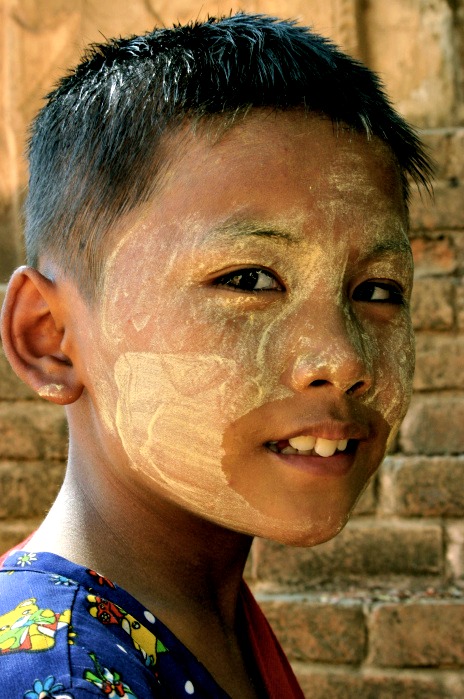
ThanakaBoy_mmIn your shots of Myanmar, I noticed one of a young child. Tell me about how that shot came about and what exactly is going on!
It was taken in Bagan, Myanmar, which is full of the remains of temples and pagodas. That particular morning we’d grabbed our bikes and were exploring the terrain, when I was approached by this young kid trying to sell me his drawings for a dollar. They were crayon drawings of the temples, neatly packed in plastic bags. The boy spoke almost no English, but soon he became my little tour guide, showing me around all the ruins. After our little tour we sat on the old dusty stairs at one of the temples, and while he was trying to tell me more about the place, this perfect photo opportunity appeared. I just love the look in his eyes.

I often feel very reserved about taking photos of people, particularly when they are conscious that I am doing so. Are you the same?
I used to be very reserved about it, but at the same time I knew that this was a major obstacle if I want to progress with my travel photography. I think I came to realize that after traveling around with my boyfriend, who is also a photographer and who has never had hang-ups about this! He doesn’t find it difficult to go straight to someone and ask them to take a photo. At the beginning I used to stay back and watch him, but when I saw how his shots turned out, I realized I needed to overcome this barrier.

Do you ask permission before taking people’s photographs?
It was hard at the beginning, because the truth is you will get a lot of people who will just tell you NO, but at the same time you will get the few that will be very nice to you. I guess my main advice would be to definitely ask them first, and if they don’t agree, leave it! If they do agree, have a little chit chat with them to ease the atmosphere and, once you take the shot, show them how the photo looks, I’ve noticed a lot of people appreciate that!

But how do you get around the inevitable problem of language barriers?
Well, I always try to learn at least few words in the local language before I visit country, like “please,” “thank you”, “hello”, etc. As for the rest, I just point to the camera, then at the person, and smile 🙂 Usually this works—and trust me, the results will be worth the effort.

Parting shots…

Finally, do you have any advice for wannabe photographers (like me) who are traveling or living abroad?
1. Never leave your camera at home. The truth is, some of the most amazing photos are from the moments that come out the blue. It doesn’t have to be an incredible place, it might just be the street you walk down every day. Even if it’s just your iPhone camera, have something at hand.
2. Don’t let rejections stop you from achieving your dreams. I must admit, I have been trying to pitch different publications, blogs, magazines, etc for over a year and all I got were either unpaid opportunities or rejections. And it’s hard to keep motivated, when someone says that your photos are not good enough. But I’ve carried on pursuing my dream and finally, a year later, I am getting paid assignments and, what’s even more important, people are finally starting to look for me and not me for them. As a Community Manager at AsiaRooms.com, I source the photo and video content myself, so I get about 30 pitches a day from very talented people. The roles are reversed: I am the one who is telling someone that we will not be publishing their work. However, in most cases, it’s not because their photos are not good, it’s because the industry is so competitive and businesses like ours can choose only the very best. Knowing this helps me to deal with my own rejections.

Thank you, Milda! Readers, what do you make of Milda’s advice on shooting people? And do you have any further questions for her on her photography, travels, or anything else? Please leave them in the comments!

STAY TUNED for next week’s fab posts!

If you enjoyed this post, we invite you to register for The Displaced Dispatch, a round up of weekly posts from The Displaced Nation, with seasonal recipes, book giveaways and other extras. Register for The Displaced Dispatch by clicking here!

Related posts:

Images (from left): Camera lens from Morguefile; Milda Ratkelyte reveling in her Grand Canyon moment. All other photos by Milda Ratkelyte

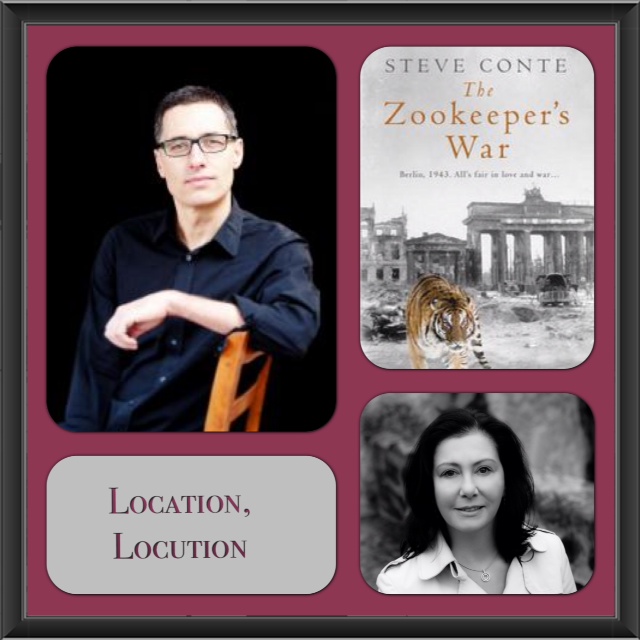
LOCATION, LOCUTION: Award-winning author Steven Conte, bringing location to life through writing

steven conte visualIn this month’s “Location, Locution”, expat crime writer JJ Marsh interviews  Steven Conte, the Melbourne-based author of The Zookeeper’s War. The setting is the Berlin Zoo, 1943. An Australian woman, Vera, and her German husband, Axel, the zoo’s director, struggle to look after the animals through the air raids and food shortages.

In 2008, The Zookeeper’s War won the inaugural Australian Prime Minister’s Award for Fiction, then worth A$100,000. The Zookeeper’s War has been published in Britain and Ireland and translated into Spanish and Portuguese. Barman, life model, taxi driver, public servant, book reviewer and university tutor are some of the jobs with which Steven has supported his writing.

*  *  *

Which comes first, story or location?
For me this depends on the project. The city of Berlin was definitely the initial inspiration for The Zookeeper’s War, in particular the atmosphere of enclosure and entrapment which I sensed there three years before the Berlin Wall came down. While I chose to set my novel in the Berlin of WWII, the Cold War tensions I had witnessed there in 1986 helped me to imagine what it might have felt like to live through the twelve terrifying years of the Third Reich. It was only after the novel was published that I realised I had chosen a setting which has powerful, indeed mythic, associations for many readers (some other examples being New York, Paris, London and, in the east, Hong Kong and Shanghai).

How do you go about evoking the atmosphere of a place?
Stimulating the reader’s senses is the most reliable way, though in a realist narrative a character needs psychologically plausible reasons to notice his or her environment, a difficult ask if focal characters are already familiar with their surroundings. Selecting a focal character who is a newcomer to the setting is one way to emphasise place. Another is to take the focal character on a journey. In The Zookeeper’s War I chose a setting which aerial bombing destroys day by day, compelling the characters to keep on noticing their surroundings.

Which particular features create a sense of location? Landscape, culture, food?
All of the above, provided that accounts of them belong in the story and ring true to the narrative voice. Ideally, descriptive detail reveals as much about the focal character or narrator as it does about setting. In contrast, “unanchored” description can sound like passages of travel writing or anthropology.

How well do you need to know the place before using it as a setting?
With skill, only moderately well, though it’s probably wise to minimise the difference between your characters’ supposed knowledge of a setting and your own. This aside, the best fiction implies more than it states (Hemingway’s iceberg principle), and a few vivid details can be enough to evoke an entire town or city or region. I’d recommend not writing about famous landmarks, since locations such as the Brooklyn Bridge, the Eiffel Tower and the Brandenburg Gate will remain clichés of place however brilliantly they might be described.

Could you give a brief example from your work which you feel brings the location to life?
In the following passage from The Zookeeper’s War the heroine, Vera, walks through Berlin the morning after an air raid:

In the Mitte, the old city, bombs had caved in the skyline, dropping telegraph poles, power lines and tram cables onto burnt-out lorries and trams. Shops were destroyed or boarded up, and glass, chunks of plaster and shrapnel paved the streets. Field kitchens had sprouted at the major intersections, and in alleys off Alexanderplatz girls were already soliciting. Outside one bombed-out tenement Vera read the chalked inscription, Everyone in this shelter has been saved. Around the corner: My angel where are you? Leave a message for your Sigi. In a house without walls on Unter den Linden, a man played Bach on a grand piano, and below him, in a lake fed by a burst water main, a fur stole clung to a hatstand. Half the people on the streets wore a uniform: police, air-raid wardens, women postal workers. Soldiers moved in squads and the only vehicles were staff cars and Wehrmacht lorries, as if the army had conquered Berlin and deployed clerks and shop assistants to the front in a fleet of private cars.

Which writers do you admire for the way they use location?
Cormac McCarthy for the poetry and grandeur of his descriptions, in Blood Meridian and The Border Trilogy, of the border regions of Mexico and the United States. Colm Tóibín for his evocation of the eroding coastline of County Wexford in his early novel The Heather Blazing. William Styron for the magnificent range of settings in Sophie’s Choice, from post-war New York, New England and North Carolina to Warsaw under German occupation and the netherworld of Auschwitz.

* * *

Readers, what did you think of Steven’s suggestions on evoking place? Next month, my guest will be Liza Perrat, author of Spirit of Lost Angels.

JJ Marsh grew up in Wales, Africa and the Middle East, where her curiosity for culture took root and triggered an urge to write. After living in Hong Kong, Nigeria, Dubai, Portugal and France, JJ finally settled in Switzerland, where she is currently halfway through her European crime series, set in compelling locations all over the continent and featuring detective inspector Beatrice Stubbs.

STAY TUNED for Tuesday’s, another installment in the life of our fictional expat heroine, Libby. (What, not keeping up with Libby? Read the first three episodes of her expat adventures.)

If you enjoyed this post, we invite you to register for The Displaced Dispatch, a round up of weekly posts from The Displaced Nation, with seasonal recipes, book giveaways and other extras. Register for The Displaced Dispatch by clicking here!

Related posts:

GLOBAL FOOD GOSSIP: Winning the war of Global Food One-upmanship

JoannaJoanna Masters-Maggs, our resident Food Gossip, is back with her column for like-minded food gossips.

This month: The war of foodie one-upmanship, or “Who’s travelled the most?”

* * *

“I’m doing it the Malaysian way” said my friend with satisfaction as she poured her too hot tea from one cup to another and back again to cool it.

It was my cue to ask “How do you mean?” thus allowing her to launch into (yet another) story of how things are done in some place or other she had visited.

It was hot, I was grumpy, and my friend’s tone was just a touch too self-satisfied.

The pause grew as I busied myself with milk and sugar.  It extended into a grim silence as I resolutely avoided asking.  Not generous of me, I know, but in my defense I have never pretended to be Pollyanna, and sometimes those “we found this marvelous place just off the beaten track” stories just get on your nerves.

It would be another 5 years before I lived in Malaysia and discovered Teh Tarik for myself.  The pouring trick was not to do with cooling, but with the mixing and frothing of a sort of tea made with condensed milk.  An environmentally friendly cuppotino, I suppose.

Look where I’ve been — and you have not!

All expats have probably found themselves on one side or another, or both, of this conversation.  Expats and serious travellers are all engaged in an endless war of covert operations.  We maneuver for superiority by exposing snippets of our discoveries and being impressed, or not, by those of others.  We certainly don’t like to admit to this unedifying trait of One-upmanship, preferring instead to see ourselves as laid back free spirits and survivors of alien situations.  Yet, the truth is, it is our Achilles heel.

Expat tales of unusual foods, which hopefully Waitrose will not discover before we get home, allow us to say “look where I’ve been, and you have not”. While appearing to share generously of our experience, we want to show what we know and what those who stayed at home do not.

Calling bluff on Bi Bim Bap

“You’ll never go hungry in a Korean restaurant if you can just remember to ask for Bi Bim Bap.  After all, who could forget a word like Bi Bim Bap?”

My friend’s hands spread out, palms up.  Her shoulders and eyebrows rose in perfect synchronicity.  The gesture suggested that not only was it impossible to forget such a word once heard, but that not knowing about Bi Bim Bap was unimaginable in itself.  We had reached the point that expats will recognise from the cold war of One-upmanship.

I faced a difficult choice.  Was I going to expose my lack of knowledge over “Bi Bim Bap” and lose a little position in the “most well travelled”, or was I going to take the dangerous but potentially game-winning risk of pretending that I knew what it was and indeed had been taught to produce one by a well-known Korean chef whom I had just happened to bump into?

The advantage of the first approach is  the warm glow of generosity of giving another a moment to shine. That and the fact you might actually learn something interesting.  The second approach means you avoid having to listen to a long-winded boast.

Does she actually think she invented the Bi Bim Bap? you mutter darkly to yourself.

Of course, in not asking, you remain in frustrating ignorance, especially if you forget to Google it upon returning home.  More seriously, you risk exposure as a fraud.  That is enough to chill the heart.

You might be thinking that the example of Bi Bim Bap was a little repetitive, following so quickly as it does on the heels of Teh Tarek.  I’m afraid I couldn’t resist the opportunity to show off – again.  As I say, it is a hazard of being an expat with an unfortunate interest in food.

Expats 1, Tourists 0

Hari Raya Aidilfitri:  outlying suburb of KL far from the Tourist Zone.  These stalls offer traditional foods for  to locals and a wealth of boasting opportunities for the lucky expat passerby.

Hari Raya Aidilfitri: outlying suburb of KL far from the Tourist Zone. These stalls offer traditional foods for to locals and a wealth of boasting opportunities for the lucky expat passerby.

Expats like to think that living overseas gives you a window on a world that tourists or those who remain at home will never see.  Tourists will never have to face the problems of daily life in a strange language or culture.  They will never have to get the electricity turned on, find a plumber, or do the weekly family shop.  A tourist’s world in many respects doesn’t differ hugely from place to place.   Pre-booked hotels, transport from airports, organized trips on air-conditioned buses.  Even backpackers travels follow a familiar path.

The wonderful Nasi Lemak (coconut rice to you) of a tourist hotel was doubtless an experience, just not the same as the hawker stall the expat discovers in the backstreet to which they have been directed to find a furniture repair store.

That, we believe is the uniqueness of living overseas.

Expats trump tourists.

How naughtily satisfying.  One-upmanship indeed.

A Tower of Babel for the food industry

As the globalization of food companies and supermarkets continues to homogenise world food experiences, the expats’ territory is further threatened.  The same products appear the world over and are marketed similarly in the name of brand identity.

Take the confectionary market.  An advert for Maynards Sour Patch Kids is currently airing on UK television.  It has been voiced over in an American accent and uses American vocabulary such as “soda”. It upsets me. Maynards was bought by Cadbury, which in turn was bought by American Kraft, but why did a company with a uniquely English Quaker social and economic philosophy have to be marketed in England in much the same way as it is probably marketed in America?  How could this happen to the company of a man who had invented the wine gum to help wean the impoverished working class off the demon drink?

Sour Patch Kids should be sold in America to American kids.  Maynards should be selling wine gums to English kids, using an English accent.  Kids should be allowed the thrill of receiving a unique item from granny or auntie when she returns from her travels.   They should be asking friends visiting those countries to “bring us back a packet”.  They should be learning at an early age the delicate game of Travellers’ One-upmanship.

The joy unbounded of discovering a packet of a long remembered treat is equal to the joy of a pig that unearths a truffle.  These are the experiences of travel and expatness that must not be lost.  They will be lost, mark my words, if Haribo takes over the world as it threatens to do so, with their gummy bears and fizzy cola.  Brands unique to different countries must be guarded jealously, much as France guards the name “champagne”.  Mexican Chili sweets, English Trebor mints and American Peanut Butter Cups can then keep their allure and remain in production.  The thrill of the chase and the discovery of the new should not be lost.  A world of confectionary should there for us all.

Expat living: A licence to boast

Expats have a sneaky feeling that knowledge of and access to certain foods is our earned right.  It is cheating if the supermarkets bring them to homebodies and tourists collect them at the airport on the way out.

I feel I have earned the right to drone on about wonderful Venezuelan coffee and why it is so difficult to find because I survived Caracas’ toilet roll shortage of 2009.  Really, every day for weeks I drove around all the supermarkets of the city searching out any flushable paper products.  Like the natives of the city, I bought my one allocated packet in one supermarket, got in the car and drove to the next.  If there was none, I bought none.   Expat and local as one in a shared quest.  It was while diligently scouring the shelves of every aisle in one that I found the white shrink-wrapped bricks of Venezuelan coffee nirvana.  They represented the ideal pick-me-up after shopping, the ideal gift for home, the ideal story to tell.   I had earned my licence to boast.

As I say, I’m far from perfect, but I’m not alone.  Global Food One-upmanship is not a truly bad fault in the great scheme of things and we combatants do ameliorate our annoyingness with gifts of the delicious foods we have found whenever we can.

Be gentle when you judge us.

P.S.  Bi bim bap is a Korean dish meaning “mixed rice”.  Rice is topped with vegetables and raw or fried egg and different meats.  The sauce is chilli based.

* * *

Joanna was displaced from her native England 16 years ago, and has since attempted to re-place herself and blend into the USA, Holland, Brazil, Malaysia, Venezuela, Saudi Arabia, and now France. She describes herself as a “food gossip”, saying: “I’ve always enjoyed cooking and trying out new recipes. Overseas, I am curious as to what people buy and from where. What is in the baskets of my fellow shoppers? What do they eat when they go home at night?”

Fellow Food Gossips, share your own stories with us!

Image:

STAY TUNED for tomorrow’s post!

If you enjoyed this post, we invite you to register for The Displaced Dispatch, a round up of weekly posts from The Displaced Nation, with seasonal recipes, book giveaways and other extras. Register for The Displaced Dispatch by clicking here!

Related posts:

TCK TALENT: Alaine Handa choreographs her way to festivals in Toronto and now Edinburgh (2/2)

Habitat CollageNew columnist Elizabeth (Lisa) Liang continues her conversation with fellow TCK performing artist Alaine Handa. (Be sure to check out Part 1 if you haven’t already.)

—ML Awanohara

Hi, everyone! Yesterday, I talked to Alaine Handa about her Third Culture Kid background and what led her to produce her first international touring show, Chameleon. Today we’ll finish up our Chameleon conversation and move on to talking about Alaine’s brand new show, Habitat, which is having its world premiere at the Edinburgh Fringe Festival. (If you happen to be in Edinburgh, scroll down to the bottom of this post for details.)

* * *

Act 2: Chameleon, continued…

Welcome back, Alaine. I can relate to so much of what you said about Chameleon. The creative/rehearsal process can be so fulfilling that the performance itself is often the icing on the cake for the performer-creator. Whom did you have in mind for the wider audience?
As a proud TCK and Global Citizen, I felt the stories of TCKs needed to have a voice that supports all the research, books, blogs, and memoirs that have been written on our lives—yet can transcend boundaries of spoken language through dance and movement, something all cultures can understand. Perhaps my ideas were grandiose, but I really hoped that productions of Chameleon would touch the lives of all those who identify with living cross-culturally and existing as cultural mixes.

It sounds as though Chameleon provided a voice for a cross-section of nomadic, mixed-heritage, intercultural people, not to mention everyone who has ever felt unheard or unseen—which is everyone at some point in their lives. I did the same with Alien Citizen and am wondering if we should create a TCK festival for performing artists like us… But, back to you! How was the performance received?
Every single performance of Chameleon had at least one person in tears because they identified so much with it. After each performance, we spent quite a lot of time talking to audience members. I made a lot of new friends around the world!

Were there any surprises?
The biggest surprise for me came from the TCK student performance at Utahloy International School, in Guangzhou. The students were very receptive and open to sharing their TCK stories with me, as well as on stage. It brought tears to my eyes.

Did you learn anything about yourself in the process?
By telling my story and other TCK/CCK stories, not only did I come to understand myself better, but I also felt a strong sense of community among the globally mobile citizens of the world.

Act 3: Preparing a new show, Habitat, for the Edinburgh Fringe

And now you have a new show, Habitat. Is this your first time at the Edinburgh Fringe?
Yes! We are very excited. One of my dancers has performed in the Fringe before so he will be super helpful during the festival.

In your promotional materials for Habitat, you have the following statement:


Our personal space is the environment in which we confine ourselves to become our truest selves.


Can you explain?
As a TCK, I am constantly meeting people of different backgrounds, and I change my behavior and mannerisms accordingly. Thinking about this, I wanted to explore the transition to one’s personal habitat, where you can finally relax and just “be” who you are.

Who is the intended audience, and is it different than the audience from the one you had in mind for Chameleon?
This piece is more universal. It shows how different people from different backgrounds change the way they behave around others and when they are alone.

I see the cast is multicultural, with dancers from Singapore, USA, Portugal, and Indonesia. Was it a challenge to bring together a cast from so many different places?
To be honest, although it’s “easier” to label the cast by our passport countries, we are, in fact, a collection of multicultural individuals who have lived in different parts of the world at various times. Right now, two of us live in Singapore and the other two in New York. The biggest challenge we faced was rehearsing on separate continents, given the time difference. We relied heavily on email and YouTube, and later on Skype. As the choreographer, I faced the challenge of conveying what I wanted to see from the 2-D perspective of video. Slowly but surely, the show has come together piece by piece, like a jigsaw puzzle.

How did you find the other dancers?
I’ve worked with Laura on Chameleon and was working with her on the creation of draft material prior to my move back to Singapore last year. I met Ezekiel in Singapore; we both teach dance for the same company. Belinda and I are friends from New York; she and I met at an audition for a choreographer I danced for while living there. We found out that we trained with the same jazz dance instructor while I was growing up here in Singapore and took the same classes.


Are the other dancers also TCKs or “displaced” in some way?
I think I’m the only TCK, but of the other three cast members, two are expats and the other is bi-cultural, with both parents originating from different countries and cultures. I guess you could say we are a “displaced” group. I knew I wanted to work with a multicultural cast again because it made for such an interesting group dynamic with Chameleon—although in this case, the cast has not worked together before.

You’re now in Edinburgh. What’s it been like so far?
When we first arrived, we had about 20 hours of rehearsal (including tech and dress rehearsals). The pieces are gradually falling into place.

Act 4: Life after Edinburgh?


Do you have plans to take Habitat anywhere else?
Yes, we are encouraging theatre venue producers, programmers, agents, etc. to come see Habitat during the Fringe in hopes it can be produced in other venues around the world.

Where do you think the show will go next?
I’m not sure—I’d like to bring it down to Australia. I also really enjoyed Toronto Fringe a couple years ago and might bring Habitat there. We are also looking to get this show booked for different venues across Europe, Asia, and North America.

* * *

If you happen to be in Edinburgh, here are the details for Alaine’s show:

  • Number of performers: four, including Alaine
  • Show length: 45 minutes
  • When and where: July 31 – August 13, 2013 @ C Venues (Venue 34), Adam House, Chambers Street, Edinburgh, United Kingdom.
  • Time: 1:50 pm every day.
  • Purchase tickets here.
  • Trailer:

Habitat in Edinburgh Fringe Festival from Alaine Handa on Vimeo.

Questions for Alaine? Be sure to leave them in the comments section!

STAY TUNED for next week’s fab posts.

If you enjoyed this post, we invite you to register for The Displaced Dispatch, a round up of weekly posts from The Displaced Nation, with seasonal recipes, book giveaways and other extras. Register for The Displaced Dispatch by clicking here!

Related posts:

img: Video Stills by Kevin Tadge, taken from preview performances of Habitat at the Edinburgh Fringe (2013).