The Displaced Nation

A home for international creatives

Tag Archives: Writers we love

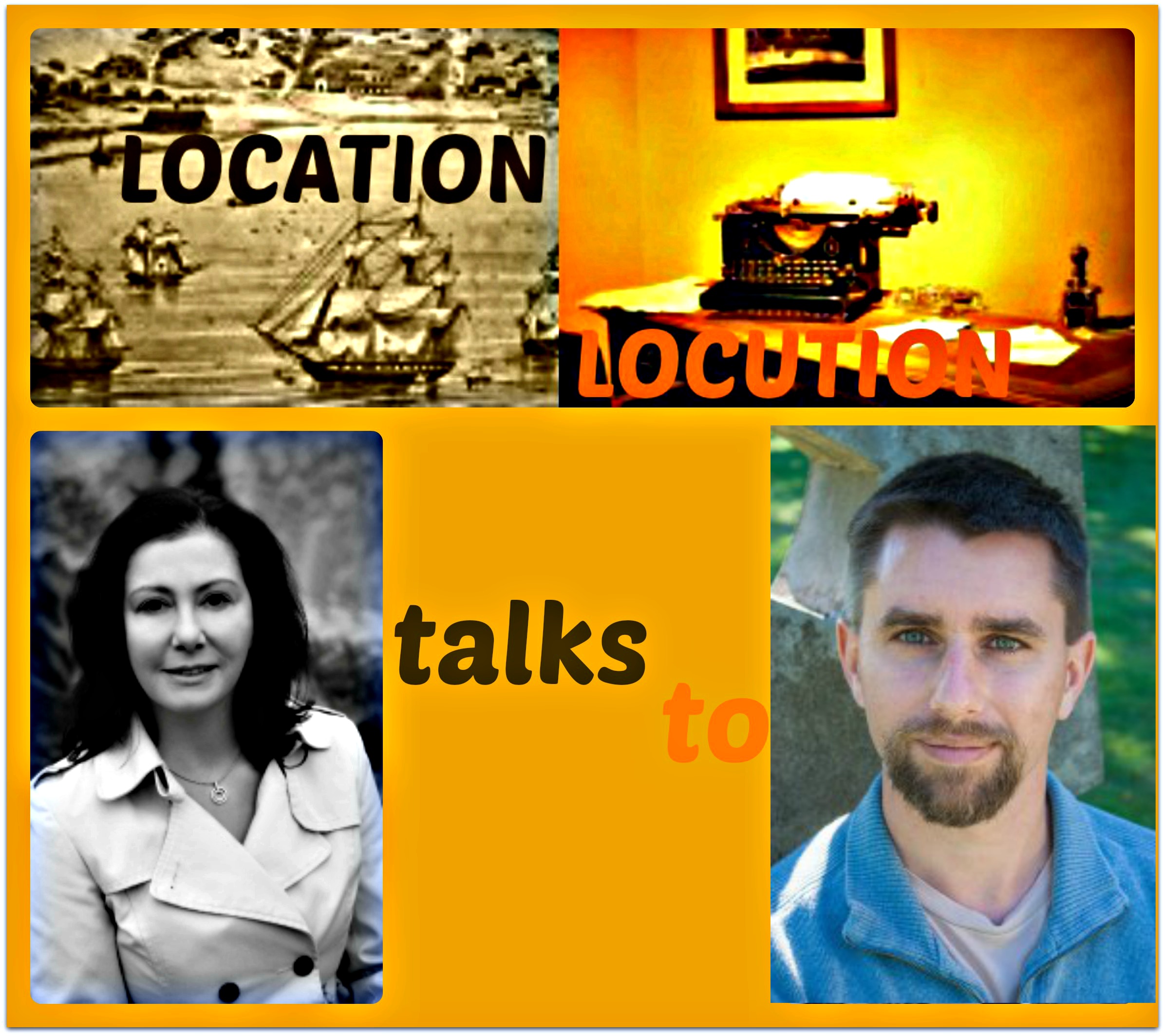
LOCATION, LOCUTION: Anthony St. Clair, author of urban fantasies whose plots are globally sourced

JJ Marsh Anthony St Clair

Columnist JJ Marsh (left) talks to “rucksack” urban fantasy writer Anthony St Clair about how he translates his travels into works of fiction.

In this month’s Location, Locution, JJ Marsh talks to Anthony St. Clair, author of the Rucksack Universe books, a series of urban fantasy travel novels set in Hong Kong, India and Ireland. When he’s not concocting the kind of fiction that thrills, delights and bewilders in the spirit of Neil Gaiman, Terry Pratchett, Douglas Adams and Tom Robbins, St. Clair is making a living as a copywriter, blogger and editor. He loves writing about business and anything related to craft beer, homebrew, travel (he’s a self-described globe-trotter), food, and the Pacific Northwest.

Which comes first, story or location?
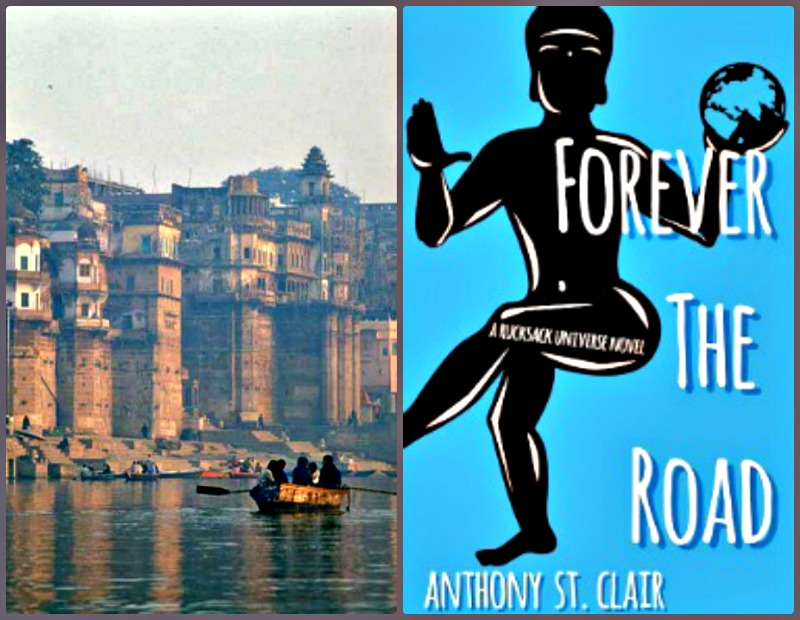
Location. My original idea for Forever the Road, the most recently published book in my Rucksack Universe series, came to me in 2003, when I spent two months traveling through India. As the story took shape, I created a fictional city and river, both called Agamuskara, which is Hindi for “smiling fire.” Both the river and the city are pivotal to the action of the story and what happens with the book’s various characters. But I don’t think I could have come up with either the story or the location without having also traveled through India, especially the city of Varanasi, the holy city on the banks of the Ganges, which Agamuskara is based on.

Photo credit: "Ganges River, Varanasi, Uttar Pradesh, India," by Babasteve via Flickr (CC BY 2.0).

Photo credit: “Ganges River, Varanasi, Uttar Pradesh, India,” by Babasteve via Flickr (CC BY 2.0); Forever the Road cover art.

What’s your technique for evoking the atmosphere of a place?
Have you ever noticed that when you go somewhere new, it’s like you notice everything and experience it more intensely? It’s like our guard comes down. We see, hear, smell, taste, and touch with an intensity and openness that we don’t usually bring to our day-to-day encounters with the world outside ourselves. I try to relate the atmosphere of a place by evoking all the senses. Is the place hot or cold? Crowded or sparse? What does it smell like? What does the food taste like? What are the colors? Sense helps us get to know a place, and evoking the senses works just as well in a book as it does in actual travel.

Which particular features create a sense of location? Landscape, culture, food?
All of the above. Landscape, culture, and food affect each other. What the land is like affects the food that can be available. Place shapes culture, because place drives so much of our experiences. Likewise, food has an influence on how culture connects and evolves. After all, how many of our most pivotal experiences have to do with a meal, or a particular moment in a new place, or by experiencing and trying to understand an aspect of a different culture?

Can you give a brief example of your work which illustrates place?
This excerpt is from Chapter 2 of Forever the Road, which was released September 8th in e-book, all formats, and trade paperback (more information here).

The rattling truck moved so fast that the world passed in a blur, but Jay marveled at all he saw. Countless people wore brilliant colors and smiled from weathered, driven faces. They defied the washed-out landscape and the humid mat of the air. Every village had been here before time was time, it seemed. Each village also brought a glimpse of temples and shrines, elephant-headed gods, bulls, monkeys, multi-limbed deities rendered in brick, stone, concrete, and reverence.

Approaching Agamuskara, Jay now understood that India was four things: heat, humans, history, and gods. They shaped India not so much into a country or a culture but a world. India was all of the world, all of time in every passing moment, and every emotion, every depravity and transcendence, every hope realized and every futility suffered, of all the human race.

And, gods, was India heat. Humid, blazing, sopping heat. India felt as if wet blankets had been baked for an hour in a pot of water, then, steaming and boiling, wrapped around the country. Even Jay’s sweat glands felt sluggish. The humidity jellied the will. It softened the wood of the few meager trees. Even the concrete blocks of houses and shacks seemed to sag, drip, and simmer in the midday, clear-sky blaze of sunlight.

The truck turned onto a highway, renown throughout northeastern India for being maintained. The road reminded Jay of the interstate highways of his left-long-ago home, except that as far as the traffic was concerned, the four lanes were simultaneously one lane, three lanes, twenty lanes, and no lanes. Still, the truck’s consistent speed and motion brought a soothing breeze to Jay’s skin, and the smooth road took him from a blazing sear to a nearly gentle simmer.

For once, Jay’s tenderized rump stayed in one merciful, bounceless spot. After a few kilometers, he relaxed like a roast chicken resting after coming out of the oven.

How well do you need to know the place before using it as a setting?
I want to visit a place before I write about it, and so far all my stories draw on places I’ve visited. Whether or not I’ve traveled there, I also use substantial research to try to understand a place as best I can, but there is no substitute for having been there. Nothing compares with eating the food, walking the quiet streets at dawn, observing the tiny everyday details that make a place its own.

Which writers do you admire for the way they use location?
I’ve spent many a time immersed in the works of Bill Bryson and Pico Iyer, and I try to bring their mix of place and experience into my own style. However, when it comes to using location in story, I admire Terry Pratchett the most. His long-running Discworld, a comic fantasy book series, is not only full of funny, richly told fantasy stories, but he clearly works hard to weave the setting into the story. Whether a book is set in a city or the mountains, it is always clear that a sense of place is key to the characters and events unfolding in the book. I try to evoke a similar connection in my own work. There’s an old saying that character is destiny, but I would add that place shapes character.

Thank you, Anthony! That was fascinating. Readers, if this interview has piqued your curiosity about Anthony and his writings, I encourage you to visit his author site. You can also follow him on Twitter.

* * *

Next up on Location, LocutionSusan Jane Gilman, Geneva resident and author of the New York Times bestseller The Ice Cream Queen of Orchard Street. Until then, I wish you happy holidays. See you next year!

JJ Marsh grew up in Wales, Africa and the Middle East, where her curiosity for culture took root and triggered an urge to write. After living in Hong Kong, Nigeria, Dubai, Portugal and France, JJ finally settled in Switzerland, where she is currently halfway through her European crime series, set in compelling locations all over the continent and featuring detective inspector Beatrice Stubbs.

STAY TUNED for our next fab post!

If you enjoyed this post, we invite you to register for The Displaced Dispatch, a round up of weekly posts from The Displaced Nation, with seasonal recipes, book giveaways and other extras. Register for The Displaced Dispatch by clicking here!

Related posts:

BOOKLUST, WANDERLUST: Best of 2014 in expat books (1/2)

Best of Expat Books 2014

Kindle Amazon e-reader by Unsplash via Pixabay (CC0 1.0)

Seasons greetings, Displaced Nationers. That special time of the year is here again, when we publish our selection of this year’s books with meaningful connections to expats, Third Culture Kids, global wanderers, and others of us who have in some way led “displaced lives”.

Having assembled this list on my own in years past, I am pleased to be joined this year by Beth Green, our BOOKLUST, WANDERLUST columnist, who has also graciously agreed to sign over her column space for the month.

Let’s give Beth the floor:

Happy holidays, all! Preparing for this yearly special, I went back through all of the books I’ve read since January—not such an easy task; I read a lot!—and realized that I hadn’t actually read all that many that were published in 2014. I just now took a look at my TBR list, to which I’m constantly adding—and saw it includes a few that were written a couple of hundred years ago!

As is the case I suspect for many a well-traveled reader, I read most often on my Kindle, which means that I don’t often look at the title and publication pages to see when the book came out. Probably the book that has stayed with me for the longest this year is The Tiger’s Wife, the debut novel by Téa Obreht, an American writer of Bosniak/Slovene origin. But that came out in 2011!

* * *

And now for some 2014 picks in these three categories (stay tuned for a follow-up post with THREE MORE CATEGORIES!!):

  1. TRAVEL
  2. MEMOIRS
  3. CROSS-CULTURAL CHALLENGES

A few points to note:

  • Books in each category are arranged from most to least recent.
  • Unless otherwise noted, books are self-published.
  • Contributions by Beth are (appropriately enough!) in green.

* * *

TRAVEL

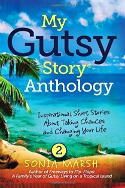
My_Gutsy_story_cover_smallMy Gutsy Story Anthology: Inspirational Short Stories About Taking Chances and Changing Your Life (Volume 2) (October 2014)
Compiled by: Sonia Marsh
Synopsis: Marsh celebrates the gutsy in each of us with this collection of stories from 64 authors who found the courage to face their fears and live their dreams.
Expat credentials: Born to a Danish mother and British father, who brought her to live in West Africa at the age of three months, Marsh has lived in many countries—Demark, Nigeria, France, England, the U.S. and Belize—and considers herself a citizen of the world. With a degree in environmental science from the University of East Anglia, U.K., she is currently living in Southern California with her husband but in 2015 intends to start a new chapter as a Peace Corps volunteer.
How we heard about: We have long enjoyed Marsh’s collection of “gutsy” travel stories and have followed her on Twitter for some time.

Luna_Tango_Cover_smallLuna Tango (The Dance Card Series Book 1) (Harlequin Mira, July 2014)
Author: Alli Sinclair
Genre: Romance
Synopsis: Tango is a mysterious—and deadly—influence in journalist Danni McKenna’s life. She looks for answers about her mother’s and grandmother’s lives, and finds romance in the process.
Expat credentials: Alli Sinclair is from Australia but lived for many years in South America, where she worked as a mountain and tour guide. She considers herself a citizen of the world.
How we heard about it:  I used to blog with Alli on the now-retired Novel Adventurers and have enjoyed hearing about her book’s path to publication. I was especially thrilled when Luna Tango won Book of the Year in the inaugural AusRom Today Reader’s Choice Awards last month. Congratulations, Alli!
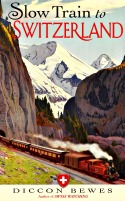

Slow-Train-final-cover_smallSlow Train to Switzerland (Nicholas Brealey Publishing, April 2014)
Author: Diccon Bewes
Genre: Travel history
Synopsis: Bewes follows “in the footsteps” of Miss Jemima Morrell, a customer on Thomas Cook’s first guided tour of Switzerland in 1863, and discovers how this plucky Victorian woman helped shape the face of modern tourism and Switzerland itself, transforming it into the Cinderella of Europe.
Expat creds: An Englishman who grew up in “deepest Hampshire”, Bewes worked for ten years at Lonely Planet and the UK consumer magazine Which? Travel, before moving to Bern, Switzerland, where he is now a full-time writer. He considers himself a “permanent expat.”
How we discovered: I came across Bewes’s blog through a Google Alert and was impressed by how prolific he is. I also liked the fact that he admits to being a chocolate lover. (No wonder he has a thing for Switzerland!)


Kamikaze_kangaroos_cover_smallKamikaze Kangaroos!: 20,000 Miles Around Australia. One Van,Two Girls… And An Idiot (February 2014)
Author: Tony James Slater
Synopsis: Tony James Slater knew nothing about Australia. Except for the fact that he’d just arrived there. The stage is set for an outrageous adventure: three people, one van, on an epic, 20,000-mile road trip around Australia. What could possibly go wrong?…
Expat credentials: As a former writer for the Displaced Nation, what more creds does Tony need?
How we heard about: The Displaced Nation is committed to tracking Tony’s progress as a writer. We are especially fond of his ability to make fun of himself! He wears his travels lightly, you might say…


MEMOIRS
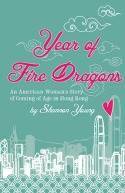
Year_of_Fire_Dragons_cover_smallYear of Fire Dragons: An American Woman’s Story of Coming of Age in Hong Kong (Blacksmith, forthcoming June 2015; available for pre-order)
Author: Shannon Young
Synopsis: When 22-year-old Shannon follows her Eurasian boyfriend to his hometown of Hong Kong, she thinks their long distance romance is over. But a month later his company sends him to London. The city enchants her, forcing her to question her plans. Soon, she will need to choose between her new life and the love that first brought her to Asia.
Expat creds: Shannon is an American twenty-something currently living in Hong Kong. (Reader, she married him!)
How we knew about: Shannon writes our “Diary of an Expat Writer” column and has also been sharing “chunks” from an anthology she edited of writings by women expats in Asia (see listing below: under “Crosscultural Challenges”).


Coming_Ashore_cover_smallComing Ashore (October 2014)
Author: Catherine Gildiner
Synopsis: The third and final in a series of best-selling memoirs by this American who has worked for many years as a psychologist in Toronto and writes a popular advice column in the Canadian women’s magazine Chatelaine. The book begins with Gildiner’s move to Canada in 1970 to study literature at the University of Toronto, where she ends up rooming with members of the FLQ (Quebec separatists), among other adventures.
How we heard about: Book #2 in Chatelaine’s 7 must-read books for November.
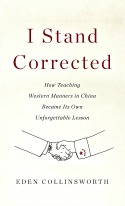

I_stand_corrected_cover_smallI Stand Corrected: How Teaching Manners in China Became Its Own Unforgettable Lesson (Nan A. Talese, October 2014)
Author: Eden Collinsworth
Synopsis: Collinsworth tells the story of the year she spent living among the Chinese while writing an advice manual covering such topics as personal hygiene (non-negotiable!), the rules of the handshake, and making sense of foreigners. (She has since returned to live in New York City.)
How we heard about: Book #3 in Conde Nast Traveler’s 7 Books to Get You Through Travel Delays, Bad Company.


Seven_Letters_from_Paris_cover_smallSeven Letters from Paris: A Memoir (Sourcebooks, October 2014)
Author: Samantha Vérant
Synopsis: At age 40, Samantha Verant’s life is falling apart—she’s jobless, in debt, and feeling stuck…until she stumbles upon 7 old love letters from Jean-Luc, the sexy Frenchman she’d met in Paris when she was 19. She finds him through a Google search, and both are quick to realize that the passion they felt 20 years prior hasn’t faded with time and distance.
How we heard about: From an interview with Vérant by British expat in Greece Bex Hall on her new blog, Life Beyond Borders.


Becoming_Home_cover_smallBecoming Home: A Memoir of Birth in Bali (October 2014)
Author: Melinda Chickering
Synopsis: Though born in small-town USA, Melinda never felt quite at home there. As an adult, her search for herself led her to the Indonesian island of Bali, where she found herself living a life she hadn’t anticipated, becoming a housewife and mother. This memoir of her experience with pregnancy and birth offers a window on life for a western woman living in an Asian culture that respects the forces of darkness as well as the light.
Expat credentials: Originally from Iowa, Chickering has settled in Bali.
How we heard about it: Displaced Nationer Melinda contacted me earlier this year to tell us the exciting news that her memoir was being published. Congratulations, Melinda!
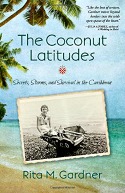

The_Coconut_Latitudes_cover_smallThe Coconut Latitudes: Secrets, Storms, and Survival in the Caribbean (September 2014)
Author: Rita M. Gardner
Synopsis: Rita is an infant when her father leaves a successful career in the US to live in “paradise”—a seaside village in the Dominican Republic. The Coconut Latitudes is her haunting, lyrical memoir of surviving a reality far from the envisioned Eden—and of the terrible cost of keeping secrets.
How we heard about: Displaced Nation columnist James King interviewed Rita for “A picture says”.
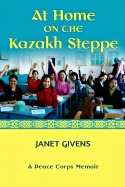

At_home_on_Kazakh_Steppe_cover_smallAt Home on the Kazakh Steppe: A Peace Corps Memoir (August 2014)
Author: Janet Givens
Synopsis: The story a middle-aged grandmother who left behind a life she loved and forged a new identity as an English teacher, mentor, and friend in Kazakhstan, a newly independent country determined to find its own identity after generations under Soviet rule.
How we heard about: Recommended by the We Love Memoirs Facebook Community.


Good_Chinese_Wife_cover_smallGood Chinese Wife: A Love Affair with China Gone Wrong (Sourcebooks, July 2014)
Author: Susan Blumberg-Kason
Synopsis: A shy Midwesterner, Blumberg-Kason spent her childhood in suburban Chicago dreaming of the neon street signs and double-decker buses of Hong Kong. She moved there for graduate school, where she fell for Cai, the Chinese man of her dreams. As they exchanged vows, she thought she’d stumbled into an exotic fairy tale, until she realized Cai—and his culture—where not what she thought. One of our featured authors, Wendy Tokunaga, says: “A fascinating, poignant and brutally honest memoir that you won’t be able to put down. Good Chinese Wife is riveting.”
How we heard about: We had known about the book for some time but hadn’t realized it came out this year Jocelyn Eikenburg tipped us off in her comment below. She, too, highly recommends.
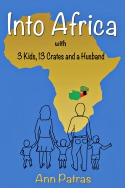

Into_Africa_cover_smallInto Africa: 3 kids, 13 crates and a husband (June 2014)
Author: Ann Patras
Synopsis: Patras was born and raised in Burton-upon-Trent, in the English Midlands. When her husband, Ziggy, is offered a two-year contract as site manager for building a new cobalt plant in Zambia, they discuss the pros and cons of leaving luxuries and England behind—and then decide it could be an “interesting” family adventure. They end up raising three kids, countless dogs and living in Africa for over thirty years. (She and Ziggy now live in Andalucía, Spain, and have absolutely no intention of ever moving again. Hmmm…have they encountered Charlotte Smith yet? See next item.)
How we heard about: E-book promotion.
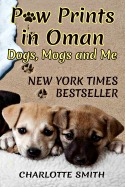

PawPrintsinOman_cover_smallPaw Prints in Oman: Dogs, Mogs and Me (April 2014)
Author: Charlotte Smith
Synopsis: Smith was born, raised and lived in West Sussex, UK, until her persuasive husband, Nick, swept her and their youngest daughter off to live in mystical Oman. Her love of animals helped her to shape an extraordinary life in the Middle East—her first step being to convince a local veterinary clinic to employ her. (Note: Smith now lives in Andalucía, in southern Spain.)
How we heard about: Recommended by the We Love Memoirs Facebook community. The book was also on the New York Times best-seller list (“animals”) in October.


loveyoubye_cover_smallLoveyoubye: Holding Fast, Letting Go, And Then There’s the Dog (She Writes Press, April 2014)
Author: Rossandra White
Synopsis: A collision of crises on two continents forces Rossandra White to face the truth. Just as her American husband disappears to Mexico, her brother’s health crisis calls her back home to Africa, and her beloved dog receives a fatal diagnosis. She faces down her demons to make a painful decision: stay in a crumbling marriage, or leave her husband of 25 years and forge a new life alone.
How we heard about: Through a Facebook share of White’s Good Reads giveaway.
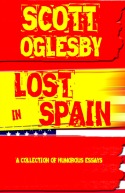

Lost_in_Spain_cover_smallLost in Spain: A Collection of Humorous Essays (March 2014)
Author: Scott Oglesby
Synopsis: Scott Oglesby moved to Spain to start over. When he discovered he was still the same person, now six thousand miles from home, the result was dysfunction, delusion, chaos and this book, which many readers have described as “hilarious” and “brilliant”.
How we heard about: E-book promotion.


Journey_to_a_Dream_cover_smallJourney to a Dream: A voyage of discovery from England’s industrial north to Spain’s rural interior (February 2014)
Author: Craig Briggs
Synopsis: Craig, his wife Melanie and their dog, Jazz, left their home town of Huddersfield, in England’s industrial north, and set off for Galicia: a remote and little-known autonomous province in the northwest corner of Spain. And so began their Journey to a Dream…
How we heard about: E-book promotion, as a result of which I am currently reading this on my Kindle. It’s very well written and entertaining.


Paris_Letters_cover_smallParis Letters: One woman’s journey from the fast lane to a slow stroll in Paris (February 2014)
Author: Janice Macleod
Synopsis: MacLeod found herself age 34 and single, suffering from burn-out and dissatisfaction. So she abandoned her copywriting job and headed off to Europe, where she ended up finding love and freedom in a pen, a paintbrush…and Paris! Macleod says her journey was inspired by The Artist’s Way, written by Julie Cameron.
How we heard about: From an interview with MacLeod by American expat in Paris Lindsey Tramuta, which appeared on Lindsey’s blog, Lost in Cheeseland.


lenin_smallLenin Lives Next Door: Marriage, Martinis, and Mayhem in Moscow (Small Batch Books, January 2014)
Author: Jennifer Eremeeva
Synopsis: Based on Eremeeva’s two decades in Russia, Lenin Lives Next Door is a work of self-described “creative nonfiction.” It knits together vignettes of cross-cultural and expatriate life with sharp observation, historical background, and humor. Each chapter explores an aspect of life in today’s Russia, told with the help of a recurring cast of eccentric Russian and expat characters, including HRH, Eremeeva’s Handsome Russian Husband (occasionally a.k.a. Horrible Russian Husband), and their horse-mad daughter.
How we heard about: Eremeeva sent me a review copy and we met up for coffee at Columbia University. I found her a delightful conversationalist. No wonder several reviewers have likened her style to Jane Austen’s.


CROSS-CULTURAL CHALLENGES
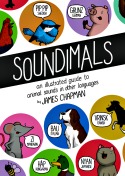
Soundimals_cover_smallSoundimals: An illustrated guide to animal sounds in other languages (November 2014)
Author/illustrator: James Chapman.
Synopsis: In English, we say dogs go WOOF, but in Romanian they go HAM HAM. Chapman regularly publishes illustrations of onomatopoeia and animal sounds in other languages on his Tumblr blog. This book (available through his Etsy shop) collects some of those plus a lot of new sounds that weren’t in the original comics, and a few new animals that haven’t been posted at all.
Expat creds: None that we know of; would love to hear more about how he got started collecting these sounds.
How we heard about: Pinterest.
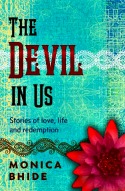

The_Devil_in_us_cover_smallThe Devil in Us (CreateSpace, October 2014)
Author: Monica Bhide
Genre: Literary fiction
Synopsis: Short stories that carry you to a far away place, amidst people seemingly very foreign to you, but somehow create a connection—from the Indian-American cancer survivor escaping her pain and finding passion in Mumbai, to the Japanese teen in Georgetown discovering forbidden love. Bhide is known for her writings about Indian food. This is her first work of fiction.
Expat creds: Monica is originally from Delhi, India, but has lived in Bahrain ad now in the United States.
How we found out about: Pinterest.
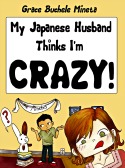

Japanese_Husband_cover_smallMy Japanese Husband Thinks I’m Crazy! The comic book: Surviving and thriving in an intercultural, interracial marriage in Tokyo (October 2014)
Author: Grace Buchelle Mineta
Genre: Comics/manga; humor
Synopsis: The autobiographical misadventures of a native Texan freelancer and her Japanese “salaryman” husband, in comic book form.
Expat credentials: Mineta grew up mostly in Texas, but also spent her teenage years in Accra, Ghana and Sapporo (Hokkaido), Japan. She now lives in Tokyo with her Japanese husband (they got married in January) and blogs at Texan in Tokyo.
How we found out about: From a guest post by Mineta on Jocelyn Eikenburg’s blog, Speaking of China, titled The “Dark Side” to Moving Across the World for Love.
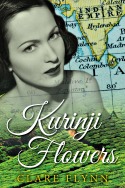

Kurinji_Flowers_cover_smallKurinji Flowers (October 2014)
Author: Clare Flynn
Genre: Historical romance
Synopsis: Set in South India during World War II and India’s struggle for independence, the book is centered on a young British colonial, Ginny Dunbar, who has arrived in India for a new start in life. She has to battle her inner demons, the expectations of her husband, mother-in-law, and colonial British society, and her prejudices towards India and its people.
Expat credentials: Flynn is a repeat expat, having lived for two years each in Paris and Brussels, three years in Milan, and six months in Sydney, though never in India. She now lives in London but spends as much time as she can in Italy. Almost needless to say, Flynn loves travel and her idea for this book came while she was on holiday in Kerala, India.
How we knew about: Flynn was interviewed by JJ Marsh for the latter’s popular column, LOCATION LOCUTION.
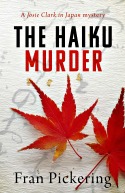

The_Haiku_Murder_cover_smallThe Haiku Murder (Josie Clark in Japan mysteries Book 2) (October 2014)
Author: Fran Pickering
Genre: Expat mystery series
Synopsis: A haiku-writing trip turns to tragedy when a charismatic financier falls from the top of Matsuyama castle. But was he pushed? Expat Londoner Josie Clark thinks he was, and that’s when the trouble starts…
Expat credentials: Pickering has lived and worked in Tokyo, and though she is now back in London (literally next door to where she was born), she travels back to Japan frequently to visit friends and do research for the Josie Clark mystery series.
How we heard about: Pickering was interviewed by JJ Marsh for the latter’s popular column, LOCATION LOCUTION.

LostinTranslation_cover_smallLost in Translation: An Illustrated Compendium of Untranslatable Words from Around the World (September 2014)
Author: Ella Frances Sanders
Genre: Illustration/Translation
Synopsis: Did you know that the Japanese language has a word to express the way sunlight filters through the leaves of trees? Or that there’s a Finnish word for the distance a reindeer can travel before needing to rest? This book is an artistic collection of more than 50 drawings featuring unique, funny, and poignant foreign words that have no direct translation into English.
Expat credentials:  A self-described “intentional” global nomad, Sanders has lived all over the place—most recently Morocco, the United Kingdom, and Switzerland.
How we heard about: From a post about the book by Maria Popova on her much-acclaimed Brain Pickings site.


Everything_I_Never_Told_You_cover_smallEverything I Never Told You (Penguin, June 2014)
Author: Celeste Ng
Genre: Thriller
Synopsis: A mixed-race family in the 1970s tries to unravel a family tragedy.
Expat credentials: Celeste Ng isn’t an expat, but she has a deep understanding of what it means to feel displaced. Her work deals with multiculturalism and race issues in the United States.
How we heard about it: It was voted the Amazon Book of the Year.
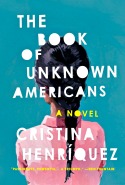

TheBook_Of_Unknown_Americans_smallThe Book of Unknown Americans (Knopf, June 2014)
Author:  Cristina Henríquez
Genre: Literary fiction
Synopsis: Arturo and Alma Rivera have lived their whole lives in Mexico. One day, their beautiful fifteen-year-old daughter, Maribel, sustains a terrible injury, one that casts doubt on whether she’ll ever be the same. And so, leaving all they have behind, the Riveras come to America with a single dream: that in this country of great opportunity and resources, Maribel can get better.
Expat credentials: Henríquez isn’t an expat, but her father was—he came to the US from Panama to attend university.
How we heard about it: Henríquez’s novel was Amazon’s No. 1 bestseller this year in the Hispanic American Literature & Fiction category.


TheOtherLanguage_cover_smallThe Other Language (Pantheon, April 2014)
Author: Francesca Marciano
Synopsis: A collection of short stories involving women who are confronted by radical change or an old flame, in locations that range from New York to India to Kenya to southern Italy.
Expat credentials: Marciano is an Italian novelist who left Rome at age 21 to live in the United States. She later moved to Kenya, where she lived for a decade. Although Italian is her first language, she chooses to write in English.
How we found out: From an essay by William Grimes in the New York Times Book Review: “Using the Foreign to Grasp the Familiar: Writing in English, Novelists Find Inventive New Voices.”


Dragonfruit_cover_smallHow Does One Dress to Buy Dragon Fruit: True Stories of Expat Women in Asia (April 2014)
Editor: Shannon Young
Genre: Expat non-fiction; anthology
Synopsis: In this collection, 26 women reveal the truth about expatriate life in modern East Asia through original works of memoir and creative non-fiction.
Expat credentials: To qualify for inclusion in the volume, writers had to be able to say they were, or had once been, expats.
How we heard about: We have followed Shannon Young ever since she contributed to the Displaced Nation on the topic of the London Olympics. She currently writes a column for us about being an expat writer, and we’ve been sharing “chunks” from her Dragonfruit anthology for the past few months.


Chasing_Athens_cover_smallChasing Athens (April 2014)
Author: Marissa Tejada
Genre: Romance
Synopsis: When Ava Martin’s new husband unexpectedly ditches her months after they’ve relocated across the world to Greece, the heartbroken American expat isn’t sure where home is anymore. On the verge of flying back to the States with her tail between her legs, she makes an abrupt decision to follow her gut instead and stay on in Greece, until a crisis back home forces her to decide where she truly belongs.
Expat credentials: A Native New Yorker, Tejada is an author, writer and journalist based in Athens, Greece. Living the expat life in Europe inspired her to write her debut novel.
How we heard about it: Again, from an interview conducted by British expat in Greece Bex Hall on her blog, Life Beyond Borders.


Moving_without_Shaking_cover_smallMoving Without Shaking: The guide to expat life success (from women to women) (April 2014)
Author: Yelena Parker
Genre: Guidebook-meets-memoir
Synopsis: Parker draws from the experiences and views of 9 women who have lived across 12 countries, to craft a resource for those who are dreaming of—or already facing—relocation abroad.
Expat creds: Parker herself is originally from Eastern Ukraine but has lived and worked in the US, Switzerland, the UK and Tanzania. She has chosen London as her latest expat location.
How we heard about: From a Google Alert.
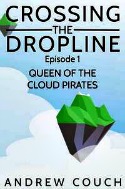

QueenOfCloudPirates_cover_smallQueen of the Cloud Pirates (Crossing the Dropline Book 1) (March 2014)
Author: Andrew Couch
Genre: Fantasy novella
Synopsis: Far to the North of the Iron League core cities lies the Dropline. Beyond this line of cliffs the power of elemental Air rules supreme. The crucial region is threatened and two young men stand at the tipping point. In order to survive, they must learn to work together and rise above their own shortcomings. Oh yeah, and escape from pirates. Don’t forget the pirates….
Expat credentials: An American abroad, Couch lives with his wife in Freiburg, Germany. He says that much of the inspiration for the worlds he writes about is a mix of a wild and crazy imagination (he grew up reading fantasy books) and his travels around the world.
How we found out about: Couch contributes the HERE BE DRAGONS column to the Displaced Nation, focusing on the connection between the displaced life and fantasy writing (more powerful than any skeptics out there might think!).
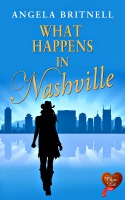

What_Happens_in_Nashville_cover_smallWhat Happens in Nashville (March 2014)
Author: Angela Britnell
Genre: Romance (“choc lit”)
Synopsis: Claire Buchan, a straight-laced barrister from Exeter, UK, flies to Nashville, Tennessee, to organize her sister Heather’s bridal bash—and quickly finds herself out of her comfort zone and into the arms of a most unsuitable beau…
Expat credentials: Britnell grew up in a small Cornish village in southwestern England. She served in the Royal Navy for almost six years, culminating in an assignment in Denmark, where she met her American husband. Thus began a chronic expat life. The couple, now empty nesters, have settled in Brentwood, Tennessee.
How we heard about: Rosie Milne wrote about Britnell in an article that appeared on Telegraph Expat: “Expat romantic novelists inspired by real life.” (Milne btw lives in Singapore and runs Asian Books Blog.)


Monsoon_Memories_cover_smallMonsoon Memories (January 2014)
Author: Renita D’Silva
Genre: Literary fiction
Synopsis: Sometimes the hardest journeys are the ones that lead you home. Exiled from her family in India for more than a decade, Shirin and her husband lead a comfortable but empty life in London. Memories of her childhood fill Shirin with a familiar and growing ache for the land and the people that she loves. With the recollections, though, come dark clouds of scandal and secrets. Secrets that forced her to flee her old life and keep her from ever returning…
Expat credentials: Now living in the UK, Renita grew up in a picturesque coastal village in South India.
How we heard about: Amazon.
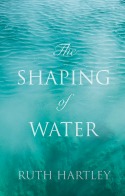

The_Shaping_of_Water_cover_smallThe Shaping of Water (December 2013—we’re letting it squeak in!)
Author: Ruth Hartley
Genre: Literary fiction
Synopsis: The story concerns the overlapping lives of several different people, expats and locals or some mix, who are connected to a ramshackle cottage by a man-made lake in Central Africa during the Liberation wars across its region.
Expat credentials: Hartley grew up on her father’s farm in Zimbabwe, which at that point was known as Rhodesia, at a time when struggles for independence in European-ruled African territories were spreading like a wave. As a young woman, she moved to South Africa to study art and then had to escape to England because of her political activities. She later moved back to Africa, as an expat. She now lives in Southern France.
How we heard about: I discovered Hartley via one of my social networks and then decided to approach her about being interviewed for the Displaced Nation.

* * *

Your turn readers: Have you read any of the above works and if so, what did you think of them? And can you suggest other works to add to the list? Beth and I look forward to reading your comments below!

From Beth:
Intrigued by some of these titles? Go on, download a few! ‘Tis the season to support the output of other international creatives!

Finally, please note: Beth and I may repeat this exercise in six months (summer reads!). But if you can’t wait until then, I suggest that you sign up for our DISPLACED DISPATCH, which has a Recommended Read every week, and also follow our Pinterest board: DISPLACED READS.

STAY TUNED for PART 2 of this post: IT’S FOOD!, THIRD CULTURE KIDS & COUNTRY GUIDES/TRIBUTES.

If you enjoyed this post, we invite you to subscribe to The Displaced Dispatch, a weekly round up of posts from The Displaced Nation, plus some extras such as seasonal recipes and occasional book giveaways. Sign up for The Displaced Dispatch by clicking here!

Related posts:
In this novel of displacement, water shapes the land, the country and people’s lives, almost beyond recognition

Ruth Hartley Collage

The Shaping of Water cover art; Ruth Hartley author portrait; Ruth Hartley’s painting of her father’s farm.

My guest today, Ruth Hartley, is a writer and an artist—but from the point of view of the Displaced Nation, she is something else as well: an expert on displacement.

Ruth has lived a life of displacement. She grew up in Africa, a continent that continues to have the world’s largest number of forcibly displaced peoples. She grew up on her father’s farm in Zimbabwe, which at that point was known as Rhodesia, at a time when struggles for independence in European-ruled African territories were spreading like a wave. As a young woman, she moved to South Africa to study art and then had to escape to England because of her political activities.

Ruth took refuge in London, where she married and started raising a family—but still felt the pull of her native Africa and chose to become an “expatriate economic migrant” in Zambia (formerly Northern Rhodesia). She lived with her husband and children in Zambia for 22 years, returning to the UK in 1994 to practice and teach art. Five years ago she set out on a long tour of Europe and Turkey. She now lives in Southern France.

Manzi ni moyo (water is life) —Chinyanja saying

Ruth recently published her first novel, The Shaping of Water, which, perhaps not surprisingly, reads like an ode, a kind of paean, to displacement. The action follows the progress of a decision by Rhodesia’s rulers to build a dam across the mighty Zambezi. They called it the Kariba Dam because the dam wall spans the narrowest and steepest of the gorges along the river, known locally as kariwa (a trap). Completed in 1959, the Kariba Dam created a vast man-made lake, Lake Kariba, in the Zambezi Valley. The lake displaced the river people, the Tonga, and forever changed the ecology of the region.

The book’s protagonists are a colonial couple, Margaret and Charles. They decide to build a lake-front cottage in Siavonga, a settlement that springs up to accommodate the displaced Tonga.

Ironically, although the ramshackle cottage sits in a spot that would never have existed had it not been for the building of the dam, which shaped the river in a new way, it is the one constant, a kind of retreat from the forces that displace practically everyone during the African liberation wars that ensue. Margaret and Charles use it as a place of sanctuary, and eventually two other couples come to do so as well: South African freedom fighters Marielise (Margaret’s niece) and Jo, and NGO worker Nick and his UK-raised African wife, Manda.

The cottage also provides a livelihood for Milimo, the son of a Tonga woman whose home was drowned by the lake. Margaret hires Milimo as gardener and caretaker for the property at the suggestion of Father Patrick, a missionary who worked in the Zambezi Valley before its shaping by water.

As a kind of review of the many layers of displacement in this novel, I offer this quote from the book, which I think also demonstrates Ruth’s lyrical style of storytelling:

Here near Kariba, ‘the trap’, in the middle of a wilderness, is a place called Siavonga, which is a name without meaning. It is a place that will be a town but a place that is not yet built. It is a place that is presently isolated by poor and inadequate roads and it is difficult to reach. It is in a country that is becoming another country, with another name. It is here that there is a plot where a contractor builds a cottage above a lake not yet filled with water. All this takes place in the newly created Central African Federation of the Rhodesias and Nyasaland that will be no more in a few short years. Two of these countries will change into independent states with different names when that happens.

It is an exercise in madness and dreams, in magic and megalomania, and the Tonga people know it to be impossible.

And now I think it’s time to get to know Ruth a little better, and hear some more about her book as well as the other creative projects she is working on.

* * *

Hi, Ruth, and welcome to the Displaced Nation. I expect you will feel entirely at home here. I wonder, did you consciously set out to write a book exploring displacement?
Displacement is a good way of describing what happens in the story. Displacement can lead to new opportunities but it is also damaging. I deliberately structured the book so that it explored three main themes:

  • Damage to the environment.
  • Damage done for political reasons.
  • Damage that is personal, emotional and private. It includes damage done by racism and sexism and deals with both in subtle ways.

Though each of these themes gets its own part in the book, they are also interwoven. I passionately wanted to bring the issues of contemporary Africa to life in a truthful, but also empathetic and positive, way.

I know you lived through many of the events that are depicted in this novel. To what extent is your work autobiographical fiction and to what extent historical fiction?
My novel is about entirely fictional characters living through actual and verifiable political and social events. I grew up in an intense political climate in Africa with a strong personal commitment to human rights. I did live through those events and have always made notes and collected newspaper articles and books throughout my life. But because I respect and love the individuals I knew in Africa I was careful to invent the people in my story. None of them is me either though like Margaret, I, too, am a gardener. The cottage, however, is real and the cottage guest book provided me with records of the weather and the lake levels.

“…all that I have left of my life, work, and friendships is stored on my computer” —Marielise

For me, the cottage assumed the role of the central character. You said it was real. Was it a place where you actually stayed?
If a cottage can be a character, then the one real and existing “character” in the novel apart from historical political figures is the “Cottage”. The book was in part, written as an elegy for a place I loved. Built before Zambian independence, the cottage belonged to a group of friends who were no longer resident in Zambia and my husband and I became its caretakers and at times its only guests. Here are some photos of how it looked:

TSOW cottage 001 (2)

The cottage in Zambia on Lake Kariba that Ruth Hartley and her family often visited. Photo credit: Ruth Hartley.

view from the cottage to the lake 001

The view from the cottage to Lake Kariba; photo credit: Ruth Hartley.

The steps leading down to Lake Kariba from the cottage; photo credit: Ruth Hartley.

The steps leading down to Lake Kariba from the cottage; photo credit: Ruth Hartley.

In 1975 I gave the owners a Visitor’s Book to record happy weekends spent there with friends. The book became my sole responsibility and I kept it as a log of the cottage and the lake from 1975 until 1994. It was finally returned to me after 2000 when the cottage was sold.

TSOW guestbook DN 001 (2)

The original Guest Book from the cottage, which Ruth inherited and used to inspire her novel. Photo credit: Ruth Hartley.

Looking at these materials makes me wonder: did you ever consider writing a memoir instead?
I wrote a fictionalized memoir called The Love and Wisdom Crimes in 1999 in which I was careful to protect people’s identities. It is about how I became politicized and fell in love when I lived in South Africa in 1965. Though I was told it is good and poetic, I had countless rejections because the African setting was not considered to be easily marketable. I have just completed a no-holds-barred memoir of the year that followed when I survived as a single mother in London. It is titled A Bad Girl in Search of Love.

Goodness, you are prolific! Can you describe your path to publishing The Shaping of Water?
At 70, I didn’t want to waste time or energy on rejections so I went for self-publication and self-promotion. I believe the market is moving this way in any case. I used Troubador Publishing because they offer a comprehensive printing and marketing package at a reasonable cost and with integrity. I don’t expect to recoup my investment but I will self-publish again. Hopefully it will be cheaper because of what I have learnt.

What kind of audience did you intend for the book?
I think that my audience is anyone who reads for pleasure and who also likes to make journeys of discovery into new worlds and ideas with believable and interesting characters.

“It’s not sensible—this—this racism!” —Margaret

I enjoyed reading the book because it gave me a feeling for contemporary African history, while also making me realize how little I actually know about Africa. I think I identified most strongly with Margaret and Charles. I felt bad that they saw a future Africa that would have a place for them, only to have that vision eradicated as the violence of the liberation wars escalated. It seemed to me that even if you wanted to do the right thing for Africa, after a while it was hard to know what the right thing was.
I have been thrilled to find readers who do not know Africa or its politics but who still have enjoyed the book and its characters. I didn’t intend this book as a lesson in African history, but I expect it would be good background material.

So what are you working on next and will you continue exploring some of these same themes?
I am working on two more novels. I am more than half way through writing The Tin Heart Gold Mine, a book that is set half in a fictional African country and half in London. The setting and the plot are quite different to The Shaping of Water, but the themes should be of universal interest. It is the story of Lara who begins in Africa as a wildlife artist and the lover of Oscar, an entrepreneur who owns a defunct gold mine and is also a political manipulator. Her journey takes her to London and a life with Tim (a journalist) and Adam, a child of doubtful paternity. She makes, owns and uses art that is troubling and troublesome.

I enjoyed looking at some of your art on your author site. I look forward to reading your book about an African wildlife artist. What’s your other novel about?
I have plans for another novel titled Hannah’s Housekeeping. Hannah is a mature woman who has seen the world and had many lovers. She runs a B&B but though Hannah cleans up the dirt in her house, her husband is missing and she doesn’t know if she can keep death from her door…

Sounds tantalizing! Finally, are there any pieces of advice you could impart to other international creatives?
I am an artist and writer who was effectively prevented from writing and painting for a good part of my adult life though I did teach and work in support of artists for many years. I learnt that it is important and essential to make art and to write, though very few artists and writers make a living from their art or get much recognition for it. Creative people, however reclusive, need an audience and to communicate.

How about lessons for other wannabe novelists?
It is important to write well and that takes practice and humility and many, many redrafts. I am always anxious about what my readers think even when I know I have written a good book. My readers matter to me so I have to keep on improving my craft as a writer.

Thank you, Ruth, for being with us today and for sharing some more of the story behind The Shaping of Water. On your Web site you describe yourself as a compulsive storyteller. I think we got a feeling for this today as well.

* * *

So, readers, any COMMENTS or QUESTIONS for Ruth? To learn more the Kariba Dam and the experiences that inspired the story Ruth tells in her novel, please watch this short video interview with Ruth and also be sure to visit her author’s site.

And if you think you’d like to read Ruth’s novel (we highly recommend it as a Christmas read!), Ruth has kindly arranged for Displaced Nation readers to get a 50 percent discount when ordering a paperback copy at the Troubadour site (enter the code: HARTLEY).

You can also buy the book in a Kindle format, not only from Troubadour but also from Amazon UK and Amazon US.

STAY TUNED for next week’s fab posts!

If you enjoyed this post, we invite you to register for The Displaced Dispatch, a round up of weekly posts from The Displaced Nation, with seasonal recipes, book giveaways and other extras. Register for The Displaced Dispatch by clicking here!

Related posts:
LOCATION, LOCUTION: Clare Flynn, a well-traveled novelist who specializes in geographical displacement

JJ Marsh Clare Flynn

LOCATION, LOCUTION columnist JJ Marsh (left) talks to the novelist Clare Flynn.

In this month’s LOCATION, LOCUTION, expat crime writer JJ Marsh interviews Clare Flynn, the author of A Greater World and the just now published Kurinji Flowers.

Born in Liverpool, the eldest of five children, Clare Flynn read English Language and Literature at Manchester University, although spent most of her time exploring the city’s bars and nightclubs and founding the Rock ‘n’ Roll Society.

For many years she worked in consumer marketing, serving as the international marketing director for big global companies selling detergents, diapers, tuna fish and chocolate biscuits. This included stints in Paris, Brussels, Sydney and Milan.

She began her novel A Greater World, which is set in the Blue Mountains of New South Wales, in 1998, after the first of many visits to Australia. When Clare had almost completed the first draft, burglars stole her computer. Determined that they would not get the better of her, she sat down and wrote it all again.

Her second novel, Kurinji Flowers, is set in a tea plantation in South India in the 1930s. The inspiration for the book came during a sleepless night in a hotel in Munnar in Kerala. The kurinji flowers of the title grow across this region and are renowned for flowering only once in every 12 years.

Both novels are about people being displaced. In A Greater World Elizabeth Morton and Michael Winterbourne are unwilling emigrants from England for Australia, driven away by tragic events. Ginny Dunbar in Kurinji Flowers, following a scandal that wrecks her future, is catapulted from her life as a debutante into the world of colonial India. None of these people is equipped to deal with what lies ahead.

Which came first, story or location?

Definitely location. My latest book, Kurinji Flowers, is set in a small hill town in South India. While on holiday in Kerala, in 2011, the plot came to me one sleepless night. By morning I’d mapped out the basic elements although, as always when writing, it’s changed radically since then. It’s set in the 1930s in a fictional hill town called Mudoorayam, loosely based on Munnar. After I’d finished the first draft I went back, alone, to the area and stayed in a former plantation manager’s bungalow in the midst of the tea gardens. As well as writing, I sketched and painted (then decided my main character would paint, too).

Kurinji Flowers Collage

Photo credit: Kurinji flowers by Suresh Krishna (CC BY-SA 2.0); book cover art.

What’s your technique for evoking the atmosphere of a place?

Definitely being there. I try to walk in my characters’ steps. A Greater World is set mainly in the Blue Mountains and Sydney. I was lucky enough to work there for six months—the perfect opportunity to imbibe a place. I went back after the first draft was written—again, alone, and just went everywhere, taking photographs and making notes. I do a lot of research as well—and gather pictures, both online and in books. As my novels are historical, old photographs are invaluable.

A Greater World Collage

Photo credit: The Three Sisters, Katoomba, New South Wales, Australia, by JJ Harrison (CC BY-SA 3.0); book cover art.


Which particular features create a sense of location? Landscape, culture, food?

I think they all do. Plus sounds and smells—when the heroine of Kurinji Flowers, Ginny Dunbar, arrives in Bombay from England, the scene is evoked with six different sounds, eleven smells and loads of colours. I also use trees, flowers, birds, architecture—anything that makes the place special and takes you there. Writing about London is hard for me as it’s so familiar—but the fact that my plots are historical helps: I have to do a bit of time-travelling. I try to use place as part of the narrative, not as add-on description—it has to have a fundamental impact on the plot.

Can you give a brief example of your work which illustrates place?

From Kurinji Flowers:

We went back to England and a bungalow on the downs outside Eastbourne, where after a while I started to become fond of the sheep, the curving contours of the landscape and the grey-green, chalky sea. But I missed Muddy. I missed the warmth of the late afternoon sun, the intensity of the rains, the bustle of the market, the vast undulating expanse of the tea plantations, the gentle cry of the Nilgiri pigeons, the sluggish, murky river, the blue of the morning glory, and the patchwork of the tea gardens in more shades of green than my palette could do justice.

How well do you need to know the place before using it as a setting?

You don’t need to know it well, but you have to feel strongly enough about it to bring it to life on the page. There are people who write beautifully about places they’ve never visited—finding inspiration in other literature, in photographs and art. Shakespeare never left England as far as I know and it didn’t stop him writing about distant places real and imagined. And you can always use some artistic licence if you rename the place, as I did with my hill town.

Which writers do you admire for the way they use location?
So many—but I’ll pick Dickens and Chapter 1 of Bleak House, which gives a fabulous evocation of smoggy, muddy, London in “implacable November weather,” with a whole page devoted to describing the fog. Read that and you can’t help but be there trudging through those streets and coughing up that filthy air. And what’s great about it is that the depiction of the fog is also an extended metaphor for the impenetrable fog that is the Court of Chancery.

* * *

Next month’s Location, LocutionThe Rucksack Universe series author Anthony St. Clair, with his travel fantasy books set in Hong Kong, India and Ireland.

JJ Marsh grew up in Wales, Africa and the Middle East, where her curiosity for culture took root and triggered an urge to write. After living in Hong Kong, Nigeria, Dubai, Portugal and France, JJ finally settled in Switzerland, where she is currently halfway through her European crime series, set in compelling locations all over the continent and featuring detective inspector Beatrice Stubbs.

STAY TUNED for our next post!

If you enjoyed this post, we invite you to register for The Displaced Dispatch, a round up of weekly posts from The Displaced Nation, with seasonal recipes, book giveaways and other extras. Register for The Displaced Dispatch by clicking here!

Related posts:

BOOKLUST, WANDERLUST: Brittani Sonnenberg’s gem of a novel about an expat family for whom home is everywhere–and nowhere

Booklust Wanderlust Collage

Left: Oleh Slobodeniuk (CC BY-NC-SA 4.0); right: Beth Green (her own photo).

Attention displaced bookworms! Our book review columnist, Beth Green, is back. An American who lives in Prague, Beth mixes booklust with wanderlust in equal measures, which gives her just the right background for reviewing recent book releases on behalf of international creatives.

—ML Awanohara

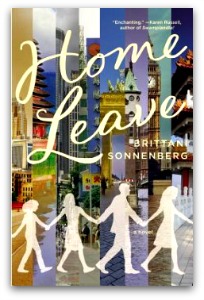
November greetings, Displaced Nationers! I’ve been reading up a storm lately (including Tana French’s latest addition to the Dublin Murder Squad series that I reviewed here this past summer—another great book!). But as I contemplated which work to pull down from my digital bookshelf for this month’s review, my attention came to rest on a super example of Third Culture Kid fiction: Home Leave, the debut novel from Brittani Sonnenberg, which came out earlier this year.

Home_Leave_coverPerhaps I was attracted to this book because the story Sonnenberg tells, about a globetrotting family, reminds me of my own. As some of you may know, I grew up on a boat and spent most of my life before high school outside the US—we were seven years in the Caribbean and two in the South Pacific.

But if it’s my story, it’s also Sonnenberg’s. She spent her childhood alternating between her native US and the UK, Germany, China, and Singapore, and, like many of us TCKs, has opted to become a “chronic expat” in her adulthood. She has worked as a journalist in Germany, China, and throughout Southeast Asia. (Currently, she resides in Berlin but is also a visiting lecturer in Hong Kong.)

Until Home Leave, Sonnenberg was known primarily for her short stories and NPR commentaries about life in Berlin.

In fact, her novel started as a memoir, but then one of her agents encouraged her to try re-approaching the material through fiction.

There must be more to life than having everything!”—Maurice Sendak

Home Leave concerns an American nuclear family, the Kriegsteins. The parents, Chris and Elise, determine to escape their dreary lives in the US by living and working overseas as expats. As Chris pursues a career at several international companies, their two daughters, Leah and Sophie, learn what it is to feel at home abroad and a stranger “at home” in the US. They revel in their uniqueness, but they also sometimes long for putting down roots and living like kids back home.

Sonnenberg makes a creative decision not to have a single character as the protagonist. Each of the Kriegsteins is a main character, and there are multiple narrators.

But for me, the book did have a star, and that was Leah. Sonnenberg links Leah’s emotional and personal success as a young adult to her peripatetic childhood, delivering in her a multifaceted portrait of a Third Culture Kid to whom other TCKs can relate.

“Home is where one starts from.”—T.S. Eliot

Leah is the elder daughter, and her toddler years abroad insert themselves into her identity almost from the moment when the family moves back to the US for a few years. As Sonnenberg writes:

Even Leah, with eleven-year-old pretensions of grandeur, craved a “next,” though her memories of “before” Atlanta were limited to the backyard in London, fish and chips, and falling blossoms in a British park…Leah grumbled that they always went to the airport to pick people up but never went anywhere themselves.

Her wish is granted when the family departs to Asia, where they begin a tradition of going on home leave back to the United States:

Like Persephone’s annual permitted return to her mother aboveground, by the gods in Olympus, the powers that be at Chris’s company will grant the Kriegstein women “home leave” once a year, each summer, when they will stay with friends and relatives, the flights covered by the company. In September they will be forced to leave again, back to China. This habit of home leave will cement Atlanta as “home” in their minds, since they always fly back to the Atlanta airport.

Of course, the price to pay for home leave is a complicated definition of where “home” is. As Sonnenberg writes:

When the Kriegsteins leave Atlanta for Shanghai in 1992…they are desperate to be overseas again. After three months in Shanghai, they will be desperate to return home.

And once Leah is an adult, she faces the classic Adult Third Culture Kid dilemma—how to answer the unanswerable: “Where’s home?” Speaking for myself, I never seem to answer it the same way twice in a row!

But what if one must re-start from tragedy?

There is a further twist to the Kriegsteins’ story, which is that Leah’s younger sister, Sophie, dies unexpectedly in their teen years—another parallel to Sonnenberg’s own life (she lost her own sister, Blair).

If you haven’t read the book yet, please note: to tell you about Sophie’s death is not a spoiler. Her death is referred to in the book before it happens, and at one point, her ghost actually narrates the story.

Now, Leah’s strongest relationship is with Sophie—something any TCK out there will understand. As children in foreign places, Leah and Sophie are sometimes each other’s only playmate. As preteens, they look out for each other in Shanghai and share a conspiracy to run away back to Atlanta—a plan only foiled when airport staff won’t accept their father’s credit card without their dad present.

Not surprisingly, Sophie’s death breaks the teenaged Leah, influencing how she perceives her place in the world and reality for years afterward:

Was Sophie’s death a foregone conclusion in any geography, a heart failure built into her system that would have struck her down on any continent? Later, the doctors would say, “There was nothing you could have done. Undetectable heart conditions are just that: undetectable. You mustn’t blame yourselves.” But because the death will happen in Singapore, its occurrence will be unimaginable anywhere else. Thus, in the parallel (irrational) universe, where they stay in Atlanta, where the good years never end, Sophie never dies.

Likewise, Sophie’s abandonment of Leah comes to affect her definition of “home”:

Years later, as an adult, when asked where she is from, Leah will always say “Atlanta,” as if we come from our joy, as if, aside from their goodness, there was anything to say about the good years.

Living in not-so-splendid isolation

The late, great David Pollock, a recognized authority on TCKs, once wrote*:

The TCK frequently builds relationships to all of the cultures, while not having full ownership in any. Although elements from each culture may be assimilated into the TCK’s life experience, the sense of belonging is in relationship to others of similar background.

Sonnenberg gives us a sense of the disjointedness of the TCK upbringing, and the many identity issues this results in, by having each chapter of Home Leave read like its own short story, with its own narrator. Thus we go from Elise delivering an electric first-person narration of how she coped with her daughter’s death, to therapist appointments written like scenes in a play, to a first-person-plural foray into describing how a group of young TCK women experience university.

Although this style can be jarring for the reader—the book you pick up in the afternoon doesn’t feel like the same book you put down in the morning—taken as a whole, Home Leave feels as fragmented as a life abroad sometimes feels.

Most importantly of all, Sonnenberg’s book does not shy away from the irony of the TCK experience, which is that although a family may travel abroad to broaden its horizons, none of its members ends up having any long-standing relationships except with each other. And, in the case of the family she depicts in Home Leave, even those relationships are uncertain. As the novel’s action unfolds, the older Kriegsteins are shown to be deeply flawed people whose naivety toward the world, and indifference to the needs of their own children, is sometimes astounding.

Home Leave left me feeling sorry for the Kriegsteins: they appear to have been impoverished by their life abroad, not enriched. Throughout the story, I kept wishing they might form a real connection to the places they inhabit and the people they encounter. But, except for the touching scene when Elise is pregnant in Germany, Chris’s ambitions and their own dysfunction buffers them from opportunities to create authentic bonds.

The sections about Shanghai seemed particularly sad, though perhaps that’s only because we see the city partially through the lens of an awkward, pubescent Leah.

But, although not all TCKs will find that the Kriegsteins’ experiences are close to their own, Home Leave is a gem of story suitable for anyone with international experience. And the quality of Sonnenberg’s writing is such that I’m really looking forward to seeing what she produces next.

* * *

Now for a parting thought for my fellow TCKs, some of whom may be feeling rather wistful after reading this review:

Home life is no more natural to us than a cage is natural to a cockatoo.

—George Bernard Shaw

Till next month!

*Third Culture Kids: Growing Up Among Worlds, by David Pollock and Ruth Ven Reken (2009, rev. 2010).

* * *

Thanks, Beth! I note that the New York Times reviewer of Home Leave concluded that in putting Leah at the book’s emotional core, not her parents, Sonnenberg has opened the door for the next generation of international creatives, no mean feat! Readers, any thoughts or responses?

Beth Green is an American writer and English teacher living in Prague, Czech Republic. She grew up on a sailboat and, though now a landlubber, continues to lead a peripatetic life, having lived in Asia as well as Europe. Her personal Web site is Beth Green Writes, and she is about to launch a new site called Everyday Travel Stories. To keep in touch with her in between columns, try following her on Facebook and Twitter. She’s a social media nut!

STAY TUNED for next week’s fab posts!

If you enjoyed this post, we invite you to register for The Displaced Dispatch, a round up of weekly posts from The Displaced Nation, with Alice nominations, exclusive book giveaways and other extras. Register for The Displaced Dispatch by clicking here!

Related posts:
LOCATION, LOCUTION: Fran Pickering, London-based crime writer and Japanophile

Fran PickeringIn this month’s “Location, Locution”, expat crime writer JJ Marsh interviews Fran Pickering, a London-based crime and mystery writer who has lived and travelled extensively in Japan. Her experiences there provide the inspiration for her Josie Clark in Japan mystery series. She also writes about London art and events with a Japanese connection on her blog, Sequins and Cherry Blossom. Her latest Josie Clark book, The Haiku Murder, has just come out, on 13th October. Find out more at franpickering.com.

Which came first, story or location?

Location. I wanted to share my love of Japan in a way that would be interesting and non-academic, so I started writing murder mysteries about an expat Londoner in Tokyo.

What’s your technique for evoking the atmosphere of a place?

I know Japan so well now, I have to think myself back into the mind of a person encountering it for the first time and remember how strange and foreign it seemed to me originally. I go for the little, easily forgotten details – the smell of the drains in Tokyo, the sound of the mechanical cuckoo on the pedestrian crossings in Takarazuka, the complexities of different shoes and socks for different surfaces in a traditional inn. It’s the small things that bring a place alive.

Which particular features create a sense of location? Landscape, culture, food?

Food is very big for me. Japanese people are obsessed with food – they talk about it all the time – but so many people in the West think sushi and noodles is all there is to Japanese cuisine. As Josie investigates the latest murder she needs to ask a lot of questions, and the easiest way to do that is in cafes (she spends a lot of time in Starbucks) or over meals. The sort of meals people eat and where they eat them gives a clue to their character too.

Can you give a brief example of your work which illustrates place?

Here’s an excerpt from The Cherry Blossom Murder:

It was just after nine o’clock. The streets of Akasaka were crowded and noisy. A gaudily decorated pachinko parlour blasted out an advertisement for their new pinball machines, accompanied by an irritating advertising jingle; inside the parlour Josie could see people staring zombie-like at the pachinko machines as the tiny silver balls spun and fell, spun and fell, endlessly fed from the bowl beside each player.The Cherry Blossom Murder

A group of young men and women passed her, the girls in short skirts, one of them loping along drunkenly as the boys held her upright. Behind them came a group of salarymen, still in their work suits, noisily discussing their golf handicaps. They barged Josie unthinkingly off the pavement.

A fortune teller sitting on the pavement behind a table plastered with pictures of hands called to Josie to come and have her future read. For a moment she was tempted, but then she walked on, past Denny’s and Johnny’s and Cozy Corner, all brightly lit and full of people, to the familiar yellow sign of Doutor’s coffee house.

How well do you need to know the place before using it as a setting?

If it’s a real place, then you need to have been there and looked at it carefully. I try and revisit places I write about to make sure I’ve got it absolutely right, and to pick up on aspects I may have overlooked the first time. It’s remarkable how memory can play you tricks, or leave you with a superficial impression. I take photographs of key settings to refer to later.

Which writers do you admire for the way they use location?

Lee Child. He’s an English writer whose books are set in the States with an American protagonist. He really nails it; the flavour of the country leaps off the page. And Ben Aaronovitch, whose Rivers of London series takes you into every nook and cranny of Covent Garden and makes you almost believe that a building on the south side of Russell Square actually does contain the Folly.

* * *

Next month’s Location, Locution: Clare Flynn, whose books are set in Australia and India.

_(75_of_75)


JJ Marsh grew up in Wales, Africa and the Middle East, where her curiosity for culture took root and triggered an urge to write. After living in Hong Kong, Nigeria, Dubai, Portugal and France, JJ finally settled in Switzerland, where she is currently halfway through her European crime series, set in compelling locations all over the continent and featuring detective inspector Beatrice Stubbs.

STAY TUNED for our next post!

If you enjoyed this post, we invite you to register for The Displaced Dispatch, a round up of weekly posts from The Displaced Nation, with seasonal recipes, book giveaways and other extras. Register for The Displaced Dispatch by clicking here!

Related posts:
BOOKLUST, WANDERLUST: Lawrence Osborne’s haunting tale of expats and travel in the Moroccan desert

Booklust Wanderlust Collage

Left: Oleh Slobodeniuk (CC BY-NC-SA 4.0); right: Beth Green (her own photo).

Attention displaced bookworms! Our book review columnist, Beth Green, is back. An American who lives in Prague, Beth mixes booklust with wanderlust in equal measures, which gives her just the right background for reviewing recent book releases on behalf of international creatives.

—ML Awanohara

Thanks, M.L.! And, hello again, Displaced Nationers. With the arrival of fall in the Northern hemisphere, I find myself in the mood to dig into some darker, heavier—more Halloweeny, shall we say?—material.

As a long-term traveler, third-culture kid, current expat, or all of the above in some cases, each of us has at some point or another faced a cultural divide we’ve found it difficult, if not impossible, to cross. Maybe it came down to a clash of religious or political beliefs. Or was it something to do with wealth? There are privileges that come with being an expat—and that, ironically, can cause discomfort.

But perhaps one of the most harrowing breaches of trust occurs when people possess differing concepts of justice.
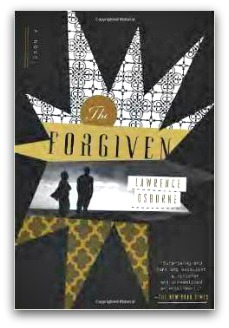
TheForgiven_colorcoverLawrence Osborne’s novel, The Forgiven, wraps all three of these tough-to-tackle subjects into a compelling tale centered around one darkly beautiful “what if”:

What if you accidentally committed a crime in another country?

Every traveler’s worst nightmare

Osborne’s protagonists, David and Jo Henniger, are a wealthy middle-aged London couple who have grown frustrated with each other and jaded about life in general. David is a society doctor in Chelsea who has just lost a malpractice suit and is also beginning to lose patients. Jo is a children’s book writer who hasn’t written a book in some time.

To get a change of scene, and perhaps a new lease on life, the couple sets off to attend a lavish party being thrown by one of David’s school friends, Richard, and his partner, Dally, at their ritzy retreat in the Moroccan desert. It’s a wild weekend-long affair tony enough to have photographers from the New York society pages chronicling it.

Now, that doesn’t sound like my travel scene, but Osborne makes it clear that what happens to Henningers could happen to any of us who dare to venture into unknown lands, where the inhabitants have different religious beliefs to ours, are poorer, and possess an unfamiliar sense of justice.

Jo to David: “I shouldn’t let you, Stumblebum.”

Overriding Jo’s objections, David decides to do the drive from Tangier through the desert in the night even though he has just consumed a bottle of wine.

Jo sulks but lets him drive.

Long after dark, while the Hennigers are trying to navigate the unfamiliar desert terrain, two Moroccan boys leap into the road ostensibly selling fossils though possibly intending to highjack the vehicle. David runs in to one of the young men, killing him. The other boy runs away.

Osborne sets up an unforgettable scene as David and Jo make their entrance to an extravagant expat party with a dead body on the back seat of their car. Not knowing what to do or how the Moroccan police will respond, the Hennigers have taken the corpse with them.

For the hosts, the situation is an embarrassment and a source of annoyance. For their Western guests, it’s a rude interruption and a source of gossip. For Moroccans like Hamid, the head servant of Richard and Dally’s estate, it’s a tragedy that brings out his deep loathing of Western values. For the family of the boy, who arrive the following day to collect the body, it’s both tragedy and crime.

But for David and Jo, it will prove life changing.

Jo to Day (another guest): “It’s like going through the Looking Glass.”

This story, rather than showing how travel erases our differences, puts the notion of “otherness” into high relief. The couple who host the party and many of their friends see Moroccans as as objects of curiosity, wisdom, servitude, and lust. David, less cosmopolitan than his hosts, falls back on traditional colonial values, regarding Morocco and Moroccans as inscrutable and inferior.

By the same token, the Moroccans in the story can’t fathom the Westerners’ lifestyles or motives. They are “unimaginable human beings,” infidels—people who don’t eat with their fingers, who don’t believe in God.

Driss, the young man who is struck and killed by David, wants desperately to break away from the life his father had. He comes from a Berber family that lives in a remote outpost of the Sahara, where children must slave away hacking out Trilobites all day long, with the hope of selling them to Western millionaires.

Driss’s father, Abdellah, more than anything else wants to avenge “the fact that he simply had never known his son at all.”

When Abdellah and his brothers arrive to pick the body up for burial, they demand to meet David. They ask that he travel with them to make atonement. Richard and Dally, keen to get on with the party, assure him that it will be for the best.

Jo to herself: “Who knew what here was artificial and what was indigenous?”

The Forgiven is a tribute to Osborne’s roots as a world-class travel writer and chronicler of the expat life. He takes us behind the scenes and into the inner lives of Moroccans as well as of the expats who choose to live in that part of the world.

Take, for instance, Osborne’s account of Moroccan versus British pessimism:

“The men of the desert know everything,” Hamid said once, like a quote out of Lawrence of Arabia. But they didn’t, really. They were just efficient pessimists, and therefore astute readers of human nature. They always assumed the worst, and that made them correct nine times out of ten. Their pessimism, however, was not like David’s. David was someone who believed that the past was superior to the present, and that was a different sort of pessimist. It was not the entire past that was superior, of course; it was mostly just the British nineteenth to the mid-twentieth century.

Or this passage about how the Moroccan villagers tend to regard Richard and Dally and their wild parties:

It was admitted that they were wealthy and that they spent their money in an exceedingly unwise and profligate way, and that this was much to the advantage of the people.

Jo to Richard: “I dare say I won’t be the same again…”

The story maintains momentum by swinging between Western and Moroccan cultures, leaving the reader almost breathless, not always sure of their footing.

As readers, we guess but aren’t sure if the lumpish David, who is clearly an alcoholic, is still drunk on his midnight drive. Did he mean to hit the young man? And, the victim of the accident—can we say he’s a victim? Flashbacks to the youth’s bravado-filled conversations with a younger, impressionable friend paint him as an unstable character, full of hatred, with a shady past…

Jo, David’s long-suffering wife, is also an enigma. An aging beauty, she feels isolated from the young, frivolous women at the party. Does she love David, or want to leave him? Does she care if justice is exacted? Or does she care only that she be, as the title suggests, forgiven?

* * *

Not wishing to give away any more of the plot, I’ll end by reiterating: Displaced Nationers, in your own experience, which topics tend to open up the widest cultural divides?

Let me also leave you with the epigraph from the novel:

“Many roads do not lead to the heart.” —Moroccan Proverb

Until next time—oh and please drive safely!

* * *

Thanks, Beth! I’ve read The Forgiven and am still haunted by it. Lawrence Osborne is a contemporary writer with a deep understanding of what it means to feel “displaced” by one’s travels. Reading the book gave me thrills and chills, not just for the story but for the beauty and precision of his prose. Readers, does this sound like a book for you?

Beth Green is an American writer and English teacher living in Prague, Czech Republic. She grew up on a sailboat and, though now a landlubber, continues to lead a peripatetic life, having lived in Asia as well as Europe. Her personal Web site is Beth Green Writes, and she is about to launch a new site called Everyday Travel Stories. To keep in touch with her in between columns, try following her on Facebook and Twitter. She’s a social media nut!

STAY TUNED for next week’s fab posts!

If you enjoyed this post, we invite you to register for The Displaced Dispatch, a round up of weekly posts from The Displaced Nation, with Alice nominations, exclusive book giveaways and other extras. Register for The Displaced Dispatch by clicking here!

Related posts:

BOOKLUST, WANDERLUST: Curiosity leads Elizabeth Gilbert’s Victorian heroine to international travel

Booklust Wanderlust Collage

Left: Oleh Slobodeniuk (CC BY-NC-SA 4.0); right: Beth Green (her own photo).

Attention displaced bookworms! Our book review columnist, Beth Green, is back. An American who lives in Prague, Beth mixes booklust with wanderlust in equal measures, which gives her just the right background for reviewing book releases on behalf of international creatives.

—ML Awanohara

Hello again, Displaced Nationers! Since I last wrote, summer has slipped by us. The gradual wicking away of days and weeks puts me in mind of the protagonist of the book I have chosen to review this month: The Signature of All Things, a scientific and historical novel by Elizabeth Gilbert (she of Eat, Pray, Love fame).

The story’s heroine, Alma Whittaker, an early Victorian botanist living in North America, thinks of time as running on three concurrent tracks:
1) Human Time, which goes by as quickly and flittingly as a summer’s day.
2) Geological Time, in which the Earth moves.
3) Moss Time, which reflects the events of both Human and Geological time but moves at its own pace, expanding rapidly.

signature_coverAlma regrets that her life is stuck on the track of Human Time in an era that doesn’t favor women of character, intelligence and strength (but not looks). I found her fascinating and think that you international creatives will find her that way as well for these three reasons:

1) She is a Third Culture Kid and a polyglot.

As the daughter of English and Dutch botanists who eloped to start an empire on stolen seeds in the New World, Alma is a delightful fictional example of a Third Culture Kid. She has an unconventional upbringing at a time when most young ladies of her class were strictly bound by convention.

Gilbert writes:

She learned that walking carefully in the mud to save one’s boots or the hems of one’s skirts never rewarded one’s search. She was never scolded for returning home with muddied boots and hems.

At home, Alma speaks English with her British-born father, an old rascal who sailed with Captain Cook and turned himself into a rare plants and pharmaceuticals baron, one of the richest and most powerful men in Philadelphia; and a mix of classical languages with her highly educated mother. As for her nurse:

[The nurse] always spoke Dutch to Alma, and Dutch, to Alma’s ears would forever be the language of comfort and bank vaults and salted ham and safety.

Alma spends her childhood wandering in the breathtaking gardens and fields of her father’s estate, working on French and Latin, and being regaled with tales of far-flung expeditions at her parents’ dinner parties. She grows into a young woman with a wide breadth of knowledge but a constricted life experience.

2) Alma chooses to expand her horizons through international travel, rather like Gilbert herself.

Many novelists would slow down the narrative at this point, bring in a love interest (and a rival or two), and make the story all about the broadening of Alma’s horizons through a courtship followed by marriage. But Gilbert, who first made herself known to the world through the memoir of her solo travels to Italy (to eat), India (to pray) and Bali (where she found love), isn’t the right author for such conventions.

True, Alma’s youth, measured in Human Time, speeds by, but in the world Gilbert creates, one need not be young to have adventures. Indeed, Alma’s true adventures begin only after she believes she’s past her prime, when she enters Moss Time.

The spark that ignites those adventures is a surprise even to her. While contemplating the passage of her middle years, Alma discovers her passion for researching moss and its evolution. Moss, of course, knows no national boundaries. As Gilbert writes:

Moss grows where nothing else can grow. It grows on bricks. It grows on tree bark and roofing slate. It grows in the Arctic Circle and in the balmiest tropics; it also grows on the fur of sloths, on the backs of snails, on decaying human bones.

After Alma’s marriage fails, she sets sail for Tahiti.

As she takes off, so does the book—at least for me: Alma’s voyage across the Atlantic and Pacific was one of my favorite parts of the novel. Experiencing the long, slow sea voyage through the eyes of someone educated but who, at age 48, had barely left the confines of the family estate made for a compelling read.

“The ocean both stunned and disturbed her. Nothing had ever put more of an impression upon her being,” writes Gilbert. “It seemed to her the very distillation of matter, the very masterpiece of mysteries.”

There are also moments when her innocence clashes with her surroundings, as we see in this passage:

Alma offered payment in American coins, but the man attempted to make change for her from a handful of dirty Spanish piastres and Bolivian pesos. Alma could not figure out how he was possibly calculating his currency exchange, until she realized hew as trading in his dull old coins for her shiny new ones.

3) Alma’s insatiable curiosity is the driving force behind her travels.

It is tempting to see Alma as an extension of Gilbert: abandoning a marriage to travel recalls Gilbert’s break-out memoir Eat, Pray, Love. But in that book, along with its sequel Committed: A Love Story, Gilbert’s primary concern is with her ongoing personal evolution as writer, person, friend and romantic partner. In Signature, by contrast, Gilbert has created a character who as a young girl has already surpassed society’s expectations of what she can become. Alma is an intellectual whiz—fluent in languages, adept at math and strategy, precise in science and research—and a sensitive, caring friend. She’s strong. She’s healthy. But most of all, she’s curious—something I think she has in common with those of us who’ve chosen to live in other cultures.

When Alma reaches 16, she is faced with the decision to throw away a pornographic book or hide it. Gilbert writes:

But what about the cankerworm of curiosity that lived within Alma’s belly? What about its desire to feed daily upon the novel, the extraordinary, the true?

Then when Alma is approaching 60, she finally meets the special someone she has been searching for for years and says:

Allow me to tell you something about myself, for it might help you to speak more freely. Implanted in my very disposition—though I do not always consider it either a virtue or a blessing—is a desire to understand the nature of things.

Interestingly, curiosity seems to have become a mantra for Gilbert these days. On recent speaking tours (with Oprah, for example), she has been offering writers this advice:

Foster your curiosity even more than your passion.

To sum up: The Signature of All Things is not always a page-turner and Alma is not always a likable character, but the book held my attention to the end, in large part because I wanted to find out what happened to Alma. Gilbert’s writing, too, is impressive. Certain scenes in the book—the docks and a moss cave in Tahiti, the Spartan kitchen Alma’s abolitionist sister keeps, the crude sea tales of Alma’s father—are portrayed with such cinematic clarity I will never forget them.

Those who have read the book may know that readers have criticized Gilbert for focusing too much attention on Alma’s (mostly unfulfilled) sexual desires. I did not feel that way. Through the force of her sheer intelligence, Alma takes us closer to a period of our history that wasn’t so long ago, at least in Geological Time, when scientific findings were beginning to challenge traditional beliefs. As the English philosopher Thomas Hobbes once said:

Curiosity is the lust of the mind.

What say you, Displaced Nationers? Are you curious about Gilbert’s latest? Until we meet again, may Human Time roll by slowly for a change. (And if it doesn’t, plant some moss on it!)

* * *

Thanks, Beth! Until I read this review, I hadn’t realized that Elizabeth Gilbert, a member of our Displaced Hall of Fame for her travel memoir, had moved on to fiction. Readers, are you familiar with Signature and Alma Whittaker? If so, were you just as smitten as Beth was?

Beth Green is an American writer and English teacher living in Prague, Czech Republic. She grew up on a sailboat and, though now a landlubber, continues to lead a peripatetic life, having lived in Asia as well as Europe. Her personal Web site is Beth Green Writes, and she is about to launch a new site called Everyday Travel Stories. To keep in touch with her in between columns, try following her on Facebook and Twitter. She’s a social media nut!

STAY TUNED for the next fab post!

If you enjoyed this post, we invite you to register for The Displaced Dispatch, a round up of weekly posts from The Displaced Nation, with Alice nominations, exclusive book giveaways and other extras. Register for The Displaced Dispatch by clicking here!

Related posts:

LOCATION, LOCUTION: Catriona Troth, novelist – from Scotland to Canada to a long stay in the Chilterns

Kat

In this month’s “Location, Locution”, expat crime writer JJ Marsh interviews Catriona Troth, who was born in Scotland and grew up in Canada before coming back to the UK. She has now lived in the Chilterns longer than she has ever lived in anywhere, a fact that still comes as a surprise.

After more than twenty years spent writing technical reports at work and fiction on the commuter train, Catriona made the shift into freelance writing. Her writing explores themes of identity and childhood memory. Her novella, Gift of the Raven, is set against a backcloth of Canada from the suburbs of Montreal to the forests of the Haida Gwaii. Her novel, Ghost Town, is set in Coventry in 1981, when the city of Two Tone and Ska was riven with battles between skinheads and young Asians.

Which comes first, story or location?
In my case, it’s usually a collision between the two. I have a story in my mind, I look for a location, and when I find the right one, some sort of explosive reaction happens that produces something I never anticipated.

Ghost TownHow do you go about evoking the atmosphere of a place?
I think it’s always about the small, telling details. Readers get bored with long passages of description, so you focus on something striking. It’s important, too, that you appeal to all the readers senses – smell and taste and touch as well and seeing and hearing. It’s also important to see setting not as something static, but as it relates to your characters – how they interact with a place, how it looks through their eyes.

Which particular features create a sense of location? Landscape, culture, food?
It depends. In Gift of the Raven, I was mostly evoking wild places, so landscape was important, and the way colours change with light, and the sounds of wild birds. On the other hand, in my novel, Ghost Town, the setting was the Coventry at a very specific point in time. So I was looking for ways to evoke the contradictions of the city – the old medieval buildings, the post-War concrete monoliths, the grandeur of the new cathedral. But also the little things that mark out what it was like to live in the city at that particular time – like which groups of kids hung out where, how they dressed, what music they liked. One thing that was important to me in both cases was weather – a place can be very different in bright sunshine than it is in teeming rain or thick snow.

How well do you need to know the place before using it as a setting?
For me, knowing the location well allows me to give the story texture and depth. I’m terrible for worrying over whether I have got details right! The internet is great for being able to check things like that – but it can also be a terrible trap, hobbling you when you should be getting the bones of the story down.

Could you give a brief example from your work which you feel brings the location to life?
This is the description, from Gift of the Raven, of a lake in the Rocky Mountains, seen through the eyes of a young boy who is just discovering his own artistic talent.

49560-copyofgiftoftheravencovermediumI was at one end of a narrow lake. The other end disappeared off into tomorrow. Below where I stood, the wind ruffled the edges of the water, but out there it could have been polished stone. A stone so blue you could lose yourself in the colour. At either side—like bold strokes of a palette knife from the sky to the lake—were mountains. Green-black pine over an ash-grey beach, peaks of dazzling white snow …

No. The snow wasn’t just white. In the sunshine it was a hundred different colours. Pink. Blue. Gold. You only saw white if you were too lazy to look.

Which writers do you admire for the way they use location?
A book I read earlier this year which I thought was extraordinary in terms of setting was Peter May’s Lewis Man. He managed to capture the way islands of Hebrides change, day by day, with the changing weather, and also the way the character of the different islands change with the character of their inhabitants. Masterly to achieve this while still creating a fast-paced thriller.

Joanne Harris creates a sense of place through tastes and smells – food is almost always a huge part of her books. Reading some of the passages in her books you can feel as if you have just enjoyed a banquet of tastes.

And for a book that evoked both a time and a place, I’d choose Michel Faber’s The Crimson Petal and the White. The scene where the reader is enticed to follow Sugar into the sleaziest corners of Victorian London is spell-binding. I couldn’t put the book down after that.

* * *

Next month’s Location, Locution: Fran Pickering sets her Josie Clark series in Japan. East-West fusion murder mysteries with a cultural twist.

_(75_of_75)


JJ Marsh grew up in Wales, Africa and the Middle East, where her curiosity for culture took root and triggered an urge to write. After living in Hong Kong, Nigeria, Dubai, Portugal and France, JJ finally settled in Switzerland, where she is currently halfway through her European crime series, set in compelling locations all over the continent and featuring detective inspector Beatrice Stubbs.

STAY TUNED for our next post!

If you enjoyed this post, we invite you to register for The Displaced Dispatch, a round up of weekly posts from The Displaced Nation, with seasonal recipes, book giveaways and other extras. Register for The Displaced Dispatch by clicking here!

Related posts:
BOOKLUST, WANDERLUST: Jane Fletcher Geniesse’s biography of the passionate nomad (but displaced expat) Freya Stark

Booklust Wanderlust Collage

Left: Oleh Slobodeniuk (CC BY-NC-SA 4.0); right: Beth Green (her own photo).

Attention displaced bookworms! Our book review columnist, Beth Green, is back. An American who lives in Prague, Beth mixes booklust with wanderlust in equal measures, which gives her just the right background for reviewing book releases on behalf of international creatives.

—ML Awanohara

Hello again, Displaced Nationers! Hasn’t the summer gone by fast? How’s your progress on that reading list you made back in the day when it seemed like the dog days would go on forever?

Well, if you abide by the rule that summer ends with the equinox, then you still have a few more weeks. And if you’re searching for one last read to feed your wanderlust, I would recommend the volume I just now finished: a biography of Dame Freya Stark, one of the most amazing travelers and travel writers of the last century. Called Passionate Nomad: The Life of Freya Stark, it’s by former New York Times journalist Jane Fletcher Geniesse.

Passionate_Nomad_coverDays after reading, I’m still in a daze (so to speak), transported by Geniesse’s tale of this intrepid British war-time adventurer.

Stark is one of those people—we’ve all met them on our travels, haven’t we?—who seems to have crammed many lives’ worth of living into one single walk on Earth.

Born to Anglo-Italian-German parents who made their living painting, growing flowers, and managing textile factories (among other pursuits) across Europe, Stark was the original Third Culture Kid. As she traipsed with her parents across Britain, France and Italy, she had no real place to call home. She was further burdened by her parents’ separation and an emotionally manipulative mother, along with numerous illnesses and financial troubles.

A late bloomer

Though she would eventually achieve renown as a witty speaker who could always be counted on to liven up a party, as a young woman Stark despaired of being able to have her own life. She did not make her first trip to the Orient (as it was known in those days) until age 33.

Perhaps because Stark herself told the stories of her travels in the 25 books she published, Geniesse gives most of her attention to the adventures Stark had before being lionized for her travel exploits and writings. (Geniesse covers the last 40 years of Stark’s life—Stark lived to age 100!—in just one chapter.)

For me, Geniesse’s portrait is most brilliant when recreating the straitened times that preceded the period when Stark became fluent in Arabic, gained a reputation for bravery abroad and published her first articles and books on her Middle Eastern travels.

Geniesse relies on her intuition as well as meticulous research to highlight the details of Stark’s upbringing that help to explain her transformation from a penny-pinching flower farmer in Italy to a voracious student of classical literature, a free-spirited wanderer (she was one of the first non-Arabians to travel through the southern Arabian Deserts), and an internationally respected author, speaker, ethnologist and political consultant.

A misfit in the expat community

In tracing Stark’s life journey, Geniesse provides some sense of her struggle to find a place in the expat communities of the interwar years. On the one hand, she had trouble relating to the other Europeans she encountered on her travels, writing in one of her letters:

[The British missionaries in Lebanon] suffer from stagnation of the brain, and that surely produces stagnation of the soul in time. To feel, and think, and learn—learn always: surely that is being alive and young and the real sense. And most people seem to want to stagnate when they reach middle age. I hope I shall not become so, resenting ideas that are not my ideas, and seeing the world with all its changes and growth as a series of congealed formulas.

But during the period she spent within the expat community in Baghdad while researching her next trip, it was clear her fellow expats weren’t clear what to make of her either. As Geniesse writes:

Freya, now 37, was feeling her earlier despair give way to expanding hope. She could change her life; she had watched herself do it—although precisely to what purpose remained as much a mystery to her as the question of what Miss Stark was doing in their midst intrigued the Baghdad community. Freya enjoyed being directionless, learning purely for learning’s sake—and adjusting, if that was her fate, to a spinster’s life.

Geniesse concludes it may have been easier for Stark to explain herself to the tribes and villagers she encountered during her travels as they had no expectations of how she should be behaving. As a European, Christian woman traveling in remote areas of Yemen, Lebanon, Syria, Persia, Iraq and Iran, she was accepted as a foreigner, while in the expatriate communities there was some expectation that she should conduct herself as a proper unmarried lady.

(In fact she did eventually marry, in her fifties, to a good friend—but the couple separated soon afterwards, when her husband told her he was gay.)

Warts and all

Like all good biographers, Geniesse also highlights Stark’s less flattering qualities. From Stark’s petty rivalry with archaeologist Gertrude Caton-Thompson, to her sharp attitude toward women she felt were prettier than herself, to her irresponsible attitude to money and certain friends, Geniesse shows us the other side of this larger-than-life character. I liked Stark all the more for this mix of traits.

As I got to the end of Genisse’s work, I felt a little bereft. I missed Freya. There is something irresistible about a woman who not only writes her own script for her life but also gives herself a series of challenging parts. As Geniesse says, at the end of her life

Freya had followed her own genius. She had imagined herself as the star in many roles over the years—explorer in Persia and Luristan, Mata Hari at the imam’s court, English plenipotentiary during the war, and humble pilgrim, wandering through Turkey’s ancient ruins.

Next up on my reading list will have to be one of Stark’s own stories, several of which are still in print.

And now, I’ll leave you with a quote from Freya Stark herself, excerpted from a letter to her mother, listing the “7 cardinal virtues for a traveller”:
1. To admit standards that are not one’s own standards and discriminate the values that are not one’s own values.
2. To know how to use stupid men and inadequate tools with equanimity.
3. To be able to disassociate oneself from one’s bodily sensations.
4. To be able to take rest and nourishment as and when they come.
5. To love not only nature but human nature also.
6. To have an unpreoccupied, observant and uncensorious mind—in other words, to be unselfish.
7. To be as calmly good-tempered at the end of the day as at the beginning.”

* * *

Thanks, Beth, for bringing Dame Freya Stark to our attention! And now I would like to offically nominate her for our Displaced Hall of Fame. Readers, had you heard of Freya Stark before reading Beth’s column? What do you make of her? Have you encountered an eccentric like her on your own travels, or does she seem like a product of a previous age?

Beth Green is an American writer and English teacher living in Prague, Czech Republic. She grew up on a sailboat and, though now a landlubber, continues to lead a peripatetic life, having lived in Asia as well as Europe. Her personal Web site is Beth Green Writes, and she is about to launch a new site called Everyday Travel Stories. To keep in touch with her in between columns, try following her on Facebook and Twitter. She’s a social media nut!

STAY TUNED for the next fab post!

If you enjoyed this post, we invite you to register for The Displaced Dispatch, a round up of weekly posts from The Displaced Nation, with seasonal recipes, book giveaways and other extras. Register for The Displaced Dispatch by clicking here!

Related posts: