The Displaced Nation

A home for international creatives

Tag Archives: USA

LIBBY’S LIFE #75 – Glass houses

We’re house hunting again.

I meant to have a serious talk with Oliver about Sandra’s interior design efforts in our home in Milton Keynes, but before I could find the right moment (you have to pick the right moment to talk to Oliver about his mother) we had a sweet little note from our landlady.

She’s given us three months’ notice.

Now, we always knew the lease would finish this July, and after the scene at last year’s Christmas dinner, we’d been looking forward to leaving. It’s just that we’d have preferred to give notice in writing to Melissa before she got there first.

Following her letter, a call to a local realtor told us we should have started looking earlier for a new house, even if it had meant paying two lots of rent for a month or two to secure a place. The woman we spoke to must have attended the same realtor charm school as Melissa Harvey Connor, because she could hardly keep the laughter out of her voice when I asked what rental properties she had on her books. There was nothing to rent in Woodhaven, she informed me, when I listed our requirements.

“And certainly nothing with three or four bedrooms,” she said with a derisive little laugh, as if instead of requesting a modest family home with grubby, 1980s wallpaper I’d asked her for a Fifth Avenue penthouse with views over the Grand Canyon. “I have a one-bedroomed apartment, six hundred square feet. Would you like to look at that?”

One bedroom? Was she kidding? I know co-sleeping en famille is fashionable at the moment, especially among yummy-mummies who carry their babies everywhere in slings and breastfeed until their children are in high school, but it’s not for me. If forced to co-sleep with four sets of limbs, I know I’d get more quality rest if the limbs belonged to two octopi rather than the four humans I live with.

“I expect something will come on the market between now and July,” was Oliver’s comforting, if unsubstantiated, verdict as he channel surfed to find some English football. Soccer, he calls it now.

“And suppose it doesn’t?” I asked. “What then?”

He found an old game between Man U and Arsenal.

“We could always rent in another town,” he said. “We’re not forced to live in Woodhaven.”

“But…”

Technically, he was right. We have no real ties to this town. Jack hasn’t started elementary school yet. But after nearly two years here, I was starting to feel as if I belonged. Moving even ten miles away would take me back to square one. If we were going to live here for another three years with Oliver’s new job, I would like to feel at home for all of it — not spend the first year making new friends and finding my way around again.
I picked up the local paper to flick through the property pages again, to see if I’d missed anything the first four times I’d read the paper.

“Or we could buy,” Oliver said, his eyes fixed on Wayne Rooney.

I wasn’t sure I’d heard him right.

“Buy? Buy a house, you mean?”

“Yeah. I’ve been promoted a few levels, so the company will subsidise a mortgage. I forgot until now.”

“How very male and forgetful of you,” I told him; he didn’t look very pleased with my assessment. “How very Oliver.”

*  *  *

I’ve spent the last few days poring over property websites and coming up with a list of houses in Woodhaven to look at; we’ve lived in the town long enough to know where is a good place to live and where you need to avoid because it’s near a noisy highway or next to a graveyard. Once I’ve got a shortlist together, I look for a suitable realtor to represent us, the buyers, because without one we’re restricted to gazing at the outside walls and gardens of the houses on that list. Only a realtor can get us through the front doors.

The system’s a bit different over here. There are two estate agents in a house sale transaction: one for the buyer and one for the seller. They share the 6% commission they charge the seller, which is why they can all wear designer suits and drive Lexus cars.

The big realty companies have mugshots of their realtors online, and I browse through them. The men have Italian surnames, woffly moustaches, and thick, wavy hair, while the women are dressed in power suits with pearls and bouffant up-dos, and are in the same awkward photographer’s pose with one shoulder hunched up to ear level. It looks most uncomfortable.

I can’t see any particular photo makes me feel confident in the model’s abilities to negotiate property sales, so I run the cursor around the screen while my eyes are shut, and select the photo where the cursor lands: the cyber equivalent of pulling a name out of a hat.

It’s a woman called Donna in a red jacket and big hair and Quasimodo shoulder pose, and she looks familiar — probably because the For Sale signs outside the houses around town have the same realtor photos on them, I think.

When I speak to her on the phone, though, her voice sounds familiar too. It’s only when she’s taken the details of the houses I want to view, and has made appointments for us to view them in a marathon session next Tuesday, that I realise why.

*  *  *

“I know it’s awkward but I think I should phone the office back and ask for a different realtor,” I say to Oliver. “This woman is a real ditz. She was taking Jack’s details at kindergarten registration and couldn’t understand why a British boy born in Britain wouldn’t have an American birth certificate. She probably has difficulty negotiating her way through the supermarket’s self-checkout, never mind legal contracts of for six-figure amounts. She—”

I see Oliver’s face, and stop talking. It’s the Libby-you’re-giving-me-a-headache face. Actually, if I’m honest, I’m giving myself a headache.

“She’s not that bright,” I finish, rather lamely. “But we’re going to see these eight houses on Tuesday afternoon.” I hand him the info sheets I’ve printed off the internet, each with an appointment time written in the top corner. I feel quite pleased with my efficiency.

Oliver gets his BlackBerry out, checks his calendar, and wrinkles his nose.

“What?” I ask. “Can’t you make it? I thought you said you were free on Tuesday.”

“I am,” he says. He waits a bit then asks, “Are you bringing the kids with us?”

“Probably,” I say. “I know it won’t be much fun for them, but it’s a bit much to ask Maggie to have three of them all afternoon. The twins are a handful now they’re both trying to walk. They’re at that age.”

Oliver flicks through the sheaf of house details.

“And what age would that be?” he asks.

He really is unbelievable. His memory’s getting worse.

“Honestly, Oliver. Don’t you know how old your own children are?”

He pauses, then says: “Of course. Do you?”

“Yes, they’re a year old on…”

I clap my hand over my mouth. I’ve just arranged to take Beth and George house hunting for six hours as their First Birthday treat.

“That’s why I said I would be free on Tuesday,” Oliver says. “ Cake, presents, candles. Not ditzy realtors and fusty basements.”

I’m mortified. Oliver grins at me.

“How very female and forgetful of you,” he says. “How very Libby.”

.

Next post: LIBBY’S LIFE #76 – This old house

Previous post: LIBBY’S LIFE #74  – Quarterly accounts

Read Libby’s Life from the first episode

Want to read more? Head on over to Kate Allison’s own site, where you can find out more about Libby and the characters of Woodhaven, and where you can buy Taking Flight, the first year of Libby’s Life — now available as an ebook.


STAY TUNED for next week’s fabulous posts!

If you enjoyed this post, we invite you to subscribe for email delivery of The Displaced Dispatch, a round up of the week’s posts from The Displaced Nation. Sign up for The Displaced Dispatch by clicking here!

Image: Travel – Map of the World by Salvatore Vuono / FreeDigitalPhotos.net

Dipika Kohli on world community art, defining a future, and why “wait and see” won’t cut it

tumblr_m7b7kmftdt1qaqyfmToday TDN welcomes Dipika Kohli, author of The Elopement, which we reviewed in September last year. Raised in America by Indian parents, Dipika now lives with her Japanese husband, Akira, in Durham, North Carolina, where the couple run a design company

Together, they are the driving force behind Stitch, a community art project for which they are currently raising funds on Kickstarter in order to take the project around the globe. 

Dipika, who has channeled her own feelings of displacedness into writing and art, joins us today to tell us more about this exciting project, the first in a series.

We begin with an intro to what Stitch is all about…

Stitch 101

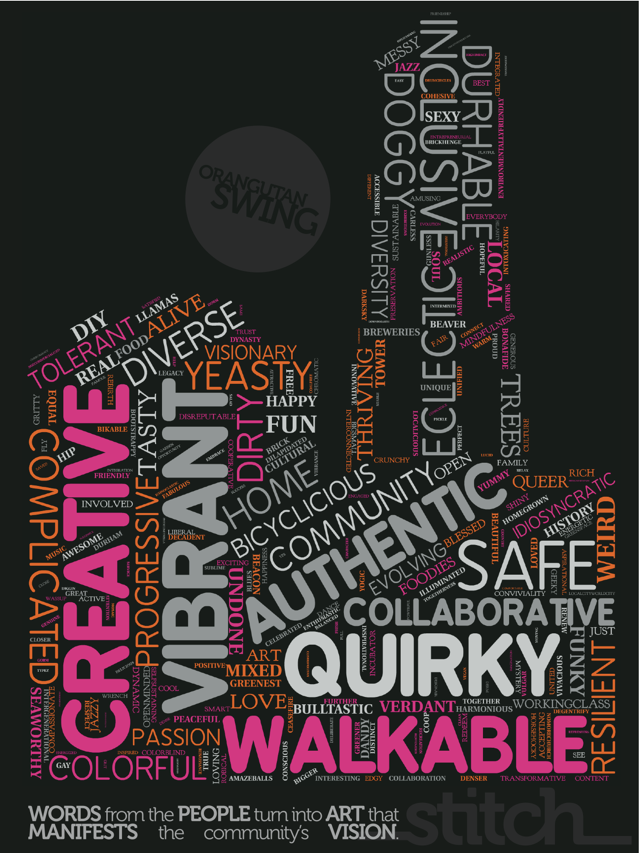
Stitch is about supporting local artists and the art scene; it’s about a community defining the fabric of itself and its future. It’s community art, and an exercise in word-driven intention-setting at the same time.

Dipika and Akira say:

Now, we’re bombarded by images we never chose for ourselves—we let brands and labels do the work to define and express who we are. It doesn’t have to be that way. What if we could choose what we see? In simple, uplifting, people-nominated and people-chosen words and images? Would we, as a community, behave differently? Would we know who we are?

5d4954b68a302fd6081cb8f67e904ad2_large-1

The 276 words representing Durham, NC, in a word-cloud indicating frequency/popularity

For two months, Dipika and Akira talked to hundreds of people in their town of Durham, North Carolina, asking them one question:

What would you like to see Durham become, in one word?

After collecting many words, the residents of Durham voted for those that described their vision of the future Durham — the Durham they would like to be part of.

The resultant 276 words were passed onto two dozen local artists, who created work inspired by these words. Collectively, these pieces create a vision for the town, while money raised from the selling of these pieces will take Stitch to other communities in the world,

“connecting disparate communities with a common thread of art and collective visions.”

And now — over to Dipika:

Insane…or brilliant?

You have to either be insane or brilliant. To do it, I mean. To get up and do the crazy thing that no one believes will ever work. Everyone who says they care about you and your future likes to say, “Just wait, and see.” See if you can save enough. See if you still feel like doing something wild and crazy. Wait. See.

I’m done with that approach.

You see, I’ve been “waiting and seeing” for about a year now. I’ve been wanting to get back on the road, but why? How? What would that accomplish? A little Descartes reincarnation was sitting on my shoulder, niggling.

March, I said, was when I’d pull the trigger. Whether it made “sense” or not to jump ship and move out of my apartment for some unknown adventure ahead.

Taking Flight

March 16. My birthday. The day I launched the book that took me 13 years to get the nerve up to actually publish. So romantic, I thought, to finally upload Flight of Pisces and then move out of my apartment, and “away.” Wherever that might be.

Flight of Pisces was about the time I left Durham, NC, to trek about in India. Footloose and in search of “identity,” I wanted to see the place where my parents originally come from. New Delhi, and Old Delhi. I went solo, and I did it big, culminating in something that all these years later, I shake my head about, thinking, “Did I have some kind of death wish?”

Maybe I did.

Maybe it was survivor’s guilt. Or more, or less. Who knows.

What I do know, and what I can say, is that it had to be the way it was. I had to go and try something that seemed like it was the most absurd and off-the-track kind of thing in the world, in the universe, even, because without having gone and done it, I wouldn’t have ever gotten it. “The glimpse.” A feeling that the world was shifting beneath my feet. And, indeed, it was.

Now, the same feeling is resurfacing.

On the road again

I’m getting lost in the world, again, and on purpose one more time. It’s okay with me that I have a four year-old who’ll be my classmate on this new tour as we go on an educational field trip together to someplace new. I can’t disclose all the details (yet), but I’m trusting it’s going to be okay.

We’ll have just one text with us, in our imaginations. A book that’s got a bunch of blank pages inside, and one image. It’s the cover, and it looks like this:

It’s the drawing I made back in 1994, when I met my husband, Akira Morita. He’s from Japan, and I’m Indian-American, and we eloped to Ireland in 2000. You could say we like to mix it up. Or just trust that we’ll find something wherever we go. One thing’s for sure, we’re always getting to know a bunch of people well, and anyone who’s into the displaced feeling of being elsewhere knows what I mean.

I held a roundtable last year called EXPAT at a place in town called Mad Hatter’s. It’s a little cafe, and about a dozen of us got together to talk about our experiences in places like Ghana, Madagascar, and all parts of Europe, too. Conversations like that made me feel like I was on the road again.

From T-shirt designs to Stitch concept

Now, Akira and I are 18 years older than we were when we met, and we’ve evolved a lot from those days when we thought printing a T-shirt design on a shirt was cool. Our style has gone conceptual, and now we’re doing our biggest art project together yet. It’s called STITCH, and it’s on Kickstarter now through April 28.

Part of the reason we’re doing this is to shape the community for the place where we both have spent the biggest chunks of our life: Durham, North Carolina. But there’s more, too. Lots of things I want to talk about with you in upcoming posts from this new series. I hope you’ll enjoy the journey with me.

Find out more about STITCH here at the Kickstarter website!

* * *

STAY TUNED for tomorrow’s post from our fictional expat heroine, Libby. (What, not keeping up with Libby? Read the first three episodes of her expat adventures.)

If you enjoyed this post, we invite you to register for The Displaced Dispatch, a round up of weekly posts from The Displaced Nation, with seasonal recipes, book giveaways and other extras. Register for The Displaced Dispatch by clicking here!

Related posts:

Born to run the Shikoku Pilgrimage—and write a book about it (which we’re giving away!)

AMY ChavezWe dedicate today’s interview with distance runner Amy Chavez to those affected by the Boston marathon bombings. Our hopes and prayers and encouragement are with you.

When it comes to long-distance running, I couldn’t put it better than the American cowboy Will Rogers once did:

We can’t all be heroes because someone has to sit on the curb and clap as they go by.

I simply haven’t got the necessary strength, both physical and mental, for that kind of endurance test.

Is it any wonder, then, that I’m feeling intimidated by the prospect of talking to Japan-based expat Amy Chavez about her 900-mile run around Shikoku Island? We’re talking ultramarathon here.

The redoubtable Amy hails from Ohio but has lived in Japan for many years, where she is a well-known writer and columnist for the leading English-language newspaper, the Japan Times.

In 1998, she spent five weeks during March and April running the traditional pilgrimage on Shikoku Island. In essence she ran a marathon per day (sometimes more). And although the weather and conditions were pleasant enough—it was cherry blossom season—it was cold at night, and there were many mountains, though the roads were the worst part “because pavement is hard on the feet, knees, etc.”

Last month Amy published a book with Volcano Press about her record-breaking adventure (almost needless to say, she was the first person to accomplish this feat), Running the Shikoku Pilgrimage: 900 Miles to Englightenment—a copy of which we are giving away!!! (Details below.)

But first I want to find out more about what motivated her on her epic—and energetic—journey, including any challenges she faced in writing her book.

* * *

Pilgrimage-Cover_pmSo, Amy, I understand you decided to run the 900-mile-long Shikoku Pilgrimage after being laid off by the university where you were teaching in Japan. What made you think that running vast distances might be the answer?
Physical challenges have a certain appeal. I was interested in the physical journey, as I think most foreigners are when they walk the pilgrimage the first time.

But you didn’t walk it; you ran it!
For some reason I have never discovered the joy of walking. I dreaded the thought of walking 900 miles, the distance from San Diego to Oregon. But running is somehow different. When people go running, it’s not unusual to run 10 km or more, three or four times a week. People hardly ever do that walking. Instead, they walk around the block and come back. Runners don’t do that. We’re in for the long haul.

Did making this journey allow you to see Japan in a new way?
I was able to see Japan much more objectively. I went from being in my own little world where everything was centered around me—thus when my world crashed, so did I—to being an observer of Japanese culture in the framework of the pilgrimage. So there was a fundamental shift from being a part of the university, where the students and the university relied on me, my teaching skills, and my commitment, to being part of the pilgrimage that didn’t really care whether I did those things or not. The pilgrimage doesn’t care whether you show up or not, whether you complete it or not, whether you understand how it works. In other words, it’s not about you at all. So suddenly you’re on the other end, trying to understand what it is that the pilgrimage is trying to give you, on its own terms, and what you can learn and take away from it.

What was your most displaced moment on the journey?
I’d never felt displaced in Japan until I lost my job. It was a very big thing for me because I had put so much time, effort and love into that job. Suddenly, without warning, I was let go, all because I was a foreigner. I just couldn’t get my head around that. So the journey started as a result of this unnatural feeling of being displaced. The people who had treated me like family had suddenly tossed me out on the street. I was searching for ways to deal with my feelings toward Japan and Japanese people.

“The person who starts the race is not the same person who finishes the race.” [Marathon sign]

How did your feelings toward Japan evolve once the journey got underway?
I was able to see the pilgrimage as this microcosm of Japanese culture. If you’re ever wondered why the Japanese do things or act a certain way, you can find out through this historical context of Buddhism, and the Shikoku Pilgrimage which has been walked for over a thousand years. The purpose of the pilgrimage—to reach enlightenment—has never wavered over the centuries.

You became less and less displaced?
Doing the pilgrimage is often referred to as entering a mandala. You have to leave your safe, secure world and cross over into an unknown world where you are no longer in control. Once you accept this, and surrender yourself to the pilgrimage, you will no longer feel displaced.

Wise words! How long did it take before you surrendered?
It happens for different people at various parts of their pilgrimage but for me, this happened about one third of the way through, or two weeks into, the pilgrimage. Suddenly everything fell into place. I had finally learned to go with the flow and let things happen to me rather than trying to control things that happened to me. We are so used to taking control of our lives: we plan our trips down to the finest detail, we budget monthly, weekly and even daily, we get the right job. But life doesn’t care how much you’ve planned. Life continues to throw us curve balls—your car dies, you come down with an illness, you lose your job. Despite our steadfast planning, that’s not how life works.

It’s is not how the pilgrimage works either. Despite your intentions to do something a certain way, the pilgrimage will constantly present you with challenges—things you’d never planned on. Once you surrender to the ways of the pilgrimage, you no longer feel displaced. You no longer struggle with the elements, the terrain or nature. Instead, you become one with them.

Not surprisingly, this is one of Buddhism’s life metaphors as well.

Another ultramarathon—writing the book

I believe you chronicled your Shikoku adventure in the Japan Times?
Actually, I wrote six columns for the Japan Times. I also kept a diary, but that was separate from the columns.

Once you’d decided to write a book about the experience, what was the greatest challenge?
Time. It takes an enormous amount of time to write a good book. It’s all consuming, a full-time job. On top of that, I still had my weekly deadlines for the newspaper and other publications I write for.

Your book is coming out 15 years after you made the pilgrimage. Why the delay?
It’s not unusual to have so many years between a story and a published book. There’s the year (or longer) it takes to write, there’s the year-long (or longer) search for a publisher, the six months negotiation with the publisher(s), and then the two-year process from book contract to published book. So already five years has passed, and that’s with no bumps along the way.

Then there’s also timing. No one was really interested in my story at the time I did it. But things have changed drastically since then. NHK has had a popular TV series about the pilgrimage, previous books about the pilgrimage have run their course and gone out of print (thus creating a demand for something new), and ultra-running has become one of the fastest growing sports in the world.

Did you derive any new insights from revisiting the adventure?
That’s another reason I think you see so many books that are published a decade or so after they happened is because people often need distance before they can really understand their own journey. How can you talk about how an experience has changed you, or changed your life, if you haven’t had time to prove that it really has? Time gives one perspective. And with time comes wisdom. I was just reading a book the other day and couldn’t help but think it would have been so much better if the writer had waited a decade or so tell his story. He, nor his writing, had matured yet; his book had no arc, it offered no wisdom.

So while I wish my book could have been published a long time ago, I know it’s a much better book because I waited.

What audiences do you intend for the book?
There are three: those interested in Japan, those interested in Buddhism, and those interested in running. The book was officially released in March, and the reviews are just beginning to come out, so it’s too early to tell if those are the audiences the book will attract.

How about people who don’t know Japan—would they enjoy it, or would you be running circles around them?
You would have to have some innate interest in other cultures to get the most enjoyment out of the book—which I think most Displaced Nation readers have. But even if you are only interested in people’s amazing feats and accomplishments, you should enjoy the story, too. It is an adventure travel story about a girl who ran 900 miles that happens to take place in Japan.

Running the Shikoku Pilgrimage sounds like a hard act to follow. Are you working on any other ambitious travel projects that will one day be books?
I have an original hand-written diary of my great-great grandfather’s journey through Japan’s Inland Sea to the Philippines on a ship in 1900. In 2004 I decided to trace his journey in a sailboat. Unfortunately, the trip was cut short when we had to be rescued at sea, and we lost the boat. Determined to finish the trip, however, we bought another sailboat and set out again in 2012. This time we finished the trip despite dodging four typhoons, two tropical storms and running into a reef. I haven’t decided whether the title of the book should be Little Titanic or Storm Girl.

What do you think?

Love it! (Hmmm … the limb doesn’t fall far from the tree.)

10 Questions for Amy

Finally, I’d like to ask a series of questions that I’ve asked some of our other featured authors, about your reading and writing habits:
Last truly great book you read: Jules Verne’s Twenty Thousand Leagues Under the Sea. It’s always the last great book I read.
Favorite literary genre: Adventure travel, memoirs.
Reading habits on a plane: E-books only. Whatever is stacked up still waiting to be read. I also read tons of magazines.
The one book you’d require President Obama to read, and why: Any book on the current farming industry and feedlots. Save the cows!
Favorite books as a child: Anything about horses.
Favorite heroine: I admire Nora Ephron.
The writer, alive or dead, you’d most like to meet: I’d like to go fishing with Ernest Hemingway.
Your reading habits: Mostly non-fiction. More and more creative non-fiction. A little bit of fiction.
The book you’d most like to see made as a film: I’ve learned that books and film are completely different genres, so don’t dare compare them.
The book you plan to read next: Right now I’m reading The Annotated Reminiscences of Lafcadio Hearn. Next I’m going to read Strength Training Past 50. (Hey, you asked!) Oh, I might read Waging Heavy Peace, by Neil Young, before the strength training one, but I haven’t decided yet. Oh, I just remembered, my Dad wants me to read A Conflict of Visions: Ideological Origins of Political Struggles, by Thomas Sowell, so I better read that one next.

* * *

Readers, now it’s your chance to ENTER OUR DRAW TO WIN A FREE COPY of Amy Chavez’s book. Please leave a comment telling us about a physical challenge you’ve set for yourself, preferably in an international setting, and what it taught you. Extra points if you’re a Displaced Dispatch subscriber!!!

The winner will be announced in our Displaced Dispatch on May 2, 2013.

Readers lucky enough to live in the LA area: Amy will be signing books and meeting readers at the LA Times Festival of Books April 20 held on the USC campus, Los Angeles. Look for her in the Kinokuniya booth from 12:00 to 1:30 p.m. Copies of her book also available for purchase. April 21, she will be speaking at the Koyasan Buddhist Temple in Little Tokyo from 1:00 p.m. Public welcome.

STAY TUNED for tomorrow’s post and for a post on Friday about our fictional expat heroine, Libby. (What, not keeping up with Libby? Read the first three episodes of her expat adventures.)

If you enjoyed this post, we invite you to register for The Displaced Dispatch, a round up of weekly posts from The Displaced Nation, with seasonal recipes, book giveaways and other extras. Register for The Displaced Dispatch by clicking here!

Related posts:

Images: Amy Chavez; Meditating Cat (a character in the book); and Daruma Doll (drawing by Deborah Davidson)—all supplied by Amy Chavez, with permission granted by Davidson. The other two images—of the running feet and the cherry blossoms—are from morguefiles.

ENGLAND VS NEW ENGLAND: The arcane laws of taxing and tipping

Libby New EnglandFor just over two years, readers of the Displaced Nation have had the treat of following a novel-in-progress by Kate Allison called Libby’s Life. It’s the running diary of Libby Patrick, an Englishwoman who has trailed her spouse to a town just outside Boston. Libby’s Life is rich in Kate’s observations about life in New England vs. England. In the weeks when she doesn’t publish an episode (she is now up to #75!), we plan to feature posts by writers who are sensitive to the often-subtle differences between new and old worlds. First up: James Murray, a young Brit now living in Boston.

–ML Awanohara

Hey, where did all my money go?

Apparently it’s all to do with my upbringing — I remember with almost preternatural clarity, learning how to shop in an English supermarket. You had a list. You found the things on the list. Where there was an element of choice — this brand of toothpaste or that one — you looked for the special offers.

Only people with money to throw away would ever buy the branded cereal, unless they were on holiday, because really, how much difference is there in taste?

I learned the arts of thrift in Tesco of a Wednesday morning. My guiding words were “2 for 1” and “Special Offer” — and a treat was especially permitted if it was drawn from the holy well of the Reduced section.

Prices — written numbers — were important in those innocent days. They told you clearly and precisely how much you could expect to pay for the things you put in your trolley. You could even add it up as you went around the shop.

Taxed by state taxes

Not so in New England. Here in Massachusetts a quick turn around the supermarket for say $56.59 worth of groceries will actually cost you $60.12 –and unless you happen to be quick with your percentages, you more than likely won’t know how much you’re spending until it’s totaled on the cash register.

This isn’t new to anyone who’s been to pretty much anywhere in the States. Most states have a sales tax, with varying rates, and it’s hardly ever included on the price tag for whatever you’re buying. So if (God forbid) you only have so much cash and you’ve been carefully estimating the total in your head as you go shopping, you might find that you need to leave an item behind when you check out.

I have a healthy fear of being ripped off or paying over the odds. It took me some time to let go of the expectation that I would know exactly how much I was spending — and as soon as I did, I discovered the much larger grey area: tipping.

Price is not only contingent on the face value of an item; it’s also contingent on culture. In the States, as most people know, there is a culture of not paying bar and restaurant staff a living wage, which means that they rely on tips.

The tipping point

When I was tipped as a barman in the UK, it was a perk — a small one. I would have been floored if anyone had tipped me 20 percent and especially floored if they’d insisted on tipping me an extra 60 pence (or a dollar) for each drink I served them — but such is the expectation in New England.

Okay, there are differences to the working culture of bar staff — table service, for one — which mean that the staff actually earn their tips. But it’s often expected even if you order at the bar and do the walking to fetch the food yourself. In terms of hidden costs, a meal out is pretty pricey, especially when there’s that 6.25 percent tax on meals added in there. You basically pay over 125% of the menu price if you’re being a good citizen.

And if you’re coming from the UK, all that this tipping will buy you is a lot of extra attention that you don’t want. The Brits are a private people when it comes to eating out. In our part of the world, good service is characterized by quiet diligence. If we get asked three times in the course of a meal “How is everything?” it just starts to rub us up the wrong way. We begin to ask ourselves: “Why are you asking? Should there be something wrong with it?” They’re just “earning” that tip, but it can initially feel like solicitation.

Tipping also creates unintended outcomes, one being that if you enter smaller bars at peak times and sit down at a table, you will be expected to eat. If you then reveal that you’re actually just after a drink, you might see some of the rudest service you’ve ever experienced. Tables are prime real-estate, where you can cram in the eating customers, which means higher order value, which means more tips.

I’m generalizing of course, but I never used to even think about buying food in most UK pubs, whereas in Boston it’s sometimes hard not to.

Hey, it’s only money!

With the financial anxiety of living on savings (the default position of a new immigrant), I’ve fought the urge to resent the little extra slices of cash that get siphoned off on a daily basis.

My new mantra is not “2 for 1” or “Look for the offers.” Instead I say to myself:

Just let it go — it’s just the way they do things here.

* * *

So, readers, are you surprised as Murray’s sense of displacedness on money matters? Perhaps some repats to the U.S. can also relate? Please leave your thoughts in the comments…

James Murray is a self-described “itinerant Brit.” After a stint in New Zealand, and some travel in Southeast Asia, he and his American girlfriend — now wife — are practicing “staying put” in Boston, where James is pursing a career as a wordsmith for marketing and fiction, and as a non-professional theatre director. He is also a Utopian idealist and SingStar enthusiast. You can find more about his views by reading his blog, Quaint James, and/or following him on Twitter: @quaintjames.

STAY TUNED for next week’s fabulous posts, including a new giveaway!

If you enjoyed this post, we invite you to register for The Displaced Dispatch, a round up of weekly posts from The Displaced Nation, with seasonal recipes, book giveaways and other extras. Register for The Displaced Dispatch by clicking here!

Related posts:

Images from MorgueFile

LIBBY’S LIFE #74 – Quarterly accounts

April 1, 2013.
One quarter of the way through the year. Time to check in with those New Year’s Resolutions. In the wee hours of January 1st while being kept awake by the neighbours’ illuminated, inflatable Christmas decorations, I promised myself I would do certain things this year.

In no particular order:

1. Talk to Maggie about her taking permanent custody of Fergus.
Check. Not only did I talk to Maggie, but the mission was successful. Maggie and Fergus are happy, I am happy, and as Jack is no longer snacking on high-calorie, gourmet dog biscuits, the paediatrician is also happy. Jack, however, still suffers from Fergus-withdrawal symptoms. Would a goldfish or two fill the pet void, I wonder? Or is Jack merely suffering from dog-biscuit-withdrawal symptoms? We could give the goldfish a try, I suppose. If it turns out it’s pet food Jack misses, he’ll have a hard time putting on weight if he starts pinching Goldie’s fish food.

Unless Sandra comes to visit and she buys him a piran—

No. Don’t even think about it.

2. Check out the local elementary school and enrol Jack for kindergarten.
Another tick in another box. Jack will start kindergarten after Labor Day, just six months from now. After last week’s school assembly for the parents of prospective kindergarteners, when we were all assured our offspring were Special And Important, we were herded into a series of classrooms where we sat on miniature chairs, banged our knees on miniature desks, and handed over paperwork to assorted admin assistants, to enlist our children in the academia sausage machine enrol our children in the Class of 2026.

The admin assistant to whom I gave my paperwork was, not to put too fine a point on it, not very bright.

She had a clipboard with a sheet of paper that said “Kindergarten Registration Checklist.” Nothing complicated on the list, until we came to the item that requested “US Birth Certificate.”

I handed her Jack’s, which, as he was born in Milton Keynes, was issued in the UK.

She looked at it, turned it over and back again, then asked, “Which state was he born in?”

Assuming she meant “State” in the sovereign sense, I said, “United Kingdom.”

A pause while she held the certificate up to the light.

“Is that like Puerto Rico or Guam?”

“No. It’s like England or Scotland.”

This time, a frown.

“So, it’s, like, not a state in the USA?”

“No, it’s Great Britain.”

“Britain? You mean British?”

I nodded, daring to hope we were getting somewhere. Silly me.

She jabbed at the clipboard with her pen. “I need a US birth certificate.”

“But I can’t give you one.”

“Then I can’t complete the registration form. Can you get a US birth certificate?”

For the love of God. I saw the Principal walking by and called out to him:

“Could you please explain to this lady why I haven’t got an American birth certificate for my son and why I’m unable to get one, and why it doesn’t matter?”

Eventually we got it sorted out.

As I signed the forms that condemned Jack to thirteen years of compulsory schooling with no parole, I asked the woman, “Do you work here?”

The idea that our local taxes paid her to work among impressionable children was quite alarming.

She shook her head. “I’m on the PTA, just volunteering tonight.”

That was a relief.

“So you know Jodee Addison?” I asked.

“Of course! We did our realtor training together.”

Realtor? Aha! It was all becoming clear now.

“What about Melissa Harvey Connor? Do you know her as well?”

A beaming smile. “Everyone knows Melissa! Is she a friend of yours?”

I tucked all Jack’s paperwork carefully in a manilla folder, then stood up to let the next person in the queue have their turn in the torture chair.

“Absolutely not,” I said.

Talking of Melissa: 3. Find another house.
Yes, we really should get round to finding somewhere else. It would mean paying two lots of rent if we found somewhere now, though, because Melissa won’t release us from the lease early.

The cow.

4. Make friends based on their personalities rather than nationalities.

And — check! My new friend from kindergarten registration evening, Willow Reeves, is not English, but as American as they get.

After we’d both finished being tortured by the PTA, Willow said to me “Got time for a coffee?”

Only she didn’t say “coffee.” She said “cawfee.”

“Sure,” I said. Because I can say things like “sure” now and not feel like a Brit trying to be American.

“Maxwell Plum?” she said. “The owners are friends of mine.”

Willow Reeves and Anna Gianni. Yes, that made sense.

5. Go to England and see what sort of a dog’s dinner Sandra has made of our house.
Over Maxwell Plum espressos — not a good idea, in retrospect; those babies pack more caffeine than a Red Bull reduction, and it was already 8 p.m. — Willow and I exchanged life stories. She’s originally from Brooklyn, New York, which is why we were having cawfee together instead of coffee.

“So you’re telling me,” she said, “that your mother-in-law, who gave you food poisoning at Thanksgiving, regifted you a pit bull for your wedding anniversary, and bought a tarantula for your three-year-old, is living in your house in England? And you haven’t checked on that house since she moved in?”

I gazed down into my espresso. “Yep.”

Willow leaned back in her chair. “Looks are so deceptive,” she said. “You don’t seem insane on the outside, but you must be. Aren’t you worried about your home?”

“Of course,” I said. “But what can I do? I’m 3000 miles away, and she’s my husband’s mother, not mine.”

“You need to visit,” Willow insisted. “I had some friends who sublet their apartment in New York while they went travelling for a year, and the subtenants did all kinds of shit to the apartment. Guess who had to pay to put it right? Not the subtenants.”

“What sort of ‘shit’?” I asked.

“The absolute literal kind. These guys kept adopting stray cats. When the ASPCA went in, there were 37 in this one-bedroomed apartment and only two litter trays.”

I shuddered.

“And you say your monster-in-law likes animals?” Willow said. “Well, honey, I just don’t know why you’re sitting here having cawfee. If it was me, I’d be heading over to Logan for the next plane home.”

April 5.
For the last few days, have been thinking over what Willow said. She’s right. It’s time for another trip home.

Oliver and I need a little talk.

.

Next post: LIBBY’S LIFE #75 – Glass houses

Previous post: LIBBY’S LIFE #73  – Stuck in my craw(fish) 

Read Libby’s Life from the first episode

Want to read more? Head on over to Kate Allison’s own site, where you can find out more about Libby and the characters of Woodhaven, and where you can buy Taking Flight, the first year of Libby’s Life — now available as an ebook.

 STAY TUNED for Tuesday’s post!

If you enjoyed this post, we invite you to subscribe for email delivery of The Displaced Dispatch, a round up of the week’s posts from The Displaced Nation. Sign up for The Displaced Dispatch by clicking here!

Image: Travel – Map of the World by Salvatore Vuono / FreeDigitalPhotos.net
Eight months into my expat life, two roads diverged and I — I took the one home

Kat Collage_dropshadowToday we welcome back Kat Selvocki to the Displaced Nation. She wrote for us once before: a travel yarn about spending Christmas in Europe with friends. She had just been toiling in the farmlands of Iceland as a volunteer, and was about to head Down Under to begin a new life as a yoga instructor in Sydney. Now, just over a year later, she is back in the United States. What happened? Here is Kat’s repatriation story.

— ML Awanohara

As my year-long working holiday visa for Australia began to wane, I started considering my options.

Or rather, my option.

I teach yoga: a career that doesn’t generally allow for work sponsorship. I also had a rocky relationship with my Australian boyfriend.

The only I way I could feasibly stay in Sydney was to enroll in a course.

I’d heard tales from other expats of reasonably-priced options — reasonably-priced meaning anything under $8,000 a year — but knew in my heart it wasn’t going to work. I no longer had that kind of cash in the bank, and even if I had, you wouldn’t catch me spending it on some ridiculous “business basics” class.

It wasn’t that I necessarily wanted to stay; I just wasn’t sure I wanted to uproot my life after spending just eight months building a new life in Australia. There were places I still wanted to visit in that vast country, things I still wanted to do. And I loved the classes I was teaching.

But then I got glandular fever — commonly known in the US as mono, or the kissing disease. A month into fighting overwhelming exhaustion, all I wanted was for things to be easy again. In the end, it was having a such a debilitating illness that drove me over the edge.

I bought a plane ticket home.

The three emotions of repatriation

First came relief:

  • No more comments about how my tattoos, taste in music, or style were “too American.”
  • No more complicated calculations to figure out when friends or family would be available to Skype.
  • No more job rejections on the basis of not being a citizen.
  • And most importantly: central heating in abundance — finally, I’d stop getting sick so often!

Self-doubt followed. I’d spent years wanting to live as an expat, and when I finally had the opportunity, I’d been utterly miserable.

Had I failed, or not tried hard enough?

Should I have fought to stay longer, or at least until the end of my visa?

Were my reasons for leaving the right ones?

Why hadn’t I applied for that job working at a roadhouse waitress in the Outback, so that I’d at least seen more of the country?

Next up: fear. As I headed off to Oxford, UK, at the end of last year, to spend Christmas with friends before returning to the States to seek work, the wheel had come full circle. As reported on this blog in December 2011, I’d spent my first Christmas away from family, in Europe, on my way to a new life in Australia.

Whereas before I’d been full of excitement and anticipation, this time I was full of worry. I worried about how welcoming people would be when I returned. So many of my relationships had disintegrated while I was away, and I wasn’t sure if that was because of distance or because people were fed up with my use of Aussie slang in our conversations … or was it all my whining about being so bloody tired? (Hm, there’s that slang again!)

I had no idea whether finding work would actually be any easier, especially considering the much higher unemployment rate in the US.

I didn’t know how to talk about my time in Sydney without sounding bitter or depressed — but was also afraid that even if I sounded upbeat, people wouldn’t care to hear about it.

Old habits die hard…

I’d always believed that if something doesn’t work, you can simply head back to the place you were before.

Suddenly, I wasn’t so sure about that.

I had decided to move back to Seattle, a city where I’d lived eight years earlier. But would that be a terrible mistake? I pictured trying — and failing — to recreate the life I’d loved before.

Last time I wrote for the Displaced Nation, I reminisced about the four months I’d spent living in Prague on a study abroad. What I didn’t report was the depression and reverse culture shock I battle against upon returning to the United States.

If that were true after a mere four months, what impact would a year-and-a-half away have? Would I be feeling even more out of place? I dreaded the long readjustment.

I also worried about money, and whether I had enough to get settled again quickly.

…or do they?

As it turned out, I needn’t have worried. (Except for the money concerns. Then again, I’m convinced that no matter how much I’d saved before returning, I still would have worried.)

From the moment I stepped off the plane, it was as if someone had flipped a switch inside of me. Even though things had changed — something that was particularly evident in New York City, which I passed through on the way to the West Coast (I’d lived there after Seattle) — it all felt normal. Easy. Almost as if I’d never left. My internal map and compass worked again; I knew where I was and where I was going.

And I still believe that — even though, two months after returning to the States, I continue to look the wrong way when crossing the street.

* * *

Thanks, Kat, for sharing your story. I found it very moving. Readers, any comments, questions for Kat — any similar stories to share?

Kat Selvocki — badass yoga instructor, photographer, writer and traveler — is currently kicking ass and taking names in Seattle after returning from her expat adventures. Learn more about her on her Web site: KatSelvocki.com. You can also follow her on Twitter: @katselvocki.

STAY TUNED for the final post in our fashion and style series, by the ever-so-stylish Kate Allison! (Well, she certainly has flair!)

If you enjoyed this post, we invite you to register for The Displaced Dispatch, a round up of weekly posts from The Displaced Nation, with seasonal recipes, book giveaways and other extras. Register for The Displaced Dispatch by clicking here!

Related posts:

images: (clockwise, starting top left) Chelsea Market, NYC; Capitol Hill, Seattle; Circular Quay, Sydney; Chelsea Market, NYC; The Rocks, Sydney; in the air when flying from Sydney to Melbourne; Pioneer Square, Seattle. Center shot of Kat Selvocki was taken in Seattle. All photos are Kat’s with the exception of the Circular Quay in Sydney, which came from Morguefiles.

LIBBY’S LIFE #73 – Stuck in my craw(fish)

Beth is in possession of her wooden box again. I, however, am in possession of a new enemy. Ah well. I suppose it’s about time.

Last week I met Crystal’s mom, Jodee Addison. In the nursery school parking lot, we returned our respective offspring’s stolen Valentine gifts as if exchanging ransom and hostage — each of us with a different opinion of which item was hostage, of course. Ms. Addison, whom I was liking less and less each minute, was determined to have the last word.

“Crystal was heartbroken this morning when I told her she had to give the box back,” she said, holding tightly onto said box even as I tried to take it from her. “She wouldn’t get dressed or eat her breakfast, so I ran her a bubble bath to soothe her, but bless her heart, she was so upset about the box she threw all her American Girl dolls and their clothes in the bathtub.”

Jack has had a lucky escape from this girl, if you ask me. I’d just seen her going into school wearing a pink plastic tiara and a T-shirt with the word “Princess” on the front. While I object to calling small girls “princess” on the grounds they need no further encouragement in that department (“Princess” is merely a euphemism for “Spoiled Brat”) it was Crystal’s Coach handbag that bothered me. All the other children at nursery school have Angry Birds or Dora The Explorer backpacks, but no — Crystal has a Coach handbag. It might be a cast-off from her mother, but I wouldn’t bet on it.

And I’m meant to feel sympathetic because she can’t have one of my own daughter’s Christmas gifts?

“Perhaps she needs some help,” I suggested, firmly taking hold of Beth’s wooden box.

Jodee sighed and raked French-manicured nails through her ash-blonde extensions. Carefully, so as not to pull them loose. “She has anger issues.” (Trendy-Mom-speak for “Temper tantrums”.) “I hear there’s a really good paediatric therapist in town. Maybe I should contact her.”

I nodded, with what I hoped was a sincere expression on my face. “On the other hand, I hear Supernanny is doing a new series. Maybe you should contact her instead.”

It took a few seconds for the penny to drop, by which time I was safely locked in my car.

Well. Honestly.

*  *  *

So, that was last week. This week, it’s time to set a new era in motion: tonight, I am going to the local elementary school for Kindergarten Registration Evening.

Kindergarten in American schools is what they used to call Reception Class when I was Jack’s age. It’s ABCs, 123s, fingerpainting, and nap-time. The children start when they’re five-going-on-six, and only do half a day for the first year, so the daily routine won’t be much different from how it is at the moment. Nevertheless, I feel quite emotional at the prospect. My baby is going to Big School.

I get ready with more care than usual, and even remember to put makeup on. When you’ve lived in Woodhaven long enough, you know not to turn up at public events in the first rags that come out of your closet, because all the other parents will be sizing you up and making decisions about whether, based on his mother’s appearance, your child will be a suitable playmate for their child.

It’s very stressful for a slob like me.

I find the school OK; I’ve driven past it numerous times in the last eighteen months on the way to the supermarket. This is the first time I’ve been inside the school gates, however, never mind inside the building itself, and although I’ve arrived in plenty of time before the official start of 6pm, there’s already a Mom-war going on for prime parking spaces. I find a space easily enough at the back of the car park, and stay there, watching the power struggle.

The parking lot is a heaving mass of SUVs. Small Subarus driven by mousy moms are being bullied by outsize Lincoln Navigators — everyone round here has a 4-wheel-drive car because of the Massachusetts winters — which in turn are looked down upon by Porsche Cayennes. “I’m a mother of three so I have to drive a big car, but at least it’s a Porsche” is what those cars say. Lincoln Navigators generally have bumper stickers advertising the local high school lacrosse team, and are driven by only-just-right-side-of-forty blondes with a cellphone permanently attached to one ear. Occasionally, a large pickup truck with plumbing advertising decals comes along, and all other cars stop and let it pass. You don’t argue with pickup trucks. They’re the T-rexes of Car World.

As I sit in my nondescript Ford, a monster black SUV pulls into a slot two rows in front, and, true to stereotype, a woman with blonde hair extensions gets out with a cellphone stapled to the side of her head. I idly gaze at her for a moment before realising who it is; then I swear loudly (eliciting a startled look from the man who is getting out of the car next to me), slink down behind the steering wheel, and hope Jodee Addison doesn’t notice me.

For some reason, it didn’t occur to me that other parents from Jack’s nursery school would be here tonight, but now I think about it, everyone from his current school and also from Patsy Traynor’s, where he went last year, will be registering for kindergarten this evening.

After a few minutes, I peep cautiously over the dashboard. It’s a couple of minutes before six, and the parking lot is magically empty except for a few parents power walking towards the school’s front door. I clamber out of the car and attempt to power walk too, but my high-heeled boots won’t go faster than a teetering hobble.

Inside the school, I follow the other straggling parents to the gymnasium, where all the seats are taken and the noise is intense. Front rows are occupied by the hair-extension types, Jodee Addison included, still yapping on their cellphones; middle rows are full of married couples, the men in their work suits, looking stiff and uncomfortable and trying to loosen their ties, here to show that they are caring fathers who take an interest but really longing to be at home with a Michelob and ESPN; and the back rows are occupied by mothers on their own with two or three small children in tow. The children are either crying, crumbling Goldfish crackers on the floor, or bobbing up and down on their seats to play peek-a-boo with the people behind them. I send up a silent “thank you” that Oliver was able to leave work early today, and I don’t have to join this throng of RMS Titanic third-class inmates.

And then, at the very back, in the “standing room only” section, are people like me who didn’t quite make it on time. We are doomed; classified already as parents who aren’t as serious as we should be about our children’s education.

A bearded man approaches the lectern at the other end of the gym and introduces himself as Dr. Felix Roth. He is the Principal of this establishment, he says, and has been an Educator for forty years now.

The woman standing next to me, a curly redhead about my age with heavy eye makeup and an armful of silver bangles, shuffles impatiently.

“We believe your children are the most precious resource we have,” Dr. Roth is saying. “They are all special. We truly believe that. We nurture that sense of being special, that self-esteem, that feeling of being important to the community, in every single child.”

He introduces the head of the PTA, and I’m not surprised to see that it’s Jodee Addison. She must have older kids here.

“Special and important,” she begins, as she adjusts the lectern’s microphone. “That’s how this school makes our kids feel. It’s how my kids feel.” Yes. I know this already. “Every morning, the teachers at this school do affirmations with our kids to make them believe the world is their oyster.”

The redhead snorts softly, and I glance sideways at her. She smiles apologetically and leans across to whisper.
“Last year, that PTA woman got it wrong. She said ‘lobster’ instead of ‘oyster’. The sad thing is, I think I was the only one who noticed.”

Jodee’s finished her little seafood speech, and plays a Powerpoint presentation of five-year-olds with gappy mouths and inky fingers doing various kindergarten activities. Then she cuts to a short video of them chorusing “We are all Special and Important.”

My neighbour covers her mouth with her hand, but not before a giggle escapes. I meet her eyes, and can’t help giggling too.

“Did you ever hear such a crock?” she says as a round of applause bursts from the more earnest parents. “And they wonder why kids today are such entitled narcissists.”

I like you, I think. Another voice of sanity in Woodhaven.

I hold out my hand. “Libby Patrick,” I say. “I couldn’t agree more with you.”

She takes my hand and shakes it.

“Willow Reeves,” she says, and smiles. “Thank God for a like-minded parent.”

So, although I might have made a new enemy this week, I think I made a new friend as well.

Hey. Win some, lose some.

.

Next post: LIBBY’S LIFE #74 – Quarterly accounts

Previous post: LIBBY’S LIFE #72  – Puppy Love

Read Libby’s Life from the first episode

Want to read more? Head on over to Kate Allison’s own site, where you can find out more about Libby and the characters of Woodhaven, and where you can buy Taking Flight, the first year of Libby’s Life — now available as an ebook.

 STAY TUNED for Tuesday’s post!

If you enjoyed this post, we invite you to subscribe for email delivery of The Displaced Dispatch, a round up of the week’s posts from The Displaced Nation. Sign up for The Displaced Dispatch by clicking here!

Image: Travel – Map of the World by Salvatore Vuono / FreeDigitalPhotos.net

Marry a diplomat, travel the world and write expat guides: Talking to new author Véronique Martin-Place

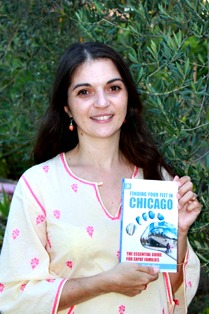
Veronique and her bookAs some readers may know, before the Displaced Nation, I had my own blog, called “Seen the Elephant” — which I used as an outlet while struggling to readjust to life in America after having lived abroad, in England and Japan, for quite a few years. (The name for the blog came from the expression used by Victorian travelers: “Been there, done that, seen the elephant.” Which is how I felt…)

It was because of that blog that I got to know today’s guest, Véronique Martin-Place, since she, too, was quite active in the expat blogging world.

And when I found out she was a Frenchwoman living in Chicago, I was intrigued. What did she make of the city of broad shoulders, jazz, and deep-dish pizza?

I asked her this and a host of other questions in an interview for my blog. For starters, she said that she and her family — her husband is a French diplomat and they have two young daughters — were gradually finding their feet in Chicago. (She did not, however, mention she was planning to write a book of that title!) She didn’t entirely approve of America’s throw-away society and still cooked every day for her family — she even offered her recipe for “real” vinaigrette in the comments. She also reported she’d seen plenty of elephants while living in Sri Lanka (her husband’s second assignment, after Norway).

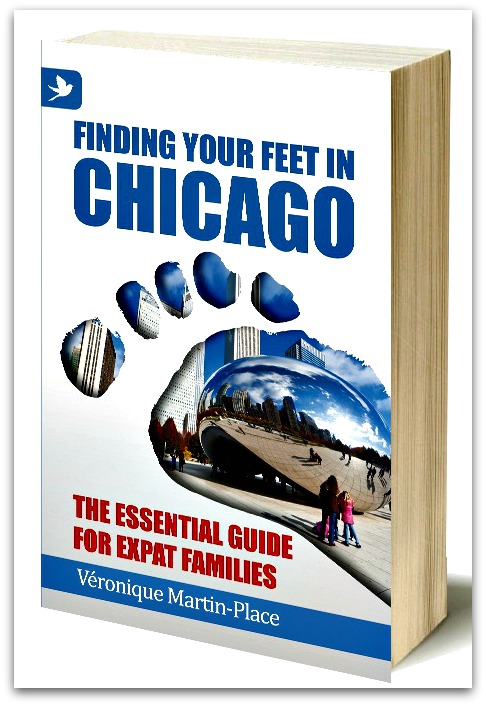
Véronique leads life in the fast lane. A little over three years since our conversation, I find that she has written the definitive expat guide to Chicago: Finding Your Feet in Chicago — The essential guide for expat families (Summertime, 2012). And she is already putting her feet down in a brand new city, one of the world’s trendiest… Here is our exchange:

Bonjour, Véronique! When we last spoke, toward the end of 2010, you told me you’d arrived in Chicago with hopes of getting a job, but then the recession hit, so you’d started up your own writing business. When did you hatch the plan to write a book for expats in the Windy City?
I was already thinking about it when we connected. After witnessing several incidences of culture shock at my daughters’ school, I realized I wasn’t alone in having troubles. Several families from different parts of the world had moved to Chicago around the same time. All of us were in need of information and advice. Meanwhile, I’d started up my blog, Expat Forever, to share my experiences about Chicago — tips on where to settle, which schools to choose, etc. I looked around for local guidebooks to recommend — but there was nothing. So I decided to write one myself.

finding-your-feet-in-chicago-3D-Book CoverThat reminds me of the famous quote by Toni Morrison: “If there’s a book that you want to read, but it hasn’t been written yet, then you must write it.” How long did it take you to produce the book?
From the idea to holding the book in my hands, it took one year and a half! Writing the book directly in English was difficult at the beginning, since English is not my native language. But after a while, I got used to it.

Besides writing in English, what was the most challenging part of the process?
Editing the manuscript. I decided to hire an editor to help with the task.

I know from our previous conversation that having fresh, healthy food is important to you — after all, that’s part of being French! I also seem to recall that you were not a fan of Chicago pizza. You said it was too heavy. But did you cover it in your book?
Of course! I have a chapter dedicated to “Having fun in Chicago,” which includes a section on family-friendly dining out. Before giving my top 10 Chicago child-friendly restaurants, I explain what the Chicago specialties are and insist that children (and their parents) MUST try them. That includes Chicago-style pizza and Chicago-style hot dogs.

What has been the response thus far?
Rather good, I think. I’ve gotten only five-stars comments on Amazon!

Which sections are the most popular?
Readers say they like having so much practical information on family-related topics — not just the advice itself, but all the personal anecdotes and testimonials I include from expat parents. I talked to lots of them and wrote up their stories as “blog posts” or interviews. The stories really speak to the kinds of anxieties most expats have — and they make the book an easy, fun read.

And now your husband has moved on to a diplomatic post in Shanghai! Tell me, does ANYTHING about China remind you of the United States, or are these two countries poles apart?
The United States and China are definitely different cultures — but one similarity struck me right away. Both are consumerist societies. In the US, everything is done to make you purchase and there are plenty of opportunities for you to part with your money. Here in Shanghai, it seems that the only occupation is “shopping.” It’s the only activity people urge you to do from the moment you arrive — visit malls, markets, supermarkets and so on. And I can tell you they have tons of malls, tons of markets (from traditional, the kinds that sell crickets and flowers, to modern, selling electronics, furniture, shoes, and so on), and many, many supermarkets.

How did you prepare yourself and your two daughters for the move?
We didn’t have the chance to make a look-see visit. But six months before moving to Chicago, I’d gone to Shanghai on business, so I had a picture of what to expect: a very urbanized and polluted city. That is also why we decided to settle in the new and “green” development area of Shanghai that is called Pudong.

Did your daughters have any idea of the change they were in for?
My husband and I found some videos about the city on the Internet for them to watch. Fortunately, they’d studied some Mandarin at their American elementary school, so already knew a lot about Chinese traditions and stories. To be honest, I think we learned as much from them about cultural matters as they learned from us on the practical aspects. It was real team work!

I know it’s still early days, but what have you enjoyed the most about living in Shanghai?
Perhaps surprisingly, the fact I can bike! In Pudong, there are a lot of protected biking trails, so it allows me to discover independently this part of the city, and it’s much faster than by foot. But I don’t bike in Puxi (the other side of the Huangpu River, which divides the city into two regions: Pudong, where I live, and Puxi, the city’s historic center). It’s too dangerous.

What is the feature you enjoy the least?
Shanghai is extremely urbanized and I miss greenery. Also, it is very polluted, though less so than Beijing.

What is the top piece of advice you’d give to anyone thinking of becoming an expat in that part of the world — particularly a trailing spouse?
I have five — and actually, they’re for anywhere, not just Shanghai:
1) Learn the language.
2) Get involved in your local community.
3) Keep doing your (or start new) hobbies and/or sports.
4) Discover your surroundings little by little, and you’ll eventually come to know the city as well as the content of your pocket.
5) If you are an accompanying spouse and cannot work locally, go back to school and get new skills, or volunteer to do something you can use professionally upon returning home for good.

And now I have to ask you the obvious question: any plans to write Finding Your Feet in Shanghai?
Many people have indeed asked me that question. And I must admit, the idea was in the back of my mind when I first started my book for expats in Chicago. I thought to myself, this can be the first in a collection, and the next one will be about the city where my husband gets posted next. But at least at this point, I don’t think I’ll write an expat guide to Shanghai. One reason is that there are already lots of books, magazines as well as Web sites for expats in this city. There isn’t the same need as there was in Chicago. But another reason is that my time here is so limited. My husband’s post is for just three years. I’d have to spend all of my time doing research and interviews, getting to know the city like my pocket. And that’s before I can start writing. My book on Chicago was released a couple of weeks after I left to fly to Shanghai — which didn’t give me any time for promoting it locally. I found that very frustrating and wouldn’t want to repeat the experience. Books these days have to be promoted like crazy, and although you can do a lot of it online, I don’t think online promotions can replace interacting with readers in person.

But surely you’ll write another book?
I may not write another book for expat families living in Shanghai, but I already know I will write another book about expatriation. Actually, I have already started it. But I cannot say much more. It is too early.

Aha! You are always so mysterious… Last but not least, I’d like to ask a series of questions that I’ve asked some of our other featured authors, about your reading and writing habits:
1. Last truly great book you read: Rien Ne S’oppose a la Nuit (Nothing Holds Back the Night), by Delphine de Vigan.
2. Favorite literary genre: Memoirs — but also novels, illustrated books like the ones of Danny Gregory (I love his writings and drawings), and carnets de voyage (travel journals). And I have to confess that I still read a lot of children books, especially picture books. My dream is to write and illustrate one.
3. Reading habits on a plane: Something fun and easy to read on my Kindle! I travel light.
4. The one book you’d require the president of France to read, and why: My book, of course! I’m joking. I would like him to read Les mots pour le dire (The Words to Say It), by Marie Cardinal. Everyone should read it.
5. Favorite books as a child: Astérix and Obélix comic book stories, by René Goscinny (illustrated by Albert Uderzo) and Le Petit Prince (The Little Prince), by Antoine de Saint Exupéry.
6. Favorite heroine: Anna Karenina
7. The writer, alive or dead, you’d most like to meet: There are several — all alive and all women: Robin Pascoe, the author of four books about expatriation; Anne Lamott; Annie Ernaux; and the aforementioned Delphine De Vigan.
8. Your reading habits: Every evening, at least one hour, and Sundays as much as I can.
9. The book you’d most like to see made as a film: Hidden in Paris, by Corine Gantz
10. The book you plan to read next: The Help (but I got the French translation), by Kathryn Stockett.

* * *

Wow, what a stimulating list! Readers, any questions or comments for Véronique while we have her attention? Ce qu’est une femme extraordinaire — I think you’ll agree!

STAY TUNED for tomorrow’s post, another installment in the life of our fictional expat heroine, Libby. (What, not keeping up with Libby? Read the first three episodes of her expat adventures.)

If you enjoyed this post, we invite you to register for The Displaced Dispatch, a round up of weekly posts from The Displaced Nation, with seasonal recipes, book giveaways and other extras. Register for The Displaced Dispatch by clicking here!

Related posts:

Images: Véronique Martin-Place with her Chicago book; the book cover in 3D (author’s own photos).

EXPAT BOOK REVIEW: “Trucking in English” by Carolyn Steele

Image.ashx

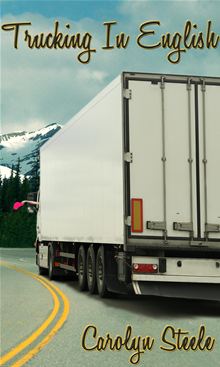
Today we review Carolyn Steele’s Trucking in English: a memoir of being a woman in what is very much a man’s world: that of long-haul tractor-trailor driving in North America.  A Londoner born and bred, Carolyn is now a Canadian citizen and lives in Kitchener, Ontario, where she ran a Bed & Breakfast for five years before trying her hand at negotiating 18-wheelers. Depending on who is asking,  she “maintains that she is either multi-faceted or easily bored”. Confirming this, her résumé states that, in addition to being a lady trucker, she has also been a psychologist and a London Ambulance Service paramedic, while her hobbies include tatting, a form of lace-making.

Trucking in English is available from SmashwordsAmazon (Canada, USA, UK), and Barnes & Noble, but this week we at TDN are in luck: Carolyn is giving away 3 ebook copies to Displaced Nation readers! (Details below.)

TITLE: Trucking in English
AUTHOR: Carolyn Steele
AUTHOR’S CYBER COORDINATES:
Blog: Trucking in English
Website: Carolyn Steele
Twitter: @Trucking_Lady
Facebook: Trucking in English
PUBLICATION DATE: November 2012
FORMAT: Paperback, Ebook (Kindle)
GENRE: Memoir
SOURCE: Review copy from author

Amazon Summary:

“So here’s the plan. I’m going to train to drive a truck and go long-haul. I can get paid and maybe write a book at the same time. What do you reckon?” “Go for it Mum, how bad can it be?” This is the tale of what happens when a middle-aged mum from England decides to actually drive 18-wheelers across North America instead of just dreaming about it. From early training (when it becomes apparent that negotiating 18 wheels and 13 gears involves slightly more than just learning how to climb in) this rookie overcomes self-doubt, infuriating companions and inconsiderate weather to become a real trucker. She learns how to hit a moose correctly and how to be hijacked. She is almost arrested in Baltimore Docks and survives a terrifying winter tour of The Rockies. Nothing goes well, but that’s why there’s a book. Trucking in English began as a blog from the cab and became a popular podcast before taking book form. It is part of Carolyn’s ‘Armchair Emigration’ series.

Review:

“Why would a fifty-something, nicely brought-up mother suddenly decide to go trucking?”

Indeed. Until I read this book, I’d considered trucks to be part of the roads’ parallel universe: menacing beasts that slow you down going uphill, hurtle dangerously fast behind you downhill, or who scatter remnants of blown tires across three lanes, strategically positioned to rip open your door skins like sardine cans.

Carolyn Steele, however, has given me a glimpse inside this parallel universe, and I’ll say this: she’s braver than I’ll ever be.  If I announced to my own family my intention of learning to drive one of these shiny monsters, the reaction would be unflattering: “You?” (Cue gales of incredulous laughter.) “You can’t even reverse a Mini.”  I’m not one of Life’s natural drivers, which makes me all the more admiring of people who are, particularly “fifty-something, nicely brought-up mothers.”

Trucking in English starts at Carolyn’s pipe dream to become a truck driver:

Why not get paid to see North America? I’d driven for a living before, I’d seen little of Canada and nothing of the States, how hard could it be?

— takes us through the training period which was more demanding than she’d anticipated:

I’d assumed it was merely a matter of getting used to where the corners were and developing a technique for climbing in.

— and recounts Carolyn’s adventures once she was let loose on the road.

These long-haul expeditions across Canada and the USA are peppered with frustrations deriving from red tape (seriously — Campbell’s Chicken Soup requires a Customs’ Meat Inspection certificate before it can cross the border?) and the sexism, both unintentional and blatant, that a female truck driver will encounter.

Red-faced squaddie escorted us outside and managed not to look too confused when we [Carolyn and her male co-driver] headed for the wrong sides of our vehicle and it became horribly apparent that I was driving.

Throughout the book shines Carolyn’s good humor, frankness, and sense of the ridiculous.  The characters and events she encounters are described so vividly that they seemed as real to me as they were to her, and in such a way that I had to stifle snorts of laughter if I was reading my Kindle in a public place.

Finally, as March is Style and Beauty Month at TDN, it would be remiss of me not to share a few of Carolyn’s style tips for lady truck drivers:

1. Do not go anywhere without a large supply of baby wipes. You never know when or where your next shower will be.

2. Use a bathroom whenever you see one, even if you don’t need to. (Ever wondered what happens when truckers are taken short in the middle of nowhere during a Canadian blizzard?)

3. Most important of all — dress androgynously. Do not, under any circumstances, let other truck drivers on the road know you are a woman.

A chap in a slower truck does not like to be overtaken by a woman and some of them can get quite snippy about it…With a cap over my eyes (so long as it isn’t pink) hair tucked up into it, large sunglasses and a golf-shirt I can just about pass for anybody… I left the cap off one day due to being so hot that even my hair was sweating. Overtook a truck just south of Toledo and he tried extremely hard to run [me] off the road.

And now it’s your chance to ENTER OUR DRAW TO WIN A FREE  COPY!!!  You can either:

1) Leave a comment on this post, saying why you’d like your own copy of Trucking in English, or

2) Head across to Twitter and tweet the following:

“I want a copy of Trucking in English by Carolyn Steele: http://wp.me/p11cxT-55G via @Trucking_Lady @DisplacedNation”

Don’t forget, you double your chances if  you’re a Displaced Dispatch subscriber!!!

The winner will be announced in our Displaced Dispatch in April.

.

STAY TUNED for tomorrow’s author interview!

Image: Book cover — “Trucking in English”

If you enjoyed this post, we invite you to register for The Displaced Dispatch, a round up of weekly posts from The Displaced Nation, with seasonal recipes, book giveaways and other extras. Register for The Displaced Dispatch by clicking here!

Related posts:

LIBBY’S LIFE #72 – Puppy love

I really don’t want to make this phone call. But I dial the number anyway.

The phone picks up at the other end, a child answers, and I’m about to launch into a high-pitched, nervous Hello-is-your-mommy-there routine when I realise it’s not a real child but one who’s been recorded in a message.

“Hiiiiiii….. This is the Addisons’ house.” (A breathy sigh and some adult promptings in the background.) “Say your number and — and — who you are and my mommy will call you.” (Another pause and more prompts.) “Or my daddy. But not Sammy, because he’s a cat and he can’t talk.” Beep.

Crystal’s parents probably love this message. However (and look away now if you’re easily shocked) I don’t find other children as cute as their parents do. Not that I’d ever admit it, of course. It would mean social suicide for Jack if his mother didn’t openly consider his little friends to be “precious” or “adorable.”

“This is Libby Patrick,” I say. Ugh. Leaving messages, for me, is almost as bad as listening to those recorded by nauseating five-year-olds. “Your daughter gave a gift to my son at nursery school. You might be missing an item from your model car collection.” I give my cell phone number and hang up.

Now, that wasn’t so bad, was it? Certainly, it will be a picnic compared to the next stage of the gift-returning process, which is the extraction of a red, collectible, model car from Jack’s sticky grasp.

I find Jack in his bedroom, making soft vroom-vroom noises and scooting the Ferrari around his Lego table.

“Sweetheart,” I say, bending down to his level, Supernanny-style. “Would you like to go to the toy shop? Maggie’s coming over later for tea. We could all go out together and buy a new toy car for you.”

Yes, I know. Total coward.  A stronger woman would explain the situation and firmly tell Jack he must give the Ferrari back to his little girlfriend. No bribes, no tantrums, no more cars to add to his already expansive Hotwheels collection.

Jack looks up from his impromptu racetrack. “Another car?”

“Yes.”

“So I get two cars today?” His voice rises an octave in excitement at his good fortune.

I consider my next words carefully. They could mean the difference between peace on earth and Armageddon in New England.

“Well, yes. But not at the same time.”

Jack narrows his eyes at me.

“I mean –” I flounder “– I’ll buy you another car, but we have to give this one back to Crystal.”

Jack picks up the car and hugs it protectively. “No.”

“She shouldn’t have given it to you. It belongs to her daddy, and now we have to give it back, but I know you’re disappointed, and I’ll buy you another car to make up for it.”

A nice one, I think, although not one that goes for 150 bucks on eBay, but Jack is having none of it.

“No! It’s MINE! Go AWAY!”

He hugs the car even tighter and throws himself on the floor in the foetal position. This is what comes, I think, of letting him watch American football all winter.

Come on, Libby. WWSD? What Would Supernanny Do?

Probably not what I do next, which is wrench the car from his hands and put it on the top shelf of his bookcase. He jumps to his feet, ineffectually trying to reach it down again, and calls me something that I can only imagine he’s learned from lip-reading football coaches on TV when the opposing team scores a touchdown.

“You do not speak to Mummy like that,” I say, wagging a finger at him and trying to keep my voice low and authoritative while disguising my shock at his new vocabulary.

“Yes I do!” Jack roars. “You took my car!”

He aims a kick at my shins. A four-year-old shouldn’t be able to inflict much damage, but this one is still wearing his Timberland boots and has accurate aim. I’m sure the Patriots would be interested in having him on the team one day, but right now —

“You little git,” I mutter through gritted teeth. “You want to play football? Let’s do timeout.” I take him by the shoulder and propel him through the bedroom door to the Naughty Spot outside the linen closet. “Sit there. Five minutes, and don’t you dare move.”

I go downstairs to attend to the twins, and Jack sits, cross-legged and seething but subdued, outside the linen closet.

I’ll give it to Supernanny, this Naughty Spot technique really works.

* * *

As I finish filling the twins’ sippy cups, my cellphone rings. It’s Crystal’s mum, who sounds confused when I tell her we have an item that might belong to her but, upon checking the display cabinet in her TV den, gasps and confirms there is a gap that should be filled by a small Ferrari. She would appreciate its return before Crystal’s daddy notices, she says. Her tone indicates that it’s all Jack’s fault and that he’s coerced her daughter into stealing.

“While you’re on the phone,” she says, “may I ask — are the crackers that Jack gave Crystal gluten-free?”

It’s my turn to be confused now. “Crackers?”

“Yes, crackers. They look like animal crackers but darker. She’s allergic to wheat, gluten, peanuts, tree nuts, dairy, turkey, and soy, so I need to check what’s in them before she eats them.”

It’s amazing the child eats anything at all. “I have no idea what you’re talking about. Jack gave Crystal two pencils. Not animal crackers.”

“Maybe they came from the school party, then,” she says. “But the wooden box was definitely from Jack.”

Box? I rummage through Jack’s backpack before answering. Beth’s wooden box from Maggie, that Jack took in for show-and-tell, is not there.

“Does it have pictures of fairies and toadstools, by any chance?” I ask.

* * *

Crystal’s mum was quite unreasonable. Apparently, it was OK for me to traumatise Jack by taking her husband’s toy Ferrari away from him, but not OK for her to traumatise Crystal by taking Beth’s box from her. “But your little girl is only a baby — how will she know?” she said at one point in the conversation. Finally, grudgingly, she agreed to return the box, but only when I hinted I might put Hubby’s little car on eBay.

I’m still fuming half an hour later when Maggie arrives, bearing a box of homemade cookies.

“I thought we could have these with our tea. Jack loves cookies,” she says, looking round. “Cookies, biscuits, whatever he likes to call them. Where is Jack, anyway? Still at school?”

I slap my forehead.

“Still in timeout.” Supernanny recommends a minute on the Naughty Spot for each year of a child’s age, so according to my timeout calculations, Jack by rights should have started male menopause.

I creep upstairs, thoroughly ashamed. “Jack,” I call. “It’s OK, sweetheart, you can get off the Naughty Spot now. Mummy’s so sorry…Jack?”

Jack has already taken the initiative and vacated the punishment space. I look in his room, expecting to see him playing with Ironman and Captain America, but he’s not there. He’s not in the bathroom, or the twins’ room, or our bedroom.

“I can’t find him,” I say to Maggie, hearing the panic in my own voice. “He’s just — gone.”

“He can’t be. Think. Where did you leave him?” she asks, as if he’s a bag of shopping or my reading glasses.

I point. “On the landing, by the linen closet. But he’s not upstairs–”

Maggie ignores me and tiptoes up the stairs. I follow. She stops by the linen closet, turns and puts a finger to her lips, then quickly opens the closet door.

Squeezed onto one of the shelves, concertinaed into a space far smaller than I’d ever thought possible, is Jack. He has cookie crumbs smeared all round his mouth and down the front of his T-shirt, and looks very happy.

I’m too relieved at seeing him to be cross that he’s eating between meals. On the other hand, all cookies and snacks have been banished to the top shelf of the pantry where he can’t reach them, so—

“What are you eating?” I demand.

Jack, I can see, is trying to hide something under the pile of pillowcases he’s sitting on. I reach into the closet, under the pillowcases, and pull out a box.

A varnished wooden box, painted with trains and cars, the one Maggie gave him for Christmas. I reach under the linens again and pull out another box. George’s. They’re both heavier than I remember, and they rattle.

I open one, and then the other.

They’re full of cookies: the animal cracker-type cookies that Crystal’s mum had described.

“Did you get these cookies at school today?” I ask Jack.

He unfolds himself from the shelf and squirms free. After a pause, he nods.

I’m getting to know that pause-then-nod technique. It means he’s telling fibs.

“Did you take them from the pantry?” I ask. “Did you climb on a chair and take these cookies from the snack shelf?”

Because the thing is, these cookies look familiar.

Jack shakes his head vigorously. He’s not fibbing. He mutters something.

“Excuse me?” I lean down to hear him better.

“I said they’re biscuits not cookies.”

“Don’t push your luck, sunshine. Stop contradicting me.”

Maggie holds up her hand. “Let me see.”

After a quick glance, she says: “Jack’s right. They’re not cookies, they’re biscuits.”

“They look like animal crackers to me,” I say.

Maggie smirks.

“In a manner of speaking, I suppose they are,” she says. “They’re Fergus’s special canine-celiac dog biscuits.”

*  *  *

In the kitchen, I read the empty packet of Fergus’s dog biscuits that Maggie has fetched from her house. The calorific content is terrifying.

“No wonder Jack’s been putting on weight,” I say. “And no wonder he liked being in timeout so much. It was snack time, with his secret stash under the pillowcases.”

“More to the point, no wonder poor Fergus has been starving.” Maggie strokes Fergus’s head. He gazes up at her, his eyes half-closed. “But Jack loves these things. He must really like this little girl to give them away to her.”

I put the packet down, and look for the phone.

“That reminds me, I’d better call Crystal’s mum,” I say. “I should let her know Jack’s present was gluten-free after all.”

.

Next post: LIBBY’S LIFE #73 – Stuck in my craw(fish)

Previous post: LIBBY’S LIFE #71 – Bonnie and Clyde go to preschool

Read Libby’s Life from the first episode

Want to read more? Head on over to Kate Allison’s own site, where you can find out more about Libby and the characters of Woodhaven, and where you can buy Taking Flight, the first year of Libby’s Life — now available as an ebook.

 STAY TUNED for Tuesday’s post!

If you enjoyed this post, we invite you to subscribe for email delivery of The Displaced Dispatch, a round up of the week’s posts from The Displaced Nation. Sign up for The Displaced Dispatch by clicking here!

Image: Travel – Map of the World by Salvatore Vuono / FreeDigitalPhotos.net