The Displaced Nation

A home for international creatives

Tag Archives: UK

DISPLACED Q: In the words of The Clash, “Should I stay or should I go?”; When reality bites in your adopted country, are you more — or less — determined to stay as an expat?

In our post on March 20, When in doubt, have a pint of Guinness, we drew attention to the Britons who resolutely stayed in post-earthquake Japan rather than fleeing with the majority of their expat countrymen back to the UK. Despite the danger of the nuclear situation, one man interviewed by the Telegraph said

“I actually feel a bit of a duty not to leave.”

Friends in need

Although this person’s mother couldn’t see his point, I understand this mentality. The events of September 11, 2001, so close to our home in Virginia, made me defensive of my adopted country, and outraged at such an audacious attack. To leave at this stage was unthinkable. That would mean we were just fair weather friends of the USA.

Instead, we taped a small American flag to our mailbox, as the rest of our neighbors did to theirs. It couldn’t help the 3,000 who died that day, but it showed our sympathy and solidarity, which didn’t go unnoticed: a neighbor made a point of telling me how touched she was that I, a foreigner, had done this.

Yet I suppose expats here did leave to go back home after 9/11, because it’s human nature to think the grass is greener – or safer – on the other side.

More trolls, not greener grass

It’s not greener or safer, of course. I know this from years of frequent news reports of IRA bombings.  The Spanish know this from decades of Basque separatist attacks. 2009 saw 10,999 terrorist attacks worldwide, and while 60 percent of these occurred in Iraq, Afghanistan, and Pakistan, that still leaves over 4,000 to be shared by the rest of the globe.

As chance had it, I arrived at Heathrow the day before the 2005 bombings of London’s transport system, and had planned to take the tube into the city the following morning to do some sightseeing with my children. Had we not been tired from jetlag and therefore overslept on July 7th, we could easily have been on one of the trains that were destroyed.

Was I as upset by 7/7 as I had been by 9/11? Undoubtedly. Yet there was something else, too – a feeling of deja vu, of “here we go again” or – dare I say it? – resignation.

Whether you run or stay, there is a difference between enduring atrocities in your own country and suffering them on another’s turf.

Not all disasters are manmade

It doesn’t have to be a terrorist atrocity, as our friends drinking Guinness in Tokyo can testify. Perhaps you were an expat in Christchurch, New Zealand during the last two earthquakes; perhaps you were posted to New Orleans just before Katrina hit the Gulf Coast. Only two days ago, Joplin, Missouri was devastated by a deadly tornado.

The world is a dangerous place. There are no certainties, especially when it comes to safety. To quote The Clash again:

“If I go there will be trouble

And if I stay it will be double.”

So, tell us:  What’s an expat to do when disaster strikes?

If you enjoyed this post, we invite you to subscribe for email delivery of The Displaced Nation. That way, you won’t miss a single issue. SPECIAL OFFER: New subscribers receive a FREE copy of “A Royally Displaced Tea.”

Related posts:

In the jaws of political or natural disaster: When reality bites for expats

Lately I’ve been thinking about plot lines for movies based on adventure travel. The one I like the most involves a round-the world traveler spotting a shark while scuba diving in the Indian Ocean…

In the hands of the right director, I could see it becoming a remake of Jaws.

Speaking of which, did you notice that first prize for the Matador Network’s “When Travel Goes Wrong” photo contest went to a young woman whose travel bag — containing passport, wallet and cell phone — fell down a Swiss sewage drain and got fished out by a kind, thin stranger. Now that has real Jaws potential!

Unfortunately, however, travel is not today’s focus. Rather, my goal is to highlight some of the mishaps that occur when a global voyager becomes a global resident.

“Boring!” I can hear you say. And having been an expat myself twice over, I have to admit, at some level, you are right.

They’re a privileged set, those expats.

Privileged with insider knowledge. You’re not going to catch them on the street with the open sewers.

Privileged with accommodation. Not for them a stay in Fawlty Towers, or the equivalent.

Still, reality has a way of impinging even on the most glittering expat lives, and in my experience, global residents tend to be even more traumatized than their short-stay counterparts when something goes badly amiss.

(Is that because they’re spoiled? I’ll let you decide…)

Gothic horror redux

In case you haven’t been tuning into The Displaced Nation of late, our posts have been exploring cases where individual expats have had their lives turned upside down, or worse (see “related posts” below).

My colleagues and I have put forth incontrovertible evidence that the expat life, like any other, can have its gothic moments.

Lest any skeptics remain, may I draw your attention to the Friday May 13 incident in Spain’s Canary Islands. A homeless Bulgarian man stabbed and hacked off the head of a 62-year-old British resident of Tenerife, after which he paraded into the street, holding his “treasure” up by the hair for all to see.

According to one eyewitness, who, too, is a long-term British resident of the Canaries:

When I saw the man holding the head, the first thing that popped into my mind was the scene from “Clash Of The Titans,” where the hero holds up the Gorgon’s head — but his was real.

Disruption en masse

Now let’s turn to the instances where the expat life gets disrupted en masse by natural disaster or political upheaval.

Emily Cannell, an American who’s been living in Tokyo with her family since last year, paid a visit to The Displaced Nation as a random nomad last Thursday. She told us about what it was like to be in that city when the Great East Japan Earthquake struck on March 11. In just a few moments, she went from a woman whose biggest worry was driving to car pool on time, to wondering if her kids were alive or dead.

And let’s not forget Tony Roberts, who was an honored guest on our site several weeks ago. His story, now written up in the form of a novel, is about what it was like being a teenager in Iran in 1979, just before the revolution took place. The trauma came when his family was given just 24 hours to evacuate back to their home in Kansas, and he had no time to say good-bye to his friends. For some time afterwards, this Third Culture Kid suffered from General Anxiety Disorder, “with feelings of unresolved anger,” as the psychologists put it. He tweeted recently: “Revolution will do that.”

Snatched from the jaws of [domestic terrorism]

I myself had an experience of this ilk towards the end of my stay in Japan, when the religious cult Aum Shinrikyo attacked the Tokyo subway with sarin gas — killing a couple of people in the station just down the street from my house. In all, 13 people died, and thousands more suffered from after-effects. It was and remains the most serious incident of this kind in Japanese history.

As I struggled to come to grips with the idea of nice, safe Japan being populated by terrorists, quite a few thoughts raced through my head; for instance:

1) This place is weirder than I’d realized.
I’d never before heard of the kind of cult where the adherents are well-off, educated young people and their leader, a bearded mystic with a destructive political agenda. (Needless to say, I hadn’t heard of al-Qaeda. But even if I had, Japan is the Far, not the Middle, East.)

2) Do the authorities know what they are doing?
From what I’d observed of the Japanese police, they seemed pretty wimpy, precisely because the country doesn’t have a high incidence of violent crime. Did they really have the chops to capture Shoko Asahara and put an end to his madness? (The attack on the subway took place on March 20, and they didn’t find him until May 16. He was hiding inside the wall of a cult building in the group’s compound near Mt Fuji, dressed in purple robes and in good health.)

3) Who’s looking out for us foreigners?
I suspected that we foreign residents would be the last to know if further incidents were likely to take place. (For weeks following the subway attack, rumors of imminent attacks were rife, and I didn’t know whom to believe.)

Though I eventually got on the Tokyo subway again, the incident took its toll on how I felt about living in that city. Little did I know that I would one day be working in New York City and reliving many of the same emotions — ignorance, disenfranchisement, and vulnerability — in the wake of 9/11.

I discovered, however, in comparing these two incidents that when reality bites in one’s native land, it’s not nearly as unsettling as when it happens abroad.

After 9/11, I wanted to stay in NYC and carry on — it was a way of fighting back. Whereas after the subway attack in Tokyo, I started to fantasize about leaving Japan.

* * *

Are there any world travelers out there who’ve stuck with me throughout this catalogue of woes? I wouldn’t be surprised if you’ve come to the conclusion that your nomadic life, even with its many dangers, is preferable to that of most world residents.

Or perhaps you’re feeling a touch of envy? In that case, you may wish to check out Bootsnall’s virtual tour of the top 10 shark-infested beaches in the world.

Question: Have you had any experiences of large-scale disasters during your stay abroad, and if so, how did it affect your perceptions of your adopted country — did it make you feel any less “at home” there?

If you enjoyed this post, we invite you to subscribe for email delivery of The Displaced Nation. That way, you won’t miss a single issue. SPECIAL OFFER: New subscribers receive a FREE copy of “A Royally Displaced Tea.”

Related posts:

3 hardboiled observations on the displaced TV series “The Killing”

Hillstreet Blues Law and Order Crime Scene Investigation (CSI)Bones… I could keep going, but point made: American TV is the undisputed godfather of the crime series genre.

These shows may be fiction, but they are underpinned by a grim reality: the United States has the highest rates of homicide and other violent crimes in the industrialized world.

But, not so fast. There’s a rookie on the scene that is taking on the veteran. I refer to the Danish crime series, The Killing, which is currently airing on AMC.

Now, what do the Danes know about crime — apart from suicide (regicide, too, if we go as far back as Hamlet)? Well, I’m here to tell you that this “smorgasbord thriller” has fast achieved cult status in the UK and now the US. As Alessandra Stanley wrote in her New York Times review:

It’s unnerving how well the Nordic sensibility fits a genre that for a long time seemed indisputably and inimitably violent and American, particularly given that Sweden, Norway and Denmark have homicide rates that suggest that they have more mystery writers per capita than murders.

Having become a a diehard (haha!) fan of the Danish noir series after a couple of episodes, I’ve been thinking about it of late in the context of The Displaced Nation. What happens when a TV series becomes expatified? Can we who have chosen to displace ourselves to other countries glean anything from its acculturation process?

Here are three hardboiled observations:

1) America is not Britain.

I was an expat in the UK for many years so am fated to have this thought nearly everyday: America is not Britain. Still, it’s gratifying to have it confirmed by third-party sources. Gratifying and, I must say, somewhat surprising given how quickly the UK appears to have become Americanized since I left. (I mean, pub grub now includes peanut-butter-and-jelly sandwiches! That would NEVER have happened in my day!)

Here’s the thing: the UK imported the original Danish series, entitled Forbydelsen, and simply added subtitles. Which completely makes sense to me — yes, I remain that anglicized.

But for an American audience, of course, subtitles won’t do. Thus AMC hired Veena Sud to come up with an adaptation. Sud moved the action to Seattle, which, she says, is the “closest American city, viscerally, to Copenhagen.”

2) Sud is right: Seattle is as creepy as Copenhagen.

Who knew that Seattle could be so creepy? Certainly not me. Though I’ve never had the honor of visiting that Pacific Northwest city, being an East Coaster I have always held a romantic view of it. At one point I even thought of Seattle as a place I might like to live in some day —  especially as the people are reputed to behave with greater decency towards each other than us competitive, dog-eat-dog New Yorkers.

But The Killing has quashed this “domestic expat” fantasy of mine, at least for now.

It underlines a truth we’ve been exploring recently on The Displaced Nation: horrific crimes can happen anywhere, even in settings where people are bending over backwards to be pleasant to one another.

3) But the series also addresses themes that transcend national borders, at least in Western countries.

Setting is important — one of the reasons for the series’ popularity in Britain is that so many people coveted the female detective’s classic Feroese sweater, and I think some fans of the AMC production enjoy watching a crime drama that takes place in Seattle, not New York or L.A.

But if setting is a crucial hook, it’s by no means the only reason The Killing has captivated viewers beyond Denmark and made such a killing for the Danish Broadcasting Corporation.

The show also addresses themes of widespread concern to Western countries: most notably, the fact that even in our supposedly civilized societies (we don’t have female genital mutilation! we don’t have honor killings!), many young women continue to be victims of violence.

The killing to which the title refers is that of a teenage girl, and each each one-hour episode depicts 24 hours in the police investigation, during which we are able to observe the impact of the tragedy has had on the girl’s family, her community, and the people involved in the investigation.

Another theme running through the series is xenophobia: the distrust American and European societies have for Muslim immigrants. America has yet to process the legacy of 9/11, while the Danes are still reeling from the incident involving cartoonist Kurt Westergaard. (To this day, he receives death threats for his cheeky portrayal of the Prophet Muhammad.)

For better or for worse, this Danish crime thriller holds up a mirror to Western culture and shows how easy it is for us to pin the murder of the girl on the Muslim teacher. It eerily reflects the times we live in — perhaps its most chilling facet.

Question: Do you have an experience with a TV show or series that made you look at your own and/or other cultures in a fresh light?

If you enjoyed this post, we invite you to subscribe for email delivery of The Displaced Nation. That way, you won’t miss a single issue. SPECIAL OFFER: New subscribers receive a FREE copy of “A Royally Displaced Tea.”

Related posts:

DISPLACED Q’s: In your global travels, which close encounter of the animal kind was the least welcome?

In yesterday’s article My first flirtation with the lawlessness of global travel: 4 painful lessons, our guest blogger Lara Sterling recalls the toe-curling time in Guatemala when she was attacked by a couple of dogs and had to spend a week in hospital queues, waiting for rabies shots to her stomach. It doesn’t bear thinking about. Most of us cringe at the prospect of a trip to the dentist.

Rabies isn’t something you consider where I come from; if you’re bitten by a dog in the UK, in today’s litigious society you’ll probably phone your lawyer rather than your local hospital.

Neither is rabies foremost in your mind if you have bats roosting in your attic – you’re more likely wondering how to evict them without breaching wildlife protection laws, since bats are a protected species in many parts of the world. But around 1% of bats carry rabies, as a friend in the US discovered when she woke up to find a bat flying around her bedroom and had to undergo a course of rabies shots, just to be on the safe side.

This was my first inkling that Connecticut wildlife might consist of more than, say, a few sparrows on the bird table.

Disney cartoons – the best place for rodents

While I haven’t had bats for roommates, I’m now used to seeing certain animals in my American back yard that I’d previously only seen in Bambi or Chip n Dale. Visitors from the UK exclaim over the proliferation of gray squirrels, but I’ve adopted the jaded attitude of a Connecticut native: squirrels are just rats with good PR. If you’ve ever had one fall down the chimney into your basement, where it runs amok and tries to eat the wall insulation, you’ll know what I mean.

Other wildlife guests in our back yard party have included deer, Canada geese, snapper turtles, wild turkeys, raccoons, and, while we were waiting for the school bus one morning, a fisher cat – a member of the weasel family that has been known to attack humans. This one, however, simply gave us a very superior look and shuffled off into the woods, never to appear again. I wish I could say the same for the local mice, who seem to think they have winter squatting rights in the attic.

The skunk in Bambi might be very cute, but until you’ve smelled this animal’s musk, you can’t imagine how foul it is; the odor carries up to a mile, apparently. I’ve never seen a live skunk, although I’ve driven past plenty of roadkill. The operative word there is ‘past’ — you don’t want to drive over a recently killed skunk.

A squirmy moment came one summer when we found a three-foot-long snake in the garage. Fortunately, it was a Black Racer, and therefore not venomous – although it easily could have been. About two miles away is a preservation area affectionately known as Rattlesnake Run. Local police logs in the newspaper often carry reports of callouts to houses because of a rattlesnake sunning itself on someone’s porch.

“Old MacDonald had a…”  Mum, what’s that thing called again?

The flip side of living in what is essentially a forest is that we don’t see many ‘normal’ animals. During our trip to the UK, relatives were amazed when our young children weren’t sure what the white woolly animals in fields were. They’d heard of sheep and seen pictures and Fisher Price plastic sheep…but never sheep in the flesh, as it were. Yet on the same visit, while Auntie was cooing over a stripy squirrel-like thing in a cage and wondering what it was, the kids scoffed. “Chipmunks? They’re all over the place at home. Mum can’t stand them, they dig holes everywhere.”

But definitely the most interesting encounter was when our five-year-old came in the house after playing outside, and told me that there was a dog in the yard. Wondering if our neighbor’s dog had decided to make a break for freedom, I looked out of the window. It was a dog all right, but not one you want your five-year-old to play with. While coyotes rarely attack humans, I’d seen too many episodes of Road Runner to take a chance with the statistics.

Waiting for the Big One

And finally – a few months ago, in the street where we go trick-or-treating at Halloween, police cars swarmed. A black bear had been sighted. Now, every time I’m in the kitchen and looking out at the maples and pine trees behind our house, I look a little farther into the woods, wondering what else is out there.

It can only be a matter of time.

So, tell us: Which wildlife encounter of your own would you rather not have experienced?

If you enjoyed this post, we invite you to subscribe for email delivery of The Displaced Nation. That way, you won’t miss a single issue. SPECIAL OFFER: New subscribers receive a FREE copy of “A Royally Displaced Tea.”

Related post:

RANDOM NOMAD: Charlotte Day, High School Student (Sixth Former)

Born in: Sydney, Australia
Passports: Australia, UK and US Green Card
Countries lived in: Australia (Sydney): 1994-2001; United States (New York, New York): 2001-2010; England (Sevenoaks, Kent): 2010-present

What made you leave your homeland in the first place?
My father is Australian and my mother English. They split up when I was two. When I was six, my mother met and married an Australian who had been living in New York for thirty years. I was rather disgruntled about moving to the United States and for two or three years, remained determined never to accept it as “home.” At that time, I was deeply patriotic to my native country — though this sentiment has dissipated since.

Is anyone else in your immediate family a “displaced” person?
My mother’s family, originally from England, has long been displaced. My mother herself was born in Kenya, in 1961. Following the Mau Mau Uprising, her parents were forced to relocate, and my grandfather, presented with a choice between Australia and Canada, chose the warmer of the two countries. My mother spent her childhood bouncing between schools in England and Australia. She eventually grew so fed up with packing and unpacking, she decided to leave school at the age of 16. Her father agreed to the plan provided she spend a final year at the school in Switzerland his own mother had attended as a girl. My mother moved on from Swiss finishing school to work in London, Paris and Sydney. But she appears to have made New York her last port of call. Indeed, we had a fairly solid life in the city until I decided to take myself off to boarding school in England.

Describe the moment when you felt most displaced over the course of your many displacements.
It must have been when I first arrived in New York as a six-year-old. I stepped out of the JFK arrivals terminal into a snowy March night. My stepfather was wearing a leather coat, the interior of his car smelled of leather — and the world outside the car window seemed an undulating stream of black and silver. Though it was the end of 2001’s warm winter, my Australian blood froze beneath my first-ever coat. And their apartment — that was all leather as well. It smelled of musk and cologne. Since that time, I have felt similar pangs of displacement, some of which lasted for considerable periods. But those first few moments in New York stand out as the most acute concentration of “displacedness” I have ever known.

Describe the moment when you felt least displaced.
For the last five or so years in New York, I have felt more at home than I ever did in Sydney. I ascribe this to growing up: at a certain age, one can take possession of a city, know its streets, bridges, tunnels and transportation system. I was too young when I lived in Sydney to reach that kind of comfort level. But when have I felt the most like a New Yorker? Perhaps it was the last time I came home for the holidays, and took the 4 train uptown for the first time in months. At that moment I realized how much this train had been a part of my life — conveying me home from school every day for two years. My old life would always be waiting for me on the subway, ready for me to pick it up again. That’s something only a New Yorker could say!

You may bring one curiosity you’ve collected from each of the countries where you’ve lived into the Displaced Nation. What’s in your suitcase?
From Australia: A miniature wooden wombat figurine — a gift from my grandfather. It conjures memories of a childhood spent beating about the bush (literally) and fishing for yabbies at the dam in the company of audacious dogs who stuck their heads down wombat holes, to no good end.
From New York: A pair of fake Harry Potter glasses. These defined my first six months in New York — I even wore them to my first day of school. I think it is telling that even at the age of six, I was unwilling to give all of my real self to this new home.
From England: My school tie — representative of the alternative universe I seem to have entered. At boarding school, the sense of removal from reality can be disconcerting — especially after having spent a decade in the city I regard as the world’s capital.

You’re invited to prepare one meal based on your travels for other Displaced Nation members. What’s on your menu?
I’d like to make you a Sydney breakfast: scrambled eggs, made with cream, salt and pepper and served on a bed of Turkish toast, with avocado and stewed tomato on the side (is this being greedy?). Our meal will be accompanied by a large “flat white”: what we call perfectly strong, milky coffee without excessive froth. I suggest we consume it overlooking a beach on a Sunday morning. At least, I assume The Displaced Nation has beaches?

You may add one word or expression from each of the countries you’ve lived in to The Displaced Nation argot. What words do you loan us?
From Australia: Daggy. I use this word all the time — and did not realize it was exclusively Australian until I was informed of the etymology. Apparently, it comes from trimming the soiled wool around a sheep’s bottom. Which part of this repugnant whole is actually the “dag,” I do not remember. (No, I’m not a proper Australian!) But as I understand it, “daggy” means sloppy in appearance or badly put together.
From New York: There are so many words, and most are second nature by now. However, I will choose grande-soy-chai-tea-latte because I still shudder to think of myself as the kind of person who can utter such a phrase, at great speed, with great insistence. In fact, I’m still in denial about my love for Starbucks: having known Sydney coffee, my standards should be higher.
From England: Banter. I still do not know the precise meaning of this word, but it seems to encapsulate everything that makes someone my age feel socially acceptable — and, of course, I have no banter whatsoever. I think it means the capacity for combining wit with meaningless conversation. But there are other components, too, which seem to me unfathomable.

Question: Readers, tell us what you think: should we welcome Charlotte Day to The Displaced Nation and if so, why? (Note: It’s fine to vote “no” as long as you couch your reasoning in terms you think we all — Charlotte included — will find amusing.)

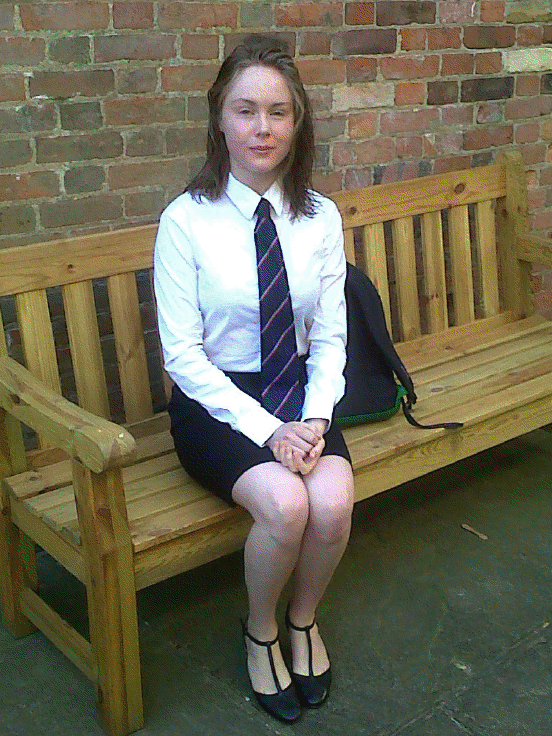
img: Charlotte Day at her boarding school in southeast England

If you enjoyed this post, we invite you to subscribe for email delivery of The Displaced Nation. That way, you won’t miss a single issue. SPECIAL OFFER: New subscribers receive a FREE copy of “A Royally Displaced Tea.”

Related posts:

DISPLACED Q: What items from home can you not live without?

UK department store John Lewis recently announced it would soon launch versions of its Website for shoppers in 27 countries, including the USA, Australia, and Singapore. The company has no plans to open stores in these locations, however; all orders will be delivered by courier.

Marks and Spencer, another institution of the British High Street, already ships to 80 countries worldwide, even though it has over 300 international stores scattered around the globe.

It seems both John Lewis and M&S  understand something that all expats know — there are certain items you only feel comfortable buying from home.

Marks & Spencer, for example, accounts for around thirty percent of the UK lingerie market; it’s not unreasonable to assume that displaced Brits with diminishing lingerie supplies and no access to M&S stores make up a goodly proportion of the international shipping numbers. Meanwhile, John Lewis has the most popular gift list in the UK. How about some Conran bed linen or Denby pottery to make your relations feel at home in their Moscow abode? Sometimes only the familiar will do.

It’s not all about the goods, either. Expat in Germany, in her March 17 post, explained why she hesitated to buy a wedding dress in Germany instead of in her native Canada. It had nothing to do with the quality of wedding gowns and everything to do with the charming honesty of German sales assistants that made her pine for a gentler shopping experience at home.

But these facts and anecdotes made us wonder: No matter how displaced you have become, are there certain items — other than food — that you still prefer to import from your home country?

Two members of the Displaced Nation Team kick off the discussion:

Kate Allison: During my 15 years as a Brit in the US, I have been known to ask visitors to bring gifts of children’s cotton pyjamas. The cotton in the UK is much nicer, somehow, than in the US. I also had a brief sojourn into Next duvet covers, because duvets aren’t as popular in the US as they are in Europe.  Last time I was over, though, it was shoes that caught my eye. And yes, they came from Marks and Spencer. It’s not that they were any better than their American counterparts — just different, and not from Macy’s.

ML Awanohara: As far as wedding (and other special) dresses go, the more exotic the better. I was never an expat in Rome but went shopping for my wedding dress a few years back in a charming boutique, Maga Morgana, very near the Piazza Navona. (If I had it to do over, I’d have studied abroad in Italy — art history, of course. So perhaps I was playing out that fantasy…) Kate, it’s funny you mention shoes. While living in the UK and Japan, I always preferred to buy shoes in the US. It wasn’t that I didn’t like the shoes in those countries — I coveted them. But they made my feet hurt, something to do with the “last” not being big enough. I noticed recently on an expat news feed that displaced New Zealanders often head to a shop called Minnie Cooper’s as soon as they get home. This piqued my curiosity: is it for the styles, the NZ leather, or both?

Your turn to chime in: What homey items, apart from food, have you yet to wean yourself off?

If you enjoyed this post, we invite you to subscribe for email delivery of The Displaced Nation. That way, you won’t miss a single issue. SPECIAL OFFER: New subscribers receive a FREE copy of “A Royally Displaced Tea.”

Expat life as psychological thriller? An unholy appreciation of novelist Shireen Jilla

SPECIAL TDN ANNOUNCEMENT: Dear readers, we have some thrills and chills in store for you: a chance to engage with expat writer Shireen Lilla. She has kindly agreed to respond to our comments and questions on her new novel, Exiled.

Please accept this candle. You’ll need it to light your way to the faux coffin where we’re serving Victorianesque nibbles and “finger” foods in honor of the novelist Shireen Jilla.

Be sure to try our house speciality: fried tartantula. Such an exquisite dish! Or how about some maggoty cheese, imported straight from Sardinia for the occasion? It makes an excellent pairing with our special punch. (Go on, have a sip! It’s only bubbling because we added dry ice to the bowl.)

Our honored guest looks lovely, doesn’t she, in her long black cape with the red-satin collar? But don’t be fooled. Looks are extremely deceiving in her case. Jilla harbors no illusions about the dark side of expat life — and she isn’t afraid to grasp you by the hand and seduce you into entering that netherworld for an adventure.

Many an expat veteran has advised that being stationed overseas isn’t necessarily the life of Riley. But how many of them have ever warned us of the dangers lurking on the other side: everything from psychological breakdown to murder most foul?

Slyvia Plath, the American poet who’d been living in a bucolic a part of the English countryside, put her head in the oven upon returning to London. Nancy Kissel, who was living in an exclusive Parkview high-rise apartment complex in Hong Kong, allegedly killed her husband with a blunt instrument and rolled up his body in an Oriental rug.

But why dwell on real-life cases when Jilla’s imagination can provide us with all the macabre details we need?

Deliciously “exiled”

Shireen Jilla
Let us raise our goblets to Jilla’s debut novel, Exiled, a dark, dysfunctional psychodrama set in New York City.

The novel tells the story of Anna, who is so in love with her husband, Jessie, an ambitious British diplomat, that she can’t wait to start a new chapter of their life together in New York. Jessie is the ticket (quite literally!) for Anna to leave her old life in rural Kent far behind.

At first, New York lives up to its promise. The couple find a brownstone on the Upper West Side and fall into the rhythm of New York life. But then disaster strikes, again and again.

As Anna herself puts it in her Foreword to the story:

I couldn’t imagine that my romantic dream would turn into a dark battle for everything I loved.

In our current gothic mood, we laud the idea of this book (unfortunately, we’ve only read excerpts as it’s not yet available in the U.S.) for:

1) Defying stereotypes: Many outsiders who write about New York are tempted to extol the city’s glitz and glamor a la Sex and the City. Not Jilla. As one critic put it, she gives us a New York that is “a teeming pit of hissing vipers, only just covered with a finely buffed veneer of sophistication.”

Exiled2) Pushing the envelope: Jilla, a Third Culture Kid (she is half English, half Persian, and grew up in Germany, Holland and England) who has also been an expat — in Paris, Rome, and New York — hasn’t simply replicated her experience but has dug deeper to reveal psychological truths about the people she has observed. Anna’s step-mother-in-law is a powerful socialite and philanthropist of precisely the sort seen on The Real Housewives of New York City. In Jilla’s rendering, though, she is further revealed as calculating, manipulative — and evil. As one reader-reviewer on Amazon says:

Imagine the stark terror of Rosemary’s Baby firmly grounded in reality. Shireen Jilla has created the sharp thrill of horror in a world of utterly true and compelling characters.

3) Presenting a heroine who could almost be Libby’s alter-ego: Now who is Libby, you might ask? She is the Displaced Nation’s fictional about-to-be expat wife. Her diary entries appear every Friday on this blog. After hearing about Anna, we can’t help but wonder: will Libby’s life take a sinister turn once she reaches Boston? No, Boston isn’t New York — but how long before Libby encounters a Boston Brahmin…or two?!

Time to break the spell?

Before we blow out our candles, it’s your turn, dear reader:

Has Shireen Jilla also illuminated something for you by exploring the gothic side of our displaced lives? Does she speak to your own experience — to the times when you’ve been face to face with people who seemed evil, or with nefarious doings?

And do you have any questions for Jilla about what motivated her to write such a gloriously dark book?

img: New York Skyline, by plastAnka.

If you enjoyed this post, we invite you to subscribe for email delivery of The Displaced Nation. That way, you won’t miss a single issue. SPECIAL OFFER: New subscribers receive a FREE copy of “A Royally Displaced Tea.”

Related posts:

CLASSIC EXPAT WRITING: Letter From London — Sōseki

So with my last entry, on James Joyce’s Paris, I was left bemoaning the term Expat Writer. Partly, I’m annoyed with myself for choosing such a term as “Classic Expat Writing” for this series of blog posts. Ultimately, who wants to read a series of posts called “Classic Expat Writing”? It assumes too much and adopts a slightly superior attitude. And, most importantly, it’s dry and not all catchy. Instead, think of this as writing by the displaced.

The reason that I opted to do this series of posts was so I could share some writing that has moved me, and present it to an audience that is likely to in some way be attuned and empathetic to its contents, either through their own personal experience or particular interests. If people then go off and look at the authors in more detail, so much the better. It’s for these reasons why I am particularly excited with this week’s example.

I have to confess that I was not familiar with the name Sōseki until I visited Japan. My knowledge of Japanese literature is embarrassingly slight and doesn’t really extend beyond Mishima and Murakami. But a few years back, when visiting Tokyo, I sought out the Kinokuniya bookstore near Shinjuku because it had a large selection of English-language books. Having a few days before visiting the Temple of the Golden Pavilion in Kyoto, I was keen to buy Mishima’s novel The Temple of the Golden Pavilion. But when left in a bookstore I can’t help but browse and one book, in particular, caught my eye: The Tower of London: Tales of Victorian London by Sōseki. At this point, I had never before heard about Sōseki Natsume (1867 – 1916), and had no idea about his place in the canon of Japanese literature. If I had been in Japan a few years earlier, it may have passed me unnoticed that the two 1,000 yen notes I would use to buy this book, in fact, featured Sōseki’s portrait.

Instead from a position of ignorance I picked up the book and was intrigued by it. It’s a collection of essays and writings that Sōseki wrote about his time in London.* In the summer of 1900, as a young, unknown professor, he traveled to London on a somewhat meagre scholarship that was provided to him by the Japanese government.  Sōseki was to spend the next two years in the city, unhappy and isolated.

Now being a miserable monoglot, I am entirely dependent upon skilled translators when it comes to foreign (well “foreign” from my perspective) literature. Obviously, I’m not in a position to comment on how accurately Damian Flanagan’s translation conveys the flavor of  Sōseki’s prose, but I did find it to be an incredible read with crisp and clean prose.

The title essay is a phenomenal piece of literature, but it is Sōseki’s Letter from London that I’m highlighting today. Sōseki conveys in a way that I’ve not seen from others that awkward, slippery sense of dislocation of being in an alien country. Even politeness takes on a faintly threatening edge.

One of the things I’ve noticed in the Expat blogging community, we seem to like it when we find writing that we can relate to, that reiterates thoughts and fears that we have had. Of course, there is a place for  that. With Expat blogging it can help develop relationships, it helps builds an audience, and there is very much a place for it. But it can also act like comfort food.

Sōseki, by contrast, has observations and thoughts about the city that I don’t think anybody other than himself could have had. And, for me, that’s what is so interesting and so worthwhile about this book.

This collection, which is published by Tuttle publishing, really should be read by more people. Go buy it and then read it, pronto.

Once outside, everyone I meet is depressingly tall. Worse, they all have unfriendly faces. If they imposed a tax on height in this country they might come up with a more economically small animal. But these are the words of one who cannot accept defeat gracefully, and, looked at impartially, one would have to say that it was they, not I, who look splendid. In any case, I feel small. An unusually small person approaches. Eureka! I think. But when we brush past one another I see he is about two inches taller than me. A strangely complexioned Tom Thumb approaches, but now I realize this is my own image reflected in a mirror. There is nothing for it but to laugh bitterly, and, naturally, when I do so, the image laughs, bitterly, too …

… Generally, people are of a pleasant disposition. Nobody would ever grab me and start insulting and abusing me. They do not take any notice of me. Being magnanimous and composed in all things is in these parts one qualification of being a gentleman. Overtly fussing over trifles like some pickpocket or staring at a person’s face with curiosity is considered vulgar … Pointing at people is the height of rudeness. Such are the customs, but of course London is also the workshop of the world, so they do not laughingly regard foreigners as curiosities. Most people are extremely busy. The ir heads seem to be so teeming with thoughts of money that they have no time to jeer at us Japanese as yellow people. (‘Yellow people’ is well chosen. We are indeed yellow. When I was in Japan I knew I was not particularly white but I regarded myself as being close to a regular human colour, but in this country I have finally realized that I am three leagues away from a human colour – a yellow person who saunters amongst the crowds going to watch plays and shows).

But sometimes there are people who surreptitiously comment on my country of origin. The other day I was standing in looking around a shop somewhere when two women approached me from behind, remarking, “least-poor Chinese”. “Least-poor” is an extraordinary adjective. In one park I heard a couple arguing whether I was a Chinaman or a Japanese. Two or three days ago I was invited out somewhere and set off in my silk hat and frock-coat only for two men who seemed like workmen to pass by saying, “A handsome Jap.” I do not know whether I should be flattered or offended.

*I’m not entirely sure what it says about me that in browsing a large selection of Japanese literature in an effort to get a better understanding of Japan, I picked up a book that is centered around impressions of London and the English.

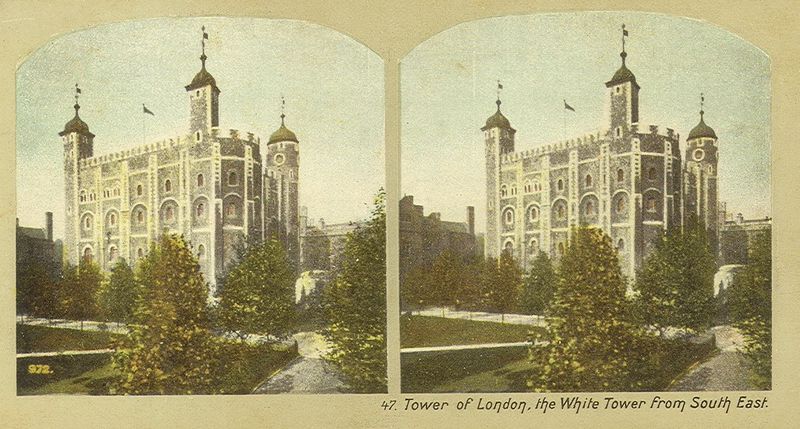
Img: White Tower, Tower of London, from the South East, c. 1890-1910, courtesy Wikimedia Commons

If you enjoyed this post, we invite you to subscribe for email delivery of The Displaced Nation. That way, you won’t miss a single issue.

Related posts:
In sum, here’s how three displaced people “saw” Britain’s pomp

Once upon a time there lived Three Stooges in a kingdom ruled by a queen, otherwise known as a queendom. But eventually, each of them moved away to a republic that had renounced that very same monarchy hundreds of years ago (but which still retained a certain fascination for their descendents).

Now these Three Stooges just so happen to be the authors of this blog — ML Awanohara, Kate Allison, and Anthony Windram. When news of an impending Royal Wedding reached them at The Displaced Nation, one of them, ML, hatched a rather zany scheme of covering the event from their displaced perspectives. Thanks to the new technology, they could do this by tweeting like birds, she said.

So the three of them rose at ungodly hours on April 29, 2011, and recorded their impressions: Kate and Anthony from the point of view as displaced citizens of said queendom, ML as a displaced resident (born in the republic, she had lived in the queendom as a student and retains an inordinate nostalgia for those days).

What follows are some edited highlights from their Dawn Chorus. NOTE: All three would like to offer special thanks to Princess Bea for attempting a Cthulhu imitation. The possibility of perching on her antlers helped to sustain them during the lengthy bits, of which there were several.

I. PRE-CEREMONY

ML Awanohara: I can hear many excited voices outside my window here in the East Village. It’s a global event! Kate Allison, what are you wearing?

Kate Allison: What I slept in. Duh. But have contacts in. The contacts not needed to see the size of some of these hats. Sheesh.

ML: You aren’t wearing a hat? I have on my Chinese PJs and a cute little fascinator…

KA: Probably got a NY Yankees hat somewhere. Would that be ok?

ML: So we both watched Charles & Diana 30 years ago, in UK. And now we’re both “displaced,” on US East Coast, watching on TV. Strange!

Anthony Windram: Why on earth am I up at this time? No semblance of sense.

ML: Isn’t it cool that we are all connected like this, watching a quintessential British event?

AW: On CBS, Beth from New York and Jody from Philly came over especially for this. That’s just silly.

KA: Eugenie, or is it Beatrice, is wearing antlers! You cannot look cute in antlers unless you have a glowing nose as well.

ML: Camilla is being criticized for wearing white. I actually think she looks stunning.

KA: Camilla would be criticized whatever she wore. Take no notice, Camilla. Lovely outfit.

AW: Credit where it’s due, this is one of the few events where children cheer an 85-year-old woman.

ML: I have to say, primrose doesn’t suit the Queen. Though I suppose she does match the clergy in that color.

KA: Some bishop’s done a Scarlett O’Hara and nicked the curtains for his dress.

ML: Shut the front door! Kate is on her way!

KA: Little bridesmaids. Utterly cute.

ML: Fashionistas are calling the dress very Gracy Kellyish.

KA: ….ooohhhhh. Gorgeous.

AW: Will Rowan Williams also be wearing Alexander McQueen?

II. CEREMONY

ML: I do like the aerial view. Train looks just the right length for the Abbey.

AW: At what point in the proceedings do they replace Kate Middleton with a shape-shifting lizard?

KA: Not a meringue in sight, to quote Hugh Grant.

AW: Sod the wedding dress, that’s the most beautiful sight: Westminster Abbey.

KA: Poor girl looks terrified!

AW: Why no Rowan Williams? Boo. Oh, wait, here he is. Love a bit of Rowan.

ML: Catty alert, but Kate looks older than Wills, which she is. Too much makeup?

AW: Rowan Williams should narrate audio books. Think he’d be a good fit with some Trollope.

ML: Oh, no! Wills could barely get ring over Kate’s knuckle! Not a good omen…

AW: I always think the Royal Family jumped the shark with the Glorious Revolution.

ML: Must be the aging process, but I don’t find this nearly as moving as 1981.

KA: I think I’m a lapsed royalist coming back to the fold!

ML: Kate, are you serious? We seem to be switching places. I knew that was going to happen.

KA: I am totally serious and today totally British.

ML: Who is representing us Americans btw? Obamas weren’t invited…

KA: Posh and Becks are representing the Americans, obviously.

AW: James Middleton has the eyes of a killer.

ML: The Londonist is keeping a “not the royal wedding” blog: everything happening in the world except for the royal wedding. For instance, there are these dangerous headache-inducing caterpillars in Bournemouth, and the horror flick Insidious opens today.

AW: Those two nuns got great seats — all thanks to Ticketmaster.com.

ML: Fun fact: Today is the “feast” day of St. Catherine of Siena, a famous 14th-century bulimic.

AW: I got up at 2:30 a.m. to listen to a religious service, a Protestant religious service no less. I may crawl back to bed.

ML: No, don’t leave us! Your jokes are keeping me awake!

AW: Oh annoying CBS, don’t start talking as soon as “Jerusalem” starts.

KA: Ah, “Jerusalem.” But of course: can’t beat it if you’re English. Guaranteed to bring anyone back to the fold. … And now the national anthem. ML, this is the original version of that song you guys sing in grade school.

ML: “My country ’tis of thee, sweet land of liberty…”

KA: What, Queen not singing her own tune?

ML: Someone at the New Yorker just tweeted that Westminster is full of bodies (bones?) of kings. Rather macabre.

KA: ML, at the Chapel Royal of St Peter ad Vincula in the Tower of London, they found about 1,800 skeletons underneath. Now that’s macabre.

AW: Nothing more British than the bureaucracy of everyone going to sign the wedding register in the middle of the ceremony.

ML: Just saw the antler hat. Truly bizarre. … Is Princess Anne wearing purple?

III. POST-CEREMONY

AW: So many Union flags. It’s like Rangers at a Scottish Cup final. …

ML: Okay, someone please tell me: it is distance or aging, but I feel like it’s a little flat this time around.

AW: On the basis of that crowd, the world must think the British are a collection of plastic hat wearing morons. In fairness, most of the crowd are Americans. Anglophiles, I’ll never understand you. Give me five minutes with an Anglophile — I’ll soon dampen their enthusiasm for all things English.

ML: They’re showing a pair of older Brits singing “God save the Queen” off key.

AW: Am I meant to feel national pride because a slightly dim, over-privileged couple got hitched? Really? Some mediocre St Andrews grads get to be Duke and Duchess of Cambridge. Hurry up and kiss and then I can get back to bed.

ML: What’s going on behind the net curtains on the windows facing out on the famous balcony?

AW: The balcony scenes are always disappointing. They never fall off.

ML: Was that it?!?!?!?!?

AW: No tongue. Duke of Edinburgh seems to making the moves on Pippa. He’s muscling out Harry there.

KA: Someone’s going to drop a small child off that balcony if they’re not careful.

AW: Balcony would be enlivened with some Michael Jackson-style children dangling. I’m thinking the annoying little blonde page.

ML: Well, this has certainly been a stimulating three hours. Time to say cheerio for now? That kiss was such an anticlimax.

KA: Anticlimax? What did you have in mind for them? Royal weddings are G rated.

AW: BBC really are insisting on talking to every nutter they meet.

ML: So, my dears, any parting impressions? Was it worth losing sleep over?

AW: So we’ve learned (or relearned) nobody does annoying and wacky quite like the British. We’ve learned that the Duke of Edinburgh still has it. Pippa needs to watch out at the disco.That CBS felt the need to make half a dozen references to Meet the Fockers. And we learned you can be born into a dim family that lacks intellectual curiosity, be unremarkable, and one day you’ll be king. But the biggest takeaway was the baby Cthulhu that has hatched itself to Princess Beatrice’s forehead.

ML: Beatrice and Eugenie look like how I always imagined Cinderella’s wicked stepsisters.

KA: LOLOL

ML: On TLC just now, American commentators are saying they were disappointed by the kiss. But the crowds in Times Square cheered anyway.

KA: Disappointed by the kiss? What do they want? Video on YouTube a la Pamela Anderson? Puh-leese.

If you enjoyed this post, we invite you to subscribe for email delivery of The Displaced Nation. That way, you won’t miss a single issue.

Related posts:
A toast to two displaced writers with passionate views of royal passion

Special notice: The writers we are celebrating in today’s post — best-selling novelist Jane Green and expat blogger Karen Van Drie — have kindly agreed to “come in” and respond to your comments and questions on the topic of the hour: yesterday’s royal wedding. Don’t be shy!

A cheery hello to you all. We have a special treat in store for Displaced Nation readers: a royal wedding-themed party in honor of two expat writers — one an acclaimed author, the other an acclaimed blogger — who take very different views of yesterday’s “wedding of the century.”

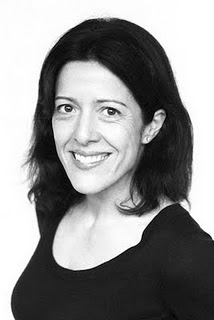
Jane Green is the author of a dozen novels dealing with real women, real life, and all the things life throws at them. She is also an expat. Born in London — she spent her early career as a writer of women’s features for the Daily Express — she now lives in Connecticut with her husband, six children, and assorted pets.

Karen Van Drie is an American who decided to travel the world after her youngest daughter left for college. Based in Istanbul and Prague, she travels extensively and records her observations in her award-winning blog, Empty Nest Expat. The blog was called out last year in the Wall Street Journal as a “fun read for anyone looking for reassurance that change can be a wonderful thing.”

No in-betweens, even (especially?) among expats

Vogue magazine editor Alexandra Shulman observed that Britain’s “wedding of the century” divided the British nation into lovers and loathers — so was a “perfect Marmite moment.”

Well, she could have been talking about the Displaced Nation just as well as the British nation. Over the past few weeks, we English-speaking expats and repats have divided into two opposing camps.

If anything, we tend to be even more passionate about our views because of the distance factor.

GREEN: “A modern fairytale”

As explained in an April 13 blog post on her newly released e-book for ABC News* on three generations of royal love stories, Jane Green knew little about Kate and William before starting her research but came away impressed:

I loved discovering just how unusual William and Kate are: grounded, humble, and thoroughly modern, eschewing much of the pomp and circumstance that surrounded the wedding of Charles and Diana.

Her book, which blends text, video, still images and interactive features, celebrates Kate for achieving the seemingly impossible feat of bringing an age-old fairytale up to date.

VAN DRIE: “If princesses didn’t exist…”

In the overheated countdown to the Big Day, Karen Van Drie resurrected a post she had written in February about the evolution of her personal views on royals, especially princesses.

Van Drie was prompted to write on this topic during a week-long visit to Sweden, where she noticed that the Swedish Royal Palace gift shop was packed out with tourists snapping up merchandise related to last year’s wedding between Princess Victoria and her personal trainer, Daniel Westling.

Somewhat to her surprise, Van Drie could not get into the spirit. This apathy marked a change from her twenties when she’d fallen head over heels for the fairy tale of Prince Charles and Lady Diana and studied every detail of their royal wedding. When she got married herself, she asked the florist to reproduce Diana’s bouquet exactly.

What’s more, after reading an article about the Swedish Republican Association, Van Drie decided they were thought leaders on the subject of monarchy elimination. She wondered aloud on her blog:

If princesses didn’t exist, what would young women dream of being? Could it likely be a healthier idea for humanity and relationships? A more realistic idea? Can you imagine people of the future laughing at us for even allowing the idea of undemocratic monarchies to exist? For needing the “idea” of princesses?

Where do you stand?

Dear readers, it’s your turn now. While we put out the bunting, pour glasses of Pimms, make pots of tea, and prepare plates of crustless cucumber sandwiches, scones, and Tiffin, for our feast in honor of Green and Van Drie, we’re hoping you will tell us: what do you see when you look at the relationship between William and Kate close up? Do you share Green’s picture of a modern fairytale, or are you more inclined to Van Drie’s notion of a gothic horror story?

* A Modern Fairytale is ABC’s first e-book and Green’s first-ever work of nonfiction. It is available through top etailers — Apple’s iBookstore, Kindle, Nook, etc. — and through the new ABC Video Bookstore app.

If you enjoyed this post, we invite you to subscribe for email delivery of The Displaced Nation. That way, you won’t miss a single issue.

Related posts: