The Displaced Nation

A home for international creatives

Tag Archives: UK

LIBBY’S LIFE #35 – A big piranha in a small pond

Even a week after the ultrasound, I can hardly take it in. Twins? Me?

I phoned Mum to tell her about it, of course, and regretted it immediately. She means to be helpful and encouraging, but it never works out that way.

“You’ll probably have a Caesarian,” she said, sniffing. “Everyone does in America, from what I’ve read. But it runs in families, you know, twins. Auntie Doris, my grandmother’s cousin, she had twins. At least, I think she was a cousin.”

Or possibly not related at all. Grandma-Great was from a generation that called all older females Auntie.

“Was everything OK?” I asked. “We must be talking pre-National Health Service here.”

“Heavens, yes. Auntie Doris outlasted Grandma by ten years.”

“I meant the twins.”

“Oh, I see! Well, it was New Year’s Eve. The midwife had had a bit too much gin by the time she got to Doris’s house, and passed out on the floor at a critical moment. Uncle Harry was down the pub, as men did back then, so he was no help, and the twins didn’t survive into January. But since yours are due in May, I’m sure they’ll be fine.”

You see? This is my mother’s idea of making me feel better. I can never decide if she was always like that, or if forty years of marriage with dad has taken its toll.

“It’s OK, Mum. I don’t think nurses are allowed to turn up drunk to work nowadays, whether it’s a bank holiday or not. They get sacked, and sued, and stuff like that.”

“You say that, but only last week in the Daily Mail, I read about a Romanian nurse in London – ”

“If you’re going to start quoting Daily Mail hysteria at me, I’m going to put the phone down. I need to take Jack to nursery school anyway.”

“How’s he doing there? Does he like it? I don’t think it’s right, sending little ones off to school when they could be at home with their mummies.”

I rolled my eyes and started to tell her that of course he liked it there – then stopped. Last week he’d twice had a tantrum when I left him there. And yet before Christmas, he was going happily. Maybe it would take him a few days to get him back into the routine after the Christmas break.

“He’s fine,” I said, crushing the little niggle of doubt.

All the same, I thought, as I put the phone back in the charger, I would have a word with Patsy, his teacher.

* * *

I’ve tried to avoid Patsy as much as possible since Jack started at nursery. It’s partly because I still have nightmares about being roped in for Play-Doh sessions with Playgroup Mafia Mums, and partly because I sense she doesn’t like me. Or at least, she thinks I’m not worth spending time on.

How do I know this? Because I know the sort of girl that Patsy Traynor used to be at school.

She was the one with lank hair and unfashionable clothes, who used to tag along with the pretty, popular, calculating girls. She’d hang on their every word, laugh at every unfunny, airhead comment they made, massaging their already inflated egos and trying to be their best friend. In return, they would let her think she was a friend, but in reality they were keeping her on a string, waiting for the day when she might be useful in their social-political games. The sad thing was, everyone knew this except Patsy.

Now that she’s grown up, you’d think she might be wiser – but no. She has her favourites among the mothers – those who are disgustingly well-off, those who display potential PTA leadership qualities, those with interesting quirks to set them apart (but only in a good way; tattoos and body-piercings don’t count except negatively) – and as I have none of these traits, I’m an also-ran in Patsy’s eyes. Thankfully, Jack talks about “Miss Patsy” with enthusiasm, so I hope her disdain for mediocre parents doesn’t extend to their mediocre children.

When I arrived at the school, she stood in the classroom, chatting to another mum. I caught her eye, mouthed “Hello” and raised my eyebrows to indicate that I needed to ask her something, but my body language was lost on her. She had already turned back to the mum who, even by looking at the back of her perfectly highlighted head, I could tell was just the type with whom Patsy would have ingratiated herself thirty years ago.

I helped Jack take off his coat, but instead of wandering across the room to play in the toy bus as he had done before Christmas, he stayed close to me, staring warily around the classroom.

“Don’t you want to go and play with your friends?” I asked.

He clutched the hem of my jacket and shook his head.

I bent down to his level. “Why not?”

He glanced around again, put his mouth to my ear, and whispered, “Tom.”

“Tom?” I was bewildered. Tom was a little fair-haired boy with glasses and a lisp, incapable of anything more frightening than swatting at Jack with a Milky Bar. “What has Tom done to you?”

Jack shook his head and wouldn’t elaborate further.

What on earth am I doing, having two more children? I can’t comprehend the one I’ve already got.

I decided to be firm.

“Whatever Tom has done, I’m sure it can’t be that bad.” Could it? These boys were only three, after all. “And if you have any trouble with him, you tell Miss Patsy. That’s what she’s there for.”

Jack nodded uncertainly, then wandered off to the Transportation Play Area (translation = toy cars on a frayed rug) where, to my exasperation, he began to race Hot Wheels cars with the very child he’d complained about.

But since I was here, I’d have a quick word with Patsy and mention my concerns about Jack’s reluctance to go to school. She was still chatting, and as I lingered nearby waiting to speak, I realised the other mother had an English accent.

Patsy glanced at me and I heard her say, “This lady here is also British. I think I’ve seen your son playing with her little boy.”

The mother turned around, and I saw with a shock that it was Caroline, the pregnant tiger-mom discussing 4-carat diamond earrings at a coffee morning last July, whom I’d last seen at the Christmas party looking puffy and tired.

No puffiness now, though. She could have been an advertisement for Chanel’s Spring Maternity Collection.

“We’ve met,” she said to Patsy. “Two British mums, both expecting! When are you due, Libby?” She shot a look at my stomach. “Very soon, I do believe…next month, is it?”

You know, it’s fine for me and Oliver to make fun of the size of my bump. But it’s not at all fine for some superior tiger-mum to do it, especially when I distinctly remember telling her my due date at the Christmas party.

I smiled with as much sweetness as I could manage. “May.”

“You poor thing! So huge, and still four months to go! You should get your husband to send you to this marvelous spa in Vermont that I went to at Christmas. I went there with swollen ankles, had seaweed wraps every day, and came out ten days later like this.”

She pulled her trouser leg up a little way to reveal one defined, bony ankle above shoes that she and only Victoria Beckham would wear in late pregnancy.

“I’ve only got another three weeks, thank the lord. I think I’d kill myself if I had four months to go.” She laughed, then abruptly stopped as a small boy charged across the room and head-butted her three times in the thigh, making her wobble slightly on those ridiculous heels. “Dominic, sweetheart, remember what we talked about this morning, about making good choices? Do you think that was a good choice?”

“Yes!” the monster shouted, and raced off again.

“Oh dear.” Caroline sighed. “He’s so boisterous. But I believe in letting children be children, don’t you?’

Umm, no. Children are like weeds. Without due care, vigilance, and regular cutting back, they grow out of control. But you can’t say things like that any more, otherwise you’re not being “supportive”.

Pasty put her hand on Caroline’s arm. “Don’t worry about it. Or, you know, the other issue. The other mother was quite certainly exaggerating, and the school felt they had to make an example of him – quite wrong, in my opinion. Bullying isn’t a problem among three-year-olds. It’s always the parents, believe me – certain types of parents, anyhow. I’m glad you chose this school for him. He’s settled in very well.”

Interesting. Could I infer from this that Caroline, a new parent at this nursery school, had been forced to withdraw her child from another? She’d be all right here, I could tell. She was on Patsy’s list of VIP parents already. Amazing what a big rock in each earlobe would do.

“Libby, did you want to speak to me?” Patsy asked. “We can talk briefly now, or if it’s not urgent I’d be happy to see you after school one day next week.”

Caroline didn’t attempt to move away, and I didn’t feel like discussing Jack’s problems in front of her. “After school on Monday would be fine,” I said.

As I turned away, Caroline’s monster-child ran up behind her again, this time knocking her into Patsy’s arms.

“Dominic!”

It wasn’t quite a shout from Caroline, but it wasn’t far off. She went a little red, presumably embarrassed to be caught not allowing her child to be a child.

“Boys will be boys!” Patsy sang. “Well, time for school. Goodbye, ladies.”

As Caroline and I walked out to the car park, Caroline said, “I’d appreciate it if you didn’t mention anything about what Patsy and I were talking about. To the other Brits, I mean. Some of those women like nothing better than to bad-mouth Dom. Jealous, I suppose.”

Jealous of what? I wondered as I watched her drive away. Diamond earrings that could be cubic zirconia? Give me a break.

Then something else registered. Tom…Dominic…Dom. Dom? Is that what Jack had been trying to tell me, that someone called Dom was making his life hard?

I wasn’t on Patsy’s VIP list. With her shiny hair, sparkly earrings and posh accent, on the other hand, Caroline most definitely was.

Oh dear. Poor Jack.

To be continued next week

.

Next: LIBBY’S LIFE #36: Filthy cash, dirty deeds

 Previous: LIBBY’S LIFE #34: Shadows on a screen

Click here to read Libby’s Life from the first episode

STAY TUNED for another post from TCK Lawrence Hunt.

If you enjoyed this post, we invite you to subscribe for email delivery of The Displaced Dispatch, a round up of the week’s posts from The Displaced Nation. Sign up for The Displaced Dispatch by clicking here!

Image: Travel – Map of the World by Salvatore Vuono / FreeDigit

The Displaced Q: Can travel and the expat life lead to a healthier diet?

Part of the formula for feeling better about oneself — TDN’s theme this month — is eating a healthier diet. Today Tony James Slater, the newest addition to our team, poses a Displaced Q on the eating habits of travelers and expats.

I’m not sure what qualifies me to pose a question about food, since my idea of healthy eating is using low-fat mayonnaise on a full English breakfast — but hey, I’d love to hear your side of the story…

I think I have what you might consider to be a rather controversial point of view, which is that traveling and leading an expat lifestyle can lead to a healthier diet — but for the most part do not.

WAIT! Before you hit the comments with that vitriolic reply — hear me out. I may be wrong (my past wrongness is legendary), but I believe I have a point. Tell you what — I’ll lay out my opinion (which I’ve put a lot of thought into), and then you can tell me if I’m talking out of my asparagus.

Chopping veggies: too much like hard work?

Plenty of people see travel as a way to reinvent themselves. I should know, I did exactly that, as explained in my last post about volunteering in Ecuador.

But reinventing your lifestyle is one thing — your diet is something else. I think statistically speaking (and I’m no expert) 99.9% of us have struggled with our diet at some point or other.

It’s not a change like deciding to make more “me time,” or adding the beach into your daily itinerary. We struggle because changing our diet requires that dreaded thing: commitment.

And the enemy of commitment is convenience.

Ah, convenience…the single biggest factor driving the fast-food phenomenon worldwide. Is it easier to swing past KFC on your way home from work than it is to get home and start chopping vegetables?

You bet it is.

What’s more, this instant gratification factor appeals not just to the terminally lazy — like me — but to an awful lot of people in a world where free time is increasingly under pressure.

The food you know…

So you’re in a new country. You tour the neighborhood. What’s the first thing you’ll recognize — whether in Cairo, Bangkok, Buenos Aires or Paris? Chances are it’ll be a fast-food joint. It’s just so easy. Nothing new to challenge you — either your palette or your linguistic skills. Just point and grunt, to be rewarded with something you could have bought within five minute’s drive of the last place you lived.

Don’t get me wrong. As I travel I make an effort to eat everything — including, on occasion, things I shouldn’t. (Apparently, the wings stay on the locust, even if they have got most of the soy sauce on them — who knew?)

Still, there is the part of me that, after a few days dining from street vendors, really craves a burger. Or a pizza. Something Western, that tastes of home.

As British writer George Miller once remarked:

The trouble with eating Italian food is that five or six days later you’re hungry again.

Asia — the exception?

There are certain countries with a deserved reputation as a mecca for healthy eating — yes, I’m talking about Japan here. In fact, most Asian countries are considered to have a healthy yet appealing diet, with an emphasis on seafood and simplicity.

For the better part of a year in Thailand I lived like a king. Fresh fruit for breakfast every morning, compared with jam on toast, bacon and sausage back home — score one for healthier eating!

Simple meals of chicken and rice, or noodles from street vendors were my staples. They were as cheap as they were delicious!

And yet… It was all fried. The rice was fried. The chicken was fried. The noodles… Is it possible to overdose on MSG?

I had no control over how my food was cooked and no kitchen to prepare it myself. Back home I fry things occasionally, but I’m a path-of-least-resistance kinda guy. My food isn’t always healthy (burgers, schnitzels, chips) — but I’d stick it in the oven or grill it. So the score…is tricky to say on this one.

And then there’s the booze…

Thailand is famous — at least amongst the 18-35 age group — less for its culinary marvels than for its parties. Score one (a large ONE) + a whisky chaser for the unhealthy diet.

Do you drink more when you travel? Cocktail by the pool? Glass of wine or two in the evening, because why not — you feel so free? Yeah, you do. Don’t worry — so does everyone else. But that’s another nail in the coffin of a healthier diet…

(And yes, I know all about anti-oxidants. That’s how I justify red wine too.)

* * *

In my experience, to eat anything decent, you have to work for it. The easier food is to find, and the more recognizable, the less healthy it tends to be.

If you’re prepared to experiment with different recipes and ingredients, different cooking apparatus and utensils, to learn a few words in the local language and risk using them in the market — then you can manage it.

But if you’re prepared to do all that for the sake of eating healthy, chances are you do it at home too, in which case you’ll eat healthily wherever you are. And probably outlive me by at least a decade.

So, as I said at the beginning: can travel encourage one to adopt a healthier diet? Well, I think it can…but doesn’t.

Am I full of carp? Am I talking sushi? What do you think?

TONY JAMES SLATER is a self-confessed adventureholic. For the last six years he’s been traveling nonstop around the world, working at a variety of jobs including yacht deliverer in the Mediterranean, professional diver in Thailand and snow boarder in New Zealand. He even deprived the world of sandalwood one tree at a time in Australia (though he still maintains it was an accident). Last year, Slater published his first book, That Bear Ate My Pants!, an account of his misadventures while volunteering at the animal refuge in Ecuador. (The book was featured in The Displaced Nation’s list of 2011 expat books.) He is currently working on a second book set in Thailand, while exploring his new home in Perth, Australia.

STAY TUNED for Wednesday’s post, an opinion piece by Lawrence Hunt on what drives today’s young people to seek spiritual enlightenment abroad.

If you enjoyed this post, we invite you to register for The Displaced Dispatch, a round up of weekly posts from The Displaced Nation, with seasonal recipes, book giveaways and other extras. Register for The Displaced Dispatch by clicking here!

Related posts:

Image: Tony Slater with his girlfriend (now wife), Krista, in an open shack-style cafe in Kuta Beach, Bali, Indonesia. Krista is eating nasi goreng, a Balinese veggie curry (over fried rice), whereas Tony has ordered a burger (but will it be too Asianized for his tastes?).

Top 10 expat & travel posts on spiritual escapes

As the holidays draw to a close and a new calendar year commences, many of us find ourselves desperately in need of some “me” time — a chance to reassess our “to do” lists and decide which of our life goals deserves top priority.

Gah?? Did I just write that? Talk about understatements! If you’re like me, you are lucky if you can remember that you used to have personal goals at one point. (My only aims for the past few weeks have been writing x many cards, wrapping x many gifts, hosting/visiting x many relations…)

That could be why Kate Allison’s post on Monday — announcing that The Displaced Nation has dedicated this month to spiritual escapes — was a goad to such debate. Does the quest for spiritual enlightenment require geographical displacement, away from the demands of family and everyday life? And what about those who are already living far away from “home” — do they need to displace themselves even further, to the most obscure corners of the globe? (Wait, aren’t some of them already living there?!)

Having tracked this topic on social media for several weeks, I would like to share my top 10 findings as further food for meditation, so to speak… My hope is that these writers can help us disentangle our thoughts — which might otherwise come to resemble advanced yoga positions — on the best techniques for getting in touch with the innermost core of our beings.

As usual, and as befits our blog’s slightly irreverent tone, they’re from a mix of indie and conventional publications.

1) Meditation vacation
Author: Matthew Green (@MattGreenAfPak), a reporter covering Pakistan and Afghanistan and author of The Wizard of the Nile
Publication: Financial Times, Life & Arts (@FTlifeandarts)
Why it’s helpful: Spending so much time in war zones, Green desperately needed the kind of retreat where alcohol, email — and talking — are all banned. During his 10-day “Buddhist boot camp” at the Himachal Vipassana Centre in the Himalayas, he ended up weeping harder than he could remember, for a reason he couldn’t fathom — but he also had to bite his lip to stifle the kind of giggles he hadn’t felt since school!

2) The Joy of Quiet
Author: Pico Iyer, British essayist, novelist, travel writer, and Third Culture Kid (born in Britain to Indian parents, he grew up in California), who once said: “And if nowhere is quite home, we can be optimists everywhere.”
Publication: New York Times Week in Review (@nytopinion)
Why it’s helpful: Iyer suggests that there’s something in the zeitgeist to make us all in need of stillness at this particular moment — that the more ways we have to connect, the more desperate we become to unplug, and would pay almost anything for the privilege. (Hmmm… Perhaps I should end this post right here?) I also found it interesting that as a writer, he prefers to live in rural Japan,

“in part so I could more easily survive for long stretches entirely on foot, and every trip to the movies would be an event.”

(Presumably the other part, which he doesn’t mention, is that his wife is Japanese.) Almost needless to say, Iyer has never tweeted or gone on Facebook.

3) The Threshold
Author: Catherine Yiğit (@Yarzac), a writer who was born, bred and buttered in Ireland but who now lives as an expat (also mother and wife) in northwestern Turkey near the mythical city of Troy.
Publication: The Skaian Gates: Notes from an Online Wanderer (Yiğit’s personal blog)
Why it’s helpful: If you’re serious about bringing change to your life, sometimes it helps to take a “tough love” approach. Yiğit found the kick she needed for empowering herself after stumbling upon a program for women writers called “A Year with Myself.” The approach, she says, is gentler than that taken by the unmercifully profane Chuck Wendig (@ChuckWendig), he of the author-advice blog Terrible Minds. (Ironically, Yiğit cites a post by Wendig that I’d shortlisted for this top-ten list: 25 Things Writers Should Stop Doing Right F****** Now. But then I found Yiğit’s post — and could relate to her yearning for some blend of toughness and forgiveness to help her cross the threshold…)

4) A year in awe over the fabulously mundane
Author: Lauren Alissa Hunter (@SankofaMeLately ), world traveler, former expat in China, and blogger (SankofaMe Lately), currently in search of a publisher for her WIP.
Publication: She Writes (@shewritesdotcom), a virtual workplace for women who write from all 50 states and more than 30 countries.
Why it’s helpful: Wannabe novelists, before making any major changes to your life this year, take heed of this rather cautionary tale. A year ago, Hunter upped and quit her job and booked a one-way flight to China in hopes it would spark her creativity as a writer. But instead of finding serenity, she found “intense loneliness, terrifying introspection, emotional vulnerability.” Still, at least she discovered where “home” is — her native United States. What’s more, she currently finds the mundane simply fabulous.

5) The (hateful) ties that bind: Expats and cultural criticism
Author: Camden Luxford (@camdenluxford), an Australian traveler and freelance writer who is now an expat in Argentina. Note: Luxford has been one of TDN’s Random Nomads.
Publication: The Brink of Something Else (Luxford’s blog)
Why it’s helpful: In her inimitable style, Luxford raises the vexed issue of why some expats can’t resist slagging off the countries where they live. Though she didn’t design the post as a contemplation on the January blahs, it dovetails neatly with TDN’s current theme. Are some of us feeling low simply because we can’t stand the thought of starting a new calendar year in the same old same old country? Or because we’re no longer that thrilled about being a world traveler? Burn-out is a serious condition. If you think you might be a victim, I would suggest adding to the comments on Luxford’s post as a first step to recovery… (In this connection, it’s also worth taking a look at the post Struggling in Seville by Ayngelina on her Bacon is magic blog. Ayngelina was traveling solo through Latin America, ended up in Spain — and then decided she was done with being a nomad and would return to Canada. Her post attracted a whopping 168 comments!)

6) 10 of the world’s best yoga retreats 2012
Author: Susan Greenwood (@Pedalfeet) — Guardian writer, bike rider & blogger (Pedalfeet)
Publication: Guardian Travel (@GuardianTravel)
Why it’s helpful: One of the things that always puts me off considering a yoga retreat is the cost — for which you’ll need some controlled breathing even before you’ve learned the proper technique! Greenwood claims that the retreats on her list qualify not only as inspirational but also affordable. I’m not sure if that’s true, especially if you had to add the cost of airplane travel to the cost of the retreat (most of these places aren’t exactly offering bargain-basement prices). Still, the Yoga Barn in Bali seems surprisingly unpretentious and good value — eat-pray-love, anyone?
Worth noting: This Saturday’s Guardian Travel has a special issue on healthy holidays and “courses that will change your life.”

7) 5 magical places in China to disconnect from the world and recharge
Author: “travelingman” Troy on GotSaga (From California, he is now planning a trip to Peru.)
Publication: GotSaga (@GotSaga), an online community for sharing travel sagas, tips, and destinations.
Why it’s helpful: Having been to Mainland China several times, I wouldn’t put it first on my destination list for spiritual escapes, though it’s such a large country it’s bound to have a few spots that are conducive to contemplation — especially if you’re willing to venture to the back of Outer Mongolia. Though Troy doesn’t completely persuade me — some of his proposed retreats sound rather touristy — I do like the idea of glimpsing rural life amid the bamboo forests of Huzhou, which also boasts the distinction of having the world’s only museum devoted to bamboo. As I rather like things that are in bad taste, I might even be tempted to take home some kitsch bamboo products along with my white tea, for the memories. (Listen, if you can find peace of mind in today’s China, you can find it anywhere! No need for fancy yoga retreats…)

8) Happy New Year and the Clutter-free Home
Author: Jennifer L. Scott (@jenlyneva), author of Lessons from Madame Chic, a how-to book based on her experience of living in posh apartment in Paris for a semester while a student at the University of Southern California. (NOTE: The book was featured on our 2011 expat book list.)
Publication: The Daily Connoisseur (Scott’s popular lifestyle blog)
Why it’s helpful: I love the idea of someone deriving powerful life lessons from a study-abroad experience and then distilling them into a “Top 20” list for the benefit of wider humanity. (I’m also rather jealous — have always wanted to do something like that with my years in Japan…) And what better time to contemplate such life lessons than in January — beginning with the need to declutter. Because they understand the pleasure of only using the best things you own, the French apparently excel at getting rid of excess belongings (or not buying them in the first place). Les gens extraordinaires!

9) Quick and Dirty Japanese: It’s What’s for Dinner
Author: Larissa Reinhart Hoffman (@RisWrites), a former expat in various parts of Japan, with a WIP entitled “Portrait of a Dead Guy.”
Publication: The ExPat Returneth: A place to express what you miss about living abroad (a new blog just started up by Hoffman — she hopes to recruit other writers eventually).
Why it’s helpful: Have you included healthier eating in your New Year’s resolutions? Then you ought to be eating Japanese food, Hoffman states. She also gives short shrift to complaints that it’s too hard to tackle their cooking, insisting that if she can handle making Japanese food (she was a late bloomer to cooking), anyone can. While living in Japan as an expat with her (American) husband and their two girls, Hoffman developed a repertoire of what she likes to call “quick and dirty” recipes (the Japanese might be horrified by the latter adjective!). Her main message:

You don’t have to be Martha Stewart to make home-style Japanese food.

Thank God.

10) The Buzz in Mexico
Author: Melina Gerosa Bellows, editor-in-chief of National Geographic Kids and Huffington Post blogger
Publication: Jan/Feb 2012 issue of National Geographic Traveler (@NatGeoTraveler)
Why it’s helpful: Bellows spins the yarn of her recent trip to Tulum, Mexico. She was on a mission to follow the path of the stingless Melipona beecheii bee, which is now endangered — a cause of concern to all those who value traditional Mayan culture. As she explains:

At risk of dying along with the insect is a beekeeping tradition that for centuries has been sacred to the Maya for its spiritual benefits.

In the process, she slows down and learns to value the art of “just being” (pun intended?). Her story is a reminder of how peace of mind can hit you over the head when you least expect it — in Bellows’ case, while on a work assignment (albeit to a very agreeable part of the world, where even bees behave in a civilized manner).

* * *

Question: Can you suggest any other works that should have made the list?

STAY TUNED for Monday’s post, a contrarian perspective on spiritual escapes from TDN contributor Anthony Windram.

If you enjoyed this post, we invite you to register for The Displaced Dispatch, a round up of weekly posts from The Displaced Nation, with seasonal recipes, book giveaways and other extras. Register for The Displaced Dispatch by clicking here!

Related posts:

Image: MorgueFile

LIBBY’S LIFE #34 – Shadows on a screen

After a Christmas far away from her family, Libby is wondering if she is ready to face the new year without her loved ones. The foods she has been forced to abandon, that is.

Happy New Year!

A bit late, I know. It takes me a few days to get into the ‘Happy’ part. Until then, it’s just another month of winter, minus whatever food or beverage I’ve resolved to give up.

This year was different because I’d given up every nice food or beverage already, hijacked as I am by this alien growing in my midriff. Brie, prawns, coffee, every type of alcohol – you name it, and I have sacrificed it at the altar of pregnancy, although I’m thrilled to report that my taste for tea has unexpectedly returned. But give up chocolate for New Year? I think not. Not with Pinot Noir off the menu for another five months or more. Pass the Cadbury’s – lots of it, and now.

So, here we are in 2012, the year of our second child’s birth. I will be so happy to be rid of this bump. Have heard that babies get bigger the more you have of them, but I always imagined the increments would be more gentle. This one already has the proportions of a fully grown Oompa-Loompa. Still, twenty-two weeks down, eighteen to go, assuming this baby gets out of bed on time, unlike its brother who would have been happy to stay there until his peers were taking A-levels.

In a couple of hours, though, I will be able to stop calling it “it” or “this baby” because it will have a gender and proper name. (More on the dilemma of name choices later. I’m convinced it’s a girl, who is therefore going to be called Megan. Oliver is only contemplating a boy called Sam.) Oliver and I – obviously I, but we’re taking joint ownership of this pregnancy seriously – are going for our first ultrasound scan. I was supposed to go a few weeks ago, but what with Thanksgiving and Christmas and falling off ladders while decorating fir trees, I didn’t quite get round to it.

Such is the cavalier attitude of a second-time mum. Dr. Gallagher’s receptionist was horrified to find I’d only seen a doctor twice in half a pregnancy. I don’t know why. The baby is still there, isn’t it? It’s not as if I’ve put it down somewhere and forgotten it. Although I did that once with Jack when he was a few weeks old in his car seat. I went to Sainsbury’s cafe with Mum, put Jack on the floor next to the table, drank coffee, got up to clear the trays away, and…left.

But the important thing is I came back. The lady wiping the tables down was all set to ring social services, or so she said. Mum tipped her ten quid, and she shut up, but I always went to Morrison’s cafe after that, just in case she wanted another ten quid.

Oops. Time to leave for our appointment.

* * *

Tapping at a computer keyboard with her left hand and staring intently at the monitor’s mass of swirling, indecipherable grey shapes, the technician runs the gelled transducer over my bulging middle. She’s warmed the gel, so the pressure is not an unpleasant sensation, although the baby doesn’t agree and I feel a gentle kick of protest from within. It’s still very gentle, not much more than a flutter really, but it’s there all right.

The technician mutters to herself and types in numbers as she measures and remeasures the distance between various blobs.

“They’re very thorough over here, aren’t they?” I say in a low voice to Oliver, who is also concentrating on the picture on the screen. “I swear Jack’s ultrasound didn’t take this long.”

Oliver looks at me, a little cleft appearing between his eyebrows. “You’re right. It didn’t.” He clears his throat and raises his voice. “Is everything – you know, all right?” he asks.

The technician stops tapping the keyboard and moving the transducer. She smiles at Oliver and then briefly at me. She doesn’t look me in the eye.

“It looks…fine. So far,” she says carefully.

I don’t like her tone. She’s hiding something.

A couple of seconds later, she snatches up a handful of tissue paper, scrubs some gel off my abdomen, and covers me up with a sheet, which after two seconds feels cold on my skin, gooey from the residual gel.

“I’ll be back in a few minutes. I just need to speak with the doctor.” She pauses. “You say you’ve only had two checkups with your doctor so far in this pregnancy?”

I nod, not trusting myself to speak because of the lump of fear swelling inside my throat.

As she shuts the door behind her, I turn to Oliver and whisper, “What does she mean, she needs to speak with the doctor? Does that mean there’s something wrong?” Thoughts of my unknown sister, who survived only four hours, rush around my brain.

I’m willing Oliver to say something reassuring in his usual bluff way – “Don’t be silly, Libs, of course there’s nothing wrong! She said so!” – but he doesn’t.

He looks at me, then at the screen with the frozen picture of what I assume is a part our baby’s anatomy – a leg? A heart? Healthy? Not? – and says, “I don’t know.”

Neither do I. So much for a mother’s instinct.

And here’s the thing.

Despite all my brave declarations that nothing would change my feelings toward this child if it turned out to have a disability like my sister did, I find myself praying and bargaining with a god I don’t believe in.

Please let my baby be OK. Please let my baby be OK. I’ll be nice to Sandra. I’ll stop shouting at Fergus. I’ll even be nicer to Melissa if you let –

The door to the exam room opens and the technician walks back in, her white shoes making squelchy noises on the grey tiled floor. Behind her, in a white coat, is a tall, athletic man who looks as if he should be playing basketball rather than messing around with medical Photoshop. “Dr Holden,” his white coat says above the breast pocket, in blue italic embroidery.

The two medics go into a huddle in front of the computer monitor, checking numbers and flicking between images. I can’t make out what they are saying, let alone understand it.

I gaze at Oliver, then squeeze my eyes shut as he reaches for my hand and we lace fingers, as if by doing so we can weave a magic spell that will make everything all right, the same as everything was two hours ago.

“Mrs Patrick?”

I open my eyes in surprise. The doctor’s voice is high and reedy for someone of his build, and in another situation I would have laughed.

He looks from me to Oliver, and I see he understands what we’ve been thinking.

“There’s nothing to worry about,” he says. “Really. Nothing is wrong.”

I close my eyes again, this time in relief, and feel two tears slide down either side of my face toward my ears.

“But all the same,” his voice goes on, “this news may take a little time to get used to.”

* * *

I collapse onto our sofa. “Tea,” I say in the weak quaver of someone demanding water in the Sahara.

Oliver, like the well brought up English husband he is, heads to the kitchen to turn on the kettle.

A perfunctory knock at the front door is followed by Maggie bursting into the house with Jack, who rushes at me for a hug.

Murmurs and a little cry of surprise from the kitchen as Oliver tells Maggie our news.

Maggie brings in my mug of tea and sits beside me on the sofa. With difficulty, I lift Jack off my lap and sit him on my other side.

“Darling,” says Maggie. “Oliver’s told me all about it. What a shock.”

I nod.

“But in a few days, it won’t be.”

I start to sob, because “shock” doesn’t begin to describe my feelings, and I try to double over – but my bump is in the way. No wonder.

“I could have coped with anything but this! Three thousand miles from my mother, and Oliver keeps going on business trips…and that bloody dog…”

“Shush,” says Maggie. “I’m here. You have me.”

I sniff.

“And on the bright side,” Maggie says softly, “your mother-in-law is not here.”

I sniff again, and this time it’s more like a snort of laughter.

“And it is a cause for celebration, of course,” she persists.

I fumble in my pocket for a tissue, wipe my eyes, and noisily blow my nose. “Yes.”

“A toast, then?” Maggie gestures at the wine rack.“Just one?”

I look longingly at the bottles of Pinot, but pick up my mug of tea instead.

“No. I feel as if I’ve cheated Fate once today. Wine might be pushing my luck.”

Besides, I’ve read about these American pregnant women who get labelled as child abusers just because they ordered half a Bud Lite in a bar.

Oliver comes in with mugs for Maggie and himself, and a sippy cup for Jack.

Maggie raises her mug. “A toast, then! To…do we have any names?”

I glance at Oliver and smirk. “Sam.”

He clicks his Batman mug against my Toy Story one. “And Megan.”

“Sam and Megan,” we chorus, and sip tea politely.

I sigh. Typhoo it might be, but Pinot it is not.

“Somebody pass me the Cadbury’s,” I say. “Lots of it, and now.”

.

Next: LIBBY’S LIFE #35: A big piranha in a small pond

Previous:LIBBY’S LIFE #33: Fairytale of New England

Click here to read Libby’s Life from the first episode

STAY TUNED for Friday’s post – a summary of tweets on this month’s theme!

If you enjoyed this post, we invite you to subscribe for email delivery of The Displaced Dispatch, a round up of the week’s posts from The Displaced Nation. Sign up for The Displaced Dispatch by clicking here!

Image: Travel – Map of the World by Salvatore Vuono / FreeDigit
I traveled in search of adventure — and ended up embracing a simpler life

Today we welcome Tony James Slater to The Displaced Nation as the newest addition to our team. He makes his debut with a post about his trip to Ecuador for the purposes of volunteering at an animal sanctuary in the Andean Mountains — an experience that led to some deep (as well as humorous) reflections.

My first real trip abroad was to Ecuador. (I made a trip to France once, but since I’m from England, that doesn’t really count.)

I went there in search of adventure. I sure wasn’t going to “find myself.” If I had any deeper motive, it was to reinvent myself — ideally as Indiana Jones.

(NB. If you’re going to Ecuador — take cheese. The stuff they have there has the same taste and consistency as soggy toilet-roll.)

I’d planned to volunteer in an animal refuge; it was my way of doing something more meaningful with my life, of giving a little bit back to nature.

And I was absolutely terrified.

There were reasons for this:

  1. I’d never really traveled. (As mentioned, France doesn’t really count.)
  2. I spoke no Spanish.
  3. I had no experience with animals, other than owning a pet rabbit when I was nine.
  4. I was, it has to be said, a pretty weedy human being.

But nobody in Ecuador knew me. I could cast off the bits I didn’t like — and that would start with the fear.

It helped that the setting was gorgeous. The refuge, called Santa Martha Animal Rescue Center, was surrounded by cloud-forest, halfway up a mountain in the Avenue of Volcanoes.

Talk with the animals…

I felt an immediate connection with the animals, who were in the sanctuary because they’d been victims of animal trafficking. I even connected with the monkeys, who escaped so often I spent more time chasing them than feeding them.

But you can’t have an adventure inside your comfort zone. That’s like nipping next-door for a cup of tea and calling it a night out.

First I had to strip everything back. My computer couldn’t make the trip as it was the size of a small building. My phone survived for less than a day before committing suicide from the top bunk-bed, but it was only good as an alarm clock anyway.

(I didn’t even need an alarm clock; I had a rooster for that. Which was great, except it went off an hour early every morning.)

Before I knew it I’d slipped into a much simpler pattern. Get up. Feed the animals. Clean the animals. Tend the wounds I’d received whilst feeding and cleaning the animals. Then chop, dig, carry, nail…

The boss would show me a task that needed doing, give me the tools and then leave me to it. Build a cage. Fix a cage. Build a parrot perch…

Generally the tasks were simple, manual, and I got better each day at handling them. (Except one Saturday morning when he tried to teach me welding; I made the mistake of looking at the torch at the exact moment it flared up, like a miniature sun. In fact I did this every time it flared up. As a result, not a lot of welding got done, and I was blind for the rest of the weekend!)

At the end of a long day I could feel how hard I’d worked; tired in body and nothing in mind to concern me beyond wondering what crazy job they’d get me doing tomorrow. I could just kick back in the hammock and day-dream…

As Albert Camus once philosophized:

But what is happiness except the simple harmony between a man and the life he leads?

Swingin’ in a hammock

Ever notice how when people think of “paradise,” there’s almost always hammocks? No corner offices or Mercedes Benzes. Even shoe shops rarely make an appearance.

It’s that idea of “getting away from it all” that holds the allure, I think; relaxing on a beach wouldn’t be the same if you were doing your tax return while you were at it.

Hence the hammocks. Symbolic of the chance to do — and think of — absolutely nothing; at least for as long as your sojourn lasts.

Perhaps I was in fact searching for a simpler life? Perhaps we all are?

In any event, I loved it.

I was getting stronger, more confident, with every week that passed.

(I was also getting bitten, clawed and mauled by everything that could bite, claw and maul, from monkeys to crocodiles — but that’s another story.)

I was learning to focus, to take my time looking for a solution to a problem and to work at it until it was right. I owned less and less each day as my clothes got shredded through work, but it didn’t matter. I wasn’t out to impress anyone, at least not with my fashion sense.

Best of all I had an identity. It didn’t need explaining — I was “that guy from the animal place.” It was a good job to be defined by. It felt positive and honest.

Reality bites as well

Returning to the “real” world back in the UK was like a wet fish in the face — all of a sudden people had places to be and a time-limit for getting there; everyone seemed so busy, so stressed out about it and so worried that something, somewhere was going wrong.

I don’t think a single one of them was about to be eaten alive, but a lot of them acted like it.

I hadn’t even realized what I’d been a part of until I saw it from the outside — and frankly it scared me more than removing the remnants of a jaguar’s breakfast.

I had two choices at that point. I’d gone “back to basics” and knew how rewarding that kind of lifestyle could be. Or I could rejoin my native society, get a real job, get a career even — go corporate.

It wasn’t too hard a choice to make.

Another Albert — Einstein — famously had

Three Rules of Work: Out of clutter find simplicity; From discord find harmony; In the middle of difficulty lies opportunity.

In Ecuador I’d found simplicity and harmony, wrapped up in the most difficulty I’d ever faced, and it had indeed led to opportunity.

I sold my body to medical science (and that’s not even a joke!), bought a one-way ticket to Thailand and spent the next nine months working in an animal clinic that really was in paradise. I didn’t wear shoes for the better part of a year.

I had found myself after all. I’d made my decision not to rejoin the rat race and I’ve been traveling ever since.

Which is probably why I’m broke.

But I couldn’t be happier!

TONY JAMES SLATER is a self-confessed adventureholic. For the last six years he’s been traveling nonstop around the world, working at a variety of jobs including yacht deliverer in the Mediterranean, professional diver in Thailand and snow boarder in New Zealand. He even deprived the world of sandalwood one tree at a time in Australia (though he still maintains it was an accident). Last year, Slater published his first book, That Bear Ate My Pants!, an account of his misadventures while volunteering at the animal refuge in Ecuador. (The book was featured in The Displaced Nation’s list of 2011 expat books.) He is currently working on a second book set in Thailand, while exploring his new home in Perth, Australia.

STAY TUNED for tomorrow’s episode from Libby’s Life. Did the absence of her mother-in-law at Christmas compensate for the absence of Libby’s own mother — and, come to that, the Mother Country? (What, not keeping up with Libby? Read the first three episodes of her expat adventures.)

If you enjoyed this post, we invite you to register for The Displaced Dispatch, a round up of weekly posts from The Displaced Nation, with seasonal recipes, book giveaways and other extras. Register for The Displaced Dispatch by clicking here!

Related posts:

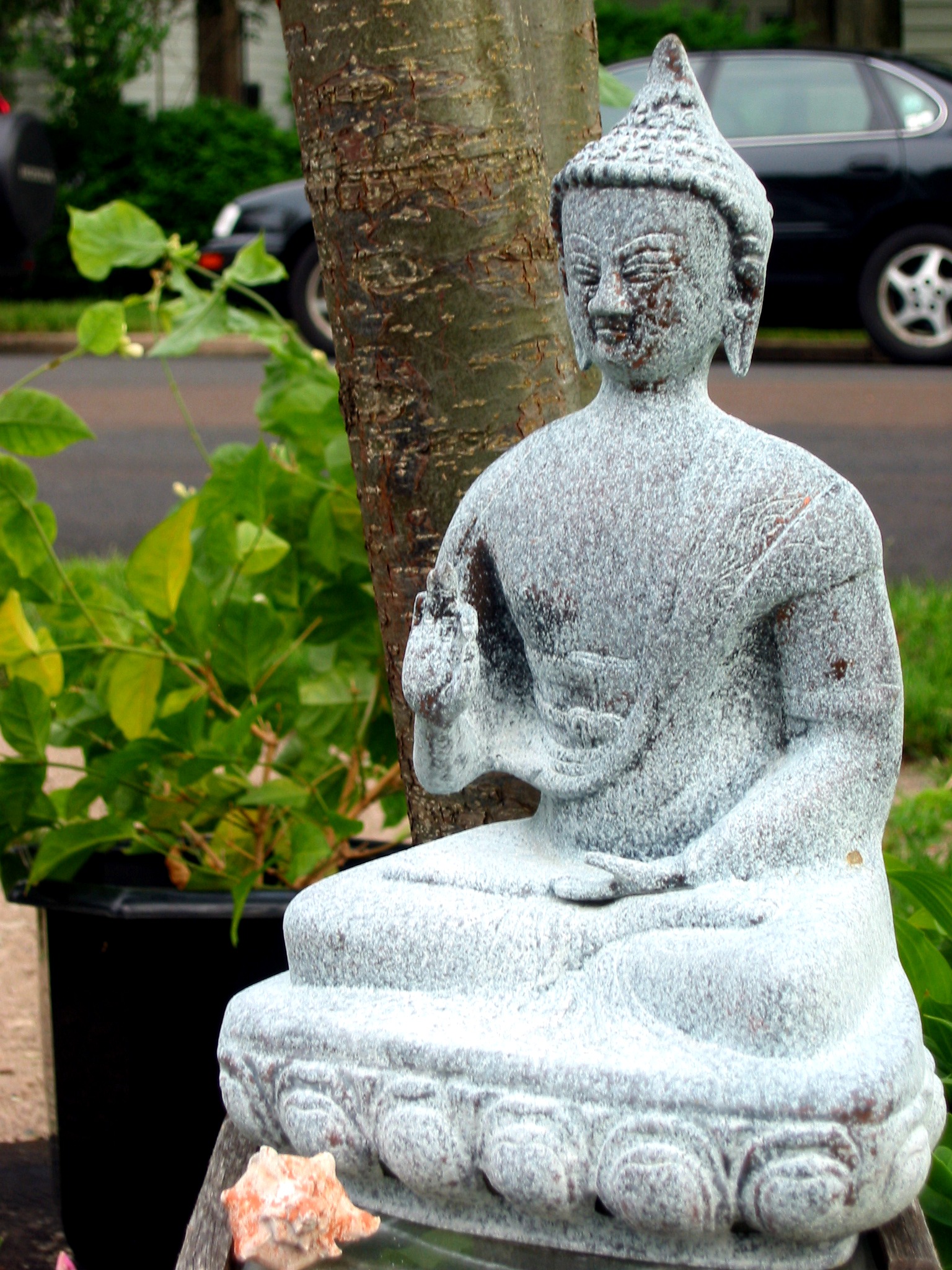
Image: “Hammocks are not just for humans” — Slater took this photo of Machita, the dog he befriended at Santa Martha, the Ecuadorian animal sanctuary.

12 NOMADS OF CHRISTMAS: Iain Mallory, English adventurer (7/12)

Current home: Salford, UK
Cyberspace coordinates: Mallory on Travel | Making Everyday an Adventure! (blog) and @MalloryonTravel (Twitter handle)
Recent posts: “The ABCs of Travel — Reflections on a Wanderlusting Life”; “Adventure in Lucerne, Switzerland — Travel Journal”; Cologne: The Bridge of Love Locks (December 2011)

Where are you spending the holidays this year?
I have two trips planned before Christmas: Lucerne for a week and then Cologne for just a few days. That does not leave a lot of time to help with getting the dinner ready for the main day, so I guess Christmas will be spent in the doghouse.

What will you do when you first arrive?
In Lucerne, I’ll be exploring. Cologne is more of a social visit so the Christmas markets will get a battering — along with copious amounts of glühwein and bratwurst.

What do you most like doing during the holidays?
If in Europe, meeting friends for laughs and drinks on a cold evening at a small town Christmas market. But if anything goes, then careering down a piste on two planks of carbon fibre with a group of friends followed closely by plenty of après-ski.

Will you be on or offline?
This year as I’ll be home, I’ll be spending time online, though a little quieter on Christmas day.

Are you sending any cards?
My closest circle of friends will receive a card, handed to them personally at sometime over the festive period when we meet. As for those that I have gotten to know online, hmmm…anybody know a good online card site? I would need some news to produce a newsletter.

What’s the thing you most look forward to eating?
During my travels, I’ll be staying at a veggie house so most definitely looking forward to the turkey although I’ll have to go out for it myself, a day or so before the big day.

Can you recommend any good books other expats or “internationals” might enjoy?
I’ve always loved The Worst Journey in the World by Apsley Cherry-Garrard, about Scott’s final Antarctic expedition (Cherry-Garrard was the youngest member of Scott’s team and one of three men to survive the notorious Winter Journey). Any of the mountaineering books by Joe Simpson is worth reading. These days I don’t have that much time to read but when I do, I prefer mountain or exploration literature. I’m looking forward to finding some time to read The Mammoth Book of Adventures on the Edge, by Jon E. Lewis — a collection of 28 eyewitness accounts of climbing adventures on the world’s greatest mountains.

If you could travel anywhere for the holidays, where would it be?
Mount Everest or maybe Mount Erebus (in Antarctica) for skiing. And I really have to bring in the New Year in Sydney one day.

What famous person or persons do you think it would be fun to spend New Year’s Eve with?
Billy Connolly or Peter Kay would be the funniest people to party with over New Year; David Attenborough and Ranulph Fiennes would provide the most fascinating stories.

What’s been your most displaced holiday experience?
I like to think that it is possible to adapt to most cultures and environments and therefore fit in well, but if I had to pick anywhere, it is hard not to feel a little alien in India. Every day seems to throw up a new surprise that often can be quite shocking.

How about the least displaced experience — when you’ve felt the true joy of the season?
Any time when I’m surrounded by friends, it doesn’t matter where I am. The feeling is one of belonging and being completely at home.

How do you feel when the holidays are over?
Excited; the New Year always offers new opportunities and the potential to be an amazing year.

On the first day of Christmas, my true love said to me:
SEVEN SKIERS A-PARTYING,
SIX SPOUSES TRAILING,
FIVE GOOOOOOOFY EXPATS.
FOUR ENGLISH CHEESES,
THREE DECENT WHISKIES,
TWO CANDY BOXES,
& AN IRISHMAN IN A PALM TREE!

STAY TUNED for Monday’s featured nomad (8/12) in our 12 Nomads of Christmas series.

If you enjoyed this post, we invite you to register for The Displaced Dispatch, a round up of weekly posts from The Displaced Nation, with seasonal recipes, book giveaways and other extras. Register for The Displaced Dispatch by clicking here!

Related posts:

12 NOMADS OF CHRISTMAS: Michelle Garrett, American expat in England (4/12)

Current home: Essex, UK
Cyberspace coordinates: The American Resident (blog) and @michelloui (Twitter handle)
Most recent post: A Crazy British Christmas Tradition (December 23, 2011)

Where are you spending the holidays this year?
At home in the UK.

What do you most like doing during the holidays?
Enjoying family time without trying to juggle work commitments.

Will you be on or offline?
Offline as much as possible!

Are you sending any cards?
I generally don’t send cards anymore. Often an email note, or a text, or a phone call depending on the person.

What’s the thing you most look forward to eating?
Cheese. I know, weird, right? I love the British cheeseboard and one of my favorite “meals” or courses is the cheese, crackers, and fruit such as pears or grapes, along with some lovely wine. I think I also love this course so much because people are generally relaxed after the main meal, everyone is chatting, laughing, and usually in good spirits.

If you could travel anywhere for the holidays, where would it be?
Somewhere warm. I’m not a fan of the cold. Although I do really love the look of snowy landscapes — I find them some of the most beautiful scenery anywhere.

What famous person do you think it would be fun to spend New Year’s Eve with?
Someone who would be so distracting I would forget about all else and just enjoy the evening…perhaps Russell Brand!

What’s been your most displaced holiday experience?
Strangely, it was when I went home (Minnesota, USA) for Christmas for the first time in 10 years. I felt out of place. I couldn’t remember if the Christmas traditions in my head were American or British. I wondered what everyone in Britain was doing.

How about the least displaced experience — when you’ve felt the true joy of the season?
My husband and I have started a tradition of hosting a Christmas Eve party for our closest friends. It’s a very causal affair, people drop by on their way to/from places and some stay for the whole three hours. The Christmas tree is up, presents are under the tree, the fire is roaring, everyone is drinking mulled wine, the kids are high on the sugar from their treats table in the den and start to sneak food from the buffet meant for adults, and everyone is relaxed and happy. This is the moment, surrounded by family and friends in my home, when I feel most at home, and when I feel the true joy of the season.

How do you feel when the holidays are over?
Exhausted! And a bit relieved.

On the first day of Christmas, my true love said to me:
FOUR ENGLISH CHEESES,
THREE DECENT WHISKIES,
TWO CANDY BOXES,
& AN IRISHMAN IN A PALM TREE!

STAY TUNED for tomorrow’s featured nomad (5/12) in our 12 Nomads of Christmas series.

If you enjoyed this post, we invite you to register for The Displaced Dispatch, a round up of weekly posts from The Displaced Nation, with seasonal recipes, book giveaways and other extras. Register for The Displaced Dispatch by clicking here!

Related posts:

12 NOMADS OF CHRISTMAS: Brian Peter, Scottish expat in Brazil (3/12)

Current home: Rio das Ostras, RJ, Brazil
Past overseas location: Houston, Texas, USA
Cyberspace coordinates: A Kilt and a Camera | Travel tales, reviews, photos, interviews and crazy goings on. Because you never know what’s going to happen (blog) and @KiltandaCamera (Twitter handle)
Most recent post: Brazil — “Getting to know Aldeia Velha,” by Peg Peter [Brian’s American photographer wife] (December 19, 2011)

Where are you spending the holidays this year?
In Houston.

What will you do when you first arrive?
Peg will arrive three weeks before I do, so the first thing I want to do is hug my wife. After that I’ll put my feet up and relax after the long flight from Rio for a few hours. That night we will spend the evening with good friends we haven’t seen in way too long.

What do you most like doing during the holidays?
Relax. We are living in Brazil while I’m working as a manufacturing and production manager in the oil and gas field. The growth in the industry has been enormous. I’ve been working long hours, and long weeks, for too many months. I’m going to turn off my phone, keep my laptop shut and switch my mind off.

So you’ll be offline?
Pegs is the Internet junkie of the team so I trust she’ll let me know if anything important happens out in cyberworld.

Are you sending any cards?
Peg will send a few Christmas cards for us. As for a Christmas letter, we do too many things and go to too many places each year to write something brief. Our family and friends who want to know more about what we’re doing can take a look at our Web site.

What’s the thing you most look forward to eating?
A bloody decent whiskey, and a tin of haggis. If I can find a good smoked mackerel, I’ll eat that too. I really wish I could get my hands on an Orkney black pudding.

Can you recommend any good books other expats or “internationals” might enjoy?
Because of work I haven’t had time to read a single book all year, unless you count industrial engineering books as a good read. But Peg always has her nose in a book. Right now she says she’s really enjoying Barbara Kingsolver’s The Poisonwood Bible. The sense of stepping into another world is something any traveler or expat can relate to.

If you could travel anywhere for New Year’s Eve, where would it be?
I’d love to do an Old Year’s Night in Comrie, a small village in the Scottish highlands. As I remember, its Hogmanay ritual starts in the evening with the kids in a fancy-dress parade riding on the back of a lorrie — a kind of float. That goes on until nearly midnight, when the whole community gathers at the bridge on the side of town near Oban and throws three flambeaux (flaming torches) over it into the River Earn. Then there’s a procession through the village with a pipe band leading the way — the villagers in the middle, the float bringing up the rear. When they reach the bridge at the other end of town, they throw the remaining flambeaux into the river. The whole thing is a ritual to protect the village from evil spirits for the year. Back in the center of town the party, including a céilidh, will go on for hours.

My sister has lived there for the past twenty years. Someday I’ll take Peg back there to show her how my family of Scots does an old fashioned Old Year’s Night properly.

What’s been your most displaced celebration of the holidays?
My first Christmas in Houston. I spent the day in shorts, roasting by the pool. It just doesn’t feel like Christmas without freezing your b*******s off.

How about the least displaced — when you’ve felt the true joy of the season?
Even though we live in Brazil, we always go back to Houston to spend the holidays with Peg’s kids. I’ve enjoyed the last few holidays with them, among new family, but I still don’t feel at home as much as I did back in Scotland– especially since I’m so far away from my own adult sons.

However, last year was a bit more exciting because Peg and I had a big secret plan between us. On Boxing Day we hopped on a plane and flew to the Caribbean. One long haul, three airports, three islands and one ferry later we arrived on St. John in the US Virgin Islands, where we eloped on the beach on December 28th. The photo above was taken of us on the ferry ride over to the courthouse in Charlotte Amalie to pick up our marriage license the day before. This year, of course, we’ll have our first anniversary!

How do you feel when the holidays are over?
It’s a bit anti-climactic. I start the new year with a long flight back to Brazil, which is a country we love living in, but it means back to work for a while. When my job is done there, we’ll have more time to travel when we please. In the meantime, we’ll enjoy as much of Brazil as we can. We both love to travel and look forward to the day when we can just keep going.

On the first day of Christmas, my true love said to me:
THREE DECENT WHISKIES,
TWO CANDY BOXES,
& AN IRISHMAN IN A PALM TREE!

STAY TUNED for tomorrow’s featured nomad (4/12) in our 12 Nomads of Christmas series.

If you enjoyed this post, we invite you to register for The Displaced Dispatch, a round up of weekly posts from The Displaced Nation, with seasonal recipes, book giveaways and other extras. Register for The Displaced Dispatch by clicking here!

Related posts:

12 NOMADS OF CHRISTMAS: Robin Graham, Irish Expat in Spain (1/12)

Current home: Tarifa, Spain
Past overseas locations: UK, Netherlands, Israel, and a previous stay in Spain
Cyberspace coordinates: a lot of wind… (blog) and @robinjgraham (Twitter handle)
Most recent post: “Gran Bretaña” (December 21, 2011)

Where are you spending the holidays this year?
In Hampshire, England. My mother lives there now with her husband, as does my brother and his family.

What will you do when you first arrive?
Once all the greetings are out of the way I may well go for a walk. I’ll be in the town where I spent my adolescent years and there will be memories and perhaps one or two stories for my fiancée, who will be visiting for the first time.

What do you most like doing during the holidays?
TV off, lights off. Candles on, perhaps a fire. To sit in the near dark and talk; to feel connected to all the people who are doing that around the world and to those who have done it down through the centuries. I am not religious but something about gathering with loved ones in the depths of winter seems to run deep.

Will you be on or offline?
I will tell myself to be offline and will fail. Lessline? Halfline? Online Lite?

Are you sending any cards?
Don’t do cards as a result of a selfish and entirely misspent youth. Not going to start now.

What’s the thing you most look forward to eating?
Tricky. I don’t have much of a sweet tooth. If there’s goose I’ll be happy. Roast potatoes never hurt either.

Can you recommend any good books other expats or “internationals” might enjoy?
Ghosts of Spain (2008) is an account of a journalist’s (Giles Tremlett‘s) trips around the country in search of its hidden history, particularly with regard to the civil war and Franco era, and how the country has changed since that era ended with his death in the mid-seventies. It fills a gap that I would have thought was there for many expats in many countries; a chance to get under the skin of your adopted country in your own language.

Foreign Flavours is the second anthology from the online writers group Writers Abroad. The theme is food (and drink) as experienced by the expat, and the collection is nothing if not varied — from short stories to journalistic pieces to recipes; it’s a real kitchen companion. All of the proceeds from the book go to the Book Bus, a registered charity that aims to provide books to and increase literacy rates among children in the developing world.

If you could travel anywhere for Christmas, where would it be?
I was brought up on the premise that an ideal Christmas would involve snow and reindeer, so the notion of an isolated but cosy log cabin in the woods of Lapland has a distinct appeal. Family around me — great. Just my fiancée — better.

What famous person do you think it would be fun to spend some time time with over the holidays?
Richard Dawkins. We could pontificate on the merits of an atheist world view whilst getting tipsy on eggnog, pigging out on Advent chocolates and singing Christmas carols. I hear he does a mean rendition of “Silent Night,” and I’m sure he’d be good company.

What’s been your most displaced Christmas experience?
I spent one Christmas entirely alone in Holland. Broke. Cue violins — it was an episode in that misspent youth I mentioned. My least Christmassy Christmas.

How about the least displaced experience — when you’ve felt the true joy of the season?
When I was a child most Christmas cards, cookie tins and cake wrappers would, for some reason, feature images of snow-laden Bavarian countryside. Castles and cutesy villages with snowy candlelit windows in the darkness. So to find myself in Bavaria a few years ago with my fiancee’s folks, watching families sled down a nearby hill in the evening, attending midnight mass in a 14th century church with an exquisitely painted ceiling, sitting in the house with candles and glühwein and stollen; that would have to be the one that ticked all the boxes for me.

This Christmas coming will be special, too — a family gathering such as there hasn’t been for long time.

How do you feel when the holidays are over?
Honestly? Relieved, ready to get on with it!

On the first day of Christmas, my true love said to me:
AN IRISHMAN IN A PALM TREE!

STAY TUNED for tomorrow’s featured nomad (2/12) in our 12 Nomads of Christmas series.

If you enjoyed this post, we invite you to register for The Displaced Dispatch, a round up of weekly posts from The Displaced Nation, with seasonal recipes, book giveaways and other extras. Register for The Displaced Dispatch by clicking here!

Related posts:

I may be a Third Culture Kid, but bring me the (gluten-free) figgy pudding!

We welcome back our Third Culture Kid columnist, Charlotte Day, for her final post of 2011. Melding together an interest in food with philosophical musings, she has crafted an ornament of love to what she calls her “triply displaced” Christmas.

Within the context of celebrating a displaced Christmas, my family offers an interesting case study.

In Australia, where I spent my first six years, my maternal grandparents always valiantly brought out a hot ham oozing brown sugar glaze, at a time of year when most Australians took to the beaches, celebrating over seafood and chilled beer.

In our vapor-filled family stronghold, we gathered about the fireplace, though no winter’s cold threatened outside, listening to carols from King’s College Cambridge.

Fired up by dreams of a white Christmas

My mother and I were forbidden from leaving the United States in December 2002, while our green card applications were being processed. So we settled on Jackson Hole, Wyoming, as a place sure to bring us the then unfamiliar Christmas apparition: snow.

Snow it did, forcing my stepfather on to the ski slopes for the first time — a foray into the unknown he hopes never to repeat.

In our hotel room kitchen, we managed to melt the plastic mould around the Christmas pudding, setting off the hotel fire alarms. Yet even this misadventure did not chasten our efforts to bring English tradition with us, wherever we found ourselves celebrating.

This year’s family cook-fest

Now ensconced at an English boarding school, I have come “home” for Christmas to New York City, where my mother and stepfather live.

What fresh culinary (mis)adventures await? The ham lies in its canvas bag, in anticipation of that most keenly felt indignity: pineapple and toothpicks. My mother has produced two gluten-dairy free Christmas puddings, determined that I should not feel shortchanged in a season that can be unkind to those with restricted diets.

Her mince pies, however, were a failure, after the dairy free butter and shortening could not be pummeled into a shapely dough.

My stepfather’s choice of fowl has diverged from tradition: he settled on a pair of Cornish hens and a duck after months of deliberation, spurning turkey early on but then toying with chicken and goose. My mother and I forbade him from using the barbecue, barring all vestiges of Australia from our emphatically English pageantry.

The “true” meaning of Christmas — the wrong question?

When considering my family’s triple displacement — an English Christmas, celebrated by Australians in America — I sometimes wonder: is there some kernel of truth we are missing out on, by not being true to the home traditions of the cultures we live in? And are we missing out on the true meaning of Christmas anyway, amid the holiday’s surface distractions?

Taking the second question first, my answer is no. For me, the sensuality of Christmas is one of the best things about it. Before we can seek truth and integrity, we must first acknowledge that the vast majority of us revel in the commerciality, the gluttony, the clichés and platitudes, no matter how much we may condemn them.

John Betjeman does an excellent job of stripping back the excess in his poem “Christmas.” It is not the holiday’s religious significance alone, but the disparity between this significance (regardless of whether or not this resonates with us) and our concerns with triviality, that should give pause.


And is it true,
This most tremendous tale of all,
Seen in a stained-glass window’s hue,
A Baby in an ox’s stall?
The Maker of the stars and sea
Become a Child on earth for me?

And is it true? For if it is,
No loving fingers tying strings
Around those tissued fripperies,
The sweet and silly Christmas things,
Bath salts and inexpensive scent
And hideous tie so kindly meant,

No love that in a family dwells,
No carolling in frosty air,
Nor all the steeple-shaking bells
Can with this single Truth compare —
That God was man in Palestine
And lives today in Bread and Wine.

But whereas Betjeman emphasizes the inadequacy of mankind’s efforts to celebrate the wonder of Christmas, I think we should not be so hard on ourselves. Is it not enough that there is a time of year when we all seem to bear a little more good will towards each other than usual, when we couple shameless self-indulgence with generosity?

Trivial, exuberant, voluptuous — why ever not?

The Christmas truce of 1914, when unofficial ceasefires took place along the Western Front, involved no burdensome reflections on the holiday’s true meaning. Rather, simple gestures like sharing tobacco transformed these few days into a symbol of fraternity, exemplifying the best of humanity.

As it happens, exchanging things, often trivial things, is a very potent expression of human feeling. The medium is, without a doubt, inadequate, but it is one with which we are comfortable — and is therefore as profoundly human as any Truth, spiritual, cultural, universal or otherwise.

Returning, then, to my family’s Christmas mishmash: my family associates English stodge with the best of human sentiment, and indulge in it to the full. We do not attempt to deny our weaknesses and are shamelessly gluttonous and commercial. We may not be faithful to the holiday traditions of the cultures that host us, but we have at least remained true to our innermost desires, and to what seems natural to us.

For what would a celebration of the best of human sentiment be, untempered by these most exuberant and voluptuous of our follies? In asserting this, I do not mean to glorify the self-indulgent: we would do well to become less so. I simply feel that our self-indulgence is as deeply human — and reflects as pertinent a truth — as any more outwardly meaningful way of celebrating this oft-contentious season.

Readers, any responses to Charlotte Day’s thoughts on her triply displaced Christmas and the holiday’s true meaning?

STAY TUNED for tomorrow’s post, the first of our 12 Nomads of Christmas.

If you enjoyed this post, we invite you to subscribe to The Displaced Dispatch, a weekly round up of posts from The Displaced Nation, plus some extras such as seasonal recipes and occasional book giveaways. Sign up for The Displaced Dispatch by clicking here!

Related posts by or about Charlotte Day:

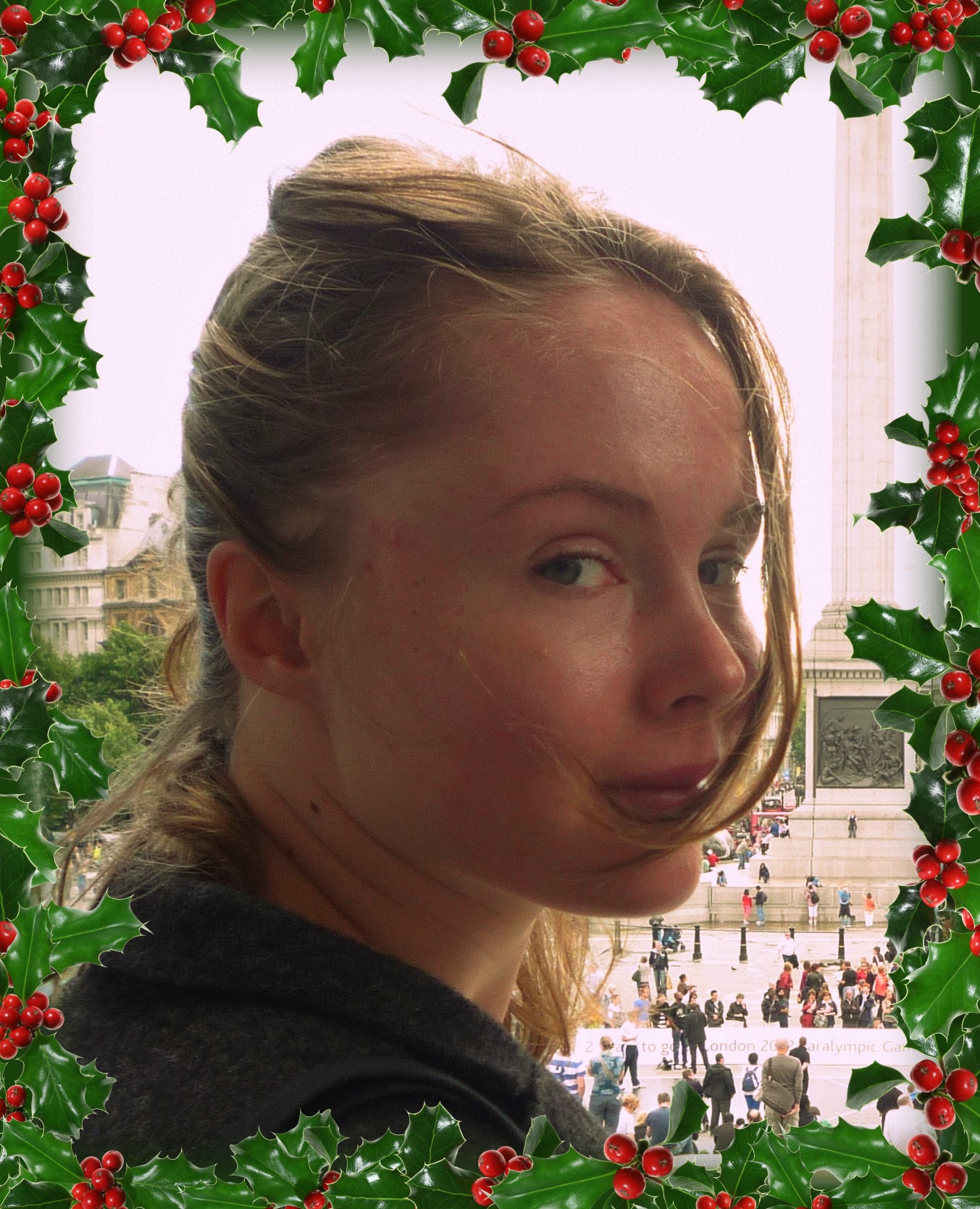
img: Charlotte Day surveying Trafalgar Square in London, this time with a jolly holly border (no ivy, though — that’s for next year!).