The Displaced Nation

A home for international creatives

Tag Archives: UK

LIBBY’S LIFE #51 – On a cliff edge

A fly-on-the-wall observer of our household would see nothing wrong.

They’d see a family who has time-travelled from the 1950s. A young wife at home with a preschooler and two babies; a granny who hovers solicitously around her daughter and oldest grandchild; a husband who is polite and calm and doesn’t shout. A large dog that slobbers, and spends all his time between back yard and mud room.

The perfect family, even with slobbery dog, the observer would conclude.

But here’s the catch. My husband is not polite and calm by nature. He kicks electrical appliances when they fail, and shouts when he treads on Lego bricks in his bare feet. A month ago, he was experimenting nightly in the kitchen after becoming addicted to the Food Network Channel, and the air turned indigo as he tried to out-curse Gordon Ramsay.

He does none of this now. He is silent, detached, an observer himself.

I don’t like the new version of Oliver one bit.

Although you’d think this Oliver would be an improvement on the old model, he isn’t. He’s an automaton, with his studied manners. He pauses before he replies to anything I say, as if I’ve said something so stupid that he had to stop and count to ten.

His forays into the kitchen take place in silence, as if he is not creating with culinary pleasure but conducting a serious lab experiment; my efforts to compliment his cooking are met with shrugs, grunts, or monosyllables. After a pause, of course.

I want the old Oliver back so much.

Why did I send that bloody email to his sister? I can only think that I’ve watched too many episodes of Oprah or Ricki Lake in my past. Families, it seems, do not always need reuniting thirty years down the line.

“Can’t we talk about what’s happened?” I asked him one night.

That slight pause before he spoke.

“No point.”

“But we need to talk!”

Another pause.

“Everything’s fine, Libby.”

They’re not fine, at least not from where I am. They’re very far from fine. But how can you make something right between two people when the other person won’t admit there is something wrong?

Meanwhile, to Jack, I have to pretend there is nothing wrong. It’s very difficult, when your four-year-old repeatedly asks you why you have red eyes, not to answer “Because your father is a cold bastard” but so far I have managed to refrain.

Now that Kate’s gone home, I have no one to talk to. Maggie is on vacation, and as for talking to my mother, forget it. I know what she would say, and it would be along the lines of It Being My Own Fault and I Shouldn’t Do Things That Upset My Better Half. She’s spent her entire married life appeasing my father, so I wouldn’t expect anything more.

She made a Lightning McQueen cake for Jack’s fourth birthday on Sunday, and we all pretended to be a happy family around the dining room table. I hadn’t arranged a party, but promised Jack we would have one in the garden when the weather is better and Mummy isn’t as tired.

When we’d had some cake and Jack had opened his presents — thank goodness for internet shopping and express delivery — Oliver excused himself.

“Going to the office,” he said.

“But it’s Sunday,” I said. “It’s Jack’s birthday.”

He looked at me for a few seconds. I shrivelled inside. Then he left the house.

“Where’s Daddy gone?” Jack demanded.

“To work, sweetheart,” I said, bending over one of the twins so that Jack couldn’t see my face as I blinked back tears.

Tears, I’ve found, are never far away.

“It’s my birthday! Daddies shouldn’t go to work on birthdays!”

Jack was right, of course. Daddies shouldn’t do that.

Outrage surged inside me, which had the welcome effect of banishing the ever-ready tears. It was one thing to punish me, but another thing entirely to punish Jack by abandoning his birthday tea before we’d had second helpings of cake.

George started to howl for his dinner, and Beth joined in. I carried them into the living room, plonked them in their bouncy chairs, and sat on the floor between the two of them with my back against the sofa, stuffing a bottle in each mouth.

In the slurping, hiccuping peace that followed, I could hear Mum tidying up in the kitchen and talking to Jack, who was still luxuriating in his whinge-fest.

“I didn’t want Daddy to go to work today.”

“I’m sure you didn’t. But sometimes grown-ups don’t want things either.”

“You mean Daddy didn’t want to go to work?”

Clattering as a cupboard opened and dishes were put away.

“Hmm. Now that’s a tricky one. No, I think if Daddy didn’t want to go to work, he wouldn’t. What do you think?”

Goodness. Now there was a turn up for the books: my mother, badmouthing Oliver, and in her grandson’s presence?

No doubt some earnest couples-counselling guru would frown upon this, and tell me I should not encourage such blatant side-taking, but sod it. I need all the moral support I can get.

It occurred to me that I might not be giving Mum a fair chance by not confiding in her. She’s different from the demanding woman who arrived a month ago, but she’s not how she is with Dad either. She’s…well, I guess this is who my mother really is.

I heard her telling Jack to go and draw a nice picture for Mummy with his new crayons, and a second later, she came into the living room and sat down on the sofa behind me.

I leaned further back against the sofa.

“Are you comfy down there on the floor?” she asked.

“Mmm-hmm.”

I felt her stroking my hair, and imagined that I was six years old again. I remembered stroking my hair like that one day in 1986 after I came home from school, crying, and telling her that Cheryl Stokes had said I smelled bad, and it wasn’t true, was it?

How could it be? Mum said. I make you have a bath every night. “Which is more than can be said for Cheryl Stokes’s slovenly mother,” she added under her breath.

Not being familiar with the word “slovenly”, I thought she’d said “heavenly”, and for a long time after that thought that Cheryl Stokes’s mother was married to God, which made complete sense to my six-year-old logic, because Cheryl Stokes didn’t seem to have a father.

“Mum?” I asked now. “What happened to Cheryl, from the big Stokes family that used to live up the road from us?”

“Married twice, divorced twice. I see her every now and then in Sainsbury’s. She’s got three children. Maybe more.”

I sighed. “Like her heavenly mother.”

“Sorry?”

“Never mind. The apple didn’t fall far from the tree, did it? Her mother was just the same.”

I thought some more, my eyes closed. About my battle with Patsy Traynor, my fierce protection of Jack against Caroline’s devil-child. It’s what Mum would have done. This apple hadn’t fallen far from the tree either.

“Do we all turn into our mothers?” I asked. “Are you like Grandma? Oliver’s not a bit like his mother. He must be like his…” I trailed off and sobbed.

The hand on my head faltered a little before it carried on stroking.

“I know you meant well,” Mum said. “Sometimes it’s hard for other people to forgive good intentions, though.”

“He’d kept a birthday card from his dad since he was six!” I burst out. “And a stuffed tiger! You don’t do that if you want to forget about someone! Why would you keep that stuff otherwise?”

George finished his bottle. I lifted him out of the chair and passed him across to Mum to be winded. She put him over one shoulder and patted his back.

“You might keep it,” she said, not looking at me, “if it represents something good. Like the only good thing you can remember about that person.”

George burped. Beth started to fuss, and I realised that I’d let the bottle slide from her mouth.

“What are you getting at?” I said at last. “Do you know something about Oliver that I don’t?”

Mum shook her head. “I’ve probably said too much already.”

She put George back in his chair and bounced it gently with her foot.

“Speak to Sandra,” she said.

.

Next post: LIBBY’S LIFE #52 – Life: A series of hellos and goodbyes

Previous post: Me and my shadow: LIBBY’S LIFE #50 – Home Again

Click here to read Libby’s Life from the first episode

STAY TUNED for Friday’s post — another Displaced Q from Tony James Slater.

If you enjoyed this post, we invite you to subscribe for email delivery of The Displaced Dispatch, a round up of the week’s posts from The Displaced Nation. Sign up for The Displaced Dispatch by clicking here!

Image: Travel – Map of the World by Salvatore Vuono / FreeDigit

Kidding yourself over La Dolce Vita

As you are doubtless aware, this month’s theme is la dolce vita, an Italian phrase meaning the sweet life. It would be remiss of us to choose that theme without referring to Fellini’s 1960 masterpiece of the same name.

Regular readers of The Displaced Nation may not be surprised to learn that I was a somewhat pretentious teenager. A thin youth, callow and pallid, I could be found most nights ensconced in my bedroom reading the novels of Thomas Hardy or writing in a notebook my own cringe-worthy poetry. However, I would sometimes, late at night, usually on a Friday, descend from my literary lair and head down to the living room where I would turn the TV to BBC2 or Channel 4 to watch some classic foreign film that I felt I ought to know about.

Though my teenage years aren’t that far behind me (the late 90s, if you must know) they exist in another epoch, a time of old media, where nobody normal blogged, where there was no twitter and there was most definitely no streaming online of every movie you could ever wish to watch. Instead my cultural endevours were rationed. The northern town that I grew up in had no bookstore (unless we rather generously classify W.H. Smith as a bookstore) or cinema, so I found myself spending a lot of my time in my local library or scanning the Radio Times to see what (if any) interesting examples of world cinema where being shown on either of the two niche channels (BBC2 and C4). Invariably, something was being shown late most Friday nights. It was in these circumstances that I first came across Fellini’s La Dolce Vita.

I can’t in all honesty say that I “got it” when watching it for the first time that night, but on a superficial level, I loved it. More particularly, I loved the effortlessly cool, brooding Marcello Mastroianni who anchors the film. This, I reasoned, was how manhood should be, how I should live my life: apertifs in the cafes, dances at the Cha-Cha-Cha Club, a midnight wade into the Trevi Fountain with an Anita Ekberg figure, two lonely souls enjoying a fleeing moment of warmth.

So I pondered about how one goes about affecting a similar style to Mr Mastroianni. The problems quickly became apparent. My clothes came from Marks and Spencer’s men’s department and gave me more the appearance of a Mormon missionary than Italian heartthrob. Then there was the impossibility of finding in Hartlepool a Cha-Cha-Cha Club that played the music of Nino Rota — now, the Bikini Fun Bar played 2Unlimited, but between you and me that wasn’t quite the same. Most disappointingly, I had no Anita Ekberg; none of the girls in school would take up my invitation to wade with me in the duck pond in Ward Jackson Park.  So the attempt to give my teenage years a Fellini spin were dashed. I couldn’t recreate the Rome of 1960 as seen through Fellini’s lens in the Hartlepool of 1998 (hardly a surprise).

But if I stopped pretending to act like I’d stepped out of a Fellini film, still I think this might have been when I was unknowingly inoculated with wanderlust — and the thought that somewhere out there is a place where cafes serve apertifs, not sausage rolls, where the club plays Nino Rota, not 2Unlimited, and where Anita Ekberg is waiting. That’s the sweet life.

STAY TUNED for tomorrow’s post, Kate Allison’s review of Chique Secrets of Dolce Amore, by Barbara Conelli — the book that inspired this month’s theme!

If you enjoyed this post, we invite you to register for The Displaced Dispatch, a round up of weekly posts from The Displaced Nation, with seasonal recipes, book giveaways and other extras. Register for The Displaced Dispatch by clicking here!

Related posts:

THE DISPLACED Q: What’s the most delightful sound you’ve heard on your travels?

Have you ever just stopped and listened — really listened, I mean? Yes, of course you have! Because you’re Displaced Nation readers, which automatically means you’re closely in touch with all five senses. After all, that’s what travel is all about!

But just in case those ears of yours have been missing some vital input — of the kind that would help you to appreciate life’s sweetness — let’s do an exercise in aural comprehension and memory.

Yes, it’s time to pay some attention to those great big flappy things on the sides of your head — you know, the ones that help cartoon elephants to fly? Yes, friends (Romans and countrymen), I’m asking you to lend me your ears. Don’t worry — I’ll give them back. And, by the time I do, you will understand why there’s a photo of wet grapes on this page!

Today, in the service of living a fuller Dolce Vita, our question is: What is the dreamiest, most beautiful sound you’ve heard in the course of your travels?

Beauty in serendipity

Now, because La Dolce Vita is all about finding beauty in unexpected things, I won’t wax lyrical about waves lapping on foreign shores, morning birdsong in uninhabited fields, or other somewhat clichéd ideas of a “dreamy sounds.”

True, it was incredibly sweet to hear my girlfriend say “yes” when I asked her to marry me; I’m sure the same is true for everyone who’s been through this stage in their life. In fact, I hardly heard her at all because she was crying so much. (I was crying too as it happens, but that was because I was kneeling in an ants’ nest at the time and Australian ants really hurt when they bite! Damn them!)

Now, I’m the sort of person who takes great delight in discovering life’s hidden treasures in the moments you’d least expect them. And I take even greater delight in pointing them out to everyone else, which apparently is one of the most annoying qualities a person can have. Especially if you’re having a bad day.

So, what’s the most delightful sound you’ve heard recently? Is it some gentle-voiced stranger, mentioning how bright and sunny the day is, even though the train is making you horribly late for work? Or is it the sound of someone telling that well-spring of positivity to shut the f@&8 up and p*$$ off?!

I apologize in advance for being that guy. I should try to keep my happy-happy joy-joy observations to myself more often!

But in terms of the most wondrous sounds I have come across, I’ve decided not to opt for the obvious — the soft harp music at my wedding in England; the sound my footstep makes in deep, fresh snow at 10,000 feet; or the poignant jingling of a Spanish music box, dearly remembered from my childhood, which I inherited from my granddad when he passed last month.

Instead I’ll go for the unexpected: the sound of rain on my tent.

Raindrops are falling on my tent!

After three months of living under canvas, doing agricultural work in the hope of extending my Australian Working Holiday visa, hearing that particular sound would fill my entire being with joy. Why did it have such an effect on me, you may ask? Was I looking forward to soggy clothes on the washing line or to a cold, wet sprint to the block of toilets? No, even a cheerful person like me isn’t that much of a glutton for punishment.

For me, the sound of raindrops simply meant…FREEDOM!

Because as any budding grape-picker knows, you can’t pick ’em when they’re wet — so any downpour of sufficient strength to wake me meant a day off work, for sure! No hours of bending over in the scorching summer sun; no cuts and prickles of delicate fingertips; no hauling of endless buckets, boredom, drudgery and indelible purple juice on everything. (Trust me, there are parts of you that just shouldn’t be purple — ever.)

Most of all it meant 6:00 a.m. was not the time to be wriggling out of bed, out of a nice warm sleeping bag into the miserable grey dawn — and into a set of filthy work clothes. No! 6:00 a.m., when the rain fell, rattling the flysheet and threatening to overwhelm its scant moisture resistance, meant only one thing: time to go back to sleep.

For me, that hard, driving rain was the world’s most blissful lullaby!

So there you have it. No magnificent concertos, no first cries of your first-born baby — even though no one will dispute the loveliness of those sounds.

My challenge to you today is to think of a sound that holds an interesting story about your travels abroad. What’s a sound that struck you as the dreamiest and most beautiful, but that’s unique to your own wanderings?

Let me know in the comments! And if you have a photo that accompanies that sound, send it to me at tony@thedisplacednation.com. As mentioned in last week’s post, I hope to be staging a “la dolce vita slideshow” before too long!

STAY TUNED for Monday’s post — a contrarian view of La Dolce Vita by none other than Anthony Windram!

If you enjoyed this post, we invite you to register for The Displaced Dispatch, a round up of weekly posts from The Displaced Nation, with seasonal recipes, book giveaways and other extras. Register for The Displaced Dispatch by clicking here!

Related posts:


Me and my shadow: LIBBY’S LIFE #50 – Home again

Oh, thank the lord and all his angels. I am on my way back to England, after an extended stay with the Patricks.

How extended, exactly? Two weeks, two months, two years? Who knows?

Time expands to encompass the drama available.

~

Never have I wanted to be somewhere else so badly as on the evening that Tania Patrick appeared on Libby’s doorstep and refused to leave. She wanted to meet her big brother, come what may — and never mind the collateral damage to his family.

The awkwardness, the embarrassment, the toe-curling please-God-get-me-out-of-here-ness of that meeting. The sister seemed oblivious to our shuffling feet, the nervous coughs, and our collective intake of breath as we heard Oliver’s car pull onto the driveway.

“Oliver!” Tania Patrick cooed, as she elbowed Libby out of the way, opened the front door, and and leaned in to kiss him on the cheek.

While she’s not unattractive, she’s never going to feature in a Pirelli calendar either, and Oliver’s not the touchy-feely type without a good reason for being so.

“Do I know you?” he asked, leaning back to avoid her embrace.

Libby, meanwhile, watching the scene as intently as her husband would watch a penalty shootout between Arsenal and Spurs, couldn’t bear the suspense. It occurred to me afterwards that she could have exonerated herself by blaming the sister for tracking Oliver down, but, guileless as she is, she blurted out her version of the truth.

“Oliver, this is Tania. She’s your sister. We met online after I emailed her.”

I couldn’t help but cover my face with my hands, shaking my head. Libby would not only have shaken hands with her executioner but apologised for treading on his foot on the way across the scaffold.

Oliver sidled through the front door into the house, pressing himself against the walls so he didn’t have to touch the visitor.

“And you didn’t think to tell me at the time?” he asked Libby.

“Well…” She floundered. “I mean, I didn’t tell her where we lived or anything, so I didn’t think she’d come here.”

“Took a bit of detective work to find you!” Tania’s voice was raspy. A recently ex-smoker’s cough. “Dad never talks about you, but my grandma told me once I had a brother somewhere.”

“Did she.” Oliver’s question dropped at the end to become a statement. “I bet he doesn’t know you’re here now.”

For the first time, Tania seemed unsure of herself.

“He doesn’t, no.”

Oliver nodded.

“Keep it that way,” he said, opening the front door wide, and indicating to his newly-discovered and quickly-abandoned sister that this particular game of Happy Families was over.

~

I wasn’t sure what happened between Libby and Oliver after that. They disappeared into their room with the twins, and every now and then I heard the sound of raised voices, followed by one of the twins’ wailing.

Jane and I put Jack to bed, and had a whispered conversation while his bath was running.

“It will blow over,” Jane said, sounding more certain than she looked. “It has to. She meant no harm.”

“Things will look better in the morning,” I said.

~

They didn’t, of course.

They looked worse.

And the morning after that, too. Every day was worse than the last.

Libby put on a brave face and bright smiles during the day — while Oliver was out — and for minutes at a time we would forget anything was wrong. The babies always knew something was wrong, though, and cried alternately with hunger and colic. On Day Three, Libby abandoned her principles and gave them formula milk.

When Oliver came home in the evenings, the atmosphere changed in the house. Jane and I would scurry for cover in the basement, pretending that we were keeping Jack entertained and out of the way.

Bad enough to bear were the frozen silences whenever Libby and Oliver were in the same room together. When Jane and I prepared dinner in the kitchen, we whispered, as if by whispering we could dissipate the cloud of anger and resentment that billowed forth from Oliver.

Worst of all, though were the nights. When everyone was in bed, we could hear — although we pretended not to — the increasing volume of Oliver’s voice, as the same argument was rehashed again and again.

“You had no right! None of your business!”

An inaudible murmur from Libby. More raging from Oliver.

“How would you like it if I invited a whole bunch of your long lost, naff relatives to barge into our life and turn it upside down? You wouldn’t, would you?”

Another murmur from Libby, this time louder so the quaver in her voice is detectable.

“I don’t care how good your intentions were. I’ve spent my entire life trying to forget that bastard ever existed, and now I have to deal with him and a TOWIE half-sister, thanks to your good intentions. If those are your good intentions, God help us all when you have bad ones.”

And so on. Every night. Libby looked shattered — a normal look for a mother with new twins, but this was exhaustion on a different plane.

~

Sunday arrived, and I had to leave. I wished I could take Libby as well.

She had refused to talk about what had happened. Perhaps she felt that ignoring the problem would make it go away.

“I’ll be all right,” she said, as she said goodbye to me. “Mum’s still here, at least.”

Jane had stepped up her game in the last few days. If she previously thought Libby was confident, and felt inadequate around her, this was no longer the case. A mother is always a mother, no matter how old her children are.

“You’ve got to talk to someone, Libs,” I said. “You can’t bottle it up like this.”

She shook her head. “Can’t,” she said, pressing her lips together in a thin line. “You have no idea what a Pandora’s Box I’ve opened.”

I had an idea. “Then write. Get it out of your system that way.”

She nodded slightly. “I’ll think about it.”

“I can’t do your blog next week,” I said. Actually, I could, but this would be good therapy for Libs.

“I’ll think about it,” she repeated. She sniffed, straightened up, and put her shoulders back. “You’d better go. The traffic will be awful if you leave it any later. The Red Sox are playing at home today.”

I sat in the car, put it in reverse, and backed out of the driveway. As I stopped at the end of Juniper Drive, I looked in the rearview mirror. Libby was standing by her mailbox, still waving.

Even from this distance, I could see she was crying.

.

Next: LIBBY’S LIFE #51 – On a cliff edge

Previous: LIBBY’S LIFE #49- An unwelcome blast from the past

Stay tuned for Friday’s Displaced Q testing your ability in another aspect of La Dolce Vita!

If you enjoyed this post, we invite you to subscribe for email delivery of The Displaced Dispatch, a round up of the week’s posts from The Displaced Nation. Sign up for The Displaced Dispatch by clicking here!

Img: Map of the World – Salvatore Vuono

When in London, hey? Ag no man! 10 foods I still miss from my homeland…

It’s time to take a break from the craving for La Dolce Vita with a guest post by Lexi Mills, a young South African expat in London. Mills has a another kind of craving: for her home cuisine. YES, IT’S FOOD!!! One of the Displaced Nation’s all-time favorite topics…

I moved from South Africa to London when I was 18 with my parents. Everyday my feet straddle the line between two very different places that I consider home, and sometimes I lean more toward one side than the other. For example, I absolutely love the opportunities that London affords, but I miss the warmth of South African people.

While I will forever be torn between my two homes, one country will forever win when it comes to food: South Africa. You see, South Africa offers not only a great variety of different and amazing landscapes, it is also home to people from diverse backgrounds. A rich combination of cultures, traditions and religions results not only in a unique way of life but also in a wide menu of food items.

I miss everything about South African food: the access to affordable fresh fruit, the healthier diet, grilled meats on the braai (barbecue), to name just a few.

I even miss those packaged foods that you don’t realize you often crave until you don’t have access to them anymore.(Over the years, I’ve met a lot of South African expats and discovered just how much of a hold those packaged foods have on our memories. While you can try to re-create homemade South African foods in other countries, it’s a struggle to replace the items for which you need to find a specialized grocery.)

Out of curiosity, I decided to conduct a study among South African expats here in London to see just how widespread these cravings are. Luckily, as my job is to represent South African Hotels in offering accommodations for travelers to the Rainbow Nation, I was able to utilize their resources for my study of which foods my people miss most.

According to my findings, South Africans who live and work in London miss the following 10 food items from their home country most of all. (Note: I’ve added explanations for the benefit of those who aren’t familiar with our culture.)

1) Biltong

A type of cured meat usually made from raw fillets of beef, ostrich or other meats. South Africa’s biltong can be compared to beef jerky as they are both spiced, dried meats, but biltong has different ingredients, is produced by a different method, and isn’t at all sweet.

2) Dry wors (also known as droëwors in Afrikaans)

Literally, dried sausage. Because it is dried quickly in warm and dry conditions, droëwors does not contain any curing agents as found in most cured sausages. As a result, it should not be kept in moist conditions (such as exist in the UK!). Droëwors is a popular snack.

3) Crème soda

A sweet, carbonated soft drink, usually flavored with vanilla.

4) Nik Naks

A popular brand of maize snack, available in the original real cheese, fruit chutney, cheese & onion and BBQ flavors.

5) Mrs Balls Chutney

A beloved brand of chutney often served with South African meals, with roots firmly planted in the country’s heritage. Made from apricots and peaches, it’s slightly sweet and spicy.

6) Peppermint Crisps

Milk chocolate bars filled with thin cylinders of mint-flavored toffee that were invented in South Africa by Wilson-Rowntree (it’s now produced by Nestlé). Kids in South Africa like to break off both ends of the bar and use it as a “straw” to drink milk.

7) Boerewors

A very popular sausage in South Africa that is used for braais/barbeques. Boerewors is made from coarsely minced beef, sometimes combined with minced pork and lamb as well as spices, and preserved with vinegar and salt. This quintessential South African sausage contains a high proportion of fat; no wonder it’s so tasty!

8) Rusks

Hard, very dry biscuits that were originally prepared by the Dutch for traveling long distances in South Africa’s hot climate. Rusks can be plain or with added texture from nuts, raisins or seeds. We often dunk them in tea.

9) Maize meal, locally referred to as mielie/mealie

Ground maize/corn that you mix with hot water and stir until you get a porridge-like mash (also called pap) — especially delicious when served with a nice homemade meaty tomato sauce.

10) Bakers Tennis Biscuits

A square coconut biscuit with a distinctive petal pattern, made with real golden syrup, coconut and butter. The brand has been around since 1914, when the South African biscuit/cookie manufacturer Bakers first introduced them.

* * *

I hope this gives you an idea of the unique South African palate. If you are an expat, then you’ll know what an adjustment it can be to live in another country, but for me the most profound difference among cultures comes down to cuisine.

Have you had a similar experience? I’d love to hear what foods you miss from back home in the comments!

Lexi Mills is a PR professional living in London. You can find her chatting up Brits all over the Foggy City and enjoying the National Gallery on her days off — a luxury she could not enjoy in her native South Africa. Follow her on Twitter at @leximills.

STAY TUNED for Wednesday’s post, featuring the first of several practitioners of la dolce vita.

If you enjoyed this post, we invite you to register for The Displaced Dispatch, a round up of weekly posts from The Displaced Nation, with seasonal recipes, book giveaways and other extras. Register for The Displaced Dispatch by clicking here!

Related posts:

Img: Octopus, anyone? Lexi Mills at a seaside cafe in Brighton, UK, in 2011.

Ask Mary-Sue: Is the mid-life gap year a good idea?

Mary-Sue Wallace, The Displaced Nation’s agony aunt, is back. Her thoughtful advice eases and soothes any cross-cultural quandary or travel-related confusion you may have. Submit your questions and comments here, or else by emailing her at thedisplacednation@gmail.com.

Welcome to May, dearest readers. I’m sure like me you find this to be an absolutely delightful time of year as a long and delicious summer stretches out before us. This month’s theme is la dolce vita — or the sweet life in American. For me that means a summer making full use of my grill and dusting off my Paula Dean cookbook. Anyhoo, let’s get on with the queries that you’ve sent in for me, hopefully I can turn someone’s frown upside down — if anything, that’s the real sweet life. Ha, who am I kidding? It’s still baby back ribs!

__________________________________________

Dear Mary-Sue,

My wife and I are middle-aged, middle class Americans with two kids and a house and jobs. But now that our kids are grown up with lives of their own, my wife seems to have gotten it into her head that we should quit our jobs, sell the house, and have an adventure. I said, “Don’t be silly, gap years are for kids,” but she seems determined to do this. I wonder if I can talk her into taking a “gap year” at home. What do you think?

Dan from Denver

Dear Dan,

It sounds to me like you’re not that excited by your wife’s suggestion. This really needs to be a joint decision between the two of you for it to work, otherwise you’ll end up resenting your wife and she’ll feel hurt that you never shared your reservations with her initially. Talk to your wife about your misgivings. It’s a big step to quit your jobs and “have an adventure.” What does that mean anyway? Does she want you to move somewhere entirely different or travel the world? Take your wife out to your favorite restaurant, your local waffle house say, and over pistachio and strawberry waffles find out if there’s anything that excites you both. If it’s that you want to buy motorcycles and travel across the US, then maybe you could look into hiring bikes and doing a few long weekends. Find your common ground and then dip your toes a few times before you decide to take the plunge.

Mary-Sue

———————————-

Dear Mary-Sue,

I am an American who has lived in England for the past twenty odd years. Initially, I was married to an Englishman but that didn’t last. Now that the big 5-0 is approaching, I’d like to take a break from this place — having had my fill of rainy weather and jobs that don’t pay well. I’m thinking about volunteering at an orphanage in Africa or somewhere like that. I told my best friend, who is English, about the plan the other day, and she said: “Why do you want to reinvent yourself in the years when you should be winding down?” Do you think she has a point or is just being negative?

Elaine from Essex

Dear Elaine,

As a committed Anglophile with a younger son who has shown me how to download from torrent sites, I have unfortunately watched The Only Way is Essex and as such it’s my considered opinion that spending a few years in an orphanage in Africa is preferable to remaining in Essex.

Yours in commiseration,

Mary Sue

———————————-


Dear Mary-Sue,

I recently finished reading Susan Griffith’s Gap Years for Grown Ups, and now I’m torn between three different ideas for my mid-life gap year: 1) build walkways in the Costa Rican rainforest; 2) crew a yacht across the Atlantic; or 3) take a gourmet cookery course in the Loire Valley. Can you give me any advice on which one to choose? I should tell you that I’m a middle-aged German, twice divorced, and hoping this gap year will lead to meeting a significant other, preferably from a different culture.

Helmut from Hamburg

Dear Helmut,

I suspect that your true intentions lie in the end of your letter where you write, “I’m…twice-divorced, and hoping this gap year will lead to meeting a significant other, preferably from a different culture.” Let’s  face it Helmut, you’re a little horny, aren’t you? Don’t be shy, there’s no shame in that. I’m convinced that Mellisa from my Tuesday night Bible class who is always so excited about going to Marrakech once a year isn’t just looking forward to her “voluntary work” if you know what I mean. Wink, wink. 

Well, let’s take each option that you’ve presented me with. This idea of taking a yacht across the Atlantic? Hmm, well unless you’re planning on dating a sperm whale, I think you might find the Atlantic slim pickings. Maybe if you ended up yacht-wrecked off the Azores you might have a chance, but really let’s forget this one. Second thought, a cookery course in the Loire Valley. Well, as we’re seeing with President Hollande and Chancellor Merkel, I’m not sure about the long-term benefits of a Franco-German relationship. So that leaves Costa Rica. Last time I visited Costa Rica I was stunned by the amount of sad, lonely, pasty-faced middle-aged men in garish Hawaiian shirts who were on my flight into San Jose. Apparently, they’re getting action, so I don’t see why you shouldn’t as well.

Mary-Sue

___________________________________________

Anyhoo, that’s all from me readers. I’m so keen to hear about your cultural issues and all your juicy problems. Do drop me a line with any problems you have, or if you want to talk smack about Delilah Rene.

Mary-Sue is a retired travel agent who lives in Tulsa with her husband Jake. She is the best-selling author of Traveling Made Easy, Low-Fat Chicken Soup for the Traveler’s Soul, The Art of War: The Authorized Biography of Samantha Brown, and William Shatner’s TekWar: An Unofficial Guide. If you have any questions that you would like Mary-Sue to answer, you can contact her at thedisplacednation@gmail.com, or by adding to the comments below.

STAY TUNED for Tuesday’s post. Mary-Sue has heard it’s going to be great.

If you enjoyed this post, we invite you to register for The Displaced Dispatch, a round up of weekly posts from The Displaced Nation, with seasonal recipes, book giveaways and other extras. Register for The Displaced Dispatch by clicking here!

Related posts:


Me and my shadow: LIBBY’S LIFE #49 – An unwelcome blast from the past

Well, here I am again. Kate, that is, not Libby.

Not sure when Libby will have enough free time to write her journal herself, so you’ll have to put up with me this week, and possibly next week as well. After that, who knows? Maybe Libs can persuade Maggie to fire off a bulletin for you. Or perhaps her mother could do it…now that would be interesting.

~ ~ ~

Having changed my flight,  I’m going home rather later than I intended, so am now snugly ensconced Chez Patrick where I have agreed to stay for the next two weeks.

A somewhat rash decision, in retrospect. Might have been wiser to stay in the local Motel 6 and commute to my temporary job as Mother’s Help.

It’s not that Libby’s accommodation isn’t wonderful. I’m sleeping on a big sofa-bed in Oliver’s home office. It’s warm, cosy, and has free wifi with a strong signal. Being here means that Oliver can’t use his office much, because the contents of my suitcase are draped all over his swivel chair, but that doesn’t matter. He spends most of his time ten miles away at his workplace.

Yes, Oliver is back at work already. No paid paternity leave for him, but I suspect that is merely an excuse for his absence.

The real problem, for both Oliver and me, is his mother-in-law.

Oliver and Jane aren’t a good mix. We’re not talking chalk and cheese or even oil and water here. Think chemistry class, think sodium and water, think fiery explosions on calm water, and you’re on the right track.

“I thought you said they used to get on well together?” I said to Libby on Oliver’s first day back at work, when the twins were barely a week old. He had stomped out of the house before seven a.m. while Jane tagged after him, swiping ineffectually at his back with a clothes brush. This morning, just before he slammed the door on his way out to the garage, Jane asked him if he’d got a clean hankie in his pocket.

“They did,” she replied, wriggling around on the couch, a baby in each arm. “When I first started going out with Oliver, she pandered to him the way she panders to my father, and he lapped it up. Every argument we ever had, his trump card was ‘Your mother would never say that to your dad.'”

“So what’s his problem now?”

“Ah, well, everything’s got a flip side, hasn’t it? The reason she panders is because she thinks men are useless in the home. According to her, Oliver’s totally incompetent and shouldn’t be allowed near one newborn, let alone two.”

“Ah.”

“I don’t blame her in the case of my Dad. I mean — he is useless, although I sometimes wonder if she makes him that way. Self-fulfilling prophecy and all that. But Oliver’s quite capable of rustling up some bottles of formula and cooking dinner.”

“Not that you need to do any cooking for weeks.” The freezer was chock full of homemade, ready-to-reheat meals, courtesy of the Coffee Morning Posse. Every day, Charlie, Anita or Julia would turn up with more Tupperware boxes, labelled “Chicken a la King” or “Chilli Con Carne” or “Swedish Meatballs”. I’d got to the point where I was considering another pregnancy myself, just for the Meals-On-Wheels benefits.

“Just as well, isn’t it, if I had to rely on my Mum to feed me? She claims Oliver’s incompetent, but then she can’t get past the American-English differences. The other week she decided to make some scones, but couldn’t find the plain flour. It’s called all-purpose flour over here, right, but the leap of imagination to translate was beyond her. All I heard was, Ooh, it’s not the same as what I get in Sainsbury’s.”

“Did you get your scones?”

“Are you kidding? She walked to the gas station up the road and bought some Twinkies. Jack ate four, and he was awake until midnight. I used to take the mick out of Sandra because she once gave Jack some Red Bull, but this was actually worse.”

One of the twins started to cry, so I took the non-crying one from Libby. I think it was Beth. Or maybe it was George. Both twins wore green footie pyjamas, so I couldn’t tell which was which from the outside.

I rested Tweedledum over my left shoulder, absent-mindedly patting its back. Libby handed me an old towel, and I tucked it underneath the baby’s chin.

“I didn’t bring any babyproof clothes with me,” I said. “Mostly business work clothes, and I’m running out of things to wear.”

I’d forgotten the trick of keeping an old cloth on your shoulder when burping babies, and all day yesterday I had the sensation that a piece of ripe Camembert was following me everywhere, until Jane pointed out the trail of curdled milk on the back of my favourite white shirt. The local dry cleaners’ profits would skyrocket when I got home.

“Raid my closet,” Libby suggested. “Take some home with you. I’ll never fit into half of my clothes ever again.”

She’s sweet, but — no. Even at ten days postpartum, she’s thinner than I am now.

If I didn’t like her so much, I’d hate her.

“Or you could go to the mall for some more things,” Libby went on. “Take Jack and Mum with you, and I’ll have some quiet time with the twins.”

That didn’t seem like a bad idea. I’d take Jane, tire Jack out on the little indoor playground there, and when they got home they’d both be ready for bed.

“It’s got possibilities,” I said, and went in search of Libby’s mother and first-born.

*  *  *

Once you get Jane out of the house, she’s different. She even opened up a little to me.

“It’s not that I don’t want to help,” she confessed. “It’s just that I feel very inadequate around Libby, as if I’m going to get everything wrong no matter how hard I try. She’s not the same person who went away a year ago. She’s so much more…confident.”

“She’s not expecting you to be Superwoman,” I said. “Just her mum. And by that I don’t mean Oliver’s mum as well. He can work out himself if he needs a clean hankie or not.”

She had the grace to look a bit ashamed.

As well as going clothes shopping for me, I dragged her and Jack into a supermarket and a craft store. It’s Jack’s fourth birthday in just over a week, and I’m pretty sure Libby won’t have got her act together enough to do anything really special. Between the three of us, we picked out birthday napkins, party favours, and all the stuff Jane needed to make a 3D Lightning McQueen cake.

“I do hope Libby won’t mind me doing this,” she kept saying. “I don’t want to end up being more of a hindrance than a help.”

I told her that she had a long way to go before she attained Oliver’s mum’s standards  of “helping” and that her birthday cake was unlikely to put Libby and Jack into hospital.

She seemed mull this over, and by the time we got in the car to drive home, was the perkiest I’d seen her all week.

When we arrived at the house, a strange car was parked in the driveway.

“Another food delivery from Libby’s friends, I expect,” I said to Jane as we hauled the shopping bags into the hallway.

“Libs?” I called. “We’re home. We’ve got everything sorted out for Jack’s bir–Libs? Are you OK?”

Libby walked unsteadily towards us from the living room. Her face was pale. Following behind her was a woman: tall, fair-skinned, with sparse, sandy-coloured hair. Another of the Coffee Morning Posse, I presumed.

“I’m fine,” Libby said, giving me a too-bright smile that pronounced her a fibber. “Did you get what you need?”

“Yes,” I said, holding up a Macy’s bag in one hand and a Stop and Shop carrier in the other. “Your mum’s going to make Jack’s birthday cake.”

The woman behind Libby spoke to Jack who, at the sight of the stranger, had hidden himself behind his Granny Jane.

“It’s your birthday soon? When’s your birthday, darlin’?”

An English accent. Definitely one of the Coffee Morning Posse.

“Thirteenth of May.”  Libby replied for him after a pause.

“Aww. He’s shy.” The woman put her head on one side. “Just like our Damian.”

Silence from Libby as she looked down at her bare feet. The silence grew until it filled the two-storey room.

“Is Damian a friend of Jack’s?” I asked.

The woman laughed.

“I hope he will be,” she said.

In the living room, one of the twins began to whimper. Normally this would have Libby running to see what the fuss was about, but she didn’t look up from studying her toes.

“This is my mother Jane and my friend Kate,” she said sideways, in the general direction of the stranger. “They’re both staying here, so you can see that it’s not really feasible for you to stay as well.”

“No problem at all. You’ve got your hands full, I can see that. But I’d love to stay and see Oliver.”

“Well, as I explained, Oliver’s on a business trip for three weeks, and that’s why these two wonderful ladies are helping me out–”

Oliver? Business trip? First I’d heard of it, but Libby must have a good reason for telling such a whopper, so I went along with it.

“That’s right.” I nodded, and looked across at Jane to make sure she was going along with whatever plan Libby was hatching.

She wasn’t.

“But –” she said, in a tone of bewilderment. “But Oliver left this morning and said nothing about being away for three weeks. In fact, I heard him say he’d be home in time to cook dinner.”

The woman called Tania folded her arms. “You know, I thought something didn’t sound right. What kind of man leaves his wife on her own with newborn twins, for heavens’ sake?”

She shot a look of triumph at Libby.

“Not my brother, that’s for sure.” She held her hand out to me.

“Tania Patrick,” she said. “Oliver’s long-lost sister. Pleased to meet you.”

Next: LIBBY’S LIFE #50 – Home again

Previous: Me and my shadow: LIBBY’S LIFE #48 – Hospital visiting hours 

Stay tuned for Friday’s Displaced Q!

If you enjoyed this post, we invite you to subscribe for email delivery of The Displaced Dispatch, a round up of the week’s posts from The Displaced Nation. Sign up for The Displaced Dispatch by clicking here!

Img: Map of the World – Salvatore Vuono

In honor of Obscura Day, a tribute to 5 obscure treasures near places I’ve called home

It’s been a month of celebration for The Displaced Nation, beginning with the announcement of our very first birthday on April 1 (no fooling!).

We may be nearing the end of the month, but the festive spirit continues unabated. In fact, in today’s post I’m hosting my own little celebration of Obscura Day, which takes place tomorrow, April 28.

As you may know — or maybe not, since by definition, it’s a little obscure! — Obscura Day is where people all over the world get to show off the unusual and little-known places of interest near wherever they call home. Locals volunteer to give guided tours of such spots — and it’s all organized by the folks who’ve set up Atlas Obscura, a user-generated and editor-curated compendium of the world’s wonders, curiosities and esoterica.

To do my part in enhancing the Obscura Day cause, I’ve rounded up the 5 most interesting and unusual places near the various towns and cities I’ve called home in the past five years.

1. Sail Rock (Hin Bai), off Koh Phangan, Thailand

I happened upon this rock, which for me is one of the foremost world treasures, when living in Thailand in 2007. I was staying in Thong Sala, on the island of Koh Phangan, to train as a professional diver.

This small rock protruding from the Gulf of Thailand doesn’t look like much from the surface, but it’s a world-class diving site — and a comparatively undiscovered one, as it lies off a tiny island famed more for its party scene than its underwater exploration.

There is a vertical tunnel through part of the rock which is absolutely teeming with aquatic life.

I had to earn my way in there by learning enough control over my diving gear and techniques to keep the descent smooth and calm. My boss was very concerned that this place would be preserved for future generations of divers, and he knew how clumsy I was out of the water!

But at long last the day came when I was allowed to enter. I drifted gently downwards, spinning slowly in place to take it all in. I was in a tube filled with corals and sponges, surrounded by weird and colorful creatures like nothing on land. Tendrils waved, lethal looking spikes and spines protruded, fur-like coverings rippled. All in brilliant shades of blue, green, yellow…it was the closest I can imagine to being on some alien planet in a galaxy far, far away!

And yet this amazing world had been right underneath my boat the whole time!

2. Lookout Trees near Pemberton, in the South West region of Western Australia

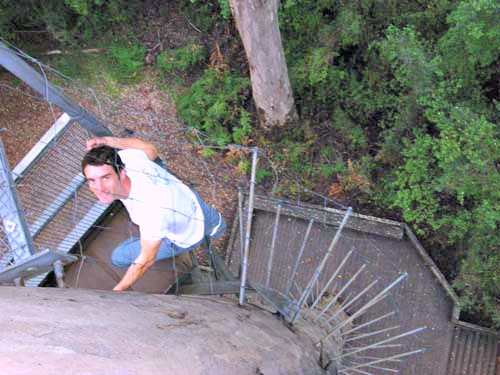
It was not long after I started living in Perth (where I still am!) that I discovered the Lookout Trees near Pemberton — unimaginably tall trees that had been used as look-out posts for vigilant fire-spotters for almost fifty years. Now they can be climbed, just for the hell of it, by anyone who is a) curious, and b) has the balls of a concrete elephant!

It’s a long — LONG — way to climb on steel rungs driven into the side of the trees, 58 meters (or 190 feet!) to the viewing platform, perched rather precariously above the forest canopy. You can see for hundreds of miles from this towering vantage point, which is all the well; you certainly need something to take your mind off the twin thoughts that a) you’re ridiculously exposed, insanely high and supported only by a single tree, and b) you’re going to have to climb back down…

If you do make it up, you’ll be amazed. At your own bravery as much as the view. If you don’t…well, you’re not alone. More than three quarters of the people who try it never make the top.

3. Cheddar Gorge, Somerset, England

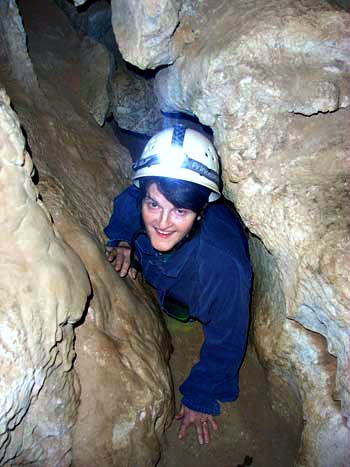
My list wouldn’t be complete without an obscure-ish (nothing is truly obscure any more on the overdeveloped British Isles) sight that’s near my original hometown of Highbridge, in Somerset. I speak of the Cheddar Gorge, a 137m-deep split in the Earth’s crust revealing a fantastic labyrinth of caves extending nearly half a kilometre under the ground.

It wasn’t until I was visiting last year that I made the effort to tour the gorge. There’s a company that runs a caving experience for any level of tourist — so I took my Mum! Bless her, she did have fun slithering across ledges, abseiling down underground cliff faces, and best of all — squeezing through tight tunnels carved by water flowing through the caves.

My favorite part was making her laugh by describing the look of just one end of her protruding from the tunnel. She found it so funny that she couldn’t stop laughing to pull herself any further, and was stuck half-in, half-out for quite some time!

Thankfully, there were experienced guides helping us along and tough overalls and wellies — every part of us was encrusted with mud by the time we saw the sun again.

It was quite a relief to emerge from the darkness, especially after the ritual of turning off our helmet lights in the deepest recess of the cave — experiencing an absence of light so profound I could touch my own eyeball without seeing my finger. Spooky…and awesome!

4. Knife-making in Barrytown, New Zealand

An unassuming little bay on the rugged northwestern coast of New Zealand’s South Island, you could be forgiven for thinking there is nothing in Barrytown at all. You’d mostly be right — I passed through there on a road trip in 2010, trying to get a better sense of the island I was living on (yes, I was living in Christchurch at the time).

I checked into a completely empty backpackers hostel (a novelty itself in tourist-mad New Zealand) and noticed a lone advertising flyer on the wall…which is how I came to meet Robyn and Steve, a couple of modern-day artisans, in their home-based knife-making workshop.

Steve is a self-taught blacksmith. Under his tutelage, I heated and hammered metal, ground and sharpened a blade, carved and polished a handle… and within the day I had created a perfect steel knife like something right out of Lord of the Rings!

It was a fantastic feeling to know I’d hand-crafted something so beautiful and unique — well, okay, I had a bit of help from the expert! As a skill, it was highly addictive.

I quizzed him late into the night about just how difficult it would be to make a sword the same way — and got the feeling I wasn’t the first person to ask him that!

If you ever get chance, do this. Obscure? Check! And absolutely fascinating.

5. Sedlec Ossuary, near Prague, Czech Republic

Okay, I wasn’t really living in Prague — I was just passing through in 2006 — but for obscure treasures, this one takes the biscuit!

Not too far from the city — in a suburban part of Southern Bohemia — lies a small Roman Catholic chapel beneath a small cemetery, known as the Sedlec Ossuary or Bone Chapel, as it’s decorated entirely in human bones. There are bones everywhere one looks, from streamers and chandeliers made from complete skeletons, artfully rearranged, to giant pyramids of skulls on display in the four corners. Altar statues and wall decorations are also fashioned completely from bones — it’s estimated that over 40,000 bodies have contributed to the décor!

Perhaps more macabre is that this isn’t some ancient monument to the grotesque, a product of some long-forgotten civilization like the Mayans; no, this is modern work. Although many of the remains date back to the Black Death in the 14th century, the artful sculpting and artistic arrangement of the bones happened just over a century ago!

It really has to be seen to be believed. Especially as photos aren’t allowed — unless you’re very persuasive, and happen to be in there on your own (which is exceedingly creepy)…and happen to have 100 Czech koruna ($4) to bribe the curator!

***

So. What’s unusual about where you live? Are there any undiscovered gems nearby — cool places, crazy things to do, strange legends? Tell, tell! We want to know! Let us know all about them in the comments. Cheers to obscurity!

STAY TUNED for Monday’s post, another expat book review by Kate Allison.

If you enjoyed this post, we invite you to register for The Displaced Dispatch, a round up of weekly posts from The Displaced Nation, with seasonal recipes, book giveaways and other extras. Register for The Displaced Dispatch by clicking here!

Related posts:

Images: Tony Slater’s own photos

Me and my shadow: LIBBY’S LIFE #48 – Hospital visiting hours

Kate here. Sorry. No journal entry from Libby today, so I’m writing it for her — but I think you’ll agree she has a good excuse.

Three days ago on Monday, April 23rd, at 2:02pm and 2:11pm, Libby’s twins entered the world.

Understandably, Libby has been a little preoccupied  since then.

~ ~ ~

It’s a little over a year since I first met Libby. We were both browsing in Waterstones last March — or rather, I was browsing and she was buying self-help books by the truckload, desperately trying to make the best of her enforced expatriation. Over a couple of Danish pastries, I gave her the idea of writing this blog, and I’ve been surprised by her doggedness in the endeavour.

Admittedly, I’ve also been taken aback by her candid accounts of life in small town America. Presumably her landlady and husband don’t read the blog. Not to mention her mother-in-law.

As it happened, I’ve been in Albany on business this month, crossing my fingers that my time here would coincide with the birth of Libby’s twins. When I got a text from her on Tuesday, announcing their arrival the previous day, I was thrilled. She’d beaten the system and had the twins before her scheduled C-section.

“Twins r here! Overjoyed! Visit us!” her first text said, exuding that post-birth hormonal high. I remembered it well.

The next text, twelve hours later, was less high. It said: “Pls bring Boston Cremes and decaf iced coffee. Or normal coffee but don’t tell nurse at desk.”

I duly arrived at the maternity ward — “Family Birth Center” — clutching a box of the requested doughnuts and clandestine joe, and was given lots of suspicious looks by a nurse who appeared to have been trained by the TSA.  When I’d convinced her that I was here to see a friend and her new babies, that I wasn’t going to abduct said babies, that I hadn’t imported TB from Europe, and hinted that it was none of her damned business if I intended to stuff six Boston Cremes down my throat in front of my friend, she grudgingly allowed me to knock on Libby’s door.

The rooms in American hospitals compared with English hospital wards are…Well. Think “Waldorf Astoria.” Then think “Youth hostel.”

Libby’s room contained two beds, and she sat on one with her back to me, chatting on the phone. She seemed to be the only occupant, which is just as well because the spare half of the room was taken up with a flock of helium balloons and the contents of the local garden centre. I felt rather silly with my modest pot of one pink and one blue hyacinth, but took consolation at the sight of an empty Dunkin Donuts cup by the wastepaper basket, which indicated my food offering would be more welcome.

She heard me enter and turned around. “Just a minute,” she mouthed at me before plastering a fake smile on her face.

“No, Mum,” I heard her say. “You put maple syrup on pancakes, and peanut butter on toast. No, not the other way round. Yes, I’m sure. Marmite is fine on American bread, Jack will eat that too — he didn’t? That’s unusual…Oh. Well, I suppose Marmite doesn’t taste too good on cinnamon toast, so — look, just give him a banana now, and Oliver will sort him out later. Mmm-hmm. Mmm-hmm. I’ll be home tomorrow. Hang in there, OK?”

Libby clicked the Off button on the phone. The fake smile disappeared.

“Jesus wept!” she shouted. “I leave the house at 9:30 on Monday morning to give birth to twins five hours later — without an epidural, I’ll have you know — and she can’t even cope with the correct topping for cinnamon toast?”

She breathed in deeply, then let it out slowly. Five times she did this. She’d obviously had lots of practice at this quite recently — whether in labour or while trying to cope with her mother, I couldn’t tell.

“Anyway,” she said eventually, this time with a genuine smile. “You came to see us! That’s lovely.”

“I brought these.” I set the flowers and coffee on one of the bedside tables, and fished around in my tote bag. “Baby clothes. M&S.”

“How cute is that!” She’d adopted some of the American vernacular since our last meeting, I noticed. “They’ll look very sweet in these little vests, won’t you, my babies?” she cooed in the direction of the balloons.

I glanced around the room, peering into the depths of the flowers and balloons for evidence of cribs and newborns.

“Libs? Where are the babies?”

She looked alarmed for a moment, then relaxed. “Oh! That’s right, they’re not here. They’re in the nursery. The nurses keep running off with them when they haven’t got enough to do, which is quite often. There’s only me and two other women in the unit at the moment. Quite surprising, when you consider the circumstances of the conception. Then again, I suppose I was early.”

I was confused for a moment, then remembered. Hurricane Irene. Not much else in the way of entertainment when the electricity is out for a week. In a couple of weeks, this place would be a lot fuller.

“And how are Sam and Megan doing?” I asked.

She tilted her head on one side. “Who?”

I frowned, wondering if the old saying about losing your brain cells in the maternity ward was doubly applicable when you had twins.

“The bay-bies?” I said, enunciating slowly.

Libby laughed.

“Didn’t I tell you? They’re not Sam and Megan any more. They’re George and Elizabeth. They were born on Saint George’s Day,” she explained, “so Oliver and I thought that something more English, more regal, might be in order. And of course Elizabeth is my real name, but we’re going to call her Beth — Oh, look! Here they are!”

Two nurses wheeled two trolleys topped with clear plastic cribs. In each little crib — bassinet, I think they call them here — lay a tightly wrapped bundle with a stripy hat perched on one end.

One pink hat, one blue.

Libby sighed. “They’re hungry again. Especially George. George is always hungry.”

She shuffled around on the bed, twiddling with controls that raised the head into a backrest. One of the nurses propped a couple of pillows in front of her and handed her a baby. Libby tucked it under her left arm, and then tucked the other baby under her right. She nodded at the two nurses, and they left the room.

The babies fed, their eyes closed. One of them  — the pink hat; Beth, I assumed — worked a fist loose from the swaddling and waved it around. The fist bashed the owner’s face, and she stopped feeding and howled at the unprovoked attack by a strange flying object.

“Silly baby,” Libby murmured affectionately.

Beth twisted her head from side to side, looking for the food source again. Libby helped her find it.

“You’re very pro at this already,” I said, impressed. Feeding two babies at once; one had seemed complicated enough, as I remembered. But Libby seemed a different person from the uncertain little mouse I’d met a year ago. This Libby was confident, efficient…

I’d spoken too soon.

Libby’s eyes filled with tears, which ran down her cheeks unchecked because both her hands were occupied, holding the twins.

I stood up, plucked a tissue from the box by the bed, and wiped her face.

“Did I say something wrong?” I asked.

She shook her head and sniffed.

“It’s nothing. The baby blues — remember those?”

I nodded. They’re not easily forgotten, those third-day blues.

“Remember wondering how you’re going to cope at home on your own?”

I pondered. As I recalled, I was overjoyed to leave the noisy NHS hospital, where six mothers in the same ward insisted on “rooming in” with their squawking babes.

“I was glad to get home for some sleep.”

“But it’s different here! They wait on you, hand, foot and finger! I don’t have to do a thing — not even change nappies! And tomorrow I’m going to go home, and my mother will want nursemaiding because she doesn’t understand how the shower works or something, and I’m going to be all…alone!”

She wailed, and one of the babies — Blue Hat — lifted its head and wailed in sympathy. Pink Hat followed suit. All three Patricks wailed together.

“Can’t you stay?” she pleaded.

“I thought I’d stay a couple of hours — ”

“No. I mean, stay with me. At our house. Just for a few days. My mother is useless, and I’ve asked too much of Maggie already, and Oliver means well, but… We have internet, you could work from Oliver’s den. It would mean so much to me, just to have someone sane and female around the house until I get my act together.”

I thought. I only had one more meeting tomorrow morning, and would be working at home in Milton Keynes after that for a week. It would make no difference to anyone else if Home was MK or Woodhaven.

“I can probably change my flight,” I said, although it did occur to me that perhaps Oliver might not be overjoyed at this arrangement.

Libby leaned back against the headrest, and sighed shakily.

“Thank you so much.”

Then she sat up again.

“And guess what! You can write my blog again next week!”

.

Next: LIBBY’S LIFE #49: An unwelcome blast from the past

Previous: LIBBY’S LIFE #47 – Showered with affection

Stay tuned for Friday’s celebration of Obscura Day!

If you enjoyed this post, we invite you to subscribe for email delivery of The Displaced Dispatch, a round up of the week’s posts from The Displaced Nation. Sign up for The Displaced Dispatch by clicking here!

Img: Map of the World – Salvatore Vuono

BOOK REVIEW: “Picky, Sticky or Just Plain Icky?” by Valerie Hamer

TITLE: Picky, Sticky, or Just Plain Icky? A Blind Date Conversation: Korea
AUTHOR: Valerie Hamer
AUTHOR CYBER COORDINATES:
Website: http://www.farawayhammerwriting.com
Twitter: @Farawayhammer
Facebook: http://www.facebook.com/Farawayhammer
PUBLICATION DATE: 2012
FORMAT: Ebook in various formats (Available from Smashwords)
GENRE: Biography
SOURCE: Review copy from author
AUTHOR BIO: Valerie Hamer is a British teacher and writer who has lived in Asia since summer 2000.

Summary:

“Can you imagine shopping for a husband or wife the same way you would go looking for shoes or something for dinner? In South Korea marriage is still often approached in this way: especially by men and women who are still single in their late twenties. This book tells the true life story of one Korean woman’s search for a spouse. Through a series of in-depth interviews she shared her blind dating history and experiences with me. Through stories which are in turn funny, moving and shocking an often hidden aspect of Asian culture is revealed.”

(From Smashwords description by the author)

Review:

The title of this book derives from the type of men this young Korean, Su-jin, has been unfortunate enough to meet on her many blind dates (around 100 in the last ten years.) The Picky — men who consider themselves prize marriage catches; The Sticky — the over-clingy and needy; and the Plain Icky, who all need an intensive course on dating etiquette.

Conversations between the author and Su-jin are recorded pretty much verbatim. Hamer says: “…in order to retain [Su-jin’s] voice, I have only edited for comprehension.”

The result for the reader is a clear mental picture of this young woman, eliciting sympathy, indignation, and not a little horror at the farcical dating situation she is in. Hamer herself describes it as “straight from the pages of a Jane Austen novel” in that:

Most of the Korean women I have got to know are victims of the philosophy that marriage is the only road to achieving legitimate female nirvana.

Su-jin is 29 and broke up with her long-term boyfriend two years ago. At the end of her relationship, he helpfully told her:

“If you want to meet really nice guy you’d better get plastic surgery on your breasts.”

Sadly, this was not an isolated line at which I spluttered out my coffee, not quite believing what I’d just read.

It turned out to be one of the lesser insults that Su-jin has had to endure in her quest for a husband.

Words of wonderment from Su-jin:

On her dreams:

I want to meet a really nice guy, because these days I really want to get married with someone…just someone who has a really good personality and who cares about me.

On first dates:

Even though it was the first time to meet together he asked me “How many babies can you give a birth? How much money did you save for your future?”

On blind dates made by friends:

When I met the blind date guys who were my friend’s co-worker it was really difficult because if I made small mistake it could influence on my friend as well.

Verdict:

The book is very short and an easy read, but that’s not the reason it’s a page-turner: I kept flicking the pages over, thinking that sometime, surely, luck would have to change for Su-jin.

“And did it?” you ask.

Sorry. No book review spoilers at Displaced Nation.

“Picky, Sticky or Just Plain Icky?” can be purchased here.

STAY TUNED for tomorrow’s Random Nomad post.

If you enjoyed this post, we invite you to subscribe to The Displaced Dispatch, a weekly round up of posts from The Displaced Nation, plus some extras such as seasonal recipes and occasional book giveaways. Sign up for The Displaced Dispatch by clicking here!

Related posts: