The Displaced Nation

A home for international creatives

Tag Archives: UK

An expat author on why he can’t get enough of Beirut — and your chance to win his thriller named for that city!

Beirut Collage 3We here at the Displaced Nation simply can’t get enough of the displaced thriller-writer Alexander McNabb. Last month he gave away his first book in his Levant series, Olives — A Violent Romance, to several lucky Displaced Nation readers. (Yes, they were thrilled!) And today we announce a couple of more McNabb giveaways, including of his second book, Beirut (see below). But before we explode with excitement, let’s hear what Alexander has to say about that notoriously dangerous city…

— ML Awanohara

To start off, I’d like to present a passage from my new book, Beirut, that I hope captures the flavor of this historic and extremely dynamic Middle Eastern city. The scene centers on the displaced Gerald Lynch, the British Secret Intelligence Service officer we encountered in Olives:

It was late in the afternoon as Gerald Lynch hopped along the uneven paving that lined Gouraud Street, the heart of Beirut’s bustling Gemayze area. He wore jeans and a leather jacket against the chill spring air, his hands in his pockets as he squeezed between the parked cars.
Gouraud’s bars, as ever, welcomed those who wanted to party and forget the woes of a world where violence and conflict were a distant memory but a constant worry. Orphaned by Belfast’s troubles, Lynch appreciated Beirut’s fragile peace and sectarian divides, the hot embers under the white ash on the surface of a fire that looked, to the casual observer, as if it had gone out. Lynch scowled as he passed a poster carrying Michel Freij’s smiling face, encircled in strong black script: “One Leader. One Lebanon.”

There can be few places on earth so sexy, dark, cosmopolitan and brittle as Beirut. At night the city celebrates with a vigour that borders on the manic. Louche young things puff cigarette smoke up into the air, DJs make music, poets dream and artists stencil the walls with the painful irony of youth. Drinkers drink, dancers dance. They celebrate life there as only people who realize how slender the tightrope they walk is — as only a people who collaborated in a 15-year-long enterprise designed to wipe themselves, and their country, off the face of the earth can.

But first, the country

It’s important to understand that Lebanon is a country of divides: north and south; mountain and coast; Shia, Sunni, Christian and Druze.

The country was born out of Greater Syria and the collapse of the Ottoman Empire following World War II. The French as the reigning colonial power created it by cobbling together communities who had been in conflict since the Crusades and legislating their way through ancient attitudes and rivalries.

Lebanon’s answer? To enshrine the sectarianism in its constitution, with each religious sect being given its own proscribed role.

Beirut, the Monte Carlo of the East

From its early days as Roman Berytus, Beirut — Lebanon’s capital and largest city — has been a city with greatness in her heart. Surrounded by lush Mediterranean countryside, the verdant Chouf mountains and the glorious fecundity of the Bekaa Valley, served by the sea and a history of maritime trade going back to the Phoenicians, Beirut developed in the course of the 20th century into a major financial center and trade entrepôt.

It was “the Monte Carlo of the East,” the jewel of the Mediterranean. Rich Arab playboys tossed cash around them like leaves; mean-eyed British spies clung to the hotel bars, trading waspish observations and gathering undiplomatic innuendoes. And the women! The olive-skinned beauties of the Levant, like Beirut itself, were so welcoming, so corrupting!

The impact of the Lebanese Civil War (1975-1990)

Lebanon tore itself apart in a war as senseless as any other, admirably abetted by the Palestine Liberation Organization, Syria and Russia, America and Israel. It’s always the outsiders who throw kindling on the hot passions of Lebanon’s divisions. And then the Lebanese pay a heavy price for their lack of moderation and willingness to invite those outsiders in.

After the war, Beirut dragged itself wearily to its feet, slowly but surely rebuilding its commercial heart — the efforts to rebuild dogged by constant conflict, corruption and terrible old men who weave together influence and fear to maintain their profitable status quo.

When the war finally ended, in 1990, the travel magazines were starting to gush about Beirut again — its stunning restaurants, funky bars and glorious sights.

But the potential for violence remains. As you may recall, a deadly car bomb attack occurred in October of this year. It tore a busy square in Ashrafiyeh apart, killing the head of Lebanese intelligence.

A bomb as big as the monstrous blast that had taken the life of Rafiq Hariri in 2005, the man who had led the effort to rebuild Beirut — an explosion big enough to make the Syrians finally quit Lebanon.

Both of these car-bomb assassinations left three-meter craters.

The book Beirut

Although Beirut — An Explosive Thriller is set across a swathe of Europe and not just Beirut, the book is about Beirut at its core. It’s about sectarianism and power, corruption and sex. It’s about wealth and poverty, love and betrayal.

While writing it, I spent hours walking around the city, along the curving corniche and up into the busy streets that cling to the foothills rising from the coast up to the snow-capped mountains.

Walking with friends, walking alone — day and night, spring and summer. From the maze of funky little bars of Hamra to the boutiques of Verdun, from the spicy Armenian groceries of Bourj Hammoud to the cafés overlooking the famous rocks at Raouché, I have long reveled in the city’s beautiful wealth and its grim poverty.

How can you not write books set in the Levant? I’m only amazed I’m in such scant company. As a playground for spies and powerful men, beautiful women and deadly conflicts you can’t beat it. And yet, as a writer of novels, I have it pretty much to myself.

* * *

Now it’s time for the freebies! Displaced Nation readers, you can get your very own copy of my latest book. Here are 2 ways to do so:

1) For TDN readers with an iPad or ePub compatible reader (Nook, Sony, Kobo, Android etc): Get your copy of Beirut — An Explosive Thriller free of charge (and save $4.99) on Smashwords. But first, you’ll need to sign up for the DISPLACED DISPATCH to get the code (it will come in the issue delivered this Saturday, December 8). NOTE: The code is valid ONLY FROM THIS SATURDAY, DECEMBER 8th TO MONDAY DECEMBER 10 — and then, pfft, it’ll disappear. Dear readers, you are MORE than welcome to share that code with family, friends, strangers, dogs in the street — even lawyers.

2) For TDN readers with Kindles: Leave a comment on this post with your e-mail, and I will send a Kindle file and instructions how to install it. Best I can do, I’m afraid — Amazon doesn’t let me do freebies! Do remember to use “name dot name at domain dot com” so the spambots don’t find you! Or you can hit me up directly at @AlexanderMcNabb on Twitter.

If you miss out on these opportunities and/or would like to read something else I’ve written, my first novel, Space (a spoof of international spy thrillers), is available for free download on Amazon from today onwards for three days.

TO ALL READERS: If anyone wants to add their voice (whichever way it leans) about my books on Amazon or Goodreads, that’s welcome feedback. The more people know they exist, the merrier! 🙂

Finally, congrats to Apple Gidley, who left an engaging comment on my last post and will be getting a print copy of Olives by post!

STAY TUNED for tomorrow’s post, consisting of some 2012 highlights from the Anthony Windram series, Expat Moments.

If you enjoyed this post, we invite you to register for The Displaced Dispatch, a round up of weekly posts from The Displaced Nation, with seasonal recipes, book giveaways and other extras. Register for The Displaced Dispatch by clicking here!

Related posts:

Images (of the book, of Beirut): All from Alexander McNabb.

LIBBY’S LIFE #65 – All about a dress (by Melissa)

Scene: A holiday office party at a Golf Club near Woodhaven. Libby and Oliver are already there, and Libby has just seen her nemesis, Melissa, arrive, wearing an identical dress to her own.

Melissa:  This dress is kinda tight and I have to suck in my belly because even two pairs of Spanx aren’t doing it for me. And when you suck in your belly, everything else rises and spills over the top, so I have to keep pushing it back in while no one is looking.

The dress looked awesome when I tried it in Macy’s three weeks ago, but that was before Mom force-fed me pumpkin cheesecake last weekend. I was like, “Mom, you know I don’t eat dairy,” but she got all snotty, asking if I was on another of my fad diets, and wouldn’t it be easier just to cut out the daily pack of Oreos.

Like, that’s so not fair. I don’t eat a pack of Oreos every day. Not usually, anyways. Only when I’m stressed, and I guess I’m kinda stressed right now, what with the divorce and all, so yeah, the Oreo intake has gone up. But I figure if I cut out dairy, that should compensate.

I didn’t want to come to this party tonight. Between you and I, I’d rather chew my own arm off than go to these god-awful office events. Given the choice between socializing with people I work with and spending an evening watching bad TV, I’d rather stay home and zombie out in front of Downtown Abbey or whatever it’s called. You’d need to be out of social options before you watched that, right? But Terry said if I didn’t come tonight, it would look suspicious, that people would think I have something to hide.

Personally, I don’t care much what people think. It’s not my problem now I’m nearly divorced. But I said I’d come, as long as he paid for a new dress.

“You have to come to create a diversion,” he said. “Turn on the charm with Oliver. Make everyone think you’ve only got eyes for him. If he’s not going to play ball, he will have to live with the consequences.”

Terry offered Oliver a promotion a few weeks ago, a kind of bribe to not say anything about me and Terry to Caroline, Terry’s wife. Only Oliver didn’t take the promotion, and now Terry’s afraid Oliver might rat him out to Caroline, so if I pay a lot of attention to Oliver, Terry thinks I will create a — what did he call it? — a smokestack.

Or something like that. Whatever.

Actually, it should be a lot of fun, flirting with Oliver under Libby’s nose. Irregardless of my dress being a little tight, I’m looking hot tonight. Not bad for forty-,  I mean, thirty-two. Better than Libby, who’s had three kids and, judging by the last time I saw her, has let herself go.

Except Libby doesn’t seem to be here, which is a shame because if she’s not here, making eyes at Oliver isn’t as much fun.

I can see Oliver over on the other side of the room, near the fireplace with the stuffed moose’s head, talking with Sam’s wife Anita, and a pretty blonde woman in a red dress a bit like mine.

Identical to mine, in fact.

I can only see the back of her, but she’s thinner than me. She mustn’t have had kids. You’re only that skinny when you’ve not had kids.

I wonder who she is? And — ha! — more to the point, I wonder if Libby Patrick knows who she is?

I push my way sideways across the room, trying not to spill my Chardonnay everywhere.

Oliver’s still talking to the blonde and Anita, and from my position behind them, I can see his hand go round the blonde’s waist. Then he moves his hand down and squeezes her butt.

I’m kinda shocked, you know? All this time I’ve been throwing myself at him at the office, and he never takes the bait, but here he is in full view of everyone at the party, groping a woman who clearly isn’t his wife.

It’s almost enough to make me drive back to Woodhaven and tattle to Libby. Almost, but not quite. Not after she changed the locks and accused me of stalking her husband.

No. This is — what’s it called? — pathetic justice.

“Oliver!” I say, and bat my eyelashes at him, which turns out to be a mistake because I overdid it on the lash-building mascara earlier and now my left eyelids are stuck together.

He turns. “Melissa,” he says, and nods, then bends down and murmurs something in the blonde’s ear.

Kinda rude, I think, but these Brits have no manners.

The blonde turns round, resting her head on Oliver’s shoulder, and I feel my mouth droop open a little.

“Melissa,” she says, looking me up and down as if I’m something her goddamned dog walked into the house. “Long time no see.”

Holy shit. When did Libby Patrick turn into Drew Barrymore?

She smirks a little, and leans over to say something to me.

“You might want to visit the restroom,” she whispers. “You’re losing your dress.”

.

Next post: LIBBY’S LIFE #66 – The ladies in red

Previous post: LIBBY’S LIFE #64 – Shades of red (2, not 50)

A note for Libby addicts: Check out Woodhaven Happenings, where from time to time you will find more posts from other characters.  Want to remind yourself of Who’s Who in Woodhaven? Click here for the cast list!

Read Libby’s Life from the first episode.

.

Stay tuned for our next post!

If you enjoyed this post, we invite you to subscribe for email delivery of The Displaced Dispatch, a round up of the week’s posts from The Displaced Nation. Sign up for The Displaced Dispatch by clicking here!

Img: Map of the World – Salvatore Vuono/FreeDigitalPhotos.net

DEAR MARY-SUE: 6 jolly holiday tips for expats (& other global wanderers)

Image courtesy of bulldogza / FreeDigitalPhotos.net

Image courtesy of bulldogza / FreeDigitalPhotos.net

Mary-Sue Wallace, The Displaced Nation’s agony aunt, is back. Her thoughtful advice eases and soothes any cross-cultural quandary or travel-related confusion you may have. Submit your questions and comments here, or else by emailing her at thedisplacednation@gmail.com

Woo! That’s Thanksgiving over and I am still full to busting. Oh readers, your Mary-Sue has been one greedy piggy, she is one stuffed turkey — but it was all worth it as she had a lovely time with her family. Yes, she is one mucho happy Mary-Sue.

My oldest child and middle child were back home for the holidays and so I got to feed them and my three lovely grandkids — bliss. Even my youngest was able to extract himself from World of Warcraft and his basement room to join us for dinner.

We had a great time watching Macy’s Thanksgiving Parade on NBC. Other than the Kermit balloon, my favorite part was watching those delightful Kidz Bop Kids sing on a float. Don’t you just want to feed their adorable little faces full of cranberries and mashed potatoes? I do!

And then there’s Matt Lauer hosting the parade. Mmmmh, mmmmh. I know what I am giving thanks for this year. . . Matt’s dreamy eyes. After watching SkyFall this weekend, I think that when Daniel Craig hangs up his tux, Matt’s the guy to replace him. Not only has he got the looks, but you believe he can kill a man. . . with his bare arms!

Anyhoo, enough with my wild thoughts and on with all your problems!

Based on the thousands of similar questions I receive this time of year, this time I am doing something a little different, spicing things up, by issuing a list of six tips for any of you expats and others out there who find the holidays befuddling.

Here we go! Mary-Sue’s top 6 tips for having an amazing holiday!

1) FOOD — BE CREATIVE WITH YOUR LEFTOVERS

Dear Mary-Sue,

We are still trying to work out what to do with all this leftover turkey from our first American Thanksgiving. We’ve got turkey sandwiches coming out of our ears at this point. Can you think of anything more creative?

— A Swedish family in New England

Yes, nothing gets you out of the holiday spirit than eating dreary leftovers. Try and think outside the box. Why just have the leftovers for food? That’s the sort of dreary thinking of a Rachel Ray. Sandwiches, curry, it’s all boring. What you could do with your leftover turkey is use it to make an arts and craft project. It’s a great way of getting the kids or grandkids involved in the holidays, too. Think of the turkey carcass as your canvas and really go to town on it with some acrylic paint. Or why not take that turkey and make a seasonal ottoman with it — the perfect way to put your feet up while watching Hallmark Christmas movies!  

*****************************************************************

2) WEATHER — HOW TO GET THAT CHRISTMAS FEELING

Dear Mary-Sue,

I’m finally in the Northern hemisphere for Christmas, and it doesn’t feel much different than this time of year in Perth, where I come from in Australia. Temps have yet to get below freezing; and as I’m sure you know, we had a hurricane in late October.

Sigh! Will I ever be able to have a white Christmas?

– Aussie in Baltimore

Living in Oklahoma, I can relate to this. To really get that fun, cosy Christmas feeling when temps aren’t as low as you would like, do what I do: wear tops that expose your midriff. When you get a kidney chill, that’s when you know you’re doing things right.

****************************************************************************

3) ROMANCE — FOR A TRULY GREAT HOLIDAY, KEEP THINGS ROMANTIC

Dear Mary-Sue,

My Japanese girlfriend keeps hinting that I should give her a ring on Christmas Eve. By that I don’t mean a telephone call but a diamond. I told her I’m not Japanese (they have a thing about getting engaged at the end of the year), but she says Christmas engagements are also popular in the West.

Actually I always thought of her as my iki jibiki (walking dictionary — Japanese is an extremely difficult language), but if I do decide to get engaged, should I be using their cultural norms? What’s wrong with her learning ours?

Then again, there is the Cold Stone Christmas Cake I could get…

– American in Tokyo

Ah, nothing like getting pressurized into a proposal — that always works out for all involved. I like this Cold Stone Christmas cake idea, but I suggest you do an old-school version of it. I know that it is traditional in England to hide coins in the Christmas pudding and then a child eating the pudding either chokes to death, cuts open their mouth or ends up a penny richer. I suggest you do something like that and hide the ring deep into a seasonal, suet-y pudding. If she chokes, breaks any teeth or cuts her mouth, then you’ll know it wasn’t meant to be, and can renege on the proposal.

***************************************************************************

4) GIFTS — DON’T BE A SCROOGE McDUCK

Dear Mary-Sue,

I was looking forward to being in the US instead of the UK for Christmas as I thought it might mean buying fewer gifts for friends and relations, but now I learn that everyone expects a hand-out in New York City, from the doorman to the garage guy to the hairdresser. Who knew? And how much do I owe all these people I don’t know?

– Newbie British expat in New York

You can give them an actual gift instead of money. I find signed copies of my book (“Treat Every Day Like It Counts. . .because it does” by Mary-Sue Wallace, published by PublishAmerica) and a signed, framed photograph does the trick. Don’t have your own book published? That’s okay, you can just give them a copy of mine.  

********************************************************************************

5) TRAVEL — USE THE HOLIDAYS TO VISIT FAMILY

Dear Mary-Sue,

We are expats in Singapore, and my husband thinks we should use the week off between Christmas and New Year’s to travel within Southeast Asia, instead of going home to the United States to be with our families. But isn’t that what Christmas is about — family? And how can we possibly celebrate Christmas in a non-Christian country?

– The better half of an American exec in Singapore (we’re originally from Georgia)

Actually, it’s about baby Jesus, not your family in Georgia. However, I begrudgingly take your point that it’s nice to be with your family when thinking about baby J.C. You can travel to your family over the holidays, not away from them.  

**************************************************************************

6) HOLIDAY ENTERTAINMENT — WHEREVER YOU ARE IN THE WORLD, CONSULT YOUR LOCAL LISTINGS

Dear Mary-Sue,

I’m an American in the UK and would like to experience the best of Christmas/New Year’s traditions here. Besides Scrooge, what are they?

– Linda of London

I live in Tulsa, OK. Do they not have Time Out in London? They probably have some tradition with those Beefeaters at the Tower. Yeah, they eat beef at the Tower every Christmas Eve. It’s a very quaint ceremony — be sure to go to it — or, whatever.

* * *

That’s your dose of Mary-Sue for November. God bless y’all!

STAY TUNED for tomorrow’s Random Nomad, a chap who is ever-thankful for his expat lifestyle.

If you enjoyed this post, we invite you to register for The Displaced Dispatch, a round up of weekly posts from The Displaced Nation, with seasonal recipes, book giveaways and other extras. Register for The Displaced Dispatch by clicking here!

Related posts:

And the Alices go to … these 3 expat writers for their Hurricane Sandy posts

 © Iamezan | Dreamstime.com Used under license

© Iamezan | Dreamstime.com
Used under license

My husband and I have a habit of going on holiday just before some major world crisis occurs — after which we have no choice but to spend several days holed up in our hotel room watching the events unfold on CNN. Twice it was a crisis involving water: the deadly Hurricane Katrina and the 2004 Boxing Day tsunami.

But for Hurricane Sandy, we were very much on the scene — ensconced in our apartment in NYC’s East Village, and with no television to watch, not even a radio to listen to! As those who read my post of earlier this month are aware, we were deprived not only of power but also water, communications and public transportation for several days, and displaced from our home for one night — an inconvenience that, while somewhat traumatic, turned out to be minor compared to what others had suffered in harder-hit areas.

As I mentioned then, the experience gave me a chance to test this blog’s basic premise: that forcible displacement at some level compares with the kind of displacement one has when living in a country that is not your home. And if so, can a former expat like me draw on the strengths gained from living overseas to keep calm and carry on?

While pondering these fundamental questions, I came across three posts by expats on Hurricane Sandy that gave me some fresh insights — not only on Sandy but on the down-the-rabbit hole nature of international travel and the expat life.

Thus I’d like to hand out three “Alices” today to (in reverse chronological order):

1) PETE LAWLER

Awarded for: Clouds from the Past: My Reflections on Sandy, Gloria and the Jersey Shore, in his personal blog: The American Londoner
Posted on: 3 November 2012
Moving passage:

But here and now, when things are raw, when my cousins have been without power for a week and my parents are cooking with a propane tank and a Coleman portable grill even high up in the Pocono Mountains of Pennsylvania, I mourn. My heart goes out to those suffering and I mourn for that place of childhood sunshine and wish it a good and steady recovery in the coming months.
All the best, Jersey. I am thinking of you.

Citation: Pete, before Sandy, you probably weren’t thinking that much about “that place of childhood sunshine,” the Jersey shore — because, after eight years in London, you try not to think too much about sunshine any more. But then Sandy plunged you into mourning for all the good times you had as an all-American kid — the “long sunny days spent lazily frolicking through waves, collecting shells, and cautiously avoiding jellyfish.” It even made you think with some nostalgia of Hurricane Gloria, which you rather enjoyed as a seven-year-old. Absence, plus tragedy, can indeed make the heart grow fonder… What’s more, I sense how bad you must have felt about being powerless, from a distance, to help your parents and your cousin in their time of need — a guilt that’s at the hard core of the expat life. Just ask Linda Janssen — I’m thinking of her aptly titled “Down the Rabbit Hole” post of last summer, about her father’s illness.

2) MADELINE GRESSEL

Awarded for: Hurricane Sandy and the unspoken attraction of disaster, in Matador Abroad
Posted on: 1 November 2012
Thought-provoking passage:

Now, as New York City is sloshed by a record-breaking 13ft wall of water, it is I sitting comfortably in a café in Hong Kong watching the light October rain outside. … My friends post photos on Facebook of candlelit dinners, submerged cars, and the powerless, darkened skyline.

And I wish I were there with them. Not because I’m afraid for their safety (I’m not), but because I’m missing a moment of New York history. I’ll never be able to say, “Remember the flood of 2012? That was insane.” I feel jealous at the pictures, like I’ve seen a photo of an ex-lover with his new flame.

Citation: Maddie, I wonder why it is, as we also learned on this blog this month, so few American expats feel the need to connect with their homeland during a presidential election — which, too, provides a chance to be “part of history,” especially if the race is closely contested? I think the answer may lie in your rather astute observation: people love a disaster. Come to think of it, a friend of mine has confessed that during Sandy, she had the overwhelming urge to go outside — in the storm! (Even though it was expressly forbidden by Mayor Bloomberg.) In addition, your post reminded me of another old expat adage: out of sight, (afraid of being) out of mind…

3) RUTH MARGOLIS

Awarded for: “I wasn’t afraid of Superstorm Sandy — until the lights went out,” in Telegraph Expat
Posted on: 31 October 2012
Moving passage:

Forty-eight hours ago, I was relishing my role as stoic, cynical Brit, refusing to bow down to an impending crisis. I bashed out jokey emails to friends and family noting that it was “a bit blustery”…

…my husband and I — plus my visiting younger sister — spent much of Sunday and Monday quite enjoying the commotion. Like kids playing an imaginary game, we stocked up on all the (un)necessaries: crisps mainly, and garish American junk foods…

Then, something strange happened: the lights went out in Manhattan. … “Ah,” we thought, followed by a shaky: “Hmm”. … Eventually, we went to bed, with the radio on. No one got much sleep.

When the next storm hits, I expect I’ll ditch the cockiness sooner.

Citation: Ruth, there I was, trying to conjure up the “keep calm and carry on” ethos that I’d learned (rather begrudgingly) from nearly a decade of living in Britain, when, had I known you were down in Brooklyn, I could have asked for a refresher course (ah, yes, the junk foods and the jokey emails!). Still and all, I’m glad to know that even for a native-born Brit, there are limits, one of which is seeing the lights go out in lower Manhattan… (From now on, I won’t be too hard on myself!) I can also relate to what you said about these disasters having a cumulative effect (made worse by the fact that you’re living far away from your homeland and already feeling somewhat displaced). As you point out in your post, Sandy was the second time since emigrating that you’ve “had to assume the brace position,” the first being Irene. I can recall feeling something similar when living in Tokyo — first there was the Aum Shinrikyo attack on the subway and then the massive earthquake in Kobe, after which I decided that the stoicism required for this situation hadn’t yet been invented! (Bloomin’ heck, why was it I’d told everyone at “home” that Japan was so much safer?)

* * *

So, readers, do you have a favorite from the above, any comments on these bloggers’ ruminations, or any further posts to suggest? I’d love to hear your suggestions!

STAY TUNED for tomorrow’s post, some comforting advice and (hopefully) words of wisdom from The Displaced Nation’s resident agony aunt, Mary-Sue Wallace.

If you enjoyed this post, we invite you to register for The Displaced Dispatch, a round up of weekly posts from The Displaced Nation, with seasonal recipes, book giveaways and other extras. Register for The Displaced Dispatch by clicking here!

Related posts:

Images: All from Morguefiles.

Thanksgiving: Shine, shine, shine, dear writers, however displaced

Today’s guest blogger, Kristin Bair O’Keeffe, is a cultural spelunker. With a husband from Ireland, a daughter from Vietnam, nearly five years as an expat in Shanghai, China, and an insatiable appetite for place, how could she not be? She’s also an author with an MFA degree in fiction writing, 18 years of experience as a writing instructor, a writerhead passionista, and the curator of #38Write, a monthly series of online writing workshops for place-passionate culture junkies around the world. Let’s listen up and hear why Kristin thinks Thanksgiving is a time for us displaced writers to shine!

— ML Awanohara

On Thursday, November 22, friends and families all over the United States (as well as oodles of displaced/replaced U.S.-ians around the world) will gather together to celebrate Thanksgiving. While this holiday can be traced back to the English Reformation and Henry VIII, it is now a secular holiday during which participants are expected to do just three simple things:

  1. eat turkey and pumpkin pie until we groan and bloat up like petrified puffer fish.
  2. endure our Great Aunt Pru, who smells like mothballs and passes out linty lozenges that look like they’ve been in the bottom of her purse since the Reformation.
  3. give thanks.

Writers of all ilk love this holiday. After all, it’s a day for us to shine! A day for us to show off by expressing our thanks far more eloquently than the neighbor who is slouched in front of his television in a tryptophan-induced haze.

We do, of course, have a lot to live up to:

“Thanksgiving Day, a function which originated in New England two or three centuries ago when those people recognized that they really had something to be thankful for—annually, not oftener—if they had succeeded in exterminating their neighbors, the Indians, during the previous twelve months instead of getting exterminated by their neighbors, the Indians.” ~ Mark Twain

“There is one day that is ours…Thanksgiving Day is the one day that is purely American.” ~ O. Henry [except, Mr. Henry forgot to add, those damn Canadians a bit to our north, who horn in on our gratefulness territory and dare to give thanks of their own, albeit on a different day]

“I come from a family where gravy is considered a beverage.” ~ Erma Bombeck

But no matter how splendid the thanks of those who came before us, this is a day on which writers can strut their best stuff!

So whether or not you’re American (U.S. American, that is), grab this opportunity to make a list of things for which you are thankful. Hurl yourself into the craft of thanks! Then, when your Thanksgiving host pauses just before cutting the first slice of turkey and says, “Would anyone like to share a thing or two for which you’re grateful?” you can whip out that slip of paper, clear your throat, and in your best writerly voice, make ’em weep in their cranberry sauce.

Here are a handful of mine:

1) Despite my great love for China, I am wildly thankful I will not be sitting face to face with the still-raw, almost-gobbling, dripping-blood, trying-to-limp-away turkey I once faced in Shanghai (ordered weeks in advance, mind you, from a fancy, well-respected, Western-y hotel and for which we paid a pretty-pretty RMB). All hail the year of mashed potatoes as the main dish! (We should have stuck with jiaozi.)

2) I am so, so, so grateful I am not living during the English Reformation and that I am not required to wear contraptions like this on my head:

Anne Boleyn

3) I am grateful that Maya Angelou called to read me a new poem. (Sorry, sorry, sorry! This is actually one of Oprah’s moments of thankfulness, not mine. But it sounds good, doesn’t it?)

4) I am thankful for my amazing family and friends from Ireland, Vietnam, Germany, India, China, the U.S., the U.K., and so many more places—all those who guide me, teach me, love me, and put up with me in my best and worst moments as a human being.

5) I am thankful and excited and inspired that writers around the world are flocking to my #38Write workshops and that my vision for contributing—and helping other writers contribute—to the global conversation of story is being realized. Whoop! Whoop!

6) I am grateful that there are writers all around the globe (like you!) who are driven to explore, write stories about the cultures and places in which they live, and connect.

Your turn! What are you thankful for?

CONNECT: If you’d like to learn more or if you’d like to register for one of Kristin Bair O’Keeffe’s #38Write workshops, grab a cup of coffee and pop over to her Web site and blog WRITERHEAD. Registration for December’s #38Write workshop is now open. You can Tweet Kristin at @kbairokeeffe, friend her on Facebook, and/or check out the #38Write group boards on Pinterest.

STAY TUNED for tomorrow’s post, Part 2 of Zeynep Kilic’s search for love in her adopted country.

If you enjoyed this post, we invite you to register for The Displaced Dispatch, a round up of weekly posts from The Displaced Nation, with seasonal recipes, book giveaways and other extras. Register for The Displaced Dispatch by clicking here!

Related posts:

Images: Kristin Bair O’Keeffe portrait; Anne Boleyn, courtesy Wikimedia Commons.

THE DISPLACED Q: Expats, repats, what’s the most outlandish tweak you’ve made to your Thanksgiving menu?

Since my repatriation to America, Thanksgiving has become my very favorite holiday here. This is partly because of a tweak that I make to the menu, but we’ll get to that later.

I wasn’t always so thankful for Thanksgiving. I only celebrated this American holiday twice while living abroad for many years, first in England and then in Japan — and to be honest, I didn’t really miss it.

Both celebrations took place when I was pursuing graduate studies at a British university.

The first time was for my very first Thanksgiving away from my family. I joined several other American grad students in preparing a traditional Thanksgiving dinner to serve in the dorm. Our guests were mostly other international students who were curious to experience an authentic version of this quintessentially American custom — as I recall, there were very few Brits.

At one point, a rather bitter argument erupted between Anna, a Harvard-educated woman who was pursuing a higher degree in feminist studies, and Andy, a Georgetown-educated man who was doing an M.A. in politics.

Andy didn’t like the fact that Anna was carving the turkey, proclaiming to the assembled guests:

It can’t be Thanksgiving if a WOMAN is carving the turkey.

I don’t really remember what happened after that — whether Andy insisted upon taking over, or Anna stormed out of the room. But it did cast a bit of a pall over the proceedings.

The food, though, was a close facsimile to the meals I’d enjoyed at home. And the arguing part? That was something I could relate to as well.

And there was snow, which we could see through the huge dorm windows, covering the panoramic Constable (literally) landscape below.

Thanksgiving-on-the-Hill

The only other time occurred a few years later, when an American friend came to live in North London on a teaching exchange with the Harrow School.

He, too, was spending his first Thanksgiving away from home, so decided to host a potluck Thanksgiving dinner in his living quarters.

Again, I think the food was good, but as I recall, the guests, most of whom were English, thought that potluck was a funny way to do a formal dinner. And the setting wasn’t exactly conducive to re-creating a New World feast. Walking from Harrow-on-the-Hill station, we passed by boys in the quaint Harrow uniform, including black ties (allegedly they are still in mourning for Queen Victoria!).

My Thankgiving-less years

After that rather harrowing (sorry, couldn’t resist) experience, I stopped doing Thanksgiving. I married a Brit and we invariably went to his family for Christmas dinner, which — probably not coincidentally — resembles the Thanksgiving meal enjoyed by the Pilgrims. Turkey is the most popular main, cranberry sauce and all. (No pumpkin pie, though!)

Even when we moved to Japan, where there were more Americans, I didn’t reinstate the custom. It seemed too much like hard work competing at the international grocery stores for vastly overpriced frozen turkeys (specially imported for the occasion) and cans of pumpkin.

What’s more — and I probably should have mentioned this earlier — I’ve never been especially keen on turkey. Once, when I was an early teen, I got food poisoning from an undercooked bird, a memory I’ve found hard to erase.

Something else I forgot to mention is that although I enjoy cooking, I’m not a roaster or a baker. I have never achieved the requisite culinary skills to produce a Thanksgiving dinner on my lonesome — even to this day, when I’m living in the U.S. again.

Nor did I especially enjoy the production such a big meal entails. If I’m going to spend a lot of time in the kitchen, I’d prefer to be producing something a little less bland than a roasted turkey, such as a Madhur Jaffrey Indian spread.

New thought: Maybe going abroad gave me the chance to escape from Thanksgiving? I wonder…

Giving thanks for Thanksgiving…but for one tweak!

So it is strange, the inordinate fondness I now have for this late November holiday. I like it because, unlike Christmas, it’s secular, so you don’t have to hesitate in wishing someone a happy Thanksgiving. It’s also less commercial, consisting primarily of an elegant meal with family and friends (I’m good at tuning out football).

I even enjoy eating turkey more than I used to — especially the dark meat. According to the Wall Street Journal, it’s the sides that American people sometimes tweak. But I like the sides. My absolute favorites are the stuffing and mashed potatoes, in that order.

All of that said, I do feel compelled to make one major tweak because of my hybrid background. Instead of turkey sandwiches the day after, I prefer chirashi-turkey-zushi!!!

Chirashi is Japanese for “scattered” — a scattered bowl of assorted fresh ingredients. Most likely you have tried chirashizushi: a bowl of sushi rice topped with a variety of sashimi (raw fish) and other garnishes. (See #2 in the photo.)

What my (second) husband, who is Japanese, and I like to do, on the day after Thanksgiving, is to substitute leftover turkey for the raw fish.

Chirashi-turkey-zushi is tasty, fast, and easy to make — particularly if you can get ahold of:

  • microwavable Japanese rice (use two or three packets for four people)
  • chirashi seasoning mix, containing five vegetables — typically, carrots, lotus, bamboo shoots, and shiitake mushrooms — sushi vinegar, seasoning, and nori (seaweed).
  • Kizami nori (shredded seaweed), to use as a topping.

There are no hard and fast rules as long as you get the seasoning right. And in my (admittedly rather biased) view, turkey goes as well with that seasoning as raw fish does!

* * *

Okay, your turn to tell me: what’s your idiosyncratic contribution to America’s national feast? Or if you’re not American, what do you do to internationalize your native festive spreads this time of year? I’m all ears, and tastebuds…!

STAY TUNED for another Thanksgiving post, by guest blogger Kristin Bair O’Keeffe.

If you enjoyed this post, we invite you to register for The Displaced Dispatch, a round up of weekly posts from The Displaced Nation, with seasonal recipes, book giveaways and other extras. Register for The Displaced Dispatch by clicking here!

Related posts:


LIBBY’S LIFE #64 – Shades of red (2, not 50)

“Do I look OK?” I ask, fastening the clasp on my necklace, and turning to face Oliver.

After a desperate couple of hours yesterday in Macy’s, I’d bought a lipstick red, off-the-shoulder dress to wear to tonight’s torturous party. Now I’m zipped into it, I’m pleasantly surprised at how I look. You know, considering I’ve had twins and everything this year.

And while red isn’t normally my colour, I’m damned if I’m going to a party where Melissa will be acting like a tramp and flirting with Oliver while her real clandestine lover makes speeches about “proactively engaging interdependent results” or some such corporate-speak nonsense, and the other wives whisper and point and stock up on gossip for their next coffee morning.

No. If anyone’s going to play the tramp around Oliver, it’s me.

Oliver looks me up and down, apparently agreeing that this dress is an improvement on my usual uniform of jeans and T-shirt, and gives me a leer that suggests our evening won’t be over when the party finishes.

“You look fabulous,” he says. “You never get any older, did you know that?”

No, I didn’t. Inside, I feel ancient; withered beyond my years after the ups and downs of the last eighteen months, and the last six in particular, but nevertheless, it’s good to hear that I carry Life’s burden well on the outside. Even if it means a heart attack from built-up stress farther down the road, at least I will die looking good.

Downstairs, I hand a fussy, teething George to Maggie, who is babysitting tonight.

“You go off and have fun, both of you,” she says. “It’s pleasure and not business, isn’t it?”

Oliver pulls a face.

“Depends how you look at it. I’d rather go and see the new Bond film, to be honest.”

You and me both, Oliver. In fact, I’d rather lie down in the road and be run over by a slow-moving truck.

“We know everyone there, though,” Oliver goes on. “That makes it less of an ordeal. And it’s at the Golf Club, so the food should be good.”

Yes, I know everyone. Let’s see…Anita, Julia. Caroline. Caroline’s husband Terry, the boss, who’s offered Oliver a job (the one I’m not supposed to know about) as a bribe because, if my womanly intuition is correct, Oliver knows something about Terry’s antics with Melissa, who is also coming to the party.

No, Oliver’s right. It won’t be an ordeal. It will be a minefield. No matter how good the food is, I’d better not drink too much and tread on any mines.

“Take no notice of him,” I say to Maggie. “We’ll have a lot of fun.”

She looks at me, a little frown on her face.

Maggie always knows when I’m lying.

*  *  *

“You stayed near Bath, right?” Anita asks me. “How was it?”

We’re at the Golf Club just outside Woodhaven, the posh one where Oliver takes his customers when they visit. This function room is trying to be Upper Class Olde English and failing miserably.They’ve got the horse prints right, but the carpet would look more at home in a cinema foyer. Also, Upper Class Olde English would never, ever fix fake beams on a popcorn ceiling.

I hold a glass of Pinot Grigio in one hand and a paper plate of appetizers in the other, feeling light-headed already, despite my earlier vow not to drink too much. It’s so much easier to take a sip of wine than it is to gracefully negotiate dim sum towards my mouth.

There’s definitely a gap in the market for quality liquidized hors d’oeuvres. Baby food shots for adults. Pureed Peas and Sun-Dried Tomatoes with Pernod.  Avocado and Duck Coulis with Cointreau. That kind of thing. Come on — it’s no worse than pineapple and cheese on a stick, is it?

“Oh, you know.” I shrug. “English. Cold, wet. Full of people with fixed opinions of life in the USA because they once spent a week in Florida.”

After a few days of our English vacation, I realised I was no longer quite one of “them”. “Home” wasn’t where I used to think it was. I’m not sure when it happened, exactly. Perhaps it was the evening when I had to concentrate on the accents on TV, used as I was to a nasal New England voice reading the news. Or perhaps it was when someone in the pub started to criticise “the bloody Yanks” and I couldn’t stop my rage rising, or myself from rushing to America’s defence. It’s the nearest I’ve ever got to being in a bar fight.

But, somewhere, I’d changed. That much I knew.

“And how about–” Anita moves in closer so that our plates of dim sum overlap. “How about you and Oliver?”

I deliberately misunderstand her.

“Oh, Oliver had a great time in England. We’ve never been to that part of the world before. It was spoilt a bit because his mother turned up early, but then mine couldn’t make it because she and my dad caught flu, and –”

I look around the room. Where is Oliver? He’d been nearby when Anita first started talking to me.

Anita leans in even closer.

“Don’t look now,” she whispers. “But Melissa Harvey Connor just arrived. She’s wearing a dress exactly like yours.”

*  *  *

Due to various factors involving turkeys and pumpkins, this post is shorter than usual. Kate apologizes for this, and hopes to get an extra episode onto TDN before the next scheduled Libby’s Life, which is on November 29.

Next post: LIBBY’S LIFE #65 – All about a dress (by Melissa)

Previous post: A post from Melissa – LIBBY’S LIFE #63

A note for Libby addicts: Check out Woodhaven Happenings, where from time to time you will find more posts from other characters.  Want to remind yourself of Who’s Who in Woodhaven? Click here for the cast list!

Read Libby’s Life from the first episode.

STAY TUNED for Monday’s post!

If you enjoyed this post, we invite you to subscribe for email delivery of The Displaced Dispatch, a round up of the week’s posts from The Displaced Nation. Sign up for The Displaced Dispatch by clicking here!

Image: Travel – Map of the World by Salvatore Vuono / FreeDigitalPhotos.net

A veteran of the expat life, I thought I knew displacement…but then along came Hurricane Sandy!

The topic of today’s post is Hurricane Sandy. We’ll get to that soon. But first I want to tell you how I’m feeling today, one week after this monster storm struck.

I’m feeling like Joy in the Flannery O’Connor short story, “Good Country People.”

Joy — in fact, she calls herself “Hulga” in an act of rebellion against her simple-minded mother. With a Ph.D. in philosophy, Joy fancies herself the intellectual superior of her mother and the rest of the country bumpkins around them. (Although 32, she still lives at home because of being handicapped — a childhood hunting accident cost her one of her legs.)

But Joy’s advanced degree doesn’t help one iota when, out of the blue, a Bible salesman pays them a visit. In fact he’s a con man and cons Joy into giving him her prosthetic leg. For all her smarts, Joy is left stranded in the barn loft, immobilized.

I’ll tell you something — you ain’t so smart!

As one of the founders of the Displaced Nation — and as a long-time expat who has now repatriated to my native U.S. — I thought I knew displacement. I even considered myself something of an expert on the feelings one has when living in someone else’s place instead of your own.

But did this background in displacement help me at all when, like Joy/Hulga, I met my nemesis, Hurricane Sandy? Sandy left me, along with my husband and our two dogs, stranded without power, water or communications for four whole days.

Instead of sophisticated urbanites, my husband and I were no better than cave dwellers, Neanderthals. Our daily routine entailed going up dark stairwells, through dark halls and into a dark apartment, where we would gather around the fire (our gas stove still worked) and make tea and cobble together some dinner from the food that would otherwise spoil (but without opening the fridge door too much).

No longer seeing the light

I will never forget the moment the lights went off, and we were plunged into this unreal netherworld. We were eating chicken pot pie and Greek salad when it happened. I’d made us a proper dinner thinking that even though Frankenstorm’s monster was on its way, we may as well “keep calm and carry on” — a lesson I’d mastered from living on two other small islands before Manhattan: England and Japan.

We kept calm enough and carried on for the rest of that evening. After finishing the meal, we headed down one floor with our trusty flashlights to the apartment of another couple, with whom I’d communicated just before the blackout. Another couple from a higher floor joined us.

The six of us sat around a flashlight — that was the closest we could get to simulating a camp fire — and kept each other entertained while waiting out the storm.

“Bailing” out

The next day, however, the excitement of camping out in the city wore off rather quickly, especially as we no longer had any water. I’d followed the advice of the Weather Channel and filled the bathtub — but it’s no fun stumbling about in the dark to get a pan full of water when you need to flush the toilet.

It is also no fun going up and down 12 flights of stairs with two dogs in a pitch-dark stairwell, made only slightly brighter by your average flashlight. Note to self: Get one of the those miners-style flashlight headbands for the next time. Dorky they may be, but it’s so much easier to have two hands available.

After three days, like most East Villagers, we bailed — something I’m not very proud of, but my office (at Columbia University) had opened again and I was having a dickens of a time getting there and back using buses — there were no subways running.

A kind colleague with a spare room made an offer we couldn’t refuse. She doesn’t mind dogs (has one herself).

What have I learned from being — literally — displaced?

So, is “displacement” a good metaphor for international travel and the expat life? Does it hold water, so to speak?

Here are three quick lessons I’ve derived from the experience:

1) You know all those expat sites that talk about developing resilience? Well, that’s not such a crackpot notion after all, when it comes to real displacement. Now, I was never someone who admired the Brits for their stiff upper lip, or the Japanese for their gaman. But I ended up imbibing these traits by osmosis, as explained in a previous post — and I’m so glad I did.

New Yorkers like to brag about how great they are at weathering crises, but in this particular instance, they seemed like a bunch of wimps! (They were far more stoical in the wake of 9/11.)

Take for instance the downtown fashion set — including Anna Wintour, Carine Roitfeld, Pat McGrath and Marc Jacobs — and celebs like Naomi Watts and Liev Schrieber. As the Wall Street Journal reported, they immediately sought refuge in the Mark Hotel on E. 77th St., to await the return of power and water and normalcy.

The younger crowd, led by Emma Watson, were at the Carlyle.

C’mon, guys, I got through three nights!

Another prime example were the bus drivers who refused to take any of us cave dwellers south of 26th St. because it was “too dark.”

As a result of their intransigence, I found myself walking down nearly 20 blocks of darkened streets in the company of another East Villager — a young woman from New Orleans who’d already had the misfortune of having been evacuated during Hurricane Katrina. Two flashlights are better than one under these circumstances, and together we dodged rogue vehicles that were taking advantage of the no-traffic-lights chaos. All for the pleasure of, in my case, climbing up 12 flights of stairs to my little cave. Gaman shita.

2) My priorities are in the wrong place. As it turns out, I’d be better off doing fewer blog posts on developing a “core” of self while living abroad and more Pilates, developing an actual core. This is of course assuming I continue to live a dozen flights up in a high-rise apartment building.

Likewise, I’ve been placing too great a priority on hyper-communications. Even though I’m the first to feel offended when someone texts while I’m talking to them, I can’t describe how elated I felt when I at last managed to exchange texts with outside world.

When I was an expat, I could be happy in my own company for days on end. What happened?

3) I’m not sure it matters if you’re at home or abroad when you become forcibly displaced. I used to think differently, as I pointed out in my post about what happens when reality bites for expats.

But as it turns out, displacement is a God-awful experience no matter where you happen to be — and in some ways, being able to understand the language and the culture makes it worse.

You’re planning to hold the New York City marathon, Mayor Bloomberg, really? I can’t tell you how agitated I became upon hearing that announcement. Yes, I knew it meant a colossal loss of income to the city. But at a time when many of us were leading disrupted lives, did we need yet another reminder that life goes on uptown, where no one really suffered?

And did any of us really want an influx of entitled outsiders into the city at a time when our own people are in need?

Thank goodness he saw sense in the end and called the thing off.

And don’t get me started on the debates we ought to be having — but won’t — on climate change as well as the need to re-engineer New York’s waterfront to withstand storms of this nature. I feel incensed — not so much because of what I’ve personally endured, but on behalf of the some 40,000 New Yorkers who are still displaced.

* * *

Readers, do you have any Sandy experiences, impressions, or insights to share? Do tell! People who are truly displaced love community! And please hurry! They’re forecasting a northeaster on Wednesday. When it rains, it pours…

STAY TUNED for tomorrow’s post, a poll about, of all things, expat voting…

If you enjoyed this post, we invite you to register for The Displaced Dispatch, a round up of weekly posts from The Displaced Nation, with seasonal recipes, book giveaways and other extras. Register for The Displaced Dispatch by clicking here!

Related posts:

Image: MorgueFile

LIBBY’S LIFE #63: A post from Melissa

Kate:  We’ve heard a lot about Libby and Oliver’s landlady, but only from Libby’s biased point of view. In today’s episode, the woman herself, Melissa Harvey Connor, takes the stage. 

Can she redeem her reputation after everything Libby’s told us about her? 

Melissa:  Life has a way of sorting itself out. It doesn’t matter what happens, or what kind of bad shit goes down, it’ll all work out in the end. If it’s not worked out, it’s not the end, and the fat lady hasn’t done her number yet.

I read that somewhere on Pinterest, but it’s a good philosophy, right? I’ve always thought so, anyway. Even now, at the age of 44 — I mean 32 — whenever things aren’t going to plan, I try to hang on to the idea that good things happen to those who wait.

Like, within reason. I can’t stay 32 forever, irregardless* of what that doctor who shoots me up with Botox says. A girl can wait only so long for the good times to roll around, especially if she’s being driven insane by her husband Jeffrey.

Jeffrey Connor. How in God’s name did someone like me wind up with someone like him, you ask?

I’ll tell you how. It was his cute British accent. Like Sean Connery’s James Bond. Very English. I’m a sucker for guys with British accents. They’re so much classier than your average Joe’s accent round here.

Jeffrey and his wife at the time, Shelley, ended up renting my house after I moved to a new condo. One thing led to another — I’d collect the rent check from Jeffrey on evenings when Shelley was out at book group, and pretty soon we were making jokes about me being the highest paid call girl in Woodhaven. Or rather, he’d be making jokes about call girls in that classy accent of his — he said it was an Essex accent, but whatever, he sounded like Sean Connery to me — and I’d be all, “Say something else! Talk to me some more!”

After four years of it, though, I had to call timeout.  By that stage I’d realized his accent was more like Russell Brand’s than Sean Connery’s, and the jokes about call girls were so not funny any more.  Four years is a long time  for anyone — Patsy Traynor said I deserved a medal — though I guess it was less if you don’t count the year he was still living with that boring wife of his.

The weird thing is, I hated Shelley at the time, but now I just think, you poor woman. I’d had Jeffrey for four years, but she’d had him for ten, and he’s gone back for more. Jeffrey, I discovered, is boring, and boring is contagious, so no wonder Shelley bored the pants off of everyone she met. I might have found out Jeffrey was boring too, if I’d listened to what he was saying instead of drooling over the accent he was saying it in.

I found out soon enough when we were married, though.Twenty-four hours after we stood in front of the minister in that Vegas chapel — getting a five-minute wedding in Vegas was probably the most exciting thing Jeffrey had ever done — he suggested that we drive to see the Grand Canyon.

What the hell? Drive 300 miles to see a big ditch, when we could have been playing blackjack in the Bellagio? Or even, dare I suggest it, having sex in our hotel room? This weekend away had turned into a honeymoon, after all, and that’s what you’re supposed to do on honeymoon. What you’re not supposed to do is drive 300 miles in a beige Ford Taurus to see a hole in the ground. It wouldn’t have been so bad if we’d rented the Porsche or the Corvette at the airport’s Avis place, or hell, even the Mustang, and we could have driven those 300 miles in a little style. But no, Jeffrey was all “Oh no, honey, I can’t afford that. Not with maintenance payments for the kids as well.” And I was like, “Well, Jeffrey, you should have thought of that yesterday before you got yourself a trophy wife!”

I know. Trophy wives are usually younger than the husbands, and  technically Jeffrey is nine years younger than me. But at the time I said I was 28, so that makes me a trophy in my book. Plus I was a successful realtor with two houses and no kids — well, I have two of those as well, actually, but they’re with their father in North Dakota. They never come here, and obviously I never go there, because who in their right mind visits North Dakota?

Anyway, as I stood on the south rim of this big ditch in the middle of Noplace, Arizona, while Jeffrey took gazillions of photos of sky and rocks and things, I thought, Oh. My. God. What have I done?

Then I thought, Come on Melissa. You know things usually turn out good in the end. This happened for a reason.

So I waited for the reason and for things to turn out good, but you know what? They kept on getting worse. I was just dying of boredom, and I got to thinking that if it didn’t kill me soon, I’d help it along some with some Prozac and a few Jack Daniels chasers.

But then, this time last year, everything changed.

We’d had a big winter storm that cut the power to all the houses in town, and I was worried about my tenants, Libby and Oliver, so I went to see if they were all right. There was no reply when I rang the doorbell, so I let myself in with the spare key. You hear bad stuff about people dying of carbon dioxide poisoning** and landlords getting sued, and I thought I’d better check no one was lying dead in the bath tub or anything.

So there I am, walking around upstairs with a flashlight, and I trip over a sweater on the floor and nearly fall over the railings to the floor below. At this point, Mrs Libby High-Horse Patrick walks in the house as if she owns the place — which she doesn’t, because I do — and orders me out of my house because, she says, I’m invading her privacy and sniffing her husband’s sweatshirt.

Sniffing her husband’s sweatshirt? Puh-leese! Oliver’s cute and all, and I don’t mind admitting I used to have a little crush on him when he and Libby first moved in, but she made me sound like I was a bunny-boiling stalker. Which I’m not. But I was prepared to forget what she said, so I went round a few days later, and you know what? The bitch had gotten the locks changed so my key didn’t work.

Of course, I went to complain to the HR department where Oliver and Jeffrey work, because they’re the people who pay me Oliver’s rent. I told them I wanted the Patricks out of my house because they’d changed the locks and brought a dog to live in the place without permission. And the snotty guy in HR read over the lease and said they were perfectly within their rights to do both those things, and maybe I should have a proper lawyer draw up a lease next time if I didn’t like it, because as long as I was getting my rent on time, I didn’t have a leg to stand on.

So we had a yelling match right there in the office, and I guess I must have been too loud, because another guy walks in and wants to know what it’s all about. I tell him, at length and in detail, and halfway through, the guy from the HR department rolls his eyes and leaves the room. These Brits are so rude. But I keep on ranting at the second guy, because he seems to be listening carefully, and I think I may get somewhere. Besides, he’s kinda cute.

“And let me tell you,” I say at the end, when I’ve run out of things to say, “no one messes with Melissa Harvey Connor in this town!”

“You’re Jeffrey Connor’s wife?” he says. He’s got this awesome accent. Hugh Grant! I think. Older than Hugh Grant, though. Think George Clooney before he went gray.

I nod. “Technically,” I say, as he takes me by the elbow and leads me into a very classy office with a window and a view over the River.  He closes the door behind him, pulls out a chair at his desk for me to sit on.

On his desk there’s a brass nameplate. Terry Michaels, President, American Operations.

I’ve heard Jeffrey talk about him. The boss of the company on this side of the Atlantic, no less. And let’s face it, who cares about the other side anyway?

“Why don’t we talk about it some more?” he asks. “Are you free for lunch? I’m sure we can sort things out to everyone’s satisfaction.”

*  *  *

And that was how I met the real love of my life, Terry. His wife Caroline is a nut job and he’s thinking of divorcing her, so no one must know about us, he told me. If she knew about us, she could get very nasty, and Terry has no intention of living in poverty so that Caroline can max out her cards at Tiffany.

So we were careful, and for a long time, no one suspected a thing. Then the housing market plummeted, Jeffrey finally got the message that I wasn’t that into him so he went back to his ex-wife, but not before he got me a job in his office, working for Oliver of all people. It was a great cover story — I flirted nonstop with Oliver, and let the rumors fly. Terry said he’d heard from Caroline that the gossip among the English wives was that Oliver and I were having a passionate fling. Too funny, right? I hoped it would get back to Libby. Serve her right for changing my goddamn locks.

Then in August, Oliver queried some overtime I’d done. Nine hours in one week. “Of course I did it,” I said. “Ask Mr. Michaels. He asked me to stay behind to help him.” And so he did, although of course it wasn’t filing he’d had in mind.

Oliver stared at me for a long time. “I’m sure he did,” he said, and walked away.

“He knows,” I told Terry later.

Terry told me not to worry, that he could sort Oliver out. “He’s due for a pay rise,” he said. “Now that Jeffrey’s left, we could do some restructuring. I’ll have a chat, man to man. If the job offer is good enough, he’ll see sense.”

But that was nearly a month ago, and Oliver still hasn’t taken any promotion.

*  *  *

 * Kate (and everyone else) knows ‘irregardless’ is not a word. Melissa, however, back in the day, paid less attention to her high school English teacher than was advisable, and doesn’t take kindly to helpful editing suggestions. Sorry.

** She didn’t pay much attention in Chemistry, either.

.

Next post: LIBBY’S LIFE #64 – Shades of red (2, not 50)

Previous post: LIBBY’S LIFE #62 – Private investigations

A note for Libby addicts: Check out Woodhaven Happenings, where from time to time you will find more posts from other characters.  Want to remind yourself of Who’s Who in Woodhaven? Click here for the cast list!

Read Libby’s Life from the first episode.

.

Stay tuned for our next post!

If you enjoyed this post, we invite you to subscribe for email delivery of The Displaced Dispatch, a round up of the week’s posts from The Displaced Nation. Sign up for The Displaced Dispatch by clicking here!

Img: Map of the World – Salvatore Vuono/FreeDigitalPhotos.net

19 more films that depict the horrors of being abroad, or otherwise displaced

Readers, we have to confess, ever since horror novelist, former expat and Third Culture Kid Sezin Koehler suggested 15 horror films on travel and the expat life, we’ve become rather addicted — and have invited her back here today for another hit. Go ahead and indulge yourselves — it’s Halloween, after all!

Being the horror-obsessed film nut that I am — and loving how my expat/traveller life has collided with my scary movie self — I offer here are a few more honorable mentions within the three sub-genres I presented in last week’s post:

  1. The expat.
  2. The world traveler.
  3. The otherwise displaced.

1. Expat Horror: Caveat expat, or expat beware (or in some cases, beware of the expat!).

1) Blood and Chocolate, about an American orphan who goes to live with her aunt in Bucharest. Oh, and the orphan is a werewolf.


2) Drag Me To Hell, in which a Romany shaman in the US is evicted from her home and takes her rage out on the lowly loan officer who refused to give her a mortgage.


3) In The Hole we find an American student in a British boarding school who gets trapped in a World War II bomb shelter with a few classmates. So we’re led to think…


4) In The Grudge, Sarah Michelle Gellar gets far more than she ever bargained for living and working in Japan as a nurse, when a malevolent creature in her house begins an awful campaign of harassment, mayhem and torture.


5) Orphan finds us with a family interested in adopting a young Russian girl, only the longer she’s with them the more the mother suspects she’s not the child she claims to be.


6) + 7) The Joss Whedon marvels Buffy the Vampire Slayer and Angel, both of
which feature a number of prominent expats — a few are slayer trainers sent over to California from the Old World (Britain), a few are expat vampires who’ve decided the anonymity of the United States better suits their feeding habits.


2. Traveler Horror: “Let your suitcases gather dust!”, cry these films.

8) In Shrooms, a group of young Americans go to meet their Irish friend on his home turf in order to experience the hallucinogenic mushrooms indigenous to the fairylands of Ireland’s bonnie green forests. He forgot to tell them that their chosen “tripping” site is also the home of a haunted and abandoned insane asylum. And that not all the mushrooms are the magic type.


9) In Open Water, two Carribbean cruise snorkelers are left behind, to be tormented by a shark. Based on a true story — and one of many reasons why I keep my feet on dry land despite now living in Florida.


10) In the same vein we have Piranha 3D, in which half-naked spring-breakers are set upon by prehistoric piranha that have been released through an underground fault.


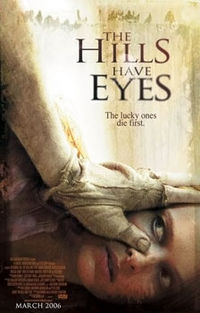
11) The Hills Have Eyes features a family on a road trip through the post-nuclear testing New Mexico desert are set upon by a group of psychopaths who live in the hills.


12) Worlds collide in From Dusk Till Dawn when a reverend on a road trip to Mexico with his children is hijacked by two ruthless killers on the lam from the law after a series of brutal murders and robberies. They find themselves like fish out of water when their rest-stop bar turns out to be a haven for vampires.


13) When a group of friends go white water rafting in Appalachia, the idylic back country scene turns nightmare when a group of inbred locals terrorizes the group, and one of its members in particular. Deliverance is not for the faint of heart.


I could keep going with this sub-genre, but surely you get the point by now. Stay home!

3. Displaced Horror: “Think twice about moving or taking a sojourn outside the ‘hood” is the moral here.

14) Rosemary’s Baby, in which Mia Farrow discovers that her new Manhattan residence is also the home to a group of mad Satanists who’ve got their sights on her unborn baby.


15) The slasher musical Don’t Go In the Woods features a band on the verge of a breakthrough go camping to write some new tunes. Only, there’s something else in there with them that’s picking them off one by one.


16) Every incarnation of the Alien series brings us a group of Earth’s citizens in outer space, battling a wretched and basically unkillable xenomorph. Keep your feet on land. Save yourself the trouble.


17) In Friday the 13th, a group of summer-camp goers are stalked by a relentless killer. Man, this one makes me glad I never went to summer camp, even though growing up I always wanted to.


18) A writer on a summertime retreat to a supposedly peaceful cabin is brutalized by a gang of locals. One of my personal favorites, I Spit On Your Grave is a grotesque revenge fantasy come to life and suggests one might be better off simply working from home.


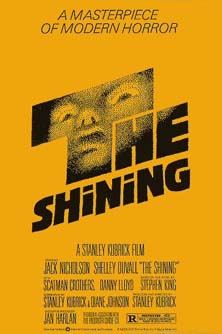
19) And we can’t forget one of the most iconic examples of Displaced Horror: The Shining, in which Jack Torrance, temporary caretaker of the historically creepy and ever haunted evil Overlook Hotel, goes mad and tries to murder his family. All work and no play makes Jack a dull boy, eh?

Happy Hallowe’en!

* * *

So, are you ready to burn your passport and throw away all your travel gear yet? 😉

And while we’re still at it, do you have any other films you’d add to Sezin’s best-of abroad horror list?

Sezin Koehler, author of American Monsters, is a woman either on the verge of a breakdown or breakthrough writing from Lighthouse Point, Florida. Culture shock aside, she’s working on four follow-up novels to her first, progress of which you can follow on her Pinterest boards. Her other online haunts are Zuzu’s Petals, Twitter, and Facebook — all of which feature eclectic bon mots, rants and raves.

STAY TUNED for tomorrow’s post, in which our fictional expat heroine, Libby Oliver, checks in and lets us know how she’s doing back at “home” in Merry Olde.

If you enjoyed this post, we invite you to register for The Displaced Dispatch, a round up of weekly posts from The Displaced Nation, with seasonal recipes, book giveaways and other extras. Register for The Displaced Dispatch by clicking here!

Related posts: