The Displaced Nation

A home for international creatives

Tag Archives: Third Culture Kid

My quasi-religious pilgrimage to Oxford University — will I be judged sufficiently pious?

In past columns, Charlotte Day has illuminated aspects of her life as a Third Culture Kid who was born in Sydney, Australia, grew up mostly in New York and is now studying at an English boarding school in Kent. Today she describes her quest to earn a place at Oxford, which she has long revered as her spiritual home.

At 8:45 in the morning, my taxi turns down Holywell Street, and slows to a stop at the front entrance of New College, Oxford. Approaching the Santiago de Compostela of my adolescent dreams, my state of mind can best be described through shameless lyricism.

At this hour, the streets are populated only by the purposeful. Each dark-suited individual has some thought of unfathomable gravity revolving behind his or her furrowed brow. The morning light casts a celestial glow over the Bodleian Library, the Sheldonian Theatre, the Bridge of Sighs. Uniformly, these benevolent sandstone structures breathe in the sun.

God be in my head

Despite these poetic musings, I am incredibly nervous. I left my boarding school bed at a chill 5:00 a.m., knowing I did not know Crime and Punishment well enough, I did not know the Brothers Karamazov at all, and my ideas about the Seamus Heaney translation of Beowulf were utterly laughable.

Once they found me out, would I break down crying? And what about the unseen poem I would be told to discuss on the spot? If it were impermeable, I would certainly not be able to bluff my way through it. After all, what spotty 17-year-old can deceive them? Those eagles of intellect, with their acute, focused gazes; indisputable, measured statements; considered pauses; lofty, balanced arguments…

Oh! It was all too judicious and reasonable for an impulsive wreck like me.

You see, my feelings about Oxford are akin to an otherwordly obsession. So passionate have I grown about this ancient seat of learning that my preparations for this journey, especially in recent months, had taken on a quasi-religious purposefulness.

I spent the end of last year trying to live up to a set of self-imposed monastic ideals. I was to be irreproachably right at all times, my logic to be consistently clear, my views to display great penetration and uncanny powers of observation.

I even dressed in a way that reflected these intellectual ideals: threadbare corduroys in varying neutral tones, and moth-eaten jumpers would create a suitable aesthetic. I was unsparing of myself, subsisting largely on Lenten fare (watery porridge, steamed broccoli, etc.), and never going to bed before one o’clock if I could be reading instead.

Now I simply had to get into Oxford to complete this quest for ascetic perfection.

Getting in to Oxford… Now I am remembering all those melancholy 13-year-old evenings listening to Professor Stuart Lee’s Beowulf lectures on iTunesU, craving with all my ill-adjusted, lonely heart, that one day I would be sitting in that lecture theatre.

Lo, the full, final sacrifice

I am inching closer. Sitting in New College’s Lecture Room Six, with my baggage stacked around me, I will not return to the outside world for four days, and each minute of each of those days is shrouded in mystery.

A steady click comes from the two connect-four sets in the room: the science and law applicants letting off steam.

I gaze around the room. The English applicant is curled into herself, scanning a volume of Ezra Pound with a look of fatalistic despair on her pinched face.

The classicists sit in a convivial circle, trading sections of newspaper.

I take out my Beowulf and start reviewing my notes — columns of fluorescent green post-its, each bearing a comment more absurd than the last. Will I look too intimidating if I do this? I do not seek to intimidate — if only I could tell everyone in that room how intimidated I feel!

I glance at the Russian poem I have been given to analyze, by Yevtushenko: age, youth, gorging an omelette…middle age…the paranoia of the young? Our tendency to fill our lives with empty nothings, like omelette gorging? But these are rather pedestrian observations — is not some sort of inspiration called for? I avail myself of some instant oatmeal — to weigh down those jumpy nerves with a bit of stodge.

It is not hard to spot the two Etonians. One, so endearingly badly dressed, his argyle jumper tucked into a pair of murky-water-green corduroys. Both, so painstakingly polite, so frightfully embarrassed about their origins, so terribly unwilling to share where they live, or let slip that a relative of theirs had once been at the college himself.

I do not deny that there is a lack of diversity in that room, nor do I seek to explain it. The other candidates I encounter in Lecture Room Six are, every one, interested, charming, honest, terribly nervous teenagers — not representative of a centuries-old tradition of inequality.

Beati quorum via (I will lift up my eyes)

I am summoned out of Lecture Room Six to confront the English interview, which takes place by an electric fire, in an office lined with volumes of Elizabethan and Jacobean drama. Perched uneasily on a fur-swathed sofa, I answer questions on Doctor Faustus and the aesthetics of mathematics. Each response meets with a dreamy sort of assent, notes are jotted, and the conversation becomes increasingly oblique.

And then it is time for my Russian interview. I climb to the top of a rickety wooden stairwell, after a walk through the quad, turned hostile in the penetrating wet. (By now it is our second day.)

One tutor merges with the sofa, which in its turn has disappeared beneath stacks of application forms, submitted essays, and Modern Languages Aptitude Tests. The other sits before the fire, her high forehead reflecting its glow.

The discussion that ensues prompts the eyebrow-raising and chilling nods I have foreseen, and then questions about War and Peace — leaving the deficiencies of my 13-year-old’s reading of that tome quite exposed.

Afterwards, I stand, bedraggled in the dark quad, with a terrible sense of emptiness. I have two more days to fill; ahead of me, long hours in Lecture Room Six drinking bitter Tetley tea from a plastic cup. The expansive passion I have carried inside for years has tightened, wound itself into a taut cord of longing.

And I saw a new Heaven

When the fellows swish in to formal dinner, I almost feel ill. I do not know where to rest my eyes, each square inch of wood paneling makes me twitch with anxiety.

We rise with the hollow thud of wood on wood, grace is muttered in Latin, a mallet bangs, and we sit again, our murmured conversation echoing from the high arches of the ceiling.

I have always envisioned an affinity between Oxford and the stars, and even carry an image of my 14th-century counterpart adjusting his astrolabe while attempting to unveil the secrets of the heavens.

I cannot help praying, then, that a benevolent cosmos might know of the yearnings — my own and those of the other applicants — sympathize with our plight, and sweep our destinies into her swirling compass.

STAY TUNED for Monday’s post, when we invite in a guru to help us sort out some of the misconceptions our site has been propagating over the past few weeks on spiritual quests.

If you enjoyed this post, we invite you to subscribe to The Displaced Dispatch, a weekly round up of posts from The Displaced Nation, plus some extras such as seasonal recipes and occasional book giveaways. Sign up for The Displaced Dispatch by clicking here!

Related posts:

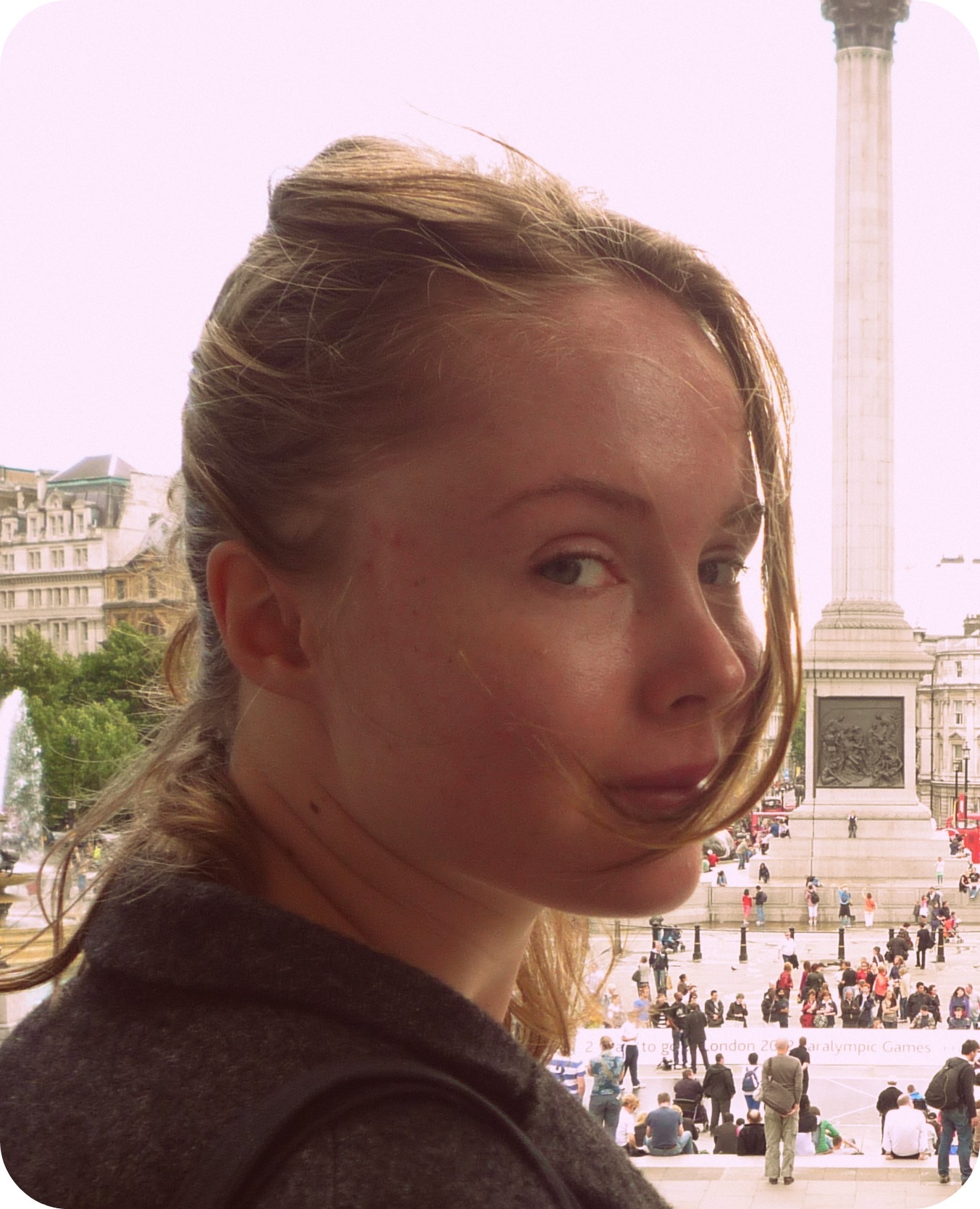
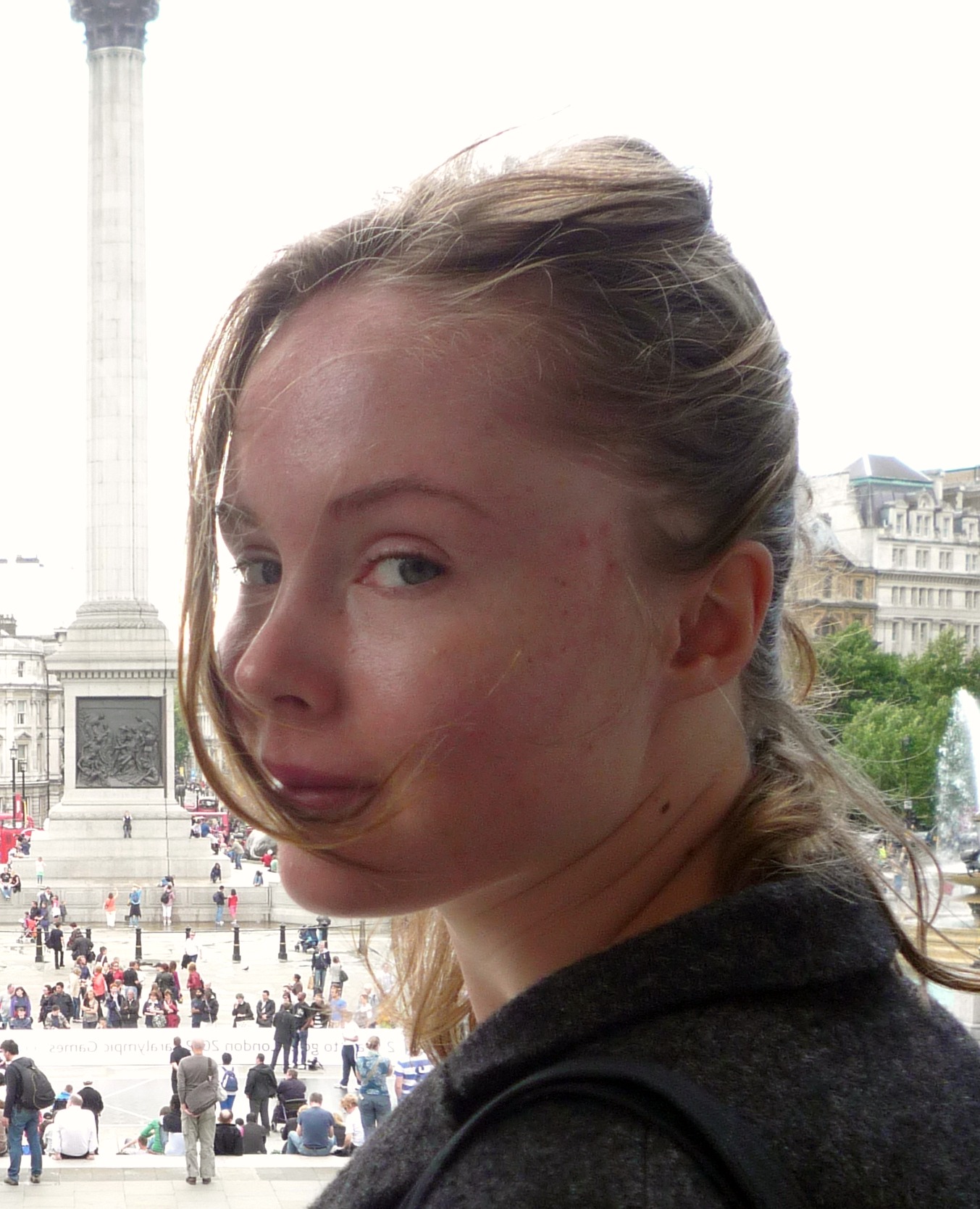
img: Charlotte Day surveying Trafalgar Square in London
Top 10 expat & travel posts on spiritual escapes

As the holidays draw to a close and a new calendar year commences, many of us find ourselves desperately in need of some “me” time — a chance to reassess our “to do” lists and decide which of our life goals deserves top priority.

Gah?? Did I just write that? Talk about understatements! If you’re like me, you are lucky if you can remember that you used to have personal goals at one point. (My only aims for the past few weeks have been writing x many cards, wrapping x many gifts, hosting/visiting x many relations…)

That could be why Kate Allison’s post on Monday — announcing that The Displaced Nation has dedicated this month to spiritual escapes — was a goad to such debate. Does the quest for spiritual enlightenment require geographical displacement, away from the demands of family and everyday life? And what about those who are already living far away from “home” — do they need to displace themselves even further, to the most obscure corners of the globe? (Wait, aren’t some of them already living there?!)

Having tracked this topic on social media for several weeks, I would like to share my top 10 findings as further food for meditation, so to speak… My hope is that these writers can help us disentangle our thoughts — which might otherwise come to resemble advanced yoga positions — on the best techniques for getting in touch with the innermost core of our beings.

As usual, and as befits our blog’s slightly irreverent tone, they’re from a mix of indie and conventional publications.

1) Meditation vacation
Author: Matthew Green (@MattGreenAfPak), a reporter covering Pakistan and Afghanistan and author of The Wizard of the Nile
Publication: Financial Times, Life & Arts (@FTlifeandarts)
Why it’s helpful: Spending so much time in war zones, Green desperately needed the kind of retreat where alcohol, email — and talking — are all banned. During his 10-day “Buddhist boot camp” at the Himachal Vipassana Centre in the Himalayas, he ended up weeping harder than he could remember, for a reason he couldn’t fathom — but he also had to bite his lip to stifle the kind of giggles he hadn’t felt since school!

2) The Joy of Quiet
Author: Pico Iyer, British essayist, novelist, travel writer, and Third Culture Kid (born in Britain to Indian parents, he grew up in California), who once said: “And if nowhere is quite home, we can be optimists everywhere.”
Publication: New York Times Week in Review (@nytopinion)
Why it’s helpful: Iyer suggests that there’s something in the zeitgeist to make us all in need of stillness at this particular moment — that the more ways we have to connect, the more desperate we become to unplug, and would pay almost anything for the privilege. (Hmmm… Perhaps I should end this post right here?) I also found it interesting that as a writer, he prefers to live in rural Japan,

“in part so I could more easily survive for long stretches entirely on foot, and every trip to the movies would be an event.”

(Presumably the other part, which he doesn’t mention, is that his wife is Japanese.) Almost needless to say, Iyer has never tweeted or gone on Facebook.

3) The Threshold
Author: Catherine Yiğit (@Yarzac), a writer who was born, bred and buttered in Ireland but who now lives as an expat (also mother and wife) in northwestern Turkey near the mythical city of Troy.
Publication: The Skaian Gates: Notes from an Online Wanderer (Yiğit’s personal blog)
Why it’s helpful: If you’re serious about bringing change to your life, sometimes it helps to take a “tough love” approach. Yiğit found the kick she needed for empowering herself after stumbling upon a program for women writers called “A Year with Myself.” The approach, she says, is gentler than that taken by the unmercifully profane Chuck Wendig (@ChuckWendig), he of the author-advice blog Terrible Minds. (Ironically, Yiğit cites a post by Wendig that I’d shortlisted for this top-ten list: 25 Things Writers Should Stop Doing Right F****** Now. But then I found Yiğit’s post — and could relate to her yearning for some blend of toughness and forgiveness to help her cross the threshold…)

4) A year in awe over the fabulously mundane
Author: Lauren Alissa Hunter (@SankofaMeLately ), world traveler, former expat in China, and blogger (SankofaMe Lately), currently in search of a publisher for her WIP.
Publication: She Writes (@shewritesdotcom), a virtual workplace for women who write from all 50 states and more than 30 countries.
Why it’s helpful: Wannabe novelists, before making any major changes to your life this year, take heed of this rather cautionary tale. A year ago, Hunter upped and quit her job and booked a one-way flight to China in hopes it would spark her creativity as a writer. But instead of finding serenity, she found “intense loneliness, terrifying introspection, emotional vulnerability.” Still, at least she discovered where “home” is — her native United States. What’s more, she currently finds the mundane simply fabulous.

5) The (hateful) ties that bind: Expats and cultural criticism
Author: Camden Luxford (@camdenluxford), an Australian traveler and freelance writer who is now an expat in Argentina. Note: Luxford has been one of TDN’s Random Nomads.
Publication: The Brink of Something Else (Luxford’s blog)
Why it’s helpful: In her inimitable style, Luxford raises the vexed issue of why some expats can’t resist slagging off the countries where they live. Though she didn’t design the post as a contemplation on the January blahs, it dovetails neatly with TDN’s current theme. Are some of us feeling low simply because we can’t stand the thought of starting a new calendar year in the same old same old country? Or because we’re no longer that thrilled about being a world traveler? Burn-out is a serious condition. If you think you might be a victim, I would suggest adding to the comments on Luxford’s post as a first step to recovery… (In this connection, it’s also worth taking a look at the post Struggling in Seville by Ayngelina on her Bacon is magic blog. Ayngelina was traveling solo through Latin America, ended up in Spain — and then decided she was done with being a nomad and would return to Canada. Her post attracted a whopping 168 comments!)

6) 10 of the world’s best yoga retreats 2012
Author: Susan Greenwood (@Pedalfeet) — Guardian writer, bike rider & blogger (Pedalfeet)
Publication: Guardian Travel (@GuardianTravel)
Why it’s helpful: One of the things that always puts me off considering a yoga retreat is the cost — for which you’ll need some controlled breathing even before you’ve learned the proper technique! Greenwood claims that the retreats on her list qualify not only as inspirational but also affordable. I’m not sure if that’s true, especially if you had to add the cost of airplane travel to the cost of the retreat (most of these places aren’t exactly offering bargain-basement prices). Still, the Yoga Barn in Bali seems surprisingly unpretentious and good value — eat-pray-love, anyone?
Worth noting: This Saturday’s Guardian Travel has a special issue on healthy holidays and “courses that will change your life.”

7) 5 magical places in China to disconnect from the world and recharge
Author: “travelingman” Troy on GotSaga (From California, he is now planning a trip to Peru.)
Publication: GotSaga (@GotSaga), an online community for sharing travel sagas, tips, and destinations.
Why it’s helpful: Having been to Mainland China several times, I wouldn’t put it first on my destination list for spiritual escapes, though it’s such a large country it’s bound to have a few spots that are conducive to contemplation — especially if you’re willing to venture to the back of Outer Mongolia. Though Troy doesn’t completely persuade me — some of his proposed retreats sound rather touristy — I do like the idea of glimpsing rural life amid the bamboo forests of Huzhou, which also boasts the distinction of having the world’s only museum devoted to bamboo. As I rather like things that are in bad taste, I might even be tempted to take home some kitsch bamboo products along with my white tea, for the memories. (Listen, if you can find peace of mind in today’s China, you can find it anywhere! No need for fancy yoga retreats…)

8) Happy New Year and the Clutter-free Home
Author: Jennifer L. Scott (@jenlyneva), author of Lessons from Madame Chic, a how-to book based on her experience of living in posh apartment in Paris for a semester while a student at the University of Southern California. (NOTE: The book was featured on our 2011 expat book list.)
Publication: The Daily Connoisseur (Scott’s popular lifestyle blog)
Why it’s helpful: I love the idea of someone deriving powerful life lessons from a study-abroad experience and then distilling them into a “Top 20” list for the benefit of wider humanity. (I’m also rather jealous — have always wanted to do something like that with my years in Japan…) And what better time to contemplate such life lessons than in January — beginning with the need to declutter. Because they understand the pleasure of only using the best things you own, the French apparently excel at getting rid of excess belongings (or not buying them in the first place). Les gens extraordinaires!

9) Quick and Dirty Japanese: It’s What’s for Dinner
Author: Larissa Reinhart Hoffman (@RisWrites), a former expat in various parts of Japan, with a WIP entitled “Portrait of a Dead Guy.”
Publication: The ExPat Returneth: A place to express what you miss about living abroad (a new blog just started up by Hoffman — she hopes to recruit other writers eventually).
Why it’s helpful: Have you included healthier eating in your New Year’s resolutions? Then you ought to be eating Japanese food, Hoffman states. She also gives short shrift to complaints that it’s too hard to tackle their cooking, insisting that if she can handle making Japanese food (she was a late bloomer to cooking), anyone can. While living in Japan as an expat with her (American) husband and their two girls, Hoffman developed a repertoire of what she likes to call “quick and dirty” recipes (the Japanese might be horrified by the latter adjective!). Her main message:

You don’t have to be Martha Stewart to make home-style Japanese food.

Thank God.

10) The Buzz in Mexico
Author: Melina Gerosa Bellows, editor-in-chief of National Geographic Kids and Huffington Post blogger
Publication: Jan/Feb 2012 issue of National Geographic Traveler (@NatGeoTraveler)
Why it’s helpful: Bellows spins the yarn of her recent trip to Tulum, Mexico. She was on a mission to follow the path of the stingless Melipona beecheii bee, which is now endangered — a cause of concern to all those who value traditional Mayan culture. As she explains:

At risk of dying along with the insect is a beekeeping tradition that for centuries has been sacred to the Maya for its spiritual benefits.

In the process, she slows down and learns to value the art of “just being” (pun intended?). Her story is a reminder of how peace of mind can hit you over the head when you least expect it — in Bellows’ case, while on a work assignment (albeit to a very agreeable part of the world, where even bees behave in a civilized manner).

* * *

Question: Can you suggest any other works that should have made the list?

STAY TUNED for Monday’s post, a contrarian perspective on spiritual escapes from TDN contributor Anthony Windram.

If you enjoyed this post, we invite you to register for The Displaced Dispatch, a round up of weekly posts from The Displaced Nation, with seasonal recipes, book giveaways and other extras. Register for The Displaced Dispatch by clicking here!

Related posts:

Image: MorgueFile

12 NOMADS OF CHRISTMAS: Santi Dharmaputra, Indonesian expat in Australia (6/12)

Current home: Sydney, Australia
Past overseas locations: Germany, USA, The Netherlands, Syria
Cyberspace coordinates: Trilingual: Indonesian, French, English | world trotters raising two multilingual kids (blog)
Most recent post: “”A Woman’s Work” (my article in The Jakarta Globe)” (December 23, 2011)

Where are you spending the holidays this year?
At my parents’ house in Indonesia.

What will you do when you first arrive?
Hugging and kissing my parents.

What do you most like doing during the holidays?
Spending time with family and old friends.

Will you be on or offline?
Online.

Are you sending any cards?
I usually write greetings on my FB wall or my blog.

What’s the thing you most look forward to eating?
Any kind of Indonesian food. Pineapple tarts (a festive Indonesian cookie) and kastengel (Indonesian cheese sticks) are among my favorite guilty-pleasures.

Can you recommend any good books other expats or “internationals” might enjoy?
Trailing wives — regardless of whether they are sojourners or seasoned expats — might appreciate:
1. A Broad Abroad: The Expat Wife’s Guide to Successful Living Abroad, by Robin Pascoe (The Expatriate Press, 2009)
2. A History of the Wife, by Marilyn Yalom (Harper, 2001)
These are two among many books that have made me feel more empowered. By reading widely, I’ve come to understand that (trailing) wives everywhere and in every era have struggled to find happiness, just as I have. 🙂

What’s been your most displaced holiday experience?
I spent part of my childhood in The Netherlands. I loved it when Sinterklaas visited our school and gave us presents. When my family moved to Syria, I was disappointed: no Sinterklaas! By the time I returned to Indonesia at age 11, I didn’t believe in Santa. To this day, though, I believe that Sinterklaas is the only real Santa (LOL).

How about the least displaced experience — when you’ve felt the true joy of the season?
Tricky. I’m an adult TCK married to another adult TCK, and we’ve continued moving around the globe in our adulthood. I can feel both displaced and part of a place at the same time. But if I had to pick one occasion, it would be when I witnessed my trilingual children celebrating the holidays with their paternal relations in Alsace, France. Their granny and great-granny spoiled them, and it was lovely to see my kids so happy. I felt very at home in my husband’s French family. At the same time, though, I felt displaced — I was missing my own family in Indonesia.

How do you feel when the holidays are over?
Also tricky, as it depends on where we happen to be. Last year we spent the holidays on our own, just the four of us. My husband was too busy working and had only two days off. I was left to entertain the kids during their six-week school break (in Australia, Xmas break is the equivalent of the long summer break in the Northern Hemisphere). At that time, we’d been living in Sydney for less than a year, so we spent most of the time exploring the beach.

When we were living in Munich, we spent two Christmases with my husband’s family in Alsace, and it was sad each time we left. As adult TCKs ourselves, my husband and I are used to living with our nuclear families, so it was a novelty to spend those two Xmases with the extended family, including my husband’s siblings and their kids. Our kids were even happier with their grannies and cousins around, and the same was also true of us (at least during holiday seasons ;)).

When living in Chicago, we tended to use the time between Xmas and New Year for road trips. Sometimes we were traveling in snowstorms — so were happy and relieved to arrive back home safely.

While we were in Holland, I worked as a lawyer and used to enjoy the Xmas dinner held by the office along with the generous Xmas bonus. But when I had to return to the office after the New Year, I did so rather reluctantly — LOL.

The last time I spent New Years in Jakarta was in 2001. My brothers, husband and I (we didn’t have kids yet) stayed at a hotel to celebrate New Year’s Eve. It was kind of sad to leave Jakarta to return to the winter season in Europe (we were in Holland then).

This year, we traded in Australian summer for the Indonesian rainy season. Temperature wise, though, there’s almost no difference. I guess our kids will be sad to leave their Indonesian grandparents and cousins when we go back to Sydney.

On the first day of Christmas, my true love said to me:
SIX SPOUSES TRAILING,
FIVE GOOOOOOOFY EXPATS.
FOUR ENGLISH CHEESES,
THREE DECENT WHISKIES,
TWO CANDY BOXES,
& AN IRISHMAN IN A PALM TREE!

STAY TUNED for tomorrow’s featured nomad (7/12) in our 12 Nomads of Christmas series.

If you enjoyed this post, we invite you to register for The Displaced Dispatch, a round up of weekly posts from The Displaced Nation, with seasonal recipes, book giveaways and other extras. Register for The Displaced Dispatch by clicking here!

Related posts:

I may be a Third Culture Kid, but bring me the (gluten-free) figgy pudding!

We welcome back our Third Culture Kid columnist, Charlotte Day, for her final post of 2011. Melding together an interest in food with philosophical musings, she has crafted an ornament of love to what she calls her “triply displaced” Christmas.

Within the context of celebrating a displaced Christmas, my family offers an interesting case study.

In Australia, where I spent my first six years, my maternal grandparents always valiantly brought out a hot ham oozing brown sugar glaze, at a time of year when most Australians took to the beaches, celebrating over seafood and chilled beer.

In our vapor-filled family stronghold, we gathered about the fireplace, though no winter’s cold threatened outside, listening to carols from King’s College Cambridge.

Fired up by dreams of a white Christmas

My mother and I were forbidden from leaving the United States in December 2002, while our green card applications were being processed. So we settled on Jackson Hole, Wyoming, as a place sure to bring us the then unfamiliar Christmas apparition: snow.

Snow it did, forcing my stepfather on to the ski slopes for the first time — a foray into the unknown he hopes never to repeat.

In our hotel room kitchen, we managed to melt the plastic mould around the Christmas pudding, setting off the hotel fire alarms. Yet even this misadventure did not chasten our efforts to bring English tradition with us, wherever we found ourselves celebrating.

This year’s family cook-fest

Now ensconced at an English boarding school, I have come “home” for Christmas to New York City, where my mother and stepfather live.

What fresh culinary (mis)adventures await? The ham lies in its canvas bag, in anticipation of that most keenly felt indignity: pineapple and toothpicks. My mother has produced two gluten-dairy free Christmas puddings, determined that I should not feel shortchanged in a season that can be unkind to those with restricted diets.

Her mince pies, however, were a failure, after the dairy free butter and shortening could not be pummeled into a shapely dough.

My stepfather’s choice of fowl has diverged from tradition: he settled on a pair of Cornish hens and a duck after months of deliberation, spurning turkey early on but then toying with chicken and goose. My mother and I forbade him from using the barbecue, barring all vestiges of Australia from our emphatically English pageantry.

The “true” meaning of Christmas — the wrong question?

When considering my family’s triple displacement — an English Christmas, celebrated by Australians in America — I sometimes wonder: is there some kernel of truth we are missing out on, by not being true to the home traditions of the cultures we live in? And are we missing out on the true meaning of Christmas anyway, amid the holiday’s surface distractions?

Taking the second question first, my answer is no. For me, the sensuality of Christmas is one of the best things about it. Before we can seek truth and integrity, we must first acknowledge that the vast majority of us revel in the commerciality, the gluttony, the clichés and platitudes, no matter how much we may condemn them.

John Betjeman does an excellent job of stripping back the excess in his poem “Christmas.” It is not the holiday’s religious significance alone, but the disparity between this significance (regardless of whether or not this resonates with us) and our concerns with triviality, that should give pause.


And is it true,
This most tremendous tale of all,
Seen in a stained-glass window’s hue,
A Baby in an ox’s stall?
The Maker of the stars and sea
Become a Child on earth for me?

And is it true? For if it is,
No loving fingers tying strings
Around those tissued fripperies,
The sweet and silly Christmas things,
Bath salts and inexpensive scent
And hideous tie so kindly meant,

No love that in a family dwells,
No carolling in frosty air,
Nor all the steeple-shaking bells
Can with this single Truth compare —
That God was man in Palestine
And lives today in Bread and Wine.

But whereas Betjeman emphasizes the inadequacy of mankind’s efforts to celebrate the wonder of Christmas, I think we should not be so hard on ourselves. Is it not enough that there is a time of year when we all seem to bear a little more good will towards each other than usual, when we couple shameless self-indulgence with generosity?

Trivial, exuberant, voluptuous — why ever not?

The Christmas truce of 1914, when unofficial ceasefires took place along the Western Front, involved no burdensome reflections on the holiday’s true meaning. Rather, simple gestures like sharing tobacco transformed these few days into a symbol of fraternity, exemplifying the best of humanity.

As it happens, exchanging things, often trivial things, is a very potent expression of human feeling. The medium is, without a doubt, inadequate, but it is one with which we are comfortable — and is therefore as profoundly human as any Truth, spiritual, cultural, universal or otherwise.

Returning, then, to my family’s Christmas mishmash: my family associates English stodge with the best of human sentiment, and indulge in it to the full. We do not attempt to deny our weaknesses and are shamelessly gluttonous and commercial. We may not be faithful to the holiday traditions of the cultures that host us, but we have at least remained true to our innermost desires, and to what seems natural to us.

For what would a celebration of the best of human sentiment be, untempered by these most exuberant and voluptuous of our follies? In asserting this, I do not mean to glorify the self-indulgent: we would do well to become less so. I simply feel that our self-indulgence is as deeply human — and reflects as pertinent a truth — as any more outwardly meaningful way of celebrating this oft-contentious season.

Readers, any responses to Charlotte Day’s thoughts on her triply displaced Christmas and the holiday’s true meaning?

STAY TUNED for tomorrow’s post, the first of our 12 Nomads of Christmas.

If you enjoyed this post, we invite you to subscribe to The Displaced Dispatch, a weekly round up of posts from The Displaced Nation, plus some extras such as seasonal recipes and occasional book giveaways. Sign up for The Displaced Dispatch by clicking here!

Related posts by or about Charlotte Day:

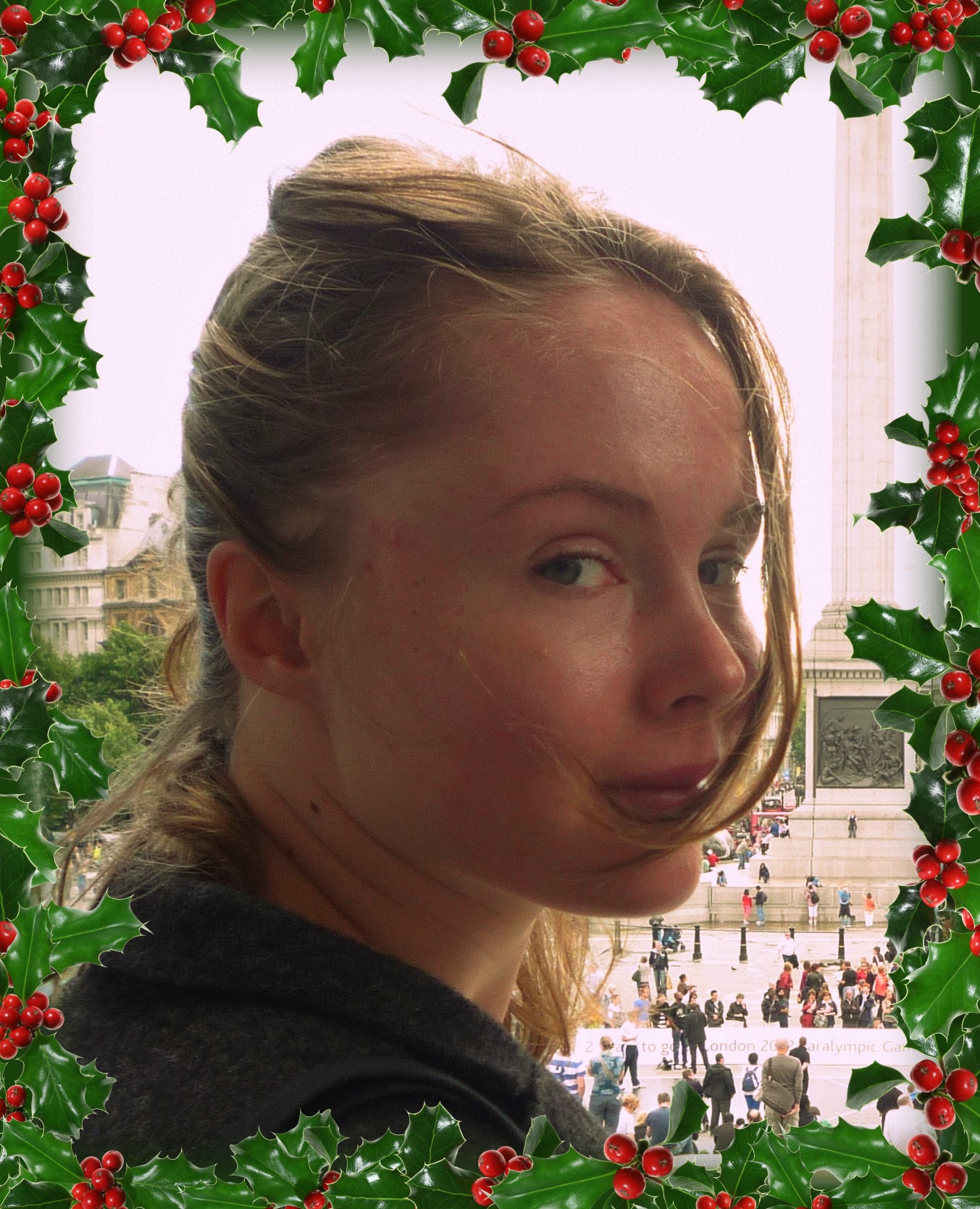
img: Charlotte Day surveying Trafalgar Square in London, this time with a jolly holly border (no ivy, though — that’s for next year!).

My grandfather tried saving the world long before it became trendy — with mixed results

Our Third Culture Kid columnist, Charlotte Day, upon reading this month’s posts about those who displace themselves on behalf of those less fortunate, felt moved to contact her grandfather in Sydney, Australia, for a chat about his own experiences with international aid work, which began in the 1950s.

These days, it is a rare teenager who has not shown some evidence of civic engagement by a certain age: spending their summers beneath foreign suns in search of that fabled sensation, that fulfillment born of “helping others.”

Of course, no altruistic act is truly pure, but I would argue that it is better than nothing.

Nothing, however, is the word that best qualifies my own civic engagement. I have reached the age of 17 tacitly scorning the moral and spiritual quests of British gap-year students, as well as American Ivy-League hopefuls, from my comfortable desk chair.

I read Dostoevsky’s portraits of tormented youths, striving in vain and misguidedly to effect a change in society…and decide that changing the world is futile.

Yet a chastening thought sometimes breaks through this complacency: there are many who do valuable work. There are many who displace themselves — not only from their comfortable desk chairs, but from comfortable world-views and notions — to serve others, outside the framework of self.

My grandfather’s first foray into global philanthropy

One such person is my maternal grandfather, Robert Ayre-Smith. He entered the field of international aid before the idea of a “third world” even existed. As he informed me in our recent email exchange:

In the middle of the last century, there were the tropics, the Empire, the Americas, the colonies, etc. But they were not rated economically as is now the case.

Paradoxically, he chose animals over humans when he initially diverged from the family profession, medicine, and entered London’s Royal Veterinary College. His first appointment as a livestock specialist came in 1952, shortly after his marriage to my grandmother, Carol. The newlyweds set off for Kenya’s Rift Valley, where Robert set up a research station by Lake Naivasha, working with cattle, sheep and pigs. As motivation, he cites scientific interests in “tropical animal production” — a topic he’d investigated while doing graduate work at Louisiana State University.

As is often true of those who move from the halls of academe to real-life applications, Robert soon found that what he calls his “enthusiasm for science itself, and then for the benefits bestowed by scientific advances,” matured into “some feeling of disillusionment.” His focus shifted away from books to people — and looking at what small-scale farmers in Kenya’s villages were realistically capable of accomplishing.

But while he found fulfillment in these human interactions, he remained bothered by the tension between his “lofty agricultural scientist’s perspective” and the perspective taken by the farmers whose cares he was attempting to alleviate.

Some thirty years later, an “Aha!” moment

Fast forward to 1989, by which time my grandfather was working in Indonesia. During a roadside breakdown, Robert experienced an epiphany. Watching a nearby farmstead owner and his family tending their crops and livestock, he “started to question the appropriateness of much [then] current agricultural research for increasing crop and livestock productivity.”

His own knowledge, “derived from vastly different circumstances,” seemed markedly out of place. Until then, he’d been seeing agricultural development in the Third World through the lens of First World research, where commercial farms are relatively large-scale operations, and where farmers are literate and can therefore study results and adopt them to increase their productivity.

Yet most Third World farmers are fighting an altogether different battle. Their farms are small in scale, with “only two acres for the house, food crops and animals and virtually no machinery except hoe and sickle.”

From that time on, my grandfather thought it would be unreasonable — and betrayed a lack of empathy on the part of the professed do-gooder — to expect farmers in Indonesia and other developing countries to make changes according to developed-world research. He became a founding member of the Asian Farming Systems Association in 1991, which aimed to “undertake research of relevance to the farmer that it was hoped to benefit.”

As he concludes in his message to me:

So you see, Charlotte, it took time to mature my thoughts and approaches — a lot of time.

The world as one’s oyster — whatever that means

This being the Displaced Nation, I felt obliged to ask to what extent my grandfather ever felt himself displaced in the course of his work. “NEVER!” came his emphatic reply. He traces the desire to live and work abroad to his mother, “a great traveler in body and soul.”

Born and raised in India “at the height of the Raj,” my great-grandmother was educated in England and Switzerland before traveling widely in the United States and then working in France as a Voluntary Aid Detachment nurse during World War I.

Even after marrying, she continued to travel the Continent.

As Robert puts it: “I believe I may have learned from her that the world was my oyster — whatever that means. Certainly I have never had fear of the world.”

The only environment in which he recalls being ill at ease was Bogotá, Colombia, in 1980, where he was conscious of an underlying malaise about a possible recurrence of La Violencia, the nation’s horrifying period of civil conflict that had taken place from 1948 to 1958. He remembers being “hoicked out of a bus” between the Amazonian Basin and Bogotá by “some roadside gang — or was it the police?” It did not help matters that he found himself “doing an impossible job that no one really wanted [him] to do.”

Even in the presence of immense danger, my grandfather appears to have taken things in his stride. Here’s how he described being in Baghdad in late 1956, when the city revolted as a result of the British and French invasion of Egypt during the Suez Crisis:

I remember no fear although there was one moment when I was in the street of gold and silver smiths when a big and noisy mob rushed down a street parallel to it and all the merchants pulled down their corrugated metal shutters. Machine gun fire ensued.

A plethora of lessons learned

When I asked what he considered the most effective form of international aid, my grandfather’s immediate answer was “the health and welfare of under-privileged people, maybe I should say village people.” Yet this, he added, is not a form of aid, it’s an aim of aid. He went on: “Moreover, it sounds very pompous — as there are plenty of under-privileged people in all parts of the world, not just in villages.”

On the matter of food aid, Robert had this to say:

I could make a good case against food aid, and against some of the inappropriate advice that I gave in the past to small and large landholders. But what I can say with some confidence is that people in the front line of providing development aid must have empathy with those towards whom the aid is directed.

Empathy formed the heart of his approach — coupled with a saying of his father’s, borrowed from Hamlet (Act I, Scene iii):

To thine own self be true, and it must follow, as the night the day, thou canst not thence be false to any man.

Robert and Carol now live in Sydney, Australia — the last in a long series of displacements. Though he contentedly remembers his work in developing countries, and those with whom he worked, Robert prefers to focus on the present. Yet from time to time, he allows those close to him glimpses of the past — cuttings from the swathes of his memory.

His experiences have persuaded me that it does not pay to be defeatist about “changing the world” — and that the world, even amid current extremes of xenophobic paranoia, is nothing to be afraid of.

Readers, questions for Charlotte — or responses to her grandfather’s insights?

STAY TUNED for tomorrow’s post by the Displaced Nation’s agony aunt, Mary-Sue Wallace.

If you enjoyed this post, we invite you to subscribe to The Displaced Dispatch, a weekly round up of posts from The Displaced Nation, plus some extras such as seasonal recipes and occasional book giveaways. Sign up for The Displaced Dispatch by clicking here!

Related posts:

img: Charlotte Day surveying Trafalgar Square in London
RANDOM NOMAD: Matt Collin, Ph.D. Student in Development Economics, Researcher on Tanzania & Aid Blogger

Born in: Oxford, UK
Passports: USA & UK
Countries lived in: South Carolina, USA (Conway & Clemson): 1984-2001 & 2001-05; UK (Oxford): 2005-06, 2008-present; Malawi (Lilongwe): 2006-08.
Cyberspace coordinates: Aid Thoughts | Digesting the difficult decisions of development (currently on hiatus)

What made you leave your homeland in the first place?
I’m not sure I actually had much a homeland to begin with. Despite living in the American South for quite a long time, my parents — a well-traveled American father and an Anglo-American mother — kept me from completely identifying as a South Carolinian. Frequent trips to the United Kingdom to see my mother’s family made me very familiar with life there, although I don’t know that I managed to feel completely “normal” in either location.

This upbringing made it easier for me to leave the United States. While I felt very at home in South Carolina, it didn’t provide the best opportunities for the career I wanted to pursue, in development economics. Oxford did — plus it was familiar from previous visits.

Is anyone else in your immediate family “displaced”?
Both of my parents are “displaced.” My father spent a large hunk of his life in the Middle East and Europe. He ended up in England, where he met my mother. They returned to the US just after I was born. My mother, whose mother is English and father American, was born in the US but raised in the UK — the opposite of me.

Describe the moment when you felt most displaced.
My first few days in Malawi. I went there as a fellow with the Overseas Development Institute in the UK, which sends young economists off to developing countries on two-year stints to work as civil servants for the host government. (I’d been placed in Malawi’s Ministry of Finance.)

My connecting flight through Johannesburg was late, so I ended up tagging a long with an Asian Malawian man who got us onto a flight to Blantyre, Malawi’s commercial capital — which is reasonably far away from where I needed to be. I spent my first night in Malawi alone in a large, empty guest house, with a promise I’d be driven to Lilongwe the next day. I was young (22) and at that point possessed all the typical Western prejudices about African countries. Everything was unknown. What followed, though — a long, leisurely drive up the spine of the country — was an amazing and illuminating introduction.

Describe the moment when you felt least displaced.
It’s hard to pinpoint when you stop feeling displaced because you don’t really notice the absence of the feeling — you just feel comfortable.

The first time I started noticing how comfortable I felt in Malawi was during my first visit back to the UK. There was this sudden anxiety in realizing that there were things going on back in Malawi that I wouldn’t be around to observe. Your home is where you want to get back to, whether or not it is a physical place or a person, and I wanted to get back to Malawi, after having lived there for only eight months.

I suppose I felt least displaced after two years in Malawi, just as I was about to leave. I had never before felt sad about leaving a place, as my moves were always part of my personal trajectory — going to school, taking a new job, etc. Leaving Malawi was heart wrenching in a way I’d never experienced before.

You may bring one curiosity you’ve collected from each of your adopted countries into the Displaced Nation. What’s in your suitcase?
From the United Kingdom: British sweets — when I was young, I developed a major craving for fruit pastilles, wine gums and the like — and would horde them whenever my family visited the UK.
From South Carolina: Sand dollars and salt water taffy from Myrtle Beach, the beach town I used to live near. (The town is a little garish, but it’s incredibly relaxed in its tackiness.)
From Malawi: A small, simple scene constructed out of banana leaves, in a wooden frame. It’s of a small village in Malawi, with a striking blue sky — the sky takes up half the frame. I had it in my bedroom in Lilongwe, and it’s followed me wherever I’ve moved since. I think it does a good job of capturing the quiet, laid-back atmosphere of the country.

You’re invited to prepare one meal based on your travels for other Displaced Nation members. What’s on the menu?
This is difficult, as I’m not known for my cooking, but here we go:

For a starter, I’d serve an avocado and mango salad (both grown in Malawi).

For the main course, we’d have chambo curry (chambo is a fish from Lake Malawi, similar to tilapia) with nsima (ground maize meal) — preferably refried and spiced. Or if you’d prefer, I can replace the nsima with grits from South Carolina — they are practically the same thing. For good measure, let’s have fried okra from South Carolina on the side.

For drinks, I’d offer either iced tea (that South Carolina classic) or a bottle of Carlsberg Brown — technically Danish, but Malawi has had its own Carlsberg brewery for decades now, and it’s the only place that produces “Browns.”

For dessert, it’s hard to go wrong with apple crumble from the UK, a country that knows its desserts!

You may add one word or expression from the countries you’ve lived in to The Displaced Nation argot. What will you loan us?
From the US: Ain’t — it’s incredibly stereotypical, and I can’t say that I actually used it that often when I lived in South Carolina, but occasionally I’ve wanted to bust out with this in conversation in the UK, to enjoy the bewildered response it would inevitably elicit.
From the UK: Nip, or go quickly. I grew up using this, thanks to my parents. As it’s an extremely common expression in the UK, I always assumed it was known elsewhere. Halfway through my undergraduate degree, I announced I was nipping out to the toilet, when a friend leaned in and quietly said, “Matt, no one here knows what you are talking about.” It’s indicative of the slight difficulty of navigating two countries with a common language, but different vocabulary.
From Malawi: Zikomo (thank you!), short for zikomo kwanbiri (thank you very much). Very simple, very basic — yet it was the word I ended up using most often.

This month we are looking into “philanthropic displacement” — when people travel or become expats on behalf of helping others less fortunate than themselves. Do you have a role model you look up to when engaged in this kind of travel — whose words of advice you remember when you find yourself in a difficult situation?
“Philanthropic displacement” is a difficult concept — one I’m not wholly comfortable with. It’s very difficult to travel to a completely new place and effectively help. Assistance requires familiarity, knowledge, and humility, so I think the most successful philanthropists will be those who make this choice independent of their decision to become displaced.

That said, I think the kind of displacement that comes from actually living in a country is a necessary condition for effective assistance. Many Americans are paralyzed at the thought of going to live overseas, especially in “exotic” and distant, developing countries. In that sense, my father was my greatest inspiration. He felt that you needed to travel to understand the world — and that you need to understand the world before you can aim to make it a better place. This was in stark contrast to most of the people I encountered in South Carolina, who rarely considered leaving the state.

My father also instilled in me an interest in human development, and so I suppose if you combine the two — overseas travel and human development — you have a good motivation to get into a field like development economics, and go jetting off to Africa to see what life is like there.

Voluntourism is said to be the fastest growing segment of the travel industry (itself one of the world’s fastest growing industries). Do you think this kind of travel can help the uninitiated understand the problems our planet is facing?
The difficulty I have with voluntourism is that is supply, not demand, driven. Citizens of developed countries feel the need to go learn about and assist people in developing countries, but often they are doing very basic tasks, such as building schools, which could easily be performed by local people. A fundamental question we should ask ourselves for these small-scale voluntourism initiatives is: “If we gave the village the money that we spent on the project, would they still pay for our plane tickets over?”

What’s more, I suspect most Westerners could gain the same or similar insights from straight-up tourism. You can, for example, go on slum tours in Nairobi. And, while I find “slum tourism” to be a bit strange, it at least isn’t trying to justify itself. There are also plenty of longer-term volunteer opportunities that can yield more insights than a one-week visit to build a school can.

So I suppose my answer is: don’t be afraid to make visiting a developing country a regular vacation — tourism dollars also help, and you can stretch your boundaries a little bit more. By the same token, don’t be afraid to take a leap and go to one of these countries for six months — just as long as you don’t go under the presumption that in half a year, you’ll be able to improve things. This takes time.

Readers — yay or nay for letting Matt Collin into The Displaced Nation? Tell us your reasons. (Note: It’s fine to vote “nay” as long as you couch your reasoning in terms we all — including Matt — find amusing.)

img: Matt Collin on a rock near Domwe Island, Lake Malawi (New Year’s Eve, 2006).

STAY TUNED for tomorrow’s installment from our displaced fictional heroine, Libby, who, following a freak snowstorm in New England, has moved out of her house to avoid being turned into a popsicle. (What, not keeping up with Libby? Read the first three episodes of her expat adventures.)

If you enjoyed this post, we invite you to register for The Displaced Dispatch, a round up of weekly posts from The Displaced Nation. Includes seasonal recipes and book giveaways. Register for The Displaced Dispatch by clicking here!

Related posts:

Bon appétit, really? A TCK’s encounter with French cuisine — and culture

Our Third Culture Kid columnist, Charlotte Day, regales us with stories of encounters with France and French cuisine that piqued her curiosity somewhat more than her palate.

My experience of France and of French food consists of a miserable trip to Paris and the Loire Valley with my mother and stepfather in cold, drizzly March, and an even more miserable language exchange to Lyon last February.

The first experience saw us through innumerable cafés au lait, pains au chocolat and frothy miracles of haute cuisine in the Loire Valley. Afterwards, my mother went on her first raw food diet.

The second was a mandatory school trip for all French-language students at my boarding school in England, which I faced with more optimism than most. Two weeks in Lyon, two weeks back in England, dramatic language improvement and cultural interchange — why ever not?

From the moment we boarded the Eurostar, however, things did not look promising. Two boys arrived sporting Union Jacks and carrying paper cut-outs of Wills and Kate. The rest had already scoured their exchange partners’ Facebook pages and resolved to dislike them.

I suppose I ought to have anticipated this Anglo-French clash, given the historical precedents. Yet the English contingent’s narrow-mindedness unsettled me.

Yes, we were sacrificing a holiday to spend two weeks with a stranger. But their genuine unwillingness to learn, Anglo-supremacist attitude and lack of curiosity were a little disturbing.

As we descended into the arrivals hall of Lyon Part-Dieu station, the smiles of expectant correspondents ought to have rebuffed the querulous English students. Yet each went through his or her initial greeting with as pronounced an English accent as possible.

You are what you eat

My exchange partner and her mother drove me back to their beautiful old farmhouse, in a village known for horse breeding. My bedroom was large and warm, my French not as bad as I’d feared it to be.

And yet one anxiety still plagued me: sustaining a gluten-and-dairy-free diet in England was sufficiently difficult, but in France, I imagined, next to impossible. I sat in my room, weighing the relative merits of two weeks’ stomach cramps against starvation — and how to explain in French the effects of wheat, barley and rye on the small intestine?

What I found in the dining room occasioned raw joy: steamed vegetables, fish and salad. Likewise in the kitchen: a refrigerator shelf full of yahourt au soja. To their question “Ça marche?” I would have poured forth encomiums had I mastered a suitable vocabulary set. But I could not move beyond “Oui, c’est fantastique” before we sat down to eat.

This first meal was to be the most talkative of my two-week sojourn. As the breakfasts and dinners succeeded one another in an endless cortège of fresh fruit, perfectly steamed broccoli and silence, I felt that either starvation or stomach cramps around a more convivial table would have been preferable.

My exchange partner was kind, but icy. Her fastidious and sparing eating habits made me feel a glutton in comparison. Her mother ate protein powder in yoghurt more often than a solid meal. Eventually, my mornings were characterized by a solitary repast of fruit salad — no one else seemed to be eating.

Ghosts at the feast

The occasional apparition flitted around the dinner table — some closer to human form than others. The first was Pierre, the former lover of my exchange’s mother, with whom she was still sharing living expenses. He was tall and corpulent with a thunderous voice. She had cast him from her life — but only driven him out as far as the other end of the house, where he entrenched himself in a study strewn with half-smoked cigars.

At least he ate like a Frenchman — belonged to the cult of taste, before that of health. Yet he vanished soon after his first appearance, driving off to see his mother in a neighboring town. He returned after five days, at two o’clock one morning, and left again the next day.

The second apparition was my exchange partner’s boyfriend, Samson — a thin, pale young man with an unruly mass of curls; a maths prodigy who’d set his sights on attending one of the grandes écoles.

Samson, too, was slightly less given to subsist on lettuce and pumpkin seeds. My exchange partner lovingly provided him with a baguette and chocolate — which he would munch while explaining to me the superiority of the French educational system.

He cross-examined me on my plans for the future. I had got as far as a spectral PhD in Russian Literature, when he stopped me with a shocking rejoinder:

Il faut réfléchir, Charlotte! La vie est sérieuse. (In essence: “Life will pass you by before you have accomplished anything.”)

I refrained from pointing out that he had not planned beyond the classes préparatoires, or prépas — two hellishly difficult years spent preparing for university entrance tests. Instinctively, I commended his ambition and drive — yet felt him ill qualified to condemn my lack of perspective given his own determination to sacrifice two years of his youth to a virtually unattainable goal.

My tryst with moules frites

Midway through my stay, our funereal meals were interrupted by my exchange’s mother taking us on her weekend-long tryst in Brussels. She’d discovered that a childhood sweetheart was living in Belgium’s capital, and over the past months, they’d re-cultivated their relations. My exchange and I were invited along as third and fourth wheels.

José, the new lover, was almost as much the gourmand as Pierre, his predecessor.

Yet of his guests, I was the only one who ate at all.

Our meals together included lunch in a traditional Belgian restaurant, where I unadvisedly ordered moules-frites without the butter, causing a scandal in the kitchen.

We had Thai for dinner — a first for my partner and her mother — after which I turned around to see the latter and José kissing passionately on the curb.

Resolving to see something of Brussels at all costs, I accompanied the couple on a walk to the markets, while my partner sat sullenly in José’s penthouse apartment. There, I stared mournfully at beautifully packaged jams, cheeses and Breton biscuits — knowing that we were to leave for Lyon that evening, where another week of salad and silence awaited.

I returned to England appreciably thinner, with an improved French accent and a block of Belgian chocolate for my mother.

Though my experience of France did not come floating in butter, it was more French than I could ever have anticipated.

Readers, any questions or suggestions for Charlotte, should she have any future encounters with France?

img: Charlotte Day surveying Trafalgar Square in London.

STAY TUNED for Monday’s post, offering a few last-minute Halloween costume suggestions for Displaced Nation citizens.

If you enjoyed this post, we invite you to subscribe to The Displaced Dispatch, a weekly round up of posts from The Displaced Nation, plus some extras such as seasonal recipes and occasional book giveaways. Sign up for The Displaced Dispatch by clicking here!

Related posts:

The road trip and the teenage soul

Beginning today, Charlotte Day joins The Displaced Nation as monthly columnist and will comment on our themes from her third culture kid (Australia-US-UK) perspective. September, of course, was road trip month. Though Charlotte has yet to earn her driver’s license, the prospect of free time between high school and university has begun to fuel her imagination…

Sitting at my English boarding school desk, with English boarding school weather drizzling down from the sky outside my window, the idea of a road trip seems utterly foreign. While I’ve been putting together my application for English universities over the past week, which involves a disgustingly trite “personal statement,” the post-exam summer has been jeering at me from behind an ever-growing pile of books.

The road trip represents all of a stressed and stifled sixth former’s ideals, the first being absolute freedom. This freedom is born more of security than anything else — exams finished, hopefully a university offer in the bag, five whole months to dispose of, no looming responsibilities. The image of the angst-ridden teenager is romanticized and misguided: we do not seek malaise and uncertainty but rather comfort and certainty.

Evaluated in this sense, the road trip is akin to a ghost story. The pleasure we take in listening to ghost stories comes from the knowledge that, though the tale itself may threaten, secure reality encircles and protects us. Teenagers nowadays go adventuring in South America, more often than not supervised by charitable organizations and subsidized by their parents. Setting off into the wilds, they seek a future that doesn’t seem vulnerable to any current of chance. Rather, adventure is a brief detour from a pre-set plan.

I have often contemplated my own post-exam adventure in the form of a road trip across the Australian desert with one of my oldest friends. Yet, I am tempted to wonder, what is the point of venturing into the unknown, if only to return to the comfort of the known?

A true coming-of-age adventure would take courage — and would not end in merely turning the van around and arriving home with several memory-sticks full of photographs. That said, I do not cancel the possibility of driving through my native country — an experience that would very likely prove both enjoyable and “life-changing” in a tame sense. But my phantom road trip, eschewing tameness and security, is, undoubtedly, more interesting material for this column.

Let us begin, then, with the road. (I can’t say I know much about roads, save that hairpin bends on a mountainside are as hair-raising as country dirt roads are romantic.) Given that this is the Displaced Nation, familiarity with the territory is out of the question. I will forcibly displace myself — ruling out the United States, England and Australia.

Setting out to conquer … Western Siberia?

This still leaves a huge selection of countries — and having done the electronic version of sticking a pin at random in a world atlas, I have settled on Western Siberia.

Given I am a passionate Russophile and speak a modicum of Russian, my cursor couldn’t have landed on a better country. But confronted with the expanse of Western Siberia, it is doubtful that either of these qualities will be of much use. Perhaps it is telling that Google maps cannot plot a journey from Yakutsk, through Irkutsk and Krasnoyarsk, to Novosibirsk.

One dilemma instantly presents itself: where would I stop and spend the night? I would doubtless end up sleeping in the car for the vast majority of the trip, which brings us to the car itself. In my perhaps misguided road-trip fantasies, I had always pictured one of those old Volkswagen vans — slightly falling apart, squeaking along an endless highway.

But the prospect of breaking down in the middle of Western Siberia does not appeal to me. I must settle for a more prosaic Winnebago-type vehicle, and seek excitement elsewhere. And, as traveling through a wooded desert of sorts, alone, would be not only foolhardy but isolating, a companion seems necessary.

But who, of my sensible friends and relatives, would jump at the chance to travel Siberia in a Winnebago with an insane Russophile?

Given this journey is a child of my fancy, I will not scruple to add another fantastic fabrication: someone whom the power of affection has persuaded to join me on my ill-advised quest. In short, a boyfriend: thoroughly idealized, as a genuine boy in his late teens would prove a terrible nuisance, stuck in a Winnebago from Yakutsk to Novosibirsk. (But of course, the conceit of the comfortable Winnebago is also absurd: such things are found with difficulty in Russia.)

Relishing the … monotony?

You may ask, save an endless parade of trees, open space, greyish vegetation, what would I hope to see? Just that, smattered with the odd town, church cupola, river, lake, blue sky, grey sky, sunrise and sunset.

Unlike Konstantin Levin of Anna Karenina, I do not see myself losing my heart to the Russian land, and devoting my future to wheat threshing. I would become an unfulfilled Chekhovian heroine, stifled in the provinces.

But I believe the fields must be seen, just as we must eat bread, where macaroons would bring more pleasure to the taste buds. Macaroons, far from nourishing, make us fat and complacent. Bread sustains, and makes us grateful to be alive and fed.

I would like to see land in all its endless, characterless glory, to drive from sunrise to sunset, and to talk the night through (although not literally, as I would be loath to crash my Winnebago through exhausted inattention).

I envisage some sort of talisman, suspended from my rear-view mirror—and not one of those scented pine trees, seen so frequently dangling from the rear-view mirrors of American cars. Perhaps an Australian gum leaf on a string, as a reminder of my greater journey’s starting point, now eleven years in the distance.

After all, if I am not to return to the known at the end of this journey, I must bring a fragment of it with me, into the dangerous, the blank, the uncharted space, from which discovery springs.

Readers, any questions or suggestions for Charlotte, before she sets out on any phantom — or real — road-trip adventures?

img: Charlotte Day surveying Trafalgar Square in London.

STAY TUNED for Monday’s post, the first in a new series on the joys and challenges of being an expat in France and attempting to master French cookery.

If you enjoyed this post, we invite you to subscribe to The Displaced Dispatch, a weekly round up of posts from The Displaced Nation, plus some extras such as seasonal recipes and occasional book giveaways. Sign up for The Displaced Dispatch by clicking here!

Related posts:

“My country, ’tis of thee” applies to my expat mum but not to me

We take a break from road trips today with this guest post from Lawrence Hunt, a recent graduate of Warwick University (UK). Followers of The Displaced Nation may recall that we interviewed two cross-cultural married couples last summer. Hunt is the product of a cross-cultural union between an American mother and an English father. Let’s listen to what he has to say regarding the oft-perplexing matter of cultural identity. NOTE: This post has not been edited for British spelling or punctuation.

One of the things that expats like to tell themselves is that home is a state of mind.

But for me, the child of an English father and an American mother, home stands for a physical place: the one where I was born and grew up, England.

For years my mother has sipped her morning coffee from the same extravagantly large mug, Stars and Stripes boldly printed around the outside. She picked it up at an airport in Washington DC where we were visiting her sister. It’s curvaceous and welcoming, a daily caffeinated hit of homeland comfort. I’ve started drinking from it, too — but more as an ironic gesture.

Mum grew up reciting the Pledge of Allegiance in class, but in ultra-PC Britain, patriotism has to be decidedly lower key. It seems commonplace to see flags hoisted outside American homes, but over here the very act of being seen with a St George’s flag in any context other than sporting events or royal weddings is infrequent enough to draw stares. People see you with it and instantly wonder what fanatical scheme for national purification you’re plotting behind closed doors.

Now, I don’t fault my mum for being proud of her cultural upbringing. I think in some ways her extended absence makes her all the more keen to assert her identity and share it with us.

She did some family history research recently that confirmed we’re the distant descendants of Charles Carroll of Carrollton, the only Catholic and longest surviving signatory of the Declaration of Independence. That’s my strongest claim to fame, and I’m holding onto it.

Chocolate — the way to an English child’s heart

That said, America has never played much of a role in our regular family rituals. For one thing, traditions like the Fourth of July and Labour Day just aren’t compatible with the British calendar.

I do remember Mum hosted a wonderful Thanksgiving dinner once with some other American expats when I was little. Without having the next day off to recuperate, however, everyone left early and I think she found the mountain of washing up too colossal to repeat the effort.

The one institution she has passed down to us (and this is something I cannot thank her enough for) was the American Easter basket hunt. The concept, as I explain it to my friends, is simple but ingenious – essentially, it’s what all kids in England do but with two key differences: 1) More chocolate, and 2) Baskets.

While other English kids were being handed single Cadbury creme eggs in flimsy cardboard boxes, my brothers and I were racing around the garden looking for mighty hoards of chocolate hidden among the shrubbery by a miraculously literate bunny that knew how to spell our names on post-it notes.

As American as everyone else in Britain?

Basket cases aside, it’s difficult to say exactly how ‘Americanized’ I am as a result of my mother, and how much of it is just living in a country where America’s influence pervades almost every cultural platform.

The most differentiating feature of mum’s background has always been her accent. I can do a pretty convincing American accent on a good day, and I used to mimic my mother so often when I was a child that I still lapse into it sometimes without realising.

But even my mother, having lived here for almost thirty years, isn’t really that American any more in her diction. I think the few Americanisms I sometimes find myself using, like ‘movie’ rather than ‘film’, or ‘take-out’ rather than ‘takeaway’, are more because I hear them in American movies and prefer them than because I’ve picked them up from her.

I certainly feel something for the States — a fondness and a familiarity, I suppose. I’ve been lucky enough to go with her on visits to her family almost every other year since I was a baby. Some of my favourite memories have come from spending summers at lake houses in North Carolina, climbing the mountains of West Virginia and walking down endless blocks of New York.

When I was seventeen I took a position teaching at a French camp in the woods in Minnesota, and made friends who I still keep in contact with.

America as distant entity

But America lives for me, as it does for many Brits, more in fiction than in reality. From the moment I read JD Salinger, I was hooked, and I’ve probably read more American writers than British ones: Steinbeck, Fitzgerald and Kerouac, right through to more recent contemporaries like Bret Easton Ellis, David Foster Wallace and Jonathan Franzen.

They all essentially seem to be commenting on the same thing: the tragic failure of American life to live up to its promises. Paradoxically though, in the richness of the characters and landscapes they describe, they evoke a utopia in my mind that’s been hard to shake.

In my final year at university I enrolled in a contemporary American Literature module — ‘States of Damage — US Writing and Culture in the Post 9/11 Context’. I didn’t know what I was getting myself into. It was a step-by-step dissection of everything wrong with free market America, from George Trow’s attack on media culture in ‘Within the Context of No Context’ to Naomi Klein’s The Shock Doctrine, an expose on America’s foreign policy over the past 40 years.

The critique seemed appallingly one-sided to me, and an hour a week for an entire year I felt compelled to fight America’s corner against the scathing intellects of my fellow students. Truth be told, I just like a good debate, and this was a difficult one. There’s a lot about American politics that we find objectionable in British culture — even though we’re implicated in most of the same hypocrisies ourselves.

To be fair, however, my fellow students showed a very different side on Obama’s inauguration night. The Students Union had been decked out in American flags and YESWECAN posters, and multitudes of students were queuing up to buy hotdogs and other American staples. I voted in that election, and it was a night when I felt nothing but pride to be half American.

My mum’s sweet land of liberty

I sometimes think it would be nice to use my dual citizenship and live on the other side of the Atlantic for a while, preferably near the coast. Mum believes that on the whole, Americans are more open, friendlier (at least on the outside) and more honest than British people. She’s even been known to point out these qualities in my brothers and me, when they appear, as our ‘American side’.

I’m sceptical that you can generalise about such vast groups of people in any meaningful way, especially as the world becomes increasingly mixed.

Ultimately, I think when you spend very little time in a place, and you miss it greatly, you begin to feel connected to a idealised version of it, one that’s perhaps better than the reality. When I ask about America, the memories my mother recalls from behind the vapours of her star-spangled mug are those of the pioneering Midwest. She tells me she always wanted to be one of the pioneers in Little House on the Prairie, struggling against the elements and striking out on her own.

That adventurousness is, ironically, probably part of what made her leave America for pastures new in the first place.

I can see the real things she’s had to give up in establishing her new life here — the family, the friends, the holiday traditions, a million different flavours and details that in some cases are only slightly different here from what she grew up with. Those are also the things I take for granted about my own life in Britain.

I was born here, and that counts for a great deal more than where my mother was born.

img: Lawrence Hunt with his mum’s stars-and-stripes mug, at home in Chorley Wood

STAY TUNED for Monday’s post, in which Matthew Cashmore, aka The London Biker, relays his personal “Zen” of this rather risky, albeit exhilarating, mode of travel.

If you enjoyed this post, we invite you to subscribe to The Displaced Dispatch, a weekly round up of posts from The Displaced Nation, plus some extras such as seasonal recipes and occasional book giveaways. Sign up for The Displaced Dispatch by clicking here!

Related posts:

RANDOM NOMAD: Kirsty Rice, Freelance Writer & Blogger

Born in: Renmark*, South Australia
Passport: Australia (no one else will have me!)
Countries lived in: Australia (Adelaide & Perth): 1997-98; Indonesia (Jakarta): 1999 – 2001; Malaysia (Kuala Lumpur): 2001-02; Libya (Tripoli): 2002-04; Canada (Calgary): 2004-08; USA (Houston): 2008-09; Qatar (Doha): 2010-present.
Cyberspace coordinates: 4 kids, 20 suitcases and a beagle (blog)
*A small town of 7,500; my parents still live there.

What made you leave your homeland in the first place?
I am married to a former expat child. I know the term is Third Culture Kid, but I don’t really think it applies to him. He was always keen on doing the “expat” thing. I, on the other hand, was raised in the same town that I was born in and wasn’t a great lover of change. Our first move was the result of a promotion for my husband and the fact that I was pregnant with our first child. The plan was to do a two-year posting in Indonesia and to return “home”. That was 7 countries and 12 years ago. I now thrive on change.

So your husband was already “displaced”?
My husband’s parents were expats. He was actually born in New Zealand and then they went to the Philippines for many years before moving to Sydney, then Melbourne, and finally to Brisbane.

How about your kids?
My children were all born in different countries. We were living in Jakarta when I had my first child, my second was born in KL, the third in Malta and the fourth in Canada. Although none of them have lived permanently in Australia (our longest stint has been during school holidays, so a maximum of 12 weeks), they all think of themselves as Australian. My husband and I have both worked hard for that to be the case.

Describe the moment when you felt most displaced.
When we first moved to Tripoli — it was the middle of summer and I had a two-week-old baby and a two-year-old. We then had to endure months of housing hell — we couldn’t find one! For a while, I shared a “guest house” with about sixty men who were rotating in and out of the desert: there were no other women. Breast feeding amongst men who hadn’t seen a woman for a couple of months was a rather unique experience. Due to the weather, fruit and vegetables were limited and small in size. I can remember standing in a fruit and vegetable stand with a screaming baby and a restless toddler wondering how I was going to cook carrots the size of my little finger. I was continually getting lost, and the simplest of tasks seemed very overwhelming. There were many days that I considered getting on a plane — but I’m so pleased I didn’t. Three months later, we had a house, the weather was better, I made friends, and I loved our life in Libya. I was devastated to leave.

Describe the moment when you felt least displaced.
I feel like that here in Qatar. Our children are at a fabulous school, I have a place to write, and my husband works for a Qatari company and really enjoys it. There is so much here in the community for expats, and we are made to feel very welcome. I have made local friends and love heading to the local souqs. I feel that this is very much our second home. In other locations I have felt that we were passing through, but not here.

You may bring one curiosity you’ve collected from your adopted country into The Displaced Nation. What’s in your suitcase?
From Indonesia: A jamu (traditional medicine) woman made of silver, given to me by a very dear friend.
From Malaysia: The Selangor pewter tea set I was given as a gift. Each time I use it I think of my friends.
From Libya: A wedding blanket with traditional jewellery pinned to it, which was given as a farewell present. It is such a unique gift and always a talking point when people spot it in our house.
From Canada: Nothing material, just the memory of what it was like to be back to work full time. In Calgary, I returned to the “old” me, remembering who I was pre children and travel. That was Canada’s gift — along with a huge appreciation of weather!
From the U.S. (Houston): A fantastic painting of an American flag that I picked up in San Antonio. It’s 3D and not in the traditional colors. It reminds me that America is far more layered and multidimensional that what I’d given it credit for.

You’re invited to prepare one meal based on your travels for other Displaced Nation members. What’s on the menu?
We’ll have some kind of soup for starters: either Indonesian soto ayam (chicken soup), Libyan soup* (I love it!), or the Canadian version of Italian wedding soup. Though I come from an area in Australia that has a large Italian community, I’d never heard of Italian Wedding Soup — turns out it’s more of a North American thing.

For the mains, perhaps I’ll offer a choice between Malaysian curry or maybe a nasi goreng from Indonesia.

And for drinks, we’ll have margaritas. I learned to make a mean margarita in Houston.

For dessert, a caramel cheesecake — a recipe I picked up from a fellow Aussie in Houston.

You may add one word or expression from the country you’re living in to The Displaced Nation argot. What will you loan us?
From Indonesia: Satu lagi (one more) — I said that way to often!
From Malaysia: I just loved how you could put lah on the end of everything and automatically make a sentence sound friendlier.
From Tripoli: Shokran (thank you). It was the first Arabic word I learned and makes me think of how special the people in Libya are — so kind and helpful. Incidentally, in learning how to say “pregnancy test,” I discovered that hamil is the word for “pregnant” in Indonesia, Malaysia and Tripoli.
From Canada: Hey — kind of the same as lah in Malaysian.
From the U.S. (Houston): I found myself describing things differently. It wasn’t just “the big tree out the front” but “the big ‘ol tree out the front.”
From Qatar: Right now I’m back to learning Arabic (unsuccessfully). Oh how I wish I had a chip I could just insert into my brain to switch languages. Why haven’t they invented that yet?

It’s Zen and the Art of the Road Trip month at The Displaced Nation. Robert M. Pirsig, author of Zen and the Art of Motorcycle Maintenance, famously said: “Sometimes it’s a little better to travel than to arrive.” Do you agree?
I disagree. I like to arrive, settle and learn how a city/country works. You can learn so much about a place just by trying to get the telephone connected! Traveling through is just a brief picture. I love that we’ve been able to become part of a community everywhere we have lived.

Pirsig’s book details two types of personalities: 1) those who are interested mostly in gestalts so focus on being in the moment, not rational analysis; and 2) those who seek to know the details, understand the inner workings, and master the mechanics. Which type are you?
If you read my blog you’ll see there is usually a romantic viewpoint or flowery end to a posting. I’m a big believer in things happening for a reason and not always being logical. Having said that, I am a stickler for details, I hate to enter into things blindly and have to know exactly what the story is. Which personality am I in my expat life? I’m a bit of both. I don’t believe that anyone can be a successful expat without having the flexibility to change with the situation. In our daily lives as expats we need to quickly learn the rules, find out the details, go with the flow and just enjoy the ride. You have to be both.

* Libyan soup is a tomato-based soup. There are many variations. The one I loved was with lamb.

Ingredients:
1/2 to 1/3 lb. lamb meat cut into small pieces
1/4 cup oil or “samn” (vegetable ghee)
one large onion
1 tablespoon tomato paste
2-3 tomatoes
1 lemon
1/2 cup orzo, salt, red pepper, Libyan spices (Hararat) or cinnamon

Directions:
Sauté the onion with meat in oil.
Add parsley and sauté until meet is brown.
Add chopped tomatoes, tomato paste, salt, spices, and stir while sizzling.
Add enough water to cover meat, simmer on medium heat until meat is cooked.
Add more water if needed, and bring to a boil.
Add orzo, simmer until cooked.
Before serving, sprinkle crushed dried mint leaves, and squeeze fresh lemon juice to taste.

Readers — yay or nay for letting Kirsty Rice into The Displaced Nation? Tell us your reasons. (Note: It’s fine to vote “nay” as long as you couch your reasoning in terms we all — including Kirsty — find amusing.)

img: Kirsty Rice with her family (sans the beagle) at Souq Waqif, Doha, Qatar.

STAY TUNED for tomorrow’s installment from our displaced fictional heroine, Libby, whose rather dramatic road-trip adventure has come to an end. Time to face reality again in Woodhaven! What, not keeping up with Libby? Read the first three episodes of her expat adventures.

If you enjoyed this post, we invite you to register for The Displaced Dispatch, a round up of weekly posts from The Displaced Nation. Includes seasonal recipes and book giveaways. Register for The Displaced Dispatch by clicking here!

Related posts: