The Displaced Nation

A home for international creatives

Tag Archives: Russia

GLOBAL FOOD GOSSIP: Stuffing a chair with boar’s hair, and your face with Charlotte Royale – British style, bien sûr.

global food gossipJoanna Masters-Maggs, our resident repeat-expat Food Gossip and Creative Chef, is back with her column for like-minded food lovers, which includes pretty much every expat we’ve ever encountered.

This month: Upholstering armchairs to the tune of Mary Berry.

* * *

I haven’t been cooking much this month.

This is because, instead, I have been totally absorbed in reupholstering an armchair for my daughter’s bedroom.

Like so many “trailing spouses”, I am an International Jack of All Trades and, possibly, Masters of None.  Work visas are rarely applied to spouses and we must do what the current location allows us if we wish to work.

In my time I have taught English (yes, I have a qualification), arranged flowers (basic qualification), taught exercise classes on a Saudi compound (absolutely qualified with first aid certificates to boot) and baked and decorated birthday cakes (the qualification here is hard to pin down, but I am very enthusiastic).

My latest enterprise, however, is gripping me, and might well be what saves me from permanent life as an expat dilettante.

A family history, as recorded on sofa cushions

Over the years my four children have wrought destruction on all our soft furnishing, but the sofas have suffered the worst.  In part, I have been loath to recover them, as they represent something of both the material culture and culinary history of our family.  The stains, ever more poorly hidden by artfully draped throws and cushions, track the growth of the children from breast to solids. Here and there are the stains of snacks smuggled from the pantry or the marks made by friends I felt woefully too weak to upbraid.   Perhaps I’m just too English to tell off other people’s kids successfully.  My “Take the hamburger back to the kitchen before I am forced to beat you” delivered mildly with a smile and a wink, is taken as face value and ignored – I should expect no more, really.   Anyway, confronted with an upholstery bill that reached into five digits, I decided to take another “Have a go, Jo” course.

The result is that I can no longer visit a friend’s house, or watch a film or TV, without becoming entirely distracted by the chairs and sofas on display.

Thanksgiving stuffing? Not unless it’s made of boar’s hair

This new interest has caused me to all but abandon the kitchen.  Meals are late and gracelessly served.  Plates generally consist of pasta with a side of chopped tomatoes, cucumber, and sundry vegetables dragged from the back of the fridge or freezer – anything to make up the 5 a day and free me to return to the basement.  I’m amazed that my family is bored by this approach.  Perhaps they need a little footstool project of their own.

Thankfully for this webpage, this dearth of food-related happenings in my household has been tempered by my need to listen to radio or TV while I work.

This month I caught up with Great British Bake Off: the perfect accompaniment for the stripping and recovering process.  If you haven’t yet discovered the delights of this quintessentially British of “competitions”, I recommend a quick rifle through YouTube.  I’m sure you too will be hooked.

None of the competitors claim that winning the show is their dream, or assure us that they must win because they want it so bad. That they don’t do so on a televised competition comes as a surprise and seems to suggest that things back home have changed more than I could ever have guessed.  So accustomed are we all to naked ambition and self-puffery despite slender talents that the shock of modesty seems inconceivable.  This year there was even a competitor, Ruby, who was so self-effacing that she became a hate figure in the press.  Holding up her various offerings and apologizing for their variously burned, dry or just plain terrible states, she seemed to hail from a bygone age, ignorant of Simon Cowell.  But today this is mistrusted and seems to be insincere, even manipulative.  Interestingly, Mary Berry, the rather strict octogenarian judge, was quick to comfort and reassure.  Modesty has been lost to the British TV in 15 years of TV competitions in music, food, modeling and god-knows-what.

The public might mistrust Ruby’s handwringing over her uselessness, but Mary did the proper thing and bucked her up.

What, really, is so wrong with such a world?

Killing two oiseaux

IMG_2070

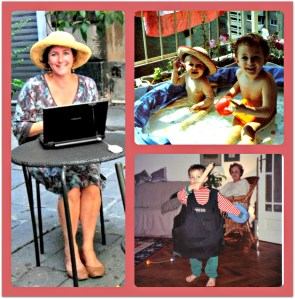
Joanna and her impressive reason
for a lack of cooking this month

Where am I going with this?  Welcome to the wandering mind of someone whose hands are deep in boar’s hair and webbing.  I’ll tell you where, though.  It occurred to me that, since this hugely successful show had been spun off to many countries, each tweaking it to its own tastes and state of mind, I could find the French version and improve my lamentable French while never pausing in my upholstery endeavours.

The first two hour episode proved to be a deeply comforting and successful experiment in language acquisition — mal cuit, anyone?  But then, halfway through the next episode I received a bit of a douche froide, so to speak.  The announcer, thankfully less humorous than her British counterparts as my French is barely up to understanding French slapstick let alone gentle, self-deprecating humour, announced that the Challenge Technique would be English in origin.  Cue the endless pause so beloved of such shows, then:

“Le challenge est……….  Charlotte aux fruits rouge.

Well, strike me down with a langue de chat.  You see, Charlotte Royale wasn’t English, it was French.  I knew this, because it had appeared only a week before on English T.V. and during French Week, no less.

Charlotte? C’est un French name, non?

Finally, something had occurred which made me look up from my stitching.  What gave Charlotte her ambiguous status between the French and the Brits, while retaining value as a challenge worth attempting?  The British show gave no clue.  Although their Charlotte involved Swiss Roll and looked like one of the illustrations in your mother’s 1970s copy of, er, a Mary Berry recipe book, it was accepted without demur by all as French.  Similarly, the French contestants, while sucking in their breath and declaring they were going to have to concentrate hard on this one, they failed to cry as one patissier,  “Zut alors, c’est un recet francais!”

The French presenter thickened the plot further, introducing a historian to explain the English origins of the dish.  Apparently, it was invented by Antoine Carême (yes, the father of the art of patisserie) who worked at both the English and Russian courts for a time.  You see?  Strange, no?  He made it for either a Queen Charlotte, a Princess Charlotte, a cousin Charlotte and then at some point tagged on Russe to include the Tsar in his flattery.

So why is this not considered French if a French man really did invent it?

Unearthing Charlotte’s origins in my own kitchen

IMG_2042

Patrick sharing his British Charlotte Royale. In France.

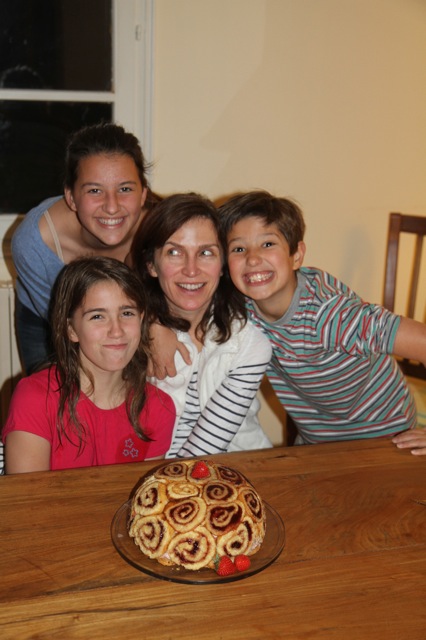
Patrick, my 9 year old, and I, decided to make the British version.  Doing it for myself cleared up all my questions.  It was, let’s say, a woman of substance.  French Women Do Not Get Fat, and their puddings cannot be hefty either.

My own Charlotte Royal was no slip of a thing.

The Swiss Roll lining was easily managed by Patrick working alone with our trusty KitchenAid.  While the French contestants piped boudoir biscuits to surround their moulds for the light bavarois filling, Patrick sliced up jammy sponge rolls which gave the pud a slightly cerebral air when turned out. How can you cut a petite tranche from that?  Piping even biscuits would be much more of a challenge for child and adult alike.  The Swiss Roll is infinitely more forgiving.

The difference between the French version and the English became clearer.  Simiar amounts of work and skill are involved, but one must be elegant and the other must be generous.  One should look preternaturally perfect, and the other is valued for comfort.  A French dessert should perhaps make you feel you are not quite elegant enough to eat it, while the English makes you feel better because you do not look like the Duchess of Windsor.  Ha ha –  it is not generosity of spirit that holds the French back from planting the tricolor on this this dish.  They are anxious that it is a recipe that can look unfinished, so trifle-like.

When Carême returned to France, he apparently rechristened the dish Charlotte á la Parisienne, probably to soothe the nerves of alarmed locals who may have heard a thing or two about the English king Carême had worked for.  I have no doubt when Charlotte arrived on French shores she resembled a trifle as little as possible.

Carême’s Charlotte is a little rootless, like so many of us expats.  Like us, it is unsure where it belongs and if home will ever be home again.  The Charlotte is perhaps a sort of Third Culture Dessert.

But at least I think I may have found the name for my upholstery business if I ever start one.

Here’s to Third Culture Sofas.

* * *

Joanna was displaced from her native England 16 years ago, and has since attempted to re-place herself and blend into the USA, Holland, Brazil, Malaysia, Venezuela, Saudi Arabia, and now France. She describes herself as a “food gossip”, saying: “I’ve always enjoyed cooking and trying out new recipes. Overseas, I am curious as to what people buy and from where. What is in the baskets of my fellow shoppers? What do they eat when they go home at night?”

Fellow Food Gossips, share your own stories with us!

STAY TUNED for tomorrow’s post!

If you enjoyed this post, we invite you to register for The Displaced Dispatch, a round up of weekly posts from The Displaced Nation, with seasonal recipes, book giveaways and other extras. Register for The Displaced Dispatch by clicking here!

Related posts:

Images: All images from Joanna’s personal photo albums, and used here with her permission

LOCATION, LOCUTION: Janet Skeslien Charles, bringing Odessa to life through writing

2013-11 jsc visual

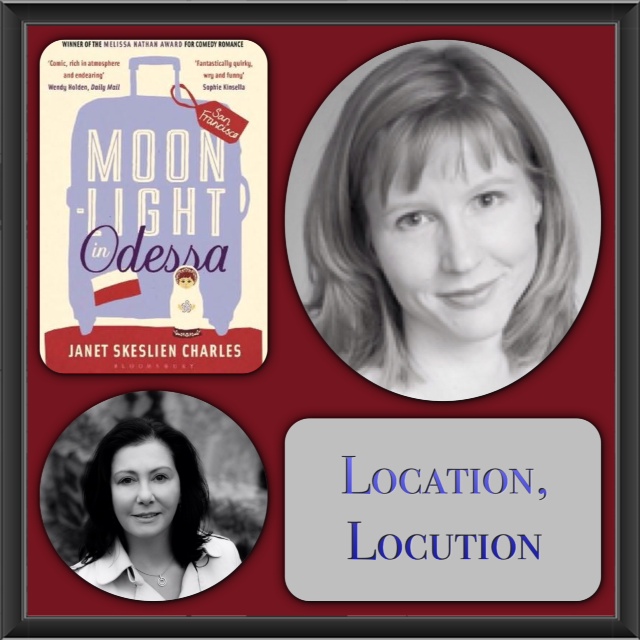
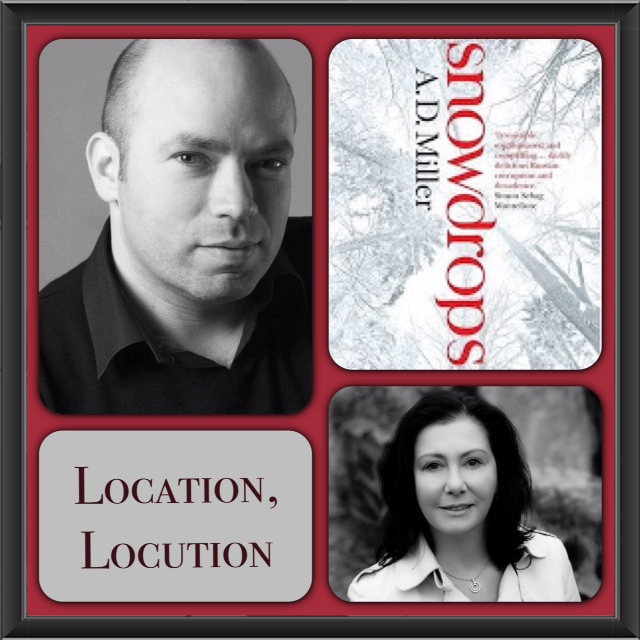
Images, clockwise from top: Moonlight in Odessa cover art; Janet Skeslien Charles author photo; JJ Marsh author photo

In this month’s “Location, Locution”, expat crime writer JJ Marsh interviews Janet Skeslien Charles, author of Moonlight in Odessa.

Janet, welcome! Tell us a little about yourself.
I grew up on the plains of Montana, in a town of two thousand people. I have always been a writer, with a journal for observations, prose, and poetry, though for me, writing is a very private activity.

At the University of Montana, I studied English, French, and Russian. I also spent a year on a university exchange at the University of Maryland. After graduation, I went to Odessa, Ukraine, for two years as a Soros Fellow.

I found a job in France and intended to stay for a year. On my first day in France, I met the man who became my husband, and I’ve been in Paris for over ten years.

Moonlight in Odessa is truly an international effort. The novel is set in Odessa, Ukraine. My agent is English. My editor’s assistant is Japanese-Danish, my copy editor is from New Zealand. I’m American. The book was written in France and typeset in Scotland. My first fan letter came from a Swede. Rights have been sold in Germany, Italy, the Netherlands, Brazil, Sweden, Iceland, Serbia, Romania, Taiwan, and Denmark.

When you’re writing, which comes first, story or location?
My novel was an ode to Odessa, a city I love. The story grew from the place.

How do you go about evoking the atmosphere of a place?
The way my characters speak, what they eat, how they dress, who they believe, how they love, and where they go are all very particular to the city of Odessa.

Which particular features create a sense of location? Landscape, culture, food?
For me, it is how characters react to situations. Odessa is the humor capital of the former Soviet Union, which means that my characters use humor as a shield to ward off painful situations. Odessans are capable of laughing at things that would make me bawl. Their mental toughness is impressive. So for me, the sense of city is the sense of self.

Also, trying to understand what is important to characters is important. My character Daria is defined by her ambitions, which exist because of her experiences in Odessa, a comsmopolitan sea port.

How well do you need to know the place before using it as a setting?
I was immersed in Odessa for two years and am still in touch with friends there, so it was easy for me to write about the city, but I love that Jeanette Winterson wrote The Passion without visiting Venice. It is one of my favorite books and so evocative of time and place. I don’t think you need to know a place, though it helps. I think imagination and observation are the most important tools when creative a setting.

Could you give a brief example from your work which you feel brings the location to life?
Daria, my main character, is at a job interview and must decide whether she is able to do the job and stay ahead of the lecherous boss:

Chess. There’s a reason the former Soviet Union has more world champion players than any other country. Chess is strategy, persistence, cunning, and the ability to look farther into the future than an opponent. The bloodlust of killing off others, one at a time. Chess is every man for himself. Building traps and avoiding them. It is mental toughness. And sacrifice. In Odessa, life is chess. Moves. Countermoves. Feigns. Knowing your adversary and staying one step ahead of him.

I took the job.

Which writers do you admire for the way they use location?
I absolutely love Venice in Jeanette Winterson’s The Passion. Michael Perry’s Population: 485 and Julia Alvarez’s How the Garcia Girls Lost Their Accents are also great examples of how place shapes the narrative. I have also read two unpublished novels by friends — one evokes North London, the other life in small-town France — and six months later, I am still savoring these two places I have never been.

The authors are Marie Houzelle, a French woman who writes in English, and Katya Jezzard-Puyraud, who wrote about North London so convincingly, I finished her novel feeling as if I had grown up there.

Next month’s Location, Locution guest  will be Jeet Thayil, the winner of the DSC Prize for South Asian Literature, shortlisted for the 2012 Man Booker Prize and the Hindu Literary Prize 2013.

 * * *

JJ Marsh grew up in Wales, Africa and the Middle East, where her curiosity for culture took root and triggered an urge to write. After living in Hong Kong, Nigeria, Dubai, Portugal and France, JJ finally settled in Switzerland, where she is currently halfway through her European crime series, set in compelling locations all over the continent and featuring detective inspector Beatrice Stubbs.

STAY TUNED for tomorrow’s post!

If you enjoyed this post, we invite you to register for The Displaced Dispatch, a round up of weekly posts from The Displaced Nation, with seasonal recipes, book giveaways and other extras. Register for The Displaced Dispatch by clicking here!

Related posts:

LOCATION, LOCUTION: Paulo Coelho, on the monuments that immortalise cities

2010-26In this month’s “Location, Locution”, expat crime writer JJ Marsh talks with Paulo Coelho, the Brazilian best-selling author of The Alchemist, The Devil and Miss Prym, and The Witch of Portobello, among many others.

*  *  *

When I asked Paulo Coelho to take part in the “Location, Locution” concept, he was happy to oblige.

But he wanted to do it his way. So in a change to our usual format, here’s Paulo Coelho on place.

The moving monument

I have visited many monuments in this world that try to immortalize the cities that erect them in prominent places. Imposing men whose names have already been forgotten but who still pose mounted on their beautiful horses. Women who hold crowns or swords to the sky, symbols of victories that no longer even appear in school books. Solitary, nameless children engraved in stone, their innocence for ever lost during the hours and days they were obliged to pose for some sculptor that history has also forgotten.

And when all is said and done, with very rare exceptions (Rio de Janeiro is one of them with its statue of Christ the Redeemer), it is not the statues that mark the city, but the least expected things. When Eiffel built a steel tower for an exposition, he could not have dreamed that this would end up being the symbol of Paris, despite the Louvre, the Arc de Triomphe, and the impressive gardens. An apple represents New York. A not much visited bridge is the symbol of San Francisco. A bridge over the Tagus is also on the postcards of Lisbon. Barcelona, a city full of unresolved things, has an unfinished cathedral (The Holy Family) as its most emblematic monument. In Moscow, a square surrounded by buildings and a name that no longer represents the present (Red Square, in memory of communism) is the main reference. And so on and so forth.

Perhaps thinking about this, a city decided to create a monument that would never remain the same, one that could disappear every night and re-appear the next morning and would change at each and every moment of the day, depending on the strength of the wind and the rays of the sun. Legend has it that a child had the idea just as he was … taking a pee. When he finished his business, he told his father that the place where they lived would be protected from invaders if it had a sculpture capable of vanishing before they drew near. His father went to talk to the town councilors, who, even though they had adopted Protestantism as the official religion and considered everything that escaped logic as superstition, decided to follow the advice.

Another story tells us that, because a river pouring into a lake produced a very strong current, a hydroelectric dam was built there, but when the workers returned home and closed the valves, the pressure was very strong and the turbines eventually burst. Until an engineer had the idea of putting a fountain on the spot where the excess water could escape.

With the passing of time, engineering solved the problem and the fountain became unnecessary. But perhaps reminded of the legend of the little boy, the inhabitants decided to keep it. The city already had many fountains, and this one would be in the middle of a lake, so what could be done to make it visible?

And that is how the moving monument came to be. Powerful pumps were installed, and today a very strong jet of water spouts 500 liters per second vertically at 200 km per hour. They say, and I have confirmed it, that it can even be seen from a plane flying at 10,000 meters. It has no special name, just “Water Fountain” (Jet d’Eau), the symbol of the city of Geneva (where there is no lack of statues of men on horses, heroic women and solitary children).

Once I asked Denise, a Swiss scientist, what she thought of the Water Fountain.

“Our body is almost completely made of water through which electric discharges pass to convey information. One such piece of information is called Love, and this can interfere in the entire organism. Love changes all the time. I think that the symbol of Geneva is the most beautiful monument to Love yet conceived by any artist.”

I don’t know how the little boy in the legend would feel about it, but I think that Denise is absolutely right.

© Translated by James Mulholland

www.paulocoelhoblog.com

Read JJ Marsh’s 2011 interview with Paulo Coelho for Words with JAM magazine

Next on Location, Locution: Janet Skeslien Charles, author of Moonlight in Odessa

* * *

JJ Marsh grew up in Wales, Africa and the Middle East, where her curiosity for culture took root and triggered an urge to write. After living in Hong Kong, Nigeria, Dubai, Portugal and France, JJ finally settled in Switzerland, where she is currently halfway through her European crime series, set in compelling locations all over the continent and featuring detective inspector Beatrice Stubbs.

STAY TUNED for next week’s posts!

If you enjoyed this post, we invite you to register for The Displaced Dispatch, a round up of weekly posts from The Displaced Nation, with seasonal recipes, book giveaways and other extras. Register for The Displaced Dispatch by clicking here!

Related posts:

Image: Paulo Coelho, 2010 – PauloCoelho.com, used with permission.

LOCATION, LOCUTION: Liza Perrat on writing a location to life

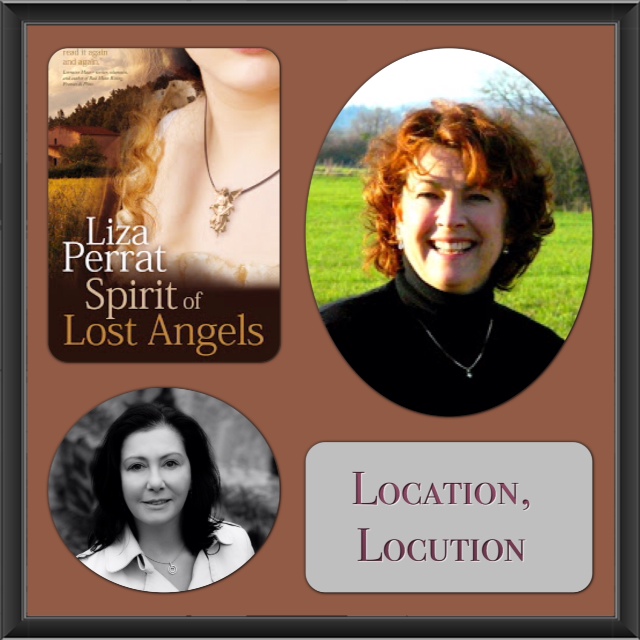
Liza Perrat visualIn this month’s “Location, Locution”, expat crime writer JJ Marsh interviews  Liza Perrat, author of Spirit of Lost Angels.

Liza grew up in Wollongong, Australia, where she worked as a general nurse and midwife for fifteen years. When she met her French husband on a Bangkok bus, she moved to France, where she has been living with her husband and three children for twenty years. She works part-time as a French-English medical translator.

Spirit of Lost Angels tells the story of Victoire Charpentier and her courage in facing injustice and abuse in revolutionary France. Wolfsangel (due out in November 2013) follows Victoire’s descendant, Celeste, who finds that under Nazi occupation, the personal is political.

*  *  *

Which comes first, story or location?
So far, for me, it has been location. I’m enthused, enthralled or nostalgic about a place, and want to use it as a backdrop around a story. In the case of my current novels, the location has become as much a character as the real-life ones.

How do you go about evoking the atmosphere of a place?
My novels are set in the French rural area in which I live, which makes it much easier to evoke atmosphere. I take loads of photos of the countryside, the people and the buildings, during each different season. The local historical association has lots of sketches and documents on what it looked like through the ages. As I walk the dog, I jot down descriptions of sunrises, sunsets, stormy light, fruit on the trees, snow on the hills, flowers in spring and the icy river in winter.

Which particular features create a sense of location? Landscape, culture, food?
Landscape, culture and food, certainly. But most of all, for me, it is the people who create a sense of location. Often, the people are the place. Also language, especially expressions, plays a part. Architecture too, gives a feel for a place. Smells also, create a sense of location.

How well do you need to know the place before using it as a setting?
Intimately well. I’d have trouble creating a believable atmosphere if I’d not been to a place, or at least read widely on it.

Could you give a brief example from your work which you feel brings the location to life?
Many reviewers of Spirit of Lost Angels commented positively on the atmosphere created of La Salpêtrière asylum in Paris, during the late 1700s:

… I found the scenes of cruelty in the Salpêtrière Asylum painful to read – not because of the way in which they were written, but simply to have been shown such unpalatable truths …

… the section of the novel concerning Victoire’s stay in La Salpêtrière vividly illustrates what a horrible experience it must have been…

… part of the reason I waved to savour this book so much was because of the scenery and the settings…

The book vividly depicts the violent and inhumane methods doctors used to “treat” mental illness at Salpêtrière. To me, this was perhaps the most fascinating portion of the story- descriptions of the appalling conditions under which the women were kept, the rivalries that developed among cell mates, the rules one had to learn in order to survive this prison. The narrative was stark and believable and, believe it or not, educational. Since I’ve finished the book, I’ve been looking up the history of the Salpêtrière Hospital, intrigued at how low mental health care and the care of women had deteriorated at that time. Introducing an urge to learn more, dear readers, is the mark of excellent historical fiction.

Which writers do you admire for the way they use location?
Ones that come to mind:

  • Stef Penney’s The Tenderness of Wolves. Even more amazing as, apparently, she’s never been to the wilderness snowscapes of Canada.
  • Joanne Harris’s Chocolat evokes the small French village.
  • Nikki Gemmell’s Cleave and Kate Grenville’s The Idea of Perfection, describe so well the desolate landscape of central Australia.
  • Jennifer Worth’s Call the Midwife brings to life 1950s East End London.
  • Emma Donoghue’s Room brilliantly portrays an entire existence in a single, small room.

Thank you, Liza!

Next month, my guest on Location, Locution will be Paulo Coelho, author of The Alchemist, The Devil and Miss Prym and Eleven Minutes

* * *

JJ Marsh grew up in Wales, Africa and the Middle East, where her curiosity for culture took root and triggered an urge to write. After living in Hong Kong, Nigeria, Dubai, Portugal and France, JJ finally settled in Switzerland, where she is currently halfway through her European crime series, set in compelling locations all over the continent and featuring detective inspector Beatrice Stubbs.

STAY TUNED for next week’s posts!

If you enjoyed this post, we invite you to register for The Displaced Dispatch, a round up of weekly posts from The Displaced Nation, with seasonal recipes, book giveaways and other extras. Register for The Displaced Dispatch by clicking here!

Related posts:

LOCATION, LOCUTION: Award-winning author Steven Conte, bringing location to life through writing

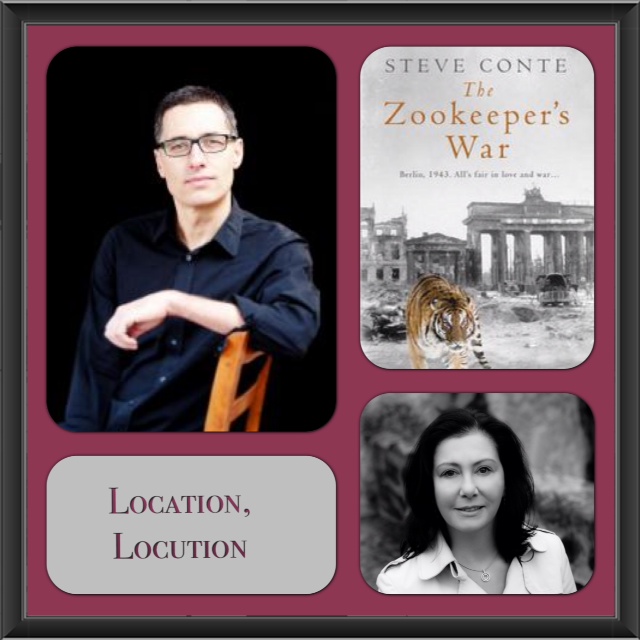
steven conte visualIn this month’s “Location, Locution”, expat crime writer JJ Marsh interviews  Steven Conte, the Melbourne-based author of The Zookeeper’s War. The setting is the Berlin Zoo, 1943. An Australian woman, Vera, and her German husband, Axel, the zoo’s director, struggle to look after the animals through the air raids and food shortages.

In 2008, The Zookeeper’s War won the inaugural Australian Prime Minister’s Award for Fiction, then worth A$100,000. The Zookeeper’s War has been published in Britain and Ireland and translated into Spanish and Portuguese. Barman, life model, taxi driver, public servant, book reviewer and university tutor are some of the jobs with which Steven has supported his writing.

*  *  *

Which comes first, story or location?
For me this depends on the project. The city of Berlin was definitely the initial inspiration for The Zookeeper’s War, in particular the atmosphere of enclosure and entrapment which I sensed there three years before the Berlin Wall came down. While I chose to set my novel in the Berlin of WWII, the Cold War tensions I had witnessed there in 1986 helped me to imagine what it might have felt like to live through the twelve terrifying years of the Third Reich. It was only after the novel was published that I realised I had chosen a setting which has powerful, indeed mythic, associations for many readers (some other examples being New York, Paris, London and, in the east, Hong Kong and Shanghai).

How do you go about evoking the atmosphere of a place?
Stimulating the reader’s senses is the most reliable way, though in a realist narrative a character needs psychologically plausible reasons to notice his or her environment, a difficult ask if focal characters are already familiar with their surroundings. Selecting a focal character who is a newcomer to the setting is one way to emphasise place. Another is to take the focal character on a journey. In The Zookeeper’s War I chose a setting which aerial bombing destroys day by day, compelling the characters to keep on noticing their surroundings.

Which particular features create a sense of location? Landscape, culture, food?
All of the above, provided that accounts of them belong in the story and ring true to the narrative voice. Ideally, descriptive detail reveals as much about the focal character or narrator as it does about setting. In contrast, “unanchored” description can sound like passages of travel writing or anthropology.

How well do you need to know the place before using it as a setting?
With skill, only moderately well, though it’s probably wise to minimise the difference between your characters’ supposed knowledge of a setting and your own. This aside, the best fiction implies more than it states (Hemingway’s iceberg principle), and a few vivid details can be enough to evoke an entire town or city or region. I’d recommend not writing about famous landmarks, since locations such as the Brooklyn Bridge, the Eiffel Tower and the Brandenburg Gate will remain clichés of place however brilliantly they might be described.

Could you give a brief example from your work which you feel brings the location to life?
In the following passage from The Zookeeper’s War the heroine, Vera, walks through Berlin the morning after an air raid:

In the Mitte, the old city, bombs had caved in the skyline, dropping telegraph poles, power lines and tram cables onto burnt-out lorries and trams. Shops were destroyed or boarded up, and glass, chunks of plaster and shrapnel paved the streets. Field kitchens had sprouted at the major intersections, and in alleys off Alexanderplatz girls were already soliciting. Outside one bombed-out tenement Vera read the chalked inscription, Everyone in this shelter has been saved. Around the corner: My angel where are you? Leave a message for your Sigi. In a house without walls on Unter den Linden, a man played Bach on a grand piano, and below him, in a lake fed by a burst water main, a fur stole clung to a hatstand. Half the people on the streets wore a uniform: police, air-raid wardens, women postal workers. Soldiers moved in squads and the only vehicles were staff cars and Wehrmacht lorries, as if the army had conquered Berlin and deployed clerks and shop assistants to the front in a fleet of private cars.

Which writers do you admire for the way they use location?
Cormac McCarthy for the poetry and grandeur of his descriptions, in Blood Meridian and The Border Trilogy, of the border regions of Mexico and the United States. Colm Tóibín for his evocation of the eroding coastline of County Wexford in his early novel The Heather Blazing. William Styron for the magnificent range of settings in Sophie’s Choice, from post-war New York, New England and North Carolina to Warsaw under German occupation and the netherworld of Auschwitz.

* * *

Readers, what did you think of Steven’s suggestions on evoking place? Next month, my guest will be Liza Perrat, author of Spirit of Lost Angels.

JJ Marsh grew up in Wales, Africa and the Middle East, where her curiosity for culture took root and triggered an urge to write. After living in Hong Kong, Nigeria, Dubai, Portugal and France, JJ finally settled in Switzerland, where she is currently halfway through her European crime series, set in compelling locations all over the continent and featuring detective inspector Beatrice Stubbs.

STAY TUNED for Tuesday’s, another installment in the life of our fictional expat heroine, Libby. (What, not keeping up with Libby? Read the first three episodes of her expat adventures.)

If you enjoyed this post, we invite you to register for The Displaced Dispatch, a round up of weekly posts from The Displaced Nation, with seasonal recipes, book giveaways and other extras. Register for The Displaced Dispatch by clicking here!

Related posts:

LOCATION, LOCUTION: Booker Prize-nominated author AD Miller, on bringing a location to life through writing

ADMillerIn the second of our series “Location, Locution”, expat crime writer JJ Marsh interviews AD Miller, the British author and journalist.

About AD Miller

AD Miller was born in London in 1974. He studied literature at Cambridge and Princeton, where he began his journalistic career writing travel pieces about America. Returning to London, he worked as a television producer before joining The Economist to write about British politics and culture. In 2004 he became The Economist’s correspondent in Moscow, travelling widely across Russia and the former Soviet Union. He is currently the magazine’s Writer at Large; he lives in London with his wife Emma, daughter Milly and son Jacob. He wrote a critically acclaimed non-fiction book, The Earl of Petticoat Lane, in 2006. His second novel, Snowdrops, was shortlisted for the 2011 Booker Prize.

About his novel, Snowdrops

A fast-paced drama that unfolds during a beautiful but lethally cold Russian winter. Ostensibly a story of naive foreigners and cynical natives, the novel becomes something richer and darker: a tale of erotic obsession, self-deception and moral freefall. It is set in a land of hedonism and desperation, corruption and kindness, magical hideaways and debauched nightclubs; a place where secrets, and corpses, come to light when the snows thaw.

Q&A on Location, Locution

JJ Marsh: Which comes first, story or location?  
AD Miller: Story. But locations can be suggestive of certain kinds of story. For example, Russia lends itself to tales of moral challenge and to philosophical inquiry.

JJM: How do you go about evoking the atmosphere of a place?
ADM: Take notes. Write down what people wear on the Metro and what the vendors on commuter trains are selling. You will recollect less than you think you will. For historical settings, read old newspapers and unpublished memoirs. Remember it is the inconsequential detail that is most important.

JJM: Which particular features create a sense of location? Landscape, culture, food?
ADM: Smell. Sounds. Language (especially slang and proverbs). Clothes. And weather: in Snowdrops, the Russian winter functions as a sort of ancillary sub-plot.

JJM: How well do you need to know the place before using it as a setting?
ADM: You need to know it, and then you need to unknow it. A novel isn’t a travelogue or an encyclopaedia; you enlist only those aspects or details of a place that serve the narrative.

JJM: Could you give a brief example from your work which you feel brings the location to life?
ADM: There’s a passage in Snowdrops in which Nick, the narrator, is taxiing at night alongside “the soupy Moscow River, not yet frozen and curling mysteriously through the wild city”, which is OK.

JJM: Which writers do you admire for the way they use location?
ADM: Isaac Babel and Giorgio Bassani (Odessa and Ferrara respectively).

* * *

Thanks, JJ, for that fabulous interview! Readers, any comments on what AD Miller had to say? Up next month in Location, Locution: Steven Conte, Australian author of The Zookeeper’s War.

JJ Marsh grew up in Wales, Africa and the Middle East, where her curiosity for culture took root and triggered an urge to write. After living in Hong Kong, Nigeria, Dubai, Portugal and France, JJ finally settled in Switzerland, where she is currently halfway through her European crime series, set in compelling locations all over the continent and featuring detective inspector Beatrice Stubbs.

STAY TUNED for tomorrow’s post, another installment in the life of our fictional expat heroine, Libby. (What, not keeping up with Libby? Read the first three episodes of her expat adventures.)

If you enjoyed this post, we invite you to register for The Displaced Dispatch, a round up of weekly posts from The Displaced Nation, with seasonal recipes, book giveaways and other extras. Register for The Displaced Dispatch by clicking here!

Related post:

Meet author Rosie Whitehouse, who trailed her spouse into a war zone (and enter to win her book!)

Rosie Whitehouse CollageOne of the expressions I picked up from living in England for many years is “Keep the home fires burning.” For some reason, that expression, along with the WWI song from which it comes, is running through my head as I contemplate talking to today’s featured author, Rosie Whitehouse (click here to hear it being sung):

Keep the Home Fires Burning,
While your hearts are yearning.
Though your lads are far away
They dream of home.
There’s a silver lining
Through the dark clouds shining,
Turn the dark cloud inside out
Till the boys come home.

For me, Rosie is an up-to-date version of what the songwriters had in mind. Educated at the University at London, with a career as a BBC journalist, she chose to stay at home with her children and keep the house warm and welcoming, and the family’s spirits up, while her husband, the journalist Tim Judah, went off to report on various wars for The Economist and other newspapers.

Rosie even went the further step of moving the family home to be closer to Tim for a time. Ironically, she kept the home fires burning in the very place where World War I began, the Balkans. She flew out to a crumbling Bucharest—it had been knocked down by the notorious Ceaușescu, whose secret police killed hundreds during Romania’s 1989 revolution—with one child in tow and another one on the way.

Then, when it seemed possible that her own home could go up in flames as war spread across the former Yugoslavia, Rosie did not give up. She stayed for a total of five years before returning to London, by which time “keeping the home fires burning” was second nature both for her and the couple’s five kids (Tim carried on covering wars in Iraq, Afghanistan, and the Congo).

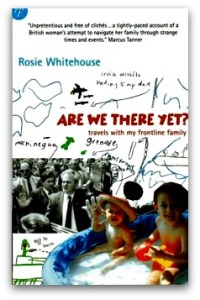
Having revived her career as a freelance journalist, she decided to write her first book: Are We There Yet? Travels with my Frontline Family—a copy of which we’ll be giving away! (See details below). The book is a tribute to families who have been “burners of the home fires,” whose emotional pain tends to go unheralded. It is also, in her words, “quite funny.” (Hey, growing up in Bucharest, Belgrade, Croatia and Bosnia can be fun!)

By now you must be as curious as I am to meet the intrepid Rosie Whitehouse and learn more about what motivated her to seek out such an unusually displaced (at least by most of our standards!) life. I note that she has an Irish mother—perhaps that explains it?! (I’m thinking Queen Boudicea…)

* * *
AreWeThereYet_cover_dropshadowHi, Rosie. In your book you say that your husband’s journalist colleagues in Romania, all of whom were single, were shocked to hear he had a two-year-old son and another child on the way. Did people often tell you you were crazy?
Yes, lots of people thought I was crazy.

As a former journalist with a background in Russian studies, do you think you felt a tinge of envy for Tim’s opportunities—which made you want to be on the scene?
Not really, as I would not have been able to cope with going to morgues and so on.

I know you’re going to challenge our definition of “displacement,” but I’ll go ahead and ask: what was your most displaced moment during your stay in the Balkans—when you had to explain Daddy’s muddy boots (he’d been walking in a mass grave), when you visited empty supermarkets, or when you heard the first shots of the conflict in Bosnia while strolling around Sarajevo with the kids?
Those things were reality so in that one doesn’t feel displacement. Quite the opposite in fact. I was intimately plugged into life and death at those moments.

How did you keep yourself sane?
I coped with stressful moments by bunkering down. I wouldn’t send the kids to school and cuddled up with them instead. As long as I shut my front door, where ever I am and whatever is going on, and it is just us, I am able to feel at home.

But getting back to your question about displacement: My best moment in a foreign country was when I saw my mother drive off in a taxi in Bucharest and realizing that apart from my two year old son I didn’t know a soul in the country (my husband was away in Albania for weeks). Wow, at last no one to tell me what to do! Freedom!

More seriously, most displacements do not happen by choice, and my most displaced moments have been as a result of this. I recount a story in the book when I took the kids to Berlin ten years ago. My mother-in-law was born there but fled in 1933 as she was Jewish. The family settled in Paris. As a result I have half French children who speak fluent French and we don’t speak a word of German.

It was a rather stressful visit as we searched for old family homes, one of which the family were still trying to reclaim. My daughter Esti got a headache. I pointed to the department store and suggested that we go in to buy an aspirin. It was Wertheims. My mother in law’s mother was a Wertheim and was murdered in Aushwitz. Esti said:

What, first they give me a headache by stealing the department store and murdering my great granny–and now I am expected to go in and buy an aspirin to make it better? You have to be kidding!

That’s displacement.

Child-rearing on the frontlines

What was the biggest challenge about having children with you on the frontlines?
The biggest challenge was often the simplest thing such as getting them something to eat and getting hold of baby milk.

Did anything surprise you?
Life never ceases to surprise me where ever I am and what ever is going on. The terrible things and the good things always amaze me.

What do you think the kids got out of the experience?
The kids learnt a lot. My eldest son, Ben, would ask about why there was no food in Romania. For me it was a matter of telling simple tales of communism and 1917. For him it began a life-long interest in Russia. He is following in his father’s footsteps.

My eldest daughter, Esti, would like to work for an NGO like Human Rights Watch.

For all of us, it drew us closer together. We are a tight-knit family.

I’ve heard of war reporters feeling bored when they come back to “reality” in their home countries. Did your family experience any of that after five years in the Balkans? What was it like to go “home” again?
Going home is just as difficult as moving to a new country. By the way, the wars didn’t stop either after we got back. My husband has since covered lots of wars and famines including Afghanistan, Iraq and the Congo.

Writing a book, but from the backlines

After you left the Balkans, it took quite a few years before you decided to write the book. What was the catalyst?
It was during the invasion of Iraq in 2003. I was standing in the supermarket and they had just installed a TV with a live feed from Iraq by the checkout. Some soldiers were running across a street in Basra, where some of the heaviest fighting took place, followed by a reporter and camera man. All of their faces were clearly visible. My husband was in Baghdad covering the story for The Economist. I had actually popped out for five minutes of fresh air before the bombers took off from the UK and the countdown to the blitz on Baghdad began.

I realized, to my horror, you could be buying a packet of frozen peas and watch your husband killed in front of your eyes. I know this thought had never entered the mind of the supermarket manager who had simply installed the TV to attract customers.

That evening I found my ten-year-old glued to a grainy grey screen showing an image of Baghdad as the cruise missiles were expected. What do you say? I had to make dinner and she had to do her homework. The UK had a huge debate about the war and the way it was covered, and I felt nobody knew what it was really like to be part of it and a kid to boot.

I also found that very quickly after the Berlin Wall came down that people forgot in Western Europe just how hard life had been under communism, especially in Romania and Albania. No surprise in that, really, as since 1945 most people in Western Europe just forgot the East existed.

I also found people in the UK quick to judge and condemn people in Southeastern Europe as being violent and prone to war. I wanted them to realize we are no different. That is why I’ve also included a chapter on Ireland in the book.

And I wanted to describe the multicultural experience of bringing up half-French, half-Jewish, part-Irish children in various countries, something I found fascinating.

Was it also part of your mission to show others what it is like to be married to, the child of, a war reporter?
Yes, not just to a war reporter but also those who are married to soldiers—especially those who are part-time soldiers and live in the community.

Did you have any personal motives in writing the book, to help you process what you’d been through and to provide your children with a record of where they’d lived?
No, not really. I didn’t write it for us but to make people think about what was going on. I am sure that the kids will appreciate it when they are older.

What was the most difficult part of the book-writing process?
Getting time to do it. I often wrote with my computer on the kitchen side as I was cooking dinner, which was good as I could hear kids talking; and as I was writing about them, it helped to have them there doing their thing.

Did you find it easy to find a publisher for the book?
No it was hard. publishing is a tough business. I started my own publishing company, Reportage Press, which closed a few years ago. Are We There Yet? is on Amazon as a self-published download these days. We also have a number of journalist friends who are taking the self-publishing route quite successfully.

What audience did you intend for the book? Did you think it would also appeal to other kinds of expats, who don’t go to war-torn countries?
Yes, there is a large expat element to the readership, and I know the book has touched the hearts of women feeling lonely and bewildered in a new country. I have been hugged and kissed by quite a few of them. One lady said reading the book had saved her marriage. I’m not sure it was me, but I hope I helped her realize it wasn’t so bad being lonely in London. It is hard being in a strange country with children. It is you who have to interpret it for them and as you are far from the family support group and friends, it is inevitably all up to you to be their world. It’s a tough job. That said, the book is far from serious. It’s actually quite funny.

Can you give us some examples of humorous moments in the book?
The kids are a laugh a minute, so whatever was going on they would often say or do something funny. For example:

For me the market in Piaţă Amzei is the focal point of life in the city centre [of Bucharest]…

“Let’s see the old ladies with the cheese. Come on!” shouts Ben as he darts out of the pushchair and into a smelly covered hall, where they sell heaps of yellowy looking curds, which are akin to feta.They are covered in flies.

The old women with their long black skirts and headscarves beckon him over and offer him little crumbs. He watches their lips and toothy grins with fascination. They look unnerving, like witches with crunched up dirty teeth, but he doesn’t run away. He has come deliberately to stare at them. He studies an old lady’s face carefully as she says something he can’t possibly understand. He is like his father, never frightened of anything and intrigued by the smallest thing. He loves the bizarre and the quirky.

* * *

“Where’s Mr Parking? Why doesn’t he find us a space?” asks Ben as we drive up and down the street outside our flat. Ben loves Mr Parking. I can’t see him anywhere.

Mr Parking is the man who organises the parking lots outside Belgrade town hall. It’s an elegant 1880s building that was once the royal palace and is right next to our block of flats. For a tip, he lets us park in the lots reserved for local officials. I haven’t seen him for weeks and have to be careful where I put the car, or we’ll be towed.

“I think he has gone back to Bosnia to fight, Ben.”

“What!” Ben is horrified.

“Why? I want to park the car. Doesn’t he want to stay here?”

“No, I expect he wanted to go home and defend his village.”

“Where is his village?”

“He’s from eastern Bosnia, the bit between here and Sarajevo [Bosnia’s capital city]. He told Dad he comes from Kamenica. It’s in one of the last bits there that’s still under Muslim control.” It’s a village close to the town of Srebrenica [the town where a massacre took place in 1995, said to be a crime of genocide].

“What! He’s a Muslim?” Ben is amazed: “But he looks like everyone else!”

“Of course, he does! You don’t look different if you’re Muslim. Bosnians look the same whether they are Muslims or not.” My mother has just sent him a book about the Crusades.

“I thought Muslims looked like Arabs.”

Are you working on any other ambitious writing projects?
I would like to write an expat guide to Britain. I spend a lot of time explaining Britain to people as I live in an expat world in the UK to a certain extent as my children have been or go to the French Lycée, and we have a lot of foreign friends who live in London.

Ten Questions for Rosie Whitehouse

Finally, I’d like to ask a series of questions that I’ve asked some of our other featured authors, about your reading and writing habits:
1. Last truly great book you read: Malaparte is on my mind as I am driving to Ukraine. His book on the 1941 invasion of Russia is unforgettable.
2. Favorite literary genre: Novels
3. Reading habits on a plane: Nothing. I am too tense on a plane as I hate flying. If I am calm enough I love to look out of the window.
4. The one book you’d require President Obama to read, and why: My son Ben’s book on Russia: Fragile Empire: How Russia fell in and out of love with Vladimir Putin. It’s a great portrait of contemporary Russia. I am his mum—what else am I supposed to say to this one?
5. Favorite books as a child: I loved Little House on the Prairie but above all I loved the stories my dad used to tell me.
6. Favorite heroine: She doesn’t have a name. She is one of the millions of women who have struggled to keep their families together against the odds. These are the mums who keep the world turning.
7. The writer, alive or dead, you’d most like to meet: I always wanted to meet William Shirer. He must have had an extraordinary experience living in Berlin at the start of World War II. Perhaps the ultimate expat experience! I suggested an interview programme with him to BBC World Service in the 80s but they didn’t have the cash to send me to America to do it. A pity as he died after that.
8. Your reading habits: I read a lot. If you want to write you have to read. I also have to read a lot for work.
9. The book you’d most like to see made as a film: None, really. If you love a book, the last thing you want is for it to become a film as you have the pictures in your head and they are your pictures not someone else’s.
10. The book you plan to read next: Vasily Grossman‘s An Armenian Sketchbook is in my suitcase. I love Grossman. He is a fantastic writer. If you haven’t read Life and Fate, you have really missed out.

* * *

Thanks so much, Rosie! Personally, I found your story very moving and think we should confer on you a “home fires” medal for all you’ve achieved!

Readers, it’s time for you to ENTER OUR DRAW TO WIN A FREE COPY of Rosie Whitehouse’s book. Rosie is giving away ONE COPY and will favor comments that tell her why you’d like to read the book.

Extra points, as always, if you’re a Displaced Dispatch subscriber!

The winner will be announced in our Displaced Dispatch on August 2, 2013.

Rosie Whitehouse is a parenting journalist and mother of five. She is one of the UK’s leading experts on family travel. She has written widely on family matters and traveling with children for The Sunday Telegraph, The Independent, The Guardian, The Daily Mail, Sunday Express, Family Circle, The Economist, and others, as well as for the Web sites B4Baby.com and Raisingkids.co.uk. She has also spoken at events and on television and radio on parenting matters, promoting her travel books and her autobiography, Are We There Yet? Travels with my Frontline Family. You can follow her latest adventures at http://www.rosiewhitehouse.co.uk/.

STAY TUNED for tomorrow’s post in our Olde vs New World series, by guest blogger Claire Bolden.

If you enjoyed this post, we invite you to register for The Displaced Dispatch, a round up of weekly posts from The Displaced Nation, with seasonal recipes, book giveaways and other extras. Register for The Displaced Dispatch by clicking here!

Related posts:

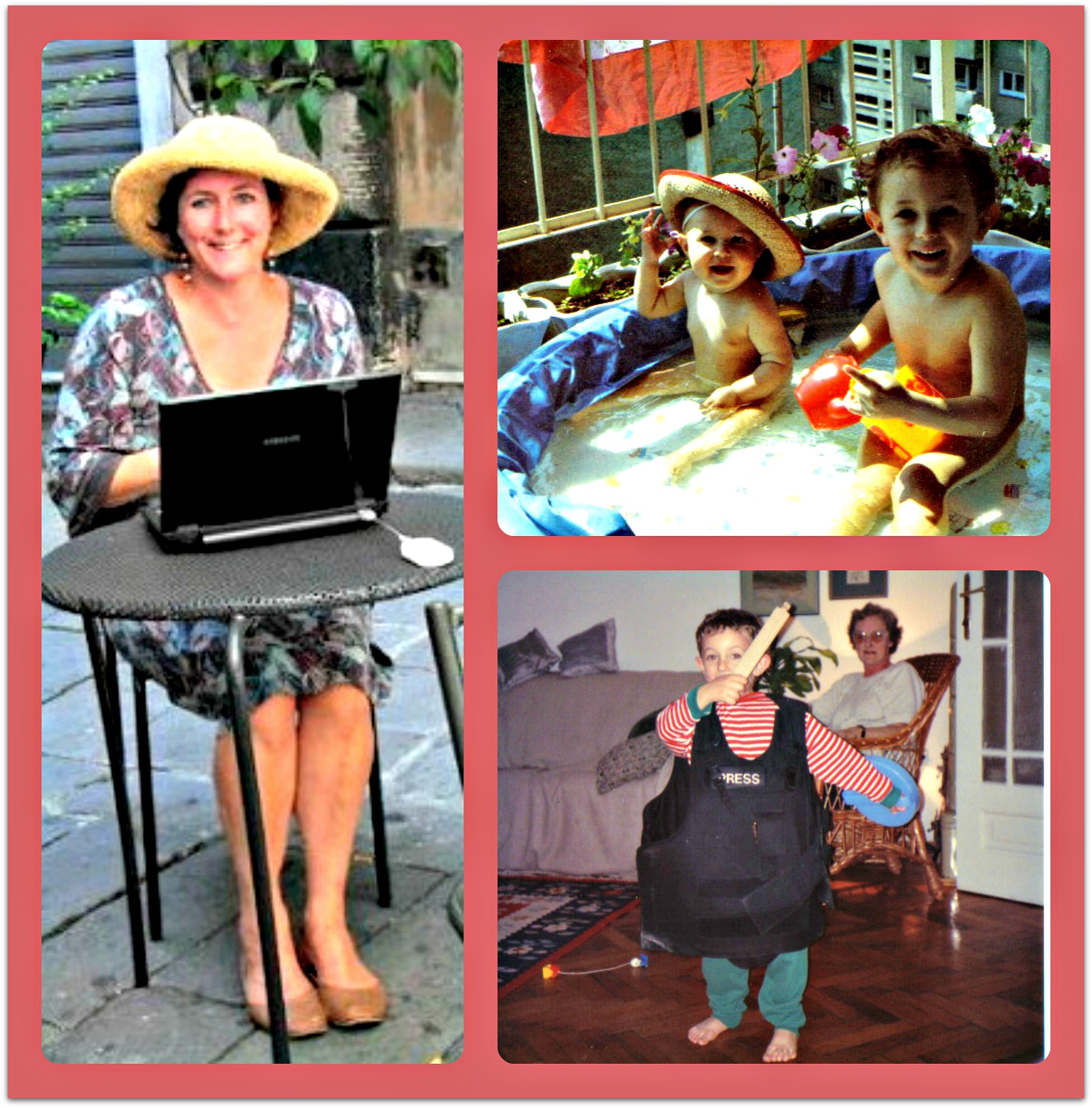
Images (clockwise from left): Rosie Whitehouse at “home” in London; Ben and his baby sister, Esti, living it up on the balcony in Bucharest (July 1991); Ben trying on his dad’s new bulletproof jacket, with Rosie’s mother in background (Belgrade, May 1992).

And the nominees for best expat/travel film are…seeking your vote! Welcome to the 2013 Displaced Oscars

Don’t miss our 4 polls below! Results to be announced in March 2nd Displaced Dispatch! Enjoy!

When I first repatriated to the United States, I relished the chance to watch the Oscars again. For some reason — I’m not sure why, particularly as I was never a big movie buff — I regretted missing out on the pinnacle of Hollywood glamour during my years of living overseas, first in England and then in Japan.

It did not take long, however, before the novelty wore off. I grew bored with the dresses — they all seemed so same-y. And a tux is a tux is a tux.

I also grew bored with the selection of films. Typically, Oscar-nominated films take place within a single country’s borders — and when people cross these borders, it is in the service of maintaining them (IT’S WAR!!!). Apart from when Sofia Coppola was singled out for her Lost in Translation screenplay, the plots do not exactly speak to me and my prior situation of displacement.

Case-in-point: 2013 Oscar nominees

A great example of what I’m talking about are the two historical — or, more accurately, historically informed — movies that are up for this year’s Oscars:

  1. Steven Spielberg’s Lincoln — the quintessential American biographical period piece that the Academy loves (it is predicted to win five Oscars, including best director for Spielberg).
  2. Les Misérables, the film of the musical theatre adaptation — which in turn is based on an historical novel by Victor Hugo (1862), depicting life in the aftermath of the French Revolution. (Les Mis is likely to win for its score, sound mixing, makeup and hair styling, and best supporting actress for Anne Hathaway.)

Actually, make that three historical films, as Quentin Tarantino’s Django Unchained (up for best picture, cinematography and best original screenplay) can come under that rubric as well. The first half is a mock Western and the second, a mock-revenge melodrama about slavery. At least, though, it has one foreign character: German bounty hunter King Schultz (Christoph Waltz). Posing as a dentist, he gallivants around Texas, speaking perfect English. And you’ll never guess what? He’s a villain. He does have manners — but does that mitigate or enhance his villainy? One can never tell with Mr Tarantino…

Likewise, Argo (likely to win best picture along with some other prizes) and Zero Dark Thirty (likely to win for best original screenplay) depict epic events in the — albeit much more recent — American past. And although each of these films portrays Americans abroad, it shows them acting in the service of president and country — with the aim of protecting other Americans. Nothing too displaced about that.

The comedy-drama Silver Linings Playbook (likely to win Best Actress for Jennifer Lawrence) is about two people who bond over shared neuroses — could anything be more American? Not to mention their common love of pro-football (no, Andy, not the soccer kind!).

Perhaps the best of this year’s films for anyone with a proclivity for venturing across borders is Life of Pi (likely to win for best original score and visual effects). The story is about an Indian family that is emigrating to Winnipeg, Canada. Yet, as even those of us who haven’t seen the film know by now, Pi Patel (Suraj Sharma) gets stranded on a lifeboat in the Pacific with a Bengal tiger. (That’s after the steamliner carrying his family’s zoo is pulled underwater during a freak storm.)

Over the course of months, the two unlikely castaways must depend on each other to survive — a scenario that provides an occasion for reflecting on cross-spiritualism, not cross-culturalism. (Pi, who was born a Hindu, loves Jesus and practices Islam.)

It also provides an occasion for displaced Taiwanese filmmaker Ang Lee to try his hand at 3D storytelling.

Why are we trying so hard to fit in when we were born to stand out?

WELCOME TO THE 2013 DISPLACED OSCARS. If we don’t fit into the Hollywood version, we may as well host our own event. We invite you to vote on your favorite films in the four categories we have created below. Preliminary results were announced in the Displaced Dispatch that came out on Saturday, February 23rd. Final results will appear in the Dispatch that comes out on Saturday, March 2nd. Be sure to sign up if you haven’t already!

1) Best Film Exploring Themes of Interest to Expats & International Travelers

This category honors the films that put cross-cultural themes right at the center. And the nominees are:

ShanghaiCalling_pm1) Shanghai Calling (2012, dir. by Daniel Hsia)
SUMMARY: Manhattanite Sam (Daniel Henney), an arrogant young lawyer, is transferred to his firm’s Shanghai office. He bungles his first assignment and finds his career in jeopardy. With the help of his beautiful relocation specialist, among others, he just might be able to save his job and learn to appreciate the wonders that Shanghai has to offer.
WHAT CRITICS ARE SAYING: How often do we get to see Shanghai on the big screen? That said, the plot is somewhat shallow and fails to make the most of Sam’s background as a Chinese American.


TheBestExoticMarigoldHotel_pm2) The Best Exotic Marigold Hotel (2012, dir. by John Madden)
SUMMARY: A group of British retirees — played by British acting greats like Judi Dench, Maggie Smith and Bill Nighy — have outsourced their retirement, attracted by the less expensive and seemingly exotic India. They are enticed by advertisements about the newly restored Marigold Hotel and given false dreams of a life with leisure.
WHAT CRITICS ARE SAYING: At the 2012 Mumbai Film Festival, the film was honored for showcasing Indian filming locations — a view not necessarily shared by viewers outside the subcontinent. Some of us feel that India was slighted by being treated as the shimmering background to a story about retirement-age self-renewal.

TheImposter_pm3) The Imposter (2012, dir. by Bart Layton)
SUMMARY: Thirteen-year-old Nicholas Barclay disappeared from his home in San Antonio, Texas, in 1994. Three and a half years later, he is allegedly found alive, thousands of miles away in a village in southern Spain with a story of kidnapping and torture. His family is overjoyed to bring him home. But all is not quite as it seems. The boy bears many of the same distinguishing marks he always had, but why does he now have a strange accent? Why does he look so different? This British documentary concerns the 1997 case of French serial imposter Frédéric Bourdin.
WHAT CRITICS ARE SAYING: By common consensus, The Imposter is one of the year’s most provocative pictures. Certainly, Displaced Nation writer Anthony Windram found it that way. In one of our most popular posts of last year, he mused that Bourdin’s story is not entirely unfamiliar to expats, all of whom have chameleon-like qualities.

CAST YOUR VOTE HERE!

2) Best Foreign Displaced Film

This category honors films about displacement that take place in non-English speaking countries and therefore require English speakers to read subtitles while learning about other cultures. And the nominees are:

Tabu_pm1) Tabu (2012, dir. by Portugal’s Miquel Gomes)
SUMMARY: The action in this experimental fiction ranges from contemporary Lisbon to an African colony in the distant past, in what was Portuguese Mozambique. First we are introduced to a cantankerous elderly Portuguese lady with a gambling addition. Then we flashback to her youth as a beautiful young woman living a kind of White Mischief existence at the foot of Mount Tabu, where she falls in love with a handsome adventurer…(Notably, the film’s title references the 1931 German silent film of that name, which took place in the South Seas.)
WHAT CRITICS ARE SAYING: The film shows what happens to expats who live too long — there are no remnants of “paradise” left. But some — e.g., A.O. Scott of the New York Times — have faulted the director for glossing over the issues of colonialism in the film in favor of simple aestheticism.

ClandestineChildhood_pm2) Clandestine Childhood (2011, dir. by Benjamín Ávila)
SUMMARY: A cinematic memoir drawn from Ávila’s own experiences, the film paints an unsettling portrait of families affected by military dictatorships. The year is 1979, five years after Perón’s death, and the family of 12-year-old Juan, who have been living in exile in Cuba, returns secretly to Argentina. Juan’s parents are members of an underground organization and for sake of their cover, he must assume the name of “Ernesto” and pretend to be a newcomer from northern Argentina.
WHAT CRITICS ARE SAYING: Juan’s parents aren’t fleeing the law because of their past misdeeds but are trying violently to overthrow a current dictatorship. The film therefore raises the question: do urban guerrillas make good parents? After all, they are asking their son, a Third Culture Kid, to act the part of a native in the homeland he never knew, for the sake of their political ideals. But while this question is intriguing, the story is driven almost entirely by clichés. As one critic remarked:

[T]he writing needs to be sharper to avoid feeling like a generic coming-of-ager.

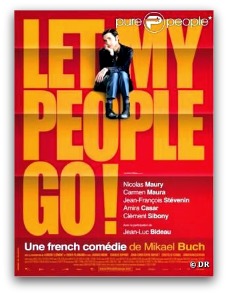
LetMyPeopleGo_pm3) Let My People Go (2011, dir. by Mikael Buch)
SUMMARY: French immigrant Reuben (Nicolas Maury) is living in fairytale Finland — where he got his MA in “Comparative Sauna Cultures” — with his gorgeous Nordic boyfriend Teemu (Jarkko Niemi). He works as the mailman in a neighborhood whose colorful houses look like Scandinavian Skittles. Then, after a misunderstanding involving a parcel full of Euros, Teemu casts his lover out of Eden, sending him back to where he came from: Paris.
WHAT CRITICS ARE SAYING: Ruben’s return to Paris — where he finds his family weathering various crises as well as emotional instability — demonstrates why he left in the first place. (Aren’t most expats escaping something?) However, the scenes with his wacky, feuding family members soon become tedious. As one critic puts it:

The movie’s labored attempt at creating comedy mostly means lots of scenes with Ruben cringing as relatives shout.

CAST YOUR VOTE HERE!

3) Most Displaced Director

This category honors the director who has shown the most chutzpah in raiding the literature of other cultures to make a commercially successful movie (note: they do not cast the natives!). This year’s nominees are:

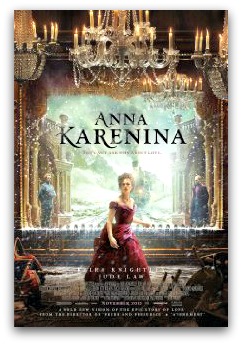
AnnaKarenina_pm1) Joe Wright for doing a British version of Anna Karenina (2012), casting his muse (Keira Knightly) in the titular role
WHAT CRITICS ARE SAYING: Some enjoyed Wright’s bold new interpretation of this classic Russian novel, while others felt that he did Tolstoy a terrible injustice — for instance, New Yorker critic Richard Brody had this to say:

Wright, with flat and flavorless images of an utterly impersonal banality, takes Tolstoy’s plot and translates it into a cinematic language that’s the equivalent of, say, Danielle Steel, simultaneously simplistic and overdone.

LesMiserables_pm2) Tom Hooper for casting a bunch of Aussies, Brits and Americans in Les Misérables
WHAT CRITICS ARE SAYING: Since Hooper previously won the Best Director Oscar for the terribly English drama The King’s Speech (historical drama, yay!), many found it odd that he would choose to take on this sprawling French story, and beloved musical, to create what he calls “an oil tanker of a picture.” But for what it’s worth, Hooper had no qualms about directing a film having to do with French history instead of his own. He is persuaded that Victor Hugo’s story speaks to issues of concern today:

Hugo’s story of populist uprising in 1832 Paris resounds in an era of the Arab Spring, the Occupy protests and general frustration over economic inequality.

DangerousLiaisons_pm3) Korean director Hur Jin-ho for making an Asian version of Dangerous Liaisons (2012) — which was originally an 18th-century novel by Pierre Choderlos de Laclosset — and setting it in 1930s Shanghai
WHAT CRITICS ARE SAYING: Many have complimented Hur Jin-ho’s decorous adaptation, saying it was clever of him to swap the insular, decadent world of de Laclos’ book, which takes place pre-French Revolution, with the similarly gilded cage of Chinese aristocrats just prior to the Japanese invasion. But the film isn’t particularly sophisticated on a political or historical level. As one critic writes: “It’s all just window-dressing: pretty, but substance-free.”

CAST YOUR VOTE HERE!

4) Most Displaced Actor/Actress

This category honors the actor who has performed this year’s greatest feat of playing a role that requires them to take on a whole new nationality. We’re talking Versatility Plus! And the nominees are:

Daniel_Day-Lewis_pm1) Daniel Day-Lewis, the Anglo-Irish actor who portrayed Abe Lincoln in Lincoln
WHAT CRITICS ARE SAYING: Apparently, there was no American actor good enough to play one of the most exceptional presidents the nation has ever known as critics have had nothing but praise for Day Lewis’s performance. Here is a sampling:

His Lincoln is tall and tousled and bent over with the weight of melancholy responsibility in the fourth year of the Civil War.

[Day-Lewis] manages to inject so much quiet humour into what could have been a very reverential portrait.

[The actor] inhabits the ageing figure of the 16th President of the United States with exquisite poise, intellect and grace.

AnneHathaway_pm2) Anne Hathaway for playing saintly prostitute Fantine in Les Misérables
WHAT CRITICS ARE SAYING: Many find it impressive that Hathaway, cast as the tragic Fantine, sings the show-stopping “I Dreamed a Dream” in one take. (Tom Hooper’s contribution to the genre was having the actors sing rather than lip synch.) And some say that her willingness to have her locks shorn off on screen shows her commitment to her craft. That said, her performance is not to everyone’s taste. “Rarely have the movies seen such an embarrassingly naked plea for applause,” writes Australian film critic Jake Wilson — the implication being the Victor Hugo’s Fantine would have had more dignity.

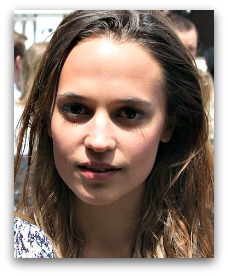
Alicia_Vikander_pm3) Swedish actress Alicia Vikander for taking on two non-Swedish roles: Caroline Matilda of Great Britain (she served as Queen of Denmark and Norway in the 18th century) in A Royal Affair (2012); and Kitty in Anna Karenina (2012)
WHAT CRITICS ARE SAYING: Vikander’s “moxie” is apparently what landed her both of these parts. According to A Royal Affair director Nikolaj Arcel, every actress in Denmark wanted the role of Mathilde, but only Vikander had the requisite “regal quality.” She even went to Copenhagen two months before shooting began to learn to speak Danish fluently. Likewise, Anna Karenina director Joe Wright saw in her the qualities to play Kitty, a flirtatious young woman who believes the dashing Count Vronsky is her Prince Charming, only to find love with a kind-hearted farmer named Levin. It is not uncommon for movie-goers to remark that she outshines Kiera Knightly’s Anna.

CAST YOUR VOTE HERE!

* * *

Are we missing out on any films/categories? Please leave your suggestions in the comments below.

Longing for even more expat and international travel films? Please go to our Displaced Oscars Pinterest board.

As for me, I’m going in search of a displaced after-party! Let’s hope I don’t have to travel too far to find one! 🙂

STAY TUNED for tomorrow’s post, another installment in the life of our fictional expat heroine, Libby. (What, not keeping up with Libby? Read the first three episodes of her expat adventures.)

If you enjoyed this post, we invite you to register for The Displaced Dispatch, a round up of weekly posts from The Displaced Nation, with seasonal recipes, book giveaways and other extras. Register for The Displaced Dispatch by clicking here!

Related posts:

Images: Oscar statuette courtesy Dave_B_ on Flickr; actor pix from Wikimedia.

Expats, here’s how to enrich your lives in 2013: Choose a mentor or a muse!

Expats and other world adventurers, let me guess. You have you spent the past week making resolutions about

  • staying positive about your new life in Country X;
  • indulging in less of the local stodge;
  • giving up the smoking habit that no one is nagging you about now that you’re so far away from home;
  • and/or taking advantage of travel opportunities within the region that may never come your way again

— while also knowing full well that at some point in the not-distant future, you’ll end up stuffing your face with marshmallows (metaphorically speaking).

Never mind, it happens to the best of us, as psychologist Walter Mischel — he of the marshmallow experimentrecently told Abby Hunstman of the Huffington Post. Apparently, it has something to do with the way impulses work in the brain. The key is to trick the brain by coming up with strategies to avoid the marshmallow or treat it as something else.

Today I’d like to propose something I found to be one of the most effective strategies for turning away from the marshmallows you’ve discovered in your new home abroad or, for more veteran expats, turning these marshmallows into something new and exotic. My advice is to find a mentor or a muse in your adopted land — someone who can teach you something new, or who inspires you by their example to try new things…

Trust me, if you choose the right mentor +/or muse, benefits like the following will soon accrue:

1) More exotic looks — and a book deal.

Back when I lived abroad, first in England and then in Japan, I was always studying other women for style and beauty tips. I made a muse of everyone from Princess Diana (I could hardly help it as her image was being constantly thrust in front of me) to the stewardesses I encountered on All Nippon Airways. Have you ever seen the film Fear and Trembling, based on the autobiographical novel of that name, by the oft-displaced Amélie Nothomb? On ANA flights, I behaved a little like the film’s young Belgian protagonist, Amélie, who secretly adulates her supervisor Miss Fubuki. I simply couldn’t believe the world contained such attractive women…

The pay-off came upon my repatriation to the US. With such a wide array of fashion and beauty influences, I’d begun to resemble Countess Olenska in The Age of Innocence — with my Laura Ashley dresses, hair ornaments, strings of (real) pearls, and habit of bowing to everyone.

Is it any wonder my (Japanese) husband-to-be nicknamed me the Duchess? (Better than being the sheltered May Welland, surely?)

My one regret is that I didn’t parlay these style tips into a best-seller — unlike Jennifer Scott, one of the authors who was featured on TDN this past year. While studying in Paris, Scott was in a mentoring relationship with Madame Chic and Madame Bohemienne. (The former was the matriarch in her host family; the latter, in her boyfriend’s host family.) Mme C & Mme B took her under their wing and taught her everything she knows about personal style, preparation of food, home decor, entertaining, make-up, you name it…and is now imparting to others in her Simon & Schuster-published book.

2) More memorable dinner parties.

As mentioned in a previous post, I adopted actress and Indian cookbook writer Madhur Jaffrey as my muse shortly after settling down in the UK. I was (still am) madly in love with her, her cookbooks, even her writing style.

And her recipes do me proud to this day.

Right before Christmas I threw a dinner party for 10 featuring beef cooked in yogurt and black pepper, black cod in a coriander marinade, and several of her vegetable dishes.

It was divine — if I say so myself! To be fair, the guests liked it, too…

3) Improved language skills.

Now the ideal mentor for an adult seeking to pick up a new foreign language is a boyfriend or girlfriend in the local culture — preferably one with gobs of patience. The Japanese have the perfect expression for it: iki jibiki, or walking dictionary.

Just one caveat: If you’re as language challenged as Tony James Slater, it could prove a headache and, ultimately, a heartache.

Still, nothing ventured, nothing gained…

(Married people, you might want to give up on this goal. I’m serious…)

4) A fondness for angels who dance on pinheads.

After seeing the film Lost in Translation, I became an advocate for expats giving themselves intellectual challenges. Really, there’s no excuse for ennui of the sort displayed by Scarlett Johansson character, in a well-traveled life.

It was while living in the UK as a grad student that I discovered the extraordinary scholar-writer Marina Warner, who remains an inspiration to this day. Warner, who grew up in Brussels and Cambridge and was educated at convent school and Oxford University, is best known for her books on feminism and myth.

After reading her book Monuments and Maidens, I could never look at a statue in the same way again!

In her person, too, she is something of a goddess. Though I’d encountered women of formidable intellect before, I found her more appealing than most, I think because she wears her learning lightly and has an ethereal presence, like one of the original Muses.

Booker prizewinner Julian Barnes has written of her “incandescent intelligence and Apulian beauty” (she is half Italian, half English). The one time I met her — I asked her to sign my copy of her Booker Prize-shortlisted novel, The Lost Father — I could see what he meant.

I was gobsmacked.

Major girl crush!

(Don’t have a girl crush? Get one! It will enrich your life immeasurably.)

5) Greater powers of mindfulness — and a book deal.

Third Culture Kid Maria Konnikova was born in Moscow but grew up and was educated in the US. She has started the new year by putting out a book with Viking entitled Mastermind: How to Think Like Sherlock Holmes. Who would guess that a young Russian-born woman would use Conan Doyle’s fictional creations, Holmes and Watson, as her muses? But, as she explains in a recent article in Slate, she has learned everything she knows about the art of mindfulness from that master British sleuth:

Mindfulness allows Holmes to observe those details that most of us don’t even realize we don’t see.

So moved is she by Holmes’s example — and so frustrated by her own, much more limited observational powers — Konnikova does the boldest of all thought experiments: she gives up the Internet…

So does her physiological and emotional well-being improve as a result? Does her mind stop wandering away from the present? Does she become happier? I won’t give it away lest you would like to make Konnikova this year’s muse and invest in her book. Hint: If you do, we may not see you here for a while. 😦

6) The confidence to travel on your own.

We expats tend to be a little less intrepid than the average global wanderer: we’re a little too attached to our creature comforts and may need a kick to become more adventuresome. But even avid travelers sometimes lose their courage, as Amy Baker recently reported in a post for Vagabondish. She recounts the first time she met a Swedish solo traveler in Morocco, who had lived on her own in Zimbabwe for 10 years. This Swede is now her friend — and muse:

She was level-headed, organized and fiercely independent — all characteristics that I aim to embody as a female traveler.

With this “fearless Swedish warrior woman” in mind, Amy started venturing out on her lonesome — and hasn’t looked back.

* * *

Readers, the above is not intended as an exhaustive list as I’m hoping you can contribute your own experiences with mentors and muses abroad: What do you do to avoid the “marshmallows” of the (too?) well-traveled life? Who have you met that has inspired you to new creative, intellectual, or travel heights? Please let us know in the comments. In the meantime, I wish you a happy, healthy — and most of all, intellectually stimulating — new year!

STAY TUNED for next week’s posts.

If you enjoyed this post, we invite you to register for The Displaced Dispatch, a round up of weekly posts from The Displaced Nation, with seasonal recipes, book giveaways and other extras. Register for The Displaced Dispatch by clicking here!

Related posts:


Grim Reapers around the globe: 7 creatures that say “Time’s up!”

Before we had civil lawsuits, and lawyers wanting to find someone to take the fall for all Life’s misfortunes, we had mythological creatures to take the blame and who couldn’t be subpoenaed.

This Halloween, in the interests of banishing our modern litigious society, perhaps we should consider reintroducing some of these ancient ghouls to replace the ambulance-chasing variety.

1) Banshee (Ireland)

A fairy woman — omens of death are nearly always women — who weeps and wails when someone is about to die. Usually appears as an old hag, but can be a beautiful woman of any age. Or a hooded crow or hare. Or a stoat. Or a weasel.

Evidently a creature that hedges its bets.

The ever-practical Scots have a version called the bean sìth, who makes herself useful by washing the blood-stained clothes or armour of the nearly dead.

2) Aswang (Philippines)

A generic term for witch/vampire/shapeshifter, etc, responsible for various human misfortunes, including but not limited to:

  • Grave robberies
  • Miscarriages
  • Kidnappings
  • Any mildly strange incidents reported in the local tabloids that would benefit from supernatural sensationalism.

Certain areas of the Philippines have a high prevalence of the neurological disorder dystonia; one theory is that this disease, with its characteristic involuntary muscle contractions, gave rise to the belief in the aswang.

3) Rusalka (Slavic mythology)

Another mythological, wily, conniving female; the unquiet spirit of, say, a jilted woman or unmarried mother who has committed suicide, or a drowned, unbaptized baby.

The rusalka lives at the bottom of a river, emerging in the middle of the night to dance and sing and thus lure unsuspecting males back to the river for a watery death.

Nothing to do with the unsuspecting males having one pint too many at the local hostelry and falling in the river on the way home, then.

4) Sihuanaba (Central America)

Seen from the back, she’s an attractive woman with long hair; from the front, it’s a horse. (No jokes about Sex and the City, please.) Another female creature that lures innocent men astray, this time to lose them in deep canyons.

All very Freudian.

5) Bäckahästen, or Brook Horse (Scandinavia)

A white horse, appearing near rivers. Not a good idea to catch a ride on this creature, because once you’re aboard, you can’t get off. The horse will jump in the river and you’ll drown.

But hey. At least this one isn’t a woman.

6) Hellhound (Europe)

Fierce black dog of super strength and speed, who often has the job of guarding entrances to the underworld, such as graveyards. Why this is mystical, I don’t know. There’s nothing mystical about a dog hanging around a place full of buried bones.

Its howl is an omen, or even cause, of death. Stare into its glowing red/yellow eyes three times or more and you will die, for sure. The mythology books don’t specify what you will die of, though.

Rabies, is my guess.

7) La Sayona (Venezuela)

A beautiful woman from the jungle, appearing to guys who are indulging in extra-curricular love activities, or even just idly contemplating having a bit on the side.

Depending on which story you believe, she either takes the errant man into the jungle to eat or mangle him, or she covers his nether regions with an eruption of boils that he has to explain away later to his wife.

“Look, I’d run out of toilet paper, OK? The only thing handy was poison ivy.”

At this point, the errant husband is probably wishing he’d met the kind of sayona that eats and mangles.

.

STAY TUNED for Wednesday’s Random Nomad, another crime writer!

If you enjoyed this post, we invite you to register for The Displaced Dispatch, a round up of weekly posts from The Displaced Nation, with seasonal recipes, book giveaways and other extras. Register for The Displaced Dispatch by clicking here!

Related posts:

Image: The Banshee (Wiki Commons)