The Displaced Nation

A home for international creatives

Tag Archives: Hong Kong

DIARY OF AN EXPAT WRITER: Three expat writers walk into a bar . . . and are giving away their books (limited time only!)

American expat in Hong Kong Shannon Young quit her day job last year to become a full-time writer. Here’s the latest entry in her expat writer’s diary.
Diary of an Expat Writer
Dear Displaced Diary,

As you can see from the facetious title of this month’s diary entry, this will not be the usual report on the ups and downs of becoming a full-time expat writer in Hong Kong. I’m shifting gears a bit to tell you about a couple of other writers who share my experience of leaving behind a home in the United States and making a new home in Asia.

In a previous diary entry (it was actually written by my alter ego, Jordan Rivet), I told you about some of my writing friends here in Hong Kong. All of us share a love of writing in English. And I think we all thrive on living in this vibrant international city, which feeds our creativity in all kinds of ways.

At the same time, I’ve been able to connect online (and sometimes in person) with quite a few other expat writers in the region—through my personal blog, social media, and even email. And let’s not forget you, Displaced Diary! You, too, have given me some new connections.

Today I’d like to tell you about two of these friends: Leza Lowitz and Tracy Slater.

Yes, Leza, Tracy and I are the three expat writers who’ve walked into the bar… We are all Americans but come from different backgrounds, and we share the experience of being outsiders in the places where we live. That must be why we enjoy drinking together—and helping each other.

The reason we’ve walked in the bar?

This summer all of us are celebrating the release of our memoirs talking about how we found love, life, and a home abroad.

Here are the stories in question:

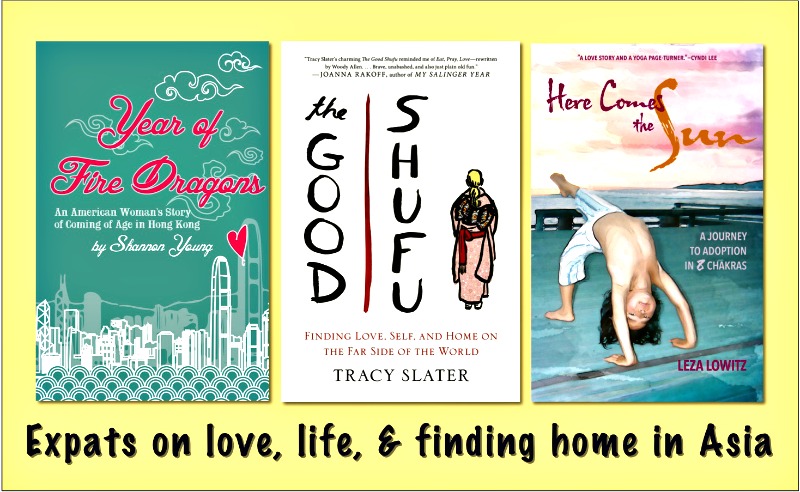
TheGoodShufu_coverThe Good Shufu: Finding Love, Self, & Home on the Far Side of the World, by Tracy Slater (Putnam/Penguin, June 30, 2015)
The Good Shufu is a true story of multicultural love, marriage, and mixups. When Tracy Slater, a highly independent American academic, falls head-over-heels in love with the least likely person in the world—a traditional Japanese salaryman who barely speaks English—she must choose between the existence she’d meticulously planned in the US and life as an illiterate housewife in Osaka. Rather than an ordinary travel memoir, this is a book about building a whole life in a language you don’t speak and a land you can barely navigate, and yet somehow finding a truer sense of home and meaning than ever before. A Summer ’15 Barnes & Noble Discover Great New Writers Selection (as reported in the Displaced Dispatch), The Good Shufu is a celebration of the life least expected: messy, overwhelming, and deeply enriching in its complications.

Fire-Dragons_cover Year of Fire Dragons: An American Woman’s Story of Coming of Age in Hong Kong, by Shannon Young (Blacksmith Books, June 15, 2015)
In 2010, bookish 22-year-old Shannon follows her Eurasian boyfriend to Hong Kong, eager to forge a new love story in his hometown. She thinks their long-distance romance is over, but a month later his company sends him to London. Shannon embarks on a wide-eyed newcomer’s journey through Hong Kong—alone. She teaches in a local school as the only foreigner, explores Asia with other young expats, and discovers a family history of her own in Hong Kong. The city enchants her, forcing her to question her plans. Soon, she must make a choice between her new life and the love that first brought her to Asia. Susan Blumberg-Kason, author of Good Chinese Wife, has called Year of Fire Dragons “a riveting coming-of-age story” and “a testament to the distance people will travel for love.”

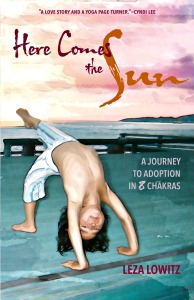
HereCometheSun_coverHere Comes the Sun: A Journey to Adoption in 8 Chakras , by Leza Lowitz (Stonebridge Press, June 2015)
At 30, Californian Leza Lowitz is single and traveling the world, which suits her just fine. Coming of age in Berkeley during the feminist revolution of the 1970s, she learned that marriage and family could wait. Or could they? When Leza moves to Japan and falls in love with a Japanese man, her heart opens in ways she never thought possible. But she’s still an outsider, and home is far away. Rather than struggle to fit in, she opens a yoga studio and makes a home for others. Then, at 44, Leza and her Japanese husband seek to adopt—in a country where bloodlines are paramount and family ties are almost feudal in their cultural importance. She travels to India to work on herself and back to California to deal with her past. Something is still not complete until she learns that when you give a little love to a child, you get the whole world in return. The author’s deep connection to yoga shows her that infertile does not mean inconceivable. By adapting and adopting, she transcends her struggles and embraces the joys of motherhood. “Here Comes the Sun proves that love is not bound by blood. I highly recommend it to anyone interested in that which connects us, holds us together, and makes us family.”—MC Yogi

The bartender looks up and says . . .is this a joke?

Three expat writers— Leza, Tracy and Shannon—walk into the bar…and the bartender wonders what they, and their books, could possible have in common.

True, I tell him, Tracy, Leza and I are rather different. Tracy and Leza are both from liberal Jewish families and are members of Generation X; I’m a Millennial from a large homeschooling family. Leza is from Berkeley; Tracy is from Boston; I’m from Phoenix. Leza writes about yoga; Tracy writes about therapy; I write about fencing. Tracy and Leza live in Japan; I live in Hong Kong. Tracy and Leza each pursued motherhood late in life; I’m a few years away from being ready for children.

Yet the similarities in our life choices and challenges are where our real connections lie. All three of us chose love over the comfort of our home countries. We struggle every day with living far from our families and making our time with them really count, and occasionally experience the joy of connecting unexpectedly with people in our new homes, from in-laws to coworkers to students. We have tried, and keep trying, to make sense of our lives in light of our rather unusual surroundings.

In short we three are displaced; nevertheless we are determined to make the most of the situation and to appreciate that it has fed our creative lives as writers. We have turned ourselves into what the Displaced Nation calls international creatives.

I have read Leza and Tracy’s books and can say without hesitation that if you like Year of Fire Dragons, you will also enjoy The Good Shufu and Here Comes the Sun. Each is a memoir that features a romantic relationship with a man from Asia that has in some way drawn us into our expatriate lives. Each book explores the process of building a new home and life in a new country with someone we love. More importantly, each story is about falling in love with a new place and accepting our new selves.

And now for the fun part, Dear Diary!

3ExpatMemoirsBanner
Click here to enter in the Rafflecopter giveaway.

Three expat writers— Leza, Tracy and I—walk into the bar and start toasting each other, but we’re also carrying a bag with three three books, two paperbacks and one hardback, to give away.

Displaced Nationers who are fans of this column, we’d like you to participate!! Simply click on the above link, and enter your email address in the box. That will count for one entry. You can also tweet and/or comment on this post for additional entries (up to 4). The deadline for entries is July 7; we’ll email the winner on July 8.

By doing this giveaway, we hope to build an even bigger community of people with similar experiences, who can help each other in some of the tough moments of expat and writing life. Finding a community when moving to a new country is vital, and finding a community of like-minded readers and writers is just as important.

It’s also great, as a writer, to feel on occasion that you don’t have to go it alone when it comes to promoting your works, even if you’re an expat living on the other side of the world.

On that note, let’s all raise our glasses.

Cheers!

Gān bēi!

Kanpai!

Shannon Young
AKA Jordan Rivet
www.shannonyoungwriter.com
JordanRivet.com

* * *

Readers, it’s fascinating to discover that three such different American women have all connected overseas and have memoirs coming out at the same time. I think we should offer a toast to them!!

STAY TUNED for next week’s fab posts!

If you enjoyed this post, we invite you to register for The Displaced Dispatch, a round up of weekly posts from The Displaced Nation and much, much more. Register for The Displaced Dispatch by clicking here!

Related posts:

DIARY OF AN EXPAT WRITER: After the hard slog of producing second book in series, the rush that comes with boost to sales

Diary of an Expat WriterAmerican expat in Hong Kong Shannon Young quit her day job last year to become a full-time writer. Here is her latest entry in her expat writer’s diary.

Dear Displaced Diary,

Last month, I told you all about my writing process—all the work that goes into a book before it ever shows up in an editor’s inbox. It’s a slow process requiring perseverance and many hours sitting in a chair every day. And then there’s copyediting, formatting, and a final proofread, after which I finally hit publish.

That’s when things get interesting.

This month, I would even say amazing.

But we’ll get to that. First, let me refresh your memory on where we are. Diary, as you will recall from previous entries, I’ve been writing my post-apocalyptic series, the Seabound Chronicles, under my Jordan Rivet pen name for two-and-a-half years now. The first book, Seabound, came out in November. Sales have been modest, with complimentary reviews but rankings that won’t set the world on fire.

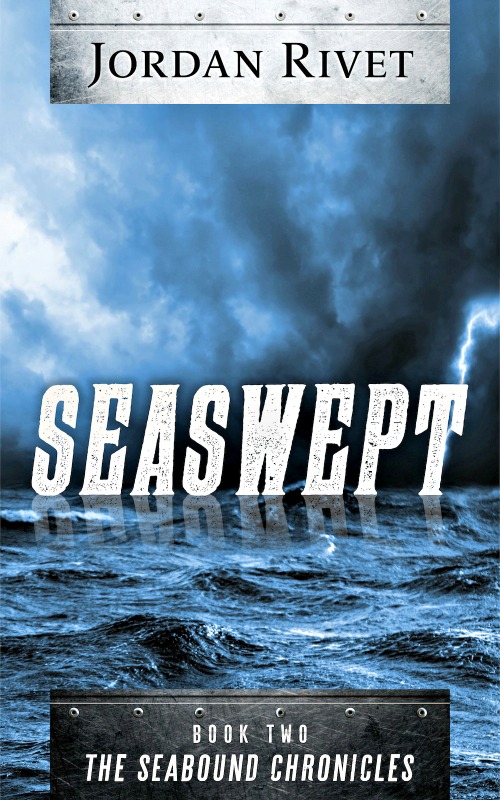
My intention has always been to put out Book Two before doing bigger promotions and (hopefully) seeing bigger results. With the publication of the sequel, Seaswept, at the beginning of this month, I finally had the chance to set that plan in motion.

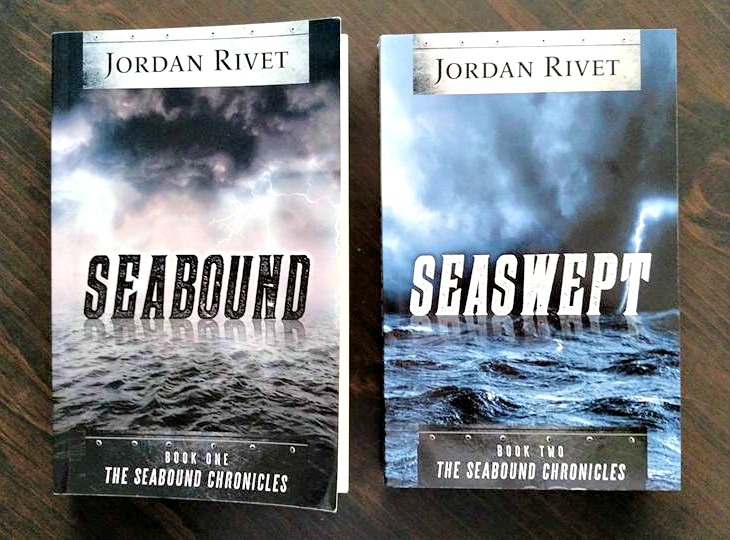
Seaswept and Seabound Paperbacks

Jordan Rivet’s Seabound Chronicles is now a real series, with the publication of Book Two, Seaswept, earlier this month.

She’s got high hopes…

Here’s how it went down. When I released the second installment in the series, it generated sales and a bit of attention for the first book. A few days after Seaswept came out, I put Seabound on sale for $0.99 and advertised it with a couple of book recommendation sites.

My hopes were high, especially as soon I’ll need to decide whether or not to get a new day job. Displaced Diary, as you’ve been following my expat writer journey for a while, you’ll know my big goal is to make a full-time living as a writer, and I’ve been working hard under my own name and a pen name to achieve this. But my savings are running low, and Hong Kong isn’t exactly famous for its low cost of living.

The sale on Seabound lasted five days. For the first two, I booked smaller promo sites—some free, some charging a few dollars for the ads. The sales were similarly modest: 10 on day one and 14 on day two.

To be honest, I was disheartened. Even though these results were consistent with the reach of the smaller promotional sites, I’d hoped for more. If I couldn’t get the ball rolling with multiple books out, maybe it was time to polish up my CV. Failure would mean going back to teaching or hoping for a job opening in Hong Kong’s tiny publishing industry.

For those two days I felt . . . underwhelmed. I dug into the draft of another book to keep from obsessing over my sales graphs, but found myself clicking over at least once an hour anyway. More often than not, nothing had changed.

On the third day…

It was time to bring in the big guns. I’d booked ads on such sites as eReader News Today, Free Kindle Books and Tips, and BookSends. These sites were supposed to get my discounted title in front of tens of thousands of additional readers. And some of those readers decided to buy.

On Day Three, I woke early to over 60 sales. It was already my best sales day ever, and I hadn’t even had my coffee. I spent most of the day glued to my computer, watching the spike tick upward. The numbers climbed and climbed, finishing with a three-digit total.

Throughout the weekend of the promotion, I refreshed my sales dashboard regularly. For three straight mornings I woke to sales multiple times better than my previous best day.

I had scheduled lunches with friends and spent Sunday afternoon on a boat—but snuck off to the restroom to check my ranking every chance I got. Seabound reached the top 1,800 overall in the Kindle store and ranked in the highly competitive Dystopian and Post-Apocalyptic categories for the first time. It even took the #1 spot in Sea Adventures for a little while.

My angst of the previous days was starting to look a bit silly.

Checking sales of self-pubbed books on Amazon

Checking Amazon sales becomes an obsession for self-published authors.

High apple pie in the sky…sales!

It turns out it’s a real rush to see my books climbing the rankings. I experienced a bit of this when my Kindle Single, Pay Off launched with prime placement on Amazon, but sales of the Seabound Chronicles have now surpassed those of the Single. My goal of making a living off my Jordan Rivet pen name feels more and more possible.

The promo has ended but the sales haven’t. This has been the best month of my career. In fact, it has been so good that May sales of Seabound and Seaswept, are double the Seabound sales for the previous six months, and we still have a week to go. I’ll be able to press on to the summer before making any decisions about new jobs or new careers.

Diary, I’m reporting this good news in case you were feeling a little anxious after last month’s post. That one was all about the work: sitting in a chair, outlining, writing and rewriting and rewriting and rewriting. The work is 99 percent of this job. But every once in a while you get to watch the results rolling in—and it’s kind of awesome.

A writer’s “One Percent”

Next month I’m going to see a different set of results, when my traditionally published travel memoir launches worldwide and in e-book (it has been out in Hong Kong since November). This is the very first book I ever sat down to write, so I’m proud that it’ll finally be out in the world. But I’m also proud that I’ve taken what I’ve learned and kept writing. I’m sitting down to start the fourth draft of the Seabound prequel right now.

And so it goes.

Thanks for enjoying this 1 percent event with me as well cheering me on through the 99 percent days, Displaced Diary.

Here’s to many more Mays for us both!

Until next time,

Shannon Young
AKA Jordan Rivet
www.shannonyoungwriter.com
JordanRivet.com

* * *

Readers, it’s encouraging to hear that light can be at the end of the expat writer’s tunnel. Any words of congratulations for Shannon, thoughts on this recent sales experience, or questions for her on marketing techniques, please leave in the comments. And be sure to do so soon, before she gets swept up in the excitement of her memoir coming out next month!

STAY TUNED for next week’s fab posts!

If you enjoyed this post, we invite you to register for The Displaced Dispatch, a round up of weekly posts from The Displaced Nation and much, much more. Register for The Displaced Dispatch by clicking here!

Related posts:

DIARY OF AN EXPAT WRITER: My writing process, now being applied to a shiny new book series

DiaryExpatWriterAn American expat newlywed in Hong Kong, Shannon Young took the momentous decision last summer to quit her day job and launch out as a full-time writer. She’d given herself until Chinese New Year to see if she could make a living but has now postponed the decision—something we’re actually rather glad about as her expat writer’s diary can continue!

—ML Awanohara

Dear Displaced Diary,

It’s a hazy, jet-lagged time for me right now. Ever since I returned to Hong Kong from London last week, I’ve been awake through the night and struggling out of bed at noon or later. One advantage of setting my own schedule is that I can afford these late starts and still get plenty of work done during the afternoons and evenings (and in the hours past 3:00 a.m., it turns out). On the other hand, I don’t have a boss and a required start time to get me back on track—so could be on London time for a while yet.

But the work goes on no matter what time it is or where in the world I happen to find myself. I’m currently waiting for Seaswept, the second book in the Seabound Chronicles, to come back from my editor.
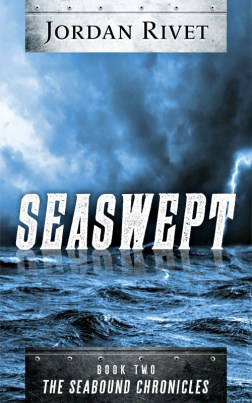
The cover for Jordan Rivet's latest book

The cover for Jordan Rivet’s latest book

As soon as it arrives I’ll jump into the final stages of proofreading and publication.

In the meantime, I’m working on my next book series.

That next book will be the first installment, which I’m aiming to release upon completion of the Seabound Chronicles.

It has been a while since I began an all-new project with all-new characters set in an all-new world. I’m trying to apply the same writing process I’ve been using for the Seabound books to the new idea.

So far it’s going well!

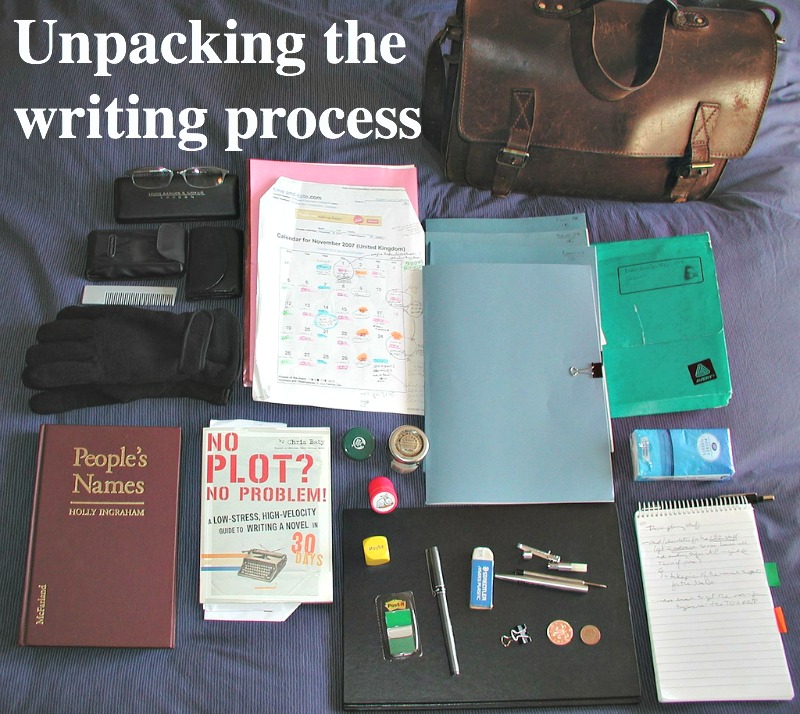
Since you, Dear Diary, are the vessel for my intimate thoughts about the writing process, today I want to share with you how I approach a new book. I developed this method while working on the four books in the Seabound Chronicles. As you know, all four are now completed—but in vastly different stages. Book 1 is published. Book 2 is finished and with the editor. Book 3 (the prequel) is in the third draft. Book 4 is a rough draft.

You may think I have too many projects on the go at once, but this in fact is the key to my writing process, as you’ll soon see.

"Emptying the NaNo bag at last," by  Anne-Lise Heinrichs via Flickr ().

“Emptying the NaNo bag at last,” by Anne-Lise Heinrichs via Flickr (CC BY 2.0).

STEP ONE: The Idea

You can’t force yourself to come up with an amazing concept for a new book, but you can help the inspiration process along. Before producing Seabound, I knew I wanted to write a fast-paced story with high stakes and cool world-building, probably science fiction or fantasy, but I needed an idea. Then one day I hopped on a boat and spotted the cruise ship that inspired my post-apocalyptic Seabound series. It took more than just seeing a cruise ship, of course, for the concept to take hold. It took leaving my mind open and not forcing things, so that my subconscious could oblige.

With the Seabound Chronicles under way, the hope entered my mind of coming up with another fantasy project to work on; but this time I wanted an original take or some kind of cool mash-up. I held that thought for months and cycled through various ideas (a secret agent in a fantasy world? a fantasy apocalypse?); but none of them felt quite right. Then, suddenly, the idea was there when I arrived at my usual Starbucks. I could see it plain as day. I was actually supposed to be working on Seaswept edits, but instead I opened up a new Word doc and hammered out notes for several hours.

STEP TWO: Characters and Worlds

Once I had the concept of the world, the characters followed quickly on its heels. For some of these characters, I used a method similar to the one described above, where I had a general sense of what the person should be like, and then when I saw someone who matched the idea in my head, fleshed out my portrayal. (I spotted “Esther” walking down the Mid-Levels escalator with a camera around her neck that became a pair of storm goggles; “David Hawthorne” walked into one of my regular coffee shops dressed like an investment banker and wearing memorable black-framed glasses.)

"Mid-levels escalator blur," by Maureen Didd via Flickr.

“Mid-levels escalator blur,” by Maureen Didde via Flickr (CC BY 2.0).

For other characters, I started with people I’ve encountered as a jumping off point to develop key aspects of their personalities, appearances, and roles they would play in the story. I spent several writing sessions scribbling notes on the characters and describing the basic structure of the world they inhabit. I held off on writing the first chapter for as long as possible because I wanted to give the ideas time to mature. I also worked out the world’s magic system, which I’m treating differently than in a typical fantasy novel.

STEP THREE: The Rough Outline

As my ideas for the story became more concrete, I wrote a rough outline of the plot. This is a back and forth process. As I developed more ideas for the story I’d go back and flesh out the existing characters or create new ones. My outlines typically follow a three-act structure and they absolutely must include the main conflict and climactic scene. Outlines are essential for my process, but I don’t do a strict chapter-by-chapter plan at this stage.

For the new fantasy project, I’ve now written a very rough outline for a five-book series. Even so, I’ll have to get further into the first book before I know whether the story will support all five books in the plan.

STEP FOUR: The Rough Draft

I am now 16,000 words into the rough draft for my newest book. I’m a huge believer in writing fast, messy first drafts.

I wrote three of the four rough drafts for the books in the Seabound Chronicles during three consecutive National Novel Writing Months. I didn’t worry about whether they would be any good at this stage. I told myself I can always take things out and rewrite as needed. This method really helped me keep up the story’s pace.

Seaswept is the only one of the Seabound books for which I wrote the first draft over a longer period (about six months, during which I took a break to rewrite my memoir, Year of Fire Dragons). The edits for this volume were actually more difficult than for the other titles.

Writing the first draft is a bit like watching a movie play out—it’s best if you can do it without too many gaps.

STEP FIVE: Rest and Repeat

As soon as I finish a draft I put it away, something Stephen King recommends in his book On Writing. The work needs to sit for a bit and I need to get some distance from it before I can rewrite effectively. But I don’t stop writing. At this stage, I’ll start the next book.

Go back to Step One and repeat!

STEP SIX: Read and Rewrite

With another rough draft under my belt, I’ll go back to the first one, print it out, and read the whole thing. I’ll make tons of notes as I go, but I won’t rewrite until I’ve completed a full read-through.

At this stage, I also create a more detailed outline. My rough drafts follow a basic plot structure, but sometimes they take unexpected twists, and I like to leave room for those in the new outline. Other times, I find gaps or pacing issues that I’m not aware of until I step back and look at the book as a whole.

When I do my first read-through, I plug the events of the rough draft into a storyboard. I use this one, which covers a classic plot progression over twenty chapters. I write the basic plot points in where they occur, paying attention to gaps in the storyboard. Then I may plan additional chapters for my next draft.

Stories are actually quite similar in structure, so the books often fit quite neatly into the storyboard with only a bit of tweaking. I don’t like doing this at the outset because I want to leave room for those unexpected twists—let the ideas come out once I’m really living in the draft.

After I’ve worked out what changes need to be made based on my read-through and storyboard, I rewrite the book from the beginning. I do all this in the same document and keep a lot of the first draft, but I also add thousands of words, fleshing out scenes and filling in chapters. At this stage, I’m still not worried about how neat the actual writing is.

STEP SEVEN: Rest and Repeat

I put that new draft away and then go back to do the second draft of the second book. Or the first draft of the third book. Or the third draft of the last book in the last series. You get the picture. It gets complicated from here, and this is why I have so many books on the go at once. Each time a draft needs to rest, I’ll have something else to work on.

And so on!

My process continues like this, and the books get better with each draft. I also become a better writer with each draft. By the time I wrote the final draft of Seaswept last month, I was far better writer than when I wrote the first draft in early 2013.

After I’ve done at least two, usually three, drafts, I ask other people to read the book and give me feedback. Then there will be more notes, more drafts, more hours spent sitting in the chair and refining the story and the prose.

Some problems are just easier to solve on the second (or third or fourth) rewrites.

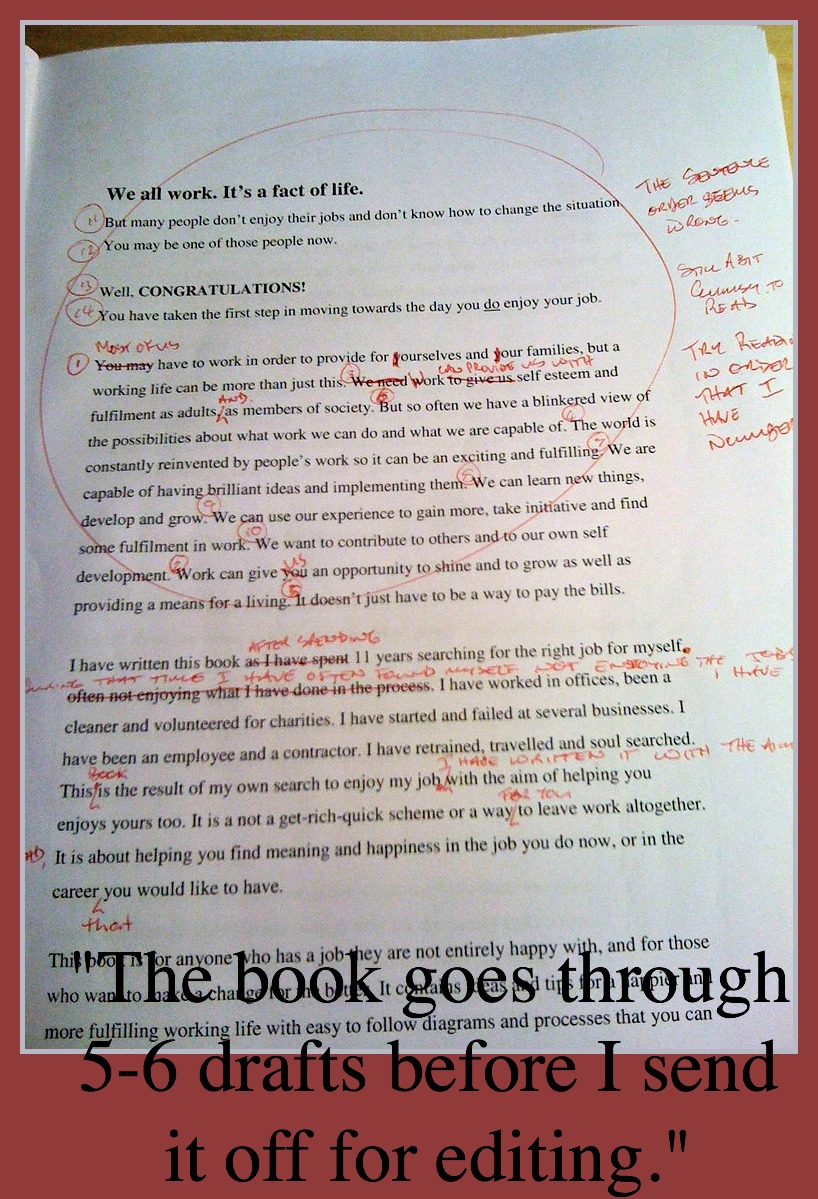
I estimate that each book goes through five or six drafts before I send it off for editing. I’m hoping that as I become a better writer it’ll take fewer drafts to get the book where I want it, but the important thing is that I try not to get bogged down by worrying whether any one draft is good enough. Taking this approach is liberating, and it allows me to get a lot of work done.

"Edited Version of First Book," by Joanna Penn via Flickr (CC BY 2.0).

“Edited Version of First Book,” by Joanna Penn via Flickr (CC BY 2.0).

So, Dear Diary, this is my writing process as it exists so far. I’m having fun applying it to my shiny new project.

Seaswept will be out soon and then I’ll be doing another draft of Burnt Sea, the prequel, but in the meantime it’s exciting to have another series on the go!

Thanks for following along on my writing journey. I hope this glimpse at my process might be helpful for another budding writer or two. It is certainly helping me get my brain back in order so I can get back to work

I remain yours,

Shannon Young/Jordan Rivet
www.shannonyoungwriter.com
JordanRivet.com

* * *

Readers, Shannon has graciously shared her writing process with us this month. By breaking it all down, she almost makes it seem easy! (You can tell that she’s been a teacher.) So, what do you think—any responses to her methods, questions, words of encouragement for her next endeavor? Do let her know in the comments!

STAY TUNED for next week’s fab posts!

If you enjoyed this post, we invite you to register for The Displaced Dispatch, a round up of weekly posts from The Displaced Nation and much, much more. Register for The Displaced Dispatch by clicking here!

Related posts:

DIARY OF AN EXPAT WRITER: Shifting base to literary London, where it all began

DiaryExpatWriterAn American expat newlywed in Hong Kong, Shannon Young took the momentous decision last summer to quit her day job and launch out as a full-time writer. She’d given herself until Chinese New Year to see if she could make a living but has now postponed the decision until the end of next month—which we’re actually rather glad about as it means she’s still with us!

—ML Awanohara

Dear Displaced Diary,

It’s a blustery morning here in London and time for another update on my life as an expat writer. You may remember that I do not, in fact, live in London. I’m taking a break from my writing life in Hong Kong for a visit that combines the Easter holidays with my husband’s business trip.

I am still making the most of not having a day job by staying in the UK for nearly three weeks.

Of course the work never stops for a working writer. I spent the first four days of the holiday finishing up the final revisions of Seaswept, the sequel to my post-apocalyptic adventure at sea called Seabounda job that can be done anywhere, really!

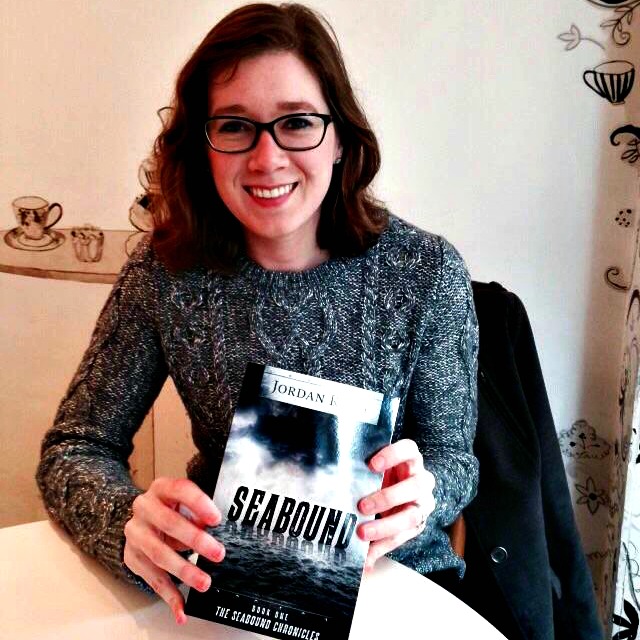
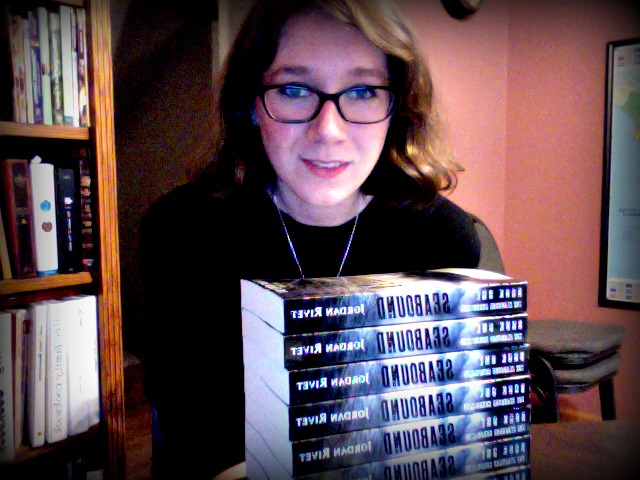
Jordan Rivet in London

Shannon Young aka Jordan Rivet showing off her first book on a tea break in London; photo credit: Shannon Young.

As I mentioned in my last post, the revisions on Seaswept were a bit of a slog, but I really got into the groove by the final pass. I have to admit it was kind of magical to wake up with the sun (or clouds) in this famous literary city, write for a few hours, go for a walk, and then do a bit more writing before the jet lag knocked me out. London has always been a source of inspiration for me, and the setting somehow seemed right for ending my work on this book.

In addition to the beautiful buildings, blue historical plaques, and bridges (have I ever told you, dear diary, how much I love bridges?), I’ve found another source of inspiration in London: a friend from Hong Kong.

Expat connections are everywhere

As Displaced Nation readers know, we expats have a tendency to move on often, either to a new country or back to where we came from. Expat life is a constant rotation of hellos and goodbyes. While it’s sad when friends leave, it’s pretty cool to acquire connections all over the world.

A friend from my writers’ group in Hong Kong returned to the UK nearly two years ago, but she has maintained her link with the group and her role as true cheerleader for my work. Recently, she decided to embark on a similar literary adventure by taking time off work to write!

I met up with her at the cafe and bookshop run by the London Review of Books and spent nearly four hours writing and talking about writing together. (I also ate hummus on toast that came with real worms on the side, but that’s another story.) It was a joy to have a friend in a city thousands of miles away from both my home country and my country of residence, all thanks to this expat life.

The day I sent the final draft of Seaswept to my editor, my Hong Kong friend took me on a literary tour of Highgate and Hampstead—and, of course, a trek across the rain-soaked trails of Hampstead Heath. In between breaks for tea and hot cross buns, she showed me the home of Samuel Coleridge (and the alley where he bought his laudanum), a garden straight out of a Jane Austen novel, and a pub visited by many notable figures throughout its 200-year history. As we walked, I was reminded again and again of just how old this city is and just how much has happened in its streets. It’s the setting for some of my favorite novels, novels that made me want to be a writer myself.

Photo souvenirs from Jordan Rivet's London walks. At bottom: Hampstead Heath with a view of Kenwood House, a former stately home.

The houses of Highgate and the expanses of Hampstead Heath, with former stately home Kenwood House in distance. Photo credit: Shannon Young.

As my writing journey continues across the globe in Hong Kong, it’s nice to remember its origins and to soak in a bit of history in the company of someone who is just as excited about it as I am.

Beginnings, revisited

During my time in London, I’m also revisiting the origins of my own expat life. As you may recall, Dear Diary, I met my husband in London during a semester abroad. We ended up in Hong Kong, but our early romance took place here. The memories have been flooding back over the past few days as we walk by all the places where we shared sweet moments: first meeting, first date, first kiss.

I wrote about our romance in the first book I ever started, Year of Fire Dragons. It’s mostly about Hong Kong, but I can’t tell my Hong Kong story without starting in London.

Hong Kong tends to change very quickly, with restaurants and shops going in and out of business all the time. Buildings are torn down and rebuilt completely in the space of months. But London seems largely the same. Back in this place with this man, it’s easy to remember why I decided to follow him across the world.

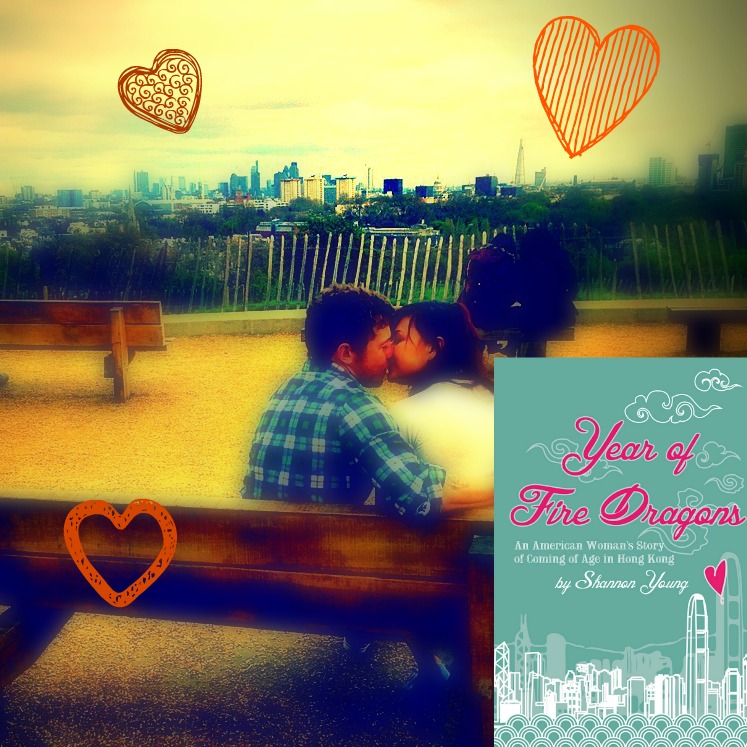
LondonKiss+Year of Fire Dragons

A firey romance in London led Shannon to the land of Fire Dragons and her first book, a memoir (photo credit: pixabay).

What’s on the horizon?

Well, the sun is breaking through the clouds over the city. I’d better head out to make the most the sunshine before the rain and wind return.

I have two weeks to go in London. During that time, my editor will be working on Seaswept, which should be ready to launch by April 30th. Meanwhile, I’m looking ahead to my next project: the prequel to the Seabound Chronicles. Then it will be time to finish Book 3.

But I’m already working on my next series. I’ve written a rough outline and the first 10,000 words. While I’m enjoying the flood of inspiration and nostalgia in London, perhaps I’ll tap out a few more chapters. If there’s one thing I’ve learned on this expat writing journey, it’s that places have power. I don’t want to miss out on anything London has to offer in the next few weeks.

Thanks for following along on my writing journey around the world.

Yours,

Shannon Young/Jordan Rivet
www.shannonyoungwriter.com

P.S. If you like dystopian fiction and writing Amazon reviews, shoot me an email and I’ll send you a book or two!

* * *

Readers, Shannon’s diary post this month has made me nostalgic for my own days of living in London. Sigh! It sounds as though she’s making the most of her time in the Big Smoke with walks on the Health and so on, but if you have any further recommendations for her remaining two weeks (any bridges you think she should see?), do let her know in the comments!

STAY TUNED for more fab posts!

If you enjoyed this post, we invite you to register for The Displaced Dispatch, a round up of weekly posts from The Displaced Nation and much, much more. Register for The Displaced Dispatch by clicking here!

Related posts:
DIARY OF AN EXPAT WRITER: Has it really been six months? How time flies when you’re writing full time

DiaryExpatWriterAn American expat newlywed in Hong Kong, Shannon Young took the momentous decision last summer to quit her day job and launch out as a full-time writer. She’d given herself until Chinese New Year to see if she could make a living. And now the Year of the Sheep is here—baa baa—is she a lost lamb or making the most of life apart from the herds? Let’s find out, shall we?

—ML Awanohara

Dear Displaced Diary,

It has been six months since my last confess—oh wait. It has been six months since I posted a video about how I quit my day job as an English teacher in Hong Kong to write full-time (and also cut 18 inches off my hair):

For those who haven’t been following: it was now or never. Before going all in as a writer, I had been writing seriously for about four years in my free time and had several books out, or in the process of launching. I had been working on drafts for a four-book post-apocalyptic series, and I wanted to devote myself full-time to getting those titles out into the world.

Financially, I was also in a better place. I paid off my student debt in December 2013 and had spent eight months saving up the money I’d previously put toward loans, which meant I could live without a day job for a while.

My goal was to see whether I could make it as a writer, both financially and in terms of lifestyle: could I stay productive without much external structure?

I gave myself until Chinese New Year to see how it was going.

And now for the moment of truth!

It isn’t really a moment, it turns out, but a process, during which:

  • I figured out ways to create structure for myself.
  • I learned more about my own productivity habits.
  • I improved my endurance (I’m having more and more five-hour writing/working sessions).
  • Most importantly, I developed a better sense of how long each project takes, which allows me to set accurate goals.

There have been some hard moments along the way. The first book in my series. Seabound, has sold fairly well, but it hasn’t taken off like a shot.

My entire strategy has been to build a readership slowly with a series of four books, but I have to keep reminding myself of that while sales of the first volume are still modest.

My revisions on Book 2 have been kind of painful. The rough draft has actually been finished for a long time, but it has been hard to get going on the final revisions.

On the other hand, I’ve done two drafts of the prequel now and I think it’s the best book I’ve written so far.

Giving myself pep talks and jealously guarding my time

I also have to give myself pep talks more often and train myself not to get discouraged.

Back in the days when I was a teacher, I would get lots of positive feedback from my students. Even though it had nothing at all to do with writing, I had 300 kids pretty much worshiping the ground I walked on every day. It was much easier to maintain a positive attitude.

Now it’s just me and Starbucks and the Amazon reviewers. I love the coffee shop time, and I’m never happier than when I’m hammering away at my laptop, but thoughts of strangers reading my books and giving them harsh critiques still creep in.

Ironically, even though I have more time available to me, I’ve been reducing the time I spend on other commitments. That’s something I didn’t expect.

When I had a day job, my schedule was broken up anyway and it wasn’t a big deal to answer emails here and there. Now that kind of thing can really break my focus, so I’m trying to say “no” more often to protect my work time.

Six-month report card

The past six months have been a roller coaster, with higher highs and lower lows than I’d anticipated.

I’m bringing in money every month, though I haven’t yet reached my income goals.

On the whole, I’m happier than I’ve ever been. I’ve published two books and one audio book, and I have four projects in progress.

It’s time to make a decision.

Dun da da da!

And now for the moment you’ve all been waiting for. Here’s what I’m planning to do:

To sum up, I’m giving myself until April. My savings are holding out and I plan to launch Seaswept around my next deadline. (If you want to see the cover image, sign up for my mailing list; I’m doing a secret reveal soon.)

Yesterday I completed another non-fiction piece for my primary pen name. Hopefully when I see how the books do I’ll be in a position to make my next big decision.

As always, I’ll keep you posted.

Thanks for following along on this journey! I really appreciate your words of encouragement.

Yours,

Shannon Young/Jordan Rivet
www.shannonyoungwriter.com

P.S. If you like dystopian fiction and writing Amazon reviews, shoot me an email and I’ll send you a book or two!

* * *

Readers, as they say in the Basque country, the lost sheep can be recovered, whereas the lost time cannot. It seems to me that Shannon has approached the Year of the Sheep having made the most of her time as a full-time writer! Do you have any thoughts or words of encouragement about her extension? Let her know in the comments!

STAY TUNED for next week’s fab posts!

If you enjoyed this post, we invite you to register for The Displaced Dispatch, a round up of weekly posts from The Displaced Nation, with snippets of worldly wisdom, exclusive book giveaways and our nominees for the monthly Alice Awards. Register for The Displaced Dispatch by clicking here!

Related posts:

DIARY OF AN EXPAT WRITER: There’s no place like home, especially when your compatriots are reading your books!

DiaryExpatWriterShannon Young, an expat writer based in Hong Kong, decided last year to quit her day job to become a full-time writer. Since October she has been writing a diary for us about this new phase of her life. We last heard from Shannon when was heading home to Arizona for the holidays. And now let’s find out what happened during her stay in her home country.

—ML Awanohara

Dear Displaced Diary,

A belated Happy New Year! This is my fifth update on my new life as an expat writer in Hong Kong. As you know, I spent the holidays in Phoenix, Arizona, for a bunch of family events—a birth, a wedding, the adoption of a baby tortoise(!).

During my last week, I also managed to fit in some writerly activities—two school visits, a seminar, a book club meeting—where I spent a lot of time talking to others about what I’ve learned on this writing journey so far.

But before I tell you about that…

Seabound_coverartArizona is where I first got to hold the Seabound paperback in my hands! It has been available online since mid-November, but shipping to Hong Kong takes forever. (I’m sure you expats can appreciate the joys of international shipping. 4–6 weeks—from Amazon?!)

Anyway, the copies I ordered didn’t arrive until after I left for the United States. So the night I arrived in Arizona, I picked up the thumbed copy of Seabound that one of my family members had been reading and flipped through the pages for the first time.

I’ve gotta say: the book looks awesome! Even though I mostly read e-books these days, I can still appreciate a hefty paperback. (400 pages!)

And now back to my Arizona chronicle, beginning with my visit to a high school where I used to teach…

On the recommendation of a mutual acquaintance, I met up with two high school student writers to drink coffee and talk about our work. We covered general subjects including the likelihood of making a living as an author as well as specifics such as how to choose the right POV for a story and whether majoring in creative writing is a good idea.

I enjoyed our conversation, and I guess the students liked what I had to say because they invited me to their high school writing club meeting the following day!

As it happens, I had taught at their high school my first year after graduation from college. I got to catch up with my old teaching friends before the writing club meeting began. It was nice to come full circle like that.

As for the students, they asked lots of sharp questions. They especially wanted to know about plot—both how it’s structured and how to come up with something interesting. We also talked about how important it is to write the kind of books you want to read.

Continuing with a book club discussion of…my book!

Perhaps the highlight of my writerly activities in Arizona was being invited to attend a book club meeting where the group was discussing one of my books! That’s right, the entire group had read Seabound. We spent several hours talking about the story and about my writing life. They made me feel like a real celebrity—and I even got to sign a bunch of books! (I wrote a bit more about this experience on my Jordan Rivet blog.)
SeaboundArizona_Book_Club

…a self-publishing seminar at my old local library

Next up was a seminar on self-publishing at the local library I always used to walk to when growing up. It was a bit surreal returning there to learn about something I strongly associate with my adult life in Hong Kong.

It’s funny how we respond to old familiar places after we’ve gone out into the world, isn’t it?

The teacher, Barbara Hinske, is a successful self-publisher who has sold over 50,000 books in her Rosemont series. Some of the information she covered is stuff I have read before in my research, but it was exciting to meet a self-pub success story in the flesh. She also had some cool ideas to share about how she does her marketing. I’ll be applying some of her advice to my own promo strategies.

After the session I showed her the Seabound paperback because we were talking about formatting, and I’d used a template she was considering. In addition to the layout, she was quite impressed with my cover and blurb, which I found encouraging!

…and one last school visit!

Before leaving Arizona, I made one more school visit. My sister is a teacher, and she invited me to speak to her two 5th-grade classes about being a writer. Boy, were her students excited! They asked great questions, but my favorite was when one little girl asked if I know Lemony Snickett.

The kids had so much energy. They participated enthusiastically when I asked them for their ideas about what Hong Kong is like (one wanted to know if we have Panda Express in Hong Kong). They stayed totally focused when I explained how a book is made. They even asked my advice on dealing with writers block (short answer: you just stay in your chair and write through it).

The one point that I tried to make over and over again was that a book is never perfect on the first draft or even the second or third or fourth. I told them that even if a book isn’t very good the first time through, I just keep rewriting. I tried to encourage them not to get frustrated if they don’t think their essays and stories are good the first time. Real writers rewrite lots of times too!

Which brings me back to Hong Kong…

I’m now back in Hong Kong, deep into the revision process for the second draft of the prequel to Seabound. Meanwhile, I’ve been getting feedback on the third draft of the sequel and should be ready to dive into the final revision by next month if all goes well.

Shannon Young and Seabounds

You may remember that I decided to give myself until Chinese New Year to decide whether or not to keep writing full time. Well, that starts on February 19th…and February is just around the corner.

Come back next month, folks, when all will be revealed!!

Thank you for following my writing journey.

Shannon
www.shannonyoungwriter.com

* * *

Readers who are also writers, have you ever presented on your works in your home country, and if so, how did you find the experience?

STAY TUNED for next week’s fab posts!

If you enjoyed this post, we invite you to register for The Displaced Dispatch, a round up of weekly posts from The Displaced Nation, with snippets of worldly wisdom, exclusive book giveaways and our nominees for the monthly Alice Awards. Register for The Displaced Dispatch by clicking here!

Related posts:
LOCATION, LOCUTION: Author and part-time expat Susan Jane Gilman, who plunders her life for memoir and fiction

JJ Marsh Susan Jane GilmanWe welcome JJ Marsh back to the Displaced Nation for her first “location, locution” column of the new year, in which she talks to current authors about their methods for portraying place in their works.

My guest this month is the precocious and prolific Susan Jane Gilman. She is the author of three acclaimed nonfiction works:

  1. A travel memoir, Undress Me in the Temple of Heaven
  2. A memoir of her upbringing in New York City Hypocrite in a Pouffy White Dress, and
  3. An advice book, Kiss My Tiara.

And now she has a novel, a work of historical fiction called The Ice Cream Queen of Orchard Street, which came out in February of last year.

Gilman has also contributed to numerous anthologies, worked as journalist, and written for many well-known publications including the New York Times, Los Angeles Times, Real Simple, and Us magazine. And she claims to have opened the Susan Jane Gilman Institute for Advanced Gelato Studies here in Geneva.

Oh, did I mention she is an expat?

Though made, born, and raised in New York City, and educated at Brown University and the University of Michigan (MFA in Creative Writing), Gilman currently divides her time between Switzerland and the United States.

Perhaps she developed her wanderlust through exposure to her high school English teacher (she went to Stuyvesant), the Pulitzer Prize-winning Irish-American memoirist Frank McCourt. In any event, she holds him accountable for her decision to become a writer.

Now let’s find out how Gilman perceives the connection between location and locution.

* * *

Which comes first, story or location?
Before I sit down to write, I need a sense of narrative, of a who-what-where, but so often, story and location are intertwined. Undress Me in the Temple of Heaven, for example, is the true story of a disastrous backpacking trip I made through the People’s Republic of China in 1986. To separate the story from the place is simply impossible; so much of what made the trip horrific was the poverty and totalitarianism of China itself; I can’t imagine that my travel companion and I would have disintegrated in the same way at, say, the Canyon Ranch Spa or a luxury resort in the Maldives. Similarly, my novel, The Ice Cream Queen of Orchard Street, is a rags-to-riches-to-indictment story that begins with a child immigrating to the USA in 1913. New York City was simply the logical place to have it begin. It is not only my hometown but, of course, the great immigrant gateway to America.

location locution gilman

Lower East Side New York City @1910, credited to the Brown Brothers [Public domain], via Wikimedia Commons; cover art.

What’s your technique for evoking the atmosphere of a place?
First, I usually describe vivid, visual details so that readers can see a place in their mind’s eye. Then I go for are the smells. Smell is the most evocative of all the senses. It brings a place to life more potently than anything else. Add sounds, and there you are. I’m afraid I’m sounding glib in the way that I’m saying this—”use all the senses”—it sounds easy, and it sounds like a recipe. But it’s not. I really struggle and strive to conjure a place, be it a roadside restaurant, a German city, an abandoned tenement, using incisive, significant details. I’m always on “cliche alert.”

Which particular features create a sense of location? Landscape, culture, food?
Background noises, cooking smells, shadow and light, voices, architecture…there are no given particulars. I try to find what is most unique and evocative and go with it.

How well do you need to know the place before using it as a setting?
Saul Bellow wrote a whole novel set in Africa, apparently without having set foot once on the continent. I find this presumptuous. That said, I have written about places that I’ve only been in briefly, or glimpsed, or created out as a composites of other places I’ve been. But I like to have a feel for a place; I need to be able imagine it throughly, to exist in it. Often, if a character needs to be in a place that I’ve never been to, I research it as much as possible. The Internet is a godsend; I find old photographs or use Google Earth. I try to travel there in whatever way I can.

Can you give a brief example of your work which illustrates place?
I don’t have any of my books in front of me because I’m on the road, but read the very first paragraph of The Ice Cream Queen of Orchard Street and you’ll immediately find yourself on the Lower East Side of Manhattan in 1913. Read the first page of Undress Me in the Temple of Heaven and you’re on board a plane plummeting into Hong Kong; the next six pages take you right into downtown Kowloon at night, with all its lurid traffic, neon, and squalor. I’ve been told by readers that these sections have utterly transported them…

Gilman Kowloon Undress_medium

“Typical street scene in downtown Kowloon,” by VasenkaPhotography via Flickr (CC BY 2.0); cover art.

Which writers do you admire for the way they use location?
I love the way Richard Ford conjures up the American West, John Cheever the Connecticut suburbs, Junot Díaz the Dominican community in New York City and Dominica. That said, I usually don’t admire writers so much as specific books, eg:

And, in a different way, I have always admired Anne Tyler for the way she conjures up so well these cosy, fraught, detailed middle class American households. She is stunning in her ability to make you see rooms, houses, offices—small, intimate tableaux—in such a rich way.

Locations need not be exotic or epic, just alive and relevant.

* * *

Readers, if this interview has piqued your curiosity about Susan Jane Gilman and her writings, I encourage you to visit her author site. You can also follow her on Twitter.

JJ Marsh grew up in Wales, Africa and the Middle East, where her curiosity for culture took root and triggered an urge to write. After living in Hong Kong, Nigeria, Dubai, Portugal and France, JJ finally settled in Switzerland, where she is currently halfway through her European crime series, set in compelling locations all over the continent and featuring detective inspector Beatrice Stubbs.

STAY TUNED for next week’s fab posts!

If you enjoyed this post, we invite you to register for The Displaced Dispatch, a round up of weekly posts from The Displaced Nation, with seasonal recipes, book giveaways and other extras. Register for The Displaced Dispatch by clicking here!

Related posts:
And the December 2014 Alices go to … these 4 international creatives

 © Iamezan | Dreamstime.com Used under license

© Iamezan | Dreamstime.com
Used under license

If you are a subscriber to our weekly newsletter, the Displaced Dispatch, you’re already in the know. But if you’re not, listen up. (Hey, why aren’t you? Off with your head!)

Every week, when that esteemed publication comes out, we present contenders for a monthly “Alice Award,” most of whom are writers or other kinds of international creatives who appear to have a special handle on the curious and unreal aspects of being a global resident or voyager.

Not only that, but this person tries to use this state of befuddlement as a spur to greater creative heights.

Today’s post hono(u)rs our four Alice recipients for December 2014. Listed in order of most to least recent, they are (drumroll…):

1) Lani Cox, half-Thai expat in Chiangmai, Thailand

For her comment on a post: “Dealing with Loneliness Abroad (and at home),” by Mary, former expat in Japan and blogger at The Ruby Ronin. (NOTE: Lani’s own blog is Life, the Universe and Lani.)
Posted on: 9 December 2014

2) Amanda Mouttaki, American expat in Morocco and blogger

For her post: The NOT-SO-NICE Side of Expat Life to her blog, MarocMama
Posted on: 25 November 2014

Alice Connection:
Pool of Tears Quote

LANI: “When I first moved to Thailand, … I was deeply confused over what I was expected to do and where I was supposed to go and basically get the help that I needed for my visa. So, I spent the day crying into my pillow! It didn’t help that we lived by this horrible electrical monster thingy and had squatters outside our window.”

AMANDA: “I cried. And cried. And cried. Over nothing specifically…”

Citation: Lani and Amanda, is it any wonder we have associated your writings with Alice in Wonderland’s “pool of tears” moment? Let us begin by saying how much we admire you both for overcoming the feeling of shame that comes with realizing, and admitting to others, that even “great girls” cry.

Lani, it seems that you blamed yourself, thinking that Thailand shouldn’t have confused you so much since you were raised in the United States by a Thai mother (she’d married an American soldier she’d met during the Vietnam War). But that of course is silly, especially as she didn’t teach you any Thai language (knowing some Thai would have helped with getting your visa sorted). On the other hand, maybe it’s good she didn’t teach you the language, you might have been further disappointed. (We speak from experience, having been Brits in the US or Yanks in the UK.)

Amanda, you say you didn’t want your readers to think you were complaining, especially when so many of them find your story romantic—and it is romantic, meeting and falling in love in fairy-tale fashion on the streets of Marrakesh. In any event, becoming catatonic over nothing specific sounds perfectly normal to us. We’re just glad MarocBaba was there to give you a hug—more than Alice could count on!

3) Kevin Lynch, American expat in Hong Kong

For his interview: “My Airbnb year in Hong Kong: ‘Big fat American’ discovers hidden sides to the city”, by Vanessa Yung, in the South China Morning Post
Posted on: 5 December 2014
Big Alice Quote

“Part of it is I’m a big fat American, which makes things even smaller. It’s just such a different scale of living. Just when I’m used to it—I don’t even take pictures of most of the small things any more—and then something will surprise me.”

Citation: Hats off to you, Kevin—even the Mad Hatter is removing his—for deciding to forgo Western digs to stay in Airbnb accommodation during your first 14 months in Hong Kong, a city that is challenged for space and known for its cramped accommodations. Recall that Alice, who isn’t fat, found the White Rabbit’s house a bit of an uncomfortable fit. You are right, of course: serviced apartments for expats don’t afford many opportunities to meet the natives even if they do have taller ceilings, longer beds, fatter sofas, and proper cutlery. Kudos to you for learning how to tilt your head when standing up in the low-ceilinged rooms and to sleep “in the fetal position” when beds are too short. You had the kind of Hong Kong experience not usually available to the generous of flesh.

4) Amanda van Mulligen, British expat in Holland, blogger, and one of the contributors to the new book Dutched Up! Rocking the Clogs Expat Style

For her post: “My Love Hate Relationship with Sinterklaas” to her personal blog, Expat Life with a Double Buggy
Posted on: 4 December 2014
Mock Tortoise SongAlice Connection:

“Now, I’m all for a good sing song. I’ll croon away with the best of them. But Sinterklaas songs get tedious sang at the top of a child’s voice for weeks on end.”

Citation: Amanda, surely a song repeatedly begging Sinterklaas to leave something nice in one’s shoe or boot is preferable to a song about green soup, such as the Mock Turtle sings to Alice? That’s after she had to withstand the Lobster Quadrille, with repeated refrains of:

Will you come and join the dance?
So, will you, won’t you, won’t you,
Will you, won’t you join the dance?
Will you, won’t you, will you,
Won’t you, won’t you join the dance?

But we do appreciate your attempt to convey the strange, Wonderland-like experience of raising children in a country other than the one in which you grew up. And we grant that you’re not as lucky as Alice, who was saved from having to hear the soup song in its entirety by the announcement of the trial, whereas for you the Sinterklaas din carries on until May! Sinterklaas bloody kapoentje indeed.

*  *  *

So, readers, do you have a favorite from the above, or have you read any recent posts you think deserve an Alice Award? We’d love to hear your suggestions! And don’t miss out on the shortlist of Alice contenders we provide in each week’s Dispatch, which are sources of creative thought if nothing else! Get on our subscription list now!

STAY TUNED for more fab posts.

Writers and other international creatives: If you want to know in advance the contenders for our monthly Alice Award winners, sign up to receive The Displaced Dispatch, a round up of weekly posts from The Displaced Nation, with news of book giveaways, future posts, and of course, our weekly Alice Award!. Register for The Displaced Dispatch by clicking here!

Related posts:
DIARY OF AN EXPAT WRITER: Will she, or won’t she, on Christmas Day? (We’re taking bets!)

diaryexpatwriter_christmas2014This past summer Shannon Young took the decision to quit her day job to become a full-time writer in Hong Kong, where she lives with her half-Chinese husband. As regular readers of the Displaced Nation will know, she has kindly agreed to chronicle this experience on our behalf.* Her December diary entry appears on Christmas Day for a reason—read on!

—ML Awanohara

Dear Displaced Diary,

This is my fourth update on my new life as an expat writer in Hong Kong. As I type this, I’m sitting in the Hong Kong International Airport waiting for my flight home to Arizona for the holidays. My plane is a little late, giving me time to reflect on the past four months.

I’ve written a lot about the bigger milestones I’ve reached this fall. They include the release of two books, one traditionally published and one self-published, speaking at a literary festival, and signing an audiobook deal.

These moments have been amazing, but right now I really want to talk about the work-a-day process of being a writer. I’ve finally settled into a routine, and that’s the part of this whole adventure that I love the most. Here’s what a day in the life of this expat writer is like:

Morning

I get up when my husband leaves for work around 9:15 am. I go straight to my computer to check my email, sales ranking (this is a bad habit), and Facebook.

At some point, I grab some breakfast (usually yogurt) and make a cup of tea. Over breakfast, I catch up on my favorite publishing blogs, read the news, and take care of any miscellaneous internet and email tasks.

Next I either take a shower or go to the gym (where I listen to audiobooks on the treadmill). I’m ready to work by 11 am or 12:30 pm.

I walk to a coffee shop, usually the Starbucks near me that has a tall table where I don’t have to hunch over my laptop. I typically write for three or four hours at a stretch. I only do more if I’m really on a roll. I’ve found that any more than four hours of actual writing time becomes counterproductive.

Late afternoon

When I hit a good stopping place I head home to make a late lunch or take a detour somewhere to eat and read. Those stopping places are often when I’ve been working at a tough problem like a segment of dialogue that doesn’t sound right and I don’t feel like I’m making any progress. Rather than continuing to chew at it, it helps to leave it and think about the problem throughout the rest of the day. Often I’ve come up with a way to tackle the issue by the next writing session.

After lunch I take care of more miscellaneous tasks like writing blog posts, answering emails, and doing research. I find that even if I’ve exhausted my writing energy for my book-in-progress, I can still blog and work on other things. The change of pace and change of location help me to continue being productive past the four-hour mark.

Evening

I usually work straight through until my husband gets home. Sometimes I stop to read, but I think that counts as work these days. I read widely, staying caught up on my genres while seeking inspiration from other types of literature. I read writing craft and publishing business books too, but not too often. I find it’s generally more productive to practice than to read about how to do things.

I don’t write in the evenings, except on Tuesdays when a regular group of writers gathers at a local coffee shop for two or three hours to work side-by-side on our own projects. I make a point of only going to that particular coffee shop on Tuesdays, and the habit helps me to be productive even if I’ve already been writing for a few hours earlier in the day.

My daily rituals

I’ve been reading a book lately called Daily Rituals: How Artists Work. It’s a collection of short descriptions of the work habits of famous writers, artists, and composers by Mason Currey. I’m reading a few entries at a time, and it’s amazing how similar the habits of the artists are. Like me, they work for a solid chunk of time (often three to four hours) and then devote the remainder of the day to correspondence and other tasks. Over a lifetime, they produce an incredible amount of work like this.

One theme I’ve noticed is that very few of the writers profiled actually waste time waiting for “the muse.” They just sit down and do the work. They recognize that although inspiration is helpful, you can’t sit around waiting for it. At the end of the day, you still have to put in the hours.

Looking to tomorrow…

For now, I’m putting in the hours and getting the work done. The jury is still out on whether this new path will be sustainable. I’m bringing in a bit of money and selling a few books, but I’m not there yet. I know it’ll take more books and more satisfied readers recommending my work to their friends before I can call this experiment a success. For now, I am happy with the process. I have my routine. I might even keep working over the holidays just because I love it.

In On Writing, his singular meditation on the writing life, Stephen King writes about how he used to tell interviewers that he wrote everyday except for Christmas Day. In the book, he says that was a lie. He even writes on Christmas. Perhaps I’ll do the same.

Well, my plane is boarding now. Thank you for all the encouraging comments over the past four months. I’ll keep you updated on my writing adventures in the New Year.

Happy holidays!

Yours,

Shannon Young

shannonyoungwriter.com

* * *

Readers, it’s time to place your bets. Here’s the question:
Will she or won't she

*Shannon Young has edited an anthology, How Does One Dress to Buy Dragonfruit? True Stories of Expat Women in Asia (2014), from which she is sharing some excerpts. We’re calling them “chunks” of dragonfruit—as they taste so delicious! Be sure to sample a few, if you haven’t already…

STAY TUNED for next week’s fab posts!

If you enjoyed this post, we invite you to register for The Displaced Dispatch, a round up of weekly posts from The Displaced Nation, with snippets of worldly wisdom, exclusive book giveaways and our nominees for the monthly Alice Awards. Register for The Displaced Dispatch by clicking here!

Related posts:

LOCATION, LOCUTION: Anthony St. Clair, author of urban fantasies whose plots are globally sourced

JJ Marsh Anthony St Clair

Columnist JJ Marsh (left) talks to “rucksack” urban fantasy writer Anthony St Clair about how he translates his travels into works of fiction.

In this month’s Location, Locution, JJ Marsh talks to Anthony St. Clair, author of the Rucksack Universe books, a series of urban fantasy travel novels set in Hong Kong, India and Ireland. When he’s not concocting the kind of fiction that thrills, delights and bewilders in the spirit of Neil Gaiman, Terry Pratchett, Douglas Adams and Tom Robbins, St. Clair is making a living as a copywriter, blogger and editor. He loves writing about business and anything related to craft beer, homebrew, travel (he’s a self-described globe-trotter), food, and the Pacific Northwest.

Which comes first, story or location?
Location. My original idea for Forever the Road, the most recently published book in my Rucksack Universe series, came to me in 2003, when I spent two months traveling through India. As the story took shape, I created a fictional city and river, both called Agamuskara, which is Hindi for “smiling fire.” Both the river and the city are pivotal to the action of the story and what happens with the book’s various characters. But I don’t think I could have come up with either the story or the location without having also traveled through India, especially the city of Varanasi, the holy city on the banks of the Ganges, which Agamuskara is based on.

Photo credit: "Ganges River, Varanasi, Uttar Pradesh, India," by Babasteve via Flickr (CC BY 2.0).

Photo credit: “Ganges River, Varanasi, Uttar Pradesh, India,” by Babasteve via Flickr (CC BY 2.0); Forever the Road cover art.

What’s your technique for evoking the atmosphere of a place?
Have you ever noticed that when you go somewhere new, it’s like you notice everything and experience it more intensely? It’s like our guard comes down. We see, hear, smell, taste, and touch with an intensity and openness that we don’t usually bring to our day-to-day encounters with the world outside ourselves. I try to relate the atmosphere of a place by evoking all the senses. Is the place hot or cold? Crowded or sparse? What does it smell like? What does the food taste like? What are the colors? Sense helps us get to know a place, and evoking the senses works just as well in a book as it does in actual travel.

Which particular features create a sense of location? Landscape, culture, food?
All of the above. Landscape, culture, and food affect each other. What the land is like affects the food that can be available. Place shapes culture, because place drives so much of our experiences. Likewise, food has an influence on how culture connects and evolves. After all, how many of our most pivotal experiences have to do with a meal, or a particular moment in a new place, or by experiencing and trying to understand an aspect of a different culture?

Can you give a brief example of your work which illustrates place?
This excerpt is from Chapter 2 of Forever the Road, which was released September 8th in e-book, all formats, and trade paperback (more information here).

The rattling truck moved so fast that the world passed in a blur, but Jay marveled at all he saw. Countless people wore brilliant colors and smiled from weathered, driven faces. They defied the washed-out landscape and the humid mat of the air. Every village had been here before time was time, it seemed. Each village also brought a glimpse of temples and shrines, elephant-headed gods, bulls, monkeys, multi-limbed deities rendered in brick, stone, concrete, and reverence.

Approaching Agamuskara, Jay now understood that India was four things: heat, humans, history, and gods. They shaped India not so much into a country or a culture but a world. India was all of the world, all of time in every passing moment, and every emotion, every depravity and transcendence, every hope realized and every futility suffered, of all the human race.

And, gods, was India heat. Humid, blazing, sopping heat. India felt as if wet blankets had been baked for an hour in a pot of water, then, steaming and boiling, wrapped around the country. Even Jay’s sweat glands felt sluggish. The humidity jellied the will. It softened the wood of the few meager trees. Even the concrete blocks of houses and shacks seemed to sag, drip, and simmer in the midday, clear-sky blaze of sunlight.

The truck turned onto a highway, renown throughout northeastern India for being maintained. The road reminded Jay of the interstate highways of his left-long-ago home, except that as far as the traffic was concerned, the four lanes were simultaneously one lane, three lanes, twenty lanes, and no lanes. Still, the truck’s consistent speed and motion brought a soothing breeze to Jay’s skin, and the smooth road took him from a blazing sear to a nearly gentle simmer.

For once, Jay’s tenderized rump stayed in one merciful, bounceless spot. After a few kilometers, he relaxed like a roast chicken resting after coming out of the oven.

How well do you need to know the place before using it as a setting?
I want to visit a place before I write about it, and so far all my stories draw on places I’ve visited. Whether or not I’ve traveled there, I also use substantial research to try to understand a place as best I can, but there is no substitute for having been there. Nothing compares with eating the food, walking the quiet streets at dawn, observing the tiny everyday details that make a place its own.

Which writers do you admire for the way they use location?
I’ve spent many a time immersed in the works of Bill Bryson and Pico Iyer, and I try to bring their mix of place and experience into my own style. However, when it comes to using location in story, I admire Terry Pratchett the most. His long-running Discworld, a comic fantasy book series, is not only full of funny, richly told fantasy stories, but he clearly works hard to weave the setting into the story. Whether a book is set in a city or the mountains, it is always clear that a sense of place is key to the characters and events unfolding in the book. I try to evoke a similar connection in my own work. There’s an old saying that character is destiny, but I would add that place shapes character.

Thank you, Anthony! That was fascinating. Readers, if this interview has piqued your curiosity about Anthony and his writings, I encourage you to visit his author site. You can also follow him on Twitter.

* * *

Next up on Location, LocutionSusan Jane Gilman, Geneva resident and author of the New York Times bestseller The Ice Cream Queen of Orchard Street. Until then, I wish you happy holidays. See you next year!

JJ Marsh grew up in Wales, Africa and the Middle East, where her curiosity for culture took root and triggered an urge to write. After living in Hong Kong, Nigeria, Dubai, Portugal and France, JJ finally settled in Switzerland, where she is currently halfway through her European crime series, set in compelling locations all over the continent and featuring detective inspector Beatrice Stubbs.

STAY TUNED for our next fab post!

If you enjoyed this post, we invite you to register for The Displaced Dispatch, a round up of weekly posts from The Displaced Nation, with seasonal recipes, book giveaways and other extras. Register for The Displaced Dispatch by clicking here!

Related posts: