The Displaced Nation

A home for international creatives

Tag Archives: Displaced Q’s

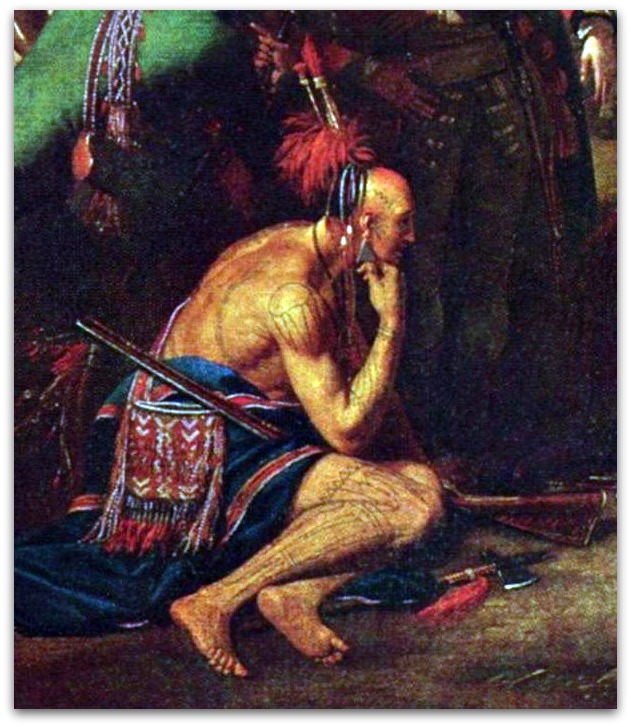
DISPLACED Q: Is the “noble savage” trope still relevant to today’s expats?

As the July theme for The Displaced Nation is Pocahontas, it seems a fitting moment to ask whether tourists and expats still cling to some kind of notion of the “noble savage” in the countries where they visit and live.

The answer of course should be a resounding “no” — because today’s global nomads (or anyone for that matter) have no business treating the people they meet in other countries in a condescending, racist manner.

To quote from Merriam-Webster to give a brief introduction to the underlying idea, the noble savage is a “mythic conception of people belonging to non-European cultures as having innate natural simplicity and virtue uncorrupted by European civilization.” It’s an idea that was wonderfully useful for racist scientists in the 19th century. It romanticizes primitivism.

Most expats these days seem to be fairly well-educated, well-positioned people who either for reasons of career, lifestyle or marriage have moved to another country. Although there may be constant befuddlement and discombobulation at living in another country, you probably have some existing frame of reference for wherever you are going and for what sights you will see. You are inescapably a product of the late 20th and early 21st centuries —  and I would argue that the noble savage trope absolutely has no relevance to you.


EDITOR’S NOTE: But is awindram right — or do some of you romanticize the natives in the countries where you’re staying?

img: Cropped version of Benjamin West’s “The Death of General Wolfe,” showing the Native American — a portrayal that has often been cited as an example of the “noble savage,” courtesy Wikimedia.

If you enjoyed this post, we invite you to subscribe for email delivery of The Displaced Nation. That way, you won’t miss a single issue. SPECIAL OFFER: New subscribers receive a FREE copy of “A Royally Displaced Tea.”

Related posts:

DISPLACED Q: Wimbledon — is it an anachronism in today’s international sporting world?

Given that Fred Perry was the last British man to win a Wimbledon singles event (1936) and Virginia Wade the last British woman (1977), the British public’s enthusiasm for this rather quaint championship is surprising. Then again, nothing fuels their enthusiasm as much as cheering on the underdog, and goodness knows, there are underdogs aplenty for them at Wimbledon.

Every now and then, a British competitor with a sniffing chance at victory will come along and be vigorously rooted for. Alas, no amount of national pride will change the inevitable outcome of (Andy Murray excepted) the Brit’s hangdog expression as he packs away his racquet and towel after losing 6-0 6-0 6-0 on an outside court to an American or Rumanian.

As Clive James, the Australian writer and broadcaster, pointed out:

“A traditional fixture at Wimbledon is the way the BBC TV commentary box fills up with British players eliminated in the early rounds.”

Perhaps different countries are wired for different sports? Czech-born Martina Navratilova, nine times winner of Wimbledon Ladies’ Singles, thinks not:

“I’m an American. You can’t go on where you were born. If you do, then John McEnroe would be a German.”

John McEnroe (born to American parents in West Germany) caused controversy at Wimbledon in 1981, when he loudly criticized a line call and called umpire Ted James “the pits of the world.”

Despite being named by Sports Illustrated as one of the Top 10 Men’s Tennis Players of All Time, McEnroe fears the reputation of his temperament will outlast that of his talent:

“I want to be remembered as a great player, but I guess it will be as a player who got angry on a tennis court.”

For those who say there’s no such thing as bad publicity, McEnroe disagrees:

“Princess Diana, she used to come watch the tennis [at Wimbledon]. And even though she had it 1,000 times worse than I ever did, she pulled me aside a few times and said, ‘I really feel for you.'”

Meeting the Royal Family is something that doesn’t happen too often at, say, the U.S. Open. Perhaps it would be better if it did. Serena Williams, who has her own reputation for putting her verbal equipment in gear ahead of time, describes a Wimbledon meeting with Queen Elizabeth:

“I was supposed to say, ‘Your Majesty.’ I totally choked. I was like, ‘Hey, nice to meet you’, total American style. And then she started talking. Then I was like ‘Your Majesty’ while she was talking… Maybe she’ll remember me.”

Undoubtedly. Serena should have heeded Jimmy Connors’ rueful comment nearly 30 years ago:

“New Yorkers love it when you spill your guts out there. Spill your guts at Wimbledon and they make you stop and clean it up.”

Some international tennis players remain unimpressed by the oldest, and to some the most prestigious, tennis tournament in the world. Russian player Nikolay Davydenko says:

“Wimbledon is the world’s most boring tournament. There’s hardly anything to do apart from tennis. You constantly find yourself yawning – there’s no entertainment here.”

Is he referring to the arduous 30-minute train ride into the bright lights of central London, or is it simply a severe case of sour grapes at never progressing beyond the fourth round at Wimbledon? Whatever the reason, he isn’t alone.

“A lot of people think that everything revolves around Wimbledon but it is just one week of the year for us. If nothing happens at Wimbledon, it’s not the end of the world.”

— this from Elena Baltacha, the Ukraine-born British player, after losing at Wimbledon 2009 and sadly proving Martina right in her earlier statement about birthplace versus nationality. Oh, and Elena — Wimbledon is a two-week tournament. Perhaps that’s where you’re going wrong.

But maybe she’s right not to take it so seriously. My all-time favorite saying by a tennis player is that of Boris Becker, youngest ever winner of Wimbledon’s Men’s Singles, when he lost in the 1987 final to Pete Doohan:

“Nobody died. I only lost a tennis match, nothing more.”

So, let us have your views! Do you see Wimbledon as an anachronism in today’s sporting world, or are its slightly eccentric traditions to be cherished? The strict dress code of white for competitors; the strawberries and champagne; and above all, the venue of the All England Lawn Tennis and Croquet Club. (How Alice is that!)

And on the subject of Alice, our last words come from Venus Williams, on her tennis outfit at this year’s Australian Open:

“The outfit is inspired by Alice in Wonderland. It’s kind of about a surprise, because when Alice goes down the rabbit hole, she finds all these things that are so surprising. This outfit is about having a surprise in a tennis dress, and showing some skin and then just having a print. Prints don’t happen that often in tennis. So it’s called the Wonderland dress.”

Call me old-fashioned, but I’m with the Wimbledon dress code on this one.

STAY TUNED for tomorrow’s post, Part 3 of Sebastian Doggart’s thrilling chase after James Bond creator Ian Fleming’s Jamaican haunts.

Related posts:
DISPLACED Q: How many of these 5 expat Alice characters do you recognize?

After two weeks of total immersion in all things Alice, we’re finding that even normal people look like Wonderland characters.

Here are a few we’ve noticed:

1. The Red Queen

The Red Queen, as her title suggests, queens it over the less experienced and the newly-arrived in Wonderland (or Looking-glass country, if you would like to be pedantic.)

We all knew her in school. She’s the bossy one who made a beeline for The New Girl recently arrived from out-of-town, made a big deal about showing her around, and kindly explained the school rules in a manner guaranteed to confuse and subtly terrify the newcomer – which, of course, was the intention.

Now fully grown rather than three inches high, she reigns supreme over the expat coffee morning posse and sends out Tupperware party invitations which no one dares refuse for fear of excommunication from the International School’s PTA.

Her self-proclaimed superiority is based on her many years in Wonderland, and her familiarity with the country. She knows the place forwards, backwards, sideways, and diagonally.

2. The White Rabbit.

The Red Queen’s (or Duchess’s) sidekick. Always busy, always rushing somewhere, always checking her watch or BlackBerry, always worrying that she will be late for something – although no one cares whether she is there or not, and most would prefer that she isn’t.

She organizes coffee mornings, school bake sales, and garden fetes, and is never happier than when she is chairing a committee. She loves giving orders, which are generally followed but with much resentful muttering from the minions.

Her favorite expression, apart from “Oh my fur and whiskers!” is “If you want something doing properly, do it yourself”, followed by a heavy sigh at the bumbling incompetents with whom she is forced to associate by dint of a common nationality.

3. The Cheshire Cat.

The Cheshire Cat holds himself slightly aloof from the madness that is the expat enclave, accepts Wonderland’s eccentricities with smiling resignation, but has a tendency to disappear when the going gets tough.

Although he is friendly and happy to chat, don’t expect more than a superficial friendship from this one.

4. The Hatter.

Here is someone who should have left Wonderland years ago. Time no longer has any true meaning to The Hatter, who calculates it in days rather than hours, and in months until visa expiration rather than weeks since the beginning of  tea time. He makes jokes that aren’t funny, then gets offended when no one laughs.

The Hatter is a  great fan of the traditional expat gin and tonic, however, and it is always six o’clock in his house.

5. Alice.

The homesick newcomer, desperately trying to make sense of a new country and managing to offend people every time she opens her mouth.

She soon discovers that the beautiful, magic place she tried so many times to enter is full of faults, just like home, and the people in it of whom she was once  in awe are “nothing but a pack of cards.”

At this point she often leaves the country, as she has found the grass on the other croquet lawn isn’t any greener after all. Ironically, if she stays just a little longer, she will find that she has gone through the most difficult time of adjustment, and life in Wonderland can – probably – only get easier.

So – Do you know one of these Alice characters, or – dare you admit it – are you one yourself?

Img: — Many thanks to Emily Cannell at Hey From Japan for the photograph of waxwork Alice at the Tokyo  Tower!

STAY TUNED for tomorrow’s interview with Random Nomad Helena Halme. She appeals for citizenship in The Displaced Nation — and answers an Alice question!

If you enjoyed this post, we invite you to subscribe for email delivery of The Displaced Nation. That way, you won’t miss a single issue. SPECIAL OFFER: New subscribers receive a FREE copy of “A Royally Displaced Tea.”

Related posts:

DISPLACED Q: Which dish is the worst international traveler?

Although “Does it travel well?” is a question usually asked of wine, we think the same query should be demanded of food, and often.

Alice agrees with us.

Soup didn’t cross successfully from the sublime to Wonderland:

“There’s too much pepper in that soup!” Alice said to herself as well as she could for sneezing.

At least use the correct animal.

In his Telegraph article, “Elegy to English shepherd’s pie”, our Alice Award winner, Sebastian Doggart, bemoans American ineptitude when it comes to making this most English of lamb dishes.

Americans just don’t get it.

First problem, encountered even in supposedly English pubs here in New York, is that it’s usually made with beef.

Putting the wrong animal in a dish? For shame!

Perhaps food should follow the jet stream.

Bill Bryson, in his book The Lost Continent, describes an equally disappointing encounter with another dish that hadn’t traveled well from East to West: a Cornish pasty in Michigan:

It was awful. There wasn’t anything, wrong with it exactly—it was a genuine pasty, accurate in every detail—it was just that after more than a month of eating American junk food it tasted indescribably bland and insipid, like warmed cardboard.

Although he attributes its lackluster flavor to his tastebuds becoming accustomed to American cuisine, I beg to differ on this point. Some dishes simply don’t travel well, and the Cornish pasty is evidently one of them. No one should attempt to recreate it outside England’s borders.

Or perhaps direction doesn’t matter.

However, Mr. Bryson found that some foods didn’t travel successfully across the Atlantic in the opposite direction, either.

In Notes from a Small Island, he comments on British hamburger chain Wimpy in the 1970s, before McDonald’s ruled UK fast food :

“I confess a certain fondness for the old-style Wimpy’s with their odd sense of what constituted American food, as if they had compiled their recipes from a garbled telex.”

He has a point. You don’t find American McDonald’s serving Big Macs with a side of Heinz baked beans.

And lastly — if you can’t boil a kettle, don’t make the tea.

Here, I am going to jump up on my hobby horse and say emphatically, “If you don’t understand that tea must be made with boiling water –- that’s when the cooking thermometer reads 100 degrees Celsius, not Fahrenheit –- don’t even try.”  Leave the tea to the British and Indian experts and stick to coffee instead.

I’ve lost count of the times when restaurants have served me “tea” by plonking down a cup of barely hot water with a teabag, still in its paper wrapper, at the side.

Why, for goodness’ sake? I also ordered a sandwich, but wasn’t handed two slices of stale bread and a packet of ham and told to get on with it.

Once bitten

Alice could have warned us of these perils, naturally. Her culinary adventures in Wonderland made her cautious before she jumped through the looking-glass:

“How would you like to live in Looking-glass House, Kitty? I wonder if they’d give you milk in there? Perhaps Looking-glass milk isn’t good to drink.”

Out of the mouth of babes and Victorian child-heroines, indeed.

So tell us: What’s the worst-traveled food you’ve encountered?

If you enjoyed this post, we invite you to subscribe for email delivery of The Displaced Nation. That way, you won’t miss a single issue. SPECIAL OFFER: New subscribers receive a FREE copy of “A Royally Displaced Tea.”

Related posts:

DISPLACED Q: In the words of The Clash, “Should I stay or should I go?”; When reality bites in your adopted country, are you more — or less — determined to stay as an expat?

In our post on March 20, When in doubt, have a pint of Guinness, we drew attention to the Britons who resolutely stayed in post-earthquake Japan rather than fleeing with the majority of their expat countrymen back to the UK. Despite the danger of the nuclear situation, one man interviewed by the Telegraph said

“I actually feel a bit of a duty not to leave.”

Friends in need

Although this person’s mother couldn’t see his point, I understand this mentality. The events of September 11, 2001, so close to our home in Virginia, made me defensive of my adopted country, and outraged at such an audacious attack. To leave at this stage was unthinkable. That would mean we were just fair weather friends of the USA.

Instead, we taped a small American flag to our mailbox, as the rest of our neighbors did to theirs. It couldn’t help the 3,000 who died that day, but it showed our sympathy and solidarity, which didn’t go unnoticed: a neighbor made a point of telling me how touched she was that I, a foreigner, had done this.

Yet I suppose expats here did leave to go back home after 9/11, because it’s human nature to think the grass is greener – or safer – on the other side.

More trolls, not greener grass

It’s not greener or safer, of course. I know this from years of frequent news reports of IRA bombings.  The Spanish know this from decades of Basque separatist attacks. 2009 saw 10,999 terrorist attacks worldwide, and while 60 percent of these occurred in Iraq, Afghanistan, and Pakistan, that still leaves over 4,000 to be shared by the rest of the globe.

As chance had it, I arrived at Heathrow the day before the 2005 bombings of London’s transport system, and had planned to take the tube into the city the following morning to do some sightseeing with my children. Had we not been tired from jetlag and therefore overslept on July 7th, we could easily have been on one of the trains that were destroyed.

Was I as upset by 7/7 as I had been by 9/11? Undoubtedly. Yet there was something else, too – a feeling of deja vu, of “here we go again” or – dare I say it? – resignation.

Whether you run or stay, there is a difference between enduring atrocities in your own country and suffering them on another’s turf.

Not all disasters are manmade

It doesn’t have to be a terrorist atrocity, as our friends drinking Guinness in Tokyo can testify. Perhaps you were an expat in Christchurch, New Zealand during the last two earthquakes; perhaps you were posted to New Orleans just before Katrina hit the Gulf Coast. Only two days ago, Joplin, Missouri was devastated by a deadly tornado.

The world is a dangerous place. There are no certainties, especially when it comes to safety. To quote The Clash again:

“If I go there will be trouble

And if I stay it will be double.”

So, tell us:  What’s an expat to do when disaster strikes?

If you enjoyed this post, we invite you to subscribe for email delivery of The Displaced Nation. That way, you won’t miss a single issue. SPECIAL OFFER: New subscribers receive a FREE copy of “A Royally Displaced Tea.”

Related posts:

DISPLACED Q’s: In your global travels, which close encounter of the animal kind was the least welcome?

In yesterday’s article My first flirtation with the lawlessness of global travel: 4 painful lessons, our guest blogger Lara Sterling recalls the toe-curling time in Guatemala when she was attacked by a couple of dogs and had to spend a week in hospital queues, waiting for rabies shots to her stomach. It doesn’t bear thinking about. Most of us cringe at the prospect of a trip to the dentist.

Rabies isn’t something you consider where I come from; if you’re bitten by a dog in the UK, in today’s litigious society you’ll probably phone your lawyer rather than your local hospital.

Neither is rabies foremost in your mind if you have bats roosting in your attic – you’re more likely wondering how to evict them without breaching wildlife protection laws, since bats are a protected species in many parts of the world. But around 1% of bats carry rabies, as a friend in the US discovered when she woke up to find a bat flying around her bedroom and had to undergo a course of rabies shots, just to be on the safe side.

This was my first inkling that Connecticut wildlife might consist of more than, say, a few sparrows on the bird table.

Disney cartoons – the best place for rodents

While I haven’t had bats for roommates, I’m now used to seeing certain animals in my American back yard that I’d previously only seen in Bambi or Chip n Dale. Visitors from the UK exclaim over the proliferation of gray squirrels, but I’ve adopted the jaded attitude of a Connecticut native: squirrels are just rats with good PR. If you’ve ever had one fall down the chimney into your basement, where it runs amok and tries to eat the wall insulation, you’ll know what I mean.

Other wildlife guests in our back yard party have included deer, Canada geese, snapper turtles, wild turkeys, raccoons, and, while we were waiting for the school bus one morning, a fisher cat – a member of the weasel family that has been known to attack humans. This one, however, simply gave us a very superior look and shuffled off into the woods, never to appear again. I wish I could say the same for the local mice, who seem to think they have winter squatting rights in the attic.

The skunk in Bambi might be very cute, but until you’ve smelled this animal’s musk, you can’t imagine how foul it is; the odor carries up to a mile, apparently. I’ve never seen a live skunk, although I’ve driven past plenty of roadkill. The operative word there is ‘past’ — you don’t want to drive over a recently killed skunk.

A squirmy moment came one summer when we found a three-foot-long snake in the garage. Fortunately, it was a Black Racer, and therefore not venomous – although it easily could have been. About two miles away is a preservation area affectionately known as Rattlesnake Run. Local police logs in the newspaper often carry reports of callouts to houses because of a rattlesnake sunning itself on someone’s porch.

“Old MacDonald had a…”  Mum, what’s that thing called again?

The flip side of living in what is essentially a forest is that we don’t see many ‘normal’ animals. During our trip to the UK, relatives were amazed when our young children weren’t sure what the white woolly animals in fields were. They’d heard of sheep and seen pictures and Fisher Price plastic sheep…but never sheep in the flesh, as it were. Yet on the same visit, while Auntie was cooing over a stripy squirrel-like thing in a cage and wondering what it was, the kids scoffed. “Chipmunks? They’re all over the place at home. Mum can’t stand them, they dig holes everywhere.”

But definitely the most interesting encounter was when our five-year-old came in the house after playing outside, and told me that there was a dog in the yard. Wondering if our neighbor’s dog had decided to make a break for freedom, I looked out of the window. It was a dog all right, but not one you want your five-year-old to play with. While coyotes rarely attack humans, I’d seen too many episodes of Road Runner to take a chance with the statistics.

Waiting for the Big One

And finally – a few months ago, in the street where we go trick-or-treating at Halloween, police cars swarmed. A black bear had been sighted. Now, every time I’m in the kitchen and looking out at the maples and pine trees behind our house, I look a little farther into the woods, wondering what else is out there.

It can only be a matter of time.

So, tell us: Which wildlife encounter of your own would you rather not have experienced?

If you enjoyed this post, we invite you to subscribe for email delivery of The Displaced Nation. That way, you won’t miss a single issue. SPECIAL OFFER: New subscribers receive a FREE copy of “A Royally Displaced Tea.”

Related post:

DISPLACED Q: What items from home can you not live without?

UK department store John Lewis recently announced it would soon launch versions of its Website for shoppers in 27 countries, including the USA, Australia, and Singapore. The company has no plans to open stores in these locations, however; all orders will be delivered by courier.

Marks and Spencer, another institution of the British High Street, already ships to 80 countries worldwide, even though it has over 300 international stores scattered around the globe.

It seems both John Lewis and M&S  understand something that all expats know — there are certain items you only feel comfortable buying from home.

Marks & Spencer, for example, accounts for around thirty percent of the UK lingerie market; it’s not unreasonable to assume that displaced Brits with diminishing lingerie supplies and no access to M&S stores make up a goodly proportion of the international shipping numbers. Meanwhile, John Lewis has the most popular gift list in the UK. How about some Conran bed linen or Denby pottery to make your relations feel at home in their Moscow abode? Sometimes only the familiar will do.

It’s not all about the goods, either. Expat in Germany, in her March 17 post, explained why she hesitated to buy a wedding dress in Germany instead of in her native Canada. It had nothing to do with the quality of wedding gowns and everything to do with the charming honesty of German sales assistants that made her pine for a gentler shopping experience at home.

But these facts and anecdotes made us wonder: No matter how displaced you have become, are there certain items — other than food — that you still prefer to import from your home country?

Two members of the Displaced Nation Team kick off the discussion:

Kate Allison: During my 15 years as a Brit in the US, I have been known to ask visitors to bring gifts of children’s cotton pyjamas. The cotton in the UK is much nicer, somehow, than in the US. I also had a brief sojourn into Next duvet covers, because duvets aren’t as popular in the US as they are in Europe.  Last time I was over, though, it was shoes that caught my eye. And yes, they came from Marks and Spencer. It’s not that they were any better than their American counterparts — just different, and not from Macy’s.

ML Awanohara: As far as wedding (and other special) dresses go, the more exotic the better. I was never an expat in Rome but went shopping for my wedding dress a few years back in a charming boutique, Maga Morgana, very near the Piazza Navona. (If I had it to do over, I’d have studied abroad in Italy — art history, of course. So perhaps I was playing out that fantasy…) Kate, it’s funny you mention shoes. While living in the UK and Japan, I always preferred to buy shoes in the US. It wasn’t that I didn’t like the shoes in those countries — I coveted them. But they made my feet hurt, something to do with the “last” not being big enough. I noticed recently on an expat news feed that displaced New Zealanders often head to a shop called Minnie Cooper’s as soon as they get home. This piqued my curiosity: is it for the styles, the NZ leather, or both?

Your turn to chime in: What homey items, apart from food, have you yet to wean yourself off?

If you enjoyed this post, we invite you to subscribe for email delivery of The Displaced Nation. That way, you won’t miss a single issue. SPECIAL OFFER: New subscribers receive a FREE copy of “A Royally Displaced Tea.”

