The Displaced Nation

A home for international creatives

Tag Archives: Artists

Repeat expat Manal Khan lives in fact, in fiction–and everywhere in between

ManalinSpain

Manal Khan, taken by her husband on a day trip to Segovia.

The Displaced Nation is on a mission to celebrate the contributions made by borderless travelers and global residents to creative pursuits.

Owing to our Western bias, we tend to feature Westerners who have ventured to other parts of the world, but there are plenty of other internationals who, too, deserve kudos—I refer to our counterparts in the less developed world, many of whom flock to the United States and Europe for higher education and employment opportunities, and in the course of that, find their own creative paths.

Is that because they feel as displaced as we do?

Perhaps I’ll uncover some answers in today’s post. I’ll be talking to journalist, poet, essayist, photographer, and storyteller Manal A. Khan, who says that she lives in fact, in fiction—and everywhere in between. Born in Pakistan, Manal has a journalism degree from Berkeley and has worked for an independent news organization in New York City.

I discovered Manal’s magnificent blog, “Windswept Words.”, around the time the Displaced Nation started and have been eager to interview her ever since. But when I tried contacting her, she’d just repatriated to Pakistan. She did not see my request until recently, when she and her husband (also Pakistani) moved abroad again, this time to Europe.*

I am so pleased to be able to catch up with Manal in her latest port of call: Madrid, Spain. I predict that you, too, dear reader, will be as blown away, so to speak, as I was by her windswept words…

* Ironically, on the very day when Manal answered my request, she was awarded one of our Alices for a recent blog post that expresses, at one and the same time, her love for her native Pakistan as well as her discomfort with its social inequalities and excessive religiosity.

* * *

Greetings, Manal. It’s so good to have the chance to catch up with you at long last. I’d like to start by quoting from one of your poems, called “Foreigner”:

sometimes, i wish
i didn’t feel like such a foreigner
in my own country
among my own people
that i wouldn’t be polite,
embarrassed, awkward
that punjabi or urdu would flow from my mouth
as effortlessly as english…

What led you to compose these words?
I wrote “Foreigner” eight years ago, during my college days in my hometown, Lahore. Pakistan is an extremely socially-divided country. If you happen to be born “privileged,” chances are you will get the best lifestyle, the best education, and the best work opportunities that the country has to offer. And if you happen to be born outside of that tiny privileged class—the middle-class barely exists in Pakistan—chances are you will be struggling most of your life just to put food on the table. I happened to be born into the former class, and while I know that I was fortunate, that terrible divide is something I could never reconcile myself with.

And it was not just about money, or wealth. It was about culture, and language, and a sense of belonging. Pakistan used to be a British colony, and gained independence in 1947, along with the rest of the Indian subcontinent. But in many ways, we remain “colonized” by the English language. English is still the language of the powerful, of the elite, and a huge divider of class, culture and people.

So all these different things were swimming in my head when I wrote the poem. You could say that I felt “displaced,” even when I lived in my native country.

I can relate—and I was born in America! Another poem of yours I enjoyed was this short one: “Not Being,”. Allow me to share the first two lines:

If home is where the heart is, my heart is forever moving, a gypsy
If a piece of cloth and a stadium slogan is a test of nationalism, I have no nation…

“Not Being” was written in New York. It was inspired by many different things, but the theme of not belonging, or not quite fitting in—in this case, to Pakistani society—is similar to “Foreigner.” For instance, the definition of a “good” Pakistani, according to accepted norms, is basic and black-and-white: intensely patriotic, passionate about cricket, virulent about America, and careful about fasting in Ramadan and attending Friday prayers; somebody who is dutiful to family, loyal to friends, lives up to expectations, and sticks to his or her roots. I was getting a lot of pressure, directly and indirectly, to be this sort of person from people I knew back home, and from feedback on my blogs published in The Express Tribune. I felt confused. I didn’t agree with or conform to any of those norms, so did that make me a “bad” Pakistani? The poem was an expression of that conflict.

Was the audience you intended for these poems primarily Pakistani?
To be honest, I intended no audience. I published “Foreigner” on Windswept Words a few years ago—it had been sitting in an old notebook till then; and “Not Being” only reached my regular blog readers. But now you mention it, I may submit the poems to one of the Pakistani blog sites I write for. It would be interesting to see people’s reactions.

“Embrace the day with laughing heart…”

Did writing about these themes help you to process the peripatetic life you’ve led as a young Pakistani woman who went to j-school in California and has lived in New York City?
Not only the poems, but most of the writing on my blog over the past few years has revolved around these themes. It’s interesting to see how one’s feelings of displacement evolve over time. Initially, when you are “fresh off the boat,” a foreigner in a foreign land, you feel compelled to uphold a sense of distinction, your separate identity (see my post “When in America, do as the Americans don’t”). At another level, you also want to assimilate, because you don’t to be viewed as an outsider forever (“Change”). And then there is that other level, when you stop waxing nostalgic and start viewing your own country critically (“The Freedom to Be”).

Is writing therapeutic?
Oh yes, definitely. My experience living abroad has changed me inalterably, and writing about it helps to make sense of things, to sift through the good and the bad of places, situations.

LakeSaifulMalook_MK

Photo credit: Manal Khan

You also translate Pakistani stories into English: I’m thinking of your work-in-progress “The Legend of Saif-ul-Malook.” Can you tell us how that got started, and the audience you hope to reach with these tales?
Oh yes! Saif-ul-Malook is the name of a beautiful lake located in the Himalayas, in the northwestern province of Pakistan. It’s a breathtaking region, full of snow-capped mountains, lush pine forests, and startlingly blue lakes. When I was growing up, our family would travel to the mountains every summer, driving from the torrid heat of flat and dusty Lahore to the cool green valleys of Kaghan, Swat, Nathiagali. I first visited Saif-ul-Malook when I was 12 and fell in love with the place for its beauty and for the enchanting legend associated with it, a fairytale that has been penned in several local languages but never in English. So, the next time I went there (four years ago), I was sure to take an audio recorder and capture the full version of the story in the words of the resident raconteur.

This I transcribed, translated into English, and re-wrote with my own little additions (see “The Legend of Saif-ul-Malook Part I”). I have still to write the last part, the epilogue.

But the response I’ve received to the story has been truly wonderful, and so encouraging. English-speaking Pakistanis are thrilled to find this favorite tale of theirs in an accessible form.

I want to continue this sort of storytelling, translating and transforming Pakistani fairytales, many of them unwritten, into English, for an English-speaking audience. I have a few stories in mind, told to me in childhood by an old lady called Bua, who used to work for my grandmother and later lived with my family for many years. She was the quintessential storyteller, silver-haired and toothless, with fabulous tales at the tip of her tongue and a different twist each time she narrated one. (See my profile of Bua.)

Where did you meet your husband, and does he share your feelings of being between cultures?
I met my husband in Lahore many years ago. Like me, he grew up in Lahore, though his family is originally from a Pashtu-speaking tribal region of northwest Pakistan. He also studied in the U.S., and we both lived and worked there together, so, yes, he does share many of my feelings about being in between cultures. But he does not dwell on it as much as I do; he is quite at peace with himself, wherever he is and whatever he is doing. I, on the other hand, have to think and think and write and write before I am able to find that peace, that balance, the position where I stand and where I am comfortable! Still, it helps a lot to be able to discuss these things with him. He is also always my first reader!

“My heart is forever moving…”

In your search for that peace and balance, as you put it, do you recall one moment in particular when living in America that stands out as your most displaced?
I can’t think of any one moment in the U.S. when I felt especially displaced. I think it’s because I lived in such big, multicultural cities (San Francisco Bay Area and New York City), where people were mostly very tolerant and open-minded, and where there were always so many “ethnic” options. In New York if I missed Pakistani food, I could quickly hop over to Haandi or Lahori Kabab Restaurant on Lexington Ave for a hearty, spicy, almost-authentic meal; if I missed the music and dancing, there was no shortage of Bhaṅgṛā– or Bollywood-themed dance clubs; and if I missed Urdu conversation, Pakistani jokes, or just reminiscing about home, there were many lovely people from Pakistan whom I knew from before or had met in the U.S.; and we congregated quite regularly for these chai-biscuit sessions.

How about in Madrid?
In Spain, the experience has been a little bit different. There is hardly any Pakistani or Indian community in Madrid. The American or British expats mostly hang out within their own cliques. Madrilenos are very warm and welcoming, but language is the biggest barrier to cross before you can really feel like a part of the city. Still, we are very new, I’ve started learning Spanish, and we’ve already met some terrific people. So I am not too worried about settling in!

And during your repatriation?
During our recent year and a half in Pakistan, one thing I could not bring myself to get accustomed to was our culture of live-in servants. Even though I had grown up in that environment—and we were always taught to be extremely courteous with the domestic staff—it was very difficult to go back to it after living independently for so long. I think I experienced moments of displacement every single day, in my interaction with the servants in my parents’-in-laws home, where we lived. A part of me abhorred the idea of making a distinction between “them” and “us”—the employers, the masters. But the practical part of me knew that even the servants would consider it wrong, or strange and awkward, if I was to behave in any other way, outside of the conventional master-servant relationship.

I also remember certain conversations, with friends or family, in which somebody would innocently discuss: “Where should the new servant girl sleep? Not in that empty bedroom upstairs, no—she may steal something. Perhaps in the hallway?” To be followed by: “I bought a gorgeous new outfit from so-and-so designer’s store the other day—only Rs. 30,000 (US$280) on sale!”—probably ten times the servant girl’s monthly salary. I always felt so uncomfortable, and so out-of-place, for feeling uncomfortable—yet powerless to do anything or say anything that would make any difference.

What was your least displaced moment, when the peripatetic life made sense, and you felt as though you belonged in the Western world?
For me, feeling at home somewhere is all about making meaningful connections with people, and being free to be yourself. It doesn’t matter where you are, and it need not necessarily be the land of your birth.

One of the places I felt most at home at was the International House in Berkeley, California. A six-story dormitory for both American and foreign students at UC Berkeley, the I-house was a cozy, colorful, microcosmic universe in itself. There we were, young people from every corner of the world, each with our own unique culture, language, background, story, sharing the singular experience of studying and learning in a foreign land, a new place; a place that was beautiful and accepting of our differences, that celebrated our diversity. Even an ordinary meal in the I-house cafeteria—notorious for its tasteless food—was an adventure. I could be sitting next to a Lebanese civil engineer on one side, a Japanese-American graphic artist on the other; an Italian composer and a Korean mathematician in front; and conversation never ran dry. We laughed a lot, and learnt much from each other; and we never felt alone. That life wasn’t “real,” I know; it was and could only be a temporary phase. But I cherish those memories everyday. My one-year fellowship at Democracy Now in New York was a similar experience. We were a diverse, energetic team, united by a shared vision; and we all loved our fair-trade coffee and double-chocolate cupcakes!

How about during your recent sojourn in Pakistan: despite your conflicted feelings, were there moments when you felt entirely at home?
As for Pakistan—it is and always will be home, home at the end of the day. What I loved most during our recent sojourn was traveling within Pakistan. We explored the Karakorum Mountains, the Hindukush, the Himalayas, the Salt Range. We camped by flowing white rivers, under dazzlingly starry skies. We ate unbelievably delicious chapli kababs at nameless roadside restaurants, washing them down with steaming cups of sweet kaava. We tracked brown bears and chased golden marmots in the second-highest plateau in the world. We had tea with a jeep-driver and his eight daughters in their warm three-room cottage on the hillside. I discovered a Pakistan that I had never known before—a Hindu Pakistan, a Buddhist Pakistan, an animist Pakistan, the ancient Pakistan of the Indus Valley Civilization. A much richer Pakistan. And being outside of Lahore, outside of the noisy, constricted city, I felt at home. I felt like another character in the sweeping history of this aged and beautiful land that I loved, yet did not conventionally fit into.

A picture says…

Lahore_MK

Photo credit: Manal Khan

I understand you also use photography as a creative outlet. Can you share some examples with us?
I took this photo in the Old City of Lahore last summer. It was early evening, and the moon had just come up. All the different sources of light—the full moon, the halogen lights in the shops, the headlights of the motorbike behind the tonga—gave the scene a very magical, unreal feel. I love the lights, the shadows and silhouettes in this photo, as well as the depth of the crisscrossing cables overhead, fading away into mist.


Gypsies_MK

Photo credit: Manal Khan

I agree, it’s enchanting, and the cables are an amazing juxtaposition. I believe you have one more photo to share?
Yes, one that I took this summer in Deosai Plains, the second-highest plateau in the world, located in the remote Baltistan region of Pakistan. This region is also home to K2, second-highest mountain in the world. We were crossing the plains in jeeps, when we came upon a caravan of gypsies, traveling in the opposite direction with their children, mules, dogs and horses. I cannot find any information about these people, where they come from, what their destination is, even what language they speak. But they make the trek across Deosai Plains every summer. I love the clarity of this photo, the crispness of the colors; and generally I loved the mystery of these people, in this remote, unpeopled part of the world.

What are your writing plans for the coming year? Will you attempt to put some of your writings together in a book?
I wish! Writing a book, either a novel or a collection or short stories or essays, is definitely something I hope to achieve within the next five years. For the coming year, I want to focus on writing regularly on my blog, about my adventures and experiences in Spain, from multiple perspectives of displacement! I also want to continue the translation, or “transformation” of Pakistani fairy tales into English.

10 Questions for Manal A. Khan

Finally, I’d like to ask a series of questions that I’ve asked some of our other featured authors, about your reading and writing habits:
1. Last truly great book you read: Samarkand, by French-Lebanese writer Amin Maalouf
2. Favorite literary genre: Magical realism, historical and fantasy fiction, creative nonfiction, short stories
3. Reading habits on a plane: I always take one book with me, normally a novel, slim enough to stuff into a handbag, easily readable but thought-provoking: e.g., The White Tiger, by Aravind Adiga.
4. The one book you’d require Mamnoon Hussain to read, and why: He is so new to the Pakistani political scene that I really don’t know much about him! But I would recommend every Pakistani leader to read Jinnah, Pakistan and Islamic Identity, a revisionist biography of Pakistan’s founding father, by Akbar S. Ahmed.
5. Favorite books as a child: The Anne of Green Gables series, by L.M. Montgomery; The Faraway Tree Stories and The Famous Five series, by Enid Blyton; Chronicles of Narnia, by C.S. Lewis; all of Road Dahl; abridged versions of Jules Verne.
6. Favorite heroines: Anne Shirley of Anne of Green Gables and Scheherazade of The Arabian Nights.
7. The writers, alive or dead, you’d most like to meet: Gabriel García Marquez, J.R.R. Tolkien, Ismat Chughtai
8. Your reading habits: I read mostly at night, before bed, or while traveling, or on lazy afternoons curled up on the sofa with a cup of tea.
9. The books you’d most like to see made as a film: One is a novella by celebrated Indian-Muslim authoress Ismat Chughtai, translated from Urdu as The Heart Breaks Free. The other is a collection of satirical short stories by Naguib Mahfouz, titled Arabian Nights & Days. I would love to see both these works as short films, and maybe even produce them myself one day!
10. The book you plan to read next: Don Quixote—because I am in Spain!

* * *

Thank you, Manal! I must say, I love how you combine the spirit and creativity of Anne of Green Gables with the story-telling power of Scheherazade! Like most gifted writers, you are still a child at heart!

Readers, do you have any further questions or comments for Manal? Once again, if you want to read more of her insights, be sure to check out her blog, Windswept Words.

STAY TUNED for Monday’s post, another episode in the life of Libby, our fictional expat heroine…

If you enjoyed this post, we invite you to register for The Displaced Dispatch, a round up of weekly posts from The Displaced Nation, with seasonal recipes, book giveaways and other extras. Register for The Displaced Dispatch by clicking here!

Related posts:

Main image at top of page: Manal Khan, taken by her husband on a day trip to Segovia. All other images are by Manal Khan, and are posted here with her permission.

TCK TALENT: Diahann Reyes is in her element as writer, actor & storytelling coach

DiahannReyes_headshot_pmWelcome to the second installment of “TCK Talent,” Elizabeth (Lisa) Liang’s monthly column about adult Third Culture Kids who work in creative fields. As some readers may recall, Lisa—a Guatemalan-American of Chinese-Spanish-Irish-French-German-English descent—has written and performed a one-woman show about being a Third Culture Kid, or TCK. (It debuted in LA in the spring and is coming next week to NYC!)

—ML Awanohara

My guest today is Diahann Reyes, a professional writer/actor who is launching a new blog, writing a memoir, and beginning an additional career as a writer’s editor/coach. Diahann grew up in six countries, worked as a journalist for CNN before becoming an actor, and currently lives in Los Angeles, California.

Growing up here and there and everywhere

Greetings, Diahann, and welcome to the Displaced Nation. I understand you’re the TCK child of Filipino parents. Can you fill us in a little more: why did your family move around and which countries did you live in as a kid?
My dad was a marketing expat. I learned how to speak English with a Kiwi accent in New Zealand, discovered my love for books in Argentina, rode my first camel in Pakistan, went through puberty in the US, attended junior prom in the Philippines, and graduated from high school in Indonesia.

Of all those cultures, did you identify with one in particular?
Like you, I’m a “mash up” of the different cultures I’ve lived in. Living in America for most of my life now, I feel most at home here, which is its own kind of cultural mishmash. In my twenties, I realized that I had to pick one of my “home” cultures as my main one or I’d continue to feel ungrounded. I also identify with particular subcultures that aren’t necessarily considered mainstream, such as the artist culture.

Where and when were you happiest while growing up?
My family’s two years in Argentina were some of my happiest, probably because my mom, dad, sister, and I were all so excited to be living in a new country together. Moving to a different culture was still an adventure of which I had yet to grow weary. Also, at age 8, I was still very much myself and hadn’t been impacted yet by the pressures of puberty and the need to fit in.

What lies beneath the surface…

Speaking of puberty and the female body brings me to the launching of your new blog, Stories from the Belly: A Blog About the Female Body and Its Appetites. What inspired you to begin it and what can followers look forward to from the blog?
For women especially, there are so many truths, emotions, and desires that we tend to suppress: they get buried deep down in our bodies. My blog is my way of excavating this buried inner emotional landscape. I want to talk about the female body in ways not normally touched upon in mainstream media. My blog will include personal stories as well as commentary on relevant current events.

You’ve been working on a memoir. Is it specific to a time and place in your life?
Yes. My memoir is about my latest “move,” only this time rather than going to live in a new country, I’ve spent the last decade “moving into” and learning how to fully inhabit my own body. Location-wise, I take the reader across the globe to some of the places I’ve lived growing up, but the main action takes place in my body.

What themes are you exploring?
The story I tell is absolutely personal, but it does touch on a lot of bigger ideas involving the female body and its objectification and how this can impact a woman’s relationship to herself and others. Desirability, cultural assumptions, sexuality, power, pleasure, and wholeness are some of the through-lines in the book.

Owning who she is

On your website you describe how you fell in love with reading and acting. Did you always know you would pursue both of these interests as careers, or did you struggle with the decision?
I knew I wanted to be a writer from the time I could read, but it took me a long time to own that this is who I am, in part because the grownup me couldn’t imagine that my younger self could just “know” this. Still, writing has been the primary way I’ve made a living—as a TV news writer, an editor, a ghostwriter, and now a blogger, so I guess I didn’t need to know I was a writer to be one.

The decision to act was tougher. I didn’t start to pursue acting until my 30th birthday, and by then I had established a pretty good career in journalism and online media, so I was giving up a lot to change focus. But acting was like this siren calling to me, saying “act, act, act.”

You and I grew up reading many of the same (mostly American and British) authors: Ingalls Wilder, L’Engle, Cleary, Blyton… I remember the day I realized I would never get cast as Jo in any theatrical production of Alcott’s Little Women because I was a girl of color. Did you ever have a moment like this, and if so, which beloved character(s) and book(s) or play(s) did you realize you wouldn’t get to explore as an actress?
I always thought I could be anyone because while growing up I’ve had to be a chameleon. “Adapt and assimilate and fit in” was one of my mantras as a global nomad. But when I got to LA and started auditioning, I realized that I would never be able to play certain characters because I was the wrong ethnicity or type. I was primarily limited to not even Asian parts but Latina roles because I look more Hispanic than Southeast Asian. This meant that I was likely never going to play Maggie from Cat on a Hot Tin Roof or Caroline Ingalls in any future Little House on the Prairie remake, and parts that were for people of my actual ethnicity were out, too. Fortunately, the industry has changed, and more minorities are getting cast outside of ethnicity and stereotype.

What sorts of roles are you attracted to now?
I love parts that call for emotional depth and angst.

I wonder if one of the reasons we’re writers is that we have more autonomy to tell stories than we do as actresses?
I love that I can write what I want—I don’t need anyone to “cast” me first. And I can create characters that aren’t limited by ethnicity or type. I am thinking of creating a solo show that would probably require me to write and play different characters.

I understand you also write poetry. What drew you to that?
I kept diaries growing up and would process my feelings through poetry. With both nonfiction and poetry, I can just be myself. After so many years of working hard at adapting and assimilating to fit in, getting to just be me on the page is a relief.

Helping others to own their stories

You’re about to begin a new endeavor as a writer’s editor/coach. What inspired you to follow this new path?
I know what it is like to have something to say and to struggle with fully expressing my truth—especially when the fears come up—and I want to help other writers overcome these obstacles so they can get their stories out there. I want to work with people who are just as engaged in their process as they are in having a finished product.

What are you looking for in a student/client?
I work with nonfiction writers, bloggers, storytellers, and essayists, and other people with writing and online content projects. Healers and people with unusual business ideas like to work with me, too.

Do you have any other projects coming up?
I hope to publish my memoir next year. The film Out of Her Element, in which I play a therapist with a pill addiction, will premiere soon.

* * *

I must congratulate Diahann on her exciting new ventures, which I believe will resonate with people working in creative fields—and with female travelers and TCKs, especially! Readers, please leave questions or comments for Diahann below.

STAY TUNED for tomorrow’s post, when Andy Martin will talk to Mark Hillary about his new book, Reality Check: Life in Brazil through the Eyes of a Foreigner.

If you enjoyed this post, we invite you to register for The Displaced Dispatch, a round up of weekly posts from The Displaced Nation, with seasonal recipes, book giveaways and other extras. Register for The Displaced Dispatch by clicking here!

Related posts:

img: Diahann Reyes

For travel addict & photography lover Milda Ratkelyte, a picture says …

Milda M CollageWelcome to the second installment of “A picture says,” a series that sheds light on the people who move through our planet with a camera in hand, registering the look, character, and ambiance of people and places that capture their fancy.

Our guest today is Milda Ratkelyte, a camera-happy Lithuanian whose wanderings have taken her to the UK, America and now Asia.

Here are Milda’s vital travel statistics:
Place of birth: Lithuania
Passport: Lithuanian
Overseas history: From least to most recent: United Kingdom (London): 2005-2008; China (Wuhan, Shanghai, Beijing): 2008-2009; United States (California, Colorado, New York): 2009-2010; United Kingdom (London): 2010-2011; Singapore: 2011-present.
Occupations: Travel Community Manager at AsiaRooms.com and owner of Milda Ratkelyte Photography
Social media coordinates:
Twitter: @MildaRatkelyte
Facebook: Milda Ratkelyte Travel
Instagram: @milda_ratkelyte
Google+: Milda Ratkelyte

And now let’s meet Milda and find out: which came first, the photography obsession or the peripatetic life?

Kenyan curiosity

Hi, Milda. Let’s talk a bit about your travels. You are originally from Lithuania but have spent a considerable amount of time in other countries and now live in Singapore. Tell me about how that came about, and what inspired your moves.
I had the most amazing childhood in Lithuania. I was very lucky, because my dad was a true travel fanatic. Back then it was not easy for us Lithuanians to go traveling to remote destinations outside of Europe, but my dad found a way to get us to Kenya for a summer. From that time on, I was addicted to travel, and have been wandering the world ever since. “Explore, discover and get to know different cultures and people around the world”that’s become my mantra.

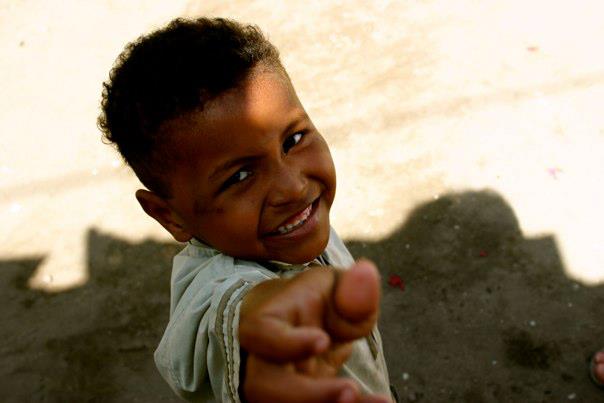
Boy reaching for candyKenya sounds amazing. Can you share with us one of the photos from that trip?
I like this shot of a boy reaching for what he hoped would be candy. It’s from the early days of my camera experience, but I love it because it’s just so natural. There was no set up, no preparation. I was wandering the streets of the Watamu village, looking for the school where I was volunteering, when a group of kids ran towards me asking for candies. I didn’t have any on me, but I had a pack of pencils that I was carrying to the school, so I gave them out and decided to take a photo of the group. As I was setting up the shot, this boy ran from the end of the street. Noticing something was being given away, he squeezed through other kids and jumped right in front of the camera.

Asia calls!

How did you end up in my native land, the UK?
When I graduated from high school, I knew that I want to do something travel related. I enrolled in an International Tourism Management course at the University of Bedfordshire in the UK. For my work placement, I was sent to work in China for the Shangri-La Hotels and Resorts, which gave me the chance to explore some other Asian destinations such as Hong Kong and Singapore. I fell in love with Hong Kong and told myself that once I graduated, I would definitely be coming back. However, when that moment occurred, reality kicked in: I could not get a visa for Hong Kong. I’d decided to stay in London when an opportunity to work for a major events company in Singapore suddenly landed on my doorstep. I had my bags packed in a few days and was on the 14-hour flight to Singapore.

How do you like Singapore?
I’ve been in Singapore for two-and-a-half years already and absolutely love it. Mostly, because it’s the most convenient spot in Asia travel wise. In just two hours I can be in Bali, Hong Kong, or Thailand. And Malaysia is just an hour’s bus drive away.

Luck strikes again

On your blog you say you were “one lucky girl” in finding your current position as a Community Manager for AsiaRooms, a site for booking hotels throughout Asia. Tell us how that opportunity came about and how it fits into your life ideals and love of travel.
When I moved to Singapore, I was working for an events company in the oil and gas industry. While I loved the thrill of closing huge deals, I had no life. The hours were long, with weekends in the office and sales calls at all times of the night. After about half a year, I missed having time to travel, take photos, explore and discover! I started looking around for something in the travel industry, and that was when I got introduced to my current boss, who mentioned that AsiaRooms.com were looking to hire a Community Manager. It was a dream come true. Today I can definitely say I love my job! I have been working on the launch of AsiaRooms.com Community site together with an amazing team, and we’ve already achieved some incredible results. I have also gotten a chance to study and have completed MatadorU’s Travel Writing and Photography courses. But most importantly, I’m getting to work with some amazing and talented photographers, filmmakers, writers and musicians in Asia and across the world while traveling a lot! This year I will finally tick off all the places on my bucket list for Asia.

Passionate about photographybut not equipment

On your blog you say that you love photography “and being able to freeze a particular moment in time, so when things in life change you have the one thing, one memory that never will.” What are the shots that capture some of your favorite memories? And what made them so special?
It is hard to say which ones are my favorites since there are just so many of them, and every trip I make is special. But if I had to choose, I’d pick the photos from the trip to Kenya such as the one above. That was the first time I got exposed to a truly different environment. It was also the first time I experimented with my DLSR, which was a present from my dad. My dad passed away unexpectedly last year, and I feel sad that I’ll never get to travel with him again. But having those photos reminds me of him and of the reason I started traveling.

What kind of camera and lenses do you use?
I have a Canon 300D with two Canon lenses: 18-55mm and 70-300mm. When I was doing a short weekend photography course, my tutor joked: “This girl is truly passionate about photography and not equipment.” My camera was so old it did not have half of the functions they were using during the course!

But although the camera has huge sentimental value, I think I will need to invest in a new one soon, since I have started MatadorU’s Travel Filmmaking course and will need a camera that can capture video.

A “no holds barred” approach to people as subjects

Where have been your favorite places to take photographs? Any particular shots stick out as being amongst your favorites?
My two favorite spots are Myanmar and Japan: Myanmar, for its amazing people, who are always smiling, and the colors of its markets, nature and city life, as well as incredible sunsets and sunrises over the ancient city of Bagan; Japan for its nature, culture and architecture. The old streets of Kyoto, the underground cafes and restaurants in Tokyo, hip people in the Harajuku district, lush greenery and deer in Nara, and bamboo groves in ArashiyamaJapan is just naturally photogenic.

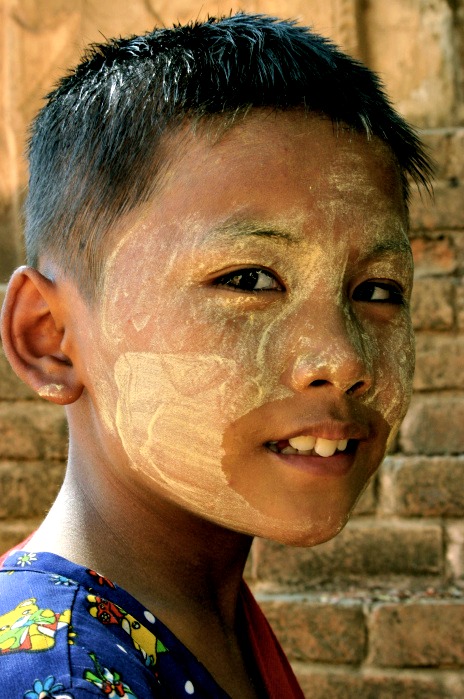
ThanakaBoy_mmIn your shots of Myanmar, I noticed one of a young child. Tell me about how that shot came about and what exactly is going on!
It was taken in Bagan, Myanmar, which is full of the remains of temples and pagodas. That particular morning we’d grabbed our bikes and were exploring the terrain, when I was approached by this young kid trying to sell me his drawings for a dollar. They were crayon drawings of the temples, neatly packed in plastic bags. The boy spoke almost no English, but soon he became my little tour guide, showing me around all the ruins. After our little tour we sat on the old dusty stairs at one of the temples, and while he was trying to tell me more about the place, this perfect photo opportunity appeared. I just love the look in his eyes.

I often feel very reserved about taking photos of people, particularly when they are conscious that I am doing so. Are you the same?
I used to be very reserved about it, but at the same time I knew that this was a major obstacle if I want to progress with my travel photography. I think I came to realize that after traveling around with my boyfriend, who is also a photographer and who has never had hang-ups about this! He doesn’t find it difficult to go straight to someone and ask them to take a photo. At the beginning I used to stay back and watch him, but when I saw how his shots turned out, I realized I needed to overcome this barrier.

Do you ask permission before taking people’s photographs?
It was hard at the beginning, because the truth is you will get a lot of people who will just tell you NO, but at the same time you will get the few that will be very nice to you. I guess my main advice would be to definitely ask them first, and if they don’t agree, leave it! If they do agree, have a little chit chat with them to ease the atmosphere and, once you take the shot, show them how the photo looks, I’ve noticed a lot of people appreciate that!

But how do you get around the inevitable problem of language barriers?
Well, I always try to learn at least few words in the local language before I visit country, like “please,” “thank you”, “hello”, etc. As for the rest, I just point to the camera, then at the person, and smile 🙂 Usually this works—and trust me, the results will be worth the effort.

Parting shots…

Finally, do you have any advice for wannabe photographers (like me) who are traveling or living abroad?
1. Never leave your camera at home. The truth is, some of the most amazing photos are from the moments that come out the blue. It doesn’t have to be an incredible place, it might just be the street you walk down every day. Even if it’s just your iPhone camera, have something at hand.
2. Don’t let rejections stop you from achieving your dreams. I must admit, I have been trying to pitch different publications, blogs, magazines, etc for over a year and all I got were either unpaid opportunities or rejections. And it’s hard to keep motivated, when someone says that your photos are not good enough. But I’ve carried on pursuing my dream and finally, a year later, I am getting paid assignments and, what’s even more important, people are finally starting to look for me and not me for them. As a Community Manager at AsiaRooms.com, I source the photo and video content myself, so I get about 30 pitches a day from very talented people. The roles are reversed: I am the one who is telling someone that we will not be publishing their work. However, in most cases, it’s not because their photos are not good, it’s because the industry is so competitive and businesses like ours can choose only the very best. Knowing this helps me to deal with my own rejections.

Thank you, Milda! Readers, what do you make of Milda’s advice on shooting people? And do you have any further questions for her on her photography, travels, or anything else? Please leave them in the comments!

STAY TUNED for next week’s fab posts!

If you enjoyed this post, we invite you to register for The Displaced Dispatch, a round up of weekly posts from The Displaced Nation, with seasonal recipes, book giveaways and other extras. Register for The Displaced Dispatch by clicking here!

Related posts:

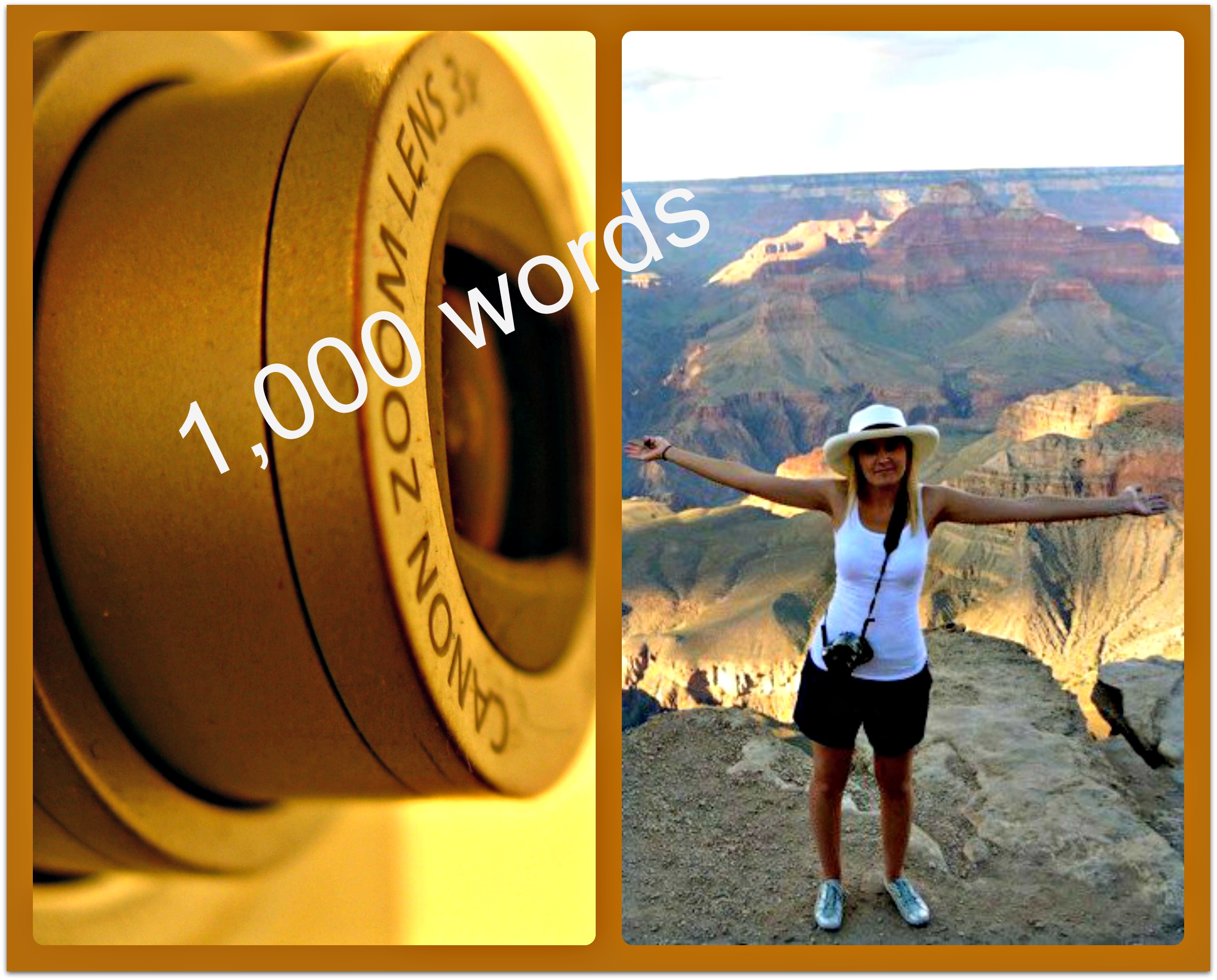
Images (from left): Camera lens from Morguefile; Milda Ratkelyte reveling in her Grand Canyon moment. All other photos by Milda Ratkelyte

TCK TALENT: Alaine Handa choreographs her way to festivals in Toronto and now Edinburgh (2/2)

Habitat CollageNew columnist Elizabeth (Lisa) Liang continues her conversation with fellow TCK performing artist Alaine Handa. (Be sure to check out Part 1 if you haven’t already.)

—ML Awanohara

Hi, everyone! Yesterday, I talked to Alaine Handa about her Third Culture Kid background and what led her to produce her first international touring show, Chameleon. Today we’ll finish up our Chameleon conversation and move on to talking about Alaine’s brand new show, Habitat, which is having its world premiere at the Edinburgh Fringe Festival. (If you happen to be in Edinburgh, scroll down to the bottom of this post for details.)

* * *

Act 2: Chameleon, continued…

Welcome back, Alaine. I can relate to so much of what you said about Chameleon. The creative/rehearsal process can be so fulfilling that the performance itself is often the icing on the cake for the performer-creator. Whom did you have in mind for the wider audience?
As a proud TCK and Global Citizen, I felt the stories of TCKs needed to have a voice that supports all the research, books, blogs, and memoirs that have been written on our lives—yet can transcend boundaries of spoken language through dance and movement, something all cultures can understand. Perhaps my ideas were grandiose, but I really hoped that productions of Chameleon would touch the lives of all those who identify with living cross-culturally and existing as cultural mixes.

It sounds as though Chameleon provided a voice for a cross-section of nomadic, mixed-heritage, intercultural people, not to mention everyone who has ever felt unheard or unseen—which is everyone at some point in their lives. I did the same with Alien Citizen and am wondering if we should create a TCK festival for performing artists like us… But, back to you! How was the performance received?
Every single performance of Chameleon had at least one person in tears because they identified so much with it. After each performance, we spent quite a lot of time talking to audience members. I made a lot of new friends around the world!

Were there any surprises?
The biggest surprise for me came from the TCK student performance at Utahloy International School, in Guangzhou. The students were very receptive and open to sharing their TCK stories with me, as well as on stage. It brought tears to my eyes.

Did you learn anything about yourself in the process?
By telling my story and other TCK/CCK stories, not only did I come to understand myself better, but I also felt a strong sense of community among the globally mobile citizens of the world.

Act 3: Preparing a new show, Habitat, for the Edinburgh Fringe

And now you have a new show, Habitat. Is this your first time at the Edinburgh Fringe?
Yes! We are very excited. One of my dancers has performed in the Fringe before so he will be super helpful during the festival.

In your promotional materials for Habitat, you have the following statement:


Our personal space is the environment in which we confine ourselves to become our truest selves.


Can you explain?
As a TCK, I am constantly meeting people of different backgrounds, and I change my behavior and mannerisms accordingly. Thinking about this, I wanted to explore the transition to one’s personal habitat, where you can finally relax and just “be” who you are.

Who is the intended audience, and is it different than the audience from the one you had in mind for Chameleon?
This piece is more universal. It shows how different people from different backgrounds change the way they behave around others and when they are alone.

I see the cast is multicultural, with dancers from Singapore, USA, Portugal, and Indonesia. Was it a challenge to bring together a cast from so many different places?
To be honest, although it’s “easier” to label the cast by our passport countries, we are, in fact, a collection of multicultural individuals who have lived in different parts of the world at various times. Right now, two of us live in Singapore and the other two in New York. The biggest challenge we faced was rehearsing on separate continents, given the time difference. We relied heavily on email and YouTube, and later on Skype. As the choreographer, I faced the challenge of conveying what I wanted to see from the 2-D perspective of video. Slowly but surely, the show has come together piece by piece, like a jigsaw puzzle.

How did you find the other dancers?
I’ve worked with Laura on Chameleon and was working with her on the creation of draft material prior to my move back to Singapore last year. I met Ezekiel in Singapore; we both teach dance for the same company. Belinda and I are friends from New York; she and I met at an audition for a choreographer I danced for while living there. We found out that we trained with the same jazz dance instructor while I was growing up here in Singapore and took the same classes.


Are the other dancers also TCKs or “displaced” in some way?
I think I’m the only TCK, but of the other three cast members, two are expats and the other is bi-cultural, with both parents originating from different countries and cultures. I guess you could say we are a “displaced” group. I knew I wanted to work with a multicultural cast again because it made for such an interesting group dynamic with Chameleon—although in this case, the cast has not worked together before.

You’re now in Edinburgh. What’s it been like so far?
When we first arrived, we had about 20 hours of rehearsal (including tech and dress rehearsals). The pieces are gradually falling into place.

Act 4: Life after Edinburgh?


Do you have plans to take Habitat anywhere else?
Yes, we are encouraging theatre venue producers, programmers, agents, etc. to come see Habitat during the Fringe in hopes it can be produced in other venues around the world.

Where do you think the show will go next?
I’m not sure—I’d like to bring it down to Australia. I also really enjoyed Toronto Fringe a couple years ago and might bring Habitat there. We are also looking to get this show booked for different venues across Europe, Asia, and North America.

* * *

If you happen to be in Edinburgh, here are the details for Alaine’s show:

  • Number of performers: four, including Alaine
  • Show length: 45 minutes
  • When and where: July 31 – August 13, 2013 @ C Venues (Venue 34), Adam House, Chambers Street, Edinburgh, United Kingdom.
  • Time: 1:50 pm every day.
  • Purchase tickets here.
  • Trailer:

Habitat in Edinburgh Fringe Festival from Alaine Handa on Vimeo.

Questions for Alaine? Be sure to leave them in the comments section!

STAY TUNED for next week’s fab posts.

If you enjoyed this post, we invite you to register for The Displaced Dispatch, a round up of weekly posts from The Displaced Nation, with seasonal recipes, book giveaways and other extras. Register for The Displaced Dispatch by clicking here!

Related posts:

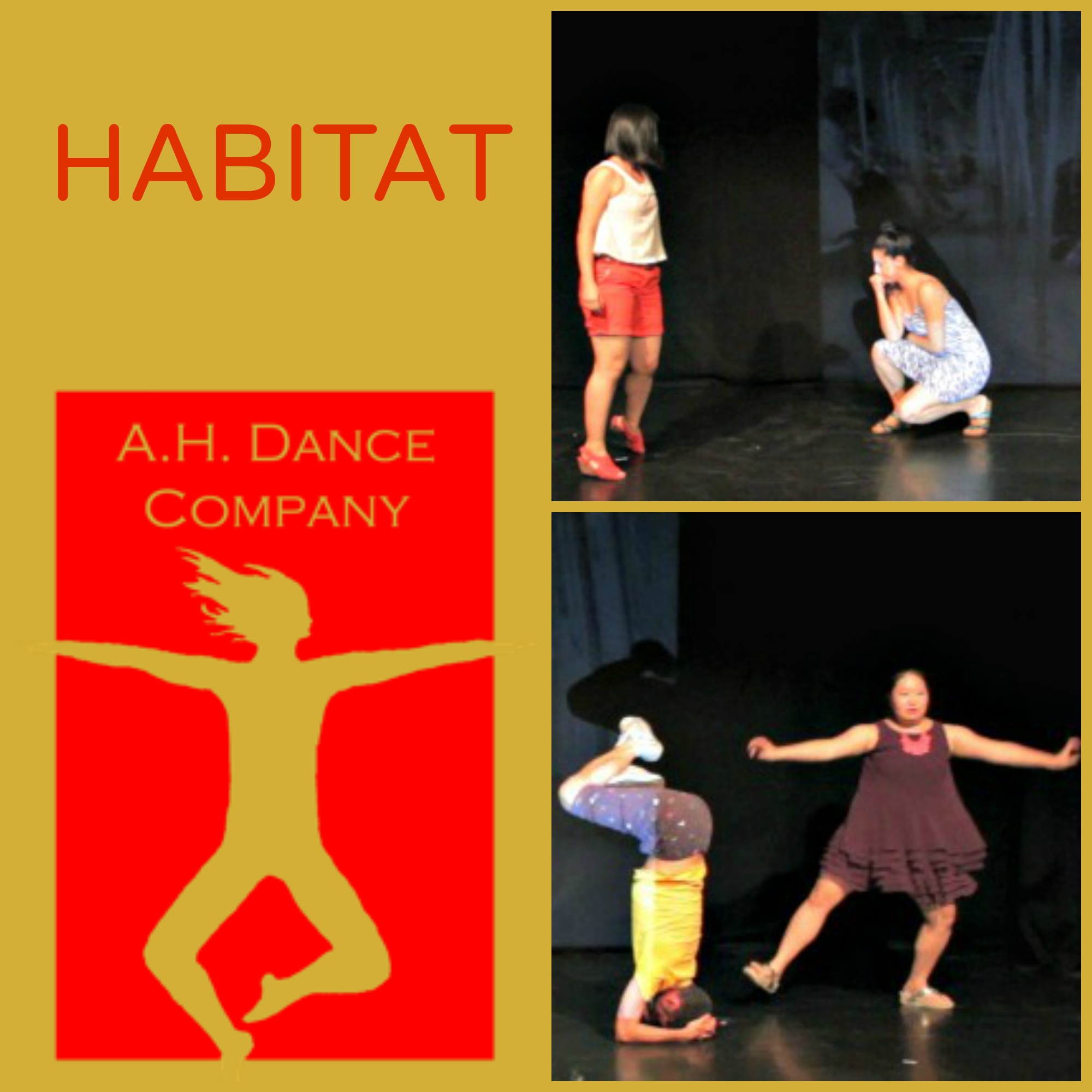
img: Video Stills by Kevin Tadge, taken from preview performances of Habitat at the Edinburgh Fringe (2013).

TCK TALENT: Alaine Handa choreographs her way to festivals in Toronto and now Edinburgh (1/2)

AlaineHanda_pmToday we introduce a new monthly column by Elizabeth (Lisa) Liang. Remember that Guatemalan-American of Chinese-Spanish-Irish-French-German-English descent who was putting on a one woman show in LA about being a Third Culture Kid? You know, she “came out” as a TCK on stage, and lived to write a post about it? Lisa will be searching for other TCK talents to interview for the series. She debuts with a two-part conversation with fellow TCK performing artist Alaine Handa (pictured). Part 2 is here.

—ML Awanohara

Third Culture Kids (TCKs) are making headlines these days for their creative output. We see them being featured in established news outlets and online magazines, as well as on popular blogs. I suspect that the emergence of Barack Obama as national and global leader—he is an Adult TCK (ATCK)—has contributed to the phenomenon.

Still, ATCKs in the performing arts remain relatively rare, so as an ATCK actress-writer I’m always happy to learn of fellow ATCK performing artists like Alaine Handa, a second-generation TCK who works as a choreographer/dancer.

Alaine was born in Singapore. She spent her childhood in Jakarta and adolescence in Singapore. She went to college in Los Angeles, California, and then moved to New York, where she formed her own troupe in December 2007: A.H. Dance Company.

She has since moved back to Singapore, where she has lived for the last year.

In this, the first of a two-part interview, I ask Alaine to tell us about her company, her TCK background, and her first internationally touring show, Chameleon: The Experiences of Global Citizens. In Part Two of the interview, to be posted tomorrow, we’ll move on to talking about her production that is about to premiere (!) at the Edinburgh Fringe Festival.

* * *

Hi, Alaine. I’m curious: what led you to form your own dance company?
Ever since I was a young teenaged dancer, I aspired to have a professional dance company that toured the world performing in different venues, festivals and theaters. I think it was because I longed to have my own choreographic voice to create dance pieces that meant something to me. Still, the decision wasn’t easy to go from dancer/choreographer to choreographer first and dancer second. After moving to New York, I continued performing for other choreographers and project-based dance companies. I only decided at the end of 2009 to focus solely on choreography while performing occasionally. I guess you could say I never lost my determination to make that happen.


Can you tell us more about your background as a second-generation Third Culture Kid?
Both my parents are TCKs. My heritage is mostly Hakka Chinese (with a bit of mix in there somewhere along the lineage). My grandparents and great-grandparents were Chinese immigrants from somewhere in China who settled in Jakarta. My mom attended an English school until it was shut down due to political pressure. She then was sent to boarding schools in Hong Kong and Sydney, and she graduated from an Australian university outside of Sydney. Meanwhile, my Dad attended a Chinese school in Jakarta before it was shut down. He helped his parents for a couple of years and then was sent to Singapore to learn English. After a year, he went to London to attend university and then to Boston to obtain a doctoral degree in optometry.

Which culture do you most identify with?
I attended American international schools in Jakarta and Singapore so I’d say I’m culturally very American. I majored in dance through UCLA’s Department of World Arts & Cultures, which looked at dance and the arts in a sociological-anthropological way and as a community-building catalyst. And then I spent seven years performing, teaching, choreographing, living, creating, loving, and building a community of TCKs in New York.

ACT 1: Chameleon goes to the Toronto Fringe Festival


A couple of years ago, your company put on a show at the Toronto Fringe Festival entitled Chameleon: The Experiences of Global Citizens. I enjoyed watching the video clip of your performance. Please tell us more about it.
Chameleon, the Experiences of Global Citizens is a full dance production with a rotating cast of three to six dancers using film, spoken word, jewelry design, music, and photography, to support the personal stories of TCKs, Cross-Cultural Kids (CCKs), and Global Citizens. Each dancer performs a solo in the production in addition to dancing in the group sections.

The video excerpt is only one section of the production: my solo. (Thanks for watching!) I layered together three different poems for the sound:

  1. “Uniquely Me,” by Alex Graham James from Ruth Van Reken and David C. Pollock’s book, Third Culture Kids: Growing up Among Worlds.
  2. “De Främmande Länderna” by Edith Södergran (translated into English), a Swedish poet I studied while attending UCLA.
  3. Last but not least, “Eulogy to my multi-racial / Multi-cultural ancestors / Also known as the anti-eulogy / To my multi-racial / Multi-cultural ancestors,” by Leilani Chan, an Asian-American theatre director in LA.

It sounds as though you’ve rolled TCK and CCK art into one cohesive piece—much like a TCK or CCK individual is the sum of many seemingly disparate parts, creating a vivid, unique entity. What was the thought process that produced this art?
Hmmm…my thought process in creating Chameleon was a lengthy one as it is very personal to me. A little trip down memory lane is probably the best way to describe it.

I graduated high school in 2001 and then moved to Southern California to attend Pitzer College. 9/11 happened a couple of weeks in. Everyone in the States was in patriotic mode. I didn’t quite fit in. Many journal entries, tears, frustrations, and conversations later, I wrote about my experience as an outsider/insider and drafted a dance piece about my mixed up cultural identity that I wanted to choreograph for my senior project. I transferred to UCLA for my third and fourth year. I experienced bouts of severe depression and several anxiety attacks throughout my college years and began to see the “light” at the end of the dark tunnel my final year.

A friend told me about the Third Culture Kids book in 2003, and a life-changing epiphany happened. I returned to my journal entries and found my ideas to create a dance piece about my experience as a TCK for my senior project. I cast a multicultural group of dancers, interviewed TCKs I knew for my very first documentary film “I am a TCK,” and rented a theatre in L.A. for my senior project and titled the piece “Third Culture Kids.” The first part of the production was the half-hour documentary film followed by a 20-minute dance piece that was autobiographical in nature. This would become the very first draft of Chameleon.

After graduation from UCLA, I was burnt out and moved to New York to pursue a career in dance. I knew that my TCK dance piece needed to be re-created again at some point. I performed for a bunch of independent choreographers, dance companies, and was teaching dance in the public schools in Brooklyn. I formed A.H. Dance Company at the end of 2007 and we had two performing seasons before I decided the time was right to tackle the stories and experiences of TCKs again. I cast dancers that were cross-cultural or TCKs, a TCK actress, a TCK jewelry designer (who created our prop pieces that were an amalgamation of HER TCK experiences), and TCK/CCK/TCA photographers submitted their work to be used as backdrops for the dance sections. I also extended and re-edited the film “I am a TCK” by interviewing even more TCKs. We premiered the piece at University Settlement in New York as part of their Spring Season in 2010, after receiving some funding from Singapore International Foundation, which also funded the performance at the Toronto Fringe Festival.

ACT II: Chameleon travels widely and goes global

We toured the production to festivals and organizations with community programming. I even presented portions of the piece, including the rehearsal process, twice at the annual Families in Global Transitions (FIGT) conference, where I met Ruth Van Reken, Tina Quick, Apple Gidley, Jo Parfitt, Julia Simens, Judy Rickatson, and many more of the TCK researchers, expat writers/bloggers, international educators, and more.

I am very proud of this work and how it has traveled around the world. Currently, Chameleon has taken on a more educational approach. I’ve re-set portions of the piece for student TCK dancers from Singapore American School and they performed it in Kuala Lumpur as well as in Singapore. In January this year, I traveled to Guangzhou to re-set a simpler version on TCK students (a lot of them were non-dancers) at the Utahloy International School for a week-long residency that culminated in a performance. The rehearsal process of telling the personal stories of TCKs through movement and dance with spoken word was equally as rewarding as the student performance itself.

* * *

This just in from Alaine at the Edinburgh Festival: The preview performances of her latest production, Habitat, have been going well, and they’ve even received a recommendation from a local newspaper, behind famous greats like Carlos Acosta and the Bolshoi Ballet (which are actually playing in London). Kudos, Alaine!

Tomorrow we’ll talk to Alaine about how this production came about. Any questions for her, meantime?

STAY TUNED for Part 2 of Lisa Liang’s conversation with Alaine Handa.

If you enjoyed this post, we invite you to register for The Displaced Dispatch, a round up of weekly posts from The Displaced Nation, with seasonal recipes, book giveaways and other extras. Register for The Displaced Dispatch by clicking here!

Related posts:

img: Alaine Handa, by Anthony Schiavo, courtesy A.H. Dance Company.

What’s it like to “come out” as a Third Culture Kid on stage? Elizabeth Liang tells all!

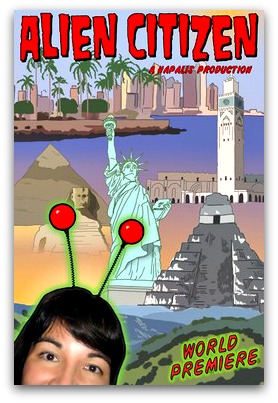
Liang Alien Citizen dancingAs reported here last month, Elizabeth Liang spent the month of May performing, at a venue in Los Angeles, a one-woman show about being a Third Culture Kid, or TCK. As some readers may recall, Liang is a self-described Guatemalan-American business brat of Chinese-Spanish-Irish-French-German-English descent. She was brought up by peripatetic parents in Central America, North Africa, the Middle East, and Connecticut. Many of us were curious about not only how she could pack all of that personal history into a solo stage performance, but also how the (mostly American) audiences would respond. Today is the day we get to find out. Take it away, Elizabeth!

—ML Awanohara

I had no idea what to expect from audiences when I opened my solo show, Alien Citizen, in Hollywood, California, on May 3rd (it closed June 1st).

Since the show is about my upbringing as a dual citizen of mixed heritage in six countries, I assumed it would appeal mainly to Adult Third Culture Kids (ATCKs) and people of mixed heritage—the people I wrote it for, since we rarely see our stories portrayed on stage or screen.

I wanted the show to be funny, but wasn’t sure if the humor would translate.

And I wanted people to be moved by the story.

Some pleasant surprises

As it turned out:
1) I was happily surprised by the composition of the audience. People of all backgrounds, ethnicities, and ages came to see my performance. Some were Americans who had never left their home state until college, others had moved domestically countless times as kids. By the same token, I was pleased that the audience did include ATCKs, global nomads, people of mixed heritage, expats, and immigrants.

2) Many of the houses were full. I had tentatively hoped the story would resonate with enough people to fill the house because the play is about identity, which everyone grapples with. That said, I didn’t expect everyone to empathize with my lifelong experience as an outsider of some kind and even feared that this experience would alienate some audience members… The full houses suggested that the show was actually resonating with most people. For this I must give credit to my director, Sofie Calderon, because she guided me to a brave and inclusive performance. I also take pride in the script, which I worked on for two years.

3) The audience laughed in the right places, mostly. I was astounded at the number of laughs I got in my preview performance. It was wonderful. This continued once the play got under way, although I did have a few quiet nights, when the audience was listening intently and smiling rather than laughing. (Then there was the night when a man in the front row fell asleep. This thickened my skin…after I considered quitting!)

4) The audiences were moved—not only at the end of the play where it was intended, but throughout the performance. People told me that they oscillated between tears and laughter for a large part of the performance—the highest praise I could have hoped for.

Nights to remember

The performance that stands out most for me was the first time my parents, brother, and aunt came to watch me. They had all traveled internationally or cross-country to see it.

My parents and brother are characters in the show, so I was unsure of how they might react. That night got some of the biggest laughs, and my family told me afterward that while they certainly laughed, they also wept throughout the performance because I was telling their story, too. The show brought back experiences they hadn’t thought of in years.

Opening and closing nights were wildly different and weirdly similar. I performed in abject terror on opening weekend, and while I kept it hidden from the audience, it was difficult to enjoy myself on stage. Through the run, I gained heaps of confidence, and was able to relax and “play” more.

However, the final show was reminiscent of opening night in that it wasn’t my best. An actor’s performance is like a speeding train with no seats—ideally, the actor makes a flying leap to catch it, hangs onto the rails, and rides it without falling. Sometimes, though, the actor has to sprint for some time to catch the train, using every skill s/he has—and then keeps slipping from the handrails and grabbing them again, never able to “coast” and enjoy the ride.

I was sorry that my closing night wasn’t a great ride for me, but the good thing about performing for different groups of people each night is that the audience has no idea of what to expect, yet the story remains the same. So closing night still managed to get a standing ovation, as had other nights.

Lessons learned from “coming out” on stage

Performing Alien Citizen was a “coming out” for me. Although I told the story as entertainingly as possible, the play explores the darker aspects of having a peripatetic childhood, being a child of color and mixed heritage in the socially segregated USA of my youth, and being a girl blooming into womanhood on the hostile sidewalks of North Africa and the cold campus of a women’s college in the States.

I had never told these stories publicly (and rarely in private) because I didn’t want to seem ungrateful for all of the wondrous experiences I’d had as a TCK (including life in North Africa and at college), but also because I’m accustomed to listeners failing to understand my point. Hearing negative stories, people tend to conclude that a peripatetic childhood is terrible, or that the country in question is not worth visiting. But that isn’t what I’m trying to say.

Alien Citizen was my attempt to pronounce that:

  1. Being a nomad, a kid of mixed heritage, and a girl can be hard.
  2. This doesn’t nullify the glorious experiences to be had from having any or all of these selves.
  3. The accompanying stories—positive and negative—have a right to be told. They are rarely told, they validate many people’s experiences, and they make a good yarn.

The overwhelmingly positive response of my audiences, night after night, taught me that my story is relatable and interesting, and that it’s a testament to my own strength as a human being, something I hadn’t known would be the case.

Doing the show also confirmed my belief that if a story is told with humor, people will listen to the darker side of it, and empathize.

I’ve been approached by universities in and out of state, as well as venues in Central America, to perform the show and teach workshops on how to create a solo show.

I hope to take the show all over the world.

I’m profoundly grateful that the world premiere of Alien Citizen has led to so many opportunities. I will also teach workshops in Los Angeles starting this fall.

* * *

Readers, I feel moved by this report even though I didn’t get to witness Elizabeth Liang’s deeply moving performance. (Elizabeth, please bring the show to New York so that I can see it!) How about you—any further questions for this brave and bold artist?

STAY TUNED for next week’s posts, featuring yet more international creatives as well as the latest episode in our fictional expat series, Libby’s Life.

If you enjoyed this post, we invite you to register for The Displaced Dispatch, a round up of weekly posts from The Displaced Nation, with seasonal recipes, book giveaways and other extras. Register for The Displaced Dispatch by clicking here!

Related posts:

img: Elizabeth Liang performing Alien Citizen in LA.

And the May 2013 Alices go to … these 4 international creatives

 © Iamezan | Dreamstime.com Used under license

© Iamezan | Dreamstime.com
Used under license

As subscribers to our weekly newsletter will hopefully have noticed by now, each week our Displaced Dispatch presents an “Alice Award” to a writer who we think has a special handle on the curious and unreal aspects of the displaced life of global residency and travel. Not only that, but this person has used their befuddlement as a spur to creativity. He or she qualifies as an “international creative.”

Today’s post honors May’s four Alice recipients, beginning with the most recent and this time including citations.

So, without further ado: The May 2013 Alices go to (drumroll…):

1) ADAM GROFFMAN, travel blogger and expat

Source: “How a children’s book inspired my wanderlust” in Travels of Adam
Posted on: 13 April 2013
Snippet:

You see, what I loved about this book as a kid is the focus on architecture and food in this utopian society. Each family is responsible for bringing a country’s culture to the island nation.

Citation: Many of us at the Displaced Nation attribute our abilities to tolerate and even embrace life abroad (the strange foods and drinks, the loneliness, the largely incomprehensible rules) from having taken to heart Alice’s Adventures in Wonderland and its sequel, Through the Looking Glass, as kids. A good dose of literary nonsense has taken us a long way, and even to this day, we appreciate having recourse to Lewis Carroll’s great works to make sense of our rather curious lifestyles in countries other than those in which we were born.

Adam, we understand that you quit your job in Boston to travel the world and that you trace your own wanderlust to the 1947 American children’s book The Twenty-One Balloons, by William Pène du Bois, a story that in some ways is even more fanciful than Alice’s.

For those who don’t know it: The book begins when a schoolteacher, Professor William Waterman Sherman, becomes bored with his life and sets off on a journey in a hot air balloon called The Globe. He hopes the wind will blow him and his balloon all around the world. But instead he has a crash landing on the mysterious island of Krakatoa (Indonesia), where he discovers a utopian society started up by a group of wealthy families. Each family owns a restaurant of different types of foreign foods and all members of the island eat together at a different house, full of fantastic inventions, every night. Krakatoa being a volcanic island, the families are aware of the danger that the volcano could erupt at any moment (in fact its volcanoes erupted in 1883). Their escape plan consists of a platform made of balloons…

Adam, we love the idea of emulating a fictional character who favors balloon travel—the kind that begins without regard to speed and without a destination in mind. It’s also romantic to think that you expect to find, at best, utopianism, at worst, good food, in the course of your world wanderings. Perhaps it accounts for why you’ve landed your own “balloon” in Berlin, Germany’s creative capital and a city renowned for its architecture (only, how is the food there?).

2) TRACY SLATER, expat writer, author and blogger

Source: “What Does Home Mean When You Live Abroad?” in The Good Shufu
Posted on: 8 May 2013
Snippet:

I know how easy it is, when we live overseas, to lose our gimlet eye about home: to romanticize it, to see it as a kind of lost Eden, a place where we wouldn’t suffer the same disappointments or lonelinesses or defeats that we suffer in our expat lives.

Citation: Tracy, we would add to that something we learned from Alice, which is that part of the reason for cherishing the memory of home so much is that you can’t easily share what you love about it with the people you encounter in your new place. Alice experiences this when trying to talk about her beloved cat, Dinah, with the Wonderland creatures:

“I wish I hadn’t mentioned Dinah!” she said to herself in a melancholy tone. “Nobody seems to like her, down here, and I’m sure she’s the best cat in the world! Oh, my dear Dinah! I wonder if I shall ever see you any more!” And here poor Alice began to cry again, for she felt very lonely and low-spirited.

We also find inspiring your quote from the Egyptian writer and thinker André Aciman, that all exiles impulsively look for their homeland abroad. Even poor Alice suffered from that affliction—recall her trying to make herself at home at the Mad Hatter’s tea party, only to discover it is a less than civil gathering to what she is used to. First she is told there is no room for her at the table; then when she sits anyway, that her hair needs cutting. She is offered wine even though there isn’t any, and told to take more tea even though she hasn’t had any.

In fact, some of us can relate quite directly to this need to feel at home via a good cup of tea. TDN writer Kate Allison, for instance, has lived in the United States for many years but to this day fails to understand why Americans give her a cup of lukewarm water and a tea bag when she orders tea. And ML Awanohara, who lived in England before becoming an expat in Japan, often longed for English tea while sitting through the Japanese tea ceremony.

Tracy, we very much look forward to your forthcoming book, The Good Shufu: A Wife in Search of a Life Between East and West (Putnam, 2015), to help us make sense of such classic expat predicaments.

3) DANIELLA ZALCMAN, photojournalist

Source: “London + New York: A double exposure project”—an interview with Daniella by Austin Yoder on Matador Network
Posted on: 22 April, 2013
Snippet:

When [Daniella] moved from New York to London, she decided to create a series of double exposures to marry the spirit of both cities based on a combination of negative space, color, and contrast. Daniella’s double exposures create beautiful imaginary landscapes, and are captured entirely with her iPhone 4s.

“When I got to London, I knew that I wanted to capture not just the sensation of leaving NYC, but also of exploring a new city and making that environment feel like home.”

Citation: Daniella, we are enchanted by your idea of creating a composite of your beloved home city (New York) with your adopted city (London) to come up with an imaginary landscape. Indeed, we think it must be akin to the process Lewis Carroll used when creating Alice’s Wonderland—blending the bucolic English countryside surrounding Alice (she is sitting on the river bank considering making a daisy chain when the White Rabbit first appears) with the curious world that exists at the bottom of the rabbit hole, the familiar with the unfamiliar. When Alice awakens and reports her dream to her sister, the sister “half-believes” herself to be in Wonderland—if only she can suspend her disbelief for long enough to the sheep-bells tinkling in the distance as rattling teacups, the voice of the shepherd boy as the Queen’s shrill cries, and the lowing of the cattle in the distance as the Mock Turtle’s heavy sobs…

4) “SARAH SOMEWHERE”, world traveler and blogger

Source:On Freedom” in Sarah Somewhere blog
Posted on: 29 April 2013
Snippet:

I am not, by nature, a free spirit. I’m a worrier, a control freak and a chronic people pleaser. Letting go and trusting in the universe’s plan for me is not my default setting, nor is being content with what I have rather than continually striving for more. I still need some practice.

Citation: Sarah, your struggle with living life in the moment in Mexico puts us in mind of Alice, who, is constantly worrying about the impression she is leaving on the Wonderland residents, and finds it a challenge to enjoy the moment in a place as curious as Wonderland. We wish you luck in finding that sweet spot between total personal freedom and societal obligations. And, taking our cue from Alice’s sister, we envision a day when you’ll be telling stories about your adventures in Southeast Asia, China, Mexico and India to a group of children and inspiring them to follow their unique destinies:

she pictured to herself how this same little sister of hers would, in the after-time, be herself a grown woman; and how she would keep, through all her riper years, the simple and loving heart of her childhood: and how she would gather about her other little children, and make their eyes bright and eager with many a strange tale, perhaps even with the dream of Wonderland of long ago: and how she would feel with all their simple sorrows, and find a pleasure in all their simple joys, remembering her own child-life, and the happy summer days.

* * *

So, readers, do you have a favorite from the above, and do you have any posts you’d like to see among June’s Alice Awards? We’d love to hear your suggestions! And don’t miss out on these weekly sources of inspiration. Get on our subscription list now!

STAY TUNED for tomorrow’s post, another Jack the Hack column…

Writers and other international creatives: If you want to know in advance whether you’re one of our Alice Award winners, sign up to receive The Displaced Dispatch, a round up of weekly posts from The Displaced Nation, with news of book giveaways, future posts, and of course, our weekly Alice Award!. Register for The Displaced Dispatch by clicking here!

Related posts:

For travel & shutter bug Ildrim Valley, a picture says …

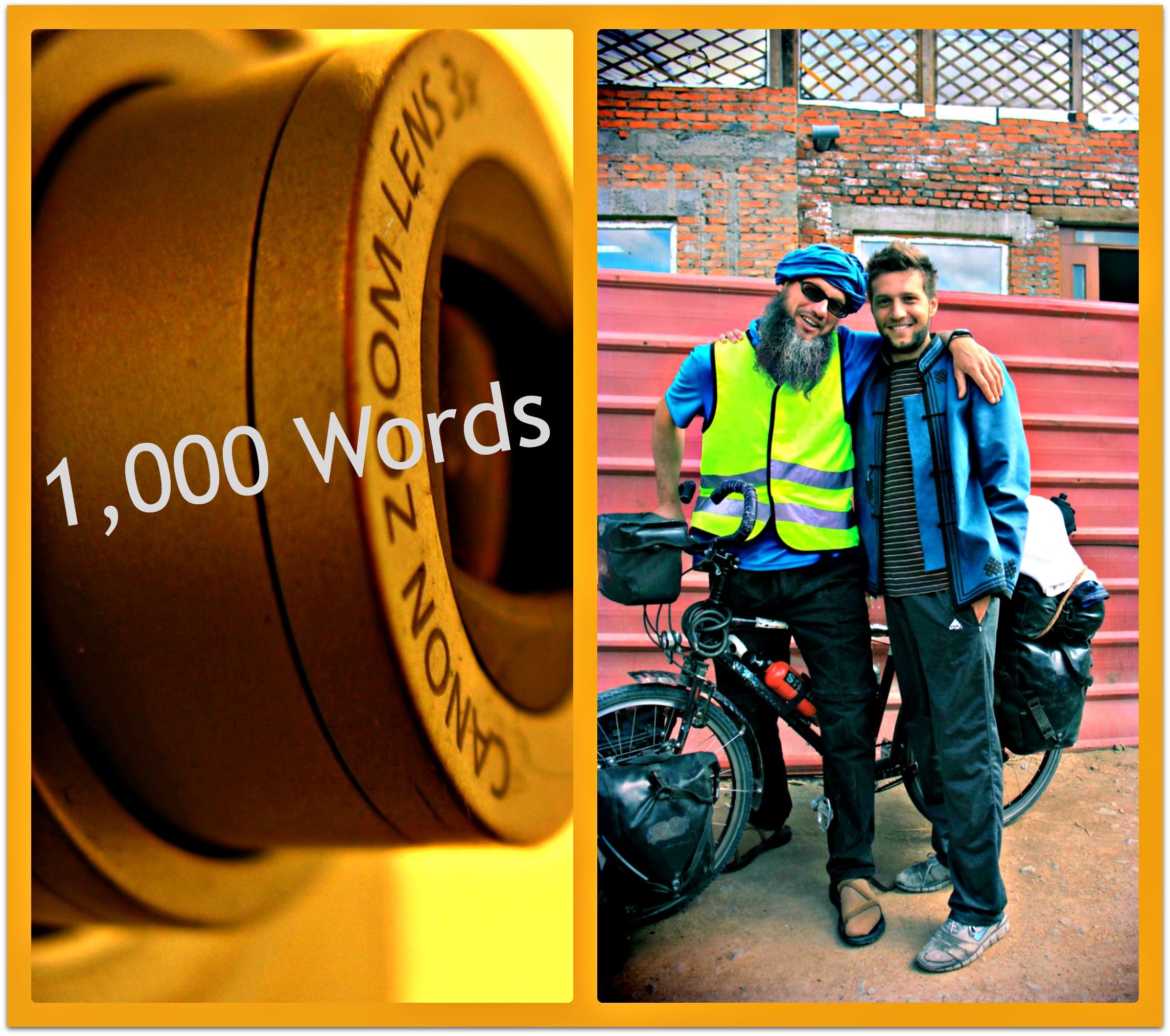
Collage_1000words_Ildrim_dssWelcome to our new series: “A picture says …”, featuring interviews with displaced creatives for whom a camera is a mode of artistic expression for the sights and people they encounter in their nomadic wanderings.

To kick off the series, I have the pleasure of conversing with Ildrim Valley, an intrepid adventurer who is also an economist(!) and travel photographer. It is, of course, this last point we’ll be focusing on, so to speak…

But first a few of Ildrim’s vital statistics:

Place of birth: Baku, Azerbaijan
Passports: Canada; Azerbaijan
Overseas history: From least to most recent: Azerbaijan (Baku); Switzerland (Geneva); Kenya (Nairobi); Canada (Vancouver, British Columbia); Hungary (Budapest); France (Toulouse)—2012 to present.
Occupations: Graduate student of economics; travel photographer; amateur snowboarder; adventurer!
Cyberspace coordinates: Curious Lines (photography blog)

Without further ado, let’s find out more about Ildrim and the way he uses photography as a creative outlet for his international adventures.

Peripatetic from an early age

Hello there, Ildrim. Welcome to the Displaced Nation. Let’s begin by having you tell us a bit about your travels. What inspired you to set off and what has motivated you to keep on going?
My first travel experiences come from traveling with my mom and brother. My mom is eager to change her surroundings, so thanks to her I was lucky to move around and travel early in life. At an early age I’ve been amazed at how life can be so different for people elsewhere than my hometown.

I think that this early fascination developed into a strong curiosity about lifestyles. Now that my mom no longer takes me on adventures (she gets herself into trouble without me!), I try to find my own means of traveling and satisfying my curiosity about places around the world.

You are a self-described adventurer. Do you prefer going and going, or do you sometimes settle in one place for a time?
As I travel more, I realize that it’s not just about seeing a new place that excites me the most. As fun as it is to keep going and going, simply being somewhere new isn’t always satisfying. Settling somewhere for a time gives me an opportunity to live through something different and possibly understand it.

I understand you recently moved to Toulouse, France?
Yes, I moved to Toulouse in September 2012 for graduate school. I felt like grad school would open a few doors to pursue some of my other interests, and it presented a fairly easy way to move to another country. So I set out to look for good schools around the world that fit my background as well as academic interests. At the time I was interested in southern Europe, and Toulouse offers the right kind of balance: it’s a great school with welcoming people and fine landscapes to be explored. Plus an opportunity to finally master French was very appealing—though I have to say I’m not doing a very satisfactory job so far.

On your photography blog, Curious Lines, you say:

Photography for me isn’t just an art form, it’s a way to share experiences.

When and why did you start using DSLR cameras?
I got my first DSLR in 2010, shortly before moving to Budapest. I got it in order to document the move.

Does the process itself of capturing a place or moment affect the relationship you have with that place? For example, does capturing a good set of photos increase the fondness you have for that place?
The process of capturing a moment does affect the way I experience a place, which in turn affects my relationship with it. But how I feel about a place has a lot to do with how I feel about the people from that place. So when I spend enough time in one spot, I get to meet people and build relationships. However, when the stays are short, the camera has a more significant role as it facilitates a connection with others. It helps me get a reaction, an emotional response—a smile or maybe a conversation.

But it’s important to point out that in some places around the world, carrying a camera can have a negative affect. People are fast to judge you on how you look. In Kenya, for example, I have a lighter skin tone, which results in the locals treating me differently, not necessarily in a positive way.

Likewise, having a large camera around your neck or in your hand will send a different signal and will be interpreted in a different way depending on where you are in the world.

I would just like to add that one way in which camera affects my experiences is that it taught me how to look at things differently without a lens. It helps me appreciate things differently and it’s important to know when to put the camera away and enjoy things with your own eyes. It’s easy for me to get sucked into continuous photo taking when I’m in a new place. Though I enjoy it, there are still other things to be enjoyed behind the lens, which is even more true when you’re traveling with someone else. But it doesn’t have to be one or the other; with time I’ve been learning how to balance the two.

For me, the camera has to be an extension of the adventure and not the purpose for it.

Looking back on all the places where you’ve taken photos, which have been your top three favorite places to shoot?
Although my opinion changes with time, my top spot for now is Mongolia. Last year I spent about a month there. The people and their lifestyles around the country fascinate me. The landscapes are pure and surreal. When you have such a keen interest and curiosity about your subject, shooting becomes that much more enjoyable. I’m actually redesigning my Website to present more content via other channels than a blog. One of the new sections will be about my experiences in Mongolia. The other two places that I love for photography are coastal British Columbia and Croatia.

An eye for the London Eye

On your blog you also say:

Once I started using a DSLR I’ve realized that scenes that come out on my computer screen don’t reflect the whole beauty of the moment. They don’t transmit the same type of emotion I felt standing behind the lens. So I tried and am still experimenting with different techniques to bring myself and others closer to how it actually was, at least in my mind. I don’t always try to achieve the most “realistic” looking photos, but rather try to transmit the feeling of the scene.

the-london-eye_dropshadowI notice that one of the techniques you’ve used is High Dynamic Range Imaging (HDR), an example of which can be seen in this striking image of my hometown London (original here)—by the way, you’ve now made me feel a little homesick! Tell me a little about HDR and how a novice photographer like myself can go about trying to achieve similar effects with a DSLR camera.
I have a very basic example of what High Dynamic Range (HDR) does in one of my blog posts. In a nutshell, cameras don’t capture the range of light the same way our eyes do. Our eyes adjust to both bright and dark spots in the same scene while for cameras it’s always a trade off.

HDR photography allows you to capture more light by taking multiple shots of different exposures. I take three: one normal, one overexposed bright photo, and one underexposed dark photo. By combining these three shots together you get a higher range of light information available to play with. Some people take five or even seven photos, but three is enough in most situations.

To achieve this HDR effect, I take my three shots bearing these points in mind:

  • The auto-bracketing option on modern-day cameras helps you take three photos with a single click.
  • Set the camera on Aperture priority mode (“AV” or “A” on most cameras) to have the same aperture and depth of field in all three shots.
  • Ensure that the three shots are as identical in composition as possible. A tripod could be useful. (The surroundings or simply holding your breath will do in many cases.)
  • Use software* to combine all three shots together and then let your imagination take charge.

*Some of the most popular softwares are Photomatix Pro, HDR EFEX PRO and HDR Darkroom. Then there are options like Luminance HDR, which is free (open source) but will take some time getting used to. Whichever software you choose, it will help you combine all this light information into one image. Then it’s almost always a good idea to take it into your preferred photo editing software and continue working as you would with any other photo.

People pix

Streetvendor_drop shadowTell me about this recent photo you took of a street vendor in Kiev (original here). How did you find yourself in Kiev?
I was on a long earthbound trip in 2012 from Budapest to Hong Kong, which took me through Kiev.

How did you come across this street vendor? Did you converse with him before taking his photo?
There was no verbal communication. Rather, I nodded at the guy while moving the camera in my hand slowly, indicating that I wanted to take his photo. His face was blank in acceptance so I went ahead and snapped the photo.

Do you always try to try get permission from people when trying to take a photo?
I prefer to ask for permission, but sometimes it’s the spontaneity that makes the photo and asking would yield a different result when they prepare themselves for the photo. Either way, I make sure the subject knows I’m taking their photo.

Is it difficult to obtain permission when facing a language barrier?
It’s important to learn how to communicate with your facial expressions and your body as well as being able to read others. In my experience, regardless of whether your communications are verbal or non-verbal, the more confident and subtle you are, the more likely you are to get approval.

One thing about the street vendor picture that really stands out for me is the boldness of the colors. Can you tell me why and how you set up the shot like this?
Initially, I tried to achieve an effect that would provoke an emotional response akin to the one I had in that moment. A new environment can be emotionally overwhelming—a feeling that can be difficult to capture. First impressions are special. So when I first started editing it was the exaggeration of colors that made me feel the closest to “re-experiencing” the place. Although you can never really re-live the moment, you can come up with something that reminds you of it.

In a way it’s like when a friend tells you a “you really had to be there” story—and exaggerates the details to make the point. It’s not that the true story needs any exaggeration to be interesting, but you need to have the exaggeration to translate the feeling.

Many of these aspects of photography are, of course, a matter of experience and taste. Believe it or not, my earlier photos were even more color crazy. With more experience I’m leaning away from it and trying to express the moment in other ways. I really like black-and-white photography and the subtlety of its expression. I find it trickier and am experimenting with it more at the moment.

Parting shots…

When you take a look at the two photos mentioned above, what’s the first thing you remember?
The London photo reminds me of my host, a friend I haven’t seen in years.

The photo of the Ukrainian street vendor reminds me of a young violinist I met on the train and spent the day with. It also reminds me of how hot the day was and my craving for kvass (a fermented drink made from rye bread). Believe me, a hot day in Ukraine can make you crave kvass as a refreshment.

Are you hoping that these photos will evoke similar emotions in other viewers?
The intent is not always to prompt the same reaction I had. The same photo can prompt many different reactions. I like it when visitors to my site send messages expressing how my photos reminded them of their own experiences.

Finally, do you have any advice for wannabe photographers who are traveling or living abroad, on getting started?
I’d say to take photos for yourself first and not to think about what others would want to see or to try to meet their expectations. The first person your photos should move is yourself.

Thank you, Ildrim! Readers, what do you make of our first photographer post? Some wise words here, and who knew that autobracketing could be so useful? So, any further questions for Ildrim? Please leave them in the comments!

STAY TUNED for tomorrow’s post from expat author, Helena Halme, who is giving away THREE COPIES of her latest novel! 🙂

If you enjoyed this post, we invite you to register for The Displaced Dispatch, a round up of weekly posts from The Displaced Nation, with seasonal recipes, book giveaways and other extras. Register for The Displaced Dispatch by clicking here!

Related post:

Images (from left): Camera lens from MorgueFile; Ildrim Valley (on right) with a traveler he met last summer in Ulaanbaatar in Mongolia. Says Ildrim: “He was originally from Slovenia but didn’t like being associated with any particular place. He’d been traveling on his bicycle for about four years at that point.”

Who is it that can tell me who I am? Third Culture Kid drama!

AlienCitizen_posterAt the height of my own repeat expat experience—when I had a foot in Asia (Japan), Europe (UK) and North America (United States)—I often thought of this line from Shakespeare’s King Lear:

Who is it that can tell me who I am?

—King Lear (Act I, Scene 4)

Prone to being somewhat melodramatic and hyperbolic (yes, I know I don’t have three feet!), I decided I’d peaked out too early. After all, Lear was an old man when he cast himself out and then had to grapple with what it feels like not to have a home or identity, whereas I was still a young woman.

It’s a good thing I was never a Third Culture Kid, or TCK—that’s all I can say, or else we’d be in for some MAJOR drama on this site. Instead we can leave that to someone much more suited: the actress Elizabeth Liang, who is the subject of today’s post. A self-described Guatemalan-American business brat of Chinese-Spanish-Irish-French-German-English descent, Liang was brought up by peripatetic parents in Central America, North Africa, the Middle East, and Connecticut.

Having faced the existential question of “Who are you when you’re from everywhere and nowhere?” practically from the moment of birth, Liang has channeled her thoughts into the creation of a one-woman show, Alien Citizen, which will have its world premiere in Los Angeles with performances this coming Friday and Saturday, May 3-4  (closing June 1). It’s being presented by Liang’s own company, HapaLis Productions, in association with the Multiracial Americans of Southern California.

Any TCKs reading this post (and/or their parents) should be happy to hear that Lliang’s play is not a tragedy. According to the press release, which she shared by email last night, Alien Citizen has both funny and poignant moments:

It weaves humorous stories about growing up as an Alien Citizen abroad with American commercial jingles providing [Elizabeth’s] soundtrack through first love, language confusion, culture shock, Clark Gable, and sandstorms.

Hmmm… Clark Gable?

Though Liang is busy preparing for Friday’s opening, she was kind enough to answer a couple of my questions. Naturally, I wanted to hear more about why she’d written the play and the audience she had in mind for it. Here’s what she told me:

I wrote Alien Citizen for my fellow global nomads and TCKs, because we rarely see our stories portrayed on stage or screen. I also wrote it because I kept being asked if I was from the Midwestern USA and I wanted to set the record straight: my story is unusual, and, I hope, interesting. The play is about identity, which everyone grapples with, but I especially hope that everyone who has lived a cross-cultural life—anyone who has felt like a bridge or an island or both—will relate to it.

Aha, I knew it! It’s for the likes of me as well! And probably you, too, reader, if you’re a Displaced Nation regular. We could use a little drama in our lives…

A few choice lines from the drama

I also asked Liang to share some lines from the play. She obliged with the following list:

  • “We’re Guatemalan when I’m little.”
  • “Nobody on TV looks like me…except maybe Spock on the Star Trek reruns.”
  • “Fairfield County, Connecticut. With four whole seasons, including winter! And the people are even colder than the winters.”
  • “Morocco is like the moon to us at first.”
  • “I love Egypt so much in that moment, it knocks the wind out of me. And I’m just this useless teenager from… Well, I’m not from here.”
  • “And I make friends! Because in the theatre, everybody’s weird.”
  • “I’m not from a place, I’m from people.”

I must say, I like that one about everyone in the theatre being weird. Maybe I should have tried my hand at acting after repatriating? (Except at this point I’d choose to be a Korean soap opera star—yes, I know I’m displaced!)

Show our TCK performer some love!

Readers, it’s time we showed Elizabeth some love for what she’s up to this month. If you live in the LA area, get your ticket half price through May 25th and after that at regular price.

If not, you can:

Questions for Elizabeth, calls for encores? (Should we invite her to submit a post on how the play was received?) Please leave them below. And on Friday evening LA time, let’s all shout out, from wherever we are in the world, “Break a leg, Elizabeth!”

STAY TUNED for tomorrow’s post, another installment in the life of our fictional expat heroine, Libby. (What, not keeping up with Libby? Read the first three episodes of her expat adventures.)

If you enjoyed this post, we invite you to register for The Displaced Dispatch, a round up of weekly posts from The Displaced Nation, with seasonal recipes, book giveaways and other extras. Register for The Displaced Dispatch by clicking here!

Related posts:

img: Promotional poster for world premiere of Alien Citizen

Dipika Kohli on world community art, defining a future, and why “wait and see” won’t cut it

tumblr_m7b7kmftdt1qaqyfmToday TDN welcomes Dipika Kohli, author of The Elopement, which we reviewed in September last year. Raised in America by Indian parents, Dipika now lives with her Japanese husband, Akira, in Durham, North Carolina, where the couple run a design company

Together, they are the driving force behind Stitch, a community art project for which they are currently raising funds on Kickstarter in order to take the project around the globe. 

Dipika, who has channeled her own feelings of displacedness into writing and art, joins us today to tell us more about this exciting project, the first in a series.

We begin with an intro to what Stitch is all about…

Stitch 101

Stitch is about supporting local artists and the art scene; it’s about a community defining the fabric of itself and its future. It’s community art, and an exercise in word-driven intention-setting at the same time.

Dipika and Akira say:

Now, we’re bombarded by images we never chose for ourselves—we let brands and labels do the work to define and express who we are. It doesn’t have to be that way. What if we could choose what we see? In simple, uplifting, people-nominated and people-chosen words and images? Would we, as a community, behave differently? Would we know who we are?

5d4954b68a302fd6081cb8f67e904ad2_large-1

The 276 words representing Durham, NC, in a word-cloud indicating frequency/popularity

For two months, Dipika and Akira talked to hundreds of people in their town of Durham, North Carolina, asking them one question:

What would you like to see Durham become, in one word?

After collecting many words, the residents of Durham voted for those that described their vision of the future Durham — the Durham they would like to be part of.

The resultant 276 words were passed onto two dozen local artists, who created work inspired by these words. Collectively, these pieces create a vision for the town, while money raised from the selling of these pieces will take Stitch to other communities in the world,

“connecting disparate communities with a common thread of art and collective visions.”

And now — over to Dipika:

Insane…or brilliant?

You have to either be insane or brilliant. To do it, I mean. To get up and do the crazy thing that no one believes will ever work. Everyone who says they care about you and your future likes to say, “Just wait, and see.” See if you can save enough. See if you still feel like doing something wild and crazy. Wait. See.

I’m done with that approach.

You see, I’ve been “waiting and seeing” for about a year now. I’ve been wanting to get back on the road, but why? How? What would that accomplish? A little Descartes reincarnation was sitting on my shoulder, niggling.

March, I said, was when I’d pull the trigger. Whether it made “sense” or not to jump ship and move out of my apartment for some unknown adventure ahead.

Taking Flight

March 16. My birthday. The day I launched the book that took me 13 years to get the nerve up to actually publish. So romantic, I thought, to finally upload Flight of Pisces and then move out of my apartment, and “away.” Wherever that might be.

Flight of Pisces was about the time I left Durham, NC, to trek about in India. Footloose and in search of “identity,” I wanted to see the place where my parents originally come from. New Delhi, and Old Delhi. I went solo, and I did it big, culminating in something that all these years later, I shake my head about, thinking, “Did I have some kind of death wish?”

Maybe I did.

Maybe it was survivor’s guilt. Or more, or less. Who knows.

What I do know, and what I can say, is that it had to be the way it was. I had to go and try something that seemed like it was the most absurd and off-the-track kind of thing in the world, in the universe, even, because without having gone and done it, I wouldn’t have ever gotten it. “The glimpse.” A feeling that the world was shifting beneath my feet. And, indeed, it was.

Now, the same feeling is resurfacing.

On the road again

I’m getting lost in the world, again, and on purpose one more time. It’s okay with me that I have a four year-old who’ll be my classmate on this new tour as we go on an educational field trip together to someplace new. I can’t disclose all the details (yet), but I’m trusting it’s going to be okay.

We’ll have just one text with us, in our imaginations. A book that’s got a bunch of blank pages inside, and one image. It’s the cover, and it looks like this:

It’s the drawing I made back in 1994, when I met my husband, Akira Morita. He’s from Japan, and I’m Indian-American, and we eloped to Ireland in 2000. You could say we like to mix it up. Or just trust that we’ll find something wherever we go. One thing’s for sure, we’re always getting to know a bunch of people well, and anyone who’s into the displaced feeling of being elsewhere knows what I mean.

I held a roundtable last year called EXPAT at a place in town called Mad Hatter’s. It’s a little cafe, and about a dozen of us got together to talk about our experiences in places like Ghana, Madagascar, and all parts of Europe, too. Conversations like that made me feel like I was on the road again.

From T-shirt designs to Stitch concept

Now, Akira and I are 18 years older than we were when we met, and we’ve evolved a lot from those days when we thought printing a T-shirt design on a shirt was cool. Our style has gone conceptual, and now we’re doing our biggest art project together yet. It’s called STITCH, and it’s on Kickstarter now through April 28.

Part of the reason we’re doing this is to shape the community for the place where we both have spent the biggest chunks of our life: Durham, North Carolina. But there’s more, too. Lots of things I want to talk about with you in upcoming posts from this new series. I hope you’ll enjoy the journey with me.

Find out more about STITCH here at the Kickstarter website!

* * *

STAY TUNED for tomorrow’s post from our fictional expat heroine, Libby. (What, not keeping up with Libby? Read the first three episodes of her expat adventures.)

If you enjoyed this post, we invite you to register for The Displaced Dispatch, a round up of weekly posts from The Displaced Nation, with seasonal recipes, book giveaways and other extras. Register for The Displaced Dispatch by clicking here!

Related posts: