The Displaced Nation

A home for international creatives

Tag Archives: A picture says…

For this up-and-coming visual storyteller and lover of travel, a picture says…

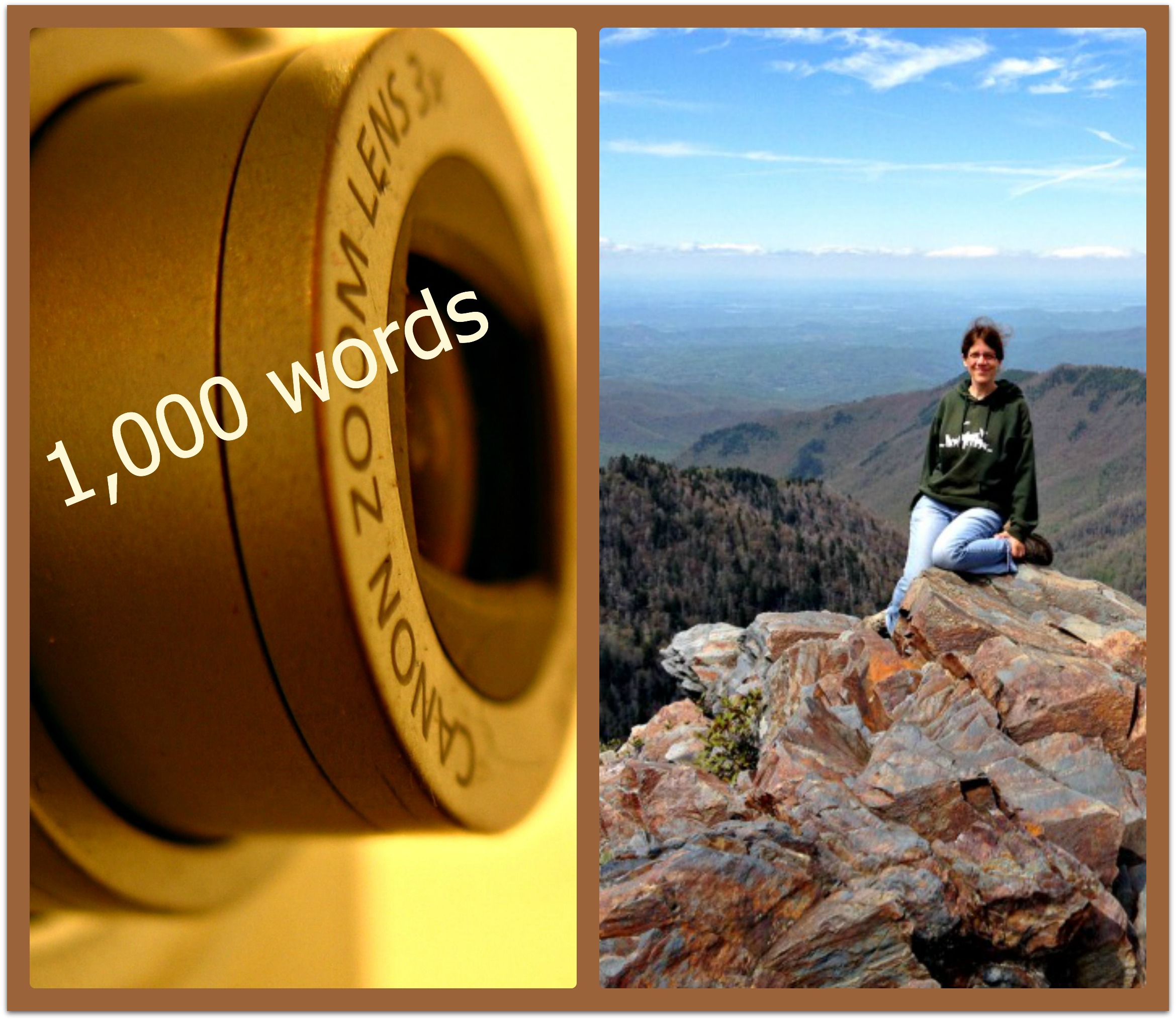
Jamie March 2015 collage

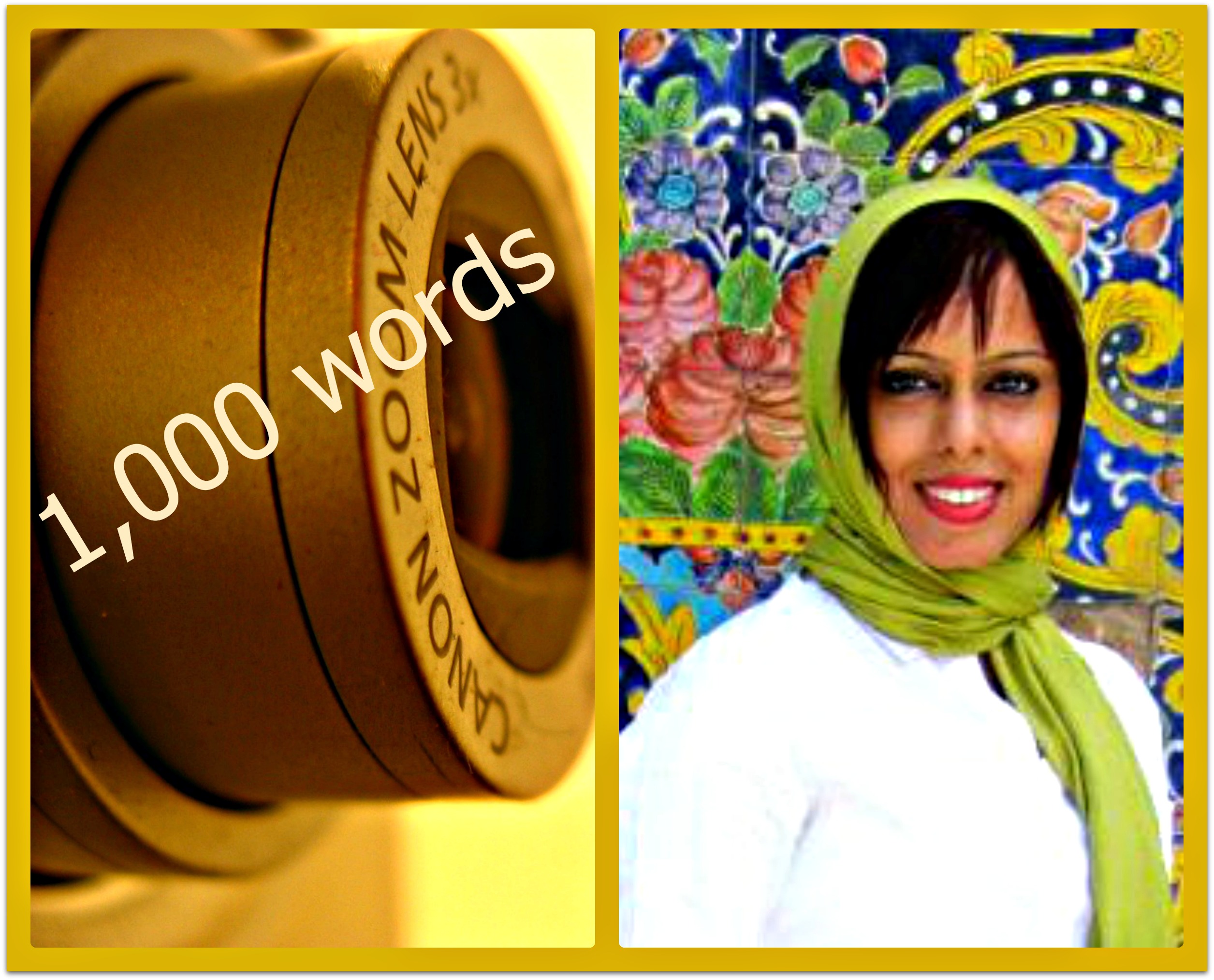
Canon zoom lens, photo credit: Morguefiles; Jamie in Bangkok, Thailand, for the Loy Krathong festival (November 2013).

James King is back with his ever-popular “A picture says…” column. English by birth, James is now semi-retired in Thailand. If you like what you see here, be sure to check out his blog, Jamoroki.

My March guest is 22-year-old Singaporean Jamie Chan. She shares stories and images from her travels on her blog, No Foreign Lands, while shooting or writing for clients in the photography, lifestyle or travel genres.

Ever since she started photography in 2009, Jamie is rarely seen without a camera. Named one of Singapore’s 10 Best Young Photographers, she is an ardent traveler and enjoys documenting local cultures and lifestyles.

A specialist volunteer for Singapore International Foundation and various animal welfare groups, Jamie also finds time for good causes.

In addition, she sings in Schola Cantorum Singapore and plays the cello. She has clearly been allotted more hours than me in a day!

* * *

Hi, Jamie, and welcome to TDN. I’ve been looking forward to this interview since I first saw your street photography. For one so young you have travelled a fair bit and captured some great images. Can you tell us where you were born and when you spread your wings to start travelling?
I was born and raised on the sunny island of Singapore. My first solo trip was to Indonesia, when I was selected to be a photojournalist delegate of Singapore for the ASEAN Cultural Youth Camp of 2011, held in Yogyarkarta. At the time I was doing my final year project for my degree in Visual Communications (I majored in photography). After the camp finished, I decided to spend an entire month travelling around and documenting the culture and lifestyle of the peoples of Central Java. It was a big learning curve and stretched my photographic skills. I did not have the luxury of an editor to tell me what to look out for, and it was hard to get feedback from my lecturers because getting a wifi spot with Internet was like hitting the jackpot. The experience taught me to reflect, make decisions and work with what I had. I had to figure out how to shape and edit down my stories.

You were only 19 then. How did your parents feel about your decision to travel solo?
They were of course worried sick but came around eventually and even joined me for some parts of the trip. After all, what better way to spend time with your parents than on the back of a motorcycle going at God-only-knows what speed—’cause the speedometer was broken!

That must have been some trip! So once you caught the travel bug, where else did you go?
As a visual storyteller, I am always on the lookout for subjects that would make interesting photo essays. My blog, No Foreign Lands, started as a way to tell my mother that I was still alive while on the road. It has now become a platform for me to tell my stories and share my images with the world. Asia is one of my favourite places to travel. There is an incredible amount of interconnected history among the various countries. I am always learning.

I agree. Asia is a treasure trove for us storytellers and photography buffs. I only wish I had started my travels at an earlier age. So which countries have you visited so far?
There is a quote from Robert Louis Stevenson that goes:

I travel not to go anywhere, but to go. The great affair is to move.

When I got back to Singapore after my Indonesia trip, I could not keep still. I was hooked on travelling, exploring and waking up to something new every day. I needed to move; soon after I graduated I booked my next trip—and I’ve never looked back since. Off the top of my head, I’ve been to Vietnam, Thailand, Malaysia, Nepal, Indonesia, India, China and Australia.

That’s eight countries in less than four years; a lot more than most people visit in a lifetime. So tell us about where you are right now and why.
I’m actually back home in Singapore! I’ll mostly be based here for the remainder of 2015. That said, I can never stay put for long—I’ve taken three trips out of the country this year and it is only March! I am in the midst of getting a certification for my Japanese-language studies which I hope to finish by next year. Once that’s done, I intend to work and stay in Japan if possible.

“As a person who deals with visuals before words…”

I’ll keep my fingers crossed for you. I do believe Japan is a beautiful country which offers photographers some great opportunities. So now let’s see a few of your photos that capture some of your favourite memories.
One of the first stories I did in Indonesia involved visiting various “home industries” for a glimpse of what villagers do for a living. This man was performing a rather mundane job cranking out tiles with this old machine. It requires so much strength (I tried turning it and it barely budges):

Indonesia_machine

This Central Javenese man makes 500 tiles by hand every day using a cranky manual machine; photo credit: Jamie Chan.

I photograph Thaipusam, a Hindu festival celebrated by Tamil communities, almost every year in Singapore; I took this picture in 2014. There is something about the spirit of the festival that never ceases to amaze me each time I document it:

The unforgettable Chetty Pusam in Singapore; photo credit: Jamie Chan.

Singapore’s unforgettable Chetty Pusam; photo credit: Jamie Chan.

I was very fortunate to be able to make it down to the final few performances of the Melbourne Docklands Blues Festival and photographed a set by Jimi Hocking.He is an incredible musician and performer and this image just reminds me of Guitar Gods and their worshippers:

Can Jimi the Human be real? Photo credit: Jamie Chan.

Can Jimi the Human be real? Photo credit: Jamie Chan.

My favourite places to take photos so far are India, Nepal and Australia—but picking three pictures to illustrate this was really hard as each of these countries has so many amazing places to shoot… Anyway, let me start with the Great Ocean and its apostles. While it may seem like a tourism pilgrimage, when you actually stay and watch the light, you will see that every moment reveals a new side to the gorgeous apostles:

The Great Ocean Road in Australia; photo credit: Jamie Chan.

A couple of the Twelve Apostles along Australia’s Great Ocean Road; photo credit: Jamie Chan.

This is a stunning picture, Jamie. You have made a simple composition with no clutter and very imposing subjects. I love it.
Moving on to Kathmandu. Where do I begin? Within the valley wherever you are, the Himalayan mountain line is always watching you. I felt a sense of peace throughout my stay in Nepal. It is kind of hard to describe the feeling. I recommend you go there yourself. Here is one memento:

Kathamandu; photo credit: Jamie Chan.

One of Kathamandu‘s peaceful oases; photo credit: Jamie Chan.

Ayuthaya in Thailand is incredible. I was fortunate enough to gain access to its inner chambers to photograph some of the world’s oldest paintings—an incredibly humbling moment. Here’s an external shot of the ruins that were left after the Burmese invasion:

Ayuthaya; photo credit: Jamie Chan.

The ancient Siamese kingdom of Ayuthaya; photo credit: Jamie Chan.

The more-than-a-thousand-year-old Khmer temples of northeast Thailand are really impressive and give us a glimpse of how the Khmer Empire stretched from Cambodia into what is now a large area of Thailand. Tell me, do you feel reserved about taking photos of people, particularly when they are conscious of you doing so?
I try my best to observe and read a person’s body language. My camera is always with me and there is always a silent communication of sorts whenever I lift it to my eye. But there is actually nothing to feel reserved or shy about as the most that can happen is that your subject will say no or even hit you(!) if you are really obnoxious.

“I also happen to speak two and a half languages. The half language is Mandarin.”

I mainly do landscape but when I do shoot people I am the same. I hate to take “posed for” photos so I hardly ever get into a discussion. I take the pic or I don’t. Do you ever ask permission before taking people’s photographs? How do you get around any problem of language?
Since I am always reading a person’s body language before I shoot, I generally do not ask for permission. If I do ask and do not speak their language, I rely on improvised sign language—pointing to my camera and nodding with a big smile on my face. It’s worked so far.

Would you say that photography and the ability to be able to capture something unique which will never be seen again is a powerful force for you?
Yes, most definitely. As cliché as this may sound, the camera allows us to stop time for a split second and record the moment, preserve a memory.

So when did you realise the power of photography, and how has it changed you?
It happened by accident, like so many things in life, while I was looking through old photos of my family. I realised then that if no one had taken these photos, I would never have remembered how my mum looked like all those years ago.

“Who says the iPhone can’t photograph the moon!”

I know what you mean. For me, a picture is a diary of an event in visual form. The photographer “writes” about it in a way no one else could.Now for the technical stuff. What kind of camera and lenses you use?
I work with a rangefinder, the Leica M-E. My 35mm Summilux lens is stuck to the camera body most of the time as it is just such a beautiful focal length which allows me to respond quickly to different situations. On certain occasions, maybe twice a year, I will use the 50mm Summilux just to get a tighter shot. Other than that, my iPhone 5s takes wicked macro shots.

That’s interesting because although I have become attached to the versatility of my 18–55mm Canon lens there are times when I can’t get in close enough, so I need to add say a 70–200mm to my kit. And now I need an iPhone 5s!!!!! And which software do you use for post-processing?
I use Lightroom for post processing as I shoot entirely in raw image format.

“The perfect camera is the one with you.”

Join the club. Finally, do you have any advice for wannabe photographers who are traveling or living abroad?
I’m not sure what advice I can give for wannabe photographers, though that hoary old chestnut “Don’t quit your day job” has just now floated into my mind. I say that because I sense that the golden age of photography is mostly over. Having said that, if you have the passion and perseverance to live, breathe and eat photography, press on and live it. But also remember that technology has made it so much easier to learn a new creative skill. Try your hand at video, writing or music. Use your creativity, mash them all together, and see what you come up with. At the end of the day, as long as your art moves someone and you are able to live comfortably with what you have, you know you are on the right track.

I actually think that is very good non-technical advice Jamie and I’d like to thank you for taking the time to tell your story so far in this interview. I am sure you will, undoubtedly, inspire other young and maybe not so young people.

Editor’s note: All subheds are excerpted from Jamie’s blog.

* * *

Readers, what do you make of Jamie’s experiences? If you have any questions for her on his travels and/or photos, please leave them in the comments!

If you want to get to know Jamie and her creative works better, I suggest you visit her photography site and check out her posts on her photography/travel blog, No Foreign Lands. You can also follow her on twitter and Instagram and/or like her blog’s Facebook page.

(If you are a travel-photographer and would like to be interviewed by James for this series, please send your information to ml@thedisplacednation.com.)

STAY TUNED for next week’s fab posts!

If you enjoyed this post, we invite you to register for The Displaced Dispatch, a round up of weekly posts from The Displaced Nation and much, much more! Register for The Displaced Dispatch by clicking here!

Related posts:

For this dreamer of dreams, artist at heart, and American Russophile, a picture says…

Steve Hague Collage

Canon zoom lens, photo credit: Morguefiles; Steve Hague and his Russian bride at St. Peter and Paul Cathedral in Kazan, Russia, on their wedding day. The ceremony was followed by a reception where the happy couple danced, ate, laughed, toasted, and kissed—every time the guests shouted “Gorko, Gorko, Gorko!” (Kiss the bride!).

Writer, world traveler and photography enthusiast James King is back with his ever-popular “A picture says…” column. Born in England, James is now semi-retired in Thailand. If you like what you see here, be sure to check out his blog, Jamoroki.

My February guest is 58-year-old American national Steve Hague, who a few years ago left everything behind to start up a new life in Kazan, Russia.

Steve says that although he is American in the mind he is Russian in the heart. He keeps a fascinating blog, Life in Russia, which is aptly subtitled “The bridge between two countries”. Steve has put a lot of time, research and energy into bringing us information, both written and visual, about his adopted homeland, in an enthusiastic way.

He also belongs to the ranks of what the Displaced Nation calls “international creatives.” Besides being an avid photographer, he is currently writing a novelette called Under the Blood Moon.

Today I hope he will convey some of the enthusiasm he has about his new life and pursuits, along with sharing a selection of his photos.

* * *

Hi, Steve. We have been following each other’s blogs for a while now, and I am very pleased that we have the opportunity to meet in this interview. Let’s start with some background on you, shall we—beginning with where you were born and when you spread your wings to start travelling.
Well, the hospital where I was born almost refused my mother admittance because she had high cheek bones and dark skin, like a Native American Indian. My father managed to convince the staff she was white, and my arrival into the world occurred in Grand Junction Hospital, Colorado. Because my father worked for the government, my family moved every four years or so. I think we moved back and forth between Colorado and Maryland six times. Eventually, my mother put her foot down and we all graduated from high school in Boulder City, Nevada. But my father had itchy feet, and I appear to have followed in his footsteps, so to speak.

And in your adulthood you’ve become quite an experienced traveller. Tell me more.
I’d love to say I’ve traveled the world but it just isn’t so. I’ve traveled a lot within the United States. Thanks to my family, I’ve seen nearly every major national park in the United States, and in my early adulthood I did a lot of traveling on the West Coast. This stone finally stopped rolling in Portland, Oregon. Exploring the great Northwest was a wonderful experience.

But you didn’t venture outside the country?
Like every brave American I visited Canada several times. My best trip was to Prince George in British Columbia in the dead of winter. I guess I was preparing for exploits outside of the States without knowing it. And there were a couple of forays into Mexico when I was younger, before it became Gangland Я Us.

What about your working life—how did that evolve?
I started my career as an architect, back in the 1970s. That evolved into studying naturopathic medicine, which lasted approximately ten years until I founded the precious metals business, which I turned over to my partners before coming to Russia. Here in Kazan I found my niche in teaching English. Honestly, I never thought there was much value to being a native speaker; that only came after escaping America. Today along with teaching I write, which has been in my heart since childhood. It find it adds balance to my life.

Что ни город, то и норов (Another city—another temper). —Russian proverb

So Russia was your first time out of the United States? That was quite a leap! What led you there, and how did you cope with the cultural and language differences?
Yes, I met my wife through a dating website, and now Russia is my home (until I get itchy feet again). Some people may have thought I was crazy but with her by my side I felt more secure about living somewhere else. And what an experience it’s been! It’s truly opened my eyes to what it means to be a global citizen. In fact, where we live we resembles any major city in America minus one thing: the sidewalks are terrible here. Otherwise, it’s pretty much the same—malls, grocery stores, McDonald’s, the movies, it’s all here. There’s one oddity though. I see a greater variety of cars here than I ever saw in the States.

You have also really embraced Russia itself.
I believe I can trace my first love of Russia back to my childhood. My father brought home a record, How to Learn Russian Easy—I was probably only 11 years old at the time. The only word I learned was здравствуйте (hello). Later in high school I wanted to learn the language, but the choice was either French or Spanish. I chose French but never went to the class.

I know from my experiences in Thailand how valuable having a local partner or wife is. However, it can make you a little lazy on the language front and ultimately more dependent. But I’m sure that’s not the case with you, Steve! How often do you travel out of Russia to explore other places?
My wife and I love travel, and since moving here I’ve had the opportunity to visit Cyprus and Israel, both fascinating countries with incredible beauty and charm. I’m sure I will get to other places as well, eventually. Right now we have a couple of trips planned, one to the Altai Mountains, where Russia, China, Mongolia and Kazakhstan come together, and the other, hopefully, to Europe. If anyone out there is into adventure travel, we’ve invited a small group to join us on the Altai trip. There’s still space.

Now let’s see some photos that capture a few of your favourite memories.
This first photo shows the canals of St. Petersburg. I took it during the blue hour of the summer solstice, close to midnight:
SH_StPetersburg_canals

The next photo is of the ancient town of Bolgar, which is located on the Volga about 75 miles away from Kazan—for me, it captures the essence of the place (which I found hard to do!):
SH_Bolgar

For the next one, I happened to be walking by the lake near my home when the fog started to lift. I saw the stump sticking up out of the water, the fog in the background, and the changing colors of the leaves. I knew this was one of those moments I would never see again. More than any other photo it changed how I viewed my photography:
SH_near home in Russia

The last one is indeed a lovely capture and I agree such moments aren’t ten a penny. Now I’m keen to see some of your favorite places for photography and hear about why you found them so inspirational. Let’s have a look.
The next photo shows the type of scene I love to capture. I was in Suzdal and just happened to be standing on a bridge looking over the river, towards one of the many churches within this small, historic town:
SH_river&church_Russia

While in Israel we traveled all over, from Haifa to the Sea of Galilee. We got to see Nazareth (which I didn’t like), Tel Aviv (much like any big city), and then Jerusalem, a fascinating city of culture, history, religion, and much more. We even made it to Eilat, Israel’s southernmost city, at the northern tip of the Red Sea, which is a beautiful in its own right. I took many pictures of scenery, but here is a view of Haifa:
SH_Israel

Also in Israel, I snapped a few photos of people. One that stands out to me is this one, of a homeless man. I captured it on the sly and unfortunately came out blurred but it still speaks volumes to me:
SH_Homeless_in_Israel
I can understand why this one is special. It’s that beady eye watching your every move. I can forgive the blur when it has so much meaning for you.
Another photo that stands out for me is this one of a Druze woman. She was preparing food for us in an outdoor oven in what felt like the middle of nowhere, on Mount Carmel:
SH_DruzeWoman

It’s a lovely, natural picture. Tell me something, do you feel reserved about taking photos of people, particularly when they are conscious that you are doing so, and do you ask permission before taking people’s photographs?
I will look at them and try to understand their mood. If I can see a smile, I’ll just go ahead and take a picture; if not, I’ll ask permission. Then at other times if I can’t detect a mood, I’ll ask permission or try to take a picture without attracting attention. Sometimes it works; other times it doesn’t.

Всяк глядит, да не всяк видит. (Everything has beauty but not everyone sees it.) —Russian proverb

From your descriptions, it sounds as though photography and the ability to be able to capture something unique, which will never be seen again, is a powerful force for you.
Photography and art have been part of my life for as long as I can remember. There have been times when I dreamed of becoming a professional artist or photographer. Then I came to understand that the reason I love photography so much is the freedom I feel when I manage to capture that special moment or scene. I wait for my eye to tell me: here it is, your model or subject. Relying on my inner instincts brings a sense of wonder and happiness to my soul. Being a professional would rob me of that freedom. And this way I am also free to share my photos with others.

That’s an interesting, and unselfish, perspective. From a technical point of view, some readers will want to know what kind of camera and lenses you use.
All my images so far have come from my Canon EOS 10D, I use long-range and mid-range lenses and occasionally a fish-eye lens when I feel it will capture what I’m looking for. There’s nothing really special. The post processing software I use is Picasa since it’s free and does most everything I need to do.

So all in all, it’s a simple and uncluttered approach that works for you. Finally, do you have any advice for wannabe photographers who are traveling or living abroad?
Enjoy where you’re at, don’t worry about the subject matter (each one is a lesson), and don’t let anybody tell you to take lots and lots of pictures.

I must say I agree with what you just said, assuming you mean taking loads of shots randomly in the hope that you might get a good one. That’s a lazy approach that seldom works. It’s not a good way to learn the art, and it also means you have a lot of sorting and deletions to do. I only take a lot of shots when I’m doing blurs. Sorry, I interrupted. You were saying?
Explore different angles, walk around your subject looking for the right look, imagine it, see it in your mind, then shoot. A camera isn’t a shotgun; it’s a finely tuned instrument ready to capture whatever you want. A camera is nothing more than a fancy paintbrush. You the photographer are free to decide the final look and feel. The world is your subject and the photo your canvas. Good luck!

Sound advice, Steve. I’d like to thank you for taking the time to tell the story of your exciting journey and for sharing so much interesting and useful information in this interview.

* * *

Readers, what do you make of Steve’s experiences? If you have any questions for him on his travels and/or photos, please leave them in the comments!

If you want to get to know Steve and his work better, I suggest you visit his blog (which you can read snippets from his novelette, Under the Blood Moon), follow him on twitter and/or friend him on Facebook.

(If you are a travel-photographer and would like to be interviewed by James for this series, please send your information to ml@thedisplacednation.com.)

STAY TUNED for more fab posts!

If you enjoyed this post, we invite you to register for The Displaced Dispatch, a round up of weekly posts from The Displaced Nation and so much more! Register for The Displaced Dispatch by clicking here!

Related posts:

For this former contractor in Iraq, now an expat in Thailand, a picture says…

Jackie Littletaylor portrait

Canon zoom lens, photo credit: Morguefiles; Jackie Littletaylor in Iraq in 2005 (own photo). Yes, it’s a real tank, which disappeared a year after this photo was taken.

English expat, blogger, writer, world traveler and photography enthusiast James King is back with his first “A picture says…” column of the new year. If you like what you see here, be sure to check out his blog, Jamoroki.

Happy new year, readers! My very first guest of 2014 is 64-year-old Jackie Littletaylor, who, like me, is an expat living in Thailand with a passion for photography. Unlike me, though, Jackie had a past incarnation as a professional photographer in his home country, the United States, which he is now putting to use in his new life abroad.

Jackie keeps a blog as well as a travel site, where he shares information about his travels around Southeast Asia, particularly Thailand. He speaks more in pictures, full of vibrant colors, less in words, about what he has seen and observed.

Today I hope he will give us his 1,000+-word story as well as some background behind a few of his favorite photos.

* * *

Welcome to the Displaced Nation, Jackie. I have been looking forward to discussing your photo-travel experiences ever since I discovered your blog some months ago. What first intrigued me was that although you were a professional photographer, you now seem to be intent on breaking the rules and creating your own unique style that flies in the face of convention. But before we go into that, can you fill me in on what led you to travel in the first place?
At an early age, I traveled with my family from Alabama, where I was born, to Texas, where I spent most of my life. My family loved to travel. Thanks to them, I’ve backpacked many of the great national parks including the Grand Canyon, Yellowstone, and Rocky Mountain, and have seen almost all of Western USA. But I didn’t venture overseas until the age of 55. Never, for a moment, did I anticipate that my greatest travel adventure would come so late in life.

How did you end up in Iraq at the ripe old age of 55?
My approach to life changed after I went through a bad divorce. I thought, why not go have an adventure? I was no longer taking care of kids so there was not much holding me back. I took off for Iraq in 2005 and spent six of the best years of my life there. Actually, I hated it when I was there, but looking back, all I can think is how simple life was: just day-to-day living, with good money and some great friends.

Why Iraq?
At that time I was living in Houston. I heard about the opportunity to work for a company providing services to the armed forces in Iraq. I went to check them out and the rest is history.

“He’s so busy you’d think he was twins.”

I can relate as I did a similar thing after my divorce at 48. Up sticks and off I went to South Africa. What happened once you arrived in Iraq?
Work and more work. We worked 7 days a week, 12 hours a day. The first year’s average week was 102 hours. But then every 4-6 months we were given some vacation time. I traveled all over Iraq, from the Syrian border to the Iranian border, and also to Kuwait—that’s where I spent Christmas in 2005. In 2006–07 we were very busy, and there were many days I had no sleep—but it was still the adventure of a lifetime. Many of us left in 2010, when troops were being pulled out. I have a vivid memory of being at the airport in Baghdad and seeing the tears in the eyes of a retired general who’d been one of our leaders. He knew this was a once-in-a-lifetime experience that could never be repeated. I went back for another year and could have stayed when the US military pulled out, but decided six years was enough.

You probably saw and experienced more in six years than many people do in a lifetime, but let’s move on with your story.
I had friends in Iraq who went to Thailand for their vacations and always had good tales to tell. So, having become an intrepid explorer, I decided to check it out. I flew to Phuket via Dubai with a good friend. Thailand captivated me at first sight: the people and the culture, along with the opportunities for more travel. Although most of my time has been spent here since Iraq, I have also visited Burma, Cambodia, Malaysia, Oman, France, and Kuwait.

I would definitely place you in the seasoned traveller category! So where in Thailand do you call home now, and what is life like in a new place?
As I was saying, I fell in love with Thailand—and with a Thai woman. We now have two young kids! Imagine, at my age! So Thailand has become my home. My wife is from a village in Isaan, in the northeastern region, near Sisaket. We live in Phuket because I love the sea, but we visit her family regularly in Isaan.

“There’s no slack in his rope.”

I know Sisaket as I lived in Buriram, which is nearby, for three years. I understand you are retired now. Tell me, how do you keep busy?
I love to work so have taken up fine art photography. Last year I started a blog on life here in SE Asia. Along with taking care of the kids, these activities keep my mind and body busy. I’ve been learning a lot.

But photography hasn’t always been a hobby for you.
No. When living in the US I was a wedding and sports photographer, where the challenge was to capture the shot and, through skillful editing, please the customer. It is a real pleasure seeing the customer’s smile when you present some good work. I discovered Fine Art rather by accident while I was doing post processing.

It’s fascinating how, so often, we stumble across exciting things by pure accident. And now let’s have a look at some of the shots you’ve selected for this interview, which capture a few of your favourite memories.
This first photo, of a rice field in Isaan, is what set me free as a photographer. When taking the shot, I envisioned it in my mind’s eye in a certain way, and through processing I managed to achieve this vision. I took my inspiration from impressionist artists, such as Monet and Gauguin, not from other photographers as you may think. Here is the before and after:

Jackie Collage

Rice fields in Isaan, Thailand, before and after processing. The experiment led to Jackie’s “a ha” moment. Photo credit: Jackie Littletaylor.

I took the next photo on my first trip to Isaan. A young woman, Nicha, took me to Prasat Ban Prasat Khmer temple ruins on a motorbike from her village. She did not know I was taking her photo:

IssanPraying_pm

Nicha’s quiet moment of prayer at a shrine in Isaan, Thailand; photo credit: Jackie Littletaylor.

Preah Vihear Khmer Temple ruins on the Cambodia-Thailand border (Southern Isaan) has been the subject of dispute between the two countries for some time now. On this trip, in 2006, I was with my family. We had no idea where we were going or the significance of what we were seeing. These ruins are now off limits to tourists:

CambodiaRuins_pm

What remains of the spiritual life of the six-centuries-long Khmer Empire, now listed as a UNESCO World Heritage Site; photo credit: Jackie Littletaylor.

This next one you will recognize: the restaurant scene on the paved promenade along Rawai Beach, located at the south end of Phuket Island. I love taking photos at night or late evening using a tripod sometimes but with a slow shutter. It takes a lot of editing but is fun:

RawaiinEvening_pm

The seafood restaurants along Rawai Beach, Phuket, affording beautiful views on the many nearby islands; photo credit: Jackie Littletaylor.

On a more personal note, here is an old photo of my parents, in an old-fashioned pose:

Jackiesmom&dad_pm

Dad and Mom Littletaylor, back in Texas, USA; photo credit: Jackie Littletaylor.

Last but not least, my two adorable little angels—I love this photo!

ThaiKiddiewinkles_pm

Jackie’s kiddiewinkles, son and daughter; photo credit: Jackie Littletaylor.

Indeed, I do recognise the one in Phuket. Thank you for sharing this special collection of your photos, including a couple of family portraits. I wonder, do you ever feel reserved about taking shots of people you haven’t met?
I do feel reserved about taking photos of people unless it’s a crowd of them, and I usually ask if I want only one person in the frame. I don’t find language a problem. People can see there is a camera so they know what is happening. In the Thai villages I now have people who actually ask me to take their photo, which is great. In my wife’s village in the past I made 8×10 prints of the villagers for her to give away as gifts.

“He’s got more guts than you could hang on a fence.”

That’s one way to boost your popularity. I believe there is a history of photography in your family?
Yes, photography runs in my family starting with my great grandfather and then my grandfather. But I think I’ve also been influenced by my time in Iraq. That experience reminded me that life can be short and should not be taken for granted. Without being over dramatic, every evening before we left the “wire” or base, I would get out and look at the moon or setting sun, not knowing if it was going to be my last. No sadness or fear. I feel the same with people. You never know when you see someone if it will be the last time. Photography can refresh the memory even after a long time, so it has become a part of my life and it would be strange to be without it. I also just love the beauty of landscapes. I know my photos are quite different. Some like them and some don’t. But most importantly I like them.

I have to agree with you there, Jackie. Trying to create art just to please others rarely works, and it’s a bonus when you find others with similar taste. On the technical side, some of our readers may want to know what kind of camera and lenses you use.
I have always used Canon and now have a Canon EOS1 along with my L lenses which are in the US. Darn! When I left Iraq the last time I was told not to bring them back. These days I use a Canon G1X, which is small and has a great processor but not much lens for zooming. For post processing I use Adobe Lightroom for my basic editing and Nik for most of my artistic editing.

Finally, do you have any advice for wannabe photographers who are traveling or living abroad?
My advice to others is simple. Take LOTS of pictures. I started in analogue where you bought the film and had to pay for processing to see the good and bad shots. Those were costly days. Now we have digital cameras the exposures are free so you don’t have to worry about cost and can experiment freely. Steve McCurry is the photographer who took that famous photo of the Afghan girl with the green eyes in a refugee camp near Peshawar, Pakistan, which ended up on the 1985 cover of National Geographic. But he didn’t know the photo was so good until he was back in New York editing. That wouldn’t happen now. So, learn what your camera can do. Forget the flash and buy the best lens you can afford. On prints, don’t accept poor printing as no two printers or processors are alike. As to timing, I prefer early sunrise or the last two hours of sunset. But to repeat: experiment and use your own judgement; the photo is yours.

Thank you, Jackie, for the tips and for taking the time to tell us your fascinating story.

* * *

Readers, what do you make of Jackie’s experiences? If you have any questions for him on his photo–travel adventures, please leave them in the comments!

If you want to get to know Jackie and his work better, I suggest that you follow:

You can also contact him by email.

(If you are a travel-photographer and would like to be interviewed by James for this series, please send your information to ml@thedisplacednation.com.)

Editor’s note: All subheadings in the above post are old Texan sayings or adages.

STAY TUNED for next week’s fab posts!

If you enjoyed this post, we invite you to register for The Displaced Dispatch, a round up of weekly posts from The Displaced Nation, with Alice nominees, exclusive book giveaways and other extras. Register for The Displaced Dispatch by clicking here!

Related posts:

Top 5 photos from “A Picture Says” in 2014

Top 5 Pix 2014For the final post in this year’s “A picture says…”, host James King highlights some of the photos that spoke to him most eloquently, from this year’s series. (If you like what you see, be sure to check out his blog, Jamoroki.)

My heartiest holiday greetings to one and all. I hope you enjoying the festive season, and I wish you a wonderful New Year.

As ML says, we’re doing an End-of-Year Special instead of the regular monthly interview. But before I get started with my picks, I really want to thank the 10 wonderful people who have contributed so much to my column over the past year by subjecting themselves to my tortuous interviews. Without exception, every single one of you has had a fascinating story to tell which has been beautifully illustrated with the personal photographs you were kind enough to share with the Displaced Nation readership.

After it was suggested to me that I should select my five favorite photos out of the 70 posted, I dived in head first, only to realize I could upset some of the 10 new friends I have made in 2014.

So I want to say before we start that this is not a competition. I would like to pick all 70 photos but of course that’s not possible so here are my 5 (in random order) along with my reasons for choosing them. There were a few close shaves by the way.

1) “Pumpkin Field,” by Aisha Ashraf

Irish expat, blogger, traveller and photographer Aisha Ashraf is currently based in Canada with her husband and three children. A freelance features writer, Aisha has published articles in newspapers, magazines and a range of expat and mental health websites. She says she has been a cultural chameleon since she first emigrated from Ireland to England at the age of eight. She is also a friend to the Displaced Nation and a recipient of one of its “Alice Awards” for a post on her Expatlog blog, provocatively entitled “My mother was a nun.”

I have chosen this photo of Aisha’s daughter in a field full of pumpkins because it is so vital, and the naturalness of the colours brings her lovely composition to life. Not only this but the viewer can only guess how or why a picture was created and Aisha’s words offer a whole new dimension.
No 1 Pick 2014 Ashraf

Aisha says:

“I love nature—perhaps it was growing up on a farm and spending most of my time outdoors. I have a condition called Borderline Personality Disorder (BPD) and getting outside is a big factor in alleviating its debilitating hold. I see incredible, uncomplicated beauty in the natural world that I find soothing and strengthening. I try to capture it with my camera in a way that may allow others to be moved and nourished by it, too.”

2) “Church on Skyrne Hill,” by Ed Mooney

The story of Irishman Ed Mooney is quite different from others guests for several reasons, the main one being that he is not an expat. On the contrary, he travels within the confines of his native Ireland.

That said, Ed does cross boundaries, at least in a temporal sense. He loves nothing more than to immerse himself in an obscure historical site, exploring Irish history, lore and mythology while also photographing the surrounding ruins, to keep a record of what remains from generations past.

I really like the name Ed has given to his hobby: “ruin-hunting”. Ed tells me that ruin-hunting merges Past, Present & Future. By researching the history behind a place, he pays tribute to the Past. By writing about the experience, he brings it into the Present. And by posting his article, along with his photos, on his blog, he preserves his findings for the future. I love the way Ed weaves historic research into (mostly) black-and-white images.

I have chosen Ed’s photo of the church that sits on Skryne Hill, the site of an early Christian settlement. Ed says his memory of Skryne remains vivid. The tower is inaccessible due to a very heavy iron gate that appears to be rusted shut. As with all Ed’s pictures there seems to be a ghostly atmosphere, which is not surprising considering his subjects. Ed’s story of his experience is spooky to say the least and drew me into the picture more closely than usual.
No 2 Pick Mooney

Ed describes his visit to the church as follows:

“I shone my torch through the bars on one of the windows. Inside were a number of interesting stone artefacts that I wanted to capture. So I set up my flashgun and shot through the bars. On the second or third flash something physically grabbed my camera strap and pulled it into the tower. It all happened so fast, but somehow I managed to pull that camera away from the window while shouting a few expletives. At first I wondered if it might have been a draught of some kind that had caught my strap, but it could not have been as I was pressed right up against the opening and there was no wind to cause a draught. Then I thought that maybe someone was inside, but there was no way for a person to get in or out of the tower. To this day I still can’t explain what happened. But it certainly left a lasting memory.”

3) Monteseel by Andy Harvard

South African photographer, traveller and chef Andrew (Andy) Harvard is by nature a creative person. His creative talents, ideas and passion spill over into his passion for photography, which he indulges on travels in South Africa and worldwide. His blog celebrates all three of his passions under the descriptive title “snap fly cook”.

An early bird, Andy often wakes-up at 03h00 in summer to be on the beach in Durban, where he lives, in time for first light and sunrise an hour or so later. He is also fond of seeking out “hard to access” locations and revels in the hours spent working and reworking his photos through his favourite software packages.

Andy says “I find this process very calming and am sometimes like a kid in awe when something magical happens. It is a meditation of sorts for me, an ‘addiction’ that has to be fed. Oh! The wonders of HDR processing.”
Pick No 3 2014 Harvard Collage
I have chosen Andy’s beautiful picture of Monteseel because, having lived in Durban for a while way back in 1990, I know how awe inspiring the landscape is. Andy has perfectly captures the essence of the Kwa Zulu Natal in this photo. I can feel the heat as the day dawns and, as Andy says:

“Huge mountains, deep valleys, tranquillity, big skies, rural living, clean fresh breezes, golden light—Monteseel, in the Valley of One Thousand Hills, makes one realize how small and insignificant certain problems we all have actually are.”

4) “Boy in the Door,” by Cornish Kylie

Kylie Millar was born and bred in Cornwall, England, and, though she now finds herself in Thailand, just like me, she remains proud of her Cornish heritage, having branded herself on her travel blog as Cornish Kylie.

Not only that but Kylie informs me that the Cornish were granted official minority status earlier this year. Being born and bred in Cornwall now means, technically, that a person is identified as Cornish first, British second—with the latter identity being confined largely to one’s passport. Well, it is true that Cornwall was its own Celtic nation before the Norman Conquest, and they have their own language, Kernewek, which is distinct from Welsh.

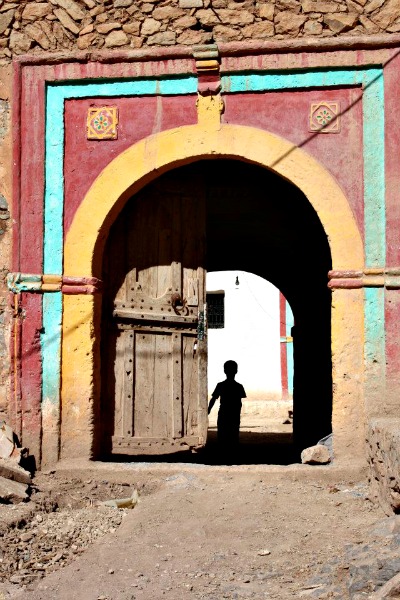
I had little hesitation in choosing Kylie’s “Boy in the Door” as one of my five. Adjectives like dirty, dusty, colourful, old and intriguing come to mind when I look at her picture. And each time I look at it, I expect the boy to be gone.
Pick No 4 2014 Kylie
Kylie describes it thus:

“When I was in the Atlas Mountains of Morocco, I couldn’t resist taking pictures of the many beautifully decorated doorways. This picture was accidental as the boy emerged from the doorway just as I pressed the shutter release. Then I realised how people can add an extra dimension and started to include people in more of my photographs. This trip to Morocco was special: it opened my eyes to a very different part of the world.”

5) “Hampi,” by Maverick Bird

Born and raised in India, Svetlana Baghawan, who calls herself Maverick Bird, is a mother and writer as well a traveller. She describes herself as a compulsive shopper, foodie, bad cook (her words) and animal lover. She likes to travel solo across continents, sometimes completely alone, often with her five-year-old daughter in tow. Having worked as a flight attendant for quite a few years, she was bitten by the travel bug early, and for good.

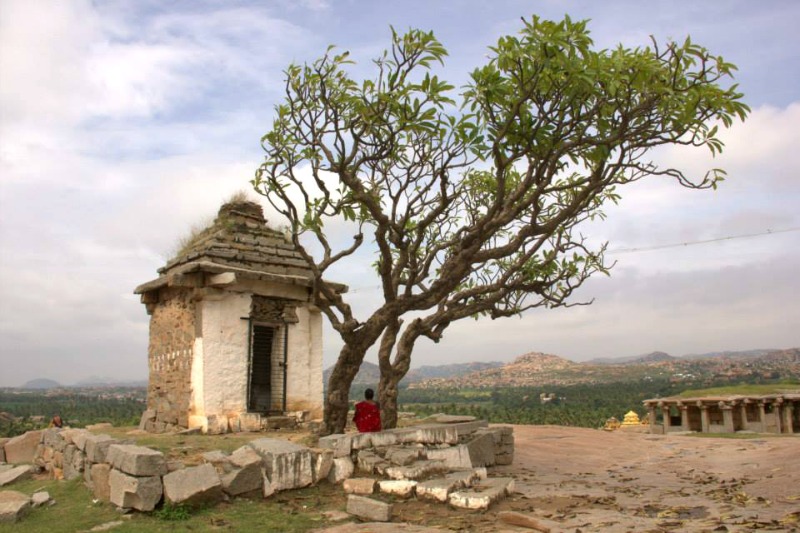
I have chosen Svetlana’s picture of Hampi, a village in Karnataka State in South West India. It is famed for being located within the ruins of Vijayanagara, an empire that came to prominence at the end of the 13th century. Svetlana has clearly been touched by the places she has visited on her travels and in this picture she conveys feelings of solitude in the wilderness and tranquility. I find it very moving.
Pick No 5 2014 Maverick
Svetlana says:

“Although it was tough to decide between Hampi and Kashmir, I love Hampi more for its surreal mix of a tangible ghostly civilization lying scattered amidst one of the most beautiful landscapes in India (think balancing boulder, rice fields, forests and obscure rivers) and little pockets of villages. The enchanting blend of the dead and living is breath-taking and this photo represents Hampi’s larger-than-life beauty. You have to see it to believe it.”

I believe you. Svetlana.

* * *

Readers, do you agree with my picks or do you have other favorites? Please leave any questions or feedback in the comments!

(If you are a travel-photographer and would like to be interviewed by James for the 2015 series, please send your information to ml@thedisplacednation.com.)

STAY TUNED for our next fab post!

If you enjoyed this post, we invite you to register for The Displaced Dispatch, a round up of weekly posts from The Displaced Nation, with Alice nominees, exclusive book giveaways and other extras. Register for The Displaced Dispatch by clicking here!

Related posts:

For this former flight attendant turned free-spirited solo adventurer, a picture says…

Svetlana Portrait Collage

Canon zoom lens, photo credit: Morguefiles; portrait of Svetlana Baghawan taken at Golestan Palace, Tehran, Iran.

Welcome to our monthly series “A picture says…”, created to celebrate expats and other global residents for whom photography is a creative outlet. The series host is English expat, blogger, writer, world traveler and photography enthusiast James King, who thinks of a camera as a mirror with memory. If you like what you see here, be sure to check out his blog, Jamoroki.

My guest this month is 33-year-old Svetlana Baghawan, who says she is a “cloud gypsy” or “maverick bird” (that’s what she calls her blog) because she likes to fly and explore—she also hikes, treks and daydreams. On her blog’s Home Page, Svetlana declares:

“When I’m not traveling physically my mind wanders in loops and whirls across open space.”

Born and raised in India, Svetlana is a mother and writer as well traveller. She also describes herself as a compulsive shopper, foodie, bad cook (her words) and animal lover. She likes to travel solo across continents, sometimes completely alone, often with her five-year-old daughter in tow. Having worked as a flight attendant for quite a few years, she was bitten by the travel bug early, and for good.

The way she described the self-portrait she sent to me for “A Picture Says…” (see above) helped set the scene for my interview with her:

By the time I left Tehran, I was a far cry from the shaky, nervous girl who had landed there two weeks before. The photo (above) was taken by the Tehran moral policeman who pulled me up for wearing tight jeans. When I told him I was from India, he revealed a fascination for Bollywood and I glibly lied about being a professional Bollywood dancer. He happily let me go after taking this photo and a few others. Not only did my response save me from harassment but I’d surprised myself with my new-found confidence. It was a turning point in my life. That’s why I love the photo.

* * *

Welcome to the Displaced Nation, Svetlana. I have been looking forward to discussing your photo-travel experiences ever since I discovered your blog, Maverickbird, some months ago. The first thing that caught my eye was the unusual title which, as I now know, describes you perfectly. Let’s start with where you were born. And when you spread your wings (an apt metaphor in your case!) to start travelling?
I was born in Calcutta, India, and spread my wings at the age of 17 when I was selected as a flight attendant by an international airline.

I think I can put you in the seasoned traveller category now as you have been travelling for work and pleasure for 16 years. Tell us, what is it like to be a solo female traveller?
My travels could be described as falling into three categories. Initially they were only what I would call city centric and absolutely touristy. You know, the places where flight crews get night halts and have limited time to relax. So there is little else to do except take selfies, shop, eat and sleep. Then came the phase when I travelled with my family, which, apart from the touristy fun bit, also involved taking on a lot of responsibilities. Then finally, at the age of 30, I started traveling solo. Since then my journeys have been challenging but also more fulfilling and enriching.

So at last you are, how shall I say, awakened perhaps? And living a dream. I can appreciate how uplifting that must be so I would love to know what inspired you to travel and what countries you have visited?
It may sound a bit melodramatic, but one day I was happily tied to my role of the traditional Indian married lady, and the next I was suddenly alone: a blow was dealt to my secure little world. I struggled to come to terms with my loss, but grief and depression, coupled with the suffocating social taboos that are dumped on bereaved ladies in India, nearly drove me over the edge. I was still a flight attendant at the time so used my free airline ticket facility and took off. I craved an escape. It was my way to survive. Iran was my first stop. It was tough—but soul touching and completely healing. I returned from Iran with a new-found zest for life, secure in my own identity and confident to take on the world once again.

How many countries in all have you visited?
If I include all the places which I have visited since I started flying then the list would run to nearly 60 countries. As a solo traveller, I have visited and engaged with 13 countries in depth.

“Whoever you are, no matter how lonely,/The world offers itself to your imagination…” Mary Oliver

Recovering from a tragedy takes courage, and the fact that you didn’t dwell on your loss for too long shows your resilience. I firmly believe that we learn more from adversity than we do from triumph or success. You have good reason to be proud. So where are you now, how did you end up there and what is life like in a new place?
I am in Sri Lanka where I came to help a friend on a whaling project. I have found Sri Lanka to be very unsettling and unexpectedly tough to handle especially for a single woman of Indian origin. Although it’s a breathtakingly beautiful country with amazing people, culture and history, I have a sense of “alien familiarity” here, which I’m finding difficult to handle. It’s similar to home yet so very different. I am constantly oscillating between feeling at home and being displaced. Sri Lankans only seem to be able to associate with Southern India—hence the dazed reactions of nearly everybody I meet to my descriptions of Calcutta. This is slowing wearing me out.

A whaling project sounds pretty exciting—I hope you don’t let the other issues get you down. Let’s have a look now at some photos that capture a few of your favourite memories and hear your stories about what makes these memories so special.
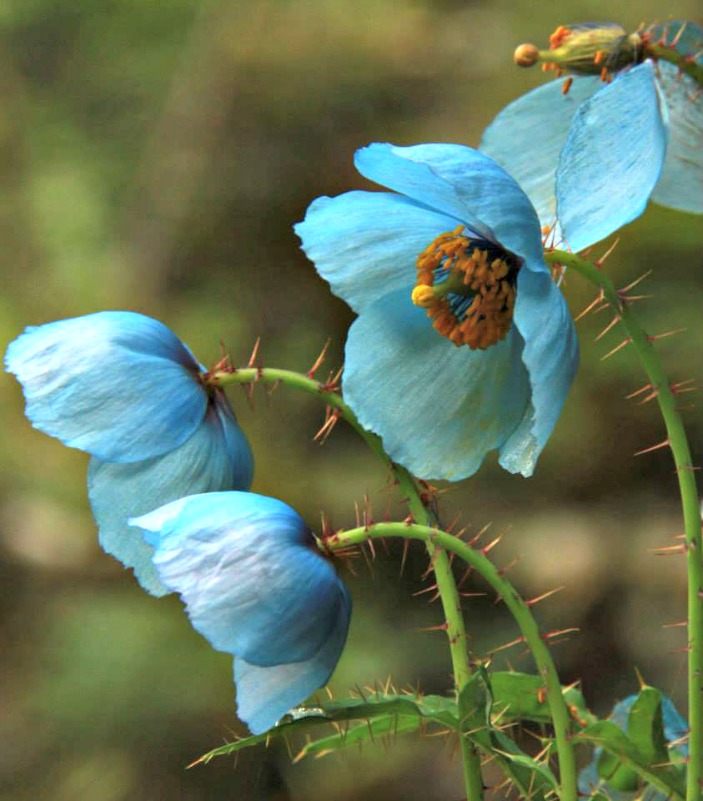
It is a very arduous trek to reach the Himalayan blue poppies at the Valley of Flowers National Park, in Uttarakhand, a state in the northern part of India. But the beauty at the end of the journey is mind blowing. I still clearly remember how my first sight of the rare blue poppies took my breath away:

Svetlana_blueflowers

Singing a gorgeous blues in the Himalayas; photo credit: Svetlana Baghawan.

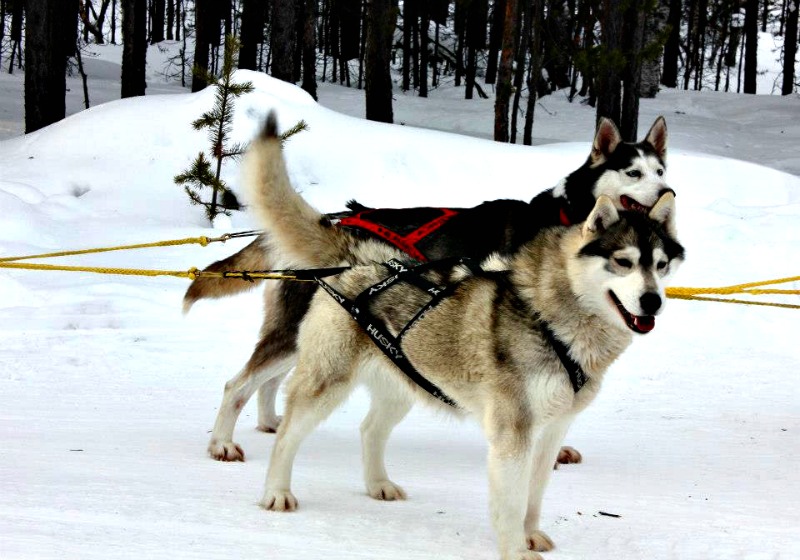
Meeting huskies in Lovozero, a village in Northern Russia, was a dream come true for me. Their puppy love floored me completely. It was extremely heart-warming to see the way those tough little dogs did the usual doggy tricks, like yapping away in happiness on being taken out for a run, making cute puppy eyes to get their way and cuddling on one’s lap like big babies.

Svetlana_huskies

Floored by puppy love in Northern Russia; photo credit: Svetlana Baghawan.

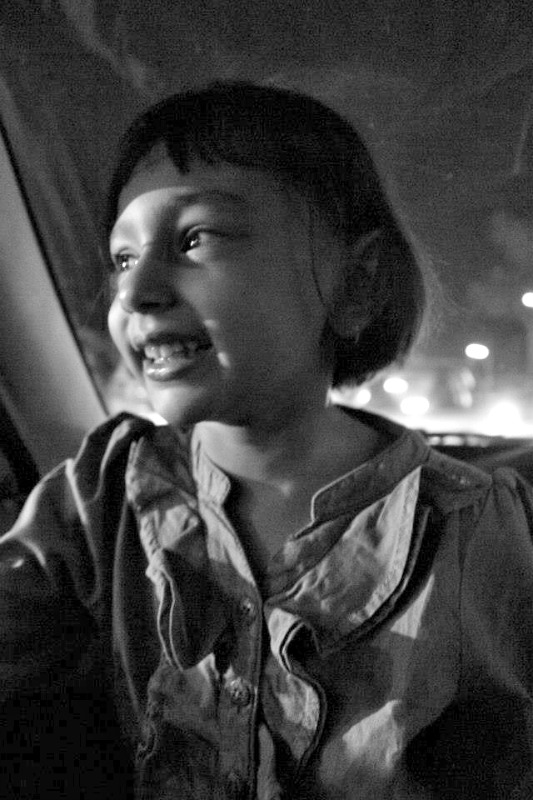
The third photo is of my daughter during Diwali. We had gone for a drive and I loved the way her eyes lit up with happiness at the prospect of quality mommy-baby time. It was fresh after our little world had gone awry, and it was magical to see how fast children rebound from losses and find happiness in every moment and in smallest of things:

Svetlana_daughter

A daughter’s delight in Diwali; photo credit: Svetlana Baghawan.

Diwali, for those who don’t know, is the biggest festival celebrated in India. Held around November, it signifies the victory of good over evil and is celebrated with a lot of festivities: spring cleaning, new clothes, home makeovers, auspicious purchases of substantial things like gold, cars, house etc, starting of new ventures, exchanging gifts, sweets and finally with lots of lights and fireworks. The whole country gets lit up in millions of lights as every Indian irrespective of caste, religion and social standing, decorates their house with lamps/lights.

This is a beautiful photo which captures a child’s joy and innocence. I can see she is very precious to you.

“I love the freedom of my wings.” —Banani Ray

Tell us, where were (or are) your favourite places to take photographs?
Shiraz, Iran, is a favourite of mine because of its stunning landscape, spectacular architecture, feast of archaeological wonders, and photogenic people who are also genuinely friendly. I loved the playful rainbows created inside this mosque. To me it truly represented Iran, which I have found to be a friendly, delightful and safe country. Unfortunately, it is shrouded under an unfortunate pall of cruel myths.

Svetlana_mosque

Somewhere over the rainbow…is this gem of an Iranian mosque; photo credit: Svetlana Baghawan.

How interesting and not the general Western perception of the place, I’m sure.

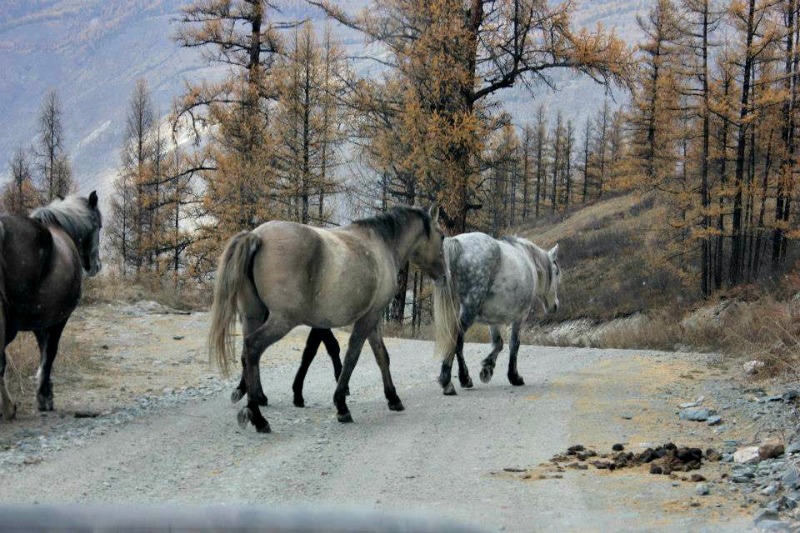
Siberia would be another favourite place to photograph. The sheer amount of unexplored open natural beauty is very freeing and of course the landscape is breathtaking. These wild Altai horses say Siberia to me, with its staggeringly expansive land mass and incredible, wild beauty.

Svetlana_horses

Wild horses in the wilds of Siberia’s Atlai mountains; photo credit: Svetlana Baghawan.

Last but not the least would be Hampi, a village in Karnataka, a state in South West India, famed for being located within the ruins of Vijayanagara, an empire that came to prominence at the end of the 13th century. Although it was tough to decide between Hampi and Kashmir, I love Hampi more for its surreal mix of a tangible ghostly civilization lying scattered amidst one of the most beautiful landscapes in India (think balancing boulder, rice fields, forests and obscure rivers) and little pockets of villages. The enchanting blend of the dead and living is breath-taking and the last photo represents Hampi’s larger-than-life beauty. You have to see it to believe it.

Svetlana_Hampi_India

Contemplating the former glory of a ruined empire (Hampi, India); photo credit: Svetlana Baghawan.

I believe you (I doubt I will ever get the opportunity to see it!). You have clearly been touched by the places you’ve visited, which should be an inspiration to other wannabe solo travellers. I’d like to know if you feel reserved about taking photos of people, particularly when they are conscious that you are doing so?
I love to take people’s photographs but at times do feel a bit conscious about photographing elderly people. This stems from the fact that they belong to a completely different era and might not at all like the idea of getting clicked. Photographing members of the religious fraternity, like monks, also makes me a bit nervous. I almost always ask permission before taking a person’s photo and in case of a language difference, bow, smile, greet and point to my camera to seek permission.

“It’s impossible to explain creativity. It’s like asking a bird, ‘How do you fly?'” —Eric Jerome Dickey

Would you say that photography and the ability to be able to capture something unique which will never be seen again is a powerful force for you?
I would like to think so because I see beauty in almost everything and love to capture it to share those moments with others. I believe that looking at the world through rose-tinted glasses is a gift I received from my mother. When I was growing up, she instilled in me a love for life’s beauty in how she would react to the world around us. She would spot a photogenic army of marching ants, play of sun and shade, curls of flower petals, waving strings of lights, etc., and share those moments with me in such an inspiring way. That said, it took me some time to get in touch with this inborn gift. I first realized it in Delhi while photographing a man selling neon-coloured balloons in front of India Gate. The detailed neon glow against the brooding monument in the dark inspired me, and those photos were very well received by my friends and family. Since then, I’ve been alert to beautiful details and while it was once a conscious effort, it is now a seamless habit, one that has made me much happier and contented. Discovering beauty at every step does make the world a less threatening place.

Your mother clearly had a great influence on you and especially the way you interact with natural scenery. Moving on to the technical aspects of photography: some of our readers may be curious to hear what kind of camera and lenses you use.
I use a Canon 550D although have recently upgraded to 600D and most of the time use 18-200mm lens. I prefer not to use post-processing software, but at times I have tried my hand at Picasa.

That’s a coincidence. I have the 600D as well! But unlike you I spend a lot of time learning and using post-processing. I believe, if you have the time, that learning about and improving photographic skills can add enormously to a blog. Having said that, I love at lot of your photo compositions and the subject matter is really good. Finally, do you have any advice for wannabe photographers who are traveling or living abroad?
Traveling abroad is both extremely tough and fulfilling at the same time. To leave your comfort zone for unknown territories and cultures is difficult but once you start coming to terms with the culture’s uniqueness, you will fall in love with it. Accepting the way a new place is in a non-judgmental way will help the transition process and slowly reveal its unfamiliar yet unique beauty, which you can photograph. Respect for the local culture comes first.

Thank you, Svetlana, for taking the time to tell your heart-warming and fascinating story. The late great American actress Anne Baxter once said:

It’s best to have failure happen early in life. It wakes up the Phoenix bird in you so you rise from the ashes.

You strike me as living proof of that statement. You have overcome adversity and grown as a person: a true triumph!

* * *

Readers, what do you make of Svetlana’s experiences and the photos she has produced? Please leave any questions or feedback in the comments!

Want to get to know her better? I suggest that you visit Svetlana’s blog, maverickbird. She can be contacted by email.

(If you are a travel-photographer and would like to be interviewed by James for this series, please send your information to ml@thedisplacednation.com.)

STAY TUNED for next week’s fab posts!

If you enjoyed this post, we invite you to register for The Displaced Dispatch, a round up of weekly posts from The Displaced Nation, with Alice nominees, exclusive book giveaways and other extras. Register for The Displaced Dispatch by clicking here!

Related posts:

For this global nomad, botany buff and blossoming novelist, a picture says…

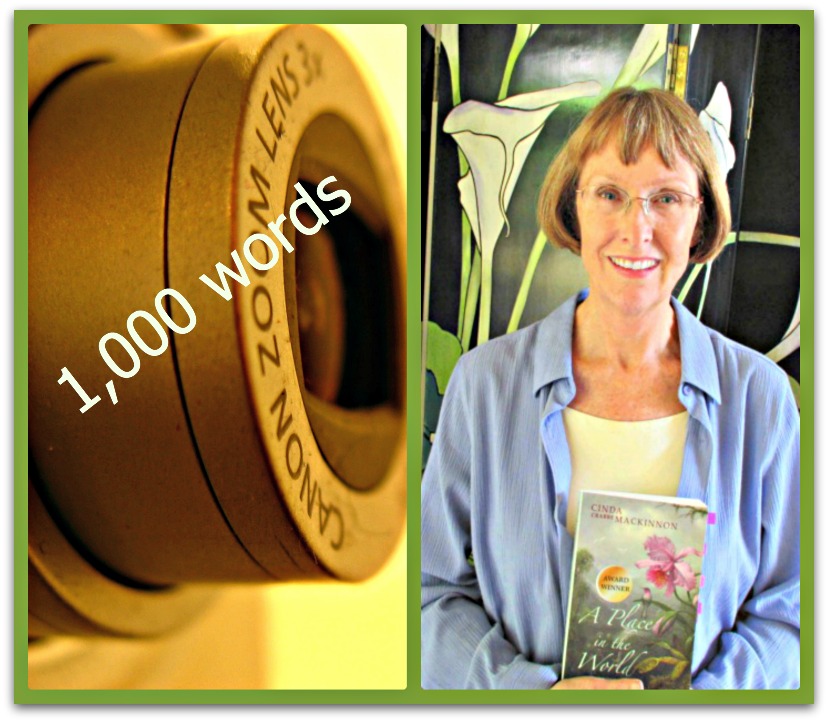
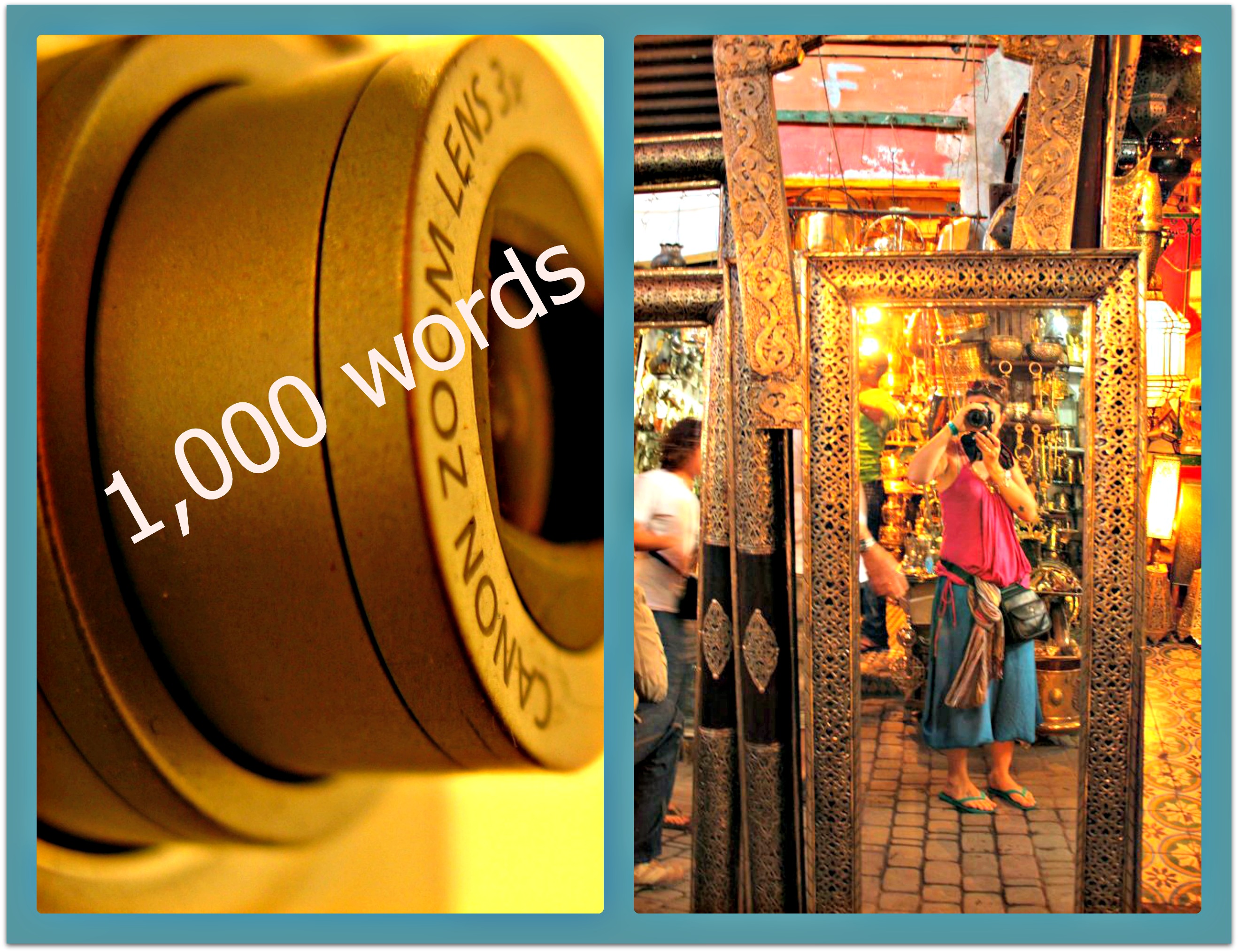
Cinda 1000 Words CollageWelcome to our monthly series “A picture says…”, created to celebrate expats and other global residents for whom photography is a creative outlet. The series host is English expat, blogger, writer, world traveler and photography enthusiast James King, who thinks of a camera as a mirror with memory. If you like what you see here, be sure to check out his blog, Jamoroki.

My guest this month is Cinda MacKinnon, an American who grew up overseas and is the author of an award-winning novel set in one of her former homes, Colombia. Called A Place in the World, the book was featured almost exactly a year ago on the Displaced Nation.

Cinda shoots mainly “macro” (extremely close up) pictures, a habit she developed because of her interest in nature and plants—especially wildflowers. A writer, former university lecturer, and environmental scientist, Cinda is trained in geology and has also nurtured a life-long passion for botany. It’s telling that the protagonist of her novel is a botanist!

Cinda enjoys hunting down rare plants and taking photos that show their minute details, such as the number of anthers (the part of the stamen that contains pollen), so that botanists will be able to identify them.

She now lives in northern California, where the California Native Plant Society has become a fan of her photos and sometimes asks her to supply a few of them for their newsletters and exhibits. Who knew?

* * *

Hi, Cinda. Welcome back to the Displaced Nation. I’m pleased to have the opportunity to discuss your photo-travel experiences. When I first started following your blog, I assumed you were a writer—but then was delighted to discover that you’ve also taken some excellent photos. I know you’ve already been over some of this ground in your interview with ML Awanohara, but can you tell me where you were born and when you spread your wings to start traveling on your own?
I was born on an Air Force base in Louisiana, but lived there only a week. My dad was already stationed in Greece, and my mother followed him as soon as she was able to travel. I lived in Greece and Germany as a pre-schooler and then in Colombia when my father changed his job and began working as a military attaché for U.S. embassies. Having fallen in love with Latin America, my parents retired in Costa Rica when I was in seventh grade so, happily, I was able to stay in that part of the world through high school…and beyond. After college in the United States, I moved to New Zealand with my husband (back then, they told us we had to get married to immigrate together!). We came to California when he finished his PhD. And here we’ve been ever since, although I view that move to California—I was in my thirties—as the first time I actually lived in the States. Even though my passport said I was a citizen, it has taken me a while to feel like I belong here.

You have been an expat almost since birth—what is known as a Third Culture Kid. Would you say that your wanderlust comes from your nomadic upbringing?
Once I grew up, I wanted to see more of Latin America and as a young family we could do that cheaply. Next I visited Europe to see some of the places I’d lived with my parents, but like so many others ended up falling in love with Italy and France. I think language had as much to do with it as the culture and people. Growing up speaking Spanish, it was fairly easy for me to be understood in Italian, and I found French so beautiful that I have become a perennial student. Recently, my husband and I explored Central Europe along the Danube River, from southern Germany to Budapest. That splendid trip provided fodder for at least five blog posts.

Mais oui. I have always loved the French language, too. Where exactly do you live in northern California?
We live in a semi-rural area nestled in the hills and yet are only 30 minutes from San Francisco—an unusual situation due to geography, which insures our immediate surroundings will never be developed.

“Are not flowers the stars of the earth…”—A.J. Balfour 

And now let’s have a look at a few of your shots that capture favorite memories. Can you tell us the story behind each of them, what makes them so special?
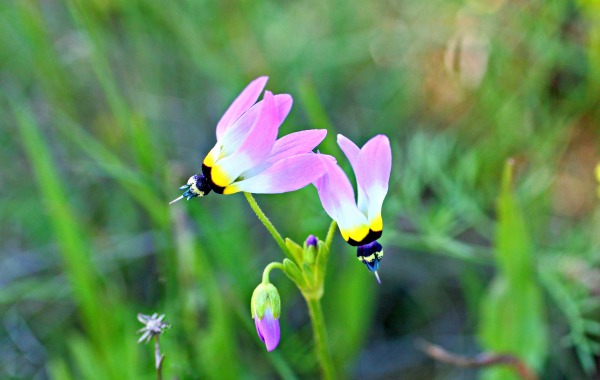
This is one of the first wildflowers I photographed and is still a great favorite of mine: a shooting star, or Dodecatheon clevelandii:

Dodecatheon clevelandii, aka shooting star. Photo credit: Cinda MacKinnonn.

Dodecatheon clevelandii, aka shooting star. Photo credit: Cinda MacKinnonn.

The next photo is of the odd-looking Tiburon Lily, Calochortus tiburonensis, which blooms only a few weeks a year and is quite rare; it evolved on serpentine soils, which gives rise to unusual plants that can tolerate this somewhat toxic chemistry. Indeed, you can find this little lily in only one place: on Ring Mountain (a single hill really), north of San Francisco:

Calochortus tiburonensis. Photo credit: Cinda MacKinnon.

Calochortus tiburonensis, found only on Ring Mountain. Photo credit: Cinda MacKinnon.


Another peculiar wildflower is C. tolmiei, nicknamed “pussy ears”. It is challenging to capture the tiny hairs and other features as it is barely 2.5 cm across—plus it tends to grow on coastal slopes where the wind wreaks havoc with your focus!
Calochortus tolmiei, aka pussy ears. Photo credit: Cinda MacKinnon.

Calochortus tolmiei, aka pussy ears. Photo credit: Cinda MacKinnon.


I’ve taken quite a few photos of wild flowers without having a clue what their names were. I’m getting a real lesson in flora here. Thank you, Cinda. I can see why they call botany the “science of beauty.”

“I perhaps owe having become a painter to flowers.”—Claude Monet

I know you have photos of scenery, too, and these next four, I believe, have a special significance for you.
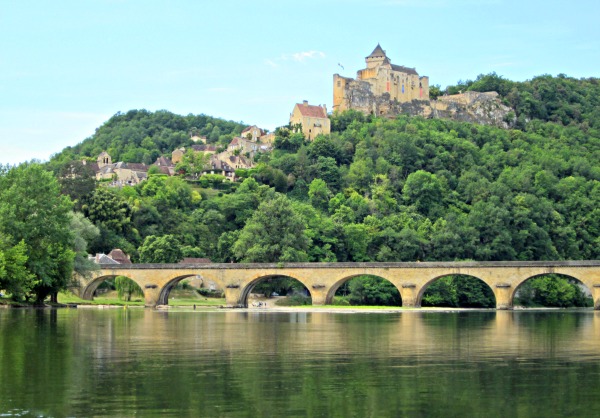
I mentioned I am a bit of a Francophile and a favorite region of mine is the Dordogne Valley. This is a place with history, from Richard the Lionheart to Joan of Arc; pre-history (the Cro-Magnon cave paintings); and beauty. I talked my husband into renting a canoe and we paddled down the Dordogne River, past castles, ancient bridges and towns. This photo with the medieval Château de Castelnaud in the background is a memento of that glorious day:

Canoeing on the Dordogne in glorious weather. Photo credit: Cinda MacKinnon.

Canoe with a view, la rivière Dordogne. Photo credit: Cinda MacKinnon.


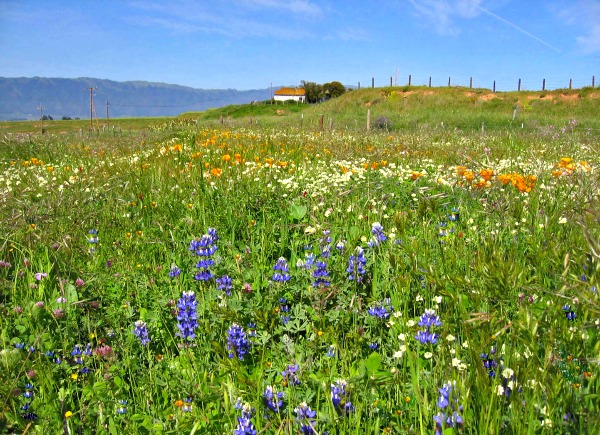
Next, I’d like to show you a photo of a very different place, in California. Actually, I can give you a choice of two: would you rather see the California desert before a rain storm or one of Arvin, a city in southern California? Arvin is interesting because it’s set in hilly grassland that half of the year is dry and dormant but explodes into wildflowers in the spring (if the winter is wet). What’s your pleasure?

Can I have both?
Mais oui! Here’s the Sierras:

The stormy Sierras. Photo credit: Cinda MacKinnon.

The stormy Sierras. Photo credit: Cinda MacKinnon.


And now for Arvin in all of its glory:
A profusion of wildflowers in Arvin. Photo credit: Cinda MacKinnon.

A profusion of wildflowers in Arvin. Photo credit: Cinda MacKinnon.

Both photos are so lovely! That’s why I decided to give you this bonus. But if I really was forced to choose, the desert before the rain is so dramatic. I think you should turn it into a photo-painting using Topaz Adjust or Impression. What’s your last shot?
Another California landscape I’m fond of is Monterey County. When I was a teenager, I read all of John Steinbeck’s novels, never dreaming I would live in California much less end up working in the Salinas Valley as a hydro-geologist for several years. On arriving I felt as though I’d been there before. The town of Monterey itself has become a tourist attraction, but if you go out into the countryside there are still scenes like this one, with the adobe house on the hill:

An enchanted realm near Monterey, California. Photo credit: Cinda MacKinnon.

An enchanted realm near Monterey, California. Photo credit: Cinda MacKinnon.


Please God, don’t let them turn it into another orchard or development!

Here here! I noticed you haven’t included any photos of people. Do you feel reserved about taking photos of strangers?
Yes , and I don’t like portraits to look overly posed. So first I try to take photos surreptitiously. If that’s not possible, I try to be respectful by asking if it’s okay– preferably in their own language. No matter where I travel, I learn some basic phrases in the language of the country (Hungarian was the hardest so far!), but I’ve found that “okay?” seems to be a universal word.

You are right: “okay” seems to have been adopted by most of the planet, though it’s origins are unclear. One theory is that it was derived from a shorthand way foreign-born Americans in the 1830s developed for writing “all correct”—only they’d spelled it “korrect”!

“I will touch a hundred flowers/And not pick one.”–Edna St. Vincent Millay

What motivates you to record what you see through photographs? Is it the ability to capture something unique, which will never be seen again?
Hmmm… I barely think of myself as a photographer; it is one of several hobbies! But certainly, what you say is true of fleeting blooms, and photos do help to preserve memories of wonderful places, whose beauty could vanish. But I think what really led me to photography was my interest in plant nomenclature. I like to block out weeks of time every year to hike in hills, valleys and deserts and search for rare blooms. It is a bit of a treasure hunt, and my photos of evidence of the riches I uncover.

Your modesty is charming, but I think you definitely have an artist’s eye and many of your photographs could be transformed into beautiful pictures with a little more post processing. Which leads me to the technical stuff. Some of our readers may want to know what kind of camera and lenses you use, and how you handle post-processing.
I use a Canon Digital Rebel XT SLR with a macro lens when I am looking for wildflowers in the spring. But for traveling I’ve started to just put my trusty Canon PowerShot in my pocket. I usually use Photoshop for post-processing, but as you’ve pointed out, I’m not adept at all the advanced features. I use “auto” first, and that is generally all I need, except I often crop a shot and, if needed, adjust the lightning or clean up stray blemishes.

Finally, do you have any advice for wannabe photographers who are traveling or living abroad?
It is not the equipment—it is in the eye. Some of my better pictures were taken with a point and shoot. I asked a professional photographer friend if he thought I should buy some filters or another lens, and he said his best shots are sometimes with his cell phone! I guess the motto is “be prepared” for something that catches your eye—be ready for the special moment when the light is right. Make sure your subject doesn’t appear to have an antenna sprouting out of his head at that moment. Don’t use the “sharpen” feature for portraits as it accentuates flaws (unless you want that for character) and can give a severe look. And don’t make your friends look at 200 mediocre photos of your vacation—please cull out the unappealing or out-of-focus ones! (My rule of thumb for talks is 1 to 1.5 slides per minute—that’s 60 to 90 per hour—nobody wants to see more than that.)

Very succinct and good advice, Cinda—right up my street. I’d like to thank you for taking the time to tell your fascinating story in this interview.

* * *

front-cover-place-in-worldReaders, what do you make of Cinda’s close-up photos of exotic plants and her photography advice? I find it curious that she writes about people looking for their place in the world, yet is obsessed with the kinds of flowers that bloom where they are planted. As Georgia O’Keefe once put it:

“When you take a flower in your hand and really look at it, it’s your world for the moment.”

Please leave any questions or comments for Cinda in the comments!

Meanwhile, I suggest that you check out Cinda’s Pinterest boards for more of her botany photos. You can also get to know her better by visiting her author site and blog, and liking her Facebook page. And don’t forget to read her book if you haven’t done so yet, many glowing reviews for which can be found here.

(If you are a photographer and would like to be interviewed by James for this series, please send your information to ml@thedisplacednation.com.)

STAY TUNED for next week’s fab posts!

If you enjoyed this post, we invite you to register for The Displaced Dispatch, a round up of weekly posts from The Displaced Nation, with Alice nominees, exclusive book giveaways and other extras. Register for The Displaced Dispatch by clicking here!

Related posts:

For this TEFL teacher with a strong Cornish identity but a compulsion for travel and the expat life, a picture says…

Cornish Kylie Collage

Canon zoom lens; photo credit: Morguefiles. Kylie Millar (self portrait).

Welcome to our monthly series “A picture says…”, created to celebrate expats and other global residents for whom photography is a creative outlet. The series host is English expat, blogger, writer, world traveler and photography enthusiast James King, who thinks of a camera as a mirror with memory. If you like what you see here, be sure to check out his blog, Jamoroki.

My guest this month is 27-year-old Kylie Millar who was born and bred in Cornwall, England, and, though she now finds herself in Thailand, just like me, she remains proud of her Cornish heritage, having branded herself on her travel blog as Cornish Kylie.

Not only that but Kylie informs me that the Cornish were granted official minority status earlier this year. Being born and bred in Cornwall now means, technically, that a person is identified as Cornish first, British secondwith the latter identity being confined largely to one’s passport. Well, it is true that Cornwall was its own Celtic nation before the Norman Conquest, and they have their own language, Kernewek, which is distinct from Welsh.

After the Scottish vote for independence, can a bid by the Independent Republic of Kernow be far behind?

How times have changed!

* * *

Hi Kylie. It’s good to see you at the Displaced Nation. As the name of your blog implies, you are a proud Cornish lass—rightly so! You have also travelled a fair bit. But since Cornwall is a place close to my heart, can you reminisce for a bit about your childhood in that part of the world?
I was born in Truro, the main hub of Cornwall, which has a cathedral and is therefore designated a city as opposed to a town. But I was raised in the hilly seaside town of Falmouth, known for its lovely beaches, fishing port and docks. To some, it may seem like an aging coastal town, but the recent influx of art students to its expanding university has given it a new lease on life and a nice arty vibe. My dad is a fisherman so I grew up living a typical Cornish life: summers on the beaches, the smell of a crab being boiled on the stove top (which to this day I cannot abide—the curse of being a fisherman’s daughter and not liking fish or seafood!). But I really do appreciate how lucky I am to have grown up in such a wonderful place and fully intend to return one day.

Gwrys yn Kernow (made in Cornwall)

As you know I spent my last year in the UK before emigrating to South Africa (1994/5) in Falmouth, so it’s interesting to hear about the changes. How long after I left did you spread your wings and start travelling abroad?
I actually didn’t spread my wings all that much growing up. Family holidays consisted of trips to Butlin’s holiday camps and a few package holidays to Tenerife, in the Canary Islands. I didn’t even move away from Cornwall to go to university, I just commuted the 75 miles east to Plymouth. Why would I want to move away from somewhere like Cornwall?

I agree. It’s a magnetic place even for those of who weren’t born there. Carry on, please.
As part of my degree I had the opportunity to go to China for a few weeks to do a little bit of English teaching and a cultural exchange with Chinese university students. This was my first time to experience a culture completely different from my own. I was only 19 and in a constant state of “culture shock”. It wasn’t until after I completed my degree and had a few years’ work under my belt that the urge to explore really kicked in.

Please tell me a little more about your travels.
Aside from the trip to China, I have holidayed in Egypt and Morocco. Then my next big trip was a month backpacking around Thailand with one of my best friends. That’s how I first caught the Thailand bug.

You certainly don’t intend to let the grass grow under your feet, Kylie. I foresee you becoming a seasoned traveller before long. I know there is a lot more to your story, but let’s start with the reasons that drove you to travel.
I’m not a fan of people traveling purely to “find themselves” or even to “make the world a better place”. Actually, I have changed a lot since coming to Thailand, and I’m sure that, as a TEFL teacher, I’m contributing in some small way to the education of Thailand’s future leaders. But that’s not the sole reason I came here. I had a job in the UK that I loved, but I sensed I was stagnating. So I followed my instincts (very scary but it felt right) and quit, upped sticks and came to Thailand, got a TEFL certificate and started teaching English to Thais.

“Life is so short, you must move very slowly” – Thai proverb

You say you’ve got the Thailand bug, which in my experience can be difficult to explain to anyone who hasn’t lived here. So let’s leave it at that and talk about where, precisely, are you right now and what are you up to.
I spent my first 18 months living in the city of Hat Yai, in southern Thailand, near the Malaysian border. I was teaching English at a government high school, with classes of fifty students and few resources apart from those I conjured up myself. Later I went to Phuket, Thailand’s largest island, to work as a teaching assistant in an international school. The two posts and their locations were poles apart.

Can you say a little about that for the sake of readers who don’t know Thailand?
In Hat Yai I was one of a handful of farangs (Caucasian foreigners) living in a village on the outskirts of the city. On my daily commute to the school, I would meander through rubber plantations, passing water buffalo. At first people would stare, but their stares quickly turned into smiles and shouts of “hello!”. Nobody spoke English beyond that one word, so I had to learn to speak Thai very quickly to be able to order food. In Phuket, by contrast, I am one of thousands of farangs and when Thai people see me they assume that I am a tourist and treat me accordingly. It’s harder to win over the locals here because tourists are their meal ticket. You have to convince them that you aren’t a tourist; you live here like they do. That said, life in Phuket is a lot easier. It has familiar things like pizza and sandwiches (I haven’t got used to eating rice three times a day yet). And of course the island’s beaches are stunning, which reminds me of Cornwall and makes me feel at home.

Ah, I think I detect something of the home bird in you, alongside the intrepid traveller… And now let’s see some of your favorite photos and hear the stories behind them.
When I was in the Atlas Mountains of Morocco, I couldn’t resist taking pictures of the many beautifully decorated doorways. This picture was accidental as the boy emerged from the doorway just as I pressed the shutter release. Then I realised how people can add an extra dimension and started to include people in more of my photographs. This trip to Morocco was special: it opened my eyes to a very different part of the world.

Kylie_BoyinMoroccanDoor

A boy in a Moorish door; photo credit: Kylie Millar.

I love this. Dirty, dusty, old and full of intrigue. A great shot. What else do you have for us?
Songkran is the festival held in mid-April to celebrate traditional Thai new year’s. It’s probably the most famous of all the Thai festivals because it’s the scene of the world’s biggest water fight. Determined to join the festivities, I locked away my main camera and went out to the streets. I got this shot when the water fighting stopped to let a convoy of vehicles, carrying Buddha statues, pass to the temple. Songkran is absolutely insane, and if you ever find yourself in Thailand at this time of year, prepare to get wet—or hide!

Kylie_ThaiNewYear

Happy New Year, Chiang Mai style; photo credit: Kylie Millar.

And here’s one more of Thailand. As you know, anti-government protests took place from November 2013 through May of this year. I live close enough to Bangkok that I was able to come in and take photos. Having a big camera was useful as it made it obvious I was an observer, not a participant. Foreign involvement in the protests was a big no-no. On the day I took this shot, anti-government protesters had made progress, spirits were high and the atmosphere was unlike any other I have experienced. People were happy to have their picture taken, and this lady was my favourite, standing proudly in traditional yellow to signal her support for the King. For some reason, the scene made me think of the crowd around the Pyramid Stage at the Glastonbury music festival in England—not what you’d expect at an anti-governmental protest. I’m glad I was able to see it all firsthand.

Kylie_yellowlady

A sunny presence at the Bangkok protests; photo credit: Kylie Millar.

Getting to the zuggans (Cornish for “the essence”)

Now could you show us the kinds of places that tend to bring out your shutterbug instincts?
One of those places was Jemaa el-Fnaa, a bustling square in Marrakesh that offends all of the senses. Said to be the busiest square in Africa, it is hot and dusty, and the air is full of the smell of tagine spices and roasting meats. The sounds of hawkers and snake charmers mix with the buzz of the crowd, punctuated by the call to prayer that reaches every corner of the souks—it’s the largest traditional market in Morocco. Rugs, lamps, cushions and fabrics in deep oranges, luscious reds and striking purple line the narrow lanes of the souks. Rusty tin roofs let in shards of light that make this a photographer’s dream. But cameras can only capture so much…

Kylie_souk

The wonders of the Marrakesh souks; photo credit: Kylie Millar.

You captured the smells as well as the intrigue. Well done. What’s next?
I visited George Town, in the northeast corner of Penang island, twice recently. It’s famous for being one of the main destinations for visa runners and backpackers alike. I was drawn to its hodgepodge of cultures: mosques, churches, Hindu and Buddhist temples all sandwiched together. Ethnic Chinese and Indian communities live alongside each other, and traditional clan families can still be found living on stilt houses on the jetties. In this photo I tried to capture some of that:

Kylie_bikeforrent

The back streets of George Town, Penang; photo credit: Kylie Millar.

I’m not generally a fan of black-and-white photos but this subject lends itself so well. And finally?
Many of the things that make Thailand unusual are seeming more normal the longer I live here—like the bright orange monk’s robes in this picture, the turquoise sea, the towering Buddha statues, multicolored long boats, the outrageously decorated temples and colourful tuk tuks. It’s home now but, as I think this photo shows, I still like to play the tourist and explore:

Kyli_ThaiOfferings

A novice Thai monk and spirit house; photo credit: Kylie Millar.

I like the way you captured Thailand’s vibrancy. Tell me, do you feel reserved about taking photos of people, particularly when they are conscious that you are doing so?
Actually, I like to try and get natural photographs without the person knowing at all. I want to capture moments and events not someone posing. People generally enjoy having their picture taken, so if they spot a camera they will smile or pull a face and the obligatory peace signs come out. Not quite what I’m looking for… Driving an old banger of a car helps because Thais will sometimes take our picture—because we farangs are assumed to be rich and usually drive smart cars.

“Today I’m going to shoot someone…and they will love me for it!”

It can be annoying, this Asian misconception that all Westerners are rich, but I guess we all get used to it in time. So you don’t ask permission unless you need to before taking people’s photographs—but how do you get around any problem of language?
If I am unable to be stealthy, then I use the universal “can I take a picture?” sign consisting of pointing to my camera. I have learned how to ask in Thai but the words sometimes escape me. The big camera is usually a clue! When I was in a mountain village in Morocco, getting some shots of the decorative doors as mentioned above, an old lady smiled at me and gestured that she’d like to have her photograph taken. As I released the shutter button, she held out her hand, demanding payment. Not wanting to cause a scene, I forked out some change. Although not too happy with my offering she took it—if only she knew I only wanted a picture of her back door, not her face!

Kylie_Atlas Mountain lady

People shots for a price; photo credit: Kylie Millar.

Would you say that photography and the ability to be able to capture something unique that will never be seen again is a powerful force for you?
My mum always says that I take so many photographs but I am hardly ever in them. And that is very true. I know that when I am older I will wish I had more pictures of myself having adventures. But for now photography is a means of capturing what I see and feel. If I think the photos are worth sharing, they will end up on my blog. Photography is changing with the times, though. When I studied A-level photography we used film, processed by hand after spending hours in the darkroom. Filters had to be slotted into the machine; now they are just options on an iPhone app. When my mum was younger she went on a trip to Israel and Jerusalem, and she has two rolls of film from that trip—around fifty photographs. Nowadays people will take more than fifty photographs on a single night out. The technology has evolved so much that nearly everyone has a camera in their pocket on their phone, which is great. It makes photography more accessible to all, with no wasted film. But it does mean that photos are not so special and precious as they once were.

Some of our readers may want to know what kind of camera and lenses you use, as well as any post-processing software.
I’ve got a Canon 600D with standard lens, and a 75-300mm telephoto lens (perfect for those stealthy pictures of people, and for animal shots). I’ve also got a Panasonic Lumix point and shoot for the days when a bigger camera isn’t practical. If I am going to edit, I use Adobe Lightroom, which I am still finding my way around. Having never been taught how to use digital post-production software, I have to rely on trial and error—but that was also what it was like in the darkroom. It’s more fun that way!

Finally, do you have any advice for wannabe photographers who are traveling or living abroad?
Take more pictures than you think you need. Bring spare SD cards and back them up—you will lose one or one will break. Don’t keep your camera locked away in a bag, keep it to hand, it needs to become a natural extension of yourself, not this big cumbersome thing you have to get out every time you want to take a picture.

Even though we are more than 40 years apart, we both left Falmouth and ended up in Phuket with the same camera (Canon T3i 600D). No wonder your pics are so good! Thank you for taking the time to tell your fascinating story.

* * *

Readers, what do you make of Kylie’s experiences and her photography advice? And do you have any questions for her about her photos or her travels? Please leave them in the comments! And don’t forget you can follow Kylie on her blog, Cornish Kylie. You can contact her by email at info@cornishkylie.com, and you can also find her on social media: Twitter, Facebook, and Instagram.

(If you are a photographer and would like to be interviewed by James for this series, please send your information to ml@thedisplacednation.com.)

STAY TUNED for next week’s fab posts!

If you enjoyed this post, we invite you to register for The Displaced Dispatch, a round up of weekly posts from The Displaced Nation, with Alice nominees, exclusive book giveaways and other extras. Register for The Displaced Dispatch by clicking here!

Related posts:

https://d3ijcis4e2ziok.cloudfront.net/tpc-check.html

A spoonful of imagination helps the expat life go down: In tribute to our 7 columnists

Sugar spoon by jppi (Morguefiles); jet painting by Prawny (Morguefiles).

Sugar spoon by jppi (Morguefiles); jet painting by Prawny (Morguefiles).

Here in the Northern Hemisphere, as summer draws to its inevitable close, I’d like to take a moment to acknowledge the talented individuals who write columns for us from an expat or otherwise displaced perspective.

Curiouser and curiouser! If it weren’t for them, we’d know a great deal less about the contours of the kind of creative life that is lived across two or more distinct cultures.

Fiction, fantasy, food, photos, theatre—oh my! Our columnists also serve as the Wizards who can help the rest of us transform our travels into a trip down the Yellow Brick Road.

(Yes, Dorothy has now joined Alice as a Displaced Nation heroine.)

Without further ado, they are, in alphabetical order:

1) Andrew Couch

COLUMN: Here Be Dragons
INTERESTING FACT ABOUT ANDREW: He spent this summer developing the Peanut Butter Bar WordPress app, which allows you to attach sticky bars to the roof of your site that stay visible no matter how far a user scrolls. (“Smooth” is free. “Chunky,” which has more features, costs $15.)
COLUMN PURPOSE: Andrew demonstrates, through snippets of his own writing, the possibility of collecting materials for a fantasy novel from a life of international travel.
MOST POPULAR POST: Andrew’s first, “The expat life as fuel for fantasy writing,” perhaps because his concept is a little fantastical.
WHY YOU SHOULD FOLLOW: You will never look at your displaced life in quite the same way again but will see yourself as the protagonist in your own Alice or Dorothy story, a story you’re not only living but could (should?) be writing…

2) Beth Green

COLUMN: Booklust, Wanderlust
INTERESTING FACT ABOUT BETH: She grew up on a sailboat and, though now a landlubber, still enjoys a peripatetic life.
COLUMN PURPOSE: Beth selects books with particular appeal to international creatives.
MOST POPULAR POST: Her first, about the Dublin Murder Squad series by ATCK writer Tana French, perhaps reflecting Beth’s own passion for mystery (she is also a member of the Sisters in Crime mystery writers’ association, another interesting fact about Beth).
WHY YOU SHOULD FOLLOW: The peripatetic Beth has a correspondingly eclectic taste in books, sampling everything from psychological mystery to journalistic memoirs of China to biographies of eccentric female travelers of the past century.

3) Elizabeth Liang

COLUMN: TCK Talent
INTERESTING FACT ABOUT LISA: Lisa spent part of the summer in Iceland, putting on her one-woman autobiographical show about growing up as a TCK, Citizen Alien.
COLUMN PURPOSE: Lisa profiles Adult Third Culture Kids with unusual talents. Perhaps not surprisingly, many of them find success as actors, just as Lisa has.
MOST POPULAR POST: Lisa’s interview with Laura Piquado, an actress in New York City who grew up all over the world and told Lisa she is now

dyak and atheist, Muslim, Christian, Bahá’í, Jain, Egyptian, Italian, Canadian—there is nowhere in the world that has ever felt foreign to me.

WHY YOU SHOULD FOLLOW: Because they weren’t originally expats by choice, adult TCKs can teach the rest of us a lot about the glories as well as the challenges of leading a displaced life. Plus Lisa’s gutsiness in developing her own TCK show gives her creds. She and the show are terrific! I know because I’ve met her and seen it.

4) Meagan Adele Lopez

COLUMN TITLE: The Lady Who Writes
INTERESTING FACT ABOUT MAL: Meagan Adele Lopez (nicknamed MAL) is both Anglophile and Francophile (she once lived in Paris). Talk about open-mindedness!
COLUMN PURPOSE: MAL writes about what she wished she’d known before setting out to write and self-publish her first novel, Three Questions, based on a romantic adventure that started at the end of her first expat stint in the UK (in Bristol).
MOST POPULAR POST: MAL’s first, suggesting that expats may easily be able to find a novel in their novel lives. Note: MAL has just wrapped up her six-post series for us.
WHY YOU SHOULD READ: Rather like Dickens, MAL calls on elements from her thespian background (she used to be an actor in Hollywood, no less) for writing a novel. Her characters are real: she imagines “dining out” with them!

5) James King

COLUMN TITLE: A Picture Says…
INTERESTING FACT ABOUT JAMES: James now lives in Thailand but during his previous expat stint, in South Africa, he ended up settling in Capetown, where he still has a house he’s renting out but would like to sell. Anybody interested?!
COLUMN PURPOSE: James tries to coax expats and other displaced types for whom photography is a creative outlet to tell the stories behind their favorite photos.
MOST POPULAR POST: James’s interview with Irish “ruin hunter” and photographer Ed Mooney, which generated a whopping 32 comments.
WHY YOU SHOULD READ: Why people feel compelled to take photos and what their favorite subjects are turns out to be a great window into the displaced mindset. Kudos to James for developing the series in this new direction.

6) JJ Marsh

COLUMN TITLE: Location, Locution
INTERESTING FACT ABOUT JJ: She plans to attend the Chorleywood LitFest on November 16th, 2014, wearing a toga. Hey, carpe diem and all that!
COLUMN PURPOSE: JJ interviews well-known authors who are expats and/or set their books in far-off lands about the role of place (location) in their imagination and subsequent writings (locution).
MOST POPULAR POST: JJ’s interview with Amanda Hodgkinson, who finished her first two novels, 22 Britannia Road and Spilt Milk, after relocating with her family to southwest France.
WHY YOU SHOULD READ: JJ commands respect in the writing world for her own achievement in crafting a European crime series featuring detective inspector Beatrice Stubbs, in which place plays a major role (she thinks of it as a “character,” she says). This must be why so many other authors are willing to share with her the techniques they use to transport readers to other, more remote parts of the world. Her columns are invariably illuminating.

7) Joanna Masters-Maggs

COLUMN TITLE: Global Food Gossip
INTERESTING FACT ABOUT JOANNA: She is a school friend of Displaced Nation founder Kate Allison. Want another one? She is half Irish and half English, which surely qualifies her as a TCK?
COLUMN PURPOSE: Joanna provides the inside story on food that comes from having lived as a trailing spouse in eight very different countries for more than 16 years.
MOST POPULAR POST: “There’s no taste like home,” in which Joanna confesses that she’s been so busy trying to cook the local food for her four kids that she neglected to introduce them to traditional English dishes.
WHY YOU SHOULD READ: Her repeat expat life has turned her into a creative chef extraordinaire. She knows how to make her own clotted cream (and provides a recipe) should homesickness strike, but is equally adept at Texas Barbecue Brisket.

* * *

In other news…

Have you checked out our Pinterest pins lately? We’ve quite the collection of displaced reads, movies and people, eg:

We can take you on a trip out of this displaced world should you wish to be further displaced; or for those who prefer a fantasy metaphor for their escapist tendencies, check out our Alice in Wonderland and Follow the Yellow Brick Road boards.

IT’S FOOD! is one of our most popular boards (natch!), as is World Parties, Holidays & Celebrations (hooray!). We also have two boards that celebrate the spirit of two previous blogs by me and another Displaced Nation founder, Kate Allison:

Speaking of Kate, you may have noticed that after producing episodes of her novel Libby’s Life on a regular basis for a couple of years (90 episodes, can you imagine?!), she is now updating the story on her author blog and aggregating those posts every so often for the Displaced Nation audience.

Last but not least, if you haven’t caught up with our Displaced Dispatch lately, take another look. Besides links to the latest posts, we have ORIGINAL contents by yours truly, exclusive giveaways (there’s one on now!) and candidates for the monthly Alice Awards.

Yes, we are still doing our Alice Awards and have now added an occasional Wizard of Oz column about repatriation: “Emerald City to Kansas”. We’re a busy (dis)place!

STAY TUNED for the announcement of August Alices.

If you enjoyed this post, we invite you to register for The Displaced Dispatch, a round up of weekly posts from The Displaced Nation, with original contents, book giveaways, and other extras. Register for The Displaced Dispatch by clicking here!

Related post:

For this adult TCK writer with an ocean-loving soul and a passion for travel, a picture says…

Canon zoom lens; photo credit: Morguefiles. Rita Gardner at home in California.

Canon zoom lens; photo credit: Morguefiles. Rita Gardner at home in California.

Welcome to our monthly series “A picture says…”, created to celebrate expats and other global residents for whom photography is a creative outlet. The series host is English expat, blogger, writer, world traveler and photography enthusiast James King, who thinks of a camera as a mirror with memory. If you like what you see here, be sure to check out his blog, Jamoroki.

My guest this month is 67-year-old Rita Gardner, who grew up on her expatriate family’s coconut farm in a remote seaside village in the Dominican Republic. Her father declared them to be the luckiest people on earth. In reality, the family was in the path of hurricanes and in the grip of a brutal dictator, Rafael Trujillo.

But if life was far from the Eden her father had envisioned, Rita developed a set of childhood passions that sustains her to this day: writing, traveling, hiking—and photography.

TheCoconutLatitudes_cover_dropshadowShe may no longer live in the Dominican Republic but she continues to dream in Spanish, dance the merengue, and gather inspiration from nature and the ocean. Her favorite color is Caribbean blue.

And now Rita has written a memoir about her life as a Third Culture Kid in República Dominicana. Due out from She Writes Press in September, the book is evocatively titled The Coconut Latitudes: Secrets, Storms and Survival in the Caribbean.

Rita contacted me because she is enjoying “A Picture Says…” I am pleased that she can be this month’s featured guest.

* * *

Hi, Rita, and welcome to the Displaced Nation. I’m delighted to hear you’re enjoying “A Picture Says…” and to have the opportunity to do this interview. Before we get down to the nitty gritty, can you tell me a little more about how your family ended up living in the Caribbean?
My father was an electrical engineer and traveled all over the world installing hydro-electric dams. I think my travel wings must have sprouted in the womb since my parents were in Uruguay on a job site when my mother got pregnant. They flew back to the U.S. so I could be born, and six weeks later we were on another plane, this time to an engineering job in the Dominican Republic. My parents fell in love with that Caribbean island nation, and my father quit his engineering job and “went off the grid” to become a coconut farmer on an isolated beach on the country’s northern coast. It became our permanent home for the next 19 years, and, as you already mentioned, our Caribbean life is the subject of my forthcoming memoir, The Coconut Latitudes.

I guess that being born into an expat family was a passport, so to speak, to a life of travel?
That’s true. It influenced me in other ways as well. I tend to travel “close to the ground,” getting to know the people where I’m visiting. I also travel light as I want to be free to immerse myself (to the extent possible) in other cultures, exploring commonalities as well as differences. Most of my travels have been within Latin America, where I’ve been able to put my Spanish-language skills to use.

And I gather that growing up where you did, on a Caribbean island, you sometimes encountered real adventurers? Did they inspire you as well?
Yes. Those who made it as far as our isolated coconut farm were pretty intrepid and would have stories to tell. Because they were so rare, these visitors made a big impression on me, and their stories made me thirst for the day when I could venture out into the wider world myself. In my new memoir I chronicle one such encounter with a group of strangers who shipwrecked near our farm, and turned out to be not who they appeared to be. Someone else who inspired me was my older sister. By the time she was in her fifties, she’d traveled to over seventy countries.

Wow, she does sound adventuresome. How about you—which countries have you visited?
Most of the islands in the Caribbean, several of them by sailboat, plus Mexico, Costa Rica, Argentina, and Uruguay. In Europe I’ve been to Italy (where I attempted to speak Italian but it came out Spanish), France, and Greece (island-hopping by small boat plus a side trip to Athens).

A day at the beach restores the soul…

South America is a part of the world I have never been but the three weeks I spent in Trinidad more than thirty years ago gave me an idea of what it may be like. I’m sure you have some wonderful memories and I look forward to reading them soon in The Coconut Latitudes. I see you now live in North America. Can you tell us where?
I’m in northern California, right on San Francisco Bay. I found my way here a few decades ago. I’ve always chosen to live near the ocean. Like most people, I had to earn a living, so travel was only an option during vacations. Luckily, I’ve recently retired so have more to time to travel, take pictures, and write.

RG1 Smoking Bride

The smoking bride; photo credit: Rita M. Gardner.


Photo credit: Rita M. Gardner.

Wading chairs; photo credit: Rita M. Gardner.


Photo credit: Rita M. Gardner.

A sitting duck; photo credit: Rita M. Gardner.

Speaking of taking pictures, let’s have a look at a few in your collection that capture favorite memories. Can you describe the story behind each one and what makes them so special?
I visited France for the first time last year with a dear friend, and one of our favorite things to do was meander about. We saw this bridal couple in Monmartre. The bride’s leg-baring gown and the cigarette struck me as being improper yet fun.

She obviously stepped out of the part for a while, which makes for a lovely scene—almost like an actor taking a break on a film set. What else do you have for us?
The next one is from Boca Chica Beach, in the Dominican Republic, whose pastel turquoise waters I had loved since the time I was a small child. I recently went back to the Dominican Republic to attend a friend’s mother’s 100th birthday party. A group of us decided to pay a visit to this beach. I liked the whimsy of the chairs in the shallows, as if they were bathing.

So you didn’t put the chairs there yourself?
No—it was un-staged! The third photo won “Best of Show” earlier this year in a camera club I belong to. If you look closely, you’ll see a small duck in the foreground, which I didn’t notice when I got the shot. The ship itself is one of the last Liberty ships that had been built for action in World War II by the Kaiser Shipyards, near where I now live. At the peak of the war, ships were being turned out at the rate of one almost every week! It’s now “mothballed”, and volunteers, some of whom saw action in that war, maintain it. They’re getting pretty old…

“Seas” the day!

That may not be such a small duck but it certainly is a big ship. And now can you share some examples of your favorite places to take photographs? What is it about these places that inspires you?
It’s a bit of a mixture really. One of my favorite subjects is nature. Growing up on a Caribbean island, I saw the entire range, from watching in awe as thundering waves destroyed our pier and pitch-poled fishing boats, to contemplating sunsets that painted calm seas with exuberant color, to enjoying the deep chorus of frogs announcing rain. To this day, I love to take pictures out of doors. I enjoy finding unusual patterns in nature and looking for images that are “hidden in plain sight.” My other favorite subject is people: I am endlessly curious. Sometimes I plunge into crowds in hopes of getting opportunities for candid people shots.

This photo was taken in the midst of a parade in Santo Domingo, where the child’s attention was riveted to the action beyond the scene.

Photo credit: Rita M. Gardner.

Out of this displaced world; photo credit: Rita M. Gardner.

I took the next photo, of leaf patterns, at nearby Phoenix Lake during a hike with friends. I love the variety of colors and shapes.

Photo credit: Rita M. Gardner.

Leaf patterns; photo credit: Rita M. Gardner.

This third photo, taking in Mykonos, combines my love of nature and people. It feels meditative to me; clearly the fisherman is at one with his environment.

Photo credit: Rita M. Gardner.

Fishing for serenity of mind; photo credit: Rita M. Gardner.

I particularly love the fisherman shot because I have had many wonderful holidays in Mykonos, where I’ve taken photos—but never witnessed a scene like this one. In fact it is one that most people would not associate with Mykonos. Moving on, I know some people feel reserved about taking photos of people, particularly when they are conscious that they are doing so. What’s your feeling about this?
I feel respect more than reserve, and if it seems that taking pictures would not be a welcome experience, I back away from doing it.

In that case, do you ask permission before taking people’s photographs? And how do you get around any problem of language?
I’m a pretty friendly person, so if I’ve caught someone’s eye,I might engage them in a brief conversation and ask if it’s OK if I take their picture. I find smiles break through a lot of language barriers. Also, most people I meet like to practice their English, so language is not usually a problem. That said, some of the best photos are candid ones. Sometimes I try to capture a shot without the subject being aware—I don’t engage in conversation in those instances.

Would you say that photography and the ability to be able to capture something unique which will never be seen again is a powerful force for you and has changed the way you look at life?
I consider myself extremely lucky when I’ve managed to capture an image that is unusual and unlikely to be photographed again. I don’t think the experience changes me. My chief emotion is to feel grateful that I have an eye for images that others may lack.

Sea-ing the light

Photographers never tire of discussing cameras and lenses. What kind of equipment do you use?
I gave up my SLR and its array of lenses for the convenience of a small digital camera. I use a Canon PowerShot and my i-Phone. Both fit in pockets, so I can travel light. Also, I prefer to shoot in natural light rather than use a flash (unless it’s absolutely necessary). So I guess I could say I travel light, and I shoot “light.” How’s that for a quick summary of my style?

Well said! I see nothing wrong with using smaller cameras. Their power and versatility is improving all the time, so unless you need big images for printing they do a great job, sufficient for posting on websites and social media. What is your take on post-processing?
I don’t manipulate my photos other than with the standard tools for cropping, adjusting exposure, etc. I don’t use Photoshop or any the other software products available. Okay, I have to confess I just discovered some apps for the i-Phone camera which I’m having fun with, but mostly “what I see is what I get.” That said, I’m not a purist; I may get into photo software at some point in the future.

The results are good so don’t tell anyone!!! Finally, do you have any advice from your experiences for wannabe photographers who are traveling or living abroad?
Given the ability to erase unwanted images on digital cameras, just shoot away, assuming you get a photo card with enough memory that it doesn’t fill up quickly. Always carry an extra battery and extra film card, because it does you no good to have those items tucked away in your suitcase, or wherever you are lodging! Oh, and do have a battery charger if you are on a long trip so you don’t have to worry about running out of juice. So to speak.

Thanks so much for all these practical tips and for sharing these photos, Rita, and may I take this opportunity to wish you the very best when you launch The Coconut Latitudes this coming month.

* * *

Readers, what do you make of Rita’s experiences and her photography advice? And do you have any questions for her on her photos and/or travels? Please leave them in the comments!

And if you want to know more about Rita, don’t forget to visit her author site and like her author page on Facebook. You can also follow her on Twitter and Pinterest.

Last but not least, I would highly recommend that you pre-order a copy of Rita’s Dominican memoir, The Coconut Latitudes, from Amazon.

(If you are a photographer and would like to be interviewed by James for this series, please send your information to ml@thedisplacednation.com.)

STAY TUNED for next week’s fab posts!

If you enjoyed this post, we invite you to register for The Displaced Dispatch, a round up of weekly posts from The Displaced Nation, with seasonal recipes, book giveaways and other extras. Register for The Displaced Dispatch by clicking here!

Related posts:

For this RVer who roams far and wide, iPhone in pocket, a picture says…

Becky RV Collage

Canon zoom lens; photo credit: Morguefiles. Becky Schade at Charlies Bunion, along the Appalachian Trail in the Smoky Mountains (photo credit: Becky Schade).

Welcome to our monthly series “A picture says…”, created to celebrate expats and other global residents for whom photography is a creative outlet. The series host is English expat, blogger, writer, world traveler and photography enthusiast James King, who thinks of a camera as a mirror with memory. If you like what you see here, be sure to check out his blog, Jamoroki.

My guest this month is 30-year-old American Becky Schade. Becky started traveling around America alone in her truck and RV (for those not in the know, RV stands for recreational vehicle, or mobile home) on September 14th, 2012. As she says on her blog, Interstellar Orchard, becoming a full-time RVer was a way to fulfill her dream of perpetual travel, exploration, and adventure, and to make her life the best it can be, right now, no holds barred. “And if I can do it, so can you,” she says.

She goes on:

Even if your Big Dream is going to take some time to realize, there are things you can do, right now, to improve the quality of your life. And they don’t all require a fortune or every free waking hour of your week.

Before pulling up her roots, Becky used to work with monkeys. She is an outdoor enthusiast and also a fantasy/sci-fi fan as well as gamer geek.

I have been waiting a while to interview her and write her fascinating story. Now I have my opportunity.

* * *

Welcome, Becky, and thank you for taking out some time from your adventures for this interview. I believe you were born and raised in Wisconsin but then, at the age of 25, became what is known in the States as a “domestic expat,” moving with a friend to coastal South Carolina. When did you really decide to break out and travel all around America as an RVer?
I loved how different South Carolina was from my home state of Wisconsin, but inside I knew I wanted to keep traveling and exploring. The truth is, I didn’t want to pay for a removal truck every time I moved, so started researching RVing as an alternative. In other words, I would be my own removal truck—taking my house everywhere with me. I eventually hit the road as a full-time RVer at the ripe old age of 28.

Your new-found freedom is clearly a wonderful experience, but do you ever feel homesick?
Home is where I park my RV travel trailer, which I pull with my trusty 2001 Dodge Dakota. Some people might call me a minimalist or even a gypsy because all that I own fits in my RV and truck. I don’t own or rent property anywhere, but I am always home. I get asked many questions about my lifestyle, like, do I feel crowded and cramped inside my little home? It may be difficult to visualize, but my “living space” includes the yard where I park my RV and the wonderful locations I visit. So I enjoy the free and constantly changing views from my bedroom windows that many house-bound folks might pay a fortune for. In reality I have more space than most people do.

The average person moves home, say, five times in their lives, whereas I imagine you could move five times in a month. I’m sure you’re often asked if you feel safe traveling alone, as a young single woman.
I am often asked that question, but you know something? The world is not as scary as the media would have us believe. Common sense is a person’s best safety tool and in my year-and-a-half on the road, I have never once felt threatened. If a place feels off when I arrive, I simply drive to the next place.

You obviously can’t work while traveling except when you stop in a place for a while. Do you ever worry about money?
No, one doesn’t need to be wealthy to live like I do. I saved up the money for the initial outlay from my last “real” job. With my accommodation and truck already paid for, I can explore the country comfortably on an income of $16,000 or less a year, which I make from working seasonal jobs in interesting places. I have at least six weeks a year where I don’t work at all and can focus on my hobbies as well as visit friends and family. I have health insurance, an emergency fund in case of accident or illness, and an IRA. Life on the road doesn’t have to be a gamble. There are smart ways to go about it that minimize the risks. It’s not an extended vacation but a way of life. I’ll continue traveling until I feel the urge to do something different.

I can relate somewhat to the things you are saying as I enjoy my own company, probably more than others enjoy it! And fortunately I have never experienced a feeling of loneliness. How about you, how do you find being alone on the road?
I don’t feel lonely. Being alone and being lonely are two very different things. I love quiet time by myself out in nature, and when I start feeling the need for human interaction, it’s usually not hard to find. Sitting outside your RV in a campground reading a book is viewed by many passersby as an open invitation to stop and say hello. I’ve met some of the most interesting people on my travels, with whom I’ve had some of the best conversations. I also keep in touch and visit with friends I had before hitting the road full time, and am a member of several online communities for RVers.

“Home is where I park it.” (classic RVer saying)

Something usually triggers or inspires a person to travel. Was that true in your case?
Since I was a teenager I’ve had this feeling that the typical American Dream of college, steady job, marriage, a big house, and a family wasn’t going to be my cup of tea—but it’s definitely what my parents expected. I was the dutiful daughter and followed that plan up to finishing college and getting a steady job, but I felt trapped and miserable. I wanted adventure. I wanted more than two weeks of vacation a year to explore. I wanted to learn by experience instead of just seeing things on TV or reading about them in a book. Those were the things that inspired me to pursue a different path and look into full-time RV-ing. At first I thought you had to belong to the realm of rich retirees, the kinds of people who invest a couple hundred thousand dollars in a gigantic, 40′ motorhome. Then I dug deeper and found that some younger folks were discovering a better work/life balance through life on the open road.

You are clearly a very determined young woman. Since you drove off on that September day in 2012, what places have you visited?
Last summer I worked retail at Badlands National Park, in southwestern South Dakota, and explored the Black Hills region—along with Crazy Horse Memorial and Mount Rushmore—in my days off work. This past winter I was a volunteer at a conservation centre with the University of Florida and visited sinkholes and crystal clear springs. This coming fall I’ll be working at a warehouse out near Reno, Nevada, and plan to be photographing mountains and Lake Tahoe around that.

I’ll be looking forward to the pictures. So where are you now, how did you end up there and what is life like in your latest hometown?
Right now I’m just outside of Atlanta in Fairburn, Georgia, performing at the Georgia Renaissance Festival. Getting paid to sing at a renaissance festival has been on my bucket list for many years, but I could never work it around a real job. Traveling the way I do now has given me the opportunity, finally. I love what I’m doing, but the location is a different story. I prefer the country and have never lived in a city, so navigating the busy streets of Atlanta has been an experience. Never be afraid to try new things, though—otherwise, how do you learn what you really like and don’t like?

Absolutely, Becky. New experiences always open the mind, and the more I try new things, the more I realize how much I still have to learn. And now let’s see some of your photographs, which capture a few of your favorite memories. Can you tell me the story behind them and what makes them special for you?
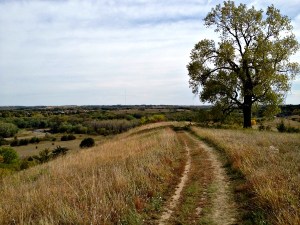
BeckyPix_1

Celebrating a new life of recreation at Big Sioux Recreation Area. Photo credit: Becky Schade.

This picture was taken at Big Sioux Recreation Area, just outside of Sioux Falls, South Dakota. I’d been on the road for less than a week driving from South Carolina to South Dakota to make it my new residency state. I got my driver’s license and plates and then took a hike to the top of this hill to see Sioux Falls and the surrounding countryside. I sat on a bench and realized it was Thursday. In my old life I’d have been hard at work, but instead I was at this wonderful place. This is when it really hit me that I was living my dream, that life would never be the same. It was magical.
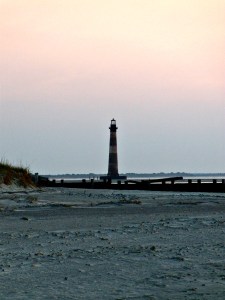
BeckyPix_2

The early bird catches the view at Folly Beach Country Park near Charleston. Photo credit: Becky Schade.


The second photo is of Folly Beach Country Park, just outside Charleston, South Carolina. Six years ago, my best friend and I were a year out of college and had earned some vacation time with our first “real” jobs. We used the two weeks to road-trip to South Carolina. I’d lived in Wisconsin all my life and was itching for a change of scenery; this was probably when I caught the travel bug. I took this photo at sunrise. We’d woken up at 4:00 a.m. to make sure we got to the beach before sunrise. I’m not an early riser, but getting to see the pink glow over the lighthouse was so worth the effort. We ended up liking our trip here so much that we moved to SC a year later, where I stayed until I hit the road.
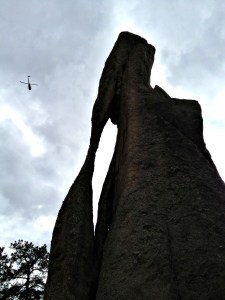
BeckyPix_3

Inspired by spires of granite near Sylvan Lake. Photo credit: Becky Schade.

The third picture was taken in June of last year, when I was working at a gift shop in Badlands National Park. On a day off, I headed over to Custer State Park, in the Black Hills. I had no itinerary and spent the morning in the south of the park watching bison. Then, after happening upon a couple of neat looking lakes, I decided to study the park brochures and find the best lake in the Black Hills. Beautiful Sylvan Lake caught my eye. The road that leads to the lake is the Needles Highway. The drive along that highway was amazing, more so because I had no idea it was there, and every vista was a surprise. This photo is of the Needle, a huge spire of granite that wind and water had hollowed out into a needle shape.

Nature—cheaper than therapy

It makes such a difference when you know the story attached to the pictures. Until you told me that story about the last one, all I could see was a silhouette of a girl leaning back with long flowing hair–not a needle! Where are your favorite places to take photographs?
I love natural places, I always feel most content and closest to the divine when I’m out in nature. And there’s such variety to be found, as the next three photos demonstrate. I don’t think I’ll ever get tired of it.

BeckyPix_4

Holy smokes! Nature in all its glory in Great Smokey Mountain National Park, NC/TN. Photo credit: Becky Schade.

BeckyPix_5

Nothing bad about that! Badlands National Park, SD. Photo credit: Becky Schade.
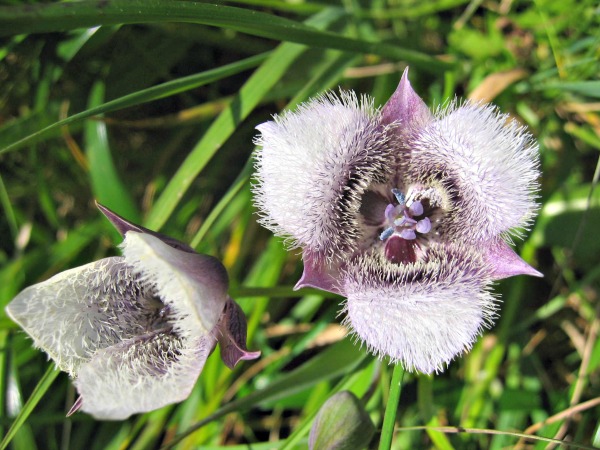
BeckyPix_6

The forces of erosion at work in Hunting Island State Park, SC. Photo credit: Becky Schade.

I know how you feel. Photographing a natural scene that is forever changing feels so fulfilling. I’d like to know if you ever feel reserved about taking photos of people, particularly when they are conscious that you are doing so?
Yes, I do. I don’t take pictures of people without their permission if they are to be the subject. But if they happen to be in the background of a shot, it’s not usually an issue.

Would you say that photography and the ability to be able to capture something unique which will never be seen again is a powerful force for you?
That’s an interesting question. For me, photography is a hobby and not the main reason for travel. I have no desire to get trapped behind the lens trying to take the perfect picture and miss the beauty of a magic moment. Having said that, there certainly is a magic to that rare photograph that captures the essence of a time or place. Maybe it’s because I’m a novice or that I make a point of not staging photos, but when I snap my shutter I never know ahead of time if I’m taking that kind of picture. It’s something I find out later as I’m reviewing the photos in my computer.

I can empathize. In my case if I’m not present in the moment I can neither photograph nor write with passion.

“The best camera is the one you have with you.” —Chase Jarvis

Now for the technical stuff. What kind of camera and lenses do you use? And which software do you use for post-processing?
Haha, hoo boy—I’m about to get laughed right out of this column…or maybe, just maybe, help a few people understand that you don’t have to buy a thousand dollar SLR to be a photographer. My camera is my iPhone 4s—with no apps to change the functionality. That’s all I have. I don’t even own a point-and-shoot. Because I have no optical zoom whatsoever, it definitely limits the kinds of photos I can take, but for me the extremely high portability and low cost (relatively speaking) make up for that drawback. My phone fits in my pants pocket and has a waterproof and shock-resistant case, so I don’t fear taking it to rugged locales. Some might say that a smartphone is more expensive than many point-and-shoots you can buy, which is true, but when it functions as my phone and GPS as well as my primary camera, having all three in one package is definitely cheaper than owning them as individual gadgets. I use Adobe Photoshop 7.0, which I had actually gotten years ago for the purpose of drawing and coloring digital art from scratch. It wasn’t until much later that I decided to put it to the use it was designed for.

I hear no laughter, and if you can handle Photoshop you’re no dummy! If it makes you feel better, I am probably one of a small minority who have a DSLR camera but no mobile phone. Actually, I have a mobile phone that isn’t smart—it only makes phone calls; but I hardly ever turn it on. Now I hear some laughter!! Finally, do you have any advice for wannabe photographers or travelers?
First off, never let someone else’s definition of travel or photography determine your own by default. You don’t need all the newest gear to be a photographer, and you don’t need to book a plane halfway around the world to be a traveler. Take some time to think about what you really want from your experience, and let that be your guide. Second, if this is your dream, the life you want to live, don’t put it off for later. Later might never come. You want to be a photographer? Get out today and take some photos. Practice makes perfect. You want to start traveling? Start planning now and get to work on making it a reality. Set a date by which you’ll be out there.

Becky, I’ve really enjoyed our time together. Your story is an inspiration to us all. I only wish I was 40 years younger because I’m sure I would be tooling up an RV as fast as I could right now.

* * *

Readers, what do you make of Becky’s RV life and her photography advice? She has certainly taken the road less traveled. If you have any questions for her about her photos and/or experiences, please leave them in the comments!

And if you want to know more about Becky, don’t forget to visit her blog, Interstellar Orchard. You can also like the blog’s Facebook page, connect with her on Twitter, or send her an email.

(If you are a photographer and would like to be interviewed by James for this series, please send your information to ml@thedisplacednation.com.)

STAY TUNED for next week’s fab posts!

If you enjoyed this post, we invite you to register for The Displaced Dispatch, a round up of weekly posts from The Displaced Nation, with seasonal recipes, book giveaways and other extras. Register for The Displaced Dispatch by clicking here!

Related posts: