The Displaced Nation

A home for international creatives

10 expat books ripe for movie adaptations

Those who have been following this blog for some time are probably all too aware of my unhealthy preoccupation as to what constitutes an expat or travel book.

Is it, as often seems the case when I browse the expat blogosphere, that expat books must occupy themselves with the oh-so-amusing hi-jinks of expat life? The result almost invariably of such approach is that we are depressingly left with another third-rate knock-off of Bill Bryson for us to throw on the bonfire.

So when considering which expat books are ripe for movie adaptations, my first thought is that the film world, not to mention the world in general — at least, the one I want to live in — really doesn’t need any more travesties such as Under the Tuscan Sun, A Good Year or — most horrifying of all — Eat, Pray, Love. So with that in mind I will nominate the following 10 expat books as being ripe for interesting adaptations.

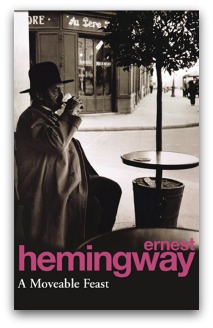
10. A Moveable Feast (1964, revised 2009)

Author: Ernest Hemingway
Synopsis: Hemingway’s posthumously published memoir detailing his years as a young American expat in Paris socializing with the likes of F. Scott Fitzgerald, Gertrude Stein and Ezra Pound.
Film pitch: Perhaps now is the perfect time for an adaptation of A Moveable Feast. The surprising success of Woody Allen‘s Midnight in Paris will perhaps have whetted Hollywood’s appetite for a more serious take on the same subject matter.

9. One Fat Englishman (1963)

Author: Kingsley Amis
Synopsis: Inspired by a year Amis spent teaching at Princeton, One Fat Englishman follows the badly behaved Roger Micheldene with Amis’s typical brio. An English gentleman who is affronted by everything on the American scene, Roger fails to see how his presence might adversely affect Anglo-American relations.
Film pitch: Cast Timothy Spall as Roger and watch the fireworks.

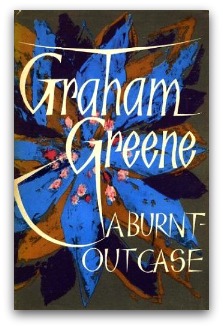
8. A Burnt Out Case (1960)

Author: Graham Greene
Synopsis: A man named Querry arrives at a leper colony in the Congo. He assists the colony’s doctor, who diagnoses him as suffering depression. It is revealed that Querry is in fact a world-famous architect, though he is hiding other secrets, too.
Film pitch: Perhaps Greene’s bleakest work — which may explain why it hasn’t been filmed previously despite being optioned twice by Otto Preminger (Greene was said to be thankful that it was never made). I would argue, however, that it has all the material for a fascinating film.

7. Travels through France and Italy (1766)

Author: Tobias Smollett
Synopsis: After the sad death of his daughter, Tobias Smollett and his wife left England for a tour of France and Italy. Detailing the quarrels Smollett has on his journey with those pesky Continentals, this is a very funny book.
Film pitch: Yes, I am suggesting that someone should make a movie based on an 18th-century travelogue. If Robbie Coltrane and John Sessions can turn Boswell and Johnson’s tour of the Hebrides into a delightful TV movie then I think the same could be done with this.

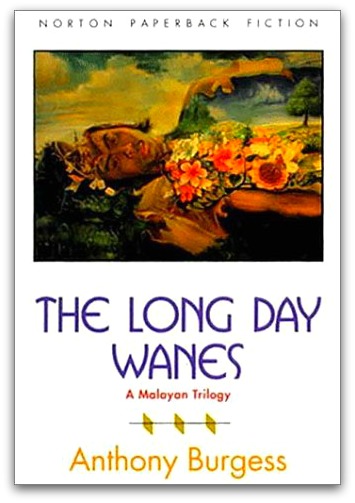
6. The Long Day Wanes: A Malayan Trilogy (1956-59)

Author: Anthony Burgess
Synopsis: Burgess’s first three novels are concerned with the character of Victor Crabbe, a teacher in a village in Malaya (now Malaysia). Based upon Burgess’s own experiences as a British civil servant in Malaya, the three novels that make up The Long Day Wanes detail the death of Empire and the birth pains of a newly independent nation.
Film pitch: Other than A Clockwork Orange, whose adaptation Burgess had strong misgivings over, Burgess’s work often seems overlooked for movie adaptations. It really shouldn’t be.

5. The Thousand Autumns of Jacob de Zoet (2010)

Author: David Mitchell
Synopsis: Until Commodore Perry in 1853 anchored four warships off the Japanese coast and so opened up Japan to western trade, Japan had been a “locked country” (sakoku) where it was illegal for a foreigner to enter Japan and for a Japanese subject to leave. The exception to this was at Dejima, in Nagasaki, where trade with some select foreign powers was allowed. This fascinating piece of history is the basis for David Mitchell’s latest novels. Set in 1799, The Thousand Autumns of Jacob de Zoet details a young Dutch trader who has come to Dejima to make his fortune though he discovers a lot more.
Film pitch: The book has all the makings of a wonderful historical epic.

4. Up Above the World (1966)

Author: Paul Bowles
Synopsis: Dr and Mrs Slade are an American couple touring Central America. A chance encounter with an elderly woman leads to a tense and gripping chain of events.
Film pitch:A disturbing and intense work typical of Bowles, it would make for a deeply compelling thriller.

3. Burmese Days (1934)

Author: George Orwell
Synopsis: Similar to Burgess’s The Long Day Wanes, this novel is concerned with the dying days of Empire. Orwell, who was himself an officer in the Indian Imperial Police Force in Burma, paints a depressing picture of expatriate life that is based around the stultifying social hub of the European club.
Film pitch: Orwell’s first novel and while certainly not his best work, even a bad Orwell novel is still worthy of consideration.

2. Henderson the Rain King (1959)

Author: Saul Bellow
Synopsis: Eugene Henderson is a rich American with an unfulfilled desire. Not knowing quite what it is, he hopes he will discover it by going to Africa. Through a series of misadventures Eugene Henderson finds himself away from his original group and in the village of Wariri in Africa. After performing a feat of strength, Eugene is adopted by the villagers as the Wariri Rain King.
Film pitch: Bellow’s funniest book, Henderson the Rain King could be pitched as an intellectual Joe Versus the Volcano (or maybe not — that’s a terrible pitch).

1. Turkish Embassy Letters (1763)

Author: Lady Mary Wortley Montagu
Synopsis: An important writer in her own right, Lady Mary Wortley Montagu was the wife of Edward Wortley Montagu, who was appointed as the ambassador at Constantinople. Accompanying her husband just after recovering from contracting smallpox marring her famed beauty, Lady Wortley Montagu wrote about her observations in numerous letters. These letters form a fascinating look at the Ottoman Empire — from how they inoculated against smallpox to the zenanas, special areas of the house reserved for women — as observed by an aristocratic English woman of the time.
Film pitch: Just think what a great biopic you could make about her.

Note: If you click on the book titles in the above list, you’ll be taken to Amazon, where the books can be purchased — except in the case of Tobias Smollett’s travelogue, which goes to Gutenberg, where he can be read FOR FREE!!

STAY TUNED for tomorrow’s post, an interview with first-time novelist Meagan Adele Lopez, and her plans for turning the book into a film.

If you enjoyed this post, we invite you to register for The Displaced Dispatch, a round up of weekly posts from The Displaced Nation, with seasonal recipes, book giveaways and other extras. Register for The Displaced Dispatch by clicking here!

Related posts:

4 films that will make you want to travel — and one that won’t!

Now, there’s a pretty standard list of travel-inspiring movies out there; it’s everywhere you look online, and it goes something like this:

But I wanted to give you some slightly more alternative choices — because I try to avoid being ordinary whenever possible. Yes, okay, you can say it — because I’m downright weird. So in place of those otherwise awesome films, may I present to you the following movies which have inspired me personally:

1) The Adventures of Priscilla, Queen of the Desert (1994), directed by Stephan Elliot

Why I love this film: It’s ridiculous and lots of fun, which is pretty much how I think all life should be! As three Sydney drag queens travel through the barren Australian outback, we get to see that iconic terrain, vast and empty and aching to be explored. This film has it all: humor, a light-hearted way of handling a serious message (about homophobia) and visuals to die for as the trio procession through some of Australia’s most awe-inspiring scenery. In a big pink bus.
Personal note: Not only did I travel to Australia and fall in love with a woman who considers this her favorite movie ever –- I also had the good fortune to be with her when she decided to re-enact one of the film’s famous scenes, when the drag queens hike around King’s Canyon in their fabulous dresses! I’d say we got mixed reactions from the other tourists — probably me, most of all…
Memorable line:

Felicia: The only life I saw for the last million miles were the hypnotized bunnies. Most of them are now wedged in the tires.

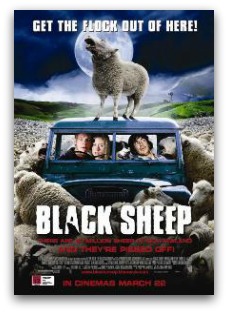
2) Black Sheep (2007), directed by Jonathan King

Also ran: Actually, I was going to nominate The Lord of the Rings trilogy but then decided — NO! I can’t use it. It’s too easy. Plus we’ve already had one film with Hugo Weaving (the mighty Elrond played a drag queen in Priscilla!). I know, across the three films they showcase the sights of New Zealand at their jaw-dropping best — anyone who hasn’t watched these films and felt an urgent need to visit New Zealand needs to watch them again but ignore the kick-ass sword fighting… Yeah, I know. That’s never going to happen.
Why Black Sheep won out: The rugged landscape looks every bit as impressive in this movie as it does in Lord of the Rings — but it’s also populated by were-sheep, an accidental result of some unusual genetic manipulation… See it, and laugh at the New Zealanders. Oddly enough, they’ll love you for it. It’s the Kiwis’ love of poking fun at everything, especially themselves — their self-deprecating humor — that really made me want to visit the place. I felt like I would fit in there. And I did — I stayed for two years. By the time I left, I was on a first-name basis with the entire population.
Memorable lines:

There are 40 million sheep in New Zealand…and they’re pi**ed off!

Harry (as the were-sheep charge towards them): F**k, the sheep!
Tucker: No mate, we haven’t time for that.

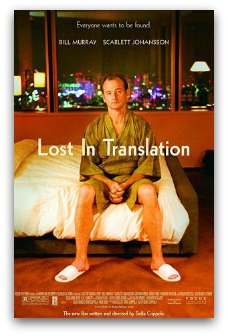
3) Lost in Translation (2003), directed by Sofia Coppola

Why I love this film: It’s an odd one, this one. The first time I watched it, my mind boggled at how something so boring, with nothing remotely resembling a plot, could get made into a movie. Then I watched it again. And again. Because it was the rainy season in Thailand, where I was living, so I couldn’t go outside — and we only had three DVDs in English, so we watched all of them every day. For two months. Somewhere around the halfway point of this torturous process, I fell in love with Lost in Translation — maybe I just needed to relax to appreciate it? Once I stopped looking for something to happen, I started to understand what it was all about: loneliness, uncertainty, being adrift and confused in a completely alien culture. And ever since then I’ve desperately wanted to go to Tokyo. Well, not enough to actually go there — yet — but you know what I mean. I do travel vicariously — just sometimes — and this is one of ‘em.
Caveat: If, like me, you’re a fan of films where, you know, stuff happens — it might take you a few viewings to get used to it. Forty or fifty should do the trick.
Memorable line:

Charlotte: Let’s never come here again because it would never be as much fun.

4) Ip Man (2008), directed by Wilson Yip

Why I love this film: The closest I’ve come to China are the little “made in” labels on almost everything I own. This film, however, kindled a desire to visit China that I never knew I had in me. It’s the biographical story of the most famous kung fu practitioner in the world — not Bruce Lee but his teacher in Wing Chun kung fu, master Ip Man. It’s set in Foshan, China in the 1930s-40s during the Japanese Invasion, but was filmed in Shanghai. It follows the family of the master as he becomes ensnared in the war, losing everything over the course of the Occupation and being forced to face the hardest choices a man could make. The insight into a lifestyle and culture so utterly different from my own was fascinating enough, but this is a story both moving and powerful.
Audience participation: I dare anyone to watch it and not leap off the couch at some point with a cry of “Yeah, kick his ASS!” Ahem. Okay, so maybe that’s just me.
In sum: Will it make you want to visit China? I think so. Will it make you want to learn kung fu? I absolutely guarantee it!

And because I’m a contrary kind of guy, I just had to retaliate against my own optimism by highlighting a film that made me NOT want to travel:

5) Cidade de Deus (City of God) (2002), directed by Fernando Meirelles and Katia Lund

Why I don’t recommend this film: The film is set in the 1970s, in the poorest districts surrounding Rio de Janeiro, where drugs and guns rule and the population live in a fear only matched by their misery. I saw it in South America, in its native Portuguese — but with Spanish subtitles. Given my fledgeling abilities in that language, as described in a previous post, I may have failed to grasp every nuance of the story, but basically what I took from it was: “DON’T EVER GO THERE! They will kill you for the hell of it.”
Analysis:There is poverty everywhere in the world — I’ve worked in homeless shelters in the UK and seen people every bit as desperate as the denizens of Brazilian favelas (shanty towns). But these kind of places, where automatic weapons are more readily available than McDonald’s hamburgers and life is so very cheap…they absolutely terrify me.
In sum: Brazil remains on my list of all-time favorite, must-visit countries — but no way am I going anywhere near the favelas in Rio. This film has put me off — for life.

* * *

And finally…there’s one character that stands head and shoulders (and hat!) above all the rest when it comes to inspiring my travels. I’ve carefully avoided mentioning his films, as I was trying hard to keep this a cheese-free list — but I can’t hold it in any more.

I WANT TO BE INDIANA JONES!

I know, I know! So does everybody in the world, ever. Even people in remote tribes that have never been contacted by the Western world, secretly harbor a desire to be Indiana Jones — they just don’t know how to put it into words.

So — now it’s your turn!
1) What films have made you want to travel? And why?
2) What films have made you want to run screaming from the very idea of travel — and why?
3) If you WERE Indiana Jones — what would you do?

STAY TUNED for tomorrow’s post on cinema and the expat life.

If you enjoyed this post, we invite you to register for The Displaced Dispatch, a round up of weekly posts from The Displaced Nation, with seasonal recipes, book giveaways and other extras. Register for The Displaced Dispatch by clicking here!

Related posts:

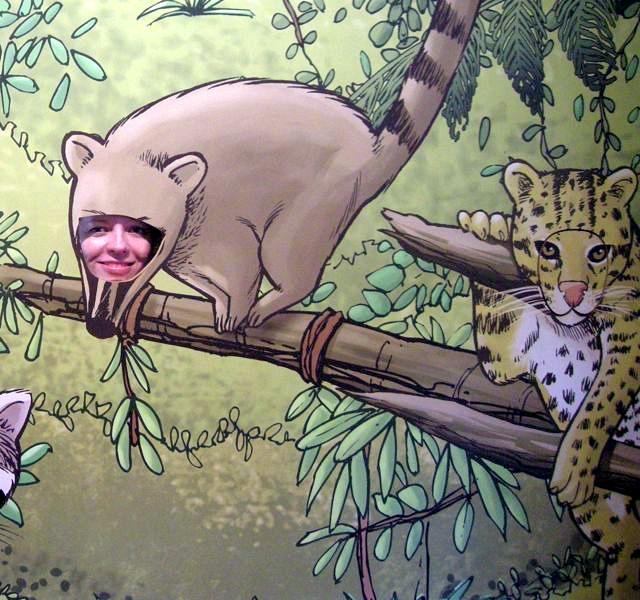
Images: Tony James Slater (yes, that’s really him!) playing out his fantasy of being Indiana Jones; film posters courtesy Wikipedia.

Cinema’s top 10 worst British accents

With Oscar season nearly upon us and with it the now seeminly customary Meryl Streep Oscar nomination, I’ve noticed that a number of American friends have asked me my thoughts on The Iron Lady. Specifically, my thoughts on how convincing I find Meryl Streep’s Thatcher.

Yet even when I tell them I haven’t seen the film (I’m just not in a rush to see it on the big screen and am more than happy to catch it on netflix in a few months time), they still ask for my opinion — nationality apparently bestowing expertise on the matter.

From the few clips I’ve seen on TV or the Web, and echoing what most critics have written, Streep’s Thatcher seems decent to me. Whether Streep’s Thatcher dislodges Greta Scacchi‘s somewhat cougar-ish take on the former PM in Jeffrey Archer: The Truth remains to be seen.

What is clear from the little I’ve seen is that Streep (unsurprisingly) will not be entering the Hall of Shame for awful Hollywood British accents. The following are my personal favorites. Let me know yours in the comments — including bad attempts at American accents (it’s only fair).

10. Nicolas Cage in National Treasure: Book of Secrets (2007)

Almost certainly unfair to include as while it is hideously bad, I think it was intended to be hideously bad, and boy did Nicolas Cage succeed in that respect. Included, more than anything, because I think all top ten lists of this nature (something of a creatively bankrupt idea) could be improved with some Cage-branded craziness — it’s like a crack addict’s impersonation of Jimmy Stewart.

9. Josh Hartnett in Blow Dry (2001)

In the (rightly) forgotten hairdresser comedy Blow Dry, the (rightly) forgotten all-American heart throb Josh Hartnett tries hard but fails to convince with an Irish accent… Wait, he’s meant to be doing a Yorkshire accent? Really?

8. John Lithgow in Cliffhanger (1993)

John Lithgow has done some great work in the past, a performer who can be effortlessly at home in comedy or drama. At other times, he seems happy to serve up the audience a big slice of honey roast ham. Cliffhanger was definitely one of his more porcine performances. Warning: clip is not suitable for work — though arguably none of them are.

7. Bette Davis in Of Human Bondage (1934)

Some people would have you believe this is one of the great dramatic scenes of cinematic history showcasing the titantic talent of Bette Davis. Others might counter that it’s am-dram caterwauling delivered in the world’s least convincing cockney accent. Both groups are right.

6. Don Cheadle in Ocean’s 11 (2001)

Actually, forget Bette, Hollywood’s worst cockney accent belongs to Don Cheadle. Here’s Don dubbed in German. Trust me, it’s the only humane way to listen Don Cheadle in Ocean’s 11.

5. Harrison Ford in Indiana Jones and the Last Crusade (1989)

Like the Nicolas Cage entry possibly an unfair inclusion as accuracy was hardly the point, but dude, Harrison Ford acted this in earshot of Sean Connery and so is deserving of either opprobrium or massive props.

4. Lindsay Lohan in The Parent Trap (1998)

That’s right, I’m dickish enough to include a child actor on this list. <Fill in your own Lindsay Lohan joke here>

3. Keanu Reeves in Dracula (1992)

Considering the difficulty Keanu Reeves often seems to have in portraying a functioning, coordinated human being, it was probably a bit too much of a stretch to ask him to do anything as nuanced as acting a different nationality.

2. Dick Van Dyke in Mary Poppins (1964)

You can’t have a list like this and not feature Dick Van Dyke, it’s expected of me and were I to omit it, many of you would invariably comment on it. And while it is a terrible accent, it’s also utterly charming and in no way spoils the movie. Bert probably fell on his head falling from a chimney, knocked his head, and developed foreign accent syndrome.  I believe Henry Mayhew documented this as being very common among Victorian chimney sweeps.

1. Russell Crowe in Robin Hood (2010)

Unquestioningly, Russell Crowe‘s accent in Robin Hood was a triumph. What sort of pr*** would argue otherwise? Definitely not me.

STAY TUNED for next Monday’s post, on travel and cinema.

If you enjoyed this post, we invite you to register for The Displaced Dispatch, a round up of weekly posts from The Displaced Nation, with seasonal recipes, book giveaways and other extras. Register for The Displaced Dispatch by clicking here!

Related posts:


LIBBY’S LIFE — A technical malfunction

LIBBY:

Well, this week I fully intended to tell you about my battle with certain tiger-mums, a three-hour glucose tolerance test, a suspected case of galloping dandruff caused by the dry weather, and how all that fits into the context of a Valentine’s Day party for three-year-olds. And I shall still do that — next week.

But here’s the thing: just as I was sitting down to write this week’s episode, Oliver comes home early from work, and says, “Come on, Libs — get packed. I’m taking you away for a couple of nights. Then throw some stuff in a bag for Jack, because Maggie’s having him while we’re gone.”

It’s just so easy when a bloke puts it like that, isn’t it? “Throw some stuff in a bag for Jack” indeed. I mean, I hadn’t done the laundry or anything…and then I look in Jack’s chest of drawers, and found that someone had done the laundry. We have a laundry fairy I didn’t know about!

“Maggie,” Oliver said. He looked all smug.

“Did you ask her to do it?”

“Well…no,” he admitted. “But when I asked her if she’d have Jack because I was planning a romantic surprise weekend, she said something about surprises being one thing, and nasty shocks being quite another, especially in your condition, so I’d better give her a spare door key if I didn’t want another surprise trip to the hospital.”

So there we are. If you remember, Oliver promised me a trip to a spa as compensation for his mother putting me in hospital before Christmas, so that’s where we are going.

“Do they have seaweed wraps?” I asked him, thinking about Caroline’s bony ankles and comparing them to my somewhat waterlogged ones.

He looked puzzled.

“They have white towelling dressing-gowns, from what I can tell from the brochure. Or do you mean wraps like those crispy chicken ones from McDonald’s?”

Ah, bless him. He tries so hard. I’m sure we’ll have a lovely time.

I’ll tell you all about it week after next.

KATE:

Libby is being far too nice and neglecting to mention that I was writing her diary this week, not her — as she said, it was about her “battle with certain tiger-mums, a three-hour glucose tolerance test, a suspected case of galloping dandruff caused by the dry weather, and how all that fits into the context of a Valentine’s Day party for three-year-olds.”

It was a really interesting episode, too.

Such a shame that something malfunctioned somewhere in the bowels of my computer, and despite having saved many times, I lost 2200 words of the episode just when I was about to click Publish.

Oh well. When I’ve finished banging my head against any convenient hard surface, I’m sure it will seem very funny in retrospect.

See you next week. :-/

Meanwhile, here are some links to my own favorite episodes:

#34:  Shadows on a screen – I wrote this one because a good friend who’s a Libby fan wanted to hear more about the pregnancy. When she asked me to do this, I didn’t know at the time that Libby was expecting twins. It was a surprise for everyone.

#11: Neither more nor less than a pig This episode introduces Carla Gianni. The pig thing, while a surprise, was not entirely unexpected. I’ve known Carla, Frankie, and the Maxwell Plum for a long time. They all came into existence in my half-written novel, which has the working title of “Back to the Green.” Billy Joel fans among you may be able to read something into that — also, why there’s a village green in Woodhaven, an Italian restaurant, and why there are so many flashbacks to the past in Libby.

#5: Decaffeinated sherry to toast a Royal Wedding Written in a befuddled, sleep-deprived state on the morning of April 29 last year, having got myself up at an unholy hour to tweet about the wedding with ML and Anthony. It was the first time I’d met Sandra, the mother-in-law. I blame Princess Beatrice’s hat for the way she turned out.

If you enjoyed this post, we invite you to subscribe for email delivery of The Displaced Dispatch, a round up of the week’s posts from The Displaced Nation. Sign up for The Displaced Dispatch by clicking here!

Img: Map of the World – Salvatore Vuono

RANDOM NOMAD: Megan Farrell, American Expat in São Paulo, Brazil

Place of birth: Chicago, Illinois USA
Geographical history: USA (Chicago, Illinois; West Palm Beach, Florida; Ventura, California; Washington, DC): 1969 – 2002; Spain (Barcelona): 2001; USA (Princeton, New Jersey; New York, New York): 2002-10; Brazil (São Paulo): 2010 – present.
Passport: USA — my daughter, however, has three: USA, Brazil & Germany.
Current occupation: Aspiring novelist and screenplay writer, business school lecturer, and former research director at a Wall Street firm.
Cyberspace coordinates: Born Again Brazilian (blog) and @BornAgainBrazil (Twitter handle)

What made you leave your homeland in the first place?
Ever since I was a child, I wanted to explore the world and always had it in my head that I would live in other countries. I think it was because I used to read a lot as a kid, stories about other places, some of my favorites being James and the Giant Peach and The Little Prince. I also loved Laura Ingalls Wilder‘s Little House series. By the time I reached adulthood, I was open to opportunities to travel and explore new cities as a local.

Describe the moment when you felt most displaced since making your home in Brazil’s largest city, São Paulo.
Wandering lost, in the rain, in an unfamiliar neighborhood, after a boy on a bike tried to wrestle my iPhone out of my hands. I’d grabbed it out of his hands, but he still hung around yelling something at me and trying to get the phone. It seemed incredible to me this was happening because although it was raining, it was broad daylight and I was on a street where there was a row of little shops. So after putting a bit of distance between us, I stopped and started screaming like a horror movie starlet and pointing at him. People came out of their shops and of course he got scared — I think mostly because he thought I was crazy. I’d never before experienced anything so bold.

Your blog is called Born Again Brazilian. I imagine you’ve also had many moments when you feel more at home in Brazil than you do in the USA. When have you felt least displaced?
While sitting on the beach of Leblon, in Rio de Janeiro, viewing the ocean. On a beautiful day, it absolutely makes you feel as though all is right with the world and you are exactly where you are meant to be.

You may bring one curiosity you’ve collected from each of your adopted countries into The Displaced Nation. What’s in your suitcase?
No need for a suitcase as what I’d most like to bring with me to The Displaced Nation is a couple of intangible items:
From Brazil: Jeitinho or jeito, the ability to get in, out and/or around something despite a law, a regulation, a contract, physics or gravity.
From Barcelona: The recipe for survival possessed by local shops, which seem to close and open at random times — and when you enter, the owners or employees often act as though you are completely putting them out by wanting to buy something. It’s hilarious and curious at the same time.

Food is close to the heart of all Displaced Nation citizens. We would therefore like to invite you to make a meal for us. What will you offer?
I can offer a choice of two classic menus:
1) Brazilian (São Paulo/Rio de Janeiro)
Appetizer: Bolinho de bacalhau (codfish cakes), served with Original cerveja (beer)
Main: Feijoada (traditional bean stew with beef and pork), served with caipirinhas (Brazilian national cocktail, made with rum, sugar and lime)
Dessert: Mouse de maracujá (passion fruit mousse)
2) Spanish (Barcelona)
Appetizer: Assorted pinchos (bar snacks eaten with toothpicks), served with cider
Main: Paella Valenciana (Valencian paella), served with a nice Spanish white wine
Dessert: Flan (crème caramel)

What’s your pleasure?

You may add a word or expression from the country where you live in to The Displaced Nation argot. What will you loan us?
Tudo bem! When you greet someone in Brazil, you say tudo bem instead of hello, but you use it like a question: “Tudo bem?” (All is well?) And you might respond with tudo bem (all is well) or tudo otimo (all is great) or simply tudo (all). Brazilians must use this greeting countless times a day. What I love about tudo bem is that it represents how familiar and personal the Brazilian culture is. A stranger in the elevator will greet you by asking if all is right in the world for you. That is totally Brazilian.

This month, in honor of Valentine’s Day, The Displaced Nation has been delving into the topic of finding love abroad. I understand you have a Brazilian husband. Where and how did the pair of you meet, and was it love at first sight?
I met my husband while we were getting our MBAs at Georgetown University (in Washington, DC). The first time I met him, I thought he was pretty stern — little did I know he had just arrived to the country the day before and wasn’t so comfortable with his English. I kind of wrote him off as one of the machismo Latin guys that didn’t like to work closely in a business setting with women. But after the final exams of our first semester, we wound up at the same party. I actually attempted to hook him up with my friend — he is tall and she is tall — but it turned out he was more interested in me. After I saw a few of his dance moves…it was love at second sight!

Thanks to Gisele, many people have an image of Brazilian women as very attractive. Is that also true of the men, and do they make good husbands?
First, my husband is not your typical Brazilian man. He spent a great deal of his childhood in Germany with his grandparents and has his behavior has been heavily influenced by his German father. Typical Brazilian men see the roles of men and women as clearly defined channels. From what I’ve seen and heard from my Brazilian and American friends married to Brazilians, the menfolk rarely if ever help out with household chores or issues, as they feel that is the woman’s role — even if she is working a full-time job! However, for the most part, Brazilian men are very charming, complimentary and romantic. They see themselves as Prince Charming, and if that is what a woman is looking for, a Brazilian man is a good catch.

You said you fantasized about traveling to other lands from the time you were a child. How about marrying someone from another land?
I never thought much about it, but before my husband, I only dated All-American guys, so I think it came as a surprise to my parents. However, when my now husband asked me to marry him, I knew that my life would never be boring, and always full of adventure. And I was right!

Now that Valentine’s is over, The Displaced Nation is moving on to look at expat and travel films, in time for the Oscars. Do you have a favorite film(s) in this “genre”? I see you’re interesting in screenplay writing, which makes me doubly curious.
I think the first movies that inspired travel for me were Cocktail with Tom Cruise (he finds love while working in a bar in Jamaica) and Only You with Marisa Tomei (she follows the man she thinks will be her true love to Italy). When I was a bit older, I was definitely was drawn to seeing the world by a beautifully filmed, but wildly depressing, New Zealand-Australian-British film by Jane Campion titled An Angel At My Table. It’s based on Janet Frame‘s autobiographical series about growing up in New Zealand, leaving and returning.

Readers — yay or nay for letting Megan Farrell into The Displaced Nation? Tell us your reasons. (Note: It’s fine to vote “nay” as long as you couch your reasoning in terms we all — including Megan — find amusing.)

STAY TUNED for tomorrow’s installment from our displaced fictional heroine, Libby, who is discovering that Valentine’s Day in the US is quite different from the UK version — a fact that doesn’t come naturally to her three-year-old son. (What, not keeping up with Libby? Read the first three episodes of her expat adventures.)

If you enjoyed this post, we invite you to register for The Displaced Dispatch, a round up of weekly posts from The Displaced Nation, with seasonal recipes, book giveaways and other extras. Register for The Displaced Dispatch by clicking here!

Related posts:

img: Megan Farrell poses at the nature center in Parque Estadual do Pico do Itacolomi, which is outside Ouro Preto, Minas Gerias (July 2011).

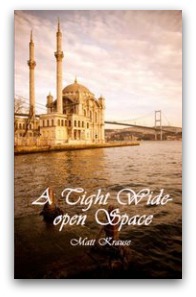
BOOK REVIEW: “A Tight Wide-open Space,” by Matt Krause

Subscribers to the Displaced Dispatch already know that our next free giveaway is a signed copy of today’s featured book! If you would like to enter the draw for this great prize, sign up for the Displaced Dispatch before Friday by clicking here!

TITLE: A Tight Wide-open Space: Finding love in a Muslim land
AUTHOR: Matt Krause
PUBLICATION DATE: August 2011
FORMAT: Ebook for Kindle and Nook; paperback; PDF (from author’s Web site)
GENRE: Travel memoir (Middle East)
SOURCE: PDF file from author’s website

Summary:

In 2003, when the shockwaves of 9/11 still echoed through the US and the country was fighting two wars in Muslim countries, Matt Krause met a beautiful Turkish woman on an airplane and decided to follow her to Turkey. This is the story of what happened there.

Matt figured adjusting to life in Turkey would entail some challenges, and he certainly wasn’t disappointed. He survived bomb attacks, lost his cool around beggar kids, drove a jewelry business into the ground, and got into fistfights over parking. Along the way though, he saw beauty in ruins older than the Roman Empire, was wowed by tales of Bulgarian freedom fighters, tried not to hit cows in the road, and drank plenty of peach-flavored Lipton iced tea.

…A Tight Wide-open Space is the story of falling in love not only with a woman, but with a city and a country. (Amazon.com)

Review:

Matt Krause met and wooed his Turkish wife-to-be in a way seldom seen outside Hollywood scripts. A chance meeting on a flight from San Francisco to Hong Kong; Matt’s sixth sense inkling that this woman was The One; his Google search for her name upon his return (“I sent her an email and tried not to sound too much like a stalker”); his impulsive decision, a few short months later, to rent out his Seattle home and follow her back to Turkey (“I thought about the situation for about 10 seconds and then I said ‘Well, I’ll come with you.'”) — yes, there’s a Valentine’s tale there, all right.

The book is a stimulating mix of the anecdotal and informational: first-hand accounts of the (excellent) Turkish health care and (not so excellent) law enforcement combine with Turkish History 101 and swift lessons on the Ottoman Empire. Running like a silver thread through these yarns is the deeply personal and affectionate — the reason for Matt’s presence in Turkey. The love story.

For all that this is a love story, however, Matt pulls no punches in the telling of it. The introduction chapter, a description of the slaughter of a ram for Kurban Bayram (Feast of the Sacrifice) is vivid — lurid, even. Yet it gets the point across as little else could: that a guy who has spent thirty-three years in the haven of America’s West Coast is now a long distance outside his comfort zone.

For me, the biggest charm of A Tight Wide-open Space is the author’s honesty. Matt doesn’t try to put himself in a better light just because a few thousand people are reading about his overreaction to a persistent little boy who wants to shine his shoes :

What on earth had possessed me to act like that? I had just blown up at a little kid on the street in broad daylight. I had just threatened to snuff the life out of a little boy barely tall enough to reach my belt. I hadn’t even been in Turkey for three months yet. What was I becoming?

In the face of this engaging frankness, it’s impossible not to get drawn into Matt’s story. His frankness extends to accounts of his wedding, a trip to hospital, an almighty row with his new wife. A book — appropriately enough, for Valentine’s Day — written from the heart.

As I have no plans for a subheading called “Spoiler Alerts”, I will say no more — except that the book’s twists and turns along the way only remind us that, yes, this is indeed real life.

Not Hollywood.

Words of wisdom:

One thing I learned early on about Turks is that you can never go wrong with a big smile and an enthusiastic introduction.

When we meet someone else, someone from another religion, or another country, or even another profession or another social class, it is our duty to that other person to remember that our understanding of that person is probably incorrect. And it is our duty to ourselves to overcome that incorrectness.

Home is not a place. Home is not Seattle, California, Texas, Ohio, or Kathmandu. Home is the people we love.

Verdict:

At around 190 pages, this is an easy read, but by no means a shallow one. Whatever Matt’s plans might be for the future, I hope they include more writing.

STAY TUNED for Wednesday’s Random Nomad post.

If you enjoyed this post, we invite you to register for The Displaced Dispatch, a round up of weekly posts from The Displaced Nation, with seasonal recipes, book giveaways and other extras. Register for The Displaced Dispatch by clicking here!

Related posts:

THE DISPLACED Q: Does love conquer all — even language barriers?

Last week Tony James Slater, the newest addition to the TDN team, reported on his success with finding love abroad. But it wasn’t always that easy for him. He may be an incurable adventureholic, but when Cupid’s arrow led to a romance with a woman who didn’t speak English, even he had to wonder if there were limits…

Here’s the scenario:

You’re minding your own business in a friendly sort of bar, enjoying the heady mix of cultures as foreigners — a mix of holiday-makers, transients and expats — rub shoulders with the locals.

Suddenly you see him — or her — across the crowded room. This gorgeous individual is staring right at you, smiling seductively. You make contact with those smoldering eyes…and that’s where it ends.

Because she doesn’t speak your language, and you speak none of hers.

So really, what are you going to say to her?

Can romance transcend the language barrier?

It’s a tricky one.

No lo entiendo, mi amor

I have a little experience in this area; once upon a time, when I doing a three-month stint of volunteering at an animal shelter in Ecuador, I fell madly in lust with a gorgeous Latino woman.

Of course she didn’t speak English — there was no one who could for miles in any direction. I spoke no Spanish, because until that moment there had never seemed enough reasons to learn it.

I was captivated by her — she was the kind of exotic beauty you read about in well, the kind of books that I don’t read. Ahem.

So what do you do?

Two obvious tactics spring to mind.

The first is what I did: get horribly drunk and throw yourself at the poor woman, in the hope that you’ll never remember the embarrassment in the morning, if she laughs in your face.

As it happens, this tactic worked — but it should be noted that this is the first time ever, in the history of mankind, that this has been the case. As a rule, I cannot endorse extreme inebriation as a successful method of flirtation; truly, this must have been Cupid himself in action.

The second tactic is to get a friend who does speak both languages to make some kind of introduction. This can help you get over that incredibly awkward initial stage when neither of you is really sure if the other is genuinely interested.

This is the tactic I should have used, as I had a perfectly good friend with the requisite language skills. Of course by the time I’d thought of that, I was already too drunk to pronounce even English words. It was quite a way down the road when I finally got to communicate in words with my new lover, through an interpreter.

At that point, it was great to have it confirmed that she felt the same way about me as I felt about her!

It was slightly less great to discover that she was already married and had two children. But then, that’s the chance you take when you practice tactic no.1.

Thankfully, she was separated from her husband — although as our relationship progressed, I did hear some disturbing rumors that her husband was looking for me…with a machete. I fervently hoped that was just my boss trying to wind me up. (If it was, he succeeded!)

Pidgin Spanish and pantomime…are there limits?

Although she was beautiful, the thought of meeting her again terrified me anew each time. I felt like such an idiot, struggling to express myself in pidgin Spanish and pantomime. I lived in fear of those awkward moments, when neither of us could make the other understand some fundamental issue.

That said, it definitely motivated me to learn Spanish! After every date I’d come back fired up with the desire to study. I never did any studying, of course — my day job (mucking out animal cages) kept me way too busy for that — but the desire was there. The desire, in fact, had never been a problem!

But how far can a relationship really go, when you don’t even have a language in common? Think how close you can get to someone in a long-term relationship; a connection bordering on the psychic, where you’re almost reading each other’s minds — it just doesn’t work when you’re constantly guessing at what the other person is saying.

The Austrian-British language philosopher Ludwig Wittgenstein once remarked:

The limits of my language are the limits of my world.

If he is right, then isn’t the lack of a shared language the very essence of incompatibility?

Relationship experts the world over agree that couples must work hard to bridge communication gaps. Well, when the gaps of linguistic understanding are wide enough to fly a 747 through — and it can feel like a long-distance relationship even when you’re standing next to each other — bridge-building can be something of a challenge.

My Ecuadorian love and I were together three months, after which I left to fly back home. Ironically, we’d each learned just enough of each other’s languages to really get to know each other’s thoughts, hopes, fears and frustrations — the day before my flight to England.

I’d like to open it up to the floor at this point!

Has anyone got any experience of this that they wouldn’t mind sharing? Or an opinion, on whether or not it’s possible?

Can love really conquer all — including that ultimate bad guy of cross-cultural barriers, linguistics?

What do you think?

I’d love to know!

TONY JAMES SLATER is a self-confessed adventureholic. For the last six years he’s been traveling nonstop around the world, working at a variety of jobs including yacht deliverer in the Mediterranean, professional diver in Thailand and snow boarder in New Zealand. Last year, Slater published his first book, That Bear Ate My Pants!, an account of his misadventures while volunteering at the animal refuge in Ecuador. (The book was featured in The Displaced Nation’s list of 2011 expat books.) He is currently working on a second book set in Thailand, while exploring his new home in Perth, Australia.

STAY TUNED for Tuesday’s post, a review of Matt Krause’s memoir recounting how he met a woman on a plane — and followed her all the way to Turkey! NOTE: Subscribers to our weekly DISPLACED DISPATCH are eligible to win a free, autographed copy!

If you enjoyed this post, we invite you to register for The Displaced Dispatch, a round up of weekly posts from The Displaced Nation, with seasonal recipes, book giveaways and other extras. Register for The Displaced Dispatch by clicking here!

Related posts:

In honor of Valentine’s Day, top 10 travel and expat posts on finding love abroad

My mother used to disapprove of Valentine’s Day. Although she would indulge our need to cut out elaborate paper valentines and bake heart cookies, she always made sure my sisters and I knew what she thought — that it was a fabricated consumer holiday for boosting sales during the winter doldrums.

Despite her remonstrations, I always used to look forward to February 14 — even (especially!) when living outside the United States.

For a start, they have much better chocolate abroad. Plus you get to try new foods that other cultures find seductive — see Kate Allison’s scrumptious post of a couple of days ago.

And your idea of what constitutes romantic adventure changes, too, as you expand your visual repertoire to include the world’s most stunning settings. Indeed, why not pop the question as the sun sets over the City Palace and Lake Pichola in India’s Land of the Kings? (For this and nine other exotic locations for marriage proposals, see Annie Fitzsimmons’ recent article for Forbes.)

In that connection, I was distressed to learn that couples who are thinking of heading to Venice, that magical city of watery landscapes, for a Valentine’s escape may need tips from Guardian Travel on how to avoid feeling ripped off. From the sound of things, it may be safer, and perhaps a good deal more enjoyable, to stay at home and watch The Tourist

But let’s leave the film discussion for later in the month, when we’ll be doing a series of posts in honor of the Oscars. Right now we’re honoring Valentine’s Day, and I’m urging you all to get into the Valentine’s spirit. To aid you in that aim,  I’ve compiled a list of 10 online articles that address the specific needs of those who are looking for romance abroad. As usual, and as befits our blog’s slightly irreverent tone, they’re from a mix of indie and conventional publications.

Click on any or all categories that apply:

Stories of love on the road

In addition to the story told by TDN’s own Tony James Slater of his own love affair — which sparked off no end of wonderful romantic tales in the comments — I enjoyed these two posts:

1) Modern Love — A Place to Lay My Heart (8 January 2012)
Author: Elisabeth Eaves (@ElisabethEaves)
Publication: New York Times, Sunday Style section (@nytimes)
Synopsis: Two single journalists in their 30s meet up in Mexico to write about tequila. At first, romance seems off the table. Both are commitment phobes: they see travel as their first love and like nothing better than plunging into a foreign culture. But then…something happens, and for the first time, instead of opting for a distance relationship, they take the leap. (Tequila will be served at the wedding.)

2) 10 Reasons Why You Should Marry a Foreigner (Like I Did) (Archived: 10 November 2010)
Author: Corey Heller (@MultiLingLiving)
Publication: Multilingual Living blog
Synopsis: Chances are, if you spend a lot of time abroad, you may end up marrying, God forbid, a foreigner! Hey, it’s not the worst thing that can happen. Some of us have done it multiple times and lived to tell the story. Still others, such as this week’s Random Nomad, Toni Hargis, fell for a foreigner in their home countries and followed him/her abroad. Heller, who met her husband in Ireland (he trailed her back to the US), lists her own ten reasons for committing such a foolhardy act — everything from his “glorious accent” to her enjoyment of a challenge to the fact that he is her true love (now fancy that!). Actually, the one that sticks with me is #3: being a German (no, he’s not Irish), he craves good chocolate just as much as she does! (But perhaps that says more about me than it does about them?)

The practicalities of dating abroad

If you do decide to make someone you meet in another culture the object of your affections, there may still be some practical concerns. These four posts should help you finesse these sometimes awkward moments:

3) Dating expectations worldwide: Who pays? (4 February 2011)
Author: C. Noah Pelletier (@flyingknuckle)
Publication: Matador Network (@matadornetwork)
Synopsis: From Pelletier’s unofficial survey of dating etiquette across nine cultures, we learn that German men excel at subtle flirting whereas Turks are much more direct; French don’t really “date”; Mexican men wear clean suits; and Japanese are into group dating. But on the all-important question of “who pays,” all nations are in agreement: THE MAN!!!

4) Don’t pull out the chair — but do hold open the door! (Archived: 26 October 2011)
Author: Tanja from Germany
Publication: InterNations blog (@InterNationsorg)
Synopsis: Notably, one of Tanja’s top concerns is:

Who pays for the meal? Does one split the bill, or does he expect to pay — or even worse, must I pay?!

Too bad Noah Pelletier’s post for the Matador Network wasn’t yet available for Tanja’s perusal (see #3 above), or she needn’t have fretted — especially as it’s Mexico, where men have been known to TAKE OFFENSE if a woman offers to pay. Also, she might not have been surprised when she received more flowers on first dates in Mexico than in her entire life in Germany. Still, Tanja’s story (which ends very happily) is a tribute to the power of persistence and the efficacy of muddling one’s way through. Just one thing I’m still not clear on: do Mexican men expect you to open the door for them, rather like Japanese men expecting you to let them exit the elevator first? (See her post title.)

5) Ten Foreign Words for a Romantic Valentine’s Day (9 February 2012)
Author: Justine Ickes (@justineickes)
Publication: Culture Every Day blog
Synopsis: So as not to be totally culturally clueless, it’s important to master a few other romantic terms/concepts. In Japan, for instance, if you hear someone say bakushan as they look you in the face, then they’re probably not a romantic prospect. The expression is used when you think someone looks cuter from behind! (If, on the other hand, you hear the word kawaii, things may be looking up!)

6) Sex when traveling: location, location, location (29 January 2012)
Author: Laurence Norah (@lozula)
Publication: Finding the universe blog
Synopsis: Norah illustrates (literally — yet tastefully, I hasten to add) various options that travelers have for “getting jiggy on the road”: dorm rooms, tents, showers, beaches, backs of camper vans, and (best of all!) private rooms.

Lonely hearts in foreign lands

When all the world is going gaga for romantic love, it can be lonely if you’re not doing so well in that department, particularly if you’re already feeling isolated because of being so far away from your homeland. The following four posts should help with that predicament:

7) 8 Empowering Ways a Traveling Single Female Should Celebrate Valentines Day (Archived: 13 February 2011)
Author: Lainie Liberti (@ilainie)
Publication: Raising Miro blog
Synopsis: From LA, Laine has been traveling with her son, Miro, since 2009 in search of a simpler life. When still in the States, spending Valentine’s Day on her own was no big deal:

it was easy to ignore the day all together or grab a group of my amazing single girl friends and have an AbFab marathon complete with bottomless cosmos.

But what about now that she’s on the road? Though the post is a year old, her suggestions — some aimed at those who enjoy solitude (movies, nature, dinner-in for one), and others, at those who would prefer being with people (volunteering, meet-ups) — won’t go out of style any time soon, and are good for any day of the year.

8) Help! Nobody Wants to Date Me! (Archived: 15 December 2011)
Author: Chris Laub (@Travel_rtw)
Publication: Backpacker Savings blog
Synopsis: Chris claims he’s “undateable” because of his need to spend almost half of the year traveling. He’s not proud of that fact:

The truth is I want to be in relationship, but my deeper desire to travel and have fun makes it seemingly impossible.

Still, the travel addict’s life does have its compensations. He’s moving to Brazil for the 2014 World Cup, leaving him free to hook up with a Brazilian woman. As he sees it:

…running around chasing women in exotic countries and enjoying no-strings-attached travel romances isn’t a bad alternative

— though methinks he doth protest too much!

9) Offbeat Traveler: Unromantic places around the world (6 February 2012)
Author: Jason La
Publication: Los Angeles Times travel section (@latimestravel)
Synopsis: Kissing a well-kissed stone in Ireland, encountering the venomous Komodo dragon in Indonesia, peering into the Gates of Hell in northern Turkmenistan — after such experiences, being wounded by Cupid’s arrow may seem like light relief. (In addition to his seven unromantic suggestions, La thoughtfully provides a link to the LA Times‘s post on 10 romantic cities, in case you get lucky at some point! Chris — see #8 above — may be in with a chance: Rio is on the list. Venice, however, doesn’t make it — not even as a “dishonorable mention.”)

10) Valentine’s Day — the perfect holiday for one (4 February 2012)
Author: Amy Chavez (@JapanLite)
Publication: The Japan Times (@japantimes)
Synopsis: On Valentine’s Day in Japan, the custom is for men to get showered in chocolates by women — women have to hold out for “White Day” when men allegedly return to the favor. But as Chavez points out in her Japan Times column, Japanese women tend to buy just as much chocolate for themselves as they do for the guys, while also indulging themselves with a Hello Kitty trinket or two. I believe that Chavez intends the title of her column — “the perfect holiday for one” — to sound ironic as she finds the Japanese interpretation of Valentine’s Day a little twisted. Perhaps I lived in Japan too long, but I don’t agree. Or maybe it is twisted, but I can hardly blame the Japanese for that. (The other day I noticed that an Asian publication was carrying a story about how the Bronx Zoo encourages people to pay money to give their sweetheart’s name to one of its Madagascar hissing cockroaches, in time for Valentine’s day. After being bombarded with information like this, is it any wonder that Asian women would prefer to buy their own Valentine’s gifts?) What’s more, all women (and not just those who are single) stand to learn a lot from our Japanese sisters: 1) if you can’t rely on the men, then eat chocolate; and 2) never mind diamonds, Hello Kitty charms are a girl’s best friend!

Bonus feature: “Valentine’s Day and the displaced life”

Living abroad can have other benefits besides finding your perfect mate. It can also help you adopt a more expansive vision of life’s rich tapestry and where “love” fits in. To take but one example, the Sufi notion of love entails falling in love with ideal attributes rather than particular people — which, as Turkish writer Mustafa Akyol points out in his article “The Shariah of Love”, leads to a great deal less heartache than Western “romantic love.” (Hmmm…the idea that love shouldn’t hurt — how novel!)

Another potential benefit of the displaced life is the joy in discovering what it feels like to love an actual place, as was the case for British journalist Jane Alexander when she visited Jerusalem. Despite not being religious, she fell smack dab in love with the city and all it stands for:

Love. Total overwhelming Love. Unconditional love that sweeps away all prejudice, all difference, all wanting, all needing, all sense of I, of ego.

Sounds pretty cool, doesn’t it? And no need to worry if it’s unrequited…

What’s more, travel can also open your mind to rebooting Valentine’s Day itself. This year Causes.com is on a mission to rename it as Generosity Day, and I noticed just now that one of the causes we featured on this blog during Global Philanthropy Month, Free the Children, is asking for donations to empower Kenyan women in bee-keeping businesses. “Bee my Valentine!” sounds a great deal less corny when you know it’s for the sake of others on the globe whose lives are less fortunate…

Come to think of it, could my mother have been right about Valentine’s Day being overly commercial? Best to make that up to her on Mother’s Day — except she doesn’t believe in that either! 😦

* * *

Question: Can you suggest any other posts that should have made the list?

STAY TUNED for Monday’s post, when Tony James Slater, who is rapidly becoming our in-house expert on searching for love in foreign lands, takes up the timely topic of transcending language barriers with potential partners.

If you enjoyed this post, we invite you to register for The Displaced Dispatch, a round up of weekly posts from The Displaced Nation, with seasonal recipes, book giveaways and other extras. Register for The Displaced Dispatch by clicking here!

Related posts:

LIBBY’S LIFE #38 – The battle of the tigers

Two weeks with Jack at home all the time, and I’m climbing the walls. I’d got used to three hours of freedom a couple of times a week while he was at nursery, and this makes me even more apprehensive about how I will cope when the twins come. Maggie said she will help, and I’m grateful, but there’s only so much I can ask of her.

My due date is getting ever nearer, I need reinforcements – so this afternoon Jack and I are going out.

In other words, I’m braving the coffee morning posse again.

Today, though, it’s not a coffee morning but a pot luck lunch at Anita’s place. I’m going armed with a big plate of egg mayonnaise sandwiches and some Lays Salt and Vinegar, and with a bit of luck, Caroline and her devil child won’t be there. The lunch coincides with Patsy’s nursery school schedule. I can relax, and Jack can let off steam with other children and make a mess in someone else’s house.

If only it was Caroline’s house he was making a mess in.

* * *

I don’t know why I didn’t like these women before. They’re actually quite nice, once you get to know them and find you have things in common, like a love of American Idol and complete bewilderment at the rules of the game that Americans call football.

For total bonding, of course, there’s nothing like having a good bitch about an absent member of the coffee morning posse while leaning against the kitchen counters. The kitchen is always the best place for a cozy chat.

And it seemed I wasn’t the only one who wasn’t keen on Caroline or young Dominic.

“Isn’t it lovely and peaceful without them both?” Anita said. “Last time they came here, that child decided to cut open the beanbag in our basement. Polystyrene beads all over the place, sticking to everything. I had to empty the vacuum cleaner five times, and I’m still finding those sodding beads. So when it came to my turn to host again, I announced a pot luck lunch instead of coffee morning. While Dominic is at school, Caroline has serious me-me-me time, and the promise of chips and brownies won’t tempt her away from her weekly massage.”

“And she won’t do a thing to discipline Dominic,” Charlie said. “When we were at Julia’s house once, he clobbered Julia’s little girl, Sadie, with a Barbie doll. Really hard, too. Poor Sadie.”

“On Sadie’s head, mind. She had a big lump for quite a few days.” Julia, the tiger-mum who had given me a lift to my first coffee morning back in July, joined the conversation. I was surprised, having always assumed she and Caroline were friends. “And Caroline didn’t say anything to Dominic, apart from asking him if he thought he’d made a ‘good choice’.”

“That sounds familiar,” I said. “He picks on Jack at school, and it’s got to the stage where Jack won’t go any more. So I’m paying for his place, because Patsy Traynor has this rule about giving two months’ notice, and it’s a total waste of money.”

Julia and Charlie exchanged glances.

“And let me guess – Patsy Traynor is turning a blind eye because Caroline has given her a big backhander?” asked Julia.

I almost choked on my egg sandwich.

“How do you know? Does Patsy make a habit of this?”

“I couldn’t tell you about Patsy,” Anita said, “but Caroline thinks money will get her out of any situation. Dominic had a bad habit of biting at one time. Well, OK, a lot of kids do, but Dominic would draw blood. And instead of putting him in time out–”

“Or biting the little bugger back,” Charlie murmured.

“— on one occasion, when he did it to some poor child at playgroup, she offered the mum fifty dollars.”

“Why?” I asked, confounded.

Julia shrugged. “The only apology she knows how to make?”

Anita snorted. “That’s too charitable. It was hush money. Except that it didn’t stay hush. The mother made a real hullabaloo and told Caroline she didn’t care if she was the boss’s wife or not, it didn’t give her brat an excuse to take chunks out of other kids, and she could keep her stinking money, and she’d see Caroline in court.”

“And did she?”

“She might have done – she watched an awful lot of Judge Judy – but instead that woman and her husband and two kids were on the plane back to Milton Keynes two weeks later.”

I was silent.

“It could have been coincidence, of course,” Julia said, “but if so, it was a very convenient one. So, Libby. I don’t know what you’re intending to do – but let me suggest that whatever it is, you do it carefully. Unless you actually want Oliver to be a victim of the next round of redundancies, of course.”

I shuddered. “We can’t afford that,” I admitted. “Not with this on the way.” I patted my stomach.

“Do you know what it is yet?” Charlie asked. “Do you want a boy to keep Jack company, or a girl to even the numbers up?”

Oliver had been very good at keeping this news quiet, I thought. Or maybe men just didn’t talk about stuff like that at work. Perhaps the men he worked with didn’t know I was pregnant at all.

No matter. Time to drop the bombshell myself.

“It’s the best of both worlds, I suppose,” I said. “We’re having one of each. A Megan and a Sam.”

It wouldn’t stay secret for long now. Want to spread news or a rumour in expat mum world? Dish the dirt at coffee morning. Or pot luck lunch.

The reaction was gratifying. Everyone gathered into the kitchen as Anita and Charlie shrieked the news, and women I’d never met before offered congratulations. Suddenly, there I was: a local celebrity, a major fish in our little paddling pool.

“If you need anything at all…” they all kept saying. “It’s tough, being far away from your family. You’ve only got to ask, if you need help. Just say the word. Just shout.”

Julia nodded. “Honestly, we mean it. We all pitch in and help when anyone here has a baby. You know – organise a meal delivery rota, that sort of thing. You’ll need more help than anyone has before. No one else has had twins over here.”

I felt quite teary. Hormones, no doubt – but I hadn’t expected this level of affection and camaraderie. I hugged Julie, feeling guilty that I’d disliked her so much when I first met her.

“Group hug? That isn’t usually on the pot luck menu.”

Caroline’s crystal tones cut across the estrogen-fuelled scene. Or whatever hormone was rampaging around me right now.

“The masseuse was ill, so I thought I’d come here for half an hour, and call in at the jeweler’s to have a look at the earrings Terry said he’d get me when the baby’s born. Only three weeks to go, girls! But what’s all the fuss about? What have I missed?”

Julia shot her a sideways smirk. “We’re celebrating. Libby’s just told us she’s having twins.”

Caroline had been spray-tanned quite recently. Very subtly, so as not to look like a Jersey Shore cast member, but perhaps it was a bit too subtle. It didn’t hide the way her face turned pale green at this piece of information.

“Twins?” she said, as if she’d heard the word before but couldn’t quite remember what it meant.

“Yes, twins.” Anita turned to me. “Isn’t it funny? Caroline thought she might be having twins at one time, but of course, she isn’t. And you are instead.”

“I suppose Terry won’t be coughing up for the big earrings anymore, will he?” Julia asked, with a huge false smile of sympathy.

I’d been watching them all talk, my head swiveling back and forth, not quite understanding what was going on – until Julia mentioned the earrings. Then I remembered the coffee morning back in July. The one-upmanship competition. Caroline had said her OB/GYN thought it might be twins, and in that case she, Caroline, was going to look for some four-carat rocks.

Caroline coughed. “Probably not. I expect Oscar will buy them for Libby instead.”

“Oliver,” I corrected. “But no. He won’t. He has this funny way of thinking that a baby or two is gift enough for both of us.”

Well, it might be what he thought.

“And he’s quite right.” Charlie put her arm round my shoulders. “You’ve got family, friends, love – why would you need anything else?”

Actually, I’d love a pair of earrings or something like that, but it wouldn’t occur to Oliver, and it seemed a bit shallow to suggest it to him. So for now I could take the high ground. And what was wrong with a nice bunch of flowers anyway?

Caroline had a bright smile sort of stapled to her face. “Well, Terry sees things a little differently, so I still have to pick something out at the jeweler’s. Call it a memento of the occasion.”

“Memento?” Anita echoed. “What the bloody hell do you need a memento for? You’ll have a nine pound boy – isn’t that and a few stitches reminder enough of your two days in hospital?”

Julia said, absentmindedly, “Libby’s having a boy and a girl. Sam and Megan. Pretty name, Megan, isn’t it?”

Caroline pressed her lips together and hoisted her Coach bag higher on her shoulder. “Must be off,” she said – and left.

Everyone was silent until the front door had banged shut.

“Bad Julia,” said Julia. “Bad, bad, bad. Stay behind after school and write five hundred times, I must not torture Caroline. She wanted a girl,” she explained to me. “She’s always wanted a girl. That’s why Dom’s hair is so long still. She treats him like a girl, poor child. I’m all for not imposing stereotypes, but really – buying him a Snow White costume for Halloween? She should be arrested for child abuse.”

“You look tired, Libs,” Charlie said. “Why don’t you go home and have a sleep, and one of us will drive Jack to you in a couple of hours?”

“I’ll do it,” Julia offered. “I’d be glad to, even if you hadn’t just made my day. I’ve been waiting for that woman to get taken down a couple of pegs ever since we arrived in Woodhaven.”

“Thank you,” I said. “I think I will. I’m really grateful, Julia.”

And don’t get me wrong – I was.

But I was also a little troubled. If I’d taken on one new role as expat mum celebrity, it seemed I’d also taken on another – that of human shield in the battle of the tiger-mums.

Yes – I was troubled, all right.

.

Next post:LIBBY’S LIFE #39: Sugar and spice, and all things lice

Previous post: LIBBY’S LIFE #37 – Plots (and waistlines) thickening

Click here to read Libby’s Life from the first episode

STAY TUNED for a round up of top Valentine posts!.

If you enjoyed this post, we invite you to subscribe for email delivery of The Displaced Dispatch, a round up of the week’s posts from The Displaced Nation. Sign up for The Displaced Dispatch by clicking here!

Image: Travel – Map of the World by Salvatore Vuono / FreeDigit
RANDOM NOMAD: Toni Hargis, British Expat in the Windy City

Place of birth: Wallsend*, UK
Geographical history: England (Newcastle upon Tyne, Bristol, London): 1961-1990; Wales (Cricieth): circa 1964; USA (Dallas): 1990-1991; USA (Chicago): 1991 – present.
Passports: UK and USA (since 2002)
Current occupation: Writer** (currently working on two books), blogger, and philanthropist (in 2009 Hargis established Caring Kid Connections to support a school in Ghana, West Africa).
Cyberspace coordinates: Expat Mum (blog) and @ToniHargis (Twitter handle).
*At the end of the Roman Wall, in the far northeast of England. Hargis: “I never actually lived there, but my grandparents did. Not quite sure why I was born there, though.”
**Hargis is the author of Rules, Britannia: An Insider’s Guide to Life in the United Kingdom.

What made you leave your homeland in the first place?
I left England in 1990 when I married an American. We met while we both worked in London; he was there for three years. I didn’t really think about the move at the time, and in retrospect it was a fairly huge decision!

Is anyone else in your immediate family displaced?
No one in my immediate family although I have a lot of second cousins spread all over the world: New York, Cyprus, Canada…

Describe the moment when you felt most displaced since coming to the United States.
Although I like Americans (being married to one and with three American kids) I often finding myself wondering what the heck is going on over here. I find the culture very different from the one I grew up in, and that quite often makes me feel displaced. For example, there’s a lot of scare-mongering at the moment about “big government” and “socialism.” Growing up in the UK, with a welfare state and a safety net to ensure that no one falls through the cracks, it frustrates me that people here can’t see that not everything to go with the government is wrong and sinister. And the gun culture here is appalling. The saying that “guns don’t kill people, people do” is absurd to me, and it bothers me that my children might grow up with this attitude.

Describe the moment when you felt least displaced — when you felt more at home in the United States than you had in England.
I don’t think I’ve ever had a moment when I felt more at home in the US than in the UK, although having been away from “home” for over 20 years now, there have been a lot of changes in the UK and I never know what I’m going to discover when I go back to England every summer. When I have British guests here, and I have to explain some of the more unfamiliar customs or words to them, it makes me aware of how much I am a “native” now — but I still don’t feel American.

You may bring one curiosity you’ve collected from each of your adopted countries into the Displaced Nation. What’s in your suitcase?
From the UK it would probably be a Yorkshire pudding mix that I could then turn into fluffy Yorkshire puddings. I could serve to your displaced Brits, and other nationalities could try it as well. (I would make the Yorkshire puddings from scratch except ingredients in the US are slightly different and I assume the same would be true at The Displaced Nation — meaning I wouldn’t get the fluffiness quite right.) From the States it would probably be some unnecessary but totally brilliant kitchen gadget. I saw a Brie baker in a store today! How have I managed to live this long without one?

I’m glad you mentioned food — a topic close to the heart of all Displaced Nation citizens. Is there any other food besides Yorkshire pudding you’d like to prepare for us?
If I were in a good mood, you’d get treated to Summer Pudding. It’s an easy but tasty English pudding and it’s delicious. Basically you line a bowl with bread, pour in various fruits and berries which have been cooking in sugar, leave it for hours and hours till the fruit syrup soaks the bread, then turn it upside down and serve it with cream. But if I felt a bit wicked, I would probably insist on serving something like black pudding (made of disgusting innards and guts and things), which I love — or tripe, which is cow’s stomach!

You may add one word or expression from each of the countries you’ve lived in to The Displaced Nation argot. What will you loan us?
From America: The phrase BTDubs, which I’ve just learned from my teens. (They would cringe if they saw this!) Basically, instead of saying BTW (“by the way”), they are now actually saying BTDubs, which I think is hilarious. I’m far too old to be using it myself, but I do like it.
From the UK: Probably knackered, which is what I am most of the time. Knackered things are broken and knackered people are tired.

This month, in honor of Valentine’s Day, The Displaced Nation is delving into the topic of finding love abroad. Right now women in America are glued to Downton Abbey, and I imagine some of them may be fantasizing about marrying a British lord. You went the other way and married an American. How did that happen?
We met when husband came to work for the same company as me, in London. I was actually responsible for the work scheduling at the time, and he was supposed to be transferring from the Dallas office. Because of delays with his visa, I had to keep re-assigning his work, so I wasn’t too impressed with this American who was making my life difficult. I ended up transferring out of that group before he arrived and met him in the local pub a few weeks later! We saw each other around a lot because we had friends in common; it was over a year before we became “an item.” We got engaged four months before we were married, which meant a lot of rushing around for me, trying to organize a wedding and a visa application at the same time. We were married in London, and he had to return to the States without me as my visa paperwork got lost in the system for a while.

What was his attraction? Did you find his accent charming?
The British guys that I worked with were a little wild, so my husband probably came across as more conservative or “mature” at the time. He also had a lot of sayings that I didn’t really understand. He used the word “copacetic” a lot, and I had never heard it before. You could always tell the Americans though — the guys wore braces (suspenders) and their suit trousers were a little shorter!

Any special plans for Valentine’s Day?
No special plans at this point, but I know I will be busy — with the kids. Americans go nuts for Valentine’s Day so I will probably have to prepare 18 treats for my eight-year-old to take into school. We are going skiing in Copper Mountain, Colorado, the following week, so at that point my husband and I might get to have a nice meal!

Later in the month, The Displaced Nation will be paying homage to films that in some way feature expats and/or international travel. Do you have a favorite film in this “genre”?
I can’t think of a particular film, but I do like to watch small-screen footage of Brits coming over to the States, as in Jamie Oliver and the Top Gear crowd. It’s interesting to hear what they have to say on various parts of the States, especially when they get right off the beaten track. I haven’t seen the series Stephen Fry did so I would love to get hold of that — and could probably recommend it without having seen it as I know his comments would be incredibly pithy. Eddie Izzard is also a hoot when he’s talking about Americans. And he does a great accent, too!

Readers — yay or nay for letting Toni Hargis into The Displaced Nation? Tell us your reasons. (Note: It’s fine to vote “nay” as long as you couch your reasoning in terms we all — including Toni — find amusing.)

STAY TUNED for tomorrow’s installment from our displaced fictional heroine, Libby, who continues to deal with the thickening plot at her son’s American nursery school. (What, not keeping up with Libby? Read the first three episodes of her expat adventures.)

If you enjoyed this post, we invite you to register for The Displaced Dispatch, a round up of weekly posts from The Displaced Nation, with seasonal recipes, book giveaways and other extras. Register for The Displaced Dispatch by clicking here!

Related posts:

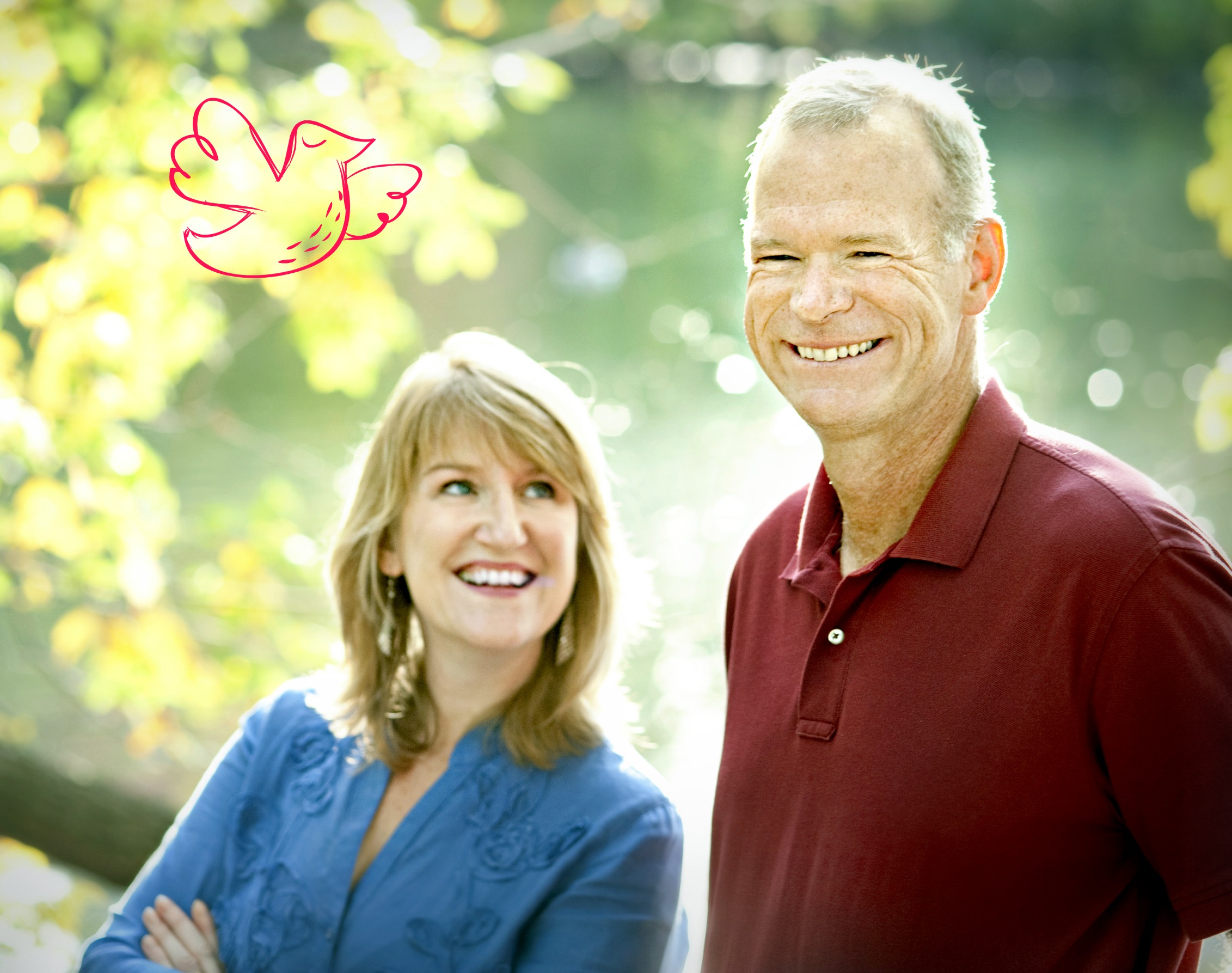
img: Toni Hargis and her American husband, Mark, in a “photo taken for grandma” in 2011. (The love bird is native to The Displaced Nation.)