The Displaced Nation

A home for international creatives

Talking with author Sonia Taitz about home, abroad, and the healing properties of travel

Today we welcome Sonia Taitz to The Displaced Nation’s interview chair.  Sonia is an author, playwright, and essayist; her writing has been featured in publications such as The New York Times, The New York Observer, and O: The Oprah Magazine. She is also a regular guest on NBC’s TODAY show, CNN, and National Public Radio.

The Watchmaker’s Daughter is Sonia’s third book, published today. A memoir of growing up as the child of European holocaust survivors, The Watchmaker’s Daughter has already received glowing reviews, such as this from New Yorker and Vanity Fair cultural critic James Wolcott:

A heartbreaking memoir of healing power and redeeming devotion, Sonia Taitz’s The Watchmaker’s Daughter has the dovish beauty and levitating spirit of a psalm…A past is here reborn and tenderly restored with the love and absorption of a daughter with a final duty to perform, a last act of fidelity.

Intrigued? So were we. You’ll be happy to hear that Sonia has agreed to participate in this month’s prize draw, and has let us have a copy of The Watchmaker’s Daughter for October’s giveaway. See the end of this interview for details of how to enter the draw!

But now, over to Sonia.

Sonia, welcome to TDN. Could you tell us a little about your early life?
I was born in New York City. My parents had emigrated here from Germany, where they lived as displaced people after World War II.

And what was your parents’ reaction when they first arrived in America? How did the country make them feel?
They felt they had found refuge and harbor at last. When they saw the Statue of Liberty, they understood, for the first time in their adult lives, that they could be safe in the world.

Growing up in America must have been full of cultural contradictions for you. As a TCK and child of Holocaust survivors, did you feel at home in or removed from American culture?
Both. I felt American in contrast to my parents, to whom I had to translate things big and small (various cultural revolutions; why you don’t wear socks with sandals). At the same time, I felt different from American children whose parents were not from somewhere else. There was a deep rift between the “light” attitude shown on television (my strongest link to the culture) and the serious and weighted way my parents tended to see the world. I lived on both sides of that rift. Sometimes it was tiring; sometimes it was exciting.

You helped your parents get over their trauma of being in the concentration camp through travel. Where did you go, and how did you react to the other cultures?
I left my safe milieu in NY (we lived in a cozy Jewish immigrant neighborhood) and crossed the Atlantic to the Old World, Europe. My parents had experienced deep and savage hatred in Lithuania, under the Nazi regime, and both had survived ghettos and concentration camps. They had seen neighbors turn their backs on them, or even turn against them. To my parents, America was free of these horrors. Here, everyone had a chance. Here, no one could ever round you up and kill you. Europe, they felt deeply, was a checkerboard of blood-hatreds, and they had rejected it as much as it had rejected them. So that’s where I went at 21, sure that the world was no longer as bad as they had thought – that it was, in a sense – safe to trust again.

Although I traveled to Germany (and later, to Lithuania), my journey centered on Oxford, England, where I studied for two years. And while I made many close friendships there, I did feel displaced. I was frightened by the depths of snobbery, prejudice, and even hatred that I sometimes felt – not only directed toward Jews like myself but toward blacks, “Asians” (as they indiscriminately called anyone from Pakistan to Polynesia), and even Southern Europeans. I particularly remember the phrase “the wogs start at Calais.” And the student I fell deeply in love with had parents who rejected me as a “Jewess.”

You might be wondering how all this was helpful to my parents. The story is told in my memoir, The Watchmaker’s Daughter, but the upshot is, I married the Englishman, and everyone ended up happy ever after.

You say your journey centered on Oxford, England — in fact, you did a degree at Oxford University. How did you find living in the UK, and what were the biggest adjustments you had to make?
I loved it and I hated it. There was no place more seductive, in the sense of misty fog, the flowing river Isis on which proud swans drifted, dreamy willow trees and – on the inside – fireplaces, hot mulled wine, the tinkling sounds of poetry and a golden sense of age. But it was all very foreign to me. My culture (not only Jewish but American) was louder, franker, more ambitious, less resentful. Where I came from, you openly tried to succeed, and could crow about how and what you did to “make it.” In fact, we cheered the rags-to-riches hero. England liked to dampen this enthusiasm. I got in over my head sometimes, and I remember feeling lost and bereft. My currency wasn’t worth the same in this place. But learning to adapt to another culture was intriguing. Travel can make you feel rootless and alone – but it can also make you soar. Best of all is when you come to feel at home in somewhere you once thought so strange. I did, eventually, come to that place.

I think everyone at this site knows what you mean by that. So — do you still like “soaring”? Do you still like to travel? 
I love to travel, and still feel that it is the best way to understand the world – and the world inside you. Wherever I go, I try to be porous, to float, to leave my safety zone and almost pretend I live somewhere new. I eat the food, listen to the music, even try to speak the language. Being comfortable is not my main goal in life – it is to experience and learn. So I feel exhilarated as a traveler, even with the physical or emotional discomforts that come with it.

Where is your home now — and where do you feel most “at home”?
I feel most at home in my hometown, Manhattan, where all cultures are enthusiastically represented (it’s a world tour in itself). I also love to go to a small lakeside cabin, less than an hour from the city. You don’t need to be in Switzerland or Kenya to feel the overall majesty of the world.

You married a non-Jewish man, an Englishman. How did you both adjust to the religious differences, as well as the cultural ones?
When we met each other, it felt less like a culture “gap” than opposites attracting. The man in question had always been interested in the Jewish Bible, which he knew better than most. He confessed that he had always had “envious aspirations” towards the Jewish people. But in a real sense, even after more than 25 years of marriage, he is still very English (in attitude and accent), and his sense of being Jewish feels different to him than my own. He doesn’t have the weight of being “of immigrant stock,” or of being the child of refugees, castaways. After all, Americans tend to be intimidated by English people, and not the other way around. My husband has been embraced by this culture.

After your own experience, what do you now see as the biggest challenge facing someone who is marrying into a different culture?
The problem usually manifests in the broader family sense. Between the man and woman, there may be only perfect love, but you do have to add parents and, later, children to the mix. My parents were as horrified as his by our romantic “exogamy.” Although they came to love my husband, he was not the “nice Jewish boy” they had dreamed of. And then, when there are children, new questions arise — how do you raise them? That seemed easier in my case; my husband was now Jewish and wanted, as I did, to raise them in that tradition. But even so, his parents had to deal with the fact that we did not celebrate Christmas. Our children have to deal with the paradox that while they are Jewish, their English family is not.

Our October theme is based around the tales of regret by those who travel. Do you have any regrets about traveling or studying abroad? What would you do differently — if anything?
Unlike Edith Piaf, I regret so much. While my parents grew to love my husband, and – most movingly – his parents and mine grew to love each other, my going away caused immediate hurt. I still can feel guilty about my taking that step away. My parents were immigrants with a tiny remnant of a family. Yet, I had sailed off to explore the world, leaving them far behind. On the other hand, that is what children do. Mine are beginning to do the same, and I try not to hold them back.

I also wish I had been more sensitive to my husband’s parents. They didn’t want me for their son, and I thought that made them prejudiced and “bad.” I mixed them up with those who had hurt my parents and millions of other Jews. Now that I have raised children, worried about whom they dated and how it would impact our family, I understand both sets of parents better. Youth makes us callous and cocky, and now, I hope, I am neither.

Could you tell us about your memoir being published today, The Watchmaker’s Daughter? Is this always something you’ve wanted to write?
The memoir is something I had wanted to write since my parents died. For many years after they were gone, I couldn’t put pen to paper about anything. Still, thoughts about our odd and interesting lives began to form. Death gives a shape to existence – a beginning, middle, and a punctuated end – and I began to see a story coming through. A circle away and back home. The classic Ulysses story, but seen from the eyes of a little girl in a Jewish ghetto in New York City, and the larger world she longs to understand. After the voyage, the return.

What made this book almost impossible to write was the duty I felt to be fair to everyone in the story, while doing justice to the story itself. This wasn’t my personal journal either – I wrote it as a coherent work that would resonate with others, regardless of their background. I needed to transmit what I had experienced and learned. I wanted to give the reader a tale of suffering, love, redemption, and renewal.

You have also published a novel, In the King’s Arms, about an American Jewish woman who goes to England and marries into the aristocracy. How much of this was based on your own life? Did you find it easier to write the memoir or the novel, and why?
The novel takes my real trip to Oxford and enhances it with far more dramatic plotlines. Many characters are invented, others are conflated from different people. Much of the drama that happens in that book never happened to me (although funnily, many people assume it did).

I found both the novel and memoir enjoyable to write. Novels are fun; you can play with your characters and make them say or do anything you want. I love this freedom to create a new world. Memoirs are deeply rewarding in that emotional chaos is translated, ideally, into art. It’s a darker assignment, but a deeply satisfying one. Notice that I didn’t respond to the question of which was “easier.” I guess I enjoy intense engagement, which may be why I like travel, or the difficult task of writing.

What audience did you have in mind for In the King’s Arms? Did you end up attracting those sorts of readers, and to which part of the story had the audience responded the most ?
I felt the novel had a universal theme — young love, Romeo and Juliet, the sorrows of the broken heart. All sorts of people have responded to it in all kinds of ways. Some find it very English, comparing it to Evelyn Waugh. Some find it as Jewish as Philip Roth. Some treat it as a satisfying read, and others as a moral fable.

Were you surprised at the book’s reception?
The biggest surprise was that people responded to it at all. The book had almost been published 25 years ago, but the contract had fallen through, and I had thought it would never see the light of day. To see it come back to life, be read, and even garner critical praise, was the biggest and happiest surprise.

Do you hope to attract another kind of audience with The Watchmaker’s Daughter?
I hope to attract a bigger and more diverse audience than a small literary novel tends to. I am now decades older than the author of the novel, and I hope this book reflects that.

You’re a very diverse writer, and have had some theatrical works produced at the Oxford Playhouse and at the National Theatre in Washington, DC. Could you tell us a little about them?
The Oxford experience was one of the greatest ones of my life; I was given license to write a play that would be seen not only by the sophisticated body, but also by the London press. My husband-to-be acted in it (he was part of the Oxford University Dramatic Society), and it was an incomparable experience to watch him onstage giving life to my work. It was my first full-length play, my first public experience as an artist.

The play at the National Theatre was part of a series that took place on Monday nights, when theatres are typically dark. Our troupe – author, actors, director — took the train down from New York, rehearsing all the way. The audience was great — the play was a farce about jealousy, kind of madcap and packed with complicated jokes and stage business – and they responded well to all of it. People who go to see new plays are adventurous, and people who’d go on a Monday night to see one they’d never read about are even more so.

And finally: what next? Are you working on another book or play, and if so, can you tell us anything about it?
My next book is a tragicomic novel based on a real public figure (a very famous actor), but the story is largely invented. Starting with his childhood, I create the background that made this man become an unbalanced anti-Semite. His father abuses him mentally and physically, and is a nightmarish tyrant. As a teenager, the boy falls in love with a Jewish girl from a good family, but something happens that affects both their lives. The novel is called DOWN UNDER, and it’s been a real treat to bring this story to life.

We’re already looking forward to it! Thank you, Sonia, for being so honest and giving us such an insight into your life and your writing. We wish you and The Watchmaker’s Daughter every success.

To win a copy of The Watchmaker’s Daughter, you can:

We will announce all the winners in a couple of weeks!
.

STAY TUNED for Monday’s post, Anthony Windram’s musings on films, horror and the displaced life!

If you enjoyed this post, we invite you to register for The Displaced Dispatch, a round up of weekly posts from The Displaced Nation, with seasonal recipes, book giveaways and other extras. Register for The Displaced Dispatch by clicking here!

Related posts:

Images: Sonia Taitz author photo; The Watchmaker’s Daughter book cover.

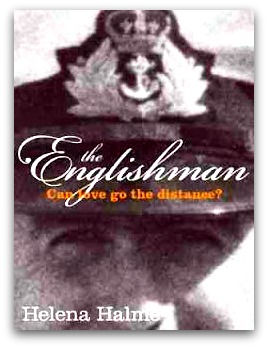
BOOK REVIEW: “The Englishman” by Helena Halme

Today we are delighted to review Helena Halme’s book, The Englishman. Helena is a regular visitor to The Displaced Nation, where she has been featured both as a Random Nomad, and as Cleopatra For The Day. The Englishman is available from Amazon (UK and US) and for a limited time this week, is free to download as a Kindle ebook!

TITLE: The Englishman
AUTHOR: Helena Halme
AUTHOR’S CYBER COORDINATES:
Blog: Helena’s London Life
Twitter: @HelenaHalme
PUBLICATION DATE: August 2012
FORMAT: Ebook (Kindle)
GENRE: Fiction
SOURCE: Review copy from author

Author Bio:

Helena Halme grew up in Finland and Sweden, and left Finland for good when she married her English husband. She now lives in London. The Englishman is her first book.

Summary:

At the age of twenty, Kaisa has her life mapped out. After university in Helsinki, she’s going to marry her well-to-do fiancé, Matti, and live happily ever after. But in October 1980, she’s invited to a British Embassy cocktail party, and meets a dashing Naval officer. In the chilly Esplanade Park the Englishman and Kaisa share passionate, secret kisses and promise to meet up again. But they live thousands of miles apart – and Kaisa is engaged to be married.

At the height of the Cold War the Englishman chases Russian submarines whilst Kaisa’s stuck in a country friendly with the Soviet Union. Will their love go the distance?

(Source: Amazon.com book description)

Review:

The Englishman is semi-autobiographical, based on the author’s blog posts on How I came to be in England, which, after an enthusiastic response from readers, she was inspired to turn into a fully fledged novel.

It is a love story: the account of the long-distance romance between English Naval officer Peter and Finnish student Kaisa, as this star-crossed couple discovers that Shakespeare’s words are still true, even in the 1980s, and the course of true love never runs smooth. Together, they contend with a broken engagement, long separations, the Falklands War, inevitable cultural differences, and the small matter of a member of the British armed forces wanting to marry a citizen of a country bordering the Soviet Union.

No matter where you are from, or even if you and your partner are from the same cultural background – if you’ve ever been in a long-distance relationship, The Englishman will strike a chord. Loving from afar in the early 1980s was a different matter than it is now: no Skype, no Facebook, no texting, but instead the sweet agony of waiting for letters in the mail and for the landline telephone to ring. Kaisa and her Englishman remind us of the forgotten pleasures of delayed, rather than immediate, gratification.

TDN verdict:

Especially recommended for romantics who grew up listening to Chrissie Hynde and wearing leg warmers the first time they were in fashion.

“The Englishman” can be purchased from Amazon.co.uk and Amazon.com, and from October 8 – 12 is available to download free of charge.

STAY TUNED for tomorrow’s ghosty posty, a spooky Displaced Q from Tony James Slater!

Image: Book cover — “The Englishman”

If you enjoyed this post, we invite you to register for The Displaced Dispatch, a round up of weekly posts from The Displaced Nation, with seasonal recipes, book giveaways and other extras. Register for The Displaced Dispatch by clicking here!

Related posts:

LIBBY’S LIFE #61 – A voice in the dark

Something has woken me. A voice.

I lie in bed and stare around the semi-darkness, wondering if an old, lost spirit lingers in the whitewashed walls of this Georgian cottage. I have no idea what time it is; the only clock in the room is that on Oliver’s cell phone which is lying on the window seat in our bedroom, its little green light flashing every few seconds. With no phone signal in the village, Oliver’s phone has become merely an expensive timepiece. The idea that the Voice might not be of this world discourages me from getting up to check its display, so it could be the middle of the night or nearly dawn for all I know; morning arrives later here than in Massachusetts, and winter, it feels, will not be long coming.

Perhaps one of the children has had a bad dream? I strain to listen for any sounds of wakefulness from the little bedroom next to us, where the three of them are tucked up. Hearing nothing, I decide I must have been dreaming myself, or that the jackdaws who helpfully drop twigs down the chimney into the fireplace are on night duty, cawing and pacing on the roof. I am about to turn over and reclaim some precious sleep when the Voice comes again: outside, under our bedroom window. A hoarse whisper, no doubt fondly intended to be quiet, but in reality raucous enough to awaken the whole street and the dead in the churchyard opposite.

“Yoohoo! Coo-ee! It’s me! Oliver — are you awake?”

I stay still for a second, not believing or wanting to believe what’s outside. Something that shouldn’t have been here for another three days. Should I ignore it? Will the voice and its owner go away if they get no response?

Chance would be a fine thing.

I sigh, resigned to our family’s fate for the rest of the day — the week, even — and nudge Oliver awake less gently than he’d like or is used to.

“Wake up, O dearest one. Rise and shine. Go open the front door. Your mother’s here.”

* * *

“So yesterday I said to this girl in your office, Oliver — Melinda, I think her name was — I said, ‘But he’s not arriving in England until tomorrow, so he must be there with you.’ And she said, ‘No, he definitely left last Sunday and he’s staying in the goonies in the back of beyond for two weeks.”

“Melissa, not Melinda. Boonies, not goonies.”

I shift George onto my other hip, and one-handedly fill the kettle. It had proved impossible to return to sleep once Sandra entered the house, screeching and cackling, so with bad grace I’d got out of bed and dumped some small children on her. If she was going to arrive three days early, she could make herself useful.

“Melissa, that’s it. She sounded like a lovely girl. Anyway, she said Oliver would be here all week, so why didn’t I ring him on his mobile phone? But I couldn’t get through, I just kept getting his answerphone message, so I thought, sod it, I’ll get an early train tomorrow to Bath. It’ll be a nice surprise for them.”

As if I didn’t already have enough reasons to murder Melissa Harvey Connor in cold blood.

I sit George in the rental cottage’s one highchair and get the teapot ready, putting an extra teabag in for Sandra who likes her brew a violent shade of orange.

“Oh, no tea for me, please!”

I turn, surprised. “No?”

“Not unless you’ve got green tea.”

I hold up the box of PG Tips.

“Evil stuff,” she says. She who once gave my three-year-old Red Bull. “Haven’t drunk it for a week now. I’m on a health kick. Green tea only for me, please.”

I pour boiling water into the teapot. “Haven’t got any.” If you’re going to turn up out of the blue and visit people unannounced, you’ve got to have what you’re given. “It’s PG Tips or apple juice. Or you can have the twins’ Cow and Gate if you’re desperate.”

It’s funny, I think — at one time I’d have been polite, even offering to run out and find some in the village. The health food shop at the other end of the high street probably sells green tea, after all, and as it’s now 8:30, the shops will be open.

But after the crisis that Oliver and I have had, all due to Sandra’s insistence upon Oliver’s silence about his family history? Sandra can damn well sing for her green tea.

“Are you sure you don’t want a cup?” I ask.

Sandra leans over to Beth who is kicking one foot in a bouncy chair, and strokes her cheek.

“Evil stuff,” she says again. “Give me a glass of water and I’ll go outside for a smoke.”

* * *

“What are we supposed to do with her?” I ask Oliver in an emergency conference in our bedroom. “We were going to Windsor to Legoland tomorrow, but I really don’t want her tagging along, moaning about nowhere to smoke and them not having herbal tea. Anyway, the car’s not big enough for all of us. Thoughtless woman.”

Oliver opens his mouth then shuts it again. Presumably he was going to defend Sandra, but over the last few weeks he’s learned that my sympathy threshold for his mother has plummeted. Her mention of Melissa only serves to make things worse.

Since we arrived, I have tried to worm information out of Oliver about Melissa, but every time I bring her name up — casually, nothing accusatory, asking about her job — he shoots a hunted, sideways glance at a random object in the room and changes the subject. I am getting nowhere, not to mention frustrated as hell and more suspicious by the minute.

“I could stay here and you take her out with the children. Go round Bath or someth—” He trails off. I imagine my expression reflects the outrage I feel.

“Your mother, your problem,” I say. “How about you take her round Bath and I stay here with the children and go to the park?”

He nods.

At least he’s getting to know when he’s lost an argument.

* * *

They’ve gone. The house is quiet, or as quiet as it gets with a preschooler and two six-month-olds. But it’s significantly quieter than when an overgrown teenager in her fifties is added to the equation.

“Can we go to the park now?” Jack asks.

I smile at him. “Of course. Put your jacket and shoes on while I get the twins ready. I’ll just nip upstairs and get changed.”

I strap Beth and George into their double pushchair, then run up the stairs.

In the bedroom, I pull on a sweatshirt, straighten the bed, then cross to the window to draw back the curtains — and stop. In the few days without a phone signal, Oliver has evidently lost his habit of taking his phone everywhere he goes. The phone is still lying on the window seat, its green light winking.

Because I’ve had to turn the alarm off on it every morning, I know Oliver’s password to unlock it.

I unplug the phone, slip it into my jeans pocket, and run back downstairs.

“Let’s go,” I say to Jack.

*  *  *

.

Next post: LIBBY’S LIFE #62 – Private investigations

Previous post: LIBBY’S LIFE #60 – Cotswold espionage

A note for Libby addicts: Check out Woodhaven Happenings, where from time to time you will find more posts from other characters.  Want to remind yourself of Who’s Who in Woodhaven? Click here for the cast list!

Read Libby’s Life from the first episode.

STAY TUNED for Monday’s post: a review of Helena Halme’s new book, The Englishman.

If you enjoyed this post, we invite you to subscribe for email delivery of The Displaced Dispatch, a round up of the week’s posts from The Displaced Nation. Sign up for The Displaced Dispatch by clicking here!

Image: Travel – Map of the World by Salvatore Vuono / FreeDigitalPhotos.net

Ghoulies, ghosties, long-leggedy beasties, and expat horror stories that go bump in the night

Welcome to October in the Displaced Nation —  a month of night terrors and gruesome tales, all with a global spin.

While most us regard telling horror stories round the campfire as just a bit of harmless fun, some unfortunate souls find the experience too close for comfort. Many global travelers, when they first embark upon an expat lifestyle, see the change as a way to escape past events. And why not? New surroundings can mean a chance to reinvent yourself, to live the dream.

Sadly, as these news stories attest this week, the dream can sometimes become a nightmare:

  1. A 41-year-old French businessman in Dubai is on trial, accused of holding a woman prisoner and using white magic to persuade her to marry him;
  2. A British man in Turkey was convicted of murdering his Russian wife after he discovered she used to be a man;
  3. A Thai woman plundered her British husband’s bank account to pay a hitman to kill him;
  4. A British expat in Spain drowned in the freak floods last week.

The last incident seems particularly sad in its irony: leaving rainy Britain for sunny Spain, only to perish in Spanish floods.

Often underlying the media stories such as these is the insinuation that, had these unfortunate people never strayed from their homelands, the situations wouldn’t have arisen. True enough in case number 1 — it’s difficult to be accused of practicing white magic in France.  But the others? They could happen anywhere.  Homegrown horror stories are every bit as bad as those cultivated abroad.

Although — thankfully — most of our misfortunes are not as extreme as the examples above, we’ve probably all had moments when we’ve thought, “This wouldn’t have happened if…” Yet how helpful is that train of thought, really?

So, to travel or not to travel? To take risks at home — or abroad? If you’re asking this, you’re already halfway there. Perhaps at this point you should turn to C.S Lewis’s The Magician’s Nephew,  where Digory and Polly have found themselves in a strange world, in front of a mysterious bell and hammer bearing the following message:

Make your choice, adventurous Stranger;
Strike the bell and bide the danger
Or wonder, till it drives you mad,
What would have followed if you had.

Have your travels brought you regrets, or can you only regret the things you haven’t done? Take part in our poll!

If you enjoyed this post, we invite you to register for The Displaced Dispatch, a round up of weekly posts from The Displaced Nation, with seasonal recipes, book giveaways and other extras. Register for The Displaced Dispatch by clicking here!

Related posts:

Image: MorgueFile

LIBBY’S LIFE #60 – Cotswold espionage

You can take the girl out of England, but you’ll never take England out of the girl. It’s home, and always will be.

At least, that’s what I thought until Oliver and I landed at a major British airport at stupid o’clock yesterday morning, after a night flight with a cranky four-year-old and two wailing five-month-olds in tow.

“Welcome home!” the uniformed bloke on passport control said to us. “This is your first time back in nearly eighteen months? Well, it’s great to have you in the country!”

OK, I’m lying. He said nothing of the sort. He scowled at me and Oliver, then shot a death-glare at Beth and George. “They’re American,” he said suspiciously, holding Beth’s blue passport by one corner as if it were radioactive.

“Well, technically they have dual–” I began, before he interrupted me.

“No UK passports?”

This visit was planned quite quickly, and although we’d got the twins official and legal as US citizens, they didn’t have the British paperwork yet.

“No, I haven’t got around to registering the birth with–”

The uniform held up one hand to silence me.

“How long will they be in the United Kingdom?”

Oliver passed him our travel itinerary which stated we would be going back to America in two weeks’ time.

“And you’re all travelling together for the duration of your visit?” the uniform asked.

“That’s right,” Oliver said.

“They’re five months old,” I said, sotto voce. “We thought we’d give them another couple of years before we sent them InterRailing round Europe on their own, but if you think they’re up to it now…”

Oliver trod heavily on my foot, and I muffled a squeal. My feet were swollen after a six hour flight with George asleep on my lap.

Another official wandered up to the booth.

“Have you got a problem, Derek?” she asked.

“He certainly has,” I muttered, and Oliver trod on my other foot.

The second official looked from Beth to her passport photo. Good luck to her trying to find the resemblance between Beth’s two month old self and as she was now, three months later. “They’ll need to be registered as UK citizens as soon as possible,” she said, “or it could cause a lot of problems.”

Goodness. The grilling now was not, therefore, classed as a “problem”?

“OK,” she said reluctantly to the first uniform. “Let them in.”

I gazed at my blameless infants as their passports were stamped and grudgingly handed back again.

“Poor little things,” I cooed at them as we walked away towards the baggage carousel. “You came home for a little light espionage, and they spoiled all your fun.”

Thankfully, I had run out of feet for Oliver to tread on.

* * *

So here I am, back in England, in the Cotswolds. It’s an unfamiliar region to me, as I’ve never been farther west than Reading before, so it isn’t technically “home”; but they still drive on the left, and I can buy Crunchie bars in the corner shop. It’s home enough for me.

You’d think that, given my extended absence, I’d have some introspective observations to bring you — Libby’s Thoughts On Returning Home — but all I can observe is how small everything is. The roads are Victoria Beckham-slim, the cars are like Matchbox toys, and as for the bed Oliver and I are sleeping in…Well. Give me King Size over Cosy, any day.

But the bed has to be cosy. King Size wouldn’t get up the narrow staircase in our rented cottage which, according to the plaque over the door, was built in 1723. It’s a tiny chocolate box house, all honey stone and honeysuckle on the outside, and low ceilings, plaster walls, and unexpected beams inside. Oliver is already sporting a lump on his bald patch.

Egg-sized lumps aside, though, it’s an idyllic place to spend two weeks. The front window looks out onto the high street, with its ancient market square cross, medieval church, and Ye Olde Gifte Shoppe selling tea towels and corn dollies to gullible tourists. For a real village — as opposed to Harry Potter’s Hogsmeade — this is as escapist as they get.

Better make the most of it before Mum and Sandra arrive next week, though. Thank God the house is too small for them to stay overnight, and they will be forced to sleep at the bed-and-breakfast down the road. For this first week, however, Oliver, the children, and I are on our own in this little Wiltshire backwater that has managed to bypass social evolution for the last 200 years.

OK, maybe not social evolution. They wear jeans and T-shirts, not smocks and straw hats, which is how everyone in Milton Keynes imagines West Country types. But they’re a bit behind in the technology race in Chipping Magna. There’s still a working red phone box in the High Street, which I thought was very quaint and sweet, because most red phone boxes have been bought up by Hollywood luvvies and converted to shower cubicles.

After half an hour in the cottage, we discovered the reason why the last non-shower phone box stood in this village. There’s no mobile phone signal in Chipping Magna.

“This is a disaster!” Oliver held out his useless cell phone in one hand and raked his — decidedly thinning, I noticed — hair with the other. “I’m supposed to be on a conference call with Seattle on Monday! How am I supposed to check my emails? Does this house have wi-fi?”

I gave him a pitying look. “I’d say this place has only just been hooked up to the national grid, wouldn’t you? Think yourself lucky that we’ve got electric lights instead of tallow candles.”

Then I turned away before Oliver could see me smirk.

I could be helpful and tell him that there was an internet cafe in the supermarket five miles away, where we stopped to get bread and milk. But here’s the thing. I don’t want him to be on the phone or emailing — and it’s not just because he’s on holiday and shouldn’t have to work for the next two weeks.

No. You see, if he can’t phone or email, he can’t communicate with Melissa Harvey Connor.

Bet you thought I’d decided to let that one lie, hadn’t you? Come on. You know me better than that. I’ve been doing some quiet investigations back in Woodhaven. That she started working for Oliver at precisely the same time that we were having marital problems, together with her husband Jeffrey stomping out of the house two weeks after she began, did little to allay my suspicions. No wonder the Posse had decided that she and Oliver were an item. But still — this is Oliver we are talking about. He’s no saint, but Melissa just isn’t his type. He might be OK as her boss, but I know that in a social (or more) situation, she would terrify him. I just can’t see it. He’d be mincemeat.

And yet — as my dad would say — there’s no smoke without fire. The question is: where did the fire start, and who lit the match?

I’m hoping that these two weeks with limited social opportunity — no phone, no internet, no texting — two weeks of Oliver and me being forced to sit and talk to each other, in other words, might give me a clue about what’s going on.

Because when the next coffee morning rolls around, I need to be able to stand up to the Posse and say, “Guess what, ladies? You owe me and my husband an apology.”

The jobsworth at the airport, worrying that our baby twins were here for some 007 spying, was barking up the wrong tree.

I’m the queen of espionage round here.

* * *

.

Next post: LIBBY’S LIFE #61 – A voice in the dark

Previous post: LIBBY’S LIFE #59 – Fanning the flames

A note for Libby addicts: Check out Woodhaven Happenings, where from time to time you will find more posts from other characters. Want to remind yourself of Who’s Who in Woodhaven? Click here for the cast list!

Read Libby’s Life from the first episode.

STAY TUNED for Monday’s round-up of the web’s top food posts!

If you enjoyed this post, we invite you to subscribe for email delivery of The Displaced Dispatch, a round up of the week’s posts from The Displaced Nation. Sign up for The Displaced Dispatch by clicking here!

Image: Travel – Map of the World by Salvatore Vuono / FreeDigitalPhotos.net

BOOK REVIEW: “The Elopement: A Memoir” by Dipika Kohli

TITLE: The Elopement
AUTHOR: Dipika Kohli
AUTHOR’S CYBER COORDINATES:
Website: kismuth.com
Twitter: @DipikaKohli
Kismuth on Facebook
PUBLICATION DATE: July 2012
FORMAT: Ebook (Kindle) available from Amazon
GENRE: Memoir
SOURCE: Review copy from author

Author Bio:

A former journalist, raised in America by her Indian parents, Dipika Kohli has previously lived in Japan and Ireland, and now lives in Durham, NC, with her husband and son. The third volume in her Kismuth series will be published in October 2012.

Summary:

When American-born Karin Malhotra elopes to Ireland with her college sweetheart, she botches the dreams her parents had for her when they left New Delhi with a stalwart philosophy on what a good life “ought” to be. “Opportunity,” her father said, “is in the U.S. That’s why we came.”

But finding herself in Ireland, juxtaposed in not one, but two additional cultures (her new husband is Japanese), Karin finds herself thinking about the early years of her own parents’ married lives, and wondering if, like her, they questioned their decision to leave everything familiar for the mere promise of a better life.

She tumbles headlong without any preparation into a small village in the corner of Ireland. Not only does she have to contend with a new suite of social mores, she wonders what it would have been like had she not quit home.

(Source: Amazon.com book description)

Review:

The Elopement is the second book in a four-part memoir series, Kismuth, which, in Hindi, means “destiny”. Karin’s grandmother defined destiny as:

We’re all meant to be someplace…And when we get there, wherever it is, that’s what’s supposed to happen.

This implies a passiveness about the process, a casting off of responsibility for our futures, yet many would argue that destiny is of our own making. You reap what you sow, is another way of putting it.

Karin Malhotra’s ambitious parents left Delhi in search for a new life, for better opportunities for them and their children. Sadly, by forcing their own ambitions onto Karin, they sowed what they would later reap: an unhappy daughter, rejecting her family’s strict expectations by following her heart and searching for her own “better opportunities”. Her interpretation of the phrase, unfortunately, did not agree with that of her parents, who refused even to acknowledge Karin’s relationship with Japanese boyfriend Yoshi.

Little wonder that, when Karin finds the acceptance from Yoshi’s parents that she never had from her own, elopement seems an attractive, fairytale-like option. But of course, everyone knows that not all fairytales have happy endings. And while it might be possible to create one’s own destiny, the lesson we can learn from this book is that it is folly to try to create someone else’s.

The Elopement is a fascinating read, beautifully and eloquently written. Dipika Kohli’s next book, The Dive, starts where The Elopement ends. I am already counting the days until its publication on October 10.

Notable quotes:

On being a TCK:

[My parents’] choices, and the consequences that arose, ought not affect my own. If they didn’t think the trade was worth it — the one where they gave up everything in a familiar context in India to take a chance on a new opportunity abroad — well, that wasn’t my problem, was it?

On interculteral relationships:

Our summer of trying out…this intercultural relationship thing, felt like wearing a happened-upon outfit I’d never imagined could fit, but thought, once in a while, why not break that one out? …This “once in a while” was about to become my new look.

On Ireland:

Ireland had the kinds of places and people that would make you stop what you were doing, and sit up and pay full attention, to the degree that you felt really aware and present, maybe for the first time in your life.

.

STAY TUNED for Thursday’s post!

Image: Book cover – “The Elopement”

If you enjoyed this post, we invite you to register for The Displaced Dispatch, a round up of weekly posts from The Displaced Nation, with seasonal recipes, book giveaways and other extras. Register for The Displaced Dispatch by clicking here!

Related posts:

LIBBY’S LIFE #59 – Fanning the flames

Somehow, I manage to get away from that hideous coffee morning. As I drive, I automatically answer Jack’s questions about the finer details of Ironman’s personal habits — “I have no idea how he goes to the bathroom. No, I can’t imagine Ironman wearing Pampers.  Yes, I suppose he might go rusty if he’s not careful.” — but I’m not really paying attention.

Anita’s words keep looping around in my head.

“Jeffrey Connor’s gone back to Shelley,” she’d said. Shelley, his first wife, whom he’d left for Melissa Harvey. Jeffrey and Shelley Connor had been Melissa’s tenants — just as Oliver and I are now.

I cringe every time I replay my innocent reply:

“Why? What happened to him and Melissa?”

And Anita’s embarrassed answer: “We all assumed you would know about that.”

Her meaning was unmistakable: We assumed you knew because you are involved in this situation. Or, rather, not me, but Oliver.

It was as if someone had smacked me over the head with a large stick. Everything made sense: the sudden silence as I entered Anita’s house, as if they had been talking about me; Charlie’s protectiveness, as she loudly emphasised my “post-natal depression” as the excuse for my four-month absence from Posse society.

It wasn’t post-natal depression, not in the conventional sense. It was my inability to face anyone because of the issues Oliver and I were having about his father’s marital history.

Now, though, I wish I’d been brave enough to venture onto the coffee morning rounds. Without me there to set the story straight, rumours had flourished like unattended dandelions. In my absence, everyone had gossiped behind my back, assuming I wasn’t showing my face in public because Melissa Harvey Connor was having it away with yet another tenant of hers: Oliver.

How ridiculous. Right? I mean — when would Oliver see Melissa?

Yet here’s the thing: while I can keep telling myself that it’s all conjecture and careless whispers amongst silly women with too much time and not enough brain cells, and I don’t believe a word of it, at the back of my head a little voice of paranoia insists that rumours have to come from somewhere.  As my Dad would say: “There’s no smoke without fire, Libby.”

What to do now? I wonder.

Do I ignore the smoke? Douse the embers? Or — fan the flames?

If the topic comes up, I decide, I will probe.

*  *  *

“How was your day?” Oliver asks over dinner. “Did you go to Charlie’s leaving do?”

I pause. “Yep,” I say, trying to keep my voice light and casual, and instead hearing it come out high-pitched and tense.

“Everything all right?” Oliver shoots me a look which I interpret as concerned.

Concerned for whom? Me? Or him?

“Fine,” I say, hoping my voice sounds more natural.

“OK,” he says. Oliver tends to take things at face value. If I say I’m fine, then I must be.

“I hear Jeffrey’s gone back to England.” I cut into a piece of chicken on my plate, and glance up quickly to watch Oliver’s expression, which is a study in nonchalance.

“Yeah. He decided our landlady wasn’t a good enough trade-in for his first wife. Gone back with his tail between his legs.”

“It took him this long to work that out? Everyone else could have told him Melissa’s a complete bitch.”

Oliver raises his eyebrows. “She’s not that bad. A bit overbearing, maybe. Jeffrey didn’t handle her right. You’ve got to be firm with her.”

I choke, cough, and run into the kitchen where I splutter out a wad of half-chewed chicken.

“And you’d know about this, I suppose,” I say, when I return to the table.

“Well, yes. Of course I would.” He looks around the table for ketchup. Honestly, it drives me nuts how Oliver insists on drowning everything with ketchup. If I took him to Alain Ducasse, he’d be asking for ketchup to go with the foie gras. “Seeing as she’s been working at the company for — what?  Three months now.”

I lean back in my chair, aware that my jaw is dropping open unattractively.

“She works at your place? Why? She’s a realtor. You never told me.”

Oliver shrugs. “Housing market has tanked around here, and Jeffrey got her this admin job. I suppose she joined when we…when you and I weren’t talking much to each other.”

And whose fault was that? I want to scream, but instead I count to ten, very slowly, because I need to know more.

Suddenly the Posse’s whispers don’t seem so careless any more.

“Do you see much of her at work?” I ask in that same fake-casual voice.

“She works for me. Technically, I’m her boss.”

“And there is no connection between that and the fact that Jeffrey has decided to return to his first wife.”

He hesitates, just a fraction of a second too long, and my internal bullshit radar switches to high alert.

“Now you’re just being silly,” he says, sticking out his chin.

We finish our meal.

There is silence in the room, marred only for me by my internal radar’s sirens and red flashing strobe lights.

*  *  *

.

Next post: LIBBY’S LIFE #60 – Cotswold espionage

Previous post: LIBBY’S LIFE #58 – Careless whispers

A note for Libby addicts: Check out Woodhaven Happenings, where from time to time you will find more posts from other characters.  Want to remind yourself of Who’s Who in Woodhaven? Click here for the cast list!

Read Libby’s Life from the first episode.

STAY TUNED for Monday’s food-related Displaced Q!

If you enjoyed this post, we invite you to subscribe for email delivery of The Displaced Dispatch, a round up of the week’s posts from The Displaced Nation. Sign up for The Displaced Dispatch by clicking here!

Image: Travel – Map of the World by Salvatore Vuono / FreeDigitalPhotos.net

Chocolate on the go: The Chocoholic Traveler (App review)

Having spent much of the summer with an athletic, Olympic theme to our site, it’s time for us to switch to a less exhausting topic for a few weeks, and return to a TDN favorite: food.

Or, more specifically, traveling across or around the world to eat certain foods. What kind of foods, of course, depends on the individual. It’s literally a matter of personal taste.

For example, while I would happily pass on trekking across Cambodia to sample some deep-fried tarantula, I could be persuaded to travel to Sweden – although not for the Surströmming. As a self-confessed chocoholic, I’d need a sweeter temptation than fermented Baltic herring. October’s Stockholm Chocolate Fest in the National Museum of Cultural History, on the other hand —  a weekend of chocolate demonstrations, tasting, and (of course) purchasing — would entice me.

An app for the hopeless chocoholic

One woman who might agree with me is Kay Harwell Fernandez. Journalist Kay writes about travel as it relates to food and drink — particularly chocolate. Her passion for world chocolate is such that she has created an app for iPad/iPhone, called Chocoholic Traveler.

Be warned: this is an app for even the most dedicated of chocoholics, and one which will considerably lengthen their bucket lists.

Fancy a pilgrimage to Joanne Harris‘s Lansquenet-sous-Tannes, the fictional French town in Chocolat? For $18,200 for a party of four, you can take a barge cruise through the French Burgundy Canal and, along the way, have lunch in Flavigny, where the movie of Harris’s Chocolat was filmed.

Perhaps you prefer a more hands-on approach. From the app, I discovered several chocolate cooking classes, ranging from a $10 class at Hershey Story Museum, to a $900 four-day summer camp at Burdick’s in New Hampshire.

Need to crush the chocolate guilt? Try a chocolate walking tour of London’s Mayfair and Chelsea. The three-hour walk will go some way to silencing the voice of your conscience as you drink hot chocolate and taste different varieties of chocolates, including the Queen’s favorite. The tour, by the way, starts off with a chocolate cocktail. Of course.

Verdict

If you’re looking for an app that identifies individual chocolate shops, this isn’t it. This is more accurately an act of worship for the cacao bean. In the same way an app for Napa Valley wine tours wouldn’t list every local liquor store, this doesn’t list every Main Street confectionery store. Kay Harwell Fernandez is, however, continually updating her app with new global chocolate events. One nice touch is the comments page — users can see others’ suggestions for future updates.

Check out Chocoholic Traveler on iTunes here, and

STAY TUNED for Tuesday’s post: helpful advice on the subject strange food obsessions, from our resident agony aunt, Mary-Sue Wallace.

If you enjoyed this post, we invite you to register for The Displaced Dispatch, a round up of weekly posts from The Displaced Nation, with seasonal recipes, book giveaways and other extras. Register for The Displaced Dispatch by clicking here!

Related posts:

Image: Chocolate Splash by Idea go; courtesy FreeDigitalPhotos.net

Some like it boiled: When it’s hot outside, go somewhere even hotter for vacation!

“Have a good summer!” The doctor’s receptionist hands me my receipt. “Are you going away?”

“Yes, to Florida,” I say. (Wait for it, wait for it…)

“Florida?” she screeches. In August?”

Bring quickly to the boil…

That old saying, the one about only mad dogs and Englishmen going out in the midday sun, apparently has a Northeast American variation: Only mad dogs and Englishmen go south to the midsummer sun.

On the face of it, it makes sense. Why bother to fly south when the mercury is already at 90 degrees in New England, as it has been for much of this summer?

That’s all well and good, but no one questions your sanity in winter, when you announce you’re leaving the cold February gloom to find even colder weather in which to ski. If anyone did question it, the reasoning would be: “But the snow’s better in Colorado/Italy/Switzerland!”

Simmer for 7 days…

Well — she said defiantly —  in summer, the sun and palm trees are better in Florida. Or Aruba. Or the Cayman Islands. While I love the maple and oak trees of New England in the Fall, they don’t look right amid tropical temperatures. It’s like lying on a sun lounger on an expanse of white sand, waiting for a margarita, and the waiter bringing you a cup of tomato soup instead. It’s just wrong.

“A-ha!” someone is bound to say. “But what about the hurricanes?”

True enough. Tropical Storm Isaac is right now barreling its way toward the Gulf Coast, where it is expected to reach hurricane strength. Yet the Northeast is not immune to summer storms, either. Exactly one year ago, Hurricane Irene arrived in Connecticut, downing trees and knocking out power for days. Two months later, the same thing happened again, but this time with a snowstorm called Alfred.

Now, you don’t see that very often in the Keys.

Remove from the heat…

The people who shun the roasting climes in summer prefer to go south in the colder months, and that’s fair enough. As I said in a post last Christmas, I would love to spend December 25 in a desert-island-like setting (albeit with room service.) That, however, means going farther south than good old Florida. I’ve had friends do the Disney water rides at Thanksgiving and come back home with streaming colds to prove it.

Thank you, but I’ll pass on that particular souvenir.

…And serve in July.

Perhaps this perverse determination to find somewhere hotter than my home climate stems from my nationality. I am from the country whose residents flee for two weeks every year in search of the summer that nearly always evades England.  Perhaps I am genetically programmed to be suspicious of summer’s consistency in my place of residence, imagining that it can only be guaranteed a few thousand miles nearer the equator.

The only solution to this state of suspicion and dissatisfaction, as I see it, is to move there permanently. Perhaps it would have its drawbacks: people who move to Florida or the Caribbean often say they “miss the seasons.”

Me, though, I would happily give some seasons a miss.

.

STAY TUNED for Tuesday’s post, in which Tony James Slater tells us what it’s like to be an expat writer!

If you enjoyed this post, we invite you to subscribe for email delivery of The Displaced Dispatch, a round up of the week’s posts from The Displaced Nation. Sign up for The Displaced Dispatch by clicking here!

Related posts:

Image: MorgueFile

LIBBY’S LIFE #58 – Careless whispers

OK. Let’s do this.

My finger hovers over the doorbell for a couple of seconds before I push the button. Inside, a torrent of barks from Anita’s dog, Champion, reminds me of the morning at this house, nearly a year ago, when the same dog diagnosed my pregnancy, literally sniffing it out.

Approaching footsteps in the hall, accompanied by the skittering of doggy claws on slippery wooden floorboards.

Anita opens the front door wide, and I catch a glimpse of the Coffee Morning Posse chattering in the kitchen, at the end of the corridor behind her. Everyone turns to see who’s arrived, and the chatter stops; as if someone flicked a volume switch to “Mute”.

“Libby,” Anita says, at first looking at me, then quickly averting her eyes. “We didn’t… expect you. Come in.”

She takes Jack’s hand and the twins’ changing bag, and leads the way to the back of the house. I follow, feeling like Scarlett O’Hara when Rhett forces her to go to Melanie’s party after she and Ashley are caught in a clandestine clinch. It’s clear from the silence and Anita’s awkwardness that I’ve been the subject of conversation.

Could they know about Oliver and his bigamist father? I wonder. No. That would be impossible. No one in Woodhaven knew about that except Maggie, and she would never say anything to anyone — least of all to the Posse.

I haven’t seen any of the Posse since early May, a couple of weeks after the twins’ birth, when Anita brought round a Tupperware-encased casserole for our freezer. Two days after the arrival of that Chicken a la King, Oliver’s half-sister Tania paid us her fateful surprise visit, and my life turned towards the sign marked “Hades on Earth”. Hanging out with the Expat Sisters over lattes, pretending everything was hunky dory chez Patrick, didn’t feature on my agenda after that.

Silly to assume my absence went unnoticed, though. I’ve turned down so many invitations to coffee, dinner, and pot luck lunches that the gossip machine must have been working overtime. “Bring all the children, and let’s have dinner!” the phone conversations would start, and my inner reaction would be Let’s not. Let me just hide. Outwardly, I would mumble an excuse, but since I’m no Meryl Streep, the other person surely knew I was fobbing them off. “Another time, then,” they would say.

Except that after a while, of course, there were no other times.

Naturally, it was Maggie who set me back on the path to social redemption.

“You can’t hide away forever,” she said to me at regular intervals over the last few weeks. “You need more company. You need people your own age.”

Eventually, after Oliver and I reached our tenuous truce, I felt my wounds had been sufficiently licked and the time was right to enter the outside world again. An email from Anita, sent to all the English Posse wives, offered the opportunity I needed.

Charlie and Lee are heading back to sunny Milton Keynes! the email said. We will be holding a farewell party for Charlie on August 23 at my house. Please RSVP…..etc etc etc

I didn’t RSVP, though. I didn’t trust myself to keep a promise to attend. Glancing round Anita’s kitchen now, meeting the curious stares and false smiles, I wish I hadn’t come.

“How they’ve grown!” Charlie appears at my side, gives me a hug, and bends down to take a better look at the twins. “They’re — what, about three months now?”

“Four months. Exactly.” I wish with all my heart that it was someone else’s farewell party. Anyone except Charlie. Caroline would be my top pick of people to dispatch back to Milton Keynes. I can see her on the other side of the family room, standing next to her awful brat who’d made Jack’s life a misery. She’s holding her own new baby, which is dressed in a black Harley Davidson onesie with fake leather boots and a kelly-green elasticated headband. Boy or girl? It’s still anyone’s guess.

“They’re beautiful,” she says. “And you look very well, too. Post-natal blues are such a curse — I hope you’re feeling a bit better now?”

Charlie speaks the last sentence in a slightly louder tone, as if to make sure the rest of the room hears clearly. She nods slightly at me, encouraging me to say something, to play along with her.

“Much better,” I say, wondering where this is leading.

“Good! I hear there are some wonderful drugs available for depression these days. I expect you know all about that, though.”

“Well, I’m not actually—”

“Come and sit down where it’s quieter.” Charlie interrupts me, then picks up George’s car seat and carries it through to Anita’s formal living room. I follow with Beth. As I sidle past the basement door, I hear Jack issuing orders about the rules of a made-up game involving Ironman and Captain America. Sad, I think. Has Lightning McQueen had his day in Jack’s world?

“I think you should know,” Charlie says, flopping down next to me on Anita’s leather sofa, “that there’ve been a lot of theories about your absence. Rumours spread very quickly around here, as you know, but as soon as anyone voiced an opinion, I simply stepped in and told them you’ve been suffering from PND. I figured that it probably wasn’t too far from the truth.”

I reflect on this. Yes — I’d been depressed following the twins’ birth, although the two events weren’t connected.

“That’s about right,” I say.

“And I presumed you’d rather have that circulating as general knowledge than the real reason.”

I nod, before remembering that no one could possibly know about Oliver and Tania.

“Wait — what ‘real reason’?” I ask, but Charlie is already getting up.

“They’re calling me,” she says. “Time to cut the cake.” And off she rushes, back to the kitchen.

By the time I’ve gathered up the two baby seats and lumbered with them towards the cake room, Anita is in full flow with an emotional goodbye-to-Charlie speech.

“The best thing about being here in Woodhaven,” she says, blinking hard, “is the lovely people you meet. The worst thing is when you have to say goodbye to them.” She sniffs. “I’m going to miss you so much, Charlie.”

You and me both, I think.

Julia passes a couple of large gift-wrapped boxes to Charlie.

“This is from all of us,” Julia says, and I feel guilty, because I haven’t contributed anything.

Charlie murmurs her slightly embarrassed thanks, and begins unwrapping them. There’s a big coffee-table book full of photos of Massachusetts; a lace tablecloth which I recognise as being from the craft store in Woodhaven; a pottery house — a miniature of the one on Main street that belongs to the Historic Society. Right at the bottom of the second box, there’s a map of Milton Keynes and a copy of the Highway Code. A joke, of course — Charlie doesn’t need either, but it’s a reminder that she’s been away from her home town for nearly five years, and she might need a refresher course in driving on the left.

“Give our love to Milton Keynes,” Julia says.

“And to Jeffrey and Shelley, of course,” pipes up Caroline from the back of the room. She looks over at me and smirks, but I don’t know why.

Everyone else in the room knows, though. The heavy silence descends again.

Jeffrey and Shelley? I think. I only know one Jeffrey, the one who is married to Melissa Harvey Connor.

“Does she mean Jeffrey Connor?” I whisper to Anita, who’s standing next to me.

Anita casts a glance around, as if searching for a door to take her into a parallel universe, far away from here. “That’s right,” she says.

“So — he’s in England now?” Oliver never mentioned it. “What about Melissa? Has she gone too?”

It’s so long since I’ve seen Melissa. The last time I saw her was the week of the early winter storm, when I caught her sniffing Oliver’s sweatshirt in our bedroom, and I got the locks changed the following week.

Anita stares at the floor. Perhaps she can see the door to the other universe. “He’s gone back to Shelley,” she says at last. “The wife he had when he first came out here, five years ago.”

“Goodness.” So much scandal for such a small town. “So what happened to him and Melissa?” I ask.

Anita’s very quiet, for a long time. “We all assumed you would know about that,” she says at last. “I’m sorry, Libby.”

.

Next post: LIBBY’S LIFE #59 – Fanning the flames

Previous post: LIBBY’S LIFE #57 – Coming clean

A note for Libby addicts: Check out Woodhaven Happenings, where from time to time you will find more posts from other characters.  Want to remind yourself of Who’s Who in Woodhaven? Click here for the cast list!

Read Libby’s Life from the first episode.

STAY TUNED for Monday’s post.

If you enjoyed this post, we invite you to subscribe for email delivery of The Displaced Dispatch, a round up of the week’s posts from The Displaced Nation. Sign up for The Displaced Dispatch by clicking here!

Image: Travel – Map of the World by Salvatore Vuono / FreeDigitalPhotos.net