The Displaced Nation

A home for international creatives

Tag Archives: Writers we love

Best of 2011: Books for, by and about expats

One of our Random Nomads in November, Aaron Ausland, had this to say about those of us who venture across borders:

Travel to a new place for three weeks and you can write a book, travel for three months and you can write an article, travel for three years and you’ll likely have nothing to say.

While that may be true, I’m afraid it hasn’t stopped many of us who’ve spent large chunks of our lives gallivanting around the globe trying out life in different countries, from taking up the pen.

As with any other group, some are born writers (and thrive on new surroundings), while others have become writers (attempting to make sense of their adventures), while still others have had writing thrust upon them (responding to invitations to share their experiences).

At the Displaced Nation, we revere people who publish books, fiction or non, that in some way assist those of us who are (or have been) engaged in overseas travel and residency. We feature — and do giveaways of — their works. And, for established writers with a global following, we’ve created a unique “category” called the Displaced Hall of Fame.

In this spirit — and in the December tradition of looking back at the past year’s highlights — I present the following (admittedly incomplete) list of books for, by, and about expats that were published in 2011, in these five sections (click on the title to go to each section):

  1. NOVELS ABOUT EXPATS
  2. NOVELS ABOUT “HOME”
  3. EXPAT MEMOIRS
  4. SELF-HELP, CROSS-CULTURAL & OTHER NONFICTION WORKS
  5. INSPIRATIONAL ANTHOLOGIES

A few more points to note:

  • Books in each category are arranged from most to least recent.
  • I’ve mixed indie books with those by conventional publishers (it suits our site’s somewhat irreverent tone).
  • To qualify for the list, authors must have been expats for at least six months at some point.

* * *

NOVELS ABOUT EXPATS

Three Questions: Because a quarter-life crisis needs answers (CreateSpace, October 2011)
Author: Meagan Adele Lopez
Genre: Women’s fiction
Synposis: A love story based loosely on the author’s own romance with a lad from Bristol, the action traverses continents through letters and features a quarter-life crisis, a road trip to Vegas, and two crazy BFFs.
Expat credentials: An American, Lopez lived as an expat in the UK for a while (she is now back in Chicago).
How we heard about it: Melissa of Smitten by Britain was a fan of Lopez’s blog (originally titled The Lady Who Lunches). The pair met her London in the summer of 2010, when Lopez was still living in England. Recently, Melissa has been supporting Lopez’s attempt to gain sponsorship for turning the novel into a screenplay.

Sunshine Soup: Nourishing the Global Soul (Summertime, October 2011)
Author: Jo Parfitt
Genre: Women’s fiction
Synopsis: Six expat women from the UK, US, Thailand, Ireland, Norway and Holland converge in Dubai in 2008. The action centers on a Brit, who is on her first posting, and an American, who is on her 25th. The Brit learns the ropes and settles in, while the American woman’s world begins to crumble.
Expat credentials: A prolific author, publisher and pioneer in addressing the issues of accompanying spouses and aspiring expat writers worldwide, Parfitt has been an expat for nearly a quarter of a century. Born British, she now lives in the Hague.
How we heard about it: We noticed a couple of interviews with Parfitt — one by expat coach Meg Fitzgerald and another by Expat Women.

The Beautiful One Has Come: Stories (Wyatt-MacKenzie Publishing, July 2011)
Author: Suzanne Kamata
Genre: Cross-cultural romance
Synopsis: Twelve short stories reveal the pains and the pleasures experienced by expat women, most of whom live in Japan.
Expat credentials: Kamata is an American who has lived in Japan for 20 years.
How we heard about it: Kamata and her book were featured on Kristin Bair O’Keeffe’s Writerhead Wednesday in July of this year.

Hidden in Paris (Carpenter Hill Publishing, April 2011)
Author: Corine Gantz
Genre: Women’s fiction
Synopsis: Three strangers — all American women — have reached the point of terminal discomfort with their lives so run away to Paris to begin anew.
Expat credentials: Gantz is a French expat living near Los Angeles. She is getting her own back by writing about American expats in Paris.
How we heard about it: We are long-time fans of Gantz’s blog, Hidden in France — in fact, we promoted one of her posts (about falling into her swimming pool) with the launch of TDN in April. We also interviewed her about her first novel as part of our “gothic tales” theme this past May.

Exiled (Quartet Books, April 2011)
Author: Shireen Jilla
Genre: Psychological thriller
Synopsis: The wife of an ambitious British diplomat, whose first posting brings them to New York, looks forward to escaping from Kent and leading the high-profile life of a successful expat — only to find her world being threatened by dark psychological forces on a par with those depicted in Rosemary’s Baby.
Expat credentials: A Third Culture Kid (she is half English, half Persian, and grew up in Germany, Holland and England), Jilla has also been an expat in Paris, Rome, and New York.
How we heard about it: TDN writer ML Awanohara read a review of Jilla’s novel by Kate Saunders in the Sunday Times. She approached Jilla in May about having an exchange with our readers about the gothic themes in her novel, in line with our site’s own delvings into the gothic aspects of expat life. Our readers loved her!

NOVELS ABOUT “HOME”

Lady Luck (Colorado Mountain Series)
Author: Kristen Ashley
Genre: Romance
Synopsis: Ex-con hero, wrongly imprisoned, gets mixed up with unlucky heroine, who will stop at nothing to help him get revenge.
Expat credentials: Born in Gary, Indiana, Ashley grew up in Brownburg and then moved to Denver, where she lived for 12 years. She now lives with her husband in a small seaside town in Britain’s West Country, where she has produced more than twenty books featuring rock-chick, Rocky Mountain, and other all-American heroines.
How we heard about it: Ashley is the friend of an old schoolfriend of TDN writer Kate Allison, who invited her to do a guest post for us on Britain’s (lack of) Royal Wedding preparations  for our Royal Wedding coverage.

Queen by Right: A Novel (Touchstone, May 2011)
Author: Anne Easter Smith
Genre: Historical romance
Synopsis: This is the fictional story of Cecily of York, mother of two kings and said to be one of the most intelligent and courageous women in English history.
Expat credentials: The daughter of an English army colonel, Easter Smith spent her childhood in England, Germany and Egypt. She came to New York City at age 24, and as she puts it:

Many years, two marriages, two children and five cross-country moves later I’m very definitely a permanent resident of the U.S. — but my love for English history remains.

(She now lives in Plattsburgh, New York.)
How we heard about it: Easter Smith and her book were featured on Kristin Bair O’Keeffe’s Writerhead Wednesday in October.

Dance Lessons (Syracuse University Press, March 2011)
Author: Áine Greaney
Genre: Irish Studies, Women’s Fiction
Synopsis: The action centers on a woman of French-Canadian background who marries an Irish emigrant who is working illegally in a bar in Boston. After his death by drowning, she visits Ireland for the first time and finds out what a shattered man he actually was.
Expat credentials: She may be a resident of Boston’s North Shore, but Greaney continues to identify herself as an Irish writer (County Mayo).
How we heard about it: Greaney and her book were featured on Kristin Bair O’Keeffe’s Writerhead Wednesday in October.

Pentecost: A Thriller (The Creative Penn, January 2011)
Author: Joanna Penn
Genre: Thriller
Synopsis: The Keepers of the stones from Jesus’s tomb — which enabled the Apostles to perform miracles — are being murdered. The stones have been stolen by those who would use them for evil in a world. An Oxford University psychologist spearheads a search for them in a race against time…
Expat credentials: English by birth, Penn grew up as a third-culture-kid and at the time of producing her first novel, was living in Australia.
How we heard about it: We are avid followers of Penn’s blog, The Creative Penn. Several months ago, TDN writer ML Awanohara deconstructed Penn’s post about what “home” means for writers for what it might teach expats and others who struggle with this issue as well. For Penn, home means some sort of spiritual kinship, which she has with two places: Oxford, where she went to university and near where her father now lives, and Jerusalem, which she’s visited at least ten times because she loves it there so much. Not surprisingly, she chose to set much of the action for her debut novel in these two cities.

EXPAT MEMOIRS

Perking the Pansies: Jack and Liam move to Turkey (Summertime Publishing, December 2011)
Author: Jack Scott
Synopsis: Dissatisfied with suburban life and middle management, Scott and his civil partner, Liam, abandon the sanctuary of liberal London for an uncertain future in Bodrum, Turkey. The book is based on Scott’s irreverent blog of the same name, which after its launch in 2010, quickly became one of the most popular English language blogs in Turkey.
How it came to our attention: Scott was featured as one of our Random Nomads in May of this year and since then, has done us the favor of commenting on and liking several of our posts. **Kate Allison will be reviewing his book for our site on Wednesday.**

Ramblings of a Deluded Soul (CreateSpace, September 2011)
Author: Jake Barton
Synopsis: In his inimitable style, the British-born Barton strings together snippets from new novels and try-outs with reminiscences and, for the first time, insight into his own remarkable experiences as a traveler and expat in Europe (he once owned a small French vineyard and had another job he’s not supposed to talk about). NOTE: Barton’s first novel, Burn, Baby, Burn, burned its way into the Top Ten of the Amazon All Books list.
How it came to our attention: Barton is an online acquaintance of TDN writer Kate Allison. We celebrated him in the early days of our blog for his insights on foreign-language learning in Spain.

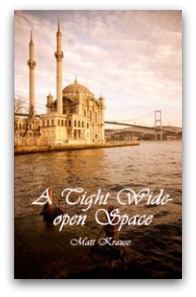
A Tight Wide-open Space: Finding Love in a Muslim Land (Delridge Press, August 2011)
Author: Matt Krause
Synopsis: A Californian who is now a Seattle-ite recounts how he became an Istanbullu, all for the love of a beautiful Turkish woman he met on a airplane. The year is 2003, and he can still hear the echoes of 9/11 as well as being acutely conscious of America’s engagement in two wars in Muslim countries. Eventually, he comes to love his new home more deeply than he might have expected.
How we heard about it: Linda Janssen, who writes the blog Adventures in Expatland, interviewed Krause about his book in October.

Planting Dandelions: Field Notes from a Semi-Domesticated Life (Penguin, April 2011)
Author: Kyran Pittman
Synopsis: A native of Newfoundland (her father was a well-known Newfoundler poet), Pittman writes about co-parenting with her charming Southern U.S. hubbie (they have three rambunctious boys); keeping the fiscal wolf from the door of their home in Little Rock, Arkansas; and honoring her marriage vows despite her refusal to give up her party-girl persona.
How we heard about it: Pittman came to our notice when she was a guest on Kelly Ryan Keegan‘s Bibliochat in late September.

Big in China: My Unlikely Adventures Raising a Family, Playing the Blues, and Becoming a Star in Beijing (Harper, March 2011)
Author: Alan Paul
Synopsis: Paul tells the story of trailing his journalist-wife to China and unwittingly becoming a rock star. His Chinese American blues rock band, called Woodie Alan, even earned the title of Beijing’s best band.
How we heard about it: We were early fans of Alan Paul’s back in the days of his Wall Street Journal online column, “The Expat Life.” Also, Paul and his book were featured on Kristin Bair O’Keeffe’s Writerhead Wednesday this past April.

The Foremost Good Fortune (Knopf, February 2011)
Author: Susan Conley
Synopsis: Conley, her husband, and their two young sons say good-bye to their friends, family, and house in Maine for a two-year stint in a high-rise apartment in Beijing. All goes well until Conley learns she has cancer. She goes home to Boston for treatment and then returns to Beijing, again as a foreigner — to her own body as well.
How we heard about it: Conley and her book were featured on Kristin Bair O’Keeffe’s Writerhead Wednesday in early October.

SELF-HELP, CROSS-CULTURAL AND OTHER NONFICTION WORKS

The Globalisation of Love (Summertime, November 2011)
Author: Wendy Williams
Genre: Relationships, self-help, humor
Synopsis: Williams interviews multicultural, interfaith and biracial partners from all over the world on what it feels like to “marry out” of one’s culture, religion and/or race. She also talks to experts on the topic and coins a term for it: “GloLo.”
Expat credentials: From a British-Ukrainian-Canadian family, Williams has been married to an Austrian for 13 years and lives in Vienna.
How we heard about it: TDN writer ML Awanohara listened to Jo Parfitt’s interview with Williams on her Writers Abroad show (Women’s International Network) and was attracted to the ideas of a book that treats this topic with humor. **TDN writer Anthony Windram will review the book for our site tomorrow (Tuesday).**

Modern Arab Women — The New Generation of the United Arab Emirates (Molden Verlag, November 2011)
Author: Judith Hornok
Genre: Women’s studies
Synopsis: The book consists of 20 chapters, each a stand-alone interview with an Emirati woman from disciplines as varied as business, film, medicine and politics. The women talk to Hornok about their careers, philosophies of life and plans for the future. The book, which is published in German and English, aims to dispel some of the Western myths surrounding Arab women.
Expat credentials: While not quite an expat, Hornok has been moving between the UAE and her home in Vienna, Austria, for eight years.
How we heard about it: TDN writer ML Awanohara read an article on the book in The National (UAE English-language publication) and became intrigued.

Expat Women: Confessions — 50 Answers to Your Real-life Questions about Living Abroad (Expat Women Enterprises Pty Ltd ATF Expat Women Trust, May 2011)
Authors: Andrea Martins and Victoria Hepworth (foreword by Robin Pascoe)
Genre: Women’s self-help, family, relationships
Synopsis: Experienced expats share wisdom and tips on topics that most expat women face, such as the trauma of leaving family back home, the challenges of transitioning quickly, intercultural relationships, parenting bilingual children and work-life balance. They also tackle more difficult issues such as expat infidelity, divorce, alcoholism and reverse culture shock. The book is based on the “confessions” page of Expat Women, the largest global Web site helping women living overseas.
Expat credentials: Andrea Martins is the director and co-founder of Expat Women. An Australian who has spent many years abroad, she began dreaming of connecting expat women worldwide when an expat in Mexico City. Victoria Hepworth is a New Zealander who has lived in Japan, China, Russia, Sweden, India and is currently living in Dubai, UAE. She is a trained psychologist who specializes in expat issues.
How we heard about it: Andrea Martins announced the publication of the book to much fanfare on Twitter and in other social media venues. It has been widely reviewed on expat blogs.

Marriage in Translation: Foreign Wife, Japanese Husband (CultureWave Press, April 2011)
Author: Wendy Nelson Tokunaga
Genre: Relationships, self-help
Synopsis: Tokunaga conducts a series of candid conversations with 14 Western women about the challenges in making cross-cultural marriages work both inside and outside Japan. She quizzes them about the frustrations, as well as the joys, of adapting to a different culture within married life.
Expat credentials: Born in San Francisco, Tokunaga has spent numerous years studying, living, working and playing in Japan. She is the author of two Japan-related novels, published by St. Martins Griffin. Oh, and did we mention her Japanese “surfer-dude” husband?
How we heard about it: Sometimes one tweet is all it takes! (We follow Wendy Tokunaga on Twitter.)

A Modern Fairytale: William, Kate and Three Generations of Royal Love (Hyperion/ABC Video Book, April 2011)
Author: Jane Green
Genre: Romance, royalty
Synopsis: In this video book for ABC News, produced just in time for the Royal Wedding in March, best-selling chick-lit novelist Jane Green follows the stories of three generations of royal love from their meeting up to and after their respective wedding days. She concludes that Kate and William have a much better chance than William’s parents of enjoying a relationship on their own terms.
Expat credentials: Born in London, Green worked as a feature writer for The Daily Express before trying her hand at writing novels. She now lives in Westport, Connecticut, with her second husband and their blended family.
How we heard about it: One of us noticed that Jane Green had been tapped to provide coverage of the Royal Wedding for ABC News. We then invited her to talk about her e-book and engage with our readers in a debate on whether women should still aspire to be “princesses” in the 21st century — a post that received a record number of comments.

INSPIRATIONAL ANTHOLOGIES

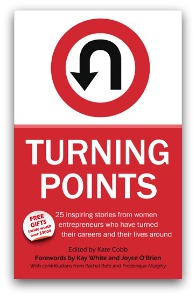
Turning Points: 25 inspiring stories from women entrepreneurs who have turned their careers and their lives around (Summertime Publishing, November 2011)
Editor: Kate Cobb
Synopsis: In this collection of stories from women all over the world, the focus is on the moments, or short passages of time, when a woman was facing something challenging and came out the other side smiling.
Expat credentials: Cobb is a British woman living in France, and about a third of the contributors — including Jo Parfitt and Linda Janssen — are expats who now run their own businesses.
How we heard about it: Linda Janssen promoted the book on her blog, Adventures in Expatland.

Indie Chicks: 25 Women 25 Personal Stories (Still Waters Publishing, October 2011)
Compiler: Cheryl Shireman
Synopsis: 25 indie novelists share personal stories in hopes of inspiring other women to live the life they were meant to live. (All proceeds go to the Susan G. Komen Foundation for breast cancer research.)
Expat credentials: Close to half of these indie authors are expats or have done significant overseas travel. To take a few examples: After living in Portland, Oregon, for most of her life, Shéa MacLeod now makes her home in an Edwardian town house in London just a stone’s throw from the local cemetery. Linda Welch was born in a country cottage in England, but then married a dashing young American airman, left her homeland, raised a family, and now lives in the mountains of Utah. Julia Crane is from the United States but recently moved to Dubai with her huband and family (her personal story concerns the adjustment process).
How we heard about it: Again, sometimes all it takes it a tweet (we picked up one of Linda Welch’s).

* * *

Questions: Have you read any of the above works and if so, what did you think of them? And can you suggest other works to add to the list? My colleagues and I look forward to reading your comments below!

STAY TUNED for tomorrow’s post, a review of The Globalisation of Love, by Wendy Williams, and for Wednesday’s post, a review of Perking the Pansies, by Jack Scott.

If you enjoyed this post, we invite you to subscribe to The Displaced Dispatch, a weekly round up of posts from The Displaced Nation, plus some extras such as seasonal recipes and occasional book giveaways. Sign up for The Displaced Dispatch by clicking here!

Related posts:

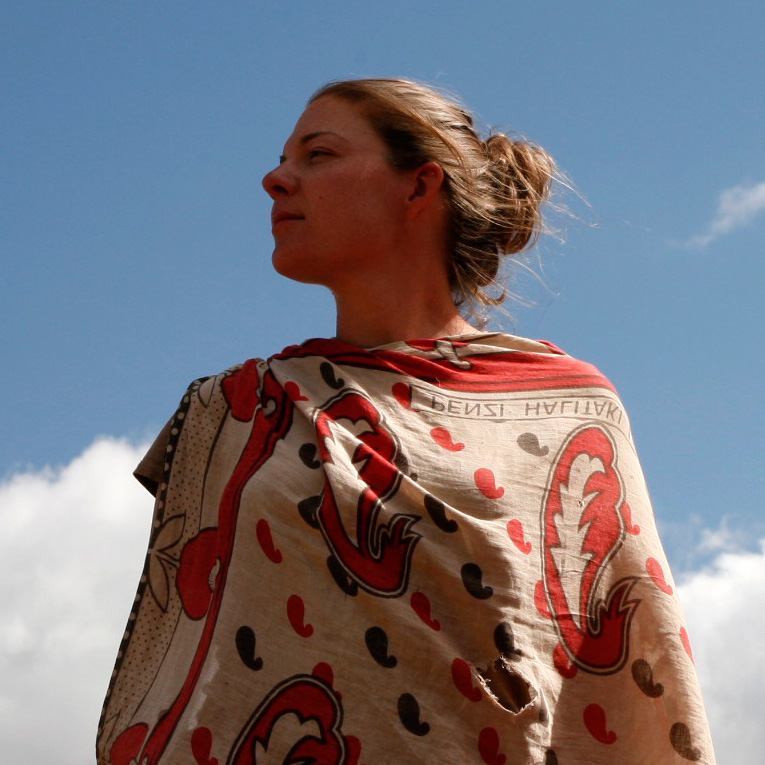
An interview with Robin Wiszowaty: Kenya Program Director for Free The Children

Last week I had the privilege of speaking with a young woman called Robin Wiszowaty. She isn’t a household name. You won’t find her in newspaper gossip columns, or on celebrity chat shows, or sashaying down the red carpet at the Oscars.

Yet I came away from our 45-minute conversation quite star-struck – not even my treasured chance meeting with Paul McCartney could compete – and more inspired than I can say.

A brief bio: From Suburbia to Savannah

Robin Wiszowaty was born in 1981 and grew up in Schaumburg, Illinois: a predominantly white, middle-class suburb outside Chicago. Although on paper Schaumburg appears an ideal place to spend childhood, with its summer block parties and strong sense of neighborliness, Robin says she never quite fit in.

“From an early age, I was unsatisfied with my ordinary life….I could never find my niche or any comfortable sense of self.” [My Maasai Life]

This feeling of discontent followed her through her teen years and into college at the University of Illinois where she studied speech communications. Only after a two-week trip to Israel in December 2001, to explore her Jewish heritage, did Robin begin to understand what she wanted from life.

“It [reminded] me how fiercely I longed to break out of this Western mindset and find something else.” [My Maasai Life]

While her concerned and long-suffering parents assumed the trip would rid her system of dissatisfaction and wanderlust, those two weeks in Israel were, in fact, only the beginning of a lifetime of traveling.

To the dismay of her parents a few months later, through a program run by the University of Minnesota, Robin was on her way to Kenya. After two months with a host family in Nairobi, where she learned basic Swahili and took classes on Kenyan culture, she went to live for a year in rural Nkoyet-naiborr, a Maasai community in the Great Rift Valley – a community and lifestyle as far removed from her Illinois home as anyone can imagine.

Nevertheless, Nkoyet-naiborr became her second home, in the truest sense. Here she forged deep, lasting friendships with her host family and members of the community, and was bestowed with a Maasai name: Naserian, meaning “peaceful person.” Mama, the mother in her host family, became her Kenyan mother, and Robin refers to the children of the family to as her brothers and sisters.

Today, nearly a decade after first arriving in Nairobi, Robin divides her time between Toronto and Kenya, working as Kenya Program Director with the charity Free The Children, implementing long-term development projects in partnership with local communities.

* * *

I spoke to Robin while she was in Canada, a few hours before she made the long trip back to Kenya. Her voice is soft, gentle, diffident, and not exactly what I’d expected; she’s had to overcome a lot of hurdles to be where she is today and, after reading her autobiography, I’m aware that I’m talking to one very determined person.

On Free The Children…

Kate Allison: Tell us a little more about what you do for Free The Children.
Robin Wiszowaty: As Kenya Program Director, I oversee the Alternative Income projects for Kenyan women. We teach the women leadership, financial literacy, how to access loans; and by being able to earn their own money, the women can invest that extra income in their families, their homes and, importantly, their children’s education. They work in groups — there are around 120 women’s groups now — and one example of how they earn income is doing quality beadwork. The bracelets and necklaces they make are sold at the Me to We store in Toronto, and also at the online store. My own Mama, by the way, is one of the beaders — she’s a fantastic beader.

Craig and Marc Kielburger, the founders of Free The Children and Me to We, have more to say about Robin’s role:

We’ve seen her sitting in hushed, intimate conversation with village elders, whose trust she earned through empathy and understanding. We’ve seen her astonish visiting students and volunteers with stories of her adventures. And we’ve seen her embraced by the teary-eyed mamas who are eternally grateful for her hard work in her role as Free The Children’s Kenya Program Director.

On writing…

Eighteen months ago, Robin’s autobiography “My Maasai Life” was published by Me to We Books — publishing division of Me to We, the for-profit social enterprise that supports Free The Children — and having read the book, I wanted to know more about it.

KA: Your book, “My Maasai Life”, tells the story of your transition from the American suburbs to life in a Kenyan village. What made you decide to write it?
RW: Lots of people have said to me that I should write a book about my experiences, but it was at the prompting of Craig Kielburger that I eventually wrote it. Craig was looking for books with a social message to be published by Me To We. “My Maasai Life” was the result, and was actually one of the first books in the Me to We publishing stable.

KA: What audience did you have in mind for the book when you wrote it?
RW: I originally intended it for high-school-aged girls who wanted to see the world — and also for their mothers, to help them understand this.

KA: Yes…in your book, you say your relationship with your own mother was somewhat rocky when you were that age.
RW: It was. But I look at myself now, and I think I’ve become the kind of person my parents always wanted me to be – albeit on my own terms.

(In fact, Robin’s parents long ago accepted, and proudly support, their daughter’s unconventional life choices.)

KA: What other kinds of readers have been attracted to the book?
RW: Young adults, in their 20s and 30s, who want to find a deeper meaning from life than they find in the corporate world where they are at present. And teachers; they read my book in World Issues classes, and discuss it with their students.

KA: Have you written any other books, or are you intending to do so?
RW: “My Maasai Life” has been adapted into a children’s book, subtitled “A Child’s Adventure in Africa”, and I’m currently working on another book, which I hope to have published in another couple of years or so. I’m about halfway through writing it — I don’t know what it will be called, and it doesn’t have a working title — and although it’s also about Kenya, this book is from the perspective of the women there, focusing on the universal concepts of motherhood and womanhood.

On fitting in…

KA: Can you think of a particular occasion in Kenya when you wondered, “What’s a nice girl like me doing in a place like this?”
RW: [laughs] I can tell you exactly when that was. It was on my first night in Nkoyet-naiborr, when I was sleeping in the bed I shared with my sister, Faith, and I heard a wild animal howling outside…

“Faith! ” I whispered.
“Naserian . . . ?”
“What is that sound?”
Faith rolled over, annoyed at being woken. “Hyenas.”
Hyenas? Now sleep was even more impossible. I tried to block out those echoing wails, but my mind flooded with questions. Was I doing the right thing? Was I just substituting one set of frustrations for another? Had I made a terrible mistake?

KA: And what about the other way round — can you think of a moment when you felt more at home in Africa than in the United States?
RW: Oh yes…I’m “taken” by Kenya. There, I feel comfortable within my own soul, that I’m in the right spot. You could say that it’s a calling. The time I feel it most is when I’m sitting with the women, making tea over the fire, just talking…there’s so much soul, such a feeling of family and community.

When I first went to Kenya, I felt at home on the first occasion my Mama let me fetch the water on my own. It felt good to be a provider for the family who were hosting me.

Fetching the water is much easier said than done:

Transporting water, I saw from the women, is an art unto itself. The mitungi must be carefully balanced on two rocks beneath the spout and then held in place while the trickling water slowly fills it all the way to the top. And with water always in scarce supply, we could never afford to waste or spill a drop. When the cylindrical twenty litre container was full, it weighed more than twenty kilos.

More recently, I can think of an occasion at the Kisaruni High School, which is Free The Children’s first all-girls secondary school, and has 41 students who board there. When it first opened last spring, these girls came to the school and we all had a big sleepover party. It was such a lot of fun, and for many of these girls it was the first time they’d slept on a mattress.

It’s the feeling of true community in Kenya that I love. It seems to me that when people come together for the benefit of others, that’s when you get the most profound sense of community.

KA: What about repatriation? Do you find it difficult to adjust between living in your two different worlds?
RW: The first transition from Kenya back to Chicago was most difficult. I felt like a lost 8-year-old, trying to get used to life in America again after a year away. I found it hard to wear shoes, having been barefoot for so long. And I was full of anger, of judgment for the way things were done — for example, at people who ran the water for so long, at the extravagant amounts of food.

Huge wasteful, overpriced family dinners. Thoughtless waste of water, flushing the toilet so many times every day.

But I don’t feel that way now. Then, I was going through that time of life when everyone tries to work out who they are and feels a certain amount of anger. Now I accept that it’s not about everyone having the same; it’s about everyone having enough.

Today, whichever direction I travel in, I always feel that I’m going home to family.

On our November theme of Global Philanthropy…

KA: Over the last month, we’ve discussed — fairly heatedly — the growing trend towards volun-tourism. As part of your work with Free The Children and Me to We, you lead groups of people on international volunteer experience each year. Can the people who go on these trips, who lack language and cultural training, really accomplish much in such a short time?
RW: Volun-tourism can play a great part when it’s done responsibly. Our youth volunteer trips last three weeks, while our family and corporate trips are shorter at ten days. We regularly have employees of large companies like KPMG and Virgin Atlantic on our corporate trips.

After some orientation, our volunteers hit the ground running — they help with building schools, with clean water projects, they go into the community’s homes to help, they learn Swahili. For many of them, it is literally a life-changing experience. It gives them a different perspective on life and on their careers. It’s very positive for both the volunteers and for the communities they are helping.

Volun-tourism skeptics should maybe note that Robin herself first came to Kenya with an attitude of “What can Kenya do for me?” rather than “What can I do for Kenya?”, as can be seen in this extract from her book, describing an incident during her initial two months in Nairobi:

One street man nearby…said in Swahili, “What are you doing in Kenya, if you can’t help us?”

Despite my halting comprehension of the language, I understood his question. What was I doing here? Was I here to help Kenyans? I couldn’t remember any sort of altruistic impulse as my reason for being me here. I only pictured myself three months earlier, curled up on my family room couch reading books on cultural sensitivity, or shopping in neighbourhood department stores for appropriate clothing, thinking this was a chance for me to enlarge my experience and pick up others’ points of view. I’d been driven simply by a desire to escape, not to improve the lives of these poor people.

KA: Which person or people, dead or alive, do you look up to most in your work?
RW:
I would have to say the other team members of Free The Children and Me to We, both in Kenya and Toronto. They all work for the children, not the paycheck. The world may never know their names, but they work so hard and achieve so much for others.

KA: Are there any inspirational stories of theirs you can share with us?
RW: Spencer West, a speaker on the Me to We team, was born with a genetic disease, and lost both his legs at the hips when he was a child. We met in Kenya when he was on an international volunteer trip, helping to build a school there.

Next June, he is going to “Redefine Possible” and climb Mount Kilimanjaro in his wheelchair, in order to raise $500,000 to bring clean water programming to 12,500 people in East Africa.

You can’t get any more inspirational than that.

KA: And lastly — it’s the holiday season. We’re inundated with requests for giving. In your opinion, what’s the best way to spend our dollars (or pounds, or euros, or yen, or whatever) to help those in other parts of the world who have so much less than we do?
RW:
Well — you could sponsor Spencer West on his climb and help those affected by the drought in East Africa, which is the worst in 60 years. Or you could buy your holiday gifts from the Me to We store, either in Toronto or online at www.metowe.com/shop.

Epilogue

The interview ends, and I thank Robin for giving her time, even when she has a hundred other things she could probably be doing, since in a few hours she will be flying back to her Kenyan home. I am awed by our conversation, by how much she has achieved in her short life — she is only 30 — and I feel humbled.

I tell her this. “People like you, who do so much with your lives, make me feel very small.”

There’s a slight pause at the end of the phone, then Robin says, “But… you’re a mother.”

I can’t count the number of times over the last fifteen years when, in answer to the question “What do you do?” I’ve said, “I’m just a stay-at-home mom.” Emphasis on the “just” — an apology for the mundanity of my existence. The counter-reaction, so often, is “But that’s a very important job!” in a slightly condescending tone that makes me feel, even more, that motherhood is merely a consolation prize for missing out on life’s other, more important achievements.

Robin’s tone holds none of this condescension. “You’re a mother,” she says, and it’s a statement of the obvious, that being a mother is an achievement in itself.

It occurs to me that her years with the mamas in Kenya have taught Robin the value of motherhood — a lesson that maybe passes by the young women growing up in our “developed” culture. It’s an irony, perhaps, that in our Western pursuit of progress and women’s rights, we have devalued the most important women’s right of all — that of pride in raising a strong next generation.

Robin, thank you. It was wonderful to talk to you. I hope we meet in person one day.

.

Quotations from “My Maasai Life: From Suburbia to Savannah.” Wiszowaty, Robin (2010-07-01), Perseus Books Group.

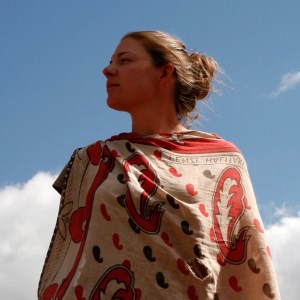
Img: Robin Wiszowaty — photo courtesy of www.metowe.com

Related posts:
RANDOM NOMAD: Aaron Ausland, NGO Research Director & Development Practitioner
RANDOM NOMAD: Adria Schmidt, Career Consultant at Violence Intervention Program & Former Peace Corps Volunteer

If you enjoyed this post, we invite you to subscribe for email delivery of The Displaced Dispatch, a round up of the week’s posts from The Displaced Nation. Sign up for The Displaced Dispatch by clicking here!

CLASSIC DISPLACED WRITING: Albert Schweitzer, early humanitarian & medic without borders

Fifty years ago, “Albert Schweitzer” was a household name. Nowadays it is hard to find anyone who knows who he is. But given our current theme of looking at those who’ve displaced themselves on behalf of humanitarian causes, today I would like to resurrect this great man for the purpose of honoring him with a membership in our Displaced Hall of Fame.

Were he still alive, Schweitzer, a brilliant theologian and musical genius who received the 1952 Nobel Peace Prize for his philosophy known as Reverence for Life, might not be all that flattered.

Then again, considering that he chose to spend much of his time living simply and without pretension in Africa, is it too far fetched to think he’d “get” what the Displaced Nation is all about? He might even have a good wheeze at learning of his elevated status among our citizenry…

A displaced early life

Schweitzer was born in 1875 in Alsace, which at that time belonged to the German Reich (it would change hands four times between France and Germany over the next 75 years).

According to Professor J. Rufus Fears who has lectured on Schweitzer for the Teaching Company:

Alsatians are their own people — neither French nor German, though they like to say they eat as much as the Germans and as well as the French.

Did being born an Alsatian give Schweitzer a head start on leading a displaced life? It’s tempting to think so. Curiously, although he spoke two languages — actually, three: Alsatian (a dialect of German), German and French — he professed not to believe that anyone was ever truly bilingual. He maintained that a person’s true native tongue could be discovered by asking:

What language do you count your change in when you give someone a dollar bill?

A displaced career

For our ceremony inducting Schweitzer into the Displaced Hall of Fame, we would do well to choose one of Bach’s organ works. While still in his twenties, Schweitzer distinguished himself not only in his chosen field of theology, but also as an organist and musicologist who specialized in Bach.

He wrote two early works that established his reputation in both of these fields: The Quest for the Historical Jesus (German, 1906; English translation, 1910), arguing that Jesus was human, not divine; and J.S. Bach (enlarged German edition 1908; English translation, 1911), a study of the life and art of Johann Sebastian Bach.

As if being an accomplished theologian and notable organist weren’t displaced enough, while still in his twenties, Schweitzer decided he would go out into the world and devote his life to humanity rather than remaining locked up in the cloisters of academe.

Upon turning 30, he shocked and horrified his parents and friends by declaring his intention to become a medical student in preparation for the life of a physician in French Equatorial Africa.

While studying medicine, he married Helene Bresslau, who although a scholar herself, became a trained nurse in order to share her husband’s life in Africa.

In 1913 the couple set sail from Bordeaux for what today is Lambaréné, Gabon.

The conditions the Schweitzers faced were desolate in the extreme. The climate — characterized by fiercely hot days, clammy nights and seasonal torrents of rain — was appalling. Besides the usual diseases, the natives were suffering from leprosy, dysentery, elephantiasis, sleeping sickness, malaria, yellow fever and animal wounds.

But the couple persisted through thick and thin (including a period of being interned during World War I), setting out to build a hospital on the grounds of the Lambaréné station of the Paris Missionary Society (they would later move the hospital to an even more remote spot).

Eventually, Schweitzer’s wife went back to Europe to raise their daughter, while Schweitzer himself carried on working in, and on behalf of, this remarkable medical facility until his own death in 1965. By then the compound had grown to more than 70 buildings, 350 beds and a leper village of 200, and the hospital was staffed by 3 unpaid physicians, 7 nurses and 13 volunteer helpers.

(It still exists today as the Albert Schweitzer Hospital, one of the leading research centers in sub-Saharan Africa training African doctors in the treatment of diseases such as HIV/AIDS, malaria and tuberculosis.)

Schweitzer, who passed away in the hospital itself, was buried next to the Ogooué River in a ceremony attended by hospital workers, lepers, cripples and other patients.

An epiphany of hippopotaman proportions

Schweitzer considered his work as a medical missionary in Africa to be a small recompense for the injustices committed by the African Continent’s European colonizers. In a sermon preached in 1905, he proclaimed:

Oh, this “noble” culture of ours! It speaks so piously of human dignity and human rights and then disregards this dignity and these rights of countless millions and treads them underfoot, only because they live overseas or because their skins are of different color or because they cannot help themselves.

By the time he dedicated his life to serving the natives of Africa, Schweitzer could no longer make the intellectual case for Jesus’s divinity. The French had recruited him to work in their mission as a physician not a pastor (somehow a Lutheran who didn’t believe in Christ was just a little too displaced!). Yet Schweitzer remained deeply spiritual. He wanted to find a philosophy that would persuade others to displace themselves to the most desolate places on earth, just as he had done — separate and apart from a proselytizing mission.

While on a boat trip on the Ogooué, Schweitzer noticed a herd of hippopotamuses swimming in the water, and thought to himself: what purpose does the hippo serve? He decided that the spirit of the universe had made this creature — and that this was reason enough to treat it with respect.

From that point on, he promoted the idea that man, in his quest for dominance, should never forget the need to show reverence and awe for all living creatures.

For Schweitzer, such a belief should suffice as motivation to reach out and help others who are less fortunate than oneself. You can almost sense his relief at discovering this philosophy from the epilogue he attached to his major autobiographical volume, Out of My Life and Thought:

Two observations have cast their shadows over my life. One is the realization that the world is inexplicably mysterious and full of suffering, the other that I have been born in a period of spiritual decline for mankind.

I myself found the basis and the direction for my life at the moment I discovered the principle of Reverence for Life, which contains life’s ethical affirmation.

His Reverence of Life philosophy further led him to warn against man destroying animals (what we know today as “animal rights”) as well as his environment — he was an early environmentalist, who predicted that man “will end by destroying the Earth” (Rachel Carson dedicated Silent Spring to him).

Schweitzer tried to put these principles in practice in all sorts of ways, but the two examples I like best are his refusal to teach his pet parrot how to talk (talking would lower its dignity), and his decline of an offer by a foundation to replace his dug-out canoe with a motorboat for fear it would pollute the Ogooué River.

Schweitzer’s relevance for today’s global nomads

In his lecture on Albert Schweitzer, Professor Fears insists that this early humanitarian still speaks to us. I agree and would add that he positively shouts to those of us who’ve chosen to live much of our lives abroad. For a start, we can find inspiration in his refusal to follow a conventional career path (a quality that, by the way, drove the bureaucrats in charge of French Equatorial Africa crazy).

But the really impressive thing about Schweitzer, of course, is his unconquerable spirit, his desire to do good. Despite living through two world wars, he carried on believing in mankind’s potential to treat life, in all its forms, with the reverence it deserves.

Even after World War II, when Albert Einstein called on him to speak out against the atom bomb, he did so despite his better instinct to get involved in politics (and suffered the fall-out of having funds withdrawn from his hospital when the FBI and CIA began persecuting him for his anti-nuclear-arms-race position).

The way I see it, we expats and “internationals” are perfectly positioned to understand where Schweitzer was coming from. Our travels have taught us that life, whether human or animal, deserves respect no matter where one is on the globe.

But how do we share this knowledge? What do we actually do with it?

As mentioned in my post on Richard Branson at the start of November, for some of us it’s challenge enough to cultivate our own gardens and hope that in doing so, some of our attitudes will rub off on others.

But Schweitzer, whom Fears calls a “living testimony to goodness,” clearly believed in the need to do more. And after a month of celebrating those who’ve done more — see our profiles of Adria Schmidt, Jennifer Lentfer, Matt Collin, and Vilma Ilic — I’m prepared to concede he is right.

To give the redoubtable Albert Schweitzer the final word:

I have always held firmly to the thought that each one of us can do a little to bring some portion of misery to an end.

STAY TUNED for Monday’s reflections on global philanthropy by third-culture-kid columnist Charlotte Day.

If you enjoyed this post, we invite you to subscribe to The Displaced Dispatch, a weekly round up of posts from The Displaced Nation, plus seasonal recipes, book giveaways and other extras. Sign up for The Displaced Dispatch by clicking here!

Related posts:


7 extraordinary women travelers with a passion to save souls

A week ago, I announced that The Displaced Nation will be dedicating the month of November to exploring the displaced lives of those who travel the world to do good works on behalf of those less fortunate.

Blame it on the years I spent as an expat in England, but the whole time I was writing that post, I had the sense of a Victorian couple — the man in a top hat, the woman in a full skirt — looking over my shoulder, whispering in my ear: “We tried to save the world, too, you know.”

To be fair, those phantoms of mine have a point. The Victorians ventured into the wilds of Africa, Asia and the Americas not just as imperialists looking for riches but also as missionaries looking to save souls.

And, just as we 21st-century people think we have the answers for people who live in developing countries — microfinance, entrepreneurship, mosquito nets, gifts of sheep and goats — our forbears thought they had the answers, too: Christianity, coupled with a strong belief in the universality of basic human freedoms.

Today I will attempt to put said ghosts to rest by paying tribute to 7 women missionaries from the 19th and early 20th centuries, from both sides of the Atlantic.

So, why the women and not the men? Three reasons:

  1. Being women, they tended to stand up for the rights of women and children wherever they went.
  2. Many also learned the language and assimilated to the local culture, thereby winning respect.
  3. And many were further willing to acknowledge the blunders committed by missionaries when attempting to penetrate the world’s most remote communities. As missiologist Ruth Tucker, who has read many missionary memoirs by women, observes:

These women writers one after another have allowed themselves to be vulnerable in painting a sometimes messy picture of their own character and of their missionary work. [Their] raw memoirs have much to say to us in the 21st century.

I’m going to take Tucker’s words to mean that even if you’re not religious, disapprove of proselytizing, or are something other than Christian, you might still concede that, on derring-do, fortitude, and decency alone, the following women deserve a place in the Displaced Hall of Fame.

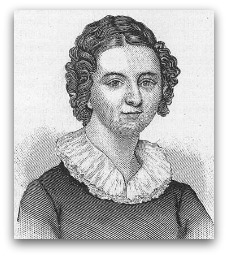
Ann Haseltine Judson (1789 – 1826)

Who was she? A Bradford, Massachusetts native, teacher, and the wife of Andoiram Judson. Two weeks after they married, the couple set out on a mission trip — first to India, then to Burma.
Key achievements: While her husband was imprisoned in Burma under suspicion of being a spy, Judson wrote stories of the struggles she faced on her own in the mission field. She included tragic descriptions of child marriages, female infanticide, and the trials of the Burmese women who had no rights except for those their husbands gave them.
How she died: Of smallpox in Burma, at age 37.
Interesting fact: At least 16 biographies of Judson were published in the 19th century, the most famous of which had a new edition printed almost every year from 1830 to 1856. She and Andoiram were American celebrities.

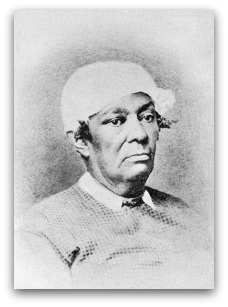
Betsey Stockton (c. 1798 – 1865)

Who was she? A freed slave who left domestic service to travel as America’s first single female missionary to Hawaii, then known as the Sandwich Islands. In fact, she went partly as a missionary and partly as a servant to one of the couples on the mission, the Reverend and Mrs. Stewart.
Key achievement: After being asked by the son of the Hawaiian king to teach him English, Stockton started up a school at Lahaina (in West Maui) for the makeainana — fishermen, farmers and craftsmen who lived off the land — which continued after she left.
Why her mission ended: Stockton’s service in Hawaii was cut short when Mrs. Stewart became ill. The party decided to return to the States in 1826.
Where she died: In Princeton, NJ. She is buried in the Stuarts’ plot in Cooperstown, NY.
Stockton’s diary: Stockton kept a detailed written record of the mission, which conveys her somewhat turbulent, occasionally agonized, inner spiritual life; her interest in the natural world — including the kinds of fish caught from the ship, the color of the waves, and various bird life; and her spirit of adventure. Like others on board she was frightened at her first sight of the Hawaiian men who come out in canoes to greet the ship:

half man and half beast—naked—except a narrow strip of tapa round their loins…

But then she adds: “They are men and have souls.”

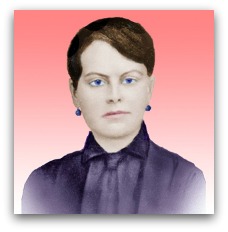
Adele Marion Fielde (1839 – 1916)

Who was she? A working-class native of Rodman, NY, who followed her fiancé, a Baptist missionary, to Bangkok, Thailand (then Siam) — only to discover he’d died of typhoid fever 10 days after she’d set sail from New York. She carried on nevertheless, remaining in Siam for a couple of years.  Later she went on a mission to China for training Bible women.
Key achievement: Fielde mastered the Chinese language and was also a powerful writer. She encouraged each of her Chinese Bible women to tell their stories, and then translated these stories and got them published in magazines back home. As one of her biographers puts it:

Their heart-rending sagas proved enormously appealing to American women, who could sympathize with their suffering Chinese sisters.

Where her life ended: In the United States. She retired from missionary work, went home, and became involved in scientific research.
Strange twists and turns: A free thinker since childhood, Fielde broke away from her family’s Baptist roots — only to return after becoming engaged to a Baptist missionary candidate. She faithfully served as a Baptist missionary for two decades — and then turned to science. Notably, the Baptists for a a long time sensed that she wasn’t quite one of them, accusing her of indulging in card-playing and dancing when she lived in Siam. She responded:

“I desire to be good. But I do not wish to be Pious.”

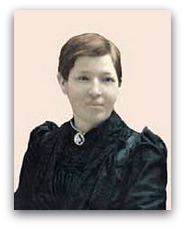
Lottie Moon (1840 – 1912)

Who was she? A highly educated Virginia native (she was born “Charlotte Digges Moon” on her family’s ancestral slave-run tobacco plantation). She became a teacher and then was called, at age 33, to serve for decades in China with the Southern Baptist Convention. Initially she went to join to her sister, Eddie, who was stationed at the North China Mission in the treaty port of Dengzhou.
Remarkable turnaround: When she first arrived at the mission, Moon made a point of wearing Western clothes to distance herself from the “heathens.” But then she mastered the language, became an admirer of Chinese culture and history, and started wearing Chinese clothes and adopted many of their customs.
Commendable behavior: When China was facing plague, famine, revolution, and war, Moon shared her personal finances and food with anyone in need around her.
How she died: Of starvation, in the harbor of Kobe, Japan, while en route back to the United States. (At that point she weighed only 50 pounds!)
Impressive statistic: Southern Baptists have named their annual mission fund after Lottie Moon. It finances half the entire Southern Baptist missions budget every year.
Part of her lore: She used to tell people she was 4′ 3″ tall. While something of an exaggeration, she was definitely petite!
Lottie Moon Cookies: Moon won over the children in her Chinese village by making tea cakes for them — they called her “the cookie lady” instead of “foreign devil.” Baptist families bake Lottie Moon Cookies for Christmas.

Mary Slessor (1848 – 1915)

Who was she? A Victorian mill girl who left the slums of Dundee to live among the tribes of Calabar, Nigeria, to take up the mantle of David Livingstone two years after he died.
Noteworthy friendship: While in Africa, Slessor became acquainted with the writer Mary Kingsley. Although the latter had never been baptized and hadn’t even been brought up a Christian, their common status — both were single females living among native populations with little company — presumably created the basis for lasting friendship.
Key achievement: The tribal people believed that if a woman gave birth to twins, one of the twins was the offspring of the devil who had secretly mated with the mother — and since the innocent child was impossible to distinguish, both should be killed (the mother was often killed as well). Slessor fought hard to end this practice.
Where she died: In Nigeria, at age 67. There was great mourning among the tribes to whom she’d dedicated her life.
A tribute from an unexpected source: During London Fashion Week in 2010, Nigerian-born designers Bunmi Olaye and Francis Udom named Slessor as one of the muses behind their collection, which fused Victorian costume with furs of the African tribe Slesson had lived in. The reason? Slessor had rescued Francis’s great-grandmother, who was born a twin, from human sacrifice.

Amy Carmichael (1867 – 1951)

Who was she? A small-village girl from a devout Presbyterian family in County Down, Northern Ireland (her father founded an evangelical church in Belfast). She was called first to work among the mill girls of Manchester and then overseas, finding her life-long vocation in India.
Key achievement: In those days, Hindu priests kept “temple children” — mostly young girls who were forced into prostitution to earn money for them. Carmichael tried to rescue them by setting up a sanitarium in Tamil Nadu, thirty miles from the southern tip of India.
Bold behavior: She would dress in Indian clothes, dye her skin with dark coffee, and travel long distances on hot, dusty roads to save just one child from suffering.
How she died: In India at the age of 83. She asked that no stone be put over her grave. Instead, the children she had cared for put a bird bath over it with the single inscription Amma, meaning “mother” in Tamil.
Cryptic remark: While serving in India, Carmichael received a letter from a young lady who was considering life as a missionary. She asked, “What is missionary life like?” Carmichael wrote back saying simply,

“Missionary life is simply a chance to die.”

A measure of her fortitude: Carmichael served in India 55 years without furlough and produced a total of 35 published books about her experiences.

Gladys Aylward (1902 – 1970)

Who was she? A working class London girl who left domestic service for to Yuncheng, Shanxi Province, China, in the tumultuous years leading up to World War II. She worked with an older missionary, Jeannie Lawson, to found an inn where traveling merchants could get a hot meal and hear stories from the Bible. Notably, Aylward was initially rejected as a potential missionary to China because of her lack of education. She spent her life savings on her passage.
Key achievements: Appointed by the local mandarin to serve as a “foot inspector,” she toured the countryside to enforce the new law against foot binding and met with much success. She also took in orphans and adopted several herself, and she intervened in a volatile prison riot, advocating for prison reform. When the region was invaded by Japanese forces in 1938, Aylward led around a hundred children to safety over the mountains, despite being wounded herself.
How her life ended: She returned to England in the 1940s, then tried to go back to China but was re-denied entry by the Communist government. She ended up in Taiwan, where she started another orphanage. She lived in Taiwan until her death.
Chinese nickname: She was known in China as Ai-weh-deh, or Virtuous One.
Celebrations of her life: Numerous books, short stories and movies have been created about the life and work of Gladys Aylward, including the film The Inn of the Sixth Happiness.
Not easily flattered: For Aylward, this 1957 movie was a thorn in her side: she resented being played by the tall, Swedish Ingrid Bergman (small in stature, she had dark hair and a cockney accent) and was further horrified to discover she’d been portrayed in “love scenes” with the Chinese Colonel Linnan.

Readers, what do you think of these 7 women? Have they inspired you?

STAY TUNED for tomorrow’s post, a Displaced Q on the “pornography of poverty.”

If you enjoyed this post, we invite you to subscribe to The Displaced Dispatch, a weekly round up of posts from The Displaced Nation, plus some extras such as seasonal recipes and occasional book giveaways. Sign up for The Displaced Dispatch by clicking here!

Related posts:

Image: MorgueFile

A Julia Child for our times: Expat author & French cookery expert Elizabeth Bard

Et voila. In a little less than a month, The Displaced Nation has gone from reminiscing over American expat in France Julia Child to engaging with American expat in France Elizabeth Bard.

Move over Julie Powell. At a pace rather like a simmering le Creuset pot of Child’s signature boeuf bourguignon, Bard is on the way to becoming the 21st-century’s answer to that towering figure of 20th-century cuisine Française.

The similarities between the two women are intriguing. Child went to France as a trailing spouse for an American diplomat. Bard went to France trailing a Frenchman.

Child was seduced by France. She found herself through French cuisine. Bard was seduced by France (after being seduced by a Frenchman). She found a way into French culture through the markets and cooking — and found herself in the process.

On this point, the line between the two women gets a little blurry. Which one, Child or Bard, said the following:

More than the museums, more than the ancient streets, these stalls of fruits and vegetables and spices were the Paris that inspired me.

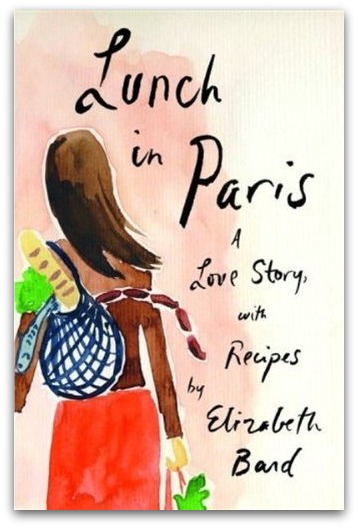
As everyone knows, Child returned to the United States to launch a career in television. Whereas Bard has become a long-term resident of France — and has launched a brilliant writing career with the publication of Lunch in Paris: A Love Story, with Recipes, a New York Times and international bestseller, a Barnes & Noble “Discover Great New Writers” pick, and the recipient of the 2010 Gourmand World Cookbook Award for Best First Cookbook. NOTE: We are giving away copies to two lucky DISPLACED DISPATCH subscribers. Sign up today!

Child inspired Julie Powell to make all of her recipes. Bard has inspired, among others, two Displaced Nation writers — myself and Anthony Windram — to try out her recipes.

But here the comparison ends. A key difference is that Bard’s recipes are nowhere near as difficult as Child’s — which is exactly what makes Bard so perfect for our times. She’s approachable, and her cooking suggestions are doable. She also has a rich life outside cooking — the life of a woman who has displaced herself into another culture — and enjoys sharing that part of her story as well.

Mesdames et Messieurs, I would now like to offer you the fruits (not to mention veggies) of my exchange with expat author, chef and lifestyle muse Elizabeth Bard.

Tell me a little more about your background.
I grew up in Northern New Jersey and spent weekends with my father in New York City. I studied English Lit as an undergrad at Cornell, then art history at Christie’s and the Courtauld Institute in London. My dream was to be the chief curator of the Pierpont Morgan Library in Manhattan. I was always convinced I’d been born in the wrong century. I love old objects, lost worlds, so, of course, I was instantly seduced by Paris (and of course, my French husband).

Over the years, I’ve written on art, travel and food, and digital culture for the New York Times, International Herald Tribune, Harper’s Bazaar, Wired, Time Out and Huffington Post, among others. Lunch in Paris was my first book.

In July 2010, my husband and I and our baby son Augustin moved to a small village in Provence, to live in the wartime home of the famous poet and WWII Resistance leader René Char. At the time, we had no plans to leave Paris — it was a date with destiny. You can find the complete (completely crazy?) story of how we found the house on my blog.

How are you finding life in Provence as compared to Paris?
As a city girl, village life is a discovery for me. I’m still adjusting to hanging my undies in the sun, and learning the names of the local birds (they can’t all be pigeons…). I’m surrounded by wonderful cooks and gardeners; last week, I went on my first saffron harvest. The move has been a wonderful transition for us as a family — it has made me question many of the things I believe about work/life balance, health, and being close to nature. All things I hope to share (along with my neighbor’s recipe for Provençal soupe au pistou) in my next book.

Turning to Lunch in Paris: What made you decide to write a book telling the story of your transition to living in France?
I hope Lunch in Paris captures something real about what it means to build a life in another culture. As an American, I follow generations of women who all came from somewhere else. They learned to cook with new ingredients, speak a new language, manage in a new world. My Jewish grandmother learned to make spaghetti sauce with pork ribs from the Italian ladies she met on line at the butcher shop during the war; I’m simply another in a long line.

Did you ever think of writing a novel instead? I ask because in reading the book, I kept noticing your facility with dialogue and description.
It never occurred to me to write Lunch in Paris as a novel. Fantasy lives in France are easy to imagine — but I wanted to express some of the things I’d learned personally, about what it means to take risks, to put happiness first on your checklist. That’s not a fictional decision — that’s something we struggle with every day.

Why did you decide to include recipes in your book?
Almost as soon as I arrived in Paris, I knew that I wanted to write about the roller coaster of international living, and the richness of intercultural marriage. When I sat down to think about the moments that really helped me discover French life, I kept coming back to the dinner table, the markets, the recipes — so it seemed natural to structure Lunch in Paris around those experiences.

Do you still use the recipes from the book and which one is your favorite?
I’m always trying new recipes, which I share on the blog or Facebook page, but I do use my copy of Lunch in Paris as a cookbook — I keep it handy in the cabinet with the pasta. The recipes I go back to again and again: for summer, it’s the haricot verts with walnut oil, for winter, the lentils. The tagines are great for a party — and the molten chocolate cakes work anytime.

Which portion of your book — Paris, the love story, the recipes — have readers responded to most?
I’m so surprised, humbled, gratified by the fact that Lunch in Paris has found such a wide audience. I’m so pleased that the book has been a vivid piece of armchair (or bathtub) travel for those who love Paris — and a temptation for those who’d like to go. I’ve had many young readers say it inspired them hold on to their dream of living abroad, or simply doing something a bit outside the box with love or career.

I’m also thrilled that people are getting their books all greasy, using the recipes — and posting photos of their creations on the Lunch in Paris Facebook page. I’m a home cook; I tested all the recipes myself. I was determined that readers take as much pleasure (and as little stress) in preparing them as I did. Maybe the nicest thing anyone has said came from a friend in London:

“It’s nice for Augustin to have such a wonderful record of his parent’s romance.”

I’m proud to be passing that on.

The thing that has surprised me the most is the wonderful online community. Though the readers are all over the world, it really feels warm and personal to me. I love that social media allows people to share recipes and stories from all over the world. A few months ago, I got an email from a New Zealander living in Crete. I now follow her blog to learn about traditional Cretean cooking.

As I mentioned in my intro, Julia Child was the inspiration for TDN’s October theme — and you remind me of a 21st century version of her in some ways. I’m curious, do you have her Mastering the Art of French Cooking — and do you actually use it?
I have my mom’s copy of Mastering the Art, but at the moment – I’m too busy trying recipes from my French neighbors to actually use it!

What did you think of Julie Powell’s blogging about making all the recipes from that encyclopedic book?
I love a good project — especially one that gets a girl out of a rut — it was fun to read about how the random adventures we set for ourselves can change everything.

How about the film, Julie & Julia?
The film — well, it just proves that Meryl Streep can do ANYTHING.

We’ve been asking our Random Nomad interviewees this month if they identify with any of the following Julia Child quotes and why. Can we ask you as well?
I agree with the choice that both Mardi and Jennifer made:

The only real stumbling block is fear of failure. In cooking, you’ve got to have a what-the-hell attitude.

I’d say this goes for goes for life in general — not just cooking. With all of our “Just-do-it” attitude, Americans are particularly prone to fear of failure: everything is possible, so everything we don’t accomplish is our fault. Fear is paralyzing. I work every day to get the hell out of my own way.

Quite a few of our readers are long-term expats who’ve entered cross-cultural marriages. What do you think is the biggest challenge about marrying someone of another culture?
The Franco-American combination is a very powerful one. I gave my husband a bit of the American can-do spirit, permission to pursue his dreams based on his own qualities, instead of family or class. He gave me a bit of the French joie de vivre — permission to live in the moment, to consider happiness, rather than some abstract (and culturally relative) notion of “success”, as my ultimate goal.

Was language an obstacle at all?
I speak fluent French now. It was a struggle at the beginning — you feel a bit invisible. That’s one reason cooking became so important to me. During the early days of our marriage, I used food to welcome people. My husband’s friends didn’t know if I was intelligent, charming, witty, or warm. What they did know is that I made a mean sweet potato puree. There were times when I used the kitchen to hide. French dinner parties are marathons of cuisine and conversation — 4 or 5 hours minimum. With the rapid-fire French buzzing in my ears, and my brain foggy from the wine, it was just easier to say, “I’m just going to check the roast” than “Dear God, I’m so bored and exhausted I’m considering sticking my head in the oven.”

Do you think you could fit back into living in American culture after a decade of living in France?
I’ve been away for a long time — and like many expats, I find myself in a no-man’s land, not quite one or the other. Honestly, I think the hardest thing about moving back to the States would be the portions — even with a great farmer’s market nearby I think it would be a struggle to maintain our very healthy French eating habits. That and the hyper-competitive attitude about raising kids. I’m not sure I’m ready for preschool applications.

As it happens, on October 13 Travelers Night In (#TNI) was French inspired, and everyone tweeted their answers to 10 questions about the best of the best in France. Could you do us — and the traveling community at large — the honor of providing your own short answers?
Q1. The best thing about French people is…
Food is not fuel.
Q2. France is famous for food, what dish is your favorite? Best food city?
Give me a perfect, flaky, buttery croissant.
Q3. Favorite French countryside escape?
The rolling hills of Burgundy — with a stop at the cathedral in Vézelay.
Q4. What is the most overrated thing about France?
April in Paris (it rains)
Q5. What defines Paris?
PDA (does that still mean public display of affection?)
Q6. French museum or monument that shouldn’t be missed?
Musée Jacquemart-André, Paris
Q7. Perfect place to enjoy a glass of French wine? What varietal, region, winery?
People watching along the Canal Saint-Martin, any glass recommended at the Verre Vole (rue de Lancry)
Q8. Top way to spend a night out in Paris?
Walking along the banks of the Île Saint-Louis with a double scoop of Berthillon sorbet.
Q9. Best things to do on the French Riviera?
We avoid the French Riviera — over-crowded, over-priced, over.
Q10. Biggest misconception about the French?
French cooking is complicated.

Thank you so much for engaging in this tête-à-tête! Readers, do you have your own questions for this 21st-century answer to Julia Child? Hurry up, before she disappears into her kitchen or heads out to another saffron field!

Images: Head shot of Elizabeth Bard by Cindi de Channes (2008); book cover.

STAY TUNED for tomorrow’s installment from our displaced fictional heroine, Libby, who is taking seriously her friend’s advice to make time for herself, and enjoying her freedom while Jack is in nursery school. Someone had better remind her that small babies tend to put a damper on such wanton activities. (Speaking of which, Libs — isn’t it time you saw a doctor?) What, not keeping up with Libby? Read the first three episodes of her expat adventures.

If you enjoyed this post, we invite you to subscribe for email delivery of The Displaced Dispatch, a round up of the week’s posts from The Displaced Nation, including seasonal recipes and book giveaways. Sign up for The Displaced Dispatch by clicking here!

Related posts:

A further Parisian lunch, à la displaced author Elizabeth Bard

As we’re continuing this month’s theme where we celebrate all culinary things Frenchie (well, you’ve got to really, the French are such a retiring lot — they’d never dream of singing their own praises), it seems like now is the time to let you into my shameful, dark secret. There is something in my past that I cannot escape from, no matter how much I may wish to. That secret, dear reader, is that I am, in fact, a quarter-French. Yes, some of my genetic make-up is Frenchie. Being a proud Englishman, this obviously churns me up inside.

Now my Gran, or Bonne-Maman as I called her, like many a Frenchie, thought of herself a good cook. Unfortunately for her she moved to England shortly after the end of the First World War. She left the bucolic center of France and found herself in the industrial paradise that is Teesside. It is somewhat redundant to note, but I will anyway, that England in the 1920s and 1930s was very different from the England of now. This is a time pre-Ainsley Harriot. Look at what passed for cookery films — not a single mention of Sally Salt or Percy Pepper. Even in the leafy climes of Islington you would be hard pressed to find a sun-dried tomato or a tub of hummus. These were dark, Ainsley Harriot-less times indeed.

So when I was instructed that as part of this blog I would be making a Parisian lunch using Elizabeth Bard recipes here in the Dennys-loving part of California that I call home, I thought back on my Bonne-Maman. Living in another country now is so easy. On my phone I can read English papers, I can, for the most part, try and approximate dishes that I’ve eaten in other countries. I can go into a supermarket in your average suburban strip-mall and I can guarantee I can find some exotic fruit or vegetable that it would have been unthinkable for this supermarket to stock 15 or 20 years ago. So when I received my recipes for an Omelette with Goat Cheese and Artichoke Hearts and for what Elizabeth Bard titles Better than French Onion Soup (after today’s Rugby World Cup Final, I’m guessing she means it should be called New Zealand Onion Soup), I’m struck by how easy it is to find all these ingredients and how easy it would be to find them in my hometown, where my Bonne-Maman spent the next 60 years of her life after moving there from France as a young adult.

But, for the most part, Bonne-Maman wasn’t able to get everything that she needed and so would make do with local alternatives. As a child in the early 80s when Bonne-Maman was still able to live in her own house and do her own cooking, I saw the end product of all of her years living in the north-east of England (hardly the gourmet capital of the world) and the compromises she had to make to recreate dishes from her French background. There was a whole repertoire that she had. One, in particular, that I recall was that when she would make a roast she would have a little side-dish to go alongside it that consisted of sliced onion doused in malt vinegar. It seems curious, though the way she made it, not at all unpleasant, and I am sure it has some French classic as its antecedents and for years could probably only buy malt vinegar in Hartlepool. The other thing I remember is steaks. Her steaks were bloody, which I think the neighbors rationalized as her being French (and they are such an odd sort). I seem to recall this being a source of contention in my parents’ relationship as my Dad favored the bloody steaks he had been brought up on, but my Mum insisted that they had to be cooked well-done. It was a debate that was only ended when the crisis over British beef in the late 80s saw my family dramatically reduce its beef consumption.

So as I follow Elizabeth’s recipes, I am just struck by how easy it is to buy and prepare all the ingredients that I need to recreate a delicious Parisian lunch, but my poor grandmother had to make do with malt vinegar, pease pudding and her own ingenuity.

STAY TUNED for tomorrow’s post on classic displaced writing.

If you enjoyed this post, we invite you to subscribe for email delivery of The Displaced Dispatch, a round up of the week’s posts from The Displaced Nation, including seasonal recipes and book giveaways. Sign up for The Displaced Dispatch by clicking here!

Related posts:

CLASSIC DISPLACED WRITING: Proust — The Way by Swann’s

There is a  discernible whiff of Frenchiness to the blog this month. Doubtless you can smell it too, it’s that heady scent of garlic, Gauloises and ennui. Like any true-blooded Englishman it has certainly got my nostrils flaring and my back up too, but don’t worry, I’ll contest it as best I can with pig-headed jingoism and outrageous displays of xenophobia.

However, we did have a specific request to bring back this rather irregular series on Classic Displaced Writing with a post on Proust, and specifically (as French food is a topic this month) one featuring “the incident with the madeleine.”

Some of you may, however, may recall that this series has touched upon France, or more specifically Paris, previously. We looked at an esssay by Saul Bellow and a New York Times article on James Joyce’s Paris.  Now there’s no prizes for noticing that both of those posts are concerned with France as seen and lived by a foreigner. Indeed, considering the nature of this series of Classic Displaced Writing and its semi-regular appearance on an expat-centric blog this is pretty much what you would expect.

The question is, is Proust displaced enough to merit an appearance? While not displaced by geography, as most of our featured writers have been, Proust is displaced by time, by the present. A sickly child who grew into a man who always suffered with his health (the last years of his life were spent mostly confined to cork-lined bedroom), a closeted homosexual, at heart a nineteenth century aristocrat struggling with the France of the twentieth century, there’s plenty to Proust’s life that sets him at odds with his present time and announces him as a stranger to his homeland, and so it isn’t surprising that he retreats into the past.

The famous “incident with the madeleine” is one of many moments In Search of Lost Time where the Narrator of the novel has an incident of “involuntary memory.” It is based on an experience Proust had in his own life, though more prosacially it involved the dipping of a piece of dry toast rather than a madeleine. Up until the dipping of  the cake into his tea, the only memory that the Narrator has of his family’s country home in Combray is of his parent’s friend, Charles Swann, visiting. Due to the visit of Charles, the Narrator is denied of his usual goodnight kiss from his mother. It is only years later when he dips his madeleine cake into his tea that he remembers doing the same as a child at Combray with his Aunt Leonie — and from this, other memories return:

… It is the same with our past. It is a waste of effort for us to try to summon it, all the exertions of our intelligence are useless. The past is hidden outside the realm of our intelligence and beyond its reach, in some material object (in the sensation that this material object would give us) which we do not suspect. It depends on chance whether we encounter this object before we die, or do not encounter it.

For many years already, everything about Combray that was not the theatre and drama of my bedtime had ceased to exist for me, when one day in winter, as I came home, my mother, seeing that I was cold, suggested that, contrary to my habit, I have a little tea. I refused at first and then I do not know why, changed my mind. She sent for one of those squat, plump cakes called petites madeleines that look as though they have been moulded in the grooved valve of a scallop-shell. And soon, mechanically, oppressed by the gloomy day and the prospect of a sad future, I carried to my lips a spoonful of the tea in which I had let soften a piece of madeleine. But at that very instant when the mouthful of tea mixed with cake-crumbs touched my palate, I quivered, attentive to the extraordinary thing that was happening in me. A delicious pleasure had invaded me, isolated me, without my having any notion to its cause. It had immediately made the vicissitudes of life unimportant to me, its disasters innocuous, its brevity illusory, acting in the same way that love acts, by filling me with a precious essence: or rather this essence was not in me, it was me. I had ceased to feel I was mediocre, contingent, mortal. Where could it have come to me from — this powerful joy? I sensed that it was connected to the taste of the tea and the cake, but that it went infinitely far beyond it, could not be of the same nature. Where did it come from? What did it mean? How could I grasp it? I drink a second mouthful, in which I find nothing more than in the first, a third that gives me a little less than the second. It is time for me to stop, the virtue of the drink seems to be diminishing. It is clear that the truth I am seeking is not in the drink, but in me. The drink has awoken in me, but it does not know that truth, and cannot do more than repeat indefinitely, with less and less force, this same testimony which I do not know how to interpret and which I want at least to be able to ask of it again and find intact, available to me, soon, for a decisive clarification. I put down the cup and turn to my mind. It is up to my mind to find the truth…

And suddenly the memory appeared. The taste was the taste of the little piece of madeleine which on Sunday mornings at Combray (because that day I did not go out before it was time for Mass), when I went to say good morning to her in the bathroom, my Aunt Leonie would give me after dipping it in her infusion of tea or lime-blossom. The sight of the little madeleine had not recalled anything to me before I tasted it; perhaps because I had often seen them since, without eating them, on the pastry-cooks’ shelves, and their image had therefore left those days of Combray and attached itself to others more recent; perhaps because of these recollections abandoned so long outside my memory, nothing survived, everything had come apart; the forms — and the form, too, of the little shell made of cake, so fatly sensual within its severe and pious pleating — had been destroyed, or, still half asleep, had lost the force of expansion that would have allowed them to rejoin my consciousness. But when nothing subsists of an old past, after the death of people, after the destruction of things, alone, frailer but more endearing, more immaterial, more persistent, more faithful, smell and taste still remain for a long time, like souls remembering, waiting, hoping, on the ruin of all the rest, bearing without giving way, on their almost impalpable droplet, the immense edifice of memory.

And as soon as I had recognized the taste of the piece of madeleine dipped in lime-blossom tea that my aunt used to give me … the good people of the village and their little dwellings and the church and all of Combray and its surroundings, all of this which is assuming form and substance, emerged, towns and gardens alike, from my cup of tea.

Extract from Lydia Davis’ translation of The Way By Swann’s from Penguin’s In Search of Lost Time, edited by Christopher Prendergast. This is a fairly new translation of A la recherche du temps  perdu, and it’s one I’ve had more success with than Scott Moncrieff’s more famous translation. You can buy it here. And you should, you know.

STAY TUNED for Wednesday’s RANDOM NOMAD interview with an expat in France.

If you enjoyed this post, we invite you to subscribe for email delivery of The Displaced Dispatch, a round up of the week’s posts from The Displaced Nation, including seasonal recipes and book giveaways. Sign up for The Displaced Dispatch by clicking here!

Related posts:

Image: MorgueFile

A Parisian lunch in Manhattan, à la displaced author Elizabeth Bard

I have a confession to make. I have a bit of fluff on the side. I’ve had it for many years now — and the flame of my passion never diminishes. The love burns in my soul, aches in my flesh, and ignites my nerves.

Why am I revealing this now, and in such a public way? As you may know, the Displaced Nation is dedicating many of its October posts to the joys of moving to France and learning French cooking.

I take this as a sign that the time has arrived for me to own up to my own rather torrid relationship with La Belle Cuisine Française — she of infinite variety, who makes hungry where she most satisfies.

Admittedly, I do feel a little guilty talking so openly about our affair while my husband, who is Japanese, is away on a business trip. (Because I’m so practiced at hiding it, I think he assumes that, like him, I would always choose Asian food over Western, Italian over French.)

But there you have it, my little secret. And now that it’s out in the open, allow me to report on my most recent tryst — a Parisian lunch I hosted in Manhattan yesterday using the recipes of Elizabeth Bard, who will be featured on this blog next week. A former New Yorker who now lives in Provence with her French husband, Bard is the author of Lunch in Paris: A Love Story, with Recipes.

Friday, Oct 7 — plotting my assignation

I download Bard’s book to my Kindle and retreat to bed — mais oui! — for a read.

I am instantly enchanted. Bard is a woman after my own heart: she went to Europe to study and then fell head over heels for the culture, a man, the food…

I’m having a hard time choosing among Bard’s recipes, though.

The guest list is easy: my sister (who will go into the hospital on Wednesday for an operation, after which she won’t be able to enjoy food for a while) and two foodie friends, a couple, with whom I’ve collaborated on some lovely meals.

Except this time I’ll be going solo, especially as my husband is away (though maybe that’s just as well as he tends to dismiss French food out of hand, and therefore out of kitchen, for being too rich and creamy).

Actually, it’s the main course I’m dithering about — not the starter or the dessert.

I know I want to do mussels for the opening course as that’s one of my sister’s favorites, and Bard has a classic recipe for Mussels with White Wine and Fennel (and fennel is now in season).

I see that on her Web site, Bard has a recipe for Spicy Chocolate Pots with Fresh Figs — and quickly decide to make that my dessert. Like most sane people, I consider chocolate (along with champagne and oysters) to be the perfect food for revving up the libido.

And figs — Bard says that every autumn, around this time, she stages her own mini Figapalooza. I like the sound of that orgy. The more I think about it, the more convinced I become that the Bible got it wrong: Eve must have seduced Adam with a fig, not an apple. Didn’t he cover himself up with a fig leaf afterwards?

Speaking of apples, the recipe of Bard’s I’m most attracted to for the main course is her Pork Tenderloin with Four Kinds of Apples. The only thing holding me back is that my sister has a pet pig. For a moment, I imagine being able to persuade her to partake of this forbidden meat. “Oh, go on, just one little taste…” But then I realize how offended I’d be, as a dog owner and lover, if I were invited to lunch at a Korean household and they were serving dog.

No, not a good idea. So I opt for Bard’s Pasta with Fresh Peas, Arugula, and Goat Cheese for my main. To be honest, I feel a little sheepish about it. Surely my infatuation with La Belle Cuisine should drive me to my boldest feats of exploration and invention?

But then I remember Bard’s story about her husband-to-be inviting her to lunch at a Parisian restaurant that specializes in du porc noir de Bigorre. She refuses to indulge, even (especially?) when the waitress tells her he’s a happy pig, ordering the cassoulet instead.

Pasta it is, even though the only thing French about it involves topping the pasta with extravagantly big gobs of goat cheese.

Saturday, Oct 8 — shopping for just the right ingredients

I head to the green market in Union Square very early, my two dogs in tow. Just before I reach the Patches of Star Dairy stand, which sells fresh goat cheeses and goat cheese ice cream, one of them, my cocker spaniel, scavenges a brussels sprout and someone asks me if he is a vegetarian. (I wonder if his English springer spaniel heritage is kicking in, and he’s registering his disapproval of my love affair with France?)

Other green market finds include freshly picked arugula (also for the pasta), onions and fennel (for the mussels), and heavy cream (for the dessert).

I see some blue salvia at the flower stall that remind me of postcards I’ve seen of Provence, and appropriate these for the table decor.

I still need to get peas (they aren’t in season), so leave the dogs at home and go out again. Bard makes a curious observation at the start of her pasta recipe:

Five years ago, if someone told me I would take this much satisfaction in shelling my own peas, I would have laughed out loud. How times have changed.

I guess I’m not quite there yet (or perhaps I was there when I was younger — am I getting too old for these affairs?), as I find myself heading to the Trader Joe’s on 14th Street for a bag of freshly shelled English peas (yes, English — apparently there are limits to my love).

Actually, waiting on the line at Trader Joe’s on a Saturday is almost as tedious as shelling peas, and I almost laugh out loud — but then console myself by noting that I’ve also managed to score the bow tie pasta. It’s not whole wheat, though, as Bard recommends. I’m not sure if I’ve ever seen whole wheat farfalle, TBH. (I wonder where Bard gets hers?)

It still remains to get fresh pesto (from the Italian specialty store on E 11th St), Green & Black’s 70% organic chocolate and ras el hanout for the dessert. I find both of these items at the Indian grocery around the corner from Little India. The ras el hanout is labeled “couscous spice” and smells appropriately exotic.

I stay up late infusing the ras el hanout in the heavy cream and melting the chocolate in that mixture for the dessert. Heaven!

Sunday, Oct 9 (morning) — final mad preparations

Another early start. I swing by the East Village Cheese store for a fresh whole wheat baguette, and then it’s off to the green market at Tompkins Square Park, to buy fresh mussels at the fishmonger’s.

There’s a spring in my step as I approach his stall. I am a woman in love, a woman possessed. Little do I know that disaster is about to strike — he had only a small supply of mussels and sold them all first thing.

Aïe. I stumble away from his stall trying to hide my tears. But then, American ingenuity kicks in: why don’t I try using Bard’s recipe but for little neck clams, which are in large supply? I go back and discuss with the fishmonger, who’s a friendly sort, très sympathique. He ends up giving me 40 clams for the price of three dozen.

But I’m not out of the woods yet. I have forgotten the figs — those delectable little fruits that ooze with flesh and seeds when you cut them open. Despite trying three grocery stores, I can’t find a single fig in the East Village — and this is fig season. Go figure!

On this ingredient, I cannot compromise. I text my foodie friends who are coming to the lunch (they live in the West Village) and ask them to scour the shops for the fleshiest, freshest figs they can find. They come through for me, confirming my long-held belief that West Village is the city’s epicurean center.

Sunday Oct 9 (1 p.m. onwards) — ah, quel plaisir!

My sister and friends arrive, the wine (initially the Muscadet I’m cooking the clams in) flows, and conversation does as well, ranging from tales of our misspent youths to the Wall Street protests.

I produce the first course, and it’s judged a big success. Does anyone mind that it’s clams and not mussels, I ask? All agree that it’s the broth that counts — and the broth, a mix of fennel, onions, garlic and white wine, is divine.

Despite being a little tipsy on the wine — we have now progressed to a bottle of red from the family domaine of Robert Sérol, au cœur de la Côte Roannaise — I manage to make the bow tie pasta al dente. I stir in the peas and the pesto, divide among four plates and then dollop on the lightly salted chevre. My guests and I gorge ourselves on this latest creation, exclaiming as several nuances emerge and caress our taste-buds — oh là là!

I suggest that we take a short break before the dessert. My cocker spaniel is nipping at my pant legs — signaling that it’s time for the guests to go home as he needs my full attention (and some treat toys with the leftovers).

But my other dog, who is mostly poodle, is having the time of her life (bien sûr), making several rounds with the guests for extended petting sessions.

Enfin, it’s back to the table for my chocolate dessert, which, I’m sorry to say, falls a little flat because — absolument incroyable! — it’s too chocolatey. Is that our fault (we don’t know chocolate from chocolate) or could the recipe use some sugar?

But the purplish-brown figs, which are ripe and ever-so-sweet, save the day.

Over little cups of coffee we all agree that my Parisian lunch at the hands of Elizabeth Bard has been an affair to remember.

Monday, Oct 10 — the morning after

My husband calls in the wee hours of the morning. He is now in Tokyo, with another week to go on his business trip.

“How was your Sunday?” he asks.

“Well, I had some my sister and some friends over for a little lunch,” I reply, thinking to myself: what he doesn’t know won’t hurt him.

I go back to bed and awaken several hours later, at around 8:00 a.m. I lie there for a few minutes, basking in the afterglow of yesterday’s tryst.

When I at last rouse myself and face the mounds of dishes still to be done, I realize that this little flirtation of mine has its costs (not to mention my exhaustion at having to clean the apartment).

At least the hole in my pocketbook isn’t too bad. I reckon this particular fling has cost me around $80, including the wine — not bad considering what it would cost for four people to go out for a proper French lunch in Manhattan.

Hmmm… I wonder if I can fit in one more quickie meal before my husband gets home on Friday?

As Mario Cuomo, former New York State governor and father of our current governor, once said:

When you’ve parked the second car in the garage, and installed the hot tub, and skied in Colorado, and wind-surfed in the Caribbean, when you’ve had your first love affair and your second and your third, the question will remain, where does the dream end for me?

Touché — only I don’t think he’s ever been seduced by French cuisine à la Elizabeth Bard?

Images (top to bottom): Friendly fishmonger at Tompkins Square Park; little neck clams in fennel; an enthusiastic canine participant; chocolate pot with figs.

STAY TUNED for Tuesday’s post on classic displaced writing.

If you enjoyed this post, we invite you to subscribe for email delivery of The Displaced Dispatch, a round up of the week’s posts from The Displaced Nation, including seasonal recipes and book giveaways. Sign up for The Displaced Dispatch by clicking here!

Related posts:

The light-hearted answer to Robert Pirsig — travel author Allie Sommerville

I know what you’re thinking. They can’t seriously be planning to feature Allie Sommerville in a month where they’re celebrating the joys of the open road?

For those who haven’t heard the news yet, Sommerville is the author of Uneasy Rider: Confessions of a Reluctant Traveller, and we’re doing an interview with her today, as well as an e-book giveaway (for DISPLACED DISPATCH subscribers only — sign up NOW!).

But before we proceed, allow me to say a few words in Sommerville’s — and our — defense.

As much as Sommerville may moan about her travel misadventures, as one of her Amazon reviewers puts it: “Methinks she doth protest too much.”

I would concur. In my own interactions with Sommerville, I’ve come to think of her as a gentler, more light-hearted version of Robert Pirsig, who penned the brilliant, if opaque, Zen and the Art of Motorcycle Maintenance, on which we’ve based many of our posts this month.

The two have much more in common than it may at first seem. Like Pirsig, Sommerville has faced the reality of sustained travel on the open road and the many challenges it entails — particularly if your vehicle of choice is a motorcycle or campervan.

Also like him, she has concluded that for a road trip to be a success, you must have a yin and a yang.

The main difference is that for Sommerville, these concepts are physical, not metaphysical — as in two people, herself and her Other Half, Harry.

She is the yin — the dancer, the poet, the writer — to poor Harry’s yang. He is the driver of the couple’s broken down but beloved RV, in charge of all repairs. And when things go awry, as they very often do, Sommerville injects a philosophical sense of humor for some perspective on the situation — a technique on a par with Pirsig’s philosophical musings.

Take, for instance, the very first road trip the couple made in this rickety vehicle, to Spain — all because Sommerville had developed an obsession with British poet Laurie Lee‘s memoir about tramping through Spain.

So far so predictable: Sommerville as driving force behind the adventure, her Other Half as driver. But then what happens when the campervan proves too wide for a Spanish street? He sweats it while she searches for an entertaining story in their predicament:

There was no room for manoeuvre. … With both sides of the van threatening to add a new dimension to the walls of the houses, it was nigh on impossible for either of us even to climb out…

By now we were becoming aware that we’d attracted the interest of several ancient and well-oiled patrons of a bar just up ahead, and our little drama turned into a full-scale pantomime as they began gesticulating and beckoning us on.

“Sí! Sí!…Se puede!” they exclaimed excitedly and at the same time doing what could only be described as some sort of grotesque ritual dance.

This was a good time to remember the meaning of those words in my favourite scene from the language video.

Se puede! They seem to think we can do it!” I translated helpfully.

So, without further ado, I give you the light-hearted Robert Pirsig: Allie Sommerville.

Tell me a little more about your background.
I was born in Croydon, which was in the county of Surrey at the time — now though, notoriously part of Greater London — and my husband is from London. After setting up home in Croydon for a few years, we moved to the Isle of Wight in 1976 to build our own house and give our two young children a better area to grow up in.

We are both, even after all this time, what Islanders call “overners” (an abbreviated form of “overlanders”). Only people actually born here qualify as “caulkheads.”

Uneasy Rider, which was published in 2009, was my first book. I’ve just published my second, a memoir about my childhood, on Kindle. It’s called To set my feet a-dancing and takes a light-hearted look at a time when children were allowed play in the park until dark, clothes were home made and owning a car meant you were rich. I draw a lot upon my time as a young amateur dancer, telling about my appearances with my older sister in shows arranged by our rather eccentric dancing teacher. I also look at schooldays, Christmases past and seaside holidays in an age of innocence.

I began this project after researching my family history for many years. It occurred to me that our children have no idea about how my generation lived as children in late 1950s England. Life has changed beyond anything we could imagine.

I conclude the book with the life stories of my grandparents and their predecessors — things I have gleaned from censuses, birth and marriage certificates, old photographs and conversations with my late mother. These are the lives of ordinary families: people whose lives are not in the history books.

I’m also in the process of writing about a trip my husband and I made around mainland Great Britain in the same old camper van, from the South (i.e., Isle of Wight) to the North (i.e., Scotland). The provisional title is: Miss Potter and the Mathematicians Rabbit — Allie Goes Oop North. The main title is taken from an experience we had in the Lake District.

Moving on to Uneasy Rider: How many road trips have you and your husband made together over the years?
We made six road trips in the converted Leyland Daf campervan of the book, from 1999 to 2004, though our very first trip in a motor caravan was in 1991, with our two teenagers on board.

Do you ever travel by other means?
Of course! We’ve traveled many times by car in France and Switzerland, staying in gîtes, chalets and apartments. My favorite “trip” of all though was on the Cunarder, Queen Mary 2, to New York. Much nicer than “roughing it” in a camper van! I absolutely loved New York and the glamour of the six-day Atlantic crossing, despite sailing through a force 11 gale.

So what made you decide to write a book about your campervan excursions?
During our trips, we had so many events that each time I said, “There’s a book in this!” Before we took off on our first trip (to Spain), I hadn’t found any similar book on the subject of campervanning or caravanning, apart from site-finder guides; it seemed there was a gap in the market.

Whom did you see as the primary audience?
I had in mind other campervanners who would identify with the joys, trials and tribulations of this type of independent travel. I didn’t want it to be one of those “everything is fantastic about travel” books. I hope I tell it like it REALLY is — the ups and downs, the good and the bad. Some campervan “purists” don’t appreciate hearing about the downside of their preferred method of holidaying though. They appear to have gotten together to leave negative reviews on Amazon. But I’m not too sure, by some of the comments, that they’ve actually read it…

Bill Bryson is the master of modern travel writing as far as I’m concerned, and it’s his light-hearted touch that I hope in some way to emulate. A tough act to follow!

Many people take road trips when they are young, to find out more about life and themselves. Does the purpose change once you become middle aged?
Middle aged? I still feel about 17!

As you’ve already mentioned, the purpose of our first trip (to Spain) was to follow in the footsteps of my literary hero, Laurie Lee. In As I Walked Out One Midsummer Morning, he tells of his walk across Spain on the cusp of the Civil War in the early 1930s. This book, for some reason, holds a big fascination for me.

That trip was meant to be a one-off. But afterwards we weren’t able to sell the van, so instead of letting it sit in the drive, I seized the opportunity to see as much of the art and architecture of Italy and France as I could. I suppose you could say my purpose was educational!

Which was your favorite place of all those you visited?
Florence has it all. I could never tire of it. We visited this amazing city three times. I was studying Art History at the time, specialist subject “The Early Renaissance.” The Italian people are fantastic, too!

Which was your least favorite?
Spain, especially the Costas (various coastlines), which were full of half-finished blocks of flats. Whether we were unlucky I don’t know, but it was not a friendly country — apart from a few honorable exceptions which I mention in the book: the helpful policeman in Seville who strode into and held up four lanes of speeding traffic for us, the patient shop assistant in the flamenco boutique. I have the feeling that relatively recent history may have altered the Spanish character: George Orwell in Homage to Catalonia found the Spanish people cheerful and friendly.

Robert Pirsig says “It’s a little better to travel than to arrive.” I’m guessing you might not agree with him?
Err…not really. Like Dorothy, my mantra is: there’s no place like home! Having the campervan, however, was almost like taking your home round with you. My best moments during these trips were when we found pleasant campsites to put down temporary roots.

Pirsig claimed there are two types of people: “classical” — practical, DIY fixers, boy-scout prepared types; and “romantic” — those who thrive on surface appearances, don’t want to get involved with the nitty-gritty, and thrive on gestalts.
As you noted in your introduction, I’m definitely “romantic,” and my husband is certainly “classical” — which probably explains why we work as a couple. He drives and sorts out problems, I look forward to seeing the Da Vincis.

Each chapter of your book is a stand-alone story, describing a particular incident. Do you have a favorite?
“The Parable of the Parador” is my stand-out favorite. As I said, it is typical that I get these romantic ideas — and my other half goes along with them, most of the time. That particular chapter though, sees a bit of role reversal, when we get “stuck” on the road into Arcos de la Frontera, to reach the parador (state-run hotel). For once he thinks it’s all hopeless, and I have to be the optimist. When he feels like this about a situation, I know we are REALLY in trouble.

Pirsig advocates traveling on a motorcycle because it puts you there, in the moment, without the barrier of a windscreen. What do you think of his philosophy?
To travel on a motorbike would be my nightmare! I just would feel too exposed. I like to be safe — hence the theme of Uneasy Rider.

Many of the Displaced Nation’s readers are expats. Can you imagine living anywhere besides the Isle of Wight?
We’ve often thought we should have relocated to France some years ago. I’d love to live in a place where you can walk to a baker’s every day for fresh baguettes and croissants. Now, the only place I’d move to is Central London: the London National Gallery and Covent Garden Royal Opera House are big draws.

How well do you fit back into the Isle of Wight after your journeys? Do you suffer from any counter culture shock?
The flippant answer is that being a “townie,” I suffer counter culture shock on the Island every day anyway… even after all this time. However, the main feeling after being in the ‘van for four weeks, though, was that our house did seem HUGE for the first few days .

So what’s next for your travels?
Next year I am fulfilling my long-time ambition of visiting St. Petersburg — on a cruise ship rather than by road. Russia and especially its Tsarist past, fascinates me. Hopefully there will be a book in this, though for all the right reasons!

Readers, do you have any questions for the Amazing Allie? Ask away, before she takes off again!

Images: Allie Sommerville’s author photo and book cover.

STAY TUNED for tomorrow’s installment from our displaced fictional heroine, Libby, as she prepares to welcome the pitter-patter of little feet. Clawed, furry feet, that is: Fergus is now a canine expat! What, not keeping up with Libby? Read the first three episodes of her expat adventures.

If you enjoyed this post, we invite you to subscribe to The Displaced Dispatch, a weekly round up of posts from The Displaced Nation, plus some extras such as seasonal recipes and occasional book giveaways. Sign up for The Displaced Dispatch by clicking here!

Related posts:

The Displaced Q: Road trip – a simple journey, or a life-changing event?

Every year, a small number of people in biking leathers get on their motorcycles in Minnesota and set off on back roads toward the Dakotas. From Montana, they swerve briefly into Idaho and Wyoming, before riding across Oregon and down the final stretch to San Francisco.

They’re known as Pirsig’s Pilgrims — bikers who faithfully follow the route that Robert Pirsig took in 1968, as chronicled in Zen and the Art of Motorcycle Maintenance.

San Francisco is not the destination, but merely where the journey ends. It’s a pilgrimage, sure — but the whole journey is the destination for these dedicated riders.

Still, the question is — Why? Why do they do this?

I’m not a fan of biking (despite being married to an enthusiast) and traveling 1700 miles in this fashion seems…well. Uncomfortable at best, downright dangerous at worst, is my view of bikes. But perhaps there’s more to this journey than the automotive experience for these people?

Pirsig’s account of the journey  is interspersed with philosophical musings, meanderings, and revelations that make light bulbs flash bright in the reader’s head.

Could his Pilgrims, in fact, be searching for an epiphany?

Many cultures demand a period of time in solitude in which to grow spiritually. Australian Aborigine adolescents, for example, would live in the outback for many months, tracing the paths of their ancestors and, one assumes, learning deeply from the experience.

Today, the nearest equivalent we have in the western world is a few years at college, and while you can argue that the experience transforms, it’s not exactly spiritual. (Not that kind of spirit, anyway.) However, many young people choose to take a gap year, remove themselves from their everyday world, and backpack their way through Asia or Australia.

Could it be that this yearning to travel to nowhere in particular, where the journey itself is the point of the exercise, is part of our make up, a necessary part of everyone’s growth?

And what if we missed out on the experience in our own youth? Backpacking isn’t for the faint-hearted, or for the achy knees that come with a certain age.

Road trips. That’s what happens.

We all know that living abroad as an expat is life-changing, but even expats want to travel within the confines of their new location. Our first vacation while living in the US was a road trip. Armed with a minivan, a preschooler, a four-month-old baby, and all the paraphernalia small children accumulate, we set off from Connecticut toward Maine, Montreal, Toronto, Niagara, and back home through upstate New York. (Readers of last week’s Libby’s Life might find some of this itinerary familiar;  I hasten to add that Libby and I have only the itinerary in common.) It was a good trip, even accounting for children’s travel sickness.

Was it life changing, though? Not really — the most memorable moment of the trip was upon checking into a hotel room in Montreal, to discover that Princess Diana had been involved in a car accident in Paris. I didn’t need to be on a road trip to be affected by that.

But one day, in a few years’ time, we will take another road trip, minus toddler and small baby, and drive across America, coast to coast. Maybe we will ditch the car for a motorcycle in Montana, and by that time I’ll be brave enough to view the Big Sky state without the encumbrance of a windshield. And maybe I’ll have that epiphany.

Or — here’s a thought. Perhaps it’s already waiting, within me. To quote Pirsig:

“The only Zen you can find on the tops of mountains is the Zen you bring up there.”

Question: Have you ever taken a road trip, and if so, was it the best or worst thing you ever did? And did it change your life? 

If you enjoyed this post, we invite you to subscribe for email delivery of The Displaced Dispatch, a round up of the week’s posts from The Displaced Nation. Sign up for The Displaced Dispatch by clicking here!

Related posts:

The John Steinbeck Encyclopaedia of Road Trips

Announcing September’s theme: Zen and the Art of Road Trips

Image: MorgueFile