The Displaced Nation

A home for international creatives

Tag Archives: UK

A day in the life of an expat writer

So, today I’ve been asked to share with you all what it’s like to be an expat writer. I looked around for a real writer to ask, but they’re notoriously hard to spot in the middle of the day, so I’m afraid you’re stuck with me. Currently, I’m working on a sequel to my first book, That Bear Ate My Pants! — a second light-hearted travelogue that covers my volunteering adventures in Thailand (amongst other things).

The fantasy:

It is, as you can well imagine, an extremely glamorous life, full of high-octane car chases, explosions and pithy one-liners… At least, inside my head it is.

The reality:

I wake up at 6:40 a.m. I’ve no choice, because that’s what time my wife wakes up. Much as I would love to moan at her about it, she’s doing it for me — in fact, she gets up, gets breakfast and goes out to work, all in the name of supporting me while I lounge around at home, pretending to be a writer.

So, yeah, I figure it’s best not to grumble.

Even though it’s bloody freezing at 7 a.m.!

It continues to surprise me that it can be this cold in Australia. Who knew? (But I’ve already written a post about that.)

At random intervals throughout the day I receive instructions from the wife via text message.

“It’s sunny out! Go for a walk.”

“It’s raining — bring the washing in!”

“Don’t forget to clean the bathroom today!”

“Eat something!”

It’s because she loves me, but also because she’s lived with me long enough to know that I’m an idiot. Without these helpful prompts she’d get home to find I’d tweeted my heart out, e-mailed everyone I know in this hemisphere and written thousands of words of my new manuscript — but that I hadn’t eaten anything since breakfast.

Then, when she takes me to the gym, I end up fainting halfway through the class.

Oz is for artists

Australia is an amazing place for such a wide variety of reasons that I could fill this entire blog post waffling about them; but there’s one stand-out fact that makes a real difference at this point.

The wages here are good. Very good. So good, in fact, that my wife, working part time as a cleaner, can comfortably support us both!

Now, we’ve been backpackers long enough to know how to live frugally. We rent the room on the top floor of a share-house, for example, rather than splashing out on our own flat. (Hey, it’s a nice share-house, not a rat-infested dump like most of them!)

Other than that, I’d say we do okay. We eat out plenty, go to parties and the cinema, and have a gym membership so ridiculously expensive I sweat more thinking about it than I do using it — but we manage it all quite comfortably, on one part-time wage. (Ever since sales of my book took off in February, I’ve been earning just about a minimum wage from it; before then, it was pocket change!)

I’ve never found another country where this is possible.

Back to my productive morning

After wading through a mountain of emails, tweets and Facebook messages — some of which aren’t even spam — I finally get to start on the real work. And then…

10:00 a.m.: Check my sales.
10:02 a.m.: Shout “WOOHOO!” unnecessarily loudly, pissing off my student friend in the next room, who doesn’t have to be up ’till 12:00.
10:05 a.m.: Celebrate with a coffee.
10:10 a.m : Back to work, until…
10:30 a.m.: Check sales again — just to be sure I wasn’t imagining things.
10:32 a.m.: Wake up student again with another cry of “Woohoo!”
10:35a.m.: Celebrate with another coffee…

There is a compulsion amongst self-published authors to constantly check our sales and our Amazon rankings. This is because, unlike “properly” published authors, we have access to this information in real time. Watching sales tick up one by one — or watching them stubbornly refuse to do so — is a highly addictive (and utterly pointless) pastime.

I DO NOT suffer from this.

I check less than five times a day — except on the days when I check more often. Which is quite often.

But I don’t suffer from the compulsion. At all.

I also don’t do denial.

The sounds of silence

So, we’ve reached lunch. Or rather, we should have. By this time I’m usually quite deep into the world I’m writing in — which for me is my own torrid past. Having to nail it down so completely, with colors and gestures and remembering what people said, sends me into such a vivid re-living of the event I’m describing that I lose all track of time.

If I don’t get that text from my wife telling me to eat, I don’t eat lunch.

Which is one reason why I’m so skinny, despite sitting in front of my desk all day.

When I do get the text, it scares the hell out of me.

I’m usually sitting in silence. I can’t work with music on, or else I end up listening to the lyrics and, inevitably, singing along with gusto. As the student in the next room can attest, I’m one of the worst singers in the entire country. Maybe even the world.

So all is calm and quiet. Only the rhythmic clacking of keys disturbs the air as I try to produce 2,000 words (my daily minimum) — 2,000 good words (5-6 pages), not random churned-out waffle. Then my phone screeches at me and I jump three feet off my chair, in a move that amazes anyone lucky enough to see it happen.

“How the hell do you jump that high while you’re sitting down?” they ask.

“You must have some potent muscles in your arse!”

“Why thank-you,” I tell them. “It’s all the practice I get, talking out of it.”

A man works from sun to sun…

My wife gets home and takes me out to the gym. I rely on her because I can’t drive. Actually, I tell a lie: I can now. I took a test last December (my first, at age 33) and passed with flying colors. But I haven’t driven since, so I tend to rely on her — not just for money but as a taxi service, too.

Poor woman.

Anyway, we only have one car. Or more accurately, about two-thirds of a car; it’s gotten considerably shorter since she crashed it into the back of the taxi a few months ago. But it still works, so what’s the problem?

Although I do have to put my hand under the bonnet to start it.

After the gym — assuming we’re not going straight out for dinner with friends, to pile all the calories we’ve just burnt back on at Nando’s (for those who don’t know, it’s a fried chicken chain) — we wend our weary way home.

She cooks, and I clean up afterwards because a) she’s been cleaning all day, and b) I can’t cook for toffee. Seriously — beans on toast is the pinnacle of my culinary ability. And I usually burn at least one component of it.

While she cooks, I finish off whatever piece of writing was rudely interrupted by the end of her working day.

But social media is never done!

After dinner I tweet, do Facebook, and send e-mail — but from the comfort of our bed, where we sit with our legs propped up watching a movie.

And we’re often also eating ice cream, because if you’re going to go to the gym four times a week, you might as well make it worthwhile. :0)

And then it’s 10:00 p.m.: well-earned sleep time for the wife. After all, she’s got to be up at 6:40 the next morning.

So I tuck her in and sneak downstairs, where I carry on twittering, writing the odd guest post, sending out review copies of my book to bloggers, replying to e-mails from readers, making posts on forums and indulging in my two main vices: drinking a glass of wine and allowing myself to write a bit of my first novel, a work of science fiction, which I hope one day to publish. Right now it’s just a guilty pleasure for when I’ve finished my “real” writing. Ah, good times!

At around 2:00 a.m. I generally remember that I’ll be getting up at 6:00 as well, as it’s impossible to get back to sleep after seeing the wife off to work; it’s also usually around this time that someone living in a far more sensible time-zone strikes up an interesting conversation on Twitter…

But I try to be in bed by 4:00.

I don’t always make it.

Y’see? I told you! Pure, unadulterated glamour…

If you enjoyed this post, we invite you to register for The Displaced Dispatch, a round up of weekly posts from The Displaced Nation, with seasonal recipes, book giveaways and other extras. Register for The Displaced Dispatch by clicking here!

Related posts:

Images (clockwise, left to right): TJS’s desk, TJS in embarrassing gym costume, the Slater-mobile, and TJS’s long-suffering wife, Krista, in her wild pants and equally wild hair (all from Tony James Slater’s personal collection).

LIBBY’S LIFE #58 – Careless whispers

OK. Let’s do this.

My finger hovers over the doorbell for a couple of seconds before I push the button. Inside, a torrent of barks from Anita’s dog, Champion, reminds me of the morning at this house, nearly a year ago, when the same dog diagnosed my pregnancy, literally sniffing it out.

Approaching footsteps in the hall, accompanied by the skittering of doggy claws on slippery wooden floorboards.

Anita opens the front door wide, and I catch a glimpse of the Coffee Morning Posse chattering in the kitchen, at the end of the corridor behind her. Everyone turns to see who’s arrived, and the chatter stops; as if someone flicked a volume switch to “Mute”.

“Libby,” Anita says, at first looking at me, then quickly averting her eyes. “We didn’t… expect you. Come in.”

She takes Jack’s hand and the twins’ changing bag, and leads the way to the back of the house. I follow, feeling like Scarlett O’Hara when Rhett forces her to go to Melanie’s party after she and Ashley are caught in a clandestine clinch. It’s clear from the silence and Anita’s awkwardness that I’ve been the subject of conversation.

Could they know about Oliver and his bigamist father? I wonder. No. That would be impossible. No one in Woodhaven knew about that except Maggie, and she would never say anything to anyone — least of all to the Posse.

I haven’t seen any of the Posse since early May, a couple of weeks after the twins’ birth, when Anita brought round a Tupperware-encased casserole for our freezer. Two days after the arrival of that Chicken a la King, Oliver’s half-sister Tania paid us her fateful surprise visit, and my life turned towards the sign marked “Hades on Earth”. Hanging out with the Expat Sisters over lattes, pretending everything was hunky dory chez Patrick, didn’t feature on my agenda after that.

Silly to assume my absence went unnoticed, though. I’ve turned down so many invitations to coffee, dinner, and pot luck lunches that the gossip machine must have been working overtime. “Bring all the children, and let’s have dinner!” the phone conversations would start, and my inner reaction would be Let’s not. Let me just hide. Outwardly, I would mumble an excuse, but since I’m no Meryl Streep, the other person surely knew I was fobbing them off. “Another time, then,” they would say.

Except that after a while, of course, there were no other times.

Naturally, it was Maggie who set me back on the path to social redemption.

“You can’t hide away forever,” she said to me at regular intervals over the last few weeks. “You need more company. You need people your own age.”

Eventually, after Oliver and I reached our tenuous truce, I felt my wounds had been sufficiently licked and the time was right to enter the outside world again. An email from Anita, sent to all the English Posse wives, offered the opportunity I needed.

Charlie and Lee are heading back to sunny Milton Keynes! the email said. We will be holding a farewell party for Charlie on August 23 at my house. Please RSVP…..etc etc etc

I didn’t RSVP, though. I didn’t trust myself to keep a promise to attend. Glancing round Anita’s kitchen now, meeting the curious stares and false smiles, I wish I hadn’t come.

“How they’ve grown!” Charlie appears at my side, gives me a hug, and bends down to take a better look at the twins. “They’re — what, about three months now?”

“Four months. Exactly.” I wish with all my heart that it was someone else’s farewell party. Anyone except Charlie. Caroline would be my top pick of people to dispatch back to Milton Keynes. I can see her on the other side of the family room, standing next to her awful brat who’d made Jack’s life a misery. She’s holding her own new baby, which is dressed in a black Harley Davidson onesie with fake leather boots and a kelly-green elasticated headband. Boy or girl? It’s still anyone’s guess.

“They’re beautiful,” she says. “And you look very well, too. Post-natal blues are such a curse — I hope you’re feeling a bit better now?”

Charlie speaks the last sentence in a slightly louder tone, as if to make sure the rest of the room hears clearly. She nods slightly at me, encouraging me to say something, to play along with her.

“Much better,” I say, wondering where this is leading.

“Good! I hear there are some wonderful drugs available for depression these days. I expect you know all about that, though.”

“Well, I’m not actually—”

“Come and sit down where it’s quieter.” Charlie interrupts me, then picks up George’s car seat and carries it through to Anita’s formal living room. I follow with Beth. As I sidle past the basement door, I hear Jack issuing orders about the rules of a made-up game involving Ironman and Captain America. Sad, I think. Has Lightning McQueen had his day in Jack’s world?

“I think you should know,” Charlie says, flopping down next to me on Anita’s leather sofa, “that there’ve been a lot of theories about your absence. Rumours spread very quickly around here, as you know, but as soon as anyone voiced an opinion, I simply stepped in and told them you’ve been suffering from PND. I figured that it probably wasn’t too far from the truth.”

I reflect on this. Yes — I’d been depressed following the twins’ birth, although the two events weren’t connected.

“That’s about right,” I say.

“And I presumed you’d rather have that circulating as general knowledge than the real reason.”

I nod, before remembering that no one could possibly know about Oliver and Tania.

“Wait — what ‘real reason’?” I ask, but Charlie is already getting up.

“They’re calling me,” she says. “Time to cut the cake.” And off she rushes, back to the kitchen.

By the time I’ve gathered up the two baby seats and lumbered with them towards the cake room, Anita is in full flow with an emotional goodbye-to-Charlie speech.

“The best thing about being here in Woodhaven,” she says, blinking hard, “is the lovely people you meet. The worst thing is when you have to say goodbye to them.” She sniffs. “I’m going to miss you so much, Charlie.”

You and me both, I think.

Julia passes a couple of large gift-wrapped boxes to Charlie.

“This is from all of us,” Julia says, and I feel guilty, because I haven’t contributed anything.

Charlie murmurs her slightly embarrassed thanks, and begins unwrapping them. There’s a big coffee-table book full of photos of Massachusetts; a lace tablecloth which I recognise as being from the craft store in Woodhaven; a pottery house — a miniature of the one on Main street that belongs to the Historic Society. Right at the bottom of the second box, there’s a map of Milton Keynes and a copy of the Highway Code. A joke, of course — Charlie doesn’t need either, but it’s a reminder that she’s been away from her home town for nearly five years, and she might need a refresher course in driving on the left.

“Give our love to Milton Keynes,” Julia says.

“And to Jeffrey and Shelley, of course,” pipes up Caroline from the back of the room. She looks over at me and smirks, but I don’t know why.

Everyone else in the room knows, though. The heavy silence descends again.

Jeffrey and Shelley? I think. I only know one Jeffrey, the one who is married to Melissa Harvey Connor.

“Does she mean Jeffrey Connor?” I whisper to Anita, who’s standing next to me.

Anita casts a glance around, as if searching for a door to take her into a parallel universe, far away from here. “That’s right,” she says.

“So — he’s in England now?” Oliver never mentioned it. “What about Melissa? Has she gone too?”

It’s so long since I’ve seen Melissa. The last time I saw her was the week of the early winter storm, when I caught her sniffing Oliver’s sweatshirt in our bedroom, and I got the locks changed the following week.

Anita stares at the floor. Perhaps she can see the door to the other universe. “He’s gone back to Shelley,” she says at last. “The wife he had when he first came out here, five years ago.”

“Goodness.” So much scandal for such a small town. “So what happened to him and Melissa?” I ask.

Anita’s very quiet, for a long time. “We all assumed you would know about that,” she says at last. “I’m sorry, Libby.”

.

Next post: LIBBY’S LIFE #59 – Fanning the flames

Previous post: LIBBY’S LIFE #57 – Coming clean

A note for Libby addicts: Check out Woodhaven Happenings, where from time to time you will find more posts from other characters.  Want to remind yourself of Who’s Who in Woodhaven? Click here for the cast list!

Read Libby’s Life from the first episode.

STAY TUNED for Monday’s post.

If you enjoyed this post, we invite you to subscribe for email delivery of The Displaced Dispatch, a round up of the week’s posts from The Displaced Nation. Sign up for The Displaced Dispatch by clicking here!

Image: Travel – Map of the World by Salvatore Vuono / FreeDigitalPhotos.net

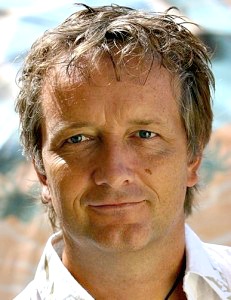
In search of Spanish paradise, Joe Cawley finds his salsa in the writing life

Hands up, anyone who’s ever thought of jacking it all in — running away to a paradise island, opening a bar and living the easy life?

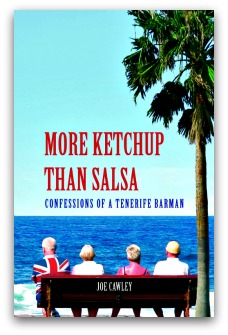
I know I have. So many times! Thank God I didn’t, though, because Joe Cawley got there first and wrote a book about it — and in the process discovered that the easy life is not quite as idyllic as you’d imagine. In fact, it was terrifying!

Joe’s book, More Ketchup Than Salsa: Confessions of a Tenerife Barman, is a hilarious account of his decision to trade in working in a cold fish market in Bolton, Lancashire, England, for running a bar in the sunshine of Tenerife, the largest and most populous of Spain’s Canary Islands. Accompanied by his girlfriend, Joy, Joe anticipates a paradise of sea, sand and siestas — but instead ends up with a life of chaos, full of crazy locals, irritating expats, gangsters, con men, and the endless nightmare of Spanish bureaucracy.

It’s a great book, and I loved it.

Today we’re lucky enough to feature an interview with Joe that was published the week before last on the excellent writing blog Woman On The Edge Of Reality. Linda Parkinson-Hardman is that edgy woman, and she has very graciously allowed me to share this interview with you — because Joe Cawley is a hero of mine! By the end of this, I’m sure he’ll be one of yours, too!!

Here’s Linda:

In More Ketchup than Salsa, Joe had me laughing so hard that I spilled a cup of tea all over the bed. His tale of travelling from Bolton Fish Market to Tenerife, Costa del Bognor, opens up the can of worms that most of us never even consider when we are sitting sipping coffee on a terrace and dreaming. His daily battles with cockroaches, the local mafia, animals and the never-ending variety of people that stepped through his door, was the wake-up call I needed to think again about what it was I might just do if I ever decided to take the plunge and live abroad. This is the perfect book to take on holiday with you especially if you are already planning to make that move.

Hello, Joe, and welcome to the hot seat. As you know, I start every interview off with the same question: “What is one thing that no one would usually know about you?”
That I was once appeared as an alien in a US TV commercial for Chevrolet. Not the proudest moment of my life, or the most comfortable. I had to stand outside in 100 degree heat painted from head to toe in silver and wearing a silicone head extension. I’ve looked better.

What did the best review you ever had say about you and your work?
That More Ketchup than Salsa was: “Fantastic, hilarious, painful. Completely un-put-downable. Probably the best book I have read this millennium!” And no, it wasn’t written by me. Or my mother. (Linda’s Aside: I have to agree, it was brilliant and I’m looking forward to a sequel.)

How did you choose a title for your book?
I was at the Carnival in Tenerife watching lithe Latinos strutting their stuff to the salsa beats. A pocket of Brits were trying to copy, but their movements were all over the place and sloppy. I thought it looked more like ketchup than salsa.

Have you ever wished that you could be or do anything else instead of writing, and if so what?
Absolutely not. I love it…best job in the world. Although if pushed, I’d say drummer in a rock band. I nearly got there with that one but was foiled by a bowl of sugar, a broken tooth and an over-zealous immigration official.

Have you ever written naked?
Hell yeah! I often wake up in the middle of the night with some inspired idea for a chapter. And not being one for pyjamas, I’ll sit butt naked at my desk and write for hours while my dog gives me quizzical looks. I try to finish up before the postman arrives though.

Do you have any hints or tips for aspiring writers?
Write. The difference between “aspiring writers” and “writers” is that the latter have finished something.

What has been the best experience you have ever had in your life?
Apart from having two gorgeous kids, I’d have to say sleeping in an open-sided hut in the Peruvian Amazon while a tropical lightning storm exploded all around me.

Are you jealous of other writers?
Not jealous, but definitely inspired. D. H. Lawrence was my first inspiration. I just love the way he paints with words. Bill Bryson was my second. In fact I’m inspired by any author who has great success. It makes me think there’s no reason why I can’t do it.

What was the most important thing you learned at school?
Kissing girls who wear braces can be painful. (Linda’s Aside: Oh dear, I was one of those girls!)

What is the book that you wished you had written?
The Bible. Though I’d have included full-page photos. It would make it seem all that more believable.

Tea, coffee, water, juice, wine or beer: which do you prefer when writing?
Water while writing during the day, wine for creative stints in the evening. And maybe the odd Jack Daniels and Coke or single malt if I’m feeling very pleased with myself.

* * *

So, readers, any further questions for Joe — especially from an expat or travel perspective?

You can meet Joe online on his author site; you can also read his work in The Sunday Times, Telegraph, Independent, Express, New York Post, and Taipei Times; and/or you can join him on Twitter: @theWorldofJoe

You can also download the book onto your Kindle from More Ketchup than Salsa from Amazon UK or Amazon US.

What are you waiting for? You’ve still got two weeks of summer left! And thanks again to Linda for letting us share this awesome interview.

STAY TUNED for a guest post tomorrow from long-time friend of the Displaced Nation, cultural writer/producer Anastasia Ashman.

If you enjoyed this post, we invite you to register for The Displaced Dispatch, a round up of weekly posts from The Displaced Nation, with seasonal recipes, book giveaways and other extras. Register for The Displaced Dispatch by clicking here!

Related posts:

RANDOM NOMAD: Liv Gaunt, Accidental Serial Expat and Feeder of Sharks

Place of birth: Luxembourg
Passport: UK
Overseas history: England (Sevenoaks, Kent): 1981–98); Turkey (Fethiye, Ölüdeniz, Fethiye again): 1998–99, 2001–02, 2004; Kenya (Watamu): 1999–2000; Egypt (Dahab): 2000-01, Bahamas (Nassau and Family Islands): 2002–03; Barbados (Bridgetown): 2004–05; England (London): 2006–10; Australia (Cairns, Brisbane, Esperance): 2011 – present. (Gosh, I feel like a serial expat listing so many places!)
Occupation: Journalist and scuba instructor
Cyberspace coordinates: The World is Waiting — Expat humour, travel tips, handy hints, photos and inspiration for travellers (site); @worldswaiting (Twitter handle); The World is Waiting (Facebook); WorldsWaiting (Pinterest); and Liv G (foursquare).

What made you leave your homeland in the first place?
Though I am fond of Britain, I left because I was seeking work as a scuba diving instructor and underwater photographer. The jobs available overseas offered a better diving experience and a better lifestyle. Photographing sharks, filming turtles, and teaching people to dive in an island paradise conditions are not things you can do in Britain.

Is anyone else in your immediate family “displaced”?
My parents were expats in Luxembourg, which is where I was born. For a few years my father was based in Barbados for work, so I guess it runs in the family — but nobody other than me is displaced at this moment.

Your chosen profession of diving and underwater photography has led you to settling, at least for a time, in quite a few different countries. Tell me about the moment when you felt the most displaced.
I believe it is the people who make the place. I feel most displaced when I am surrounded by people who do not treat others with what I consider to be the most basic level of respect — basically, as they would wish to be treated. Discovering cultural differences can be fascinating; but living with discrimination day in day out is frustrating and awful. Living in Egypt I found it really frustrating that men would not take me seriously simply because I am female. They completely disregarded the fact that I had more experience and was more qualified than they were. Of course I understand there are significant differences between Arab and Western culture. But being in a male-dominated industry (scuba diving) in a paternal society (Egypt) was simply not for me.

Was there one specific moment during your time in Egypt that catalyzed this feeling for you?
No, I think it was more the growing realization that I would never be taken seriously.

Describe the moment when you felt your least displaced — i.e., when you felt more or less at home in one of your adopted countries.
The first time I lived somewhere other than with my parents, was in Turkey in my late teens. I took on the responsibility of earning enough to pay rent, bills and to feed myself — and it was all in Turkish. It was a classic example of me diving in at the deep end, so to speak. As a result, I quickly gained a working knowledge of the Turkish language as well as an understanding of the country, culture and its people. Initially I thought that my Turkish friends would be horrified by my near constant butchering of their language. But they only ever encouraged me — and even nicknamed me “the Turkish-English girl.” Nowadays, whenever I visit Turkey I feel very at home there. I don’t have the normal visitor’s questioning of things. I still have quite a few Turkish habits like always removing my shoes indoors, being quick to hit the horn whilst driving, and showing hospitality to visitors.

You may bring one curiosity you’ve collected from each of your adopted countries into The Displaced Nation. What’s in your suitcase?
From Turkey: An evil eye. Evil eyes are so-called, rather misleadingly, as they are believed to ward off evil. They are usually made from glass or ceramics and are often seen hanging over entrances to offices and people’s homes.
From Kenya: Some beaded sandals made from leather and old car tyres. They are the most comfortable sandals I ever had.
From Egypt: Egyptian hibiscus tea. They serve it warm with a classy piece of foil over the top of the glass!
From the Bahamas: Pink sand from Harbour Island. All Bahamian sand is silky soft and impressive frankly but on Harbour Island it is even more beautiful for being a dusky pink.
From Barbados: An amazing reggae soundtrack.
From Australia: Can I bring a quokka? They are small marsupials, a bit like a large-bottomed mini-kangaroo. I find them endlessly amusing.

And now you are invited to prepare one meal based on your travels for other members of The Displaced Nation. What’s on your menu?

Starters: A huge plate of Turkish meze including filled filo pastries, various dips, Turkish bread, olives, cheese and some köfte.
Main: Bahamian conch fritters — the conch will be fresh from the sea and delicately fried — served with lime coconut dip and salad.
Dessert: An Australian pavlova, covered in fresh fruit.
Drinks: To include Caribbean piña coladas and mojitos, and Turkish cherry juice.

It would be a strange meal perhaps, but very tasty!

I wonder if you could also add a word or expression from one of the countries you’ve lived in to The Displaced Nation argot.
Ubuntu, which is an African ethical philosophy. Nelson Mandela explained it thus:

A traveller through a country would stop at a village and he didn’t have to ask for food or for water. Once he stops, the people give him food, entertain him. That is one aspect of Ubuntu, but it will have various aspects. Ubuntu does not mean that people should not enrich themselves. The question therefore is: Are you going to do so in order to enable the community around you to be able to improve?

Your life thus far has been quite an odyssey. You’ve traveled to 42 countries and lived in six. Do you think of yourself as a travel pro?
I don’t consider myself a professional traveler. To me, that term implies that I am paid to travel, which is certainly not the case. I am inspired to continue traveling to new places because I enjoy learning about people’s lives and cultures, and seeing the world through their eyes. I find the different foods interesting as well. Travel also allows you to see where you have come from in a whole new light.

What’s still on your bucket list?
Oh, it’s endlessly growing! Top of the list currently are the Philippines and the Galápagos.

But you are a professional scuba diver. Did you watch the diving events in the London Olympics?
I wasn’t able to watch most of the Olympics because of the time difference between Australia and Britain and a recent spate of overtime at my job. However, to answer your question, no, I have little interest in competition diving. I am not a competitive person generally and rather believe that at the end of the day the only person you ever truly compete with is yourself.

What made you so certain you wanted to be a scuba diver?
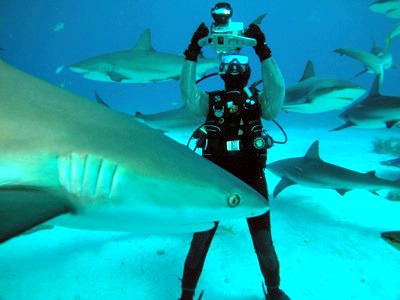
I enjoy interacting with the creatures of the deep. Watching as a shark cruises out of the blue towards you, having a curious manta ray investigate you, or sharing a moment with a cheeky turtle is far more fun to me than being faster or more coordinated than someone else. I also enjoy the challenge of capturing the underwater critters on camera.

As it happens, this week marks the 25th anniversary of Shark Week, the Discovery Channel’s longest-running programming event. The purpose is to draw the attention to the shark species, one third of which is at risk for extinction. (We must all stop eating shark fin soup — up to 73 million sharks are killed each year for their fins!) I understand that you love to video and photograph sharks. Is that the riskiest thing you’ve done under water?
Most people would say the riskiest thing I have done underwater is feed sharks. It’s not about thrill-seeking, though, but about providing divers with an up-close encounter, which I think is the best way to educate people about and ultimately protect the sharks.

But while you are a shark lover, you have an aversion for sea urchins. Why is that?
If you ask me that question, I have to assume you have never accidentally brushed past one and received an ankle full of their bloody painful spines?!

But have you ever eaten uni in a Japanese restaurant?
No. I love sushi but haven’t managed any sea urchin yet. Have you, is it good?!

Readers — yay or nay for letting Liv Gaunt into The Displaced Nation? Is she above water or is there something fishy about her application? (Note: It’s fine to vote “nay” as long as you couch your reasoning in terms we all — including Liv — find amusing!)

STAY TUNED for tomorrow’s compendium of books on travel to Tuscany.

If you enjoyed this post, we invite you to register for The Displaced Dispatch, a round up of weekly posts from The Displaced Nation, with seasonal recipes, book giveaways and other extras. Register for The Displaced Dispatch by clicking here!

Related posts:

img: Liv Gaunt videoing a shark feed in the Bahamas.

Dear Mary-Sue: Expats face tough come-down after Olympics high

Mary-Sue Wallace, The Displaced Nation’s agony aunt, is back. Her thoughtful advice eases and soothes any cross-cultural quandary or travel-related confusion you may have. Submit your questions and comments here, or else by emailing her at thedisplacednation@gmail.com.

U-S-A! U-S-A! U-S-A! That’s been the chant in the ol’ Wallace homestead these last two weeks. We took on the world and we whopped its ass — just as it should be. All very exciting — and some of those swimmers! Well, let’s just say they can come round to Mary-Sue’s pool to practice their doggy paddle anytime they want.

*****************************************************************************************

Dear Mary-Sue,

I was watching the closing ceremony of the London Olympics last night, and at one point the commentator said that it was a great tribute to British individualism and creativity. But why don’t we just go ahead and call it eccentricity? Because that’s what it is, right?

Former expat in Britain, now happily repatriated to USA

Dear Former Expat,

Hmm, if my understanding of British culture is correct, and bear in mind that I am no expert like Mary Carillo, but I don’t think there was enough cross-dressing for it to technically count as British eccentricity.

Mary-Sue

*****************************************************************************************

Dear Mary-Sue,

At the conclusion to the London Olympics, Sebastian Coe said: “Britain did it right.” But then why were the Spice Girls involved in the closing ceremony?

A happy repatriate to the USA after several years in Britain

Dear AHRTTUASYIB,

How many years were you in Britain and yet you never learned their famed sense of irony? Two weeks Mary Carillo has spent there and she has got it all sorted. Shows what you can do if you apply yourself.

Mary-Sue

********************************************************************************************************

Dear Mary-Sue,

I’ve been watching my home country, Britain, host the Olympics for the past two weeks, and now I’m really homesick. What’s the cure for this? (I’m allergic to chicken soup.)

Ben in Boston

Dear Ben,

Epcot, British pavilion. Just like being in Britain, but with actual customer service!!

Mary-Sue

********************************************************************************************************

Dear Mary-Sue,

I noticed that the great Brazilian footballer Pelé made an appearance in the closing ceremonies when Britain was handing over the Olympics flag to Brazil for the next Summer Games in 2016. As you may or may not know, Brazil will also host the World Cup in 2014. As much as I like the Olympics, in my opinion, that’s a far more important and prestigious event — even though America, my new country, doesn’t participate. Would you agree?

Pablo from Pittsburgh

p.s. Viva España!

Dear Pablo,

No.

Mary-Sue is all about those tasty swimmers. Is Ryan Lochte (yeah, he’s an idiot, I know) going to be at the World Cup? Thought not. Pelé may have been a great soccer player, but all I know about him now is that he does commercials for Viagra. Give me Lochte any day.

Mary-Sue

********************************************************************************************************

Dear Mary-Sue,

I noticed that one of the Displaced Nation writers, Anthony Windram, was criticizing the NBC coverage of the Olympics. He even went so far as to call Bob Costas the “ugly American.”

Though I now live in England, I’m sure it couldn’t have been any more partisan than what I witnessed over here on the BBC.

Wasn’t Windram just being churlish and if so, why was the Displaced Nation giving him so much “air time”?

Bob from Britain

Dear Bob,

I agree Windram is a blight on this site. I actually have to deal with him. I ask for Ryan Lochte and they send me that chump Windram. I wanted a wet athlete and they give me a wet fish. He called Bob Costas ugly, I know which one I’d rather wake up to on a cold winter’s morning.

Mary-Sue

*******************************************************************************************************

Dear Mary-Sue,

At one point during the Olympics, tensions between Kiwis and us Aussies here in the Netherlands reached an all-time high because they were winning more medals than we were. But all’s well that ends well, or at least that’s the way I and my fellow Aussies see it: we finished 10th, with 35 medals (of which 7 were gold), as compared to their 16th-place finish with 13 medals, of which 5 were gold. However, some Kiwis continue to lord it over us despite these stats. Until now, we all got on quite well. How can we repair the rift?

Ethan of Emmeloord

Dear Ethan,

Wait, Australia and New Zealand are different countries? Well, I’ll be a monkey’s Aunt!

********************************************************************************************************

Dear Mary-Sue,

Why did NBC show Russell Brand singing but not Ray Davies?

Baby Boomer in USA

Dear Baby Boomer,

As one of the 800,000 people to have experienced at first hand the debauched ways of Mr Brand, I can attest that while his whole Pied Piper aesthetic is unusual, his spindly body has an unusual sexual-voodoo pull on others. I’m guessing that Russell was awarded a gold in bedroom gymnastics by Mr Costas, and that Costas then made sure Russell was included in the final broadcast. Ray, by contrast, probably wasn’t able to be heard by the 17-year-old athletes, like Missy Franklin, who were screaming in excitement for One Direction.

Mary-Sue
___________________________________________

Anyhoo, that’s all from me readers. I’m so keen to hear about your cultural issues and all your juicy problems. Do drop me a line with any problems you have, or if you want to talk smack about Delilah Rene.

Mary-Sue is a retired travel agent who lives in Tulsa with her husband Jake. She is the best-selling author of Traveling Made Easy, Low-Fat Chicken Soup for the Traveler’s Soul, The Art of War: The Authorized Biography of Samantha Brown, and William Shatner’s TekWar: An Unofficial Guide. If you have any questions that you would like Mary-Sue to answer, you can contact her at thedisplacednation@gmail.com, or by adding to the comments below.

STAY TUNED for tomorrow’s post with some cooling thoughts for those of us in the Northern Hemisphere who, after sweltering away under the summer’s record heat waves, need a boost to get through the remainder of August.

If you enjoyed this post, we invite you to register for The Displaced Dispatch, a round up of weekly posts from The Displaced Nation, with seasonal recipes, book giveaways and other extras. Register for The Displaced Dispatch by clicking here!

Related posts:


LIBBY’S LIFE #57 – Coming clean

“And then what happened?” Maggie tops up our glasses with Rioja. “Did he tell you all about his bigamist father and you said, ‘That’s fine, sweetheart’ and everything was tickety-boo between you again?”

Maggie’s summary isn’t incorrect, but it goes further than that.

“Something like that. He’s trying very hard, and…” I shrug.

“You mean,” Maggie says, “that the balance has shifted and you’ve got the upper hand for once?”

I consider this. I did the midnight feed last night, but this morning Oliver got up early to make breakfast for Jack and help him get dressed while I slept. I only woke up when Oliver brought a cup of tea and the twins to me in bed.

Does that mean I have the ‘upper hand’?

“No,” I say. “I mean that the balance, for once, is exactly right.”

* * *

Take this evening, for example. Tonight I’m at Maggie’s house, on my own, sans children, who are tucked up in bed while Oliver holds the fort and figures out the intricacies of mixing formula milk. This wouldn’t have happened a week ago, when the balance of power was tipped in his favour, when Oliver considered himself wronged, and behaved accordingly badly.

But all that has changed now.

Oh yes.

The evening after he had been to see Maggie, he told me about his father. He helped put the children to bed, and insisted on tidying up after dinner. “You go and put your feet up, Libs,” he said, and brought me, instead of an olive branch, a dish of ice cream. When he finally joined me, I was lounging on the sofa, taking up all the cushion space, and holding up a magazine in front of my face. After removing a few of Jack’s toys from a nearby armchair, Oliver also sat down.

“Libs.”

I turned a page. “Mmm-hmm.”

Ungracious? Yes, maybe. It takes more than a bit of washing up and Ben & Jerry’s to get round me these days.

“We should talk,” he said, then stopped. From behind my magazine, I saw him glance sideways at me. I said nothing, and continued flicking through the pages of Good Housekeeping. I was damned if I was going to make this easy for him.

He sat forward in his seat, elbows on his knees, hands dangling, his eyes fixed on a spot on the floor.

“He had three wives, you know. Mum was the third.”

A few seconds went by, then I said, “Yes. I do know, now. No thanks to you.”

His head drooped even lower. “I’m doing my best here, Libs. It’s very hard for me to talk about this. Don’t make it more difficult for me than it already is.”

I slapped the magazine down on my lap. “And don’t you lay that guilt trip rubbish on me! You’ve had ten years to tell me about your family history, but no, I had to watch our wedding outtakes video to find out why you were being such a shit about my little experiment with genealogy. So don’t preach at me about making things difficult.”

Oliver got up and walked out of the room. I think I was supposed to follow him at this point, and beg forgiveness. A very short time ago, I would have done — but not any longer. Instead, I picked up my magazine again and read an article about extreme bathroom makeovers; a pointless article when you live in rented accommodation. After about fifteen minutes, Oliver returned to the room.

“Shall we start again?” he asked in a quiet voice.

I sniffed.

“If you like.”

“Could you put the magazine down?”

I elaborately laid it on the side table, folded my arms, and raised my eyebrows at him. “Happy?”

He didn’t rise to my bait. It was a bit disappointing. “Mum was his third concurrent wife,” he said in a rush. “They’d been married for six years. The others had been married to him for nine and eleven years. None of them suspected a thing, despite the fact that they all lived within twenty-five miles of one another.” He paused. “If it hadn’t been for that pile-up on the M1, they might still be happily married today, for all I know.”

He flexed his fingers, then cracked his knuckles — a sure sign that Oliver’s under stress.

“Tell me.” I tried to make my tone offhand, but from the grateful expression on Oliver’s face, I must have injected more affection than intended.

“Mum saw the report on the local news about a big pile-up on the M1 at Luton,” he began, sounding hesitant. “Lots of pictures of cars crumpled up and skewed sideways in the road, ambulances and fire engines and police everywhere. The reporter said that four people had already been confirmed dead. Mum didn’t think much about it because Dad said he was working in the Lake District that week. Then, apparently — I don’t remember it, but she tells me this is what happened — I shouted that I could see Daddy’s car on the television.”

“And was it his car?” I asked.

“It shouldn’t have been. Dad had called Mum only an hour before from Carlisle — or at least, that’s where he said he was — so as far as she was concerned, there was no way he could have driven 300 miles in one hour. But yes. It was his car. The cameraman zoomed in on this bashed in blue Cortina, and Mum could make out the numbers on the licence plate.”

I was quiet again, but not in order to punish Oliver. I was visualising the scene in Sandra’s house, the turmoil in her mind as she wondered if her husband had survived the wreckage…

“Then what happened?”

Oliver squeezed his eyes shut. “She drove to the hospital that the news reports mentioned. Kicked up a fuss at reception, screaming that she’d just seen her husband’s car on TV in the pile up and she demanded to know where he was. The woman at the desk asked her what her husband’s name was, and when Mum told her, the woman got all confused and told her there must be some mistake because the family of that person had already been notified.”

Poor Sandra. I didn’t like her — never had — but no one deserved that.

“And if you think it couldn’t get any worse, the final wife turned up at the hospital twenty minutes later, having also seen the news and the picture of the car, and the same thing happened all over again. I can’t really remember what happened after that. Probably just as well, really. I only remember a lot of days that Mum either cried or threw things out of the window or into the street. Everything belonging to Dad, everything he had ever given me or Mum, it all disappeared from the house. I never saw him again.”

I thought of the toy tiger and the birthday card, the two hidden items that had sparked this whole mess between Oliver and me. I asked how they had escaped the evacuation.

“They turned up in the post a couple of days after my sixth birthday, a few months later, addressed to me. The postman rang the doorbell, and because it was Saturday and Mum was still in bed, I answered the door and got the parcel myself. I never told Mum I’d received them. By that time, I’d already lost my favourite teddy bear and lots of toys, just because Dad had bought them for me.”

My pity for Sandra evaporated as I thought of a little boy, not much older than Jack, trying to comprehend why all his beloved toys were being thrown in the dustbin.

I sat up and stretched my hand out to stroke Oliver’s arm.

“Poor you,” I said. “That’s awful. Really terrible.”

Oliver absently put his hand on top of mine.

“I found out, much later, that he must have sent that parcel just before he went to prison.”

“Prison?”

“Bigamy’s an prison offence. He was in for a few months, I believe.”

Sorry as I felt for Oliver, I still had to have my say.

“But why didn’t you tell me? Have you any idea how much you’ve hurt me by not trusting me like that?”

He rubbed his eyes, and squeezed my hand tighter.

“It’s got nothing to do with trust. It was all down to a promise I made to my mother, not to tell anyone. She was humiliated beyond belief — I see that now — and I didn’t want to break that promise by telling every girl I met.”

“But I wasn’t ‘every girl’!” I said. “I was your wife!”

“Not at first, you weren’t. And by the time I felt it was OK to tell you without also betraying Mum, we’d known each other for a long time, and by then — well, I felt it was too late. You’d always ask me why I hadn’t said anything before.”

Hmm. It sounded good, but I wasn’t completely convinced by this argument. Oliver’s doe-eyed love for his mother was so great that I couldn’t see him ever breaking that promise unless he was forced, like this fiasco had forced him. For the sake of familial peace and marital harmony, though, I was prepared to go along with his white lies — this time, anyway.

“Anything else you’d like to tell me?” I asked. “Anything other skeletons in the cupboard I should know about before I start on our family tree again?”

Oliver shook his head. “None that I know of. You might find something, but I promise you, it will be as much a surprise to me as to you.”

* * *

“And that was it?” Maggie asks.

“Not quite. I got up and went to the mall for three hours. Left him to sort out the twins, who apparently woke up the minute I closed the garage door and wouldn’t entertain the idea of going back to bed until ten minutes before I came back. When I got home, all three of them were asleep on the sofa with a Wiggles DVD still playing.”

I smiled at the memory. Oliver had been dying to complain and play the martyred father, but he didn’t dare.

“And that’s not even the best of it,” I said. “His mother emailed him yesterday, asking when she could come over to see her ‘new precious angels’, as she calls the twins.”

Maggie gasped. “Oh no! She’s not coming over again, is she? You’ve only just recovered from her last visit.”

“Damned right she’s not coming over again. We are going over to England instead. Do you realise I haven’t been home since we moved here, this time last year? We can’t go back to our old house, because the old witch is living in it, and I can’t face the idea of seeing the mess she’s made of it, so we’re renting a house in the Cotswolds for two weeks in September. If she wants to see her ‘new precious angels’”— I pretended to stick two fingers down my throat — “she can stay in the Travelodge down the road.”

Maggie clapped her hands. “Bravo, Libby!”

I grinned.

“Yes,” I said. “I think this qualifies as the first gold for Team LP.”

*  *  *

.

Next post: LIBBY’S LIFE #58 – Careless whispers

Previous post: LIBBY’S LIFE #56 – Falling up

A note for Libby addicts: Check out Woodhaven Happenings, where from time to time you will find more posts from other characters.  Want to remind yourself of Who’s Who in Woodhaven? Click here for the cast list!

Read Libby’s Life from the first episode.

STAY TUNED for Monday’s post, when our agony aunt, Mary-Sue, pays the Displaced Nation a visit to assist residents who may be suffering from the post-Olympics blues.

If you enjoyed this post, we invite you to subscribe for email delivery of The Displaced Dispatch, a round up of the week’s posts from The Displaced Nation. Sign up for The Displaced Dispatch by clicking here!

Image: Travel – Map of the World by Salvatore Vuono / FreeDigitalphotos.net

To live the Olympic Ideal, I need to stop watching the Olympics

So the Olympics continue and with it my continuing — and ugly — obsession with the American broadcasting network NBC is laid bare.

Now if I were being fair — and I so rarely am — I would admit that NBC does have a nifty, free Olympics app that is a pretty decent way of keeping track (terrible pun, sorry) of what is happening, but all the goodwill that engenders in me evaporates as soon as I turn on the TV for my nightly fix.

Having already vented in a previous post, I should clearly give this issue a rest, but in all honesty the snide, masochistic side of my personality adores being able to shout each night as the bland features of Bob Costas (a face you forget even while looking at it) illuminate TV screens across the USA.

Six hours a night I’ve been yelping, tutting, and admonishing the TV. My long-suffering wife deals stoically with my piggish behaviour. It starts with my local NBC affiliate, who are staging all their Olympic coverage from the nearby Thunder Valley Casino — because as everyone knows, if you want to see Olympic specimens you head to the lobby of a casino. Once in a while, they cut to Deirdre Fitzpatrick, who each day provides pointless, meandering ten-minute videos of herself wandering round London — Rick Steves is positively Bruce Chatwin-like in comparison. A choice example saw our Deirdre (make-up immaculate, of course, but in that female US newcaster’s way, whereby its effect is disturbingly artificial and it’s impossible to gauge what her true age is) by a footpath on the South Bank. “Everywhere you go, there’s an impromptu performance,” she says as the camera zooms in on a man playing an acoustic guitar. Deirdre, it’s called busking.

But then comes the main event as we cut to Bland Bob Costas. You may even get to see a little bit of sport, but not too much as Mary Carillo is then wheeled out for 15 minutes each night to give a patronising look into some aspect of British life that would even make VisitBritain cringe. She is not quite at Deirdre levels of annoyance, but then poor Deirdre’s day often seems to involve finding an American tourist to talk to, or the most embarrassing old British codger that she can find to interview. Mary, however, has access to various echelons of British society to paint her twee picture of my homeland. I was particularly irate when only the last lap of the 10,000m race was shown — we then moved on to Mary fronting a 15-minute video about bagpipes in Glasgow. I understand that the race had been shown live earlier in the day, but I don’t think anyone was tuning in that night for a piece about the modern renaissance of bagpipes. If this has any place — and that is a big if — it is on The Today Show (which, too, has camped out in London for the duration of the games), not on the actual evening highlights.

Baron Pierre de Coubertin in establishing the modern Olympics probably did not envisage how mass media throughout the 20th century would transform the games, and certainly did not foresee how social media is transforming them again. In the interests of his Olympic Ideal, it seems utterly wrong that I am spending my time moaning into the void-like Internet, rather than celebrating the likes of Usain Bolt, Oscar Pistorius, and Jessica Ennis. I will take a deep breath, count to ten, and smile when Bob beams that ineffectual smile of his when coverage starts. Or perhaps I’ll try and figure out how to get the Canadian coverage of the games.

If you enjoyed this post, we invite you to register for The Displaced Dispatch, a round up of weekly posts from The Displaced Nation, with seasonal recipes, book giveaways and other extras. Register for The Displaced Dispatch by clicking here!

Related posts:

THE DISPLACED Q: As an expat, do you ever get confused about which team to support at the Olympics?

The long-anticipated Games of the XXX Olympiad, also known as London 2012, are now in full swing. Some members of the Displaced Nation team are looking a tad bleary eyed after staying up late several nights in a row to watch their favorite events (gymnastics, anyone? or how about some synchronized diving?).

Maybe we’re getting grouchy from the lack of sleep, but we’re beginning to engage in some surprisingly heated debates — surprising given how much we looked forward to the arrival of the Games.

Or perhaps it’s not surprising given that most, if not all, of us residents have confused, hybrid nationalities…

In any event, here’s my displaced question for YOU: What if an athlete or team from your native land ends up competing with one from your adopted country?

Now pay heed, because this could be important.

I studied in Cardiff, Wales, where this sort of thing can be a matter of life and death. I’m English y’see, and while Wales may be part of the United Kingdom, it’s also its own country. For which I can hardly blame it…

Historically, Wales and England have not been the best of friends — in fact in one English city, it’s still legal to shoot a Welshman with a bow and arrow at certain times of the year.

For some reason it’s one law they just keep forgetting to appeal…

To say the English have treated the Welsh unfairly is…well, fair. We were utter bastards to them back in the day, as we were to pretty much every other civilization with which we came into contact. That’s why they all rose up and threw us out at various points in time.

Unfortunately, we haven’t learned our lesson — that infamous stiff upper lip isn’t the only national trait we’re known for. Yes, we Brits are an arrogant lot — legendarily so — and never more so than in the arena of international sport.

Luckily we’re not very good at most of it, or we’d have been involved in even more wars.

The art of living dangerously in a country of sore losers

But the Welsh, alas, aren’t much better; on the contrary, they have a horrible habit of being even worse than we are. Rugby is supposed to be their game, yet we English keep beating them at it. And if you’re the only English bloke in the immediate vicinity shortly after such a humiliating defeat occurs…well, the Welsh aren’t known for having a magnanimous, forgiving nature. They are known, rather, as barbarian tribes so unruly that even the Romans couldn’t subjugate them.

I never once tried to subjugate anyone, but in my three years at university I was on the short end of a serious subjugation every time the Welsh lost to England. Which was depressingly often.

So, herein lies the dilemma: You’re an expat. Your birth-home team is playing your adopted-home team. Do you:
a) Cheer for the local team to curry popularity — even if you’re dying inside with every goal scored by the locals?
b) Cheer for your native country’s team to show character, and honesty, and that you’re not afraid – even if, inside, you are actually terrified at what the locals may do to you afterwards?
c) Find a nice, comfy hole to lie in for a week or so until all the excitement dies down? (Note: Not for heroes. I’ve been known to adopt this tactic.)

Both a) and b) are seriously risky strategies. When questioned by a drunk and excitable Welshman, approximately five feet tall and about the same girth — along with ten of his veteran drinking buddies — it was always something of a lottery. Declare for my homeland, and pray I was in better shape athletically (or at least less drunk) than any of them; or declare for Wales, and risk getting beaten up anyway because they thought I was taking the mickey.

My answer varied (like my patriotism) with the number of pints I’d drunk.

(Note to self: Singing “God Save The Queen” loudly in response is almost never a good idea, even if you are drunk enough to hardly feel a thing. And especially when you haven’t even bothered to learn the words…)

The art of not having an opinion

Thankfully, I have since come up with my patented Ultimate Solution™ to this problem, after years of suffering one way or the other — or sometimes both ways simultaneously — at the hands of my ancestral foes.

I don’t cheer for my home team. Either of them. Because to be honest, I don’t give two figs about a sport unless I’m actually playing it, and then if I win, at least I’m dressed in the right gear for running away.

Let’s break this strategy down a little more.

PRINCIPLE #1: CHEER FOR THE WINNERS, REGARDLESS OF NATIONALITY
Taking this approach means you can celebrate every goal. If “your” team loses, you’re not too heavily committed, having cheered equally for both sides in their best moments.

Indeed, no one will be 100% sure which side you’re on, and as you’ve shared at least a few cheers with their side, they’re bound to feel more kindly disposed towards you than if you’d been screaming obscenities at their favorite player.

The second, and even more important part of this strategy is:

PRINCIPLE #2: BE THE LOSER!

As Leo “The Lip” Durocher, manager of several Major League baseball teams, once said (in 1946):

Nice guys finish last.

It doesn’t matter who wins in the end. No, really, it doesn’t. That’s the whole point of the saying “It’s only a game!” — because it is.

And while some people honestly admire a winner, and are happy to let them enjoy their well-earned celebration, in my experience most people have a bitter spot in their hearts for those who beat them — or their team. And it’s not a healthy place to be for anyone — basically, they can’t stand someone who beats them.

But everyone loves a loser.

If your birth-home team loses, be the humble eater-of-pie. Congratulate your new-found compatriots and maybe let slip — in an unguarded moment — that you knew they would win anyway as you’d had a horrible feeling that they were actually a much better team.

And if your adopted-home team loses — join them in commiserating. Because let’s face it, people from your home country are a bunch of so and sos — except you, of course. Which is why you’re here, and not there… “They” never play fairly. One day, hopefully soon, the local team will show ’em who’s boss. And until then, well, you might as well drown your sorrows with the rest of the losers…

Either way it goes, you get points for being a good sportsman. That’s what I call winning by default.

* * *

Okay, readers, now it’s your turn to weigh in on this vexed question. Do you ever feel confused about who you should be rooting for at the Olympics, or is this a moment when blind nationalism sets in, and it’s your home athlete/team or nothing?

Tell me what you think!

STAY TUNED for Monday’s post, another in our “expat moment” series…

If you enjoyed this post, we invite you to register for The Displaced Dispatch, a round up of weekly posts from The Displaced Nation, with seasonal recipes, book giveaways and other extras. Register for The Displaced Dispatch by clicking here!

Related posts:

Image: MorgueFile

Bob Costas as the ugly American: NBC and the Olympics

Yesterday’s post was on the opening ceremony of the London Olympics. Here in the US, I was able to watch it (hours after the rest of the world) on NBC.

I hadn’t planned to write a post about the Olympics and the opening ceremony. In fact, I was vehemently against the idea when it was suggested to me. However, as the days have gone on, I’ve found my attitude softening.

They are two reasons for this.

Firstly, the Games have made me homesick. My usual cynicism is no match for the enthusiasm of my London friends, all of whom seem to be attending events (if Facebook is anything to go by) while I sit watching it in one of the dullest towns in California. The opening ceremony elicited in me a mixture of pride and embarrassment — and as such, perfectly encapsulated for me what it is to be British. The ceremony also irritated Rush Limbaugh — so clearly job well done on Danny Boyle‘s part there.

The second reason I’ve decided to backtrack on my decision to blog on the Games is I am enduring the NBC coverage. Those of you spending too much of your time on Twitter have probably already noticed that the channel has been receiving a fair amount of criticism for its decision to time-delay the opening ceremony, its cutting of the “memorial” wall tribute from the ceremony as they didn’t feel it relevant to a US audience (yeah, because NBC knows what’s relevant to a US audience), its role in the suspension of journalist Guy Adams from Twitter, and the really awful library-esque studio they’ve set up for Bob Costas. Each night Bob reminds me of the narrator from The Rocky Horror Show. Oh God, do you think he’s got pantyhose under that desk?

This is the second Summer games that I have watched in the US, so I am not surprised that NBC in its prime time slots edits the games more like a reality show, such as American Idol, than an actual sporting event. They are filmed inserts galore highlighting particular favored US Olympians giving us a look into their struggles and achievements, their family dynamics, and ideally some terrible (juicy) tragedy that has befallen them.

What has really irritated me, however, has been NBC’s commentary. I understand that Trevor Nelson had some role in the BBC commentary during the opening ceremony, so in the interest of fairness I imagine that was pretty dire, too; but it was disappointing to see Matt Lauer, Bob Costas and Meredith Vieira prove so adept in their roles as ugly Americans.

On behalf of those blessed without NBC, I re-watched the opening ceremony and parade of nations this morning. I give you the following comments from said broadcast:

On London mayor Boris Johnson

By the way if you think he’s been so busy, he couldn’t get a haircut — this is his haircut.

Actually, fair enough.

On British English

A billion — that’s with a ‘b’ — will watch at home on what they call “the telly” around here.

On the reveal of the giant baby

I don’t know whether that’s cute or creepy. — Matt Lauer

Coincidentally, I had the same thought on seeing Meredith Vieira.

On Tim Berners-Lee

If you haven’t heard of him — we haven’t either.

Yes, Meredith, let’s revel in our ignorance.

On various countries

Australia was famously settled as a penal colony in the late-1700s.

Belgium, as you know, is homeland to IOC President, Dr Jacques Rogge, who competed as a sailor for them three times in ’68, ’72 and ’76.

We’re meant to know that, but not about Tim Berners-Lee?

Central African Republic is made up of more than 80 ethnic groups and they each have their own language, which I’m guessing makes subtitles at the movies a major undertaking.

Jesus Christ, it’s like watching the games with your unfunny uncle.

And that leads me perfectly to Croatia: their flag-bearer Venio Losert is the goalkeeper of the handball team. This is a sport that just doesn’t have a great foothold in the United States, but if you’re looking for a way to get a medal in the Olympics it would be a good sport to take up.

Yup, the US doesn’t play it, so handball must be a piece of piss.

On Kim Jong-Il and golf

Bob Costas: Matt, as a golfer you’d know that North Korea’s greatest athletic achievement belonged to the Dear Leader Kim Jong-il, who, according to his official biography, carded 11 holes in one. Not over a lifetime, but over the first he ever played. I’m guessing the ones off the windmill and the clown’s nose were especially impressive.”

Matt Lauer: Sure, you joke. You’re not going to vacation there.

Bob Costas: Unlikely.

Feel free to contribute to my Kickstarter campaign to help raise funds to send Bob Costas to North Korea for his vacation.

On badminton coverage

Bob Costas: If you’re looking for badminton coverage, and who isn’t, you’ll find it on our cable networks and streaming live on nbcolympics.com throughout the games.

Matt Lauer: Let’s not make light, this is not your backyard, picnic variety badminton. This is tough stuff.

Bob Costas: No, that shuttle cock moves at “daunting” speeds!

Like those competing in handball, the badminton players should be thankful Bob Costas isn’t playing their easy-peasy sport. Bob can also bitch-slap Chuck Norris.

On various countries

Djibouti — now, there’s a few countries whose names simply make you smile. Djibouti would win the gold medal in that category. Maybe Cameroon taking the silver.

Don’t leave us in suspense, Matt. Who comes in bronze?

Germany is next. Long-time Olympic power, the medal count has slipped in recent years, so they’ve now returned to East German-style Olympic schools to better train their young athletes — but they’re quick to point out their talking about the positive aspects of such a program.

Thank God, for a moment I thought they’d brought the Stasi back.

Madagascar — a location associated with a few huge animated movies.

The Maldives are the lowest country on earth. A couple of medals here might boost them up a little bit.

A few medals will sort out the rising sea levels!

Next is Pakistan. While world leaders keep a wary eye on this country, of much less importance Pakistani athletes to keep an eye are likely to be found in field hockey.

Seamless, Bob. Absolutely seamless.

Winston Churchill once described the African nation of Uganda and its lush landscape as the pearl of Africa. Of course, Churchill never met Idi Amin.

On the speed of the Parade of Nations

Bob Costas: I don’t know if you can sense this, folks, but we’re having to edit through our notes. We have never seen a parade of nations move at a clip like this.

Matt Lauer: Just means we get to the United States and Great Britain a little earlier.

Bob: Tsch, we have to sit through all these other countries.

On athletes smiling

As all these Olympians enter, smiling and quickly, I think part of this is in deference to the 86-year-old Queen who made — along with James Bond — one of the great entrances in Olympic history earlier.

I mean, what other reasons are there for an athlete to be smiling at making the Olympics?

On London pubs and football

You’ll see signs in the windows of London pubs sometimes saying no football jerseys allowed because the mere sight of the wrong jersey can ignite a brawl. But nobody is in a brawling mood tonight.

That ending is worthy of Alan Partridge. Also, as someone who has drank in far more London pubs than Bob Costas and Matt Lauer, I have never seen such a sign.

.

If you enjoyed this post, we invite you to register for The Displaced Dispatch, a round up of weekly posts from The Displaced Nation, with seasonal recipes, book giveaways and other extras. Register for The Displaced Dispatch by clicking here!

Related posts:

The opening ceremony of the London Olympics — from an expat who witnessed Beijing’s spectacle firsthand

As regular readers will know, The Displaced Nation has some special connections to Britain. We therefore held our collective breath when the Olympic ceremony opened on Friday evening in London. How would the Brits measure up to the Chinese extravaganza of four years ago? Britain is after all a declining power — which is not exactly true of China! Today we turn to guest poster Shannon Young, an expat in Hong Kong who has written a book about her firsthand experience of attending the Beijing Games, for a verdict.

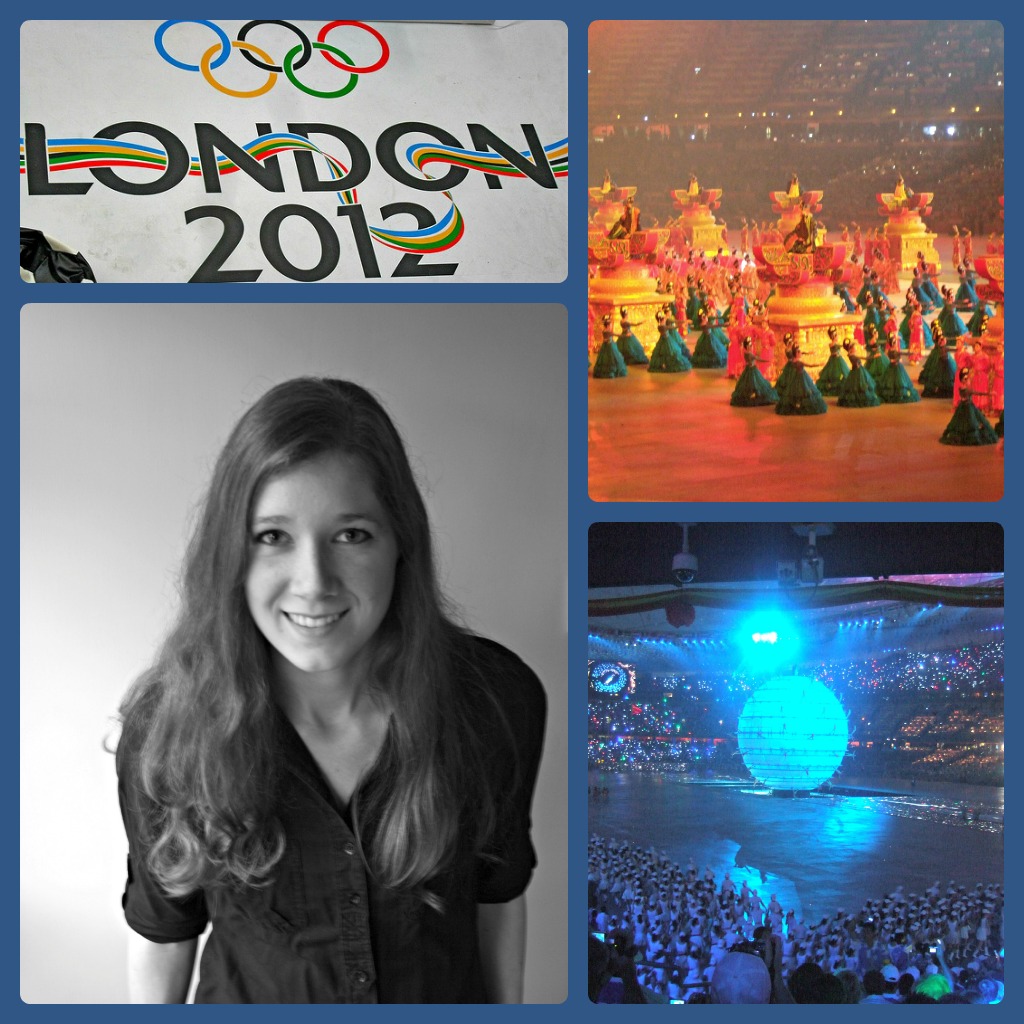
Four years ago, 2,008 drummers opened the Summer Olympics in Beijing with a thunderous rhythm heard ’round the world. Spectacular feats of coordination, drama and energy followed, wowing the world with the precision and ambition of the production.

Heralded as the greatest live performance in history, Beijing’s opening ceremony was a tough act to follow.

It was a tough act for me to follow as well. I’d been in the stands as the rumble of the drums swelled through Beijing’s Bird’s Nest stadium. But as the opening ceremony of the London Games was about to begin, I found myself at the kitchen table of my grandparents’ home in Oregon (I am back in the United States for a visit) watching a live stream on my computer.

Oh we can be heroes…just for one day

A landscape that looked rather like a shire appeared, complete with sheep and idyllically dressed country folk. The agrarian scene was quickly replaced with the frenetic energy of the Industrial Revolution, but the contrast was obvious: London was not trying to “beat” China.

Quirky, funny and nuanced. Those three words characterize the July 27th, 2012, ceremony. It displayed the heart and humor for which the British are famous — especially in the form of Rowan Atkinson (Mr. Bean), whose rendition of “Chariots of Fire” completely stole the show.

London brought the opening ceremony of the Summer Olympics back down to a human level. It was no Beijing, but it was the kind of show that speaks to people.

Famous for such films as Trainspotting and Slumdog Millionaire, director Danny Boyle infused the London ceremony with a cinematic flare.

Like many other spectators around the world, I loved the short film in which James Bond picked up Queen Elizabeth in a helicopter, which they (or their stunt doubles) proceeded to jump out of, for their “entrance” into the stadium.

There were other nods to cinematography throughout the production, including to Boyle’s own films, mixing the mediums of live performance and cinema. The costumes were intricate when viewed through a zoomed-in camera, but I had to wonder how much of this was for the camera and not the live audience. The spectators in the stands may not have been able to enjoy the details.

Only rock ‘n roll (but I like it)

There was a rock-and-roll feeling to the show. The dance numbers were more like big parties than expertly timed performances. They were full of mini-storylines and surprises.

The segment that began with a nightmare of the villains of children’s literature ended with the raucous defeat of a gigantic Lord Voldemort by none other than Mary Poppins.

The soundtrack was fun and familiar, liberally paying homage to Britain’s many contributions to culture.

A high-octane production like the Olympics opening ceremony needs to have quiet moments, too.

In Beijing there were eerie performances, such as a single dancer gliding across a glowing scroll.

In London, the quiet moments were solemn. There was a moving dance performance dedicated to the victims of the July 7th bombings on London transport, and a moment of silence for those who fell in the two world wars.

New takes on old classics

The Parade of Nations was faster than usual, bringing 204 teams into the stadium in record time.

The production culminated in the lighting of the torch, which was done in a particularly elegant fashion. David Beckham delivered the torch to retired British rower Sir Stephen Redgrave in a neon speedboat on the Thames.

In a touching act, Britain’s venerated Olympian then delivered the torch to seven promising young athletes, who lit the torch together. The torch itself was composed of many copper petals which rose together on long stems to create the Olympic cauldron.

London’s opening ceremony drew many laughs and perhaps a few tears. There weren’t as many breathtaking moments as in Beijing, but the show was like the British: quirky, personable, and utterly self-assured.

Shannon Young is an American writer currently living in Hong Kong. She is the author of The Olympics Beat: A Spectator’s Memoir of Beijing. She writes a blog called A Kindle in Hong Kong and tweets @ShannonYoungHK.

EDITOR’S NOTE: We will be giving away several copies of Shannon Young’s mini travel memoir of the Beijing Olympics this month. The first will go to a commenter on this post — please share your favorite moment from London’s opening ceremony, or a memorable moment from a previous Olympics.

STAY TUNED for tomorrow’s Expat Moment with Anthony Windram!

If you enjoyed this post, we invite you to register for The Displaced Dispatch, a round up of weekly posts from The Displaced Nation, with seasonal recipes, book giveaways and other extras. Register for The Displaced Dispatch by clicking here!

Related posts:

Images: A London Olympics sign courtesy e-costa on Flickr; author Shannon Young and two of her photos from the opening ceremony of the 2008 Summer Olympics in Beijing.