The Displaced Nation

A home for international creatives

Tag Archives: Random Nomads

12 NOMADS OF CHRISTMAS: Wendy Tokunaga, American Japanophile (2/12)

Current home: San Francisco Bay Area, USA
Past overseas location: Tokyo, Japan
Cyberspace coordinates: Wendy Nelson Tokunaga | Fiction writer and manuscript consultant (author site) and @Wendy_Tokunaga (Twitter handle)

Where are you spending the holidays this year?
At home, in the Bay Area.

What do you most like doing during the holidays?
Eating!

Will you be on or offline?
Good question. I spend so much time online (Twitter and Facebook mainly) networking with readers and other writers, but I do go offline when I’m on vacation. I’m thinking of foregoing social media between Christmas and New Year’s, even though I’ll be in town. We’ll see if I can hold out.

Are you sending any cards?
I used to love to send out Xmas cards and would give much thought each year as to which ones to choose. But now with keeping touch so much via social media, I’ve stopped sending cards and just exchange holiday greetings with people via Twitter, Facebook and email. My husband and I sometimes upload a holiday photo of the two of us. I have never in my life sent out the dreaded Xmas bragfest newsletter.

What’s the thing you most look forward to eating?
See’s Candies and my husband’s Xmas prime rib.

Can you recommend any good books other expats or “internationals” might enjoy?
I’m going to look so tacky here, but I’d like to plug my own e-book (blush), which is called Marriage in Translation: Foreign Wife, Japanese Husband. It consists of interviews with 14 Western women involved in cross-cultural relationships. It’s a fascinating (if I say so myself!) glimpse into these couples’ lives and will appeal to anyone interested in international marriage and culture shock.

If you could travel anywhere for the holidays, where would it be?
Maui!

What’s been your most favorite holiday experience — when you’ve felt the true joy of the season?
I don’t know about the true joy of the season, but I do have a fond memory of spending Xmas in Tokyo and having it be a regular workday, which I quite enjoyed. I sometimes get weary of the constant pressure and obligation in the U.S. to have a family-filled Xmas and be happy and spend money. In Tokyo there are plenty of Xmas trees and lights (my fave parts of Xmas), but it is just a regular day and that’s appealing.

How do you feel when the holidays are over?
I actually like it. There’s a new, fresh sense of energy in starting a new year and anticipating exciting things to come.

On the first day of Christmas, my true love said to me:
TWO CANDY BOXES,
& AN IRISHMAN IN A PALM TREE!

STAY TUNED for Monday’s featured nomad (3/12) in our 12 Nomads of Christmas series.

If you enjoyed this post, we invite you to register for The Displaced Dispatch, a round up of weekly posts from The Displaced Nation, with seasonal recipes, book giveaways and other extras. Register for The Displaced Dispatch by clicking here!

Related posts:

12 NOMADS OF CHRISTMAS: Robin Graham, Irish Expat in Spain (1/12)

Current home: Tarifa, Spain
Past overseas locations: UK, Netherlands, Israel, and a previous stay in Spain
Cyberspace coordinates: a lot of wind… (blog) and @robinjgraham (Twitter handle)
Most recent post: “Gran Bretaña” (December 21, 2011)

Where are you spending the holidays this year?
In Hampshire, England. My mother lives there now with her husband, as does my brother and his family.

What will you do when you first arrive?
Once all the greetings are out of the way I may well go for a walk. I’ll be in the town where I spent my adolescent years and there will be memories and perhaps one or two stories for my fiancée, who will be visiting for the first time.

What do you most like doing during the holidays?
TV off, lights off. Candles on, perhaps a fire. To sit in the near dark and talk; to feel connected to all the people who are doing that around the world and to those who have done it down through the centuries. I am not religious but something about gathering with loved ones in the depths of winter seems to run deep.

Will you be on or offline?
I will tell myself to be offline and will fail. Lessline? Halfline? Online Lite?

Are you sending any cards?
Don’t do cards as a result of a selfish and entirely misspent youth. Not going to start now.

What’s the thing you most look forward to eating?
Tricky. I don’t have much of a sweet tooth. If there’s goose I’ll be happy. Roast potatoes never hurt either.

Can you recommend any good books other expats or “internationals” might enjoy?
Ghosts of Spain (2008) is an account of a journalist’s (Giles Tremlett‘s) trips around the country in search of its hidden history, particularly with regard to the civil war and Franco era, and how the country has changed since that era ended with his death in the mid-seventies. It fills a gap that I would have thought was there for many expats in many countries; a chance to get under the skin of your adopted country in your own language.

Foreign Flavours is the second anthology from the online writers group Writers Abroad. The theme is food (and drink) as experienced by the expat, and the collection is nothing if not varied — from short stories to journalistic pieces to recipes; it’s a real kitchen companion. All of the proceeds from the book go to the Book Bus, a registered charity that aims to provide books to and increase literacy rates among children in the developing world.

If you could travel anywhere for Christmas, where would it be?
I was brought up on the premise that an ideal Christmas would involve snow and reindeer, so the notion of an isolated but cosy log cabin in the woods of Lapland has a distinct appeal. Family around me — great. Just my fiancée — better.

What famous person do you think it would be fun to spend some time time with over the holidays?
Richard Dawkins. We could pontificate on the merits of an atheist world view whilst getting tipsy on eggnog, pigging out on Advent chocolates and singing Christmas carols. I hear he does a mean rendition of “Silent Night,” and I’m sure he’d be good company.

What’s been your most displaced Christmas experience?
I spent one Christmas entirely alone in Holland. Broke. Cue violins — it was an episode in that misspent youth I mentioned. My least Christmassy Christmas.

How about the least displaced experience — when you’ve felt the true joy of the season?
When I was a child most Christmas cards, cookie tins and cake wrappers would, for some reason, feature images of snow-laden Bavarian countryside. Castles and cutesy villages with snowy candlelit windows in the darkness. So to find myself in Bavaria a few years ago with my fiancee’s folks, watching families sled down a nearby hill in the evening, attending midnight mass in a 14th century church with an exquisitely painted ceiling, sitting in the house with candles and glühwein and stollen; that would have to be the one that ticked all the boxes for me.

This Christmas coming will be special, too — a family gathering such as there hasn’t been for long time.

How do you feel when the holidays are over?
Honestly? Relieved, ready to get on with it!

On the first day of Christmas, my true love said to me:
AN IRISHMAN IN A PALM TREE!

STAY TUNED for tomorrow’s featured nomad (2/12) in our 12 Nomads of Christmas series.

If you enjoyed this post, we invite you to register for The Displaced Dispatch, a round up of weekly posts from The Displaced Nation, with seasonal recipes, book giveaways and other extras. Register for The Displaced Dispatch by clicking here!

Related posts:
RANDOM NOMAD: Turner Jansen, American Canine in Holland

Date & place of birth: November 2004, probably West Virginia*
Countries, states, cities lived in: West Virginia (Berkeley): 2004-05; Maryland (Knoxville): 2005-08; The Netherlands (Utrecht): 2008-11; (Amersfoort): 2011 – present.
Canine parentage: Boxer, Chinese Shar-Pei, Great Pyrenees, Retriever, Italian Spinone, English Springer Spaniel…any other guesses?!
Human parentage: Tiffany & Bram Jansen
Cyberspace coordinates: Clogs and Tulips | An American in Holland and @clogsandtulips (mother’s blog** and Twitter handle) ; @turnerinNL (my Twitter handle)
*I was dumped at a shelter when I was only a baby.
**She even has a post about me: “Expat’s Best Friend”

Tell us, how did you get the name Turner?
My brother and I were dropped off at the shelter in West Virginia together, and our two-legged caretakers named us Turner and Hooch after the Tom Hanks movie by the same name (for those who don’t know it, it’s a comedy!). Hooch was adopted before I was, so my mother, Tiffany, never got to meet him. She thought about changing my name, but in the end she decided that Turner was a unique name for a dog — and that it fit me somehow. /(^.^)\

What made you leave your homeland in the first place?
My dad is from the Netherlands, so after my parents got married, Mommy and I moved to be with him.

Describe for us the moment when you felt most displaced — when you asked yourself the question: what’s a nice dog like me doing in a place like this?
The first time I walked around the city of Utrecht. I came from the countryside in the US, and wasn’t used to all the people and cars. And there are so many bicycles here — bikes are scary!

Describe for us the moment when you felt least displaced — when you felt more at home in an adopted homeland than you had in the land of your birth.
We recently moved from an apartment in busy Utrecht to a house in quiet Amersfoort — with a backyard! Our house is a nice size — not too big, not too small. I love when we have friends or family over to visit, and I can show them my backyard and all my toys. Amersfoort is all the things I loved about living in Maryland plus all the things I loved about living in Utrecht.

You may bring one curiosity you’ve collected from each of your adopted countries into the Displaced Nation. What’s in your suitcase?
I have a squeaky toy that looks like the Dutch birthday cake tompouce that I love to play with. I would also bring my doggie musical chairs trophies from the US. They don’t have games like that for dogs here and I am very proud of the fact that I have so many of them!

The Displaced Nation will fix you a welcome meal. What would you like us to serve you?
I LOVE bread (croissants, krentenbollen, bagels, whole wheat bread) and French and Dutch cheeses. Here in the Netherlands, dishes where you boil and mash together vegetables with potatoes are very popular and I love them! The only one I can’t have is zuurkool stamppot (sauerkraut-and-potato mash with bacon) because sauerkraut makes dogs very very sick (my parents and I found that out the hard way!).

Have you learned any commands in other languages since going abroad, and if so can you give us an example?
Daddy talks to me in Dutch only if I’m being bad, so I don’t really care for the language. I have learned how to “shake” on both the English and Dutch commands of “paw” and “poot.” But for some reason, I only sit when given the command in English, even though the Dutch zit sounds almost the same. Mommy says I have a disease called Selective Hearing.

Have you made any new friends with canines or other creatures in your adopted land?
I don’t really play much with other dogs. I prefer being with humans and cats. I have seen my first hedgehogs since coming here and I love them! I just wish they weren’t so afraid of me. They always curl up so I can’t talk to them.

I see you’re already kitted out for the holidays. Where will you be celebrating?
I’m getting a (human) little sister in December, so we’re staying at home in the Netherlands.

That’s very exciting! I presume you’re looking forward to spending the holidays in your new home?
I love when friends and family come to visit, and I love getting presents and treats. We just now celebrated Sinterklaas, and I feasted on those special little ginger/spice cookies called pepernoten. My Dutch grandparents always get me my own bag! I also like seeing my Christmas stocking hung up next to Mommy’s and Daddy’s and listening to Christmas carols once Sinterklaas is over. And on Christmas morning, Mommy always makes waffles and even gives me a small waffle or two of my own mixed with milk and syrup! <:@)

Readers — yay or nay for letting Turner into The Displaced Nation? Tell us your reasons. (Note: It’s fine to vote “nay” as long as you couch your reasoning in terms we all — including Turner and his parents — find amusing.)

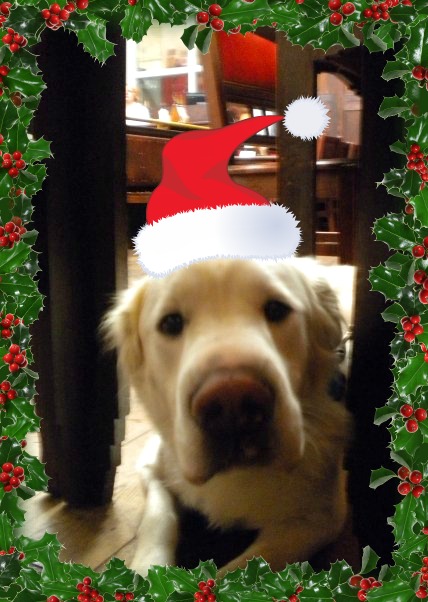
img: Turner Jansen under the table at Café Olivier Utrecht — taken in September 2009 but jazzed up for this post. (Turner’s comment: “Not sure I like this hat. Woof!”)

STAY TUNED for tomorrow’s installment from our displaced fictional heroine, Libby, who is still recovering from the shock of her mother-in-law’s body piercing. (What, not keeping up with Libby? Read the first three episodes of her expat adventures.)

If you enjoyed this post, we invite you to register for The Displaced Dispatch, a round up of weekly posts from The Displaced Nation, with seasonal recipes, book giveaways and other extras. Register for The Displaced Dispatch by clicking here!

Related posts:
RANDOM NOMAD: Aaron Ausland, NGO Research Director & Development Practitioner

Born in: Eugene, Oregon (but raised in Plains, Montana, a town of 1,200)
Passport: USA*
Countries, states, cities lived in: Washington (Yakima, Tacoma, Spokane): 1989-95; Alaska (Anchorage): 1995-97; Bolivia (Bañado de la Cruz & Santa Cruz): 1997; 1998 – 2002; Washington (Seattle): 2002-03; Massachusetts (Cambridge): 2003-05; Guatemala (Guatemala City): 2004; California (Duarte): 2006-10; Colombia (Bogotá): 2010 – present.
Cyberspace coordinates: Staying for Tea | Good Principles and Practice of Community-based International Development (blog); @AaronAusland (Twitter handle); Aaron Ausland at Huffington Post (column)
*My passport is only three years old, but multiple entries to about 40 countries filled it right up and I’ve had to add more pages. By the end of this year, I will have slept somewhere other than home about 190 of the 365 nights.

What made you leave your homeland in the first place?
My late first wife and I wanted to make a difference in the world and were particularly passionate about issues of justice, peace, and poverty. After graduating from university, we decided that maybe the best place to match our greatest gifts with the world’s greatest needs was in the public policy arena. We thought it would be good to represent a view on behalf of the marginalized — those uninvited to the table where policy decisions are made that nevertheless affect their lives in profound ways. In particular, we were thinking of illiterate poor persons living in underdeveloped countries ruled by bad or incompetent leaders and subjected to all the crap that comes with weak institutions of governance.

But we realized it would be pretty lame to run off to graduate school straight out of undergrad and then find some job in a policy think tank or as a Congressional aide in the hopes of working our way up to having a place at the table with a mind to represent these unrepresented views when we really hadn’t a clue what they were.

So we made a three-year commitment with the Mennonite Central Committee to go live and serve in a Bolivian village with people who fit this description.

We were young, hopeful, idealistic, earnest, and naïve. I can say that I’m not so young anymore.

Is anyone else in your family a “displaced” person?
I have a brother who served in Iraq for a couple of years, but he now lives about a hundred meters from our dad’s house in Yakima, Washington. I’m really the only one in my family who has chosen a lifestyle for which the question “Where are you from?” generates a confusing jumble of explanation rather than a simple city-state combo. 

Unless you count my son, Thiago. He’s six and is definitely more “displaced” than me. He literally speaks of living in two different “worlds.” In one “world” he speaks Spanish, has a home and school in Colombia, where his sister was born, and has family in Bolivia (his mother is Bolivian). In the other world” — where he says he is really from — he speaks English and has friends in California and a large family on my side including a whole set from my late first wife. Yesterday he told his mother: “My brain is confused, I don’t know where I should live. All my friends are in California, but my cousins are in Bolivia, and I go to school in Colombia and have friends there, too.” Poor little nomad.

Describe the moment when you felt most displaced.
For me the question was “How the hell did a small town boy from Montana end up here?” Physically, at that moment, “here” was a stainless steel operating table in a dark and empty hospital room in Santa Cruz, Bolivia. But more profoundly, “here” was a situation so far from my expectations, I was literally struggling to connect the dots and figure out how I had gotten myself there. I was 25 years old. Somewhere in a ravine a hundred miles away lay the broken body of my wife. A few hours earlier, the public bus in which we were riding had missed a turn on the narrow, winding road that passes through the Andean foothills and tumbled 1,000 feet into the dark.

She and I had gone to Bolivia with a long-term vision of our lives together, and now I was here, in a foreign land, alone, the slate of the future wiped clean. It was so profoundly disorientating, I just kept coming back to the question: “How did I get here?” Maybe it was a way to push off the searing emotional pain that would come with facing into my new reality, but the question wouldn’t go away. What sequence of events and decisions led me here? Did I make a mistake?

I remembered scenes from my idyllic boyhood in small-town Montana when my whole world was contained in a 100- mile radius and a handful of friends and family members. How had the world gotten so big, so uncertain, so complicated? And what was I doing wandering around in it like a lost child? How had I gotten here?

Much later, I would decide that I hadn’t made any mistakes. My first wife and I had made decisions based on a set of values that we held in earnest and I continue to hold. The fact that those decisions led to tragedy does not diminish the certainty of those values — it just means that those who hold them are not exempt from catastrophic loss that come to all who live.

I know you were probably hoping for a funny anecdote about crazy food or wacky cultural misunderstanding, but this is my one true displacement story.

Describe the moment when you felt least displaced.
Nowadays, I feel a sort of indifference about the whole location thing, to be honest. Whether I’m living in Cambridge attending the Kennedy School of Government, or setting up a new home in Colombia, or sitting where I am at this moment at an outdoor bar in a hotel in Bamako, Mali, I feel neither particularly at home nor particularly displaced. Feeling at home has a lot less to do with place than it used to, and it’s often unpredictable. I can feel more at home in Albania when I have a good macchiato and an Internet connection to video Skype with my children than I might in a hotel in Atlanta after a missed flight, with a dead computer battery. I can feel more at home when I’m sharing a beer with a fellow expat I’ve just met in rural Cambodia than I might sharing a beer with an old friend I grew up with who never left Montana.

I’ve experienced profound moments in my adopted homelands — from becoming a widower, to getting married, to rejoicing at the birth of my daughter, to undergoing major medical treatment. In each of these, it was the people who surrounded me that made me feel at home, and the uniqueness of the event that made me feel displaced. The location or culture has ceased to hold much power over my perception of self at particular moments.

You may bring one curiosity you’ve collected from each of your adopted countries into the Displaced Nation. What’s in your suitcase?
I’ll bring my wife from Bolivia, my son from the USA, and my daughter from Colombia. They are certainly a curious bunch, but I can’t live without them.

You’re invited to prepare one meal based on your travels for other Displaced Nation members. What’s on the menu?
Well, the cuisines of places like India, Thailand, Ethiopia, and Mexico are always worth sharing. The rich complexities that have come from centuries of experimentation with combinations of local flavors as well as some exotic additions from old trade routes are heritage gifts to the world. But, I’m sure someone will bring a few dishes from these parts into the Displaced Nation, so maybe I’ll bring some less likely ones such as the rich Malian sauce made in part from the boiled fruit of the baobab tree; the surprisingly filling chicken hearts strung on a kabob, flavored with soy sauce and charcoal smoke, sold on the streets of Bolivia; or maybe a lesser known dish from Mexico — the corn smut omelet made with cuitlacoche, a purplish fungus that grows on corn; or maybe I’ll just bring the beer…

You may add one word or expression from the countries you’ve lived in to The Displaced Nation argot. What will you loan us?
I think I’ll pass on this one. Pole sana (so sorry!) as we say in Swahili. Actually, maybe that’s a good one. Pole (pronounced POH-lay) doesn’t have an exact English equivalent — it’s used to say you empathize and understand someone’s problems, without the connotation of inferiority that “I pity you” might have.

This month we are looking into “philanthropic displacement” — when people travel or become expats on behalf of helping others less fortunate than themselves. Do you have a role model you look up to when engaged in this kind of travel — whose words of advice you cherish?
I’ve never really had a specific role model for philanthropic displacement. That said, I’ve always been impressed with people who make long-term commitments to live among the people they wish to serve and voluntarily forego access to comforts and safety they might otherwise enjoy.

There are some famous examples like Mother Theresa, but the ones that have had the biggest personal impact on me are unknowns — volunteers and professionals I’ve met and worked with along the way. Such people taught me how to live with a kitchen stocked with just 12 items — that’s counting the spices. They taught me how to bring my water up from the river in the morning and hang it in a tree from a bucket painted black so that the sun would heat the water throughout the day, in preparation for a warm evening bucket shower. I learned how to capture rain water, how to build dry latrines, how to trust local medicinal practices, how to enjoy silence, how to walk the equivalent of a marathon a day to visit local families, how to sit and unhurriedly share tea over conversations that circle around rather than cut to the chase, how to embrace simplicity as a virtue… I also forgot how to complain and remembered to be grateful in the midst of scarcity.

Most of my role models didn’t do anything spectacular — they didn’t invent microfinance or the treadle pump, they didn’t negotiate peace accords or write a best seller. But the way they displaced themselves so thoroughly, the way they embraced their local communities with such authenticity — this had a big impact on how the communities valued their presence and their contribution, and on me.

Voluntourism is said to be the fastest growing segment of the travel industry (itself one of the world’s fastest growing industries). Do you think this kind of travel can help the uninitiated understand the problems our planet is facing?
No, not really. It’s not that I think voluntourism is unequivocally a bad thing, but I just don’t think you can expect people to gain a very accurate understanding of complex problems under such circumstances. In fact, I think it’s more likely to leave them with a distorted understanding. There is a saying I picked up somewhere that goes something like this:

Travel to a new place for three weeks and you can write a book, travel for three months and you can write an article, travel for three years and you’ll likely have nothing to say.

There’s just something about a short and intense exposure that seems to set very strong ideas into the minds of those who’ve experienced it. But their ideas are biased by the specificity, narrowness, and brevity of that experience.

For example, someone who has had a high-impact experience volunteering in an orphanage for a week may feel they know more about the issue than people who haven’t had that experience. In fact, they may actually know less due to the biases they have picked up. It’s like believing you know something about the average person in a country from a single observation.

Sometimes, people know just enough to be dangerous; they mistake their shallow knowledge for an actual understanding of some enormously complex problem, and they act on it in ways that are ultimately irresponsible.

The truth is, the problems facing our planet are complex and we should all be grateful for the specialists who have dedicated their lives to understanding and addressing them. Doing something serious about addressing these problems will require professionals, not hobbyists; lifers, not tourists.

Again, it’s not necessarily a bad thing to pass through as a tourist, but with regards to your question here, we need to guard against self-deception. I’ve taken a few tours of a number of hydro-electric projects across the Western USA. I think they are really interesting. But, I know better than to believe I know the first thing about harnessing the power of water to generate electricity while balancing the ecological, economic, legal, social and political interests of farmers, consumers, industry, and the environment.

Likewise, you can’t take a two-day tour of an urban slum in Kenya and think you understand poverty, urban migration, economic development, or whatever other angle one might give such a tour.

For a broader scope of my thoughts on voluntourism, I encourage you to see my blog posts:

Readers — yay or nay for letting Aaron Ausland into The Displaced Nation? Tell us your reasons. (Note: It’s fine to vote “nay” as long as you couch your reasoning in terms we all — including Aaron — find amusing.)

img: Aaron Ausland in Mexico City (he’s the suit!). While on a lunch break from her work conducting a month-long operations audit of an NGO office, Aaron happened upon a lucha libre wrestling match putting on an outdoor show, and decided it would be amusing to pose with the star luchadore.

STAY TUNED for tomorrow’s installment from our displaced fictional heroine, Libby, when we get to find out whether she’s recovered from eating her mother-in-law’s undercooked Thanksgiving turkey. (Not keeping up with Libby? Read the first three episodes of her expat adventures.)

If you enjoyed this post, we invite you to register for The Displaced Dispatch, a round up of weekly posts from The Displaced Nation, with seasonal recipes, book giveaways and other extras. Register for The Displaced Dispatch by clicking here!

Related posts:

RANDOM NOMAD: Adria Schmidt, Career Consultant at Violence Intervention Program & Former Peace Corps Volunteer

Born in: Phoenixville, Pennsylvania USA
Passport: USA
Countries, states, cities lived in: Pennsylvania (Collegeville & Landenberg): 1985-87 & 1996 – 2004; Ohio (Cincinnati): 1987-96; Massachusetts (Boston): 2004-06, 2008-09; Argentina (Buenos Aires): 2007-08; Dominican Republic (Cambita Garabitos, San Cristóbal province): 2009-11; New York (New York): June 2011 – present.

What made you leave your homeland in the first place?
I guess you can say I left my homeland in search of a home. I never felt very “at home” as a teenager in Pennsylvania, so when the opportunity came to travel to Spain on a class trip I went eagerly. On this short trip I found that I felt more comfortable with some parts of the Spanish culture than with my own. The seed of wanderlust was planted.

When I went to school in Boston at Northeastern University, I decided to study the Spanish language, partly because of my interest in the language and the culture of Ibero-America, and partly because of my wish to study abroad.

Under Northeastern’s “Dialogue of Civilizations” program, I worked in Puebla, Mexico in a women’s prison, as well as in a small indigenous village in the mountains of Cuetzalan, where the people spoke only Nahuati. Both were amazing experiences.

And under Northeastern’s study abroad program, I lived in Argentina for nearly a year — during which I decided I wanted to help impoverished people in developing countries so would try joining the Peace Corps. Two years and one Master’s degree later, I was finally accepted and sent off to the Dominican Republic.

So did I ever find that “home” I was looking for? To be honest, my travels have only nurtured that original seed of restlessness. The more I travel the more I discover about myself and others — and the more I realize how much I still have to learn. For now, at least, home is wherever I want it to be.

Is anyone else in your family a “displaced” person?
As far as my immediate family goes, no one is or has ever been “displaced” — although I do like to think that my travels have inspired family members to explore other countries. My father was always one of those people who felt it would never be necessary to leave the United States as he had everything he wanted or needed right here. But when I went to Argentina, my parents decided to visit, and my dad absolutely fell in love with the country. To this day, he tells people that Argentina has the best pastries in the world. Now when I tell my parents I’m going overseas, they no longer respond by saying: “Why do you want to go there?” Instead it’s “When can we visit?”

Describe the moment when you felt most displaced.
One night in Cambita my host sister’s husband brought me a guayaba (guava). He was really excited for me to try one for the first time, and I didn’t have the heart to tell him I had eaten this fruit before in Mexico. After I ate it I started to feel nauseous and dizzy. Soon my lips began to swell and my whole face was itchy. I was having an allergic reaction to a chemical (a fertilizer or pesticide) that had been used on the fruit. I called the Peace Corps doctor, who told me to take two Benadryl and then a shower to wash the chemicals off.

When I got to the shower — an outdoor zinc and cement block latrine with a drain in the middle — I hung my towel on the cement blocks and poured cold water from a bucket over my head. It was already dark and I couldn’t see anything.

As soon as I finished, I wrapped the towel around myself and as I was heading back to the house, I felt a small sting on my stomach, then another one on my back, and another one on my chest. Soon my whole body was burning with these sharp little stings. Inside my towel was a colony of fire ants! I ran to my room, only to find it occupied. My host parents, Doña Romita and Don Rafael, were busy adjusting a new table the latter had constructed from an old cabinet. All I wanted to do was rip off my towel, but I could not get naked in front of my 70-year-old hosts!

By that time, the ants were all over my body. I was jumping up and down, shaking my towel and yelling for them to get out of the room. In all the commotion the oil lamp was knocked over and shattered on the floor. Doña Romita refused to let me in the room with the glass on the floor. Still unsure of what was wrong with me, she rushed me to her room. I quickly closed the door and whipped the towel off, slapping the ants off my body.

Just when I thought the nightmare was over I looked up and realized the shades were wide open and everyone outside the house had seen me naked and jumping around. At that moment, Doña Romita knocked on the door to tell me that my project partner and his wife were there to see me.

Describe the moment when you felt least displaced.
After being in the Dominican Republic for more than a year, I came back to the States to visit my friends and family. One night, while out with some friends all the girls couldn’t stop talking about their weight. They were commenting about how beautiful one of our friends was because they had never seen her so skinny before. All I could think of was how sickly she looked and how much I wanted to feed her. I couldn’t understand why being skinny was considered better while in the Dominican Republic being called “fat” or (my favorite) “fatty” was a compliment. My view of what was healthy and beautiful had been altered from my time in the Peace Corps.

You may bring one curiosity you’ve collected from each of your adopted countries into the Displaced Nation. What’s in your suitcase?
From Argentina: All the ingredients and utensils for brewing maté, a drink made from the leaves of the yerba maté plant, containing caffeine and related compounds. (This is sadly ironic since I accidentally left behind my maté in my apartment in Buenos Aires.) The yerba is packed into a hallowed-out gourd, which is then filled with boiling water. You drink the mixture directly from the gourd using a metallic straw with a filter at the bottom, called a bombilla. Some people walk around with a thermos of hot water and the gourd to drink maté whenever they have the urge. It has a very strong, bitter taste, but you can add liquid sugar.

From the Dominican Republic: Some large jugs of the tree bark, sticks and herbs that can be used for making the classic Dominican drink mamajuana. I assume the Displaced Nation has honey and rum we can add to it? After filling with rum and honey, you let the jug sit for a few days. You can also add cinnamon sticks soaked in red wine and honey, or raw squid and seafood soaked in rum. Men use the seafood mamajuana to boost their virility. Regular mamajuana supposedly cleans the blood, provides a tonic for liver and kidneys, relieves menstruation pains, and cures many other ailments (depending on who you talk to).

You’re invited to prepare one meal based on your travels for other Displaced Nation members. What’s on the menu?
I would make the meal I ate the most of in the Dominican Republic: rice, beans, plantains, and overcooked spaghetti with carnation milk, canned tomatoes, and corn. It’s the perfect carb overload — are any of you marathon runners?

You may add one word or expression from the countries you’ve lived in to The Displaced Nation argot. What will you loan us?
From Argentina: Che, boludo. Che is similar to the American word “dude.” I love che because it means that whenever I’m talking to someone and can’t remember their name, I can just call them che. Boludo technically means “jerk” (or worse), but it can also be used in an endearing way. My Argentinian friends and I always used to greet each other with a “Che, boludo!”
From the Dominican Republic: Vaina — though it technically means the pod around pigeon peas (gandules), everyone uses it to mean a thing or object. If I ever got stuck and couldn’t think of the Spanish word for something, I would just call it vaina while pointing to the object with my lips. It’s a great word for anyone learning Spanish.

This month we are looking into “philanthropic displacement” — when people travel or become expats on behalf of helping others less fortunate than themselves. Do you have a role model you look up to when engaged in this kind of travel — whose words of advice you cherish?
Strangely, I have never had a role model for this kind of travel. I was always drawn to it — but for some reason never felt the need to seek out others who had done it before me. My family were against my joining the Peace Corps because of fears for my health and safety. A psychic I met at a Renaissance fair right before leaving for Argentina told me I was going to do the Peace Corps. I don’t really believe in psychics but everything she told me that day has come true. So perhaps it was simply a matter of fate?

Voluntourism is said to be the fastest growing segment of the travel industry (itself one of the world’s fastest growing industries). Do you think this kind of travel can help the uninitiated understand the problems our planet is facing?
Voluntourism is a tricky subject for me personally. On one hand I feel that it is ridiculous to pay someone’s plane ticket, lodging, food, and transportation at a more luxurious level than any host country national has ever experienced to have them “volunteer” and do a job that a local person would probably be more than willing and capable of doing had all that money been spent on their salary. On the other hand, I do realize the value of cross-cultural communications for both parties and that, on the occasions when it’s done correctly, the volunteer might actually be able to transfer a valuable skill to the host country nationals. In short, it all depends on how the voluntourism is being executed.

While in the Dominican Republic, I observed many volunteers who were asked to do jobs that could have been, and in some cases even were once done by Dominicans. It wasn’t that the local population didn’t have the knowledge or training to do some of these jobs; it was that they didn’t have the money to pay a salaried person and wanted a “free” volunteer instead.

Luckily, most Peace Corps volunteers were successfully trained to avoid taking jobs away from Dominicans, and instead focus on areas where they and their community felt the need was greatest.

Readers — yay or nay for letting Adria Schmidt into The Displaced Nation? Tell us your reasons. (Note: It’s fine to vote “nay” as long as you couch your reasoning in terms we all — including Adria — find amusing.)

img: Hair washing ritual in Constanza, a mountainous area of the Dominican Republic, in spring of this year. Adria Schmidt is the one getting her hair washed — the one doing the washing is Rebecca, a fellow Peace Corps volunteer, and they are in the home of another Peace Corps volunteer, Malia (not pictured). Due to the primitive plumbing conditions, hair washing has to be done in the kitchen, by heating water up on the stove.

STAY TUNED for tomorrow’s installment from our displaced fictional heroine, Libby, who finds herself celebrating her first Thanksgiving under less-than-ideal circumstances. (What, not keeping up with Libby? Read the first three episodes of her expat adventures.)

If you enjoyed this post, we invite you to register for The Displaced Dispatch, a round up of weekly posts from The Displaced Nation, with seasonal recipes, book giveaways and other extras. Register for The Displaced Dispatch by clicking here!

Related posts:

RANDOM NOMAD: Jennifer Lentfer, International Aid Consultant, Writer & Blogger

Born in: Bruning, Nebraska USA
Passports: USA
Countries, states, cities lived in: Zimbabwe (Mutare & Harare): 1999 & 2002-04; Michigan (Detroit): 1999-2000; Pennsylvania (Pittsburgh): 2000-2002; Namibia (Windhoek): a few months in 2001; Malawi (Lilongwe): 2004-05; California (Santa Cruz): 2005-10; Washington, DC: two weeks ago-present.
Cyberspace coordinates: How Matters | Aid effectiveness is not what we do, but HOW we do it (blog); @intldogooder (Twitter handle)

What made you leave your homeland in the first place?
I grew up on a pig farm in Bruning, Nebraska, population 248. The graduating class of my secondary school had 16 people. Every time the phrase “it takes a village to raise a child” is uttered, I think “If only they really knew…” Thinking back, there were two very important teachers, one in high school, and another at university, who were extremely influential in shaping and expanding my world view. And my parents certainly raised me to cultivate a curiosity about life. This, along with my insatiable, youthful desire to get as far away from Nebraska as possible, was a combustible mix that shaped my career and life path.

Is anyone else in your family a “displaced” person?
I was the first person in my family to go or live abroad. I don’t think I even knew anyone who had been to Africa before my first trip abroad, at age 19.

Describe the moment when you felt most displaced.
On the bustling Nelson Mandela Avenue in Harare, Zimbabwe, in 2003. I always hated driving to city centre, but a colleague and I had to go to the immigration office to update our work permits. When we came out of the office, our car was blocked by another on the street. So we just got into the car and waited.

Eventually a man came up my driver’s side window and tapped on the glass. Not knowing him, I rolled the window down a couple of inches. This seemed to anger him and he walked away to talk to another man, a companion of his, who started yelling out to walkers-by that this white woman [me] would not roll down my window — I must think Africans are “stinky,” on and on… Luckily people didn’t engage him. There was a dynamic going on that I didn’t understand — apparently, I had parked in the man’s space, and he felt justified in scolding and harassing me for that.

After a few more minutes, the original man came back to my window, pulled out his wallet and his War Veterans identification card, placed it up against the glass and menacingly dragged it across. And then it made sense. The card, along with the man’s demeanor, indicated that he was probably one of the veterans of Zimbabwe’s war for independence, who’d been recruited by the Mugabe government for help in brutally suppressing opposition demonstrations, in murdering and torturing opposition leaders, and in seizing land on behalf of the government elite.

Eventually, the man had had enough with me. He motioned for the car behind me to move, and I backed out and drove away very quickly.

Obviously, my experience that day was nothing compared to the very real and severe political violence and torture experienced then and now by Zimbabwe’s opposition supporters. If I felt displaced, imagine how black and white Zimbabweans felt who were violently displaced from their lands on behalf of so-called fast-track land resettlement. And on another level, my experience was nothing compared to the everyday torments of living in a country where in a sense everyone (war veterans included) has been displaced from a state of personal dignity and safety, through subtle yet deliberate expressions of power.

Describe the moment when you felt least displaced.
Also in Zimbabwe — when talking with a group of local leaders in 2008. We were sharing stories about the issues women face in their struggles to raise families and improve their communities. One woman shared a brilliant story of triumph from being a physically and emotionally abused wife to now owning her own hairdressing business. She cried as she bravely told us about her life, and many others shared her tears.

Because I was there as a visitor, I was expected to respond (through a translator), and I took a chance in trying to break the tension and make the moment a bit lighter. I told her that I could tell she was a hairdresser because her plaits [braids] looked so perfect.

After the pause in which the translator shared what I had said, the room erupted in laughter. We were all reminded, no matter where we were from, of the sweetness of laughter through tears.

You may bring one curiosity you’ve collected from each of your adopted countries into the Displaced Nation. What’s in your suitcase?
I had quite the African basket collection going for a while until they were stolen from my storage unit in Santa Cruz. That’s all the thieves got since I was in the process of moving at the time. Their house probably looks really cool now.

You’re invited to prepare one meal based on your travels for other Displaced Nation members. What’s on the menu?
Peanut butter vegetable stew is what I crave — from Zimbabwe. Let me know which of these recipes you fancy:

You may add one word or expression from the countries you’ve lived in to The Displaced Nation argot. What will you loan us?
Zvakaoma. This is a phrase in Shona that means, “it’s tough” or “it’s difficult.” It also roughly translates to “shucks” in English or “c’est la vie” in French. It was a phrase I heard often in Zimbabwe because of the severe economic downturn and the unavailability of basic commodities and cash during my time there. To my ears, it was a very compassionate phrase. Zvakaoma — I lament with you; I feel your frustration and pain. Sometimes a well-timed zvakaoma can get you through your day.

This month we are looking into “philanthropic displacement” — when people travel or become expats on behalf of helping others less fortunate than themselves. Do you have a role model you look up to when engaged in this kind of travel — whose words of advice you remember when you find yourself in a difficult situation?
Great question — one that we aid workers should always be asking themselves as well, because how we go about developing our role or calling can have an impact on our effectiveness as helpers. Helping is hard. Unfortunately, there aren’t any simple solutions to aiding the poor.

Having worked in international aid and philanthropy for over a decade, I’ve come to admire the people who have managed not to totally lose their idealism and commitment to the work. So many aid workers become jaded and cynical — I can’t help but wonder if this hinders their effectiveness in the field.

In addition, I really look up to the leaders of local nonprofits and grassroots organizations in the countries where I’ve worked. I’ve had the privilege of working with over three hundred such groups in southern and eastern Africa during my career. Most were linked to local churches, schools, or clinics though some were also independent. They extend support and services into areas that are not reached sufficiently by government or international agencies.

The web of local initiatives in the developing world is still largely undocumented, unrecognized and under-resourced. WiserEarth.org conservatively estimates there well may be over a million such groups around the world! In my experience, these local leaders are there for kids, families and communities, whether funding or support from outsiders is available or not. Watching them and their persistence keeps me going.

Voluntourism is said to be the fastest growing segment of the travel industry (itself one of the world’s fastest growing industries). Do you think this kind of travel can help the uninitiated understand the problems our planet is facing?
Aid workers easily get frustrated when we see harm being done by well-meaning but naive tourists. Though if we are honest, that is how many of us got our start in this work. A great article by writer J.B. MacKinnon, entitled “The Dark Side of Volunteer Tourism,” provides a reality check. He wrote:

First, nothing is likely to stop the increase in person-to-person contact between people of the richer nations and people of the poorer. Second, there is much to be gained on both sides from this exchange. Third, those gains will be made through a series of small, personal, humbling errors.

To anyone considering voluntourism, I can recommend PEPY Tours in Cambodia. It’s doing voluntourism responsibly, thoughtfully, and respectfully — and has a great blog to follow, Lessons I Learned.

In general, I’d advise volun-tourists to ask critical questions of whatever project or trip in which they’re involved. Link the big issues to what you’re trying to do locally. It’s important to be curious about the root causes of poverty and vulnerability and what is needed for long-term change. Commit yourself to this learning process and never stop asking the deeper questions, whether it’s your first trip abroad or you’ve been working “in the field” for decades.

It’s also vital to recognize that every community has important non-monetary assets. When we come from a perspective of “we have so much, they have so little,” it’s easy to miss this. So the question becomes: “Who are the local leaders who are already doing great work who need the resources I have to offer?”

Finally, don’t let your good work become all about you. Place local people’s efforts before your own, in order to foster ownership and sustainability. Remember that whatever you do will always be secondary to the relationships you build.

Readers — yay or nay for letting Jennifer Lentfer into The Displaced Nation? Tell us your reasons. (Note: It’s fine to vote “nay” as long as you couch your reasoning in terms we all — including Jennifer — find amusing.)

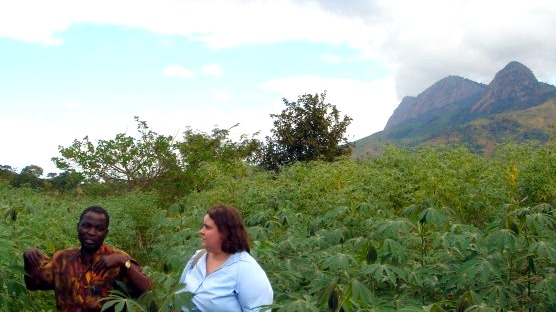
img: From corn to cassava — Jennifer Lentfer talking with farmer and local leader Jones Pilo in Zomba, Malawi (2007).

STAY TUNED for tomorrow’s installment from our displaced fictional heroine, Libby, who is hoping that Oliver’s visit back to Milton Keynes doesn’t result in any surprise guests (Sandra, for instance!) at their first Thanksgiving. (What, not keeping up with Libby? Read the first three episodes of her expat adventures.)

If you enjoyed this post, we invite you to register for The Displaced Dispatch, a round up of weekly posts from The Displaced Nation, with seasonal recipes, book giveaways and other extras. Register for The Displaced Dispatch by clicking here!

Related posts:
RANDOM NOMAD: Matt Collin, Ph.D. Student in Development Economics, Researcher on Tanzania & Aid Blogger

Born in: Oxford, UK
Passports: USA & UK
Countries lived in: South Carolina, USA (Conway & Clemson): 1984-2001 & 2001-05; UK (Oxford): 2005-06, 2008-present; Malawi (Lilongwe): 2006-08.
Cyberspace coordinates: Aid Thoughts | Digesting the difficult decisions of development (currently on hiatus)

What made you leave your homeland in the first place?
I’m not sure I actually had much a homeland to begin with. Despite living in the American South for quite a long time, my parents — a well-traveled American father and an Anglo-American mother — kept me from completely identifying as a South Carolinian. Frequent trips to the United Kingdom to see my mother’s family made me very familiar with life there, although I don’t know that I managed to feel completely “normal” in either location.

This upbringing made it easier for me to leave the United States. While I felt very at home in South Carolina, it didn’t provide the best opportunities for the career I wanted to pursue, in development economics. Oxford did — plus it was familiar from previous visits.

Is anyone else in your immediate family “displaced”?
Both of my parents are “displaced.” My father spent a large hunk of his life in the Middle East and Europe. He ended up in England, where he met my mother. They returned to the US just after I was born. My mother, whose mother is English and father American, was born in the US but raised in the UK — the opposite of me.

Describe the moment when you felt most displaced.
My first few days in Malawi. I went there as a fellow with the Overseas Development Institute in the UK, which sends young economists off to developing countries on two-year stints to work as civil servants for the host government. (I’d been placed in Malawi’s Ministry of Finance.)

My connecting flight through Johannesburg was late, so I ended up tagging a long with an Asian Malawian man who got us onto a flight to Blantyre, Malawi’s commercial capital — which is reasonably far away from where I needed to be. I spent my first night in Malawi alone in a large, empty guest house, with a promise I’d be driven to Lilongwe the next day. I was young (22) and at that point possessed all the typical Western prejudices about African countries. Everything was unknown. What followed, though — a long, leisurely drive up the spine of the country — was an amazing and illuminating introduction.

Describe the moment when you felt least displaced.
It’s hard to pinpoint when you stop feeling displaced because you don’t really notice the absence of the feeling — you just feel comfortable.

The first time I started noticing how comfortable I felt in Malawi was during my first visit back to the UK. There was this sudden anxiety in realizing that there were things going on back in Malawi that I wouldn’t be around to observe. Your home is where you want to get back to, whether or not it is a physical place or a person, and I wanted to get back to Malawi, after having lived there for only eight months.

I suppose I felt least displaced after two years in Malawi, just as I was about to leave. I had never before felt sad about leaving a place, as my moves were always part of my personal trajectory — going to school, taking a new job, etc. Leaving Malawi was heart wrenching in a way I’d never experienced before.

You may bring one curiosity you’ve collected from each of your adopted countries into the Displaced Nation. What’s in your suitcase?
From the United Kingdom: British sweets — when I was young, I developed a major craving for fruit pastilles, wine gums and the like — and would horde them whenever my family visited the UK.
From South Carolina: Sand dollars and salt water taffy from Myrtle Beach, the beach town I used to live near. (The town is a little garish, but it’s incredibly relaxed in its tackiness.)
From Malawi: A small, simple scene constructed out of banana leaves, in a wooden frame. It’s of a small village in Malawi, with a striking blue sky — the sky takes up half the frame. I had it in my bedroom in Lilongwe, and it’s followed me wherever I’ve moved since. I think it does a good job of capturing the quiet, laid-back atmosphere of the country.

You’re invited to prepare one meal based on your travels for other Displaced Nation members. What’s on the menu?
This is difficult, as I’m not known for my cooking, but here we go:

For a starter, I’d serve an avocado and mango salad (both grown in Malawi).

For the main course, we’d have chambo curry (chambo is a fish from Lake Malawi, similar to tilapia) with nsima (ground maize meal) — preferably refried and spiced. Or if you’d prefer, I can replace the nsima with grits from South Carolina — they are practically the same thing. For good measure, let’s have fried okra from South Carolina on the side.

For drinks, I’d offer either iced tea (that South Carolina classic) or a bottle of Carlsberg Brown — technically Danish, but Malawi has had its own Carlsberg brewery for decades now, and it’s the only place that produces “Browns.”

For dessert, it’s hard to go wrong with apple crumble from the UK, a country that knows its desserts!

You may add one word or expression from the countries you’ve lived in to The Displaced Nation argot. What will you loan us?
From the US: Ain’t — it’s incredibly stereotypical, and I can’t say that I actually used it that often when I lived in South Carolina, but occasionally I’ve wanted to bust out with this in conversation in the UK, to enjoy the bewildered response it would inevitably elicit.
From the UK: Nip, or go quickly. I grew up using this, thanks to my parents. As it’s an extremely common expression in the UK, I always assumed it was known elsewhere. Halfway through my undergraduate degree, I announced I was nipping out to the toilet, when a friend leaned in and quietly said, “Matt, no one here knows what you are talking about.” It’s indicative of the slight difficulty of navigating two countries with a common language, but different vocabulary.
From Malawi: Zikomo (thank you!), short for zikomo kwanbiri (thank you very much). Very simple, very basic — yet it was the word I ended up using most often.

This month we are looking into “philanthropic displacement” — when people travel or become expats on behalf of helping others less fortunate than themselves. Do you have a role model you look up to when engaged in this kind of travel — whose words of advice you remember when you find yourself in a difficult situation?
“Philanthropic displacement” is a difficult concept — one I’m not wholly comfortable with. It’s very difficult to travel to a completely new place and effectively help. Assistance requires familiarity, knowledge, and humility, so I think the most successful philanthropists will be those who make this choice independent of their decision to become displaced.

That said, I think the kind of displacement that comes from actually living in a country is a necessary condition for effective assistance. Many Americans are paralyzed at the thought of going to live overseas, especially in “exotic” and distant, developing countries. In that sense, my father was my greatest inspiration. He felt that you needed to travel to understand the world — and that you need to understand the world before you can aim to make it a better place. This was in stark contrast to most of the people I encountered in South Carolina, who rarely considered leaving the state.

My father also instilled in me an interest in human development, and so I suppose if you combine the two — overseas travel and human development — you have a good motivation to get into a field like development economics, and go jetting off to Africa to see what life is like there.

Voluntourism is said to be the fastest growing segment of the travel industry (itself one of the world’s fastest growing industries). Do you think this kind of travel can help the uninitiated understand the problems our planet is facing?
The difficulty I have with voluntourism is that is supply, not demand, driven. Citizens of developed countries feel the need to go learn about and assist people in developing countries, but often they are doing very basic tasks, such as building schools, which could easily be performed by local people. A fundamental question we should ask ourselves for these small-scale voluntourism initiatives is: “If we gave the village the money that we spent on the project, would they still pay for our plane tickets over?”

What’s more, I suspect most Westerners could gain the same or similar insights from straight-up tourism. You can, for example, go on slum tours in Nairobi. And, while I find “slum tourism” to be a bit strange, it at least isn’t trying to justify itself. There are also plenty of longer-term volunteer opportunities that can yield more insights than a one-week visit to build a school can.

So I suppose my answer is: don’t be afraid to make visiting a developing country a regular vacation — tourism dollars also help, and you can stretch your boundaries a little bit more. By the same token, don’t be afraid to take a leap and go to one of these countries for six months — just as long as you don’t go under the presumption that in half a year, you’ll be able to improve things. This takes time.

Readers — yay or nay for letting Matt Collin into The Displaced Nation? Tell us your reasons. (Note: It’s fine to vote “nay” as long as you couch your reasoning in terms we all — including Matt — find amusing.)

img: Matt Collin on a rock near Domwe Island, Lake Malawi (New Year’s Eve, 2006).

STAY TUNED for tomorrow’s installment from our displaced fictional heroine, Libby, who, following a freak snowstorm in New England, has moved out of her house to avoid being turned into a popsicle. (What, not keeping up with Libby? Read the first three episodes of her expat adventures.)

If you enjoyed this post, we invite you to register for The Displaced Dispatch, a round up of weekly posts from The Displaced Nation. Includes seasonal recipes and book giveaways. Register for The Displaced Dispatch by clicking here!

Related posts:

RANDOM NOMAD: Vilma Ilic, Research Associate for Sub-Saharan Africa (Social & Economic Development Projects)

Born in: Sarajevo, Bosnia (at the time of my birth, still Yugoslavia)
Passports: Happily, I carry a USA passport — and realize how lucky I am!
Cities/States/Countries lived in: Utah (Salt Lake City): 1985-90; Ohio (Columbus): 1991-99; Washington, DC: 2000-01; Washington (Randle*): 2002; Connecticut (Storrs & Hartford): 2003-05 & 2006-08; Germany (Hamburg): 2006; New York (New York): 2008-10, 2011-present; Uganda (Kalisizo Town, Rakai District): 2010-11.
Cyberspace coordinates: Still a work in progress, but stay tuned!
* A small community deep in the temperate rainforest of the Pacific Northwest, between Mt. St. Helen’s and Mt. Rainier.

What made you leave your homeland in the first place?
My mother was accepted to graduate school at the University of Utah. Both my mother and father yearned to leave Bosnia (formerly part of Yugoslavia), for no unusual reasons: they sought greater academic and career opportunities and a better future for their children. They also sensed the progressing demise of our country, which started promptly after Tito’s death. Unlike the rest of our family, friends, and neighbors, my family fled the country before the civil war and genocide began in the early 1990s.

Is anyone else in your immediate family “displaced”?
My parents are definitely displaced. Similar to other immigrants who’ve spent their childhood, adolescence, and young adult years in their home country and then lived more than thirty years in their adopted country, my parents have never quite fit into the United States. The extent to which immigrants like them do or do not have control over “fitting in” remains a mystery to me — resting as it does on so many social, racial, cultural, religious, economic, geographic, and ethnic variables. Maybe they are destined to always feel displaced? People like my parents tend to feel at “home” only when they have found pockets of people from their homeland who have created sub-communities in whatever locales they reside. But then when my parents actually do go home after spending so much time abroad, their friends and family regard them differently: “You’re an American now.” Comments like those — from your own family — can make you feel as though you’re living on the “moon.” You’re seen as something of a traitor, regardless of the amount of remittances you’ve sent home.

Describe the moment when you felt most displaced.
For me, feeling displaced has to do with suffering through a bad life decision — you only realize it’s a terrible choice when it’s too late. Call it poor planning or a penchant for ignoring sage advice, but unfortunately, I have a lot of experience in this realm. Working in Hamburg, Germany, was like that for me. I went there to teach English as a foreign language to Germans. I absolutely loathed the work — and also didn’t have a positive attitude. In retrospect, it’s pretty distressing to think that my time in Hamburg could have been much richer. Although it’s ethnically homogenous and the German culture is a tough one to crack, Hamburg is a wonderful northern European city with an abundance of parks, museums, delicious restaurants, festivals, free events, concerts, shopping, affordable living, social services, and whatever you wish for in a metropolis with enough space to never feel stifled. Yet I felt displaced the entire time I was there.

Describe the moment when you felt least displaced.
The moment I set foot in the Pearl of Africa. There’s something about Uganda. It’s a loving country — the people are warm, welcoming, celebratory — and the terrain itself, not to mention the climate, is extraordinarily beautiful. All of these elements combined — the beauty of the people, the country, the climate — made me feel instantly at home. Of course, in a place like Uganda, I stick out in the crowd — hence am always at the mercy of onlookers and of people incessantly yelling “Muzungu!” But even when I was the only muzungu for miles and miles, and didn’t understand the language, I felt more comfortable and at peace there, than I have anywhere in the world.

If I had to analyze it, I’d say my comfort level also had to do with the work I was doing in that country. I was on a small team that was part of the Suubi Research Project: we’d been given the task of designing a sustainable school-lunch program for 10 primary schools in southern Uganda. The majority of pupils don’t eat anything all day because their parents/caregivers cannot afford the nominal lunch fees. For those who can afford it, the midday meal consists of boiled maize-meal and water in a soupy consistency. Together with school teachers and administrators, pupils, and community members, we tried to come up with a program that would be nutritional but also generate a profit for schools in the long run.

To do this kind of work, I had to access parts of my brain, psyche, and heart that, in many highly-industrialized Western countries, are frequently subdued, or even sabotaged.

You may bring one curiosity you’ve collected from each of your adopted countries into the Displaced Nation. What’s in your suitcase?
From Zagreb, Croatia: A licitarka srce, an ornamental-sized heart-shaped cookie. Not intended for eating, it’s hardened, painted red, and adorned with loving phrases or sketches of historical sites in Zagreb. It’s a typical souvenir, but hasn’t lost its significance for me. And better yet, it’s small and lightweight.

From Sarajevo, Bosnia: A džezva, a pot used to make Turkish coffee, which locals consume about 4-5 times per day in the street cafes of Sarajevo. Pack it in your suitcase, and its uncomplicated design makes it possible to enjoy a strong Turkish coffee anywhere in the world — as long as there are finely ground coffee beans, water, and fire.

From Uganda: Handmade baskets woven from grasses, tree-bark hats, banana-fiber mats, and colorfully printed smocks. I would give all of these items away as gifts to Displaced Nation residents as I know I’ll keep returning to Uganda.

From the US: All of my iLife appendages — nothing else matters. But if there is still space, I’d pack a good pair of American blue jeans, running shoes, powdered electrolyte drink mixes, and probiotics.

You’re invited to prepare one meal based on your travels for other Displaced Nation members. What’s on the menu?
I’m going to choose the food from my home country, and various other parts of former Yugoslavia, which remains my favorite. I would prepare an assortment of meat, cheese and cabbage burek, with kajmak and kupus salata on the side.

For anyone needing to top off the meal with something sweet, I’d offer plates of oblande, tulumbe, kadaif, and krempite.

Beverages would include red wine from Macedonia and some sort of rakija (domestic spirits) as an aperitif.

And for an African touch, I’d consider including fresh tilapia from Lake Victoria, as well as fresh pineapples, avocado, mango, and papaya.

You may add one word or expression from the countries you’ve lived in to The Displaced Nation argot. What will you loan us?
From Uganda: You are lost. The first time a Ugandan said this to me (they say it in English), it took me some time to realize that in fact, I was very much found. After hearing it time and again, I interpreted it to mean: “I haven’t seen you in a while, where have you been?” or “I miss you.”
From American English: It’s not so much a word but the habit Americans have of inventing new words by converting nouns into verbs or combining two words/concepts: eg, voluntouring, voluntourism, professionalize, beveraging, tween…

This month we are looking into “philanthropic displacement” — when people travel or become expats on behalf of helping others less fortunate than themselves. Do you have a role model you look up to when engaged in this kind of travel — whose words of advice you remember when you find yourself in a difficult situation?
I would choose my father for this one. Some advice he has dished over the years has actually stuck. Many immigrant parents wish their displaced and nomadic offspring would settle down in the burbs already — but not my dad. He genuinely supports what I do. Here’s what he said:

Who you are, in terms of your skin color, gender, ethnicity, ability, whatever it may be, it’s all by chance. No one should be so attached to their position in society, because it could change at any moment, and you didn’t have a choice in the first place.

My interpretation of that is, regardless of how you position yourself or where other people place you in the ruthless global hierarchy, what you value in yourself, in other people, and in life, is of prime importance. You are not superior or inferior to anyone on this planet. We are all the same. With that approach, nothing is scary and everyone is valuable.

Voluntourism is said to be the fastest growing segment of the travel industry (itself one of the world’s fastest growing industries). Do you think this kind of travel can help the uninitiated understand the problems our planet is facing?
A lot people, myself included, scoff at the term “voluntourism.” We find it disturbing to think that privileged people are paying very large sums of money to spend a few weeks or months in a low-income country, somewhere in the global south or South/East Asia — to do what, exactly? How much of this money is being invested into the communities in which the voluntourists are traveling/visiting, and how much is supporting the Western-based organization? I think we know the answer.

On the other hand, I realize that this industry provides an organized, safe, and coordinated way for people who wouldn’t otherwise have the opportunity to visit certain parts of the world. I just don’t think the voluntourists should be misled. It is both their — and the organization’s — responsibility to fully understand the implications of their visit, and the impact of their visit on the community.

It’s difficult to measure how much this type of exposure can change one’s attitude toward and knowledge about a particular place and its inhabitants. I would advise anyone who has never left a highly-industrialized country and has enough resources, simply to board a flight to a poor developing country. The real learning and growing happens when you leave the comfort of a temporary expat community, the organized lodging, the capital cities and urban areas — and actually travel, by local means, to very remote and rural villages. It is these very raw, uncomfortable, and painful experiences — when people break the tourist habit of simply arriving, observing, interacting, taking, and leaving — that can lead to major epiphanies.

Readers — yay or nay for letting Vilma Ilic into The Displaced Nation? Tell us your reasons. (Note: It’s fine to vote “nay” as long as you couch your reasoning in terms we all — including Vilma — find amusing.)

img: Vilma Ilic and a friend from Zagreb nervously — owing to their leftover Catholic guilt — navigate the Virgin Mary’s blessed cove in the bluffs of Šibenik, a town on Croatia’s Dalmatian Coast (summer 2009).

STAY TUNED for what may or may not be tomorrow’s installment from our displaced fictional heroine, Libby, who has been in a state ever since her creator, Kate Allison, went missing on Halloween. Has she done an Agatha Christie on her? (What, not keeping up with Libby? Read the first three episodes of her expat adventures.)

If you enjoyed this post, we invite you to register for The Displaced Dispatch, a round up of weekly posts from The Displaced Nation. Includes seasonal recipes and book giveaways. Register for The Displaced Dispatch by clicking here!

Related posts:
RANDOM NOMAD: Jennifer Greco, Writer & French Cheese Specialist

Born in: Spokane, Washington, USA
Passports: USA and France
Cities/States/Countries lived in: Washington (Seattle): 1987-99; Louisiana (New Orleans): 1999-2003; France (Cesseras*): 2003-present
Cyberspace coordinates: Chez Loulou | A taste of life in the south of France (blog)
* A tiny village in the Languedoc-Roussillon region

What made you leave your homeland in the first place?
I’ve been a devoted Francophile ever since I was a teenager and knew that one day I would live in France. My husband and I bought a small holiday house in the south of France in 2001 and decided to move here permanently in 2003.

Is anyone else in your immediate family “displaced”?
I have no immediate family members who are “displaced”; however, my grandfather moved to America from Italy with his family at the age of 10.

How about your husband?
My husband was born and raised in New York City. He wasn’t a Francophile when we met, but as soon as I introduced him to Paris, he was hooked.

Describe the moment when you felt most displaced.
It wasn’t just a moment, but every single frustrating minute I had to spend in the the sous-préfecture, arguing with the woman behind the desk who didn’t want to do her job by helping me with my carte de séjour paperwork [visa for staying in France longer than a year].

Describe the moment when you felt least displaced.
The summer night that my husband and I sat at a long table in the center of the village with our neighbors, sharing wine, food, stories and laughter.

You may bring one curiosity you’ve collected from each of your adopted countries into the Displaced Nation. What’s in your suitcase?
From Seattle, Washington: If it wouldn’t spill, a caffè macchiato from Caffe Ladro.
From New Orleans: Mardi Gras throws and Crystal Hot Sauce.
From France: An olive wood Laguiole corkscrew.

You’re invited to prepare one meal based on your travels for other Displaced Nation members. What’s on the menu?
We’ll start out with a specialty of the Pacific Northwest: cracked Dungeness crab and clarified butter. Then we’ll each have half a Charentais melon filled with Muscat de Saint Jean de Minervois — a wonderful dessert wine from Narbonne, close to where I live in the south of France. For the main course, I’ll serve a jambalaya from New Orleans. Then we’ll have (mais oui) a Languedoc cheese course — including Roquefort, Pélardon and Tomette des Corbières. Dessert will be a New Orleans classic: bread pudding with Bourbon sauce.

You may add one word or expression from the country you’re living in to The Displaced Nation argot. What will you loan us?
From New Orleans: Makin’ groceries — meaning going grocery shopping. It’s one of the many colorful expressions that’s part of the local vernacular. I simply love it!
From France: Oh la vache! (Oh my gosh!) This one cracks me up — the literal translation is “Oh the cow!” I can’t say it without smiling.

It’s French Cuisine month at The Displaced Nation. Who is your favorite French chef of all time?
I love Jacques Pépin. He is an honest, down to earth chef, writer and instructor, and his recipes are always delicious. One of my favorites of his is the Skillet Apple Charlotte, a melange of Tarte Tatin and French toast. C’est délicieux!

Like you, Julia Child was an American who moved to France and fell in love with the food. (We have just now inducted her into our Displaced Hall of Fame.) Of the following three Julia Child quotes, which do you most identify with?

1) The only time to eat diet food is when you’re waiting for the steak to cook.

2) The only real stumbling block is fear of failure. In cooking, you’ve got to have a what-the-hell attitude.

3) Until I discovered cooking, I was never really interested in anything.

I most identify with: “The only real stumbling block is fear of failure. In cooking, you’ve got to have a what-the-hell attitude.” I believe in living life to its fullest and sometimes that means taking risks and ignoring the fear, whether it be in the kitchen or in life. Our decision to move to France meant leaving our comfort zone and embracing the challenge of learning a new culture. It hasn’t always been easy, but it’s definitely been worth it! As for the kitchen — readers of my blog will know that I’m now on a mission to taste every single French cheese. I’ve now tasted 205 (there are 600-1,000, depending on who’s counting).

Readers — yay or nay for letting Jennifer Greco into The Displaced Nation? Tell us your reasons. (Note: It’s fine to vote “nay” as long as you couch your reasoning in terms we all — including Jennifer — find amusing.)

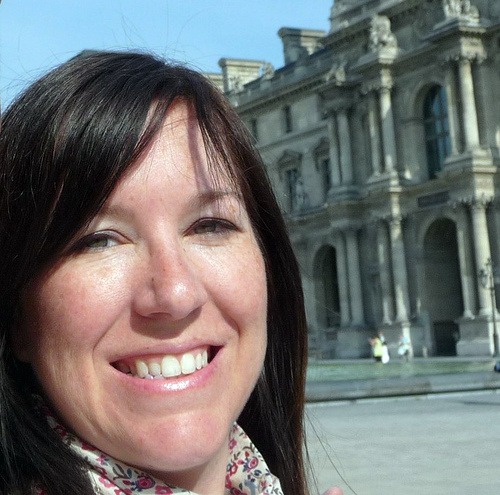
img: Jennifer Greco in Paris, in front of the Louvre (April 2010).

STAY TUNED for tomorrow’s installment from our displaced fictional heroine, Libby, who is taking last week’s advice from Maggie to heart and discovering that Woodhaven is her oyster. (A good thing she’s not allergic to shellfish like her husband, Oliver!) What, not keeping up with Libby? Read the first three episodes of her expat adventures.

If you enjoyed this post, we invite you to register for The Displaced Dispatch, a round up of weekly posts from The Displaced Nation. Includes seasonal recipes and book giveaways. Register for The Displaced Dispatch by clicking here!

Related posts:
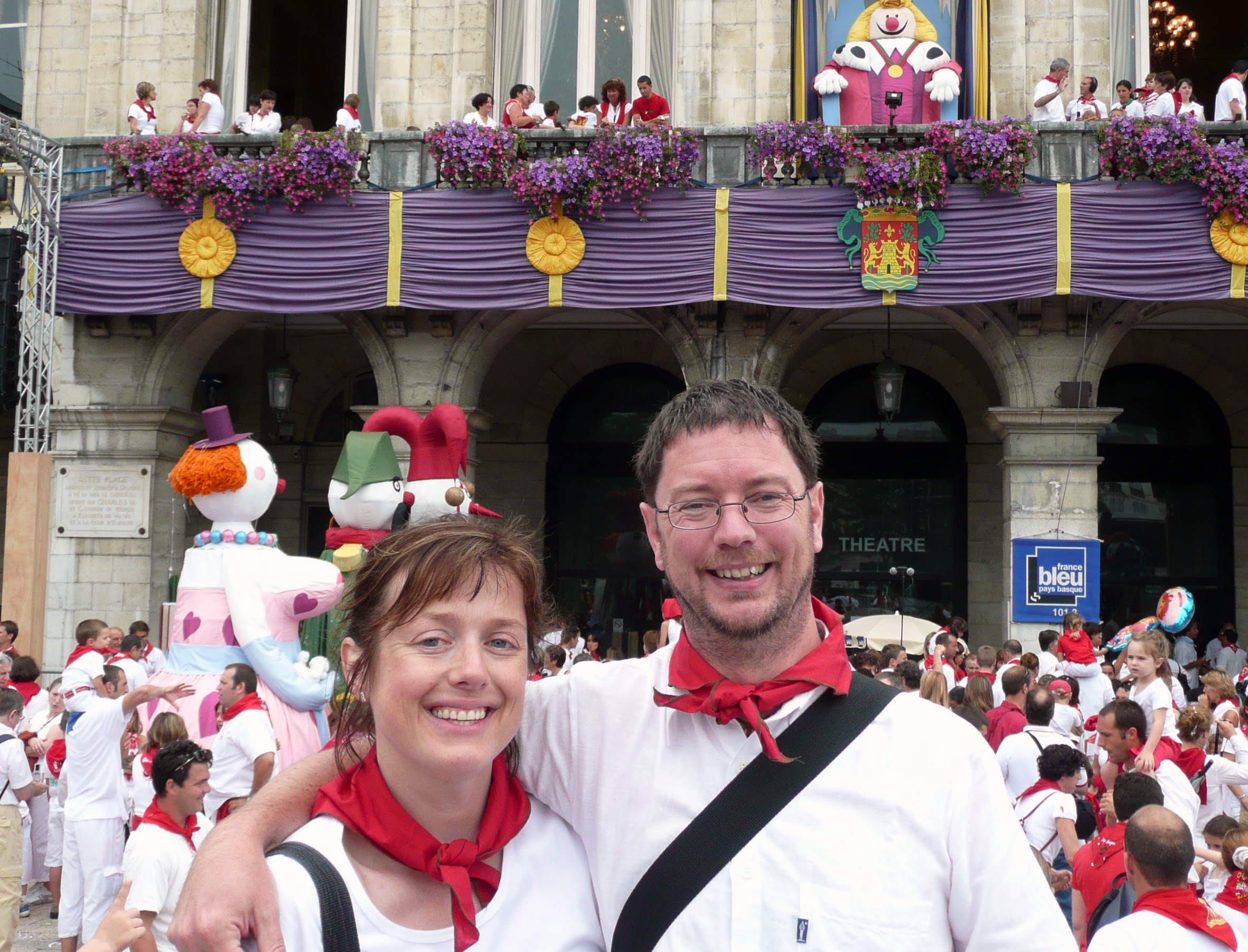
RANDOM NOMAD: Mardi Michels, Elementary School French Teacher, Home Cook, Writer, Photographer & Traveler

Born in: Adelaide, South Australia
Passports: Australia (by birth), Britain/EU (through my dad), Canada (I became a citizen in 2007)
Countries lived in: France (Paris): 1995-2000; Canada (Toronto): 2000-present
Cyberspace coordinates: eat. live. travel. write | my creative refuge from academia (blog); eatlivtravwrite (Twitter handle)

What made you leave your homeland in the first place?
I left Australia because I was working on my PhD in French literature and felt it made a lot more sense to be in the country of the language and culture I was studying. Soon after moving to Paris, I began working in a restaurant (Woolloomooloo Restaurant Australien — now closed) to supplement a meagre scholarship. About a year after moving to Paris, I got a job teaching English at Université Paris X and I was hooked on teaching English (I was already qualified to teach French) so I undertook my Dip TEFL [professional diploma in Teaching English as a Foreign Language] at the University of London Institute in Paris, eventually scoring a full time teaching job at the British Council. My PhD? Incomplete…

Is anyone else in your immediate family “displaced”?
My sister also left home when she was in her early 20s to complete a PhD at Oxford (which she did), and from there she worked in banking all over the world (England, Singapore, Japan). She has also traveled extensively in South America. She, too, has ended up in North America (New York City), teaching math!

How about your husband? Is he displaced?
He was when we first met — in Casablanca in December 1999. I was on a vacation in Morocco, and after that two-week jaunt, Mr Neil followed me back to Paris for a visit. He is the reason I am now in Canada. Six months after he visited me in Paris, I had a job teaching in French in Toronto lined up for the 2000-01 school year — and the rest, as they say is history. Neil is originally from Vancouver but has traveled the seven continents to some “out there” places. I mean, how many people do you know who have been to Easter Island?

Describe the moment when you felt most displaced.
The first time I had to do lunchtime outdoor yard duty the first year I was living in Toronto. I was ill equipped for the cold, wearing leather boots and a wool coat that was more than adequate in Paris. Not so much here. It was five years before I succumbed to the puffy coat and winter boots.

Describe the moment when you felt least displaced.
Honestly? Stepping off the plane this past summer when I arrived in Paris. I try to get back there every year or so (I completed my MA in Second and Foreign Language Teaching a few years ago, requiring me to take courses two summers in a row in Paris). Even though I have lived longer in Toronto now than I did in Paris (and I love my life in Toronto), and I don’t have any family there, Paris is still a place where I feel curiously “at home.”

You may bring one curiosity you’ve collected from each of your adopted countries into the Displaced Nation. What’s in your suitcase?
I’m thinking cookware from Mora (a treasure trove of ring molds, tart pans and other French pastry equipment) or A Simon (good selection of glassware and heavy-duty white French porcelain) — both on rue Montmartre; or else baking ingredients from G Detou, one of the world’s great food shops, in Les Halles.

You’re invited to prepare one meal based on your travels for other Displaced Nation members. What’s on the menu?
The meal I would prepare for you would include a dish inspired by each continent. My husband and I have visited all seven continents, and we actually hosted this luxury dinner last year, as documented on my blog:

  • Moroccan spiced chick peas
  • Vietnamese caramelized chili prawns
  • Italian polpette d’uova
  • Australian micro meat pies
  • Mexican tortilla chicken soup
  • Cuban ropa vieja
  • Panamanian (coconut) rice with pigeon peas
  • Jamaican jerk chicken
  • Île flottante

You may add one word or expression from the country you’re living in to The Displaced Nation argot. What will you loan us?
I couldn’t pick one specific one but some words that have crept into my vocabulary (and that of my students’) include hop là, aïeoh là là, et hop, and ouf — words that sound ridiculous removed from the context of everyday French vocabulary but that have turned out to be very useful in the context of my classroom 😉 Surely The Displaced Nation could use a few more interjections?

It’s French Cuisine month at The Displaced Nation. Who is your favorite French chef, living or dead, and why?
Whilst she is not French, it has to be Julia Child, mainly for her “can-do” attitude.

Julia Child is the role model for our posts this month — and has just now been inducted into our Displaced Hall of Fame. Of the following three quotes by her, which one do you most identify with?

1) The only time to eat diet food is when you’re waiting for the steak to cook.

2) The only real stumbling block is fear of failure. In cooking, you’ve got to have a what-the-hell attitude.

3) Until I discovered cooking, I was never really interested in anything.

I have to say the quote I most identify with is “The only real stumbling block is fear of failure. In cooking, you’ve got to have a what-the-hell attitude.”

I teach a once a week cooking class to nine-to-eleven-year-old boys, called Les Petits Chefs; and though my students are pretty young and cannot be expected to know a lot about cooking (yet!), I found myself thinking of them as I read this quote. What continues to amaze me about my group of little chefs is their willingness to try new things and their (mostly) complete lack of fear about being in the kitchen (well, science lab, in our case!). Yesterday, for example, I had five little boys cutting up raw chicken (thighs, no less, so much messier than neat clean breast meat), and I watched them attack the task with great gusto. No fear (though a few “ewws!”) — they just got on and did the job, trusting me that the icky meat would be turned into something delicious in about 30 minutes (it was!).

Readers — yay or nay for letting Mardi Michels into The Displaced Nation? Tell us your reasons. (Note: It’s fine to vote “nay” as long as you couch your reasoning in terms we all — including Mardi — find amusing.)

img: Mardi Michels and her mari, Mr Neil, at the Fêtes de Bayonne (2008).

STAY TUNED for tomorrow’s installment from our displaced fictional heroine, Libby, who seeks advice on her unexpected second pregnancy from someone who is older…if not altogether wiser. What, not keeping up with Libby? Read the first three episodes of her expat adventures.

If you enjoyed this post, we invite you to register for The Displaced Dispatch, a round up of weekly posts from The Displaced Nation. Includes seasonal recipes and book giveaways. Register for The Displaced Dispatch by clicking here!

Related posts:

