The Displaced Nation

A home for international creatives

Tag Archives: Politics

Mark Hillary delivers reality check to gringos who moan about Brazil, in self-published book (1/2)

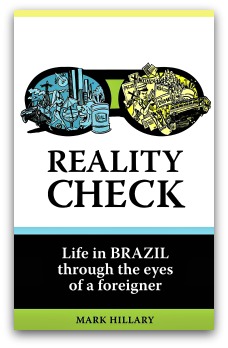
Mark_HillaryA little while ago I interviewed Megan Farrell, a fellow gringo in São Paulo, about the book she had written about “exbrat” life in the city. As far as I’m aware, Megan’s was the first book to be written about life in SP by a foreigner, although she seems to have started a new trend because within the last fortnight another has emerged: Reality Check: Life in BRAZIL through the eyes of a foreigner.

Reality Check is by Mark Hillary, a fellow Brit in São Paulo (he recently moved outside the city), who is an author, blogger, and advisor on technology and globalization. He has already published a number of books and is a contributor to Huffington Post, Reuters, The Guardian, and Computer Weekly.

Mark is also a friend of mine. We connected through Twitter just over a year ago. We eventually met at a local bar when—unsurprisingly, given his background in technology and social media—he organized a meet-up of gringos who had connected online but had yet to meet up in the flesh.

Since then he and I have continued to meet up, although less so since his move to the countryside. We had a particularly memorable trip in June to Rio to watch England play Brazil in football at the brand new Maracanã Stadium. (As anyone who follows my posts should recall, I’m a bit of a football geek.)

Over the past year Mark has written, in his column for the Huffington Post, a number of insightful articles about life as a foreigner in Brazil—most notably, “No HP Sauce, Endless Red Tape: Would You Want to Live in Brazil?, which responded to a gringo Facebook forum that had listed all the reasons why foreigners hated living in this country.

It was to my pleasant surprise, then, when Mark announced he had extended his account of life in Brazil and intended to publish it as an e-book.

Leaving aside my acquaintance with Mark (and the fact he gives a nod to my personal blog in the book!), I must say that I found Reality Check a very enjoyable read. It is a thoughtful and critical, yet balanced, account of his experiences in Brazil and of the country in general—and frankly, I’m rather annoyed that I haven’t written it myself.

Mark’s book also seems to be a good accompaniment to Megan’s. Whilst hers is a straightforward, step-by-step guide to life in São Paulo, his is a narrative providing a broad overview of gringo life. Either way, both books will be of use to those who are either moving to Brazil or perhaps are simply interested in finding out a bit more about South America’s largest and most populous country (it’s also the world’s fifth largest economy).

Anyway, enough of my wittering on. Let’s hear more from Mark himself.

* * *

RealityCheck_bookcoverHi, Mark. Congratulations on your new book and thanks for agreeing to this interview. First off, can you say a little more about what inspired you to write it?
As you already mentioned, I wrote the book in large part as a reaction to the negative posts about Brazil in online gringo communities. Everyone has their own reasons for moving and living away from their home country, but the majority of the groups I’ve encountered online are full of complaints about Brazilian food, prices, bureaucracy… Anyone who reads the posts made in the Facebook group for Gringoes.com would think that the UK and US offer a utopian paradise that would be madness to ever leave.

As you said in your intro, I wrote an article for the Huffington Post where I tried to give a more balanced view on life in Brazil.

Then I thought that, as someone who has rented and bought a home, started a company, hired people, and married a Brazilian, I could probably give a more detailed opinion on the experience—hence the book.

So being married to a Brazilian was what brought you to Brazil?
Yes, we were living in London, but after the financial crash in 2008 my business was much slower than before. By 2010 it became clear that there were many more opportunities for me to build a research and publishing business in Brazil than in the UK and so we moved just before the end of that year, nearly four years ago.

We recently featured another book about expat life in Brazil: American Exbrat in São Paulo, by Megan Farrell. Megan’s focus was on the “exbrat” community in São Paulo—i.e., those who are transferred here for work by a large company. My impression is that your focus is less specific and more of a broad overview of life in Brazil as a foreigner.
I’m not really interested in the exbrats. If a big company transfers someone to Brazil and they have their home taken care of and a driver to ferry them around, and they only ever go for a drink in expat pubs, then I don’t think they are experiencing the real Brazil. I’m not suggesting that the only authentic Brazil experience is living in a favela, but there are other kinds of foreigners here—journalists, teachers, people from all walks of life—who are constantly looking for ways to explore their new home.

Did you have a specific audience in mind when you wrote the book?
I really set out to explore some of my own experiences, with the expectation that people investing in Brazil or looking for a job here might have an interest in the book.

The book has only just been published (2nd September) so I guess it is a little early to tell, but how has it been received so far?
It is very recent, but there is already a very positive review from a Brazilian reader on Amazon. I started my author Facebook page when I published the book, and that community is growing by around a hundred people every day—so people are noticing it. One of the biggest newspapers in Brazil (Folha de SP) has been in touch to interview me about the book—despite my not having done any press promotion for the book due to my traveling almost every day since the publication!

Did you connect with São Paulo and/or Brazil in any new ways whilst writing the book?
It made me more determined to plug areas outside of Rio, which has a lot of friends already. I’ve really enjoyed living in both São Paulo the city and interior—SP needs a few gringo fans to speak out and remind people that the city is not just about concrete and cops murdering civilians.

You recently moved to the countryside outside São Paulo—how and why did that come about?
We spent two years living in the centre of São Paulo and just wanted to find something a bit quieter. I love it where we are now. There is a great sense of community; the neighbours all know each other. There is none of the security paranoia you find in the city centre, and there is some fantastic scenery on our doorstep.

Do you miss SP at all?
I miss being able to go out to see my friends in the city, or go to concerts by international bands that will only ever play in major cities. But we are planning to get a very small apartment in SP soon, so we don’t completely lose touch with it.

You mentioned the “security paranoia” in SP. In my observation, most of us gringos carry a fear that is at odds with how our Brazilian partners and/or friends feel. I enjoyed reading the section of your book covering this perception gap. Do you think that more positive accounts of Brazil by writers/bloggers like you and myself can help to shift these perceptions?
If people like you and me can get visitors to realize that they can walk down Avenida Paulista or along Copacabana Beach without fearing for their life, that would help. On more than one occasion I have met business contacts who flew into town and then were shocked when I suggested meeting away from their hotel. Standard advice from American and European companies is often to stay inside when in Brazil because of all the street crime.

The Brazilians, too, should play a part in correcting this situation. I don’t think we have much influence because we are seen as outsiders, but as more Brazilians get exposed to alternative cultures through travel, I hope it can change a little.

Last year I brought my wife’s teenage cousin on a trip to the USA, just to show her what life is like outside of Brazil. She found it incredible that you could walk up to the front of so many celebrity homes in Los Angeles—that anyone could walk into Sylvester Stallone’s garden. That’s unimaginable in Brazil.

What are you thoughts on foreign media portrayals of Brazil? Do you feel, for example, that persistent foreign criticisms of Brazil’s preparations for the World Cup and Olympics have been fair?
Every World Cup and Olympic games gets this negative press, so I don’t know if it is any worse than the last time. Anyone from the UK should be able to recall how the London Games were going to be a disaster right up to the week of the Games—the attitude seemed to change only when everyone saw that spectacular opening ceremony.

All I know from personal experience is that when you and I went to the Brazil v England football game at the Maracanã in June, the organization was superb. The stadium looked good, the public transport all worked, and the volunteers helping the crowd were great. I couldn’t fault it—so I’m really looking forward to the World Cup.

From the way you write so passionately about Brazil it is clear that you love living here, but there must have been the odd difficult moment when you wondered whether you’d made the right decision in fleeing the economically stagnant UK for your wife’s native land. When have you felt most displaced?
Sometimes the bureaucracy in daily life does get perverse and goes beyond just the criticism of a foreigner claiming that it all works better in Europe. Examples include having to pay someone to get my car registered to a new address or being fined for not paying my stamp duty on the day I agreed a mortgage with the bank—even though I paid on the day I got the documents myself. Sometimes I wonder if there is ever going to be any government that sweeps away this nonsense. I also fear that the job cuts created by improved efficiency means we are stuck with much of this.

Conversely, when have been your least displaced moments, when it all seemed to make sense?
I live in a really beautiful place now surrounded by a lot of wonderful people. Every morning when I take my dog for a walk then start work for the day I know I’m lucky to be here.

* * *

Readers, I will be talking to Mark again on Tuesday of next week, when we focus on his decision to self-publish his book. Any further questions for him, meantime? And don’t forget, if you’re interested in Reality Check, you can purchase it on Amazon. I would also recommend becoming a fan of its Facebook page and following Mark on Twitter: @MarkHillary

STAY TUNED for tomorrow’s post, a new episode in our “Location, Locution” series, by JJ Marsh.

If you enjoyed this post, we invite you to register for The Displaced Dispatch, a round up of weekly posts from The Displaced Nation, with seasonal recipes, book giveaways and other extras. Register for The Displaced Dispatch by clicking here!

Related posts:

images: Mark Hillary’s author image and book cover

Why “exbrats” in São Paulo need their own book to appreciate life in Brazil’s largest city

MeganFarrell CollageThis week’s guest interviewee is Megan Farrell, who like myself is an estrangeiro (foreigner) in São Paulo and married to a Brazilianalthough unlike my good British self, Megan is American and also has a young daughter (sounds like far too much responsibility if you ask me!).

Megan and her family previously lived in New York, but she took a sabbatical from her job on Wall Street in 2009 to become a full-time mum. Then, when her husband was offered a job opportunity here in São Paulo in 2010, they decided it would be a perfect opportunity for Megan and their daughter to learn Portuguese, experience life in a different culture, and learn more about Dad’s home country.

I first came to know of Megan when I moved to São Paulo myself at the start of 2012 and found her blog Born Again Brazilian whilst doing some research for my own blog. Ever since, I’ve kept up-to-date with her tales and travails, and was pleasantly surprisedif not a little enviouswhen she announced earlier this year that she would be releasing a step-by-step guide for foreigners who are living (or planning to) in São Paulo: American Exbrat in São Paulo: Advice, Stories, Tips and Tricks for Surviving South America’s Largest City.

I say envious because a similar idea had occasionally cropped up in my mind, but having read Megan’s book, I’m actually rather glad I didn’t attempt it myselfthere’s no way I could have had done the topic justice to the same extent. Megan has done her research, even offering advice on visas, taxes and other mundanebut extremely importantdetails that a move to São Paulo can entail. She includes things I would definitely not have thought of or, to be honest, had the patience to cover.

My only quibble—which perhaps tells you more about me than it does about the book, which is excellent—is that it reflects the experiences of a small minority in Brazil: exbrats. As someone who loves history as well as current affairs, I tend to prefer books that provide a holistic overview of life in a particular country. What’s more, the life of the exbrat seems completely outside my realm of experience. Though a cynic might suggest that I’m on an extended holiday, I didn’t move to Brazil on an all-expenses paid work package.

And to be fair, Megan doesn’t fall into the “exbrat” category either: her husband is Brazilian so didn’t qualify for the relocation package that makes countries like Brazil so enticing to non-Brazilians.

So, who exactly are these exbrats? And why write a book for them? Megan and I had the pleasure of meeting up I person a few days ago and talking about the audience she had in mind for her book. The following are some highlights from our conversation.

* * *

AmericanExbratinSaoPaulo_cover_pmHi, Megan. Tudo bem? Why did you decide to write a guidebook for non-Brazilians who come to live in Sao Paulo?
If you are making a move to a country such as Brazil, you need to have your expectations managed appropriately. Much of the pain my fellow expats have experienced has been because they were unprepared to deal with some of the idiosyncrasies of life in São Paulo.

What do you mean by an “exbrat”? Was the book specifically aimed at them?
I used “exbrat” because it feels rather fitting of the collection of people I’ve come across here. Expats, including myself, often stomp their feet over inconveniences they’ve encountered here, yet still expect and enjoy all the benefits of being in Brazil. Not necessarily in a pejorative way, but it felt very bratty to me. You also meet people who were previously army brats and were never able to shake their nomadic waysso “exbrat” is also an adult term for these foreigners.

So exbrats are primarily the foreigners who move to Brazil because of job opportunities?
Yes, the target audience is largely people who are moving to São Paulo or have recently arrived in the city for work, as well as human resource managers at companies who send employees to Brazil.

You included yourself just now in the “exbrat” category. But you are married to a Brazilian who didn’t get an expat package.
Believe me, some aspects of the things I’ve experienced here in Brazil have been a shock, as they probably were to you as well. So, while the book is definitely aimed at exbrats, I don’t think it’s too “exclusive.” There is an element of the “exbrat” in all of us. Some people are never able to get out of the exbrat cycle and as a result, fail to take advantage of the opportunities living in this country offers. My hope is that my book will give them a clearer picture of what to expect, and how they can prepare for that reality, so that they can get over the culture shock and go exploring. One of the world’s most fascinating countries awaits.

I think I know what you mean. I particularly remember reading in the book about your shock of attending an officially organized children’s “play-date” and there being seven paid staff to run it, as well as each child returning home afterwards with a crystal tea set as a parting gift!
Yes, exactly! That is far removed from my experiences in New York but is not so uncommon if you and your family start to mix in the same social circles with people towards the very top end of society in Brazilwhether that be through expat communities, your child’s school, or spouse’s workplace.

Has the book reached other audiences besides those who are moving to São Paulo? Perhaps people moving to other South American countries or those where English is not the first language?
Thus far the audience has been very specific to people moving to São Paulo, as opposed to other countries in South America—or even other cities in Brazil. It’s also attracted a few readers who work with Brazilians but in other countries.

Injecting her own anecdotes, and photos, into the book

Which section of the book are readers enjoying the most?
People tell me that they really enjoy the humorous stories I’ve included, which are based on some of my most painful and awkward experiences. For example, I tell the story of how I visited the same bakery for over a year before someone explained that because I wasn’t emphasizing the appropriate accent in the word pão (bread), to a Brazilian ear it sounded like I was asking for pau (penis)! Living in a non-English-speaking country provides plenty of opportunities for embarrassment or frustration, but when something goes wrong, I’m the kind of person who chooses to laugh, not cry.

Did you connect with the city in any new ways in the process of writing the book?
Definitely. I wanted the book to be as complete as possible (without taking ten years to write) and so I did more exploring on some of the subjects I wanted to include. Also, the photos in the book, minus a few I purchased the rights to, are ones I took. Much of the photography I already had in my collection. But there were gaps, so I had to get out and take pictures, which always gives you a second perspective on what you are seeingmore removed and analytical.

The topic of domestic servants

What was your most displaced moment when doing the research for the book, when you wondered why you’d embarked on this mission?
Trying to explain the culture of the people who might work in your homethe culture of the working poor in Brazil.

What do you mean when you say “culture of the working poor”? In your book you seem to suggest that household workers, who are of a far less lower rung on the lady in Brazilian society, are just taking advantage of the situation that they are in. Do you think this is cultural, or the impact of their socio-economic circumstances?
Half and half. I think it is definitely a Brazilian thing to try to take advantage of different situationsand this exists at all levels of society. For example, there’s the term jeitinho Brasileiro, which Brazilians use for situations in which they “creatively” try to get round complications in life.

However, yes, there is also a socio-economic component. If you are from a poor neighborhood and are working in the home of a rich family or person, it’s probably not too surprising that you might want to take advantage of your situation by asking for a loan or a raise.

From blogging to book-writing (she hasn’t looked back!)

Why a book instead of a series of blog posts?
Believe it or not, people still like reading books! HA. Over the past three years, since I’ve written my blog, I’ve received a number of questions about moving to São Paulo and life here. Most of the answers were already within the posts of my blog. I wanted to create a document that was more comprehensive, arranged by topic and easier to navigate. I also did a survey of my expat friends, and almost all of them said they would have purchased at least three books about moving to São Paulo before they camehad any actually existed. So I decided there was at least a bit of demand. Blogs are great, but sometimes you want to read a story from beginning to end. Plus, I’ve always just wanted to write a book.

What was the most challenging part of the book-writing process?
Editing. The editing process was a collaboration with my awesome friends, as well as my mother. It’s difficult to edit yourself. Actually, it is impossible to edit yourself. And when you have a pile of people helping you sort through the stories and facts, you get lots of opinions. But it was all good. However, I don’t think I can advantage of my friends again, so I’ll probably hire an editor for the next one.

Why did you self-publish the book?
A few of my writer friends encouraged me to try and find a publisher. But I just couldn’t figure out what a publisher was going to do for me that I couldn’t do for myself. I have a strong network and a background that includes marketing. I also don’t have the patience to go through a bureaucratic publishing process with an extended timeline. I knew that even if I did manage to find a publisher, I would not be their priority. The market for this is not on the level that would make a publisher move fast.

What’s next? Are you working on any other writing projects?
I am. I’ll probably update this book sometime in the next year. I also plan to write one for Rio. My husband is from Rio, and most of my experiences in Brazil (prior to moving to São Paulo) were in that city, so I know it pretty well.

You mentioned at the outset that you like broader books. I’d love to write something about Brazil as a wholeto counter the focus I put in this one on the expat life. It won’t be another step-by-step guide but a more of a general analysis, including politics, culture and so forth.

Finally, I’m working on some fiction stories that take place in Brazil. When living in New York, I did a screenplay course so have some experience in writing fiction. Currently, my idea is to write two series of short stories. The first will be based around Brazilian folklore, and the second, around some real-life episodes I’ve witnessed that are difficult to record in a blog or non-fiction format.

Ten Questions for Megan Farrell

Finally, we’d like to ask a series of questions that I’ve asked some of our other featured authors, about your reading and writing habits:

1. Last truly great book you read: Don’t Let the Pigeon Drive the Bus, by Mo Willems. I have a five-year-old. But we’ve read it more than a hundred times and it still makes me laugh. Okay, Don’t Let the Pigeon Stay Up Late is another contender. Mo Willems is a genius.
2. Favorite literary genre: I’d love to lie and offer up a more intellectual answer, but my favorite genre has always been horror. I enjoy a good creepy tale. After that, humorous memoirs from people who have overcome great obstacles, like Jeannette Walls‘s The Glass Castle.
3. Reading habits on a plane: I’m most happy if I have a copy of The Economist with me on a plane
4. The one book you’d require President Obama to read, and why: I wish Michael Bloomberg would write a book that Obama could read, because I think the USA would benefit by being run more like a business. But since Bloomberg has yet to put pen to paper, I’d have to say Getting to Yes: Negotiating Agreement Without Giving In.
5. Favorite books as a child: I loved any book that involved a child in a new world. James and the Giant Peach. Charlie and the Chocolate Factory. The Little Prince. The Little House series by Laura Ingalls Wilder. Pippi Longstocking.
6. Favorite heroine: Wonder Woman. I think if Brazil had a Wonder Woman, or the collection of super heroes that we have in the States as—albeit fictional—role models, people would emulate change for the good of the people. Brazil needs to believe in something other than futebol—but that seems to be in the process of changing, as Andy and I discussed last month on this blog.
7. The writer, alive or dead, you’d most like to meet: Hands down, Stephen King. I hope he doesn’t die before I get to meet him. I just need to figure out a way to do it that doesn’t involve stalking.
8. Your reading habits: I used to spend the weekends (sometimes all weekend) reading. But now that I have a child, I usually read right before I go to bed—in bed.
9. The book you’d most like to see made as a film: American Exbrat in São Paulo, of course!
10. The book you plan to read next: I suppose I should say Fifty Shades of Grey, because I haven’t read much of it and people keep bugging me about it. But if you’ve read Anne Rice’s Sleeping Beauty Trilogy (I only read the first), Fifty Shades is like reading Judy Blume. Yawn. I think I’ll wait for Stephen King’s Doctor Sleep. How could anyone resist a sequel to The Shining?

* * *

Readers, as I said, Megan was a delight to meet in person, a sense of which I hope I’ve conveyed above. Any further questions? Have I pressed her too hard on the “exbrat” point?

STAY TUNED for tomorrow’s post, a new episode in our “Location, Locution” series, by JJ Marsh.

If you enjoyed this post, we invite you to register for The Displaced Dispatch, a round up of weekly posts from The Displaced Nation, with seasonal recipes, book giveaways and other extras. Register for The Displaced Dispatch by clicking here!

Related posts:

images: Megan Farrell’s author image and book cover; photo of Sao Paulo from MorgueFile.

As an expat, is it my place to join another country’s political protest?

BrazilianProtest_ahpmJust after the street protests broke out in Brazil last month, Megan Farrell, an American who lives in São Paulo with her Brazilian spouse, contributed a guest post to the Displaced Nation.

Megan was very honest in admitting that she had previously taken little notice of politics or social issues in Brazil:

Being displaced … makes it easy to be in a bit of denial.

I, too, am an expat in São Paulo with a Brazilian spouse, albeit from the UK. Like Megan, I didn’t initially involve myself in Brazil’s latest political movement—but my reasoning was a little different from hers.

I’m someone who self-identifies as politically engaged and active. Back in the UK I was a union rep at my workplace and I’ve been involved in protest movements since my student days, the most prominent being those against the invasion of Iraq in 2003.

Additionally, as a social worker and student of social sciences, it’s second nature to be socially and politically aware of what is going on around me, whether that be at home or elsewhere.

Why, then, would I be reticent to involve myself in the politics of the protests that were going on around me here in São Paulo?

Not my fight to fight

Despite broadly agreeing with the objectives of the early protests (about a rise in bus fares which as a daily user of public transport, by which I was directly affected), I felt that as a gringo and a guest of Brazil, it wasn’t my place to get involved.

To be honest, I even felt a little reluctant to use social media to post articles or comment upon what was happening, and when I was asked to cover the protests for a site in the UK, my first inclination was to turn it down.

As a foreigner I was sensitive to being seen by Brazilians as poking my nose into their affairs. Additionally, I was also quite aware that there is a lot of history and background behind these protests that I am only, at best, partly aware of.

On top of this, Portuguese is my second language, so whilst I can read it without too much problem, I was apprehensive of inadvertently misconstruing a tweet, newspaper article or blog post, and using ill-informed or partly understood information to inform my opinions.

Eventually, however, I went out on the streets.

What led me to change my mind?

What was my impetus for joining the protests? I think it was seeing the extent of the violence (rubber bullets, tear gas, etc) the police used against what was widely reported as peaceful protest in São Paulo on 13 June.

And it wasn’t just me. The harsh police response was a turning point for many Brazilians as well, because while it may have successfully extinguished the 13 June protest, it also had the converse effect of igniting far broader outrage across the city and the whole of the country. At the same time, it provided an opportunity for a far wider array of grievances to be voiced (most of which Megan notes in her article so I won’t go into them again here).

Once I’d been out on the streets I felt a little bit more confident about joining in the discussion myself. When a couple of photographs I’d posted got a bit of attention on Twitter, and Planet Ivy in the UK—an online news magazine started up by a team of young, adventurous journalists—asked me to cover the protests, I agreed.

A duty to inform the folks back home

My decision was largely influenced by my realization that people at home in the UK—as first my mum and then Planet Ivy made me aware—were largely unaware of what was going on.

In Megan’s post, she mentioned her disbelief at how her friends and family members in the U.S. were still sharing updates on Facebook about their morning meals, their cats, and sports teams:

How could this be? How could they just not care?

Like her, I had the sense of being in the middle of something big and important, and for a while just assumed that everyone else around the world must be aware of it as well.

If I stopped to think about it, of course, no one is ever as interested in an event who are on the scene. But once I realized that there were people out there who wanted or needed to know more, I thought I could do my bit to inform them.

Another motivating factor was the need to correct the widespread misperceptions of the Brazil’s situation—in particular, the negative press the country has been receiving in the UK with regards to its preparations for the 2014 World Cup.

Whilst a fair amount of that criticism has been justified, it occasionally feels as though the UK press has some sort of vendetta against Brazil, with every news story seemingly inferring that “this once again casts doubts about the safety of Brazil and its ability to host a major international event.”

Alas, I thought, even if I am a naïve foreigner living in and writing about Brazil, I could at least provide some insight about what is actually going on at street level.

A closer connection with my adopted land

As an aside to this, one interesting thing about the protests is that they’ve helped alter my perception of the connection I have with São Paulo and Brazil.

Obviously, through my Brazilian wife and my residency in São Paulo, that connection is now much deeper than before. However, and as mentioned in my last post, in the 18 months since moving here I’ve evolved from whining expat (or “exbrat,” as Megan likes to say) to being an avid proponent of my new home.

My decision to join in the nation’s protests—whether participating on the streets or discussing and sharing the issues with people online—was a kind of watershed moment, effectively making the transition complete.

Of course, I’ll always primarily consider myself a Londoner, a Brit and a European (a fact I’m constantly reminded of by my Brazilian friends and family, who refer to me as “the gringo”), but increasingly I feel just as proud to be quasi-Paulistano*.

*People from São Paulo refer to themselves as Paulistanos.

* * *

COMING SOON: Andy’s interview Megan Farrell about her new book on expat life in São Paulo.

STAY TUNED for tomorrow’s post, from our travelogue writing coach Jack the Hack.

If you enjoyed this post, we invite you to register for The Displaced Dispatch, a round up of weekly posts from The Displaced Nation, with seasonal recipes, book giveaways and other extras. Register for The Displaced Dispatch by clicking here!

Related posts:

images: Photo of protesters in São Paulo, June 2103, by Andy Martin. Go to his photo blog to see more.

An American writer in Brazil is transformed from “exbrat” to politically awakened expat

Sao Paulo June Protests CollageWell, the best-laid plans of mice and menand international creatives—often go astray. Today, instead of Andy Martin interviewing Megan Farrell about her excellent book, American Exbrat in São Paulo: Advice, Stories, Tips and Tricks for Surviving South America’s Largest City, Megan herself will post about the transformational effect that the protests in her adopted country are having on her world outlook. (Not to worry, barring further major events, Andy’s interview with Megan should appear next month.)

—ML Awanohara

For nearly a week solid, I was locked to social media sites, doling out information about the protests in Brazil, via blogs, Facebook and Twitter. Along with other expat friends here in Brazil, I was been trying to make up for the fact that global news outlets were doing little to spread the word about the public demonstrations going on in São Paulo and other large cities.

Like a large percentage of my foreign friends, I have a closer connection to the country than your average expat. I have a Brazilian husband, and though she was born in New York City, a daughter who is a Brazilian national.

Ignorance was bliss

I’ll admit, before June 13, the night when police “lost control,” using rubber bullets against protesters and even journalists covering the events, I had little real knowledge about the injustices occurring in my new home country. I chose not to let such things enter my world.

Being displaced often makes it easy to be removed from your own surroundings.

Being displaced also makes it easy to be in a bit of denial.

But that Thursday night in mid-June, as my husband and I sat in a bar near our apartment and watched as the streets filled with protesters, my perspective on my adopted country changed.

The bar’s manager wasn’t allowing patrons to leave out of fear we would be exposed to the enthusiastic, but angry, crowd—some of whom were attempting to start fires to distract the police from blocking their access to Avenida Paulista, the central thoroughfare of São Paulo.

The protest eventually moved on, and we were able to leave, but my interest in what had initiated this movement lingered.

Not just about 20 centavos

By now, many of you hopefully understand that millions hit the streets of Brazil over more than a bus fare increase. Yes, that act was the catalyst. A 20 centavos increase meant an additional monthly expense of eight reais (R$8 is about US $4). It may not sound like a lot to you and I, but as minimum monthly wage in Brazil is R$675 per month (about US $300), every centavo is accounted for in the household of the working poor (i.e. the emerging middle class).

But the fare increase also speaks to deeper issues concerning the government’s priorities. Many Brazilians are finding it hard to stand by and watch as the government attempts to squeeze them for more, all the while spending millions of dollars on preparing stadiums for the 2014 World Cup—millions more than other countries who have hosted the event. Meanwhile, public services within Brazil remain abominable.

A few examples:

  • Across the country, emergency rooms of public hospitals are filled to the brim with patients hoping to get care, yet doctors have no means to help the majority.
  • Public school teachers often don’t show up to conduct class.
  • Police are untrained and uneducated, often looking to supplement their meager incomes with bribes.
  • Public transportation is decrepit in many cities.

“Its hour come round at last…” W.B. Yeats

As I wrote in my recent book, American Exbrat in São Paulo, one of the more frustrating aspects of living in Brazil can be the Brazilians’ passive attitude on the inefficiencies and transgressions that occurred in their country. Be it that the post office ran out of stamps (again) or the police never showed up when called, a local’s response to this would be some version of, “That’s Brazil.”

So when hundreds of thousands took to the street in protest, with a list of complaints in hand, no one was more surprised than the Brazilians.

The media took it lightly at first, burying the story about a bus far increase in the back of the papers. Then, the focus was on the violence of the demonstrations. But the reality is that when you gather such a large group (everyone was invited by social media), there are bound to be a few who are there to express extreme anger or simply to commit acts of violence.

But as one who sits within the scene, I’ve found the protests mostly peaceful and the intentions positive. The people of Brazil want change and want the world to understand that their country isn’t satisfied with the samba and beach party persona. There are real issues within the nation’s borders that need addressing.

Whither the rest of the world?

As mentioned at the outset of this post, sharing information about the realities of Brazil’s protest movement has become an important objective for me. Friends, both foreign and Brazilian, and I have been passing along videos, news articles and photos that depict the main events as well as the sentiments of the people.

Many of us who have blogs about being in Brazilmine is Born Again Brazilianhave written posts on these topics. For instance, I have just posted on Dilma Vana Rousseff, president of Brazil, who has stood in support of the Brazilian protesters.

Yet many friends and family members in the U.S. were still sharing updates on Facebook about their morning meals, their cats, sports teams, and other notices. These felt like irrelevant nonsense. How could this be? How could they just not care?

But then I recalled that I have friends in Turkey, who are going through the current protests. I have friends with family members who are in Greece and must have lived through the two years of protest in that country. I know little about what is happening in Ethiopia, where the first large-scale protest since 2005 has just broken out. And before June 13th, I was blissfully sharing little more than food photos and trip pics.

It is easy to be self-absorbed, content to contemplate the details of one’s own little world. It is even easier as an expat, when so much of your surroundings are of an unfamiliar nature. You take comfort in that which is close to home.

But now I have a different attitude and think about my power to disseminate information. It’s satisfying to share the details of what goes on in the politics of this country and have people you know respond positively.

But it is as important, especially for those of us who have an audience through blogs and other outlets, to keep tabs on what is happening elsewhere in the world and use our skills to move toward justice and peace.

This episode in Brazilian history has changed me forever.

Or so I hope…

* * *

Readers, any questions or comments for Megan about what she is experiencing? Have you had any similar moments of political (re)awakening—or do you not “do” politics as an expat?

STAY TUNED for tomorrow’s post, a new episode in our Capital Ideas series, by Anthony Windram.

If you enjoyed this post, we invite you to register for The Displaced Dispatch, a round up of weekly posts from The Displaced Nation, with seasonal recipes, book giveaways and other extras. Register for The Displaced Dispatch by clicking here!

Related posts:

images: Surrounding Megan Farrell (aka Maggie Foxhole) and her book cover photo are several photos taken by TDN writer Andy Martin. Go to his photo blog to see more.

Citizenship limbo: How long-term expat life has impacted my status back home

England-Korea_ValerieAh, the no-man’s land of the expat life — if you don’t know what I’m talking about, then you haven’t been abroad for long enough. Nor would you, I’m afraid, qualify for Displaced Nation citizenship. One person who does know what I’m talking about, and would more than qualify, is Valerie Hamer. She likes to refer to herself “British by birth and a nomad by choice.” Here is her bittersweet tale of where that attitude has taken her…

— ML Awanohara

Having lived in Asia for nearly 13 years, I’ve grown accustomed to the standard opening line: “Where are you from?”

However, as the years have passed, my factual auto response of “England” has made me uneasy.

I consider myself a global nomad: an international citizen, albeit one with a passport identifying my roots in the Commonwealth realm.

Plus, I dislike labels of any kind because they invoke stereotypes: and when it comes to nationality there are only so many questions — do you have afternoon tea at 4:00? do English gentlemen really wear bowler hats? — a person can take!

Not British any more…except at the core!

The truth is, I don’t feel particularly British (whatever that really means) anymore.

In fact, I’m so out of touch I have to spend time online researching current UK news on weather, music, sport fashion and politics — because knowing these things is what is expected of me.

Foreign is what I am all about after all, and that isn’t ever going to change.

The blurring of one’s national identity happens over time. In the first couple of years of the expat life, we crouch on the edge of our host culture, secure in the knowledge that the familiar is only a plane ride away. We make cross-cultural comparisons, some of them invidious; have adventures; reminisce; and sometimes escape for brief periods of intense reunion with the motherland. The possibility is always open for ending the foreign adventure and resuming the life left behind.

Over time, however, the attachment to the homeland fades and in the process, most long-term expats mutate into something closer to the global citizen. Take my case: I am now a quasi-fraudulent impersonation of a bona fide English woman.

But, even though I have lived abroad for over a decade, I have never seriously doubted my citizenship. Great Britain is, after all, the place where I was born and raised. The island I could return to on my terms, without fear of any impositions on my status or freedom.

After all, I continue to be a British citizen, right?

No right to investment

Not quite, as it turns out, for while I have been busy living as a temporary resident of South Korea, times have been a-changing back home in Britain.

A standing joke amongst my family and friends is that I manage to devalue the currency of any country I choose to live in. I have the same effect on UK interest rates, too, which is why I’ve made a habit of checking out the best deals and making the necessary transfers every time I visit.

Suddenly, though, this became impossible! New government rules have outlawed British non-residents from investing their cash in the country. How dare we?!

I chose a Korean bank instead, where thankfully I haven’t confronted similar issues — though it should be no surprise to hear that the interest rate dropped by half during my first year in the scheme!

Little right to health care

I rarely get ill, but sometimes I’ll make a quick trip to the doctors when back in England. Most health care services are free at source, and even temporary visitors can make use of any emergency facility. Those of us with family in England can see a general practitioner as long as a family member is on the books.

It’s never been a problem until now.

Last summer I called the office of the GP my father uses and was interrogated quite fiercely by the receptionist. I won’t bore you with the details: suffice to say, as a non-resident I need to be close to death before the medical profession will give me the time of day.

I can’t complain about being denied access to a system I don’t pay into, but the experience further defined me as an alien in a place where I used to belong.

No right to drive?!

One area that shouldn’t be a problem is driving in the UK, right? Last summer I decided to hire a car for my visit. I hadn’t been behind the wheel for ten years but had kept my license updated, registered to my family’s UK address.

After shelling out for a couple of refresher lessons and an expensive insurance policy, I felt confident that all was good — and it was, that is, until I discovered quite by accident that the insurance had actually been useless.

Who knew that my UK license grants only permanent residents the right to drive? Living outside the country means you forfeit the permission to use, or even renew, the license.

It makes sense when you think about it — but the assumption that we are good to go without an international permit is pretty widespread among us British expats.

* * *

These are just a few examples of show how ignorant I was of the gradual erosion of my rights to access UK services and systems — an ignorance I suspect I share with many other displaced Brits.

Ultimately, those of us who occupy a liminal space between two cultures need to come to terms with the idea that we may truly belong in neither.

* * *

Readers, any comments or questions for Valerie? Can you relate to her “floating world” status?

Valerie Hamer is a global nomad with a severe coffee addiction and a love of the written word. Her first book, Picky, Sticky or Just Plain Icky? A Blind Date Conversation: South Korea, came out last year; we gave it a two thumbs up. Hamer writes a popular blog, Faraway Hammer Writing, which is named for how people in Asia tend to pronounce “Valerie Hamer”. You can also follow her by that moniker on Twitter: @Farawayhammer.

STAY TUNED for another guest post, by Kat Selvocki. Last time we heard from her, she was on her way to start a new life in Australia. And now…

If you enjoyed this post, we invite you to register for The Displaced Dispatch, a round up of weekly posts from The Displaced Nation, with seasonal recipes, book giveaways and other extras. Register for The Displaced Dispatch by clicking here!

Related posts:

images: (clockwise, starting top left) Ploughman’s lunch (courtesy Flickr); traditional Korean meal; Korean marchers; Seoul (courtesy Flickr); Thames view of London; Queen’s Guards marching; Valerie Hamer. (Non-Flickr photos from Morguefiles.)

Calling expats from all countries — it’s not too late to vote!

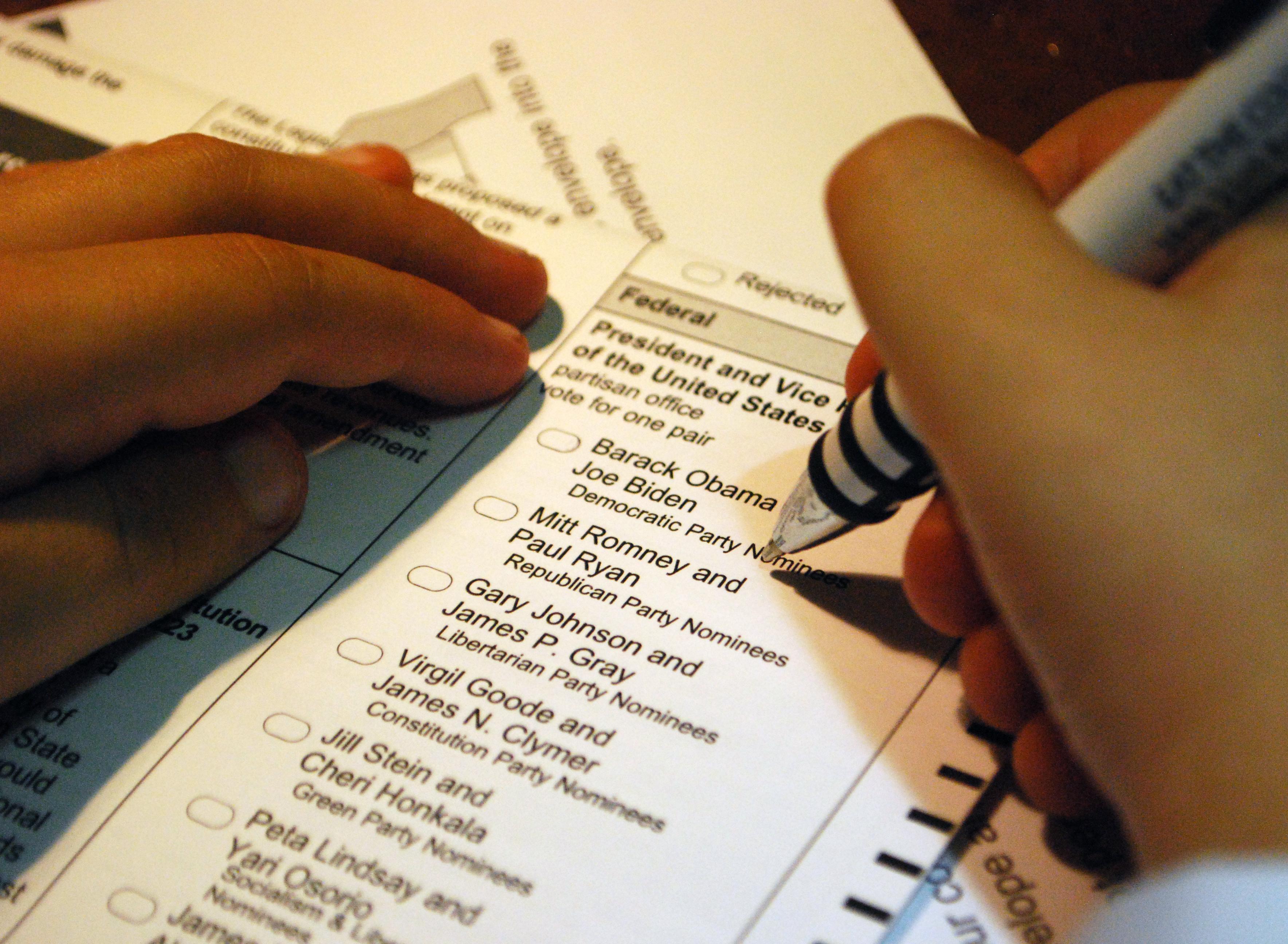
Unless you’ve gone into early hibernation for the winter, you’re probably aware that there’s a presidential election going on today in the United States. If you’re not an American citizen, of course, this election is merely a spectator sport for you, as Americans exercise their hard-fought right to vote by passing out in 2-hour queues in West Palm Beach, or stabbing ineffectually at a voting machine with a political mind of its own.

Given the difficulties of voting within the country, you’d think the ease of voting from abroad — via mail, fax, or even email — would ensure full electoral participation from expats. Statistics from the 2008 election, however, suggest otherwise.

Election apathy?

According to the Overseas Vote Foundation, a mere 7% of overseas voters took part in the election four years ago. In other words, a teenager or high school dropout is more likely to cast a vote than an expat is.

“Why?” is an interesting question, and one that doesn’t seem to have been investigated.

At a guess, your average expat is already staggering under the weight of red tape and bureaucracy, and a voting form is that piece of paper that breaks the expat’s in-tray. It’s the piece of paper that turns up four months later during a home office blitz, under a pile of credit card offers, with a Post-It attached saying “Don’t Forget!”

Or perhaps, living outside the home country for a length of time has initiated a feeling of detachment. A feeling that it doesn’t really matter what you think because you’re not there.

Or a misguided conscience kicks in, whispering that you, living abroad, are making a decision that affects others more than it affects you.

Expats: The other “swing state”

Although the exact number of Americans abroad is a little hazy — the State Department estimates just over 6 million, whereas the non-profit American Citizens Abroad puts the figure at 5.2 million — US expats equal the population of Missouri or Colorado, depending on which figure you believe.

Either way, it’s enough to make a significant difference in the outcome of an election, if they all voted.

Take our poll!

So, to all expats of all nationalities: how do you feel about voting in your home- and adopted countries’ elections? Are just overseas Americans lethargic about their civic duties, or do all expats feel the same?

Take our poll!

Our voting booths are open 24/7 for the next 30 days!

Stay tuned for Wednesday’s post, in which American repats Sezin Koehler and Anastasia Ashman reflect upon their first stateside election in quite a while.

If you enjoyed this post, we invite you to subscribe for email delivery of The Displaced Dispatch, a round up of the week’s posts from The Displaced Nation. Sign up for The Displaced Dispatch by clicking here!

Image: MorgueFile