The Displaced Nation

A home for international creatives

Tag Archives: Hong Kong

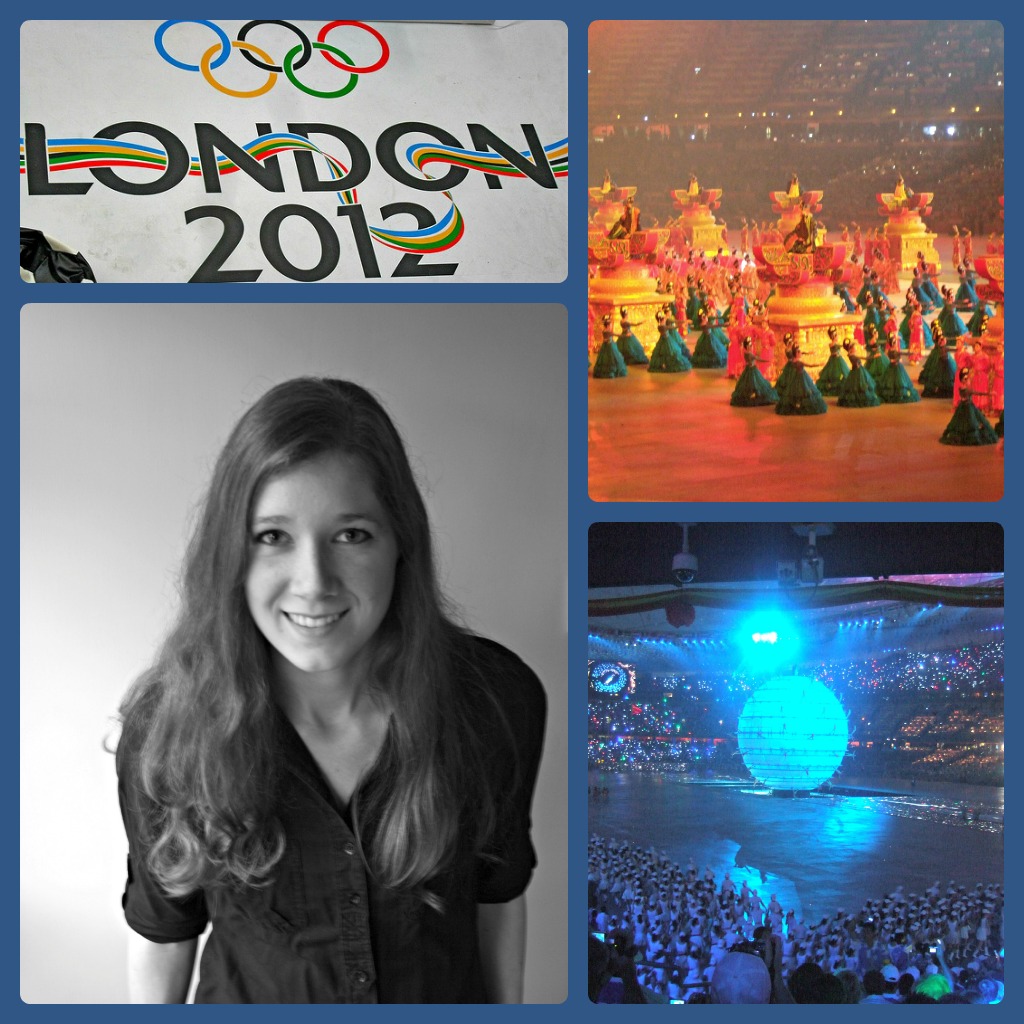
The opening ceremony of the London Olympics — from an expat who witnessed Beijing’s spectacle firsthand

As regular readers will know, The Displaced Nation has some special connections to Britain. We therefore held our collective breath when the Olympic ceremony opened on Friday evening in London. How would the Brits measure up to the Chinese extravaganza of four years ago? Britain is after all a declining power — which is not exactly true of China! Today we turn to guest poster Shannon Young, an expat in Hong Kong who has written a book about her firsthand experience of attending the Beijing Games, for a verdict.

Four years ago, 2,008 drummers opened the Summer Olympics in Beijing with a thunderous rhythm heard ’round the world. Spectacular feats of coordination, drama and energy followed, wowing the world with the precision and ambition of the production.

Heralded as the greatest live performance in history, Beijing’s opening ceremony was a tough act to follow.

It was a tough act for me to follow as well. I’d been in the stands as the rumble of the drums swelled through Beijing’s Bird’s Nest stadium. But as the opening ceremony of the London Games was about to begin, I found myself at the kitchen table of my grandparents’ home in Oregon (I am back in the United States for a visit) watching a live stream on my computer.

Oh we can be heroes…just for one day

A landscape that looked rather like a shire appeared, complete with sheep and idyllically dressed country folk. The agrarian scene was quickly replaced with the frenetic energy of the Industrial Revolution, but the contrast was obvious: London was not trying to “beat” China.

Quirky, funny and nuanced. Those three words characterize the July 27th, 2012, ceremony. It displayed the heart and humor for which the British are famous — especially in the form of Rowan Atkinson (Mr. Bean), whose rendition of “Chariots of Fire” completely stole the show.

London brought the opening ceremony of the Summer Olympics back down to a human level. It was no Beijing, but it was the kind of show that speaks to people.

Famous for such films as Trainspotting and Slumdog Millionaire, director Danny Boyle infused the London ceremony with a cinematic flare.

Like many other spectators around the world, I loved the short film in which James Bond picked up Queen Elizabeth in a helicopter, which they (or their stunt doubles) proceeded to jump out of, for their “entrance” into the stadium.

There were other nods to cinematography throughout the production, including to Boyle’s own films, mixing the mediums of live performance and cinema. The costumes were intricate when viewed through a zoomed-in camera, but I had to wonder how much of this was for the camera and not the live audience. The spectators in the stands may not have been able to enjoy the details.

Only rock ‘n roll (but I like it)

There was a rock-and-roll feeling to the show. The dance numbers were more like big parties than expertly timed performances. They were full of mini-storylines and surprises.

The segment that began with a nightmare of the villains of children’s literature ended with the raucous defeat of a gigantic Lord Voldemort by none other than Mary Poppins.

The soundtrack was fun and familiar, liberally paying homage to Britain’s many contributions to culture.

A high-octane production like the Olympics opening ceremony needs to have quiet moments, too.

In Beijing there were eerie performances, such as a single dancer gliding across a glowing scroll.

In London, the quiet moments were solemn. There was a moving dance performance dedicated to the victims of the July 7th bombings on London transport, and a moment of silence for those who fell in the two world wars.

New takes on old classics

The Parade of Nations was faster than usual, bringing 204 teams into the stadium in record time.

The production culminated in the lighting of the torch, which was done in a particularly elegant fashion. David Beckham delivered the torch to retired British rower Sir Stephen Redgrave in a neon speedboat on the Thames.

In a touching act, Britain’s venerated Olympian then delivered the torch to seven promising young athletes, who lit the torch together. The torch itself was composed of many copper petals which rose together on long stems to create the Olympic cauldron.

London’s opening ceremony drew many laughs and perhaps a few tears. There weren’t as many breathtaking moments as in Beijing, but the show was like the British: quirky, personable, and utterly self-assured.

Shannon Young is an American writer currently living in Hong Kong. She is the author of The Olympics Beat: A Spectator’s Memoir of Beijing. She writes a blog called A Kindle in Hong Kong and tweets @ShannonYoungHK.

EDITOR’S NOTE: We will be giving away several copies of Shannon Young’s mini travel memoir of the Beijing Olympics this month. The first will go to a commenter on this post — please share your favorite moment from London’s opening ceremony, or a memorable moment from a previous Olympics.

STAY TUNED for tomorrow’s Expat Moment with Anthony Windram!

If you enjoyed this post, we invite you to register for The Displaced Dispatch, a round up of weekly posts from The Displaced Nation, with seasonal recipes, book giveaways and other extras. Register for The Displaced Dispatch by clicking here!

Related posts:

Images: A London Olympics sign courtesy e-costa on Flickr; author Shannon Young and two of her photos from the opening ceremony of the 2008 Summer Olympics in Beijing.

Ladies and gentlemen, may we present: THE EXPAT OSCARS! Um…hello? Anyone there?

TheExpatOscarsThe Expat Oscars — really? Now that would be an unusual event. What would it look like?

I live in Spain. Oscars are something that are on TV Sunday night. Basically, very late at night. You don’t watch, you just read the news after who won or who lost. — Javier Bardem

Well, for starters the Expat Oscars would be held via Skype. If we had our own version of the Kodak Theatre, it’d be big and posh and empty — ’cause folk from ’round here…ain’t from ’round here! We’re displaced — all over the bloomin’ planet. Which is kind of the point. If we had to collect our awards in person, that ceremony would have a carbon footprint the size of a football stadium.

So we’re streaming live on the Internet. The Red Carpet is a million pixels long and is digitally re-mastered in every country participating. Unfortunately, Jennifer Lopez wouldn’t be invited as she’s never been displaced, only her clothing! Indeed, you won’t want to make a slip-up — or down — as the clip would literally be on YouTube before you knew it.

But if there wouldn’t be any wardrobe malfunctions, we could at least look forward to getting that delicious hang-fire moment when the Skype picture freezes, and then it cuts back in, seconds later, like this:

“Ladies and Gentlemen, the winner is…” PIXELATE — jittery jump — lips purse with a hint of spittle and stay like that — and pause — and pause —

Cut back in to rapturous applause, the digital wheeling of spotlights and we’ve got to sit through another five minutes of high-volume celebrating before we finally make out the individual giving an acceptance speech. (That’s if it doesn’t cut out again before we get that far!)

Who would host?

Milla Jovovich, you did a great job hosting the sci-tech awards for the Academy of Motion Picture Arts and Sciences, so you’re being promoted — to hosting the entire Expat Oscars shebang! We’d love it if you’d wear that white-sequin, one-shoulder gown you wore for the main event last night — and leave the granny glasses you donned for the sci-techies at home (wherever “home” is!).

From Long Beach to Pacific Palisades? Sorry, Billy Crystal, but that’s not displaced enough. Jovovich is Ukrianian, has lived in Europe and the US, and acted in films in several languages. All of that counts for a lot in our book.

Should Milla request a co-host, it would have to be either Keanu Reeves (he was born in Beirut, a third culture kid!) — or why not go for the daddy of successful expat movie stars, the man who redefined the phrase “I came, I saw, I conquered”: Mr. Arnold Schwarzenegger himself!

No? Well, it’s either him or Borat. With his penchant for embodying other nationalities rather too literally, Sacha Baron Cohen belongs more with our tribe than with the Academy’s. At the Expat Oscars he will be free to attend in his dictator’s uniform without having to get special clearance and can “ash” anyone he likes in the name of terrorizing fashion — the mess will only be virtual.

We’re talking a looooong ceremony

Besides, his antics might keep people awake. The Expat Oscars will have to be a long, LONG show — either that or we’d insist that everyone stay awake all night, and it would be 4 a.m. for someone.

Listen, you think it’s bad at the real Academy Awards sitting on the edge of your auditorium seat for several of hours, sipping champagne while you wait for your category to be announced — what if it’s being announced by someone eight time-zones away?

Charlize Theron*: “Ladies and Gentlemen, here to accept this prestigious award, please welcome Mr. Sung, live by satellite from Hong Kong! Please excuse the penguin pyjamas. And the fact that he’s drunk eight vodka-Red-bulls just trying to keep himself awake…”
Mr. Sung: “Fangssshhhverymussssh…hic!”
*With her South African pedigree, Charlize more than qualifies for the role of Expat Oscar presenter.

Best Foreign Language Film — is that second or third?

Our next category is for Best Film in a Foreign Language…but wait a minute! That’s not a foreign language! That’s my language! Ah…

So could we have Best Film in a Second Language perhaps? But would that category also include people who’ve made a film in their third language — or should they get their own category? And so on.

How about “Film in a Language So Obscure Even the Director Has No Idea What’s Going On”?

No politics/fashion, please, we’re expats

What a thrill. You know you’ve entered new territory when you realize that your outfit cost more than your film. – Jessica Yu, Academy Award Winner 1997 for Documentary Short Subject*
*Breathing Lessons: The Life and Work of Mark O’Brian, about a person with a breathing disability.

The traditional Hollywood bash is often clouded by politics not to mention gossip and verdicts on the gowns of the nominated actresses.

It wouldn’t be like that for us. The Expat Awards would be about the films.

Because we just don’t get each other’s governmental strife — we haven’t got time for sorting it all out.

For instance, I’m sure there’s plenty of fascinating developments in the politics of Milla’s Ukraine (they’re a Presidential Representative Democratic Republic, don’t you know!) — but to be honest, I don’t think that would figure in anyone’s acceptance speech.

How could it? I don’t even know what a PRDR is — do you?

And the fashion would be a bit more varied than in Hollywood. We’d have people walking down the Virtual Red Carpet in burkas, galabiyas — or board shorts and “thongs” for the Aussie nominees! And there’s bound to be a few unwashed backpacker types trying to get away with khakis and a vest…and not shaving. Okay, so that’s me.

And my speech — probably on accepting the World’s Most Ridiculous Person Award?

Tony: “I’d like to thank my Mum…”
Milla: “Well actually, we have your Mum on the phone right now! She’s asking where you are, and why you haven’t called her in the last six months…”
Tony: “I’d like to thank the Academy…and ask them to keep her talking long enough for me to get to a taxi.”

* * *

What else would go wrong with a displaced film award ceremony? Would the statuette be a little gold Buddha? Or a waving cat? Or a mermaid from “Here be dragons”? What would the categories be? And who would win?

Please share your craziest thoughts in the comments!

You could win…hmm, let’s see: the respect of the international film community?

Nah. Not even the real Oscars have that… 🙂

STAY TUNED for tomorrow’s review of A Separation, which won the Oscar for Best Foreign Film, by expat author Matt Krause. Krause’s book, A Tight Wide-open Space: Finding love in a Muslim land, was featured on our site this month.

If you enjoyed this post, we invite you to register for The Displaced Dispatch, a round up of weekly posts from The Displaced Nation, with seasonal recipes, book giveaways and other extras. Register for The Displaced Dispatch by clicking here!

Related posts:

What did Agatha Christie know? Expats make great criminals

I’m going to kill myself for saying this — I’m an Agatha Christie fan — but I think the Queen of Crime got it wrong.

Either that or she purposely misled us into thinking that the most cunning criminal minds were hiding behind lace curtains in oldy-worldy English villages.

I don’t know about you, but for a while, I found it convincing. Don’t most scions of wealthy families want to murder the patriarch? And what better place to do it than in the library of his stately home…

But then I became what the tagline of this blog refers to as a “global voyager.” As I navigated worlds far beyond the one in which I was born, I wasn’t so clueless any more. I began to notice that the perpetrators of the some of the worst crimes are people who no longer live in their villages, who are displaced in some way.

And the more I thought about it, the more sense it made.

No Gardens of Eden out there

Psychological studies have shown that we are less likely to cheat when we’re aware of someone else observing our behavior — even if it’s a poster with eyes on it.

Thus, having a village busybody like Miss Marple should help to deter crime, never mind solving it.

Now many international travelers — especially those with plum expat packages — feel they live in a self-anointed paradise. And perhaps they have to convince themselves of this, or else they wouldn’t travel.

But the sad fact is, no one is immune. To rephrase an old saying, some of us are born bad, others achieve badness, and still others have badness thrust upon us.

If anything, badness is more likely to be a feature of the international life. Those of us who become adept at navigating the globe sometimes lose our moral compass along the way.

As for the Miss Marples, chances are, they’ve gone home. Many of an expat’s associates are transients.

So many bad apples

As you’re probably aware by now, not every expat you meet is a good egg. Some are in fact bad apples (not sure why an egg is good and an apple bad — call it a mystery of English slang).

The actress Anne Hathaway had to learn this lesson the hard way. She fell for Raffaello Follieri, who headed the Follieri Group, a real estate development company based in New York City.

With his mop of brown hair and cherubic features, Follieri came across as the embodiment of old world charm and manners. He cut what the Italians call a bella figura.

He was also, it turned out, a crook. He wined and dined Hathaway with the money he’d conned it out of people by posing as the Vatican’s real-estate man. He’s now in prison.

Murder most foul

Just as we don’t like to think of rats being part of the animal kingdom, we don’t like to think of conmen, pirates, gangsters, and terrorists being part of the group we have loosely defined as “global voyagers” — such a noble concept, and one to which The Displaced Nation has dedicated itself.

But trust me, they are a part of it — as are murderers.

Take, for instance, Nancy Kissel. One day she was living in an exclusive high-rise apartment complex in Hong Kong, the city that scores a perfect 10 as an expat destination, with a banker husband worth many millions.

The next day she was known as the Milkshake Murderess — accused (and then convicted, conviction now upheld) of bludgeoning her husband to death after drugging him with a sedative-laced strawberry milkshake and then wrapping his body in an Oriental carpet destined for basement storage.

It’s a story more than worthy of Agatha Christie.

Or ask the parents of Meredith Kercher, a young British woman who went to Italy as part of the Erasmus student exchange programme, to study and immerse herself in the language and culture.

She chose the ancient city of Perugia in Umbria. Surely nothing could go wrong in such a serene setting?

Wrong again. Unless you’ve been living on another planet, you’ve heard that Meredith was brutally murdered, allegedly by two men and her American roommate, Amanda Knox, in what prosecutors called a violent sex game. Only one of the alleged perpetrators was a native-born Italian.

Public fascination with the case has continued unabated — and not just because of the media circus surrounding Knox, who maintains her innocence and is appealing her conviction.

As the Christian Science Monitor put it in an article last September:

…the highly contested circumstances of the crime make it a genuine murder mystery.

(Where is Hercule Poirot when you need him — surely his marrows would thrive in the Umbrian soils?)

And now for a bit of a twist!

I’d like to retract my statement on the Queen of Crime. Je me suis trompé! I’ve done her an injustice.

True, Agatha Christie did produce lots of drawing-room mysteries, but she also also told us everything we need to know about expat criminality in her classic work Murder on the Orient Express.

When the shifty-looking Samuel Edward Rachett is found stabbed to death, the redoubtable Hercule Poirot assembles the 12 suspects in the restaurant car. It’s an odd assortment — call it an expat enclave in microcosm — consisting of an American translator, a British valet, a French conductor, a British governess, a retired British army officer, an elderly Russian noblewoman, a German maid, a Hungarian diplomat and his wife, a Swedish missionary, an elderly American woman who has just been to see her daughter in Baghdad, and an Italian-American businessman from Chicago.

So, whodunit? Can you remember? The answer is: all 12! Each of these characters had thrust the knife into Ratchett, making it impossible for Poirot to determine who delivered the fatal blow.

But as it turned out, it didn’t matter. Ratchett deserved his fate for his own dastardly deeds. He was, of course, the most displaced of all the passengers on that exotic train: a fugitive from justice, whose real name was Cassetti.

I’m sure I don’t have to tell you which transnational group of gangsters he was affiliated with. No surprises there!

Question: Do you agree that citizens of The Displaced Nation have criminal potential, and have you ever come face to face with any criminal elements in your travels? I’d love to hear your stories, however unsavory…

img: “There’s been a murder!” by Richard Bogle.

If you enjoyed this post, we invite you to subscribe for email delivery of The Displaced Nation. That way, you won’t miss a single issue. SPECIAL OFFER: New subscribers receive a FREE copy of “A Royally Displaced Tea.”

Related posts: