The Displaced Nation

A home for international creatives

Tag Archives: Gap years

For this RVer who roams far and wide, iPhone in pocket, a picture says…

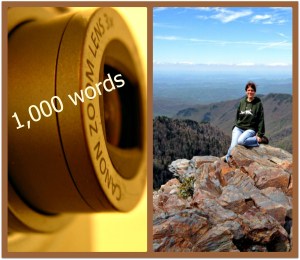
Becky RV Collage

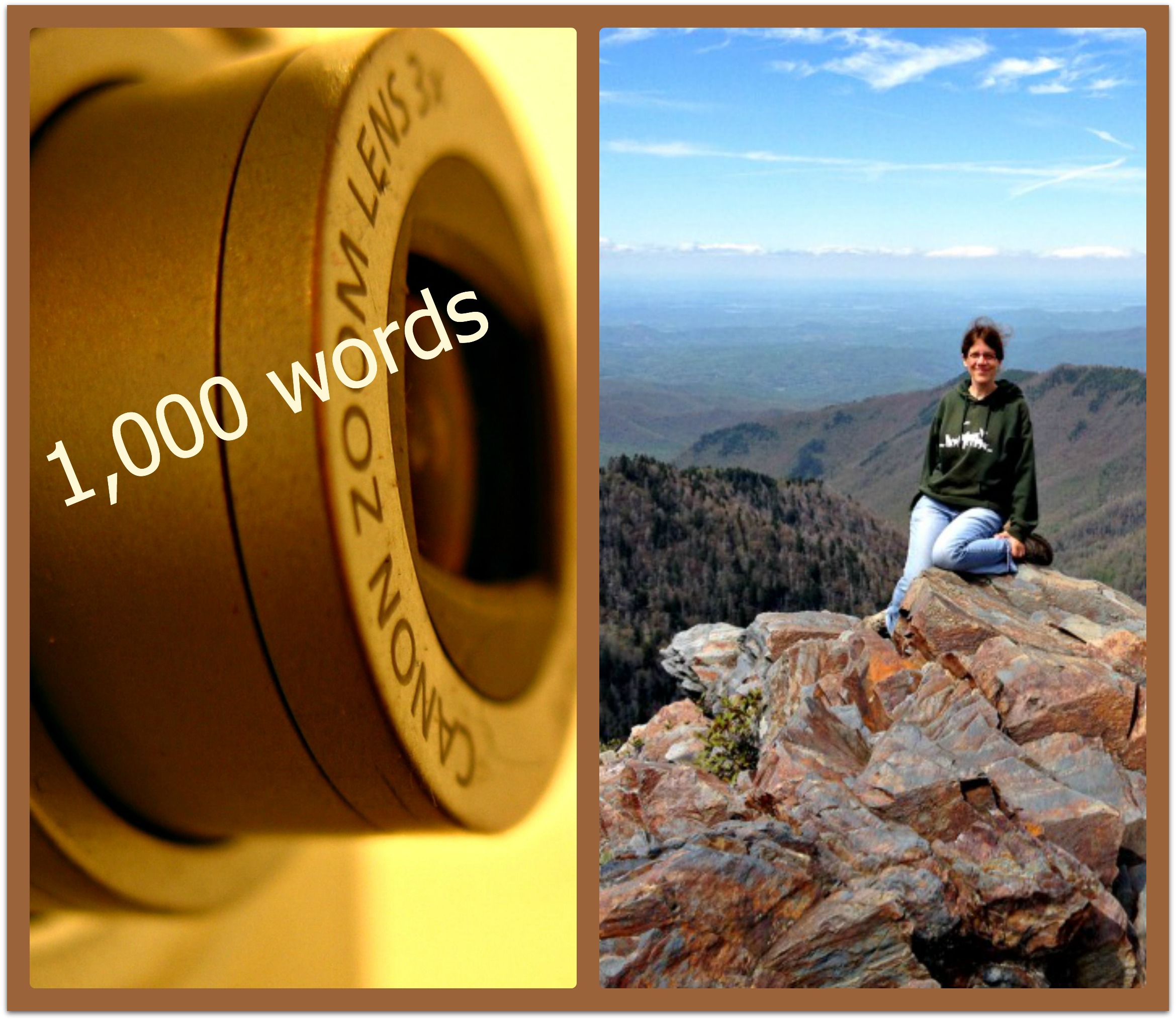
Canon zoom lens; photo credit: Morguefiles. Becky Schade at Charlies Bunion, along the Appalachian Trail in the Smoky Mountains (photo credit: Becky Schade).

Welcome to our monthly series “A picture says…”, created to celebrate expats and other global residents for whom photography is a creative outlet. The series host is English expat, blogger, writer, world traveler and photography enthusiast James King, who thinks of a camera as a mirror with memory. If you like what you see here, be sure to check out his blog, Jamoroki.

My guest this month is 30-year-old American Becky Schade. Becky started traveling around America alone in her truck and RV (for those not in the know, RV stands for recreational vehicle, or mobile home) on September 14th, 2012. As she says on her blog, Interstellar Orchard, becoming a full-time RVer was a way to fulfill her dream of perpetual travel, exploration, and adventure, and to make her life the best it can be, right now, no holds barred. “And if I can do it, so can you,” she says.

She goes on:

Even if your Big Dream is going to take some time to realize, there are things you can do, right now, to improve the quality of your life. And they don’t all require a fortune or every free waking hour of your week.

Before pulling up her roots, Becky used to work with monkeys. She is an outdoor enthusiast and also a fantasy/sci-fi fan as well as gamer geek.

I have been waiting a while to interview her and write her fascinating story. Now I have my opportunity.

* * *

Welcome, Becky, and thank you for taking out some time from your adventures for this interview. I believe you were born and raised in Wisconsin but then, at the age of 25, became what is known in the States as a “domestic expat,” moving with a friend to coastal South Carolina. When did you really decide to break out and travel all around America as an RVer?
I loved how different South Carolina was from my home state of Wisconsin, but inside I knew I wanted to keep traveling and exploring. The truth is, I didn’t want to pay for a removal truck every time I moved, so started researching RVing as an alternative. In other words, I would be my own removal truck—taking my house everywhere with me. I eventually hit the road as a full-time RVer at the ripe old age of 28.

Your new-found freedom is clearly a wonderful experience, but do you ever feel homesick?
Home is where I park my RV travel trailer, which I pull with my trusty 2001 Dodge Dakota. Some people might call me a minimalist or even a gypsy because all that I own fits in my RV and truck. I don’t own or rent property anywhere, but I am always home. I get asked many questions about my lifestyle, like, do I feel crowded and cramped inside my little home? It may be difficult to visualize, but my “living space” includes the yard where I park my RV and the wonderful locations I visit. So I enjoy the free and constantly changing views from my bedroom windows that many house-bound folks might pay a fortune for. In reality I have more space than most people do.

The average person moves home, say, five times in their lives, whereas I imagine you could move five times in a month. I’m sure you’re often asked if you feel safe traveling alone, as a young single woman.
I am often asked that question, but you know something? The world is not as scary as the media would have us believe. Common sense is a person’s best safety tool and in my year-and-a-half on the road, I have never once felt threatened. If a place feels off when I arrive, I simply drive to the next place.

You obviously can’t work while traveling except when you stop in a place for a while. Do you ever worry about money?
No, one doesn’t need to be wealthy to live like I do. I saved up the money for the initial outlay from my last “real” job. With my accommodation and truck already paid for, I can explore the country comfortably on an income of $16,000 or less a year, which I make from working seasonal jobs in interesting places. I have at least six weeks a year where I don’t work at all and can focus on my hobbies as well as visit friends and family. I have health insurance, an emergency fund in case of accident or illness, and an IRA. Life on the road doesn’t have to be a gamble. There are smart ways to go about it that minimize the risks. It’s not an extended vacation but a way of life. I’ll continue traveling until I feel the urge to do something different.

I can relate somewhat to the things you are saying as I enjoy my own company, probably more than others enjoy it! And fortunately I have never experienced a feeling of loneliness. How about you, how do you find being alone on the road?
I don’t feel lonely. Being alone and being lonely are two very different things. I love quiet time by myself out in nature, and when I start feeling the need for human interaction, it’s usually not hard to find. Sitting outside your RV in a campground reading a book is viewed by many passersby as an open invitation to stop and say hello. I’ve met some of the most interesting people on my travels, with whom I’ve had some of the best conversations. I also keep in touch and visit with friends I had before hitting the road full time, and am a member of several online communities for RVers.

“Home is where I park it.” (classic RVer saying)

Something usually triggers or inspires a person to travel. Was that true in your case?
Since I was a teenager I’ve had this feeling that the typical American Dream of college, steady job, marriage, a big house, and a family wasn’t going to be my cup of tea—but it’s definitely what my parents expected. I was the dutiful daughter and followed that plan up to finishing college and getting a steady job, but I felt trapped and miserable. I wanted adventure. I wanted more than two weeks of vacation a year to explore. I wanted to learn by experience instead of just seeing things on TV or reading about them in a book. Those were the things that inspired me to pursue a different path and look into full-time RV-ing. At first I thought you had to belong to the realm of rich retirees, the kinds of people who invest a couple hundred thousand dollars in a gigantic, 40′ motorhome. Then I dug deeper and found that some younger folks were discovering a better work/life balance through life on the open road.

You are clearly a very determined young woman. Since you drove off on that September day in 2012, what places have you visited?
Last summer I worked retail at Badlands National Park, in southwestern South Dakota, and explored the Black Hills region—along with Crazy Horse Memorial and Mount Rushmore—in my days off work. This past winter I was a volunteer at a conservation centre with the University of Florida and visited sinkholes and crystal clear springs. This coming fall I’ll be working at a warehouse out near Reno, Nevada, and plan to be photographing mountains and Lake Tahoe around that.

I’ll be looking forward to the pictures. So where are you now, how did you end up there and what is life like in your latest hometown?
Right now I’m just outside of Atlanta in Fairburn, Georgia, performing at the Georgia Renaissance Festival. Getting paid to sing at a renaissance festival has been on my bucket list for many years, but I could never work it around a real job. Traveling the way I do now has given me the opportunity, finally. I love what I’m doing, but the location is a different story. I prefer the country and have never lived in a city, so navigating the busy streets of Atlanta has been an experience. Never be afraid to try new things, though—otherwise, how do you learn what you really like and don’t like?

Absolutely, Becky. New experiences always open the mind, and the more I try new things, the more I realize how much I still have to learn. And now let’s see some of your photographs, which capture a few of your favorite memories. Can you tell me the story behind them and what makes them special for you?
BeckyPix_1

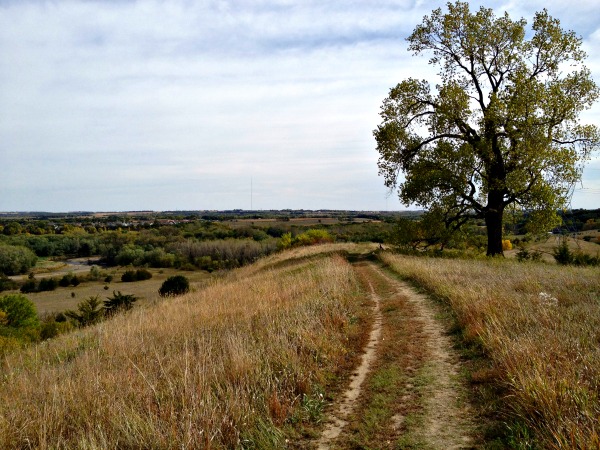
Celebrating a new life of recreation at Big Sioux Recreation Area. Photo credit: Becky Schade.

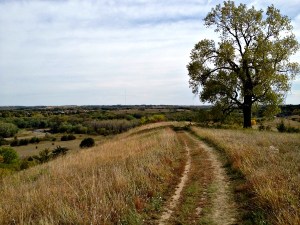
This picture was taken at Big Sioux Recreation Area, just outside of Sioux Falls, South Dakota. I’d been on the road for less than a week driving from South Carolina to South Dakota to make it my new residency state. I got my driver’s license and plates and then took a hike to the top of this hill to see Sioux Falls and the surrounding countryside. I sat on a bench and realized it was Thursday. In my old life I’d have been hard at work, but instead I was at this wonderful place. This is when it really hit me that I was living my dream, that life would never be the same. It was magical.
BeckyPix_2

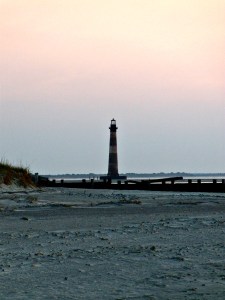
The early bird catches the view at Folly Beach Country Park near Charleston. Photo credit: Becky Schade.


The second photo is of Folly Beach Country Park, just outside Charleston, South Carolina. Six years ago, my best friend and I were a year out of college and had earned some vacation time with our first “real” jobs. We used the two weeks to road-trip to South Carolina. I’d lived in Wisconsin all my life and was itching for a change of scenery; this was probably when I caught the travel bug. I took this photo at sunrise. We’d woken up at 4:00 a.m. to make sure we got to the beach before sunrise. I’m not an early riser, but getting to see the pink glow over the lighthouse was so worth the effort. We ended up liking our trip here so much that we moved to SC a year later, where I stayed until I hit the road.
BeckyPix_3

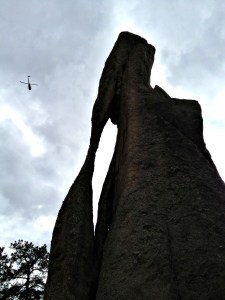
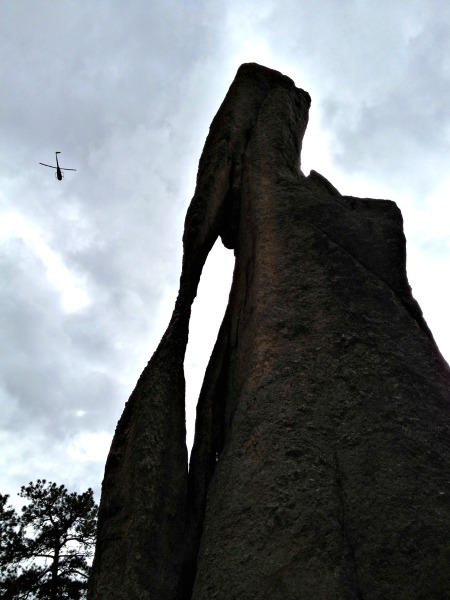
Inspired by spires of granite near Sylvan Lake. Photo credit: Becky Schade.

The third picture was taken in June of last year, when I was working at a gift shop in Badlands National Park. On a day off, I headed over to Custer State Park, in the Black Hills. I had no itinerary and spent the morning in the south of the park watching bison. Then, after happening upon a couple of neat looking lakes, I decided to study the park brochures and find the best lake in the Black Hills. Beautiful Sylvan Lake caught my eye. The road that leads to the lake is the Needles Highway. The drive along that highway was amazing, more so because I had no idea it was there, and every vista was a surprise. This photo is of the Needle, a huge spire of granite that wind and water had hollowed out into a needle shape.

Nature—cheaper than therapy

It makes such a difference when you know the story attached to the pictures. Until you told me that story about the last one, all I could see was a silhouette of a girl leaning back with long flowing hair–not a needle! Where are your favorite places to take photographs?
I love natural places, I always feel most content and closest to the divine when I’m out in nature. And there’s such variety to be found, as the next three photos demonstrate. I don’t think I’ll ever get tired of it.

BeckyPix_4

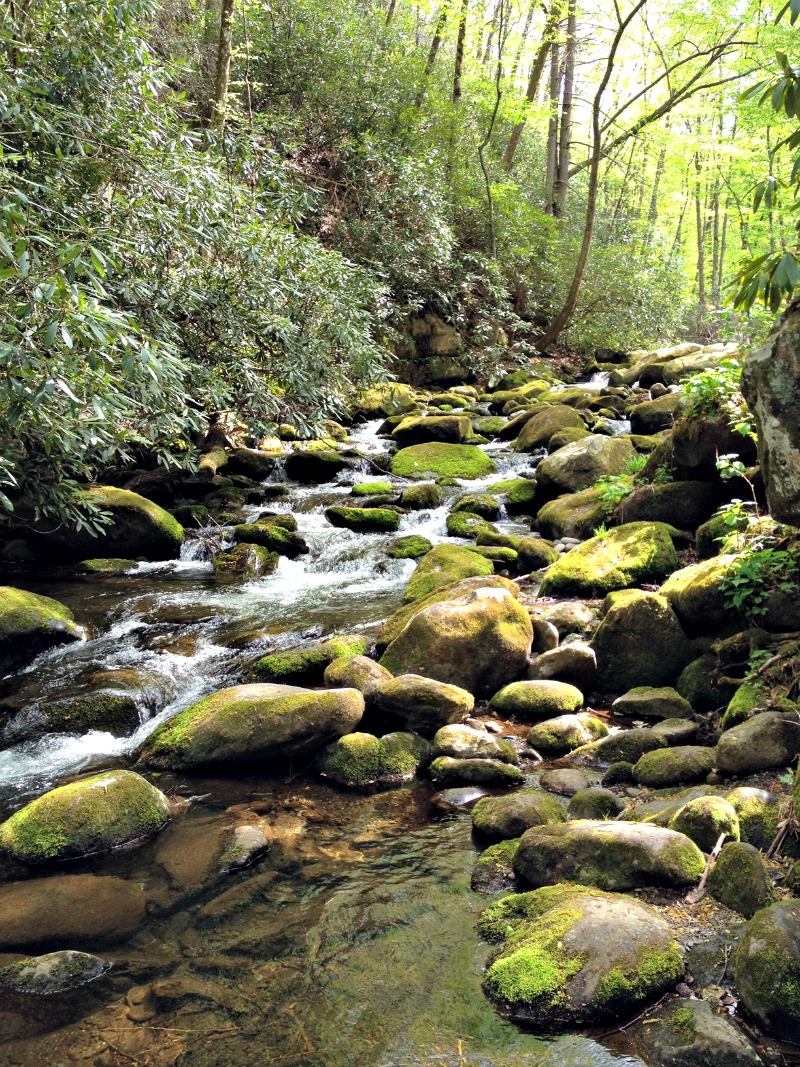
Holy smokes! Nature in all its glory in Great Smokey Mountain National Park, NC/TN. Photo credit: Becky Schade.

BeckyPix_5

Nothing bad about that! Badlands National Park, SD. Photo credit: Becky Schade.

BeckyPix_6

The forces of erosion at work in Hunting Island State Park, SC. Photo credit: Becky Schade.

I know how you feel. Photographing a natural scene that is forever changing feels so fulfilling. I’d like to know if you ever feel reserved about taking photos of people, particularly when they are conscious that you are doing so?
Yes, I do. I don’t take pictures of people without their permission if they are to be the subject. But if they happen to be in the background of a shot, it’s not usually an issue.

Would you say that photography and the ability to be able to capture something unique which will never be seen again is a powerful force for you?
That’s an interesting question. For me, photography is a hobby and not the main reason for travel. I have no desire to get trapped behind the lens trying to take the perfect picture and miss the beauty of a magic moment. Having said that, there certainly is a magic to that rare photograph that captures the essence of a time or place. Maybe it’s because I’m a novice or that I make a point of not staging photos, but when I snap my shutter I never know ahead of time if I’m taking that kind of picture. It’s something I find out later as I’m reviewing the photos in my computer.

I can empathize. In my case if I’m not present in the moment I can neither photograph nor write with passion.

“The best camera is the one you have with you.” —Chase Jarvis

Now for the technical stuff. What kind of camera and lenses do you use? And which software do you use for post-processing?
Haha, hoo boy—I’m about to get laughed right out of this column…or maybe, just maybe, help a few people understand that you don’t have to buy a thousand dollar SLR to be a photographer. My camera is my iPhone 4s—with no apps to change the functionality. That’s all I have. I don’t even own a point-and-shoot. Because I have no optical zoom whatsoever, it definitely limits the kinds of photos I can take, but for me the extremely high portability and low cost (relatively speaking) make up for that drawback. My phone fits in my pants pocket and has a waterproof and shock-resistant case, so I don’t fear taking it to rugged locales. Some might say that a smartphone is more expensive than many point-and-shoots you can buy, which is true, but when it functions as my phone and GPS as well as my primary camera, having all three in one package is definitely cheaper than owning them as individual gadgets. I use Adobe Photoshop 7.0, which I had actually gotten years ago for the purpose of drawing and coloring digital art from scratch. It wasn’t until much later that I decided to put it to the use it was designed for.

I hear no laughter, and if you can handle Photoshop you’re no dummy! If it makes you feel better, I am probably one of a small minority who have a DSLR camera but no mobile phone. Actually, I have a mobile phone that isn’t smart—it only makes phone calls; but I hardly ever turn it on. Now I hear some laughter!! Finally, do you have any advice for wannabe photographers or travelers?
First off, never let someone else’s definition of travel or photography determine your own by default. You don’t need all the newest gear to be a photographer, and you don’t need to book a plane halfway around the world to be a traveler. Take some time to think about what you really want from your experience, and let that be your guide. Second, if this is your dream, the life you want to live, don’t put it off for later. Later might never come. You want to be a photographer? Get out today and take some photos. Practice makes perfect. You want to start traveling? Start planning now and get to work on making it a reality. Set a date by which you’ll be out there.

Becky, I’ve really enjoyed our time together. Your story is an inspiration to us all. I only wish I was 40 years younger because I’m sure I would be tooling up an RV as fast as I could right now.

* * *

Readers, what do you make of Becky’s RV life and her photography advice? She has certainly taken the road less traveled. If you have any questions for her about her photos and/or experiences, please leave them in the comments!

And if you want to know more about Becky, don’t forget to visit her blog, Interstellar Orchard. You can also like the blog’s Facebook page, connect with her on Twitter, or send her an email.

(If you are a photographer and would like to be interviewed by James for this series, please send your information to ml@thedisplacednation.com.)

STAY TUNED for next week’s fab posts!

If you enjoyed this post, we invite you to register for The Displaced Dispatch, a round up of weekly posts from The Displaced Nation, with seasonal recipes, book giveaways and other extras. Register for The Displaced Dispatch by clicking here!

Related posts:
Beth Geglia’s calling to make films on Central American human rights stories

Beth_Geglia_tdn

Beth Geglia (photo supplied by Beth and used with her permission)

Since the Displaced Nation began billing itself as a “home for international creatives,” we have covered plenty of fiction writers, memoirists, and foodies, as well as a few entrepreneurs (I contributed to the latter with an interview with Alison McGowan about her tourism-related business in Brazil).

But there are also expats whose creativity is expressed in political activism: they work for the causes within (and across) the countries they visit.

Today I talk to one such activist, Beth Geglia, an American who, having dedicated her life to human rights issues in Central America, has now developed filmmaking skills and released a feature-length documentary on the resilience displayed by an extraordinary group of Afro-Hondurans.

* * *

Buenas, Beth, and thanks so much for agreeing to be interviewed. Let’s start by having you tell us a bit about yourself. What first awakened your interest in human rights?
I got involved in high school, after the September 11th attacks. I was adamantly against war in both Afghanistan and Iraq, and participated in student walk-outs, teach-ins—all the big mobilizations. Next I volunteered with the Indigenous People’s Council of Oaxaca in Mexico and the Movement of Worker-Occupied Factories in Argentina, which got me working on issues of economic justice and alternative economies as part of the student fair trade movement.

Guatemala has figured large in your life. What led you there in the first place?
As a student activist, I worked closely with a local fair trade coffee-roasting cooperative in Madison, Wisconsin, called Just Coffee. They sent me to Guatemala to do work with a coffee cooperative of former revolutionary combatants and returned refugees from the country’s internal conflict, known as Santa Anita La Unión. Later we organized a delegation of student activists from Wisconsin to meet with Guatemalan producer cooperatives, and I went back a few times.

Making a life in Guatemala

I understand you ended up living in Guatemala?
I became overwhelmed with the history of Guatemala, the U.S.’s interventionist role there, and the movements to restore the memory of the violence that had taken place. I felt I was learning and changing an incredible amount, so I moved there ten days after graduating college. I stayed for two years.

I assume you speak Spanish, but were there any moments when you felt displaced, in the sense of being alienated from your surroundings?
Yes, I spoke Spanish so language was not much of an issue. However, many communities in Guatemala speak their indigenous languages, none of which I was able to learn. There were definitely moments of struggle, but I wouldn’t necessarily relate them to feelings of displacement. After all, I was working with communities who were trying to defend their rights against gold mining and other resource extraction companies—it was they who were facing displacement. Some had been forcibly displaced, while others were threatened with displacement from environmental destruction, militarization, and loss of land. The communities were still healing from the violence of the internal conflict, and some people were experiencing the threat of being locked up or assassinated. Seeing this kind of suffering close up was the hardest, most painful part of my experience. Then there’s always the challenge of understanding your role as a foreigner: what’s appropriate, what’s helpful—fully aware of the privilege of being there by choice and able to leave.

I usually tell people that living in Guatemala was the hardest thing I ever did—and, at the same time, the most important and dearest to my heart. It truly transformed me.

So, for the most part, living in war-torn Guatemala felt right to you?
Things make sense to me whenever I am surrounded by good people doing good work. The people I lived and worked with in Guatemala City, for example, are still some of the people I most respect. Cooking meals with them, hanging out on the roof or patio with a few chelas (beers)—these things really felt like home.

Practicing the filmmaking craft

At what point did you decide to become a filmmaker?
It wasn’t until I moved back to the United States and quit my job with a human rights organization a year later that I began to study documentary filmmaking. Video and film are one of the most useful tools for helping people who are struggling to get their voices heard. It’s an important skill.

RevolutionaryMedicine_poster

Poster for the film screening at Columbia School of Social Work

You have just now released a documentary, Revolutionary Medicine: A Story of the First Garífuna Hospital, a collaboration with journalist Jesse Freeston. The film is set in Honduras and tells the story of the Garífuna people and the community hospital that they built. Can you fill us in a little more?
Sure. Garífuna history has been rife with forced displacement and resistance, from the slave trade to expulsion by the British from the island of St. Vincent. Most Garífunas in Honduras live on the northern coast, on lands their people have occupied for 216 years. They continue to face many pressures, such as a lucrative foreign tourism industry, the expansion of African palm production by the country’s largest landowners, resource extraction, and foreign investors wanting to build charter cities. In addition, they face ongoing discrimination and neglect from the state, which has failed to provide them with medical services. This film is about the community coming together to build their own hospital, while fighting for their human right to health care. It’s a story about self-organization and persistence, but also about a different model of medicine having to do with community survival. According to this model, improving the health of the community is a first step in addressing structural and political issues in need of change.

It really is the “first” Garífuna Hospital?
Yes. It’s the first hospital to exist in the Garífuna’s territory.

“For the health of our people…”

How did the making of the film come about?
I was still in Guatemala when the military coup in Honduras happened in June of 2009. The people around me were remembering Guatemala’s internal conflict, which lasted 36 years and amounted to genocide: it been sparked by a CIA-orchestrated coup. Everyone was feeling the weight of that history, and there was a sense of urgency around what Honduras could suffer as a result of the coup. Upon returning to the U.S., I got involved in local activism that was exposing the DC-based lobbyists who’d been hired by Honduras’s interim coup government to essentially whitewash the coup and restore normal relations with international institutions and the Organization of American States.

That’s when I met Dr. Luther Castillo, one of the founding doctors of the First Garífuna Hospital. He was on a speaking tour denouncing the political violence and repression taking place in Honduras. I took up his invitation to come visit the hospital.

Jesse Freeston and I knew each other from DC. He had been working as a journalist in Honduras and other parts of Central America for a few years and had also gotten to know the story of the Hospital and what Garífuna communities were working to create.

It was great working with Jesse. He had years of documentary experience under his belt and in fact is now finishing up a feature-length film called Resistencia, about land-occupying farmers in the Aguán Valley of Honduras. It should be released in the spring. I think we made a good team, and I learned a lot from the collaboration.

When was the film released, and what has been the reaction amongst the Garífuna people?
We started screening the film in August. Jesse took it down the West coast of the U.S. and I went to screen it in Honduras. The Garífuna community of Ciriboya reacted very positively. You know when you make a film, you can’t cover nearly everything you’d like to, but I think the doctors in particular felt it presented a balanced version of their story. They’re now using it to raise awareness and educate others. Actually, the most gratifying thing was to see the reaction of medical students who attend the public university in the capital city, Tegucigalpa. They were so excited, they ended up organizing their own screening of the film and have entered into a longer-term relationship with the Garífuna Hospital.

What about in the United States?
In the U.S. we’ve screened for lots of different audiences, including activists, organized medical professionals, social work students, med students, and youth. We’ve worked with the Garífuna Health and Education Support Institute in New York to reach Garífuna diaspora audiences, mainly in the Bronx, and the response has been phenomenal. It’s been exciting to help connect diaspora communities with what’s going on back in their homeland. Generally, people seem to come away feeling proud and/or inspired to act. I think the best compliment we received was: “This is a great organizing tool.”

If our readers are interested in watching the film how can they go about it?
Very soon anyone will be able to order a copy of the documentary online. Until then, I suggest you follow our Facebook page to find out about screenings and distribution. You are also welcome to contact Jesse and me directly by email: me@jessefreeston.com or bgeglia@gmail.com.

What further hopes do you have for the film?
Besides the documentary being used as an educational and network-building tool—that’s why we’ve been focusing on community-based and university screenings—we hope it will give ideas to people who are working on related projects. Particularly in the U.S. I would like for it to make people think about our own health care system and what might be possible.

Having already lived in Guatemala, did making the film help you to connect with Central America in any new ways?
I learned a ton about a part of Central America I knew very little about. One thing that continuously inspired me was the resilience of communities—in particular, their ability to construct alternatives that challenge our assumptions of how society can be organized. Also, the idea of doctors playing the role of protagonist in the process wasn’t something I’d anticipated. Now I’m learning that there is a long history of health workers playing a central role in social movements, to which I’d been largely oblivious.

What are your plans for the future, both with the film and your activism?
I’m actually back in school now in DC, studying for a Ph.D. in Public Anthropology. It’s an interesting program because it leaves room to use documentary film as opposed to simply writing academic papers that will have little reach. The program promotes activism as well as embedded and participatory research, so I feel it’s a good home for me. I don’t have much free time, but when I do, I like to volunteer with a local documentary project called Lessons from the ’60s. It’s an oral history project organized by a group of older activists who want to document memories of the movements that took place in DC in the 1960s and ’70s before they are lost forever. Preserving historical memory was one of the reasons I wanted to do documentary film, so it’s great to be able to participate in this kind of a project in my hometown.

10 Questions for Beth Geglia

Finally, we’d like to ask a series of questions that we’ve asked some of our other featured authors, about your reading and writing habits:
1. Last truly great book you read: Golden Gulag, by Ruth Wilson Gilmore, on the prison system in California (being in school means I only read non-fiction).
2. Favorite literary genre: Science fiction.
3. Reading habits on a plane: It’s actually really hard for me to stay awake on planes! I’m usually passed out, and when I’m awake I listen to music to calm my nerves because I’m scared of flying.
4. The one book you’d require Barack Obama to read, and why? Am I allowed to say Open Veins of Latin America: Five Centuries of the Pillaging of a Continent? Maybe The New Jim Crow, by Michelle Alexander.
5. Favorite books as a child: I was a huge fan of Roald Dahl books when I was a kid. The Witches was my favorite one. I also loved The Chronicles of Narnia.
6. Favorite heroine: Itzá in The Inhabited Woman, by Giaconda Belli.
7. The writer, alive or dead, you’d most like to meet: Audre Lorde.
8. Your reading habits: Since I’m in school, I read all the time and I skim a lot. Coffee in hand is usually a necessity.
9. The book you’d most like to see made as a film: The Inhabited Woman, by Giaconda Belli.
10. The book you plan to read next: Pathologies of Power, by Paul Farmer.

* * *

Readers, did you find Beth’s story as inspiring as I did? Be sure to check out her documentary if you get a chance. And feel free to leave further questions or comments for her below.

STAY TUNED for tomorrow’s post, some species of Halloween confection by Anthony Windram.

If you enjoyed this post, we invite you to register for The Displaced Dispatch, a round up of weekly posts from The Displaced Nation, with seasonal recipes, book giveaways and other extras. Register for The Displaced Dispatch by clicking here!

Related posts:
images: Beth Geglia; poster for the film screening at Columbia School of Social Work.

I’m an explorer — not a traveler

This week, the Displaced Nation is drifting away from March’s initial theme of beauty/fashion tips picked up from world travels. Hardly surprising, given that all of this week’s writers are males! Today’s guest poster, James Murray, a displaced Brit in Boston, is a prime example. The only new fashion he’d like to start would be replacing the word “travel” with “explore.” Sounds pedantic, right? Well, see what you think!

— ML Awanohara

I was never really one for traveling. When all the kids went on their gap years before college, I called them on it: I knew it was a waste of money; a way to delay the inevitable intrusion of the Real World into their lives — in short, I didn’t see the point.

Receiving emails from abroad about how wonderful these experiences were and how life-affirming and eye-opening and incredible the world was, I simply smiled to myself.

How naïve they were, I thought.

Whereas I would be a year ahead; a year closer to a job; a year closer to money, and a year closer to actual freedom.

I did not see work as some black hole into which you pour all of your efforts with no hope of ever getting anything back. On the contrary, I thought it would be pretty good to have a job and a flat and friends and the cash to support a lifestyle I could be comfortable with.

Travel for travel’s sake

I still think that. In fact, I’m not entirely sure I was ever wrong on this point. Sorry to disappoint. And particular apologies to Jeff Jung, whose book on career-break travel was favorably reviewed on this site at the end of last month.

Don’t get me wrong. Yes, I’ve traveled and, yes, I love being “elsewhere,” doing things differently, as much as the next displaced nation resident. In fact I’m a bit of a neophile when it comes to food and culture…

But being enamored of the new doesn’t mean you have to travel.

Travel provides a set of obvious novelties: new tastes; new currencies; new transport; climate; a different view from the window.

But just being somewhere different doesn’t make you an explorer; in order to get that badge, you need to set foot outside your comfort zone, step away from the hotel, the package tour, the guidebook — and look with your own eyes.

Cross that one off the list!

That Facebook app that challenges you to prove you’re a world traveler by listing all the countries you’ve visited irrespective of how long you were there or where exactly you were: what does it really show? It makes a three-day hotel stay in Shanghai look as though you’ve conquered the entirety of mainland China, and it reduces that beautiful holiday in Wales — you know, the one that reminded you what it was like when shops closed on a Sunday — to a complete non-event.

The way we think of travel is all wrong: the political boundaries on the map say that I now live in the USA, but that doesn’t really say anything about where I actually live or the aspects of American culture that I’ve actually experienced.

My life would be completely different if, say, I lived in the desert or the mountains — it would even be different if I lived in New York instead of Boston.

I don’t anticipate ever being able to say that I’ve seen it all.

Explore, for heaven’s sake!

Exploring as opposed to traveling is a question of quality against quantity. I did a lot of exploring in London and Edinburgh that opened my eyes just as much as wandering around Thailand and Romania.

A few curiously exploratory examples:

  • Getting a haircut at a weird little barber’s in Shepherd’s Bush. It was an all-male barber’s, where men could “come along and say what they like in whatever language they like,” as the proprietor put it. I remember being very quiet amid a torrent of very macho conversation. Not a totally unpleasant experience, but I never went back.
  • With my flatmate, laying Russian roulette with the pastries at Vanna Patisserie, a Chinese bakery in Shepherd’s Bush. They were either sugary and delicious or curiously tough with a peculiar secret ingredient. There was no way of telling from the outside.
  • Spotting a Portobello (Edinburgh) art exhibition displayed outside people’s homes that featured, amongst other things, a fat-and-seed bird feeder in the shape of the artist’s head, hung from a tree, where it was gradually and gruesomely pecked to pieces.

These bizarre titbits are the wages of the explorer but not necessarily the traveler, who might see only those accepted “landmarks” to which his eyes are directed.

Avenues for exploration are everywhere. In fact, when I first moved to London, I was so inspired by the tube stops that I wanted to develop a guide to each one.

My idea was that I would use some algorithm to pick a different tube stop each weekend, go there and simply wander around in a roughly spiral shape from that stop, looking carefully at architectural details, stopping in parks and perhaps interviewing the proprietors of particularly interesting local businesses.

I would document these things not so much as a guide for others to visit exactly the same places, but in hopes of inspiring them to look at their own neighborhoods with new eyes.

Exploring the New World

I try to do the same kind of thing in Boston, although I confess I find it a bit harder — there’s the sheer fact that London is 1) massive and 2) very, very old that makes it rather easier to find the gems at the ends of the nooks and crannies.

But I’m not discouraged — I’ve still barely explored the North End with its windy little streets and ample opportunities for getting lost (I don’t have one of those phones that tells me where I’m going).

And just the other day we were introduced to a bar not five minutes down the road, which will make a superb local, with its walls plastered in kitschy tut. I’m sure I’ve passed it before, but, like all the best things, it’s a bit hard to spot.

In amongst these streets are histories, idiosyncrasies and mythologies — of that I have little doubt. Finding them is just a matter of retiring my traveler’s shoes and donning an explorer’s hat.

* * *

So, world travelers — sorry, I meant to say “explorers” — what do you think? Is James right in saying that all of this obsession with the quantity of travel (how many countries, etc.) is misguided? And what do you think of his assertion that Edinburgh can be as fascinating as Bangkok, if you take an explorer’s approach? Please leave your thoughts in the comments…

James Murray is a self-described “itinerant Brit.” After a stint in New Zealand, and some travel in Southeast Asia, he and his American girlfriend — now wife — are practicing “staying put” in Boston, where James is pursing a career as a wordsmith for marketing and fiction, and as a non-professional theatre director. He is also a Utopian idealist and SingStar enthusiast. You can find more about his views by reading his blog, Quaint James, and/or following him on Twitter: @quaintjames.

STAY TUNED for tomorrow’s post by Andy Martin, about a unusual source of beauty in his new home town of São Paulo.

If you enjoyed this post, we invite you to register for The Displaced Dispatch, a round up of weekly posts from The Displaced Nation, with seasonal recipes, book giveaways and other extras. Register for The Displaced Dispatch by clicking here!

Related posts:

img: MorgueFile

For expat novelist Laura Graham, even a dark Tuscan alley has La Dolce Vita to spare

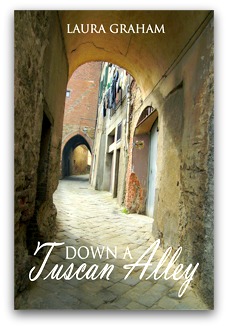
“Down a Tuscan Alley” — when I first heard the title of Laura Graham’s debut novel about an Englishwoman in Tuscany, I assumed it would be a thriller or mystery. Something nefarious would happen down a Tuscan alley, and the protagonist, whose name is Lorri, would find herself enmeshed in events beyond her comprehension, fearful of getting caught in the crossfire between rival Mafia gangs…

The book is no such thing, I’m happy to report (I’m not a fan of Mafia thrillers). Strange things do happen in the dark alley outside of the tiny flat where Lorri lives in the Centro Storico (village on a hill) of the Tuscan town of Sinalunga — but nothing worse than a peeping Tom. And at one point there’s a shady-looking man following Lorri — but he turns out to be (relatively speaking) harmless.

No, the book’s real mystery has to do with why Lorri is living in a tiny Tuscan village on her own. Well, she’s not on her own but has two cats. The last time she was in Sinalunga, it was with her husband, Richard. They had bought the flat together and Richard fixed it up. But now their marriage is over because of Richard’s infidelity. Or Lorri thinks it is over — Richard is having second thoughts.

Lorri, however, is determined. She has come to Italy to get lost in the culture and start her life again. But is she doing the right thing? Her Italian neighbors treat her with some suspicion: what’s a woman doing living on her own, with no visible means of support? (She has decided to do B&B in her little flat, but since it has only one bedroom, when the guests come, she has to sleep on the sitting room floor.)

And she also has to persuade herself to trust her gut instincts. As she says toward the start of the novel:

Am I crazy to come here? Hardly any grasp of the language, forty-seven, alone and with virtually no money? Many would think so…

Lest you think we’re venturing into Under the Tuscan Sun territory, rest assured, we’re not. Lorri does not take life, let alone her midlife predicament, too seriously. This is a flat overlooking an alley we’re talking about, not a 250-year-old villa. And so what if she ends up seizing an opportunity to get involved with the handsome young builder Ronaldo? Isn’t La Dolce Amore the quickest way to obtain La Dolce Vita?

But before I get too carried away with the story, let me turn the conversation over to Laura Graham, who has graciously agreed to answer a few questions about both her book and her life story — which, as she freely admits, the novel is based on.

The decision to write an autobiographical novel

Thank you so much, Laura, for agreeing to this chat. Your story — both in the book and in real life — neatly combines the two themes we’ve been talking about on The Displaced Nation this month: the quest for La Dolce Vita and the need for taking a “midlife gap year,” which sometimes heralds an even bigger life change. But let’s start by having you talk a little about your background — where you were born, what you studied and why you went to live in Italy.
I was born and brought up on the Isle of Tiree on the West Coast of Scotland for the first six years of my life. I then came to London and entered a convent school.

Later, as an adult, I won a scholarship to study drama at the London Academy of Music and Dramatic Art for two years. I received the prize for being the most promising student and immediately got a job understudying Helen Mirren in The Balcony at the Aldwych Theatre in London. I had a long and successful acting career at the Royal Shakespeare Company and the Young Vic, also on television.

When my long relationship ended with my former partner, I felt the need to turn my life around and decided to begin again in Italy. About ten years before, I’d invested £6,000 in a tiny hilltop village apartment in Tuscany, never thinking that one day it would become my permanent home. I still live in the village, but in a house, with my partner Rosalbo, a property restorer and an artist (he paints cats!). Besides writing, I run my own holiday agency, called “Laura’s Houses.”

Down the Tuscan Alley is your first novel. Have you written anything else?
I have also written a book for children called A Tale of Two Tuscan Cats, which was published last October. It has recently come out in Italian. Rosalbo did the illustrations.

What made you decide to write a novel about a middle-aged woman who is determined to change her life by moving abroad?
Because I’ve experienced it and thought it would make a good story — and might help others so inclined.

Why a novel and not a memoir?
I wrote my story in a novel form to protect the people I wrote about — I’ve changed their names, although some of them are now dead.

What audience did you have in mind when writing the book?
Women like myself, who want more from life than just settling into middle age with nothing but memories. Life is to be lived!

One of your Amazon reviewers wrote: “Brava! Brava! Brava! I loved reading Down a Tuscan Alley. The comic cast of characters brought me to the heart of bellisima Italia.” Other readers, however, said they were grateful that the book isn’t just about how beautiful Italy is. To which parts of the story have most readers responded?
The parts that are thought-provoking — about losing oneself in another culture in order to find oneself — and the humor are what people seem to enjoy.

Getting to the heart of La Dolce Vita…

From the time she arrives Italy, Lorri seems to be in touch with the little things that make her Tuscan alley so different from the Devonshire alley where she was living with friends, just before she left: the old stone steps, the steeple of the magnificent ochre-colored church she can see from her window, the birdsong… Is there something special about Italy that awakens the five senses?
In my opinion it is the light that awakens the senses. The light in Tuscany touches something in you, brings you to life — it’s like a medicine, a tonic.

Since you’re a former actress, would you say that daily life in Italy is more theatrical?
Living in Italy is certainly more theatrical than living in the UK. The people here are open and spontaneous.

And Lorri immediately becomes part of that drama. As her elderly English-speaking neighbor in Sinalunga, Lionello Torossi, says: “The people are delighted to see you…You are their portable theater.” But doesn’t some of the charm of a place have to do with its novelty value? Wouldn’t an Italian feel charmed by a Devonshire alley?
I think the Italians would be fascinated by a Devonshire back alley, if only to think — how is it possible to live there?

…and La Dolce Amore

At one point, Lorri is contemplating her affair with Ronaldo and says to herself: “How can you speak with your heart when you don’t know the words?” Call me a skeptic, but couldn’t their relationship change for the worse once their verbal communications improve?
No, I think Lorri would still find Ronaldo enchanting once she’s able to understand more of the language. But perhaps also more infuriating at times!

Lorri also says, with reference to Ronaldo: “These torrid passions are what happens to English women in hot countries.” Is romance so very different in Italy as compared to the UK?
Torrid passions indeed! The Italian art of seduction is very different from the UK. An Italian makes a woman feel every inch a woman and delights in her beauty and femininity no matter what her age.

Many of The Displaced Nation’s readers are in cross-cultural relationships. What do you find to be the biggest challenge about getting together with someone of another culture?
I cannot pretend it’s easy getting together for a long time with someone of a different culture — although it’s not the culture so much as the mentality. There are many things to learn, mainly about one’s self — and that’s always a challenge. Here in Italy, it’s the language I find most difficult and the humor, which is somewhat different from ours. Of the two, language is the bigger difficulty. Communicating is the key to success when living in another country. Otherwise, you can’t offer as much as yourself as you would like to.

The challenge of exporting La Dolce Vita

After living in a small Italian community for so long, do you think you could ever fit back into living in Britain?
No, I can’t imagine myself living again in the UK even though I go back twice a year and enjoy it. But if I had to I would adjust simply because I’m English. But the biggest culture shock — apart from the food — would be the people. I’ve grown so used to the warmth of the Italians.

Could you bottle the formula you’ve developed for La Dolce Vita in Tuscany and bring it back with you?
The only way to bottle the formula of the Tuscan Dolce Vita is to carry it inside my heart — and take it with me wherever I go.

Coming soon!

Please tell me that you’re working on another book. By the time I finished Down a Tuscan Alley, I’d grown fond of Lorri, Ronaldo and the various neighbors — and felt bereft!
I am on the last chapter of my next book: The Story of Kelly McCloud. This is also set in Italy and is about a young woman who takes a job as a housesitter in an Italian villa. Amongst an eccentric English family, a fallen angel and a dragon, she discovers how to use the whole of her brain and realizes the potentiality of the human race.

Assolutamente favoloso! Thanks so much, Laura!

Readers, you can purchase Down a Tuscan Alley on Amazon. You can also read more about Laura Graham at her author site. And, should you now feel tempted into trying out La Dolce Vita for yourself, then consider renting one of her two houses in the Centro Storico of Sinalunga. What are you waiting for?!

STAY TUNED for tomorrow’s episode in the life of our fictional expat heroine, Libby, who has traded her Boston Red Sox cap for a Sherlock Holmes deerstalker in her quest to uncover her husband’s roots. (What, not keeping up with Libby? Read the first three episodes of her expat adventures.)

If you enjoyed this post, we invite you to register for The Displaced Dispatch, a round up of weekly posts from The Displaced Nation, with seasonal recipes, book giveaways and other extras. Register for The Displaced Dispatch by clicking here!

Related posts:
img: Laura Graham, on the terrace outside her house in Tuscany.

RANDOM NOMAD: Jeff Jung, American Expat in Colombia & Career Break Travel Guy

Jeff JungPlace of birth: Fredericksburg, Texas USA
Passport: USA*
Overseas history: South Africa (Vanderbijlpark): 1988-1989; Argentina (Buenos Aires): 2007 (on and off between March-December 2007, continuously from September-December); Colombia (Bogotá): 2009 – present.
Occupation: Editor of CareerBreakSecrets.com and producer/host of the soon-to-be-globally-televised “The Career Break Travel Show.”
Cyberspace coordinates: Career Break Secrets Website/blog, Facebook page and YouTube channel; @CareerBrkSecret (Twitter handle).
*It’s filled up again so time to get to the embassy to add pages.

What made you leave your homeland in the first place?
Originally, I left to go travel the world when I took a career break from the corporate world in 2007. When I left, I didn’t know that I was going to start as an expat. But, while traveling, I met someone here in Colombia and wound up staying.

Is anyone else in your immediate family “displaced”?
I have many family members who have a bit of wanderlust in their soul. But, I think I am the only one who is living as an expat.

Can you describe the moment when you felt the most displaced?
That would probably be my trip to Egypt in 2008. I normally feel at home on the road. I love to travel. But, in Egypt, I just couldn’t seem to make a connection with the people, the culture or the country. I spent about ten days traveling with a friend. The combination of the heat, the constant sales pitches in the streets, and the culture of backsheesh just wore me out. It wasn’t all bad though. I had a few days on a felucca on the Nile and a few days to hang out in Luxor. But, when we returned for our final two days to Cairo, I didn’t go out. I hid in my room — not my travel style at all. I just wanted to rest and wait until it was time to go to the airport and leave.

Is there any particular moment that stands out as your “least displaced”?
That’s easy. I was an exchange student to South Africa just after high school. I had such an amazing year. Between four host families and a lot of great friends that I made at my host school, I didn’t want to leave. It’s probably why I’ve been back six times since then. On my last trip in 2009, I got to see the country preparing for the World Cup. I was so proud of South Africa. I’ve seen it go from pariah apartheid state to emerging world influencer — with many bumps along the way. It really is a special place. It’s been a few years since I’ve been, so I’m probably due for a visit again. I’m missing a good braai (barbeque) with my friends. My dream is to have a place in or just outside of Cape Town someday, with a view onto the ocean.

You may bring one curiosity you’ve collected from your adopted country into The Displaced Nation. What’s in your suitcase?
From Argentina: Breakfast foods — coffee, facturas (sweet Argentinian pastries with various fillings) and medialunas (Argentinian croissants).
From South Africa: Some bottles of wine, probably red. No, definitely red.
From Colombia: My mochila (over-the-shoulder daybag). These are used by everyone in Colombia, men and women, and they are perfect for carrying your stuff while you’re out running around.

You are invited to prepare one meal based on your travels for other members of The Displaced Nation. What’s on your menu?

Oh, this is going to be fun!
Appetizers: A selection of dips and finger foods from Turkey. I love the food there and really miss it.
Main course: A pork barbecue prepared by my dad who is a national award-winning BBQer in the US. Maybe we’ll have some fresh Patagonian lamb with it too. The meat will be served with a Greek salad and lots of veggie dishes — the veggies will have been bought fresh from La Vega Central, the produce market in Santiago, Chile. Finally, there will be plenty of my Dad’s award-winning sauce to go with the meal.
Drinks: Of course there will be plenty of wine from South Africa and we’ll also have sparkling water for a non-alcoholic option.
Dessert: Why select one? It’s a dinner party so there should be a variety! Brigadeiro (chocolate bonbons) from Brazil, ice cream from Argentina (unexpectedly amazing!), fresh fruit from Ecuador and Colombia, and churros from Spain (that can be a dessert, right?).
Nightcap: Amarula (cream liqueur) from South Africa, served with Segafredo coffee from Italy.

And now you may add a word or expression from the country where you live in to The Displaced Nation argot. What will you loan us?
Chucha (pronounced choo-chah): This Spanish word has multiple meanings across Latin America. In Chile, Ecuador and Peru, where I picked it up, it’s an interjection meaning “sh**” or “shoot.” In Colombia, it has two entirely different meanings depending on where you say it. In Bogotá, it means armpit odor and in Cartagena, it means vagina. People often look at me funny here when I say it. I’m sure the Displaced Nation has occasions when you could use a confusing swear word…

Put it this way: we like anything that makes people laugh! And this month we are looking at ways of achieving “la dolce vita” — by that we mean, indulging in life with all your senses. Can you describe an instance on your travels when you felt you were living la dolce vita?
In 2008, I traveled through Patagonia and had an amazing six weeks. The first part of the trip was on a Chilean ferry called Navimag, which cruises north to south from central Chile to the southern tip. You are in protected waters (most of the time) and on both sides of the ship is this beautiful, untouched landscape full of snow-capped volcanoes, lush green countrysides, enormous glaciers (some of the biggest in the world), and tiny, remote villages. You can also see marooned ships and the occasional dolphin. The weather can change from clear, sunny skies to blustery snow in a heartbeat. That trip is one of my most special trips ever. I really felt like I was living La Dolce Vita during those four days.

I personally think that the yearning for la dolce vita increases as one grows older. I know you are an expert on adult gap years. What made you decide to take one for yourself?
My catalytic moment was the night I went out with some friends to dinner on the River Walk in San Antonio, Texas, on a hot, balmy Friday night. They could tell I was down, and had been for some time. They asked me what it was going to take to make me happy. I didn’t have a good response that night. But, the question haunted me all weekend. I finally had an epiphany that I really wanted to leave my corporate job and get out in the world and travel. I traveled for almost two years mostly through South America, parts of Europe, Turkey and Egypt.

And then you decided to set up a business to encourage others to do the same?
Once I decided to settle in Colombia, I chose the entrepreneurial path and set up CareerBreakSecrets.com. I wanted to help popularize the idea of taking a career break and show other people that they can do it with just a little bit of guidance and inspiration. We’re now in our third year and will be releasing a book and launching our show, The Career Break Travel Show, globally later this year. I love hearing from real people who have decided to take their own break and if they set up a blog, follow them around the world on their travels. The people I’ve encountered have ranged from teachers to social workers to business people who have done some amazing things like volunteer and share their skills, hike Patagonia, bike across New Zealand, or take transcontinental train rides.

Readers — yay or nay for letting Jeff Jung into The Displaced Nation? Tell us your reasons. (Note: It’s fine to vote “nay” as long as you couch your reasoning in terms we all — including Jeff — find amusing!)

STAY TUNED for tomorrow’s diary entry from our fictional expat heroine, Libby, who is desperately trying to hang onto her sanity…and her marriage. (What, not keeping up with Libby? Read the first three episodes of her expat adventures.)

If you enjoyed this post, we invite you to register for The Displaced Dispatch, a round up of weekly posts from The Displaced Nation, with seasonal recipes, book giveaways and other extras. Register for The Displaced Dispatch by clicking here!

Related posts:
img: Jeff Jung with baby cheetahs near Oudtshoorn, South Africa, September 2009.

Ask Mary-Sue: Is the mid-life gap year a good idea?

Mary-Sue Wallace, The Displaced Nation’s agony aunt, is back. Her thoughtful advice eases and soothes any cross-cultural quandary or travel-related confusion you may have. Submit your questions and comments here, or else by emailing her at thedisplacednation@gmail.com.

Welcome to May, dearest readers. I’m sure like me you find this to be an absolutely delightful time of year as a long and delicious summer stretches out before us. This month’s theme is la dolce vita — or the sweet life in American. For me that means a summer making full use of my grill and dusting off my Paula Dean cookbook. Anyhoo, let’s get on with the queries that you’ve sent in for me, hopefully I can turn someone’s frown upside down — if anything, that’s the real sweet life. Ha, who am I kidding? It’s still baby back ribs!

__________________________________________

Dear Mary-Sue,

My wife and I are middle-aged, middle class Americans with two kids and a house and jobs. But now that our kids are grown up with lives of their own, my wife seems to have gotten it into her head that we should quit our jobs, sell the house, and have an adventure. I said, “Don’t be silly, gap years are for kids,” but she seems determined to do this. I wonder if I can talk her into taking a “gap year” at home. What do you think?

Dan from Denver

Dear Dan,

It sounds to me like you’re not that excited by your wife’s suggestion. This really needs to be a joint decision between the two of you for it to work, otherwise you’ll end up resenting your wife and she’ll feel hurt that you never shared your reservations with her initially. Talk to your wife about your misgivings. It’s a big step to quit your jobs and “have an adventure.” What does that mean anyway? Does she want you to move somewhere entirely different or travel the world? Take your wife out to your favorite restaurant, your local waffle house say, and over pistachio and strawberry waffles find out if there’s anything that excites you both. If it’s that you want to buy motorcycles and travel across the US, then maybe you could look into hiring bikes and doing a few long weekends. Find your common ground and then dip your toes a few times before you decide to take the plunge.

Mary-Sue

———————————-

Dear Mary-Sue,

I am an American who has lived in England for the past twenty odd years. Initially, I was married to an Englishman but that didn’t last. Now that the big 5-0 is approaching, I’d like to take a break from this place — having had my fill of rainy weather and jobs that don’t pay well. I’m thinking about volunteering at an orphanage in Africa or somewhere like that. I told my best friend, who is English, about the plan the other day, and she said: “Why do you want to reinvent yourself in the years when you should be winding down?” Do you think she has a point or is just being negative?

Elaine from Essex

Dear Elaine,

As a committed Anglophile with a younger son who has shown me how to download from torrent sites, I have unfortunately watched The Only Way is Essex and as such it’s my considered opinion that spending a few years in an orphanage in Africa is preferable to remaining in Essex.

Yours in commiseration,

Mary Sue

———————————-


Dear Mary-Sue,

I recently finished reading Susan Griffith’s Gap Years for Grown Ups, and now I’m torn between three different ideas for my mid-life gap year: 1) build walkways in the Costa Rican rainforest; 2) crew a yacht across the Atlantic; or 3) take a gourmet cookery course in the Loire Valley. Can you give me any advice on which one to choose? I should tell you that I’m a middle-aged German, twice divorced, and hoping this gap year will lead to meeting a significant other, preferably from a different culture.

Helmut from Hamburg

Dear Helmut,

I suspect that your true intentions lie in the end of your letter where you write, “I’m…twice-divorced, and hoping this gap year will lead to meeting a significant other, preferably from a different culture.” Let’s  face it Helmut, you’re a little horny, aren’t you? Don’t be shy, there’s no shame in that. I’m convinced that Mellisa from my Tuesday night Bible class who is always so excited about going to Marrakech once a year isn’t just looking forward to her “voluntary work” if you know what I mean. Wink, wink. 

Well, let’s take each option that you’ve presented me with. This idea of taking a yacht across the Atlantic? Hmm, well unless you’re planning on dating a sperm whale, I think you might find the Atlantic slim pickings. Maybe if you ended up yacht-wrecked off the Azores you might have a chance, but really let’s forget this one. Second thought, a cookery course in the Loire Valley. Well, as we’re seeing with President Hollande and Chancellor Merkel, I’m not sure about the long-term benefits of a Franco-German relationship. So that leaves Costa Rica. Last time I visited Costa Rica I was stunned by the amount of sad, lonely, pasty-faced middle-aged men in garish Hawaiian shirts who were on my flight into San Jose. Apparently, they’re getting action, so I don’t see why you shouldn’t as well.

Mary-Sue

___________________________________________

Anyhoo, that’s all from me readers. I’m so keen to hear about your cultural issues and all your juicy problems. Do drop me a line with any problems you have, or if you want to talk smack about Delilah Rene.

Mary-Sue is a retired travel agent who lives in Tulsa with her husband Jake. She is the best-selling author of Traveling Made Easy, Low-Fat Chicken Soup for the Traveler’s Soul, The Art of War: The Authorized Biography of Samantha Brown, and William Shatner’s TekWar: An Unofficial Guide. If you have any questions that you would like Mary-Sue to answer, you can contact her at thedisplacednation@gmail.com, or by adding to the comments below.

STAY TUNED for Tuesday’s post. Mary-Sue has heard it’s going to be great.

If you enjoyed this post, we invite you to register for The Displaced Dispatch, a round up of weekly posts from The Displaced Nation, with seasonal recipes, book giveaways and other extras. Register for The Displaced Dispatch by clicking here!

Related posts: