The Displaced Nation

A home for international creatives

Tag Archives: France

LOCATION, LOCUTION: JJ Marsh looks back on a year with TDN

jill 3One year ago, Displaced Nation asked me to conduct a series of regular interviews with writers on their use of location. Place is vitally important to my writing and that of my colleagues at  Triskele Books . It’s our USP. After a year of interviews with authors from Brazil, America, South Africa, Ireland, France, India, Hungary/China, I’m looking back.

First, I’ve selected ten of favourite answers, on how these writers approach weaving literary magic carpets to transport readers to Bombay or Berlin, Syria or Odessa.
Secondly, I’ve added five of the most books that held me spellbound; works which make place a character in its own right.

Happy Anniversary!

Which came first, story or location?

 Jeet Thayil, author of Narcopolis:
“I knew Narcopolis would be set in Bombay. I started with that city and that period in mind. It was about telling a story that hadn’t been told before, in a way that Indian fiction doesn’t really tell stories. Unsentimental, brutal and beautiful. When I realised that was what the book would be like, it revealed itself to me.”

Charlotte Otter, author of Balthasar’s Gift:
“The two are intertwined. When the first images began to flash in my head more than eight years ago, the setting was immediately clear: my home town in South Africa, Pietermaritzburg. BV is a post-apartheid novel and PMB is struggling to become an effective post-apartheid city. It was the natural setting for the story that was starting to unspool before me.”


How do you go about evoking the atmosphere of a place?

Chris Pavone, author of The Expats and The Accident:
“I love walking around cities, looking around at the architecture and the shops and the restaurants, at the people and their pet. My characters do the same, using all their senses to inhabit the world around them. Of course walking around, in and of itself, isn’t the type of action that does much to drive a plot forward, so characters should also be doing something else while walking around. Something such as spying.”

JD Smith, author of Tristan and Iseult, and The Rise of Zenobia:
“With great difficulty. In writing Tristan and Iseult I evoked the wet and wind the British know only too well. I’ve always lived on the coast, though in the north, not Cornwall (Kernow), but those salt winds and perpetually grey skies are the same. The Rise of Zenobia is based in 3rd century Syria, and I’m finding that much harder. I didn’t grow up with the atmosphere ingrained in me. I haven’t spent years of my childhood visiting the remains, the palaces and the fortifications. I rely on films a lot. Being a designer I’m an incredibly visual person, and seeing it played out, filmed in the locations I’m trying to conjure on the written page, helps immensely.”

Which particular features create a sense of location? Landscape, culture, food?

Amanda Hodgkinson, author of Spilt Milk:
“All those but also I find the light is important. I adore Edward Hopper’s paintings for his use of light and I find writing can experiment in a similar way with light, creating mystery or clarity and deepening character.”

Janet Skeslien Charles, author of Moonlight in Odessa:
“For me, it is how characters react to situations. Odessa is the humor capital of the former Soviet Union, which means that my characters use humor as a shield to ward off painful situations. Odessans are capable of laughing at things that would make me bawl. Their mental toughness is impressive. So for me, the sense of city is the sense of self.”

How well do you need to know the place before using it as a setting?

Steven Conte, author of The Zookeeper’s War:
“With skill, only moderately well, though it’s probably wise to minimise the difference between your characters’ supposed knowledge of a setting and your own. This aside, the best fiction implies more than it states (Hemingway’s iceberg principle), and a few vivid details can be enough to evoke an entire town or city or region. I’d recommend not writing about famous landmarks, since locations such as the Brooklyn Bridge, the Eiffel Tower and the Brandenburg Gate will remain clichés of place however brilliantly they might be described.”

AD Miller, author of Snowdrops:
“You need to know it, and then you need to unknow it. A novel isn’t a travelogue or an encyclopaedia; you enlist only those aspects or details of a place that serve the narrative.”

Which writers do you admire for the way they use location?

James Ferron Anderson, author of The River and the Sea:
“Charles Dickens in Chapter Three of Great Expectations uses the weather to bring alive his location when Pip runs in the morning to meet Magwitch. ‘The mist was heavier yet when I got out upon the marshes, so that instead of my running at everything, everything seemed to run at me.’ Wonderful stuff that took me to that location so effectively I still picture it. Anton Chekhov is marvellous for both countryside and city. Yalta is so alive, so liveable-in, in Lady With a Lapdog. W.G. Sebald, not a favourite writer of mine, is nevertheless someone whose ability to put me in his location I much admire.”

Share an extract from your work which illustrates place.

Paulo Coelho, author of The Alchemist and Eleven Minutes, on Geneva’s Water Fountain:

“Our body is almost completely made of water through which electric charges pass to convey information. One such piece of information is called Love, and this can interfere in the entire organism. Love changes all the time. I think that the symbol of Geneva is the most beautiful monument to Love yet conceived by any artist.”

Books I’d recommend for use of location:

* * *

In next month’s Location, Locution, our guest will be Jessica Bell, an Australian expat living in Greece, who writes fiction, advice for authors, and makes music too.

JJ Marsh grew up in Wales, Africa and the Middle East, where her curiosity for culture took root and triggered an urge to write. After living in Hong Kong, Nigeria, Dubai, Portugal and France, JJ finally settled in Switzerland, where she is currently halfway through her European crime series, set in compelling locations all over the continent and featuring detective inspector Beatrice Stubbs.

_(75_of_75)

Author photo: J J Marsh

STAY TUNED for our next post!

If you enjoyed this post, we invite you to register for The Displaced Dispatch, a round up of weekly posts from The Displaced Nation, with seasonal recipes, book giveaways and other extras. Register for The Displaced Dispatch by clicking here!

Related posts:


GLOBAL FOOD GOSSIP: Summer in a bottle…we’re jammin’

global food gossipJoanna Masters-Maggs, our resident repeat-expat Food Gossip and Creative Chef, is back with her column for like-minded food lovers.

* * *

“I heard that wine makers in the Napa Valley have found that picking grapes at night yields better wine,” I said to my husband as we walked the dog around our little neighbourhood.

He followed my line of vision to an apricot tree, which, every June, heaves with the luscious yellow fruit.

“I still think it would be a stretch for that snippet of hearsay to justify nicking the neighbour’s apricots to make jam,” he said.

“As if I would think of it,” I snapped.

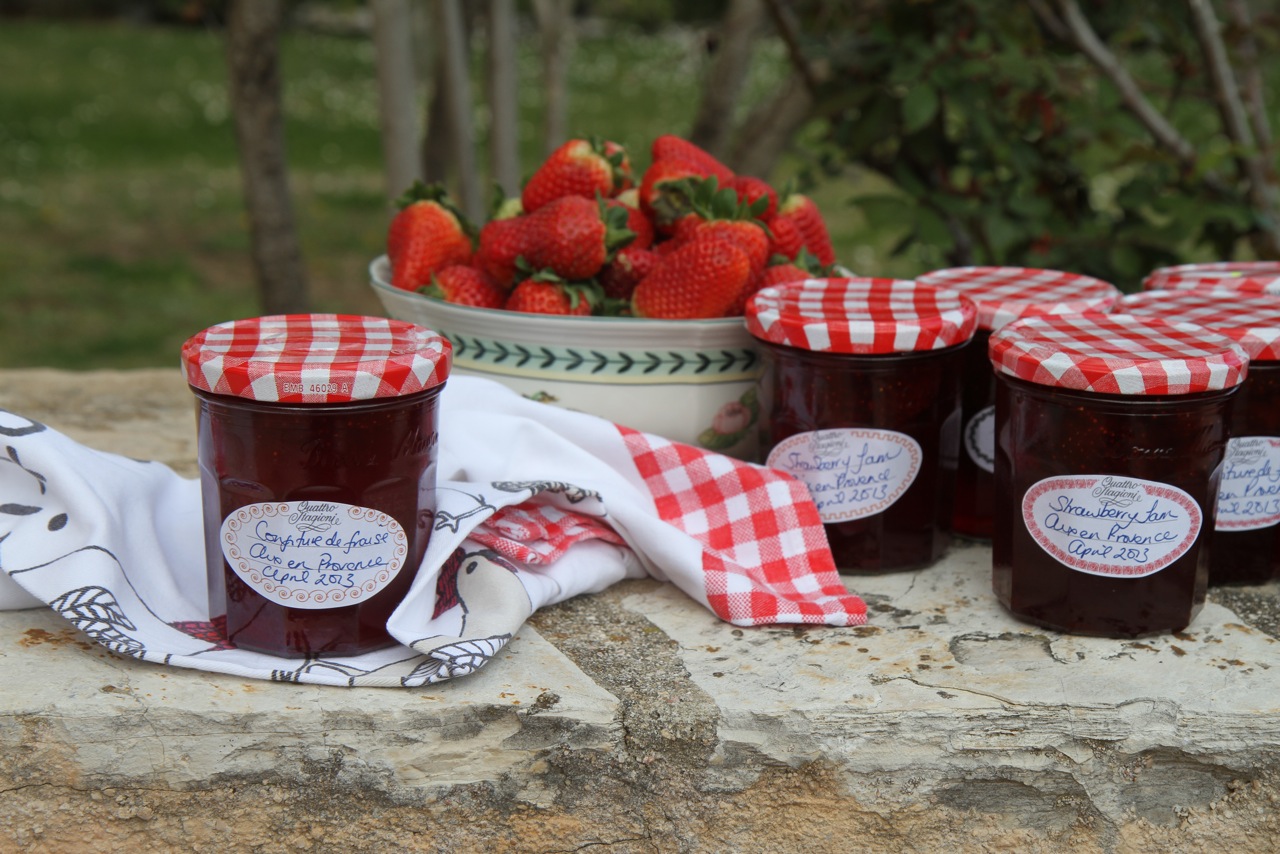
But of course, I have thought of it, and often. After three years of living in France, I realize that I have entered into the kind of seasonal cooking that would make the hearts of certain editors of food magazines sing. Preserving has become a huge part of my life. Whenever I see a tree bursting with fruit, I am mentally pulling my preserving pan out of the pantry. Indeed, no tree is safe. My own cherry tree has been stripped bare of its rich dark cherries, which are now satisfyingly preserved in jars with wide red and white checked lids and little fruit decorated labels. Kitsch? Twee? Call it what you will.

Preserving the past

Seasonal preserving not only makes me feel smugly capable, it also provides a connection with a past where preserving was a necessity and not a lifestyle choice. In France the changing seasons are very clear and marked by the varieties of available produce. This is not always the case in other countries where I have lived. Sometimes seasons are blurred due to imports for those able to pay, while in others there is a shortage of actual seasons.  I have always thought we should be grateful Vivaldi was not born in Malaysia.

Jo's strawberrys and raspberrys

At the market

Here in Aix I buy my fruit and vegetables in a large farm shop. As the year progresses, the produce changes. Strawberries come in around April or May and I watch the prices drop and drop until 4 Euros buys you 2 kilos and you are happy to macerate and preserve to your heart’s content. As the supply of strawberries peaks and peters out, in come the apricots, at jaw-droppingly low prices. In England I would feel guilty to pay that much and make jam, preferring instead to use fewer and to put them where they are visible. So the season goes on with harvests of figs, walnuts, grapes and avocados. Even after years of living overseas, it still amazes me that something as special to a Brit as artichokes or avocados can be displayed in barrels as if they were as common as potatoes in Ireland.

I hope I never lose the delight in this aspect of expat life.

Gorgeous Cheddar, where seasonal quality trumps year-round quantity

I can get quite upset thinking of the English strawberry. The best of the best, produced in the county of my birth, Somerset, in the little village of Cheddar. Poor Cheddar, famous for its wonderful cheese, which has been knocked off and plasticized the world over until most people outside the UK don’t even know what real Cheddar is. On top of this, the reduction of its strawberry industry too. The problem was that for all its well-drained and optimal facing slopes, the season was only weeks long. It couldn’t produce enough fruit to satisfy the appetite of the nation which stamped its foot and demanded more and cheaper strawberries, and a longer season to boot.

The nation should be careful what it wishes for. Fruit varieties have been tampered with and grown under plastic so that we can enjoy strawberries for longer than the two weeks of Wimbledon. Flavor has been compromised — of that there can be no doubt. But you can still buy the real thing in Cheddar, or grow your own, and it’s well worth doing if only to see what this fruit should actually taste like: strawberry, if you are interested, and not water.

Then there are the imports. I am all for world travel, but not for soft fruit on which an indefinite travel ban should be imposed. The waxy Spanish strawberry is not only nearly devoid of the flavor of strawberry, but its texture is decidedly unappealing, being as coarse and waxy as an ageing fruit-pickers cheeks.

How much do I love a good strawberry? A bushel and a peck and some in a gourd.

Having said all that, I am (somewhat surprisingly) delighted to see the vast quantities of Spanish strawberries in my French market. There are two points in my rather shifty defense. Firstly, they are cheap, which justifies their use in jam. Turning a perfectly grown, traditional Cheddar strawberry into jam would be a crime, but boiling the heck out of the Spanish and adding sugar can only act to improve the flavor they lack. Secondly, the presence of the Carpentras strawberry gives a taste of how things should be.

The village of Carpentras, in the Vaucluse region of Southern France, hosts a strawberry festival in April each year. I like to think of this village as Soft Fruit Soul Sister to Cheddar. Yet, unlike Cheddar, Carpentras has been successful, in that typically French way, of protecting its strawberry: as fiercely as Champagne growers have protected their name under a registered trademark since 1987. We have much to learn from them.

Several varieties are grown. 90% of production is given over to the parajo, while its posher cousins, the ciflorette and the garriguette, are favored respectively by patissieres and those who like their fruit as it comes. These elite strawberries have retained their, well, strawberrishness with a deeper, fuller flavor. Price is higher but it is a price that locals and fancy restaurants alike are willing to pay for flavor. My favorite is the garriguette which, at 3.90 Euros this morning for 250g (16 strawberries), is nearly double the price of the regular Carpentras, but so well worth it.

This is the taste of the homegrown strawberries I remember from my youth, complete with that rich, almost caramel-like flavour. Heaven, and worth every centime.

Joanna's jam

Joanna’s jam

Bottling summer sunshine for winter days ahead

So here in France I can enjoy quality in my tarts and quantity for my preserves, and that, I think, is a perfect combination. In England it is less of a clear cut and easy situation. Most of my local Pick Your Own farms have closed in recent years and, outside of two or three beloved greengrocers, everything is plastic punneted mediocrity. Not awful, but not good and definitely not strawberry.

Back in France, as the year progresses, so my level of stress rises. Two batches of strawberry, one of cherry, brined olives rinsed and now bottled in olive oil, and apricot in the making, have placed considerable strain on my supply of jars. Yet I am always thinking greedily ahead. Figs are already on my mind, yet here I am in the throes of moving house. Somehow, the making of that Fig Confit must happen. I can’t miss figs at those sorts of prices. They must be preserved before my pans are packed. Or immediately after arriving at the new place before my boxes are fully unloaded. Will I be able to do it? I feel the panic rising. No amount of telling myself that I don’t actually have to do it this year has any effect. I have to. I must. It’s just the rhythm of the year and I can’t bear to miss the joy of opening a jar at Christmas in the midst of an English winter. Just a little ray of Provence sunshine from my other home on a cold, cold day. A little fig confit to serve with the foie gras adds a French touch to the festive season.

The stress is intensive by that Apricot tree which still preys on my mind. Those wasted golden globes are just asking for my attention. It really would be a crime to let them wither on the tree. Wouldn’t it?

* * *

Joanna was displaced from her native England 17 years ago, and has since attempted to re-place herself and blend into the USA, Holland, Brazil, Malaysia, Venezuela, Saudi Arabia, and now France. She describes herself as a “food gossip”, saying: “I’ve always enjoyed cooking and trying out new recipes. Overseas, I am curious as to what people buy and from where. What is in the baskets of my fellow shoppers? What do they eat when they go home at night?”

Fellow Food Gossips, share your own stories with us!

STAY TUNED for tomorrow’s post!

If you enjoyed this post, we invite you to register for The Displaced Dispatch, a round up of weekly posts from The Displaced Nation, with seasonal recipes, book giveaways and other extras. Register for The Displaced Dispatch by clicking here!

Related posts:

Images: All images from Joanna’s personal photo albums, and used here with her permission

BOOKLUST, WANDERLUST: Tana French’s Dublin Murder Squad series is made in the shade for expats and Third Culture Kids

Booklust Wanderlust Collage

Left: Oleh Slobodeniuk (CC BY-NC-SA 4.0); right: Beth Green (her own photo).

Today we welcome brand new columnist Beth Green to the Displaced Nation. An American who lives in Prague, Beth is an intrepid traveler and voracious reader, who mixes booklust with wanderlust in equal measures. In other words, she has the perfect background for reviewing recent book releases on behalf of international creatives. Hmmm…but will we enjoy her reviews more than the actual works?

—ML Awanohara

Thanks, ML! Displaced Nationers, for my first column we’ll be plunging into the world of crime fiction in which a city plays a major role. As I’m sure you know, many popular crime novels are set in Los Angeles, New York, London, or Chicago, where that setting is as important as the crimes committed there.

So, let me introduce another city with an underbelly you might enjoy: Dublin.

In contrast to the shamrock-and-Guinness tourist propaganda, Dublin can have a grittier, noir aspect, at least in the hands of skilled writer Tana French.

If you’re looking for a nice read where setting bolsters plot, and where some of the themes related to the experiences of those who lead the international creative life, French’s series about the Dublin Murder Squad is a fine place to start. The series, currently consisting of four books, features the members of Ireland’s fictional homicide unit, each of whom is given narration duties for one of the books—a device by which we constantly get new perspectives on the other detectives in the team as well as a chance to see the Irish Republic’s capital city through a new pair of eyes.

Various Dublins

For example, when the narrator is an experienced cop who was born to a poor family, the city doesn’t get a glossy treatment. He describes, with equal honesty, the run-down parts of town where members of his family live and the middle-class suburb where his ex-wife now resides.

Another detective, who has lived abroad, describes Dublin with more of a tourist’s eye when it’s her turn to narrate a novel.

Yet another is obsessed with appearances; and the fourth alternately seems to love and hate the city.

Cultural challenges

Though born in the USA, Tana French grew up as a Third Culture Kid. Her father was a development economist, and she spent her childhood in Ireland, Italy, the USA, and Malawi. She went to university, and ultimately chose to settle, in Ireland. Perhaps reflecting this early experience, French has each of her main characters navigate some kind of cultural shift in addition to playing his or her role in the solving (or making) of a murder.

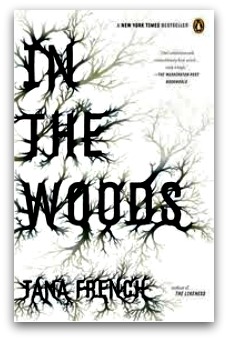
IntheWoods_cover_pmIn the Woods is French’s debut, Edgar-winning novel. The action centers on homicide detective Rob Ryan and his partner, Cassie Maddox, both of whom feel culturally conflicted. Ryan, who grew up in the same village he must now investigate, was sent away to school after a horrifying childhood experience. He returns to Ireland as an adult but retains a carefully learned prep-school accent and manner of dress that marks him as an outsider even while standing in front of his childhood home.

Maddox, on the other hand, spent part of her childhood with relatives in France. She speaks French fluently and readily adapts to new surroundings and diverse situations. While this chameleon-like quality often comes in handy, it also gives her a sense of alienation in her home country. As Maddox says in The Likeness, the next book in the series:

I take after the French side. Nobody thinks I’m Irish, till I open my mouth.

Love of disguises

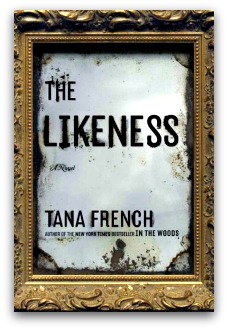
TheLikeness_cover_pmIn The Likeness, Maddox narrates the story of how she must go undercover impersonating someone—a foreigner, it turns out, who in turn is impersonating an undercover role (that of a college student) Maddox had previously assumed.

Controlling these layers of identity becomes intoxicating to Maddox (and to the reader, I might add) while also putting her career, and that of her superior officer, Frank Mackey, at risk.

Reading The Likeness, I was impressed by how much detail French provides to show that Maddox undergoes a believable transformation.

The domestic expat

In French’s third book, Faithful Place, Maddox’s boss, Mackey, gets his chance to prove himself in navigating the shifting subtleties of Irish culture and society.

Set in an area of Dublin known as The Liberties— not far from the tourist highlights in terms of distance but miles away in terms of economic progress and commitment to law and order—Faithful Place requires Mackey to return to the home he grew up in and attempt to solve the disappearance of his high school sweetheart, who he had always thought simply dumped him.

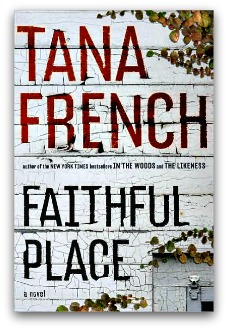
FaithfulPlace_cover_pmThough Mackey is thought of as down-to-earth and street-smart by his colleagues (one of the joys of the Dublin Murder Squad books is seeing different characters from inside and out over the course of several books), his time as a cop has not endeared him to his family or neighbors. He also married “up”, and there’s a great minor plot line concerning his decision to introduce his young daughter, Holly, to his “lower-class” relations.

At the beginning of the novel, Mackey says:

Both Jackie and Olivia have tried hinting, occasionally, that Holly should get to know her dad’s family. Sinister suitcases aside, over my dead body does Holly dip a toe in the bubbling cauldron of crazy that is the Mackeys at their finest.

No safe harbors

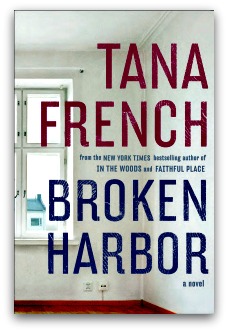
Broken Harbor_cover_pmIn the latest book in the series, Broken Harbor, a minor character from Faithful Place, Mike “Scorcher” Kennedy, takes the lead in investigating a gruesome crime committed in a rundown (yet half-finished) housing development on the same site his family used to vacation when he was a child.

Kennedy introduces the housing site to us as follows:

I used to know Broken Harbor like the back of my hand, when I was a skinny little guy with home-cut hair and mended jeans. Kids nowadays grew up on sun holidays during the boom, two weeks in the Costa del Sol is their bare minimum. But I’m forty-two and our generation had low expectations.

Why French speaks to international creatives

Though common plot and character threads hold a detective series together, there’s always a danger the author will fall back on the same formula to help her main characters solve the crimes in question. French succeeds in weaving common themes throughout the four books while also treating these themes afresh in each work. Most excitingly for us expats, she visits and revisits the feeling of being out-of-place in a culture (or subculture) not your own as well as the clashes that can occur when working with someone from a different background. Another favorite theme of hers, which also aligns with some expat experiences, is the stress of being evaluated on one’s exterior appearance.

But one of the most important common themes in Broken, Faithful and Woods is the power that a special place from one’s childhood can have—to which French’s fellow ATCK readers can surely relate. In Woods, Ryan must solve a crime in the very forest a crime was committed against him as a child—a crime he cannot remember but desperately wishes he could. In Faithful, Mackey discovers the ties to the past can last fast and strong, even years after he thought he’d broken them. And, in Broken, Kennedy’s memories from his childhood make the seaside scenery both delightful and sad, while the importance of the spot to the victims is equally powerful and alluring albeit for different reasons.

Moreover in Likeness, perhaps my favorite of the series so far, the main character doesn’t return to a place that’s important to her, but it’s just as important for her to realize that she—like the victim—doesn’t have a particular place on Earth to call her own in memory or deed.

French’s next novel, The Secret Place, will continue the Murder Squad series but with a new set of protagonist detectives drawn from the supporting characters of the first four novels. It comes out in August.

* * *

Thanks, Beth, for such a fascinating column! I felt completely transported to the noir underbelly of Dublin. BTW, I noticed that in an interview with French that is posted on Amazon, she says she can’t imagine herself setting her books anywhere other than Dublin as she knows the city like the back of her hand. Hard to imagine she started life as an American! And I must say, her crime series sounds like perfect summer reading. What do others think? Have you read French, and if so, do you concur that her books would suit expats and TCKs?

Beth Green is an American writer and English teacher living in Prague, Czech Republic. She grew up on a sailboat and, though now a landlubber, continues to lead a peripatetic life, having lived in Asia as well as Europe. Her personal Web site is Beth Green Writes, and she is about to launch a new site called Everyday Travel Stories. To keep in touch with her in between columns, try following her on Facebook and Twitter. She’s a social media nut!

STAY TUNED for the next fab post!

If you enjoyed this post, we invite you to register for The Displaced Dispatch, a round up of weekly posts from The Displaced Nation, with seasonal recipes, book giveaways and other extras. Register for The Displaced Dispatch by clicking here!

Related posts:

LOCATION, LOCUTION: Charlotte Otter – South African expat and crime writer living in Germany

charlotte otter

Author photo: Charlotte Otter

In this month’s “Location, Locution”, expat crime writer JJ Marsh interviews Charlotte Otter, a South African crime writer who lives in Germany.

Charlotte has worked as a writer since leaving university. Balthasar’s Gift is her first novel. It was published in Germany in 2013 as as Balthasars Vermaechtnis, by Argument Verlag mit Ariadne, a Hamburg publisher that focuses on crime fiction by women. It is also available as an e-book, published by Culturbooks. The English version will be published in June 2014 by South Africa’s Modjaji Books.

Charlotte blogs at Charlotte’s Web and takes coffee breaks on Twitter (@charlwrites). She is presently working on her second novel – an eco-conspiracy called Karkloof Blue.

When she is not thinking up ways to kill people, Charlotte is a corporate hack, mother of three, reader, traveller, feminist and optimist. She is happily married to the love of her life.

Check out her author site.

* * *

Which comes first, story or location?
The two are intertwined. When the first images for Balthasars Vermaechtnis began to flash in my head more than eight years ago, the setting was immediately clear: my home town in South Africa, Pietermaritzburg, often informally abbreviated as PMB. BV is a post-apartheid novel and PMB is struggling to become an effective post-apartheid city. It was the natural setting for the story that was starting to unspool before me.

How do you go about evoking the atmosphere of a place?
I wrote a blog post a few years ago called I am from, and someone said to me they would love to read a novel with those elements in. I realised that my childhood memories of monkeys in the garden, chameleons on a bush and eating granadillas off the vine were not everyone’s memories and that some of them could be put to good use in landscaping a novel.

Which particular features create a sense of location? You’ve mentioned animals and fruits. Is it landscape, culture, food, all of the above?
All of the above. However, as I’m sure all writers say, they have to serve the story. The elements of location have to be sprinkled through the story with a light hand, serving to shine a light on the narrative and not distracting from it. Huge chunks of location, just like huge chunks of ill-disguised research, serve to pull the reader out of the story and that’s the last thing a writer wants. I try to be sparing and frugal with my detail, but at the same time apt. Location details are highlighters or amplifiers of the core narrative, never the story itself.

How well do you need to know the place before using it as a setting?
In my case, I knew it very well. I would never be brave enough to set a novel in a place I didn’t know, because I would be nervous about making mistakes and looking like an idiot. For me authenticity is everything.

Could you give a brief example from your work which you feel brings the location to life?

The city centre hummed with Saturday shoppers carrying glistening bags full of summer bargains from the fashion palaces on Church Street, gangs of teenagers flirting with each other, pavement hairdressers giving people their weekend dos. Radios blared, taxis hooted and added to the chaos by swerving across lanes, risking the lives of their passengers and all pedestrians. She dodged one self-styled ‘Road Warrior’ and swore. The driver leant out of his window and winked at her. ‘Calm down.’ Was this a message from the universe? Or had all the town’s taxi drivers ganged up to irritate her with their insistence on her remaining serene and tranquil?”

Which writers do you admire for the way they use location?
I think Barbara Kingsolver is a master of location. She is the best nature writer I know and she mostly sets her novels in rural surroundings. She does an incredible job of evoking a sense of place through her deep, abiding love of nature.

I Am From
I am from Africa. I am from blue skies, tropical breezes, and sunshine on my back. I am from tall trees that throw great shadows. I am from monkeys in the garden and a chameleon on a bush. I am from mountains that rarely see snow, beaches with huge waves, sharks behind the shoreline. I am from banana plants, sugar-cane and mealies. I am from huge moths and flying ants. I am from humidity, from thunderstorms that build up as black towers in the sky, and rain so hard it hurts my skin.

I am from eating outside. I am from the intense smell of a slightly under-ripe naartjie that I pick from its tree, dig open with dirty fingernails, and devour despite the sourness. I am from plucking granadillas off the vine and greedily sucking the juice. I am from braai meat, salad and crunchy white rolls. I am from mussels gathered from the sea.

I am from lucky beans. I am from a hoary old magnolia tree that bursts forth luscious, vanilla-scented blooms that decorate the Christmas table. I am from a red-brick house that looks out over trees and a hot town. I am from black and white tiles that cool hot summer feet. I am from the smell of dogs being washed. I am from the sound of Zulu hymns as I fall asleep.

I am from Marmite sandwiches. I am from a schoolbag digging into my shoulder as I walk home. I am from the smell of an over-chlorinated swimming-pool in my wet hair. I am from giggling. I am from eating all the cookie mixture. I am from marathon card games. I am from the thwack of tennis balls. I am from kissing boys.

I am from little brothers playing cricket on the lawn. I am from long car journeys. I am from beach holidays. I am from sand in my hair, from fairy gardens and dreaming I can fly. I am from blonde people. I am from children go to bed early. I am from fragrant grandmothers and laughing aunts. I am from a funny dad. I am from a little brother who shared my nightmares. I am from a mother who said, “You can do anything.”

Where are you from?

* * *

Next month’s Location, Locution:  Incredibly, it is now a year since Jill wrote her first “Location, Locution” column! In next month’s post, Jill will pick some of her favorite responses from her interviewees.

JJ Marsh grew up in Wales, Africa and the Middle East, where her curiosity for culture took root and triggered an urge to write. After living in Hong Kong, Nigeria, Dubai, Portugal and France, JJ finally settled in Switzerland, where she is currently halfway through her European crime series, set in compelling locations all over the continent and featuring detective inspector Beatrice Stubbs.

_(75_of_75)

Author photo: J J Marsh

STAY TUNED for our next post!

If you enjoyed this post, we invite you to register for The Displaced Dispatch, a round up of weekly posts from The Displaced Nation, with seasonal recipes, book giveaways and other extras. Register for The Displaced Dispatch by clicking here!

Related posts:

For this globe drifter and Adult Third Culture Kid, a picture says…

Rachel Kanev Collage

Canon zoom lens; photo credit: Morguefiles; Rachel (right) with her friend Sara experimenting with make-up and photography with the help of a bottle of wine (or two?) and some props (photo credit: Rachel Kanev).

Welcome to our monthly series “A picture says…”, created to celebrate expats and other global residents for whom photography is a creative outlet. The series host is English expat, blogger, writer, world traveler and photography enthusiast James King, who thinks of a camera as a mirror with memory. If you like what you see here, be sure to check out his blog, Jamoroki.

My guest this month is 24-year-old Rachel Kanev. She has a Bulgarian father and German Jewish mother but grew up in England, where she studied French and Chinese languages. She feels she got “…caught somewhere in between” these many cultures:

With my Jewish nose, Bulgarian skin and English accent, I at once belong to British, East German, Bulgarian, Jewish, French and Chinese cultures and yet to none of them at all.

Her grandmother, by contrast, lived in Berlin for decades but was more English than Tetley tea.

Indications of Rachel’s escalating identity crisis are borne out in the images that bombard you upon reaching her engaging blog, Global Drifting, in which she says she is drifting across the globe in hopes of stumbling upon enlightenment…

* * *

Hi, Rachel. I’m pleased your globe-drifting has taken you to the shores of the Displaced Nation, which gives us the opportunity to discuss your photo-travel experiences. For one so young you’ve travelled a fair bit, but where were you actually born?
I was born in my mother’s hometown of Berlin, at the traffic lights on the way to hospital. My mother said I looked like a hedgehog that day, and my family still calls me Igel (“Hedgehog” in German). A few months later, the Berlin Wall came down and one year after that, we all moved to England.

So you were a Third Culture Kid in Britain. When did you spread your wings to start travelling?
My nursery and primary school classes were filled with international children. Eugenia—a Spanish girl from Madrid with long black hair and a passion for witchcraft and the Greek goddess Athena—soon became my best friend. In the momentary way that often strikes a child, I was devastated when she left me to return home for good. So, at the tender age of nine, I boarded a plane alone, in my size 1 shoes, to visit Eugenia in Spain. As I began my first solo journey, I experienced a thirst for discovery, which, as yet, has not been quenched. Since that first adventure, I have visited Italy, Holland, France, Austria, Switzerland, Réunion Island and China. I plan to step (in my now size 5 shoes) into Morocco and perhaps Israel this coming summer.

What do you love so much about travel?
I love travel because everything is new and unknown; we share no past and perhaps no future with the things we see and people we meet. The errant wanderer therefore has no choice but to revel in the present.

Will I ever get over the pull I feel to both of these places?

Despite your age, I think I can put you in the category of seasoned traveller. Tell me, what inspires your decision to travel to particular places?
My inspiration comes partly from a love of languages and partly from the idealistic images of France I painted in my head when watching French films and listening to French music, which I did while revising for my exams at university. Aided by the amazing Erasmus, that towering figure of the Renaissance, I had taken a university year abroad in the island paradise of Réunion, near Africa. It’s a French overseas department so qualifies for the European Union’s Erasmus Programme, which finances students to spend up to a year of their university courses in a university in another European country. But it wasn’t until after finishing university that I had a chance to visit France itself. I meandered through southern French villages like an aimless hippie, reveling in its rural chic.

I understand you also have a passion for China?
Chinese was my third language at university. After graduating, I remained in England saving pennies as a waitress to finance spending a year in the land of silk. I lived in a city about an hour from Beijing.

I’m curious: where are you right now and what are you up to?
Right now I’m back living in my English hometown of Cambridge, selling nutritional products to vitamin-mad French and German customers—and saving up for my next Chinese/Moroccan/Spanish/Israeli adventure this summer. As I look out of the window, I am visualizing being there already, far from the Land of Vitamins C and D!
RK_SouthofFrance

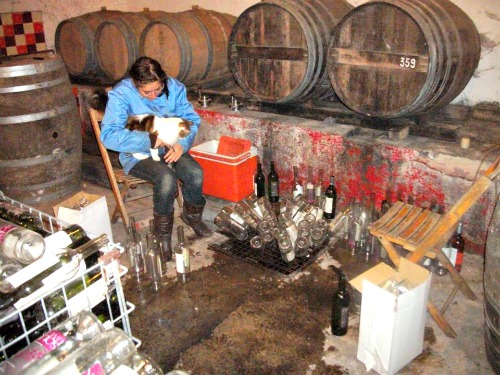
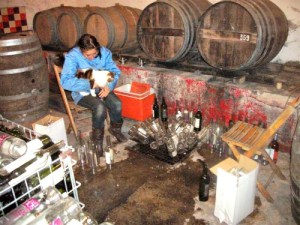
No use crying over spilled wine! Rachel in the cellar of a now-defunct winery near Perpignan, France; photo credit: Rachel Kanev.

Hmmm… I think I detect something of the entrepreneur in you, alongside your intrepid traveller’s spirit! And now let’s have a look at a few of your favorite photos from your travels to France and China.
Sure! I took this first photo in a wine cellar in a small hamlet near Perpignan, some way off the coast of southern France. I’d been helping out, but it was late December, and there was very little work left. Besides, the winemaker, whose name was Bernard, had gone bankrupt due to the stresses of organic farming. Our main task for the day, as his helpers, was to pour bottle upon bottle of wine down the drain as he looked on bemoaning the demise of the modern world. It proved a good way to get skillful with a corkscrew!! And I think poor Bernard appreciated our efforts quite a lot. Just think if he’d drunk all that wine in his cellar, it would have sent him spiraling into an even deeper fit of depression…
RK_dragonriceterraces

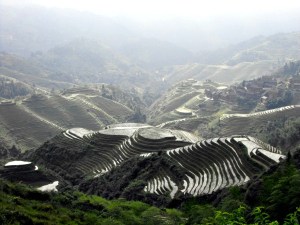
China’s Longji (Dragon’s Backbone) Terraced Rice Fields are so named because of their resemblance to a dragon’s scales; photo credit: Rachel Kanev.

The next photo provides a glimpse of the glorious Dragon rice terraces of Longshen, in China’s Guangxi province. Amazing terraces stretch as far as the eye can see. I visited some years ago and remember being in awe at the combination of nature’s beauty and the skillfulness of the human hand. I had quite an adventure ambling through the fields with two of my Chinese friends. We got lost and at one point envisaged spending a cold night cuddled up to the cows. In the end we reached our hostel, at the top of the terraces, by nightfall. I returned again last year and was saddened to see that the beauty of the fields has been marred by the greedy hand of tourism. Huge plastic cable cars now transport visitors to the top, and the local villagers are paid to dress in traditional clothes.
RK_AnotherBernard

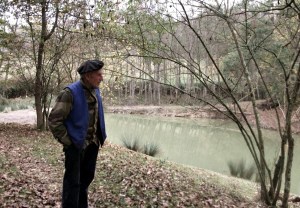
A French farmer, another Barnard; photo credit: Rachel Kanev.

Last in this series we have another Bernard who stumbled into my traveller’s path. This Bernard is an 80-year-old farmer with whom I lived on my own for a week. His farm is an hour away from the nearest town and is completely self-sufficient. He grows his own organic vegetables and was fit enough to hack up the ground with a pickaxe when the underwater pipes burst (ironically, I had left the home of Bernard number 1 because his pipes had burst and the water system needed to be repaired, only to be faced with more burst pipes at the home of Bernard number 2!).

I love the first photo just because it looks as though you’ve broken into someone’s cellar and are drinking all the wine!! The dragon terraces appear so surreal to me because they are so different to the flat rice fields of Thailand, where I live. I wish I could see them one day. I know you take a lot of photos and these next four, I believe, have a special significance for you. Can you explain?

Not all who wander are lost…

The following is a photo I took of a photo of Bernard number 2, which was taken some fifty years ago, when his newly polished army boots took their very first steps away from the small village on the outskirts of the Pyrenees, where he was born. He bid farewell to the farm he’d grown up on and to the parents who’d raised both him and the thriving trees and crops that had formed the backdrop to his childhood. By the time I encountered Bernard, nature had outlived his parents but their legacy remained. He is now a beekeeper and organic vegetable farmer, tending to the very same trees and plants that his father and his father’s father had cared for. Though he has no human family, the trees you see in my other photo of Bernard (above) appear to me to be his forefathers; they are equally his children.
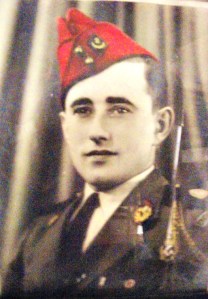
Bernard as a young man

The French farmer Bernard as a young soldier; photo credit: Rachel Kanev.

The next photo was a fluke as I managed to capture an ad for Longines watches showing Kate Winslet just as the sun was setting. In that fleeting instant, one can see Shanghai’s varied transportation, high-rise buildings and red lanterns—that curious amalgamation of Western modernity and Chinese traditionalism that is everywhere around you in the city.
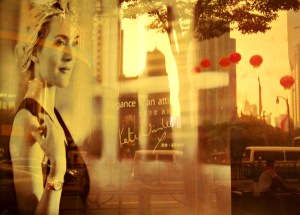
RK_ShanghaiSunset

A British beauty, a Swiss watch and a Shanghai sunset; photo credit: Rachel Kanev.

Cambridge is my home town and I think of it much like a family member, having watched it age and evolve just as it has silently witnessed me grow and change. I love its grandiose architecture, endless greenery, and the way winter and spring intertwine in front of the University’s palace-like structures that are fit for if not a queen then the rulers of academia, to which I never belonged.
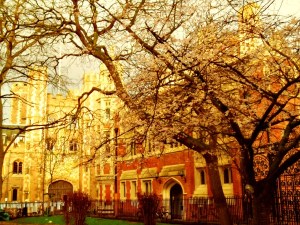
RK_CambridgeUK

The dreaming spires of Cambridge; photo credit: Rachel Kanev.

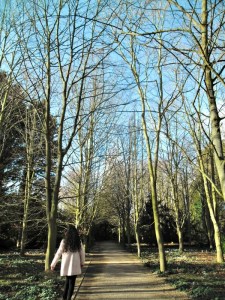
Here my sister explores the labyrinth-like forestry of a park near where we live in Cambridge. It has amazing multi-coloured plants I have never seen anywhere else before and huge trees that watch over you like silent giants. I like this photo because she looks like Alice in Wonderland with her long, thick flowing locks!
RK_SisterinPark

The great outdoors near Cambridge, UK; photo credit: Rachel Kanev.

Is photography sometimes a moral decision?

I love your explanations as they show us the profound effects a picture can have on its creator, something the viewer can never fully appreciate. Tell me, do you ever feel reserved about taking photos of people, particularly when they are conscious that you are doing so?
For me, the morality of taking photos of strangers has always been ambiguous. I think of it whenever I see photos of human suffering. I believe I have the right to use my camera to record the world but without intruding on it. At what point does the power of images and the need for education and understanding through the push of a button and flash of a light become intrusive and affect the lives of others in a negative way? I’ll give you an example from my own experience. The Western media has focused almost exclusively on China’s explosive economic growth when in fact 1.6 million people (11.8 percent of the population) still live below the poverty line. When taking the train, part of me would like to photograph the dirt-covered, barefooted children asleep on newspapers or the train door frozen from the inside as passengers are left to deal with the icy temperatures of the North (-37°C). But feeling intrusive, I refrain.

Do you also feel self-conscious in Asia?
It’s difficult being subtle, given the colour of my hair and skin, and the stamp on my passport. Noticing me walking the streets of China, many Chinese will assume, quite rightly, that I am Western but quite wrongly that I must therefore have dollar bills rolling from my body like a central bank printing press. Often I do not wish to fuel their prejudices by whipping out a digital camera, however small, before their eyes.

As a resident in Thailand, I can empathize with those views, especially the general Asian misconception that all Westerners are rich. Although this can be annoying, I do believe these views are changing for the better, as the younger generation becomes more socially aware through travel and better education. Now let’s turn to the technical stuff. Some of our readers may want to know what kind of camera and lenses you use.
I have a small Samsung camera that fits neatly in the palm of my hand. It’s nothing fancy and often leaves something to be desired in terms of quality, but it was a birthday gift years ago and has sentimental value, having been my only travel partner across unknown lands. Whatever it lacks in lens quality, Windows Photo Gallery makes up for in magical editing power!

Finally, do you have any advice for wannabe photographers who are traveling or living abroad?
Wander through villages, peel garlic with a farmer, shake hands with a prince, run through jungles, leap into waterfalls, swing across the rainforest wilderness and lose a leg to the marble rocks—see the world and allow the world to be seen. Travel, live, eternalize what you see with a photo.

Great non-technical advice, Rachel, that’s right up my street! I’d like to thank you for taking the time to tell your fascinating story in this interview.

* * *

Readers, what do you make of Rachel’s experiences and her photography advice? And do you have any questions for her on her photos or her travels? Please leave them in the comments!

And if you want to know more about Rachel Kanev, don’t forget to visit her blog, Globe Drifting. You can also follow her on Twitter or even shoot her an email.

(If you are a photographer and would like to be interviewed by James for this series, please send your information to ml@thedisplacednation.com.)

STAY TUNED for next week’s fab posts!


If you enjoyed this post, we invite you to register for The Displaced Dispatch, a round up of weekly posts from The Displaced Nation, with seasonal recipes, book giveaways and other extras. Register for The Displaced Dispatch by clicking here!

Related posts:

LOCATION, LOCUTION: James Ferron Anderson, weaver, glassblower, soldier – and award-winning novelist

Author photo – James Ferron Anderson

In this month’s “Location, Locution”, expat crime writer JJ Marsh interviews James Ferron Anderson, author of  The River and The Sea.

James was born in Northern Ireland, and worked there as a weaver, glassblower and soldier. He eventually had children, moved to Norwich, UK, studied at UEA, and began to write in different forms, including poetry, short stories, plays and, more recently, novels. One of his first short stories, The Bog Menagerie, won the Bryan MacMahon Short Story Award. He won an Escalator Award winner for I Still Miss Someone, and a Writers’ Centre Free Reads Award winner. The River and The Sea won the Rethink Press New Novels Award in 2012, and was published in November 2012.

The River and The Sea is set in British Columbia. James is currently working on Terminal City, set in Vancouver. While he’s visited British Columbia and Vancouver many times (his once estranged brother lives there, but that’s another story) he has never lived there.

Visit his website at jamesferronanderson.com.

Which came first, story or location?
Location, and more so as I continue to write. I’ll stick with Terminal City, the novel I am currently working on, but it applies equally to The River and The Sea. I was already studying the history of British Columbia, and focusing on Vancouver, when I read that Errol Flynn had died there. It was the human touch that caught my attention: once flamboyant athletic actor reduced, much against his will, to selling his last possession of any worth, his yacht. Shattered, riddled with diseases, looking like seventy instead of the fifty he actually was, he dies. But if my head had not already been filled with images of Vancouver from its lumber town days in the early 1900s to its evolution into the city of glass it is today I may not have found myself, I would say unintentionally, making up stories based around a Flynn-type character.

Politics and mores are as an integral part of a location as are its streets or hills. It was what I knew of the political aspects of this West Coast city in the 30s and 40s that determined that Terminal City would be a crime story. I wanted that mixture of danger and timidity that noir provides: the lure of the forbidden and the pulling back from it. I’d say location determined the form, feel and nature of the book. The rest was my regular desire to tell stories of how people need each other, hate each other, love each other and dispense with each other.

Simply put, it begins with location, finding an interesting event and/or person in that location when I’m not knowingly looking, and getting hooked.

What’s your technique for evoking the atmosphere of a place?
I think finding myself writing a story set in Vancouver (and it felt like finding more than choosing) was a just a wonderful gift. For a start, almost no one in the book was born in the city. They have a past at variance with their present, having come there from across the world for their own purposes. They are testing it, examining it, seeing what they can get from it. Will they be satisfied with what they’ve found? With the people they become over the twenty years of living there from 1939 to 1959? It makes the city, like the Thompson River in The River and The Sea, a protagonist in the book.

Which particular features create a sense of location? Landscape, culture, food?
Vancouver is a mild-weather city with plenty of rain. For noir it knocks LA into a cocked hat. It’s a city on a great bay so there are beaches, ships pass in and out visibly and constantly, there are well-forested and, for large parts of the year, snowy mountains rearing up just across Burrard Inlet. The wild and magnificent outdoors is no more than half an hour away, even in 1959.

Vancouver is a port, and more culturally mixed than an interior city. It’s in the far west of the continent: the final destination, like it or not, for the drifter or seeker after a better life. A large Asian presence leant, certainly in the period of which I am writing, a feeling of tension to nightlife, whether justified or not. My desire to use all that shaped the story.

Buildings matter. I have old all-wood housing from when Vancouver first laid down its streets side by side with the rise of its first multi-storey offices: a city in flux, home to people from elsewhere, also in flux, looking for roots and stability, looking for meaning too in the aftermath of a war.

How well do you need to know the place before using it as a setting?
I couldn’t imagine locating a story in a place I didn’t know well. I was relishing knowing Vancouver more and more anyway. To set a novel there was an excuse to know it better again, from visiting, diving into the City Archives on-line, to examining Google Earth Street View for hours. Plenty, then. I want to make what I write correct as well as relevant to the story. That doesn’t mean that very much of what I know has to go on the page. I read a comment that Colm Toibin in writing his novel on Henry James, The Master, wore his learning lightly. I want to know everything that’s relevant, and more, and use it lightly. The tip of the iceberg theory.

There are tricks also. Why would a local person wonder or remark on anything like the view or the tram tracks in the streets? I feel description has to grow out of incident and dialogue in the narrative. The first person narrator of Terminal City has, in the 1939 scenes, only lived in Vancouver for a year and is still coming to terms with it. He can wonder and notice and remark a little more freely and yet, hopefully, realistically. In 1959 he can reflect on changes, good and bad.

Could you give a brief example from your work which you feel brings the location to life?

The River and The SeaFrom The River and The Sea:

‘Snow was falling and visibility down to a few feet. We stopped in the afternoon and managed to light a fire and had tea and sugar. In a break in the snow Harry saw a raven. That meant there were caribou, and on the move.’

‘It did, did it?’

‘For a certainty, Harry said. We crossed a frozen lake, for easier walking, and came back onto the river. The wind was unrelenting. Even on the lake it took us four hours to make a couple of miles.’ Edward drank his tea. This was the most talking any of us had done for a long time. ‘We found a little clump of spruce. We ate some of the hide matting for the first time, but neither of us slept from the cold and the need to keep the fire going.’

It’s a narrative told to inform someone else and, almost incidentally, informs the reader. The intention was to convey their location as a site of cold, hunger and desperation, but it had to be an integral part of the story, not a piece of description standing to one side.

Which writers do you admire for the way they use location?
Charles Dickens in Chapter Three of Great Expectations uses the weather to bring alive his location when Pip runs in the morning to meet Magwitch.The mist was heavier yet when I got out upon the marshes, so that instead of my running at everything, everything seemed to run at me.’ Wonderful stuff that took me to that location so effectively I still picture it. Anton Chekhov is marvellous for both countryside and city. Yalta is so alive, so liveable-in, in Lady With a Lapdog. W.G. Sebald, not a favourite writer of mine, is nevertheless someone whose ability to put me in his location I much admire.


Next month’s Location, Locution:  Jill interviews Charlotte Otter, South African author – now living in Germany, whose homeland provides fertile fictional soil.

 * * *

JJ Marsh grew up in Wales, Africa and the Middle East, where her curiosity for culture took root and triggered an urge to write. After living in Hong Kong, Nigeria, Dubai, Portugal and France, JJ finally settled in Switzerland, where she is currently halfway through her European crime series, set in compelling locations all over the continent and featuring detective inspector Beatrice Stubbs.

_(75_of_75)

Author photo: J J Marsh

STAY TUNED for our next post!

If you enjoyed this post, we invite you to register for The Displaced Dispatch, a round up of weekly posts from The Displaced Nation, with seasonal recipes, book giveaways and other extras. Register for The Displaced Dispatch by clicking here!

Related posts:

LOCATION, LOCUTION: Andrea Cheng, award-winning children’s author

Author photo: Andrea Cheng

Author photo: Andrea Cheng

In this month’s “Location, Locution”, expat crime writer JJ Marsh interviews Andrea Cheng, award-winning author of  books for children and young adults.  

Cheng’s first novel, Marika, was selected by the city of Cincinnati for “On the Same page,” a citywide reading program.  Honeysuckle House, Anna the Bookbinder, and Shanghai Messenger received Parent’s Choice Awards.  Grandfather Counts was featured on Reading Rainbow. Where the Steps Were, the first book that Cheng has both written and illustrated, received starred reviews in both Publisher’s Weekly and Kirkus. The Year of the Book, a Junior Library Guild selection, was reviewed in the NY Times and was followed by The Year of the Baby (2013 May). Cheng’s most recent title is Etched in Clay.

Some of Cheng’s books draw on her background as the child of Hungarian immigrants as well as the background of her husband, the son of immigrants from China. Others draw on the lives of her children growing up in inner city Cincinnati where she and her husband now live.  Andrea studied Chinese at Cornell University where she received a Masters degree in linguistics.  She and her family have traveled to both Budapest and Shanghai to get to know their extended families.

Which came first, story or location?
I think character comes first in my writing, followed by location, atmosphere, etc.  Plot or ‘story” come later.  I usually start with a character at a particularly salient moment in a specific place, and go from there.

Year of the Book

Cover art: The Year of the Book, by Andrea Cheng

What’s your technique for evoking the atmosphere of a place?
I have to have spent a fair amount of time in a place before I can evoke the atmosphere.  I have to know how it smells and tastes and looks and feels.

Which particular features create a sense of location? Landscape, culture, food?
Everything!  I think I focus a lot on language, the way people talk. I think it would be very hard for me to write a story that takes place in a location in which I cannot speak the native language of the people who live there.

Can you give a brief example of your work which illustrates place?
This is from my chapter book called THE YEAR OF THE FORTUNE COOKIE, coming out with Houghton Mifflin in May 2014.  It is for grades 3-6.  The main character, Ana Wang, is in Beijing:

It starts to rain.  The sky is almost dark, and the air smells like gasoline and charcoal.  We turn down an ally and wind our way behind some buildings.  “This is my home,” Fan says finally, opening a door with her key.

Inside the light is dim.  Her brother is watching television and her mother is cooking on a hot plate.  “This is my friend from America,” Fan says.  

How well do you need to know the place before using it as a setting?
I have to have spent time in the place and I have to understand the language of the people there.  The more time the better.

Which writers do you admire for the way they use location?
I just read Jhumpa Lahiri’s new novel, Lowland.  Although I think the book has some problems, I love her sense of place.

Next month’s Location, Locution:  Jill interviews James Ferron Anderson – weaver, glassblower, soldier, and now writer.

 * * *

JJ Marsh grew up in Wales, Africa and the Middle East, where her curiosity for culture took root and triggered an urge to write. After living in Hong Kong, Nigeria, Dubai, Portugal and France, JJ finally settled in Switzerland, where she is currently halfway through her European crime series, set in compelling locations all over the continent and featuring detective inspector Beatrice Stubbs.

_(75_of_75)

Author photo: J J Marsh

STAY TUNED for our next post!

If you enjoyed this post, we invite you to register for The Displaced Dispatch, a round up of weekly posts from The Displaced Nation, with seasonal recipes, book giveaways and other extras. Register for The Displaced Dispatch by clicking here!

Related posts:

GLOBAL FOOD GOSSIP: Home is where the hearty food is

global food gossipJoanna Masters-Maggs, our resident repeat-expat Food Gossip and Creative Chef, is back with her column for like-minded food lovers.

This month: Joanna despairs over the modern inability to enjoy the simple foods in expat life.

UPDATE: Due to popular request after this post first went live, Joanna has included her recipe for the Beef and Guinness Pie she made for her St. Patrick’s Day party. Read on!

* * *

“It’s a bit samey,” said The Husband as he cast his eye over this latest piece. “Just you telling everyone how we ex-pats are up our own arses over food.”

Fair point — but I can’t help grinding the same old axe.  I think that there is a lot of up-arseness the world over when it comes to food.  Am I alone in being so irritated by people who call themselves “foodies” as though there is some sort of originality in their love of eating?

The truth is everyone loves good food, but not everyone is lucky enough to get it that often. Have you ever met someone who smugly tells you that they have expensive tastes, as though no one else has ever wanted an Aston Martin or a Chanel suit? The very reason these things are desirable is because they are expensive and out of the reach of most. “Foodyism” isn’t much different. “Foodies” are just a bunch of people trying hard to be special, but they’re no different from anyone else.

The sad result is that we have lost the confidence to love regular everyday food that speaks, truly speaks, of the place where we find ourselves.

Drizzle with pomegranate coulis. Post photo to Facebook. Serve immediately.

It’s the same the world over. No one cooks simple food for one another anymore. If we cook, it has to be restaurant worthy, or at least it has to look it. Those who can’t cook that way get hopelessly behind and become the kind of people who never invite back for a reciprocal dinner at their place.

The more cookery programmes there are on our screens, the less we cook. These shows present cooking in a way that sets us up for failure. Recipes and presentation are so dauntingly complicated that often we don’t bother at all. When we do successfully follow a complicated recipe, we are so proud of ourselves that we post photos of it on Facebook (along with other irritating posts charting our kids’ successful routes to medical school.)  We know it annoys others but we just can’t help it. “Look at me! look at me!”

The expat is particularly prone to Food Narcissism. It’s just too easy and too tempting to show off unusual items we have seen in far-flung places. Or the exotic meals eaten in little places we have found in some unfashionable part of town. No one back home is going to know that the food stall we just happened upon has been featured in KL Expat Today, or Foreign Workers in Caracas, or some such publication.

Gosh, I even irritate myself and it takes an intolerable level of smugness to be able to annoy yourself.

Comfort food shouldn’t be a source of discomfort

A few weeks ago I decided to get in touch with my Irish side and host a St Patrick’s day party. I agonized for a long time over what to serve. Many of my guests surprised me by not knowing what St Patrick’s Day celebrations entail. There was even a soupçon of concern over where to find green cocktail frocks, which only served to intensify my preoccupation with the menu. Although I reassured my guests that they were to wear anything green that they could find at home and were absolutely not to go out and buy a fancy frock, I realized I too was complicating what should be a fun and easy supper. It was horrible to realize that I was afraid to serve Irish food in case it was too simple and that my cooking might be seen as a bit dull, basic even. There I was, actually trying to tart up the Irish recipes to a degree where they would be indistinguishable from French ones. Little piles of salmon on delicate rounds of soda and individual servings of boxty (a sort of Irish rosti) piled up and garnished with drizzles of sauce.

It was in dealing with the matter of the emerald-green silk dress hunt that I realized where my own lack of confidence in real food was landing me. How ridiculous. Instead of serving simple and comfortable food, I was trying to turn it into something fancy.

The question hung in my mind in Green, Orange and White letters: “Why?”

Why indeed?

Giving myself a metaphorical slap around the chops, I got a grip, squared my shoulders, and returned to basics. I would serve the food I grew up with. Irish Stew, Soda bread with salmon, and Beef and Guinness pie.

Oh all right, not the pie. My mother wasn’t keen on making pastry at all, citing hot hands as her excuse, but actually we all knew she would rather settle down to a glass of Guinness and watch a simple stew take shape than hand-make pastry. But the rest, you get my meaning. The memories flooded back. The stew in a big, cream enamel pan on the hob, the warm soft “stocklike” aroma of cooking lamb on its bone with plain old carrots and potato punched up with plenty of pepper, white pepper, and of course the resulting condensation on the kitchen windows.

Culinary childhood in a bowl.

When in Rio, shop and cook as the Cariocas do

We expats often live behind a two-way glass where we do not socialize with the people around us. Barriers — language, cultural, time, work —  impede us. Yet the rare glimpses into the everyday life of the places where we live create the most special and evocative moments. Food produces some of the strongest memories. Memories of great restaurants are one thing, but home cooking is another thing altogether, being a part of the fabric of everyday life.

I was lucky enough to have a maid when I lived in Brazil. At the time I thought I was lucky to have someone to help with the housework and kids, but in retrospect, I realize that she represented so much more than that. She made a Maria-shaped hole in the glass I lived behind, bringing some of the everyday world of a Carioca (someone born in Rio) into my kitchen. Every Monday, Maria would arrive ready to cook up a few days’ supply of black beans. These shiny black nuggets were blasted soft in a pressure cooker, then cooked with onions, a large pile of garlic and a few bay leaves then cooked long and slowly into rich and satisfying stew.

The secret to getting a great flavor into these beans is the addition of salted pork extremities to the mix. Ears, trotters, tails, you name it, are all used. As they break down in the cooking they have a thickening effect too. I had seen great piles of waxy, white and vaguely familiar items in the meat sections of supermarkets, but had given them a wide berth. Under Maria’s tutelage, I got over my silliness and grew to appreciate their value as they became an intrinsic part of my shopping list.

The best times were when couve was available. Couve, or collard greens, deep green palm-like leaves, which she would roll up and finely slice and stir fry with garlic and seasoning and nothing else. A pharmacist once told me that folic acid isn’t really needed for expectant mums in Brazil. The combination of the beans with the couve produces a cocktail of minerals easily absorbable by the body and priceless in reducing the risk of spin bifida. Is there anything not to love in Brazil’s national dish?

The black bean memory doesn’t include a fancy restaurant to boast of. No little food stall tucked away in the back of a very “local” area of town. Here was just a woman producing basic home food with the intention of filling an empty belly until the next day. These memories are more evocative of life in Rio to me know than my endless photos of Christ the Redeemer or Sugar Loaf Mountain. Maria made my experience of the place.

Cooking is for life, not just for Instagram

So, despite all my talk, I haven’t been able to circumvent the curse of expat “showing offness”. For what I seem to be saying is that anyone can book a couple of weeks in Rio and see the sights on a safe and comfortable air-conditioned bus tour, but to have really experienced the place you need memories akin to the memories of childhood. Maybe; or perhaps the truth is a little kinder? Simple home cooking is an everyday experience. There is no need to photograph it or put it on Facebook because it happens all the time. It’s as common as teeth-cleaning or walking the kids to school. Because of that, we experience it directly and fully, since we are not watching from behind the tiny lens of a camera, video, or smartphone. Instead, it is the comfortable and expansive background of life which seeps into us, unnoticed, to become a collection of memories; memories that can be triggered by a kitchen aroma, or by the way a woman holds a knife to crush a bulb of garlic.

After all, if a plate of madeleines inspired seven volumes of Remembrance of Things Past, perhaps I can be forgiven for the sameness of my own little bits of writing.

Epilogue

“So,” I expect you are asking, “how did the Irish food go down?”

Well — since you ask — rather well, actually. All eaten and, I hope, enjoyed, particularly the beef and Guinness pie. It a good thing that hot-hands skipped a generation. So I raise my glass of black velvet (Guinness and Champagne – a disaster for both drinks, but much fun) to simple home cooking. Slap a pan of stew on your tables, and put out a couple of bumper size pies and let everyone dig in.

I, for one, will be repeating the experience.

* * *

Beef and Guinness Pie My Way

(“My Way” includes metric measures — if you prefer to measure in cups or ounces, this conversion website will be useful.)

First make a beef and Guinness stew. This needs to be done a day in advance.

  • 1kg grams stewing beef
  • 30 grams flour
  • 2 tbsp oil
  • 2 large chopped onion
  • 2 large chopped carrot
  • 500 ml of Guinness
  • 300 ml of stock – a good homemade beef stock will pay you dividends
  • but water will do if needs must.
  • Handful of stoned prunes, chopped finely (finely) these will add depth of flavor but, ideally, not change the texture of the stew.
  • 2 bay leaves
  • Salt and pepper
  1. Cut meat into 2.5cm cubes and roll in seasoned flour.
  2. Heat oil and quickly sear the meat in batches putting the sealed meat on a plate to one side.
  3. Heat a little more oil and add onion to pan. Cook slowly and gently until the onions almost caramelize
  4. Return the meat to the pan and add any left over flour with the carrots, Guinness, stock and bay leaves.
  5. Bring the whole to a boil then cover and simmer for two hours. Traditionally this would have been cooked on the hob, but I think it is easier to pop the stew into a casserole with the lid firmly in place and cook at 140°C or 275°F for at two hours. At this point add the prunes, stir well, recover and cook for a further half hour or until the stew is thick.
  6. When the stew is ready, remove from the oven and wait until it is cool enough to place in the refrigerator overnight.

The Pastry

I used to make a puff pastry for this pie, but I recently tried a Nigella Lawson recipe for pastry, which she gives for her chicken pot pie. It is a firm textured, but buttery pastry, which is ideal for a robust beef pie.

  • 375 grams of plain flour (all-purpose)
  • 226 grams of cold butter
  • 3 eggs (one will be used for gluing and glazing purposes only)

(This mixture will make two medium size pies or one large one. I like to make a double quantity and freeze for another time.)

  1. Put the flour and cubed butter into a metal tray and shake to evenly distribute it over the metal surface. Place in the freezer to chill for 10 minutes (Nigella exhorts us not to skip this stage since this is the step that makes the pastry so easy to handle and so delicate. She’s so right!
  2. While the pastry is chilling, beat two of the eggs with two tablespoons of cold water and place in the fridge.
  3. Next, place the flour and butter into a processor and pulse until you have a fine mixture. Do this quickly, don’t be tempted to overwork the mixture as the texture will suffer. Add the eggs while the processor works until the mixture starts forming a ball, then stop.
  4. Now you can divide the dough into two, press flat, cover with cling film and chill.

This mixture will make two medium size pies or one large one. I like to make a double quantity and freeze for another time.

Putting it Together

This is the part I like most, putting my homespun stew between two sheets of the Divine Ms Lawson’s pastry. I have yet to become bored by the idea.

  1. So, roll out the pastry to line whichever tins you wish to use. Please do use metal dishes, as you will neatly side-step the problem of a soggy bottom.
  2. Fill with the cold stew.
  3. Use the remaining egg to seal together the bottom and top of the pie and to brush the top.
  4. Place on a metal tray in an oven pre-heated to 200°C (400°F) for 20 minutes. You can protect your pie from burning, until the last minute, with foil, or you can pop it in naked and white-knuckle it.

I really hope you enjoy it!

* * *

Joanna was displaced from her native England 16 years ago, and has since attempted to re-place herself and blend into the USA, Holland, Brazil, Malaysia, Venezuela, Saudi Arabia, and now France. She describes herself as a “food gossip”, saying: “I’ve always enjoyed cooking and trying out new recipes. Overseas, I am curious as to what people buy and from where. What is in the baskets of my fellow shoppers? What do they eat when they go home at night?”

Fellow Food Gossips, share your own stories with us!

STAY TUNED for tomorrow’s post!

If you enjoyed this post, we invite you to register for The Displaced Dispatch, a round up of weekly posts from The Displaced Nation, with seasonal recipes, book giveaways and other extras. Register for The Displaced Dispatch by clicking here!

Related posts:

Images: All images from Joanna’s personal photo albums, and used here with her permission

LOCATION, LOCUTION: Amanda Hodgkinson, author of “22 Britannia Road” and “Spilt Milk”

OLYMPUS DIGITAL CAMERA

Author photo – Amanda Hodgkinson

In this month’s “Location, Locution”, expat crime writer JJ Marsh interviews Amanda Hodgkinson, author of 22 Britannia Road and Spilt Milk.

Born in Somerset but raised in a village on the Blackwater estuary in Essex, Amanda has childhood memories of  shingle beaches and mudflats, grey-green heather, salt marshes, messing about in boats, gangs of rowdy kids playing all day along the sea-walls, and the ever-present cries of seagulls.

As an adult, she moved inland to Suffolk. She took an MA in Creative Writing at the University of East Anglia and after the MA, she and her husband, with two young daughters, upped sticks and bought a property in south west France. She intended to write a novel but spent the first few years of their new life mixing concrete to fix their house. She also had to learn French, settle her daughters into school and deal with the ups and downs of living in a country miles away from friends and family. Finally though, the family made a home in France. And she finished the novel…

22 Britannia Road became an international bestseller. Spilt Milk came out in February 2014 (Penguin Books) and a novella Tin Town (Grand Central Penguin US) will be published this summer. Meanwhile Amanda has begun work on a third novel. You can find out more about Amanda at her website, www.amandahodgkinson.com

Which came first, story or location?

With Spilt Milk, I was inspired by a location. I was visiting friends in rural Suffolk. It was late October, that lovely, damp time of year when the smell of leafmould is everywhere in the country. We went walking and ended up on the banks of a small river. I knew there and then that I wanted it to be the location for my next novel. I was amazed by the stillness of the place. The river had a timelessness to it. I suppose the slow moving waters suited the themes I was interested in writing about – the passing of time in families, the stories we keep and the ones we allow to slip away from us. By the time we’d walked back home, I had the beginnings of the novel in my head.

What’s your technique for evoking the atmosphere of a place?

When I am writing about a time and a place I find evoking colour, smell and the sounds of that place help create mood. I know it’s considered old-fashioned to use landscape to create mood and emotional intensity but I not only love writing which evokes emotion in that way, I also believe there is a strong connection between our identities and the geographic landscapes we inhabit.

Which particular features create a sense of location? Landscape, culture, food?

All those but also I find the light is important. I adore Edward Hopper’s paintings for his use of light and I find writing can experiment in a similar way with light, creating mystery or clarity and deepening character.

Can you give a brief example of your work which illustrates place?

In the following passage set in 1970, Nellie, who is a very old lady, watches her family as they picnic together by the river that she has known since she was a small child.

SpiltMilkNellie sat in the shade of summer-green willows, watching the procession of men, women and children making their way down to the riverbank, one after the other, their hands drifting through the day’s fragile bloom of field poppies, all the new-born crimson petals falling at their touch.

Slowly, the murmur of voices, the greetings and talk turned to seasons remembered, harvests and ploughing, days long gone. They discussed winters whose legendary harshness were in retrospect to be marvelled at and even doubted a little, particularly this deep in the year when the barley fields were pale gold and in the distance beyond the farm, the village with its church spire shimmered into the vagueness of a heat haze.

Black and white farm dogs lay low, eyeing Tupperware boxes of sandwiches and sausage rolls. The transistor radio announced cricket scores. A tartan rug was spread out by the bulrushes, and a baby in its frilly white knickers and matching bonnet wriggled and laughed while the women cooed over her. Sunburnt men sprawled in the grass with bottled beers, straw hats tipped low across their brows. Oh, heavens, Nellie thought, eyeing the new baby. And how did I get to be so old?

How well do you need to know the place before using it as a setting?

A place can inspire a novel but I don’t think it is necessary (at least not for me as a writer) to know a place intimately before I begin a story. It is a starting point and as both my books have been set in the past, my research has also been looking at photographs, old films and reference books.

It feels liberating to be able to know a landscape physically and than allow it to become a place of the imagination. I recently wrote a historical novella for an anthology and spent a day exploring an old World War Two airfield which I then used as the basis for the story. While I stuck very closely to the layout of the airfield in the story, I still had to imagine how it must have been back in the 1940s. As in my novels, the landscape was a starting point for my fiction.

Which writers do you admire for the way they use location?

Lots! Thomas Hardy, DH Lawrence, Toni Morrison, Annie Proulx, Paul Harding, Marilynne Robinson, John Steinbeck, Robert Macfarlene, Tracy Chevalier, Jane Smiley, to name a few.

Author bio and photograph from Amanda’s website

Next month’s Location, Locution:  Jill interviews Andrea Cheung, whose Hungarian/Chinese heritage informs her multicultural prize-winning children’s stories.

 * * *

_(75_of_75)JJ Marsh grew up in Wales, Africa and the Middle East, where her curiosity for culture took root and triggered an urge to write. After living in Hong Kong, Nigeria, Dubai, Portugal and France, JJ finally settled in Switzerland, where she is currently halfway through her European crime series, set in compelling locations all over the continent and featuring detective inspector Beatrice Stubbs.

STAY TUNED for our next post!

If you enjoyed this post, we invite you to register for The Displaced Dispatch, a round up of weekly posts from The Displaced Nation, with seasonal recipes, book giveaways and other extras. Register for The Displaced Dispatch by clicking here!

Related posts:

GLOBAL FOOD GOSSIP: Gourmet coffee vs The Pod — France’s answer to England’s “Lapsang Souchong vs PG Tips”

global food gossipJoanna Masters-Maggs, our resident repeat-expat Food Gossip and Creative Chef, is back with her column for like-minded food lovers. This month: Coffee, the Achilles heel of French cuisine.

* * *

“I wouldn’t mind French coffee being quite so terrible, if they would just admit it,”  my English friend said in exasperation as she clicked her cup back into its saucer.  “It’s the equivalent of British tea, from an urn, at a railway station in 1930s Huddersfield.”  There was a pause as she picked up her croissant for my inspection. “But I suppose there are compensations.”

If you have spent any significant time in France, you will have noticed that it is very difficult to find a really good cup of coffee.  If you have never visited, I’m sure you will find that difficult to believe, such is France’s reputation for wonderful food, wine and coffee.  So, take a breath, retrieve your eyebrows from your hairline and trust me on this one:

If you’re not a fan of Starbucks, France might just be the place to drive you there.  If you can find one, that is.

Why is French coffee in so unpalatable?  It has the power to cause involuntary facial spasms and to make my stomach roil.  At first I put these symptoms down to my taste buds being insufficiently sophisticated to appreciate its forceful nature.  After two and half years, my friend’s comment helped me to recover some self-esteem and quit making a victim of myself.

Maybejust maybeit’s not only me.

Tea: A Brit’s second language

IMG_2742

Joanna, apparently mildly surprised at her enjoyment of French coffee

I drink the tea this way, because that’s how I was brought up drinking it.  We drink it for comfort, to stay awake, to go to sleep, or to get over a nasty shock.  It comes with its own social language.  Offering tea to an upset friend shows concern when we cannot find words.  Failing to offer it to an unexpected guest says they should not expect to stay long.  Giving some to a workman is a way to show your respect for them and to ensure a good job.  Thus, overseas, tea is a rock of sameness I cannot let go of.  In fact, it is the only overseas product I really must have if I must have something from home.  It works for me.

Coffee: A rough guide

The coffee in France, therefore, should appeal to my rough taste in beverages.  It is largely made from robusta beans which are recklessly roasted until the flavor verges on the acridity of all things cremated.  It is drunk black, the addition of milk or cream deemed unsophisticated; ironic, given the rough, bad manners of the coffee itself.  The tiny cups are instead dangerously laced with extreme amounts of sugar or sweetener and then downed rapidly in a way Mary Poppins would have approved of.  And why not?  Sometimes even the French should be allowed a break from tasting and judging good food and drink.  My tea gives me the comfort and hit I demand, so why can’t I accept that the French should also be allowed, sometimes, to demand substance over style?

With coffee, the French give themselves a break from the world’s demand for them to be so effortlessly chic.  Coffee is not approached as is, say, wine, with a sort of intellectual or artistic mindset.   The routines of coffee tasting are not observed.  Whereas wine is lifted to the light, swirled, inhaled luxuriously and sucked over the tongue, coffee is knocked back as if by a Russian soldier engaged in long evening of vodka toasting. Coffee is not cupped with the hand to prevent the aroma escaping prematurely before the nose is lowered to inhale the intensified aromas.  It is not sucked over the tongue to seek the full range of flavor.

I must admit, it does the heart good to see the French behaving so badly.

Coffee climate change in Montpellier

IMG_2736

Coffee in Montpellier

I understand, though, that this is changing.  There are increasing numbers of little cafés which roast their own beans and grind to order.  Little places where robusta beans are eschewed for the more subtle delights of arabicas.  It’s been a while since I have had the time to hunt down these places in Paris.  However, last week I was in Montpellier and had the great good fortune to find two of these hallowed places.

Café Solo is an adorable place where the smell of coffee can be enjoyed a considerable distance from the front door even on a rainy February day.  I had forgotten this smell.  You don’t get it in a Starbucks or a Costa or any of the many similar establishments.  The tiny interior is crammed with drawers of beans, a counter of homemade delights in little covered cake stands and, in a corner, a large roasting machine.   My family and I discovered it quite by chance while exploring the streets of Montpellier.

Here we enjoyed what can only be described as a consultation with the artiste who would make our drinks.  She listened to what we like and do not like, and pronounced her judgement on what would suit.  Describing the flavours of each of the beans in that day’s selection, she guided our choice.   Then we waited and watched while our coffee was made.  It arrived in charming mismatched espresso cups and, thoughtfully, with little jugs of frothed milk– just in case.  Hmmmthere was me thinking I am a coffee hooligan who needs the milky stuff, just like a kid, but I absolutely did not need a drop of it.  My mocha bean from Ethiopia was soft and smooth with a tumble of flavours which lasted in the most pleasant way.   It was a delightful surprise.  I am so accustomed to a punch in the back of the throat from a tough one-dimensional over-roast.  Not so here.

“You see,” explained the artiste behind our coffees, “we French make terrible coffee.  We just don’t know how to make it.”    She smiled broadly, knowing full well that we could not agree with her.

We found a similar place a few streets later and just had to go in to try another.  Would it be possible to find two great coffees in one day?  Yes, it was. This time Columbian for me; a bit more acidity, but absolutely no acridity. Lovely.  Again, intoxicating smell of roasting coffee beans.

As we returned to our hotel, nursing the residual flavor of our coffees, we saw a Nespresso shop and just had to go in.  We knew that the chic, modern interior with its rows geometrically displayed and pristine pods as well as the absolute absence of the smell of real coffee would round off our day perfectly.  Today that clinical chicness, instead of depressing us, would only intensify the memory of the delightful little stores we had just left.  How deliciously wonderful it is to confirm how right I was.  Clutching my bags of beans from Café Solo to my nose, I knew in that moment I would never succumb to the clinical pod.  May my work surfaces be forever stained by the work of my little espresso machine and my walls stained by the periodic explosions to which the enthusiastic amateur is prone.

I thought I had no sophistication when it comes to coffee, but, perhaps because I don’t drink tea for the tea itself, I do drink coffee for the coffee itself.  I am much more open to trying different flavours and I am very willing to drink a lot of bad coffee until I find it.  Since I can manage without coffee, I am not lured by the siren call of Nespresso machines, Starbucks, or any of the lesser places.  I found absolute delight in those two shops which sell the stuff the way it should be sold.  I am willing to keep trying everywhere, until I next hit coffee gold.

Perhaps the next big discovery I will make is that the French acceptance of routinely bad coffee has freed them to become gourmet tea drinkers.  It would be fun to think so.

* * *

Joanna was displaced from her native England 16 years ago, and has since attempted to re-place herself and blend into the USA, Holland, Brazil, Malaysia, Venezuela, Saudi Arabia, and now France. She describes herself as a “food gossip”, saying: “I’ve always enjoyed cooking and trying out new recipes. Overseas, I am curious as to what people buy and from where. What is in the baskets of my fellow shoppers? What do they eat when they go home at night?”

Fellow Food Gossips, share your own stories with us!

STAY TUNED for tomorrow’s post!

If you enjoyed this post, we invite you to register for The Displaced Dispatch, a round up of weekly posts from The Displaced Nation, with seasonal recipes, book giveaways and other extras. Register for The Displaced Dispatch by clicking here!

Related posts:

Images: All images from Joanna’s personal photo albums, and used here with her permission