The Displaced Nation

A home for international creatives

Tag Archives: Expat interviews

RANDOM NOMAD: Matt Collin, Ph.D. Student in Development Economics, Researcher on Tanzania & Aid Blogger

Born in: Oxford, UK
Passports: USA & UK
Countries lived in: South Carolina, USA (Conway & Clemson): 1984-2001 & 2001-05; UK (Oxford): 2005-06, 2008-present; Malawi (Lilongwe): 2006-08.
Cyberspace coordinates: Aid Thoughts | Digesting the difficult decisions of development (currently on hiatus)

What made you leave your homeland in the first place?
I’m not sure I actually had much a homeland to begin with. Despite living in the American South for quite a long time, my parents — a well-traveled American father and an Anglo-American mother — kept me from completely identifying as a South Carolinian. Frequent trips to the United Kingdom to see my mother’s family made me very familiar with life there, although I don’t know that I managed to feel completely “normal” in either location.

This upbringing made it easier for me to leave the United States. While I felt very at home in South Carolina, it didn’t provide the best opportunities for the career I wanted to pursue, in development economics. Oxford did — plus it was familiar from previous visits.

Is anyone else in your immediate family “displaced”?
Both of my parents are “displaced.” My father spent a large hunk of his life in the Middle East and Europe. He ended up in England, where he met my mother. They returned to the US just after I was born. My mother, whose mother is English and father American, was born in the US but raised in the UK — the opposite of me.

Describe the moment when you felt most displaced.
My first few days in Malawi. I went there as a fellow with the Overseas Development Institute in the UK, which sends young economists off to developing countries on two-year stints to work as civil servants for the host government. (I’d been placed in Malawi’s Ministry of Finance.)

My connecting flight through Johannesburg was late, so I ended up tagging a long with an Asian Malawian man who got us onto a flight to Blantyre, Malawi’s commercial capital — which is reasonably far away from where I needed to be. I spent my first night in Malawi alone in a large, empty guest house, with a promise I’d be driven to Lilongwe the next day. I was young (22) and at that point possessed all the typical Western prejudices about African countries. Everything was unknown. What followed, though — a long, leisurely drive up the spine of the country — was an amazing and illuminating introduction.

Describe the moment when you felt least displaced.
It’s hard to pinpoint when you stop feeling displaced because you don’t really notice the absence of the feeling — you just feel comfortable.

The first time I started noticing how comfortable I felt in Malawi was during my first visit back to the UK. There was this sudden anxiety in realizing that there were things going on back in Malawi that I wouldn’t be around to observe. Your home is where you want to get back to, whether or not it is a physical place or a person, and I wanted to get back to Malawi, after having lived there for only eight months.

I suppose I felt least displaced after two years in Malawi, just as I was about to leave. I had never before felt sad about leaving a place, as my moves were always part of my personal trajectory — going to school, taking a new job, etc. Leaving Malawi was heart wrenching in a way I’d never experienced before.

You may bring one curiosity you’ve collected from each of your adopted countries into the Displaced Nation. What’s in your suitcase?
From the United Kingdom: British sweets — when I was young, I developed a major craving for fruit pastilles, wine gums and the like — and would horde them whenever my family visited the UK.
From South Carolina: Sand dollars and salt water taffy from Myrtle Beach, the beach town I used to live near. (The town is a little garish, but it’s incredibly relaxed in its tackiness.)
From Malawi: A small, simple scene constructed out of banana leaves, in a wooden frame. It’s of a small village in Malawi, with a striking blue sky — the sky takes up half the frame. I had it in my bedroom in Lilongwe, and it’s followed me wherever I’ve moved since. I think it does a good job of capturing the quiet, laid-back atmosphere of the country.

You’re invited to prepare one meal based on your travels for other Displaced Nation members. What’s on the menu?
This is difficult, as I’m not known for my cooking, but here we go:

For a starter, I’d serve an avocado and mango salad (both grown in Malawi).

For the main course, we’d have chambo curry (chambo is a fish from Lake Malawi, similar to tilapia) with nsima (ground maize meal) — preferably refried and spiced. Or if you’d prefer, I can replace the nsima with grits from South Carolina — they are practically the same thing. For good measure, let’s have fried okra from South Carolina on the side.

For drinks, I’d offer either iced tea (that South Carolina classic) or a bottle of Carlsberg Brown — technically Danish, but Malawi has had its own Carlsberg brewery for decades now, and it’s the only place that produces “Browns.”

For dessert, it’s hard to go wrong with apple crumble from the UK, a country that knows its desserts!

You may add one word or expression from the countries you’ve lived in to The Displaced Nation argot. What will you loan us?
From the US: Ain’t — it’s incredibly stereotypical, and I can’t say that I actually used it that often when I lived in South Carolina, but occasionally I’ve wanted to bust out with this in conversation in the UK, to enjoy the bewildered response it would inevitably elicit.
From the UK: Nip, or go quickly. I grew up using this, thanks to my parents. As it’s an extremely common expression in the UK, I always assumed it was known elsewhere. Halfway through my undergraduate degree, I announced I was nipping out to the toilet, when a friend leaned in and quietly said, “Matt, no one here knows what you are talking about.” It’s indicative of the slight difficulty of navigating two countries with a common language, but different vocabulary.
From Malawi: Zikomo (thank you!), short for zikomo kwanbiri (thank you very much). Very simple, very basic — yet it was the word I ended up using most often.

This month we are looking into “philanthropic displacement” — when people travel or become expats on behalf of helping others less fortunate than themselves. Do you have a role model you look up to when engaged in this kind of travel — whose words of advice you remember when you find yourself in a difficult situation?
“Philanthropic displacement” is a difficult concept — one I’m not wholly comfortable with. It’s very difficult to travel to a completely new place and effectively help. Assistance requires familiarity, knowledge, and humility, so I think the most successful philanthropists will be those who make this choice independent of their decision to become displaced.

That said, I think the kind of displacement that comes from actually living in a country is a necessary condition for effective assistance. Many Americans are paralyzed at the thought of going to live overseas, especially in “exotic” and distant, developing countries. In that sense, my father was my greatest inspiration. He felt that you needed to travel to understand the world — and that you need to understand the world before you can aim to make it a better place. This was in stark contrast to most of the people I encountered in South Carolina, who rarely considered leaving the state.

My father also instilled in me an interest in human development, and so I suppose if you combine the two — overseas travel and human development — you have a good motivation to get into a field like development economics, and go jetting off to Africa to see what life is like there.

Voluntourism is said to be the fastest growing segment of the travel industry (itself one of the world’s fastest growing industries). Do you think this kind of travel can help the uninitiated understand the problems our planet is facing?
The difficulty I have with voluntourism is that is supply, not demand, driven. Citizens of developed countries feel the need to go learn about and assist people in developing countries, but often they are doing very basic tasks, such as building schools, which could easily be performed by local people. A fundamental question we should ask ourselves for these small-scale voluntourism initiatives is: “If we gave the village the money that we spent on the project, would they still pay for our plane tickets over?”

What’s more, I suspect most Westerners could gain the same or similar insights from straight-up tourism. You can, for example, go on slum tours in Nairobi. And, while I find “slum tourism” to be a bit strange, it at least isn’t trying to justify itself. There are also plenty of longer-term volunteer opportunities that can yield more insights than a one-week visit to build a school can.

So I suppose my answer is: don’t be afraid to make visiting a developing country a regular vacation — tourism dollars also help, and you can stretch your boundaries a little bit more. By the same token, don’t be afraid to take a leap and go to one of these countries for six months — just as long as you don’t go under the presumption that in half a year, you’ll be able to improve things. This takes time.

Readers — yay or nay for letting Matt Collin into The Displaced Nation? Tell us your reasons. (Note: It’s fine to vote “nay” as long as you couch your reasoning in terms we all — including Matt — find amusing.)

img: Matt Collin on a rock near Domwe Island, Lake Malawi (New Year’s Eve, 2006).

STAY TUNED for tomorrow’s installment from our displaced fictional heroine, Libby, who, following a freak snowstorm in New England, has moved out of her house to avoid being turned into a popsicle. (What, not keeping up with Libby? Read the first three episodes of her expat adventures.)

If you enjoyed this post, we invite you to register for The Displaced Dispatch, a round up of weekly posts from The Displaced Nation. Includes seasonal recipes and book giveaways. Register for The Displaced Dispatch by clicking here!

Related posts:

RANDOM NOMAD: Vilma Ilic, Research Associate for Sub-Saharan Africa (Social & Economic Development Projects)

Born in: Sarajevo, Bosnia (at the time of my birth, still Yugoslavia)
Passports: Happily, I carry a USA passport — and realize how lucky I am!
Cities/States/Countries lived in: Utah (Salt Lake City): 1985-90; Ohio (Columbus): 1991-99; Washington, DC: 2000-01; Washington (Randle*): 2002; Connecticut (Storrs & Hartford): 2003-05 & 2006-08; Germany (Hamburg): 2006; New York (New York): 2008-10, 2011-present; Uganda (Kalisizo Town, Rakai District): 2010-11.
Cyberspace coordinates: Still a work in progress, but stay tuned!
* A small community deep in the temperate rainforest of the Pacific Northwest, between Mt. St. Helen’s and Mt. Rainier.

What made you leave your homeland in the first place?
My mother was accepted to graduate school at the University of Utah. Both my mother and father yearned to leave Bosnia (formerly part of Yugoslavia), for no unusual reasons: they sought greater academic and career opportunities and a better future for their children. They also sensed the progressing demise of our country, which started promptly after Tito’s death. Unlike the rest of our family, friends, and neighbors, my family fled the country before the civil war and genocide began in the early 1990s.

Is anyone else in your immediate family “displaced”?
My parents are definitely displaced. Similar to other immigrants who’ve spent their childhood, adolescence, and young adult years in their home country and then lived more than thirty years in their adopted country, my parents have never quite fit into the United States. The extent to which immigrants like them do or do not have control over “fitting in” remains a mystery to me — resting as it does on so many social, racial, cultural, religious, economic, geographic, and ethnic variables. Maybe they are destined to always feel displaced? People like my parents tend to feel at “home” only when they have found pockets of people from their homeland who have created sub-communities in whatever locales they reside. But then when my parents actually do go home after spending so much time abroad, their friends and family regard them differently: “You’re an American now.” Comments like those — from your own family — can make you feel as though you’re living on the “moon.” You’re seen as something of a traitor, regardless of the amount of remittances you’ve sent home.

Describe the moment when you felt most displaced.
For me, feeling displaced has to do with suffering through a bad life decision — you only realize it’s a terrible choice when it’s too late. Call it poor planning or a penchant for ignoring sage advice, but unfortunately, I have a lot of experience in this realm. Working in Hamburg, Germany, was like that for me. I went there to teach English as a foreign language to Germans. I absolutely loathed the work — and also didn’t have a positive attitude. In retrospect, it’s pretty distressing to think that my time in Hamburg could have been much richer. Although it’s ethnically homogenous and the German culture is a tough one to crack, Hamburg is a wonderful northern European city with an abundance of parks, museums, delicious restaurants, festivals, free events, concerts, shopping, affordable living, social services, and whatever you wish for in a metropolis with enough space to never feel stifled. Yet I felt displaced the entire time I was there.

Describe the moment when you felt least displaced.
The moment I set foot in the Pearl of Africa. There’s something about Uganda. It’s a loving country — the people are warm, welcoming, celebratory — and the terrain itself, not to mention the climate, is extraordinarily beautiful. All of these elements combined — the beauty of the people, the country, the climate — made me feel instantly at home. Of course, in a place like Uganda, I stick out in the crowd — hence am always at the mercy of onlookers and of people incessantly yelling “Muzungu!” But even when I was the only muzungu for miles and miles, and didn’t understand the language, I felt more comfortable and at peace there, than I have anywhere in the world.

If I had to analyze it, I’d say my comfort level also had to do with the work I was doing in that country. I was on a small team that was part of the Suubi Research Project: we’d been given the task of designing a sustainable school-lunch program for 10 primary schools in southern Uganda. The majority of pupils don’t eat anything all day because their parents/caregivers cannot afford the nominal lunch fees. For those who can afford it, the midday meal consists of boiled maize-meal and water in a soupy consistency. Together with school teachers and administrators, pupils, and community members, we tried to come up with a program that would be nutritional but also generate a profit for schools in the long run.

To do this kind of work, I had to access parts of my brain, psyche, and heart that, in many highly-industrialized Western countries, are frequently subdued, or even sabotaged.

You may bring one curiosity you’ve collected from each of your adopted countries into the Displaced Nation. What’s in your suitcase?
From Zagreb, Croatia: A licitarka srce, an ornamental-sized heart-shaped cookie. Not intended for eating, it’s hardened, painted red, and adorned with loving phrases or sketches of historical sites in Zagreb. It’s a typical souvenir, but hasn’t lost its significance for me. And better yet, it’s small and lightweight.

From Sarajevo, Bosnia: A džezva, a pot used to make Turkish coffee, which locals consume about 4-5 times per day in the street cafes of Sarajevo. Pack it in your suitcase, and its uncomplicated design makes it possible to enjoy a strong Turkish coffee anywhere in the world — as long as there are finely ground coffee beans, water, and fire.

From Uganda: Handmade baskets woven from grasses, tree-bark hats, banana-fiber mats, and colorfully printed smocks. I would give all of these items away as gifts to Displaced Nation residents as I know I’ll keep returning to Uganda.

From the US: All of my iLife appendages — nothing else matters. But if there is still space, I’d pack a good pair of American blue jeans, running shoes, powdered electrolyte drink mixes, and probiotics.

You’re invited to prepare one meal based on your travels for other Displaced Nation members. What’s on the menu?
I’m going to choose the food from my home country, and various other parts of former Yugoslavia, which remains my favorite. I would prepare an assortment of meat, cheese and cabbage burek, with kajmak and kupus salata on the side.

For anyone needing to top off the meal with something sweet, I’d offer plates of oblande, tulumbe, kadaif, and krempite.

Beverages would include red wine from Macedonia and some sort of rakija (domestic spirits) as an aperitif.

And for an African touch, I’d consider including fresh tilapia from Lake Victoria, as well as fresh pineapples, avocado, mango, and papaya.

You may add one word or expression from the countries you’ve lived in to The Displaced Nation argot. What will you loan us?
From Uganda: You are lost. The first time a Ugandan said this to me (they say it in English), it took me some time to realize that in fact, I was very much found. After hearing it time and again, I interpreted it to mean: “I haven’t seen you in a while, where have you been?” or “I miss you.”
From American English: It’s not so much a word but the habit Americans have of inventing new words by converting nouns into verbs or combining two words/concepts: eg, voluntouring, voluntourism, professionalize, beveraging, tween…

This month we are looking into “philanthropic displacement” — when people travel or become expats on behalf of helping others less fortunate than themselves. Do you have a role model you look up to when engaged in this kind of travel — whose words of advice you remember when you find yourself in a difficult situation?
I would choose my father for this one. Some advice he has dished over the years has actually stuck. Many immigrant parents wish their displaced and nomadic offspring would settle down in the burbs already — but not my dad. He genuinely supports what I do. Here’s what he said:

Who you are, in terms of your skin color, gender, ethnicity, ability, whatever it may be, it’s all by chance. No one should be so attached to their position in society, because it could change at any moment, and you didn’t have a choice in the first place.

My interpretation of that is, regardless of how you position yourself or where other people place you in the ruthless global hierarchy, what you value in yourself, in other people, and in life, is of prime importance. You are not superior or inferior to anyone on this planet. We are all the same. With that approach, nothing is scary and everyone is valuable.

Voluntourism is said to be the fastest growing segment of the travel industry (itself one of the world’s fastest growing industries). Do you think this kind of travel can help the uninitiated understand the problems our planet is facing?
A lot people, myself included, scoff at the term “voluntourism.” We find it disturbing to think that privileged people are paying very large sums of money to spend a few weeks or months in a low-income country, somewhere in the global south or South/East Asia — to do what, exactly? How much of this money is being invested into the communities in which the voluntourists are traveling/visiting, and how much is supporting the Western-based organization? I think we know the answer.

On the other hand, I realize that this industry provides an organized, safe, and coordinated way for people who wouldn’t otherwise have the opportunity to visit certain parts of the world. I just don’t think the voluntourists should be misled. It is both their — and the organization’s — responsibility to fully understand the implications of their visit, and the impact of their visit on the community.

It’s difficult to measure how much this type of exposure can change one’s attitude toward and knowledge about a particular place and its inhabitants. I would advise anyone who has never left a highly-industrialized country and has enough resources, simply to board a flight to a poor developing country. The real learning and growing happens when you leave the comfort of a temporary expat community, the organized lodging, the capital cities and urban areas — and actually travel, by local means, to very remote and rural villages. It is these very raw, uncomfortable, and painful experiences — when people break the tourist habit of simply arriving, observing, interacting, taking, and leaving — that can lead to major epiphanies.

Readers — yay or nay for letting Vilma Ilic into The Displaced Nation? Tell us your reasons. (Note: It’s fine to vote “nay” as long as you couch your reasoning in terms we all — including Vilma — find amusing.)

img: Vilma Ilic and a friend from Zagreb nervously — owing to their leftover Catholic guilt — navigate the Virgin Mary’s blessed cove in the bluffs of Šibenik, a town on Croatia’s Dalmatian Coast (summer 2009).

STAY TUNED for what may or may not be tomorrow’s installment from our displaced fictional heroine, Libby, who has been in a state ever since her creator, Kate Allison, went missing on Halloween. Has she done an Agatha Christie on her? (What, not keeping up with Libby? Read the first three episodes of her expat adventures.)

If you enjoyed this post, we invite you to register for The Displaced Dispatch, a round up of weekly posts from The Displaced Nation. Includes seasonal recipes and book giveaways. Register for The Displaced Dispatch by clicking here!

Related posts:
RANDOM NOMAD: Jennifer Greco, Writer & French Cheese Specialist

Born in: Spokane, Washington, USA
Passports: USA and France
Cities/States/Countries lived in: Washington (Seattle): 1987-99; Louisiana (New Orleans): 1999-2003; France (Cesseras*): 2003-present
Cyberspace coordinates: Chez Loulou | A taste of life in the south of France (blog)
* A tiny village in the Languedoc-Roussillon region

What made you leave your homeland in the first place?
I’ve been a devoted Francophile ever since I was a teenager and knew that one day I would live in France. My husband and I bought a small holiday house in the south of France in 2001 and decided to move here permanently in 2003.

Is anyone else in your immediate family “displaced”?
I have no immediate family members who are “displaced”; however, my grandfather moved to America from Italy with his family at the age of 10.

How about your husband?
My husband was born and raised in New York City. He wasn’t a Francophile when we met, but as soon as I introduced him to Paris, he was hooked.

Describe the moment when you felt most displaced.
It wasn’t just a moment, but every single frustrating minute I had to spend in the the sous-préfecture, arguing with the woman behind the desk who didn’t want to do her job by helping me with my carte de séjour paperwork [visa for staying in France longer than a year].

Describe the moment when you felt least displaced.
The summer night that my husband and I sat at a long table in the center of the village with our neighbors, sharing wine, food, stories and laughter.

You may bring one curiosity you’ve collected from each of your adopted countries into the Displaced Nation. What’s in your suitcase?
From Seattle, Washington: If it wouldn’t spill, a caffè macchiato from Caffe Ladro.
From New Orleans: Mardi Gras throws and Crystal Hot Sauce.
From France: An olive wood Laguiole corkscrew.

You’re invited to prepare one meal based on your travels for other Displaced Nation members. What’s on the menu?
We’ll start out with a specialty of the Pacific Northwest: cracked Dungeness crab and clarified butter. Then we’ll each have half a Charentais melon filled with Muscat de Saint Jean de Minervois — a wonderful dessert wine from Narbonne, close to where I live in the south of France. For the main course, I’ll serve a jambalaya from New Orleans. Then we’ll have (mais oui) a Languedoc cheese course — including Roquefort, Pélardon and Tomette des Corbières. Dessert will be a New Orleans classic: bread pudding with Bourbon sauce.

You may add one word or expression from the country you’re living in to The Displaced Nation argot. What will you loan us?
From New Orleans: Makin’ groceries — meaning going grocery shopping. It’s one of the many colorful expressions that’s part of the local vernacular. I simply love it!
From France: Oh la vache! (Oh my gosh!) This one cracks me up — the literal translation is “Oh the cow!” I can’t say it without smiling.

It’s French Cuisine month at The Displaced Nation. Who is your favorite French chef of all time?
I love Jacques Pépin. He is an honest, down to earth chef, writer and instructor, and his recipes are always delicious. One of my favorites of his is the Skillet Apple Charlotte, a melange of Tarte Tatin and French toast. C’est délicieux!

Like you, Julia Child was an American who moved to France and fell in love with the food. (We have just now inducted her into our Displaced Hall of Fame.) Of the following three Julia Child quotes, which do you most identify with?

1) The only time to eat diet food is when you’re waiting for the steak to cook.

2) The only real stumbling block is fear of failure. In cooking, you’ve got to have a what-the-hell attitude.

3) Until I discovered cooking, I was never really interested in anything.

I most identify with: “The only real stumbling block is fear of failure. In cooking, you’ve got to have a what-the-hell attitude.” I believe in living life to its fullest and sometimes that means taking risks and ignoring the fear, whether it be in the kitchen or in life. Our decision to move to France meant leaving our comfort zone and embracing the challenge of learning a new culture. It hasn’t always been easy, but it’s definitely been worth it! As for the kitchen — readers of my blog will know that I’m now on a mission to taste every single French cheese. I’ve now tasted 205 (there are 600-1,000, depending on who’s counting).

Readers — yay or nay for letting Jennifer Greco into The Displaced Nation? Tell us your reasons. (Note: It’s fine to vote “nay” as long as you couch your reasoning in terms we all — including Jennifer — find amusing.)

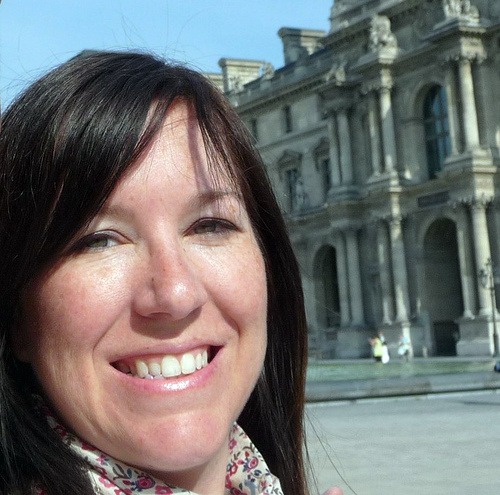
img: Jennifer Greco in Paris, in front of the Louvre (April 2010).

STAY TUNED for tomorrow’s installment from our displaced fictional heroine, Libby, who is taking last week’s advice from Maggie to heart and discovering that Woodhaven is her oyster. (A good thing she’s not allergic to shellfish like her husband, Oliver!) What, not keeping up with Libby? Read the first three episodes of her expat adventures.

If you enjoyed this post, we invite you to register for The Displaced Dispatch, a round up of weekly posts from The Displaced Nation. Includes seasonal recipes and book giveaways. Register for The Displaced Dispatch by clicking here!

Related posts:
RANDOM NOMAD: Mardi Michels, Elementary School French Teacher, Home Cook, Writer, Photographer & Traveler

Born in: Adelaide, South Australia
Passports: Australia (by birth), Britain/EU (through my dad), Canada (I became a citizen in 2007)
Countries lived in: France (Paris): 1995-2000; Canada (Toronto): 2000-present
Cyberspace coordinates: eat. live. travel. write | my creative refuge from academia (blog); eatlivtravwrite (Twitter handle)

What made you leave your homeland in the first place?
I left Australia because I was working on my PhD in French literature and felt it made a lot more sense to be in the country of the language and culture I was studying. Soon after moving to Paris, I began working in a restaurant (Woolloomooloo Restaurant Australien — now closed) to supplement a meagre scholarship. About a year after moving to Paris, I got a job teaching English at Université Paris X and I was hooked on teaching English (I was already qualified to teach French) so I undertook my Dip TEFL [professional diploma in Teaching English as a Foreign Language] at the University of London Institute in Paris, eventually scoring a full time teaching job at the British Council. My PhD? Incomplete…

Is anyone else in your immediate family “displaced”?
My sister also left home when she was in her early 20s to complete a PhD at Oxford (which she did), and from there she worked in banking all over the world (England, Singapore, Japan). She has also traveled extensively in South America. She, too, has ended up in North America (New York City), teaching math!

How about your husband? Is he displaced?
He was when we first met — in Casablanca in December 1999. I was on a vacation in Morocco, and after that two-week jaunt, Mr Neil followed me back to Paris for a visit. He is the reason I am now in Canada. Six months after he visited me in Paris, I had a job teaching in French in Toronto lined up for the 2000-01 school year — and the rest, as they say is history. Neil is originally from Vancouver but has traveled the seven continents to some “out there” places. I mean, how many people do you know who have been to Easter Island?

Describe the moment when you felt most displaced.
The first time I had to do lunchtime outdoor yard duty the first year I was living in Toronto. I was ill equipped for the cold, wearing leather boots and a wool coat that was more than adequate in Paris. Not so much here. It was five years before I succumbed to the puffy coat and winter boots.

Describe the moment when you felt least displaced.
Honestly? Stepping off the plane this past summer when I arrived in Paris. I try to get back there every year or so (I completed my MA in Second and Foreign Language Teaching a few years ago, requiring me to take courses two summers in a row in Paris). Even though I have lived longer in Toronto now than I did in Paris (and I love my life in Toronto), and I don’t have any family there, Paris is still a place where I feel curiously “at home.”

You may bring one curiosity you’ve collected from each of your adopted countries into the Displaced Nation. What’s in your suitcase?
I’m thinking cookware from Mora (a treasure trove of ring molds, tart pans and other French pastry equipment) or A Simon (good selection of glassware and heavy-duty white French porcelain) — both on rue Montmartre; or else baking ingredients from G Detou, one of the world’s great food shops, in Les Halles.

You’re invited to prepare one meal based on your travels for other Displaced Nation members. What’s on the menu?
The meal I would prepare for you would include a dish inspired by each continent. My husband and I have visited all seven continents, and we actually hosted this luxury dinner last year, as documented on my blog:

  • Moroccan spiced chick peas
  • Vietnamese caramelized chili prawns
  • Italian polpette d’uova
  • Australian micro meat pies
  • Mexican tortilla chicken soup
  • Cuban ropa vieja
  • Panamanian (coconut) rice with pigeon peas
  • Jamaican jerk chicken
  • Île flottante

You may add one word or expression from the country you’re living in to The Displaced Nation argot. What will you loan us?
I couldn’t pick one specific one but some words that have crept into my vocabulary (and that of my students’) include hop là, aïeoh là là, et hop, and ouf — words that sound ridiculous removed from the context of everyday French vocabulary but that have turned out to be very useful in the context of my classroom 😉 Surely The Displaced Nation could use a few more interjections?

It’s French Cuisine month at The Displaced Nation. Who is your favorite French chef, living or dead, and why?
Whilst she is not French, it has to be Julia Child, mainly for her “can-do” attitude.

Julia Child is the role model for our posts this month — and has just now been inducted into our Displaced Hall of Fame. Of the following three quotes by her, which one do you most identify with?

1) The only time to eat diet food is when you’re waiting for the steak to cook.

2) The only real stumbling block is fear of failure. In cooking, you’ve got to have a what-the-hell attitude.

3) Until I discovered cooking, I was never really interested in anything.

I have to say the quote I most identify with is “The only real stumbling block is fear of failure. In cooking, you’ve got to have a what-the-hell attitude.”

I teach a once a week cooking class to nine-to-eleven-year-old boys, called Les Petits Chefs; and though my students are pretty young and cannot be expected to know a lot about cooking (yet!), I found myself thinking of them as I read this quote. What continues to amaze me about my group of little chefs is their willingness to try new things and their (mostly) complete lack of fear about being in the kitchen (well, science lab, in our case!). Yesterday, for example, I had five little boys cutting up raw chicken (thighs, no less, so much messier than neat clean breast meat), and I watched them attack the task with great gusto. No fear (though a few “ewws!”) — they just got on and did the job, trusting me that the icky meat would be turned into something delicious in about 30 minutes (it was!).

Readers — yay or nay for letting Mardi Michels into The Displaced Nation? Tell us your reasons. (Note: It’s fine to vote “nay” as long as you couch your reasoning in terms we all — including Mardi — find amusing.)

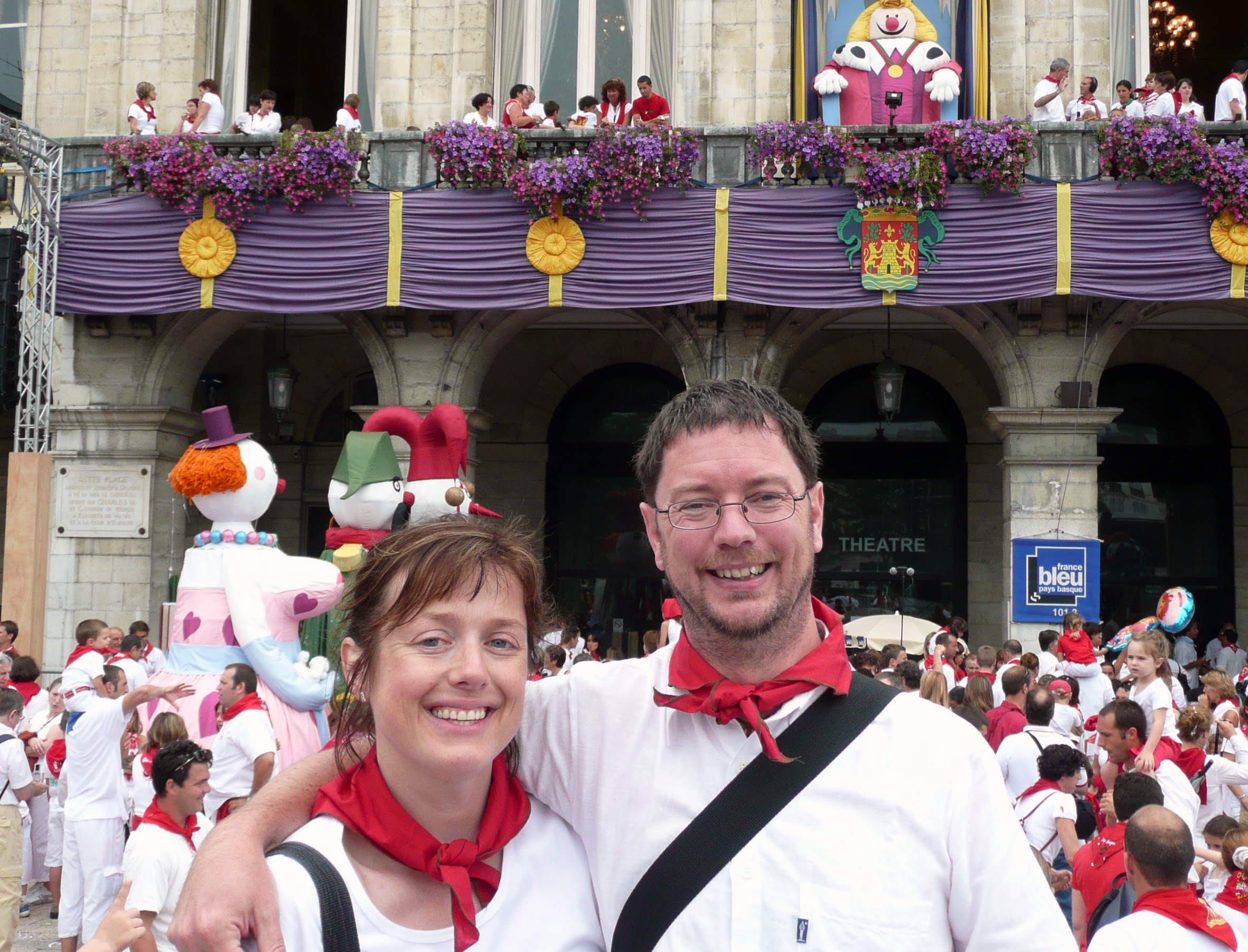
img: Mardi Michels and her mari, Mr Neil, at the Fêtes de Bayonne (2008).

STAY TUNED for tomorrow’s installment from our displaced fictional heroine, Libby, who seeks advice on her unexpected second pregnancy from someone who is older…if not altogether wiser. What, not keeping up with Libby? Read the first three episodes of her expat adventures.

If you enjoyed this post, we invite you to register for The Displaced Dispatch, a round up of weekly posts from The Displaced Nation. Includes seasonal recipes and book giveaways. Register for The Displaced Dispatch by clicking here!

Related posts:
RANDOM NOMAD: Kirsty Rice, Freelance Writer & Blogger

Born in: Renmark*, South Australia
Passport: Australia (no one else will have me!)
Countries lived in: Australia (Adelaide & Perth): 1997-98; Indonesia (Jakarta): 1999 – 2001; Malaysia (Kuala Lumpur): 2001-02; Libya (Tripoli): 2002-04; Canada (Calgary): 2004-08; USA (Houston): 2008-09; Qatar (Doha): 2010-present.
Cyberspace coordinates: 4 kids, 20 suitcases and a beagle (blog)
*A small town of 7,500; my parents still live there.

What made you leave your homeland in the first place?
I am married to a former expat child. I know the term is Third Culture Kid, but I don’t really think it applies to him. He was always keen on doing the “expat” thing. I, on the other hand, was raised in the same town that I was born in and wasn’t a great lover of change. Our first move was the result of a promotion for my husband and the fact that I was pregnant with our first child. The plan was to do a two-year posting in Indonesia and to return “home”. That was 7 countries and 12 years ago. I now thrive on change.

So your husband was already “displaced”?
My husband’s parents were expats. He was actually born in New Zealand and then they went to the Philippines for many years before moving to Sydney, then Melbourne, and finally to Brisbane.

How about your kids?
My children were all born in different countries. We were living in Jakarta when I had my first child, my second was born in KL, the third in Malta and the fourth in Canada. Although none of them have lived permanently in Australia (our longest stint has been during school holidays, so a maximum of 12 weeks), they all think of themselves as Australian. My husband and I have both worked hard for that to be the case.

Describe the moment when you felt most displaced.
When we first moved to Tripoli — it was the middle of summer and I had a two-week-old baby and a two-year-old. We then had to endure months of housing hell — we couldn’t find one! For a while, I shared a “guest house” with about sixty men who were rotating in and out of the desert: there were no other women. Breast feeding amongst men who hadn’t seen a woman for a couple of months was a rather unique experience. Due to the weather, fruit and vegetables were limited and small in size. I can remember standing in a fruit and vegetable stand with a screaming baby and a restless toddler wondering how I was going to cook carrots the size of my little finger. I was continually getting lost, and the simplest of tasks seemed very overwhelming. There were many days that I considered getting on a plane — but I’m so pleased I didn’t. Three months later, we had a house, the weather was better, I made friends, and I loved our life in Libya. I was devastated to leave.

Describe the moment when you felt least displaced.
I feel like that here in Qatar. Our children are at a fabulous school, I have a place to write, and my husband works for a Qatari company and really enjoys it. There is so much here in the community for expats, and we are made to feel very welcome. I have made local friends and love heading to the local souqs. I feel that this is very much our second home. In other locations I have felt that we were passing through, but not here.

You may bring one curiosity you’ve collected from your adopted country into The Displaced Nation. What’s in your suitcase?
From Indonesia: A jamu (traditional medicine) woman made of silver, given to me by a very dear friend.
From Malaysia: The Selangor pewter tea set I was given as a gift. Each time I use it I think of my friends.
From Libya: A wedding blanket with traditional jewellery pinned to it, which was given as a farewell present. It is such a unique gift and always a talking point when people spot it in our house.
From Canada: Nothing material, just the memory of what it was like to be back to work full time. In Calgary, I returned to the “old” me, remembering who I was pre children and travel. That was Canada’s gift — along with a huge appreciation of weather!
From the U.S. (Houston): A fantastic painting of an American flag that I picked up in San Antonio. It’s 3D and not in the traditional colors. It reminds me that America is far more layered and multidimensional that what I’d given it credit for.

You’re invited to prepare one meal based on your travels for other Displaced Nation members. What’s on the menu?
We’ll have some kind of soup for starters: either Indonesian soto ayam (chicken soup), Libyan soup* (I love it!), or the Canadian version of Italian wedding soup. Though I come from an area in Australia that has a large Italian community, I’d never heard of Italian Wedding Soup — turns out it’s more of a North American thing.

For the mains, perhaps I’ll offer a choice between Malaysian curry or maybe a nasi goreng from Indonesia.

And for drinks, we’ll have margaritas. I learned to make a mean margarita in Houston.

For dessert, a caramel cheesecake — a recipe I picked up from a fellow Aussie in Houston.

You may add one word or expression from the country you’re living in to The Displaced Nation argot. What will you loan us?
From Indonesia: Satu lagi (one more) — I said that way to often!
From Malaysia: I just loved how you could put lah on the end of everything and automatically make a sentence sound friendlier.
From Tripoli: Shokran (thank you). It was the first Arabic word I learned and makes me think of how special the people in Libya are — so kind and helpful. Incidentally, in learning how to say “pregnancy test,” I discovered that hamil is the word for “pregnant” in Indonesia, Malaysia and Tripoli.
From Canada: Hey — kind of the same as lah in Malaysian.
From the U.S. (Houston): I found myself describing things differently. It wasn’t just “the big tree out the front” but “the big ‘ol tree out the front.”
From Qatar: Right now I’m back to learning Arabic (unsuccessfully). Oh how I wish I had a chip I could just insert into my brain to switch languages. Why haven’t they invented that yet?

It’s Zen and the Art of the Road Trip month at The Displaced Nation. Robert M. Pirsig, author of Zen and the Art of Motorcycle Maintenance, famously said: “Sometimes it’s a little better to travel than to arrive.” Do you agree?
I disagree. I like to arrive, settle and learn how a city/country works. You can learn so much about a place just by trying to get the telephone connected! Traveling through is just a brief picture. I love that we’ve been able to become part of a community everywhere we have lived.

Pirsig’s book details two types of personalities: 1) those who are interested mostly in gestalts so focus on being in the moment, not rational analysis; and 2) those who seek to know the details, understand the inner workings, and master the mechanics. Which type are you?
If you read my blog you’ll see there is usually a romantic viewpoint or flowery end to a posting. I’m a big believer in things happening for a reason and not always being logical. Having said that, I am a stickler for details, I hate to enter into things blindly and have to know exactly what the story is. Which personality am I in my expat life? I’m a bit of both. I don’t believe that anyone can be a successful expat without having the flexibility to change with the situation. In our daily lives as expats we need to quickly learn the rules, find out the details, go with the flow and just enjoy the ride. You have to be both.

* Libyan soup is a tomato-based soup. There are many variations. The one I loved was with lamb.

Ingredients:
1/2 to 1/3 lb. lamb meat cut into small pieces
1/4 cup oil or “samn” (vegetable ghee)
one large onion
1 tablespoon tomato paste
2-3 tomatoes
1 lemon
1/2 cup orzo, salt, red pepper, Libyan spices (Hararat) or cinnamon

Directions:
Sauté the onion with meat in oil.
Add parsley and sauté until meet is brown.
Add chopped tomatoes, tomato paste, salt, spices, and stir while sizzling.
Add enough water to cover meat, simmer on medium heat until meat is cooked.
Add more water if needed, and bring to a boil.
Add orzo, simmer until cooked.
Before serving, sprinkle crushed dried mint leaves, and squeeze fresh lemon juice to taste.

Readers — yay or nay for letting Kirsty Rice into The Displaced Nation? Tell us your reasons. (Note: It’s fine to vote “nay” as long as you couch your reasoning in terms we all — including Kirsty — find amusing.)

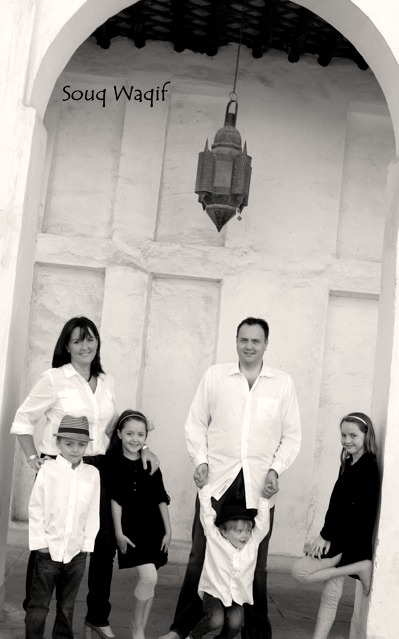
img: Kirsty Rice with her family (sans the beagle) at Souq Waqif, Doha, Qatar.

STAY TUNED for tomorrow’s installment from our displaced fictional heroine, Libby, whose rather dramatic road-trip adventure has come to an end. Time to face reality again in Woodhaven! What, not keeping up with Libby? Read the first three episodes of her expat adventures.

If you enjoyed this post, we invite you to register for The Displaced Dispatch, a round up of weekly posts from The Displaced Nation. Includes seasonal recipes and book giveaways. Register for The Displaced Dispatch by clicking here!

Related posts:
RANDOM NOMAD: Camden Luxford, Hostel Owner, Freelance Writer/Blogger & Student

Born in: Mackay, Queensland, Australia
Passport: Australia
Countries lived in: United Kingdom (Brighton, Oxford, Edinburgh, and a country hotel near Crickhowell, Powys, Mid Wales): 2005-06; Peru (Cusco): 2009-present.
Cyberspace coordinates: The Brink of Something Else (blog)

What made you leave your homeland in the first place?
I left, at 20, because I’d always had an itch. As a kid, I’d poured over National Geographics and Lonely Planets, plotting these exotic routes across strange lands. I think I imagined myself some kind of Lara Croft-type figure. Then I grew up and didn’t really know what I wanted to do with the rest of my life, so I boringly did what thousands of Australian 20-somethings do every year — took off to the UK for a couple of years.

Is anyone else in your immediate family displaced?
Dad’s displaced — in a jet-setting, corporate type of way. He always traveled a lot for work when I was young, domestically and internationally, and now he’s semi-retired and living most of the year in Italy. It’s handy, ‘cos now I have a great place to stay close to really good pizza and wine.

Describe the moment when you felt most displaced.
Waiting at the police station to report an alcoholic Latino ex for threatening to kill me, and having the cops not really care. I just thought in that moment, what I wouldn’t do to be back home, away from this machismo, in a place were I instinctively understand how men and women relate to each other.

Describe the moment when you felt least displaced.
Every Wednesday I get together with my closest friends here in Cusco for lunch. We cook, open a few bottles of wine, and laugh away all the week’s problems and dramas. It’s my Cusco family, and when we sit around the table, teasing each other mercilessly, I feel completely at home.

You may bring one curiosity you’ve collected from your adopted country into The Displaced Nation. What’s in your suitcase?
I tend not to hold on to things, just memories — and a hard drive full of photos. So I’ll describe a treasured photo from each country, instead.

From England: One of myself and my friends on the pebbly beach of Brighton. It’s a candid, and nobody’s posing, we’re just scattered about doing our thing. A couple of the boys are playing chess, a small group is talking, I’m reading a book, someone’s playing guitar. It’s a lovely slice of our lives that summer.

From Wales: Tintern Abbey caught just as the sun set. I was driving, turned a corner, and that sight took my breath away.

From Scotland: An entire album covering my 22nd birthday — from the moment my roommates woke me up with fairy bread and beer until about 4:00 a.m. the following morning. The deteriorating respectability is spectacularly documented.

From Peru: A Photoshopped-together photo of “Yamanyá,” the name of my hostel, spelled out in fire. We were camping by the Templo de la Luna (Moon Temple) outside of Cusco, and after half a bottle of rum I pulled out the camera and an Argentinian friend lit a stick on fire. It kept us entertained for more than an hour.

You’re invited to prepare one meal based on your travels for other Displaced Nation members. What’s on the menu?
Definitely a starter of ceviche: thin fish strips flash-marinated in lime with a touch of coriander, a load of chile, and a pile of fresh red onion, accompanied by a very cold Cusqueña beer. Served on the sand within spraying distance of the waves.

Then, in anticipation of my upcoming move to Buenos Aires, it’s a thick Argentinian steak cooked rare, with a glass of Malbec. Good meat is hard to come by in Cusco, and I miss it.

For dessert we’ll visit Dad in Italy: tiramisu, and then a strong espresso to finish the caffeine kick.

Then the Pisco gets opened, and it’s chilcanos all round: Pisco, ginger ale, a drop of Angostura bitters and a squeeze of lime.

You may add one word or expression from the country you’re living in to The Displaced Nation argot. What will you loan us?
From the UK: Minging has always stuck with me; I have no idea why. For the uninitiated it means disgusting, ugly, gross.
From Peru: Sí, no? — a delightfully Limeñan turn of phrase whose English translation (yes, no?) doesn’t make any sense at all.

It’s Zen and the Art of the Road Trip month at The Displaced Nation. Robert M. Pirsig, author of Zen and the Art of Motorcycle Maintenance, famously said: “Sometimes it’s a little better to travel than to arrive.” Do you agree?
I’ve always loved long, uncomfortable journeys, whether in car, train, bus, boat, or on foot — the process of being in transit, of movement, of change. I even have a sick fascination with long stopovers in airports: sleeping curled up on an uncomfortable bench, announcements blaring over the loudspeakers.

So for me, yes, the journey is a little better. Having been here, in Cusco, for almost two years, I’m growing uncomfortably restless. My mother argues that this is fear of commitment on an epic scale, but I like my life most — feel like I’m learning the most — when I’m on the move, and in the first blush of a new life in a new place.

I will point out in my own defense that I maintain my work and studies even while on the road. In a very stop-start sort of fashion, I’m finishing a Bachelor of Arts in International Studies and a Bachelor of Commerce in Economics from Deakin University in Melbourne, as part of their off-campus program. So I’m not completely irresponsible. (So there, Mum.)

Pirsig’s book details two types of personalities: 1) those who are interested mostly in gestalts so focus on being in the moment, not rational analysis; and 2) those who seek to know the details, understand the inner workings, and master the mechanics. Which type are you?
Despite a thoroughly scientific upbringing and education — Dad’s an engineer — and a very rational approach to my studies, when it comes to travel and expat life I’m all about the gestalts. I stayed in Cusco on little more than a whim, and recently returned from an ill-planned but exhilaratingly unpredictable road trip to Ecuador in a Volkswagen Kombi. Every moment of that road trip was a surprise — the cast of characters, a rotating mix of backpackers and South American musicians and circus performers. We followed the sun north, took a minor detour inland to teach a music and clowning workshop to the children in a poor community, and played music on the beach.

But although I laughed and made wonderful new friends and was constantly surrounded by music, this road trip, with its constant visits to mechanics, was also the reminder I needed of the importance of the rational type of personality. Road trips in general are a wonderful encapsulation of this duality, I think. Driving with the windows down on the highway with the music blaring, going where the wind takes you…but going there in a machine that needs care and understanding and maintenance. I’ve leaned too heavily to the romantic side, and it’s time to start taking better care of my machine.

Readers — yay or nay for letting Camden Luxford into The Displaced Nation? Tell us your reasons. (Note: It’s fine to vote “nay” as long as you couch your reasoning in terms we all — including Camden — find amusing.)

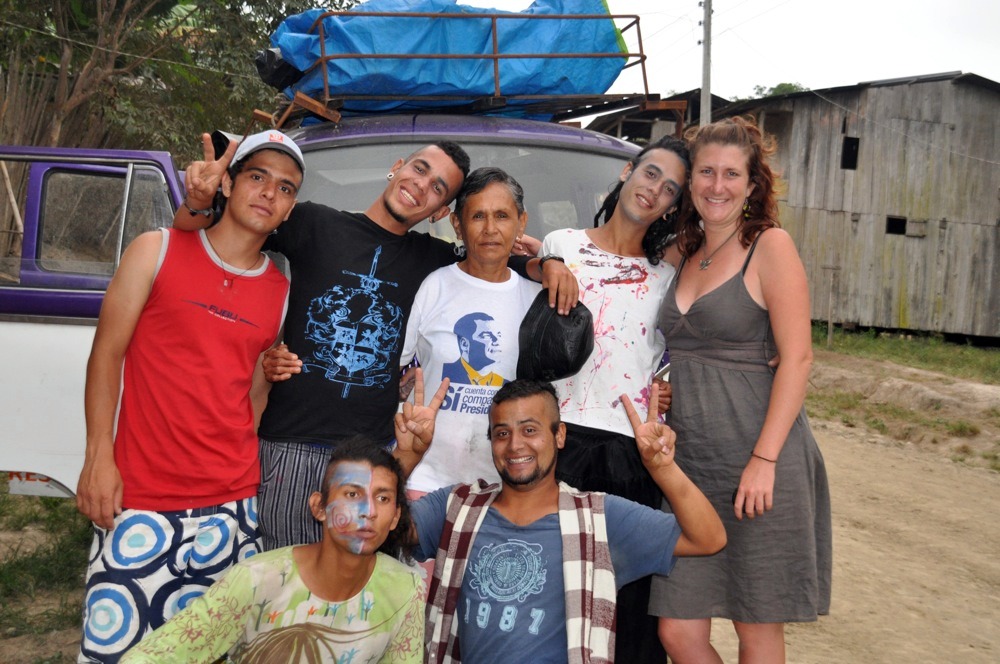
img: Camden Luxford on her recent road trip — in a tiny community about two hours form Pedernales in Ecuador, where she helped put on a juggling (among other things) workshop. She is posing with some of the kids and a teacher, along with members of the Colombian cumbia band she had as passengers for a couple of weeks. Yes, that’s the famous Kombi in the background!

STAY TUNED for tomorrow’s installment from our displaced fictional heroine, Libby, whose road-trip adventure of last week ended on a dramatic note. What, not keeping up with Libby? Read the first three episodes of her expat adventures.

If you enjoyed this post, we invite you to register for The Displaced Dispatch, a round up of weekly posts from The Displaced Nation. Includes seasonal recipes and book giveaways. Register for The Displaced Dispatch by clicking here!

Related posts:

RANDOM NOMAD: Tom Frost, Kindergarten Teacher & Expat Blogger

Born in: Hillsboro, Oregon USA
Passport: USA
Countries lived in: India (Belgaum): 1979-80; Japan (Mutsu and Hachinohe): 1983-88; Mexico (Mazatlán):2005-06; Argentina (Buenos Aires): 2006-09; Uruguay (Colonia del Sacramento): 2009-10; Asia (Japan, Thailand, Malaysia, Laos, Hong Kong): 2010-2011; China (Beijing): July 2011 – present.
Cyberspace coordinates: Expat Alley (blog)

What made you leave your homeland in the first place?
My wife, Maya Frost, and I left the US to give our children a taste of the world outside and to supercharge their brains with new languages, new challenges and new experiences. Maya wrote the book The New Global Student: Skip the SAT, Save Thousands on Tuition, and Get a Truly International Education, detailing our experiences getting the kids — we have four daughters — through high school and college without going the traditional route. Two of them are now working in Buenos Aires and Abu Dhabi. The other two are in New York, one of whom has just completed a couple of years working as a multilingual events coordinator on Norwegian Cruise Lines — she was craving some “land time.” Maya and I have settled in Beijing for the time being.

Is anyone else in your immediate family displaced?
My wife and I were both displaced Oregonians living in Japan when we first met. All of my family have traveled quite extensively. Like me, my three siblings were all Rotary exchange students for a year in France, Philippines and South Africa (I lived in India). For a time one of my siblings lived in Japan for several years. I have a niece in Barcelona, a nephew in Japan, a cousin in Africa…

Describe the moment when you felt most displaced.
Getting off a plane in Miami after being in South America for two years. It was overwhelming to understand everything that was going on around me. All the magazine racks were screaming that I was too fat, too old, too poor and too poorly dressed. I wanted so much just to get back on the plane and go “home” to Buenos Aires.

Describe the moment when you felt least displaced.
The longer I stay out of the US the more this is happening. The “normal” feeling for me now is to feel displaced. Not understanding the language, not feeling like one of the crowd, not recognizing anything on a menu — that is when I feel at home.

You may bring one curiosity you’ve collected from your adopted country into the Displaced Nation. What’s in your suitcase?
My wife and I are obsessively light travelers. Even when moving to a new place to live for an extended period of time, we never have more than one carry-on each. I am a firm believer in the old adage that “you don’t own stuff, your stuff owns you.” I have a compass that was left to me by my father and about 30 photographs (unframed) of our family — we buy new frames each time we set up a new home. Beyond those items we take nothing more than a few changes of clothes and our laptops.

You’re invited to prepare one meal based on your travels for other Displaced Nation members. What’s on the menu?
Let’s start with the drinks because they generally taste the same each time they come out of the bottle, unlike my favorite meals which are those have not yet tasted.

A bucket of iced Mexican Pacifico [a Pilsner-style beer] for the appetizer, chilled sake for the cold course, a hearty Uruguayan Tannat for the main, Argentine fernet for dessert — and a couple of Tylenol for a nightcap.

I love to cook and am in charge of all the meals in our house. But I do not use recipes and generally do not make the same thing twice. Each time I go to the grocery store I buy at least one item I do not recognize. Past favorites have included:

My current craving is for shrimp Chinese dumpling, purple cabbage and cucumber in a spicy chili sauce, with cut chives for garnish. How does that sound?

You may add one word or expression from the country you’re living in to The Displaced Nation argot. What will you loan us?
My ability with languages is less than stellar so I’d prefer to loan you a few body language motions.

From Japan: Sucking air through gritted teeth and turning your head to the side — this means you are giving something a great deal of thought but also buys time to figure out what what was just said. Even if you cannot come up with a reply, you get points for showing you are thinking hard about the subject at hand.

From Argentina: The shoulder shrug — a good way of masking your ignorance of an indecipherable comment. Essentially it means: “Sometimes shit just happens, you know?”

From India: The head bobble — it can be construed as an affirmation but is ambivalent enough that you can later change your mind and renege on whatever you agreed to. It is also fun to practice in the mirror for your own amusement when bored.

It’s Zen and the Art of the Road Trip month at The Displaced Nation. Robert M. Pirsig, author of Zen and the Art of Motorcycle Maintenance, famously said: “Sometimes it’s a little better to travel than to arrive.” Do you agree?
I dislike traveling without arriving.

There are certain things I immediately look for in any destination to make me feel at home, but in reality, it is silly I look for them — why bother traveling if I want to feel at home?

I love this paradox.

Pirsig’s book details two types of personalities: 1) those who are interested mostly in gestalts so focus on being in the moment, not rational analysis; and 2) those who seek to know the details, understand the inner workings, and master the mechanics. Which type are you?
I definitely lean more toward the rational mindset. I love getting to know transportation — specifically, bus routes and subways — as well as getting a handle on how traffic patterns have developed over time. As a child of the US suburbs, I used to equate riding public transportation with being a loser, but now I know it is freedom. And it’s not just rational, it can also be “in the moment.” Life happens on public transportation — the grateful glance from an elderly woman you give up your seat to on a subway in Tokyo, the giggles of the small child you play peek-a-boo with on the train in Kuala Lumpur, the strains of the guitarist serenading bus riders on a Friday afternoon in Buenos Aires. Nothing interesting has ever happened to me by myself in a car.

Readers — yay or nay for letting Tom Frost into The Displaced Nation? Tell us your reasons. (Note: It’s fine to vote “nay” as long as you couch your reasoning in terms we all — including Tom — find amusing.)

img: Tom Frost becoming displaced yet again — by an elephant in Pai, Thailand (June 2011).

STAY TUNED for tomorrow’s installment from our displaced fictional heroine, Libby, who is just back from a road trip with Oliver and Jack, during which she has pondered her new life and the Melissa situation. What, not keeping up with Libby’s expat adventures? Read the first three episodes here.

If you enjoyed this post, we invite you to register for The Displaced Dispatch, a round up of weekly posts from The Displaced Nation. Includes seasonal recipes and book giveaways. Register for The Displaced Dispatch by clicking here!

Related posts:
RETURN TRIP: Random Nomad – Charlotte Day, High School Student (Sixth Former)

While our writers take off on what they hope will be enchanting August breaks, The Displaced Nation will occasionally be reissuing some posts that, for one reason or another, enchanted our readers. Enjoy these “return trips”!
As youngsters head back to school, we’re reissuing a Random Nomad interview ML Awanohara did with Charlotte Day, a displaced teenager in England. Charlotte spent a chunk of her summer taking a Russian-language course in St. Petersburg and living with a Russian family. She has produced a travel yarn on her adventures, which will appear on Monday.

Born in: Sydney, Australia
Passports: Australia, UK and US Green Card
Countries lived in: Australia (Sydney): 1994-2001; United States (New York, New York): 2001-2010; England (Sevenoaks, Kent): 2010-present

What made you leave your homeland in the first place?
My father is Australian and my mother English. They split up when I was two. When I was six, my mother met and married an Australian who had been living in New York for thirty years. I was rather disgruntled about moving to the United States and for two or three years, remained determined never to accept it as “home.” At that time, I was deeply patriotic to my native country — though this sentiment has dissipated since.

Is anyone else in your immediate family a “displaced” person?
My mother’s family, originally from England, has long been displaced. My mother herself was born in Kenya, in 1961. Following the Mau Mau Uprising, her parents were forced to relocate, and my grandfather, presented with a choice between Australia and Canada, chose the warmer of the two countries. My mother spent her childhood bouncing between schools in England and Australia. She eventually grew so fed up with packing and unpacking, she decided to leave school at the age of 16. Her father agreed to the plan provided she spend a final year at the school in Switzerland his own mother had attended as a girl. My mother moved on from Swiss finishing school to work in London, Paris and Sydney. But she appears to have made New York her last port of call. Indeed, we had a fairly solid life in the city until I decided to take myself off to boarding school in England.

Describe the moment when you felt most displaced over the course of your many displacements.
It must have been when I first arrived in New York as a six-year-old. I stepped out of the JFK arrivals terminal into a snowy March night. My stepfather was wearing a leather coat, the interior of his car smelled of leather — and the world outside the car window seemed an undulating stream of black and silver. Though it was the end of 2001’s warm winter, my Australian blood froze beneath my first-ever coat. And their apartment — that was all leather as well. It smelled of musk and cologne. Since that time, I have felt similar pangs of displacement, some of which lasted for considerable periods. But those first few moments in New York stand out as the most acute concentration of “displacedness” I have ever known.

Describe the moment when you felt least displaced.
For the last five or so years in New York, I have felt more at home than I ever did in Sydney. I ascribe this to growing up: at a certain age, one can take possession of a city, know its streets, bridges, tunnels and transportation system. I was too young when I lived in Sydney to reach that kind of comfort level. But when have I felt the most like a New Yorker? Perhaps it was the last time I came home for the holidays, and took the 4 train uptown for the first time in months. At that moment I realized how much this train had been a part of my life — conveying me home from school every day for two years. My old life would always be waiting for me on the subway, ready for me to pick it up again. That’s something only a New Yorker could say!

You may bring one curiosity you’ve collected from each of the countries where you’ve lived into the Displaced Nation. What’s in your suitcase?
From Australia: A miniature wooden wombat figurine — a gift from my grandfather. It conjures memories of a childhood spent beating about the bush (literally) and fishing for yabbies at the dam in the company of audacious dogs who stuck their heads down wombat holes, to no good end.
From New York: A pair of fake Harry Potter glasses. These defined my first six months in New York — I even wore them to my first day of school. I think it is telling that even at the age of six, I was unwilling to give all of my real self to this new home.
From England: My school tie — representative of the alternative universe I seem to have entered. At boarding school, the sense of removal from reality can be disconcerting — especially after having spent a decade in the city I regard as the world’s capital.

You’re invited to prepare one meal based on your travels for other Displaced Nation members. What’s on your menu?
I’d like to make you a Sydney breakfast: scrambled eggs, made with cream, salt and pepper and served on a bed of Turkish toast, with avocado and stewed tomato on the side (is this being greedy?). Our meal will be accompanied by a large “flat white”: what we call perfectly strong, milky coffee without excessive froth. I suggest we consume it overlooking a beach on a Sunday morning. At least, I assume The Displaced Nation has beaches?

You may add one word or expression from each of the countries you’ve lived in to The Displaced Nation argot. What words do you loan us?
From Australia: Daggy. I use this word all the time — and did not realize it was exclusively Australian until I was informed of the etymology. Apparently, it comes from trimming the soiled wool around a sheep’s bottom. Which part of this repugnant whole is actually the “dag,” I do not remember. (No, I’m not a proper Australian!) But as I understand it, “daggy” means sloppy in appearance or badly put together.
From New York: There are so many words, and most are second nature by now. However, I will choose grande-soy-chai-tea-latte because I still shudder to think of myself as the kind of person who can utter such a phrase, at great speed, with great insistence. In fact, I’m still in denial about my love for Starbucks: having known Sydney coffee, my standards should be higher.
From England: Banter. I still do not know the precise meaning of this word, but it seems to encapsulate everything that makes someone my age feel socially acceptable — and, of course, I have no banter whatsoever. I think it means the capacity for combining wit with meaningless conversation. But there are other components, too, which seem to me unfathomable.

Question: Readers, tell us what you think: should we welcome Charlotte Day to The Displaced Nation and if so, why? (Note: It’s fine to vote “no” as long as you couch your reasoning in terms you think we all — Charlotte included — will find amusing.)

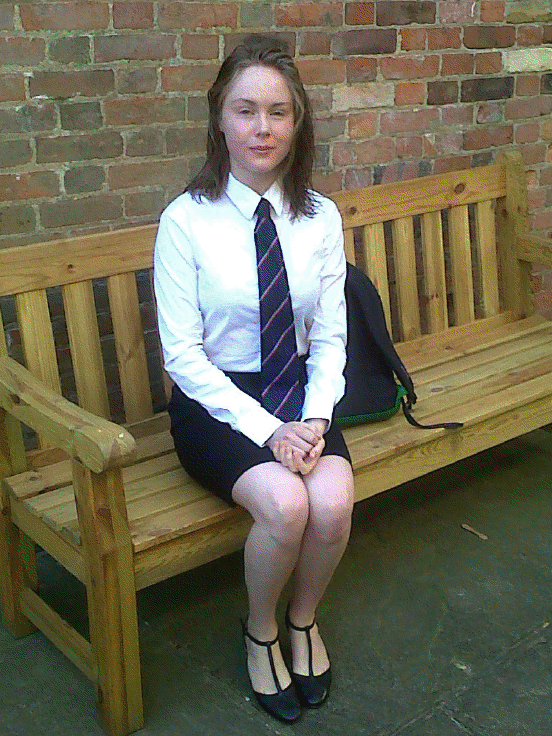
img: Charlotte Day at her boarding school in southeast England

If you enjoyed this post, we invite you to subscribe to The Displaced Dispatch, a weekly round up of posts from The Displaced Nation, plus some extras such as seasonal recipes and occasional book giveaways. Sign up for The Displaced Dispatch by clicking here!

Related posts:

Random Nomads to the rescue! How to have an enchanted August (2/2)

Every year in mid-August, I swear I can still hear the beat of the taiko drums, even though it’s been years since I lived in Japan as an expat.

As I mentioned in my comment on Anthony Windram’s post of last week, the Japanese hold their Obon Festival in the dead of August. Appropriately, it’s the Buddhist version of the Festival of the Dead — when the dead are supposed to come back and visit.

That said, I have always thought of obon festivities as an attempt to arouse the living dead, which is what most people are after enduring the agonies of a Japanese summer. Just hearing the lively drumbeat can be revitalizing, getting one’s blood flowing again.

I am therefore personally curious to see how The Displaced Nation’s Random Nomads who live in Asia are doing. Are they managing to have some enchanting moments despite the heat — which, if anything, appears to be even more brutal in that part of the world than it was in my day? And what advice can they impart to the rest of us? (Besides the fact that compared to them, we shouldn’t really be complaining…)

Three of them got back with answers to these questions:
1) What has been your most enchanting moment of Summer 2011 thus far?
2) What has been your least enchanting moment?
3) Do you have any survival tips for people who can’t escape?

Please note:
a. You can read interviews with each of these three Random Nomads about their “displacement” by clicking on their names. They, and their lives, are fabulously inspiring regardless of season.
b. In Part 1 of this post, five US/Europe-based Random Nomads answered the same three questions. Check it out!

KIM ANDREASSON — Swedish passport; current home: Vietnam (Saigon)
Most enchanting:
Vacationing in my native Sweden with my wife. It was the longest time I have spent in my homeland in over a decade, and I have a new-found appreciation for the proverb: “Away is good, but home is best.”

Least enchanting:
Trying to do work while vacationing in Italy. An hour before an important conference call, the Internet went down at our 4-star hotel, and the hotel manager airily proclaimed, “That’s what usually happens when it rains.”

Survival tips:
We live in Saigon, where it’s basically 90 degrees all the time so there are only two options: stay inside and use AC; or if you go outside, wear light-colored clothes and drink lots of liquid.

EMILY CANNELL — U.S. passport; current home: Japan (Tokyo)
Most enchanting:
In spite of not being terribly interested in the rainforest or the quest to save it, I found myself smack dab in the middle of Borneo, Malaysia, on an Ecotour. Searching for the endangered orang-utans, we happened upon what became one of the highlights of my summer — and life. A pygmy elephant emerged from the trees, and just like the rest of us, he was hot. Slowly, he ambled in to the river where he proceeded to entertain us with his cooling down antics — scratching his ears on the trees, blowing water out of his trunk, and completely submerging himself while only 10 feet away from our boat. What a gift! I got out my checkbook then and there.

Least enchanting:
Getting up at 4:00 a.m. for the fifth time this summer in order to catch a 7:00 a.m. flight to somewhere. Once is okay, but five times?

Survival tips:
Currently I’m writing from the complete darkness of the guest bedroom, fan on high. Keep the curtains closed and the fans on high to circulate the air. When outside, wear a hat to keep the sun off the top of the head. It’ll do wonders.

JO GAN — U.S. passport; current home: China (Yuyao City, Zhejiang Province)
Most enchanting:
Since my summer is usually spent teaching high school and university students on their summer holidays, I usually don’t get many enchanting moments.  However, I did have one thing that was kind of nice.  After a long day at the language school, I walked down to the Yaojiang River that flows through the downtown area, with some fellow expat teachers and a couple of our adult students.  To our great surprise, white plastic chairs and tables had been set up all along the river underneath the willow trees. Cold beer and hot tea was being served, and there was a lone guitarist playing Chinese folk music for all to enjoy. We sat down and chatted, drank our beers, and watched the river float by with a slight breeze. The servers kept the beggars at bay so we were not hounded for money.

The best part of the evening was around midnight when they started shooting fireworks over the river.

It wasn’t a special occasion or even a special event — just the right mix of people and location, at just the right moment.

Least enchanting:
That would have to be when it rained for a month. I don’t know what was going on with the weather, but in the month of June I thought we were going to have to build an ark. It rained for three weeks straight every day without stopping. I didn’t want to do anything, but had to trek in the rain and puddles all the way to school every day. One day was particularly miserable because the electricity went out.  So it was hot and rainy, and we had no lights. I just kept thinking, why me?

Survival tips:
In the small Chinese city where I live, it’s the little things that count. Taking a trip around the city center in a rickshaw may cost you a little, but you get to sit back and survey the different things going on — and if that special person joins you, it can be romantic.

Another option is going out to the local parks every evening from 7:00 to 8:30 p.m. to dance with the older locals. They are almost always playing some salsa or pop music and dancing the cha cha, or there’s some line dancing action. It is actually kind of fun to join them even if your are not in their age set. They always are excited to teach you their moves.

Lastly, we live close to Siming Mountain. You can take a trolley bus to the top and then float down the small river in a little orange raft. The river has added twists, turns and drops that make you scream out for your mama to help you. It makes for an interesting day, and you are bound to get wet and cool off.

STAY TUNED for tomorrow’s post, in which Anthony Windram debuts his new Agony Aunt column!

If you enjoyed this post, we invite you to subscribe to The Displaced Dispatch, a weekly round up of posts from The Displaced Nation, plus some extras such as seasonal recipes and occasional book giveaways. Sign up for The Displaced Dispatch by clicking here!

Related posts:

Random Nomads to the rescue! How to have an enchanted August (1/2)

Ah, summer — what power you have to make us suffer…and like it?!

I don’t know about you, but I’m not liking the mid-August dog days very much. For a start, I’m getting tired of watching my own two dogs panting instead of playing.

Thus I’ve turned to The Displaced Nation’s Random Nomads to help me find things to like during the remaining weeks of Summer 2011, which doesn’t technically end until September 23.

Besides asking them to report back on how their own summers have been, I begged them to share some tips for escaping one’s surroundings at times when one can’t manage a physical escape. I recall from my own expat days (in the UK and Japan) that global residents develop superhuman-reserves of stamina (the Japanese call it gaman, or “enduring the seemingly unendurable with patience and dignity”) to sustain them during less-than-pleasant interludes.

And I wasn’t disappointed — no less than five USA/Europe-based Random Nomads have come to my rescue! They’ve answered these three questions:
1) What has been your most enchanting moment of Summer 2011 thus far?
2) What has been your least enchanting moment?
3) Do you have any survival tips for people who can’t escape?

And next week, we’ll hear from three more, all of whom hang their hats in Asia.

NOTE: If you haven’t read the interviews with these five people about their “displacement,” be sure to do so by clicking on their names. They, and their lives, are fabulously inspiring regardless of what season it is!

BALAKA BASU — USA passport; current home: USA (New York City)
Most enchanting:
Swimming at Sandy Hook in New Jersey. The water out there at Gunnison Beach is green and gorgeous; the waves are gentle and warm, and they lap round you like a soft embrace. Over in the distance, you can see the skyline of NYC, wrapped in haze. It’s truly lovely, the closest you can come to the Caribbean in the metropolitan area, I think.

Least enchanting:
WASPS (the insects)! They built five(!) hives in our car, and we had to suit up in full sleeves, veils and boots — full-on winter armor in heat-stroke inducing weather — to kill them with poison as they boiled out of their hives. Not cool. Not cool at all.

Survival tip:
Find a cheap(ish) hotel with a bar and an outdoor pool — someplace no tourist would ever visit. Bring towels, bathing suits, a great beach read, and plastic cups — and pretend you’re on beachfront property in some place awesome: e.g., “Jamaica” without the plane ticket.

VICKI JEFFELS — New Zealand passport; current home: England (Tadley, Hampshire)
Most enchanting:
England had a couple of days of really tropical weather back in July — I loved it. For a brief time there was the lingering smell of BBQ wafting around our neighborhood, and I was even able to lie down on a towel in the garden and safely fill up my vitamin D reserves. Ah, bliss!

Least enchanting:
The following week the temperatures plummeted and it looked as if that was all the summer we were going to get.

Survival tips:
Ah yes, right down my alley! Many of my neighbors and friends were finding it really difficult to sleep in the humid weather, not helped at all by the BBC advising everyone to close their curtains! Whaaat? When you find it difficult to sleep, I advise a tepid (not cold!) shower to lower the body temperature before sleep. If possible (I know it’s not always possible), take a dip in a swimming pool — that’s ideal.

PIGLET IN PORTUGAL — English passport; current home: Portugal (Algarve)
Most enchanting:
To date, there are two special moments. Can I have two?

Yes, OK. Great!

Actually, one is magical and the other enchanting. Both slightly predate the summer months, but the effects still linger.

The most magical moment was the birth of our first grandchild, Lily-May, on the 28th of April in France. We drove as if possessed for two days from Portugal across Spain to the South of France to see her. Although I am not maternal by nature (I’m more of a practical Mom), when I held her in my arms for the first time, my heart melted. As recorded on my blog, she’s adorable!

The most enchanting moment was when I was singing to her and she gave me a big smile. Poor little thing — my singing is not that tuneful; I think she felt sorry for me!

Least enchanting:
The least enchanting because most worrying moment of Summer 2011 was the way our daughter’s health deteriorated after giving birth. Despite various consultations with doctors about the excruciating pain and the ongoing urine infections she was experiencing, they just prescribed antibiotics rather than trying to find the root cause. The local GPs were totally clueless! However, the answer quickly became apparent once her husband insisted she go to hospital for a proper examination. The maternity ward doctor, upon examining our daughter, quickly discovered that medical compresses, now rotting, had been left inside her! Once these were removed, she began to recover. But had they remained, I have since been informed septicaemia would have set in, with devastating consequences for both our daughter and breastfed baby granddaughter.

Survival tips:
This is difficult because adverse weather conditions to some could be absolute heaven for others. Weather, I tend to take as it comes as it is out of my control.

My own great escape would not be from the weather but from tourist areas. Living in a tourist area myself, I have renamed tourists “terrorists” because many leave their manners and consideration for others at home. They literally do “terrorize” the locals!

 Personally, I love wild and natural places far away from the mass concrete high-rise hotels, with rows of sun beds and parasols lining the beaches.

My idea of heaven is to take a picnic, a bottle of chilled white wine, our comfy chairs and a parasol down to one of the unspoilt beaches for a “sun-downer.”

Yes, there are other people there in July and August, but we all seem to appreciate the luxury of freedom from tourists, and peace…

So, if you are coming to the Algarve on holiday please check out some of my
“secret beaches.” I can show you how to escape the “maddening” crowds!

JACK SCOTT — British passport; current home: Bodrum, Turkey
Most enchanting:
Bodrum is the most secular and modern of Turkish towns. It’s where people come to escape the conformity of everyday Turkish society. Normal social rules don’t apply. However, scrape the surface and you will find magic of a different kind.

This summer, we were visiting a friend, a thoroughly modern Millie, who lives just a few hundred meters behind the bustling marina with its luxury yachts and raucous watering holes. Her home is set within a traditional quarter of whitewashed buildings huddled together along narrow lanes.

As we approached her door, we noticed an elderly neighbor dressed in traditional livery of floral headscarf, crocheted cardigan and capacious clashing pantaloons. She sat cross-legged in a shady spot of her bountiful garden and was busy plucking a fleece.

Being city boys and largely ignorant of country ways, we asked our friend what the old lady was doing. She was preparing the wool for hand carding, straightening and separating fibers for weaving on the spinning wheel she kept in her house.

She hummed as she plucked, happy under the cool of an ancient knotted olive tree and doing what women have done in Turkey for millennia.

Now you don’t get that in Blighty.

Least enchanting:
We were wandering down Bodrum’s bar street, a procession of cheap and cheerful bars and hassle shops.

We normally rush by; casual shopping in Turkey can be a bruising experience best only tried by the foolish and heroic. The cheaper outlets employ aggressive teenagers in tight, bright, white shirts to drag gullible punters in from the street. A firm refusal elicits a bellicose riposte. The posher shops employ mostly female staff whose sales technique is softer but no less annoying. Speculative browsing is unbearable when tailed by KGB-trained assistants and you are made to feel like a serial shoplifter.

On this occasion my partner, Liam, popped into a corner shop to buy some cigarettes. Keen to use the local lingo, he asked for them in very passable Turkish. The po-faced assistant looked at him blankly. Liam repeated the request. Another blank look. After a brief standoff, the assistant relented and repeated the order in English. He threw the cigarettes at Liam, snatched the payment and slammed the change on the counter.

Welcome to Turkey, where hospitality greets you at every corner. I know there are arse-holes in every country — but next time we’ll just shout loudly in English.

Survival tips:
During the height of the summer we’re like camp vampires and only venture out after dark. Earlier in the season we found ourselves sweltering in 40+C (104+F) heat with no air conditioning. Because our pretty little cottage has 18-inch thick stone and concrete walls it took us weeks to find a technical solution. In the meantime, I received a host of suggestions to help us through the sleepless, sweaty nights. I’d like to share a few:
• Wrap a gel-type freezer pack in a wet tea-towel and apply it to your hot bits (and watch them shrink).
• Buy a floor-standing industrial fan (but nail everything down).
• Bathe your feet in an ice bucket (and develop frostbite).
• Take a cold shower (except the cold water is hot at this time of year).
• Sleep on a wet towel (and rot the mattress).
• Decamp to the roof (and get eaten alive my mozzies).
• Emigrate to Sweden?!

SIMON WHEELER — English passport; current home: Slovakia (Plavé Vozokany)
Most enchanting:
I love the sound of the crickets chirping. Whenever I left for holidays from England as a kid, that sound always meant I was away and exploring. Now I have them every summer’s night, and I still cannot get used to it. I still get that thrill of being in a new place…

Least enchanting:
Mosquitoes — they love every bit of me!!!

Survival tip:
I’m afraid I need a physical escape from our 35C (95F) “phew, what a scorcher!” summer. Fortunately, one is available in North Slovakia — in the Tatra Mountains, on the border between Slovakia and Poland. Just a stunning part of the world, very quiet, largely undiscovered, a place that exudes old-fashioned peace. Being that bit higher in altitude, the temps are perfect.


STAY TUNED for tomorrow’s Displaced Q on enchanting expat summers.

If you enjoyed this post, we invite you to subscribe to The Displaced Dispatch, a weekly round up of posts from The Displaced Nation, plus some extras such as seasonal recipes and occasional book giveaways. Sign up for The Displaced Dispatch by clicking here!

Related posts:

