The Displaced Nation

A home for international creatives

The John Steinbeck Encyclopedia of Road Trips

When we announced this month’s theme — road trips — some of you may have wondered if we’d gone around the bend. Zen and the Art of Motorcycle Maintenance — really? That’s a book for roadgeeks or — if you get into its philosophical meanderings — Roads Scholars, not for Displaced Nation types, most of whom equate travel with boarding an international flight.

Besides, road trips are for the young and restless — something you do when you’ve just graduated college.

But before you put the brakes on the road-trip idea again, let me convince you to take one more test drive. Only this time, instead of riding pillion on Robert Persig’s motorcycle, you’ll be seated in John Steinbeck’s camper station wagon next to his pet dog, Charley, on a 10,000-mile journey across America — from Long Island to Maine to Chicago to Seattle to California to Texas to New Orleans and back to New York City.

As the Nobel prize-winning writer puts his engine in gear, may I invite you to peruse our specially compiled John Steinbeck Encyclopedia of Road Trips.

A is for Autumn

John Steinbeck made a road trip across America in the autumn season and in the autumn of his life. He set out from his home in Sag Harbor, Long Island, shortly after Labor Day in 1960. He was 58 years old and not in the best of health. As Edward Weeks wrote of Steinbeck’s expedition in The Atlantic:

He set out with some misgiving, not sure his health would stand up to the 10,000-mile journey he envisioned; as he traveled, the years sloughed off him…

B is for Bestseller

Steinbeck wrote a book about his journey, Travels with Charley. It reached #1 on the New York Times bestseller list for non-fiction on October 21, 1962. To this day, the book retains a special place in the American imagination, despite attempts to challenge its categorization as “non-fiction” (see F).

C is for Charley

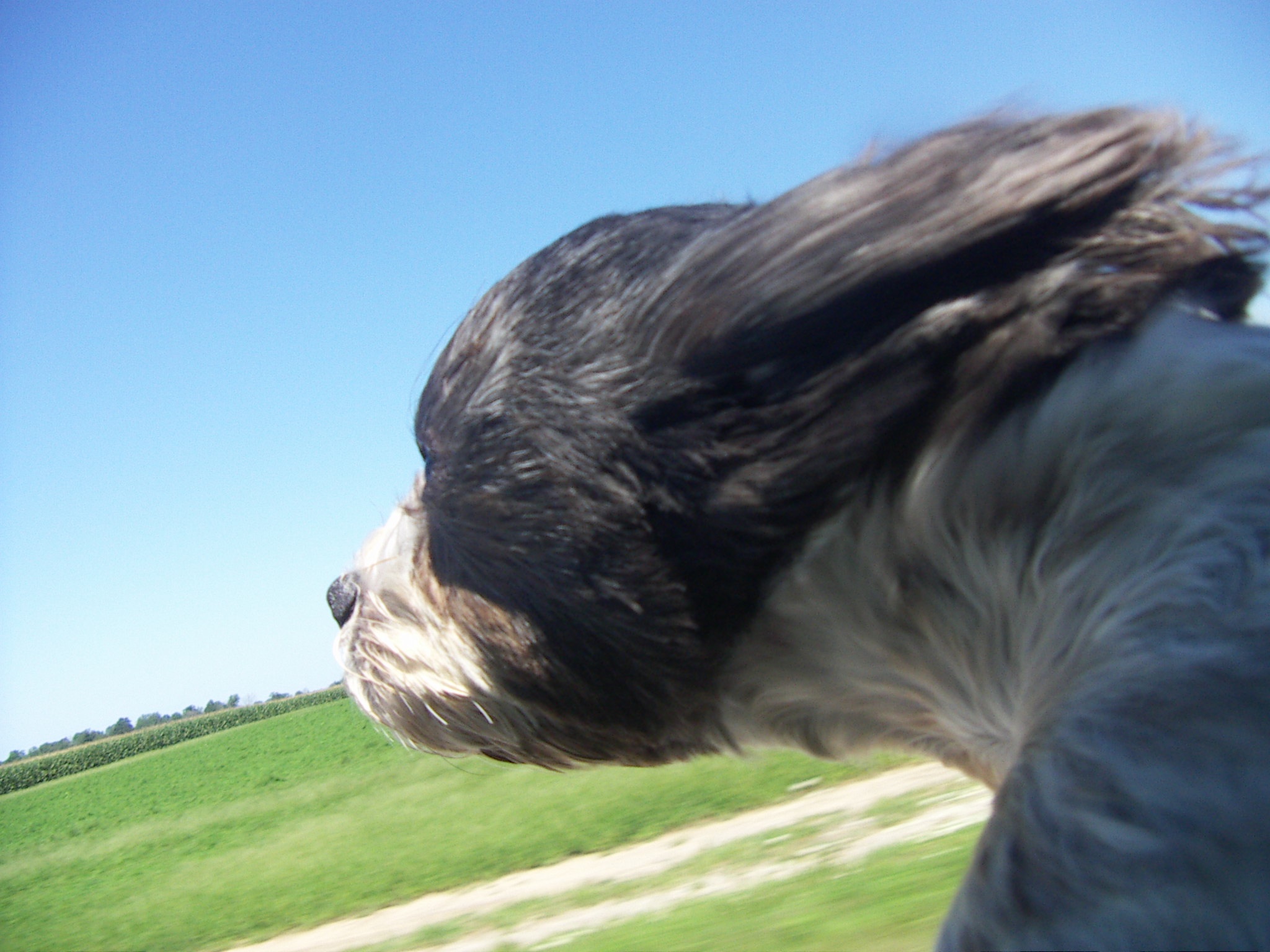
Meet Charley, Steinbeck’s middle-aged French poodle, one of the most civilized and attractive dogs in literature. He’s the genuine article, a real French poodle, having been born on the outskirts of Paris, where he also received his training. As his proud owner once said:

…while he knows a little Poodle-English, he responds quickly only to commands in French. Otherwise he has to translate, and that slows him down.

D is for Dog

For Steinbeck, a dog is an ideal companion on the open road as well as being an effective ice breaker:

A dog is a bond between strangers. Many conversations en route began with “What degree of dog is that?”

E is for Environment

Steinbeck was extremely attuned to the intimate connection between people’s lives and the rhythms of nature — weather, geography, the cycles of the seasons. But while nature animates his picaresque tale of his travels with his dog, one of his key observations was the the high price Americans would eventually pay for lives filled with ease and convenience. He felt they were trashing their environment for the sake of material prosperity. (A tad prescient, might we say?)

F is for Fictions

Journalist Bill Steigerwald set out to retrace Steinbeck’s steps on the 50th anniversary of his road trip. He concluded that not only had the Nobel laureate invented characters, he’d also embellished the hardships of his cross-country journey with Charley. In other words, this brilliant author’s much-loved book is loaded with creative fictions. (Wait, I thought all travel writers used some creative license — is there anything wrong with a novelist-turned-travel-writer using some?)

G is for Giant Redwoods

After sorting out his flat tire in Oregon (see O), Steinbeck visited the giant redwoods and ancient Sequoias and found them as awe inspiring as ever:

The vainest, most slap-happy and irreverent of men, in the presence of redwoods, goes under a spell of wonder and respect.

Steinbeck was further impressed when his dog, Charley, refused to urinate on the trees…

H is for Hurricane

The best-laid schemes of mice and men go oft awry, and Steinbeck had to delay the start of his trip slightly due to Hurricane Donna, which made a direct hit on Long Island. (Still, it could have been worse. It could have been Hurricane Irene!)

I is for International

While he never became an expat, Steinbeck moved to New York City and took quite a few international trips, mostly to Europe. He hoped that his road trip would enable him to reconnect with both the people and the landscape of his native land. He also wanted to see his birthplace — Salinas, California — one last time.

J is for Jamming

Steinbeck’s journey concluded with jamming Rocinante (see R) across a busy New York City street, during a failed attempt at making a U-turn. He reports having said to the traffic policeman:

Officer, I’ve driven this thing all over the country — mountains, plains, deserts. And now I’m back in my own town, where I live — and I’m lost.

K is for Knight-errant

A mainstay of medieval romance literature, the knight-errant wanders the land in search of adventures to prove himself a worthy warrior. Don Quixote is a famous example (see Q). Likewise, Steinbeck hoped to recapture his youth, the spirit of a knight-errant, through his travels. (Makes sense if you’re middle aged and your health is rapidly deteriorating — see P.)

L is for Language (of Road Signs)

Steinbeck closely observes the language of road signs during his trip across country. In New York State, he notes that the road signs are commands: “Stop! No turning!” But in Ohio, the language is gentler, with friendly advice rather than curt demands.

M is for Maine

Steinbeck reports that he learned not to ask for directions in Maine because locals don’t like tourists and tend to give them the wrong directions — another example of regional differences (see L).

N is for North Dakota

Upon arriving at Fargo, North Dakota, Steinbeck declares that the mentality of the American nation has grown “bland.” He fell head over heels in love with Montana, however. NOTE: Steinbeck’s account of meeting an itinerant Shakespearean actor outside the town of Alice, North Dakota, is disputed by the journalist Bill Steigerwald (see F).

O is for Oregon

Having his first flat tire on a remote back road in Oregon inspired Steinbeck to write a send-up of similarly desperate scenes in his most famous novel, The Grapes of Wrath:

It was obvious that the other tire might go at any minute, and it was Sunday and it was raining and it was Oregon.

P is for Poignancy

When Steinbeck set out on his road trip, he knew he could have died at any point along the way because of his heart condition. This knowledge suffuses Travels with Charley with a certain poignancy, and perhaps explains why it’s such a beloved book.

Q is for Quixote

As one might expect of a man who won a Nobel Prize in Literature, Steinbeck had a literary hero in mind when he set out on his road trip: Don Quixote. Like the ingenious gentleman of La Mancha, it seems that Steinbeck fancied himself a knight-errant in search of adventure (see K). He even named his camper truck for Quixote‘s steed (see R).

R is for Rocinante

As the narrator of Don Quixote explains, its hero feels obliged to find the right name for his horse:

Four days were spent in thinking what name to give it, because (as he said to himself) it was not right that a horse belonging to a knight so famous, and one with such merits of his own, should be without some distinctive name…

At last, Don Quixote calls the skinny steed Rocinante. In a nod to this fictional knight-errant (see K), Steinbeck christened the vehicle for his journey — a green GMC truck, which he’d had custom-fitted with a camper — Rocinante. He even painted the name across the side of the truck in 16th-century Spanish script.

S is for Salinas

Steinbeck was born in Salinas, California. He wrote his first stories about the Salinas Valley and was determined to see his hometown one last time before he died. Visiting a bar from his youth, he lamented the loss of several regulars as well as quite a few of his childhood chums, wondering if perhaps Thomas Wolfe was right (see Y).

T is for Texas

Steinbeck remarked of Texas that it was the kind of state that “people either passionately love or passionately hate.” He went on:

Texas is a state of mind. Texas is an obsession. Above all, Texas is a nation in every sense of the word. … A Texan outside of Texas is a foreigner.

Texas was also where Charley (see C) became ill for a few days and stayed in a veterinary hospital. NOTE: From Texas onwards, Steinbeck’s travel writing gives way to social commentary, culminating in the account of a school integration crisis he witnesses firsthand in New Orleans.

U is for U.S. Route 66

In mid-November of 1960, Steinbeck crossed the Mojave Desert and picked up the historical U.S. Route 66 at Barstow, California. He and Charley then drove 1,300 miles to arrive in time for a Texas-style Thanksgiving on a cattle ranch near Amarillo. U.S. Route 66, known colloquially as the “Main Street of America” or the “Mother Road” was a major path for those who migrated west. In Steinbeck’s classic novel The Grapes of Wrath, the poor family of sharecroppers, the Joads, make their way west from Oklahoma to California on U.S. Route 66.

V is for Viking Press

Travels with Charley was published by the Viking Press in mid-summer of 1962, several months before Steinbeck was awarded the Nobel Prize in Literature.

W is for Wanderlust

Steinbeck begins Travels with Charley by describing his wanderlust, saying he’s had a life-long impulse to travel and explore the world.

X is for Xena the Warrior Princess

This entry has nothing to do with John Steinbeck, but I have included it in case there are any women travelers who are having trouble identifying with the adventures of a rugged, broad-shouldered, six-foot-tall writer, and his desire to be seen as a knight-errant (see K). Xena the Warrior Princess reminds me of the title of Debbie Anderson’s best-selling guide for women who travel the open road: Simple Rules for…The Road-Warrior Princess.

Y is for “You can’t go home again”

When Steinbeck reached his birthplace of Salinas, he discovered the truth of Thomas Wolfe’s words “You can’t go home again.” Saying good-bye to his hometown for the last time was a bittersweet experience:

I printed once more on my eyes, south, west, and north, and then we hurried away from the permanent and changeless past where my mother is always shooting a wildcat and my father is always burning his name with his love.

Z is for Zzzzz (under the stars)

Steinbeck reports that camping out with Charley in the American outback — where they enjoyed lots of zzzzz under the stars — was one of the highlights of their trip (though the veracity of that experience is now disputed — see F). But, despite the magnificent setting, both he and Charley often suffered moments of crushing loneliness. Ultimately, man and dog concurred that however much they relished their adventure, home is where the heart is.

So…are you inspired? Can you now see yourself motoring across country in the autumn and/or autumn of your life? And how about attempting a best-selling travelogue? (Or am I still driving you bonkers?!)

STAY TUNED for tomorrow’s post, a Displaced Q about none else than road trips(!).

If you enjoyed this post, we invite you to register for The Displaced Dispatch, a round up of weekly posts from The Displaced Nation. Includes seasonal recipes and book giveaways. Register for The Displaced Dispatch by clicking here!

Related posts:

Image: MorgueFile

The Displaced Nation observes the 10th anniversary of 9/11

Two members of The Displaced Nation team, ML Awanohara and Kate Allison, were living in the United States at the time of 9/11 — Kate as an expatriate from the UK, and ML as a recent repatriate. In commemoration of Sunday’s 10th anniversary, they recount where they were on that day, as well as the impact it’s had on their lives for the past 10 years.

ML AWANOHARA:
I moved to New York City about a year before the 9/11 attacks occurred. Though an American, I’d spent a big chunk of my life abroad, in England and Japan.

But on that fateful day, just as the planes crashed into the towers, I was sitting at an outdoor table at a hotel on the island of Santorini, sipping retsina and savoring the sweetness of the tomatoes in my salad while admiring the hotel’s cliff-perched views of the sea.

The man who would become my second husband and I had gone to Crete for vacation. We’d traveled to this extraordinary cycladic island by ferry for the day.

After lunch, we made our way through the winding streets of Fira to the cable car station — we had to take the cable car back down to the beach to catch the ferry back home to Crete. We decided we needed more film and went into a little souvenir shop near the cable car entrance. The man behind the counter said something excitedly in Greek and gestured at the little TV on his wall.

The screen contained a surreal image of a plane crashing into the twin towers and billows of smoke.

I then had to do one of the hardest things I’ve ever done: get on a ferry for six hours, without any way of finding out what was going on. By the time we reached Crete, I had worked myself up into a state of panic over my sister and her young family, who were living in Battery Park City, right next to the twin towers. (Fortunately, my sister and her two-week-old baby were evacuated.)

We spent the rest of our holiday glued to CNN. On the occasions when we ventured out, many Cretans would offer words of sympathy. I remember in particular talking to the proprietor of one of the many open-fronted shops on Souliou Street, in the old quarter of Rethymno. She confessed to me how frightened 9/11 had made her feel. “If they can do that to America, then how can any of us be safe?” she said, gesturing at her wares, mostly hand-made sweaters.

Dogs, buses and other neuroses

In the aftermath of 9/11, I got my very first dog — a black-and-tan cocker spaniel, whom I named Cadbury for his sweetness (that was before I knew he had moods).

There’s nothing more comforting than a pet when undergoing trauma, and like everyone else in New York, I felt traumatized by the knowledge that there were people out there who hated our country enough to target civilians.

I also started riding the bus home from work. In the months following 9/11, there were constant rumors of threats against the subway. I’d lived through the sarin gas attacks on the Tokyo subway, and didn’t fancy another round of underground terror.

I liked the bus culture and have been taking buses ever since.

The attacks also deepened my interest in politics and foreign affairs. I understood for the first time how vulnerable cities are in general, and New York in particular. Shouldn’t the opinion of New Yorkers, who are on the front lines, count for more than those of people who live in states that aren’t vulnerable to terrorism? Especially when it comes to choosing our nation’s leaders…

That said, city politics are no better. How many city officials does it take to construct a 9/11 memorial? In fact, fewer (or none at all!) would have been more effective.

But I think what I found most disturbing was the role of religion in international affairs. What was all this talk of “holy wars” and crusades? Were we back in the Middle Ages? No doubt I was influenced by all my years of living in the polytheistic Far East, but I just kept thinking: this monotheism embraced by the West and the Middle East has a lot to answer for. (Give me Buddhism any day!)

A noisy anniversary

We’ve made it 10 years, and that’s a relief. At least, I assume that’s why so many people, along with the mainstream media, are making such a loud noise over this. (Are all ten-year anniversaries commemorated this vociferously?)

What I crave right now, to be honest, is some quiet time, away from all these celebratory undercurrents.

When I first came to NYC in 2000, I lived in Greenwich Village. Whenever I looked down 6th Avenue, the twin towers loomed in the distance, helping to orient me in the right direction.

I now live in the East Village, but perhaps I’ll head toward 6th Avenue this Sunday with my two dogs (Cadbury now has a younger companion) and reflect on my lost landmark.

I may also reflect on the snippet of Zen wisdom that appeared in The Displaced Nation’s Monday post, on road trips:

The place to improve the world is first in one’s own heart and head and hands, and then work outward from there.

KATE ALLISON:

Summer 2001 marked our five year anniversary of living in the USA. Nine months before the attacks, we moved from New England to Leesburg, Virginia – a busy, rapidly expanding town about forty minutes west of Washington DC. I loved our new location. There were fields, and cows, and rolling hills; narrow streets and brick houses in the town. It was, dare I say it, very English.

September 11 started as a normal, beautiful, sunny day. I put my eight-year-old on the school bus, and went back home with my preschooler.

A little before 10 a.m., a friend phoned me. We chatted for a moment, then she asked where my husband was; since he worked with her husband, and they both traveled abroad in their jobs, this question wasn’t unusual. It’s what expat wives with traveling spouses talk about.

“At the Virginia office this week,” I said. “Yours?”

“India. He left yesterday from Dulles…thank goodness.”

Here, I should explain that I’m not a big TV watcher, especially when it comes to daytime programming, so the TV wasn’t on. If it had been, most likely it would have been tuned to Teletubbies.

“Why ’thank goodness’?” I asked.

Silence at the end of the phone, then “Haven’t you heard? Turn your TV on. It’s unbelievable.”

So I turned the TV on. I stared at the picture of the Twin Towers, not quite comprehending. I heard the announcement that a plane had crashed into the Pentagon, just forty miles away. The plane was believed to have taken off from Dulles – the airport my husband, his colleagues, and our friends flew from every week. There but for the grace of God.

“World War Three’s just started,” said my friend.

*

My memories of the rest of that day are disjointed. I tried several times to phone family in England to let them know that we were safe, that no one was traveling this week, and eventually, after many busy signals, I got through. My husband came home from work and I breathed more easily. I didn’t want to be alone with just a four-year-old for company while this was going on.

Reports were vague, rumors rife. There were eleven hijacked planes in the air, there were six hijacked planes in the air. The USAF had shot some down; another two hijacked planes were on the way to Washington. Thirty thousand had died in the towers.

What was clear, however, was that airspace was gradually being cleared, and all planes had to land.

The silence from the skies as this happened was deafening. You don’t realize how much noise comes from overhead aircraft – particularly near a busy airport like Dulles – until the noise isn’t there.

In the early afternoon, rumors were still circulating about a rogue flight on its way to the White House or the Capitol. I went outside into our garden for a moment, and was panicked to hear aircraft engines overhead, because by this time all planes in US airspace had been grounded.

Only later did I discover I had heard Air Force One and its accompanying fighter jets, bringing the President back to Washington.

Our daughter returned from school and wanted to know what was going on. Something was going on, she said; she knew it was, because her teacher was being much nicer than usual and had let the kids draw pictures all day.

How do you explain something like this to a child? For the first time, I wondered at the wisdom of bringing children into this world at all.

Two weeks later, still pondering this question, I discovered we were expecting our third baby. Perhaps it was the answer I needed.

*

Déjà vu

No one we personally knew died that day, but because of where we had lived in the US, close to both attacks, many people we knew lost friends or relatives. Their grief makes me uneasy when I see movies being made about 9/11. It’s too soon, too raw. I’m not sure when it will ever be anything else.

Something I was asked a lot in the aftermath – Will you be coming back to live in England after this?

The answer was always No. I grew up in Britain during the 70s and 80s, when IRA bombings on the mainland occurred all too often. These things can happen anywhere.

This attitude was somewhat justified four years later, on July 7, 2005. I was in London that day, having arrived at Heathrow the night before. Had I not been jet lagged and so overslept, my children and I could have been on one of those trains that were torn apart by suicide bombers – we had planned some sightseeing that day.

Like I said before – there but for the grace of God…whatever you conceive Him to be.

STAY TUNED for Monday’s post, when we return to the theme of road trips.

If you enjoyed this post, we invite you to register for The Displaced Dispatch, a round up of weekly posts from The Displaced Nation. Includes seasonal recipes and book giveaways. Register for The Displaced Dispatch by clicking here!

img: Remember — a September 11th memorial image (the New York skyline is reflected in the eye from a silhouette placed on a window), by David Hepworth.
RANDOM NOMAD: Tom Frost, Kindergarten Teacher & Expat Blogger

Born in: Hillsboro, Oregon USA
Passport: USA
Countries lived in: India (Belgaum): 1979-80; Japan (Mutsu and Hachinohe): 1983-88; Mexico (Mazatlán):2005-06; Argentina (Buenos Aires): 2006-09; Uruguay (Colonia del Sacramento): 2009-10; Asia (Japan, Thailand, Malaysia, Laos, Hong Kong): 2010-2011; China (Beijing): July 2011 – present.
Cyberspace coordinates: Expat Alley (blog)

What made you leave your homeland in the first place?
My wife, Maya Frost, and I left the US to give our children a taste of the world outside and to supercharge their brains with new languages, new challenges and new experiences. Maya wrote the book The New Global Student: Skip the SAT, Save Thousands on Tuition, and Get a Truly International Education, detailing our experiences getting the kids — we have four daughters — through high school and college without going the traditional route. Two of them are now working in Buenos Aires and Abu Dhabi. The other two are in New York, one of whom has just completed a couple of years working as a multilingual events coordinator on Norwegian Cruise Lines — she was craving some “land time.” Maya and I have settled in Beijing for the time being.

Is anyone else in your immediate family displaced?
My wife and I were both displaced Oregonians living in Japan when we first met. All of my family have traveled quite extensively. Like me, my three siblings were all Rotary exchange students for a year in France, Philippines and South Africa (I lived in India). For a time one of my siblings lived in Japan for several years. I have a niece in Barcelona, a nephew in Japan, a cousin in Africa…

Describe the moment when you felt most displaced.
Getting off a plane in Miami after being in South America for two years. It was overwhelming to understand everything that was going on around me. All the magazine racks were screaming that I was too fat, too old, too poor and too poorly dressed. I wanted so much just to get back on the plane and go “home” to Buenos Aires.

Describe the moment when you felt least displaced.
The longer I stay out of the US the more this is happening. The “normal” feeling for me now is to feel displaced. Not understanding the language, not feeling like one of the crowd, not recognizing anything on a menu — that is when I feel at home.

You may bring one curiosity you’ve collected from your adopted country into the Displaced Nation. What’s in your suitcase?
My wife and I are obsessively light travelers. Even when moving to a new place to live for an extended period of time, we never have more than one carry-on each. I am a firm believer in the old adage that “you don’t own stuff, your stuff owns you.” I have a compass that was left to me by my father and about 30 photographs (unframed) of our family — we buy new frames each time we set up a new home. Beyond those items we take nothing more than a few changes of clothes and our laptops.

You’re invited to prepare one meal based on your travels for other Displaced Nation members. What’s on the menu?
Let’s start with the drinks because they generally taste the same each time they come out of the bottle, unlike my favorite meals which are those have not yet tasted.

A bucket of iced Mexican Pacifico [a Pilsner-style beer] for the appetizer, chilled sake for the cold course, a hearty Uruguayan Tannat for the main, Argentine fernet for dessert — and a couple of Tylenol for a nightcap.

I love to cook and am in charge of all the meals in our house. But I do not use recipes and generally do not make the same thing twice. Each time I go to the grocery store I buy at least one item I do not recognize. Past favorites have included:

My current craving is for shrimp Chinese dumpling, purple cabbage and cucumber in a spicy chili sauce, with cut chives for garnish. How does that sound?

You may add one word or expression from the country you’re living in to The Displaced Nation argot. What will you loan us?
My ability with languages is less than stellar so I’d prefer to loan you a few body language motions.

From Japan: Sucking air through gritted teeth and turning your head to the side — this means you are giving something a great deal of thought but also buys time to figure out what what was just said. Even if you cannot come up with a reply, you get points for showing you are thinking hard about the subject at hand.

From Argentina: The shoulder shrug — a good way of masking your ignorance of an indecipherable comment. Essentially it means: “Sometimes shit just happens, you know?”

From India: The head bobble — it can be construed as an affirmation but is ambivalent enough that you can later change your mind and renege on whatever you agreed to. It is also fun to practice in the mirror for your own amusement when bored.

It’s Zen and the Art of the Road Trip month at The Displaced Nation. Robert M. Pirsig, author of Zen and the Art of Motorcycle Maintenance, famously said: “Sometimes it’s a little better to travel than to arrive.” Do you agree?
I dislike traveling without arriving.

There are certain things I immediately look for in any destination to make me feel at home, but in reality, it is silly I look for them — why bother traveling if I want to feel at home?

I love this paradox.

Pirsig’s book details two types of personalities: 1) those who are interested mostly in gestalts so focus on being in the moment, not rational analysis; and 2) those who seek to know the details, understand the inner workings, and master the mechanics. Which type are you?
I definitely lean more toward the rational mindset. I love getting to know transportation — specifically, bus routes and subways — as well as getting a handle on how traffic patterns have developed over time. As a child of the US suburbs, I used to equate riding public transportation with being a loser, but now I know it is freedom. And it’s not just rational, it can also be “in the moment.” Life happens on public transportation — the grateful glance from an elderly woman you give up your seat to on a subway in Tokyo, the giggles of the small child you play peek-a-boo with on the train in Kuala Lumpur, the strains of the guitarist serenading bus riders on a Friday afternoon in Buenos Aires. Nothing interesting has ever happened to me by myself in a car.

Readers — yay or nay for letting Tom Frost into The Displaced Nation? Tell us your reasons. (Note: It’s fine to vote “nay” as long as you couch your reasoning in terms we all — including Tom — find amusing.)

img: Tom Frost becoming displaced yet again — by an elephant in Pai, Thailand (June 2011).

STAY TUNED for tomorrow’s installment from our displaced fictional heroine, Libby, who is just back from a road trip with Oliver and Jack, during which she has pondered her new life and the Melissa situation. What, not keeping up with Libby’s expat adventures? Read the first three episodes here.

If you enjoyed this post, we invite you to register for The Displaced Dispatch, a round up of weekly posts from The Displaced Nation. Includes seasonal recipes and book giveaways. Register for The Displaced Dispatch by clicking here!

Related posts:

Announcing September’s theme: Zen and the Art of Road Trips

For many of us, Autumn is a time to reassess.

The dog days of summer are over, the leaves are starting to turn, and as winter approaches it’s inevitable we wonder where time has gone – and what we have done with it — since the last snows melted.

September in my part of the world happens to be a sweet spot in the annual weather pattern. For six weeks or so, the temperature and humidity are equable, and the New England fall foliage is spectacular.

This period around the equinox, it seems, is a time for last-minute new beginnings before winter sets in; a time to think about Life’s direction; a time to blow away the cobwebs.

It is, in short, the perfect time for a road trip.

“It’s a little better to travel than to arrive.”

In the summer of 1968, Robert Pirsig made a 17-day journey from Minnesota to California on his Honda CB77 Super Hawk, with his 11-year-old son, Chris, riding pillion. With them were Pirsig’s friends, John and Sylvia Sullivan, on their BMW. While it was a time for geographical exploration, it was also a time for meditation. Pirsig commented:

Unless you’re fond of hollering you don’t make great conversations on a running cycle. Instead you spend your time being aware of things and meditating on them.

His memoir of the trip, entwined with his philosophical explorations, of course, became the modern classic “Zen and the Art of Motorcycle Maintenance.”

This month we will be looking at this book, and asking ourselves what lessons we can derive from it that apply to today’s travelers and expats.

“Although motorcycle riding is romantic, motorcycle maintenance is purely classic.”

A concept Pirsig explores is that of romantic versus classical approaches to life: a Romantic focuses on being in the moment, rather than on rational analysis, whereas a Classically minded person wants to know all the details and inner workings of a situation.

When we travel, who among us likes to know the story behind the places we visit — and who is content to observe the surface appearance?

“To live only for some future goal is shallow. It’s the sides of the mountain which sustain life, not the top.”

In other words, as we’ve all seen on those motivational posters, it’s the journey that counts, not the destination.

How many of us are guilty of ignoring the mountain flowers as we climb the mountain, or of ignoring the minutiae of daily life in a small town as we travel through it?

“You look at where you’re going and where you are and it never makes sense, but then you look back at where you’ve been and a pattern seems to emerge.”

And then we arrive at the top of the mountain — or at the end point of our long journey — and we look around.

“Is this it?” we wonder.

Look around. Look a little farther. Look behind you, from where you came. That long journey?  You did that. All those random events, good and bad — the pit stops at old-fashioned diners, the Good Samaritan who helped you change a tire in the middle of nowhere, the time you ‘paid it forward’ by helping someone else on their journey — they all formed a pattern that has become part of your life.

Now, doesn’t that look better?

“The place to improve the world is first in one’s own heart and head and hands, and then work outward from there.”

So this September, The Displaced Nation will be talking about all things road trips.

Who makes them? Why?

And are they really times of new beginnings?
If you enjoyed this post, we invite you to subscribe for email delivery of The Displaced Dispatch, a round up of the week’s posts from The Displaced Nation. Sign up for The Displaced Dispatch by clicking here!


Family visits — 3 universally acknowledged truths by Jane Austen

Summer is the time when displaced people often visit or are visited by their families, and because of the distances involved, this usually means more than just popping round for a quick cup of tea.

As easy air travel is a fairly recent innovation, it’s tempting to think of these lengthy visits as recent also. They’re not, of course. A hundred-mile trip by horse and carriage two hundred years ago to see family was as tiring as a flight from Heathrow to Sydney now, and visits would last several weeks.

It’s only the mode of transport that has changed, though.

Take it from Jane herself.

1. Eliza Bennet Syndrome

It is a truth universally acknowledged, that a displaced person in possession of a new abode in slightly exotic location, must be in want of visitors from home.

I feel sorry for Eliza Bennet. Despite marrying the richest man in Derbyshire and living in a house only slightly smaller than that county, she would always bear the burden of her awful relatives.

Even Pemberley wouldn’t have been big enough when they came to visit — and visit they surely would, as Jane Austen’s characters spent much time in the company of relatives scattered around England.

Evidently, it was dangerous to do otherwise – a visit with a mere friend to that iniquitous den, Brighton, resulted in social and financial ruin for Lydia Bennet when she eloped with Mr Wickham.

A decorous horse-and-carriage trip through Derbyshire with a respectable aunt and uncle, however, rewarded her sister Eliza with a good-looking (if emotionally constipated) husband, and her share of his ten thousand a year.

The moral, gentle reader: If you do not wish to be blamed for the consequences of young visitors searching for a good time with unsuitable handsome army officers, ensure that your foreign abode is in a quiet backwater where the only entertainment is weekly bingo in the church hall. Don’t live near a British bar in Ibiza. If you can find a house big enough so the raucous tones of your visiting mother cannot be heard by you or your neighbors, so much the better.

2. Mr Woodhouse Syndrome

It is a truth universally acknowledged, that some people will never visit on your own territory, and when you visit theirs, it is never for long enough to keep them happy.

Some people will never visit you, believing flights only travel in one direction, or that you live somewhere foreign and unhealthy. It is, therefore, your duty to visit them, since you were thoughtless enough to move away in the first place.

Emma Woodhouse’s father fell into this category of people. Although his married daughter, Isabella, lived only sixteen miles away in London, he disliked visiting her because

“…the truth is, that in London it is always a sickly season. Nobody is healthy in London, nobody can be. It is a dreadful thing to have you forced to live there! so far off!–and the air so bad!”

Instead, to see her father, poor Isabella had to drag her entourage of five children to Highbury, where Mr Woodhouse would offer her a nice welcoming bowl of gruel.

She had nothing to wish…but that the days did not pass so swiftly. It was a delightful visit;–perfect, in being much too short.

Too short for her father, that is. Not Isabella. She was just being polite. Take it from me.

The moral, gentle reader: Bring your own bottle. You’re going to need it, especially if all your folks have to offer is gruel for supper.

3. Fanny Price Syndrome

It is a truth universally acknowledged, that the longer you have lived away, the more foreign your home country will feel, and at some point you will ponder the issue of whether it is possible to go home again.

Fanny Price, protagonist of Mansfield Park, and a lesser-known heroine than Eliza Bennet and Emma Woodhouse, understood this better than most.

At the age of nine, Fanny was booted from her home in Portsmouth to live at Mansfield Park with her advantageously-married aunt, to make room for yet another baby in her own family. Desperately homesick and missing her beloved brother William, Fanny is the Cinderella of her adopted family, mocked by her society cousins, and used as whipping-girl and general dogsbody by her two aunts. It wasn’t quite Charles Dickens territory — Fanny was given proper food — but it wasn’t far off.

She did, however, have a raging crush on her cousin, Edmund. Enough said.

Regardless of Fanny’s feelings for her cousin, one might assume that she would one day be glad to leave her aunt’s house and visit her family in Portsmouth. When she eventually did, it was many years after her first arrival, and as her uncle’s punishment for refusing to marry Henry Crawford, an upper-class philanderer. The implication was that, just as Fanny had been raised in society by her uncle, so could she once again descend to her miserable roots if her uncle chose.

While Fanny’s visit in no way persuaded her to marry that cad, Henry, she did realize that her spiritual home was no longer with her parents and siblings. Her parents, whom presumably she had loved at one time, and who had never mistreated her, were a huge disappointment to her. She perceived her mother as

a partial, ill-judging parent, a dawdle, a slattern.

So, conveniently forgetting the unkindness of her Aunt Norris and her cousins, and the indolent neglect of her Aunt Bertram,

[Fanny] could think of nothing but Mansfield, its beloved inmates, its happy ways. Every thing where she was was in full contrast to it. The elegance, propriety, regularity, harmony — and perhaps, above all, the peace and tranquility of Mansfield, were brought to her remembrance every hour.

The moral, gentle reader: Are you sure you can never go home — or are you, in fact, suffering from Stockholm Syndrome?

If you enjoyed this post, we invite you to subscribe for email delivery of The Displaced Dispatch, a round up of the week’s posts from The Displaced Nation. Sign up for The Displaced Dispatch by clicking here!

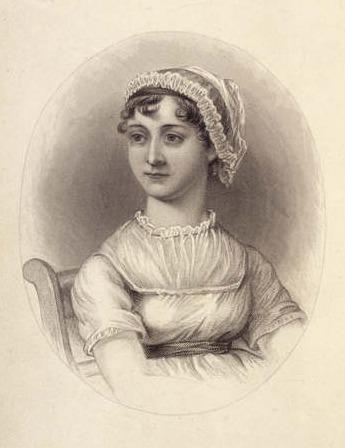
Img: 1869 engraving of Jane Austen, based on a sketch by her sister, Cassandra Austen (WikiCommons)

RETURN TRIP: Even in Paris, expats can’t escape former lives: A celebration of displaced novelist Corine Gantz

As summer draws to a close, The Displaced Nation is reissuing some posts that, for one reason or another, have enchanted our readers. Enjoy these “return trips”!
This past spring, The Displaced Nation interviewed Corine Gantz, a popular expat blogger, about her newly published novel, Hidden in Paris. The action centers on a group of expat Americans trying to start their lives afresh in the City of Light. At that time, TDN was exploring the theme of Gothic Tales. We wanted Mme Gantz to tell us more about the premise at the heart of her book — the idea that people travel to other lands to escape their former lives. How does it usually play out: as a dream come true or as a recurring nightmare?

The Displaced Nation has been examining the “gothic” side of expat life over the past couple of weeks. Thus it may seem odd that today we have chosen to celebrate a book that takes place in La Ville-Lumière (“The City of Light” or “The Illuminated City”) by an author who lives near the City of Angels.

But looks can be deceiving — and the cover of Corine Gantz’s debut novel, Hidden in Paris, is quite a cunning ruse. It shows a Parisian balcony with French doors reflecting the Eiffel Tower, and a flower box bursting with hot-pink geraniums. What could possible be amiss within such a picture-perfect setting, you may wonder? Plenty, it turns out.

But before we get into that, let’s begin our fête in honor of Mme Gantz and her book. To put ourselves in the proper mood, we have prepared a special cocktail, a French 75. We’ve also gone all out with our canapés. There’s a savory gougère, brie en croûte, duck rillettes, chilled asparagus with mustard sauce, a Puy lentil salad — and, in honor of Mme Gantz, her family favorite, taramasalata on toast (see her father’s recipe below).

Okay, seats, please! Our honored guest has agreed to kick off the festivities by answering a few questions from The Displaced Nation team. After that, the floor is yours, dear reader.

Hidden in Paris coverYour new novel, Hidden in Paris, may not tell a gothic tale per se, but we think it relates to our theme because it centers on three women who are running away from their lives. Is that a fair assessment?
People who say they love to be scared amuse me. They have a fascination with horror flicks, they read vampire books, they ride roller coasters. Yet they might be the same people who walk great circles around a pile of bills or make every effort to avoid a difficult phone call. What can be scarier than real life?

I think there is a limit to what we can handle, and at some point the tendency is to want to run way, literally or figuratively. In Hidden in Paris three strangers — all American women — have reached the point of terminal discomfort, when tackling real issues feels more terrifying than running away abroad.

Lola is running away from her husband, Althea from an eating disorder, and Annie, although she pretends to be the most high functioning member of the group, is hiding the biggest secret of all. (Just to add some spice, there is also a male character, Lucas, who is hiding his love for Annie.)

People often fantasize that “elsewhere” — particularly Paris because of the attached notion of romance — will solve their problems, or at least make the problems go away for a while. Well, we long-term expats know better. Moving to another country brings great logistical changes to one’s life, which can distract you into thinking you’ve left your pathos behind, when, in fact, you’ve brought it along in your suitcase. Wherever you go, you bring your own personal gothic tale with you.

In the case of these three female characters, the disruptions to their routines, along with new encounters, bring them to the tipping point toward change.

The thing is, as in real life, my characters fight the change they need kicking and screaming, which makes for fun story telling.

Food is another obsession of ours at The Displaced Nation. We detect from reading an excerpt from Hidden in Paris that it also plays a big role in your book.
You detect correctly. For me, writing a novel is a barely disguised way for me to talk about food — the novel being a vehicle for food just as grilled toast is a vehicle for foie gras.

I grew up in France on my mother’s terrific cooking. But she is the type of cook who wants no help in the kitchen, so at age 23 I arrived in the United States never having cooked an egg. I was terribly homesick and depressed and needed to “taste home” again — so had no choice but to teach myself how to cook. The saving grace was that I had a copy of a recipe book filled with my mother’s recipes, so I proceeded to recreate the food, and jolly myself out of my depression. Cooking gave my life a purpose: it became my creative outlet.

I think the preparation of food can be extremely healing, meaningful and joyful. Food is, after all, the soul and spirit of a home. I enjoy cooking as much as I enjoy eating, and when I’m not doing one or the other I’m telling stories where food turns out to be one of the principal characters.

You are a Française who has been “displaced” to the Los Angeles area for a couple of decades, where you live with your American husband and two sons. Does your novel echo that experience?
Had I landed on an alien planet I doubt I would have been any more confused and out of place. I understood none of the codes, none of the cultural references, of Los Angeles. I could not understand people or express myself — and I resented them for that.

Writing sprouted from this: the frustrated need for self-expression and communication. Like my protagonist, Annie, I had to figure out how to function, and I would be lying to say I functioned well. Also like Annie, I resisted my country of adoption for years. I did not have both feet in it. A part of me felt in limbo: I was standing by for my eventual return to my home country.

Twenty years later I don’t even feel French anymore, but no one here lets me forget I’m not American either. Americans seem fascinated with my Frenchness, as though it defines me. For example, it’s often about how I say things rather than what I say. Yesterday I was saying to a friend: “On the envelope my husband gave me for mother’s day there was a…” She interrupted and said: “Could you repeat that?” I repeated and she fell into peals of laughter: “I just love how you said the word ‘envelope’!”

In Hidden in Paris, I wanted to transpose my experience and reverse it. I wanted to bring American women to France and see how well they coped with that set of codes and cultural idiosyncrasies. That’s only fair, don’t you think? I’m a little miffed to report that they are more adaptable than I was.

You have a popular blog, Hidden in France, where you’ve been entertaining Francophiles and others with stories of the writing life, décor, food, family, travel and all things French. In fact, The Displaced Nation has featured one of your posts — about the time you fell into your swimming pool when the first day of spring brought heavy rains to the LA area. Tell us, has your blog had an influence on your writing? Also, why have you chosen the trope “hidden in”?
The blog has everything to do with my writing. Before the blog, I was a closet writer, ashamed that my English was too imperfect. The blog gave me a sense of just how forgiving and supportive readers were. I have readers now, and I have fans! Had I based my self-worth as a writer on agent rejections, I would have changed my hobby to fly-fishing. Readers are what make someone a writer.

The word “hidden” is significant only in the sense that I was hiding for years behind an alias as a blogger, and I just recently came out as writer for the world to see (speaking of fear…).

When it came time to settle on a title for the book, it felt natural to give it the same title as the blog — but I decided against it because there was already a memoir by that name. So Hidden in France became Hidden in Paris.

Finally, The Displaced Nation supports a fictional character, Libby, who is about to move from London to Boston with her husband. Do you have any advice for her?
Well, how about if I let my own fictional character, Annie — who moved from Boston to Paris to follow her own husband twelve years ago — speak to Libby directly:

Don’t do it, Libby! Kidding! Well I would suggest you have more babies, some siblings for your son, Jack, and fast. They will keep you busy and busy is the name of the game: no time to think! And if you decide against having more babies, then take on a hobby (such as cooking and eating) to keep your sanity without demanding that your husband become your everything for companionship, friendship and intellectual stimulation.

Don’t be like me in other words. Don’t forget that the man has a job and he is tired at the end of the day and nobody needs a needy wife. (Sorry for the harsh words, Libby, but this is the truth.)

You could also take a run-down house and remodel it. I did. You will have no skin left on your fingers but lifting bags of concrete makes for pretty shapely biceps. The remodeling might bring you to financial ruin but if that becomes the case, you will always have eating, which you can become very good at.

Without further ado, let’s pour the champagne for a toast to Corine Gantz. Tchin-tchin! And now, patient reader, it’s your turn. Questions, please, for this très gentille debut novelist… If you want to check out her book a little more, go to her author’s site, and to buy it, go to her Amazon page.

Taramasalata on toast — Corine Gantz’s family recipe
You will need:

  • one packet of smoked cod roe (seriously, can you even find this in the US?)
  • 8 tablespoons safflower oil
  • 2 tablespoons lemon juice.

Mix fish roe and lemon juice, then slowly beat with a fork and add the oil as you would do to make mayonnaise.Spread thinly on toasts and serve with very good champagne, et voilà! Très festif.

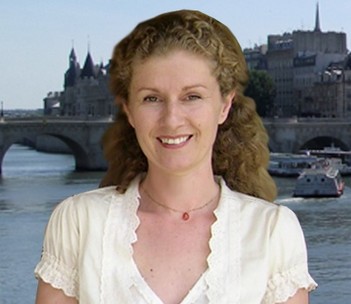
Images: Author’s photo; Hidden in Paris cover, artwork by Robin Pickens.

If you enjoyed this post, we invite you to subscribe to The Displaced Dispatch, a weekly round up of posts from The Displaced Nation, plus some extras such as seasonal recipes and occasional book giveaways. Sign up for The Displaced Dispatch by clicking here!

Related posts:

LIBBY’S LIFE: The first three episodes

It’s Life, all right, but not as I know it

April 1
Why is it, just as you get Life under control, Life decides you’re too complacent by far and snatches your security blanket away? And not only snatches it away, but rips it down the middle, throws it in a muddy puddle, and stamps around on it for good measure? Then Life hands you back the pieces and says, “How much in control do you feel now, Libby?”

Three months ago, after a Christmas spent pandering to everyone except me and receiving an assortment of kitchen gadgets instead of the anticipated spa- and nail salon gift vouchers, I decided Enough Was Enough.
This year, I vowed, as I stowed away a new banana slicer and mini-vac, I would no longer be merely “Jack’s Mummy”. No longer would I hand Oliver his packet of sandwiches in the morning and brush a hair from his suit collar, as if I were an extra in I Love Lucy.
This year, I promised myself, I would reclaim an identity that vanished three years ago in a maternity ward in Milton Keynes.
This year, I said, Libby Patrick would return.

Until last night, my pre-motherhood persona was making progress in her resurrection. I had my hair cut and my nails done. I chucked out grey nursing bras and went shopping in Debenhams’ lingerie department. I had lunch with my old boss who told me she would personally kill a fatted calf in celebration of my return to the office.
Then, last night, all progress stopped.

“The company wants me to take a job in another department,” Oliver announced over dinner.
Dinner is supposed to be a time when family members catch up with one another, but as any parent of a two-year-old knows, reality doesn’t work that way. While Oliver recited details of which job in what department, I was only half-listening, more concerned with stopping Jack from feeding Marmite toast to Fergus, our gluten-intolerant dog. So my response to Oliver was something like, “Lovely-darling-and-don’t-even-think-about-it-Jack” before grabbing Fergus by the collar and dragging him into the study where, with a bit of luck, he would eat final demand electricity bills instead.
This half-attention is all too common in our house, and it makes me feel guilty. I try not to feel guilty, but as a stay-at-home mother at present, I must be more supportive of my husband. Or that’s what my mother tells me. God knows what she was doing in the 1970s while other women were burning their bras. Out shopping for whalebone corsets, I imagine.
Oliver, naturally, is all in favour of the idea of supportive wives, and unashamedly sucks up to my mother to get her support as well. He once sent me an email, supposedly a page from a 1950s magazine, telling housewives how to treat their husbands properly. You’ve probably seen it. Wives are advised to hand their husbands a G&T the minute they walk through the door, tidy the children up and the toys away – or perhaps it’s the other way round – and to shut up while Hubby speaks because his opinions are more important. Oliver claimed the email was a joke. I told him it might have been, had I been employed and salaried, but right then, with baby-sick permanently welded to my shoulder, it wasn’t funny and Oliver was fooling no one. Millennia of male chauvinism can’t be wiped out by Harriet Harman, whatever she thinks, or by a few charred Cross Your Heart foundation garments.
But back to Oliver’s announcement. Once I was reseated at the table, Oliver said, “You didn’t hear what I said, did you, Libby?”
“Yes, I did.” I handed Jack a fresh triangle of Marmite toast. He mushed it into a ball and chucked it at the window behind me, where it stuck for a second before sliding down, leaving a greasy trail. “HR wants you to transfer.”
Oliver waved his hand around in a circle. “And…?”
I thought. “And you’ll get a pay rise?” I said hopefully. With his pay rise and my new job, we’d be able to go on holiday this year.
“Plus a relocation package.”
I stopped persuading Jack to eat, and stared across the table at Oliver, who seemed satisfied now he’d got a reaction.
“Relocation package? Relocation to where?” Most of the company’s offices are in Britain – with one exception. Please let it be Birmingham. We wouldn’t have to move house because Oliver could commute. Or Liverpool…or heck, even Aberdeen is commutable these days.
“The Massachusetts office,” Oliver said. “We’ll talk about it.”

And that was the point when Life snatched away my security blanket, hurled it in a swamp, and danced the mashed potato on it.

April 5
We’ve spent the weekend talking about this hypothetical move to America. Well. I say “hypothetical” but it isn’t. And I say “talking” although it isn’t really that, either. Oliver appears to have done most of the talking already with the Relocation Manager in his Human Resources department. (What happened to Personnel Departments? Have we come so far down the line of political correctness that we can’t acknowledge we have personalities?)
So when Oliver promised we’d talk about it, he meant we would talk about the after-effects of the decision, not the decision itself. That seems to be settled and all over, bar the shouting.
Bar the shouting wife.
“It’s a great opportunity,” Oliver says. “One of those chances you’ve got to take in life.”
“But what about me?” I say. “What about my life?”
Now I know how Jack feels during his tantrums. I want to lie on the carpet and kick and scream and shout “No! No! Go away!”
“You’ll have a lovely life. All the wives do.”
“But none of them go to work,” I say. “They’re not allowed to.”
“Why would you want to go to work when you can be at home with Jack?”
I think of my new haircut and freshly accumulated wardrobe of crisp work attire, and murmur, “Oh, I don’t know. Dignity. Independence. Self-worth. Stuff like that.”
Oliver stares at me for a while.
“I don’t understand.”
No. I know he doesn’t.
Instead of lying on the floor and shouting at him to go away, I lie on the sofa and cover my face with a cushion. It’s almost as good.

“We’ll live in a little town near Boston,” Oliver says when my rate of used tissues per minute has slowed. “You know Boston. It’s where the Cheers bar is, and where they filmed Ally McBeal. You love both those programmes.”
I tell him that he loves watching EastEnders, but he wouldn’t want to move to Walford.
He gives me a withering look. “Walford’s a made up place. It’s not real.”
“More real to me than Boston.”
“It wouldn’t be permanent,” Oliver says. “Think of it as a two-year holiday.”
This is pretty rich, coming from him. If I had to pick one characteristic in Oliver that I’d happily trade (excluding spur-of-moment, unilateral decisions to emigrate) it would be the homing pigeon tendencies. He gets culture shock if he goes farther north than Leicester. Take him to Spain and he’ll make a beeline for all the restaurants whose menu items end with “‘n’ chips.” We went to Disney World in Florida the year before Jack was born, and Oliver insisted on wearing his Beckham football shirt everywhere. Well, he and the rest of English-accented Orlando.
I didn’t intend to play the trump card so soon in the game, but my options are running out fast.
“You do know,” I say, “that they don’t sell roast chicken-flavoured crisps over there? No Quavers or Skips? No Hula Hoops?”
Oliver opens his mouth as if to say something, then shuts it again. For a moment, he looks uncertain. Is it possible our future teeters upon a specific combination of E-numbers and MSG?
Then he smiles; an indulgent smile, the sort I give Jack when he’s done something unbearably cute and naïve, and I know that even the threat of no Skips or Quavers to satisfy the midnight munchies isn’t going to work.
“Libby, love. It’s Boston. They have their own fantastic food. We don’t need chips.” Chips? Lord help us. He’s into the lingo already. “There’s lobster and crab cakes, and – what’s it called? Clam chunder.”
Not quite into the lingo, then.
“Chowder.”
“Whatever. My point is, who needs crap like prawn cocktail crisps when you can have the real deal fresh from the ocean there?”
I shake my head, resigned, knowing our fate is decided for the next two years. Oliver is basing a three-thousand-mile upheaval on…seafood.
And oh. Did I mention he’s allergic to fish?

April 19
Oliver and I are keeping quiet about the move until plans are definite. We each have different reasons; he doesn’t want to lose face if it doesn’t happen, and I want to pretend it won’t happen at all.
It’s ironic, the way we’ve switched roles. I used to be the one who liked going abroad and trying new food, whereas he’d eat burger-au-E-coli twice a day for a fortnight rather than pollute his digestive system with local cuisine. Once, in Ibiza, I tried to get him to eat a piece of morcilla. “Oooh, no, not that foreign stuff, thank you,” he said, shuddering as if he was a contestant on Fear Factor and I was trying to tempt him with deep-fried cockroach. Thing is, he didn’t realise it was Spanish sausage. He thought it was black pudding. Lancashire black pudding was foreign enough for Oliver.
But now it’s me dragging my heels about going abroad, while he’s suddenly turned into Gordon-bleeding-Ramsay, evangelising about fresh local produce that brings him out in a rash.
Calm. Breathe.
It’s difficult to keep this a secret, though. Take today, when Jack and I are at playgroup.
Carol Hunter corners me as I’m struggling to get Jack’s coat off.
Carol’s the sort of woman you’re glad to leave behind in the office rat race when you go on maternity leave. You think you’re entering a cocoon of babies, teddy bears, and Johnson’s products, unsullied by bossy women with expensive highlights. Then you discover these women have not only infiltrated your baby-powdered haven but established their own Mafia, ruling the playgroup, PTA, and school governing board.
Carol’s the Don of the local ring.
“Libby,” she says in a confidential tone, gripping me by the elbow in case I make a run for it. “Libby. We need to talk about your volunteer record. It’s somewhat…threadbare.”
Oh, hell. Everyone with a child in playgroup is supposed to sign up to help on a regular basis. That’s the idea. But what actually happens is you volunteer once or twice, spend two hours smiling through gritted teeth while Carol or one of her captains micromanages you in the art of finger-painting, and then forever after keep a low profile when volunteers are needed. There’s a lot of Mafia moaning goes on about it, of course. Usually over skinny lattes in Starbucks, while their little darlings sprinkle brown sugar packets on the floor, about how it’s always the same people who do all the work, and how this playgroup wouldn’t survive if it weren’t for Carol and her chums. But you ignore it. These women used to get their kicks playing the office martyr in their pre-baby lives, and they’d hate to be deprived of their sackcloths and ashes now.
“You’ve only done three sessions since last October,” Carol goes on, clamping down harder on my arm. “Can I put you down for the Play-Doh table next week, with Angie? Then two sessions in May, and a couple in June?”
I cough. “All with Angie?” Frankly, I’d rather sign up for evening classes in embalming than for six playgroup sessions with Captain Angie, who can’t go five minutes without dropping into conversation that she went to school with Supernanny’s cousin.
And then it strikes me. “Tell you what,” I say. “Let’s make it easy. I’ll do all of July, twice a week, until the schools finish for summer. Six sessions. How’s that?”
Carol opens and shuts her mouth a few times, but no sounds emerge, which is pretty satisfying. It’s not often she’s lost for words. No doubt she’s been revving up for a big fight about this, probably culminating in a hit job in Starbucks. Remind me to check the cisterns for firearms next time I’m in there.
“Fan-tast-ic,” she eventually murmurs, and wafts off to persecute a new mother of twins.
It’s all I can do to stop myself from shouting, “Because come July, Carol, I will most likely be eating lobster on the other side of the Atlantic, and not even you and your molls will be able to drag me back to the Play-Doh table.”
It’s as good a reason as any to emigrate, I suppose.

Want to read more? Head on over to Kate Allison’s own site, where you can find out more about Libby and the characters of Woodhaven, and where you can buy Taking Flight, the first year of Libby’s Life — now available as an ebook.

If you enjoyed this post, we invite you to subscribe for email delivery of The Displaced Dispatch, a round up of the week’s posts from The Displaced Nation. Sign up for The Displaced Dispatch by clicking here!

Image: Travel Map of the World by Salvatore Vuono / FreeDigitalPhotos.net

RETURN TRIP: 5 lessons Wonderland taught me about the expat life, by Lewis Carroll’s Alice

August is finally drawing to a close — we hope you managed to have an enchanting time of it. Here is one more in our series of “return trips” to posts that, for one reason or another, enchanted our readers. Enjoy!
All three members of The Displaced Nation team have found Alice, of Wonderland and Through the Looking-Glass renown, a source of inspiration on our travels — seeing her as a kind of ultimate expat. Thus we decided to dedicate the month of June to Lewis Carroll’s “little heroine.” Kate Allison launched a series of posts on our Alice in Wonderland theme with 5 “lessons” Alice had allegedly learned from her adventures. It remains one of our most popular posts to date.

To kick off our Alice in Wonderland theme, we asked Alice if she had any advice for today’s Displaced Person:

*

Indeed I do. It might be many years since I fell down the rabbit hole, but human nature hasn’t changed. This is a little of what I learned:

1. Keep the golden key in your pocket at all times, and make a note of the emergency exits.

In another moment down went Alice after [the White Rabbit], never once considering how in the world she was to get out again.

My first mistake was to plunge down the rabbit-hole without planning ahead. The adventurous life is all very well, but it’s good to have a bolt-hole, as well as a rabbit-hole, when you need to escape to the old and familiar.

My second mistake was to leave the key on the glass table before drinking from the bottle marked “Drink Me.” In your vernacular, that’s like buying a return ticket home for this evening, then discovering your passport expired six months ago. Be prepared for the unexpected, the peculiar, and the almost impossible.

2. No matter how hard you try contrariwise, at some point you will offend someone.

Evidently Humpty Dumpty was very angry… “It is a—MOST—PROVOKING—thing,” he said at last, “when a person doesn’t know a cravat from a belt!”

Oh dear! If only I had a shilling for every time I inadvertently offended one of the creatures in Wonderland and through the Looking Glass! Not knowing Humpty Dumpty’s neck-wear from midriff-wear; my compulsive mentioning of cats and dogs in the Mouse’s presence without considering that he and I might have a different perspective of these animals…the list went on and on.

In the end, I think the Red Queen’s advice was the best:

“Always speak the truth—think before you speak—and write it down afterwards.”

But still, I couldn’t help thinking:

“I wish the creatures wouldn’t be so easily offended!”

3. “The rule is, jam to-morrow and jam yesterday — but never jam to-day.” Different country, different rules.

The Queen of Hearts was the worst example of this:

“No, no!” said the Queen. “Sentence first—verdict afterwards.”

I suggest if you are ever in this situation yourself, you employ more tact than I did. “Stuff and nonsense!” I said. “The idea of having the sentence first!”

Perhaps today a quick telephone call to your country’s embassy might be better.

Better still, acquaint yourself with the country’s rules before you go jumping on aeroplanes or down rabbit holes.

4. Go to a party or a Caucus-Race — don’t drown in your own tears.

“I am so VERY tired of being all alone here!”

The Caucus-Race proved to me that I could make friends with the most unlikely companions.

After a few minutes it seemed natural to Alice to find herself talking familiarly with them, as if she had known them all her life.

If you feel alone in your new environment, seek out company, even if it’s not the kind of company you’re used to. You might find your life is richer for it.

5. And finally: Keep a note of your name in your memorandum-book.

“Who are YOU?” said the Caterpillar.

Alice replied, rather shyly, “I—I hardly know, sir, just at present—at least I know who I WAS when I got up this morning, but I think I must have been changed several times since then.”

I spent a great deal of time in both countries wondering who I was now. Was I my little friend Ada, or Mabel, perhaps?

Tweedledum even suggested I wasn’t really there at all.

“You’re only one of the things in his dream. You know very well you’re not real.”

“I AM real!” said Alice and began to cry.

Take a tip from me and write your name in a memorandum-book. Then keep a journal.

That way you will always remember who you were on any particular day.

And one day, people might read about you as they do about me.

*

Thank you, Alice!


If you enjoyed this post, we invite you to subscribe to The Displaced Dispatch, a weekly round up of posts from The Displaced Nation, plus some extras such as seasonal recipes and occasional book giveaways. Sign up for The Displaced Dispatch by clicking here!

Related posts:

Budding Slavophiles, welcome to my kitchen’s-eye view of Russia

As we learned from her Random Nomad interview with us in May, Charlotte Day is torn between three countries: Australia, USA, and England. As if this weren’t enough, it turns out she harbors an obsession with Russia, going back to when she discovered classical Russian novels in 8th grade. Here she spins a travel yarn about the her month-long sojourn in Saint Petersburg this summer, where she studied Russian language while living with a homestay family. So, did the real Russia live up to Charlotte’s expectations, or had her overactive imagination led her astray? Let’s find out…

Bolshoi Kazachiy Pereulok is not a notable St Petersburg street. It is a bent elbow between Zagorodniy Prospekt and the Fontanka embankment.

Emerging from Pushkinskaya metro station, one walks past a travel agency of sorts, a faded basketball court and Kazachiy Bani, a green-tiled 24-hour bathhouse from which emerge oiled men, rubbing their hair with threadbare towels. Peering through the open door, one can just about discern a gleaming ticket window, half plastered over with out-dated rate notices.

In the crook of the elbow stands Number 9, a magnificent turn-of-the-century apartment building, with geraniums tumbling over the serpentine-patterned grilling of occasional balconies. The building’s green façade, tinged as if by an eternal sunset, smiles mournfully over the street — watching as beer bottles clink and smash on the pavement, cats stalk along beneath decades-old cars, and the high gates open and shut in a kind of eternal song.

The plaque outside Number 7 reads: “In this building lived and worked Vladimir Ilich Lenin,” and on a rack beneath, three red carnations wilt.

I lived for a month at Number 5 — past the automated bell at the gate; through the courtyard, painted a warm, yet exhausted, yellow; up the shallow, concrete steps; and behind two locked doors — in the home of Nadezhda Skarinova, her husband, Kirill, and their son, Vladimir.

Striking up an acquaintance with the Skarinovas

While in theory I shared a home with entire family, the two male Skarinovs managed to be absent for the majority of my stay. Kirill, a chemical engineer, offered a smile — sometimes a privyet (hi) — whenever we met in the hallway.

But as he left for work as I was getting up, and had dinner immediately upon returning home at 6:30, we saw very little of each other.

Vladimir, or Vova, had been a source of much speculation before I set off — in the way that only unknown 21-year-old sons can be — among my well-meaning friends and relatives. (I am only sixteen.)

But he turned out to be largely taciturn, spending his days facing a computer screen (he was studying to become a programmer).

We had one two-sentence exchange — when he helped me down with my suitcase, on departure.

The only stories I can spin about my month in Petersburg involve minutiae. Such had been my idea of the perfect adventure before I left for Russia, in anticipation of what it would be like to be free from parental dictates for the first time.

Indeed, I did very little.

Not prone to escapades, I spent my evenings, after class, wandering along the Griboedov Canal Embankment (where I saw a drowned corpse—lying, swollen, neglected, and only haphazardly covered by a tarpaulin), or taking the metro into a far-flung, neglected suburb to spend ten minutes looking at an exquisite church.

But if my journey had less geographical displacement than those of most adventurers, my nightly dinner conversations with Mrs Skarinova made up for the lack by advancing me along the path of greater understanding of that strange thing — Russia.

A series of stove-side conversations

The first time I heard a bang on my bedroom door, and a gruff mozhno uzhinat? (roughly, “is it possible to have dinner?”) at 8:00 p.m., I hurried a nervous da, closed my book, and sidled into the kitchen.

The news was on, as it would be every subsequent evening — the twin anchors of channel Rossiya speaking too quickly for me to understand, their journalistic jargon blending into an unvarying mumble.

There sat Nadya, looking terribly bored, with large bags under her eyes. She poured me some tea from the eternal teapot. (Russians make tea by brewing a pot, which can keep, it would seem, for over a week—and then pouring a small amount, diluted with hot water, into your cup.)

Kuritsa — normalno? She presented me with a plate. As it was chicken, I nodded in assent.

Sitting down opposite me, shelling sunflower seeds — aimlessly, it seemed — she began to comment on the news.

Before I knew what had hit me, we were traipsing through the hardships of the 1990s — lining up outside an empty supermarket, clutching a prescription for baby formula. Mothers would rush from work during their lunch breaks, Nadya said, to secure a ration of bread for their family’s evening meal. And she’d had to bring up the infant Vova without the help of her mother — who died in her early sixties, from exhaustion.

And this was not the only thread Nadya spun over the course of our four weeks together. Another was the Orthodox Church. Her grandmother, who had lived through both world wars and the Russian Revolution of 1917 — and consequently wasn’t afraid of anything — spirited her granddaughter off to a church to be baptized, at a time when any hint of religion could make you a social pariah.

As a member of the Komsomol (“because everyone was in the Komsomol then”), Nadya hid her crucifix under her pillow. She told me that when religion resurfaced after the collapse of the Soviet Union, young couples longing for a church wedding were in a dilemma. How could they know if they had been baptized or not? Perhaps their grandmothers, like Nadya’s, had had it done in secret.

Nadya scowled as Patriarch Kirill appeared on the screen, leading a service in Kiev. His cardinal offense was the purchase of an expensive designer watch, several years back.

Many don’t like Patriarch Kirill so much… I’m an Orthodox person, but Patriarch Kirill… And he’s just one of the problems: for instance, why did they have to make Tsar Nikolai* a saint? What did he ever do? In his youth he was just a normal young man — women, alcohol, all that. What should I pray to him for? And his wife? Nothing wrong with her — German princess, worked in hospitals… And her little boy had that illness. But go to church and ask them for help? Yes, it was a tragedy, a crime — to kill all those children, too. Yes, the revolution oughtn’t to have happened. But Nikolai II a saint?

*With his family, Tsar Nicolas II, Russia’s last emperor, was recognized as a martyred saint and canonized as a passion bearer by the Russian Orthodox Church in 1981.

A samovar too big for the kitchen

On my last night in Petersburg, Mr Skarinova came into the kitchen bearing a large 1830s, wood-burning samovar — complete with chimney.

Nadya was not certain about this new addition to their lives.

It’s going to the dacha. No question about it. Wouldn’t fit in the kitchen anyway. And what am I going to do with a samovar like that? Put it in the bathhouse — na dachye. There’s no electricity in there.

The family had been to their dacha — a few hours south of the city — once while I had stayed at their apartment. They came back laden with berries: bitter and smelling of evergreen.

“All the men want to do there is drink,” Nadya told me one night. “I personally don’t drink — only wine. But Kirill…”

And another evening —

At least Kirill’s never come home drunk in the evenings. On holidays, yes — New Year’s… But the rest of the time — I don’t tolerate that sort of thing. What would have happened with Vova, a child, if dad kept coming home drunk? But it’s a common thing…

And judging by the beer bottles littering the street every morning when I walked to school, I doubt not that it is.

But this seems a catalogue of complaints — when my own experience of Russia was quite the reverse.

There was a moment when, crossing the Neva River on my last evening wander, I saw the spectral moon, blooming into fullness over the Winter Palace embankment.

And faced with that glut of unabashed beauty, I made an inarticulate noise — half of despair, half of exaltation — as people do in Russian novels. (It was only my English reserve keeping me from falling to my knees and weeping: the truly literary gesture.)

As it was, I left the next day feeling I would like to spend the rest of my life in Petersburg. But before I advance any further along that path, I must brave a winter without being killed by a falling snow drift. (“It happens,” says the Voice of Wisdom…)

But no matter how many tracks I beat in Russia, it is somewhat sobering to think of Nadya sitting, through endless reports of train crashes, patriarchal visits and state holidays, in that desperately uncomfortable chair, shelling sunflower seeds and passing the time.

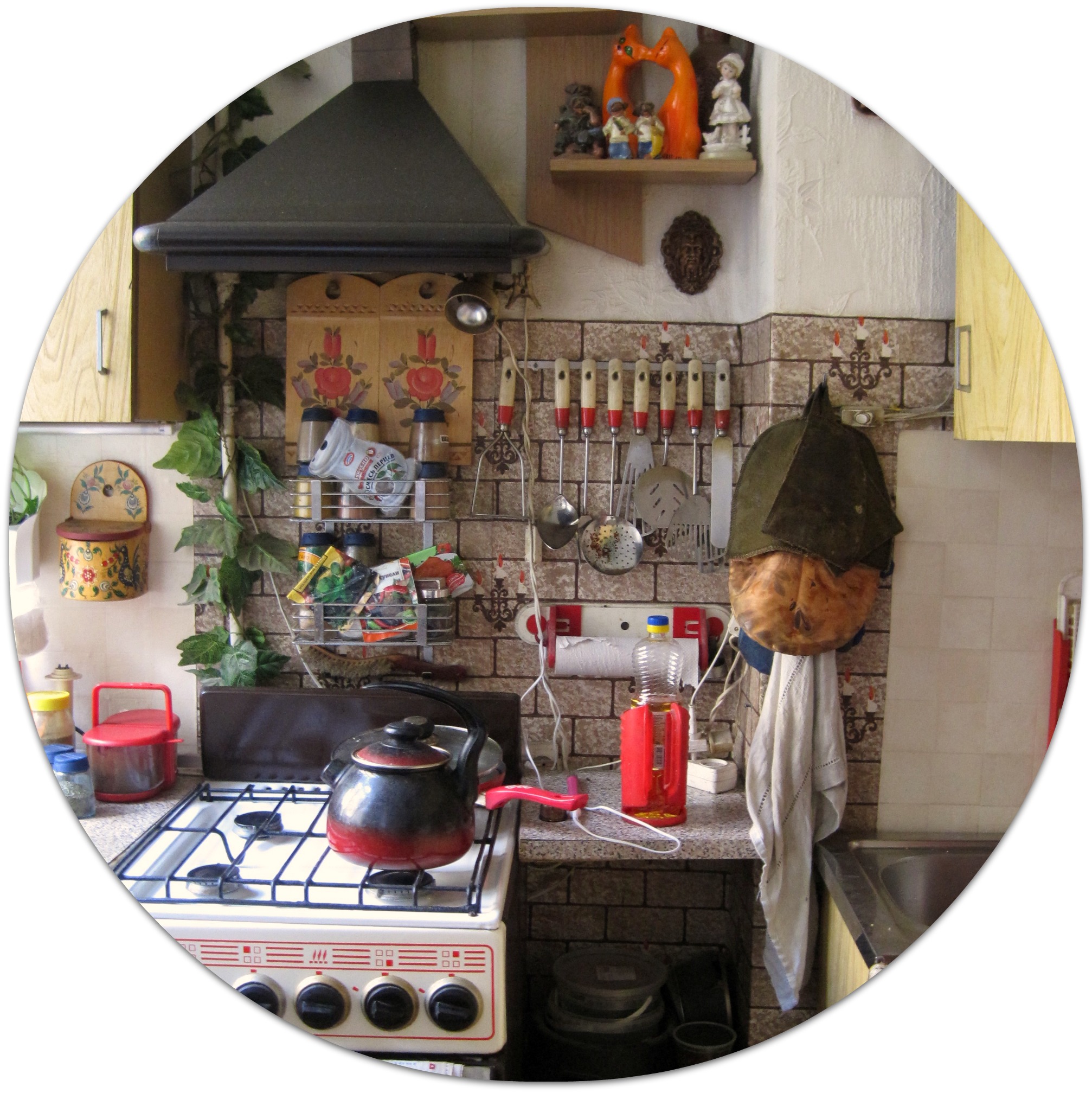
img: The Skarinova kitchen, where Charlotte’s nighttime chats with Nadya took place.

STAY TUNED for tomorrow’s post taking a parting glimpse at summer’s millinery enchantments, by our Alice awardee Sebastian Doggart.

If you enjoyed this post, we invite you to subscribe to The Displaced Dispatch, a weekly round up of posts from The Displaced Nation, with some fun extras such as seasonal recipes. Sign up for The Displaced Dispatch by clicking here!

Related posts:

RETURN TRIP: Random Nomad – Charlotte Day, High School Student (Sixth Former)

While our writers take off on what they hope will be enchanting August breaks, The Displaced Nation will occasionally be reissuing some posts that, for one reason or another, enchanted our readers. Enjoy these “return trips”!
As youngsters head back to school, we’re reissuing a Random Nomad interview ML Awanohara did with Charlotte Day, a displaced teenager in England. Charlotte spent a chunk of her summer taking a Russian-language course in St. Petersburg and living with a Russian family. She has produced a travel yarn on her adventures, which will appear on Monday.

Born in: Sydney, Australia
Passports: Australia, UK and US Green Card
Countries lived in: Australia (Sydney): 1994-2001; United States (New York, New York): 2001-2010; England (Sevenoaks, Kent): 2010-present

What made you leave your homeland in the first place?
My father is Australian and my mother English. They split up when I was two. When I was six, my mother met and married an Australian who had been living in New York for thirty years. I was rather disgruntled about moving to the United States and for two or three years, remained determined never to accept it as “home.” At that time, I was deeply patriotic to my native country — though this sentiment has dissipated since.

Is anyone else in your immediate family a “displaced” person?
My mother’s family, originally from England, has long been displaced. My mother herself was born in Kenya, in 1961. Following the Mau Mau Uprising, her parents were forced to relocate, and my grandfather, presented with a choice between Australia and Canada, chose the warmer of the two countries. My mother spent her childhood bouncing between schools in England and Australia. She eventually grew so fed up with packing and unpacking, she decided to leave school at the age of 16. Her father agreed to the plan provided she spend a final year at the school in Switzerland his own mother had attended as a girl. My mother moved on from Swiss finishing school to work in London, Paris and Sydney. But she appears to have made New York her last port of call. Indeed, we had a fairly solid life in the city until I decided to take myself off to boarding school in England.

Describe the moment when you felt most displaced over the course of your many displacements.
It must have been when I first arrived in New York as a six-year-old. I stepped out of the JFK arrivals terminal into a snowy March night. My stepfather was wearing a leather coat, the interior of his car smelled of leather — and the world outside the car window seemed an undulating stream of black and silver. Though it was the end of 2001’s warm winter, my Australian blood froze beneath my first-ever coat. And their apartment — that was all leather as well. It smelled of musk and cologne. Since that time, I have felt similar pangs of displacement, some of which lasted for considerable periods. But those first few moments in New York stand out as the most acute concentration of “displacedness” I have ever known.

Describe the moment when you felt least displaced.
For the last five or so years in New York, I have felt more at home than I ever did in Sydney. I ascribe this to growing up: at a certain age, one can take possession of a city, know its streets, bridges, tunnels and transportation system. I was too young when I lived in Sydney to reach that kind of comfort level. But when have I felt the most like a New Yorker? Perhaps it was the last time I came home for the holidays, and took the 4 train uptown for the first time in months. At that moment I realized how much this train had been a part of my life — conveying me home from school every day for two years. My old life would always be waiting for me on the subway, ready for me to pick it up again. That’s something only a New Yorker could say!

You may bring one curiosity you’ve collected from each of the countries where you’ve lived into the Displaced Nation. What’s in your suitcase?
From Australia: A miniature wooden wombat figurine — a gift from my grandfather. It conjures memories of a childhood spent beating about the bush (literally) and fishing for yabbies at the dam in the company of audacious dogs who stuck their heads down wombat holes, to no good end.
From New York: A pair of fake Harry Potter glasses. These defined my first six months in New York — I even wore them to my first day of school. I think it is telling that even at the age of six, I was unwilling to give all of my real self to this new home.
From England: My school tie — representative of the alternative universe I seem to have entered. At boarding school, the sense of removal from reality can be disconcerting — especially after having spent a decade in the city I regard as the world’s capital.

You’re invited to prepare one meal based on your travels for other Displaced Nation members. What’s on your menu?
I’d like to make you a Sydney breakfast: scrambled eggs, made with cream, salt and pepper and served on a bed of Turkish toast, with avocado and stewed tomato on the side (is this being greedy?). Our meal will be accompanied by a large “flat white”: what we call perfectly strong, milky coffee without excessive froth. I suggest we consume it overlooking a beach on a Sunday morning. At least, I assume The Displaced Nation has beaches?

You may add one word or expression from each of the countries you’ve lived in to The Displaced Nation argot. What words do you loan us?
From Australia: Daggy. I use this word all the time — and did not realize it was exclusively Australian until I was informed of the etymology. Apparently, it comes from trimming the soiled wool around a sheep’s bottom. Which part of this repugnant whole is actually the “dag,” I do not remember. (No, I’m not a proper Australian!) But as I understand it, “daggy” means sloppy in appearance or badly put together.
From New York: There are so many words, and most are second nature by now. However, I will choose grande-soy-chai-tea-latte because I still shudder to think of myself as the kind of person who can utter such a phrase, at great speed, with great insistence. In fact, I’m still in denial about my love for Starbucks: having known Sydney coffee, my standards should be higher.
From England: Banter. I still do not know the precise meaning of this word, but it seems to encapsulate everything that makes someone my age feel socially acceptable — and, of course, I have no banter whatsoever. I think it means the capacity for combining wit with meaningless conversation. But there are other components, too, which seem to me unfathomable.

Question: Readers, tell us what you think: should we welcome Charlotte Day to The Displaced Nation and if so, why? (Note: It’s fine to vote “no” as long as you couch your reasoning in terms you think we all — Charlotte included — will find amusing.)

img: Charlotte Day at her boarding school in southeast England

If you enjoyed this post, we invite you to subscribe to The Displaced Dispatch, a weekly round up of posts from The Displaced Nation, plus some extras such as seasonal recipes and occasional book giveaways. Sign up for The Displaced Dispatch by clicking here!

Related posts: