The Displaced Nation

A home for international creatives

CAPITAL IDEA: Paris: A quick guide

Welcome to another “Capital Ideas” – our somewhat idiosyncratic, ever so slightly tongue-in-cheek guide to various world cities, perfect for the ever discerning readership of this blog. We know our readers are always visitors, never tourists (an important distinction). As it’s Valentine’s Day we thought it only right to take a look at the world capital of romance – Paris (not very original — ed.).

Do feel free to contribute your own ideas or suggestions in the comments section, we’d love to hear your thoughts, too.

Capital: Paris

Paris, Texas? Um, no.

Don’t be too quick to judge. I hear it’s lovely. I’m sure it is. I liked the movie, if that helps.

Not really. So I guess you’re this is all about the other Paris — the city of love? That’s the one.

Ahh, so this is an easy Valentine’s Day tie-in post? I’m disappointed. Could you have not gone with something a little more left-field for a romantic destination? Such as?

I dunno. Cardiff? Sacramento? Sometimes it’s best to stick with the tried and tested.

Why should I go? I think the British expat writer Lawrence Durrell put it well when he wrote the following about Paris:

The national characteristics … the restless metaphysical curiosity, the tenderness of good living and the passionate individualism. This is the invisible constant in a place with which the ordinary tourist can get in touch just by sitting quite quietly over a glass of wine in a Paris bistro.

But I heard Paris can send a man mad. You’re probably thinking about the likes of Toulouse-Lautrec and the perils of consuming too much absinthe.

No, I mean modern-day tourists. Ah, then you’re probably thinking about Paris Syndrome; it is, in the words of Wikipedia, a transient psychological disorder encountered by some individuals (primarily Japanese tourists) when they visit Paris. It is characterized by a number of psychiatric symptoms such as acute delusional states, hallucinations, feelings of persecution (perceptions of being a victim of prejudice, aggression, or hostility from others), derealization, depersonalization, anxiety, and also psychosomatic manifestations such as dizziness, tachycardia, sweating, and others.

Sounds weird. It is. One of the contributing factors is that many Japanese visitors have an idealized image of Paris as the city of romance and sophistication and trying to reconcile that image with the rude and noisy metropolis they instead encounter is simply overwhelming.

Um, so you’ve written a guide extolling me to go to Paris as it’s Valentine’s Day and Paris is the city of romance and at the very same time you’re also telling me if I go with that expectation I could break down with a psychological disorder? Amazing. You know this would never happen in Sacramento. True, they are no reported cases of Paris Syndrome affecting visitors to Sacramento.

Well, if I go — and I manage not to break down with a psychological disorder — what should I do? The obvious tourist checklist is taking a walk along the Seine, having a wander around Montmartre, making a visit to Notre Dame, climbing the Eiffel Tower, and catching an unsatisfactory glance of the Mona Lisa at the Louvre.

But I thought this site (and this nascent series) prided itself on shying away from the obvious? We do, we do. If you’re looking to uncover the “hidden” Paris you can take that suggestion literally and go to the Catacombs.

I see what you did there. Merci beaucoup! Catacombes de Paris were built following the removal and evacuation of the Saints Innocents Cemetery (Cimetière des Innocents) in the late 18th century as the medieval cemetery was no longer sanitary and was considered the cause of numerous infections in the area. On a related note, you may want to read Pure (2011), by the somewhat displaced English novelist Andrew Miller — about the breaking up of the cemetery.

Thanks for that, but can we move onto a different topic? I don’t think visiting catacombs is a particularly romantic move on my part. Do you have any romantic suggestions? I know a couple who spent the weekend trying to find the best macaroons in the city. If you’ve got a sweet tooth, you may want to give that a try. Laudree is famous for theirs — in fact, they claim to have invented them, so you may want to start there. Another macaroon purveyor definitely worth trying is Pierre Herme. Indeed you’ll do well to resist eating all their pastries and sweets.

You’re going to try and convince me to go on a guided walk, aren’t you? You seem obsessed with them. I do think walking around a city rather than hopping from metro to taxi is a better way of getting to grips with a city, and if you can do that with a knowledgeable guide, so much the better. I’ve heard good things about Paris Walks, so you may want to give them a try. Alternatively, we are living in the age of smart phones. If you don’t want to be with a tourist crowd (and I totally understand why that may be the case), then why not download a walking tour direct to your phone? Invisible Paris offers three walking tours for you to download that are absolutely free. The walks highlight aspects of the city that other guides ignore.

What’s a must-do? Embrace the cliche and go for an evening stroll along the Seine.

Is it easy to get around? Yes, the Metro system makes getting round the city easy. As a visitor it’s well worth purchasing a Paris Visite Pass, which allows you access to all of the city’s public transport

And where’s good to eat? Any recommendations? It’s Paris. You won’t struggle for decent places to eat. You know the drill when it comes to avoiding tourist traps.

What should I read? If you want to brush up on Paris, then you may want to give Graham Robb‘s Parisians: An Adventure History of Paris (2010) a try. Also worth a look for the befuddled foreigner trying to make sense of the city is The Sweet Life in Paris, by displaced American food writer David Lebovitz — it tells the story of his move to Paris. For a solid historical overview of France’s capital city, try The Seven Ages of Paris (2002), by British historian and TCK Alistair Horne. And for a work of fiction sometimes the obvious is the most appropriate — and that’s The Hunchback of Notre-Dame (Notre-Dame de Paris, “Our Lady of Paris”), by Victor Hugo.

What should I watch? You can go all New Wave cool and watch The 400 Blows (1959, dir. François Truffaut), Breathless (1960, dir. by Jean-Luc Godard), or Bande à part (1964, also dir. by Jean-Luc Godard). The antithesis of these is the Old Hollywood glamor of An American in Paris (1951, dir. Vincente Minnelli). Of course, what I’d really advise you to watch is one of my all-time-favourite movies — Les Enfants du Paradis (1945, dir. Marcel Carné). In fact, as it’s Valentine’s Day today, watch it tonight!

But I have reservations at the Sizzler tonight! The Sizzler?

Hey, it’s Valentine’s. I thought, why not splurge? Hmmm, maybe Paris isn’t right for you after all.

STAY TUNED for a new Displaced Nation post on Monday.

If you enjoyed this post, we invite you to register for The Displaced Dispatch, a round up of weekly posts from The Displaced Nation, with seasonal recipes, book giveaways and other extras. Register for The Displaced Dispatch by clicking here!

Related posts:

RANDOM NOMAD: Christina Ashcroft, British Expat, Australian Citizen, and Writer of Hot Paranormal Romance

Christina Ashcroft Tiara WriterPlace of birth: Croydon*, South London, United Kingdom
Passport: Australia (My UK passport expired a few years ago.)
Overseas history: Australia (just outside Perth, Western Australia): 1998 – present. “I live five minutes from the beach!”
Occupation: Writer of steamy historical and paranormal romance for Penguin and Ellora’s Cave.
Cyberspace coordinates: Christina Ashcroft: Welcome to my dark world of archangelic eroticism (author site) and @ChristinaAsh_ (Twitter handle).
*I always get very excited whenever I see Croydon mentioned in a book (which isn’t very often!)

Before moving to Australia, you lived in England all of your life. What made you take the leap to Down Under?
My husband and I were high school sweethearts — he, too, comes from South London (Upper Norwood). We had talked about moving to Australia off and on for several years. We used to watch the programs on the TV of expats, and it all seemed very exotic and exciting. The decider came when my brother made the move to Perth, WA, in 1994. We visited him in ’96 when he got married (to the girl he’d gone to Uni with in the UK). Despite being chased by the biggest cockroach in the history of cockroaches, we fell in love with the country. We arrived home in early January to ice and snow, and within a couple of weeks we filed our application! We moved out here with our three kids.

So your brother is also “displaced”?
Yes, he, his wife and two daughters live about an hour from us.

In your 15 years in Oz, when have you felt the most displaced — apart from the time when you were literally displaced by that cockroach?
Only when there’s a big family get together in the UK and we know we can’t make it. We used to have great family parties and I really miss them. Apart from that I’ve honestly never felt displaced, except for the first month or so when I did get a bit homesick… 🙂

When have you felt the least displaced?
When I’m spending time in front of my laptop, lost in the mystical worlds of my characters. I’ve made a lot of writer friends online but I’ll never forget the first time I met up with my two critique partners (CPs) in the “real world.” It was just magic. I had found my tribe, and even though I’d had to travel to the other side of the world before we found each other, it was completely worth it. Funnily enough one of my CPs is also an expat from the UK who moved to New Zealand, but now lives in Australia. The other one is an Australian who was living in the UK when we first met online but she has now moved back to Oz.

It sounds as though you credit the move to Australia with your decision to become an author.
I’ve often wondered whether my career would have followed the same route if we’d stayed in the UK. While I’ve always loved writing it wasn’t until we moved to Australia that I decided to to write with the aim of publication. The support, encouragement and friendship I’ve found in the Romance Writers of Australia has been phenomenal. I also don’t think I would have met up with my CPs, and they are the ones who originally suggested I should try writing erotic romance.

ArchangelofMercyCoverAll this talk of erotic romance is helping to put us in the mood for Valentine’s Day. Can you tell us a little more about the plots of your books?
My paranormal romances feature fallen bad ass Archangels and the women who capture their hearts. I’m thrilled that my first Archangel book, Archangel of Mercy, was a finalist in the 2012 Australian Romance Readers Award for Favorite Paranormal Romance.

Wow, congratulations! And don’t you write historical romances as well?
My historical romances are set during the first century when Rome invaded Britain. There are sexy warrior heroes, magical Druid heroines and powerful goddesses.

You may bring one curiosity you’ve collected while living in Australia into The Displaced Nation. What’s in your suitcase besides your books?
Well, I’ve not brought a suitcase, I’ve brought a traveling basket with my three adorable kitties! 🙂 I’d always had cats in England, but we were here for 12 years before I finally adopted two sisters. One of them had four kittens but unfortunately only one survived. We spoil him terribly!

You are invited to prepare a meal for the Displaced Nation, based on your travels. What’s on the menu?

It would have to be a barbeque, of course! Not only can you cook practically anything on the BBQ but it always tastes a lot better than having to cook it in the kitchen. Plus it means I don’t have to actually do any cooking, since my husband and son take over with tongs and fork — always a bonus!

Since lamb is very popular here, we could have lamb and capsicum kebabs with salad and fresh crusty bread, washed down with a local wine and cold beer. Seeing as I’m from the UK, I should only ever drink warm beer, but I have to confess I’ve joined the Dark Side on that one!

For dessert — what could be yummier than a mango cheesecake?

Can you donate an Aussie word or expression to the Displaced Nation’s argot?
One of the best expressions in Australia is “No worries.” While my children take great delight in telling me I still sound “so British,” I do love saying “no worries.” It’s just so laid back and zen and also rolls off the tongue very easily!

Returning one last time to this month’s Valentine’s Day theme, what’s your idea of a romantic evening for two? Has it changed since the time when you were still living in Britain?
Room service in a fabulous hotel with a gorgeous view of the ocean. We’d eat our meal on the balcony as we watched the sun set and later we’d crack open a bottle of bubbly in the private spa. Although we’ve only managed this romantic getaway a couple of times in recent years, we never did anything like it in Britain.

Readers — yay or nay for letting Christina Ashcroft into The Displaced Nation? She drinks cold beer yet her children accuse her of being “so British.” And, though we might enjoy her erotic tales of fallen archangels and the women who capture their hearts around Valentine’s Day, would we benefit from a steady diet of this out-of-this-displaced-world fare? (Note: It’s fine to vote “nay” as long as you couch your reasoning in terms we all — including Christina — find amusing!)

STAY TUNED for tomorrow’s post, another in our “Capital Ideas” series — focusing on one of the world’s most romantic cities (but of course!).

If you enjoyed this post, we invite you to register for The Displaced Dispatch, a round up of weekly posts from The Displaced Nation, with seasonal recipes, book giveaways and other extras. Register for The Displaced Dispatch by clicking here!

Related posts:

img: Christina Ashcroft looking a little bit displaced(?) at the Romance Writers of Australia conference held in August 2012. Christina says: “My critique group call ourselves the Tiara Girls, so we take along our tiaras and wear them at the Friday night conference cocktail party. It’s just a bit of fun!”

Is it cooler to be married to someone from another country? Yes, particularly if they’re Brazilian!

Is it cooler being married to someone from another country? In my experience, it’s often everyone else who seems to think so, although maybe that’s because I happen to be married to someone from a country whose people are perennially voted the coolest nationality on the planet.

Typically, as soon as I mention that I’m married to a Brazilian the almost universal reaction is:

“Cool! I’ve always wanted to go to Brazil!”

Such reactions inevitably tend to be informed by the idealized images most people have about Brazil and Brazilians:

  • Carnaval
  • Samba
  • Football
  • Exotic beaches frequented by beautiful people wearing minuscule pieces of beach attire.

Brazil is, of course, far more complex than this. It’s as equally well-known for its

  • Favelas
  • Drugs
  • Gang violence
  • And…errr…films about favelas, drugs and gang violence.

Naturally though, people tend to assume that I probably haven’t married a gun-wielding, drug-pusher from the favelas, and so it’s the cool, beach-loving Brazilians they tend to envisage whenever I mention my marital status.

So, in everyone else’s eyes at least, my story of marrying the Brazilian girl I met in Argentina is way cooler than that about the girl they met in their local boozer in London.

And to be fair, it is a pretty cool story.

Cool as in mind-expanding

Yes, the samba, the beaches and the football (especially the football!) make life exciting, but what’s even cooler is that marriage to a Brazilian woman has been a life-changer — in a good way. For instance:

1) My horizons have been broadened immeasurably.
I’ve learned to view things through the eyes of someone who’s experienced them within another country and culture. Thus, things you may have previously found exotic, unusual or irrational become familiar, normal and logical.

2) I now see “cultural differences” in a positive light.
True, cultural differences have the potential to make a relationship fractious. But in our case, these cultural differences help to fill in certain gaps that we’d always looked for in the people we’d dated.

As a self-conscious Brit (British stereotype No 1: tick), I find it appealing to have a naturally sociable and confident wife (Brazilian stereotype No 1: tick), who is able to take control of social situations in which I’d otherwise feel uncomfortable. Her effortless sociability is the perfect counterbalance to my stuttering inability to engage in anything other than mindless small talk with most strangers.

By the same token, she appears to have found it a pleasant surprise to encounter a man who was a little less “forward” than what she had been used to in Brazil.

That, and the fact that I was the only man she’d ever met who could cook, I imagine.

3) I also think that cultural differences are often overdone.
Despite the perceived and real differences between our countries and cultures, there are occasions when I realize that in many ways, my wife and I aren’t all that different. As a football geek, I’ve found my wife’s interest in watching football one of life’s great blessings (Brazilian stereotype No. 2: tick; British stereotype No. 2: tick). I’ve lost count of the number of times I’ve come home to find her watching a game on the telly.

Cool as in constant adventure

Another cool thing about marrying someone from another country is that life becomes more adventurous — at times rather literally. For example:

1) I’ve had the opportunity to learn and explore a culture and country with what effectively amounts to having a free tour guide.
And, let’s face it, where would you rather go when you have to go and visit the in-laws: Brazil or another boring town in England?

2) I’ve now embarked on the adventure of learning another language.
This is something I’d always wanted to do but was too lazy. Also, language schooling is pretty appalling in the UK — I can barely remember any of the French of German that I learnt all those years ago.

Whilst it’s still a work in progress, my Portuguese is now at least functional — and improving everyday.

3) I’ve been able to do something I always wanted to do, live abroad.
Indeed, my language learning has been significantly aided by our recent relocation from London to São Paulo. Would I have done this without my wife? Maybe not, because of circumstances and/or apprehension of moving countries on my own. For me, the option to live in Brazil was instantly made more manageable by my wife being from the country we moved to — my own personal relocation advisor if you will. As explained it my Random Nomad interview, it makes me feel a lot less displaced.

But, not always as cool as it sounds

However, despite how cool all this sounds it’s not to say that marrying someone from another country doesn’t come without its own particular challenges. Here are two that really stand out for me:

1) The early days weren’t easy.
Once we’d both returned home, following what was effectively a holiday romance, there was the little issue of us both living in different continents — a mere 6,000 miles apart.

And then, once we’d decided to give the whole (very) long-distance relationship a go, there was the feeling, similar to the one expressed by fellow Brit James Murray in his column last month, that the few weeks here and there we occasionally managed to spend together consisted mainly of getting re-acclimatized, rather than enjoying each other’s company.

And, of course, there were the usual issues that complicate long-distance relationships: loneliness, uncertainty, jealousy, lack of communication, etc. Fortunately, we had the Internet — a relationship like ours would have been unimaginable 15 years ago.

2) UK immigration laws — need I say more?
When my wife made the crunch decision to move to the UK, there was the added complication of the navigating a Kafka-esque immigration system that does its best to keep out anyone deemed to be from a “developing country.” Four years, various visa refusals, threats of deportation and thousands of pounds later, my wife was finally able to settle her status permanently in the UK.

Rather ironically, as soon as she received permanent status, we scarpered from the economic crisis in Europe to the relative calm in Brazil — where they’ve been far happier to accept me as a resident.

But hey! That’s pretty cool, too.

* * *

Readers, having witnessed Andy’s valentine to his Brazilian wife, what do you think? Are you in a cross-cultural relationship and if so, do you perceive similar benefits? Or are you more jaded than he is — suspecting that the challenges can outweigh the benefits once the “cool factor” wears off? Please leave your thoughts in the comments!

STAY TUNED for tomorrow’s post, when a Random Nomad with a finely-tuned sense of romance joins us!

If you enjoyed this post, we invite you to register for The Displaced Dispatch, a round up of weekly posts from The Displaced Nation, with seasonal recipes, book giveaways and other extras. Register for The Displaced Dispatch by clicking here!

Related posts:

LIBBY’S LIFE #70 – A brewing storm

Jack lies on the kitchen floor in his red pyjamas, legs and arms flailing, his face a puce, wet, dripping mess.

He looks like an overripe tomato.

“I want Fergus!” he wails, then hitches in a breath for more volume. “I — want — Fergus — baaaack!”

Despite all the episodes of Supernanny that I’ve watched over the years , I don’t know what to do. I’ve tried “bringing myself down to his level” (crouching down to make myself three feet tall), looking him in the eye, using a firm voice, putting him in time-out on the Naughty Spot, asking for apologies and hugs…

Nothing works. At nearly five, he should be growing out of tantrums, not more into them by the day.

The Naughty Spot, a mat outside the laundry closet, worked for about a month until a few days after Fergus left. Jack would sit on the landing quietly in time-out, and happily give me a hug and a “Sorry” when his five minutes was up. (I must be honest and admit here that it was usually more than the allotted five minutes, because I’d go off and do something else and forget he was there.)

I don’t want him to think he gets a reward for bad behaviour, but in this case, it’s unavoidable.

“You can stop that silly noise right now,” I say, sounding like my granny. “You’re going to see Fergus today because we are staying at Maggie’s tonight.”

The screams and kicking magically stop. For a second.

I put my hands over my ears as Jack yells again, this time with joy, and the twins in their high chairs yell with alarm.

“Go get dressed,” I tell him, raising my voice above the noise. “Your clothes are on your bed.”

*  *  *

“This storm looks as if it’s going to be a bad one,” Maggie had said to me yesterday. “We’re bound to lose power on this street, because we always do. Have you got a generator yet?”

I shuffled my feet and mumbled, as if she’d asked me where last night’s maths homework was. “No.”

“Then all of you should come and stay with me tomorrow night until it’s over, or until you get power back on. All five of you. No fun in a house in these temperatures, with three babies and no heat or hot water.”

“We can’t do that,” Oliver said, when I told him of Maggie’s offer. He has no idea what it’s like here without electricity. He’d been safely in England the last time we had a long power-cut.

” ‘We’?” I said. ” ‘You’ can do what you like, my love. Stay in a refrigerator if you prefer, should the worst happen. But the children and I are thinking ahead and staying in Maggie’s nice warm house.”

And after some grumbling, he agreed.

*  *  *

 Jack comes downstairs, fully dressed but not accurately so. I turn his sweatshirt so it’s not back-to-front, and twist a sock round so that the heel is under his foot. His jeans, I’m relieved to see, are looser than they were two weeks ago.

After nearly falling out with Maggie over what she perceived as Jack’s weight issue, I was mortified, when I went clothes shopping for him a couple of days later, to find that the regular boys’ trousers I bought for him were too tight when he put them on at home. I had to take them back and exchange them for the ‘Husky’ fitting, for boys with more generous waistlines. Maggie and that awful paediatrician had been correct, and my son was indeed piling on the inches.

“Puppy fat,” Maggie said, when I apologised later for getting huffy with her when she had been correct in her observation. “Just puppy fat. It will go.”

I wasn’t so sure though — and I was totally at a loss to explain how he could be putting on weight like that. Since Christmas I have only given him organic food — lots of vegetables and fruit and lean meat and stuff like that — and any treats are on the top shelf of the pantry where he can’t reach them. I did this after smugly watching one episode of Supernanny on Christmas Eve that showed a sugar-crazed toddler running around and bashing his younger brother with a toy car, before realising that my own elder son, who earlier had been quietly stuffing his face with a Hershey bar, was pounding George on the head with a plastic toy hammer.

That was the day all chocolate and cookies went on the top shelf, and the Naughty Spot on the landing instigated. Also the day the toy hammer was confiscated indefinitely.

Today, thought, Jack is the picture of sibling virtue as we all plod through the snowflakes across the street towards Maggie’s house.

Maggie sees us coming, opens the door, and we are greeted by a whirlwind of pit-bull-Labrador. Fergus bounds around us, nearly knocking me and Jack over. He saves his biggest welcome for Oliver, of course, but even so, I swear that dog has never been so happy in his life to see me. Not even after several months in kennels while he waited to be shipped abroad.

When we are all inside and have stomped the snow from our boots onto the doormat,  Jack stands on socked tiptoes and indicates to Maggie that he wants to say something in private. She bends down to listen while he whispers in her ear.

“I haven’t got many of those, sweetheart,” she says to him. “They’re a bit expensive, so Fergus only has them as a special treat on Sundays.”

Jack’s mouth droops, and I’m afraid he’s about to go into meltdown. He asks, “Is it Sunday today?”

Maggie laughs. “We can pretend it is, can’t we?”

His mouth becomes a normal shape again. Meltdown situation averted.

“What did he want?” I ask Maggie when Jack has run off to her TV den, where she’s put the DVD of Finding Nemo on for him.

“He wanted to give Fergus one of his special doggie treats, and I said he could. I think he misses that dog, you know.”

I know he does, and I feel guilty. I’d been so intent on getting rid of Fergus that I’d forgotten Jack’s feelings in the matter.

I tell Maggie this.

She frowns. “And yet he never bothered much with Fergus before, that I could see. Why all the fuss now, I wonder?”

Jack runs back into the hall to have another private word with Maggie. She shakes her head. “You’ll have to ask your mummy.”

Jack’s shoulders slump, and he slouches off back to the TV den.

“Ask me what?” I say.

“He wanted a cookie.”

“Ah.” I feel quite proud. “I think he knows better than to ask me that now. They’re strictly rationed in our house.”

Oliver laughs. “My mum did that to me once, when I was about 10, when she decided out of the blue that we should both go on a health kick, So I made myself jam sandwiches every morning before she got up, took them to school, and bought chocolate on the way home with the school lunch money she’d given me. She couldn’t understand why I kept putting on weight when all she fed me was cornflakes and salad.”

I roll my eyes at Maggie, as if to say, “You see what kind of a mother-in-law I have?”

Surprisingly, she doesn’t respond.

Later, when Oliver is busy taking our bags into the spare bedroom, she says: “Libby, you know I’m not one to interfere, and after our last near-argument about Jack, I’m reluctant to say anything at all, but…I have found that the more you stop someone from doing something, the more likely they are to find a way round the obstacle.”

I close my eyes. Maggie’s talking about Jack’s diet again, offering advice where it isn’t wanted.

“Thanks,” I say, and even I can hear the frostiness in my tone that makes the frigid weather outside seem tropical in comparison.

Oh dear. I do hope this storm isn’t a long one. I would like to still be friends with Maggie when the snow has stopped.

.

Next post: LIBBY’S LIFE #71  – Bonnie and Clyde go to preschool

Previous post: LIBBY’S LIFE #69 – This dog’s life takes the biscuit

Read Libby’s Life from the first episode

Want to read more? Head on over to Kate Allison’s own site, where you can find out more about Libby and the characters of Woodhaven, and where you can buy Taking Flight, the first year of Libby’s Life — now available as an ebook.

 STAY TUNED for next week’s posts!

If you enjoyed this post, we invite you to subscribe for email delivery of The Displaced Dispatch, a round up of the week’s posts from The Displaced Nation. Sign up for The Displaced Dispatch by clicking here!

Image: Travel – Map of the World by Salvatore Vuono / FreeDigitalPhotos.net

Baby, it’s cold outside — so why did I choose to become an expat in Boston?!

James_Murray_fireThe Displaced Nation got through January without grousing too much about the winter doldrums. But our monthly guest columnist James Murray, a displaced Brit in Boston, will not let the same be true of February. Enjoy his short post — he was too cold to write more!

Winter seems to me a bloody silly time to start any kind of resolution.

Want to jog? Why not start when you can venture outside without the high-density wool coat?

Want to write every morning? In fingerless gloves I assume?

About the only kind of resolution I can imagine keeping is a commitment to a higher standard of personal cleanliness, because I just feel like taking hour-long hot showers most of the day.

Winter just makes you want to be elsewhere. Anywhere but here — and the problem is that this applies to whichever “here” you happen to be inhabiting.

So it’s nothing personal, Boston, when I tell you each and every balls-contractingly cold morning what you can do with your damn winter.

Just like it was nothing personal when I told New Zealand that it should get its shorts-clad arse in gear and install some insulation because let’s face it, it doesn’t matter how mild it is outside; seeing your breath in the morning is a severe disincentive to removing your head from under the covers.

Winter has the effect of making you wonder if you’ve made some kind of mistake — whether you’d be happier in a far distant land where they don’t have the subtle divisions of “chilly,” “cold” and “freezing”; where their scales start at “mild” and only go upwards.

But the project for this year is, as far as possible, staying put. The tangent-curved graph depicting our rapidly climbing heating bill will not deter us; the face-paralysing wind will not stop us from riding our bikes like the foolish pseudo-hippies we are; the desaturated colours of the lifeless trees will not bring us down to the point where we won’t leave the house, and above all, the lure of foreign climes will not force us to quit the place we’ve worked so hard to get to.

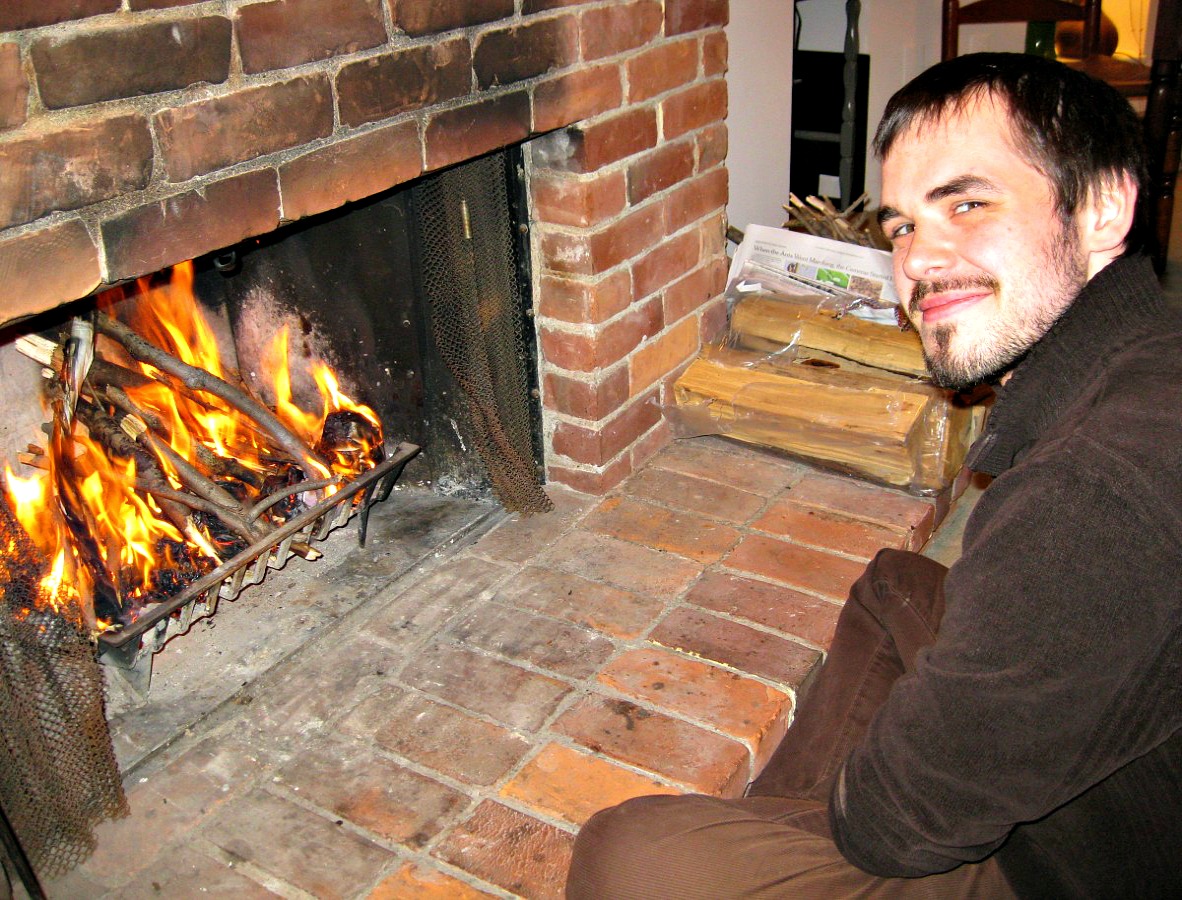
After all, we have a secret weapon: a fireplace; and so we know that no matter how drearily the wind may whistle or how uncomfortably cold the bathroom tiles may get, we can still hunker down, roast our remaining chestnuts and hold out for Spring.

James Murray is a self-described “itinerant Brit.” After a stint in New Zealand, and some travel in Southeast Asia, he and his American girlfriend — now wife — are practicing “staying put” in Boston, where James is pursing a career as a wordsmith for marketing and fiction, and as a non-professional theatre director. He is also a Utopian idealist and SingStar enthusiast. You can find more about his views by reading his blog, Quaint James, and/or following him on Twitter: @quaintjames.

STAY TUNED for another episode in the life of our fictional expat heroine, Libby. (What, not keeping up with Libby? Read the first three episodes of her expat adventures.)

If you enjoyed this post, we invite you to register for The Displaced Dispatch, a round up of weekly posts from The Displaced Nation, with seasonal recipes, book giveaways and other extras. Register for The Displaced Dispatch by clicking here!

Related posts:

img: James Murray stoking the fire (his own).

5 movies for expats and world travelers looking to stir up romance this Valentine’s Day

Editor’s note: Today we are happy to welcome a new member to the Displaced Nation team, Andy Martin. His debut post introduces our two favorite February’s themes: Valentine’s Day (aka expat love) and displaced movies (in honor of Oscar season). For those who haven’t read Andy’s Random Nomad interview with us, it’s worth knowing that he’s a UK-qualified social worker who now lives in Brazil with his Brazilian wife, and a self-professed football geek.

One of the things I discovered when I moved to Brazil is that Valentine’s Day is not actually celebrated here until 12th June, where it is instead known as Dia dos Namorados (Boyfriend’s/Girlfriend’s Day). The reasoning for this is that 12th June is the eve of St. Anthony’s Day, the saint otherwise known as “the marriage saint.”

Additionally, what the rest of us know as Valentine’s Day (14th February) typically falls during or around the time of Carnaval, and anyone who knows anything about the excesses of Carnaval knows that a holiday to celebrate fidelity may probably be best left until later in the year — say, June time.

Anyhow, seeing as my wife has lived in the UK and now openly embraces British culture she’s suggested that it would only be proper to celebrate both the British and Brazilian holidays — she’s a clever one! And what more traditional way to celebrate than a trip to the cinema?

Bearing this in mind, I’ve made a list of 5 films that couples like us — multicultural, expat, glolo and/or nomadic — might like to watch this coming Valentine’s Day, to stir up the romance of travel that brought you together in the first place…

The one about adventure

IndianaJones_small1) Indiana Jones and the Raiders of the Lost Ark (1981), dir. Steven Spielberg
An action-adventure drama that pits Indiana Jones (played by Harrison Ford) against a group of Nazis who are searching for the Ark of the Covenant because Adolf Hitler believes it will make their army invincible.

Why I like it: The original Indiana Jones trilogy was released between 1981 and 1989, and despite the pointless release of Indiana Jones and the Kingdom of the Crystal Skull in 2008, it will forever remain, for my generation at least, what introduced us to the potential excitement of exploring the unknown.

Personal note: I love my in-laws but they neglected their parenting duties in one pretty big way: their failure to introduce my wife to Indiana Jones (a situation that has, thankfully, now been rectified).

Most stunning aspect: Let’s face it, any film that can make archaeology seem like the coolest profession in the world has got to be doing something right hasn’t it?

The ones with the romantic clichés

The traveler is often accused of being a romantic, an idealist and of someone who is running away from life and all the problems and commitments that go with it. The alternative argument is that the traveler is actually taking life by the scruff of the neck and living it to the full.

Either way, two films that best capture this dialectic are the two that often most lionized by today’s generation of travelers:

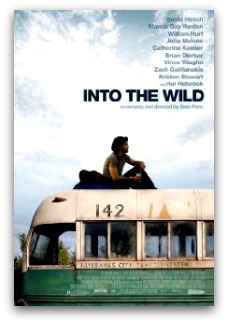
IntotheWild_small2) Into the Wild (2007), dir. Sean Penn
An adaptation (also by Penn) of the book of the same name, by Jon Krakauer, depicting the true story of Chris McCandless, a 24 year-old American and persistent wanderer whom believed that there was more to life than settling for the 9-5 grind in an office.

Why I like it: My wife introduced me to it (her riposte to my Indiana Jones exasperation). She had watched it early on in our relationship, when she was in Brazil and I was in London — a genuinely long distance relationship.

Personal note: She said that the film’s protagonist, Chris McCandless, reminded her of me — although fortunately our story has had a bit of a happier ending than his (I’ll say no more in order not to ruin it for you).

No half-measures: Boy did McCandless walk the walk, giving away his $24,000 college fund to charity before hitchhiking to Alaska and plunging into the wilderness, gradually seeking the means to remove himself from the “real world. ”

TheMotorcyleDiaries_small3) The Motorcycle Diaries (Spanish: Diarios de motocicleta) (2004), dir. Walter Salles
A biopic of Ernesto “Che” Guevara as a young man, representing an adaptation of Che’s memoir of the same name, recounting the trip he made around South America with his best friend, Alberto Granado.

Why I like it: Whatever you view of Che is, there is actually relatively little politics in the film, although one is introduced to some of the experiences that started to inform what he later became in life. Instead, for the most part, this is a film which perfectly captures what is to be young and curious of the world outside your own town or city. Che and Alberto chase beautiful landscapes and beautiful people, but also volunteer their time to those less fortunate than themselves.

Personal note: This film was the tipping point in inspiring me to travel around South America.

Memorable scene: There’s a great scene that highlights the dichotomy between the travel romanticized by “travelers” and that which is driven by the needs of most other migrants around the world — the topic of my guest post last month for The Displaced Nation. In it Che and Alberto meet an indigenous couple who have been forced from their lands and who are traveling in order to find work. When the couple ask Alberto and Che why they are traveling, they reply: “We travel just to travel.” Confused, the wife replies: “God bless you.”

The one about being displaced

Lost_in_Translation_small4) Lost in Translation (2003), dir. Sofia Coppola
The story of the unlikely bond between an aging movie star, played by the awesome Bill Murray, and a trailing spouse (Scarlett Johansson), after they meet in the bar of their five star hotel in Tokyo.

Why I like it: Life as a nomad is not all about romantic adventures and life-changing experiences — there are also just as many challenges and struggles: homesickness, culture shock and loss being just some of them. Lost in Translation is, perhaps, one of the films that best explores some of these issues.

Additional benefits: The story is poignant, and the film is beautifully shot.

The one that’s not actually about travel or expats

Blood_into_Wine_small5) Blood Into Wine (2010), dirs. Ryan Page & Christopher Pomerenke
A documentary about the Northern Arizona wine industry focusing on the musician Maynard James Keenan and Eric Glomski and their winery, Caduceus Cellers.

Why I like it: This film doesn’t really have anything to do with either travel or expat life, but I’m including it here because it’s about one of my favorite artists: Maynard James Keenan. A slightly biased choice perhaps, but I think it deserves a merit for the way it encapsulates the spirit of those people who have dreams and then act upon them to make them happen — a spirit which, I think, drives many of us travelers and expats.

Maynard’s dream: Maynard dreams of starting a vineyard in Arizona. Yes, Arizona. Despite the doubts and concerns of the experts he consulted Maynard invested almost his entire fortune, made from working with the bands Tool and A Perfect Circle, to start a vineyard in Arizona — a state entirely unknown for growing wine.

Does he succeed? You’ll have to watch it, I guess… And don’t forget to invite a date!

* * *

Readers, what do you think of Andy’s suggestions? Are these the sorts of films that make you feel romantic, or do you think he’s bonkers? We’re open to any and all comments…as well as to further recommendations of films likely to bring out the romantic side in us glomads!

STAY TUNED for tomorrow’s post from our monthly columnist, James Murray, who right now can be found in front of his fireplace in Boston — and not because he’s in a romantic mood! Far from it…

If you enjoyed this post, we invite you to register for The Displaced Dispatch, a round up of weekly posts from The Displaced Nation, with seasonal recipes, book giveaways and other extras. Register for The Displaced Dispatch by clicking here!

Related posts:

The 9 Muses for international artists and writers – which one is yours?

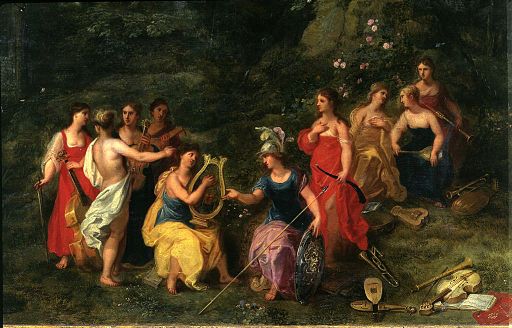
512px-Minerva_among_the_MusesAs modern, global writers and artists, we all have those wonderful days when we feel we are just holding the pen or brush while another “being” does the creative work and sends up firebolts of ideas into the imagination.

Some of us like to call this “Being” our “Muse.”

The original 9 Muses of Greek Mythology were a group of sister goddesses who inspired artists and philosophers to create artistic masterpieces. Ancient writers such as Homer appealed to the Muses for help and inspiration, and as Homer’s Iliad and Odyssey are still in print nearly 3000 years later, it’s probably fair to say these appeals to the sibling deities worked.

Nevertheless, even with his divine assistance, Homer probably had plenty of bad writing days,  just as we have days when the Muse is elusive, and everything we create is no better than our third-grade efforts many years ago.

On days like those, it’s wise to remember that times and fashions have changed since Ancient Greece, and perhaps the reason the Muses don’t come is because we don’t recognise them in their present forms. Unless you’re trying to write at a toga party, they probably won’t look like they do in the painting above. They come in all shapes and sizes.

So, to assist you in finding inspiration when the creative rivers run dry — meet the new generation of global Muses.

Bloggoria –  Muse of Travel Writing

Descendant of: Calliope; Muse of epic poetry; emblem – a writing tablet.
Modern Muse’s emblem: An iPad.
Sometimes disguised as: The female in the cafe who, when she sees you scribbling in your trusty Moleskin, wants to know what you’re writing and says that she could write a novel if only she had the time. If she doesn’t have the time but is so full of ideas that she has to tell strangers about them, her brain is ripe for shameless picking.

Sirius – Muse of Navigation (AKA Siri)

Descendant of: Urania; Muse of Astronomy; emblem – globe and compass.
Modern Muse’s emblem: Sirius can’t map-read to save her life, let alone navigate by the stars, so she goes for a more up-to-date look with a GPS box.
Sometimes disguised as: That woman you’ve passed three times while you’re lost and driving around a new city.  The woman your male companion won’t stop to ask directions because a) he doesn’t like asking for directions and b) this person looks a bit odd. The odder she looks, the more likely she is to be a Muse, and will end up as an anecdote or character in your next book. Don’t place too much faith in her directions, though.

Empithrie: Muse of music

Descendant of: Euterpe; Muse of music or flutes; emblem – a flute.
Modern Muse’s emblem: A set of earbuds.
Sometimes disguised as: The female DJ on a new radio station who plays the right song at the right time, one that just happens to fit your mood and gets the creative juices flowing. Also, pay attention to buskers: you never know when Muses (of either gender) are in unusual places, as in this video:

Fenderene: Muse of song lyrics

Descendant of: Erato; Muse of lyric and love poetry: emblem – a lyre.
Modern Muse’s emblem: A guitar pick.
Sometimes disguised as: That really good guitarist in the subway, singing Carole King songs. Don’t confuse her with the next Muse,

Slammia: Muse of modern poetry.

Descendant of: Polyhymnia; Muse of sacred poetry; emblem – a veil.
Modern Muse’s emblem: A joss stick
Sometimes disguised as: The only good entrant in a pub poetry slam.

Depressoria: Muse of tragedy

Descendant of: Melpomene; Muse of tragedy; emblem – a tragic mask.
Modern Muse’s emblem: A bottle of Prozac.
Sometimes disguised as: That person you get stuck next to on the train, who insists on telling you her life story which sounds like the outline for a bad country song. (See “Fenderene” and “Empithria”) Take notes, if you can.

Nostalgene: Muse of history and reminiscence

Descendant of: Clio; Muse of history; emblem – a scroll
Modern Muse’s emblem: An old photograph album
Sometimes disguised as: Your granny when she’s talking about her childhood.

Standuporia: Muse of alternative comedy

Descendant of: Thalia; Muse of comedy; emblem – a comic mask.
Modern Muse’s emblem: A large snake called Monty.
Sometimes disguised as: Like love, comedy is all around you. Just keep listening for those throwaway one-liners.

Bunionaria: Muse of dancing

Descendant of:  Terpsichore; Muse of dancing; emblem – dancing, holding a lyre.
Modern Muse’s emblem: A pair of satin, worn out ballet shoes.
Sometime disguised as: Dancing Muses at places like Covent Garden or Teatro alla Scala are rarely disguised. Buy a ticket, watch, be inspired. Do, however, avoid Irish pubs on St. Patrick’s Day, when everyone thinks they can out-tap Michael Flatley. And avoid Ibizan hotel dance floors at all times if you don’t want to lose all your other Muses (with the exception of Standuporia.)

STAY TUNED for next week’s posts.

If you enjoyed this post, we invite you to register for The Displaced Dispatch, a round up of weekly posts from The Displaced Nation, with seasonal recipes, book giveaways and other extras. Register for The Displaced Dispatch by clicking here!

Related posts:

Image: Minerva among the Muses, via Wikimedia Commons

RANDOM NOMAD: Andy Martin, UK-qualified Social Worker, Football Geek & Now a São Paulo Resident

Andy_MartinPlace of birth: Chatham, Kent, United Kingdom
Passport: UK
Overseas history: Brasil (São Paulo): February 2012 – present. I also had a period of travel around South America between 2007 and 2008.
Occupation: NGO Volunteer, English teacher, blogger
Cyberspace coordinates: The book is on the table: An Englishman’s guide to living in São Paulo (blog) and @andyhpmartin (Twitter handle).

What made you give up London for São Paulo?
For some reason — probably because I’m a massive football geek — I had always wanted to go to South America, and so when I found out that one of my best friends was planning to travel there, it took very little persuasion for me to tag along. Then whilst there I met my future wife, who is Brazilian, and it all got a bit more complicated.

First she moved to live with me in the UK. We got married and stayed in London for three years. However, she had deferred her degree in Brazil to move to London, where I had a job as a social worker. I am a qualified social worker and spent almost nine years working in various social or community work roles. For most of that time I specialized in supporting refugees and asylum seekers. But when my job became uncertain due to government cuts (due to the economic crisis), it seemed like the perfect opportunity to move to Brazil so that my wife could finally get everything finished.

So now you’re a trailing spouse. Does anyone in your immediate family share that fate, or do they all live in the UK?
When I first traveled to South America in 2007, I was pretty much the first person in my entire family who had ever traveled outside of Europe, so I can’t really say there’s any significant history or influence of having the urge to want to explore or become “displaced.”

You haven’t been in São Paulo for long, but can you pinpoint a moment when you have felt displaced?
I had been to São Paulo twice before I moved here and I was already quite familiar with South America as a whole, so was pretty well prepared for what to expect — although there’s no doubting that living somewhere and just visiting are entirely different things.

But if I had to pick one thing, it wouldn’t be a moment but more the constant challenge of living somewhere where you are unable to speak your mother tongue. We Brits are notoriously bad at learning languages, and I can barely remember any of the French or German I learned at school. I did learn some Spanish whilst traveling in 2007, and in some ways this helped because of its similarities with Portuguese, although on the other hand it was also a hindrance because of their very many differences.

Not being able to fully communicate your thoughts is obviously very frustrating and when you’re having a bad day, it just intensifies your sense of displacement and dislocation. Fortunately, Brazilians are pretty intrigued by people (especially those from the “West”) who have moved to Brazil and are trying to learn Portuguese. They’re often very forgiving when you make mistakes. It also helps that many Brazilians themselves tend not to speak grammatically correct Portuguese, so in effect your own mistakes are just contributing towards the evolution of the language (that’s what I like to convince myself, anyway!).

When have you felt the least displaced?
One of the things I love about Brazilians is their general informality. As someone who’s never worked in an office or a suit, I feel right at home. For example, people are often referred to by their nicknames (even the former President was) and rarely, if ever, by their surnames. Also, Brazilians tend not to make a big deal out of social occasions — it’s more about making sure you’re surrounded by the people who matter to you. As long as there’s cold beer, everyone’s happy.

How could you not feel at ease?

You may bring one curiosity you’ve collected from the country where you’ve lived into The Displaced Nation. What’s in your suitcase?
Again, as a self-confessed football nerd, I think it would have to be my collection of football shirts. I have one from pretty much every country I’ve been to, and I’ve lost count of how many I’ve acquired in South America.

You are invited to prepare a meal for the Displaced Nation, based on your travels. What’s on the menu?

Starter: Salgadinhos (savoury snacks) are fantastic so a platter of these, including:

Main: It’d have to be a churrasco (Brazilian BBQ). That may sound pretty unimaginative, but once you’ve had a Brazilian BBQ, especially those from the south, you’ll forever wonder why it took you so long to do so.
Dessert: A selection of some of Brazil’s finest (and weirdest looking) fruits. Believe me, I’ve seen fruits in the markets here which look like they have been imported from Mars. They taste great, though.
Drinks: Brazil’s most famous cocktail, a caipirinha, which is a hangover-inducing concoction of cachaça (sugar cane rum), lime, sugar and ice. Refreshing, tasty and deceptively lethal.

Now that you are hard at work learning the language, can you donate a Brazilian Portuguese word or expression to the Displaced Nation’s argot?
Tudo bem? This is pretty much said every time you greet someone in Brazil and literally translates as “Is everything okay?” It reflects quite nicely, as I mentioned previously, how Brazilians prefer to keep things simple and informal.

This month, we’ve been focusing on the need for mentors: people who teach us what we need to know, or remind us of things we have buried deep. Have you found discovered any new mentors, whether physically present or not, in your life abroad?
As mentioned in my guest post this month for the Displaced Nation, when I’m going through a period where I’m missing home or things get tough, I often think about some of the kids I worked with back home in London (in my last job I worked with unaccompanied minors from countries such as Afghanistan).

Thinking about the challenges they as young kids faced after fleeing their home countries — but then still being able, on the whole, to go on and make the most of their new lives — always helps me to put into perspective the things I tend to moan or stress about here, in what is fortunately a much easier experience of displacement.

Apart from that, I read as widely as possible. For instance, I recently really enjoyed Alain de Botton’s The Art of Travel.

If you had all the money and time in the world, what topic(s) would you choose to study in your adopted country?
I guess, given my pre-existing interest and work experiences with migration, I’d like to study the history of migration to Brazil. Brazil is a country defined by (im)migration — for example, my wife has indigenous, Spanish, Italian and Portuguese heritage, a mix that is is pretty normal for Brazilians. It would be fascinating to piece it all together in order to get a more holistic understanding of who Brazilians really are.

I’ve always wanted to do a PhD, so who knows, maybe this might be my research proposal one day!

Readers — yay or nay for letting Andy Martin into The Displaced Nation? A social worker who is taking lessons from the Brazilians on how to be more social? Who is used to helping the displaced and is now displaced himself — so may be in need of our help? (Note: It’s fine to vote “nay” as long as you couch your reasoning in terms we all — including Andy — find amusing!)

STAY TUNED for tomorrow’s post, an expat take on the muses of Classical Antiquity.

If you enjoyed this post, we invite you to register for The Displaced Dispatch, a round up of weekly posts from The Displaced Nation, with seasonal recipes, book giveaways and other extras. Register for The Displaced Dispatch by clicking here!

Related posts:

Img: Andy Martin travels within his native land (the Norfolk Broads, 2010), a couple of years before his expatriation.

CAPITAL IDEA: London: A quick guide

LondonWelcome to the first “Capital Ideas”. It is a new feature here at The Displaced Nation. It’s our somewhat idiosyncratic, ever so slightly tongue-in-cheek guide to various world cities, perfect for the ever discerning readership of this blog. We know our readers are always visitors, never tourists (an important distinction).  Do feel free to contribute your own ideas or suggestions in the comments section, we’d love to hear your thoughts, too.

City: London

Where is it? On some damp, mildew-ridden island in the north Atlantic.

Why should I go? Because it’s one of the world’s great cities. An exciting modern city with a diverse population of eight million there’s something for everyone. With hosting the Olympics, 2012 was a great year for the city and infused it with a self-confidence unusual to the British. Quite simply, this is the perfect time to visit London.

So is it true that when a man tires of London he is tired of life? Not if he’s living in Dalston.

I don’t know anything about Dalston. You’re not missing much.

What are the must sees? Well, if you want to be that tourist, you know the one who wears pristine white sneakers and white socks, keeps their passport safe in their fannypack and planned their trip after taking out a Rick Steeves travel book from 1986, then the basic checklist is Big Ben, Buckingham Palace, St Paul’s, Tower of London. You can do all that by popping on one of those tourist trap sightseeing bus tours. You’ll get to sit on the top of a double-decker with other fannypack wearers — it’ll be beautiful.

Hmm, I don’t have a fannypack. Not to worry. You’re a The Displaced Nation reader, you want something a little more “not for tourists,” don’t you?

You know me so well. Tours can be good fun for the visitor limited in time. However, instead of those overpriced bus tours, we recommend London Walks. Brunel’s Thames tunnel, in particular, is one we’d recommend for a fascinating and sadly forgotten part of London’s history — it was once considered the eighth wonder of the world.

What about a walking tour that sounds a bit more “fun”? Well, provided you’re not traveling with kids, you could also do a pub crawl. That fun enough for you?

Absolutely. Any other suggestions? Spend a morning at Lincoln’s Inn Fields. There you’ll be able to visit two fascinating museums that are among our London favorites. There’s the Hunterian Museum (an C18th collection of anatomical specimens including the skeleton of Charles Byrne, known as the “Irish giant”) at the Royal College of Surgeons and across the fields is Sir John Soanes’s Museum (the former home of architect Sir John Soanes, the museum contains his extensive collection of antiquities and paintings). Or, if you’re in the city in the summer then venture to the north of the city and visit Highgate Cemetery. There you’ll be able to get a guided tour of the western cemetery – resting place of Michael Faraday and Christina Rossetti. In the eastern cemetery rests Karl Marx.

What’s a must-do? Spending time on the South Bank. Here you’ll find the National Theatre, the Royal Festival Hall, the Globe and the BFI Southbank (formerly known as the National Film Theatre). So the perfect place to take to showcase the city’s cultural merits.

Is the city easy to get around? Yes, although Londoners like moaning about the public transport, the city is home to one of the world’s best public transport systems. Familiarize yourself with the London Underground (known as “the tube”) and you can travel around the city easily and relatively cheaply. If you are a night owl then you need to remember that the underground stops running trains between 12.00am and 12.30am.

I hear the British cooking is awful. Do I need to pack sandwiches when visiting London? That outdated stereotype. London is home to some of the world’s best restaurants. And don’t forget how I mentioned earlier that London had such a diverse population, that’s reflected in the city’s restaurants. Whatever you fancy, be it Eritrean or Burmese, you can find it in London. Our recommendation is that you take a trip to Brick Lane for a slap-up Indian dinner.

Hmm, my mate John visited London last year and said the food still sucked. Did John stick with the tourist traps? New York is a great city for eating, but if you only go to restaurants at Time’s Square you’re not going to get that impression. One easy tip, never eat in an Angus Steak House.

So the locals don’t all eat jellied eels? No, but if you do want to experience an old cockney-style pie and mash shop, then we recommend Goddard’s at Greenwich. If you’re being really adventurous and want to unleash your inner pearly queen by having some jellied ell then this is the place to do it.

Have you ever tried it? Yes.

Did you like it? Let’s just say it was interesting.

What should I read? If you want to brush up on London, then we’d suggest Peter Ackroyd’s London for a nice, meaty read about the city, as well as his book The Thames. Other books we’d suggest are Iain Sinclair’s London: City of Disappearances, Henry Mayhew’s London and the London Poor and James Boswell’s London Journal. And, of  course, you can’t visit London and not be reminded of Dickens (do make a trip to the Charles Dickens Museum  , at 48 Doughty Street). We think Bleak House and Our Mutual Friend best show off  Dickens’s writing on London.

What should I watch? Notting Hill.

Really? Yes, it’s the most accurate cinematic depiction of the city.

I’m going to say this again, really? It’s so accurate that there’s even now a Notting Hill Carnival. This happens once a year where fans of the film get together and dress up as their favorite characters from the film and reenact their favorite scenes. Our top tip is that if you’re in London at the same time as the carnival, you should dress up as Julie Roberts or Hugh Grant and go up to people and tell them your favorite lines from the movie. They’ll love.

I really don’t think that’s what the Notting Hill Carnival is all about. Hand on heart, it’s true.

Hmmmm . . .

STAY TUNED for tomorrow’s post, a new Random Nomad interview.

If you enjoyed this post, we invite you to register for The Displaced Dispatch, a round up of weekly posts from The Displaced Nation, with seasonal recipes, book giveaways and other extras. Register for The Displaced Dispatch by clicking here!

Related posts:

Image: awindram

LIBBY’S LIFE #69 – This dog’s life takes the biscuit

Fergus looks up at me, down at his empty dish in the corner of the laundry room, then back at me again. I could be imagining things, but I think his lip is curling.

“No,” I say to him, as I pull one lot of washing out of the dryer and insert another wet load. “Just — no. You can’t be hungry, not again. It’s impossible. And it’s no good trying to fool me. I know you don’t eat everything in sight when Maggie’s in charge of you. You’re just doing it to annoy me.”

At Maggie’s name, Fergus pricks up his ears, wags his tail, and goes to sit by the back door under the coat hook where I keep his lead.

“Later,” I promise him. “You can see Maggie when Jack has gone to school and I’ve gone shopping with the twins. And in a few days more you’ll be with her all the time. Won’t that be nice?”

Nice for him, and oh-so-blissful for me. I am counting the days until next Wednesday, when Maggie has — hallelujah! — agreed to take Fergus and I can rid myself of this hound for good.

Maggie, though, is looking forward to having him. A couple of burglaries in town last month made her nervous, and she thinks a dog barking around the place will be a good deterrent.

“Besides,” she said, sounding rather sad, “he will be good company when you move house.”

Oliver and I haven’t got a moving date yet, but Maggie isn’t looking forward to losing us as neighbours, although we’ll still be in Woodhaven. We haven’t even found a new house to move into, but lately I’m spending so much time and money in the local supermarket that I’m starting to think we should cut out the middle man and set up home in the checkout line.

When I first arrived here, all I heard from the other wives was how cheap it was to live in America compared with England. “I spend three-and-sixpence a month on food, and have money left over for a jar of caviar and some more diamond earrings.” That kind of thing. After a while I sussed out that the reason the wives spent so little on food from the supermarket is because they ate at restaurants, and the husbands hid the bills on their company expense accounts at the end of the month.

With Oliver being boringly honest and never putting items on expenses unless they’re work-related, my own grocery bills are astronomical. Add in disposable nappies and cans of formula milk for two, and even Wills and Kate in their starter flat at Kensington Palace would balk at the monthly total.

But that’s before we get to the pet food aisle.

Fergus, as I mentioned when I started this journal, is one of the most stylish dogs in the world. Never mind diamanté collars or fluffy dog sweaters like Dr. Lowell’s ridiculous chihuahua wears — for his fashion accessories, Fergus has food allergies. He went on a gluten-free diet long before Lady Gaga did. Not for him the cheapo dog kibble; only the best for Fergus. Special gluten-free dog biscuits, more expensive per pound than Black Angus filet mignon.

Hey. Those biscuits are nothing to do with me.

They were Oliver’s idea. Maybe coddling the dog she gave us is a way of assuaging the guilt he feels towards his mother for abandoning her, or for letting the cat out of the bag about her bigamist husband. Whatever the motive, the upshot is that while normal dogs are happily gnawing on bones and finishing the children’s leftover chicken nuggets, Fergus is lording it with grain-free, venison-and-cinnamon-and-butternut-squash dog treats, at 25 bucks a pound. To even things out, I buy the cheapest canned meat without wheat filler, but he turns his nose up at it most of the time. Only those doggie-deli-delights will do.

Not content with his food’s Michelin 5-star quality, Fergus also has to have it in Supersize Me quantity. It doesn’t matter how often I fill his bowl with these delicate morsels — when I look again, the dish is empty, and Fergus has a mournful expression on his face, begging for seconds.

I told Maggie she should rename him Oliver. Twist, that is, not Patrick.

“But he never eats that much when he stays with me,” she says. “He gets whatever meat the butcher has going cheap, and nothing else. Perhaps he’s got worms.”

I’ve given him enough worming tablets to eradicate the subterranean population of Massachusetts. It’s made no difference.

Fergus is still sitting by the back door, staring up at his lead. Every few seconds he lets out a little whine and shifts from side to side on his front paws.

What the hell. It’s nearly time to go, anyway.

I bundle the twins into their snowsuits and fasten them into their double pushchair. Then I tug Jack’s arms into his big winter coat, and pull the two sides of the front together to do up the zip.

The two sides don’t quite meet. Jack’s got an extra layer of fleece on, admittedly, because it’s so cold here at the moment, but even so…

“I need to buy you more clothes while you’re at school today,” I say to him. “You’ve grown again. You’ve eaten too many cookies. You’re the Cookie Monster!”

“No, Mummy,” he says. “Biscuit Monster!”

“Ah, that’s right. Silly me.”

Jack is rather particular lately about his vocabulary. It’s very sweet. He corrects his American friends if they say “Truck” (“Lorry!”) or “Chips” (“Crisps!”) or, in this case, he corrects his mother for saying “Cookie” instead of “Biscuit.”

I think his obsession started when I got into watching old episodes of Supernanny USA. Supernanny herself is unapologetically Essex and sounds like Jack’s Granny Sandra, even after filming with families in New Jersey for two weeks. But although she talks like my mother-in-law, I like watching the programme because it makes me feel superior after I’ve had a bad day, and I can think “Well, at least I don’t do that.” Occasionally, though, an episode will bring me down to earth, like the one a few weeks ago when this woman had about nine kids who kept diving into packets of fun-sized Milky Ways every five minutes, and then bounced off the walls all day, much to the mother’s bewilderment.

I watched one of the nine children having a tantrum just as Jack lay on the floor, kicking and shouting because I’d taken a clandestine Hershey bar off him, which he was about to eat five minutes before lunch was ready. From then on, all chocolate and sugary things have lived on the top shelf of the pantry where Jack can’t reach them, and I’ve doled them out sparingly, only once a day, in accordance with a big set of Mum’s Rules which I wrote in black marker on poster board immediately after the TV programme ended.

Jack seems to have adapted, though. After one episode on the naughty spot outside the landing linen closet on Boxing Day, he accepted it. I can’t say his tantrums have got much better, though.

With some pushing and huffing, I finally get his coat fastened.

“Ready to go?” I ask him. He nods, as best as he can beneath layers of woolly hat, hood, and scarf.

Fergus barks — once, twice, three times.

I open the back door, and the dog shoots out, straight across the road and up Maggie’s driveway. A Jeep coming down the street slows for him and honks its horn. Fergus looks back briefly. If a dog were physically capable of flipping the bird, Fergus just did it.

Next Wednesday can’t come a minute too soon.

.

Next post: LIBBY’S LIFE #70  – A brewing storm

Previous post: LIBBY’S LIFE #68 – Puppy fat

A note for Libby addicts: Check out Woodhaven Happenings, where from time to time you will find more posts from other characters.  Want to remind yourself of Who’s Who in Woodhaven? Click here for the cast list!

Read Libby’s Life from the first episode.

STAY TUNED for Tuesday’s post!

If you enjoyed this post, we invite you to subscribe for email delivery of The Displaced Dispatch, a round up of the week’s posts from The Displaced Nation. Sign up for The Displaced Dispatch by clicking here!

Image: Travel – Map of the World by Salvatore Vuono / FreeDigitalPhotos.net