The Displaced Nation

A home for international creatives

Dear Mary-Sue: A brimful of ashram and other travel-related spiritual quests

Mary-Sue Wallace, The Displaced Nation’s agony aunt, is back. Her thoughtful advice eases and soothes any cross-cultural quandary or travel-related confusion you may have. Submit your questions and comments here, or else by emailing her at thedisplacednation@gmail.com.

And here’s to a happy 2012 to all of my peeps out there! I hope you all had a wonderful Christmas — I know mine most certainly was. It’s always non-stop craziness in the ol’ Wallace homestead and Christmas 2011 was no exception — let me tell you! “Light of my life” (Ha! You should see me rolling my eyes as I type this) Jake went a little crazy with the Christmas lights this year. You’d have thought Rand Street, Tulsa, was in fact Vegas such was the amount of illumination we had going on. As I mentioned in my last column, New Year was spent unwinding and destressing in Iceland, but Christmas itself was all about Tulsa and the family. Of course, I was missing all my peeps. (I don’t like to think of you as mere readers, you’re all more than that, you’re buddies, you’re my peeps. Am I right? ‘course I am!) Well, anyway as I spent the yuletide period honey glazing my ham and making just the sweetest gingerbread men Rand Street ever did bite their teeth into, I was happiest knowing that 2012 would see me tackling all of your problems and sorting out your travel-related messes.

___________________________________________

Dear Mary-Sue,

I got a new Kindle for Xmas and downloaded a book I’ve always wanted to read, Eat, Pray, Love by Elizabeth Gilbert.

I get the eating and the love parts, but am not so sure about praying — especially if it entails spending time at an ashram in India. Do you think that could be good for me?

Sharon, Cut and Shooot, Texas

Dear Sharon,

A Kindle!! How exciting! What a great present. At the risk of not being my usual super-modest self, you should check out some of my stuff on there. My new historical novel The Sigh of the Bosom is available to buy on there. It’s about a young orphan called Molly growing up in Colonial America. Don’t want to spoil too much of it for you, but little plain Molly gets quite the surprise when she discovers she isn’t in fact an orphan at all, but the true heir to the King of England. It’s gripping stuff, Sharon.

As for going to an ASH-ram, well as a committed non-smoker I am not sure that you should be doing that! Ha! Just a little bit of Mary-Sue Wallace humor there. More seriously, should you go to an ashram? Well, ol’ Mary-Sue Wallace mentioned this to her pastor, Rick. Rick, who might I add plays a mean guitar, is my go-to guy for all things spiritual — as well as for chilli (Rick makes a mean chilli). Anyhoo, Rick told me that spirituality isn’t about flying half-way across the world. Prayer isn’t dependent on location. While it might be nice to seek solitude, and who among us doesn’t crave that at times, what is important is the act of thinking, of contemplation.

I see you live in Texas. Why not go for a hike, take up watercolors, just do something that connects you to your local nature. If you just want to escape and have a change of scenery for a little while then sure, why not go all the way to India and visit an ashram. But if it’s about trying to reconnect with yourself, then I don’t think the answer lies in a plane ticket to India. Things just ain’t that easy.

Mary-Sue

——————————————————————————————————————

Dear Mary-Sue,

I’m headed to India next week to try connecting with my inner spirituality. What do you think I should wear? Or should I buy an outfit once I get there?

Roseanne, Spunky Puddle, Ohio

Dear Roseanne,

A little fashionista birdie tells me Daisy Duke-style denim shorts are THE thing to wear in India in 2012.

Blessings,

Mary-Sue

——————————————————————————————————————

Dear Mary-Sue,

I’m thinking about taking a gap year next year and, because I’m so fed up with the rampant consumerism of the West, I’d like to go somewhere that could put me in touch with life’s spiritual aspects. Can you recommend anywhere — apart from India, that is, as I’m afraid of getting sick on the food?

Chad, Cheddar, South Carolina

Dear Chad,

Be a trendsetter and think outside the box. You sound like the sort of young guy who shouldn’t be following in the footsteps of others, you should be forging your own path. You know what you don’t hear people say very often? “I’m going on a pilgrimage to Maine,” that’s what. You can start that trend. This site seems to be a great place to start: http://www.visitmaine.com

Mary-Sue

——————————————————————————————————————

Anyhoo, that’s all from me readers. I’m so keen to hear about your cultural issues and all your juicy problems. Do drop me a line with any problems you have, or if you want to share your fave meatloaf recipe with me (yum! yum!). As they say in Italy, “ciao!”

Mary-Sue is a retired travel agent who lives in Tulsa with her husband Jake. She has taken a credited course in therapy from Tulsa Community College and is the best-selling author of Traveling Made Easy, Low-Fat Chicken Soup for the Traveler’s Soul, The Art of War: The Authorized Biography of Samantha Brown, and William Shatner’s TekWar: An Unofficial Guide. If you have any questions that you would like Mary-Sue to answer, you can contact her at thedisplacednation@gmail.com, or by adding to the comments below.

STAY TUNED for Wednesday’s post — a firsthand account of how travel can lead to a simpler life.

If you enjoyed this post, we invite you to subscribe to The Displaced Dispatch, a weekly round up of posts from The Displaced Nation, plus some extras such as seasonal recipes and occasional book giveaways. Sign up for The Displaced Dispatch by clicking here!

Related posts:

CLASSIC DISPLACED WRITING: Dickens — A Christmas Carol


As no points are being handed out for originality (at least, I hope not) this particular edition of Classic Displaced Writing will be yuletide-themed and our text of choice is going to be Dickens’s A Christmas Carol.

I know what a surprise, right?

I am working on the assumption that I needn’t relay to you the basic plot of A Christmas Carol. We’re all familiar with it. Even those who have never picked up the book (and shame on you if you’ve never read it — no matter how good The Muppet Christmas Carol is) will be familiar with the story beats of A Christmas Carol. It has been retold, inverted, and reemphasized since its original publication (168 years ago yesterday, if you are interested). It resonates beyond the Victorian canon, becoming more like a modern myth or fairy tale.

But other than reminding us all of the yuletide season, why feature A Christmas Carol on what is after all an expat-focused blog? Ebenezer Scrooge is most certainly not a character from expat literature, he doesn’t head off to Tuscany to harvest lemons / grow olives / farm terrapins. There’s no cultural misunderstandings with the locals as Scrooge enjoys his year in Provence. Indeed, other than a brief excursion into the English countryside with the Ghost of Christmas Past, this is tale that is contained in the City of London, not venturing beyond the square mile.

So is it just the mulled wine talking or do I have one eye on SEO that leads me to featuring A Christmas Carol in this irregular series? Well, while I may be guilty on both counts there, in the case of Ebenezer Scrooge we have a man who is displaced. Not geographically, but emotionally. The story of his redemption is the story of his realignment with humanity. This is the man we are first introduced to at the beginning of the novella. A man whom beggars, and children, and dogs avoid. He is presented not as a man but as an elemental force, a malevolent wind that blows through Cornhill.

Oh! But he was a tight-fisted hand at the grind-stone, Scrooge! a squeezing, wrenching, grasping, scraping, clutching, covetous, old sinner! Hard and sharp as flint, from which no steel had ever struck out generous fire; secret, and self-contained, and solitary as an oyster. The cold within him froze his old features, nipped his pointed nose, shrivelled his cheek, stiffened his gait; made his eyes red, his thin lips blue; and spoke out shrewdly in his grating voice. A frosty rime was on his head, and on his eyebrows, and his wiry chin. He carried his own low temperature always about with him; he iced his office in the dog-days; and didn’t thaw it one degree at Christmas.

External heat and cold had little influence on Scrooge. No warmth could warm, no wintry weather chill him. No wind that blew was bitterer than he, no falling snow was more intent upon its purpose, no pelting rain less open to entreaty. Foul weather didn’t know where to have him. The heaviest rain, and snow, and hail, and sleet, could boast of the advantage over him in only one respect. They often “came down” handsomely, and Scrooge never did.

Nobody ever stopped him in the street to say, with gladsome looks, “My dear Scrooge, how are you? When will you come to see me?” No beggars implored him to bestow a trifle, no children asked him what it was o’clock, no man or woman ever once in all his life inquired the way to such and such a place, of Scrooge. Even the blind men’s dogs appeared to know him; and when they saw him coming on, would tug their owners into doorways and up courts; and then would their tails as though they said, “No eye at all is better than an evil eye, dark master!”

But what did Scrooge care! It was the very thing he liked. To edge his way along the crowded paths of life, warning all human sympathy to keep its distance, was what the knowing ones call “nuts” to Scrooge.

By contrast, at the end of A Christmas Carol we have the iconic scene of the reformed miser who with a new-found joie de vivre leaps out of his bed, throws open his window and commands of a passing boy to tell him what day it is. One of the most noticeable aspects of the reformed Scrooge is his ability to now joke with others and find humor in life. It is with laughter and good humor that we show that we are not displaced but are integrated with others. “There is nothing in the world,” writes Dickens, “so irresistibly contagious as laughter and good-humor.”

To return to the scene of the reformed Scrooge awakening on Christmas morning, Alistair Sim with his portrayal of Scrooge in the 1951 film adaptation does an excellent job of depicting the delirious glee and humor of the reformed Scrooge. Therefore, it should come as no surprise that the last action we see of Scrooge is him playing a practical joke on Bob Cratchit.

But he was early at the office next morning. Oh, he was early there. If he could only be there first, and catch Bob Cratchit coming late! That was the thing he had set his heart upon.

And he did it; yes, he did! The clock struck nine. No Bob. A quarter past. No Bob. He was full eighteen minutes and a half behind his time. Scrooge sat with his door wide open, that he see him come into the Tank.

His hat was off, before he opened the door; his comforter too. He was on his stool in a jiffy; driving away with his pen, as if he were trying to overtake nine o’clock.

“Hallo!” growled Scrooge, in his accustomed voice, as near as he could feign it. “What do you mean by coming here at this time of day?”

“I am very sorry, sir,” said Bob. “I am behind my time.”

“You are?” repeated Scrooge. “Yes. I think you are. Step this way, sir, if you please.”

“It’s only once a year, sir,” pleaded Bob, appearing from the Tank. “It shall not be repeated. I was making rather merry yesterday, sir.”

“Now, I’ll tell you what, my friend,” said Scrooge, “I am not going to stand this sort of thing any longer. And therefore,” he continued, leaping from his stool, and giving Bob such a dig in the waistcoat that he staggered back into the Tank again; “and therefore I am about to raise your salary!”

Bob trembled, and got a little nearer to the ruler. He had a momentary idea of knocking Scrooge down with it, holding him, and calling to the people in the court for help and a strait-waistcoat.

“A merry Christmas, Bob!” said Scrooge, with an earnestness that could not be mistaken, as he clapped him on the back. “A merrier Christmas, Bob, my good fellow, than I have given you, for many a year! I’ll raise your salary, and endeavour to assist your struggling family, and we will discuss your affairs this very afternoon, over a Christmas bowl of smoking bishop, Bob! Make up the fires, and buy another coal-scuttle before you dot another i, Bob Cratchit!”

STAY TUNED for tomorrow’s post by our monthly third-culture kid columnist, Charlotte Day.

If you enjoyed this post, we invite you to subscribe to The Displaced Dispatch, a weekly round up of posts from The Displaced Nation, plus some extras such as seasonal recipes and occasional book giveaways. Sign up for The Displaced Dispatch by clicking here!

Related posts:
BOOK REVIEW: “The Globalisation of Love,” by Wendy Williams

Writer Wendy Williams has described her new book, The Globalisation of Love, as being about “global love stories, inter-cultural romance and marriage.” A Canadian expat living with her Austrian husband in Vienna, it is of little surprise that Williams is interested in intercultural romances and her book could be best described as an expat take on the self-help, relationship genre — a Men Are from Mödling, Women Are from Vancouver, if you will.

As Williams writes,

…one of the most profound effects on globalisation is that people from everywhere are falling in love with people from everywhere else. There is a world of romance happening out there and it is called the globalisation of love.

That is certainly reflected in the readership of The Displaced Nation, where a large number of you, myself included, are involved in inter-cultural relationships or marriages so I imagine there are those among you or friends you know who may need this book with its advice and anecdotes on how to circumnavigate the occasionally choppy waters and discombobulating experiences of being, in Williams’s neologism, a GloLo couple. Williams explains the problems a GloLo couple may experience in dealing with parents-in-law, marriage ceremonies, immigration officials — all that “fun” stuff many of us have experienced.

Williams has a very conversational turn-of-phrase and peppers her book with references to romantic comedies, and I suspect her style will delight and grate in equal measure. Whether you find yourself charmed by the idea of a GloTini cocktail (recipe included in the book) is probably a fair indicator of whether you are going to curl up with The Globalisation of Love or hurl it across your living room.

With each topic tackled, Williams brings up case studies from a whole ranges of GloLo couples that she has interviewed. For me, this is undoubtably where the book is strongest as you find yourself either charmed or cringing at the experiences of each couple. Williams, also brings in the story of her own marriage, always in a disarmingly self-deprecating way, so at times The Globalisation of Love reads almost like a quasi-memoir.

I do think there are drawbacks. The over-classification of GloLo couples can quickly become confusing. At times I felt that I required some kind of chart to work out what sort of GloLo I’m defined under, though I suspect I probably snugly fit into what Williams classifies as “the scoffer.” The quick, breezy glossing over of the issue of mail-order brides did not sit comfortably with me, and I also thought the look at those who meet on the Internet was a missed opportunity. I’ve heard of a number of people who have found their partner via the Web — not through a dating site, but from regularly participating on a discussion forum centered around an area both partners have a common interest. This often involves those who previously wouldn’t have entered into a GloLo relationship, and perhaps have never once traveled out of their home country despite starting a relationship with someone on the other side of the globe.

While by no means a book that is going to radically change your opinion on self-help, relationship books, it is a worthwhile addition to the genre.

You can buy The Globalisation of Love here.

STAY TUNED for Monday’s post, a displaced Q about the Ideal Christmas Holiday.

If you enjoyed this post, we invite you to subscribe to The Displaced Dispatch, a weekly round up of posts from The Displaced Nation, plus some extras such as seasonal recipes and occasional book giveaways. Sign up for The Displaced Dispatch by clicking here!

Related posts:
CONTEMPORARY DISPLACED WRITING: Marías — The Man of Feeling

NOTE: Our review of Wendy Williams’ The Globalization of Love has been postponed until this Friday, December 16. In the meantime we’d like to share with you one of our favorite displaced writers, Javier Marías.

At school, an English teacher told my class that good writing should be like a scalpel. Quite what he meant by this was not entirely clear to me, but he said it with such intensity and with an accompanying, ever so disturbing stabbing gesture that I felt I should really take note of what he said. However, on first reading the work of Javier Marías, I finally understand something of what my teacher was trying to explain to my doltish teenage self. Marías’s ability to expertly set up a scene and then dissect the thought processes of his protaganists is a joy.

If you haven’t read any of Marías’s work you really should. Without a doubt he is one of the finest writers currently living and though he has a loyal readership in the English-speaking world, it should be much larger than it is.

When reading his novella The Man of Feeling , I came across one passage that struck me as being perfectly appropriate for featuring as a Contemporary Displaced Writing post. The narrator of The Man of Feeling is a young opera star who is constantly traveling as he tours the world. For the most part, this is not a glamorous life; it is, in fact, a stultifying life spent in rehearsal rooms and hotel bars — they are all different but yet they are all the same, too.

The extract I want to share has our opera star narrator relating his feelings when he first visits a new city:

… I enjoy the feeling that I am in a new and unfamiliar city; getting into public places and being aware that the people there speak a language I know only imperfectly or not at all; studying the clothes and hats (though nowadays one sees fewer of the latter) that the good citizens choose to wear in the streets; finding out if shops are full or empty during office hours; seeing how the news is treated in the newspapers; looking at certain examples of domestic architecture that one can only find in that particular part of the world; noting the typefaces that predominate in shop signs (and reading these like a savage, understanding nothing); scrutinizing the faces in the metro and on the buses which I frequent for that very reason; picking out particular faces and wondering whether I might or might not meet them elsewhere; deliberately getting lost in parts of the city where I have already learned to find my way, that is, with map in hand if I need it; observing the inimitable passing of each languishing day at each point on the globe and the uncertain and variable instant when the lights are lit; setting foot in places where our feet leave no trace, on the luminous asphalt of the morning or on some dusty, ancient stone pavement illuminated by a single street lamp as evening falls; visiting bars full of indistinguishable, blithely insignificant murmurings that cover and erase everything; mingling with the people in the white streets of the south or in the grey avenues of the north at the declining hour when people are going out for a stroll or coming home from work, that brief respite, seeing how the women go out in the evening or perhaps at night, all dressed up, and seeing the cars in their many colors waiting for them; imagining the parties they are going to; wasting time.

And in each city I visit I would like to meet people, to meet those smartly dressed women, who are perhaps climbing into their glossy, impleccable cars to drive to the opera to hear Leon de Napoles: to go and see me.

Extract from Margaret Jull Costa’s translation published by New Directions, available here. You should read it, you know. You really should.

STAY TUNED for tomorrow’s post, a review of the new expat autobiography Perking the Pansies, by Jack Scott.

If you enjoyed this post, we invite you to subscribe to The Displaced Dispatch, a weekly round up of posts from The Displaced Nation, plus some extras such as seasonal recipes and occasional book giveaways. Sign up for The Displaced Dispatch by clicking here!

Related posts:

Image: MorgueFile

Same lyrics, different melodies: On not coping with an expat Christmas

“Drink now the strong beer,
Cut the white loaf here,
The while the meat is a-shredding;
For the rare mince-pie,
And the plums stand by,
To fill the paste that’s a kneading.”
“Ceremonies for Christmas,” by Robert Herrick

Despite at times being a rather ornery young man, I do enjoy Christmas. However, when I really stop and I’m honest with myself I don’t particularly enjoy Christmas in my new “home”.

Minor differences, those little differences that makes being a relatively new expat interesting, irritate the life out of me at Christmas. For a few weeks I turn into one of those skin-peeled British expats living on the Costa del Sol. You know the sort, Richard Littlejohn readers who won’t eat any of that “foreign” muck and find themselves in a constant state of exasperation when the waiters fail to understand their English. Come Yuletide, I transmogrify into them, into something I hate. No longer do I find myself charmed by the local traditions, because they are not my traditions and at Christmas that is precisely what I seem to be desperately grasping for.

To damnation with this “home is where you make it” tosh. Come Christmas there is a specific time and place I find myself in. It turns out that this season brings out the inner conservative in me. Yes, there is still an abundance of tinsel and Christmas trees everywhere, but somehow it all feels slightly off. The problem is that my notion of Christmas is a peculiarly English one.

I try listening to Christmas carols but they often end up striking a discordant note to me. I try singing along to them, but I get lost in the music — by which I don’t mean I get so moved I have a transformative experience, I mean I get tripped up by an unexpected rhythm or tune. The American version of Away in a Manager differs significantly from the British counterpart — same lyrics, different melodies. It is all too culturally discombobulating (that would be a good name for a blog).

On television I watch the old Rankin/Bass TV special, Rudolph the Red-Nosed Reindeer, but why? I think I’m hoping that my mind will be tricked into falling for the illusion of nostalgia, the warm memories of a childhood I didn’t have. So each year I force myself to watch that show, hoping I’ll like it. As it happens, I just find myself irritated by Hermey the elf and his dentistry obsession. By the time the King Moonracer, a cross-eyed lion with wings, is introduced into the narrative I decide that Nancy Reagan was right and everyone should “just say no” to drugs (something Rankin and Bass appeared to have found difficult) and turn off the TV.

I try to make the best of a bad thing. I try to educate the natives. I roll down the windows of my car and drive around town with Slade‘s Merry Xmas Everybody convinced that once they hear it they will inately know of its festive superiority over their own efforts. I correct small children when they call Father Christmas, Santa Claus. And like a right old Fanny Cradock (imagine if Julia Child were British — and looked liked Baby Jane), I make mincemeat and force everyone I know to eat mince pies against their own will. Of course, buying mincemeat is a near impossibility here. Even buying all the necessary ingredients is a problem though it can be amusing trying to find them all. I’d advise you to find the most gormless person working at your local supermarket and ask them if they stock suet.

Once I have all my ingredients, I go about making my mincemeat and the heady rich smells of spices and fruit take over the house and at that moment, though it is usually a week before Christmas itself I feel the most Christmassy that I will for the whole season. The next night I make mince pies with the mincemeat along with mulled wine and I have friends over. I put on Carols from King’s and make everyone else put on a ridiculous fake English accent. It’s not quite home, but it’s the best that I can do.

For those at all interested in making mince pies, recipe follows:

—————————————————————————————–

MINCE PIE RECIPE

Mincemeat Mix Recipe:
I coarsely chop (though that’s optional) 12oz raisins, 8oz golden raisins and 4oz cranberries (feel free to mix and match the amounts to suit your own taste)
Place all that into a bowl and add a handful (I”m not a great one for measurements) of slivered almonds.
I grate the rind of 2 lemons and 2 oranges into the bowl and then add their juice to the mix.
Add 1/2 tsp of grated nutmeg
Add 1/2 tsp of ground cinnamon
Add 2 tsp of ground all spice
I peel an apple and grate it into the mix
Add 8oz of soft brown sugar
Add 2oz (or about half a stick) of unsalted butter. This is in place of suet, so if you can get hold of some then feel free to use that rather than butter.
Mix it all together.
Put it in the oven, covered at 200F for three hours.
After three hours take it out of the oven. Stir the contents and add to it six table spoons of brandy.
Put in the fridge for at least 12 hours to allow the flavours to meld together.

With the pastry, it’s just a basic short crust. I use a flour to butter ratio of 2:1 and add a pinch of salt. I also add grated orange rind and then bind with water.

The rest you can probably work out. Roll out your pastry, cut into circles large enough for your muffin baking tray. Place into baking tray and put a tablespoon of mincemeat. Cover with a smaller pastry circle as a lid for the pie. Bake until before you can smell burning. Sprinkle with icing sugar.

Best served warm with a glass of mulled wine.

STAY TUNED for tomorrow’s post, our first canine random nomad!

If you enjoyed this post, we invite you to subscribe to The Displaced Dispatch, a weekly round up of posts from The Displaced Nation, plus some extras such as seasonal recipes and occasional book giveaways. Sign up for The Displaced Dispatch by clicking here!

Related post:

Dear Mary-Sue: Holiday travel plans & profound epiphanies

Mary-Sue Wallace, The Displaced Nation’s agony aunt is back. Her thoughtful advice eases and soothes any cross-cultural quandary or travel-related confusion you may have. Submit your questions and comments here, or else by emailing her at thedisplacednation@gmail.com.

Dear Mary-Sue,

Would love some great travel tips for this holiday season. 

Anon, Vermont.

Dear Anon,

I love this time of year. Admittedly for a traveler it can be a very expensive and chaotic time so I try and strike a balance between travel and being at home. The Wallace household, like many families across the fine, fertile land, has its own holiday traditions that we like to observe at this time. For me, it’s about spending some time with little John, the intelligent one of my two grandkids, he comes over to stay  the weekend before Christmas. We make sure to make chex mix and drink hot mulled cider. We head on over to St Michael’s where we go to the annual Handel’s Messiah sing-in. My soprano leaves a little to be desired, but it’s always great fun nonetheless. John will then help me decorate the Christmas tree and then we’ll go and see all the wonderful lights that my neighbors who haven’t foreclosed have covered their houses in.

On Christmas Eve it’s time for John to go back to his parents, that’s when me and hubby Jake things up and it becomes all about just the two of us. We pack all of our warmest, snuggliest clothing and get on a plane to Reykjavik. Once there we also stay at  our favorite hotel near the Hallgrimskirkja. Once we’ve slept off our jet lag and had a lovely cup of hot chocolate, we then give it large until New Year’s Eve. There’s one club, in particular, we hang out in called the Birch Tree. Now hubby Jake likes his trance to be fairly chilled, but I’m more about old skool Acid trance. When Gunnar is DJing at the Birch Tree he always manages to give a set that balances hubby Jake’s tastes with mine. We then might hit the sauna and do some shots of Brennivin with this South African couple we always meet up with at Christmas, because that’s what the season is about for ol’ Mary-Sue – celebrating your own traditions.

Mary-Sue

——————————————————————————————————————

Dear Mary-Sue,

Earlier this month, as I was trekking through the Kilimanjaro National Park, which is in Tanzania, with these local guys who I knew, I was struck by — and the readership of my blog The Wistful Traveler all agreed — a beautifully profound thought.  It was about how fortunate I was to be there at that moment, to be alive in the now. I blogged about it, you should check it out on my blog. There’s some pretty amazing pictures there too. Now my question to you Mary-Sue is this, do you have any profound thoughts like I do?

The Wistful Traveler, Everywhere and nowhere.

Only when drinking Brennivin.

——————————————————————————————————————

Dear Mary-Sue,

Thank you so much for responding to my question in last month’s “Ask Mary-Sue.” I was so pleased to be featured that I’m sending an early Christmas present of chocolate-covered macadamia nuts for you. Anyhoo, I was wondering if you might want to reconsider your response that you can’t meet up for coffee. I’ve tried calling your office, but they keep saying that you’re out. Such a shame as I really would love to pick your brains over coffee – not literally, ha, ha, ha. That would just be disturbing. You’re my inspiration.

Susie-May, Arizona

Dear Susie May,

Thanks for the present. My unpaid intern tells me that they were delicious. Unfortunately, my calendar is really full at the moment.

Mary-Sue

p.s. You really should stop calling my office.

——————————————————————————————————————

Anyhoo, that’s all from me readers. I’m so keen to hear about your cultural issues and all your juicy problems. Do drop me a line with any problems you have, or if you want to share your fave meatloaf recipe with me (yum! yum!). As they say in Italy, “ciao!”

Mary-Sue is a retired travel agent who lives in Tulsa with her husband Jake. She has taken a credited course in therapy from Tulsa Community College and is the best-selling author of Traveling Made Easy, Low-Fat Chicken Soup for the Traveler’s Soul, The Art of War: The Authorized Biography of Samantha Brown, and William Shatner’s TekWar: An Unofficial Guide. If you have any questions that you would like Mary-Sue to answer, you can contact her at thedisplacednation@gmail.com, or by adding to the comments below.

STAY TUNED for Wednesday’s post — another Random Nomad in our global philanthropy series.

If you enjoyed this post, we invite you to subscribe to The Displaced Dispatch, a weekly round up of posts from The Displaced Nation, plus some extras such as seasonal recipes and occasional book giveaways. Sign up for The Displaced Dispatch by clicking here!

Related posts:

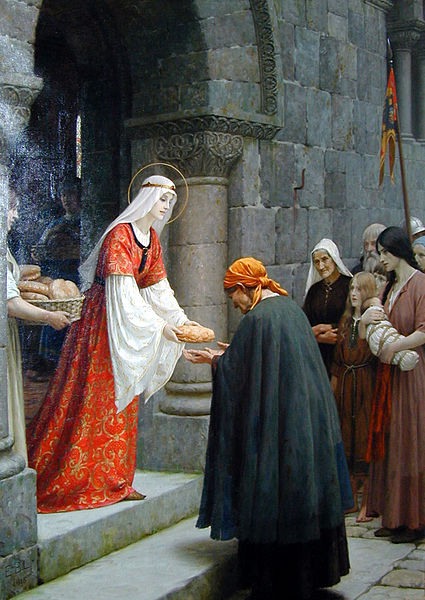
The celebrity’s burden — embracing the cause of the tragically displaced

Take up the celebrity’s burden–
The savage wars of peace–
Fill full the mouth of Famine (think of the PR)
And bid the sickness cease (while touching a leprous child – PR dynamite);
And when your goal is nearest
The end for others sought,
Say you don’t like talking about your charidee work (humility is good PR).

It’s not easy being one of the beautiful people. At least, I assume it isn’t easy. Being a thirty-year-old wastrel with a widow’s peak, flaring nostrils, and a forehead that is as high as the Sears Tower I am not blessed with the attributes (smooth skin, lustrous hair, perfect teeth, B.O. that smells of fresh honeysuckles, etc.) that mark someone out as being one of the beautiful ones.

Occasionally, I have been fortunate enough to bask in the toasty warmth of my celebrity betters. I think back fondly, even a little misty-eyed, to one of my first office jobs where I was so privileged to regularly meet famous British comedians, such as David Baddiel, who I was once instructed to find some paracetamol for. Poor David was suffering from a headache; now of course this was a matter of great concern, as being a celebrity David feels things on a fundamentally deeper level than us mere mundanes. What might be just a little headache to my mundane self, would to a person of David Baddiel’s calibre be torture, of which the likes of myself couldn’t possibly hope to comprehend. It was why I tacitly understood why he was unable to meet my eye line or say thank you when I handed him the paracetamol along with a glass of water. 

Of course, David Baddiel isn’t A-list — you can tell by the fact that his B.O. is more acrid than sweet. With a true A-list celeb (Johnny Depp, Angeline Jolie, Jude LawFrank Worthington) you have someone very special indeed, which is precisely why our society feels compelled to treasure them. An A-list celebrity cannot only feel their emotions more deeply than we can ours, they can also feel our emotions more deeply than we could ever possibly hope to. They are almost bursting with empathy. They hear our cries, our laughter; our joys, our disappointments. It is this skill, this understanding of humanity, that allows them to thrive and succeed as musicians, actors, etc. They are like idiot savants of the human condition.

This isn’t a new phenomenon, we have always been surrounded by extra special celebrities with wonderful powers, from Jesus’s curing of the lepers to the royal touch of medieval monarchs that could cure the mundanes of their scrofula. Is it any wonder then that our modern messiahs and sovereigns now head out to help create a better world? From war-torn countries, to environmental matters, we need celebrities to bring things to our attention and to help frame the debate. You have to think like Max Clifford. It’s no good just telling me about a child wounded by a landmine, but tell me that the child wounded by a landmine is being adopted by Brad and Angelina — now we’re talking. And who wants to listen to some expert tell you about what’s happening with famine brought about by the drought in East Africa when we have Geri Halliwell. Sure, he can give you facts, but he can’t make you feel it like Ginger Spice can. 

The cynical and snarky in the world, the hipster Gawker readers, will try to put a negative spin on this behaviour. They will try to convince you that it’s all just PR — that very often these celebrities are a distraction from the real issues, that they often aren’t informed enough, that celebrity activism is with a few exceptions a sad reflection on our increasingly tabloid world and can be damaging for charities concerned with less “sexy” causes such as depression and Alzheimer’s that have less appeal from the vantage of a celeb’s core messaging. This is, of course, shameful thinking. We need our celebrities to show us the way. Before Princess Diana posed dolefully in a flak jacket in Angola I had no idea about landmines. Now I have an opinion — I’m against.

The UN, and I am sure Ban Ki-moon would agree with me, could not function as it currently does without the hard, selfless work of Geri Halliwell in her role as a goodwill ambassador. If this was a truly sane world the UN Security Council would consist of Geri Halliwell, Sting, Brangelina, Jude Law, Mia Farrow, Roger Moore, Tom Cruise and Lenny Henry. Instead, we go and give Nobel Peace Prizes to the likes of Muhammad Yunus — as if he’s won any MTV Video Music Awards.   

 STAY TUNED for tomorrow’s Contemporary Displaced Writing post.

If you enjoyed this post, we invite you to subscribe to The Displaced Dispatch, a weekly round up of posts from The Displaced Nation, plus seasonal recipes, book giveaways and other extras. Sign up for The Displaced Dispatch by clicking here!

Related posts:

Img: Elisabet av Thüringen (Wikimedia Commons)

Dear Mary-Sue: Gap year destinations and learning to speak properly

Mary-Sue Wallace, The Displaced Nation’s agony aunt is back. Her thoughtful advice eases and soothes any cross-cultural quandary or travel-related confusion you may have. Submit your questions and comments here, or else by emailing her at thedisplacednation@gmail.com.

Dear Mary-Sue,

I’m in my last year of school, but instead of just mundanely heading off to university next September I’m planning on taking a gap year. I have some older friends who went on gap years and I was really impressed with how it rounded out their CVs. I was initially thinking of going to an ashram, but then I thought that I should go to where I can be the most useful. As I’ve heard you’re such a font of knowledge when it comes to matters of travel and international relations. Any suggestions?

Archie, Bath, England.

Dear Archie,

Go where you are most needed, sweet noble prince.  I say Somalia. Or Fresno.

Dear Mary-Sue,

I love reading the little globules of wisdom you spit out for us. I think we must have been separated at birth! We’re like two peas in a pod. Like you, I live in Arizona and I love all things British. Even the crap stuff like Torchwood. Anyhoo (wonder who I learned that term from? I love it! Use it all the time) I have one teeny query re: my one little teeny — my 13-year-old son, Scott. The other day I was watching Harry Potter and the Half-Blood Prince for, like, the thousandth time and I was thinking: why can’t my Scott speak like one of those lovely Harry Potter teenagers? I want him to sound a little more Dan Radcliffe and a little less Dan Ackroyd.

Susie-May, Arizona

p.s. Want to meet up?

Dear Susie May,

I have two words for you: Nicholas Witchell. Being a committed member of the sisterhood of the tea cosy (that’s the Mary-Sue term for an anglophile), you doubtless knew about the divine Nicholas W. His fiery red hair matching his fiery red passion. He’s clearly sex-on-legs — am I right or am I right, girls? Being the BBC Royal Correspondent, Nicholas not only has brains but also a healthy, deferential respect for constitutional monarchies. Now what I suggest is that you go onto YouTube and find all the Nicholas Witchell footage that you can find. Now your son Scott needs to spend at least an hour a day listening to Nicholas’s dulcet tones. Hopefully, he’ll do it willingly, but if he doesn’t then you may need to strap him down to a gurney. Also, if you take the audio from the videos and burn it onto a CD, you can make sure when Scott goes to bed, he turns on the CD. While he’s asleep the soothing voice of Nicky W. will be playing in Scott’s ears. Subconsciously, Scott’s brain will absorb all of Nicholas Witchell’s good speaking habits and before you know it little Scott will be like your own Little Lord Fauntleroy.

Mary-Sue

p.s. No.

Anyhoo, that’s all from me readers. I’m so keen to hear about your cultural issues and all your juicy problems. Do drop me a line with any problems you have, or if you want to share your fave meatloaf recipe with me (yum! yum!). As they say in Italy, “ciao!”

Mary-Sue is a retired travel agent who lives in Tulsa with her husband Jake. She has taken a credited course in therapy from Tulsa Community College and is the best-selling author of Traveling Made Easy, Low-Fat Chicken Soup for the Traveler’s Soul, The Art of War: The Authorized Biography of Samantha Brown, and William Shatner’s TekWar: An Unofficial Guide. If you have any questions that you would like Mary-Sue to answer, you can contact her at thedisplacednation@gmail.com, or by adding to the comments below.

STAY TUNED for Monday’s post.

If you enjoyed this post, we invite you to subscribe to The Displaced Dispatch, a weekly round up of posts from The Displaced Nation, plus some extras such as seasonal recipes and occasional book giveaways. Sign up for The Displaced Dispatch by clicking here!

Related posts:

A further Parisian lunch, à la displaced author Elizabeth Bard

As we’re continuing this month’s theme where we celebrate all culinary things Frenchie (well, you’ve got to really, the French are such a retiring lot — they’d never dream of singing their own praises), it seems like now is the time to let you into my shameful, dark secret. There is something in my past that I cannot escape from, no matter how much I may wish to. That secret, dear reader, is that I am, in fact, a quarter-French. Yes, some of my genetic make-up is Frenchie. Being a proud Englishman, this obviously churns me up inside.

Now my Gran, or Bonne-Maman as I called her, like many a Frenchie, thought of herself a good cook. Unfortunately for her she moved to England shortly after the end of the First World War. She left the bucolic center of France and found herself in the industrial paradise that is Teesside. It is somewhat redundant to note, but I will anyway, that England in the 1920s and 1930s was very different from the England of now. This is a time pre-Ainsley Harriot. Look at what passed for cookery films — not a single mention of Sally Salt or Percy Pepper. Even in the leafy climes of Islington you would be hard pressed to find a sun-dried tomato or a tub of hummus. These were dark, Ainsley Harriot-less times indeed.

So when I was instructed that as part of this blog I would be making a Parisian lunch using Elizabeth Bard recipes here in the Dennys-loving part of California that I call home, I thought back on my Bonne-Maman. Living in another country now is so easy. On my phone I can read English papers, I can, for the most part, try and approximate dishes that I’ve eaten in other countries. I can go into a supermarket in your average suburban strip-mall and I can guarantee I can find some exotic fruit or vegetable that it would have been unthinkable for this supermarket to stock 15 or 20 years ago. So when I received my recipes for an Omelette with Goat Cheese and Artichoke Hearts and for what Elizabeth Bard titles Better than French Onion Soup (after today’s Rugby World Cup Final, I’m guessing she means it should be called New Zealand Onion Soup), I’m struck by how easy it is to find all these ingredients and how easy it would be to find them in my hometown, where my Bonne-Maman spent the next 60 years of her life after moving there from France as a young adult.

But, for the most part, Bonne-Maman wasn’t able to get everything that she needed and so would make do with local alternatives. As a child in the early 80s when Bonne-Maman was still able to live in her own house and do her own cooking, I saw the end product of all of her years living in the north-east of England (hardly the gourmet capital of the world) and the compromises she had to make to recreate dishes from her French background. There was a whole repertoire that she had. One, in particular, that I recall was that when she would make a roast she would have a little side-dish to go alongside it that consisted of sliced onion doused in malt vinegar. It seems curious, though the way she made it, not at all unpleasant, and I am sure it has some French classic as its antecedents and for years could probably only buy malt vinegar in Hartlepool. The other thing I remember is steaks. Her steaks were bloody, which I think the neighbors rationalized as her being French (and they are such an odd sort). I seem to recall this being a source of contention in my parents’ relationship as my Dad favored the bloody steaks he had been brought up on, but my Mum insisted that they had to be cooked well-done. It was a debate that was only ended when the crisis over British beef in the late 80s saw my family dramatically reduce its beef consumption.

So as I follow Elizabeth’s recipes, I am just struck by how easy it is to buy and prepare all the ingredients that I need to recreate a delicious Parisian lunch, but my poor grandmother had to make do with malt vinegar, pease pudding and her own ingenuity.

STAY TUNED for tomorrow’s post on classic displaced writing.

If you enjoyed this post, we invite you to subscribe for email delivery of The Displaced Dispatch, a round up of the week’s posts from The Displaced Nation, including seasonal recipes and book giveaways. Sign up for The Displaced Dispatch by clicking here!

Related posts:

CLASSIC DISPLACED WRITING: Proust — The Way by Swann’s

There is a  discernible whiff of Frenchiness to the blog this month. Doubtless you can smell it too, it’s that heady scent of garlic, Gauloises and ennui. Like any true-blooded Englishman it has certainly got my nostrils flaring and my back up too, but don’t worry, I’ll contest it as best I can with pig-headed jingoism and outrageous displays of xenophobia.

However, we did have a specific request to bring back this rather irregular series on Classic Displaced Writing with a post on Proust, and specifically (as French food is a topic this month) one featuring “the incident with the madeleine.”

Some of you may, however, may recall that this series has touched upon France, or more specifically Paris, previously. We looked at an esssay by Saul Bellow and a New York Times article on James Joyce’s Paris.  Now there’s no prizes for noticing that both of those posts are concerned with France as seen and lived by a foreigner. Indeed, considering the nature of this series of Classic Displaced Writing and its semi-regular appearance on an expat-centric blog this is pretty much what you would expect.

The question is, is Proust displaced enough to merit an appearance? While not displaced by geography, as most of our featured writers have been, Proust is displaced by time, by the present. A sickly child who grew into a man who always suffered with his health (the last years of his life were spent mostly confined to cork-lined bedroom), a closeted homosexual, at heart a nineteenth century aristocrat struggling with the France of the twentieth century, there’s plenty to Proust’s life that sets him at odds with his present time and announces him as a stranger to his homeland, and so it isn’t surprising that he retreats into the past.

The famous “incident with the madeleine” is one of many moments In Search of Lost Time where the Narrator of the novel has an incident of “involuntary memory.” It is based on an experience Proust had in his own life, though more prosacially it involved the dipping of a piece of dry toast rather than a madeleine. Up until the dipping of  the cake into his tea, the only memory that the Narrator has of his family’s country home in Combray is of his parent’s friend, Charles Swann, visiting. Due to the visit of Charles, the Narrator is denied of his usual goodnight kiss from his mother. It is only years later when he dips his madeleine cake into his tea that he remembers doing the same as a child at Combray with his Aunt Leonie — and from this, other memories return:

… It is the same with our past. It is a waste of effort for us to try to summon it, all the exertions of our intelligence are useless. The past is hidden outside the realm of our intelligence and beyond its reach, in some material object (in the sensation that this material object would give us) which we do not suspect. It depends on chance whether we encounter this object before we die, or do not encounter it.

For many years already, everything about Combray that was not the theatre and drama of my bedtime had ceased to exist for me, when one day in winter, as I came home, my mother, seeing that I was cold, suggested that, contrary to my habit, I have a little tea. I refused at first and then I do not know why, changed my mind. She sent for one of those squat, plump cakes called petites madeleines that look as though they have been moulded in the grooved valve of a scallop-shell. And soon, mechanically, oppressed by the gloomy day and the prospect of a sad future, I carried to my lips a spoonful of the tea in which I had let soften a piece of madeleine. But at that very instant when the mouthful of tea mixed with cake-crumbs touched my palate, I quivered, attentive to the extraordinary thing that was happening in me. A delicious pleasure had invaded me, isolated me, without my having any notion to its cause. It had immediately made the vicissitudes of life unimportant to me, its disasters innocuous, its brevity illusory, acting in the same way that love acts, by filling me with a precious essence: or rather this essence was not in me, it was me. I had ceased to feel I was mediocre, contingent, mortal. Where could it have come to me from — this powerful joy? I sensed that it was connected to the taste of the tea and the cake, but that it went infinitely far beyond it, could not be of the same nature. Where did it come from? What did it mean? How could I grasp it? I drink a second mouthful, in which I find nothing more than in the first, a third that gives me a little less than the second. It is time for me to stop, the virtue of the drink seems to be diminishing. It is clear that the truth I am seeking is not in the drink, but in me. The drink has awoken in me, but it does not know that truth, and cannot do more than repeat indefinitely, with less and less force, this same testimony which I do not know how to interpret and which I want at least to be able to ask of it again and find intact, available to me, soon, for a decisive clarification. I put down the cup and turn to my mind. It is up to my mind to find the truth…

And suddenly the memory appeared. The taste was the taste of the little piece of madeleine which on Sunday mornings at Combray (because that day I did not go out before it was time for Mass), when I went to say good morning to her in the bathroom, my Aunt Leonie would give me after dipping it in her infusion of tea or lime-blossom. The sight of the little madeleine had not recalled anything to me before I tasted it; perhaps because I had often seen them since, without eating them, on the pastry-cooks’ shelves, and their image had therefore left those days of Combray and attached itself to others more recent; perhaps because of these recollections abandoned so long outside my memory, nothing survived, everything had come apart; the forms — and the form, too, of the little shell made of cake, so fatly sensual within its severe and pious pleating — had been destroyed, or, still half asleep, had lost the force of expansion that would have allowed them to rejoin my consciousness. But when nothing subsists of an old past, after the death of people, after the destruction of things, alone, frailer but more endearing, more immaterial, more persistent, more faithful, smell and taste still remain for a long time, like souls remembering, waiting, hoping, on the ruin of all the rest, bearing without giving way, on their almost impalpable droplet, the immense edifice of memory.

And as soon as I had recognized the taste of the piece of madeleine dipped in lime-blossom tea that my aunt used to give me … the good people of the village and their little dwellings and the church and all of Combray and its surroundings, all of this which is assuming form and substance, emerged, towns and gardens alike, from my cup of tea.

Extract from Lydia Davis’ translation of The Way By Swann’s from Penguin’s In Search of Lost Time, edited by Christopher Prendergast. This is a fairly new translation of A la recherche du temps  perdu, and it’s one I’ve had more success with than Scott Moncrieff’s more famous translation. You can buy it here. And you should, you know.

STAY TUNED for Wednesday’s RANDOM NOMAD interview with an expat in France.

If you enjoyed this post, we invite you to subscribe for email delivery of The Displaced Dispatch, a round up of the week’s posts from The Displaced Nation, including seasonal recipes and book giveaways. Sign up for The Displaced Dispatch by clicking here!

Related posts:

Image: MorgueFile
