The Displaced Nation

A home for international creatives

Tag Archives: What a Displaced World

EXPAT MOMENTS: Two Englishmen in New York

Following last month’s post on expat moments, we start a new series focusing on little moments of expat experience — moments that at the time seemed pifflingly insignificant. This week involves a celebrity encounter. No prizes for guessing the name of the celeb.

At Columbus Circle, for a fleeting moment, an opportunity presents itself.

A sidewalk collision between two pasty-faced men is avoided as both intuitively, if ungracefully, swerve to avoid bumping into each other. They are both headed towards the same crosswalk where they wait, shoulder-to-shoulder, for the traffic to stop. An observant onlooker might guess — correctly, as it turns out — from their uncoordinated, somewhat flailing gaits that both men are, in fact, English. The onlooker might also note, despite the difference in ages between these two men, that they are dressed similarly; both wear brown brogues, blue jeans, white shirts and blue velvet jackets. However, having established that this onlooker is particularly observant he or she notices more than that; they can see that though they are dressed similarly, the clothes of one of the men — the older man — are expensive and designer label whereas the younger man’s are from a department store.

As these two men wait at the crosswalk the younger man glances at the older and, though he has never before met him, recognizes him immediately. If you were to ask the younger man, he would confirm that he holds very strong views of the older man he is stood next to. If you were to press further, the younger man would admit that he has long judged the moral character of the older man stood next to him. If you were to have asked the younger man only an hour before how he would define “unctuousness,” he would merely would have replied with the name of the older man.

The younger man considers that he could lean in towards the older man and tell him that he thinks he should go “f**k himself.” But the younger man, though he would not admit it, is enthralled enough by the older man’s celebrity that he is striken momentarily dumb.

Instead, the younger man — who in his more vainglorious moments views himself as a modern-day Frank Capra everyman — thinks homicidal thoughts. As they keep on waiting at the crosswalks for the pedestrian light, and car after speeding car passes them, the younger man thinks about how the most … “accidental” … of nudges would send the older man under a New York cab.

And those few seconds, as they wait for the pedestrian light, last for the younger man the thinking and execution of a thousand “accidental” deaths, until finally there is the glow of the pedestrian crossing light and they safely cross the road before separating to go their own ways and the younger man can go back to pretending that he’s at heart a decent chap.

This post was first featured on Culturally Discombobulated

STAY TUNED for tomorrow’s post.

If you enjoyed this post, we invite you to register for The Displaced Dispatch, a round up of weekly posts from The Displaced Nation, with seasonal recipes, book giveaways and other extras. Register for The Displaced Dispatch by clicking here!

Related posts:

Image: MorgueFile
THE DISPLACED Q: Does living abroad make you more or less patriotic?

Now then, this IS an interesting question. Very topical, especially for me, as the Queen’s Diamond Jubilee is still being televised ad infinitum here in Australia. It’s almost like the networks can’t get enough of it. At one point this week it was on three channels simultaneously!

I’m not normally very patriotic — my opinions on the state of England and the UK are…well, let’s just say, that’s why I moved to Australia!

And yet — as I watch the parades, listen to the crowds shrieking, and imagine the atmosphere outside Buckingham Palace, part of me thinks: maybe I should be there? It is my home after all…and whatever else I end up being, I will always be British as well. I can’t imagine giving it up completely — it’s my history, man! And there are still things I do love about the old country. It’s an awfully pretty place, for one thing! It’s not England’s fault it’s being run into the ground by a bunch of idiots.

Mark Twain said:

Patriotism is supporting your country all the time, and your government when it deserves it.

Transferred loyalties

Oddly enough, I sometimes transfer my loyalties to wherever I call home, at least temporarily. It helps me to feel more involved with the local culture when I’m in a place, and I’m the kind of guy who’s more than happy celebrate whatever makes their country great as well.

In Thailand, for the King’s birthday, I kidnapped a gigantic yellow flag and fastened it to the back of my scooter. I saw nothing wrong with committing a minor offense to display my support for their monarch. And neither did the local police — they stopped me to applaud my efforts!

In Australia it goes without saying that I celebrate their national holiday, Australia Day. I do it for two reasons: first, I genuinely love Australia and all it stands for — it’s why I moved here as soon as I could! I really believe in their attitude to government, their national traits and their value system. Australia IS great, and it works. I think that’s quite rare in the world, and deserves recognition.

Oh and the second reason? Well, you celebrate Australia Day by going out in the sunshine, down to the river, and getting drunk. It’s not like it’s much of a hardship to get involved. 😉

But Britain is “great” — isn’t it?

Back to the Queen’s Diamond Jubilee. I hear stirring speeches from celebrities and Royal Family members, and feel…I dunno. Uplifted? Triumphant? It’s hard not to feel a tickle of pride when the eyes of the whole world are on the monarch of my tiny island.

But is it rose-tinted glasses that make me tear just a little, as the cameras zoom in on the Queen smiling at a joke from the commentator? Am I just caught up in the fever of the moment? The rest of England is going crazy for this. It’s hard not to feel just a little infected by it. But what exactly is it that I’m feeling? Mere nostalgia? Fond memories and a touch of homesickness?

As already mentioned, there’s plenty of reason not to feel pride in the country of my birth. There’s also plenty going wrong in England at the moment. The wages are terrible, unemployment is rampant, the economy is in the dumps. In my humble opinion, the UK is falling apart.

But the Jubilee itself was quite stirring, inspiring even, a reminder of all that was Great about Britain, and perhaps could be again.

Then again, I can’t help but remember that the Ancient Romans had the same idea: when the masses are starving in the streets, give them GAMES! A spectacle to take their mind off the hunger, to remind them of what a glorious empire they belong to — give them a taste of grandeur whilst they’re dying in the gutters.

Okay, so that’s a pretty cynical view to take. Hey, I’m here to play the Devil’s Advocate too, right?

So here’s my question to you kind folks: does being displaced — or out of your “home” country for any reason — make you feel MORE or LESS patriotic? And why is that?

Tell me what you think in the comments, or feel free to hit me up on Twitter at @TonyJamesSlater.

STAY TUNED for our next post, which will be on Monday.

If you enjoyed this post, we invite you to register for The Displaced Dispatch, a round up of weekly posts from The Displaced Nation, with seasonal recipes, book giveaways and other extras. Register for The Displaced Dispatch by clicking here!

Related posts:

Image: MorgueFile
LESSONS FROM TWO SMALL ISLANDS — 1) Keep Calm and Carry On

Justin Mussler is traveling around the world with his wife and two kids, recording their adventures in the blog “The Great Family Escape.” In a recent post defending his family’s decision to eschew a conventional lifestyle for one of constant travel, he says:

By the time it’s time to go home, we all realize that home is just not where we want to be.

Hmmmm… “Home is just not where we want to be.” Once upon a time, I could relate to those sentiments. I spent a significant chunk of my adult life living on two small (and rainy!) islands, England and Japan. I never expected to go home again.

But that was then and this is now. As regular readers of this blog will know, I’m now back in my native land, the United States — though still living on a small, mercifully less rainy, island (Manhattan).

So, can you go home again?

The conventional wisdom is that you can NEVER go home again, particularly if you spend more than three years abroad.

To which I say: “Poppycock!”

Well, not really. I’ve definitely had my Rip Van Winkle moments in attempting to get used to the United States again. Still do, in fact.

But unlike Mr Mussler and his family, home is exactly where I want to be right now.

By “home,” of course, I mean my original nation of birth. I mention that in case you’re one of those people who has lived abroad for so long that you no longer know where “home” is or have reached the point of questioning what “home” really means.

(If you are a Third Culture Kid who has never lived in your nation of birth, this post doesn’t really apply — though I’m happy to point you towards some blogs with plenty of posts that would.)

A few overall discoveries I’ve made since repatriating:
1) Travels are like stories: they need a beginning, middle — and an end — to have true meaning. By going home again, you can begin to see what you’ve actually retained from the experience. No doubt you changed some of your behavior — but how much of that was due to expediency and how much to actual lessons learned?
2) Hard as it may seem, travelers can contribute something of what they’ve learned to their native lands. Coming home again gives you a chance to do that.
3) We long-term expats, rex-pats and round-the-world travelers enjoy a good challenge. Trust me, going home again is a challenge of Olympian proportions — which just so happens to fit the theme The Displaced Nation will be exploring this summer.

Lesson #1: Keep Calm and Carry On!

And now to begin my new, occasional series for The Displaced Nation. Through my own expat-to-repat experience, I will try to demonstrate that going home again can be just as enriching as venturing across borders to travel and live.

So what did I learn from being displaced within two small-island countries for so long? I’ll start with the most obvious lesson that anyone who is at all familiar with Japan and/or England has doubtless picked up on:

KEEP
CALM
AND
CARRY
ON

In England it’s known as Stiff Upper Lip (SUL); in Japan, as gaman.

In America we use many words to describe this quality — perseverance, patience, fortitude, stoicism — but I think that’s because we don’t have a single cultural concept that corresponds to what the English mean by SUL or the Japanese by showing gaman.

This may be why I didn’t take to the concept in either country right away. On the contrary, I took to it kicking and screaming. Where the citizens of each of these countries saw grace, strength, endurance, and perseverance, I saw passivity, masochism, fatalism and pain. “Why is everyone bowing so readily to their fates?” I would ask myself repeatedly.

And, though I never committed an act of “queue rage” while standing in line at the post office in the English town where I lived, I came pretty close — especially when watching others who’d come in after I did get served before me.

On those occasions, I felt like crying out: why don’t we try a serpentine line instead? (You know the kind of line I mean — when all customers are funneled into one big snaking queue, demarcated by ropes or barriers. When you reach the head of the queue, you are directed to the next available server.*) But I was too polite to do so.
*Fellow serpentine-line enthusiasts should check out Seth Stevenson’s terrific article on the topic, published just now in Slate.

It’s the weather, stupid!

Thank you, Jared Diamond, for your book that supports, in scholarly depth and detail, the inkling I had while living in Japan and Britain that climate has much to do with how people behave. For a long time, I’d been convinced that it’s the weather on both of these small islands that builds stoicism.

My mental image of gaman is the famous woodblock print by Hiroshige depicting figures huddling under straw umbrellas as they cross a bridge in a driving, chilling rain — carrying on despite. Hiroshige was much admired in Europe for the slanting lines in his prints. But I suspect the Europeans didn’t fully understand the conditions that inspired him to portray rain in this manner — it’s a rainy (and windy) old island, Honshu.

My mental image of England is — well, in fact, it’s what happened on the River Thames Flotilla Spectacular for Queen Elizabeth’s Diamond Jubilee this past week-end. Yes, it rained on that dear lady’s parade, yet she carried on despite…

Now, I don’t mean to equate the English stiff upper lip with Japanese gaman. The Japanese have a grounding in the Buddhist religion, which shapes their understanding of this concept. In addition, they must often contend with fairly severe climactic conditions — earthquakes as well as typhoons. No wonder they tend to emphasize the fatalistic aspect of keeping calm and carrying on. There’s nothing you can do about Mother Nature’s whims, so just bow to the inevitable and make the best of it.

The English, by contrast, tend to feel that they should make the best of situations by finding some humor in them. SUL is called for in situations where you might otherwise be overwhelmed by huge feelings (to the point where your upper lip might start to tremble). Black humor along with understatement can provide some welcome relief or distraction: “I won’t let the Jerries spoil our picnic! What’s a few bombs on a sunny day?” (Hey, I wonder if the Queen cracked a joke about the rain the other day? She’s reputed to have a sense of humor…)

Respect for the aged

In my view, however, the overlap between England and Japan on this point is greater than the differences. It’s interesting, for instance, that both countries have created a special category for those who’ve mastered their professions through years of persistence. Japan confers the title of Living National Treasure, or Preserver of Important Intangible Cultural Properties, to prominent artists or craftspeople of advanced years.

Likewise in England, knighthoods and dame-hoods (is that a word?) go to artists, entrepreneurs, and other major contributors to British society once they’ve reached a certain age — Dame Judi Dench, Sir Richard Branson, Sir Paul McCartney (almost 70 and still rockin’ with no signs of stoppin’!).

And then there’s the veneration shown to Queen Elizabeth herself. Having bounced back from her self-proclaimed annus horribilis, she now finds herself admired precisely for the quality that people (myself included!) at one time loathed: her ability to keep calm and do her duty. As the political journalist Anne Applebaum put it in her Slate column this week:

…the queen, simply by living so long, has come to epitomize an increasingly rare idea of duty that many in Britain, and elsewhere, admire. She doesn’t quit, she doesn’t complain, she doesn’t talk to the press or protest when people draw nasty caricatures or say unpleasant things about her family…

My, she has aged well!

My queenly umbrella

When touring Nova Scotia in the rain this time last year, I ended up buying the exact same “birdcage” umbrella that the Queen uses. A product of the Royal warranted umbrella maker, Fulton, the umbrella is transparent so that the Queen’s public can still see her, but then trimmed with the appropriate color so that it matches her outfit exactly. (Mine is trimmed in gold.)

Notably, that’s the brand of umbrella she and Camilla were carrying as they stepped off the royal barge when Sunday’s Jubilee pageant came to an end at Tower Bridge.

I think I was attracted to the umbrella not just because the Queen uses it but because it reminded me of the transparent umbrellas you can buy everywhere in Japan — helps you to see where you’re going when you’re bent over in the wind and rain like a Hiroshige figure.

Of late a couple of my friends have remarked that I remind them of the Queen. At first I was horrified: are they trying to say I’m getting on? But I think they might have been referring to my habit of wearing hats to protect my skin from sun and rain (which I picked up in Japan, actually) — and now, of course, there’s my Fulton umbrella! 🙂

My takeaways

The lesson of “keep calm and carry on” enriches my current life in all kinds of ways and, I’m convinced, can enrich the lives of my fellow Americans. Here are a few scenarios close to some I’ve experienced, with pointers on appropriate responses:

1 — Two airplanes crash into the twin towers in your city and there are constant rumors of another attack on the subways. Keep calm and carry on — and take the bus for a change. It’s slower, but the culture is a lot more pleasant.

2 — Your dentist asks you if you mind a slight pinprick from the needle used to inject the novocaine for fixing your cavity. Keep calm and carry on — and resist the temptation to remark: “Yanks are such wimps!” Instead, make a joke: “That’s going to make it damn tricky to keep talking to you.” He won’t laugh, but at least you’ll be seizing the occasion to practice your black humor, a key component of SUL.

3 — You’ve gathered together a group of friends from your apartment building to go out for dinner. You all meet in the lobby, but just as you’re about to step outside it starts raining like it does in the tropics. Your friends show hesitancy and want to call off the evening’s festivities. Keep calm and carry on — and think of the Queen. After checking that everyone is wearing the proper foot gear (wellies), go out the door first, wielding your queenly umbrella. So what if you get a bit wet? Just smile and be regal. If anyone looks at you as though they think you’re crazy, give them the royal wave. How dare they intrude on this, your finest hour? Off with their heads!

* * *

So, tell me: does any of this make sense, or has living abroad for so long rendered me totally bonkers?!

STAY TUNED for Thursday’s post, a Displaced Q on patriotism and the expat life, by Tony James Slater.

If you enjoyed this post, we invite you to register for The Displaced Dispatch, a round up of weekly posts from The Displaced Nation, with seasonal recipes, book giveaways and other extras. Register for The Displaced Dispatch by clicking here!

Related posts:

Image: MorgueFile
Dear Mary-Sue: The Queen’s Diamond Jubilee — not the most sparkling of times

Mary-Sue Wallace, The Displaced Nation’s agony aunt, is back. Her thoughtful advice eases and soothes any cross-cultural quandary or travel-related confusion you may have. Submit your questions and comments here, or else by emailing her at thedisplacednation@gmail.com.

Another month passes us by, Mary-Suers. It seems only moments ago that I was penning my New Year post and yet here we are at the beginning of summer. Really, where does the time fly (and how many air miles does it have)?

Anyhoo, let’s get on with the show. We were running low on submissions this month, but this week’s jubilee celebration in Ye Olde Englande seems to have got The Displaced Nation readers all a-fluster.

__________________________________________

Dear Mary-Sue,

I don’t understand all the palaver about Queen Elizabeth II and her 60 years on the throne. Why is it such a big deal when the Britain she presides over now is much reduced in prestige from the one she inherited? I mean, it’s not as though her reign has heralded a second Elizabethan Age!

Curious from California

p.s. Yes, I am an American, just like you, but that’s not the reason I hold these opinions. Most of our fellow Yanks worship the British monarchy (don’t ask me why).

Dear Curious,

Do you have any travel-related queries or are you in need of any relationship advice? That’s kind of the point of the column, honey!

Did you send this to Tina Brown first and get no response? She’s always good for some royal chit-chat.

Write back when you have some juicy sexual problem for me to pontificate on. If it involves Tina Brown all the better. Although in fairness, a lot of the relationship letters I receive seems to involve Tina “man-eater” Brown.

Mary-Sue

———————————-

Dear Mary-Sue,

I’m an American expat in England, and the Diamond Jubilee celebrations that just took place were my first big exposure to how the Brits treat their royal family. Frankly, I think they could have done better. I mean, put most of the Royal Family on a boat in the middle of the river? It’s almost as though they were setting them up as a target for anyone who would like to dispose of them in one go. And I also kept thinking that the boat could easily capsize (what in heavens name were all those other boats doing there?).

Finally, I found it disrespectful of the Brits to expose their elderly monarch to the cold and wet river conditions. What if she contracts a nasty cold and chest infection?

Lorrie from Lancaster

Not only that Lorri, but they made her sit through a concert featuring Will.i.am (or however you spell it) and Grace Jones. What 83-year-old wants to sit through all that? They should have got her whoever the British equivalent of Lawrence Welk is. My dear departed mother loved Lawrence Welk – and who can blame her? The man was a natural entertainer. They didn’t call him the Elvis of North Dakota for nothing.

Mary-Sue

———————————-


Dear Mary-Sue,

I’m a British expat in Dubai, and I am now suffering a case of acute homesickness owing to not being at home for the Diamond Jubilee celebrations. It’s not the same to watch it on TV, and the parties held by British expats here — well, I attempted to join in but just couldn’t get into watching people dressed up like Mary Poppins or Knights of the Realm. Many of the latter were parading around in a drunken stupor bellowing out “God save the Queen!”

Do you think I’m crazy to feel this way? Wouldn’t you feel odd trying to celebrate 4th of July in Britain, for instance? I expect you’d be longing for a barbecue, just as I was for an old-fashioned street party.

Debbie from Dubai

Honey, July 4th is a holiday for the whole world.

Mary-Sue

___________________________________________

Anyhoo, that’s all from me readers. I’m so keen to hear about your cultural issues and all your juicy problems (no doubt all about Tina Brown) then drop me a line.

Mary-Sue is a retired travel agent who lives in Tulsa with her husband Jake. She is the best-selling author of Traveling Made Easy, Low-Fat Chicken Soup for the Traveler’s Soul, The Art of War: The Authorized Biography of Samantha Brown, and William Shatner’s TekWar: An Unofficial Guide. If you have any questions that you would like Mary-Sue to answer, you can contact her at thedisplacednation@gmail.com, or by adding to the comments below.

STAY TUNED for tomorrow’s post. Mary-Sue has heard it’s going to be great.

If you enjoyed this post, we invite you to register for The Displaced Dispatch, a round up of weekly posts from The Displaced Nation, with seasonal recipes, book giveaways and other extras. Register for The Displaced Dispatch by clicking here!

Related posts:


A marathon reign of Olympic proportions: Queen Elizabeth II’s Diamond Jubilee

Regardless of where you were in the world at the weekend, you were most likely aware of a little party going on in Britain, to celebrate one woman’s six decades as Queen.

Queen Elizabeth II is only the second monarch of Great Britain to have reigned sixty years, the first being Queen Victoria, who was on the throne for 63 years and 7 months. Given the Royal Family’s record of longevity — the Queen Mother was 101 when she died in 2002 —  Victoria’s record could well be beaten in 2016, and Brits shouldn’t rush to chuck away the flags and bunting. They’ll probably need them in another ten years’ time for Britain’s first Platinum Jubilee.

Sixty years is a long time for anyone to be in one job, particularly when you didn’t get much say in your nomination for it. And, OK, while republican sympathizers might think a carriage clock for the mantlepiece at Buckingham Palace would be adequate recognition, millions of Brits this weekend seemed very happy to foot their share of the bill for the extravagant national celebrations.

A job for life

Most people would have quit that job long ago. The Queen, however, is made of sterner stuff, and her determination to see the job through to the end — quite literally — means, inevitably, she has seen huge changes during her reign.

Not least of these is the issue of how she came to be Queen in the first place. Forced to choose between being King and marrying divorcee Wallis Simpson, Edward VIII abdicated the crown to be with the love of his life, and in doing so made his younger brother King, and his niece Elizabeth first in line to the throne. To have a monarch married to a divorcee went against the teachings of the Church of England, of which the British monarch is Supreme Governor.

Ironic, then, that three of Queen Elizabeth’s four children have divorced, including, of course, the Prince of Wales, Britain’s next King. They all divorced or separated in 1992, the year referred to by the Queen as her “annus horribilis”.

The monarchy survived this crisis with its usual show of stalwartness and stiff upper lip, only to be hit, five years later, by a much bigger crisis — the greatest since the abdication of the Queen’s uncle in 1936.

Making a rod for one’s own back

After the sudden death of Diana, Princess of Wales, the Queen again employed a stiff upper lip in her “business as usual” approach to the tragedy, but drastically underestimated the intensity of the public’s grief at the death of her ex-daughter-in-law. The public perceived the Queen as cold and uncaring when she stayed in Scotland in Balmoral Castle while insisting on adhering to Royal  protocol by not having the flag at Buckingham Palace flying at half mast.

In an article in The Telegraph, Mary Francis, a former advisor of the Queen,  said that at the time she “feared that republican MPs would call for a end to the monarchy because of public anger at the Royal Family’s initial reaction to the death of Diana.”

In the Radio 4 documentary, “A Royal Recovery”, Mrs. Francis said:

I do remember walking into Buckingham Palace the first morning I was back. Although there were so many people around, it was very quiet. It was a threatening and rather unpleasant atmosphere.

Rising from the ashes

Incredible, then, fifteen years later, to watch the enthusiastic crowds in London at the weekend as 1,000 boats sailed up the River Thames in the largest pageant on the Thames since the reign of Charles II, 350 years ago. It was as if the Diana crisis had never happened. Or maybe it was something more – an acknowledgement, admiration, of this woman’s unswerving devotion to duty.

As my Australian friend, Kym, said to me yesterday:

“Regardless of what you think of the monarchy, it’s an amazing testament to a woman who has been in ‘the job’ for 60 years.”

Indeed. Sixty years is, in terms of Olympian feats, a marathon; one which deserves a crowd to cheer on the runner.

Our theme for summer: Olympian Feats

It’s fitting, therefore, that the Jubilee’s acknowledgement of stamina and determination should come at the time of another event when these qualities are essential:  the 2012 Summer Olympics in London.

Because of this, we have decided to revolve our summer posts around an Olympic theme — not necessarily the sports themselves, but more about the qualities required of an Olympic athlete, or a long-reigning monarch.

As we are more armchair sportsmen, however — and it is Wimbledon very soon, of course, which takes up an awful lot of armchair time —  we will be taking a break ourselves, by cutting our posts down to four per week rather than the usual five. Nevertheless, you can look forward to two new series starting this month — “Chance Encounters” and “You CAN Go Home Again” as well as the familiar Random Nomads, Displaced Qs, questions for Mary-Sue, book reviews, and bulletins from Libby in Woodhaven.


If you enjoyed this post, we invite you to subscribe for email delivery of The Displaced Dispatch, a round up of the week’s posts from The Displaced Nation. Sign up for The Displaced Dispatch by clicking here!

THE DISPLACED Q: On your travels, what’s the most memorable chance encounter that brought you closer to The Sweet Life?

Since the beginning of May, I’ve been posing weekly questions as a way of getting at how we travelers experience La Dolce Vita, or The Sweet Life.

Seeking truths by your own lights — that’s what’s known as the Socratic method!

But while my questions thus far have focused on the sensory delights that travel offers — heart-stopping sights, delightful sounds, intoxicating scents, delicate flavors — today’s question is a little different. I want to know about the people you’ve encountered by chance on your travels, who’ve opened your heart and mind to the possibility of living The Sweet Life.

I’ve been very lucky in my life. I’ve met quite a few individuals who have inspired me in one way or another. Perhaps it’s because I’m a big believer in fate; I’ve always thought that everything will play out according to plan, if I just let it.

Not that I sit around and do nothing. Rather, I try to do as much as I possibly can, in the hope that I’ll end up doing enough of the Right Things to shape my life to come. Some of those things will reveal their hidden meaning only years later, in hindsight…

“Life is what happens to us while we are making other plans.”

— American cartoonist Allen Saunders, 1957 (later featured in a John Lennon song)

A couple of early mentors

I owe this philosophy in part to something that happened to me when I was still living in the UK, thinking I was going to become an actor. In order to help my sister, Gillian, integrate into university life, I took her to a kung-fu class. The teacher (or sifu) became more than just a friend to her, he became a spiritual mentor.

What Gill learned passed through to me, and eventually we both attended a personal development seminar that changed our whole worldview. I became more open and generous, rejecting the lessons I’d learned at acting school about clawing my way to the top over the bodies of those less fortunate. My epiphany led me to see that acting was an every-man-for-himself type industry — not exactly good for my soul.

So I gave it up. I went traveling instead. When volunteering in Ecuador, I met Toby, who also helped shape the course of my life. Toby was my boss at the Ecuadorian animal shelter; and, as I recount in my book, That Bear Ate My Pants!, he was confident and capable, at ease in his own skin — just the way I wanted to be.

Toby told me all about his adventures as a professional diver in Thailand, and I began to crave that life as though it was the answer to all my heart’s desires.

He also tricked me into getting my head shaved, the bugger.

A Sheila who suddenly showed up in my life

After three months in Ecuador, I suffered some pretty severe reverse culture shock when I got back to England. I got quite depressed, and wanted nothing more than to leave again. Well, it’s England — can you blame me? (No offense to those who are enjoying the Queen’s Diamond Jubilee celebrations while reading this…)

Around that same time, Gillian was traveling in the USA with a bunch of friends she’d met while working for Camp America. I decided to fly out and meet up with them, in the hope that a few more adventures would dispel my unhappiness.

By the time I got there, she only had two companions left, a young Kiwi-Aussie couple called Richie and Krista. We hung out together for a couple of weeks and had fun, and one by one they, and then the two of us, left for home.

Back in England again, I busied myself trying to recapture the combination of excitement and contentment I’d found in Ecuador, but to no avail. In the end I left for Thailand, following Toby’s advice, hoping that another stint of volunteering would sort my head out.

By pure chance, Gill had invited Krista to come and explore England with her; I flew out the same day she flew in, and we met briefly at the bus station. I said my good-byes and was gone. Though my original plan was to stay away for three months, I got kind of caught up in things and didn’t come back for over two years.

The two girls meanwhile, roamed around the UK until their money ran out, and Krista flew back to Australia. Gill promised to return the visit as soon as she could afford to.

In Thailand, I neither knew nor cared about such things! I was having a great time, diving for a living and partying every opportunity I got.

Toby would be proud, I thought.

Until one day I woke up broke. I’d lost a lot of money to fraud and then had what was left stolen from my bungalow. I realized I would never survive on my meager diving wages. My friends supported me for a while, but I knew I couldn’t ask this of them for long.

It was time to face facts; I was going to have to go home.

Hang on, there’s that Sheila again!

By this time, Gill was in Australia, exploring the country with Krista in a knackered van covered in multi-colored handprints. In a series of tearful emails to my sis, I poured my heart out — telling her how much I hated the idea of abandoning all my hopes and dreams and going home.

She wrote back with an offer from Krista: I could come over to Perth and stay with her family! Krista had even lined up an interview for me with a local job agency — I could hardly believe it! I still didn’t want to leave Thailand, but at least this way I could carry on traveling. (Krista and Gill also pointed out that there were plenty of spare seats in their van…)

I flew to Australia without the price of a cup of coffee. I didn’t even own enough clothing to fill a bag. The girls met me in the airport with their crumbling van (nicknamed Rusty!), and I immediately learned a few things about Krista:

  1. She was prettier than I remembered.
  2. She was now single.
  3. She was a whole lot of fun to be around!

Six years later, after many adventures together, Krista and I were married in the grounds of Taunton Castle, in Somerset in England. Her whole family flew out to join in the medieval-themed celebration, and not long after they flew back, we followed them, back to Perth, where we now live.

Of course, it was a LOT more complicated than that.

But as chance encounters go — and in terms of the ones that influence your life the most — well, that one, for me, takes the biscuit!

What about you? I want to know what chance encounters have affected you the most during your travels — leading to new experiences you wouldn’t have otherwise had. And did they ultimately take you closer to The Sweet Life, as in my case?

Spill the beans in the comments below. (You know you want to!)

STAY TUNED for Monday’s post, a tribute to Queen Elizabeth for lasting 60 years on the throne, despite a period of displacedness.

If you enjoyed this post, we invite you to register for The Displaced Dispatch, a round up of weekly posts from The Displaced Nation, with seasonal recipes, book giveaways and other extras. Register for The Displaced Dispatch by clicking here!

Related posts:

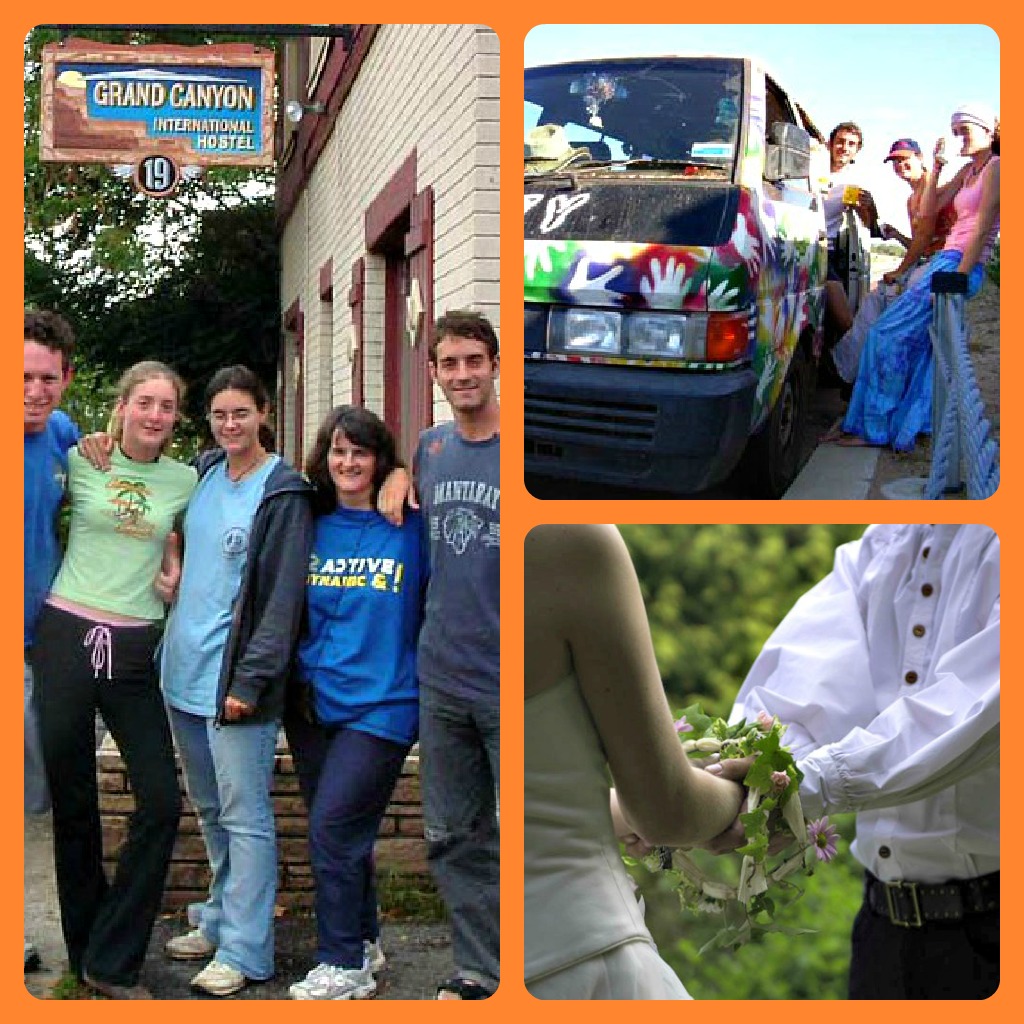
Images from Tony James Slater’s personal collection: Touring the Grand Canyon with Krista (she is in the green tee shirt), her boyfriend and his sister, Gill; his reunion with Krista and Gill in Perth, Australia, some years later (Tony is driving Rusty); all of this leading to Tony and Krista’s medieval-themed wedding in the UK (this is their “hand fasting”).

For expat novelist Laura Graham, even a dark Tuscan alley has La Dolce Vita to spare

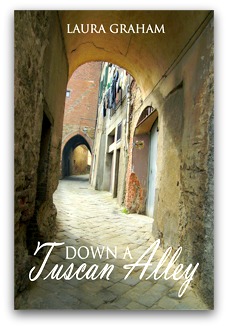
“Down a Tuscan Alley” — when I first heard the title of Laura Graham’s debut novel about an Englishwoman in Tuscany, I assumed it would be a thriller or mystery. Something nefarious would happen down a Tuscan alley, and the protagonist, whose name is Lorri, would find herself enmeshed in events beyond her comprehension, fearful of getting caught in the crossfire between rival Mafia gangs…

The book is no such thing, I’m happy to report (I’m not a fan of Mafia thrillers). Strange things do happen in the dark alley outside of the tiny flat where Lorri lives in the Centro Storico (village on a hill) of the Tuscan town of Sinalunga — but nothing worse than a peeping Tom. And at one point there’s a shady-looking man following Lorri — but he turns out to be (relatively speaking) harmless.

No, the book’s real mystery has to do with why Lorri is living in a tiny Tuscan village on her own. Well, she’s not on her own but has two cats. The last time she was in Sinalunga, it was with her husband, Richard. They had bought the flat together and Richard fixed it up. But now their marriage is over because of Richard’s infidelity. Or Lorri thinks it is over — Richard is having second thoughts.

Lorri, however, is determined. She has come to Italy to get lost in the culture and start her life again. But is she doing the right thing? Her Italian neighbors treat her with some suspicion: what’s a woman doing living on her own, with no visible means of support? (She has decided to do B&B in her little flat, but since it has only one bedroom, when the guests come, she has to sleep on the sitting room floor.)

And she also has to persuade herself to trust her gut instincts. As she says toward the start of the novel:

Am I crazy to come here? Hardly any grasp of the language, forty-seven, alone and with virtually no money? Many would think so…

Lest you think we’re venturing into Under the Tuscan Sun territory, rest assured, we’re not. Lorri does not take life, let alone her midlife predicament, too seriously. This is a flat overlooking an alley we’re talking about, not a 250-year-old villa. And so what if she ends up seizing an opportunity to get involved with the handsome young builder Ronaldo? Isn’t La Dolce Amore the quickest way to obtain La Dolce Vita?

But before I get too carried away with the story, let me turn the conversation over to Laura Graham, who has graciously agreed to answer a few questions about both her book and her life story — which, as she freely admits, the novel is based on.

The decision to write an autobiographical novel

Thank you so much, Laura, for agreeing to this chat. Your story — both in the book and in real life — neatly combines the two themes we’ve been talking about on The Displaced Nation this month: the quest for La Dolce Vita and the need for taking a “midlife gap year,” which sometimes heralds an even bigger life change. But let’s start by having you talk a little about your background — where you were born, what you studied and why you went to live in Italy.
I was born and brought up on the Isle of Tiree on the West Coast of Scotland for the first six years of my life. I then came to London and entered a convent school.

Later, as an adult, I won a scholarship to study drama at the London Academy of Music and Dramatic Art for two years. I received the prize for being the most promising student and immediately got a job understudying Helen Mirren in The Balcony at the Aldwych Theatre in London. I had a long and successful acting career at the Royal Shakespeare Company and the Young Vic, also on television.

When my long relationship ended with my former partner, I felt the need to turn my life around and decided to begin again in Italy. About ten years before, I’d invested £6,000 in a tiny hilltop village apartment in Tuscany, never thinking that one day it would become my permanent home. I still live in the village, but in a house, with my partner Rosalbo, a property restorer and an artist (he paints cats!). Besides writing, I run my own holiday agency, called “Laura’s Houses.”

Down the Tuscan Alley is your first novel. Have you written anything else?
I have also written a book for children called A Tale of Two Tuscan Cats, which was published last October. It has recently come out in Italian. Rosalbo did the illustrations.

What made you decide to write a novel about a middle-aged woman who is determined to change her life by moving abroad?
Because I’ve experienced it and thought it would make a good story — and might help others so inclined.

Why a novel and not a memoir?
I wrote my story in a novel form to protect the people I wrote about — I’ve changed their names, although some of them are now dead.

What audience did you have in mind when writing the book?
Women like myself, who want more from life than just settling into middle age with nothing but memories. Life is to be lived!

One of your Amazon reviewers wrote: “Brava! Brava! Brava! I loved reading Down a Tuscan Alley. The comic cast of characters brought me to the heart of bellisima Italia.” Other readers, however, said they were grateful that the book isn’t just about how beautiful Italy is. To which parts of the story have most readers responded?
The parts that are thought-provoking — about losing oneself in another culture in order to find oneself — and the humor are what people seem to enjoy.

Getting to the heart of La Dolce Vita…

From the time she arrives Italy, Lorri seems to be in touch with the little things that make her Tuscan alley so different from the Devonshire alley where she was living with friends, just before she left: the old stone steps, the steeple of the magnificent ochre-colored church she can see from her window, the birdsong… Is there something special about Italy that awakens the five senses?
In my opinion it is the light that awakens the senses. The light in Tuscany touches something in you, brings you to life — it’s like a medicine, a tonic.

Since you’re a former actress, would you say that daily life in Italy is more theatrical?
Living in Italy is certainly more theatrical than living in the UK. The people here are open and spontaneous.

And Lorri immediately becomes part of that drama. As her elderly English-speaking neighbor in Sinalunga, Lionello Torossi, says: “The people are delighted to see you…You are their portable theater.” But doesn’t some of the charm of a place have to do with its novelty value? Wouldn’t an Italian feel charmed by a Devonshire alley?
I think the Italians would be fascinated by a Devonshire back alley, if only to think — how is it possible to live there?

…and La Dolce Amore

At one point, Lorri is contemplating her affair with Ronaldo and says to herself: “How can you speak with your heart when you don’t know the words?” Call me a skeptic, but couldn’t their relationship change for the worse once their verbal communications improve?
No, I think Lorri would still find Ronaldo enchanting once she’s able to understand more of the language. But perhaps also more infuriating at times!

Lorri also says, with reference to Ronaldo: “These torrid passions are what happens to English women in hot countries.” Is romance so very different in Italy as compared to the UK?
Torrid passions indeed! The Italian art of seduction is very different from the UK. An Italian makes a woman feel every inch a woman and delights in her beauty and femininity no matter what her age.

Many of The Displaced Nation’s readers are in cross-cultural relationships. What do you find to be the biggest challenge about getting together with someone of another culture?
I cannot pretend it’s easy getting together for a long time with someone of a different culture — although it’s not the culture so much as the mentality. There are many things to learn, mainly about one’s self — and that’s always a challenge. Here in Italy, it’s the language I find most difficult and the humor, which is somewhat different from ours. Of the two, language is the bigger difficulty. Communicating is the key to success when living in another country. Otherwise, you can’t offer as much as yourself as you would like to.

The challenge of exporting La Dolce Vita

After living in a small Italian community for so long, do you think you could ever fit back into living in Britain?
No, I can’t imagine myself living again in the UK even though I go back twice a year and enjoy it. But if I had to I would adjust simply because I’m English. But the biggest culture shock — apart from the food — would be the people. I’ve grown so used to the warmth of the Italians.

Could you bottle the formula you’ve developed for La Dolce Vita in Tuscany and bring it back with you?
The only way to bottle the formula of the Tuscan Dolce Vita is to carry it inside my heart — and take it with me wherever I go.

Coming soon!

Please tell me that you’re working on another book. By the time I finished Down a Tuscan Alley, I’d grown fond of Lorri, Ronaldo and the various neighbors — and felt bereft!
I am on the last chapter of my next book: The Story of Kelly McCloud. This is also set in Italy and is about a young woman who takes a job as a housesitter in an Italian villa. Amongst an eccentric English family, a fallen angel and a dragon, she discovers how to use the whole of her brain and realizes the potentiality of the human race.

Assolutamente favoloso! Thanks so much, Laura!

Readers, you can purchase Down a Tuscan Alley on Amazon. You can also read more about Laura Graham at her author site. And, should you now feel tempted into trying out La Dolce Vita for yourself, then consider renting one of her two houses in the Centro Storico of Sinalunga. What are you waiting for?!

STAY TUNED for tomorrow’s episode in the life of our fictional expat heroine, Libby, who has traded her Boston Red Sox cap for a Sherlock Holmes deerstalker in her quest to uncover her husband’s roots. (What, not keeping up with Libby? Read the first three episodes of her expat adventures.)

If you enjoyed this post, we invite you to register for The Displaced Dispatch, a round up of weekly posts from The Displaced Nation, with seasonal recipes, book giveaways and other extras. Register for The Displaced Dispatch by clicking here!

Related posts:

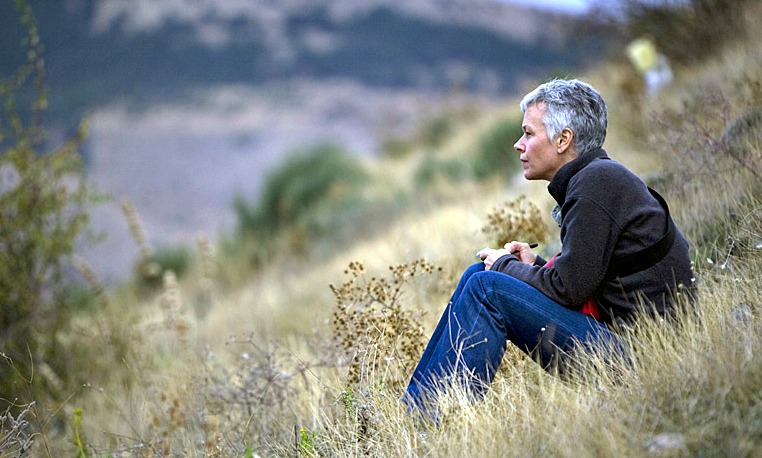
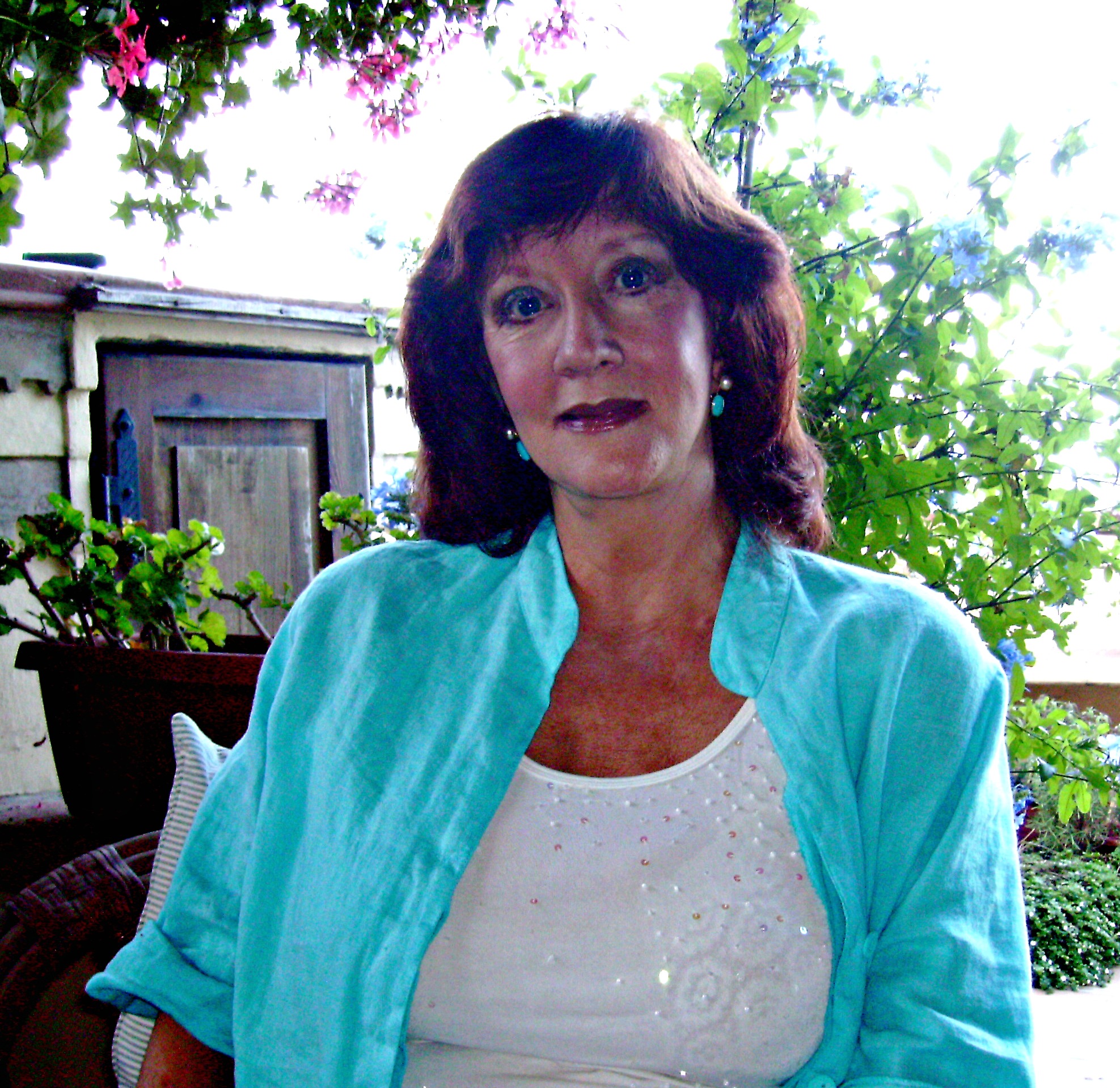
img: Laura Graham, on the terrace outside her house in Tuscany.

Living La Dolce Vita with Food Writer and World Explorer Robyn Eckhardt

Veteran travel and food journalist Robyn Eckhardt is here. A few months ago, she shared some insights on Southeast Asian cooking with Displaced Dispatch subscribers, but for this post I’ve asked her to supply a recipe for La Dolce Vita, or the Sweet Life — drawing the ingredients from her extensive world travels and their sensory delights — along with an easy version anyone can try!

Robyn Eckhardt’s Personal Recipe for La Dolce Vita

Mix together the following:

3 heart-stopping sights

1) The Bund, Shanghai, in 1990 before the city underwent its construction boom. It was of those moments when you realize that a place you know by heart from books (I studied Chinese history in college and grad school) is actually real.
2) Istanbul’s Blue Mosque from a taxi at 1:00 a.m. on a crisp, clear February night. It was my first time in Turkey; I’d just arrived from Shanghai, where I was living at the time. The combination of jetlag and being somewhere so foreign and utterly different to the place that I called home was like a slap in the face, in a good way.
3) When I was 17 I saw the Statue of Liberty up close on a Circle Line tour. Even though I was your typical cynical, jaded teenager, my jaw kind of dropped. I imagined the thousands and thousands of immigrants to the US arriving by ship and having that same view. It’s still a pretty amazing sight, I think.

11 intoxicating scents

1) In most any neighborhood in Chengdu (capital of China’s Sichuan province) at around 5:00-6:00 p.m., the scent of dried chilies hitting hot rapeseed oil.
2) Just-off-the-boat anchovies grilling in Sinop, on the Turkish Black Sea.
3) Chicken barbecuing anywhere in Thailand.
4) Chòu dòufu, or “stinky beancurd,” in Taipei — funky yet beguiling.
5) Jasmine flowers in bloom on a hot summer ‘s (which is actually in September or October) evening in the San Francisco Bay Area.
6) On winter evenings in Santa Fe, burning piñon tree branches in a hundred fireplaces.
7) The seafood section in the market in Butuan, Mindanao in the Philippines, which smells like nothing but seawater — it smelled so good we didn’t mind eating kinilaw (the Philippine “ceviche”) prepared by a fish vendor, right smack in the middle of the market.
8) In any Turkish town or city very early in the morning, the first whiff of rising dough and baking bread from any bakery.
9) The enveloping, almost chokingly overwhelming scent of spices freshly ground in huge quantities at an old, Indian-run spice shop in George Town, Penang.
10) The dining room at a tiny osteria in Calosso, Piemonte, which my husband and I frequented four years in a row. It didn’t matter what was on the menu that day, as soon as I walked in the I knew that I was going to eat wonderful foods, drink good wines and leave very, very happy.
11) Last but not least, the smell of China. You smell it as soon as you get off an airplane. What is it? I’m not really sure. It’s certainly not magnificent but it is intoxicating to me because it never fails to transport me in a single second to my 21-year-old self, abroad and on her own for the first time, arriving in Chengu. Lots of emotions there.

4 dreamy sounds

1) The call to prayer one late afternoon as I sat on a hill overlooking the ruins of the theater at Aspendos, on Turkey’s Mediterranean coast. One muezzin started, then another from the opposite direction began, then another and another, from mosques in nearby villages. Their voices alternately intertwined and competed — one of those incredible moments that leaves you almost gasping for breath.
2) The sound of calling/singing/chanting vendors at wet markets. Especially when they get into a groove, sing-songing the same phrase over and over again. Like at Pudu Market in Kuala Lumpur: satu ringgit satu ringgit satu ringgit satu ringgit satu ringgit satu ringgit! When I hear a great call from a market vendor I just stop and listen while the market frenzy continues around me.
3) The sound of the rain forest waking up on Langkawi Island from the vantage point of the top of a hill, above the forest canopy. I arrived to perfect stillness; as the sky began to lighten there was movement in the trees — creakings and squawks and chirps and rumbles and knocks and grinding noises. Just before I left, ten or so hornbills simultaneously rose from their perches, making a tremendous, wonderful racket with their wide wingspans. It sounded like a jet flying low overhead — whoo whoo whoo whoo. I could feel that noise in my gut. Incredible.
4) A trio of genggong (Jew’s harp) players on the front porch of a cottage on the edge of a rice field in northern Bali. Bali is magical to begin with. This was an unexpected treat.

A particularly delicate flavoring

Normally, I’m attracted to bold flavors, but as this is La Dolce Vita, I’ll probably throw in the sap from the cut flower of an aren palm, which I tasted when I went out at dawn with a palm sugar maker in northern Sumatra to get the sap he was collecting in bamboo tubes from dozens of trees. It was sweet and flowery but in a very, very restrained way — what’s incredible is that after just three hours of boiling it becomes one of the most intensely flavored sugars in the world.

An extraordinary physical sensation

For this recipe I’ll include the most amazing physical sensation I can remember: riding an elephant bareback and solo, which I did last year in northern Thailand near the border with Burma. Grabbing its leathery ear to pull myself up, palming the spiky, hair-sprinkled knobs of its massive forehead to keep my balance, feeling its shoulders move under me when it walked — something I will never, ever forget.

A memorable encounter with strangers

My husband and I ended up eating lunch with an elderly Turkish couple in their traditional timber farmhouse on the Black Sea. The experience sticks with me, for many reasons. Rather than retell the story here, let me point you to the relevant post on our blog, EatingAsia.

A place that stimulates all five senses

For me, this can be anywhere unfamiliar, or where I haven’t visited for a long time. Right now, especially, it’s eastern Turkey, which I’ve been getting to know in bits and pieces over the last two years.

The food is new (to me) and surprising — interesting twists on familiar Turkish dishes and curve balls out of nowhere, like dolma made with cherry tree leaves(!) or dough spirals seasoned with copious amounts of ground poppy seeds that taste like cacao.

I love the way the Turkish language sounds; I speak enough to get by but am nowhere near even half-fluency. I desperately want to be better at it, so when I’m traveling there my ears and brain are hyper alert to conversations around me; I’m constantly trying to understand what I hear, writing down unfamiliar words, trying (and often failing) to communicate well with strangers. That’s fun in a certain way, though ultimately exhausting — but it’s a level of engagement with everything that is going on around me that I don’t always have.

Outside Turkish cities the sky is big and the population sparse. To me — a resident of Southeast Asia — that is incredible and wonderful. When my husband and I go, we rent a car and do long, long road trips. I’m always eager for what’s around the next bend in the road or over the next pass because in two or three hours the terrain can change tremendously.

I can never get over the scent of air in that part of the world: nothing but air, clean fresh air! We make it a point to go once or twice a year when it’s cold; this past February temperatures in Eastern Anatolia averaged about 10 degrees Fahrenheit and there was lots of snow. It was that kind of cold where the hairs in your nose freeze as soon as you walk outdoors and ice cracks under foot and snow crunches with an especially hard “c”. I loved it.

And I’ve had so many great people experiences there — strangers opening their homes and kitchens to me. Even though I’m always a wee bit tentative in that way that you get when you are among strangers somewhere unfamiliar, eastern Turkey is probably the place where I travel with my heart the most open. When I arrive there I take a deep breath and just relax and let whatever is going to happen, happen. I can’t and don’t always let my guard down like that when I travel, so it’s lovely to be somewhere where I can.

Art by 2 artists who understand La Dolce Vita

1) Well, I am biased, but this recipe definitely calls for my husband Dave Hagerman‘s portraits and people-focused street photography because they often capture, I think, that moment when a subject decides to just let it go. Those sorts of photographs only come when a photographer is willing to extend his or herself, take a risk and show utmost respect to his or her subject.
2) I also love the work — paintings especially — of California realist John Register. The empty-room paintings, the diners-at-night paintings. I can’t say much about his heart or his soul when he was painting them, but to me they show that mundane things can evoke emotion. That is beautiful.

An inspiring travel quote

“The first condition of understanding a foreign country is to smell it.”
– Rudyard Kipling

As one who travels most of the time on her stomach, I can especially identify with this sentiment.

* * *

After adding a pinch of salt to all of the above, Robyn is living the sweet life. And if you’re not as well traveled as she is, not to worry. Robyn offers this simple recipe to try at home.

Robyn’s recipe for living La Dolce Vita at home

You don’t have to physically get on a plane or train or bus to travel. Do something unfamiliar in the place you know best, your home:
1) Go to a neighborhood you don’t usually frequent, go to a museum if you are an outdoors person or to a park if you’re an indoors type.
2) If you are not an early riser, go out before dawn and watch your town or city or neighborhood wake up, or if you’re an early-to-bed sort of person, take a nap in the evening and then go out late and see what where you live looks and sounds and feels like when you’re usually asleep.
3) Ride a bus or some other form of public transport if you’re always in your car.
4) Try a new restaurant or bakery or cafe, or shop at a farmer’s market if you usually buy your food at the big box or grocery store.

Penang-based freelance food and travel journalist Robyn Eckhardt is a contributing writer at Travel+Leisure Southeast Asia, a contributor at ZesterDaily and to publications like The New York Times Travel Section, Saveur and SBS Feast. With her photographer husband David Hagerman, she publishes the food-travel blog EatingAsia. As this interview hits interwebs, the two are hiking village-to-village in far northeastern Turkey, learning about beekeeping and cow-herding and tasting lots of honey and cheese.
Final note from ML Awanohara: Extra points will be awarded to anyone who recalls Robyn’s husband, David, being featured in the series I ran at the end of last year: “The 12 Nomads of Christmas.” He’s just as extraordinary as Robyn says!

STAY TUNED for Wednesday’s post, an interview with Laura Graham, author of Down a Tuscan Alley, a semi-autobiographical novel about her mid-life move to Tuscany. (Ah, la dolce vita!)

If you enjoyed this post, we invite you to register for The Displaced Dispatch, a round up of weekly posts from The Displaced Nation, with seasonal recipes, book giveaways and other extras. Register for The Displaced Dispatch by clicking here!

Related posts:

Img: Robyn Eckhardt writing in Tokat, Turkey (by David Hagerman).

THE DISPLACED Q: What’s the most delicate flavor you’ve sampled on your travels?

In a month where many of our posts have explored La Dolce Vita, I’ve been posing a series of questions to nomadic types on the sensory delights the wider world has to offer.

Week after week, we’ve seen that if there’s such a thing as a formula for The Sweet Life — La Dolce Vita — it lies in learning how to take pleasure in simple things.

And, bless my little cotton socks, I happen to be a very simple sort.

Confession: I’m a bit taste-bud challenged!

As this is our week for taste, I was tempted to make a rather tasteless joke — but then thought better of it. Instead I will quote from displaced Chinese writer Lin Yutang, author of The Importance of Living (aptly titled, given our theme):

What is patriotism but the love of the food one ate as a child?

As much as I love travel, I’m one of those who finds it challenging to sample new tastes. It does not help matters that people seem to detect this about me right away and like to take the mickey by tricking me into trying new things.

The worst instance of that was in an Egyptian bazaar. One of the vendors encouraged me to taste the bright blue powder that was piled up enticingly in bowls identical to the cumin and crushed garlic you see on every spice stall in virtually every Middle Eastern bazaar. He pantomimed that I should wet the tip of my finger and dip it in for a sample…then chortled like mad as my face screwed up and my tongue shot out in disgust. It tasted like soap! Indeed, it was soap — laundry detergent, to be precise, which they sell by weight.  (Well, you’ve got to get your kicks from something! Actually, I think if I had to work all day long in a spice stall, I’d be playing tricks on tourists, too.)

Nothing like a Big Mac fix…

And now let us turn to the words of another wise man, the ancient Greek philosopher Socrates:

The best seasoning for food is hunger.

For me this is borne out every time I hit the supermarket whilst hungry. Everything on the shelves sounds so delicious…far more so than when I discover it weeks later mouldering in the back of my cupboard, wondering why on earth I bought it.

It’s taught me never to go shopping on an empty stomach — a luxury that, for millions of people around the world, isn’t an option…

But back to Socrates. Hunger can certainly make anything taste better. After one particularly long (two-month) hike in Australia, where I lived almost exclusively on instant noodles, two-minute pasta packets, bread and water (and okay, a fair bit of chocolate!), I craved nothing so much as the rich, additive-laden satisfaction of a Big Mac. Even my wife agreed! The moment we reached Albany, Western Australia, the town the end of the trail, we didn’t even stop to rest our feet — just hiked straight through into McDonalds, and ordered about a thousand calories of heart-attack in a paper bag for each of us.

You know something? That burger tasted better than anything has ever tasted in any restaurant anywhere, ever. I mean it! I only wish I could have eaten more, but after a thousand kilometers on fairly limited rations, neither of us could finish more than half the meal. (For which I’m sure our arteries are still thanking us!)

…or a simple Thai stir-fry

In Thailand I was always at my hungriest after a full day’s diving. Diving seems like such a relaxing sport, but leading two dives a day gave me the most voracious appetite I’d ever known. I’d blast through the jungle on my little blue scooter with just one thought in mind: get to the market NOW!

Though I’d acquired a taste for quite spicy food, I always made a beeline for the same stall: a friendly old bloke with a wok and burner fastened to the sidecar of his motorbike. He served up thinly-sliced chicken on fried rice, with a small bowl of flavored water that I thought must be soup or tea, but was never quite sure which.

Whatever.

His stir-fries were plain, fresh, and SO delicious — I almost always went back for another serving! After I’d been going there for a couple of weeks, I didn’t even have to ask; the stall holder had a second portion ready for me as soon as I’d finished the first! I dread to think what happened to his takings when I left.

But the most delicate flavor of them all…

But there was something even more simple that attracted my taste buds while I was living in Thailand — so simple that it didn’t even involve cooking! I refer to the fruit salad I used to have for breakfast (on the rare mornings when I wasn’t diving) at the Thai resort where I lived. The resort owner, who was also the chef, was one of those people who whip up anything, and it was all fantastic. Pad Thai with crushed peanuts, various other noodle dishes, and deep-fried dumpling what-nots even the Thais can’t describe — so call them “no-names”!

But this woman’s fruit salad outdid them all — even though I had no idea what most of the fruits were! You can honestly taste the difference when you’re eating something that’s been picked less than fifty meters away. That fruit was so juicy, moist and colorful, it’s ruined me for fruit from anywhere else!

It just doesn’t taste the same when it comes from a supermarket down the road. Or maybe it did, before it was flash-frozen for transport and crossed an ocean or two.

It’s nothing to do with my carbon-footprint conscience, or a decision to support local industries. It Just Tastes Better.

Does that make me a snob?

It certainly makes me borderline malnourished.

Because I don’t get my 5 A Day. Not regularly. I just wait until my next trip to Thailand, where I try and eat my year’s supply of fresh fruit in two weeks.

As for what that does to my system…well, it’s not exactly delicate!

So tell me: what is the most delicate (or delicious) flavor(s) you’ve encountered on your travels? You can tell me in the comments, or jump on Twitter and drop a line to me @TonyJamesSlater +/or @DisplacedNation. And if you happen to have a mouthwatering photo to accompany your story, be sure to send it to me at tony@thedisplacednation.com. I’m working on the promised “la dolce vita” slideshow! 🙂

Bon appétit!

STAY TUNED for Monday’s post, an entertaining poll asking you to vote on which celebrities are most in need of a mid-life gap year! (Something fun for the holiday weekend…)

If you enjoyed this post, we invite you to register for The Displaced Dispatch, a round up of weekly posts from The Displaced Nation, with seasonal recipes, book giveaways and other extras. Register for The Displaced Dispatch by clicking here!

Related posts:

I

BOOK REVIEW: “The Chalk Circle,” by Tara L. Masih, Ed.

TITLE: The Chalk Circle
AUTHOR: Tara L. Masih (Editor)
LITERARY AWARDS: 2012 Skipping Stones Honor Award
AUTHOR’S CYBER COORDINATES:
Website: www.taramasih.com
PUBLICATION DATE: May 2012 (Wyatt-MacKenzie Publishing)
FORMAT: Ebook (Kindle) and Paperback
GENRE: Anthology/Autobiography
SOURCE: Review copy from author

Author Bio:

Tara L. Masih, a native of Long Island, N.Y., is the editor of The Rose Metal Press Field Guide to Writing Flash Fiction (a ForeWord Book of the Year) and The Chalk Circle: Intercultural Prizewinning Essays, and the author of Where the Dog Star Never Glows: Stories (a National Best Books Award finalist). She has published fiction, poetry, and essays in numerous anthologies and literary magazines (including ConfrontationHayden’s Ferry ReviewNatural Bridge,The PedestalNight Train, and The Caribbean Writer); and several limited edition illustrated chapbooks featuring her flash fiction have been published by The Feral Press. Awards for her work include first place in The Ledge Magazine‘s fiction contest and Pushcart Prize, Best New American Voices, and Best of the Web nominations.

(Source: Author’s website)

Summary:

Award-winning editor Tara L. Masih put out a call in 2007 for intercultural essays dealing with the subjects of  “culture, race, and a sense of place.” The prizewinners are gathered for the first time in a ground-breaking anthology that explores many facets of culture not previously found under one cover. The powerful, honest, thoughtful voices — Native American, African American, Asian, European, Jewish, White — speak daringly on topics not often discussed in the open, on subjects such as racism, anti-Semitism, war, self-identity, gender, societal expectations.

(Source: Amazon.com book description)

Review:

I’ll be honest: anthologies are not what I head for when I enter a bookshop. My gripe is that the tales are too short, and that just as you are getting into the swing of a story, it ends.

This collection of real-life snapshots, on the other hand, is different. Like most other writers, I have an addiction to people-watching and surreptitious eavesdropping, so an anthology of confessions on multicultural issues, by prize-winning writers, is right up my alley.

Because of the book’s broad topic of “culture, race, and a sense of place,” the essay subjects range widely, as each writer offers his or her own perspective on the topic. Not all of the pieces are about living abroad in another country. One such essay, which also struck me as the most poignant, was “A Dash of Pepper in the Snow,” by Samuel Autman. An African-American who grew up in an all-black neighbourhood of St. Louis, Missouri, Autman became the first black reporter for the Salt Lake Tribune in Utah during the early 1990s. His recollections of that time show, clearly, that one does not need to cross oceans to feel like a fish out of water in the worst possible way.

The essay that will probably strike the loudest chord with TDN readers is “Fragments: Finding Center,” by Sarah J. Stoner. An American-born writer who, until the age of 18, had never lived in the country of her passport but had grown up in Uganda, Morocco, Belgium, and Thailand, Stoner writes of her first days at college. This pivotal life experience also coincided with her first days of living in America, a country she can technically call “home” but which feels like anything but:

A pronounced British accent or status as an exchange student would work wonders for me in this moment. But my bland and unremarkable exterior offers no such grace. I appear deceptively American.

Because everyone’s experiences are unique, different essays will appeal to different readers. A solitary person myself, I was fascinated by “Connections,” by Betty Jo Goddard, in which the 78-year-old writer describes her isolated existence in Alaska, and her feelings about using modern technology to stay connected to the world.

Everyone, though, will be touched by “Tightrope Across the Abyss,” by Shanti Elke Bannwart, a woman born in Germany at the start of World War II. In this piece, Bannwart tells the story of her neighbor, Bettina Goering. Goering is the great-niece of Herman Göring, right-hand man of Adolf Hitler, who swallowed cyanide two hours before he was due to be hanged at Nuremberg. Her  struggles to reconcile herself with her Nazi ancestry have already been documented in the film Bloodlineswhere she “seeks redemption by facing Holocaust survivor and artist Ruth Rich in Sidney, Australia.” Bannwart, with her own 70-year burden of having a Nazi father decorated by Hitler, meets her neighbor Goering, and in doing so finds the nugget of peace and self-forgiveness that has evaded her for so long.

Words of wisdom:

On the convenience of the label “TCK”:

Yes. I’m a Third Culture Kid.

I was relieved to finally have a shortened version of, “Well, I am American but I never lived in America until college. I went to high school in Thailand and before that I lived in Belgium and then Morocco before that. Yes, I was born in the U.S., but we left for Uganda when I was seventeen days old.”

(From “Fragments: Finding Center,” by Sarah J. Stoner)

On getting to know a place:

Places are best soaked in through the tongue, sent stomach-ward, digested and incorporated into the body. To know a place is to visit local markets, order things with unpronounceable names, and eat street food no matter the time of day.

(From “Assailing Otherness” by Katrina Grigg-Saito)

On using technology to stay in touch:

Such connections [phone and email]…are available even to “hermits” living on a ridge-top at the end of nowhere. Are they needed? No. But they enrich my life. My life is full of potential connections.

(From “Connections,” by Betty Jo Goddard)

Verdict:

Although this anthology of autobiographical experiences is a slight departure from the usual books we review at Displaced Nation, it’s a valuable and high quality addition to our stable of “displaced reading.” The sheer variety of experiences depicted in the book means that all readers, wherever they hale from and wherever they are at present, will find something that resonates.

“The Chalk Circle” can be purchased here. 

STAY TUNED for Thursday’s trip to Woodhaven, where Libby is feeling more and more like an exhibit on  the Jerry Springer Show.

Image:  Book cover – “The Chalk Circle”

If you enjoyed this post, we invite you to register for The Displaced Dispatch, a round up of weekly posts from The Displaced Nation, with seasonal recipes, book giveaways and other extras. Register for The Displaced Dispatch by clicking here!

Related posts: