The Displaced Nation

A home for international creatives

Tag Archives: UK

LIBBY’S LIFE #42 – Something in the water

With just weeks to go before the arrival of the twins, Libby is making the most of her life with only one child by finding him a new nursery school and thereby becoming a Lady Who Lunches. But it’s not all Fun, Fun, Fun, she is finding.

“Libby, do stop worrying. Jack will be just fine.” Charlie shrugged off her jacket and draped it over the back of her chair. “I know you had a bad experience with that other nursery, but Helen Flynn’s place is wonderful. He’ll love it there.”

“But suppose he doesn’t? What if it’s a case of out of the frying pan and into the fire for him?” I said, pulling out a chair from under the restaurant table, and sitting down heavily. The chair wobbled. It had a wooden seat, and wasn’t nearly as comfortable as the padded benches in the booths along the walls, but I could no longer squeeze into those, so Anna Gianni had tactfully seated us at one of the Maxwell Plum’s large centre tables.

Anita opened up the black padded menu. “Think about it logically,” she said. “The owner told Caroline to find Dominic another school because his idea of free play was beating up smaller children with whiffle sticks. She’s not going to stand idly by if someone’s giving your son a hard time, is she?”

I opened my own menu. “You’re probably right. It’s difficult not to worry, though.”

“I hate to tell you this, hon, but it only gets worse. Wait until he’s at elementary school.”

I don’t know why some people think you’ll feel better if they tell you things will be even worse later.

“Well, fortunately, I don’t have to think about that,” I said. “By the time Jack’s ready for elementary school we’ll be safely back in Milton Keynes. He’ll be starting Year One at the local Infants and learning how to spell properly instead of missing the U out of all the words.”

Anita and Charlie exchanged knowing glances.

“You say that now,” Charlie said. “But most people stay much longer than two years. Woodhaven draws you in.”

“I’m not most people, and I’m not being drawn in anywhere,” I snapped, banging the menu down on the table. “I agreed to two years, not a bloody life sentence.”

Here’s the thing. Oliver and I have been here barely nine months, and already the people in HR are talking about extending the contract. The initial two years? Fine. I can cope with that. Three? OK — I think. But where does it stop? At what point do I put my foot down, or, worse, at what point does I discover that it’s harder to go back than it is to stay?

“It’s terribly slow service today,” Charlie said, looking around the restaurant. “At this rate we won’t have time for dessert.”

“They’re short-staffed,” Anita said, studying her menu again. “There’s only the owner’s wife. That other loopy woman who works here is nowhere to be seen. I bet she’s out somewhere with a small animal in a pushchair. Last time I saw her, it was a rabbit. Honestly, she’s so many sandwiches short of a picnic—”

“Carla’s a whole loaf short.” Anna Gianni materialised at our table behind Anita, notebook and pen in hand. “But I’ll take her, both minus the Wonderbread and plus small animals in strollers, any day, rather than be the only server on a busy lunchtime. Now — what can I get you, ladies?”

Anita’s face turned a delicate shade of magenta. Charlie bit her lip, either in embarrassment or in an effort not to laugh, and I threw Anna an apologetic smile. She winked at me as we gave her our orders, then glided away to another table, where a couple of businessmen in suits were having a loud, showy-offy conversation about the price of Apple stock.

“You and your big mouth,” Charlie muttered at Anita.

Anita shrugged. Her face was still a bit pink. “It’s true, though,” she whispered. “She’s as nutty as a fruitcake.”

“Must be something in the water.” Charlie picked up her own glass of water and examined it. “Take Caroline.”

Caroline still wouldn’t say whether her new baby was a boy or a girl, and although she had now given it a name, it was the unisex “Taylor”, so we were none the wiser. Her husband, the boss, was equally silent on the subject.

Anna came back with our drinks and appetisers, and Charlie asked her sympathetically if she would be holding the fort on her own for long.

“Only until Saturday.”

“And then Carla will be back?” I asked.

Anna’s tone softened. “Sadly, Libby, no.”

I saw Anita raise her eyebrows as Anna said my name.

“She’s having a bad spell right now,” Anna continued. “Maybe she’ll be OK enough to come back in a few weeks. We’ve ordered her one of those life-like baby dolls to look like the photo of…well, you know. So that will help her, we hope. And me, come to that. I’m tired of looking after a menagerie.”

She bent down to pick up a napkin from the floor — mine, since I no longer had enough lap to keep a napkin secure — then patted me on the shoulder.

“You and I should get together again,” she said. “As soon as—”

“Miss?” One of the loud businessmen waved at her from across the room. “Miss? How much longer before you bring our order? We have a very important conference call at 1pm.”

Anna smiled in their direction. “I’ll be right with you,” she said loudly. Still smiling, she muttered “Never mind gun control in this country — what we really need is to keep jerks like that separated from their BlackBerries.”

“I’ll call you on Sunday after we get the agency staff settled in,” she said to me. “I promise I’ll call.”

She hurried away.

As soon as she was out of earshot, Anita turned to me. “How do you know her so well?”

I explained about Maggie, and how she seemed to know everyone in Woodhaven.

“Maggie?” Charlie asked. “You don’t mean Maggie Sharpe, do you?”

I was surprised. “You know her?”

“I know of her. Everyone knows of her. Or at least, everyone knows about her daughter…what’s her name?”

“Sara.”

“That’s it. Sara. Anyway — according to town legend, she’s the reason Carla Gianni lost her mind. About twenty years ago.”

“What?”

“Small town talk, but it’s what I’ve heard from quite a few people.”

“And…” I fumbled around for words, did a few calculations based on what Maggie had told me about her daughter. “How did someone barely out of her teens make Carla lose her mind?”

Charlie shrugged. “Like I said, there must be something in the water here.” She picked up our water pitcher and refilled all our glasses. I waited. “But the story I’ve heard is — she killed Carla’s son.”

.

Next post: LIBBY’S LIFE #43 – Alone again – naturally

Previous post: LIBBY’S LIFE #41 – Pick & Mix at the Baby Shop

Click here to read Libby’s Life from the first episode

STAY TUNED for Friday’s introduction to Haute Couture for the Dolce-and-Gabbana-challenged.

If you enjoyed this post, we invite you to subscribe for email delivery of The Displaced Dispatch, a round up of the week’s posts from The Displaced Nation. Sign up for The Displaced Dispatch by clicking here!

Image: Travel – Map of the World by Salvatore Vuono / FreeDigit

LIBBY’S LIFE #41 – Pick & Mix at the Baby Shop

Despite Oliver’s best intentions to put Libby in a state of nirvana with hourly facials and pedicures, Libby has decided that the way to mental peace is via a lengthy shopping session in a baby equipment store.

“This is the closest I’ll ever get to shopping for a grandchild, and I’m going to make the most of it.” Maggie manoeuvred our shopping trolley into an aisle stacked with Pampers. “You use the disposable type, I suppose? Everyone seems to now, despite all the fuss they make about saving the environment.”

“I’ll save the environment when the twins are out of nappies, and not a minute before.” I waddled to the section where the smallest sizes were. “How many boxes, do you reckon?”

“Not too many.” Maggie hefted a jumbo-sized box into the trolley. “Babies grow fast. One minute they’re spitting up milk, and the next they’re off to college. And in some cases, that’s the last you see of them.”

I picked up a multi-pack of baby wipes from the shelf, and said nothing. This, I knew, was a reference to Maggie’s daughter, Sara, who left America in her late teens and never came back apart from one unannounced visit a few years ago, for a school reunion. Maggie hasn’t said as much, but she must have been pretty hurt that when her daughter finally elected to return to her hometown, it was to see her old friends rather than her mother.

“I’m never going to be a grandmother now,” Maggie said again. “Not that I can blame Sara for that, of course. I was hardly a good example of motherhood. Barely in my twenties when she was born, and Derek and I divorced before she finished kindergarten…although I’m sure that’s not the only issue. The Max affair has a lot to answer for.”

I raised my eyebrows, willing her to say more, but she turned away and seemed very interested in a rack of burp cloths.

Max Gianni, I assumed she meant: the mysterious dead brother of Frankie, and brother-in-law of Anna Gianni. As far as I could piece together, Max once had something going with Maggie’s daughter, and it hadn’t ended prettily. In my eight months in Woodhaven, I’d heard a lot of half-finished conversations on this subject, all with tantalising missing endings, and I’d have liked to ask Maggie more, except that it was obviously something she didn’t like to talk about much.

I wondered what my own life would be like when I was Maggie’s age, when my children were grown up.

Would I be bitter at the years I’d lavished on their upbringing, only to have them live across oceans, as far away from me as they could? Or would I consider it a job well done, that my children were independent and free of me? A job rather too well done, in fact?

And I wondered what they would say about me in years to come — how would Jack look back on his childhood, the twins on theirs?

Would they view me with affectionate pride, or with contempt and disdain? Would I visit them in my twilight years, knowing they’d be glad to see me return home, when all I wanted was to hold on to them forever?

I thought of Sandra, of how thankful I’d been to see her return to England. I thought of my own mother, whom I’d not seen for eight months, but didn’t really miss.

I thought of how I would feel if my own children viewed me the same way.

And, as Maggie hinted just now, are the sins of the parents gifted upon the children, so that, no matter how hard you try, your offspring make the same mistakes as you did? Or, in recognising your failures, are they forced to break away, severing an invisible umbilical cord by putting thousands of miles between child and parent — and even then, does anything really change?

In other words — would Oliver and I become our parents?

Damn these pregnancy hormones.

“Libby?” Maggie was looking at me with concern. “Are you feeling all right? Do you need to sit down?”

I collected my thoughts and smiled quickly at her. “I’m fine. Just thinking about—”

My sentence was cut short by a pigtailed girl around Jack’s age, who, unlike Jack, was not securely strapped into the child seat of a shopping trolley, and appeared to be unaccompanied by any adult, responsible or otherwise. The child thundered past us, unbalancing me enough to make me throw out my hand to steady myself, and she headed straight for the automatic exit doors. Normally those doors need something at least three times heavier than a truculent three-year-old to make them open; today, however, Murphy’s Law dictated that they be in a particularly sensitive mood. The little girl rushed straight through them towards the busy parking lot, and I watched in slow-motion horror as a huge black SUV came weaving through the parking lot, along the lane that led past the baby shop. I could see its driver clearly: a woman chatting animatedly, obliviously, on a cell phone.

I turned to Maggie, to squeak at her that somebody must do something, but Maggie was no longer there.

Considering Maggie must be in her mid-sixties, she can move fast. Faster than I can at the moment, anyway. She was already at the store’s exit.

She dashed through the automatic doors and, just as the child was about to step into the path of the black SUV, grabbed the back of the child’s pink jacket and pulled her back. Then Maggie took her by the hand and led her back into the store.

“Where’s your mommy?” I heard her ask. The girl shrugged. “Well, what’s your name?”

The girl said something. Maggie nodded, and together they walked to the back of the store, towards the sign that said “Customer Service”.

Soon, a disembodied voice on the loudspeaker informed us that there was a lost child in custody and that the parents should think about collecting her before she was sold or returned to the warehouse, or words to that effect.

Ten minutes later, Maggie returned to me and Jack, alone.

“That’s your good deed done for the day,” I said, patting her on the shoulder.

Maggie shook her head, and carried on shaking it, as if bewildered.

“What’s the matter?” I asked. “Did the parents not come for the little girl?”

“It wasn’t a little girl.”

“But—” You know, I don’t want to stereotype, but when a child is wearing a pink jacket and ribboned pigtails, you kind of assume certain things.

“The mother had a baby, too. Couldn’t have been more than two weeks old, and it’s tough trying to keep hold of one child, never mind look after a baby as well, so I can’t blame her for the girl — or boy — running away like that. Anyway, the baby was all dressed in green and yellow, and I asked the mother if it was a boy or a girl, and do you know what she said?”

“Surprise me.”

“She said, ‘We haven’t decided yet.’ I kid you not. ‘We’re letting our child make its own mind up about its gender.” Maggie shook her head again. “Do you want to know the worst part of it?”

“Go on.”

“This woman was English. I always think of people from the old country being very down to earth and no nonsense, and in five minutes, this woman shattered my illusions.”

A nasty suspicion formed in my mind.

“This woman,” I said. “Was she wearing diamond earrings, by any chance? Big diamonds?”

“Huge.”

“And did the child tell you her or his name?”

“He did, but of course, I got it wrong. I thought he said his name was Dominique. Shame. It’s a pretty name, for a girl.”

Poor Dominic, I thought.

Still, it’s an ill wind.

I suddenly feel much more confident about my own parenting abilities.

.

Next post: LIBBY’S LIFE #42 – Something in the water

Previous post: LIBBY’S LIFE #40 – R&R: ABBA-style

Click here to read Libby’s Life from the first episode

STAY TUNED for Friday’s post.

If you enjoyed this post, we invite you to subscribe for email delivery of The Displaced Dispatch, a round up of the week’s posts from The Displaced Nation. Sign up for The Displaced Dispatch by clicking here!

Image: Travel – Map of the World by Salvatore Vuono / FreeDigit

LIBBY’S LIFE #40 – R & R: ABBA style

As a surprise Valentine’s gift, Oliver has arranged a babysitter (and dogsitter) for a few days while he takes Libby for a well-earned rest at The Health Grange Spa and Resort in New Hampshire. After less than twenty-four hours there, though, Libby is discovering that you can have too much of a good thing…especially when you have other things on your mind.

Frederika adjusted the the towel over me and started to knead the muscles at the back of my neck.

“There. Does that feel good? You relaxed now?

“Mmm-hmm,” I murmured.

Inside my head, a little shopping list began its loop again. Two cots, double pushchair, six sets of sheets, two car seats, two bouncy chairs…

“You’re tensing again.” Frederika gave an extra little push at a muscle, and I winced. Her own arm muscles would rival Arnie’s

“Ouch.”

“Sorry,” she said. “I try to be gentle with you pregnant ladies, but you know, I was professional sports masseuse in Sweden for a long time. Sometimes I forget.”

“I should send my husband to you.” He’d enjoy it as long as he kept his eyes shut. Well — I wouldn’t be recommending her services to him otherwise, would I?

“You do that. If he’s as tense as you, he needs it.”

She continued to rub at my neck, and my shopping list commenced again.

…four packs of vests, babygrows; socks. Nappies! Oh my God, how many nappies do two babies get through?  Shampoo, baby wipes…

*  *  *

“…And Frederika — that’s the masseuse, she’s Swedish — she said her sister-in-law had twins six weeks early, and they weighed five pounds each and were perfectly fine. Six weeks early — can you imagine? It’s only five or six weeks away from where I am now. And I haven’t done a thing with the nursery yet, not even bought a second cot. If these babies were born tomorrow, they’d have to share a bed, or one would have to sleep in a drawer like my granny did when she was born. Although I’m thinking we should buy two new matching cots, because Jack’s old Mothercare cot is much smaller than the standard ones over here and I won’t be able to find fitted sheets that actually fit or — Oliver? Are you feeling all right?”

Oliver put his knife and fork down, his plate of low-fat grilled chicken unfinished, and leaned back in his padded dining chair with his eyes closed.

“Libs. Please stop talking and let us both enjoy our dinner. I brought you here to the Health Grange so you could relax, not so some Scandinavian blonde Amazon could send you into premature labour by worrying over cots and stuff. Do me a favour and request a different massage person tomorrow. Preferably someone who doesn’t speak English.”

A waiter sidled up to our table, eyeing Oliver’s inactive knife and fork.

“Are you still working on that, sir?” he asked, stretching his hand out to take Oliver’s plate.

I held my breath and waited for the inevitable explosion.

“NO!” Oliver sat up in his chair, banged his hand on the table, and sent a butter knife spinning greasily to the floor. The waiter took a couple of steps back in alarm. “Leave it alone. I’m trying to enjoy it, not ‘working on it.’ It’s a plate of poultry, not a bloody PhD thesis.”

Current pet hate of ours — going out to dinner, taking our time over a meal (in my condition, I have no choice but to take my time) and having a waiter hurry us by asking if we are “still working on” our food. As if eating is a chore and not a pleasurable pastime. This particular waiter had already asked me the question twice this evening, and now had just blown his chance of a tip by asking it a third time of Oliver.

“Bring us a bottle of the Chianti,” Oliver ordered, “and don’t come back after that until I ask you to.”

The waiter hovered uncertainly. “The wine…is it for the lady?” He swivelled his gaze at my extended stomach. “Because the Health Grange’s policy regarding serving alcohol to ladies who are—”

“The only policy that concerns you right now, mate,” Oliver said, barely holding on to his temper, “is keeping the customer happy. Either bring me what I ask for, or you explain later to the manager why, rather than adding a tip to the check, I deducted the amount instead.”

Slightly embarrassed by the scene — if anyone needed to relax round here, it wasn’t me — I lowered my head and looked down at my lap.Tried to look at my lap, that is, but I can’t see it any more.

At 29 weeks pregnant with twins, I am as big now as I was at full term with Jack. How I’m going to last another eleven weeks, I can’t imagine — except it won’t be eleven. At my last visit Doctor Gallagher told me, “You can knock off two or three weeks with twins. You won’t want to go the full nine months.”

Too right; although I have a suspicion achieving this will involve elective C-sections and things that would once have appalled me. Now, all I’m bothered about is getting rid of this enormous protuberance. Plus the realisation that we haven’t set foot in a baby shop yet, have nowhere for the twins to sleep, no car seats, no double pushchair — not even enough clothes for them. Those things are starting to bother me a lot.

All this was circling round my mind as the waiter came back with the bottle of wine and nervously set it down on the table.

“Anything else?” he asked Oliver. “Can I take your plate, or are you still work—”

Oliver fixed him with a hard stare, and the waiter blanched. “Don’t even think about saying it again,” he said. “Just bring us the check. We’ll take the wine back to our room.”

*  *  *

Back in our room, I lay on the bed on my side, surrounded by pillows, and tried to get comfortable.

I’m trying to relax during this weekend away. I swear I am, really.

Oliver swims in the resort pool and goes to the weight room and sauna, and keeps himself busy while I “relax.”

I’m dutifully having massages — Oliver made sure we were staying at a place with a specialist in prenatal massage — and herbal facials, and pedicures (although as I can’t bear my feet being touched, these aren’t very relaxing to be honest, but Oliver has already paid for them.)

Am I feeling relaxed as a result?

Despite Oliver’s best intentions, the answer is No. I am not. It all seems a bit forced — “You’re going to relax whether you like it or not” kind of thing — and while the white-coated Frederika is rubbing my back with oil, I’m not so much thinking “Ooh, that’s good” as “You know, we could be spending this time in BabiesRUs.”

Now that I have time away from Jack, the nursery school politics, man-eating landladies, and all the other things that have occupied my mind for the last few months, I can see just how unprepared we are for our imminent arrivals, and it horrifies me.

When I was expecting Jack, I had my hospital bag packed by this stage, my birth plan written, the nursery decorated…

How times and circumstances change.

The birth plan, for example — what a joke that is. As if babies ever read them. My intention, four years ago, was to give birth surrounded by scented candles, essential oils, Vivaldi CDs, and all while floating peacefully in a birthing pool. These fond plans went west when Jack refused to get out of his nice, cosy womb and had to be kick-started with artificial hormones that, after two hours, had me screaming for an epidural while hurling the candles and CDs at Oliver.

So have I bothered writing a birth plan for the twins’ arrival? Of course not. Duh.This is America; I am a “high risk”; the birth will be high-tech; in fact, I get the feeling the people at the hospital would rather I was totally anaesthetised, like they used to do to labouring women in the 1960s.

No wonder I’m tense.

“Libs.” Oliver’s voice cut into my thoughts. “Do you want to risk some wine?”

I shook my head. “Ask me again in three months or so.”

Life was so unfair. The one thing that probably would relax me, and it was forbidden.

*  *  *

“So on the agenda today,” Oliver said next morning, over our room-service breakfast, “you have a facial in the morning, then an hour’s downtime, then lunch, and then another massage in the afternoon.”

I slathered butter on a croissant, and said nothing. When your instinctive reaction at a schedule of massages and facials is “Oh God, not again,” you know the aim of “relaxation” isn’t going to be achieved.

“Do I have to?” I asked.

Oliver looked hurt. “Why? Don’t you like all this pampering?”

“Of course,” I said. “But…you can have too much of a good thing.”

“It seems an awful waste. I’ve paid for it all up front.”

“Well —” Oliver’s feelings were easily hurt, so I had to tread carefully “—why don’t I go this morning, and you see Frederika this afternoon instead? She does guys as well as women.”

A pause, while Oliver tried not to seem too enthusiastic.

“You say she’s Swedish?” he said at last.

I tried not to laugh.Oliver was so transparent sometimes. His view of the world was made up of little stereotypes; it would be good to prove at least one of them wrong.

“That’s right.”

He pretended to consider this option.

“OK then. It would be a shame to waste the appointment.”

*  *  *

“You could have warned me.”

Oliver stood over me, arms akimbo, his face very red.

I looked up innocently from the lounging chair by the swimming pool. So pleasant to be sitting reading by the hotel pool, with the palm trees growing inside, and steel drum music playing on the loudspeakers. If I squinted a bit, I could make believe I was in Barbados instead of New Hampshire.

“Warned you about what?” I asked.

“This Frederika person! She’s brutal! Look —” Oliver turned round and lifted up his T-shirt at the back.

“It looks a bit sore, certainly.” I picked up my magazine again. “Still, no pain, no gain. That’s what you always say.”

“I don’t know where she learnt her massage techniques, but the way she kept pummelling me, I thought she was waiting for the ref to ring the bell while I went down for the count.”

He sat down on the lounger next to me, wincing. “You said she was Swedish.”

“Not all Swedish women look like the blond from ABBA.” I couldn’t contain the giggles any longer. “It’s unfortunate that this one looks more like one of the blokes in the band, though. The one with the beard, at that.”

Oliver sat down on the lounger next to me and winced.

“No wonder you didn’t want to go again,” he said.

“Oh, she’s fine with me. But I’ve had enough of people getting inside my personal space…masseuses, doctors, midwives. At this stage, I think I’d de-stress more by getting stuff ready at home. Nesting instinct setting in, I guess.”

“But we’ve got another full day here. What would you like to do instead?”

I adjusted my sunglasses. I didn’t need them. It just added to the illusion we were in the Caribbean.

“How about a little light shopping this evening?” I suggested. “There’s a BabiesRUs just down the highway.”

Oliver pursed his lips, weighing up the idea of  shopping with another assault by Frederika. “It’s got possibilities. Fancy a steak somewhere while we’re at it?”

“Tell you what,” I told him. “Let’s be entirely bad, go against the philosophy of a health spa, and have dinner in McDonald’s.”

“They won’t torment you with wine, at least.”

“And they will never,” I said, “ask you if you’re still working on that burger.”

.

Next post: LIBBY’S LIFE #41 – Pick & Mix at the Baby Shop

Previous post:LIBBY’S LIFE #39 – Sugar and spice, and all things lice

Click here to read Libby’s Life from the first episode

STAY TUNED for Friday’s post, when we welcome author and “global love” expert Wendy Williams to The Displaced Nation!

If you enjoyed this post, we invite you to subscribe for email delivery of The Displaced Dispatch, a round up of the week’s posts from The Displaced Nation. Sign up for The Displaced Dispatch by clicking here!

Image: Travel – Map of the World by Salvatore Vuono / FreeDigit

Ladies and gentlemen, may we present: THE EXPAT OSCARS! Um…hello? Anyone there?

TheExpatOscarsThe Expat Oscars — really? Now that would be an unusual event. What would it look like?

I live in Spain. Oscars are something that are on TV Sunday night. Basically, very late at night. You don’t watch, you just read the news after who won or who lost. — Javier Bardem

Well, for starters the Expat Oscars would be held via Skype. If we had our own version of the Kodak Theatre, it’d be big and posh and empty — ’cause folk from ’round here…ain’t from ’round here! We’re displaced — all over the bloomin’ planet. Which is kind of the point. If we had to collect our awards in person, that ceremony would have a carbon footprint the size of a football stadium.

So we’re streaming live on the Internet. The Red Carpet is a million pixels long and is digitally re-mastered in every country participating. Unfortunately, Jennifer Lopez wouldn’t be invited as she’s never been displaced, only her clothing! Indeed, you won’t want to make a slip-up — or down — as the clip would literally be on YouTube before you knew it.

But if there wouldn’t be any wardrobe malfunctions, we could at least look forward to getting that delicious hang-fire moment when the Skype picture freezes, and then it cuts back in, seconds later, like this:

“Ladies and Gentlemen, the winner is…” PIXELATE — jittery jump — lips purse with a hint of spittle and stay like that — and pause — and pause —

Cut back in to rapturous applause, the digital wheeling of spotlights and we’ve got to sit through another five minutes of high-volume celebrating before we finally make out the individual giving an acceptance speech. (That’s if it doesn’t cut out again before we get that far!)

Who would host?

Milla Jovovich, you did a great job hosting the sci-tech awards for the Academy of Motion Picture Arts and Sciences, so you’re being promoted — to hosting the entire Expat Oscars shebang! We’d love it if you’d wear that white-sequin, one-shoulder gown you wore for the main event last night — and leave the granny glasses you donned for the sci-techies at home (wherever “home” is!).

From Long Beach to Pacific Palisades? Sorry, Billy Crystal, but that’s not displaced enough. Jovovich is Ukrianian, has lived in Europe and the US, and acted in films in several languages. All of that counts for a lot in our book.

Should Milla request a co-host, it would have to be either Keanu Reeves (he was born in Beirut, a third culture kid!) — or why not go for the daddy of successful expat movie stars, the man who redefined the phrase “I came, I saw, I conquered”: Mr. Arnold Schwarzenegger himself!

No? Well, it’s either him or Borat. With his penchant for embodying other nationalities rather too literally, Sacha Baron Cohen belongs more with our tribe than with the Academy’s. At the Expat Oscars he will be free to attend in his dictator’s uniform without having to get special clearance and can “ash” anyone he likes in the name of terrorizing fashion — the mess will only be virtual.

We’re talking a looooong ceremony

Besides, his antics might keep people awake. The Expat Oscars will have to be a long, LONG show — either that or we’d insist that everyone stay awake all night, and it would be 4 a.m. for someone.

Listen, you think it’s bad at the real Academy Awards sitting on the edge of your auditorium seat for several of hours, sipping champagne while you wait for your category to be announced — what if it’s being announced by someone eight time-zones away?

Charlize Theron*: “Ladies and Gentlemen, here to accept this prestigious award, please welcome Mr. Sung, live by satellite from Hong Kong! Please excuse the penguin pyjamas. And the fact that he’s drunk eight vodka-Red-bulls just trying to keep himself awake…”
Mr. Sung: “Fangssshhhverymussssh…hic!”
*With her South African pedigree, Charlize more than qualifies for the role of Expat Oscar presenter.

Best Foreign Language Film — is that second or third?

Our next category is for Best Film in a Foreign Language…but wait a minute! That’s not a foreign language! That’s my language! Ah…

So could we have Best Film in a Second Language perhaps? But would that category also include people who’ve made a film in their third language — or should they get their own category? And so on.

How about “Film in a Language So Obscure Even the Director Has No Idea What’s Going On”?

No politics/fashion, please, we’re expats

What a thrill. You know you’ve entered new territory when you realize that your outfit cost more than your film. – Jessica Yu, Academy Award Winner 1997 for Documentary Short Subject*
*Breathing Lessons: The Life and Work of Mark O’Brian, about a person with a breathing disability.

The traditional Hollywood bash is often clouded by politics not to mention gossip and verdicts on the gowns of the nominated actresses.

It wouldn’t be like that for us. The Expat Awards would be about the films.

Because we just don’t get each other’s governmental strife — we haven’t got time for sorting it all out.

For instance, I’m sure there’s plenty of fascinating developments in the politics of Milla’s Ukraine (they’re a Presidential Representative Democratic Republic, don’t you know!) — but to be honest, I don’t think that would figure in anyone’s acceptance speech.

How could it? I don’t even know what a PRDR is — do you?

And the fashion would be a bit more varied than in Hollywood. We’d have people walking down the Virtual Red Carpet in burkas, galabiyas — or board shorts and “thongs” for the Aussie nominees! And there’s bound to be a few unwashed backpacker types trying to get away with khakis and a vest…and not shaving. Okay, so that’s me.

And my speech — probably on accepting the World’s Most Ridiculous Person Award?

Tony: “I’d like to thank my Mum…”
Milla: “Well actually, we have your Mum on the phone right now! She’s asking where you are, and why you haven’t called her in the last six months…”
Tony: “I’d like to thank the Academy…and ask them to keep her talking long enough for me to get to a taxi.”

* * *

What else would go wrong with a displaced film award ceremony? Would the statuette be a little gold Buddha? Or a waving cat? Or a mermaid from “Here be dragons”? What would the categories be? And who would win?

Please share your craziest thoughts in the comments!

You could win…hmm, let’s see: the respect of the international film community?

Nah. Not even the real Oscars have that… 🙂

STAY TUNED for tomorrow’s review of A Separation, which won the Oscar for Best Foreign Film, by expat author Matt Krause. Krause’s book, A Tight Wide-open Space: Finding love in a Muslim land, was featured on our site this month.

If you enjoyed this post, we invite you to register for The Displaced Dispatch, a round up of weekly posts from The Displaced Nation, with seasonal recipes, book giveaways and other extras. Register for The Displaced Dispatch by clicking here!

Related posts:

What is the true essence of Britishness? Tea? Harry Potter? This TCK has her own ideas.

Today we welcome Laura Stephens to The Displaced Nation to comment on our themes from her third culture kid perspective. Although Laura’s parents are both British, she has spent most of her life in the USA. She is currently studying film production in Boston – most conveniently for us and this month’s Oscars theme.

At the beginning of a semester, it’s only a matter of time before a professor draws upon some of that “Teacher Training Camp” gold, and suggests we spend half a class playing name games. That way, the reasoning goes, we’ll be vaguely aware of the proper nomenclature of our lecture hall peers, with whom we will probably not speak for the rest of the course anyway.

Or worse, the self-proclaimed “hip” professor will pretend to be struck by a brilliant idea, and suggest, “How about we go around in a circle – say your name, and your major, and where you’re from?”

And I’m all, “How about we… don’t.”

Why? Because apart from it evoking irrational anxiety that sends my inner monologue into a manic babbling fit (“What’s my name, again? What was his name? I wasn’t paying attention because I was too busy preparing my answers to make sure I don’t screw up my own name.”) — I never know how to answer that last question:

“Where are you from?”

Where am I from?

I know my options here.

1. I can take the easy way out, and say I’m from Connecticut – lovely New England, just like most of the kids in the class. It’s not untrue, either. I’ve lived there most of my life.

2. I can inflict upon myself the task of revealing unnecessary further explanations about my background. To a bunch of people I only just met, courtesy of the name game? I don’t think so.

Which is why I never come right out and say I’m from England.

My brother and I differ on this. He kept his English accent, although he wasn’t even born there; he just copied it from our parents. He kept it to pick up chicks, and I mock him regularly for this. He seems to do all right with the ladies, though, so he puts up with it.

Me, I always found my English accent more of a hindrance than help; asking for a glass of “water” at a friend’s house was more trouble than it was worth. As a result, I tried to get rid of my accent as soon as I could – somewhere around fifth grade. This helped me get away with not mentioning where I was from, if I didn’t want the attention. I could always mention it later if I felt like it.

At some point after that I decided I wasn’t going to introduce myself as, “Laura, from England.”

I don’t have an English accent, so why should I?

If I introduced myself that way in the College Name Game, people would either pass over it (as they do everyone else’s responses) or perk up and ask some irrelevant question about London (the only place in England, according to Americans) or Harry Potter, or tea and crumpets.

How English is English?

When I mention I moved to the U.S. when I was three, people appear dejected or slightly peeved, as though they’d been ripped off.

“Oh,” they echo knowingly, as if to say, “So that doesn’t really count.”

This irritates me. I was born in England, lived there until I was three, and have visited relatives overseas every other summer since.

I get defensive:

“I drink tea, for crying out loud! I drink tea daily, and I drank tea before it was the cool thing to do. I like crumpets with butter and honey. I’ll take the Pepsi challenge between true Cadbury’s and the Made-by-Hershey’s imitation.”

I stop. “Do you watch The Office?” I ask them.

“Yeah.”

“No, no. The British one.”

And that’s when I realize: one of the major brag points I rely on, when proving to someone just how English I can be, is British film and television.

British television – a treasure lost in the Atlantic?

I’m a film major. Today in my History of Media Arts course, we learned about the introduction of cable television.

My professor lectured, “…and originally there were only three channels…”

(At which point my inner monologue interjected, “Cheese or snow?” – National Lampoon’s European Vacation reference, in case you missed that.)

I’m assuming we stayed within the realm of American television throughout class today, because by the end of the lecture, people had 52 TV channels, and CBeebies had not been mentioned once.

I think it is a shame that British television hasn’t become as popular in the United States as it is in its native country. I’ve introduced a lot of my friends to shows like Fawlty Towers, Blackadder, The Office, The Royle Family, One Foot in the Grave and Outnumbered. Top Gear seems to have gained a foothold with American audiences, but I’d like to see things like Extras and Episodes become more widely known and appreciated.

It’s not just because they’re British that I like them; I like them because they’re funny. I might enjoy them more than my American-born friends do, because of the references within the shows that probably contribute to my understanding, but generally my friends are appreciative of any British video clips I show them.

ABC meets BBC

My American boyfriend and I have a list of films that we intend to watch at some point, and we add to it regularly. We have a list of television series too – ditto. These lists are written on virtual Sticky Notes for Mac.

He, however, has a separate Sticky: “Weird British Shows.” It contains many of the shows I listed above.

From his reactions to the shows to which I’ve already introduced him, though, I know that Boyfriend is not really serious about the “Weird” in the title.

He’s a fan.

What is being English all about, anyway?

Being English is not about crumpet consumption – not entirely, anyway. There is a strong popular culture built around witticisms, subtlety, and sarcasm. I may have only lived in England for the three least memorable years of my life, but I have an intrinsic love for all those lovely British shows of which most Americans have never heard. I don’t care that this is all I have to defend my culture – I push like nobody’s business to get my American friends to watch these shows.

It’s good television, that’s all – even if it is a little weird or different.

Much of British programming is simply an acquired taste.

Which makes sense, right? It’s kind of like…tea.

.

STAY TUNED for Monday’s post – our own thoughts on the Academy Awards!

If you enjoyed this post, we invite you to register for The Displaced Dispatch, a round up of weekly posts from The Displaced Nation, with seasonal recipes, book giveaways and other extras. Register for The Displaced Dispatch by clicking here!

Related posts:


LIBBY’S LIFE #39 – Sugar and spice, and all things lice

So, here I am, back on Planet Earth, and back to what I was writing before the lovely Oliver whisked me away for a weekend of facials, pedicures, and heartburn-inducing gourmet meals. Thank goodness for Zantac is all I can say.

“Yes, you are going to school this afternoon, sweetheart. And you’re staying to lunch first, but remember – it’s not like proper school today. It’s a just a Valentine’s party. You like parties, don’t you?”

Jack fixed me with a suspicious stare. “Are you sure there’s ice cream at the party?”

“Of course,” I said, without missing a beat. Too late now to backtrack on yesterday’s bribe. “There’s always ice cream at parties. Your favourite. Strawberry.”

He made an exasperated clicking noise with his tongue – a habit he’s picked up from Oliver.

“Chocolate’s my favourite now. I don’t like strawberry any more.”

Ah, Strawberry must have been flavour of the month for January, so the half-gallon tub in the freezer presumably will stay there until it becomes pink sour cream.

I sighed. “I expect there’s chocolate too. Or vanilla. And cupcakes. And biscuits, of course, because we made the biscuits, didn’t we?”

Jack looked at me as if I’d escaped from a high security institution for the prematurely senile.

“Cookies, Mummy! Not biscuits!”

I shut my eyes briefly. It had happened. My son was now American. “Cookies, then.” I hesitated. “And we’ve done all your cards and sweets – I mean candy – for your friends.”

I’d been a little taken aback by Patsy Traynor’s emailed list of instructions for this party. No peanut products – fair enough – BUT, Patsy stressed with random capitals and italics, if you were going to send in Valentine cards and candy, you MUST send in something for EVERY child in the class, not just your child’s special friends.

So we dutifully wrote out eighteen cards last night and Jack, with his tongue sticking out in concentration, printed his name on all of them. That took over an hour. Then we squashed Sellotape around a lollipop onto the back of each card. The Valentines, which we bought in a pack of 32 – 32! So much love to spread around! So much profit for Hallmark! – were only slightly larger than a postage stamp, and (surprise) had pictures from Disney’s Cars on them. Jack spent a lot of time deciding who was going to have which picture. His best friends were honoured with Lightning McQueen; little girls he had a crush on would receive pictures of Sally Carrera, the blue Porsche. His least favourite character in Cars is Mater, the rusty tow truck. Only one child got a Mater card.

That’s right. Dominic.

And the sweets? We bought a big bag of assorted lollipops. Jack likes all of them, except for the Root Beer flavour. (Reasonably enough. It smells like Germolene.) Naturally, Dominic will receive a Root Beer lollipop.

I get the feeling that Jack would rather exclude Dominic from his bounty bag altogether – and to be quite honest, I don’t blame him.

Still, it is a party when all’s said and done, and I think Jack should have a good time this afternoon.

Now, you’re probably wondering why I’m suddenly so keen for Jack to go to nursery after keeping him away over the Dominic issue.

Simple. Today I need a babysitter. Maggie is going out, Oliver is in Seattle, the coffee morning ladies have gone home en masse for a winter break visit, and I – oh, lucky Libby! – have a three hour appointment at the hospital’s diagnostics office, having starved myself since midnight last night.

While Jack is ingesting sugar in cookie-, ice cream-, and cake-form, I shall be sitting in the diagnostics office having an armful of blood drawn every hour, after downing my own special Valentine’s sugar rush – the most disgustingly sweet fizzy lemon drink, specifically formulated by the medical profession to give me diabetes.

That’s not quite what it’s for, of course – the test is to see if I have pregnancy diabetes in the first place. But as I don’t eat many sweet things – OK, I love chocolate, as you know, but I don’t inhale the stuff – I don’t know why this test is necessary, or even good for you. Mine is not to question why. I don’t wear a white coat, and the white coat people get a bit snippy if you question their methods, and they make disparaging remarks about Britain’s NHS and Obamacare and things.

One thing’s for sure – a twin pregnancy in the USA is very different from a single pregnancy back home.

* * *

I’m not sure what I was expecting when I dropped Jack off at nursery. A celebration at the return of the Prodigal Son? Patsy welcoming us with open arms and tears of joy in her eyes?

A good thing I had no expectations. Patsy’s welcome, while not exactly chilly, wasn’t over-effusive either.

“You’re welcome to attend the party yourself,” she said. “If you want. A lot of the parents are coming back to take pictures and videos.”

Another parenting obsession I never quite get: compulsive filming of the minutiae of your child’s life. I always used to forget my camera for these occasions, although since getting one of those smart phones that does everything, I’ve improved.

“I don’t think that will be possible,” I told Patsy, and explained about the three hour appointment.

She nodded, sympathetically. Or maybe it was mock-sympathetically.

“But you’ll be back to pick him up on time, won’t you?” she asked. “You know our policy on children being left behind at pick-up time.”

“Of course.” She takes them to the dog pound or something. I paused. “It’s taken quite a bit of persuading Jack to come back to school today, so you will watch out for him, won’t you, and make sure there aren’t any…incidents?”

Any sympathy, real or mock, in Patsy’s expression dissolved instantly, and she drew herself up to her full height, although as she’s shorter than me, it wasn’t that impressive.

“I always keep a strict eye on the children. You should know that, Mrs. Patrick.”

Since she was offended enough to call me “Mrs. Patrick”, I refrained from pointing out that she’d been oblivious to previous incidents involving Dominic and my son, and hoped that she’d taken my point.

“Call me on my cell phone if you have any problems,” I said.

And left.

* * *

By the time I reached the hospital, it was 11:45 and I felt ill with hunger. Normally this test is done first thing in the morning to avoid lengthy starvation, but with the babysitting situation, I had no choice but to do it later in the day. Either that, or drag Jack along with me to the appointment, which would send my blood pressure up and precipitate a whole new series of tests to determine the exact cause of my sudden hypertension.

Starvation it was, then.

The appointment wasn’t that bad, really. I brought along a book and my iPod, and once I’d drunk the fizzy goo (and kept it down) I was free to wander around the hospital until it was time to have more blood drawn. Syringes don’t bother me any more. It’s one of the dubious benefits of pregnancy – you become immune to having needles shoved in every available vein.

So, perverse as it sounds, without Jack I had a very peaceful three hours. I toured the maternity wing – more like a hotel than a hospital ward – walked in the gardens, did a little window shopping in the on-site gift shop, lay down on a couch in the diagnostics office and read my book…

In fact, everything was hunky-dorey until the nurse was stabbing me for the final time, and, in the depths of my handbag, my mobile phone began to ring.

It’s not a subtle ring tone. It’s one you have to answer straight away or die of embarrassment.

“R-E-S-P-E-C-T! Find out what it means to me! R-E-S-P-E-C-T! Take care, TCB, Oooh…”

I scrabbled around in my bag with my free hand, but the phone was buried under my book and purse and iPod.

“Honey, stay still,” the nurse said. “I can’t draw blood if you’re moving around. Least, not from where I want to draw blood. If that call’s important, they’ll call back or leave a message.”

I slumped back in the chair and watched my blood slither into the tube.

“Sock it to me, sock it to me, sock it to me…”

After a few seconds Aretha Franklin subsided, and the phone pinged to tell me someone had left a message.

The nurse withdrew her needle for the final time and stuck a Spongebob Squarepants plaster in the crook of my elbow.

I retrieved my phone and dialled the voicemail number.

“Mrs Patrick, this is Patsy Traynor at the nursery school.” Her voice was icy. “I realise you’re busy, but if you could come to the school as soon as you can… I’m afraid there’s been an incident.”

* * *

I burst through the front door of the school, and the polite hum of chattering parents dimmed as everyone turned and looked at me.

“Where’s Patsy?” I demanded of one parent, the mother of Tom, the little Milky Bar Kid.

She pointed in the direction of Patsy’s dusty office, and seemed about to say something, but I was already storming towards the office door.

“An incident” Patsy had said in her message – no mention of what type of incident, or whether anyone was hurt, and yet, when I tried to ring her back, the line was busy. Lucky for me that no state troopers were on the road at the time I was driving here from the hospital, or I’d have clocked up a speeding ticket to add to the fun.

I opened the door, and a small sobbing tornado hurled itself at my legs.

“Mummy! Dom said I hit him, and I didn’t, I only didn’t give him the lollipop.”

I sat on the nearest chair, plonked Jack on my knee, and wiped his face.

“And there wasn’t ice cream, either,” he snuffled.

I looked around the office. Patsy sat regally in her office chair, her hands folded on the desk. Against the wall with the framed preschool artwork sat Caroline with Dominic on her lap. Dominic had bits of dried blood caked around his nostrils.

“Is this true?” I asked Patsy.

“That’s correct. There was no ice cream,” she said.

I rolled my eyes. “About Jack hitting Dominic?”

“Your son,” Caroline said, through a tiger-mum smile, “has broken my son’s nose.”

Patsy nodded vigorously. “I’m afraid I can’t tolerate behaviour like that in my school, Mrs. Patrick.”

I did first aid courses with St John’s Ambulance many years ago, and his nose looked ok to me. No swelling – actually, it looked as if he’d just had a mild nosebleed.

“And my son,” I replied, “says he didn’t hit yours. Mrs. Traynor, did you see what happened?”

“Well, not exactly, but Dominic says Jack hit him with a toy car, and he’s a truthful child, so…”

“And so is Jack a truthful child. But you thought it would be advantageous to believe the child of the mother who is contributing the most to your new playscape, correct?”

Patsy turned an interesting shade of mauve, and began to splutter.

“Certainly not! I would never–”

“Actually, you would. I think we already determined that, several weeks ago. Jack, sweetheart, take no notice of these nasty ladies, and tell Mummy yourself what happened.”

Jack sniffed; his chest hitched. “I was playing with the Tonka truck. The big one. And…”

“Yes?” I encouraged.

“And Dom wanted it, and he took it off me, only I said no, it was my turn with the Tonka truck cos he plays with it all the time, so I tried to take it off of him, but he hit me on the head with it.” He sniffed again. “And I pushed him away, and the truck banged his nose.”

“Did you tell Miss Patsy this?”

“I tried to tell her, but she was being cross because Dominic’s nose had a bit of blood coming out of it and she said I did it and I was bad.”

I glared at Patsy. “Guilty until proved innocent in this place, is it?”

“Nevertheless,” she said, “no one saw the incident, and therefore… Dominic, is this true what Jack said?”

Dominic shook his head and sucked his thumb.

“One child’s word against another, I’m afraid, and given Dominic’s injured nose, I must give the benefit of the doubt to him.”

“Unbelievable.” I rocked Jack and kissed the top of his head. “It’s OK, sweetie. Mummy knows you’re telling the truth.”

After all — if your mother won’t take your side, who will?

There was a tapping on the door, and someone poked her head into the room – Tom-the-Milky-Bar-Kid’s mother.

“I think you should see this,” she said, holding up a smartphone. “We were videoing the party, and we caught the, um, incident on our camera.”

* * *

“I have never been so insulted in my life,” Caroline said as she stuffed Dominic’s arms into his pink fleece. “I donate generously to your playground fund, and then you tell me you won’t tolerate Dominic’s behaviour? He’s just a little boy.”

“No one would guess it,” I muttered, “the way she keeps his hair long and dresses him like the Sugar Plum Fairy. No wonder he wants to bash other kids’ brains out with monster trucks.”

“What?”

“You heard.” I smiled sweetly at her.

“We disapprove strongly of telling lies, especially ones designed to deliberately get other children into trouble,” Patsy said. “This is really quite serious, Mrs Hatton.”

Goodness. Caroline was now a Mrs.

“Well,” she said, “I’m taking him home, and he won’t be coming back. Come on, Dominic. Mummy’s going for a massage now, and while I’m there we’ll buy you some cream for your dry scalp. I know it’s $50 but you’re worth it. I can’t have a child of mine with dandruff.”

She tried to push past me with Dominic, and as she did so, I looked down at her son’s head, with its mat of long curls. There were white flakes, sure, but —

“Take him to CVS instead,” I said. “That’s not dandruff. That’s headlice. I’ve seen them before, at playgroup back home.”

Patsy’s face was horrified, and I remembered what Maggie and Anna had said about her aversion to things like impetigo. She came out from behind her desk and peered at Dom’s head.

“Definitely headlice,” she said with a shudder. “Perhaps you should consider getting his hair cut. And check your own hair. The health spa you go to on Main Street isn’t renowned for its hygiene, you know. When you’ve lived here as long as I have, you learn these things the hard way. My husband caught scabies from one of their towels after a sauna there.”

Poor Caroline. I had to bite my lips to stop myself laughing as she flounced out of the room.

“Libby,” Patsy said. “I am so sorry. What can I do to make this up to you, in any way at all?”

I stared at her. She really thought she could make this up to me?

“A refund of the weeks Jack hasn’t attended would be a good start.”

“Of course. Consider it done. In fact –” She pulled out a chequebook, scribbled one, ripped it out and handed it to me. “There.”

I glanced at it, nodded, and put it in my pocket.

“And how was the test today?” she asked. “Not pleasant, I imagine.”

“It was fine. I have to have lots of tests, of course, because of –” I broke off. She didn’t know about the twins. What else did Maggie say? Something about her loving twins in school for the publicity? “Because I’m expecting twins,” I finished.

Patsy clapped her hands together. “How wonderful! I love to have twins in the school. My husband is one, you know. You must bring them in when they arrive, and we will have a photograph of Jack with his siblings. My relative at the Woodhaven Observer will be thrilled to have the story in the paper.”

Big story. Small town news. I suddenly appeared to have joined Patsy Traynor’s club of Elite Moms.

She opened the office door for me, and I stepped into the classroom, where quite a few parents still milled around, gathering up paper plates and cups.

“Now that the, um, cause of Jack’s distress is no longer here,” Patsy said in a low voice, “I hope we will see him again next week.”

She held out her hand, and I took it. Held it. Looked her warmly in the eye.

“Patsy,” I said, raising my voice so the other parents could hear, “I would do a three-hour glucose test every day for the rest of my life before I brought my son back to your school ever again. Goodbye.”

I squeezed Jack’s hand. “Come on, sweetheart. Let’s get some ice cream.”

.

Next post: LIBBY’S LIFE #40 – R&R: ABBA style

Previous post: LIBBY’S LIFE #38 – The battle of the tigers

Click here to read Libby’s Life from the first episode

STAY TUNED for Friday’s post from another TCK!

If you enjoyed this post, we invite you to subscribe for email delivery of The Displaced Dispatch, a round up of the week’s posts from The Displaced Nation. Sign up for The Displaced Dispatch by clicking here!

Image: Travel – Map of the World by Salvatore Vuono / FreeDigit

Talking with former expat Meagan Adele Lopez about travel, romance & novel/screenplay writing

Earlier this week I caught up with Meagan Adele Lopez, actor, world traveler, blogger and now a first-time author. She self-published her novel, Three Questions: Because a quarter-life crisis needs answers, in October of last year. It was featured on The Displaced Nation’s post Best of 2011: Books for, by and about expats.

Meagan — who is also known as MAL and the Lady Who Lunches (after her blog of that title) — may have just three questions, but I had quite a few more! I wanted to find out what inspired her to write her book, which she is now attempting to turn into a screenplay — the story behind the story…

Here’s what she had to say.

Meagan, I think it’s fair to say that you’ve been around a bit — I mean that in the nicest possible sense! Would you mind telling us a bit about your background — where you grew up, what you studied?
Do you mean I’ve been around as in I’ve lived for a long time, or do you mean I’ve traveled loads? (I won’t bother going to the other possibility!) Actually, I am getting up there in age — just six more months of my twenties; but there’s no need to rub it in, Tony! Just kidding. I think I’ll be relieved to be out of my twenties. What a crazy ride they were!

No, of course I wasn’t referring to your age — I’m an English gentleman, remember? I meant, you’ve lived in quite a few places — and that was before you moved abroad.
By the time I was 12 years old, I had lived in 12 different houses, and four different states. I pretty much grew up in a suburb of Baltimore called Towson. I say “pretty much” because I also lived in Tennessee and New Jersey for two years in between. But Towson is where I call home.

You have a passion for acting. When did you develop it?
Since I was eight years old, acting was all I wanted to do. For high school, I auditioned for a conservatory arts school called Baltimore School for the Arts (it boasts Jada Pinkett, Josh Charles and Tupac as students), where I was lucky enough to be trained by professional actors everyday.

Funnily enough, I wanted to be an actor, too. What drew you to the profession?
I had this fear that my life would pass too fast, and acting was somehow a way to slow down time, and be “in the moment.” Nowadays I find that writing is what does this for me. I am able to record thoughts and moments forever. Very existential, I know.

But you haven’t completely lost your passion for acting — I see you’ve instilled it in your main character, Adele (“Del”), in Three Questions. And I noticed there’s a mention of a horror film in your author’s bio — could you tell us a bit about that?
About the horror film? Oh no, you really don’t want to know about that (wink). But okay, my first starring role was in a horror movie called Sleepy Hollow High, about students who believe that the legend of Sleepy Hollow is real. It’s one of those films that is so cheesy and kitschy that it might be considered entertaining at some level. At the time, I was just excited to be in something, but it certainly wasn’t Oscar-worthy — ahem — at all. 

And you also got into some major motion pictures?
My first speaking role in a big Hollywood movie was as a cocktail guest in Traffic, with Catherine Zeta Jones and Michael Douglas — now there’s an Oscar worthy film. Unfortunately, my lines got cut — but you can still see me shaking Michael Douglas’s hand. I got my Screen Actors Guild card from acting in small parts in Enemy of the State, a spy-thriller starring Will Smith, and The Replacements, a college football film starring Keanu Reeves. Numb3rs was my first TV show.

Wow — you gave all that up to become a writer?
I got disillusioned with acting after working in casting for four years. I saw how completely random and superficial some of the choices can be for who gets cast. I’d gotten into acting for a much more altruistic goal — I wanted to make a difference in how people see the world — but ultimately realized that the place where I could make a real difference, because I have control over my own success, was with writing. Without great content, after all, actors couldn’t do their job!

Well you’re having plenty of success with writing. In addition to the book (which we’ll come to, don’t worry!), you started up a popular expat blog, A Lady Who Lunches, while you were living in the UK. Now that you’ve repatriated, and are living in Chicago, are you still keeping it up?
When I got to Chicago, the blog went through a bit of an identity crisis. Even though I’d never lived in that city, writing about the adventures of a newbie Chicagoan didn’t really interest me. Especially since I was no longer lunching — I was working, hard. Though I still have the same URL and twitter handle (@theladylunches), I now call the blog by my own name, and I’m glad I’ve kept it up. It’s a built-in fan platform that has helped me to sell my novel.

You’re also something of a social media guru. Are there any secrets you can impart to other bloggers about building an audience?
I didn’t set out for the blog to become popular (and thank you for saying so). It was a lot of ground work, as well as trial and error. You can’t expect results from a blog unless you’re updating it frequently, creating a community with other similar, like-minded people, and engaging with them on a consistent basis. My biggest piece of advice to other bloggers is to take a course in SEO. I never really paid attention to SEO, and it wasn’t until I took a course that I realized the importance of knowing the basics. Simple things like: are people even searching for the topics that you’re writing? Are you wasting two hours of writing time on a topic that gets only 100 hits per month?

Now let’s turn to Three Questions, which follows the developing love between two young people — who have only met each other once, by chance, on a night out in Las Vegas. The love interest, Guy, is from England, as is your real-life boyfriend, Jock. So what I’d like to know is, just how much of the book is autobiographical?
This is a question that Jock and I dodge quite often! I would say that about sixty percent of the book is autobiographical. There are many similar personality characteristics between Guy (Del’s boyfriend) and Jock, and between Del and me, Even the outline of the story conforms quite closely to what happened to Jock and me. Jock and I did meet in Las Vegas before his trip to Africa, and we did write letters back and forth to get to know each other. Hey — they always say to write about what you know, so that’s what I did! However, “how” things happened — and obviously the ending — are all very different.

One of my favorite aspects of the book was the use of the three questions in each email between Del and Guy, which the couple used to get to know one another during their long separation. It’s genius! Where did the idea for that come from?
Thanks, Tony! It came from Jock, actually. He used to play a questions game with his mates in England when they were out at the pubs. They were quirky questions like “If you were an animal, what would you be?” When Jock went traveling through Africa and we had only met that one night, he decided to take a slightly different spin on it, and ask me three VERY different questions to get to know me. It was such a great way to get to know someone, and build up the intensity and connection. I highly recommend it for anyone who has a long-distance relationship.

Tell us about the screenplay for the novel.
At the end of last year, I raised some money through a Kickstarter campaign to take the novel to the next level, which hopefully will include turning it into a movie. I’m working on the screenplay now, and then I’ll pitch it to Hollywood. What they do with it after that is up to them.

To give you a taster, Meagan has just released this movie-style trailer for the book, which is awesome!

Right, here’s something your fans will be keen to know the answer to: are you writing another book, and can you share any juicy details with us? Is it about travel again?
I’m now working on a second novel, which — particularly as a citizen of The Displaced Nation — you’ll be interested to learn is about someone who is forcibly, not voluntarily, displaced. It’s about a Cuban teenager who was torn from her homeland and true love in the early 1960s — and the struggles, ghosts and eventual success she faces in the United States leading up to today.

Love is a recurring theme in your writing, and one we’ve been looking into recently at The Displaced Nation. So, post Valentines Day, do you have an advice for the singletons out there, wherever they are?
My only advice is to figure out who you are first, and what you want before worrying about finding someone. I really believe that the right man or woman will come when you finally decide that you’re the most important person in your life, and you are taking care of you.

And I have to ask this of someone who has written such a beautiful and memorable love story; tell me about True Love. Does it exist? Is there one person for each of us?
Wow — that’s the kind of question that years ago, I always used to ask everyone else. I never thought I’d be on the receiving end. (Maybe I am getting old?!) I come from a family where love comes multiple times in their lives, so for a long time I never believed that there could be only one person for me. What I’ve come to learn is that with a mixture of timing, chemistry and hard work, true love can certainly be created. How else do I explain running into Jock in a bar in Vegas on Easter Sunday, and thus creating a life out of it, despite our different backgrounds, cultures and nationalities?

Yes, how does a girl from Towson get together with a bloke from Portsmouth? Can I ask, how is Jock coping with the transition to life in Chicago?
Ah… besides the constant yelling at the way we drive, the lack of manners that Americans have when opening doors, and absolutely hating the egos and pompous attitudes of our politicians and media? I would say he’s adjusted much better than I did when I was in England! (I did a lot better in Paris!) Luckily, Chicago has a variety of cultures. He has actually started a business with another Englishman, and found another good friend who’s English. Plus, I think he secretly loves the attention that his accent brings him.

And will your love story have a traditional ending — any plans to tie the knot?
He has one more year before he has to get down on his hands and knees. I gave him five years not thinking he would take the entire five! But we’ve had a few cross-continental moves in the past four years, which has made it challenging to find the right moment.

In Three Questions, Del describes her perfect future as “living by the water in a big city, traveling as much as possible.” You’ve traveled and lived in France and England, and now you’re living in the Windy City, presumably somewhere near the lake… Have you found that perfect future yet? Or is your dream different from Del’s?
Perhaps when I first started writing the book, that was my dream. But success is very important to me as well. I want to leave this life with a feeling that I have left a significant mark on people’s lives. I don’t think I will feel satisfied until that happens, which means I may always be striving to better myself, to make a difference… On a more practical note, I can see myself back in SoCal or having a flat in Paris eventually. That’s not too much to ask for, is it??

Thanks very much, Meagan! It was great chatting with you.

* * *

So, what do you all think? I loved Meagan’s book Three Questions and I’m not normally a fan of love stories and chick lit. I strongly recommend you all give it a read. Three Questions is available now on Amazon.com for the Kindle and, most excitingly of all, is now in paperback!
Three Questions on Amazon Kindle
Three Questions in Paperback

And luckily for you lot, Meagan has also agreed to participate in a giveaway, just for Displaced Nation readers!!!

She’s agreed to give a free ebook to the first 15 people who tweet: I want a free copy of @theladylunches’ new romance from afar novel, #ThreeQuestions via @displacednation

AND, she’s offered to give away a free copy of the paperback to the best comment in the comments section.

So what are you waiting for? Let’s chat 🙂

STAY TUNED for tomorrow’s episode from our long-running expat soap, Libby’s Life. You can look forward to a battle with tiger-mums, a three-hour glucose tolerance test, one suspected case of galloping dandruff, and the crowning glory of a Valentine’s Day party for three-year-olds. (What, not keeping up with Libby? Read the first three episodes of her expat adventures.)

If you enjoyed this post, we invite you to register for The Displaced Dispatch, a round up of weekly posts from The Displaced Nation, with seasonal recipes, book giveaways and other extras. Register for The Displaced Dispatch by clicking here!

Related posts:

Images: Meagan Adele Lopez; Three Questions book cover (designed by Kathleen Bergen).

10 expat books ripe for movie adaptations

Those who have been following this blog for some time are probably all too aware of my unhealthy preoccupation as to what constitutes an expat or travel book.

Is it, as often seems the case when I browse the expat blogosphere, that expat books must occupy themselves with the oh-so-amusing hi-jinks of expat life? The result almost invariably of such approach is that we are depressingly left with another third-rate knock-off of Bill Bryson for us to throw on the bonfire.

So when considering which expat books are ripe for movie adaptations, my first thought is that the film world, not to mention the world in general — at least, the one I want to live in — really doesn’t need any more travesties such as Under the Tuscan Sun, A Good Year or — most horrifying of all — Eat, Pray, Love. So with that in mind I will nominate the following 10 expat books as being ripe for interesting adaptations.

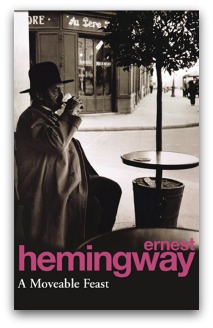
10. A Moveable Feast (1964, revised 2009)

Author: Ernest Hemingway
Synopsis: Hemingway’s posthumously published memoir detailing his years as a young American expat in Paris socializing with the likes of F. Scott Fitzgerald, Gertrude Stein and Ezra Pound.
Film pitch: Perhaps now is the perfect time for an adaptation of A Moveable Feast. The surprising success of Woody Allen‘s Midnight in Paris will perhaps have whetted Hollywood’s appetite for a more serious take on the same subject matter.

9. One Fat Englishman (1963)

Author: Kingsley Amis
Synopsis: Inspired by a year Amis spent teaching at Princeton, One Fat Englishman follows the badly behaved Roger Micheldene with Amis’s typical brio. An English gentleman who is affronted by everything on the American scene, Roger fails to see how his presence might adversely affect Anglo-American relations.
Film pitch: Cast Timothy Spall as Roger and watch the fireworks.

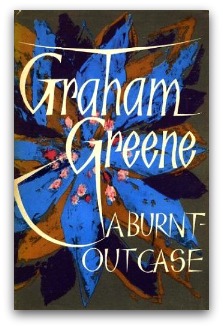
8. A Burnt Out Case (1960)

Author: Graham Greene
Synopsis: A man named Querry arrives at a leper colony in the Congo. He assists the colony’s doctor, who diagnoses him as suffering depression. It is revealed that Querry is in fact a world-famous architect, though he is hiding other secrets, too.
Film pitch: Perhaps Greene’s bleakest work — which may explain why it hasn’t been filmed previously despite being optioned twice by Otto Preminger (Greene was said to be thankful that it was never made). I would argue, however, that it has all the material for a fascinating film.

7. Travels through France and Italy (1766)

Author: Tobias Smollett
Synopsis: After the sad death of his daughter, Tobias Smollett and his wife left England for a tour of France and Italy. Detailing the quarrels Smollett has on his journey with those pesky Continentals, this is a very funny book.
Film pitch: Yes, I am suggesting that someone should make a movie based on an 18th-century travelogue. If Robbie Coltrane and John Sessions can turn Boswell and Johnson’s tour of the Hebrides into a delightful TV movie then I think the same could be done with this.

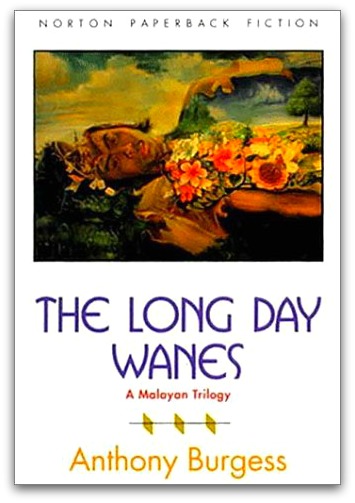
6. The Long Day Wanes: A Malayan Trilogy (1956-59)

Author: Anthony Burgess
Synopsis: Burgess’s first three novels are concerned with the character of Victor Crabbe, a teacher in a village in Malaya (now Malaysia). Based upon Burgess’s own experiences as a British civil servant in Malaya, the three novels that make up The Long Day Wanes detail the death of Empire and the birth pains of a newly independent nation.
Film pitch: Other than A Clockwork Orange, whose adaptation Burgess had strong misgivings over, Burgess’s work often seems overlooked for movie adaptations. It really shouldn’t be.

5. The Thousand Autumns of Jacob de Zoet (2010)

Author: David Mitchell
Synopsis: Until Commodore Perry in 1853 anchored four warships off the Japanese coast and so opened up Japan to western trade, Japan had been a “locked country” (sakoku) where it was illegal for a foreigner to enter Japan and for a Japanese subject to leave. The exception to this was at Dejima, in Nagasaki, where trade with some select foreign powers was allowed. This fascinating piece of history is the basis for David Mitchell’s latest novels. Set in 1799, The Thousand Autumns of Jacob de Zoet details a young Dutch trader who has come to Dejima to make his fortune though he discovers a lot more.
Film pitch: The book has all the makings of a wonderful historical epic.

4. Up Above the World (1966)

Author: Paul Bowles
Synopsis: Dr and Mrs Slade are an American couple touring Central America. A chance encounter with an elderly woman leads to a tense and gripping chain of events.
Film pitch:A disturbing and intense work typical of Bowles, it would make for a deeply compelling thriller.

3. Burmese Days (1934)

Author: George Orwell
Synopsis: Similar to Burgess’s The Long Day Wanes, this novel is concerned with the dying days of Empire. Orwell, who was himself an officer in the Indian Imperial Police Force in Burma, paints a depressing picture of expatriate life that is based around the stultifying social hub of the European club.
Film pitch: Orwell’s first novel and while certainly not his best work, even a bad Orwell novel is still worthy of consideration.

2. Henderson the Rain King (1959)

Author: Saul Bellow
Synopsis: Eugene Henderson is a rich American with an unfulfilled desire. Not knowing quite what it is, he hopes he will discover it by going to Africa. Through a series of misadventures Eugene Henderson finds himself away from his original group and in the village of Wariri in Africa. After performing a feat of strength, Eugene is adopted by the villagers as the Wariri Rain King.
Film pitch: Bellow’s funniest book, Henderson the Rain King could be pitched as an intellectual Joe Versus the Volcano (or maybe not — that’s a terrible pitch).

1. Turkish Embassy Letters (1763)

Author: Lady Mary Wortley Montagu
Synopsis: An important writer in her own right, Lady Mary Wortley Montagu was the wife of Edward Wortley Montagu, who was appointed as the ambassador at Constantinople. Accompanying her husband just after recovering from contracting smallpox marring her famed beauty, Lady Wortley Montagu wrote about her observations in numerous letters. These letters form a fascinating look at the Ottoman Empire — from how they inoculated against smallpox to the zenanas, special areas of the house reserved for women — as observed by an aristocratic English woman of the time.
Film pitch: Just think what a great biopic you could make about her.

Note: If you click on the book titles in the above list, you’ll be taken to Amazon, where the books can be purchased — except in the case of Tobias Smollett’s travelogue, which goes to Gutenberg, where he can be read FOR FREE!!

STAY TUNED for tomorrow’s post, an interview with first-time novelist Meagan Adele Lopez, and her plans for turning the book into a film.

If you enjoyed this post, we invite you to register for The Displaced Dispatch, a round up of weekly posts from The Displaced Nation, with seasonal recipes, book giveaways and other extras. Register for The Displaced Dispatch by clicking here!

Related posts:

LIBBY’S LIFE — A technical malfunction

LIBBY:

Well, this week I fully intended to tell you about my battle with certain tiger-mums, a three-hour glucose tolerance test, a suspected case of galloping dandruff caused by the dry weather, and how all that fits into the context of a Valentine’s Day party for three-year-olds. And I shall still do that — next week.

But here’s the thing: just as I was sitting down to write this week’s episode, Oliver comes home early from work, and says, “Come on, Libs — get packed. I’m taking you away for a couple of nights. Then throw some stuff in a bag for Jack, because Maggie’s having him while we’re gone.”

It’s just so easy when a bloke puts it like that, isn’t it? “Throw some stuff in a bag for Jack” indeed. I mean, I hadn’t done the laundry or anything…and then I look in Jack’s chest of drawers, and found that someone had done the laundry. We have a laundry fairy I didn’t know about!

“Maggie,” Oliver said. He looked all smug.

“Did you ask her to do it?”

“Well…no,” he admitted. “But when I asked her if she’d have Jack because I was planning a romantic surprise weekend, she said something about surprises being one thing, and nasty shocks being quite another, especially in your condition, so I’d better give her a spare door key if I didn’t want another surprise trip to the hospital.”

So there we are. If you remember, Oliver promised me a trip to a spa as compensation for his mother putting me in hospital before Christmas, so that’s where we are going.

“Do they have seaweed wraps?” I asked him, thinking about Caroline’s bony ankles and comparing them to my somewhat waterlogged ones.

He looked puzzled.

“They have white towelling dressing-gowns, from what I can tell from the brochure. Or do you mean wraps like those crispy chicken ones from McDonald’s?”

Ah, bless him. He tries so hard. I’m sure we’ll have a lovely time.

I’ll tell you all about it week after next.

KATE:

Libby is being far too nice and neglecting to mention that I was writing her diary this week, not her — as she said, it was about her “battle with certain tiger-mums, a three-hour glucose tolerance test, a suspected case of galloping dandruff caused by the dry weather, and how all that fits into the context of a Valentine’s Day party for three-year-olds.”

It was a really interesting episode, too.

Such a shame that something malfunctioned somewhere in the bowels of my computer, and despite having saved many times, I lost 2200 words of the episode just when I was about to click Publish.

Oh well. When I’ve finished banging my head against any convenient hard surface, I’m sure it will seem very funny in retrospect.

See you next week. :-/

Meanwhile, here are some links to my own favorite episodes:

#34:  Shadows on a screen – I wrote this one because a good friend who’s a Libby fan wanted to hear more about the pregnancy. When she asked me to do this, I didn’t know at the time that Libby was expecting twins. It was a surprise for everyone.

#11: Neither more nor less than a pig This episode introduces Carla Gianni. The pig thing, while a surprise, was not entirely unexpected. I’ve known Carla, Frankie, and the Maxwell Plum for a long time. They all came into existence in my half-written novel, which has the working title of “Back to the Green.” Billy Joel fans among you may be able to read something into that — also, why there’s a village green in Woodhaven, an Italian restaurant, and why there are so many flashbacks to the past in Libby.

#5: Decaffeinated sherry to toast a Royal Wedding Written in a befuddled, sleep-deprived state on the morning of April 29 last year, having got myself up at an unholy hour to tweet about the wedding with ML and Anthony. It was the first time I’d met Sandra, the mother-in-law. I blame Princess Beatrice’s hat for the way she turned out.

If you enjoyed this post, we invite you to subscribe for email delivery of The Displaced Dispatch, a round up of the week’s posts from The Displaced Nation. Sign up for The Displaced Dispatch by clicking here!

Img: Map of the World – Salvatore Vuono

THE DISPLACED Q: Does love conquer all — even language barriers?

Last week Tony James Slater, the newest addition to the TDN team, reported on his success with finding love abroad. But it wasn’t always that easy for him. He may be an incurable adventureholic, but when Cupid’s arrow led to a romance with a woman who didn’t speak English, even he had to wonder if there were limits…

Here’s the scenario:

You’re minding your own business in a friendly sort of bar, enjoying the heady mix of cultures as foreigners — a mix of holiday-makers, transients and expats — rub shoulders with the locals.

Suddenly you see him — or her — across the crowded room. This gorgeous individual is staring right at you, smiling seductively. You make contact with those smoldering eyes…and that’s where it ends.

Because she doesn’t speak your language, and you speak none of hers.

So really, what are you going to say to her?

Can romance transcend the language barrier?

It’s a tricky one.

No lo entiendo, mi amor

I have a little experience in this area; once upon a time, when I doing a three-month stint of volunteering at an animal shelter in Ecuador, I fell madly in lust with a gorgeous Latino woman.

Of course she didn’t speak English — there was no one who could for miles in any direction. I spoke no Spanish, because until that moment there had never seemed enough reasons to learn it.

I was captivated by her — she was the kind of exotic beauty you read about in well, the kind of books that I don’t read. Ahem.

So what do you do?

Two obvious tactics spring to mind.

The first is what I did: get horribly drunk and throw yourself at the poor woman, in the hope that you’ll never remember the embarrassment in the morning, if she laughs in your face.

As it happens, this tactic worked — but it should be noted that this is the first time ever, in the history of mankind, that this has been the case. As a rule, I cannot endorse extreme inebriation as a successful method of flirtation; truly, this must have been Cupid himself in action.

The second tactic is to get a friend who does speak both languages to make some kind of introduction. This can help you get over that incredibly awkward initial stage when neither of you is really sure if the other is genuinely interested.

This is the tactic I should have used, as I had a perfectly good friend with the requisite language skills. Of course by the time I’d thought of that, I was already too drunk to pronounce even English words. It was quite a way down the road when I finally got to communicate in words with my new lover, through an interpreter.

At that point, it was great to have it confirmed that she felt the same way about me as I felt about her!

It was slightly less great to discover that she was already married and had two children. But then, that’s the chance you take when you practice tactic no.1.

Thankfully, she was separated from her husband — although as our relationship progressed, I did hear some disturbing rumors that her husband was looking for me…with a machete. I fervently hoped that was just my boss trying to wind me up. (If it was, he succeeded!)

Pidgin Spanish and pantomime…are there limits?

Although she was beautiful, the thought of meeting her again terrified me anew each time. I felt like such an idiot, struggling to express myself in pidgin Spanish and pantomime. I lived in fear of those awkward moments, when neither of us could make the other understand some fundamental issue.

That said, it definitely motivated me to learn Spanish! After every date I’d come back fired up with the desire to study. I never did any studying, of course — my day job (mucking out animal cages) kept me way too busy for that — but the desire was there. The desire, in fact, had never been a problem!

But how far can a relationship really go, when you don’t even have a language in common? Think how close you can get to someone in a long-term relationship; a connection bordering on the psychic, where you’re almost reading each other’s minds — it just doesn’t work when you’re constantly guessing at what the other person is saying.

The Austrian-British language philosopher Ludwig Wittgenstein once remarked:

The limits of my language are the limits of my world.

If he is right, then isn’t the lack of a shared language the very essence of incompatibility?

Relationship experts the world over agree that couples must work hard to bridge communication gaps. Well, when the gaps of linguistic understanding are wide enough to fly a 747 through — and it can feel like a long-distance relationship even when you’re standing next to each other — bridge-building can be something of a challenge.

My Ecuadorian love and I were together three months, after which I left to fly back home. Ironically, we’d each learned just enough of each other’s languages to really get to know each other’s thoughts, hopes, fears and frustrations — the day before my flight to England.

I’d like to open it up to the floor at this point!

Has anyone got any experience of this that they wouldn’t mind sharing? Or an opinion, on whether or not it’s possible?

Can love really conquer all — including that ultimate bad guy of cross-cultural barriers, linguistics?

What do you think?

I’d love to know!

TONY JAMES SLATER is a self-confessed adventureholic. For the last six years he’s been traveling nonstop around the world, working at a variety of jobs including yacht deliverer in the Mediterranean, professional diver in Thailand and snow boarder in New Zealand. Last year, Slater published his first book, That Bear Ate My Pants!, an account of his misadventures while volunteering at the animal refuge in Ecuador. (The book was featured in The Displaced Nation’s list of 2011 expat books.) He is currently working on a second book set in Thailand, while exploring his new home in Perth, Australia.

STAY TUNED for Tuesday’s post, a review of Matt Krause’s memoir recounting how he met a woman on a plane — and followed her all the way to Turkey! NOTE: Subscribers to our weekly DISPLACED DISPATCH are eligible to win a free, autographed copy!

If you enjoyed this post, we invite you to register for The Displaced Dispatch, a round up of weekly posts from The Displaced Nation, with seasonal recipes, book giveaways and other extras. Register for The Displaced Dispatch by clicking here!

Related posts: