The Displaced Nation

A home for international creatives

Tag Archives: Memoir | Travel | Food Writers

And the Alices go to … these 7 writers who get the curious, unreal side of international travel

 © Iamezan | Dreamstime.com Used under license

© Iamezan | Dreamstime.com
Used under license

Since founding The Displaced Nation on April Fool’s Day (no fooling?), Kate Allison, Anthony Windram and I have been coming across travel writers who understand just how befuddling the life of the global nomad can be.

We are inclined to think that they have channeled Lewis Carroll’s Alice.

Offering themselves up as examples, such writers talk about what’s it like for a crossborder traveler to be plagued with feelings akin to adolescent self-doubt: what am I doing here, and will I ever get over this feeling of displacedness?

And they’ve shown us how to emerge from such escapades as more fulfilled human beings, full of stories to tell, perhaps to our grandkids, one day…

In recognition of these models of displacedness, my colleagues and I have created a new accolade for the travel writing profession: the Alice’s Adventures in Wonderland Award, otherwise known as an “Alice.”

And The Displaced Nation‘s very first Alices go to…drumroll!…(listed in reverse chronological order)

1. ANABEL KANTARIA for Do we all need behavior lessons?, in the Daily Telegraph:

“Just remember, you’re not playing in your own backyard now,” my boss told me when I took my first job in the UAE. “You’re in someone else’s yard now, and you play by their rules.” It was probably the best piece of advice I was ever given about the UAE, and one that’s kept me out of trouble on numerous occasions.

Alice link: “I don’t think they play at all fairly,” Alice began, in rather a complaining tone, “… I should have croqueted the Queen’s hedgehog just now, only it ran away when it saw mine coming!”

2. SUZY GUESE for The Unexpected Benefits to Solo Travel, in Suzy Guese: Traveling with a redheaded temperament:

While I know people who travel with others can have their share of weird conversations, solo travel for some reason brings this about almost with every day. … From a musician at the Giant’s Causeway [Northern Ireland’s only UNESCO World Heritage Site] who started talking to me by insulting my shoes, to a B&B owner who told me her “journey of life”, leaving in all of the gory details, I have had some strange encounters.

Alice link: “Your hair wants cutting,” said the Hatter. He had been looking at Alice for some time with great curiosity, and this was his first speech.

3. ANDREA MARTINS for Expat women living the high life or secretly struggling?, in the Daily Telegraph:

In mid-2005, April Davidson’s world was turned upside down following her husband’s job transfer to Mexico City. … She could not understand what was happening to her and she started taking medication for anxiety and unexplained stomach problems. Little did April realise that her feelings represented a completely normal piece of the relocation jigsaw, and that taking medication to cope with the transition process was again, not uncommon.

Alice link: “You ought to be ashamed of yourself,” said Alice, “a great girl like you,” (she might well say this), “to go on crying in this way! Stop this moment, I tell you!” But she went on all the same, shedding gallons of tears, until there was a large pool all round her, about four inches deep and reaching half down the hall.

4. SEBASTIAN DOGGART for Elegy to English shepherd’s pie, in the Daily Telegraph:

One of the things I miss the most about living outside England is shepherd’s pie. … The greatest desecration is found in Quebec, where they call it “Chinese pâté” (pâté chinois). To suggest this sacred dish has anything Chinese about it is preposterous.

Alice link: “When I’m a Duchess,” she said to herself…”I won’t have any pepper in my kitchen at all. Soup does very well without…”

5. SALLY THELEN for 4 Tips on Embracing Your Inner Weirdo, in Unbrave Girl:

This morning, when I went running [in Wuxi, China], I happened upon a group of teenagers dressed up as anime characters. A crowd had formed around them to gape at their hot pink wigs, Nutcracker-like jackets and French maid dresses.

I stopped for a minute to stare slack-jawed with the rest of the crowd.

I was baffled.

I was confused.

And, frankly, I was a bit miffed. After all, didn’t these kids know that I was the main attraction at this park?

Alice link: This piece of rudeness was more than Alice could bear: she got up in great disgust, and walked off, the Dormouse fell asleep instantly, and neither of the others took the least notice of her going, though she looked back one or twice, half hoping that they would call after her…

6. SEZIN KOEHLER for My foreign body: geocharacteristics of a population, in Expat+HAREM:

When I first arrived in Prague I was a size 7, had an acceptable C-cup and chocolate-colored skin. Three years later I’ve become a size 12 and an overbearing DD-cup with skin the color of weak tea.

Aging plays only a small part….

Alice link: “Curiouser and curiouser!” cried Alice (she was so much surprised, that for the moment she quite forgot how to speak good English); now I’m opening out like the largest telescope that ever was! Good-bye, feet!”

7. JENNIFER EREMEEVA for Conversation is a One-way Street, in Dividing my time: finding the funnier side of life in Russia:

“Let me tell you about New York,” he [a Russian friend of my husband’s] said, “I was really impressed: the streets are completely strait, from one end of Manhattan to the other — ”

“– Well, except for the Village down to Wall Street,” I interjected absent-mindedly.

“Jennifer went to University in New York,” said my husband apologetically to the group.

Sergei squinted at me suspiciously, and then, changing tack, began to expand on the virtues of vacationing at Valaam on Lake Ladoga.

Alice link: “I’ve been to a day-school, too,” said Alice; “you needn’t be so proud as all that.” … “…[Y]ours wasn’t a really good school,” said the Mock Turtle in a tone of great relief. “Now at ours they had at the end of the bill, ‘French, music, and washing — extra.”

QUESTION: Do you have a favorite from the above, and do you have any other writers/posts to nominate for our next round of Alices? We’d love to hear your suggestions.

STAY TUNED for tomorrow’s interview with Random Nomad Balaka Basu. She appeals for citizenship in The Displaced Nation — and agrees to answer one Alice question!

If you enjoyed this post, we invite you to subscribe for email delivery of The Displaced Nation. That way, you won’t miss a single issue. SPECIAL OFFER: New subscribers receive a FREE copy of “A Royally Displaced Tea.”

Related post:

RANDOM NOMAD: Jack Scott, Former Bureaucrat & Soon to Be Published Author

Born in: Canterbury, England
Passport(s): British with official Turkish Residency
Countries lived in: Malaysia (Malacca): 1967-1969; Turkey (Bodrum): 2010-present
Cyberspace coordinates: Perking the Pansies | A comical narrative of expat life (blog)

What made you leave your homeland in the first place?
I moved to Bodrum in Turkey with my civil partner, Liam. I was a petty bureaucrat for 30 years gently ascending a career ladder to middle management, middle income and a middling London suburban terrace; comfortable, secure and passionately dissatisfying. We thought it high time to take a break from our labors, put our feet up and watch the pansies grow while we were young enough to enjoy it.

Is anyone else in your immediate family a “displaced” person?
My father more or less ran away from home when he was 16 to join the army. If he hadn’t, he probably would have ended up down a mine or in a factory (the days when Britain had such things). He (and then we) traveled widely — to Northern Ireland, where he met and married my mother and where my eldest brother was born; then on to Germany, where my second brother was born and contracted polio; then on to Malaya (before independence), where my elder sister was born; then back to England (Canterbury), where I was born. Our family then moved to Pimlico, in Central London, living in a barracks that is now the Chelsea School of Art(!). Finally, we went to Malaysia, where my younger sister was born. In Malaysia, we lived in a large, self-contained complex on the coast near Malacca called Terendak Camp. The camp had been built along miles of golden sands overlooking the Malacca Straights for army personnel and their families from Britain and across the Commonwealth — we shared it with Aussies, Kiwis and a few people from Malta. It was all very colonial, unimaginable today. I also seem to remember Dad traveling on his own to Cyprus, Aden (in Yemen), and Egypt. He died some years ago. Maybe I’ll write something about him one day…

Describe the moment when you felt most displaced over the course of your many displacements.
It was right here in Bodrum. We were spited by a storm of Biblical proportions that was punctured by a spectacular light-and-sound show that lit up the sopping sky and cut the power. Prodigious pulses of horizontal rain assailed every crack and cranny of our house, through every easterly window frame and beneath every threshold. It was freezing, so Liam and I hid under the duvet and fought over the hot water bottle. All Turkish houses leak, have no insulation and precious little heating. Of course, it rains in England, too — but not like that. Now, that’s not in the guidebooks and travelogues.

Describe the moment when you felt least displaced.
Liam and I were chuffed when our Turkish neighbors invited us over for dinner. Our grasp of Turkish remains lamentably poor and their English is virtually non-existent — but they made us feel very welcome and the food was delicious. There was much waving of hands and furious gesticulation. We used a Turkish-English dictionary to chuck random words into the conversation just for the hell of it. Turks are blessed with an honorable tradition of hospitality long abandoned in the West. In London I hardly knew my neighbors.

You may bring one curiosity you’ve collected from the country where you’ve lived into the Displaced Nation. What’s in your suitcase?
I was very young when I lived in Malaysia. I haven’t been back since though would love to. Sadly, I’ve kept nothing from those distant days. As for Turkey, our prized possession is the fragment of an ancient Ionian capital in our garden. It’s a bit heavy to put in a suitcase, and I’d be arrested if tried. Turkey is an incredible land where history lies casually underfoot.

You’re invited to prepare one meal based on your travels for other Displaced Nation members. What’s on the menu?
Turkish cuisine is up there with the best in the world. I would offer a meze plate of tasty Turkish fare using the best produce from the local market seasoned with exotic herbs and spices you just can’t get at Sainsburys. My guests would be offered:

  • roasted aubergine blended with garlic puree; artichoke hearts with herb dressing, peas and lemons
  • seaweed with a tangy vinaigrette
  • vine leaves stuffed with spiced rice
  • sauteed beans with olive oil and tomatoes
  • white cheese with olives drizzled in olive oil and garnished with oregano
  • finally, the ubiquitous but delicious sigara borek – shallow, fried, cigar-shaped mixed-cheese pastries.

It makes my mouth water just thinking about it. Yours?

You may add one word or expression from each of the countries you’ve lived in to the Displaced Nation argot. What words do you loan us?
Avustralyalılaştıramadıklarımızdanmışsınızcasına. This is a Turkish term pronounced as a single word and an extreme example of agglutination, the process of adding affixes to the base of a word. This word translated into English means “as if you were one of those whom we could not make resemble the Australian people.” Though rhythmic and poetic on the ear, Turkish is not an easy language for Europeans to assimilate as it is thought to belong to the Altaic language family and is distantly related to Mongolian, Korean and other inscrutable Asiatic tongues. Despite Atatürk’s valiant 1928 adoption of the Latin alphabet and the fact that the language is phonetic and mostly regular, the word order, agglutinations and the absence of familiar sounds all conspire to make learning Turkish a very daunting prospect. I’ve chosen it specially for The Displaced Nation to torture, to amuse and to remind everyone how completely hopeless many of us — particularly native English speakers — are with foreign tongues.

Question: Readers — yay or nay for letting Jack Scott into The Displaced Nation? Tell us your reasons. (Note: It’s fine to vote “nay” as long as you couch your reasoning in terms we all — including Jack — find amusing.)

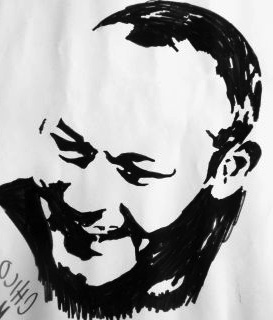
img: Pencil sketch of Jack Scott by a local Turkish artist

If you enjoyed this post, we invite you to subscribe for email delivery of The Displaced Nation. That way, you won’t miss a single issue. SPECIAL OFFER: New subscribers receive a FREE copy of “A Royally Displaced Tea.”

Related posts:

CLASSIC EXPAT WRITING: Letter From London — Sōseki

So with my last entry, on James Joyce’s Paris, I was left bemoaning the term Expat Writer. Partly, I’m annoyed with myself for choosing such a term as “Classic Expat Writing” for this series of blog posts. Ultimately, who wants to read a series of posts called “Classic Expat Writing”? It assumes too much and adopts a slightly superior attitude. And, most importantly, it’s dry and not all catchy. Instead, think of this as writing by the displaced.

The reason that I opted to do this series of posts was so I could share some writing that has moved me, and present it to an audience that is likely to in some way be attuned and empathetic to its contents, either through their own personal experience or particular interests. If people then go off and look at the authors in more detail, so much the better. It’s for these reasons why I am particularly excited with this week’s example.

I have to confess that I was not familiar with the name Sōseki until I visited Japan. My knowledge of Japanese literature is embarrassingly slight and doesn’t really extend beyond Mishima and Murakami. But a few years back, when visiting Tokyo, I sought out the Kinokuniya bookstore near Shinjuku because it had a large selection of English-language books. Having a few days before visiting the Temple of the Golden Pavilion in Kyoto, I was keen to buy Mishima’s novel The Temple of the Golden Pavilion. But when left in a bookstore I can’t help but browse and one book, in particular, caught my eye: The Tower of London: Tales of Victorian London by Sōseki. At this point, I had never before heard about Sōseki Natsume (1867 – 1916), and had no idea about his place in the canon of Japanese literature. If I had been in Japan a few years earlier, it may have passed me unnoticed that the two 1,000 yen notes I would use to buy this book, in fact, featured Sōseki’s portrait.

Instead from a position of ignorance I picked up the book and was intrigued by it. It’s a collection of essays and writings that Sōseki wrote about his time in London.* In the summer of 1900, as a young, unknown professor, he traveled to London on a somewhat meagre scholarship that was provided to him by the Japanese government.  Sōseki was to spend the next two years in the city, unhappy and isolated.

Now being a miserable monoglot, I am entirely dependent upon skilled translators when it comes to foreign (well “foreign” from my perspective) literature. Obviously, I’m not in a position to comment on how accurately Damian Flanagan’s translation conveys the flavor of  Sōseki’s prose, but I did find it to be an incredible read with crisp and clean prose.

The title essay is a phenomenal piece of literature, but it is Sōseki’s Letter from London that I’m highlighting today. Sōseki conveys in a way that I’ve not seen from others that awkward, slippery sense of dislocation of being in an alien country. Even politeness takes on a faintly threatening edge.

One of the things I’ve noticed in the Expat blogging community, we seem to like it when we find writing that we can relate to, that reiterates thoughts and fears that we have had. Of course, there is a place for  that. With Expat blogging it can help develop relationships, it helps builds an audience, and there is very much a place for it. But it can also act like comfort food.

Sōseki, by contrast, has observations and thoughts about the city that I don’t think anybody other than himself could have had. And, for me, that’s what is so interesting and so worthwhile about this book.

This collection, which is published by Tuttle publishing, really should be read by more people. Go buy it and then read it, pronto.

Once outside, everyone I meet is depressingly tall. Worse, they all have unfriendly faces. If they imposed a tax on height in this country they might come up with a more economically small animal. But these are the words of one who cannot accept defeat gracefully, and, looked at impartially, one would have to say that it was they, not I, who look splendid. In any case, I feel small. An unusually small person approaches. Eureka! I think. But when we brush past one another I see he is about two inches taller than me. A strangely complexioned Tom Thumb approaches, but now I realize this is my own image reflected in a mirror. There is nothing for it but to laugh bitterly, and, naturally, when I do so, the image laughs, bitterly, too …

… Generally, people are of a pleasant disposition. Nobody would ever grab me and start insulting and abusing me. They do not take any notice of me. Being magnanimous and composed in all things is in these parts one qualification of being a gentleman. Overtly fussing over trifles like some pickpocket or staring at a person’s face with curiosity is considered vulgar … Pointing at people is the height of rudeness. Such are the customs, but of course London is also the workshop of the world, so they do not laughingly regard foreigners as curiosities. Most people are extremely busy. The ir heads seem to be so teeming with thoughts of money that they have no time to jeer at us Japanese as yellow people. (‘Yellow people’ is well chosen. We are indeed yellow. When I was in Japan I knew I was not particularly white but I regarded myself as being close to a regular human colour, but in this country I have finally realized that I am three leagues away from a human colour – a yellow person who saunters amongst the crowds going to watch plays and shows).

But sometimes there are people who surreptitiously comment on my country of origin. The other day I was standing in looking around a shop somewhere when two women approached me from behind, remarking, “least-poor Chinese”. “Least-poor” is an extraordinary adjective. In one park I heard a couple arguing whether I was a Chinaman or a Japanese. Two or three days ago I was invited out somewhere and set off in my silk hat and frock-coat only for two men who seemed like workmen to pass by saying, “A handsome Jap.” I do not know whether I should be flattered or offended.

*I’m not entirely sure what it says about me that in browsing a large selection of Japanese literature in an effort to get a better understanding of Japan, I picked up a book that is centered around impressions of London and the English.

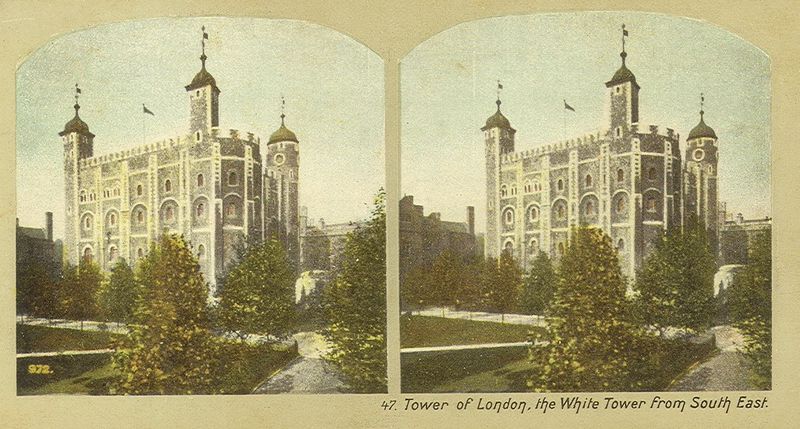
Img: White Tower, Tower of London, from the South East, c. 1890-1910, courtesy Wikimedia Commons

If you enjoyed this post, we invite you to subscribe for email delivery of The Displaced Nation. That way, you won’t miss a single issue.

Related posts:

Tiffin: A displaced word of many meanings, but this one is sweetest

Special announcement from TDN: ML Awanohara and Kate Allison will be live-tweeting the Royal Wedding from a displaced perspective. Join us from 5:00 a.m. EST, using the hash tag: #DNRW Read more.

“Taj Mahal” by Arvind Balaraman / FreeDigitalPhotos.net

Tiffin – a word imported to England in the times of colonial British India, when, as well as being Queen of England, Victoria held the title of Empress of India.

Unlike other Anglo-Indian imports, such as gin and tonic or kedgeree, tiffin has shades of definitions – lunch, afternoon snack, or any light meal. My favorite definition, however, is the one given to me by my cookery teacher when I was twelve, which I’m sharing with you in honor of the wedding tomorrow.

It requires very little cooking, and if you start now, you will have enough time to make another batch to replace the one you intended to take to the street party but absent-mindedly ate instead.

One batch is never enough.

*

Tiffin

You will need:

100g / 4oz / 1/2 cup butter

50g / 2oz / 8 tablespoons desiccated (shredded) coconut – optional

50g / 2oz /1/3 cup seedless raisins

2 tablespoons golden syrup (see below if you’re unfamiliar with or can’t obtain this ingredient)

2 tablespoons powdered drinking chocolate (sweetened cocoa)

200g / 8oz / 2 cups broken digestive biscuits. If you can’t get digestive biscuits, graham crackers or crunchy oatmeal cookies would work.

100g / 4oz /2/3 cup plain (semi-sweet) or milk chocolate, as you prefer.

A 9″ x 9” cake tin, greased with butter. (Exact dimensions aren’t critical for the success of this recipe.)

Method:

1. In a small pan, melt the butter and golden syrup over low heat, then remove from heat.

2. Add coconut, raisins, drinking chocolate, and broken biscuits.

3. Mix well, then transfer to the greased tin. Pack down firmly with the back of a large spoon.

4. Put about an inch of water in a saucepan and bring the water to simmering point.

5. Break the chocolate into pieces and put in a heat-proof bowl (e.g., Pyrex). Fit the bowl over the pan of water, keeping the water simmering gently. Stir until the chocolate is melted.

6. Pour melted chocolate over the biscuit mixture in tin, and spread evenly.

7. Refrigerate for a few hours until chocolate is hard, then cut into small squares.

8. Serve with hot tea — of course.

*

Golden syrup

Golden syrup is a favorite in Britain and Australia. It’s thicker and sweeter than corn syrup, lighter in color than treacle (molasses), and  I knew it best for drizzling on my morning porridge before going to school.

In America it’s either unobtainable or very expensive, but according to an article on eHow, you can make your own.

You will need:

Heavy saucepan

1/2 cup white sugar

2 tsp. water

1 tsp apple cider vinegar

2/3 cup light corn syrup

Wooden spoon

Glass or plastic container

Method:

1. Pour the sugar in the saucepan, spread evenly over the bottom of the pan.

2. Mix water and vinegar, and sprinkle over the sugar.

3. Cook the mixture over low heat for five minutes. DO NOT STIR!

4. Turn the heat up to medium, and cook for a further five minutes, without stirring. Remove pan when mixture is a golden color.

5. Add light corn syrup and let mixture sit for 3 minutes. When the bubbling has stopped, stir well with wooden spoon.

6. Allow syrup to cool, then pour into a heatproof glass or plastic container, such as a mason jar. Seal, and store at room temperature. It will keep for two or three months.

(Thanks to my good friend and regular commenter on Displaced Nation, Joanna M-M, for sending me the link to this.)

*

Enjoy!

Img “Taj Mahal” by Image: Arvind Balaraman / FreeDigitalPhotos.net

If you enjoyed this post, we invite you to subscribe for email delivery of The Displaced Nation. That way, you won’t miss a single issue.

“Living in the Midwest,” by Susanna Daniel

Join us today in eating some virtural Wisconsin cheese on crackers and drinking White Russians in honor of our favorite article of the week: “Living in the Midwest” by Susanna Daniel. (Later on, there might even be some tap dancing on the bar in Dansko clogs!)

Susanna reinforces our theory that you can suffer culture displacement without the inconvenience of an international flight — in this case, by moving from New York to Iowa and Wisconsin.

I’m considered an outsider by many locals, even after a decade, even considering my roots here…  When or if I’ll ever slough off the designation of “recent transplant,” I’m not sure.

Let us know when you do, please. It’s OK. We’re patient people.

Susanna Daniel is the author of the novel “Stiltsville.”  You can find her at http://susannadaniel.com/.

Posts relating to this article:  Mobile in America; The Domestic expat

If you enjoyed this post, we invite you to subscribe for email delivery of The Displaced Nation. That way, you won’t miss a single issue.

CLASSIC EXPAT WRITING: London and the English — Casanova

While inextricably linked in the imagination with his home city of Venice, Giacomo Casanova spent much of his life travelling and living in other parts of Europe. That ugly term “expat” which many of us, myself included, seem to cling onto as an identifier, was not in use in Casanova’s day, and to apply it to him retrospectively would seem to do him a great disservice. Casanova was a traveller and an observer, a man who seemed to treat Eighteenth Century Europe as a playground, a man whose life for the most part seemed permanently picaresque. Paris, St Petersburg, Dresden, Vienna, Warsaw, Prague, London: at some point all these cities played host to Casanova, and in his extensive memoir, Story of my Life he details his thoughts and observations about them all. While almost certainly someone we’ll return to at a later date, here are some choice extracts on his thoughts about London and the English. This is taken from the Arthur Machen translation of 1894.

On arriving in England:

The stranger who sets his foot on English soil has need of a good deal of patience. The custom-house officials made a minute, vexatious and even an impertinent perquisition; but as the duke and ambassador had to submit, I thought it best to follow his example; besides, resistance would be useless. The Englishman, who prides himself on his strict adherence to the law of the land, is curt and rude in his manner, and the English officials cannot be compared to the French, who know how to combine politeness with the exercise of their rights.

English is different in every respect from the rest of Europe; even the country has a different aspect, and the water of the Thames has a taste peculiar to itself. Everything has its own characteristics, and the fish, cattle, horses, men, and women are of a type not found in any other land. Their manner of living is wholly different from that of other countries, especially their cookery. The most striking feature in their character is their national pride; they exalt themselves above all other nations.

My attention was attracted by the universal cleanliness, the beauty of the country, the goodness of the roads, the reasonable charges for posting, the quickness of the horses, although they never go beyond a trot; and lastly, the construction of the towns on the Dover road; Canterbury and Rochester for instance, though large and populous, are like long passages; they are all length and no breadth…..

On whores and kings:

I visited the theatres of Covent Garden and Drury Lane, but I could not extract much enjoyment out of the performances as I did not know a word of English. I dined at all the taverns, high and low, to get some insight into the peculiar manners of the English. In the morning I went on ‘Change, where I made some friends. It was there that a merchant to whom I spoke got me a Negro servant who spoke English, French, and Italian with equal facility; and the same individual procured me a cook who spoke French. I also visited the bagnios where a rich man can sup, bathe, and sleep with a fashionable courtezan, of which species there are many in London. It makes a magnificent debauch and only costs six guineas. The expense may be reduced to a hundred francs, but economy in pleasure is not to my taste.

On Sunday I made an elegant toilette and went to Court about eleven, and met the Comte de Guerchi as we had arranged. He introduced me to George III., who spoke to me, but in such a low voice that I could not understand him and had to reply by a bow. The queen made up for the king, however, and I was delighted to observe that the proud ambassador from my beloved Venice was also present. When M. de Guerchi introduced me under the name of the Chevalier de Seingalt, Zuccato looked astonished, for Mr. Morosini had called me Casanova in his letter. The queen asked me from what part of France I came, and understanding from my answer that I was from Venice, she looked at the Venetian ambassador, who bowed as if to say that he had no objection to make. Her Majesty then asked me if I knew the ambassadors extraordinary, who had been sent to congratulate the king, and I replied that I had the pleasure of knowing them intimately, and that I had spent three days in their society at Lyons, where M. Morosini gave me letters for my Lord d’Egremont and M. Zuccato.

“M. Querini amused me extremely,” said the queen; “he called me a little devil.”

“He meant to say that your highness is as witty as an angel.”

I longed for the queen to ask me why I had not been presented by M. Zuccatto, for I had a reply on the tip of my tongue that would have deprived the ambassador of his sleep for a week, while I should have slept soundly, for vengeance is a divine pleasure, especially when it is taken on the proud and foolish; but the whole conversation was a compound of nothings, as is usual in courts.

After my interview was over I got into my sedan-chair and went to Soho Square. A man in court dress cannot walk the streets of London without being pelted with mud by the mob, while the gentleman look on and laugh. All customs must be respected; they are all at once worthy and absurd.

On matters of the stomach:

The Englishman is entirely carnivorous. He eats very little bread, and calls himself economical because he spares himself the expense of soup and dessert, which circumstance made me remark that an English dinner is like eternity: it has no beginning and no end. Soup is considered very extravagant, as the very servants refuse to eat the meat from which it has been made. They say it is only fit to give to dogs. The salt beef which they use is certainly excellent. I cannot say the same for their beer, which was so bitter that I could not drink it. However, I could not be expected to like beer after the excellent French wines with which the wine merchant supplied me, certainly at a very heavy cost.

On unruliness at the theatre:

After a long discussion on politics, national manners, literature, in which subjects Martinelli shone, we went to Drury Lane Theatre, where I had a specimen of the rough insular manners. By some accident or other the company could not give the piece that had been announced, and the audience were in a tumult. Garrick, the celebrated actor who was buried twenty years later in Westminster Abbey, came forward and tried in vain to restore order. He was obliged to retire behind the curtain. Then the king, the queen, and all the fashionables left the theatre, and in less than an hour the theatre was gutted, till nothing but the bare walls were left.

After this destruction, which went on without any authority interposing, the mad populace rushed to the taverns to consume gin and beer. In a fortnight the theatre was refitted and the piece announced again, and when Garrick appeared before the curtain to implore the indulgence of the house, a voice from the pit shouted, “On your knees.” A thousand voices took up the cry “On your knees,” and the English Roscius was obliged to kneel down and beg forgiveness. Then came a thunder of applause, and everything was over. Such are the English, and above all, the Londoners. They hoot the king and the royal family when they appear in public, and the consequence is, that they are never seen, save on great occasions, when order is kept by hundreds of constables.

If you enjoyed this post, we invite you to subscribe for email delivery of The Displaced Nation. That way, you won’t miss a single issue.

Tonic water — from medicinal mixer to cocktail art form

Gin and tonic – as synonymous with expat life in the tropics as a nice cup of tea is with life in Britain, or as mint julep with the Kentucky Derby.

While specialty gins have raised a once-medicinal drink to the status of gourmet cocktail, tonic water has always been the inferior half of this partnership.

Not any more.

Fever-Tree, based in Shepton Mallet, England, produces Indian tonic water from only high-quality, natural ingredients, by

 blending fabulous botanical oils with spring water and the highest quality quinine from the fever tree

The company’s philosophy – that it’s pointless to drown an exquisite gin with mediocre tonic – is gaining ground with consumers, particularly those in Spain where there is already a rapidly growing market for premium gins.

Spain’s use of Fever-Tree’s tonic water doesn’t stop at the highball glass, however. According to the Financial Times, chef Ferran Adrià of the El Bulli restaurant near Roses even made a soup from it.

For expats in Spain who are upholding the tradition of early evening G&Ts, things can only get better.

If you enjoyed this post, we invite you to subscribe for email delivery of The Displaced Nation. That way, you won’t miss a single issue.