The Displaced Nation

A home for international creatives

Tag Archives: Displaced Hall of Fame

Displaced Poll: Which one of these celebs should take a gap year, and where?

A couple of weeks ago, we interviewed Random Nomad Jeff Jung, a specialist in career break travel. For anyone who is considering taking time out of the cubicle — or even just daydreaming about taking a baseball bat to the printerhis site is a good place to start looking for inspiration.

But what about people who aren’t in a cubicle? What about those who already lead charmed lives that, frankly, turn the rest of us a delicate shade of pea-green?

Naturally, it depends who they are, and what they want out of a gap year.

Another career breaks website recommends you “think about what effect you want your career break to have on your career. Do you want to develop your teamwork ability, or leadership skills?” It lists ideas that will have a “positive professional impact”, such as volunteering in an orphanage, or participating” in a community development project teaching your professional skill to underprivileged people”.

The Princes William and Harry obviously took this advice to heart, and picked activities that would further their careers of following in their parents’ footsteps. Prince William volunteered in Chile with Raleigh International during his gap year, while Prince Harry worked on a cattle farm in Australia and with orphaned children in Lesotho. Similarly electing to follow her own parents’ chosen paths, their cousin Princess Eugenie furthered her career by sunbathing on the Goan Coast and slumming it in Mumbai’s five-star Taj Mahal Palace Hotel.

Nevertheless, I think we can agree that the purpose of a career break is to do something out of the ordinary.  Something that you would not otherwise do, and something that will further your professional life when you come back.

With that in mind, I have some individualized suggestions for various celebs, should they decide their present ways of life lack meaning.

Snooki: Star of Jersey Shore, and now a devoted mother-to-be. Once she has birthed Little Pumpkin, though, Snooki might find it hard to remember that she was once the bestselling author of three books. (That old saying about leaving half your brain cells in the maternity ward is unfortunately true.) So a stint  of being Writer-in-Residence at Princeton University might be just what the doctor ordered. What better way for Princeton to support the state of New Jersey than to select a successful home-grown author?

Russell Brand: A bit of an unknown on the west side of the Pond until he married singer Katy Perry, Brand is again single after he filed for divorce at Christmas. Once a hard-partying bachelor and self-confessed sex addict, Brand is said to have disapproved of his wife’s party animal lifestyle. For him, I suggest a stint in a monastery, or failing that, in an ironware factory painting the bases of pots and kettles with black paint.

The Kardashian clan: A complete retreat, for everyone’s mental wellbeing, far away from the reaches of paparazzi, TV, and Twitter. However, until the Virgin Galactic program becomes more adventurous and has destinations further afield — like Saturn or Alpha Centauri, for example — this will remain merely a pleasant fantasy.

Gwyneth Paltrow: No, I like Gwyneth, really. She was great in Shakespeare in Love. I just wish she’d stop pretending to be ordinary when she isn’t. Reading her blog on how to be a regular working mum is like reading a Google translation of a Martian website, she’s so much on another planet. Her credibility as Ordinary Mum would be greatly enhanced if she did something…well, ordinary. As she lives in England, where in summer every third vehicle is pulling a mobile dwelling, and her English husband’s parents made their fortune out of selling caravans, Gwyneth should raise her Ordinary profile by spending some time going back to hubby’s roots. Might I suggest a few weeks on a stationary camp site — this one near Clacton offers an 8-berth caravan from £171 per week, so plenty of room for hubby and two kids, plus a hair stylist if she’s desperate.

Take our poll here!

Related posts:

10 expat books ripe for movie adaptations

Those who have been following this blog for some time are probably all too aware of my unhealthy preoccupation as to what constitutes an expat or travel book.

Is it, as often seems the case when I browse the expat blogosphere, that expat books must occupy themselves with the oh-so-amusing hi-jinks of expat life? The result almost invariably of such approach is that we are depressingly left with another third-rate knock-off of Bill Bryson for us to throw on the bonfire.

So when considering which expat books are ripe for movie adaptations, my first thought is that the film world, not to mention the world in general — at least, the one I want to live in — really doesn’t need any more travesties such as Under the Tuscan Sun, A Good Year or — most horrifying of all — Eat, Pray, Love. So with that in mind I will nominate the following 10 expat books as being ripe for interesting adaptations.

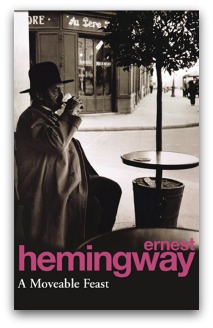
10. A Moveable Feast (1964, revised 2009)

Author: Ernest Hemingway
Synopsis: Hemingway’s posthumously published memoir detailing his years as a young American expat in Paris socializing with the likes of F. Scott Fitzgerald, Gertrude Stein and Ezra Pound.
Film pitch: Perhaps now is the perfect time for an adaptation of A Moveable Feast. The surprising success of Woody Allen‘s Midnight in Paris will perhaps have whetted Hollywood’s appetite for a more serious take on the same subject matter.

9. One Fat Englishman (1963)

Author: Kingsley Amis
Synopsis: Inspired by a year Amis spent teaching at Princeton, One Fat Englishman follows the badly behaved Roger Micheldene with Amis’s typical brio. An English gentleman who is affronted by everything on the American scene, Roger fails to see how his presence might adversely affect Anglo-American relations.
Film pitch: Cast Timothy Spall as Roger and watch the fireworks.

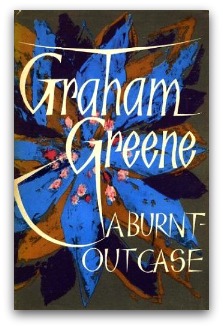
8. A Burnt Out Case (1960)

Author: Graham Greene
Synopsis: A man named Querry arrives at a leper colony in the Congo. He assists the colony’s doctor, who diagnoses him as suffering depression. It is revealed that Querry is in fact a world-famous architect, though he is hiding other secrets, too.
Film pitch: Perhaps Greene’s bleakest work — which may explain why it hasn’t been filmed previously despite being optioned twice by Otto Preminger (Greene was said to be thankful that it was never made). I would argue, however, that it has all the material for a fascinating film.

7. Travels through France and Italy (1766)

Author: Tobias Smollett
Synopsis: After the sad death of his daughter, Tobias Smollett and his wife left England for a tour of France and Italy. Detailing the quarrels Smollett has on his journey with those pesky Continentals, this is a very funny book.
Film pitch: Yes, I am suggesting that someone should make a movie based on an 18th-century travelogue. If Robbie Coltrane and John Sessions can turn Boswell and Johnson’s tour of the Hebrides into a delightful TV movie then I think the same could be done with this.

6. The Long Day Wanes: A Malayan Trilogy (1956-59)

Author: Anthony Burgess
Synopsis: Burgess’s first three novels are concerned with the character of Victor Crabbe, a teacher in a village in Malaya (now Malaysia). Based upon Burgess’s own experiences as a British civil servant in Malaya, the three novels that make up The Long Day Wanes detail the death of Empire and the birth pains of a newly independent nation.
Film pitch: Other than A Clockwork Orange, whose adaptation Burgess had strong misgivings over, Burgess’s work often seems overlooked for movie adaptations. It really shouldn’t be.

5. The Thousand Autumns of Jacob de Zoet (2010)

Author: David Mitchell
Synopsis: Until Commodore Perry in 1853 anchored four warships off the Japanese coast and so opened up Japan to western trade, Japan had been a “locked country” (sakoku) where it was illegal for a foreigner to enter Japan and for a Japanese subject to leave. The exception to this was at Dejima, in Nagasaki, where trade with some select foreign powers was allowed. This fascinating piece of history is the basis for David Mitchell’s latest novels. Set in 1799, The Thousand Autumns of Jacob de Zoet details a young Dutch trader who has come to Dejima to make his fortune though he discovers a lot more.
Film pitch: The book has all the makings of a wonderful historical epic.

4. Up Above the World (1966)

Author: Paul Bowles
Synopsis: Dr and Mrs Slade are an American couple touring Central America. A chance encounter with an elderly woman leads to a tense and gripping chain of events.
Film pitch:A disturbing and intense work typical of Bowles, it would make for a deeply compelling thriller.

3. Burmese Days (1934)

Author: George Orwell
Synopsis: Similar to Burgess’s The Long Day Wanes, this novel is concerned with the dying days of Empire. Orwell, who was himself an officer in the Indian Imperial Police Force in Burma, paints a depressing picture of expatriate life that is based around the stultifying social hub of the European club.
Film pitch: Orwell’s first novel and while certainly not his best work, even a bad Orwell novel is still worthy of consideration.

2. Henderson the Rain King (1959)

Author: Saul Bellow
Synopsis: Eugene Henderson is a rich American with an unfulfilled desire. Not knowing quite what it is, he hopes he will discover it by going to Africa. Through a series of misadventures Eugene Henderson finds himself away from his original group and in the village of Wariri in Africa. After performing a feat of strength, Eugene is adopted by the villagers as the Wariri Rain King.
Film pitch: Bellow’s funniest book, Henderson the Rain King could be pitched as an intellectual Joe Versus the Volcano (or maybe not — that’s a terrible pitch).

1. Turkish Embassy Letters (1763)

Author: Lady Mary Wortley Montagu
Synopsis: An important writer in her own right, Lady Mary Wortley Montagu was the wife of Edward Wortley Montagu, who was appointed as the ambassador at Constantinople. Accompanying her husband just after recovering from contracting smallpox marring her famed beauty, Lady Wortley Montagu wrote about her observations in numerous letters. These letters form a fascinating look at the Ottoman Empire — from how they inoculated against smallpox to the zenanas, special areas of the house reserved for women — as observed by an aristocratic English woman of the time.
Film pitch: Just think what a great biopic you could make about her.

Note: If you click on the book titles in the above list, you’ll be taken to Amazon, where the books can be purchased — except in the case of Tobias Smollett’s travelogue, which goes to Gutenberg, where he can be read FOR FREE!!

STAY TUNED for tomorrow’s post, an interview with first-time novelist Meagan Adele Lopez, and her plans for turning the book into a film.

If you enjoyed this post, we invite you to register for The Displaced Dispatch, a round up of weekly posts from The Displaced Nation, with seasonal recipes, book giveaways and other extras. Register for The Displaced Dispatch by clicking here!

Related posts:

Channeling business guru Peter Senge for lessons on spiritual travel

The Displaced Nation has dedicated most of its January posts to the kind of heart-opening, life-changing pilgrimages that enlighten and renew the spirit.

We’ve gathered tips from expat and travel experts on where to go and steps to take.

We’ve spoken with a former expat in India and a woman who dreams of making acupuncture available to one and all in the Midwest.

We’ve talked about our own (admittedly rather limited) experiences with uncovering spiritual wisdom:

And we recruited some guest bloggers for their insights:

Yet as eye opening as all of this discussion has been, my sense is, we haven’t quite reached the sublime and heavenly heights that this blessed topic deserves.

Maybe we shouldn’t be too hard on ourselves. After all, the quest for higher truths entails pondering the imponderable.

Still, I think we’ve forgotten something rather basic: namely, the need for a mentor, guru, safe, wise person, sensei, or elder — someone who has reached an advanced state of spiritual enlightenment so can tell us when we’re veering off course while offering an overarching framework for why, in heaven’s name, we’re doing this.

Today I’m “recruiting” leading business expert Peter Senge to play this role for The Displaced Nation — a service for which he will be awarded a place in our Displaced Hall of Fame.

Though he’s never lived overseas for an extended period, Senge leads a displaced life within the United States by somehow managing to be, at one and the same time, an MIT management guru and an avid disciple of Zen Buddhism (as well as other Eastern religions such as Taoism).

Through his writings, teachings, and lectures on the human face of business and sustainabilty, Senge essentially promotes the idea that Eastern religion has a great deal to offer the West.

Channeling Senge on behalf of The Displaced Nation, I have devised the following Zen mondō — or question-and-answer exchange with the master — for our illumination. NOTE: Senge promises to keep the kōan (riddles) — eg, what is the sound of one hand clap — to a minimum. (Was that applause I heard?)

ZEN MONDO WITH PETER SENGE ON SPIRITUAL TRAVEL

Master, isn’t an expat or international traveler already on a kind of spiritual quest?
Meh. In my experience, a spiritual quest isn’t meant to be a retreat from one’s native country. It’s also not a vacation. The attainment of enlightenment entails hard work — you have to chop wood and carry some water. Seriously,  you have to study, and make sure that your study is in line with your meditation practice, or whatever method you use to connect body and mind. And then you need to have a reason for it all: how you are trying to be of use to the world. My own “working-zen” is institutions: how business works, how schools work, how government works, how collectively we do our work, and how the world can move away from the model of relentless growth towards something more sustainable. What’s yours?

Master, is the quest for spiritual enlightenment something I can do on my own?
Strange question to pose to a teacher! But I’ll refrain from giving you a boot to the head as I can relate to your struggle. In fact, it didn’t dawn on me how much I needed a teacher until after I finished my book The Fifth Discipline: The Art and Practice of the Learning Organization, which became a bestseller and earned me the title of “management guru.” My ego was out of control, and I asked my friends to refer me to a therapist. But then I met this man in China around 1996 and started to realize that meditating isn’t enough. He taught me that I have to be more disciplined in my study and practice, and in linking them to service. “Study, practice, serve” has become my mantra.

Master, will I need to travel to China and India?
Look around you. With the gorilla gone, will there be any hope for man? The Western model is basically bankrupt. We’ve failed to give attention to the human side of economic development. We’ve also lost touch with indigenous knowledge and wisdom. By contrast, the intellectual sophistication of the philosophical traditions of China and India are extraordinary. The next stage of human development — focusing on sustainability — will be about bringing back the interior to be in balance to the exterior. I think that has to come from China or India and maybe to some degree from the indigenous peoples.

Of course it may not be necessary to travel all the way to these countries, especially if you’re lucky enough, as I was, to grow up in California. Many of my friends were Japanese and I was always interested in Asian cultures. I made my first visit to Tassajara Zen Mountain Center just before I went at Stanford. I knew immediately that meditation was very important and did continue to meditate afterwards.

That said, since turning 40, I’ve been thinking about spending the second half of my life in China and India. I may actually go and do that with my wife once our kids are in college.

Master, once I pursue this recommended course, do you think I’ll find the answers of what I want to do in life?
Ah, the inescapable question! I advise you to think about what’s really needed in the world, then work back to what your own role might be. It requires a continuous process of reflection. My own decision-making process has never been oriented externally, even when I was young. I almost always knew what I wanted to do and almost never knew how. It was always this process of deciding the next thing I want to do — and then doors would open!

Master, do you believe in Zen leaps?
Back in the 1980s, I was meditating 2-3 times a week. One day, all of a sudden, clear as a bell, three things popped into my head:

  1. The idea that learning organization is a big fact.
  2. The work I was doing with several others was original and would make a contribution.
  3. I had to write a book now so that as the fact cycle developed, that would be one of the first books to become a point of reference.

It happened in an instant. I was very clear and I decided to write a book. It’s how the process works: continuous reflection informed by what’s important to you and informed by your sense of where the world is at and what’s needed. If you leap under those conditions, the net will appear.

Master, do you have any final words of advice for us?
Don’t be afraid of suffering even though it’s not easy. Sadness is sadness, fear is fear, and anxiety is anxiety. Don’t kid yourself. But recognize that it is very important developmentally and will really assist you in having a rich life with rich relationships. You’ll be able to open your heart to others, and offer your compassion. Oh — and one more:

Once you’ve gotten the meaning, you can forget the words.

Readers, so much mondo mumbo jumbo, or are you at last glimpsing the road to nirvana?

[Sources for Senge’s non-humorous remarks: Prasad Kaipa’s interview with Peter Senge for DailyGood; Jessie Scanlon’s interview with Senge for Businessweek about his latest work: The Necessary Revolution.]

STAY TUNED for one more post in this vein exploring the ideas of Lyn Fuchs, who has written a book about spirituality and travel.

If you enjoyed this post, we invite you to register for The Displaced Dispatch, a round up of weekly posts from The Displaced Nation, with seasonal recipes, book giveaways and other extras. Register for The Displaced Dispatch by clicking here!

Related posts:


CLASSIC DISPLACED WRITING: Dickens — A Christmas Carol


As no points are being handed out for originality (at least, I hope not) this particular edition of Classic Displaced Writing will be yuletide-themed and our text of choice is going to be Dickens’s A Christmas Carol.

I know what a surprise, right?

I am working on the assumption that I needn’t relay to you the basic plot of A Christmas Carol. We’re all familiar with it. Even those who have never picked up the book (and shame on you if you’ve never read it — no matter how good The Muppet Christmas Carol is) will be familiar with the story beats of A Christmas Carol. It has been retold, inverted, and reemphasized since its original publication (168 years ago yesterday, if you are interested). It resonates beyond the Victorian canon, becoming more like a modern myth or fairy tale.

But other than reminding us all of the yuletide season, why feature A Christmas Carol on what is after all an expat-focused blog? Ebenezer Scrooge is most certainly not a character from expat literature, he doesn’t head off to Tuscany to harvest lemons / grow olives / farm terrapins. There’s no cultural misunderstandings with the locals as Scrooge enjoys his year in Provence. Indeed, other than a brief excursion into the English countryside with the Ghost of Christmas Past, this is tale that is contained in the City of London, not venturing beyond the square mile.

So is it just the mulled wine talking or do I have one eye on SEO that leads me to featuring A Christmas Carol in this irregular series? Well, while I may be guilty on both counts there, in the case of Ebenezer Scrooge we have a man who is displaced. Not geographically, but emotionally. The story of his redemption is the story of his realignment with humanity. This is the man we are first introduced to at the beginning of the novella. A man whom beggars, and children, and dogs avoid. He is presented not as a man but as an elemental force, a malevolent wind that blows through Cornhill.

Oh! But he was a tight-fisted hand at the grind-stone, Scrooge! a squeezing, wrenching, grasping, scraping, clutching, covetous, old sinner! Hard and sharp as flint, from which no steel had ever struck out generous fire; secret, and self-contained, and solitary as an oyster. The cold within him froze his old features, nipped his pointed nose, shrivelled his cheek, stiffened his gait; made his eyes red, his thin lips blue; and spoke out shrewdly in his grating voice. A frosty rime was on his head, and on his eyebrows, and his wiry chin. He carried his own low temperature always about with him; he iced his office in the dog-days; and didn’t thaw it one degree at Christmas.

External heat and cold had little influence on Scrooge. No warmth could warm, no wintry weather chill him. No wind that blew was bitterer than he, no falling snow was more intent upon its purpose, no pelting rain less open to entreaty. Foul weather didn’t know where to have him. The heaviest rain, and snow, and hail, and sleet, could boast of the advantage over him in only one respect. They often “came down” handsomely, and Scrooge never did.

Nobody ever stopped him in the street to say, with gladsome looks, “My dear Scrooge, how are you? When will you come to see me?” No beggars implored him to bestow a trifle, no children asked him what it was o’clock, no man or woman ever once in all his life inquired the way to such and such a place, of Scrooge. Even the blind men’s dogs appeared to know him; and when they saw him coming on, would tug their owners into doorways and up courts; and then would their tails as though they said, “No eye at all is better than an evil eye, dark master!”

But what did Scrooge care! It was the very thing he liked. To edge his way along the crowded paths of life, warning all human sympathy to keep its distance, was what the knowing ones call “nuts” to Scrooge.

By contrast, at the end of A Christmas Carol we have the iconic scene of the reformed miser who with a new-found joie de vivre leaps out of his bed, throws open his window and commands of a passing boy to tell him what day it is. One of the most noticeable aspects of the reformed Scrooge is his ability to now joke with others and find humor in life. It is with laughter and good humor that we show that we are not displaced but are integrated with others. “There is nothing in the world,” writes Dickens, “so irresistibly contagious as laughter and good-humor.”

To return to the scene of the reformed Scrooge awakening on Christmas morning, Alistair Sim with his portrayal of Scrooge in the 1951 film adaptation does an excellent job of depicting the delirious glee and humor of the reformed Scrooge. Therefore, it should come as no surprise that the last action we see of Scrooge is him playing a practical joke on Bob Cratchit.

But he was early at the office next morning. Oh, he was early there. If he could only be there first, and catch Bob Cratchit coming late! That was the thing he had set his heart upon.

And he did it; yes, he did! The clock struck nine. No Bob. A quarter past. No Bob. He was full eighteen minutes and a half behind his time. Scrooge sat with his door wide open, that he see him come into the Tank.

His hat was off, before he opened the door; his comforter too. He was on his stool in a jiffy; driving away with his pen, as if he were trying to overtake nine o’clock.

“Hallo!” growled Scrooge, in his accustomed voice, as near as he could feign it. “What do you mean by coming here at this time of day?”

“I am very sorry, sir,” said Bob. “I am behind my time.”

“You are?” repeated Scrooge. “Yes. I think you are. Step this way, sir, if you please.”

“It’s only once a year, sir,” pleaded Bob, appearing from the Tank. “It shall not be repeated. I was making rather merry yesterday, sir.”

“Now, I’ll tell you what, my friend,” said Scrooge, “I am not going to stand this sort of thing any longer. And therefore,” he continued, leaping from his stool, and giving Bob such a dig in the waistcoat that he staggered back into the Tank again; “and therefore I am about to raise your salary!”

Bob trembled, and got a little nearer to the ruler. He had a momentary idea of knocking Scrooge down with it, holding him, and calling to the people in the court for help and a strait-waistcoat.

“A merry Christmas, Bob!” said Scrooge, with an earnestness that could not be mistaken, as he clapped him on the back. “A merrier Christmas, Bob, my good fellow, than I have given you, for many a year! I’ll raise your salary, and endeavour to assist your struggling family, and we will discuss your affairs this very afternoon, over a Christmas bowl of smoking bishop, Bob! Make up the fires, and buy another coal-scuttle before you dot another i, Bob Cratchit!”

STAY TUNED for tomorrow’s post by our monthly third-culture kid columnist, Charlotte Day.

If you enjoyed this post, we invite you to subscribe to The Displaced Dispatch, a weekly round up of posts from The Displaced Nation, plus some extras such as seasonal recipes and occasional book giveaways. Sign up for The Displaced Dispatch by clicking here!

Related posts:

CONTEMPORARY DISPLACED WRITING: Marías — The Man of Feeling

NOTE: Our review of Wendy Williams’ The Globalization of Love has been postponed until this Friday, December 16. In the meantime we’d like to share with you one of our favorite displaced writers, Javier Marías.

At school, an English teacher told my class that good writing should be like a scalpel. Quite what he meant by this was not entirely clear to me, but he said it with such intensity and with an accompanying, ever so disturbing stabbing gesture that I felt I should really take note of what he said. However, on first reading the work of Javier Marías, I finally understand something of what my teacher was trying to explain to my doltish teenage self. Marías’s ability to expertly set up a scene and then dissect the thought processes of his protaganists is a joy.

If you haven’t read any of Marías’s work you really should. Without a doubt he is one of the finest writers currently living and though he has a loyal readership in the English-speaking world, it should be much larger than it is.

When reading his novella The Man of Feeling , I came across one passage that struck me as being perfectly appropriate for featuring as a Contemporary Displaced Writing post. The narrator of The Man of Feeling is a young opera star who is constantly traveling as he tours the world. For the most part, this is not a glamorous life; it is, in fact, a stultifying life spent in rehearsal rooms and hotel bars — they are all different but yet they are all the same, too.

The extract I want to share has our opera star narrator relating his feelings when he first visits a new city:

… I enjoy the feeling that I am in a new and unfamiliar city; getting into public places and being aware that the people there speak a language I know only imperfectly or not at all; studying the clothes and hats (though nowadays one sees fewer of the latter) that the good citizens choose to wear in the streets; finding out if shops are full or empty during office hours; seeing how the news is treated in the newspapers; looking at certain examples of domestic architecture that one can only find in that particular part of the world; noting the typefaces that predominate in shop signs (and reading these like a savage, understanding nothing); scrutinizing the faces in the metro and on the buses which I frequent for that very reason; picking out particular faces and wondering whether I might or might not meet them elsewhere; deliberately getting lost in parts of the city where I have already learned to find my way, that is, with map in hand if I need it; observing the inimitable passing of each languishing day at each point on the globe and the uncertain and variable instant when the lights are lit; setting foot in places where our feet leave no trace, on the luminous asphalt of the morning or on some dusty, ancient stone pavement illuminated by a single street lamp as evening falls; visiting bars full of indistinguishable, blithely insignificant murmurings that cover and erase everything; mingling with the people in the white streets of the south or in the grey avenues of the north at the declining hour when people are going out for a stroll or coming home from work, that brief respite, seeing how the women go out in the evening or perhaps at night, all dressed up, and seeing the cars in their many colors waiting for them; imagining the parties they are going to; wasting time.

And in each city I visit I would like to meet people, to meet those smartly dressed women, who are perhaps climbing into their glossy, impleccable cars to drive to the opera to hear Leon de Napoles: to go and see me.

Extract from Margaret Jull Costa’s translation published by New Directions, available here. You should read it, you know. You really should.

STAY TUNED for tomorrow’s post, a review of the new expat autobiography Perking the Pansies, by Jack Scott.

If you enjoyed this post, we invite you to subscribe to The Displaced Dispatch, a weekly round up of posts from The Displaced Nation, plus some extras such as seasonal recipes and occasional book giveaways. Sign up for The Displaced Dispatch by clicking here!

Related posts:

Image: MorgueFile

CLASSIC DISPLACED WRITING: Albert Schweitzer, early humanitarian & medic without borders

Fifty years ago, “Albert Schweitzer” was a household name. Nowadays it is hard to find anyone who knows who he is. But given our current theme of looking at those who’ve displaced themselves on behalf of humanitarian causes, today I would like to resurrect this great man for the purpose of honoring him with a membership in our Displaced Hall of Fame.

Were he still alive, Schweitzer, a brilliant theologian and musical genius who received the 1952 Nobel Peace Prize for his philosophy known as Reverence for Life, might not be all that flattered.

Then again, considering that he chose to spend much of his time living simply and without pretension in Africa, is it too far fetched to think he’d “get” what the Displaced Nation is all about? He might even have a good wheeze at learning of his elevated status among our citizenry…

A displaced early life

Schweitzer was born in 1875 in Alsace, which at that time belonged to the German Reich (it would change hands four times between France and Germany over the next 75 years).

According to Professor J. Rufus Fears who has lectured on Schweitzer for the Teaching Company:

Alsatians are their own people — neither French nor German, though they like to say they eat as much as the Germans and as well as the French.

Did being born an Alsatian give Schweitzer a head start on leading a displaced life? It’s tempting to think so. Curiously, although he spoke two languages — actually, three: Alsatian (a dialect of German), German and French — he professed not to believe that anyone was ever truly bilingual. He maintained that a person’s true native tongue could be discovered by asking:

What language do you count your change in when you give someone a dollar bill?

A displaced career

For our ceremony inducting Schweitzer into the Displaced Hall of Fame, we would do well to choose one of Bach’s organ works. While still in his twenties, Schweitzer distinguished himself not only in his chosen field of theology, but also as an organist and musicologist who specialized in Bach.

He wrote two early works that established his reputation in both of these fields: The Quest for the Historical Jesus (German, 1906; English translation, 1910), arguing that Jesus was human, not divine; and J.S. Bach (enlarged German edition 1908; English translation, 1911), a study of the life and art of Johann Sebastian Bach.

As if being an accomplished theologian and notable organist weren’t displaced enough, while still in his twenties, Schweitzer decided he would go out into the world and devote his life to humanity rather than remaining locked up in the cloisters of academe.

Upon turning 30, he shocked and horrified his parents and friends by declaring his intention to become a medical student in preparation for the life of a physician in French Equatorial Africa.

While studying medicine, he married Helene Bresslau, who although a scholar herself, became a trained nurse in order to share her husband’s life in Africa.

In 1913 the couple set sail from Bordeaux for what today is Lambaréné, Gabon.

The conditions the Schweitzers faced were desolate in the extreme. The climate — characterized by fiercely hot days, clammy nights and seasonal torrents of rain — was appalling. Besides the usual diseases, the natives were suffering from leprosy, dysentery, elephantiasis, sleeping sickness, malaria, yellow fever and animal wounds.

But the couple persisted through thick and thin (including a period of being interned during World War I), setting out to build a hospital on the grounds of the Lambaréné station of the Paris Missionary Society (they would later move the hospital to an even more remote spot).

Eventually, Schweitzer’s wife went back to Europe to raise their daughter, while Schweitzer himself carried on working in, and on behalf of, this remarkable medical facility until his own death in 1965. By then the compound had grown to more than 70 buildings, 350 beds and a leper village of 200, and the hospital was staffed by 3 unpaid physicians, 7 nurses and 13 volunteer helpers.

(It still exists today as the Albert Schweitzer Hospital, one of the leading research centers in sub-Saharan Africa training African doctors in the treatment of diseases such as HIV/AIDS, malaria and tuberculosis.)

Schweitzer, who passed away in the hospital itself, was buried next to the Ogooué River in a ceremony attended by hospital workers, lepers, cripples and other patients.

An epiphany of hippopotaman proportions

Schweitzer considered his work as a medical missionary in Africa to be a small recompense for the injustices committed by the African Continent’s European colonizers. In a sermon preached in 1905, he proclaimed:

Oh, this “noble” culture of ours! It speaks so piously of human dignity and human rights and then disregards this dignity and these rights of countless millions and treads them underfoot, only because they live overseas or because their skins are of different color or because they cannot help themselves.

By the time he dedicated his life to serving the natives of Africa, Schweitzer could no longer make the intellectual case for Jesus’s divinity. The French had recruited him to work in their mission as a physician not a pastor (somehow a Lutheran who didn’t believe in Christ was just a little too displaced!). Yet Schweitzer remained deeply spiritual. He wanted to find a philosophy that would persuade others to displace themselves to the most desolate places on earth, just as he had done — separate and apart from a proselytizing mission.

While on a boat trip on the Ogooué, Schweitzer noticed a herd of hippopotamuses swimming in the water, and thought to himself: what purpose does the hippo serve? He decided that the spirit of the universe had made this creature — and that this was reason enough to treat it with respect.

From that point on, he promoted the idea that man, in his quest for dominance, should never forget the need to show reverence and awe for all living creatures.

For Schweitzer, such a belief should suffice as motivation to reach out and help others who are less fortunate than oneself. You can almost sense his relief at discovering this philosophy from the epilogue he attached to his major autobiographical volume, Out of My Life and Thought:

Two observations have cast their shadows over my life. One is the realization that the world is inexplicably mysterious and full of suffering, the other that I have been born in a period of spiritual decline for mankind.

I myself found the basis and the direction for my life at the moment I discovered the principle of Reverence for Life, which contains life’s ethical affirmation.

His Reverence of Life philosophy further led him to warn against man destroying animals (what we know today as “animal rights”) as well as his environment — he was an early environmentalist, who predicted that man “will end by destroying the Earth” (Rachel Carson dedicated Silent Spring to him).

Schweitzer tried to put these principles in practice in all sorts of ways, but the two examples I like best are his refusal to teach his pet parrot how to talk (talking would lower its dignity), and his decline of an offer by a foundation to replace his dug-out canoe with a motorboat for fear it would pollute the Ogooué River.

Schweitzer’s relevance for today’s global nomads

In his lecture on Albert Schweitzer, Professor Fears insists that this early humanitarian still speaks to us. I agree and would add that he positively shouts to those of us who’ve chosen to live much of our lives abroad. For a start, we can find inspiration in his refusal to follow a conventional career path (a quality that, by the way, drove the bureaucrats in charge of French Equatorial Africa crazy).

But the really impressive thing about Schweitzer, of course, is his unconquerable spirit, his desire to do good. Despite living through two world wars, he carried on believing in mankind’s potential to treat life, in all its forms, with the reverence it deserves.

Even after World War II, when Albert Einstein called on him to speak out against the atom bomb, he did so despite his better instinct to get involved in politics (and suffered the fall-out of having funds withdrawn from his hospital when the FBI and CIA began persecuting him for his anti-nuclear-arms-race position).

The way I see it, we expats and “internationals” are perfectly positioned to understand where Schweitzer was coming from. Our travels have taught us that life, whether human or animal, deserves respect no matter where one is on the globe.

But how do we share this knowledge? What do we actually do with it?

As mentioned in my post on Richard Branson at the start of November, for some of us it’s challenge enough to cultivate our own gardens and hope that in doing so, some of our attitudes will rub off on others.

But Schweitzer, whom Fears calls a “living testimony to goodness,” clearly believed in the need to do more. And after a month of celebrating those who’ve done more — see our profiles of Adria Schmidt, Jennifer Lentfer, Matt Collin, and Vilma Ilic — I’m prepared to concede he is right.

To give the redoubtable Albert Schweitzer the final word:

I have always held firmly to the thought that each one of us can do a little to bring some portion of misery to an end.

STAY TUNED for Monday’s reflections on global philanthropy by third-culture-kid columnist Charlotte Day.

If you enjoyed this post, we invite you to subscribe to The Displaced Dispatch, a weekly round up of posts from The Displaced Nation, plus seasonal recipes, book giveaways and other extras. Sign up for The Displaced Dispatch by clicking here!

Related posts:
 

7 extraordinary women travelers with a passion to save souls

A week ago, I announced that The Displaced Nation will be dedicating the month of November to exploring the displaced lives of those who travel the world to do good works on behalf of those less fortunate.

Blame it on the years I spent as an expat in England, but the whole time I was writing that post, I had the sense of a Victorian couple — the man in a top hat, the woman in a full skirt — looking over my shoulder, whispering in my ear: “We tried to save the world, too, you know.”

To be fair, those phantoms of mine have a point. The Victorians ventured into the wilds of Africa, Asia and the Americas not just as imperialists looking for riches but also as missionaries looking to save souls.

And, just as we 21st-century people think we have the answers for people who live in developing countries — microfinance, entrepreneurship, mosquito nets, gifts of sheep and goats — our forbears thought they had the answers, too: Christianity, coupled with a strong belief in the universality of basic human freedoms.

Today I will attempt to put said ghosts to rest by paying tribute to 7 women missionaries from the 19th and early 20th centuries, from both sides of the Atlantic.

So, why the women and not the men? Three reasons:

  1. Being women, they tended to stand up for the rights of women and children wherever they went.
  2. Many also learned the language and assimilated to the local culture, thereby winning respect.
  3. And many were further willing to acknowledge the blunders committed by missionaries when attempting to penetrate the world’s most remote communities. As missiologist Ruth Tucker, who has read many missionary memoirs by women, observes:

These women writers one after another have allowed themselves to be vulnerable in painting a sometimes messy picture of their own character and of their missionary work. [Their] raw memoirs have much to say to us in the 21st century.

I’m going to take Tucker’s words to mean that even if you’re not religious, disapprove of proselytizing, or are something other than Christian, you might still concede that, on derring-do, fortitude, and decency alone, the following women deserve a place in the Displaced Hall of Fame.

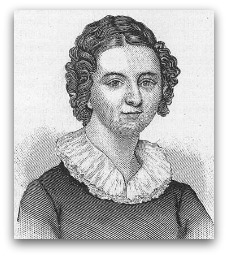
Ann Haseltine Judson (1789 – 1826)

Who was she? A Bradford, Massachusetts native, teacher, and the wife of Andoiram Judson. Two weeks after they married, the couple set out on a mission trip — first to India, then to Burma.
Key achievements: While her husband was imprisoned in Burma under suspicion of being a spy, Judson wrote stories of the struggles she faced on her own in the mission field. She included tragic descriptions of child marriages, female infanticide, and the trials of the Burmese women who had no rights except for those their husbands gave them.
How she died: Of smallpox in Burma, at age 37.
Interesting fact: At least 16 biographies of Judson were published in the 19th century, the most famous of which had a new edition printed almost every year from 1830 to 1856. She and Andoiram were American celebrities.

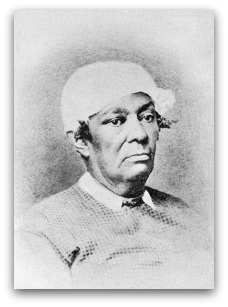
Betsey Stockton (c. 1798 – 1865)

Who was she? A freed slave who left domestic service to travel as America’s first single female missionary to Hawaii, then known as the Sandwich Islands. In fact, she went partly as a missionary and partly as a servant to one of the couples on the mission, the Reverend and Mrs. Stewart.
Key achievement: After being asked by the son of the Hawaiian king to teach him English, Stockton started up a school at Lahaina (in West Maui) for the makeainana — fishermen, farmers and craftsmen who lived off the land — which continued after she left.
Why her mission ended: Stockton’s service in Hawaii was cut short when Mrs. Stewart became ill. The party decided to return to the States in 1826.
Where she died: In Princeton, NJ. She is buried in the Stuarts’ plot in Cooperstown, NY.
Stockton’s diary: Stockton kept a detailed written record of the mission, which conveys her somewhat turbulent, occasionally agonized, inner spiritual life; her interest in the natural world — including the kinds of fish caught from the ship, the color of the waves, and various bird life; and her spirit of adventure. Like others on board she was frightened at her first sight of the Hawaiian men who come out in canoes to greet the ship:

half man and half beast—naked—except a narrow strip of tapa round their loins…

But then she adds: “They are men and have souls.”

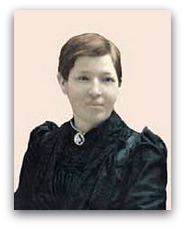
Adele Marion Fielde (1839 – 1916)

Who was she? A working-class native of Rodman, NY, who followed her fiancé, a Baptist missionary, to Bangkok, Thailand (then Siam) — only to discover he’d died of typhoid fever 10 days after she’d set sail from New York. She carried on nevertheless, remaining in Siam for a couple of years.  Later she went on a mission to China for training Bible women.
Key achievement: Fielde mastered the Chinese language and was also a powerful writer. She encouraged each of her Chinese Bible women to tell their stories, and then translated these stories and got them published in magazines back home. As one of her biographers puts it:

Their heart-rending sagas proved enormously appealing to American women, who could sympathize with their suffering Chinese sisters.

Where her life ended: In the United States. She retired from missionary work, went home, and became involved in scientific research.
Strange twists and turns: A free thinker since childhood, Fielde broke away from her family’s Baptist roots — only to return after becoming engaged to a Baptist missionary candidate. She faithfully served as a Baptist missionary for two decades — and then turned to science. Notably, the Baptists for a a long time sensed that she wasn’t quite one of them, accusing her of indulging in card-playing and dancing when she lived in Siam. She responded:

“I desire to be good. But I do not wish to be Pious.”

Lottie Moon (1840 – 1912)

Who was she? A highly educated Virginia native (she was born “Charlotte Digges Moon” on her family’s ancestral slave-run tobacco plantation). She became a teacher and then was called, at age 33, to serve for decades in China with the Southern Baptist Convention. Initially she went to join to her sister, Eddie, who was stationed at the North China Mission in the treaty port of Dengzhou.
Remarkable turnaround: When she first arrived at the mission, Moon made a point of wearing Western clothes to distance herself from the “heathens.” But then she mastered the language, became an admirer of Chinese culture and history, and started wearing Chinese clothes and adopted many of their customs.
Commendable behavior: When China was facing plague, famine, revolution, and war, Moon shared her personal finances and food with anyone in need around her.
How she died: Of starvation, in the harbor of Kobe, Japan, while en route back to the United States. (At that point she weighed only 50 pounds!)
Impressive statistic: Southern Baptists have named their annual mission fund after Lottie Moon. It finances half the entire Southern Baptist missions budget every year.
Part of her lore: She used to tell people she was 4′ 3″ tall. While something of an exaggeration, she was definitely petite!
Lottie Moon Cookies: Moon won over the children in her Chinese village by making tea cakes for them — they called her “the cookie lady” instead of “foreign devil.” Baptist families bake Lottie Moon Cookies for Christmas.

Mary Slessor (1848 – 1915)

Who was she? A Victorian mill girl who left the slums of Dundee to live among the tribes of Calabar, Nigeria, to take up the mantle of David Livingstone two years after he died.
Noteworthy friendship: While in Africa, Slessor became acquainted with the writer Mary Kingsley. Although the latter had never been baptized and hadn’t even been brought up a Christian, their common status — both were single females living among native populations with little company — presumably created the basis for lasting friendship.
Key achievement: The tribal people believed that if a woman gave birth to twins, one of the twins was the offspring of the devil who had secretly mated with the mother — and since the innocent child was impossible to distinguish, both should be killed (the mother was often killed as well). Slessor fought hard to end this practice.
Where she died: In Nigeria, at age 67. There was great mourning among the tribes to whom she’d dedicated her life.
A tribute from an unexpected source: During London Fashion Week in 2010, Nigerian-born designers Bunmi Olaye and Francis Udom named Slessor as one of the muses behind their collection, which fused Victorian costume with furs of the African tribe Slesson had lived in. The reason? Slessor had rescued Francis’s great-grandmother, who was born a twin, from human sacrifice.

Amy Carmichael (1867 – 1951)

Who was she? A small-village girl from a devout Presbyterian family in County Down, Northern Ireland (her father founded an evangelical church in Belfast). She was called first to work among the mill girls of Manchester and then overseas, finding her life-long vocation in India.
Key achievement: In those days, Hindu priests kept “temple children” — mostly young girls who were forced into prostitution to earn money for them. Carmichael tried to rescue them by setting up a sanitarium in Tamil Nadu, thirty miles from the southern tip of India.
Bold behavior: She would dress in Indian clothes, dye her skin with dark coffee, and travel long distances on hot, dusty roads to save just one child from suffering.
How she died: In India at the age of 83. She asked that no stone be put over her grave. Instead, the children she had cared for put a bird bath over it with the single inscription Amma, meaning “mother” in Tamil.
Cryptic remark: While serving in India, Carmichael received a letter from a young lady who was considering life as a missionary. She asked, “What is missionary life like?” Carmichael wrote back saying simply,

“Missionary life is simply a chance to die.”

A measure of her fortitude: Carmichael served in India 55 years without furlough and produced a total of 35 published books about her experiences.

Gladys Aylward (1902 – 1970)

Who was she? A working class London girl who left domestic service for to Yuncheng, Shanxi Province, China, in the tumultuous years leading up to World War II. She worked with an older missionary, Jeannie Lawson, to found an inn where traveling merchants could get a hot meal and hear stories from the Bible. Notably, Aylward was initially rejected as a potential missionary to China because of her lack of education. She spent her life savings on her passage.
Key achievements: Appointed by the local mandarin to serve as a “foot inspector,” she toured the countryside to enforce the new law against foot binding and met with much success. She also took in orphans and adopted several herself, and she intervened in a volatile prison riot, advocating for prison reform. When the region was invaded by Japanese forces in 1938, Aylward led around a hundred children to safety over the mountains, despite being wounded herself.
How her life ended: She returned to England in the 1940s, then tried to go back to China but was re-denied entry by the Communist government. She ended up in Taiwan, where she started another orphanage. She lived in Taiwan until her death.
Chinese nickname: She was known in China as Ai-weh-deh, or Virtuous One.
Celebrations of her life: Numerous books, short stories and movies have been created about the life and work of Gladys Aylward, including the film The Inn of the Sixth Happiness.
Not easily flattered: For Aylward, this 1957 movie was a thorn in her side: she resented being played by the tall, Swedish Ingrid Bergman (small in stature, she had dark hair and a cockney accent) and was further horrified to discover she’d been portrayed in “love scenes” with the Chinese Colonel Linnan.

Readers, what do you think of these 7 women? Have they inspired you?

STAY TUNED for tomorrow’s post, a Displaced Q on the “pornography of poverty.”

If you enjoyed this post, we invite you to subscribe to The Displaced Dispatch, a weekly round up of posts from The Displaced Nation, plus some extras such as seasonal recipes and occasional book giveaways. Sign up for The Displaced Dispatch by clicking here!

Related posts:

Image: MorgueFile

All hail Sir Richard Branson, along with global nomads who delve into global misery — and welcome to November

The catalog for Heifer International has just landed in my mailbox, encouraging me to donate a sheep in honor of my nearest and dearest, to a family in need in Nepal, Romania, or Brazil. That family will in turn give away the sheep’s female offspring to other families in need, and so on — a benevolent pyramid scheme known as Passing on the Gift.

I get it. What’s more, as it’s All Saints’ Day, I sense I would feel considerably more beatific if I gifted a sheep on behalf of my loved ones than if I bought them yet another pair of Merino wool gloves they don’t really need. (Hey, but it wouldn’t have been any old gloves but a touchscreen pair from Muji, for using one’s iPhone in the dead of winter…)

Yet for some reason, the Heifer appeal doesn’t. Call me a hard-hearted skeptic, but I’ve always had trouble with the kind of philanthropy that poses simple solutions to complex, deep-seated problems — alleviating world hunger and poverty being at the top of the list.

A candid — or do I mean Candide? — appraisal

When it comes to philanthropy, I always wonder — is this more about you (and your need to assuage your guilt about having so much) or about them? And how much do you actually know about them?

That is probably why, when I went to live abroad, I didn’t go as an aid worker or a Peace Corps volunteer. In the UK I was a postgraduate student; in Japan, a trailing spouse.

That said, my expat life was never just about exotic travel. On the contrary, I aimed to broaden my horizons and educate myself about other cultures by becoming immersed in the everyday life. I got to know the “natives” — and even married a couple of them (in not-very-rapid succession). Ultimately, I tried to become more of an informed citizen — of the world as well as of my country (assuming I eventually returned — I did).

But saving the world? That wasn’t in my plan. Like Voltaire’s young man, Candide, I would start by cultivating my own garden and branch out (so to speak) from there.

The importance of being earnest

I suppose you could say I’ve never been that earnest.

Earnest people have a calling. They don’t have time for frivolity.

I always have time for frivolity. What’s more, I’m genetically predisposed toward light-hearted nonsense. (Despite what the Heifer International Catalog says, my mother is not the sort to enjoy having me donate a sheep to someone she’s never met. She’d rather I gave it to her as a pet!)

From my expat days in the UK, I remember a joke sometimes told of Princess Diana, that when she would arrive on one of her unannounced visits to a hospital, patients would hide beneath their beds, not wanting to be the next “victim” of her need for making the Grand Philanthropic Gesture.

I find that image amusing to this day.

Do you really want to make me cry?

But lest this post become all about me and my peculiar hang-ups, let’s move on to Richard Branson and TDN’s November theme.

Cue in 1980s Culture Club music. Rockstar businessman Sir Richard Branson has just now touched down on the shores of The Displaced Nation in his hot-air balloon, the Virgin Atlantic Flyer.

As the leading exemplar of a fun-loving philanthropist, he is about to disprove my theory that these two qualities, earnestness and fun, can’t be combined in one individual.

As anyone who’s had the privilege of traveling on Virgin Atlantic in upper class (as I did when I was a spoiled expat in Tokyo) will be aware, here is man who knows how to throw a good party.

But if letting the good times roll is a huge part of Sir Richard’s appeal, it’s not his whole story. As one of the world’s wealthiest people, Branson also believes in giving back:

Ridiculous yachts and private planes and big limousines won’t make people enjoy life more, and it sends out terrible messages to the people who work for [such people]. It would be so much better if that money was spent in Africa — and it’s about getting a balance.

Branson, of course, has spent has spent much of his adult life displaced in ways most of us can’t even imagine — in private jets, on a private island in the Caribbean, in boats and balloons in pursuit of daredevil adventure.

But then some years ago, with his 60th birthday approaching, he began diverting some of his formidable energy and funding resources to countries in need — particularly in Africa. He left behind rock bands to form a band of Elders — consisting of, among others, British rock musician and human-rights activist Peter Gabriel, Nelson Mandela, Jimmy Carter and Mary Robinson — to work on the African continent’s intractable problems.

At Ulusaba, the private game reserve that Branson now owns in South Africa, visitors are encouraged to get involved with the initiatives he has launched to help local villages that have been ravaged by unemployment, HIV and drought. As Branson told a Daily Mail reporter:

To come to Africa and not see Africans is just wrong. A lot of the game reserves don’t really allow you into the villages but I think it’s important.

In addition, Branson is using his business knowhow to incubate and seed promising business proposals from aspiring South African entrepreneurs.

Now, Sir Richard would have earned the right of entry to our Displaced Hall of Fame by virtue of his derring-do alone — have you heard of Virgin Galactic? (It’s not too late to book a seat on the first sub-orbital space flight.) But we’ve chosen this moment to honor him as we plan to spend November looking at the kind of global nomads with the courage and the fortitude to delve into global misery.

Such travelers have displaced themselves, often to far-flung corners of the globe, not for the sake of good times or narrow personal goals but for the sake of helping others — many of whom have been displaced from their homelands through tragic circumstances beyond their control.

Not the final word

The announcement of this month’s theme is not, however, tantamount to imposing a ban on skepticism — we skeptics still have a place at The Displaced Nation’s table. What’s more, our ranks will soon swell to include some of the very people who belong to the volunteer and aid communities. They, too, can have their doubts about the effectiveness of their work — and of the involvement of celebrities in global problems.

But for now, let’s save such issues for future posts.

Which means I can now go back to cultivating my little patch of grass. Hmmm… I wonder if it could use a sheep or two, after all?

STAY TUNED for Wednesday’s post, featuring the first of our philanthropic Random Nomads.

If you enjoyed this post, we invite you to subscribe to The Displaced Dispatch, a weekly round up of posts from The Displaced Nation, plus some extras such as seasonal recipes and occasional book giveaways. Sign up for The Displaced Dispatch by clicking here!

Related posts:
CLASSIC DISPLACED WRITING: Proust — The Way by Swann’s

There is a  discernible whiff of Frenchiness to the blog this month. Doubtless you can smell it too, it’s that heady scent of garlic, Gauloises and ennui. Like any true-blooded Englishman it has certainly got my nostrils flaring and my back up too, but don’t worry, I’ll contest it as best I can with pig-headed jingoism and outrageous displays of xenophobia.

However, we did have a specific request to bring back this rather irregular series on Classic Displaced Writing with a post on Proust, and specifically (as French food is a topic this month) one featuring “the incident with the madeleine.”

Some of you may, however, may recall that this series has touched upon France, or more specifically Paris, previously. We looked at an esssay by Saul Bellow and a New York Times article on James Joyce’s Paris.  Now there’s no prizes for noticing that both of those posts are concerned with France as seen and lived by a foreigner. Indeed, considering the nature of this series of Classic Displaced Writing and its semi-regular appearance on an expat-centric blog this is pretty much what you would expect.

The question is, is Proust displaced enough to merit an appearance? While not displaced by geography, as most of our featured writers have been, Proust is displaced by time, by the present. A sickly child who grew into a man who always suffered with his health (the last years of his life were spent mostly confined to cork-lined bedroom), a closeted homosexual, at heart a nineteenth century aristocrat struggling with the France of the twentieth century, there’s plenty to Proust’s life that sets him at odds with his present time and announces him as a stranger to his homeland, and so it isn’t surprising that he retreats into the past.

The famous “incident with the madeleine” is one of many moments In Search of Lost Time where the Narrator of the novel has an incident of “involuntary memory.” It is based on an experience Proust had in his own life, though more prosacially it involved the dipping of a piece of dry toast rather than a madeleine. Up until the dipping of  the cake into his tea, the only memory that the Narrator has of his family’s country home in Combray is of his parent’s friend, Charles Swann, visiting. Due to the visit of Charles, the Narrator is denied of his usual goodnight kiss from his mother. It is only years later when he dips his madeleine cake into his tea that he remembers doing the same as a child at Combray with his Aunt Leonie — and from this, other memories return:

… It is the same with our past. It is a waste of effort for us to try to summon it, all the exertions of our intelligence are useless. The past is hidden outside the realm of our intelligence and beyond its reach, in some material object (in the sensation that this material object would give us) which we do not suspect. It depends on chance whether we encounter this object before we die, or do not encounter it.

For many years already, everything about Combray that was not the theatre and drama of my bedtime had ceased to exist for me, when one day in winter, as I came home, my mother, seeing that I was cold, suggested that, contrary to my habit, I have a little tea. I refused at first and then I do not know why, changed my mind. She sent for one of those squat, plump cakes called petites madeleines that look as though they have been moulded in the grooved valve of a scallop-shell. And soon, mechanically, oppressed by the gloomy day and the prospect of a sad future, I carried to my lips a spoonful of the tea in which I had let soften a piece of madeleine. But at that very instant when the mouthful of tea mixed with cake-crumbs touched my palate, I quivered, attentive to the extraordinary thing that was happening in me. A delicious pleasure had invaded me, isolated me, without my having any notion to its cause. It had immediately made the vicissitudes of life unimportant to me, its disasters innocuous, its brevity illusory, acting in the same way that love acts, by filling me with a precious essence: or rather this essence was not in me, it was me. I had ceased to feel I was mediocre, contingent, mortal. Where could it have come to me from — this powerful joy? I sensed that it was connected to the taste of the tea and the cake, but that it went infinitely far beyond it, could not be of the same nature. Where did it come from? What did it mean? How could I grasp it? I drink a second mouthful, in which I find nothing more than in the first, a third that gives me a little less than the second. It is time for me to stop, the virtue of the drink seems to be diminishing. It is clear that the truth I am seeking is not in the drink, but in me. The drink has awoken in me, but it does not know that truth, and cannot do more than repeat indefinitely, with less and less force, this same testimony which I do not know how to interpret and which I want at least to be able to ask of it again and find intact, available to me, soon, for a decisive clarification. I put down the cup and turn to my mind. It is up to my mind to find the truth…

And suddenly the memory appeared. The taste was the taste of the little piece of madeleine which on Sunday mornings at Combray (because that day I did not go out before it was time for Mass), when I went to say good morning to her in the bathroom, my Aunt Leonie would give me after dipping it in her infusion of tea or lime-blossom. The sight of the little madeleine had not recalled anything to me before I tasted it; perhaps because I had often seen them since, without eating them, on the pastry-cooks’ shelves, and their image had therefore left those days of Combray and attached itself to others more recent; perhaps because of these recollections abandoned so long outside my memory, nothing survived, everything had come apart; the forms — and the form, too, of the little shell made of cake, so fatly sensual within its severe and pious pleating — had been destroyed, or, still half asleep, had lost the force of expansion that would have allowed them to rejoin my consciousness. But when nothing subsists of an old past, after the death of people, after the destruction of things, alone, frailer but more endearing, more immaterial, more persistent, more faithful, smell and taste still remain for a long time, like souls remembering, waiting, hoping, on the ruin of all the rest, bearing without giving way, on their almost impalpable droplet, the immense edifice of memory.

And as soon as I had recognized the taste of the piece of madeleine dipped in lime-blossom tea that my aunt used to give me … the good people of the village and their little dwellings and the church and all of Combray and its surroundings, all of this which is assuming form and substance, emerged, towns and gardens alike, from my cup of tea.

Extract from Lydia Davis’ translation of The Way By Swann’s from Penguin’s In Search of Lost Time, edited by Christopher Prendergast. This is a fairly new translation of A la recherche du temps  perdu, and it’s one I’ve had more success with than Scott Moncrieff’s more famous translation. You can buy it here. And you should, you know.

STAY TUNED for Wednesday’s RANDOM NOMAD interview with an expat in France.

If you enjoyed this post, we invite you to subscribe for email delivery of The Displaced Dispatch, a round up of the week’s posts from The Displaced Nation, including seasonal recipes and book giveaways. Sign up for The Displaced Dispatch by clicking here!

Related posts:

Image: MorgueFile

When a Julia Child-like curiosity about French cuisine leads to a displaced life — bienvenue au October theme

The first time I was introduced to the Slow Food movement was in the land of its birth, Italy. My husband and I were in Florence for the wedding of his niece, and we ended up befriending and dining out with a couple of the other guests: a Chinese-American brother and sister from California who were serious gourmets and would only go to Slow-Food restaurants.

Ever since then, I’ve been puzzled.

Not by the concept of Slow Food itself. I get the idea of savoring a meal that is cooked from fresh, locally-sourced ingredients and that has not been prepared in advance — we’re talking the anti-Fast Food.

What’s more, I had enormous fun in Florence peering at all the restaurant doorways to see if they had a snail symbol. “No snail? Well then we’re not eating there,” I would declare to my husband.

No, what I find confounding is that the movement started in Italy, not in France.

For me, Italian food, with its pizzas, anti-pastas and gelatos, comes fairly close to being the fast food of Europe.

That could never be true, of course, of French cooking. (And what better symbol of French cooking than a snail, btw?)

I feel certain Julia Child would agree with me. An expat in Paris for many years, Julia belongs in the Displaced Nation’s Hall of Fame because of her refusal to be satisfied with her native country’s Anglo-derived plain food consisting of meat and potatoes and two veggies — let alone the fast-food version: meat (as it were), bun, French (quel insult!) fries, no veg.

Addressing just one of these nefarious ingredients, Julia once said:

How can a nation be called great if its bread tastes like Kleenex?

For Julia, France was a spiritual as well as culinary homeland. As she wrote in her memoir, My Life in France:

I fell in love with French food — the tastes, the processes, the history, the endless variations, the rigorous discipline, the creativity, the wonderful people, the equipment, the rituals.

A date with destiny

Julia’s first forays into foreign cuisine occurred when she worked for the Office of Strategic Services (the precursor to the CIA) during World War II.

She was posted first to Kandy, Ceylon (now Sri Lanka), and then to Kunming, China. Along the way, she met, and fell in love with, Paul Child, an early example of a foodie. At Paul’s initiative, they entertained themselves by exploring Ceylonese and Chinese cuisine and culture.

The pair married the year after the war ended, and Paul went to work for the American Embassy in Paris — a move that proved fortuitous in the extreme for his wife’s career.

For their first meal on French soil, Paul ordered sole meunière. For Julia, it was an epiphany — “the most exciting meal of my life.” The scales fell not just from the fish but from her eyes. She could see what American WASPs like herself were missing out on: sauces made with fresh herbs, butter, wine, and so forth.

The rest is history.

Bon appétit — say what?

Well, not quite. To be honest, I don’t think Julia’s approach to French cooking ever really took hold here in the U.S. We pretended that it did because we loved Julia so much. We loved her for her jolly-jape sense of humor and melodious voice.

But half the time, we didn’t understand what she was wittering on about.

Now, Julia knew that her fellow citizens were mostly flimsies (her word for people who aren’t serious about food). But she thought that the key to converting us was to provide a step-by-step outline of the centuries-old techniques that the French learn like a language: how to make foundation sauces, how to do a roux, how to lay in flavor, how to be patient.

The blogger Julie Powell tried to cook all 524 recipes in Child’s encyclopedic Mastering the Art of French Cooking, in a single year. Some say it was a gimmick, but I say, hey, she deserves the fame — including the honor of having Amy Adams play her in the ensuing Nora Ephron film, Julie & Julia.

‘Fess up: when was the last time you cracked open Julia Child’s magnum opus and gave her recipes a try?

Food writer Regina Schrambling wrote in a post for Slate just after the film’s release, analyzing the problem:

Consider the boeuf bourguignon depicted so romantically in the movie… The ingredients and instructions for its recipe span three pages, and that is before you hit the fine print: The beef stock, braised pearl onions, and sautéed mushrooms all require separate procedures. Step 1 involves making lardons and simmering them for 10 minutes in a precise amount of water; seven steps later, the fat is finally skimmed off the sauce, which is either boiled down to thicken or adjusted with liquid if it’s too thick.

And this is considered an entry-level recipe….Even simple sautéed veal scallops with mushrooms involve 18 ingredients and implements and two pages of instruction.

TDN’s October theme

Still, if expat blogs are anything to go by, a Julia Child-like curiosity with France and French cuisine has continued unabated since Julia’s own time. There is no shortage of Americans (also some Canadians and South Americans) who have relocated to France and intend to stay for as long as it takes to learn the art of French cooking at some level.

Partly out of curiosity, partly out of jealousy, The Displaced Nation will peer into the lives — and kitchens — of several of these expats during October.

What is it actually like to make the Ultimate Slow Food your focus? It any less daunting because of living in France and adopting the French lifestyle? And like Displaced Hall of Famer Julia Child, do today’s expats have (or hope to have) a spoon in the soup back here: are they planning to stir things up and convert us?

Readers, do you have any questions you’d like us to explore on this theme? Vas-y! Let us know!

If you enjoyed this post, we invite you to subscribe to The Displaced Dispatch, a weekly round up of posts from The Displaced Nation, plus some extras such as seasonal recipes and occasional book giveaways. Sign up for The Displaced Dispatch by clicking here!

Image: MorgueFile