The Displaced Nation

A home for international creatives

The light-hearted answer to Robert Pirsig — travel author Allie Sommerville

I know what you’re thinking. They can’t seriously be planning to feature Allie Sommerville in a month where they’re celebrating the joys of the open road?

For those who haven’t heard the news yet, Sommerville is the author of Uneasy Rider: Confessions of a Reluctant Traveller, and we’re doing an interview with her today, as well as an e-book giveaway (for DISPLACED DISPATCH subscribers only — sign up NOW!).

But before we proceed, allow me to say a few words in Sommerville’s — and our — defense.

As much as Sommerville may moan about her travel misadventures, as one of her Amazon reviewers puts it: “Methinks she doth protest too much.”

I would concur. In my own interactions with Sommerville, I’ve come to think of her as a gentler, more light-hearted version of Robert Pirsig, who penned the brilliant, if opaque, Zen and the Art of Motorcycle Maintenance, on which we’ve based many of our posts this month.

The two have much more in common than it may at first seem. Like Pirsig, Sommerville has faced the reality of sustained travel on the open road and the many challenges it entails — particularly if your vehicle of choice is a motorcycle or campervan.

Also like him, she has concluded that for a road trip to be a success, you must have a yin and a yang.

The main difference is that for Sommerville, these concepts are physical, not metaphysical — as in two people, herself and her Other Half, Harry.

She is the yin — the dancer, the poet, the writer — to poor Harry’s yang. He is the driver of the couple’s broken down but beloved RV, in charge of all repairs. And when things go awry, as they very often do, Sommerville injects a philosophical sense of humor for some perspective on the situation — a technique on a par with Pirsig’s philosophical musings.

Take, for instance, the very first road trip the couple made in this rickety vehicle, to Spain — all because Sommerville had developed an obsession with British poet Laurie Lee‘s memoir about tramping through Spain.

So far so predictable: Sommerville as driving force behind the adventure, her Other Half as driver. But then what happens when the campervan proves too wide for a Spanish street? He sweats it while she searches for an entertaining story in their predicament:

There was no room for manoeuvre. … With both sides of the van threatening to add a new dimension to the walls of the houses, it was nigh on impossible for either of us even to climb out…

By now we were becoming aware that we’d attracted the interest of several ancient and well-oiled patrons of a bar just up ahead, and our little drama turned into a full-scale pantomime as they began gesticulating and beckoning us on.

“Sí! Sí!…Se puede!” they exclaimed excitedly and at the same time doing what could only be described as some sort of grotesque ritual dance.

This was a good time to remember the meaning of those words in my favourite scene from the language video.

Se puede! They seem to think we can do it!” I translated helpfully.

So, without further ado, I give you the light-hearted Robert Pirsig: Allie Sommerville.

Tell me a little more about your background.
I was born in Croydon, which was in the county of Surrey at the time — now though, notoriously part of Greater London — and my husband is from London. After setting up home in Croydon for a few years, we moved to the Isle of Wight in 1976 to build our own house and give our two young children a better area to grow up in.

We are both, even after all this time, what Islanders call “overners” (an abbreviated form of “overlanders”). Only people actually born here qualify as “caulkheads.”

Uneasy Rider, which was published in 2009, was my first book. I’ve just published my second, a memoir about my childhood, on Kindle. It’s called To set my feet a-dancing and takes a light-hearted look at a time when children were allowed play in the park until dark, clothes were home made and owning a car meant you were rich. I draw a lot upon my time as a young amateur dancer, telling about my appearances with my older sister in shows arranged by our rather eccentric dancing teacher. I also look at schooldays, Christmases past and seaside holidays in an age of innocence.

I began this project after researching my family history for many years. It occurred to me that our children have no idea about how my generation lived as children in late 1950s England. Life has changed beyond anything we could imagine.

I conclude the book with the life stories of my grandparents and their predecessors — things I have gleaned from censuses, birth and marriage certificates, old photographs and conversations with my late mother. These are the lives of ordinary families: people whose lives are not in the history books.

I’m also in the process of writing about a trip my husband and I made around mainland Great Britain in the same old camper van, from the South (i.e., Isle of Wight) to the North (i.e., Scotland). The provisional title is: Miss Potter and the Mathematicians Rabbit — Allie Goes Oop North. The main title is taken from an experience we had in the Lake District.

Moving on to Uneasy Rider: How many road trips have you and your husband made together over the years?
We made six road trips in the converted Leyland Daf campervan of the book, from 1999 to 2004, though our very first trip in a motor caravan was in 1991, with our two teenagers on board.

Do you ever travel by other means?
Of course! We’ve traveled many times by car in France and Switzerland, staying in gîtes, chalets and apartments. My favorite “trip” of all though was on the Cunarder, Queen Mary 2, to New York. Much nicer than “roughing it” in a camper van! I absolutely loved New York and the glamour of the six-day Atlantic crossing, despite sailing through a force 11 gale.

So what made you decide to write a book about your campervan excursions?
During our trips, we had so many events that each time I said, “There’s a book in this!” Before we took off on our first trip (to Spain), I hadn’t found any similar book on the subject of campervanning or caravanning, apart from site-finder guides; it seemed there was a gap in the market.

Whom did you see as the primary audience?
I had in mind other campervanners who would identify with the joys, trials and tribulations of this type of independent travel. I didn’t want it to be one of those “everything is fantastic about travel” books. I hope I tell it like it REALLY is — the ups and downs, the good and the bad. Some campervan “purists” don’t appreciate hearing about the downside of their preferred method of holidaying though. They appear to have gotten together to leave negative reviews on Amazon. But I’m not too sure, by some of the comments, that they’ve actually read it…

Bill Bryson is the master of modern travel writing as far as I’m concerned, and it’s his light-hearted touch that I hope in some way to emulate. A tough act to follow!

Many people take road trips when they are young, to find out more about life and themselves. Does the purpose change once you become middle aged?
Middle aged? I still feel about 17!

As you’ve already mentioned, the purpose of our first trip (to Spain) was to follow in the footsteps of my literary hero, Laurie Lee. In As I Walked Out One Midsummer Morning, he tells of his walk across Spain on the cusp of the Civil War in the early 1930s. This book, for some reason, holds a big fascination for me.

That trip was meant to be a one-off. But afterwards we weren’t able to sell the van, so instead of letting it sit in the drive, I seized the opportunity to see as much of the art and architecture of Italy and France as I could. I suppose you could say my purpose was educational!

Which was your favorite place of all those you visited?
Florence has it all. I could never tire of it. We visited this amazing city three times. I was studying Art History at the time, specialist subject “The Early Renaissance.” The Italian people are fantastic, too!

Which was your least favorite?
Spain, especially the Costas (various coastlines), which were full of half-finished blocks of flats. Whether we were unlucky I don’t know, but it was not a friendly country — apart from a few honorable exceptions which I mention in the book: the helpful policeman in Seville who strode into and held up four lanes of speeding traffic for us, the patient shop assistant in the flamenco boutique. I have the feeling that relatively recent history may have altered the Spanish character: George Orwell in Homage to Catalonia found the Spanish people cheerful and friendly.

Robert Pirsig says “It’s a little better to travel than to arrive.” I’m guessing you might not agree with him?
Err…not really. Like Dorothy, my mantra is: there’s no place like home! Having the campervan, however, was almost like taking your home round with you. My best moments during these trips were when we found pleasant campsites to put down temporary roots.

Pirsig claimed there are two types of people: “classical” — practical, DIY fixers, boy-scout prepared types; and “romantic” — those who thrive on surface appearances, don’t want to get involved with the nitty-gritty, and thrive on gestalts.
As you noted in your introduction, I’m definitely “romantic,” and my husband is certainly “classical” — which probably explains why we work as a couple. He drives and sorts out problems, I look forward to seeing the Da Vincis.

Each chapter of your book is a stand-alone story, describing a particular incident. Do you have a favorite?
“The Parable of the Parador” is my stand-out favorite. As I said, it is typical that I get these romantic ideas — and my other half goes along with them, most of the time. That particular chapter though, sees a bit of role reversal, when we get “stuck” on the road into Arcos de la Frontera, to reach the parador (state-run hotel). For once he thinks it’s all hopeless, and I have to be the optimist. When he feels like this about a situation, I know we are REALLY in trouble.

Pirsig advocates traveling on a motorcycle because it puts you there, in the moment, without the barrier of a windscreen. What do you think of his philosophy?
To travel on a motorbike would be my nightmare! I just would feel too exposed. I like to be safe — hence the theme of Uneasy Rider.

Many of the Displaced Nation’s readers are expats. Can you imagine living anywhere besides the Isle of Wight?
We’ve often thought we should have relocated to France some years ago. I’d love to live in a place where you can walk to a baker’s every day for fresh baguettes and croissants. Now, the only place I’d move to is Central London: the London National Gallery and Covent Garden Royal Opera House are big draws.

How well do you fit back into the Isle of Wight after your journeys? Do you suffer from any counter culture shock?
The flippant answer is that being a “townie,” I suffer counter culture shock on the Island every day anyway… even after all this time. However, the main feeling after being in the ‘van for four weeks, though, was that our house did seem HUGE for the first few days .

So what’s next for your travels?
Next year I am fulfilling my long-time ambition of visiting St. Petersburg — on a cruise ship rather than by road. Russia and especially its Tsarist past, fascinates me. Hopefully there will be a book in this, though for all the right reasons!

Readers, do you have any questions for the Amazing Allie? Ask away, before she takes off again!

Images: Allie Sommerville’s author photo and book cover.

STAY TUNED for tomorrow’s installment from our displaced fictional heroine, Libby, as she prepares to welcome the pitter-patter of little feet. Clawed, furry feet, that is: Fergus is now a canine expat! What, not keeping up with Libby? Read the first three episodes of her expat adventures.

If you enjoyed this post, we invite you to subscribe to The Displaced Dispatch, a weekly round up of posts from The Displaced Nation, plus some extras such as seasonal recipes and occasional book giveaways. Sign up for The Displaced Dispatch by clicking here!

Related posts:

An un-American in an All-American diner

Continuing this month’s theme on road trips founding contributor Anthony Windram weighs in with some thoughts on the American diner.

There’s neon tubing that emits a purple glow around the clock that tells me it’s nearly 10pm. The dinner service is long over, the families now dispersed and only a scattering of drifters and loners are left. It’s still, at least, another 45 minutes before the late-night drunken crowd makes an appearance.  This diner is more Edward Hopper than Norman Rockwell. Across the parking lot is a strip club, as the night draws on and into morning some of its patrons, I imagine, will head over here to have a burger or to take advantage of that most American of institutions – the 24-hour breakfast.

There’s a still sadness to the place despite the best efforts of the waitress who exudes a friendly busyness. She could be anything from her late-40s to her early-60s. She calls me “sweetheart” when she comes over to give me a refill of greased coffee. She doesn’t, however, call it “a cup of Joe” — that would be one cliché too many.

Mentally, I take a step back from this scene and try to view all around me as a tableau and can’t but help but think this is Americana that I am sat in, this is America.

Perhaps this is the “real” America; a banal phrase uttered by a banal politician, but a phrase that does strike at something deep in the American psyche.

Dr George Lewis, director of American Studies at Leicester University, has started what the Guardian claims is the “first sustained historical analysis of the term un-American.” While there may be some confusion over quite how one defines being “un-American,” what seems certain to me is that this cold burger and this diner is decidedly the opposite of “un-American”. Though I am in Bakersfield, California, I could be anywhere in the Union, be it red state or blue state.

When I first moved to the US, to my now shame, I found myself fascinated by the Food Network show Diners, Drive-Ins and Dives, hosted by the hyperactive Guy Fieri, a man with the cholesterol levels of someone twice his age. Fieri is a TV host with absolutely no sense of discernment. Everything that he comes across, everything that he tastes, must be spoken about in glowing terms to the point that nothing that Fieri says has any real meaning whatsoever.

And yet I did find myself compelled by the show for illuminating further for me the American diner and showing me places that occupy a place in the country’s cultural milieu that the English cafe doesn’t even come close to back home. I soon stopped watching Diners, Drive-ins and Dives — not because my view of diners changed, but because it was (and is) a God-awful program and there’s only so many times you can watch an overweight Fieri eat some barbequed pork and then pronounce it “awesome”. But there was one thing in particular about Fieri’s show that they always got wrong. They would always show the diners when they were packed and buzzing with a family friendly atmosphere. And while I wouldn’t suggest that that’s not the case, what I find interesting is that when you roll into a strange town late at night and find yourself at a diner, regional and political difference tend to dissolve. You are in a place that is resolutely American rather than California, or Colorado, or Vermont, or…I could go on.

Fieri’s show, a sort of televisual equivalent of Pravda which can only emphasize the positive, misses out on what I am experiencing here in Bakersfield as the clock, that has neon tubing wrapped around it, hits 10 and I ask for my check. Here, and which Fieri always misses, is a quiet efficiency mixed with a low-burning malevolence. It’s that mixture of warmth and fear you get when your waitress flashes you a warm smile but you know you’re in a moment going to be stepping out back into that parking lot — and in the back of your mind you’re just a little concerned that this might be the night where you get shot by a drunk coming out of the strip club.

Question: What’s your experience of American diners?

Image by awindram.

STAY TUNED for tomorrow’s interview with the travel writer Allie Sommerville. NOTE: All DISPLACED DISPATCH subscribers will be entered in our giveaway of Allie’s book, Uneasy Rider.

If you enjoyed this post, we invite you to subscribe to The Displaced Dispatch, a weekly round up of posts from The Displaced Nation, plus some extras such as seasonal recipes and occasional book giveaways. Sign up for The Displaced Dispatch by clicking here!

Related posts:

Gotta helmet? Time to burn some rubber, have a real travel adventure

The Displaced Nation has dedicated the month of September to the ideas within Robert Pirsig’s classic, Zen and the Art of Motorcycle Maintenance. But enough with theory. What’s it really like to see the world from the back of a motorcycle — and what are us more timid types missing out on? Rubber hits the road today with Matthew Cashmore, aka The London Biker. Braaaaown… brraaoom…… rrooaaarr………. Take it away, Matthew! NOTE: This post has not been edited for British spelling.

There are some things in life that just have to be done. Laying on your back staring at the stars, wondering which ones are dead and which are still blazing. Getting so drunk on cider that you can no longer stand (perhaps that’s just me). Or travelling the world by motorcycle.

The last, many people would say, is optional. But it’s not. If you feel as I do, motorcycle travel is as essential to life as water or food, then there is only one way to do it.

I’m not the first to point out that seeing the world from a motorcycle is better than any other means of travel — just dig out a copy of Zen and the Art of Motorcycle Maintenance or my personal favourite, Jupiter’s Travels, by Ted Simon.* You’ll only read a quarter of each book before you discover why this method of travel trumps the rest. You’re part of the world in which you’re travelling. There is nothing between you, the elements and the people with whom you interact.

I’ve been fortunate enough to see much of the world. I’ve backpacked, travelled by plane to amazing cities, jumped on buses or driven cars. But nothing, absolutely nothing, can match the experience of the wind rushing past your head trying to knock you off your bike, as you hurtle between towns and villages. And nothing can give you a greater grin than riding across the bay in San Francisco on the back of a growling Harley — safe in the knowledge that in a car this would be just another American highway.

If you don’t ride in the rain, you don’t ride…

It does take a certain amount of effort, though. This summer I did a short run from London out to Budapest via France, Germany, Austria and then into Hungry. The return leg took me through northern Croatia, Slovenia, back into Austria and up into the Alps over into Italy and then back over the Stelvio Pass into Switzerland, France and finally home. It rained the entire trip. Every single morning I was greeted with sheets of rain. I was beginning to suspect it was actually following me to Budapest. Each night I was soaked to the skin — even with the most expensive rain gear. Each night I was dog tired, and I really had to question what I was doing. What kind of a nut case chooses to spend his summer holiday riding a motorbike half way across Europe in the rain?

The reason I, and many others like me, do this is because you can ride for eight days in the rain — and then out of nowhere the clouds will clear and you’ll be presented with a road of perfect grace. A strip of tarmac that sings as you press on, a view that leaves you crying because of its beauty. Something you would never have seen had you been in a car or a bus. Something you’ve had to work to achieve — and it’s even more beautiful for that.

A parable of the hospitality shown to bikers

On the Budapest trip I found myself at the top of the Austrian Alps. I was running a day behind because I’d had a stomach bug back in Budapest. I was determined to make up that lost day so that I could still get over the pass into Switzerland ahead of a (yet another) rain front. I had been riding for ten hours, I had another six ahead of me, and I was already on my fourth change of clothes. I was incredibly fed up. Why on earth was I doing this?

I pulled into the first service stop I’d seen for about 150 miles, 2000 metres above sea level and hidden by cloud, rain and spray. Filling the bike up with petrol I spotted a small restaurant complete with a hotel — bliss, escape! I headed inside, dripping water everywhere. As I walked through the door I must have looked like a monster from the deep. I was dressed head to foot in every single piece of waterproof gear I could find — complete with an army surplus poncho. The restaurant manager took one look at me and ordered me onto a piece of lino, where I promptly created a rather large puddle. She demanded I remove my clothing leaving me standing there in just my thermals. I shivered, waiting for her next command. Did they have ways of making me warm?

My gear was whisked off (it came back nearly dry and very warm), and I was pointed in the direction of the shower and given a hot towel. I emerged a different man. Clean clothes, warm, and for the first time in two days, dry. Ushered to a seat, I took the opportunity to eat well — feasting on sausage and strudel, the best Austria had to offer. Buoyed by such amazing hospitality I got back on the bike and rode on. As I rounded the first corner the rain stopped and I hit Italy, sun, and the kind of twisty roads God clearly made for bikers.

I could say this was a one off, but the more I travel the world by motorbike the more I come to realise that the very thing that makes you vulnerable is the very thing that makes you approachable. It’s different if you’re travelling with other bikers, but when you’re on your own it’s a perfect combination of being totally exposed to the environment and more importantly to people.

This is what makes travelling by motorcycle so special. The openness, the access, the smells, the sounds, the people who are curious because you’ve rolled into town in something other than a bus or 4×4. If you want to experience, to imbibe, the world through which you travel…there is only one option. Gotta helmet?

* Suggested further reading:

Matthew Cashmore works in digital publishing. He keeps track of his “random thoughts” on his blog, The London Biker. He also has a YouTube channel, where he posts videos about his life on the road, camp cooking and related topics.

img: Matthew Cashmore in Budapest, July 2011.

STAY TUNED for Tuesday’s post, on the diner food that has played a part in many an American road trip.

If you enjoyed this post, we invite you to subscribe to The Displaced Dispatch, a weekly round up of posts from The Displaced Nation, plus some extras such as seasonal recipes and occasional book giveaways. Sign up for The Displaced Dispatch by clicking here!

Related posts:
“My country, ’tis of thee” applies to my expat mum but not to me

We take a break from road trips today with this guest post from Lawrence Hunt, a recent graduate of Warwick University (UK). Followers of The Displaced Nation may recall that we interviewed two cross-cultural married couples last summer. Hunt is the product of a cross-cultural union between an American mother and an English father. Let’s listen to what he has to say regarding the oft-perplexing matter of cultural identity. NOTE: This post has not been edited for British spelling or punctuation.

One of the things that expats like to tell themselves is that home is a state of mind.

But for me, the child of an English father and an American mother, home stands for a physical place: the one where I was born and grew up, England.

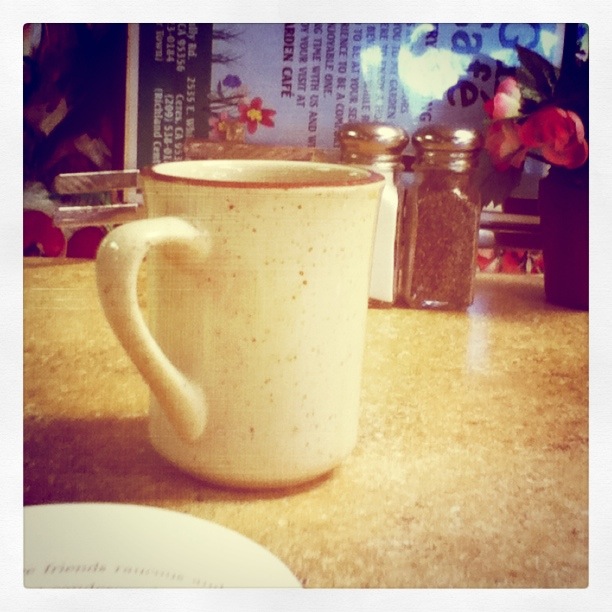
For years my mother has sipped her morning coffee from the same extravagantly large mug, Stars and Stripes boldly printed around the outside. She picked it up at an airport in Washington DC where we were visiting her sister. It’s curvaceous and welcoming, a daily caffeinated hit of homeland comfort. I’ve started drinking from it, too — but more as an ironic gesture.

Mum grew up reciting the Pledge of Allegiance in class, but in ultra-PC Britain, patriotism has to be decidedly lower key. It seems commonplace to see flags hoisted outside American homes, but over here the very act of being seen with a St George’s flag in any context other than sporting events or royal weddings is infrequent enough to draw stares. People see you with it and instantly wonder what fanatical scheme for national purification you’re plotting behind closed doors.

Now, I don’t fault my mum for being proud of her cultural upbringing. I think in some ways her extended absence makes her all the more keen to assert her identity and share it with us.

She did some family history research recently that confirmed we’re the distant descendants of Charles Carroll of Carrollton, the only Catholic and longest surviving signatory of the Declaration of Independence. That’s my strongest claim to fame, and I’m holding onto it.

Chocolate — the way to an English child’s heart

That said, America has never played much of a role in our regular family rituals. For one thing, traditions like the Fourth of July and Labour Day just aren’t compatible with the British calendar.

I do remember Mum hosted a wonderful Thanksgiving dinner once with some other American expats when I was little. Without having the next day off to recuperate, however, everyone left early and I think she found the mountain of washing up too colossal to repeat the effort.

The one institution she has passed down to us (and this is something I cannot thank her enough for) was the American Easter basket hunt. The concept, as I explain it to my friends, is simple but ingenious – essentially, it’s what all kids in England do but with two key differences: 1) More chocolate, and 2) Baskets.

While other English kids were being handed single Cadbury creme eggs in flimsy cardboard boxes, my brothers and I were racing around the garden looking for mighty hoards of chocolate hidden among the shrubbery by a miraculously literate bunny that knew how to spell our names on post-it notes.

As American as everyone else in Britain?

Basket cases aside, it’s difficult to say exactly how ‘Americanized’ I am as a result of my mother, and how much of it is just living in a country where America’s influence pervades almost every cultural platform.

The most differentiating feature of mum’s background has always been her accent. I can do a pretty convincing American accent on a good day, and I used to mimic my mother so often when I was a child that I still lapse into it sometimes without realising.

But even my mother, having lived here for almost thirty years, isn’t really that American any more in her diction. I think the few Americanisms I sometimes find myself using, like ‘movie’ rather than ‘film’, or ‘take-out’ rather than ‘takeaway’, are more because I hear them in American movies and prefer them than because I’ve picked them up from her.

I certainly feel something for the States — a fondness and a familiarity, I suppose. I’ve been lucky enough to go with her on visits to her family almost every other year since I was a baby. Some of my favourite memories have come from spending summers at lake houses in North Carolina, climbing the mountains of West Virginia and walking down endless blocks of New York.

When I was seventeen I took a position teaching at a French camp in the woods in Minnesota, and made friends who I still keep in contact with.

America as distant entity

But America lives for me, as it does for many Brits, more in fiction than in reality. From the moment I read JD Salinger, I was hooked, and I’ve probably read more American writers than British ones: Steinbeck, Fitzgerald and Kerouac, right through to more recent contemporaries like Bret Easton Ellis, David Foster Wallace and Jonathan Franzen.

They all essentially seem to be commenting on the same thing: the tragic failure of American life to live up to its promises. Paradoxically though, in the richness of the characters and landscapes they describe, they evoke a utopia in my mind that’s been hard to shake.

In my final year at university I enrolled in a contemporary American Literature module — ‘States of Damage — US Writing and Culture in the Post 9/11 Context’. I didn’t know what I was getting myself into. It was a step-by-step dissection of everything wrong with free market America, from George Trow’s attack on media culture in ‘Within the Context of No Context’ to Naomi Klein’s The Shock Doctrine, an expose on America’s foreign policy over the past 40 years.

The critique seemed appallingly one-sided to me, and an hour a week for an entire year I felt compelled to fight America’s corner against the scathing intellects of my fellow students. Truth be told, I just like a good debate, and this was a difficult one. There’s a lot about American politics that we find objectionable in British culture — even though we’re implicated in most of the same hypocrisies ourselves.

To be fair, however, my fellow students showed a very different side on Obama’s inauguration night. The Students Union had been decked out in American flags and YESWECAN posters, and multitudes of students were queuing up to buy hotdogs and other American staples. I voted in that election, and it was a night when I felt nothing but pride to be half American.

My mum’s sweet land of liberty

I sometimes think it would be nice to use my dual citizenship and live on the other side of the Atlantic for a while, preferably near the coast. Mum believes that on the whole, Americans are more open, friendlier (at least on the outside) and more honest than British people. She’s even been known to point out these qualities in my brothers and me, when they appear, as our ‘American side’.

I’m sceptical that you can generalise about such vast groups of people in any meaningful way, especially as the world becomes increasingly mixed.

Ultimately, I think when you spend very little time in a place, and you miss it greatly, you begin to feel connected to a idealised version of it, one that’s perhaps better than the reality. When I ask about America, the memories my mother recalls from behind the vapours of her star-spangled mug are those of the pioneering Midwest. She tells me she always wanted to be one of the pioneers in Little House on the Prairie, struggling against the elements and striking out on her own.

That adventurousness is, ironically, probably part of what made her leave America for pastures new in the first place.

I can see the real things she’s had to give up in establishing her new life here — the family, the friends, the holiday traditions, a million different flavours and details that in some cases are only slightly different here from what she grew up with. Those are also the things I take for granted about my own life in Britain.

I was born here, and that counts for a great deal more than where my mother was born.

img: Lawrence Hunt with his mum’s stars-and-stripes mug, at home in Chorley Wood

STAY TUNED for Monday’s post, in which Matthew Cashmore, aka The London Biker, relays his personal “Zen” of this rather risky, albeit exhilarating, mode of travel.

If you enjoyed this post, we invite you to subscribe to The Displaced Dispatch, a weekly round up of posts from The Displaced Nation, plus some extras such as seasonal recipes and occasional book giveaways. Sign up for The Displaced Dispatch by clicking here!

Related posts:

RANDOM NOMAD: Kirsty Rice, Freelance Writer & Blogger

Born in: Renmark*, South Australia
Passport: Australia (no one else will have me!)
Countries lived in: Australia (Adelaide & Perth): 1997-98; Indonesia (Jakarta): 1999 – 2001; Malaysia (Kuala Lumpur): 2001-02; Libya (Tripoli): 2002-04; Canada (Calgary): 2004-08; USA (Houston): 2008-09; Qatar (Doha): 2010-present.
Cyberspace coordinates: 4 kids, 20 suitcases and a beagle (blog)
*A small town of 7,500; my parents still live there.

What made you leave your homeland in the first place?
I am married to a former expat child. I know the term is Third Culture Kid, but I don’t really think it applies to him. He was always keen on doing the “expat” thing. I, on the other hand, was raised in the same town that I was born in and wasn’t a great lover of change. Our first move was the result of a promotion for my husband and the fact that I was pregnant with our first child. The plan was to do a two-year posting in Indonesia and to return “home”. That was 7 countries and 12 years ago. I now thrive on change.

So your husband was already “displaced”?
My husband’s parents were expats. He was actually born in New Zealand and then they went to the Philippines for many years before moving to Sydney, then Melbourne, and finally to Brisbane.

How about your kids?
My children were all born in different countries. We were living in Jakarta when I had my first child, my second was born in KL, the third in Malta and the fourth in Canada. Although none of them have lived permanently in Australia (our longest stint has been during school holidays, so a maximum of 12 weeks), they all think of themselves as Australian. My husband and I have both worked hard for that to be the case.

Describe the moment when you felt most displaced.
When we first moved to Tripoli — it was the middle of summer and I had a two-week-old baby and a two-year-old. We then had to endure months of housing hell — we couldn’t find one! For a while, I shared a “guest house” with about sixty men who were rotating in and out of the desert: there were no other women. Breast feeding amongst men who hadn’t seen a woman for a couple of months was a rather unique experience. Due to the weather, fruit and vegetables were limited and small in size. I can remember standing in a fruit and vegetable stand with a screaming baby and a restless toddler wondering how I was going to cook carrots the size of my little finger. I was continually getting lost, and the simplest of tasks seemed very overwhelming. There were many days that I considered getting on a plane — but I’m so pleased I didn’t. Three months later, we had a house, the weather was better, I made friends, and I loved our life in Libya. I was devastated to leave.

Describe the moment when you felt least displaced.
I feel like that here in Qatar. Our children are at a fabulous school, I have a place to write, and my husband works for a Qatari company and really enjoys it. There is so much here in the community for expats, and we are made to feel very welcome. I have made local friends and love heading to the local souqs. I feel that this is very much our second home. In other locations I have felt that we were passing through, but not here.

You may bring one curiosity you’ve collected from your adopted country into The Displaced Nation. What’s in your suitcase?
From Indonesia: A jamu (traditional medicine) woman made of silver, given to me by a very dear friend.
From Malaysia: The Selangor pewter tea set I was given as a gift. Each time I use it I think of my friends.
From Libya: A wedding blanket with traditional jewellery pinned to it, which was given as a farewell present. It is such a unique gift and always a talking point when people spot it in our house.
From Canada: Nothing material, just the memory of what it was like to be back to work full time. In Calgary, I returned to the “old” me, remembering who I was pre children and travel. That was Canada’s gift — along with a huge appreciation of weather!
From the U.S. (Houston): A fantastic painting of an American flag that I picked up in San Antonio. It’s 3D and not in the traditional colors. It reminds me that America is far more layered and multidimensional that what I’d given it credit for.

You’re invited to prepare one meal based on your travels for other Displaced Nation members. What’s on the menu?
We’ll have some kind of soup for starters: either Indonesian soto ayam (chicken soup), Libyan soup* (I love it!), or the Canadian version of Italian wedding soup. Though I come from an area in Australia that has a large Italian community, I’d never heard of Italian Wedding Soup — turns out it’s more of a North American thing.

For the mains, perhaps I’ll offer a choice between Malaysian curry or maybe a nasi goreng from Indonesia.

And for drinks, we’ll have margaritas. I learned to make a mean margarita in Houston.

For dessert, a caramel cheesecake — a recipe I picked up from a fellow Aussie in Houston.

You may add one word or expression from the country you’re living in to The Displaced Nation argot. What will you loan us?
From Indonesia: Satu lagi (one more) — I said that way to often!
From Malaysia: I just loved how you could put lah on the end of everything and automatically make a sentence sound friendlier.
From Tripoli: Shokran (thank you). It was the first Arabic word I learned and makes me think of how special the people in Libya are — so kind and helpful. Incidentally, in learning how to say “pregnancy test,” I discovered that hamil is the word for “pregnant” in Indonesia, Malaysia and Tripoli.
From Canada: Hey — kind of the same as lah in Malaysian.
From the U.S. (Houston): I found myself describing things differently. It wasn’t just “the big tree out the front” but “the big ‘ol tree out the front.”
From Qatar: Right now I’m back to learning Arabic (unsuccessfully). Oh how I wish I had a chip I could just insert into my brain to switch languages. Why haven’t they invented that yet?

It’s Zen and the Art of the Road Trip month at The Displaced Nation. Robert M. Pirsig, author of Zen and the Art of Motorcycle Maintenance, famously said: “Sometimes it’s a little better to travel than to arrive.” Do you agree?
I disagree. I like to arrive, settle and learn how a city/country works. You can learn so much about a place just by trying to get the telephone connected! Traveling through is just a brief picture. I love that we’ve been able to become part of a community everywhere we have lived.

Pirsig’s book details two types of personalities: 1) those who are interested mostly in gestalts so focus on being in the moment, not rational analysis; and 2) those who seek to know the details, understand the inner workings, and master the mechanics. Which type are you?
If you read my blog you’ll see there is usually a romantic viewpoint or flowery end to a posting. I’m a big believer in things happening for a reason and not always being logical. Having said that, I am a stickler for details, I hate to enter into things blindly and have to know exactly what the story is. Which personality am I in my expat life? I’m a bit of both. I don’t believe that anyone can be a successful expat without having the flexibility to change with the situation. In our daily lives as expats we need to quickly learn the rules, find out the details, go with the flow and just enjoy the ride. You have to be both.

* Libyan soup is a tomato-based soup. There are many variations. The one I loved was with lamb.

Ingredients:
1/2 to 1/3 lb. lamb meat cut into small pieces
1/4 cup oil or “samn” (vegetable ghee)
one large onion
1 tablespoon tomato paste
2-3 tomatoes
1 lemon
1/2 cup orzo, salt, red pepper, Libyan spices (Hararat) or cinnamon

Directions:
Sauté the onion with meat in oil.
Add parsley and sauté until meet is brown.
Add chopped tomatoes, tomato paste, salt, spices, and stir while sizzling.
Add enough water to cover meat, simmer on medium heat until meat is cooked.
Add more water if needed, and bring to a boil.
Add orzo, simmer until cooked.
Before serving, sprinkle crushed dried mint leaves, and squeeze fresh lemon juice to taste.

Readers — yay or nay for letting Kirsty Rice into The Displaced Nation? Tell us your reasons. (Note: It’s fine to vote “nay” as long as you couch your reasoning in terms we all — including Kirsty — find amusing.)

img: Kirsty Rice with her family (sans the beagle) at Souq Waqif, Doha, Qatar.

STAY TUNED for tomorrow’s installment from our displaced fictional heroine, Libby, whose rather dramatic road-trip adventure has come to an end. Time to face reality again in Woodhaven! What, not keeping up with Libby? Read the first three episodes of her expat adventures.

If you enjoyed this post, we invite you to register for The Displaced Dispatch, a round up of weekly posts from The Displaced Nation. Includes seasonal recipes and book giveaways. Register for The Displaced Dispatch by clicking here!

Related posts:

Music for a road trip? Anything but a certain song…

Mothers of school age children can spend hours at a time in the car — a mini road trip every day, ferrying the kids between school, karate, swimming lessons, music lessons…

This piece, originally titled “California Guys”, first appeared on my own blog, Marmite and Fluff, after I had heard a certain song on the car radio once too often..

I confess to a certain love of Coen Brothers’ movies, especially The Big Lebowski, and in particular the scene where a taxi driver hauls Jeff Bridges bodily from his cab and drives off in a fury. Bridges’ character, “The Dude,” had been stupid enough to ask the driver to change the radio station, because he’s had a rough day and he hates the f***ing Eagles, man.

Dude. I sympathize. I used to like the Eagles. Our scratched vinyl copy of their Greatest Hits proves it. But some years ago – the month we moved to America, in fact — everything changed. It started with the purchase of a Dodge Grand Caravan, an FM radio, and ten programmable presets. After two days we took the car back to the dealer. “There’s something wrong with this radio!” we complained. “It only plays ‘Hotel California’!”

The repairman twiddled with the dials, humming all the while about a dark desert highway and cool wind in his hair, and shrugged. “Seems fine to me,” he said. “That’s what it’s supposed to play.”

Later that day, pushing a shopping cart through the orange juice aisle, I heard Don Henley’s voice on the supermarket speakers, telling me that I could check out any time I liked but I could never leave. By now, I’d heard him say this so often that I was beginning to believe him, so I abandoned the juice and cart mid-aisle, in case he was serious.

After that, I could only listen to one Eagle at a time. Glenn Frey and “The Heat Is On”? You bet. Don Henley and “Boys Of Summer”? Bring it on and turn it up! But the Eagles ensemble telling me to Take It Easy would – paraphrasing slightly – Take Me To The Limit of my endurance.

Most listeners of American FM radio will know what I mean. It’s not just Eagles, of course; Elton John, Rod Stewart, Phil Collins, to name but three — all played ad nauseum. Sometimes it’s as if those artists’ peers never existed. Sometimes it’s as if the Nineties never existed. Ironically, that was what I initially loved about American radio, because I’d never graduated from Eighties’ hairbands to Seattle grunge. So I learned to live with the Eagles et al, because they’d occasionally get off the turntable and let Van Halen have a spin.

Eagles airwave-saturation could even have its advantages. No matter how much I wanted to kick The New Kid out of Town, it also seemed that Cliff Richard, a singer beloved by British radio for fifty years, and shunned by me for — well, not quite that long — was practically unknown over here. Never again would I have to listen to the Cliff Richard Annual Christmas Hit! No more Cliff Richard Recycled Golden Oldies to put me off my morning oatmeal! It was an ill wind, indeed.

And so it remained until my Dodge developed terminal transmission failure and we bade farewell. Enter another car with satellite radio. Enter the Hairbands channel, the Soppy Songs channel, and, to my kids’ dismay, the E Street Channel with 24/7 Springsteen. One day, they will avoid “Born to Run” as much as I avoided “Hotel California”. However, the driver of the car was happy, and that was the main thing.

But nothing lasts forever. Something was missing: a sparring partner, perhaps. The turning point came when I heard a new Eagles’ song and thought, “Darn it! I like this!” I found myself genuinely disappointed that I’d be Too Busy Being Fabulous on vacation at the time of their Connecticut gig. I’d come full circle. It was time to make my peace.

It’s been a gradual process, of course. I can listen to entire lesser-known Eagles songs without changing channels mid-track, but still haven’t managed all of Hotel California. Give me time. At least I no longer want to Kill the Beast.

But everything comes at a price. The satellite radio, my once-savior, turned against me. When I pulled into the garage last night, a song started playing in the car — a song I haven’t heard for a long time. Not since I listened to BBC morning radio, 3000 miles and a decade and a half away. Cliff Richard, sneaking onto American airwaves with a Golden Oldie. He wasn’t supposed to follow me over here. That wasn’t part of the deal.

Or as John Goodman in The Big Lebowski might put it, “This is not ‘Nam. There are rules.”

If you enjoyed this post, we invite you to subscribe to The Displaced Dispatch, a weekly round up of posts from The Displaced Nation, plus some extras such as seasonal recipes and occasional book giveaways. Sign up for The Displaced Dispatch by clicking here!

Related posts:

Img: MorgueFile

6 kinds of road trips and the best cars, real and fantasy, to travel in

To take a road trip, one must have a suitable mode of transport. Most of our road trips were made in a soccer-mom-mobile — a 1997 Dodge Grand Caravan, high in practicality but decidedly low in street cred. For our young family 14 years ago, however, it was perfect as we traveled through Maine, Quebec, Ontario, and New York.

Robert Pirsig’s Honda motorcycle, no matter how charismatic the ride or perfect the windshield-less view, would have been unfit for purpose if the purpose was to transport two children under the age of four.

So when people ask, “What’s the best vehicle for a road trip?” the answer will depend on another question:

“What kind of road trip?”

1. The Ghost Hunters Trip

The Fantasy – The Scooby Doo Mystery Machine.

The Reality – While the exact make and model of the Mystery Machine is unclear in the original cartoon, and a search on Google images brings up all manner of vehicles painted to resemble it (including a Dodge Grand Caravan — now, why didn’t I think of that?) I feel there is only one van that will fit this role: the VW camper.

A child of the hippie era, the VW encapsulates the eccentricity required for a ghost hunting trip. Film maker Elliott Bristow made a 500,000 mile trip around America between 1968 and 1982, much of it in a VW camper in which he had his own supernatural experience on an old Indian battle site.

Optional extras — large slobbering dog, at additional cost.

2. The Paris Hilton Trip

The FantasyPenelope Pitstop’s pink car from Wacky Races. In a 2009 survey by women’s motor insurer Diamond, around a fifth of the polled female motorists admitted to applying mascara while driving, and three per cent admitted causing an accident by doing so. These numbers statistically equate to “half a million road crashes caused by women applying make-up.” Penelope Pitstop’s pink car with its automatic lipstick applicator, therefore, would be an ideal choice for young women whose multi-tasking ability is limited to watching the road and changing gear.

The Reality — While Penelope’s car may be a reality at car shows (yes, I’ve seen it at Goodwood Festival of Speed) it probably, alas, doesn’t come with a lipstick applicator. All is not lost, though. Earlier this year, Google was lobbying for legislation to make Nevada the first state to allow their self-driving cars on the road, and which would include an exemption on the ban of texting — and therefore, one assumes, the application of lip gloss — at the wheel.

Optional extras — Bring a Southern Belle accent by all means, but leave the Southern Comfort at home. I’m pretty sure even self-driving cars wouldn’t be exempt from drink-driving laws.

3. The Girls’ Weekend

The Fantasy — A blue 1966 Thunderbird, as driven by Susan Sarandon in Thelma and Louise.

The Reality — There are still quite a few of these cars around, at varying prices. Try eBay. However much you pay for the car, don’t expect to find a hitchhiker who looks like Brad Pitt.

Optional extras — Radar detector where legal. Hitchhiker ejector seat.

4. The Flying Visit Trip

The FantasyChitty Chitty Bang Bang. Now, how useful would this car be? On a long stretch of dull highway or upon approaching a traffic jam, to press a button, unfold a set of wings, and zoom ahead like ET on a bicycle. Or when you come to some obstacle in the road — like, say, the Grand Canyon. (See “The Girls’ Weekend”.)

The RealityThe Terrafugia Transition. Is it a car? Is it a plane? It’s both. You land on the runway, fold up the wings, and drive home. The Massachusetts-based manufacturer estimates that the first delivery of this machine will be late 2012, and it will cost just under US$300,000.

Optional extras — Call me pessimistic, but a parachute would be nice.

5. The Great Lakes Trip — without waiting for a bridge

The FantasyJames Bond’s Lotus Esprit. You know the one, in The Spy Who Loved Me. Roger Moore and Barbara Bach take a dive into the sea in this car, which miraculously turns into a submarine. Useful for crossing large stretches of water.

The RealityThe Lotus Elise sQuba. Concept car designer Frank Rinderknecht adapted a Lotus Elise to travel underwater. It can manage about two hours — until the batteries or oxygen run out. Sadly, this car remains just a concept.

Optional extras — As in Hitchhiker’s Guide, never travel in this one without a towel.

6. The Christmas Road Trip

The Fantasy — Santa’s Sleigh and Reindeer. I used to think Santa Claus’s transport was a very neat trick — time travel and flying deer in one machine.

The Reality — No reindeer, but an elk of sorts. This week we came across a road trip post at Sarah Melamed’s site, Food Bridge. (Do check it out. Some great photos, and other wonderful posts on food.) Sarah and her husband rented an RV for the summer and traveled from New York through Maine to Nova Scotia. The RV — pictured above — had a large dent in its front, apparently due to the previous renters crashing it into an elk in Montana. Hence the name Sarah gave it: the Elk-Mobile. The large dent, Sarah says, gave her and her husband credibility among the RV clan, even though they were “amateurs” in the RV world.

Optional extras — deer, readily available in your own back yard, to add a few dings where necessary.

If only I had known it was that simple to gain street cred when I owned my Caravan.

STAY TUNED for Tuesday’s post, on the diner food sometimes encountered on American road trips (It’s Food!).

If you enjoyed this post, we invite you to subscribe to The Displaced Dispatch, a weekly round up of posts from The Displaced Nation, plus some extras such as seasonal recipes and occasional book giveaways. Sign up for The Displaced Dispatch by clicking here!

Related posts:
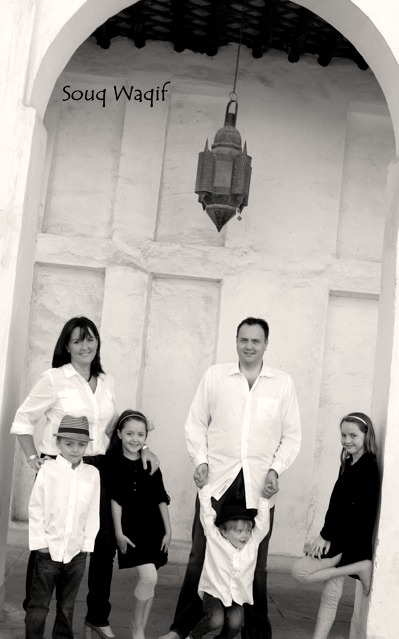
Image: MorgueFile

Dear Mary-Sue: Tempted to make invidious cross-cultural comparisons

Mary-Sue Wallace, The Displaced Nation’s agony aunt is back. Her thoughtful advice eases and soothes any cross-cultural quandary or travel-related confusion you may have. Submit your questions and comments here, or else by emailing her at thedisplacednation@gmail.com.

Dear Wallace-sensei,
As a Japanese expat living in New York, I’m finding myself becoming increasingly unsympathetic to my adopted city. Don’t get me wrong, Wallace-sama, I love it here. It’s just that I’ve found the hysteria surrounding first the earthquake and then Hurricane Irene a little hard to take considering the natural disasters Japan has had to deal with this year. Any advice for how I could stop these uncharitable thoughts that I am having?
— SY, New York City (originally Tokyo)

Dear SY-san,

Let me tell you a little story. There was once an attractive, physically fit young girl. She wasn’t from anywhere exciting, just a small town girl from West Virginia. Her father was a police officer in the town. When this young girl was 10, her father was shot and killed when apprehending a robbery. The girl was sent to Montana to live with her uncle. She didn’t like it in Montana, certainly not on the sheep farm her uncle owned. She tried to run away, to where she didn’t know, she just knew she wanted to be anywhere but Montana. But as she ran she witnessed something awful, the lambs from her uncle’s farm being slaughtered for market. She heard their cries, she still does, SY. She still does — when she dreams. It didn’t stop her running, though — she kept running this small girl.

The girl spent the rest of her childhood in a Lutheran orphanage. It was okay, though she still dreamt of the lambs. The girl was smart, though: she had gumption, she had tenacity and she was able to enroll into the University of Virginia on a full scholarship. When she left college, she applied to the FBI’s training academy. It was the late 70s, it wasn’t easy being one of the only women in the academy. But this girl got on with it. She was uncomplaining, and she was the best, she knew that. None of that sexist bull sticks when you know that.

On completing the training, this girl, now a young woman, joined the Behavioral Science Unit. She was part of a team that traced down serial killers — tried to get in their heads, think like they think. She was sent to a Baltimore asylum for her first interview, to meet with a serial killer who just might be able to help her with the case she had been assigned…

…Sorry, I digress, but the point, SY-san, is that that young girl was, in fact, little ol’ me. Yes, hard to believe, I know. I wasn’t always an agony aunt. Anyhoo, the point is some serious s**t went down. Some really creepy, really heavy stuff. So when I get invited round to Valerie Johnson’s for our book club meeting (second Tuesday of the month — we’re reading The Help at the moment; FABULOUS, you MUST read it), and Valerie starts recounting how she thought there was a robber in her garden the other day and she feared she was going to die — even though it just turned out to be Miguel, her 60-year-old Hispanic gardener — I just bite my tongue. Of course, I want to tell Valerie that she doesn’t know fear until she’s been trapped in a house with a serial killer knowing only one of you is going to get out of there alive. No, that would be rude. So I just sip my raspberry lemonade and nod politely as Valerie talks. New York, dear SY, is your Valerie Johnson. Tolerate her, SY, no matter how much you’d like to wring her neck.
— Mary-Sue

Anyhoo, that’s all from me readers. I’m so keen to hear about your cultural issues and all your juicy problems. Do drop me a line with any problems you have, or if you want to share your fave meatloaf recipe with me (yum! yum!). As they say in Italy, “ciao!” — or, as my (still!) unmarried youngest son (he’s nearly thirty, I despair of him, I really do) might say: “See you on the flip.”

Mary-Sue is a retired travel agent who lives in Tulsa with her husband Jake. She has taken a credited course in therapy from Tulsa Community College and is the best-selling author of Traveling Made Easy, Low-Fat Chicken Soup for the Traveler’s Soul The Art of War: The Authorized Biography of Samantha Brown, and William Shatner’s TekWar: An Unofficial Guide. If you have any questions that you would like Mary-Sue to answer, you can contact her at thedisplacednation@gmail.com, or by adding to the comments below.

img: Close, by Corina Sanchez.

STAY TUNED for Monday’s post, on the wide variety of vehicles that have been used for road trips.

If you enjoyed this post, we invite you to subscribe to The Displaced Dispatch, a weekly round up of posts from The Displaced Nation, plus some extras such as seasonal recipes and occasional book giveaways. Sign up for The Displaced Dispatch by clicking here!

Related post:

RANDOM NOMAD: Camden Luxford, Hostel Owner, Freelance Writer/Blogger & Student

Born in: Mackay, Queensland, Australia
Passport: Australia
Countries lived in: United Kingdom (Brighton, Oxford, Edinburgh, and a country hotel near Crickhowell, Powys, Mid Wales): 2005-06; Peru (Cusco): 2009-present.
Cyberspace coordinates: The Brink of Something Else (blog)

What made you leave your homeland in the first place?
I left, at 20, because I’d always had an itch. As a kid, I’d poured over National Geographics and Lonely Planets, plotting these exotic routes across strange lands. I think I imagined myself some kind of Lara Croft-type figure. Then I grew up and didn’t really know what I wanted to do with the rest of my life, so I boringly did what thousands of Australian 20-somethings do every year — took off to the UK for a couple of years.

Is anyone else in your immediate family displaced?
Dad’s displaced — in a jet-setting, corporate type of way. He always traveled a lot for work when I was young, domestically and internationally, and now he’s semi-retired and living most of the year in Italy. It’s handy, ‘cos now I have a great place to stay close to really good pizza and wine.

Describe the moment when you felt most displaced.
Waiting at the police station to report an alcoholic Latino ex for threatening to kill me, and having the cops not really care. I just thought in that moment, what I wouldn’t do to be back home, away from this machismo, in a place were I instinctively understand how men and women relate to each other.

Describe the moment when you felt least displaced.
Every Wednesday I get together with my closest friends here in Cusco for lunch. We cook, open a few bottles of wine, and laugh away all the week’s problems and dramas. It’s my Cusco family, and when we sit around the table, teasing each other mercilessly, I feel completely at home.

You may bring one curiosity you’ve collected from your adopted country into The Displaced Nation. What’s in your suitcase?
I tend not to hold on to things, just memories — and a hard drive full of photos. So I’ll describe a treasured photo from each country, instead.

From England: One of myself and my friends on the pebbly beach of Brighton. It’s a candid, and nobody’s posing, we’re just scattered about doing our thing. A couple of the boys are playing chess, a small group is talking, I’m reading a book, someone’s playing guitar. It’s a lovely slice of our lives that summer.

From Wales: Tintern Abbey caught just as the sun set. I was driving, turned a corner, and that sight took my breath away.

From Scotland: An entire album covering my 22nd birthday — from the moment my roommates woke me up with fairy bread and beer until about 4:00 a.m. the following morning. The deteriorating respectability is spectacularly documented.

From Peru: A Photoshopped-together photo of “Yamanyá,” the name of my hostel, spelled out in fire. We were camping by the Templo de la Luna (Moon Temple) outside of Cusco, and after half a bottle of rum I pulled out the camera and an Argentinian friend lit a stick on fire. It kept us entertained for more than an hour.

You’re invited to prepare one meal based on your travels for other Displaced Nation members. What’s on the menu?
Definitely a starter of ceviche: thin fish strips flash-marinated in lime with a touch of coriander, a load of chile, and a pile of fresh red onion, accompanied by a very cold Cusqueña beer. Served on the sand within spraying distance of the waves.

Then, in anticipation of my upcoming move to Buenos Aires, it’s a thick Argentinian steak cooked rare, with a glass of Malbec. Good meat is hard to come by in Cusco, and I miss it.

For dessert we’ll visit Dad in Italy: tiramisu, and then a strong espresso to finish the caffeine kick.

Then the Pisco gets opened, and it’s chilcanos all round: Pisco, ginger ale, a drop of Angostura bitters and a squeeze of lime.

You may add one word or expression from the country you’re living in to The Displaced Nation argot. What will you loan us?
From the UK: Minging has always stuck with me; I have no idea why. For the uninitiated it means disgusting, ugly, gross.
From Peru: Sí, no? — a delightfully Limeñan turn of phrase whose English translation (yes, no?) doesn’t make any sense at all.

It’s Zen and the Art of the Road Trip month at The Displaced Nation. Robert M. Pirsig, author of Zen and the Art of Motorcycle Maintenance, famously said: “Sometimes it’s a little better to travel than to arrive.” Do you agree?
I’ve always loved long, uncomfortable journeys, whether in car, train, bus, boat, or on foot — the process of being in transit, of movement, of change. I even have a sick fascination with long stopovers in airports: sleeping curled up on an uncomfortable bench, announcements blaring over the loudspeakers.

So for me, yes, the journey is a little better. Having been here, in Cusco, for almost two years, I’m growing uncomfortably restless. My mother argues that this is fear of commitment on an epic scale, but I like my life most — feel like I’m learning the most — when I’m on the move, and in the first blush of a new life in a new place.

I will point out in my own defense that I maintain my work and studies even while on the road. In a very stop-start sort of fashion, I’m finishing a Bachelor of Arts in International Studies and a Bachelor of Commerce in Economics from Deakin University in Melbourne, as part of their off-campus program. So I’m not completely irresponsible. (So there, Mum.)

Pirsig’s book details two types of personalities: 1) those who are interested mostly in gestalts so focus on being in the moment, not rational analysis; and 2) those who seek to know the details, understand the inner workings, and master the mechanics. Which type are you?
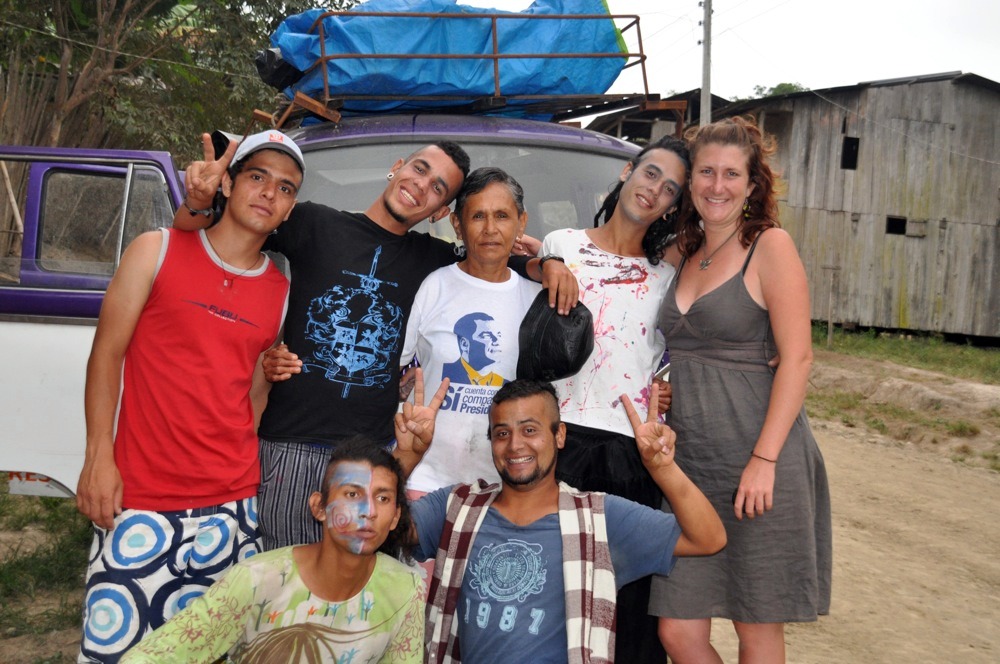
Despite a thoroughly scientific upbringing and education — Dad’s an engineer — and a very rational approach to my studies, when it comes to travel and expat life I’m all about the gestalts. I stayed in Cusco on little more than a whim, and recently returned from an ill-planned but exhilaratingly unpredictable road trip to Ecuador in a Volkswagen Kombi. Every moment of that road trip was a surprise — the cast of characters, a rotating mix of backpackers and South American musicians and circus performers. We followed the sun north, took a minor detour inland to teach a music and clowning workshop to the children in a poor community, and played music on the beach.

But although I laughed and made wonderful new friends and was constantly surrounded by music, this road trip, with its constant visits to mechanics, was also the reminder I needed of the importance of the rational type of personality. Road trips in general are a wonderful encapsulation of this duality, I think. Driving with the windows down on the highway with the music blaring, going where the wind takes you…but going there in a machine that needs care and understanding and maintenance. I’ve leaned too heavily to the romantic side, and it’s time to start taking better care of my machine.

Readers — yay or nay for letting Camden Luxford into The Displaced Nation? Tell us your reasons. (Note: It’s fine to vote “nay” as long as you couch your reasoning in terms we all — including Camden — find amusing.)

img: Camden Luxford on her recent road trip — in a tiny community about two hours form Pedernales in Ecuador, where she helped put on a juggling (among other things) workshop. She is posing with some of the kids and a teacher, along with members of the Colombian cumbia band she had as passengers for a couple of weeks. Yes, that’s the famous Kombi in the background!

STAY TUNED for tomorrow’s installment from our displaced fictional heroine, Libby, whose road-trip adventure of last week ended on a dramatic note. What, not keeping up with Libby? Read the first three episodes of her expat adventures.

If you enjoyed this post, we invite you to register for The Displaced Dispatch, a round up of weekly posts from The Displaced Nation. Includes seasonal recipes and book giveaways. Register for The Displaced Dispatch by clicking here!

Related posts:

The Displaced Q: Road trip – a simple journey, or a life-changing event?

Every year, a small number of people in biking leathers get on their motorcycles in Minnesota and set off on back roads toward the Dakotas. From Montana, they swerve briefly into Idaho and Wyoming, before riding across Oregon and down the final stretch to San Francisco.

They’re known as Pirsig’s Pilgrims — bikers who faithfully follow the route that Robert Pirsig took in 1968, as chronicled in Zen and the Art of Motorcycle Maintenance.

San Francisco is not the destination, but merely where the journey ends. It’s a pilgrimage, sure — but the whole journey is the destination for these dedicated riders.

Still, the question is — Why? Why do they do this?

I’m not a fan of biking (despite being married to an enthusiast) and traveling 1700 miles in this fashion seems…well. Uncomfortable at best, downright dangerous at worst, is my view of bikes. But perhaps there’s more to this journey than the automotive experience for these people?

Pirsig’s account of the journey  is interspersed with philosophical musings, meanderings, and revelations that make light bulbs flash bright in the reader’s head.

Could his Pilgrims, in fact, be searching for an epiphany?

Many cultures demand a period of time in solitude in which to grow spiritually. Australian Aborigine adolescents, for example, would live in the outback for many months, tracing the paths of their ancestors and, one assumes, learning deeply from the experience.

Today, the nearest equivalent we have in the western world is a few years at college, and while you can argue that the experience transforms, it’s not exactly spiritual. (Not that kind of spirit, anyway.) However, many young people choose to take a gap year, remove themselves from their everyday world, and backpack their way through Asia or Australia.

Could it be that this yearning to travel to nowhere in particular, where the journey itself is the point of the exercise, is part of our make up, a necessary part of everyone’s growth?

And what if we missed out on the experience in our own youth? Backpacking isn’t for the faint-hearted, or for the achy knees that come with a certain age.

Road trips. That’s what happens.

We all know that living abroad as an expat is life-changing, but even expats want to travel within the confines of their new location. Our first vacation while living in the US was a road trip. Armed with a minivan, a preschooler, a four-month-old baby, and all the paraphernalia small children accumulate, we set off from Connecticut toward Maine, Montreal, Toronto, Niagara, and back home through upstate New York. (Readers of last week’s Libby’s Life might find some of this itinerary familiar;  I hasten to add that Libby and I have only the itinerary in common.) It was a good trip, even accounting for children’s travel sickness.

Was it life changing, though? Not really — the most memorable moment of the trip was upon checking into a hotel room in Montreal, to discover that Princess Diana had been involved in a car accident in Paris. I didn’t need to be on a road trip to be affected by that.

But one day, in a few years’ time, we will take another road trip, minus toddler and small baby, and drive across America, coast to coast. Maybe we will ditch the car for a motorcycle in Montana, and by that time I’ll be brave enough to view the Big Sky state without the encumbrance of a windshield. And maybe I’ll have that epiphany.

Or — here’s a thought. Perhaps it’s already waiting, within me. To quote Pirsig:

“The only Zen you can find on the tops of mountains is the Zen you bring up there.”

Question: Have you ever taken a road trip, and if so, was it the best or worst thing you ever did? And did it change your life? 

If you enjoyed this post, we invite you to subscribe for email delivery of The Displaced Dispatch, a round up of the week’s posts from The Displaced Nation. Sign up for The Displaced Dispatch by clicking here!

Related posts:
The John Steinbeck Encyclopaedia of Road Trips

Announcing September’s theme: Zen and the Art of Road Trips

Image: MorgueFile

