The Displaced Nation

A home for international creatives

Category Archives: Just for Laughs

International dictionary of Chics

Chic: it’s the je ne sais quoi element of style. It’s hard to pin down, but you know it when you see it: Jackie Kennedy had it; the Kardashians not so much.

The Oxford English Dictionary defines chic as:

“Elegantly and stylishly fashionable.”

while Urban Dictionary’s most popular definition is:

“A classy, sophisticated manner, much like Audrey Hepburn. It is classy, glamorous, without being a pushover, and without being flashy. It’s an element of class.”

Not many of us can emulate the style of Audrey Hepburn or Jackie Kennedy, but as it’s desirable to be considered “chic”, sub-definitions have sprung up. Eco Chic, for example, means wearing eco-friendly fabrics such as organic cotton. Other types of chic are, frankly, oxymoronic. Heroin chic, with sunken cheeks and dark circles under the eyes? Prairie chic, with flat caps, and aprons over jeans? Would Jackie and Audrey have endorsed these looks, and if so, would these ladies still bear the tag of “chic”?

But no matter. It seems that any look can be “chic” merely by using the word as a suffix.

So today we’re bringing you a list of chics as they relate to the international traveller. Some are genuine, the invention of fashion designers and stylists. Others are homegrown; variations of Displaced Nation Chic.

Beach Chic

The title of a 2006 article by Times fashion editor Lisa Armstrong, Beach Chic is the class of accessories to be worn with a bikini, such as kaftan, hat, and fake tan — subtle, of course, so as not to make the wearer look like a WAG.*

*Wife or Girlfriend of footballer. Most of them seem to have missed the memo about trying to be like Audrey Hepburn after her transformation by Professor Higgins, rather than before.

Carousel Chic

That interim look after your luggage failed to make its way to the baggage reclaim carousel and instead is taking a 10,000 mile detour. A combination of making do with whatever emergency items you had packed in your hand luggage — if you were smart, you’d at least have put some spare underwear in there — plus hurriedly bought clothes at a local, cut price store. Colors you wouldn’t normally choose, styles that aren’t as flattering or well-fitting as those currently in your wanderlusting suitcase. T-shirts that run and shrink in the wash. Shoes that skin the backs of your heels because they didn’t have exactly your size, but never mind — it’s only for three days, isn’t it?

First Class Chic

Based on the sleep outfits issued in the first class section of flights. Baggy pyjamas that are too wide and too short. Towelling slippers that are too long or too short, but always too wide. For maximum effect, when putting these items of clothing on, place a kitchen chair in a shower cubicle, shut the shower door, and get changed in there.

Kiss-Me-Quick Chic

Named after the British seaside tradition of souvenir hats, Kiss-Me-Quick Chic involves anything with a place name on it. Hats, mugs, cushions, T-shirts, teddy bears, umbrellas, towels, tote bags, dinner services. Not only your person, but your entire home can be chic in this style.

Marzahn Chic, AKA Lichtenberg Chic

I found this on Wiki, and am not convinced the writer isn’t having a joke:

“Refers to the clothing style seen in some eastern and northern parts of Germany. It is composed of sweatpants or tracksuits, basecaps and running shoes. Commonly in bright colors like neon pink or yellow.”

I’m rechristening it “Ali G Chic“.

Nikon Chic

The style of a certain age in busy tourist attractions. Nikon cameras slung around necks, with shiny tracksuits (unisex), slightly short, beige trousers and short-sleeved checked shirt (men), or pastel polyester trousers — preferably peach or aqua — and crocheted or loose-knit top. All-white, brand new Reeboks are mandatory.

Parisian Chic.

Anything to do with Paris. You can have Parisian Chic even if you’re not French. Kristin Scott Thomas lives in Paris, and apparently she has it. Beware of crossing into the Kiss-Me-Quick genre, though. Eiffel Tower necklaces, for example, unless they’re Tiffany (yes, Tiffany does one) in which case you might be able to pass them off as Rich Girl Chic.

Relo Chic

The-shipment-just-arrived look. Upturned packing cases making do as bedside tables and coffee tables. Cardboard wardrobes holding all your clothes because this house has no closets. Because of its recycling nature, Relo Chic is a close relative of Eco Chic.

And lastly — with apologies to ML Awanohara —

Seen The Elephant Chic

Kind of like Kiss-Me-Quick Chic, but more subtle. It tells visitors to your house that you’re a traveller, without (literally) spelling it out. African masks on the walls, miniature Buddhas, wall-hanging prayer rugs. The beauty of this chic is you can have it without actually travelling. A quick visit to the Amazon (website, not river) should do the trick.

.

STAY TUNED for next week’s posts!

Image: Retro Girl Travel – courtesy of sattva/FreeDigitalPhotos.net

If you enjoyed this post, we invite you to register for The Displaced Dispatch, a round up of weekly posts from The Displaced Nation, with seasonal recipes, book giveaways and other extras. Register for The Displaced Dispatch by clicking here!

Related posts:

Image: MorgueFile

Would this Brit ever marry an American man?

Night OutFor the sake of my own ongoing domestic harmony, I should clarify that this blog question is a) hypothetical; b) not my invention; and c) briefly answered by the statement  “No, because bigamy’s illegal.”  It’s a bit like asking me if I’d ever adopt the kids who live up the street. No, I’m very happy with the ones I’ve already got, thank you.

It’s not that I have anything against American men, you understand. Lots of my friends are married to them. But here’s the thing — these friends are all American themselves.

A “Special Relationship”

For the purpose of researching whether other British women might consider marrying American men, I googled  — you’ve got it — “British women married to American men.” Hoping the search would come up with Hollywood examples other than Emily Blunt and John Krasinski or Catherine Zeta-Jones and Michael Douglas  (the only celebrity Anglo-American couples I could immediately think of where the woman makes up the Anglo half, and even then, CZJ is Welsh) I was perturbed when this first result appeared — a 2006 headline from The Guardian:

Why American women are sexier than British girls — by a man who knows.

This helped neither my research nor my confidence, so I moved quickly on.

Further down the page, things improved as Toby Young at The Telegraph informed me that Friends star David Schwimmer has decided to marry his English girlfriend rather than “a mercenary American husband-hunter.” (This news, by the way, is three years old. On a Google search, that’s the last time an American celeb married a British girl.) The writer of the article, an Englishman himself, was of the opinion that no man in his right mind would choose an American girl over an English woman, based on his own unsatisfactory experience:

American women tend to judge men according to what desirable attributes they possess rather than what they’re really like underneath.

Then again, he admitted judging these women according to the severity of their bikini waxes, so it’s possible they viewed him in a similar light.

The rest of Page 1 of the search was taken up by immigration and visa questions from young Anglo-American couples, and I didn’t even bother to check Page 2.

Given the up-to-date-ness of Page 1, I suspected it would contain only references to WWII GI brides.

Men are from England, Women are from America

This post’s title question, I was beginning to understand, should not be “Would I ever marry an American man?” but “Could I ever marry an American man?”

Anglo-American marriages seem to be more common when the Anglo is male and the American is female. Think Gwyneth Paltrow and Chris Martin, Kate Hudson and Matt Bellamy, Paul McCartney and Linda Eastman, Guy Ritchie and Madonna. (Until they got divorced, anyway.)

This type of alliance has a rich history. In the late 1800s, quite a few impoverished members of the British aristocracy married rich American heiresses so they could use their fortunes to stop the ancestral mansions from crumbling away. Sir Winston Churchill himself was the offspring of Lord Randolph Churchill (son of 7th Duke of Marlborough) and Jeanette Jerome, an American socialite.

You might wonder what advantage this arrangement offered the socialites: if Lady Randolph’s reputation was anything to go by, perhaps it was the chance to chalk up an impressive number of extra-curricular royal conquests.

British guys: Not just for celebs!

And it doesn’t end there with rock stars, actresses and bankrupt dukes. Today, any American woman with a fetish for Estuary English and glottal stops can find a suitable husband. DateBritishGuys.com promises to

“provide the romantic and love hungry American Female public with British Men.”

although as a 2009 survey voted Englishmen as the second-worst lovers in the world (“too lazy”), these love hungry American females might be better off registering with DateSpanishOrItalianGuys.com and insisting that their Latin lovers learn to speak like Colin Firth.

In conclusion…

My answer to the post’s question, “Would this Brit ever marry an American man?”  is still “No”.

It would be pointless because, to all intents and purposes, I already am. My English husband knows more about American football than most American guys do, drives a Chevy pickup, and plows the drive in winter. But he’s still got that accent that American women love.

You could say I’ve got the best of both worlds. 🙂

.

STAY TUNED for tomorrow’s post!

If you enjoyed this post, we invite you to register for The Displaced Dispatch, a round up of weekly posts from The Displaced Nation, with seasonal recipes, book giveaways and other extras. Register for The Displaced Dispatch by clicking here!

Related posts:

Image: MorgueFile
The 9 Muses for international artists and writers – which one is yours?

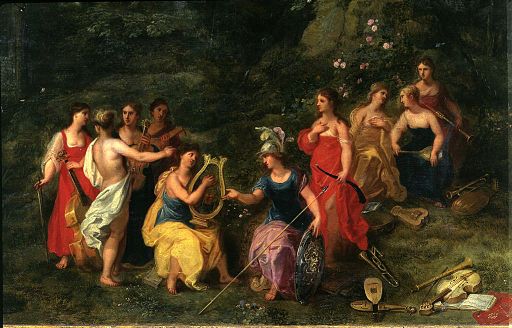
512px-Minerva_among_the_MusesAs modern, global writers and artists, we all have those wonderful days when we feel we are just holding the pen or brush while another “being” does the creative work and sends up firebolts of ideas into the imagination.

Some of us like to call this “Being” our “Muse.”

The original 9 Muses of Greek Mythology were a group of sister goddesses who inspired artists and philosophers to create artistic masterpieces. Ancient writers such as Homer appealed to the Muses for help and inspiration, and as Homer’s Iliad and Odyssey are still in print nearly 3000 years later, it’s probably fair to say these appeals to the sibling deities worked.

Nevertheless, even with his divine assistance, Homer probably had plenty of bad writing days,  just as we have days when the Muse is elusive, and everything we create is no better than our third-grade efforts many years ago.

On days like those, it’s wise to remember that times and fashions have changed since Ancient Greece, and perhaps the reason the Muses don’t come is because we don’t recognise them in their present forms. Unless you’re trying to write at a toga party, they probably won’t look like they do in the painting above. They come in all shapes and sizes.

So, to assist you in finding inspiration when the creative rivers run dry — meet the new generation of global Muses.

Bloggoria –  Muse of Travel Writing

Descendant of: Calliope; Muse of epic poetry; emblem – a writing tablet.
Modern Muse’s emblem: An iPad.
Sometimes disguised as: The female in the cafe who, when she sees you scribbling in your trusty Moleskin, wants to know what you’re writing and says that she could write a novel if only she had the time. If she doesn’t have the time but is so full of ideas that she has to tell strangers about them, her brain is ripe for shameless picking.

Sirius – Muse of Navigation (AKA Siri)

Descendant of: Urania; Muse of Astronomy; emblem – globe and compass.
Modern Muse’s emblem: Sirius can’t map-read to save her life, let alone navigate by the stars, so she goes for a more up-to-date look with a GPS box.
Sometimes disguised as: That woman you’ve passed three times while you’re lost and driving around a new city.  The woman your male companion won’t stop to ask directions because a) he doesn’t like asking for directions and b) this person looks a bit odd. The odder she looks, the more likely she is to be a Muse, and will end up as an anecdote or character in your next book. Don’t place too much faith in her directions, though.

Empithrie: Muse of music

Descendant of: Euterpe; Muse of music or flutes; emblem – a flute.
Modern Muse’s emblem: A set of earbuds.
Sometimes disguised as: The female DJ on a new radio station who plays the right song at the right time, one that just happens to fit your mood and gets the creative juices flowing. Also, pay attention to buskers: you never know when Muses (of either gender) are in unusual places, as in this video:

Fenderene: Muse of song lyrics

Descendant of: Erato; Muse of lyric and love poetry: emblem – a lyre.
Modern Muse’s emblem: A guitar pick.
Sometimes disguised as: That really good guitarist in the subway, singing Carole King songs. Don’t confuse her with the next Muse,

Slammia: Muse of modern poetry.

Descendant of: Polyhymnia; Muse of sacred poetry; emblem – a veil.
Modern Muse’s emblem: A joss stick
Sometimes disguised as: The only good entrant in a pub poetry slam.

Depressoria: Muse of tragedy

Descendant of: Melpomene; Muse of tragedy; emblem – a tragic mask.
Modern Muse’s emblem: A bottle of Prozac.
Sometimes disguised as: That person you get stuck next to on the train, who insists on telling you her life story which sounds like the outline for a bad country song. (See “Fenderene” and “Empithria”) Take notes, if you can.

Nostalgene: Muse of history and reminiscence

Descendant of: Clio; Muse of history; emblem – a scroll
Modern Muse’s emblem: An old photograph album
Sometimes disguised as: Your granny when she’s talking about her childhood.

Standuporia: Muse of alternative comedy

Descendant of: Thalia; Muse of comedy; emblem – a comic mask.
Modern Muse’s emblem: A large snake called Monty.
Sometimes disguised as: Like love, comedy is all around you. Just keep listening for those throwaway one-liners.

Bunionaria: Muse of dancing

Descendant of:  Terpsichore; Muse of dancing; emblem – dancing, holding a lyre.
Modern Muse’s emblem: A pair of satin, worn out ballet shoes.
Sometime disguised as: Dancing Muses at places like Covent Garden or Teatro alla Scala are rarely disguised. Buy a ticket, watch, be inspired. Do, however, avoid Irish pubs on St. Patrick’s Day, when everyone thinks they can out-tap Michael Flatley. And avoid Ibizan hotel dance floors at all times if you don’t want to lose all your other Muses (with the exception of Standuporia.)

STAY TUNED for next week’s posts.

If you enjoyed this post, we invite you to register for The Displaced Dispatch, a round up of weekly posts from The Displaced Nation, with seasonal recipes, book giveaways and other extras. Register for The Displaced Dispatch by clicking here!

Related posts:

Image: Minerva among the Muses, via Wikimedia Commons

An expat in America’s thoughts on Boxing Day

BoxingDayinBritain_collage_3You can never satisfactorily explain Boxing Day to an American. The day sounds comical to them; just another ridiculous Commonwealth quainitism, like fortnights and elevenses.

The true origin’s of the holiday’s curious sounding name are decidedly murky. Over the years various origins have been asserted, the most popular being that this was the day the lord of the manor gifted boxes of money to servants on his estate. If you are interested these origins are detailed in this article from Snopes.

There is nothing, in particular, you need to do on Boxing Day. No unusual traditions to be observed. Stores (similar to the American Black Friday) open early for the sales, and sport also seems to be a familiar theme in Boxing Day throughout the world. In the UK a full fixture list is played by the football league, in Australia the boxing day Test is a modern cricketing tradition, and in Canada they watch hockey (although they seem to do that the other 364 days of the year, too).

There may, however, be some local eccentricities. In my hometown, there is such a thing as the Boxing Day dip. A frankly ludicrous tradition, it involves some peculiar people (possibly with deep-seeded psychological issues) in fancy dress who run into the freezing north sea for the aforementioned “dip”. It’s not something that ever appealed to me, hypothermia never has, but it was always fun — of a sort — watching those foolhardy enough to try it.

One of the joys of Christmas is the build-up, the sense of anticipation, and yet it is over so soon. Boxing Day plays the important role of stretching out the holiday. Give the day a name, you make it something different, you set it apart from the ordinary, even if the name you give it is a silly one. Boxing Day acts as the downer, the Christmas Xanax, for the previous day’s frenetic, festive high. It’s a day for the post-bacchanalian slumber, of leftover turkey transformed into a curry or made into sandwiches, of bad Christmas TV, of lingering on the end of the holiday, of easing back into the mundane.

I am reminded of W.H. Auden‘s Christmas poem, For The Time Being (Auden, btw, was born in England but later took out American citizenship):

Well, so that is that.  Now we must dismantle the tree,
Putting the decorations back into their cardboard boxes —
Some have got broken — and carrying them up to the attic.
The holly and the mistletoe must be taken down and burnt,
And the children got ready for school.  There are enough
Left-overs to do, warmed-up, for the rest of the week —
Not that we have much appetite, having drunk such a lot,
Stayed up so late, attempted — quite unsuccessfully —
To love all of our relatives, and in general
Grossly overestimated our powers.  Once again
As in previous years we have seen the actual Vision and failed
To do more than entertain it as an agreeable
Possibility, once again we have sent Him away,
Begging though to remain His disobedient servant,
The promising child who cannot keep His word for long.
The Christmas Feast is already a fading memory,
And already the mind begins to be vaguely aware
Of an unpleasant whiff of apprehension at the thought
Of Lent and Good Friday which cannot, after all, now
Be very far off.  But, for the time being, here we all are,
Back in the moderate Aristotelian city
Of darning and the Eight-Fifteen, where Euclid’s geometry
And Newton’s mechanics would account for our experience,
And the kitchen table exists because I scrub it.
It seems to have shrunk during the holidays.  The streets
Are much narrower than we remembered; we had forgotten
The office was as depressing as this.  To those who have seen
The Child, however dimly, however incredulously,
The Time Being is, in a sense, the most trying time of all.

STAY TUNED for an installment from our displaced fictional heroine, Libby.

If you enjoyed this post, we invite you to register for The Displaced Dispatch, a round up of weekly posts from The Displaced Nation, with seasonal recipes, book giveaways and other extras. Register for The Displaced Dispatch by clicking here!

Related posts:

Images by Awindram

The 12 Stodges of Christmas: Global foods to pack on the pounds this December!

ID-100101223

Today, we bring you a helpful list of the most stodgy, calorie-intense dishes that make their way onto holiday dinner tables around the world.

The way we see it, if you’re going to eat celery and spend all January on a treadmill — and it’s pretty much the law that you do — you might as well make December’s crime fit January’s punishment..

On the 1st day of Christmas my true love sent to me…

A Christmas Pudding from England. Also known as Plum Pudding or Plum Duff, although plums do not feature in the  approved list of ingredients, which includes assorted nuts and dried fruits, suet, and a small keg of brandy. The pudding is steam-cooked for approximately four days before being doused in more brandy and set alight at the dinner table. Accompanied by brandy sauce, brandy butter, and the contents of a fire extinguisher.

My True Love only sent one of these because of their extreme density. If Christmas Puddings were chemical elements, they would lie somewhere between osmium and iridium.

On the 2nd day of Christmas…

Two bowls of Kutia from Ukraine. Often the first dish in the traditional 12-dish Christmas Eve supper served in many Eastern European cultures, Kutia is traditionally made from wheatberries, poppy seeds, nuts, raisins, and honey. Apparently,  it should be made about two weeks in advance. Presumably by the time it is ready it has begun the fermentation process and so adds to the seasonal merriment.

On the 3rd day of Christmas…

Three servings of Julgrøt from Norway. Christmas rice pudding, made from rice, sugar, cream, ground almonds, and containing a single whole almond. The person who finds the almond wins a prize…perhaps a crash course in how to perform the Heimlich Maneuver.

On the 4th day of Christmas…

Four pieces of Stollen from Germany. It’s fruit cake, people. Fruit cake gets a bad press, particularly in the USA, as Anthony Windram pointed out on his own blog this week, but if you call it Stollen, it’s all Bavarian and Christmassy and wonderful.

On the 5th day of Christmas…

Five Mince Pies. A Christmas delicacy from Britain: small pies containing dried fruit, sugar, a healthy dose of brandy, and, if you’re going to do it properly, that weird ingredient suet again. Americans find it very difficult to wrap their heads around the idea of fatty bird fodder going into foods for human consumption, so when I offer my American friends my homemade mince pies, filled with made-from-scratch mincemeat, I wait until they’ve eaten a few before enlightening them that they’ve just eaten the contents of their bird feeder.

On the 6th day of Christmas…

Six buckets of KFC from Japan. Orders are placed two months in advance, and people line up outside the Colonel’s place to get their hands on this delicacy, which over the last 40 years has become a Christmas tradition in Japan.

“Our holiday sales are five to ten times higher than other months,” said spokesman Sumeo Yokokawa. “In Japan, Christmas equals KFC.” (ABC News)

A miracle of marketing by KFC, if nothing else.

On the 7th day of Christmas…

Seven Karelian Pasties from Finland. Originally from Russian Karelia, these pasties have a thin crust of rye or rye/wheat and a filling of barley, potato, buckwheat, or rice (the most popular modern filling.) Toppings include cheese, ham, shrimp, and slices of reindeer.

Yes, reindeer. I guess the buck — and Santa Claus — stops in Finland.

On the 8th day of Christmas…

Eight bibingka from the Philippines – a traditional Christmas dessert made from rice flour and coconut milk, baked in banana leaves. A generously-sized bibingka would serve four people. The bibingka made by residents of Mandaue in Cebu, in May 2011, would serve considerably more. It contanined 50 sacks of rice, 50 sacks of sugar, and the milk from 13,500 coconuts.

Now there’s a town that takes its holiday stodge seriously.

On the 9th day of Christmas…

Nine bread puddings from Puerto Rico. Bread Pudding can be found in many variations around the globe; this Puerto Rican version, made with coconut milk and sliced mango, manages to make the ultimate stodgy pudding into something exotic.

Having hankered after a Caribbean Christmas for more years than I can remember, I fear this dessert only serves to strengthen my resolve.

On the 10th day of Christmas…

Ten Bolo Rei from Portugal. Bolo Rei – King Cake. Crown-shaped cakes, encrusted with raisins, nuts, and crystallized fruit. Contains a small metallic toy and a fava bean. Whoever finds the fava bean is supposed to pay for the bolo rei the following year — talk about adding insult to injury.

On the 11th day of Christmas…

Eleven lussekatter from Sweden. These saffron and quark buns are eaten to celebrate Saint Lucy’s Day, the shortest day of the year which, according to the Julian Calendar, was December 13th. When the Gregorian Calendar changed this to December 21st, Saint Lucy’s Day defiantly remained on the 13th. The Swedes’ cavalier attitude to dates and solstices is why I don’t feel too bad about suggesting you eat these delicious morsels on January 4th.

On the 12th day of Christmas…

And finally, if your True Love has really showered you with all these carbs, the only thing he should be giving you on Day 12 is a year’s subscription to Weight Watchers.

.

STAY TUNED for more Random Nomad highlights from 2012!

If you enjoyed this post, we invite you to register for The Displaced Dispatch, a round up of weekly posts from The Displaced Nation, with seasonal recipes, book giveaways and other extras. Register for The Displaced Dispatch by clicking here!

Related posts:

Image: Woman Standing on Weighing Scale – stockimages / FreeDigitalPhotos.net

A clueless immigrant’s 5 expat highlights for the year

I am not doing well with the passing of the years: they are over at an alarming rate. That we are already coming to the end of 2012 fills me with anxiety and dread. So perhaps I am not the best person to be in charge of one of those prerequisite “best-of-the-year” lists that fill up space this time of year. Nonetheless I have revisited my 2012 posts on The Displaced Nation to come up with my personal expat highlights for the year. Do join me on my existential journey.

1. “Travel for excitement, not enlightenment”

We started 2012 with a look at travel and moving abroad as a search for spiritual enlightenment. While I may possibly in the minority among this blog’s readers in finding the Elizabeth Gilbert idea of travel patronising, irritating, and misplaced, I do think travel is important. It (when done properly) broadens the mind; it can also be the most exciting thing you can do in your life. But — let’s be clear — in of itself buying a Virgin Airways ticket does not nourish your soul. That can be done much closer to home.

Now most of us can’t be as amazing as Pico Iyer — that’s just the burden we have to carry through our lives. We can’t just move to rural Japan and fetishize solitude. We will still spend our evenings in the grocery store, our weekends in the mall, they will still be those 2.4 children and those bloody traffic jams — as David Byrne sang, “same as it ever was.”

What I am going to do try and do in 2012 (and yes even though it’s mid-January I still feel it is early enough to mention resolutions in a post) is to take advantage of technology to find some solitude. I’m not going to posture by lighting an incense stick as if the path to personal enlightenment lies in sniffing in something called Egyptian Musk. What I am going to do is take advantage of the quiet moments that my everyday life provides by sitting and concentrating at a task and deriving satisfaction from that. It may be by learning programming, a foreign language, or taking advantage of the sheer, vast number of books that are now available for free on Google books. In this well-known brand of coffee shop while Tony Bennett plays to me and the tattooed man and the policeman and the baristas return to talking about the smaller one’s mother-in-law, I have on my iPad access to a library of books greater than the Bodleian — reason enough not to throw the iPad across the room when I’m annoyed by Iyer.

2. What to wear for an Independence Day party

Being British I always find Independence Day just a little bit awkward. Choosing appropriate clothing is always something of a dilemma.

Finding the Target employee that looked the most patriotic — the telltale signs are a sensible haircut, good posture, and a strong jaw line — I asked where I might find the most patriotic T-shirts in store. Leading me to a selection of T-shirts featuring the stars and stripes, it was difficult for me to contain my disappointment with this somewhat anemic selection.

“Hmmm, do you have anything more patriotic?” I asked.

The patriotic youth seemed a little confused, a look that made him seem increasingly un-American.

“I was,” I said, “looking for something with a little more pizzazz. Something more OTT. I was kinda hoping you’d have one where Jesus is cradling the Liberty Bell while a bald eagle looks down approvingly?”

3. London Olympics

In 2012, I was swept up by the Olympics far more than I anticipated. What I did not enjoy, however, was the poor coverage I had to put up with by NBC which revealed their own awkward world view.

The Games have made me homesick. My usual cynicism is no match for the enthusiasm of my London friends, all of whom seem to be attending events (if Facebook is anything to go by) while I sit watching it in one of the dullest towns in California. The opening ceremony elicited in me a mixture of pride and embarrassment — and as such, perfectly encapsulated for me what it is to be British. The ceremony also irritated Rush Limbaugh — so clearly job well done on Danny Boyle‘s part there.

4. Are you an imposter or a chameleon?

The release of a new documentary film about the French con man, Frédéric Bourdin, led to my favorite discussion of the year: what sort of expat are you, an imposter or a chameleon?

I know that I find myself occupying roles I had previously not thought I would before. Sometimes I am the imposter. I play a role that isn’t me. In my case, it may be exaggerating national characteristics and language that I feel people expect of me, but that I would never use back home. At other times, I find myself trying to be the chameleon. Trying to scrub away my otherness so that no attention is drawn to me because I sound different, or behave differently.

5. Donkeys and elephants: The US Presidential election

Here in the US, 2012 was marked by the presidential election. As a resident alien, a domestic election is an interesting thing as you have one foot in and one foot out.

It’s a strange feeling waking up on the morning of an election in the country that you live, and not voting. Equally, it’s a strange feeling posting your ballot in an election 6,000 miles away as I did in the last British election in 2010.

What are some of your expat highlights of the year? If you have a blog, feel free to leave links to a favorite blog post you may have written.

STAY TUNED for next week’s posts.

If you enjoyed this post, we invite you to register for The Displaced Dispatch, a round up of weekly posts from The Displaced Nation, with seasonal recipes, book giveaways and other extras. Register for The Displaced Dispatch by clicking here!

Related posts:

A trip to light fantastic: 5 places to find brightness in the winter gloom

Last year, I confessed that my ideal Christmas would be spent far away from the snow, ice, and frigid temperatures. If I wanted a white Christmas, I’d be perfectly happy to use foot-searing sand as an alternative to snow, and spend December in the Caribbean.

Twelve months on, and I haven’t changed my mind. I still feel a twinge of envy when I read about Australian friends’ plans for a summer Christmas. No matter how displaced the idea may be to a Northern Hemisphere mind, a Christmas barbecue on Bondi Beach seems very appealing as I look outside into the foggy dusk, the sun already setting at not quite 4 p.m.

Lots of people wouldn’t agree. Below-freezing temperatures and dull skies, for them, are all part of Christmas, or Hanukkah, or whatever form their December holiday takes.

Yet December holidays, at their most fundamental level, are festivals to raise people’s spirits from the gloom that comes with winter solstice light deprivation. Think about it: isn’t there something perverse about refusing a Caribbean Christmas getaway while covering your house with electric lights à la National Lampoons Christmas Vacation? Wouldn’t a beach holiday at this time of the year just be a simple case of cutting out the middle man?

Sigh. As I said — most people don’t seem to agree with me. So for those who would rather have your winter light minus the vitamin D production, here are some places you could consider visiting this month:

1. Longford Road, Melksham, Wiltshire, UK

Electrician Alex Goodhind paid £700 for his local electricity board to dig up the road outside his house and install an industrial strength cable to support his Christmas display of 100,000 lights. Actually, the number of lights varies according to which news report you read, but it’s certainly on a par with Clark Griswold’s efforts: without the special cable, Mr Goodhind was unable even to boil his kettle while the lights were on.

After a two-year absence, during which the neighbors must have been relieved not to wear eye masks at night, the lights are back in full force. Proceeds from the display go to local charities.

2. Paris – The City of Light

OK, so that’s a bit of a cheat, but nevertheless the Christmas lights on the Champs-Elysées are spectacular.

For wackiness and dubious use of performing animals, the prize goes to Galeries Lafayette with its animal-themed Christmas displays, where an elephant dressed in Louis Vuitton switched on the festive lights this year:

3. Umea, Sweden

Although you might be perfectly positioned to see Nature’s own Christmas lights — the Northern Lights — if you live in Umea, you might also be more prone to light-deprivation depression, or Seasonal Affective Disorder. In December, the sun rises around 10 a.m. and sets before 3 p.m.

Acknowledging the problems this causes for residents, Umea’s electric company has installed ultra-violet light in 30 bus shelters around the town, replacing illuminated advertisement boards with the energy-boosting light therapy.

In case any Jersey Shore cast members are thinking this is a great idea — these lights don’t give you a tan.

4. Winter Festival of Lights, Niagara Falls, Ontario

With three million tree lights turning the Falls into a sheet of ‘watercolors’, and 125 animated lighting displays, the Winter Festival of Lights has become “a tradition for over 1 million local residents and visitors from around the world” according to its website.

We’re guessing that the Canadian cold weather distracts you from thinking about global warming and the effect those three million lights might be having on it.

5. And finally…

If going out in the cold to find winter light displays seems like too much trouble, let me point you towards a wonderful site I found while researching this post.

TackyLightTour.com has a comprehensive list of Griswold-like lights at private homes, giving the street address, how many lights/inflatables at said address, and the number of years of tackiness-expertise by the house owner .  The houses are mainly in the USA — of course — but Canada, Australia, and even France get a mention.

Added bonus: Probably a good site to check if you’re house hunting in summer.

.

STAY TUNED for Wednesday’s post with details of our next giveaway!

If you enjoyed this post, we invite you to subscribe for email delivery of The Displaced Dispatch, a round up of the week’s posts from The Displaced Nation.

Sign up for The Displaced Dispatch by clicking here!

Image: MorgueFiles


Calling expats from all countries — it’s not too late to vote!

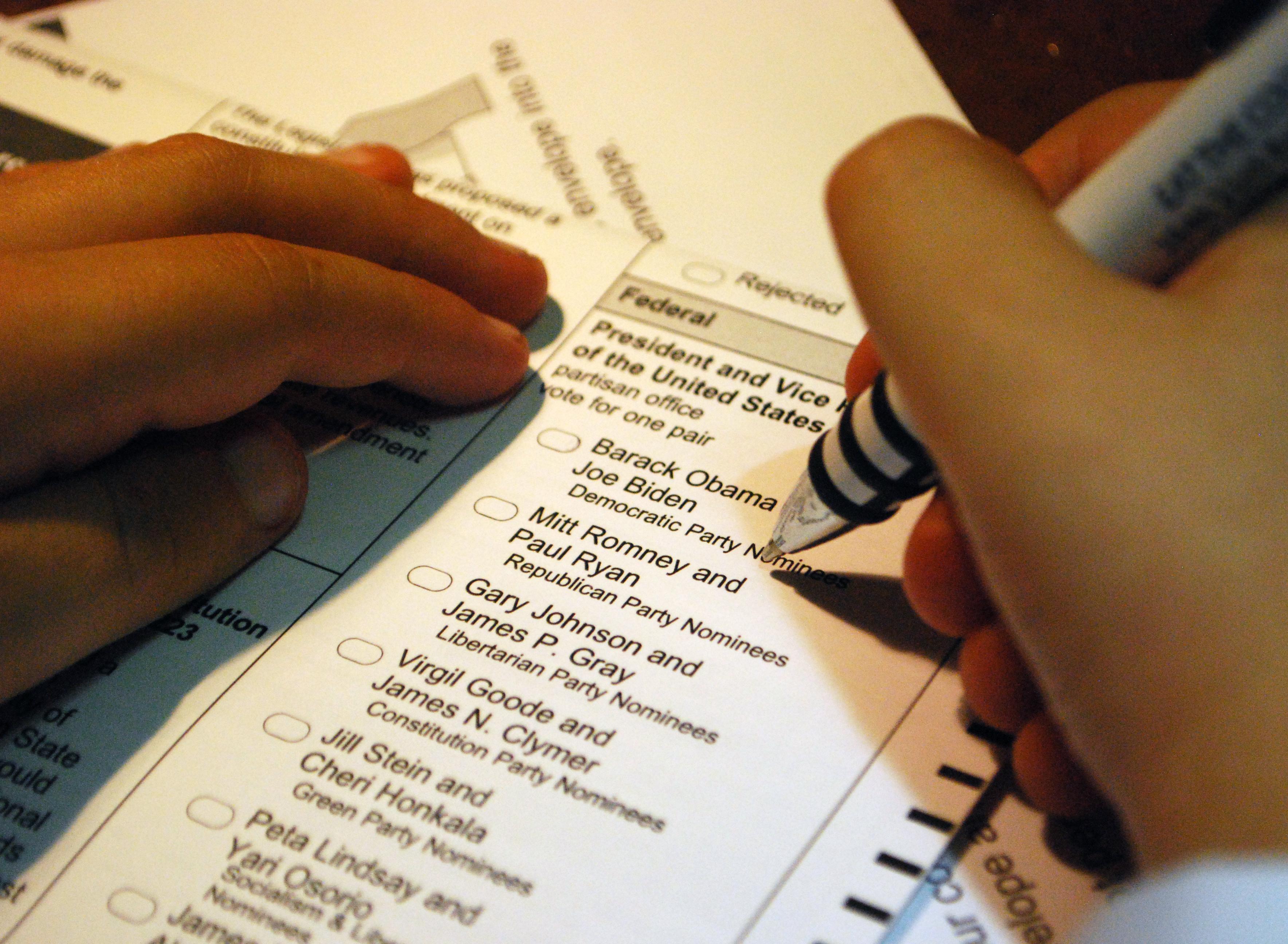
Unless you’ve gone into early hibernation for the winter, you’re probably aware that there’s a presidential election going on today in the United States. If you’re not an American citizen, of course, this election is merely a spectator sport for you, as Americans exercise their hard-fought right to vote by passing out in 2-hour queues in West Palm Beach, or stabbing ineffectually at a voting machine with a political mind of its own.

Given the difficulties of voting within the country, you’d think the ease of voting from abroad — via mail, fax, or even email — would ensure full electoral participation from expats. Statistics from the 2008 election, however, suggest otherwise.

Election apathy?

According to the Overseas Vote Foundation, a mere 7% of overseas voters took part in the election four years ago. In other words, a teenager or high school dropout is more likely to cast a vote than an expat is.

“Why?” is an interesting question, and one that doesn’t seem to have been investigated.

At a guess, your average expat is already staggering under the weight of red tape and bureaucracy, and a voting form is that piece of paper that breaks the expat’s in-tray. It’s the piece of paper that turns up four months later during a home office blitz, under a pile of credit card offers, with a Post-It attached saying “Don’t Forget!”

Or perhaps, living outside the home country for a length of time has initiated a feeling of detachment. A feeling that it doesn’t really matter what you think because you’re not there.

Or a misguided conscience kicks in, whispering that you, living abroad, are making a decision that affects others more than it affects you.

Expats: The other “swing state”

Although the exact number of Americans abroad is a little hazy — the State Department estimates just over 6 million, whereas the non-profit American Citizens Abroad puts the figure at 5.2 million — US expats equal the population of Missouri or Colorado, depending on which figure you believe.

Either way, it’s enough to make a significant difference in the outcome of an election, if they all voted.

Take our poll!

So, to all expats of all nationalities: how do you feel about voting in your home- and adopted countries’ elections? Are just overseas Americans lethargic about their civic duties, or do all expats feel the same?

Take our poll!

Our voting booths are open 24/7 for the next 30 days!

Stay tuned for Wednesday’s post, in which American repats Sezin Koehler and Anastasia Ashman reflect upon their first stateside election in quite a while.

If you enjoyed this post, we invite you to subscribe for email delivery of The Displaced Dispatch, a round up of the week’s posts from The Displaced Nation. Sign up for The Displaced Dispatch by clicking here!

Image: MorgueFile

Grim Reapers around the globe: 7 creatures that say “Time’s up!”

Before we had civil lawsuits, and lawyers wanting to find someone to take the fall for all Life’s misfortunes, we had mythological creatures to take the blame and who couldn’t be subpoenaed.

This Halloween, in the interests of banishing our modern litigious society, perhaps we should consider reintroducing some of these ancient ghouls to replace the ambulance-chasing variety.

1) Banshee (Ireland)

A fairy woman — omens of death are nearly always women — who weeps and wails when someone is about to die. Usually appears as an old hag, but can be a beautiful woman of any age. Or a hooded crow or hare. Or a stoat. Or a weasel.

Evidently a creature that hedges its bets.

The ever-practical Scots have a version called the bean sìth, who makes herself useful by washing the blood-stained clothes or armour of the nearly dead.

2) Aswang (Philippines)

A generic term for witch/vampire/shapeshifter, etc, responsible for various human misfortunes, including but not limited to:

  • Grave robberies
  • Miscarriages
  • Kidnappings
  • Any mildly strange incidents reported in the local tabloids that would benefit from supernatural sensationalism.

Certain areas of the Philippines have a high prevalence of the neurological disorder dystonia; one theory is that this disease, with its characteristic involuntary muscle contractions, gave rise to the belief in the aswang.

3) Rusalka (Slavic mythology)

Another mythological, wily, conniving female; the unquiet spirit of, say, a jilted woman or unmarried mother who has committed suicide, or a drowned, unbaptized baby.

The rusalka lives at the bottom of a river, emerging in the middle of the night to dance and sing and thus lure unsuspecting males back to the river for a watery death.

Nothing to do with the unsuspecting males having one pint too many at the local hostelry and falling in the river on the way home, then.

4) Sihuanaba (Central America)

Seen from the back, she’s an attractive woman with long hair; from the front, it’s a horse. (No jokes about Sex and the City, please.) Another female creature that lures innocent men astray, this time to lose them in deep canyons.

All very Freudian.

5) Bäckahästen, or Brook Horse (Scandinavia)

A white horse, appearing near rivers. Not a good idea to catch a ride on this creature, because once you’re aboard, you can’t get off. The horse will jump in the river and you’ll drown.

But hey. At least this one isn’t a woman.

6) Hellhound (Europe)

Fierce black dog of super strength and speed, who often has the job of guarding entrances to the underworld, such as graveyards. Why this is mystical, I don’t know. There’s nothing mystical about a dog hanging around a place full of buried bones.

Its howl is an omen, or even cause, of death. Stare into its glowing red/yellow eyes three times or more and you will die, for sure. The mythology books don’t specify what you will die of, though.

Rabies, is my guess.

7) La Sayona (Venezuela)

A beautiful woman from the jungle, appearing to guys who are indulging in extra-curricular love activities, or even just idly contemplating having a bit on the side.

Depending on which story you believe, she either takes the errant man into the jungle to eat or mangle him, or she covers his nether regions with an eruption of boils that he has to explain away later to his wife.

“Look, I’d run out of toilet paper, OK? The only thing handy was poison ivy.”

At this point, the errant husband is probably wishing he’d met the kind of sayona that eats and mangles.

.

STAY TUNED for Wednesday’s Random Nomad, another crime writer!

If you enjoyed this post, we invite you to register for The Displaced Dispatch, a round up of weekly posts from The Displaced Nation, with seasonal recipes, book giveaways and other extras. Register for The Displaced Dispatch by clicking here!

Related posts:

Image: The Banshee (Wiki Commons)

DEAR MARY-SUE: One expat’s horror story is another’s delight

Mary-Sue Wallace, The Displaced Nation’s agony aunt, is back. Her thoughtful advice eases and soothes any cross-cultural quandary or travel-related confusion you may have. Submit your questions and comments here, or else by emailing her at thedisplacednation@gmail.com

Shoot! Is it October already? I don’t know how the time flies. I don’t know about you, but I’m not a big fan of fall. Who would be living in Tulsa. It just gets grey here, no burnt ochres like in Vermont. In fact, I wouldn’t know a burnt ochre if I saw one. Is it like a vole (please don’t feel the need to write in. I’m not that stupid. I know it’s not a rodent). Anyhoo, on with this month’s questions.

Dear Mary-Sue,

I can’t resist asking you: how does the Wallace household celebrate Halloween? I can imagine it’s quite an occasion!

– Ian (a British fan of yours) in Iowa

Dear Ian,

Well I can tell you that we don’t celebrate Halloween like the Larsons across the street. She gives out fruit to the kids in the neighborhood. Why would you even do that? It’s just cruel, isn’t it?

No, it’s a time of excess over at the Wallace household. That’s why I wake up the day after Halloween and don’t have to worry about finding the trees outside my house covered in toilet paper.

I buy plenty of Reese’s peanut butter cups because who doesn’t love them? I hear in Europe they have what they call food mountains when they have too much of a particular food source, well let me tell you that the Wallace household ends up with a Reese’s peanut butter cup mountain come Halloween.

You should come along and grab yourself a treat.

***********************************************************

Dear Mary-Sue,

My wife and I have lived in the United States since last May, and I must say, she is throwing herself into the life here with considerable vigour. She is now talking about hosting a Halloween party for some of our fellow expats, and inviting a few of our American neighbors. She has suggested that she and I dress up as an Elephant and a Donkey, in celebration of the American election season. No pun intended, but that would make me feel a bit of, well, an ass, to use the local dialect.

I wonder if I could talk her into going as a Milkman and Pregnant Lady instead? At least that would be true to our native (British) culture.

– Stephen in St. Louis

Dear Stephen,

So let me guess this right regarding your Halloween costumes, your wife was to be satirical and you want to be lewd? Gee, what is it with you Brits. You always think your jokes are funny and yet they always just seem to be about sex. Just go as something horror related and stop trying to over think it. If you really want to be true to your native culture why not go as King George III. Bam! Yes, I went there.

************************************************************

Dear Mary-Sue,

My husband writes mystery books for a living. He and I have decided to live in England for a few years while he does research on his latest story. He insists that we look for an old isolated cottage somewhere deep in the heart of the countryside, where he can be free to write. But I feel certain that those oldy-worldy thatched roof places may be haunted. And what if I have to stay in a house like that on my own, should he be called up to London to meet his agent or give a talk.

Do you think I’m strange to be so afraid of (admittedly English) ghosts?

– Susan of Savannah, Georgia, soon to be of Suffolk, East Anglia

Dear Susan,

If you’re going to be living in East Anglia I’d be more concerned with the living than the dead. They’re a scary in-bred bunch, though coming from Georgia you should be able to handle it. I kid, I kid…well not about East Anglia.

*****
Dear Mary-Sue,

Do Westerners see Western ghosts, Chinese see Chinese ghosts, and Africans see African ghosts, or can we see each other’s?

– Just Curious

And does Just Curious see ghosts of low intelligence?

*****

Dear Mary-Sue,

When I first saw the farmhouse in Tuscany that my husband and I are now renting while we look for a place to live for our retirement, I thought to myself: Frances Mayes, eat your heart out! However, we’ve just now found out from one of our neighbors that a murder took place here about ten years ago — and ever since, the house has always been rented to expats. I’m thinking we should consult with the local Catholic priest about whether he could perform an exorcism — casting out evil spirits and all that. But my husband says, don’t be silly — it just adds to the atmosphere.

What do you advise?

-Victoria of Vulterra (formerly of Wellington, NZ)

Dear Vicky,

First thing I would be doing is renegotiating a lower rental fee and not thinking about calling the local Padre.

*****
Dear Mary-Sue,

In my opinion, Asian ghosts are far freakier — and hence scarier — than Western ones. Especially the Japanese kind. I mean, what’s a vampire compared to a wailing Asian woman with a very pale face and long, jet black hair? Actually, I’m scaring myself even as I write this…

– Ted of Tsukuba (formerly of Texas)

Dear Ted,

Yeah, I mean Casper has nothing on the Krasue from Thai legend. Now that’s freaky. I’d like to see Stephen in St Louis go to his party dressed as that.

STAY TUNED for tomorrow’s episode in the life of our fictional expat heroine, Libby. (What, not keeping up with Libby? Read the first three episodes of her expat adventures.) If you enjoyed this post, we invite you to register for The Displaced Dispatch, a round up of weekly posts from The Displaced Nation, with seasonal recipes, book giveaways and other extras. Register for The Displaced Dispatch by clicking here!

Related posts: